



Abstract
The growing demand for lightweight, thermally stable materials in the automotive industry has accelerated research on high-temperature polymer matrix composites (HT-PMCs) as alternatives to metals in harsh operating environments. This critical review evaluates the current state of advanced HT-PMCs, emphasizing macro-molecular design, processing strategies, automotive applications, and performance limitations. Thermoset systems such as polyimides, bismaleimides, and polybenzoxazines, together with thermoplastic matrices including PEEK, PPS, and recyclable blends, are examined for their mechanical properties, reinforcement compatibility, and thermal stability in the 200–400°C range. Recent advancements in sustainable matrices—particularly bio-based polyimides and recyclable thermoplastics—are highlighted, with comparative analyses of mechanical, thermal, and environmental performance to identify clear trends and research gaps. Case studies in powertrain components, electrification systems, brake assemblies, under-hood structures, and lightweight panels demonstrate weight reductions exceeding 30% alongside improved thermal management. Critical challenges such as moisture absorption, thermal-oxidative aging, and elevated manufacturing costs are discussed, with attention to trade-offs between thermal stability and recyclability. Emerging solutions include hybrid architectures, nanofiller integrations, bio-derived matrices, and self-healing systems, supported by AI-accelerated material discovery. By integrating sustainability with performance, this review provides a comprehensive roadmap for researchers and engineers advancing the next generation of high-temperature polymer composites for automotive applications.
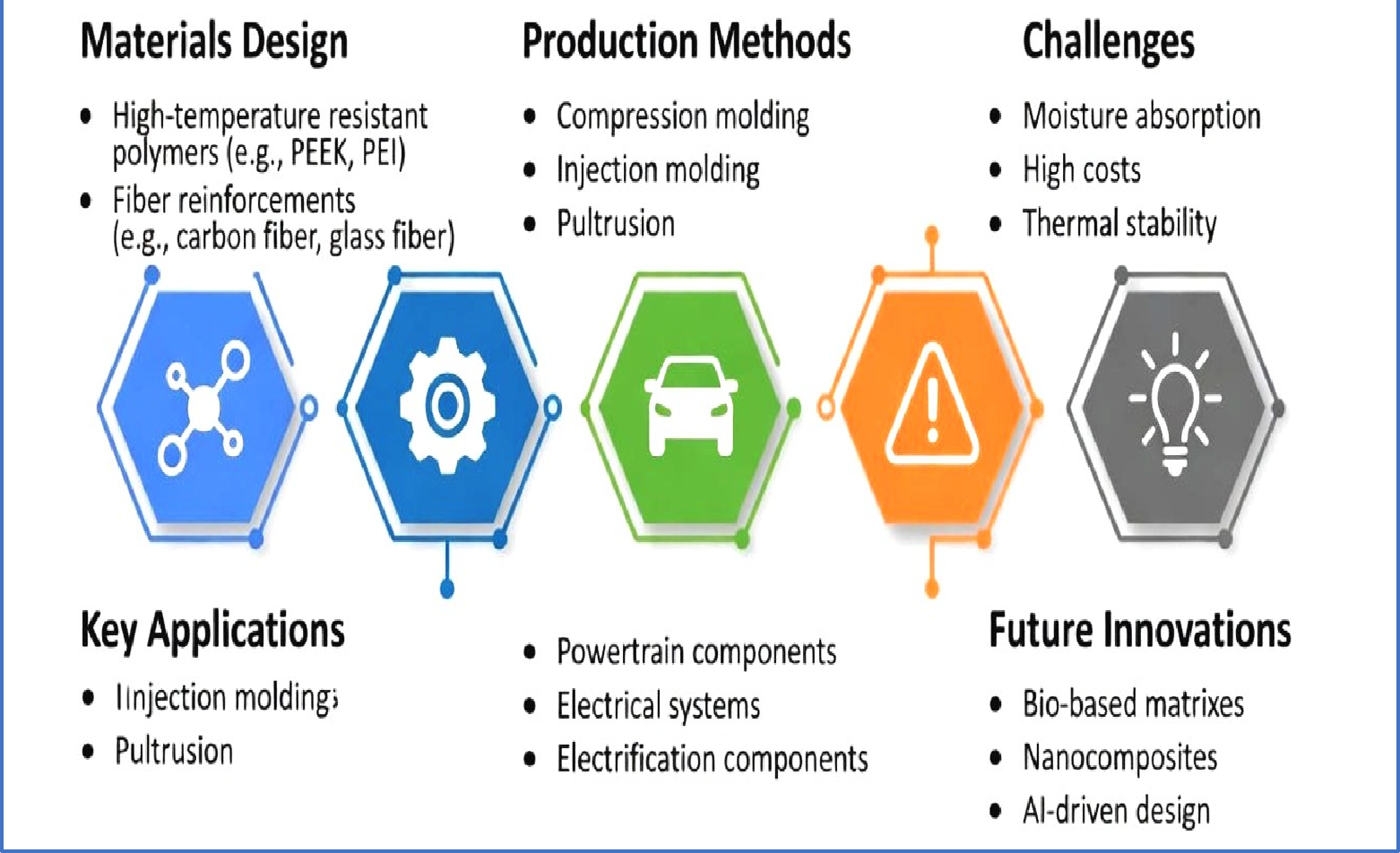
Highlights
• HT-PMCs enable >30% weight reduction in automotive powertrains and brakes • Thermosets (polyimides) and thermoplastics (PEEK, PPS) stable at 200–400°C • Key uses: turbochargers, e-motors, battery housings for thermal management • Challenges: moisture absorption, thermal aging, high production costs • Future: bio-based matrices, self-healing, AI-optimized composite design
Introduction
A composite material is a system formed of a large number of constituents, and the number of possible combinations is practically infinite. 1 The matrix mixture, types of reinforcement, additions made, and ratios of each component added to the mixture all play a major role in determining the properties of the final product.2,3 The choice of matrix depends on the intended use of the composite material. This study purposefully restricts its scope to composite materials composed entirely of organic matrices. Due to current economic and environmental concerns, the automobile industry has made developing more fuel-efficient vehicles a key goal.4,5 Since the introduction of fiberglass/epoxy composites in the 1960s, polymer matrix composites have been used in engine applications. Since then, various reinforcement/resin combinations have been developed to meet increased temperature requirements. Current state-of-the-art graphite/polyimide composites remain stable for thousands of hours at 600°C. Research at the Polymers Branch of the Lewis Research Center aims to develop new polymer matrix composite systems for use at 700°C and beyond. High-performance plastic materials provide designers with greater creative flexibility and can offer cost-effective and safe geometric solutions for producing components.
Plastic materials are dependable and in high demand in the automobile sector. In the future, we will need high-performance vehicles that are comfortable, safe, fuel-efficient, stylish, inexpensive, low-polluting, and easy to recycle. However, achieving this will require constant research and development. One of the main reasons for the growing use of plastics in automobiles is ongoing R&D. According to Patil et al., 6 plastic materials are now reliable and in demand in the automobile industry. They studied polymeric materials for automotive applications. The demand for high-performance cars that are comfortable, safe, stylish, economical, and environmentally friendly will only increase in the future. The continuous study and development of plastics is a significant factor in the material’s increasing use in vehicles.
Methodology
This critical review adopts a systematic yet selective approach to literature identification, screening, and synthesis, aiming to provide a comprehensive, evidence-based evaluation of high-temperature polymer matrix composites (HT-PMCs) for automotive applications. While not a full meta-analysis or exhaustive systematic review per PRISMA guidelines, the methodology follows key principles of structured searching and explicit selection criteria to minimize bias, ensure relevance, and focus on high-quality, impactful studies.
Search strategy
The literature search was conducted in January 2025 using three major academic databases: Scopus, Web of Science, and ScienceDirect. These databases were selected for their extensive coverage of materials science, polymer engineering, and automotive-related publications. Supplementary searches were performed on Google Scholar to identify emerging preprints, open-access articles, and relevant industry/technical reports not fully indexed in the primary databases.
The search employed a combination of targeted keywords and Boolean operators to capture the core themes of the review. The primary search string was constructed as follows:
(“high-temperature polymer matrix composite*” OR “HT-PMC” OR “high temperature polymer composite*” OR polyimide* OR bismaleimide* OR “polybenzoxazine*” OR PEEK OR PPS OR “polyether ether ketone” OR “polyphenylene sulfide”) AND (automotive OR powertrain OR electrification OR brake* OR “under-hood” OR “lightweight panel*” OR “thermal management”) AND (“thermal stability” OR “thermo-oxidative stability” OR “mechanical propert*” OR sustainable OR recyclable* OR “bio-based” OR “environmental performance”)
Additional variations included terms such as “hybrid architecture*,” nanofiller*, “self-healing,” and “AI-accelerated material*” to capture recent advancements. No strict language restriction was applied, but priority was given to English-language publications. The search was primarily limited to articles published from 2010 onward to emphasize recent developments, while seminal earlier works were included where necessary for foundational context.
Inclusion and exclusion criteria
Studies were screened in two stages: title/abstract review followed by full-text evaluation. The inclusion criteria were: • Focus on polymer matrices demonstrating sustained performance in the 200–400°C temperature range (thermosets such as polyimides, bismaleimides, and polybenzoxazines; thermoplastics such as PEEK, PPS, and emerging recyclable/bio-based blends).
7
–
9
• Explicit discussion of reinforcement strategies, processing techniques, mechanical/thermal properties, automotive-specific applications, or sustainability aspects. • Provision of quantitative or comparative data on performance metrics (e.g., tensile strength, glass transition temperature, thermal-oxidative aging, moisture absorption, or life-cycle assessment). • Publication in peer-reviewed journals, high-impact conference proceedings, or authoritative technical reports.
Exclusion criteria eliminated: • Purely theoretical or simulation-based studies lacking experimental validation. • Research focused exclusively on non-automotive sectors (e.g., solely aerospace or electronics applications). • Low-quality publications with insufficient methodological detail, inadequate characterization, or lacking peer review. • Review articles themselves (unless used for reference snowballing).
This screening process yielded over 120 high-quality references that formed the basis for the critical synthesis.
Data extraction and synthesis
Relevant information was systematically extracted into a structured framework covering matrix type, reinforcement, processing method, key performance metrics, automotive application examples, sustainability features, and identified limitations/trade-offs. The analysis combined narrative synthesis with comparative tables and trend identification to highlight progress, persistent challenges (e.g., moisture sensitivity vs recyclability), and emerging directions (e.g., bio-derived matrices, nanofiller enhancements, and AI-driven discovery). Emphasis was placed on critical evaluation rather than mere summarization, with particular attention to trade-offs, contradictions across studies, and research gaps. This methodology ensures a transparent, reproducible, and balanced foundation for the review, distinguishing it as a rigorous critical evaluation rather than an unstructured narrative overview.
Polymer composites
Formulation strategies and property enhancement in composite systems
The concept of formulation is very broad, as it encompasses all industries that develop intermediary or finished products by combining various raw materials. More precisely, formulation can be defined as the knowledge and operations involved in mixing, combining, or shaping natural or synthetic ingredients that are often incompatible with each other in order to obtain a commercial product characterized by its intended use and ability to meet specific requirements. To develop new materials with different qualities, disparate ingredients are combined to create composites. Composites have greater mechanical properties and are lighter, which decreases structural weight while preserving or enhancing mechanical capabilities. This is achieved by varying the composition, quantities, and filling direction of the matrix and filler.10,11
Due to the numerous applications of polymer composite materials, it is imperative to improve their strength, stiffness, density, and affordability. The industrial sector depends heavily on the sustainability of these materials, which is why further research is needed to improve their qualities. Recently, due to improved research and knowledge, polymer-based materials have become the material of choice for many applications and are rapidly replacing other materials (Figure 1). More advanced polymer-based materials are being developed daily as substitutes for other materials, even in areas where polymers were previously considered unsuitable.
12
In 2010, Carradò et al. demonstrated early advances in hybrid composite manufacturing by producing sandwich sheets via roll bonding and heat pressing.
13
Their design combined austenitic steel and aluminum face sheets with fiber-reinforced thermoplastic cores, achieving enhanced structural performance while reducing weight—a critical step toward modern HT-PMCs for automotive applications, Table 1. Polymer composite material types.
6
High-temperature polymer matrices for automotive composites.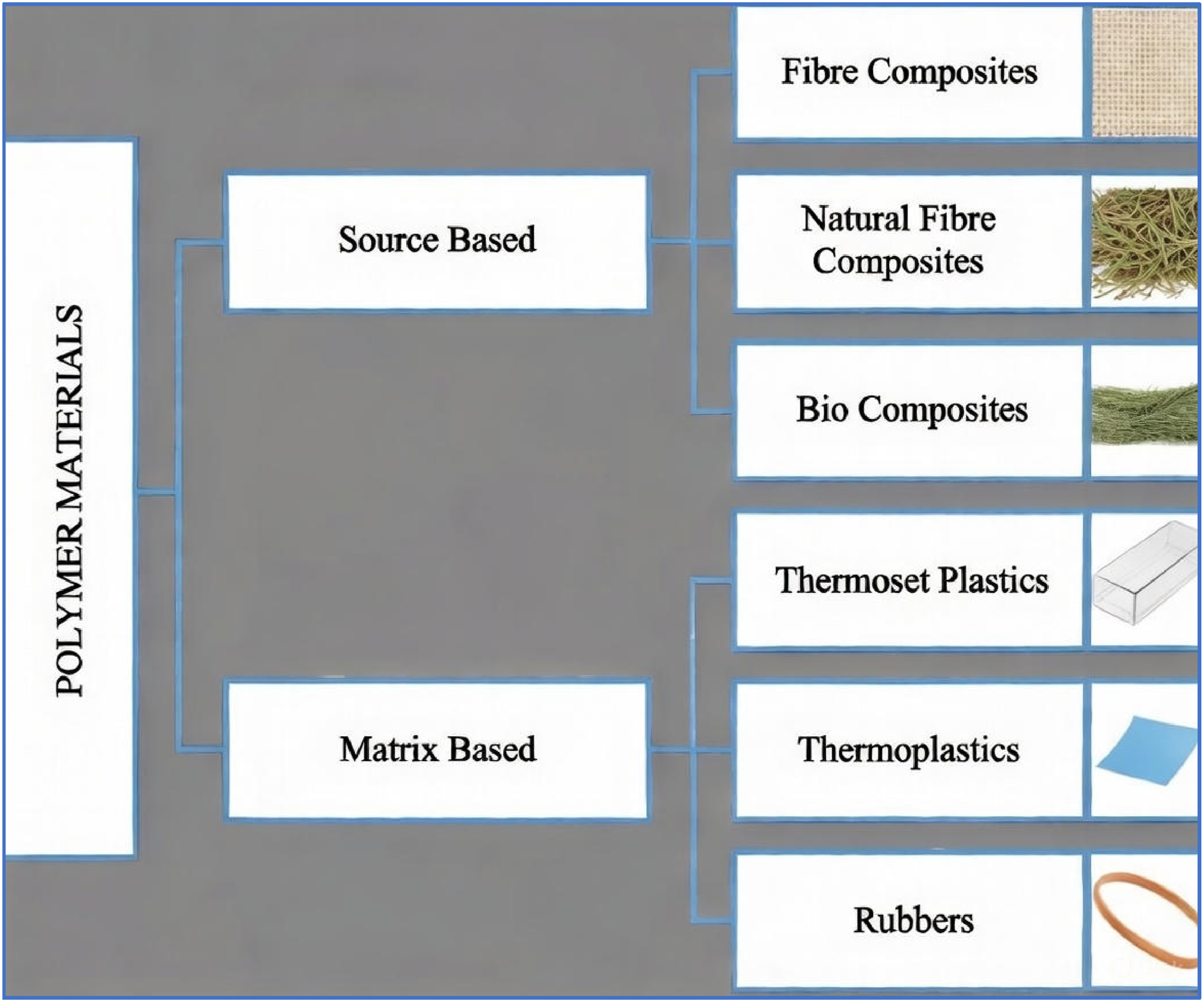
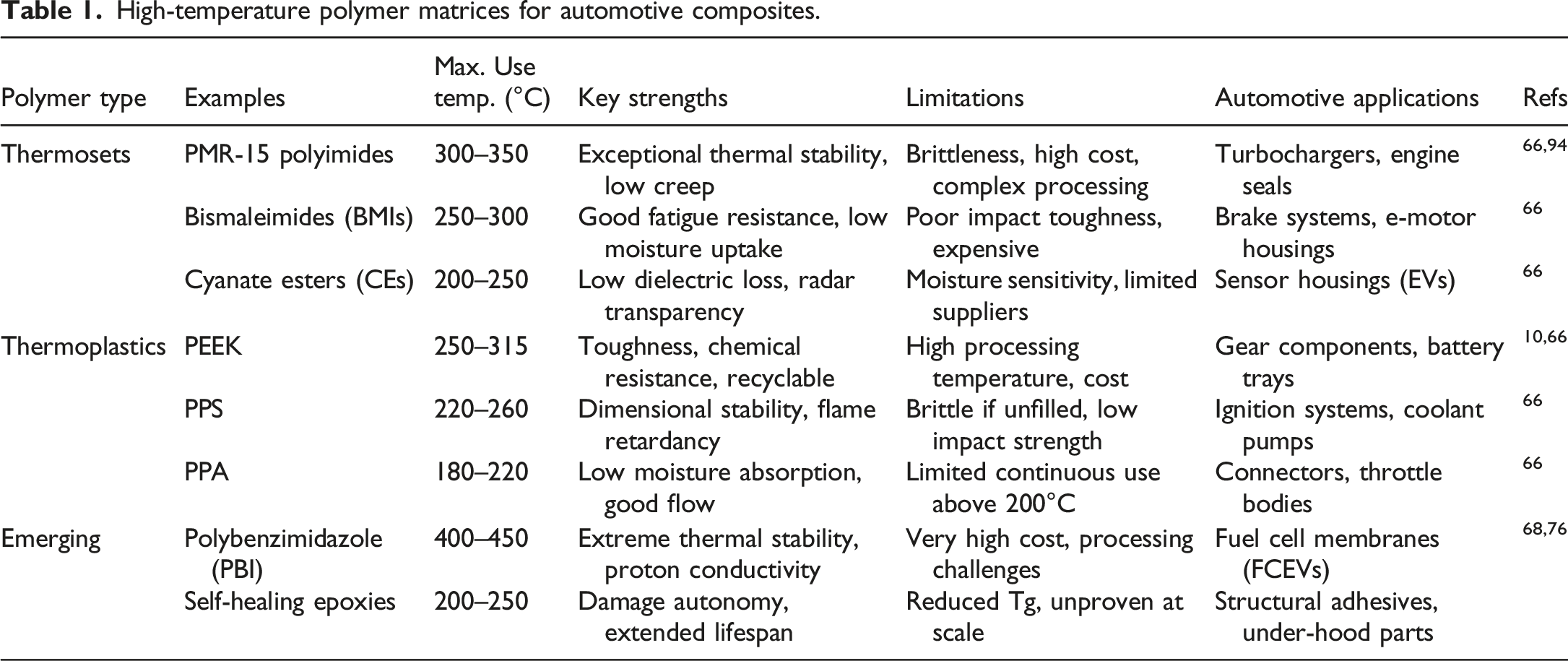
Table 1 critically compares these matrices, highlighting that thermosets like PMR-15 offer exceptional thermal stability up to 350°C but suffer from brittleness and high processing complexity, making them suitable primarily for niche applications such as turbochargers, whereas thermoplastics like PEEK provide superior toughness, chemical resistance, and recyclability at comparable temperatures (250–315°C), albeit at high processing costs. Emerging materials such as PBI show promise for extreme conditions (>400°C) in fuel cell applications, but their very high cost limits scalability; overall, thermoplastics appear more promising for broader automotive adoption due to better processability and end-of-life options, though trade-offs in cost versus thermal performance remain critical for industrial viability.
Over the past decade, numerous studies14–17 have examined the feasibility of using polymer composites in tribological applications. Many polymers and polymer composites are used in engineering applications where wear and friction are important factors. Contact tribology between metal and ceramic, as well as metal-on-metal, has received significant attention. However, polymer components are gradually replacing metals in bearings, flexures, housings, and structures, particularly in applications that require reducing vehicle weight. Polymer components offer advantages over metals in terms of weight reduction, cost savings, and improved performance.
Parandoush and Lin 17 conducted a comprehensive review of additive manufacturing techniques for fiber-reinforced polymers. They critically analyzed emerging 3D printing methods, including fused deposition modeling (FDM), laminated object manufacturing (LOM), stereolithography (SL), extrusion-based printing, and selective laser sintering (SLS). They systematically evaluated the relationships between processes, structures, and properties in these technologies, identifying key challenges and future research directions for aerospace and automotive applications.
Recent comparative investigations have clarified the distinct performance profiles of PEEK, PPS, and PBI in automotive composite applications. Nagaraj et al. 18 reported that carbon fiber–reinforced PEEK composites maintain tensile strengths above 120 MPa and thermal stability up to 350°C, even after extended thermal-oxidative exposure, making them highly suitable for turbocharger housings and engine covers. PPS composites, while exhibiting slightly lower mechanical retention, demonstrated superior chemical resistance in aggressive under-hood environments, particularly against fuels and lubricants. PBI, though less common in industrial deployment, was shown to deliver outstanding flame resistance and dimensional stability, positioning it as a candidate for electrical housings and brake system components where safety margins are critical. 18 These findings substantiate the structured comparison, highlighting how each polymer offers distinct advantages depending on the balance of thermal durability, mechanical integrity, and chemical compatibility required in specific automotive subsystems.
Life-cycle assessments revealed that bio-based modifications of PEEK and PPS can reduce carbon footprints by up to 25%, though trade-offs in long-term thermal stability persist. These results reinforce the importance of contextualizing material selection not only in terms of performance but also in terms of industrial feasibility and environmental impact. 19 Recent investigations have reinforced the comparative performance of PEEK, PPS, and PBI in demanding automotive environments. Vatandaş and Gümrük 20 demonstrated that short-fiber reinforced PEEK composites produced via additive manufacturing retained high tensile strength and dimensional stability under vacuum and elevated thermal conditions, confirming their suitability for lightweight transmission components and turbocharger housings. Similarly, Nagaraj et al. 18 reported that PPS composites, while exhibiting slightly lower mechanical retention than PEEK, offered superior chemical resistance against fuels and lubricants, making them particularly effective for electrical housings and under-the-hood parts. PBI, though less widely adopted, was highlighted for its exceptional flame resistance and thermal endurance beyond 400°C, positioning it as a candidate for brake system reinforcements and electrical insulation in extreme service conditions. 18 Beyond performance metrics, sustainability aspects have become increasingly critical in recent literature. A NASA technical memorandum 21 emphasized that recyclability challenges remain significant for high-temperature thermoplastics, particularly PEEK and PBI, due to their high processing temperatures and limited re-meltability. PPS blends, however, have shown promise in closed-loop recycling schemes, offering potential pathways toward circularity in automotive composites. 21 Life-cycle assessments further revealed that bio-based modifications of PEEK and PPS can reduce carbon footprints by up to 25%, though trade-offs in long-term thermal stability persist. 18
Fibre reinforced polymer composites
Reinforcement mechanisms: Synthetic, natural, and hybrid fibers
Detailed properties of natural fibres used as reinforcements.
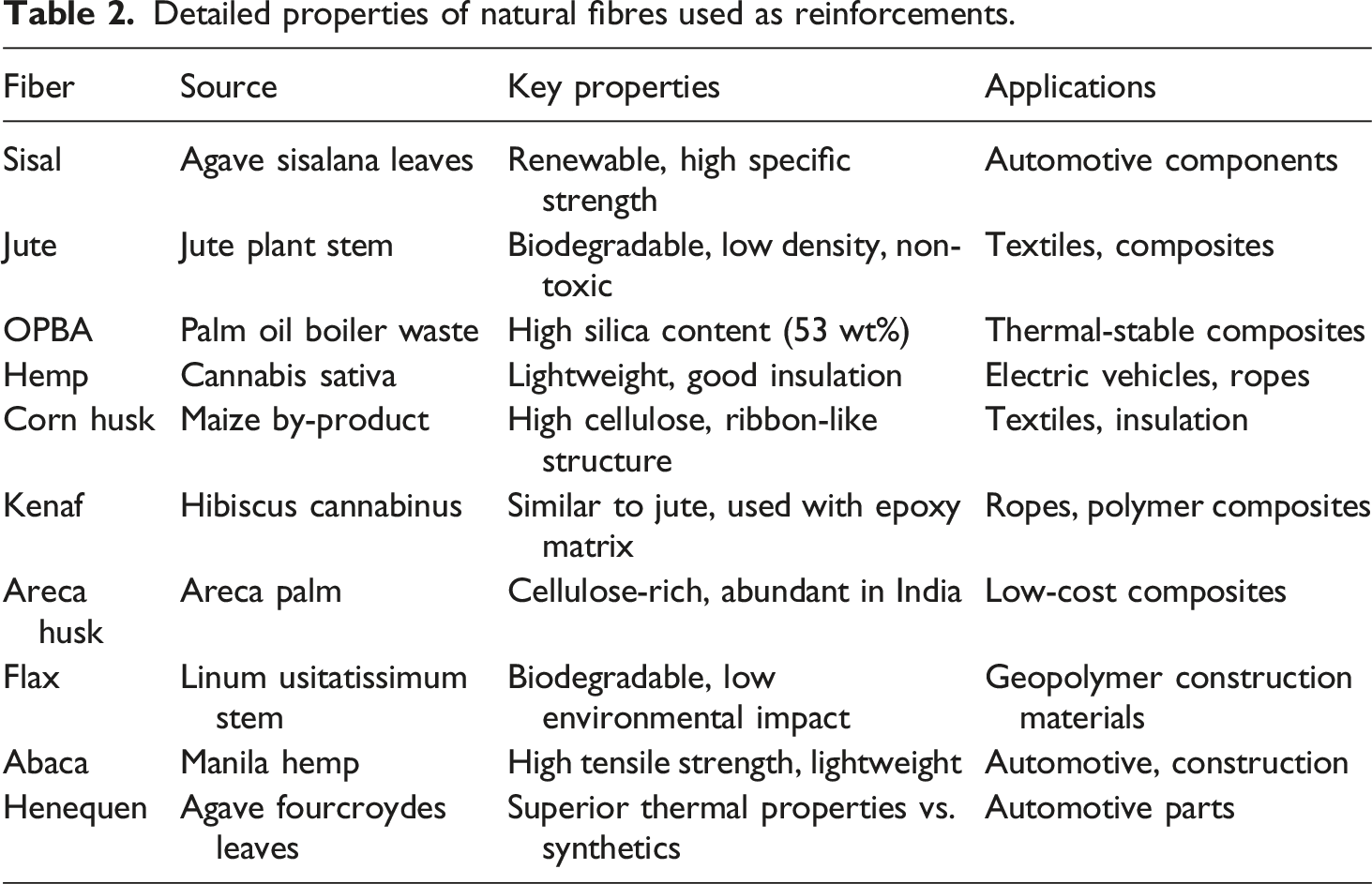
Table 2 highlights the balance between sustainability benefits—such as biodegradability, low density, and abundance in regions like India (e.g., areca husk and OPBA)—and limitations including thermal instability (<276°C for many), moisture absorption, and poor interfacial adhesion with polymer matrices. Fibers like flax and hemp stand out for their low environmental impact and vibration damping in electric vehicle components, while high-silica OPBA offers enhanced thermal stability; however, surface treatments (e.g., alkali or acetylation) are essential to improve compatibility, and hybridization with synthetics emerges as a practical strategy to bridge performance gaps for automotive use under real-world conditions.
Historical examples of composites include bamboo shoots used in houses, laminated wood used by the Egyptians, and metals used in sword forging. Modern composites, such as fiberglass, have been used in boats and aircraft. Since the 1970s, applications have increased due to new fibers and metal and ceramic matrices. Glass fibers, available in various forms such as roving, yarn, fabric, and mat, possess excellent properties such as high strength, flexibility, stiffness, and chemical resistance. Due to their unique mechanical, tribological, thermal, water absorption, and vibrational properties, these composites are widely used in various applications. Natural fiber-reinforced polymer composites are quickly gaining popularity because of their excellent mechanical performance, substantial processing benefits, affordability, and low density.24–26 In addition to being cheaper, renewable, and free of health risks, natural fibers solve environmental degradation by repurposing waste materials. Additionally, natural fiber reinforced polymer composites appear promising for replacing wood and wood-based materials in structural applications. Many plant fibers have been used to make industrial products. Based on the findings of this investigation, it may be possible to improve the qualities of polyester composites reinforced with jute fiber. However, very few studies have examined the characteristics of epoxy composites reinforced with glass fiber and jute, Figure 2. Main reinforcement materials.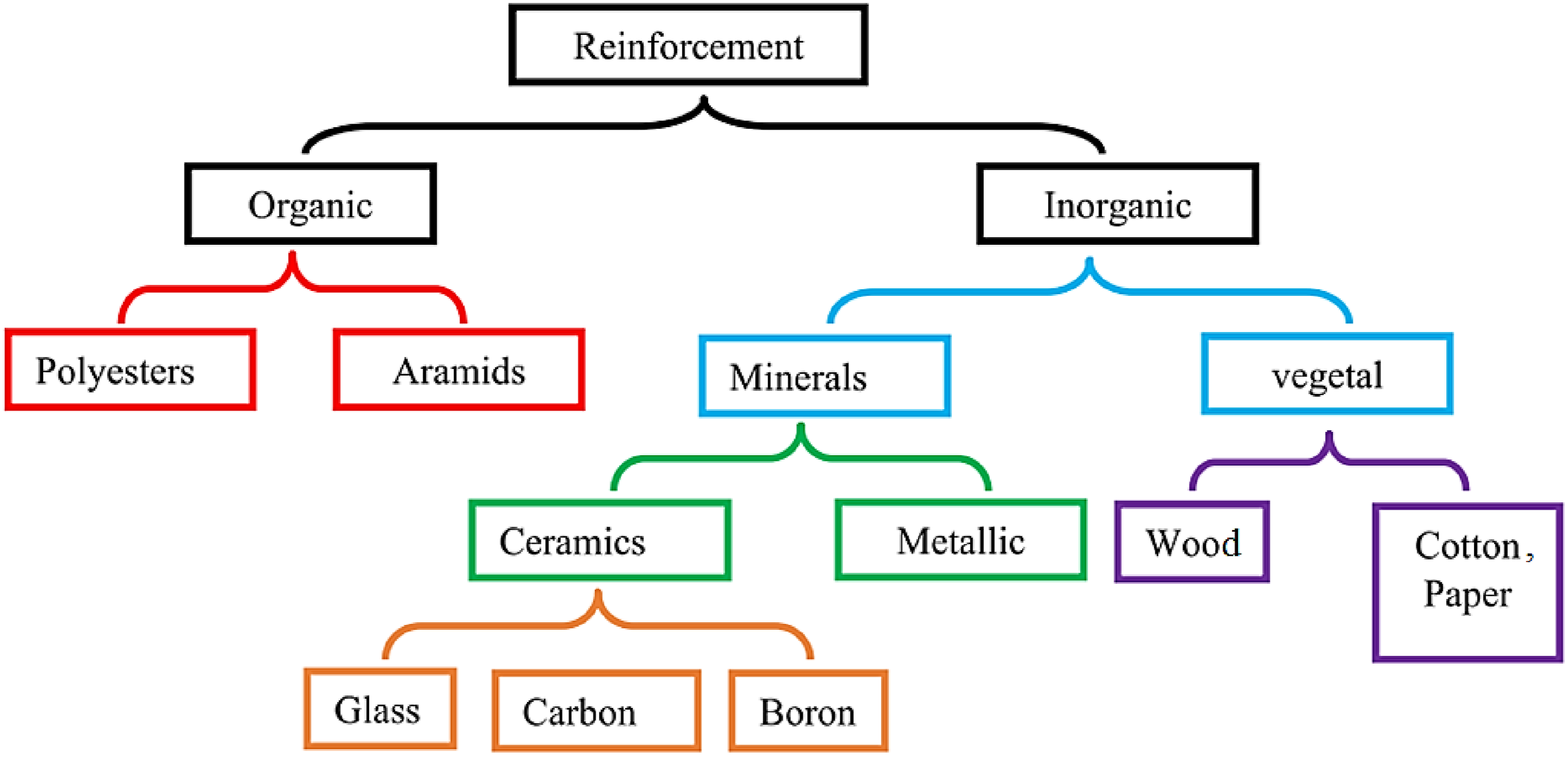
Recently, many researchers have focused on natural fiber composites intermingled with resins. These composites are already used in many engineering applications. These materials have the capability to fully degrade and are compatible with the environment. Natural fiber-reinforced biodegradable polymer composites appear to have a very bright future in a wide range of applications. These biocomposite materials, which have various interesting properties, may soon be competitive with existing fossil plastic materials. However, their limited production and high cost currently restrict their use in industrial applications. Results from many research platforms have shown that natural fiber composites can be successfully adapted for nonstructural, moderate load-bearing interior applications. Furthermore, morphological changes brought on by various chemical or physical processes can address minor defects in natural fibers. These modifications can also enhance the overall durability and performance of natural fiber composites.
Recent studies demonstrate that natural fiber composites exhibit complex electrical and tribological behaviors that are critical for automotive applications. The moisture sensitivity of lignocellulosic fibers directly affects their dielectric properties. Untreated fibers with a moisture content greater than 12 wt% exhibit elevated conductivity due to ionic transport through hydrophilic cellulose networks.27,28 Heat treatment at 150–200°C has been shown to improve electrical resistance by 30–40% through moisture reduction and polymer crosslinking; however, this must be balanced against potential fiber degradation. Dielectric analysis reveals characteristic temperature-frequency dependencies. The dielectric constant (ε′) increases nonlinearly with temperature (20–120°C) as thermal energy enhances dipole polarization. Meanwhile, dielectric loss (ε″) decreases by 15–20% per frequency decade above 1 kHz due to restricted molecular chain mobility. While chemical treatments like alkalization improve interfacial shear strength by 50–70%, they introduce thermal stability trade-offs by reducing the onset degradation temperature by 15–30°C through hemicellulose removal.
Hybrid systems demonstrate optimized functionality for tribological performance, as evidenced by Demirci et al.’s work on PA66 composites containing 20% glass fiber (GFR) and 25% polytetrafluoroethylene (PTFE). This ternary system achieves superior wear resistance (8 × 10⁻⁶ mm3/N*m at 80°C) through synergistic mechanisms. GFR provides thermal conductivity (1.2 W/m·K) to mitigate the heat accumulation of PTFE, and PTFE forms 200-nm transfer films that reduce friction (μ = 0.18–0.22) and counteract glass fiber abrasion. These materials meet the PV limits (2.5 MPa*m/s) required for 90% of automotive plain bearing applications, including transmission components and electric vehicle (EV) motor mounts. These findings highlight the necessity of multifunctional design approaches that address electrical insulation, thermal management, and wear resistance concurrently in natural fiber composites for next-generation vehicles.
Natural fiber composites exhibit thermal stability up to 240–355°C. Degradation onset is determined by the decomposition of lignocellulosic fibers.
29
Hemicellulose breaks down in the 240–260°C range, while cellulose degrades at 320–355°C. These limits constrain the use of natural fiber composites in high-temperature automotive applications, as components in these environments routinely exceed 200°C. Thus, thermal-resistant formulations are necessary for under-hood applications. Increase in energy dissipation events for composites with higher fiber content compared to those with lower fiber content. Composites with higher fiber content have better fiber-matrix interfacial bonding than those with lower fiber content.29,30 Numerous parameters influence the performance of multiscale composites, including matrix type, filler type, filler-host matrix interactions, and filler size and shape. Due to the tendency of nano-reinforcements to aggregate, several processing techniques are employed for possible uses of composites containing nano-reinforcements, as shown in Figure 3. These multifaceted fillers offer enhanced mechanical, thermal, electrical, and other qualities, such as self-healing, energy storage, and sensing ability. Multifunctional materials, also known as composites with multiple fillers, can greatly improve current technology.
31
Composite materials are fabricated using a variety of techniques, each of which is applicable to certain materials. The effectiveness of a manufacturing technique depends on the combination of the type and volume of the matrix or fiber material used because each material has different physical properties, such as melting point, stiffness, and tensile strength, Table 3. Therefore, manufacturing techniques are defined according to the choice of material.32,33 Reinforcements & hybrid systems in HT-PMCs. Reinforcements & hybrid systems in HT-PMCs.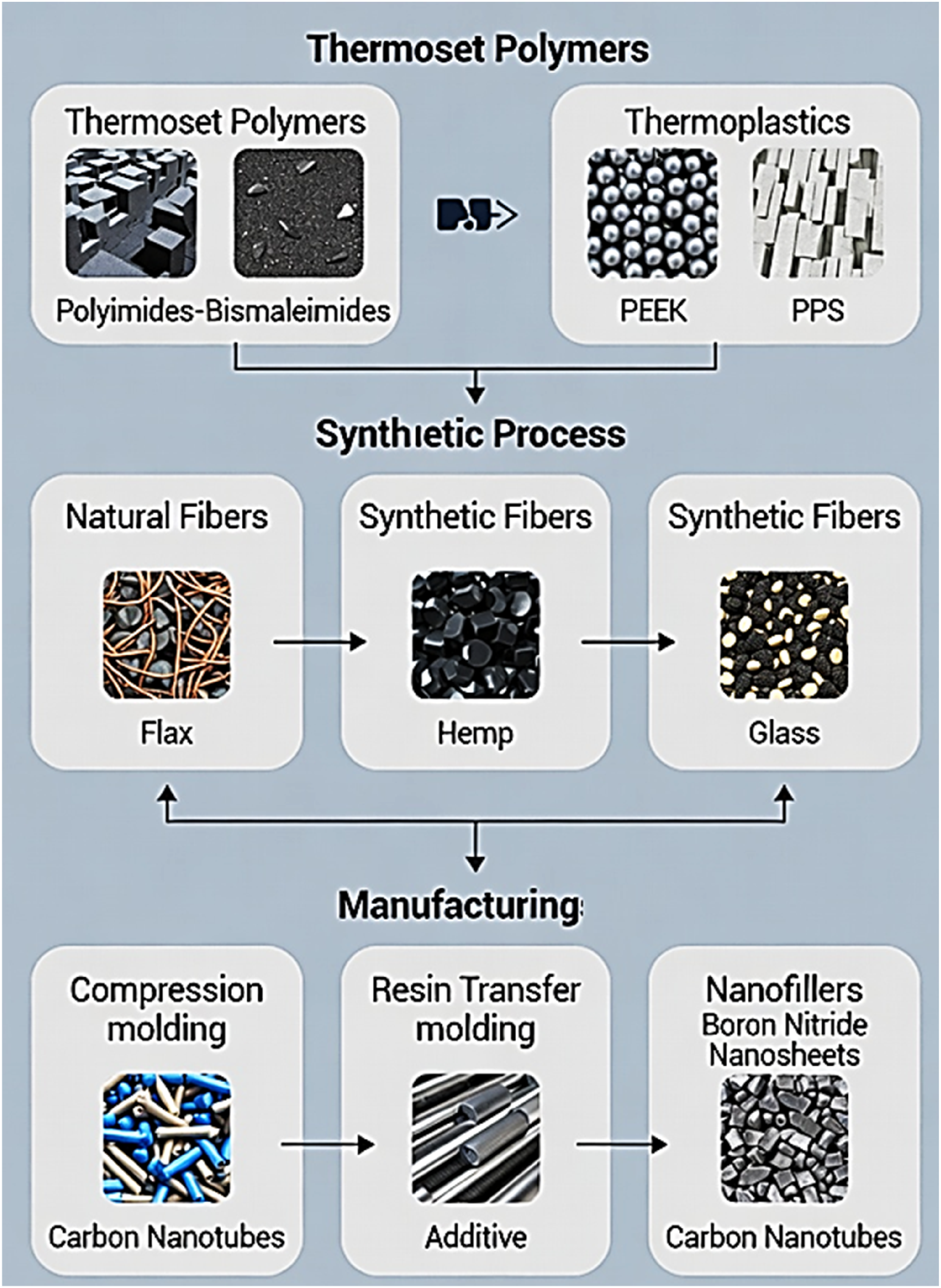
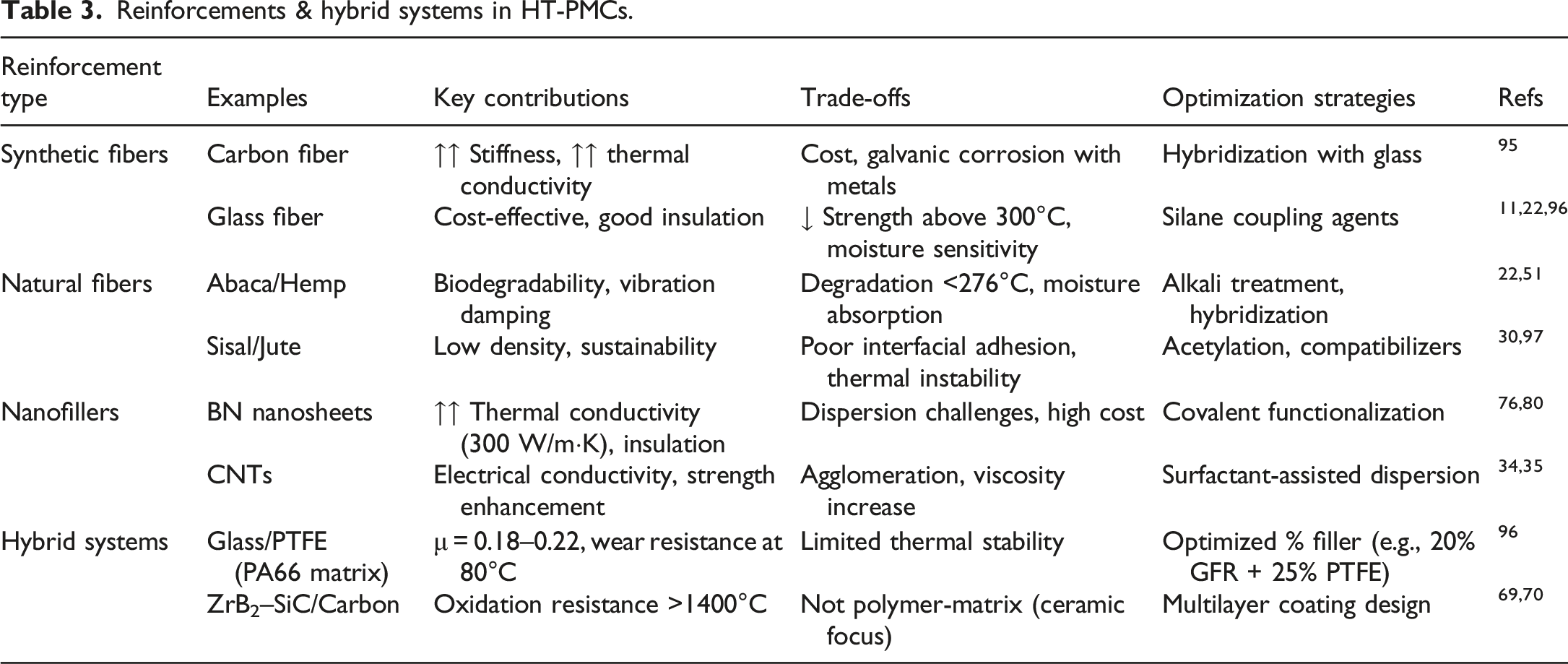
Table 3 critically addresses trade-offs, such as carbon fiber’s superior stiffness and thermal conductivity versus high cost and corrosion risks, mitigated through hybridization with glass; natural fibers provide biodegradability and damping but degrade thermally and absorb moisture, necessitating treatments like alkali or compatibilizers; nanofillers enhance conductivity and strength but face dispersion challenges. Hybrid systems (e.g., glass/PTFE in PA66) offer optimized wear resistance, indicating that strategic hybridization—balancing cost, sustainability, and performance—is most promising for scalable automotive HT-PMCs.
Research shows that carbon nanotubes (CNTs) can significantly strengthen plastics. 34 However, their tendency to clump together remains a challenge. Scientists are developing better methods for evenly distributing CNTs in plastics because even small, well-dispersed amounts can enhance the strength of the material. 34 The performance of these composites depends on key factors such as CNT concentration, size, and alignment. Progress has been made, but further research is needed to optimize these materials for widespread use. Looking ahead, nanocomposites are poised to transform industries much as plastics did in the last century.35,36 In the near term (within 5 years), applications such as automotive parts, electronics, and cosmetics are expected to drive commercialization. Medium-term developments (within 5–10 years) could include advanced sensors, lighting, and memory devices. Long-term breakthroughs (within 15+ years) could revolutionize aerospace, defense, and medical technologies. The potential benefits and applications of nanotechnology are vast and continue to expand.
Although nanocomposites show great promise, there are still critical challenges, particularly in achieving uniform nanotube dispersion and maximizing material strength. These challenges are particularly important for demanding applications, such as defense technologies like stealth systems, drone components, and advanced body armor, where performance standards are extremely high. Continued research is essential to overcome these limitations and realize the full potential of nanocomposites. Similarly, natural fiber-reinforced composites offer distinct advantages for automotive and construction applications by improving material strength and durability while providing sustainable benefits. However, they also face challenges in matching the long-term performance of traditional materials. 37 To become viable, eco-friendly alternatives for future industrial applications, both nanotube-enhanced and natural fiber composites will require further development through improved dispersion techniques, surface modifications, and optimized manufacturing processes.
The review’s emphasis on sustainable matrices, such as bio-based polyimides and recyclable thermoplastics, aligns closely with broader efforts to integrate eco-friendly reinforcements like natural fibers into high-temperature polymer matrix composites (HT-PMCs). Continued research is essential to overcome these limitations and realize the full potential of nanocomposites. Similarly, natural fiber-reinforced composites offer distinct advantages for automotive and construction applications by improving material strength and durability while providing sustainable benefits, including reduced environmental impact and renewability. However, they also face significant challenges in matching the long-term performance of traditional materials, particularly in high-temperature scenarios where natural fibers (e.g., flax, hemp, kenaf) exhibit thermal degradation starting at 170–200°C, limiting their viability in under-hood or powertrain applications compared to synthetic reinforcements. 38
These constraints highlight parallel research gaps in both nanofiller-enhanced and natural fiber-based systems, where issues such as poor dispersion, interfacial adhesion, moisture absorption, and thermal-oxidative aging persist despite advancements in surface modifications and hybrid architectures. For instance, while nanotube integrations improve modulus, fire retardancy, and dimensional stability in polymer nanocomposites suitable for automotive semi-structural parts, natural fiber composites are primarily confined to interior or non-structural components due to their hydrophilic nature and low heat resistance. 39 To become viable eco-friendly alternatives for future industrial applications—especially in demanding automotive electrification and lightweight structures—both nanotube-enhanced and natural fiber composites will require further development through improved dispersion techniques, surface modifications (e.g., chemical treatments or coupling agents), and optimized manufacturing processes, including AI-driven design to resolve trade-offs between sustainability, thermal endurance, and real-world performance. By bridging these approaches—such as developing hybrid systems combining bio-based high-temperature matrices with modified natural fibers or nanofillers—the field can address contradictions in literature regarding durability under automotive conditions and accelerate the transition toward next-generation, sustainable HT-PMCs that fully balance performance, recyclability, and environmental goals.
Automobile applications
Lightweighting and functional integration in automotive components
Researchers can use new and improved material compositions to increase efficiency and reduce costs. Composite materials are used in many fields, including the automotive and aerospace sectors, sports equipment, and manufacturing. Using environmentally friendly materials is encouraged to reduce the carbon footprint, and there are strict legal regulations in place. Previously, most auto parts were made of metal or metal alloys, but today, many auto parts are made of polymers or plastics.38–41 These materials can potentially be manufactured at a low cost and offer advantages in terms of density and processing compared to the metals and polymeric composites currently used in the fabrication of parts for automotive applications. The current challenge is to develop competitive, high-performance nanocomposites to replace metals and/or existing polymer-filled composites. Several strategies have been introduced to develop innovative materials and replace heavy metals with lightweight polymer composites. These materials offer greater potential than heavier materials for increasing vehicle efficiency, decreasing fuel consumption, reducing vehicle weight, and avoiding corrosion in the automotive industry. 42
Hybrid composites are developed by blending natural and/or synthetic fibers in a single matrix. This process enhances the physical, mechanical, and thermal properties of the composites. Hybrid composites achieve a better combination of properties than individual fiber composites. Natural fibers, such as cotton, flax, hemp, jute, and sisal, are used as reinforcing fillers in thermoset or thermoplastic polymer matrices for a variety of applications. 43 Depending on the matrix, natural fiber polymer composites (NFPC) are categorized as either completely or partially biodegradable. Completely biodegradable polymer composites are reinforced with natural fibers and polymers produced by bio-based monomers (polylactic acid [PLA]), polymers extracted from biomass (proteins and polysaccharides), or polymers produced directly from microorganisms (PHA).
Manufacturing challenges & innovations.
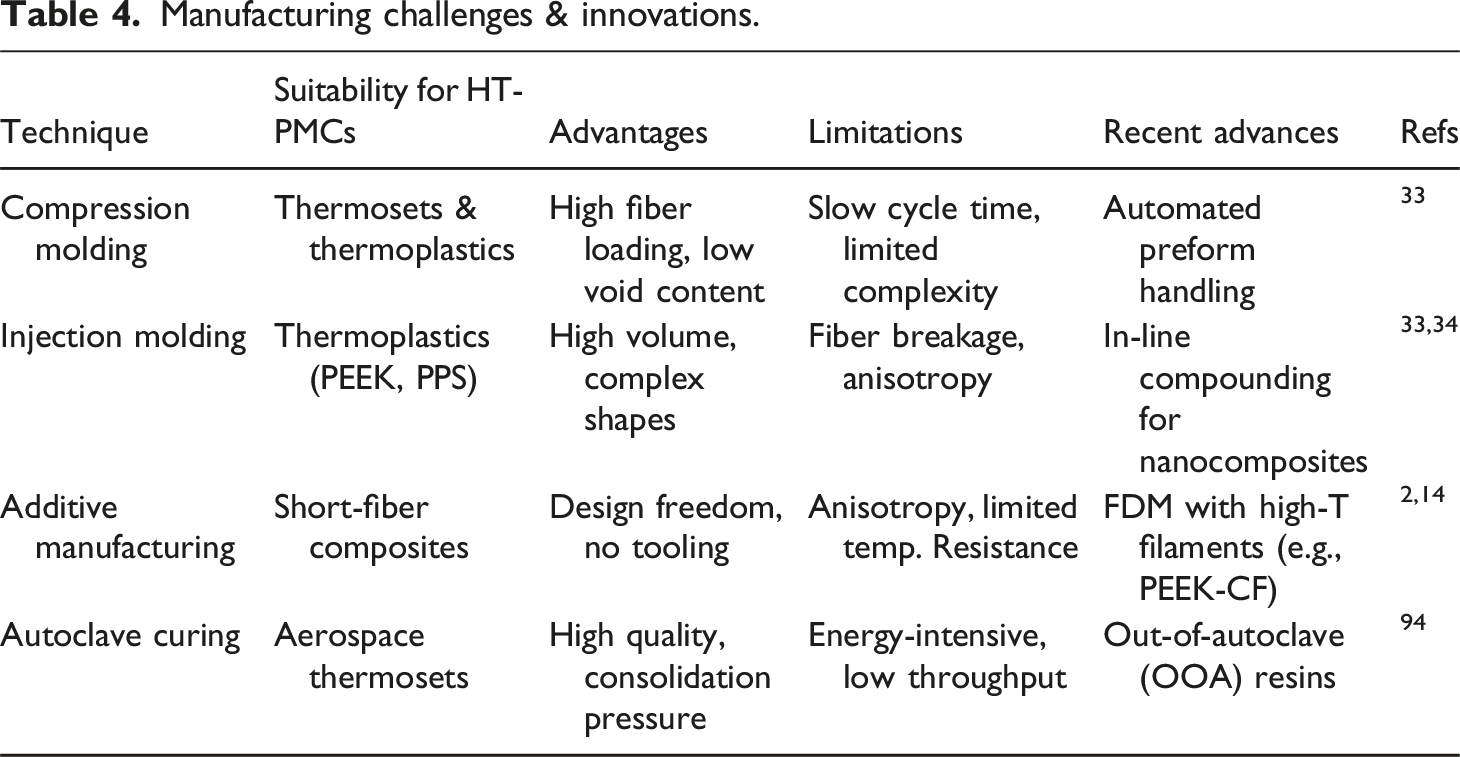
Table 4 emphasizes trade-offs between high-quality consolidation (e.g., autoclave for thermosets) and industrial scalability (e.g., injection molding for thermoplastics like PEEK/PPS enabling high-volume complex shapes), with limitations such as fiber breakage and energy intensity. Recent advances like automated preforms, in-line compounding for nanocomposites, and out-of-autoclave resins, alongside FDM for high-T filaments, point toward additive manufacturing and thermoplastic processing as increasingly viable for cost-effective, design-flexible automotive production, though anisotropy and temperature resistance remain key hurdles.
Automotive applications & performance gaps.
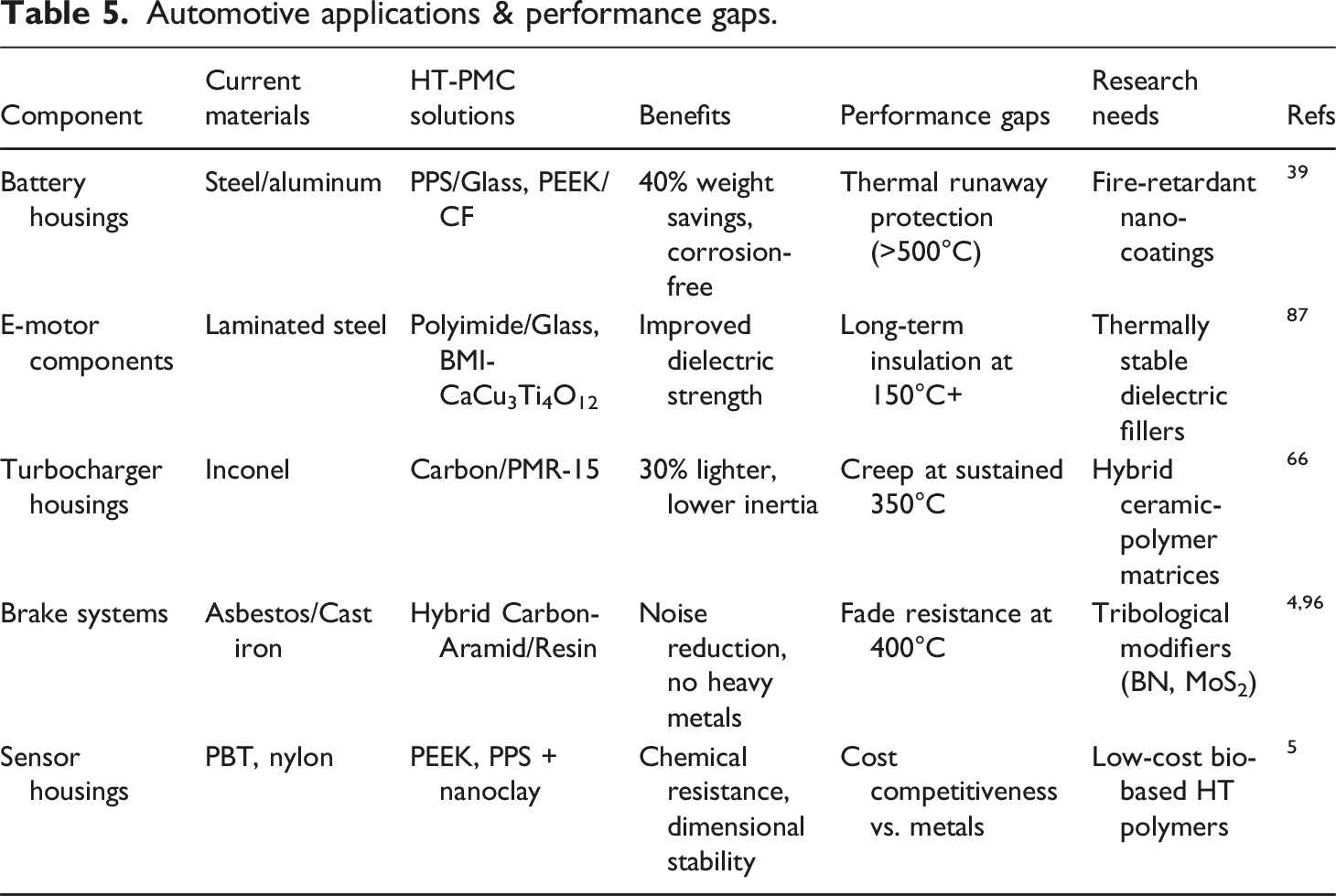
Table 5 critically compares options, noting that PEEK/CF or PPS/glass offer 30–40% weight savings and corrosion resistance over metals, yet critical performance gaps persist in thermal runaway protection (>500°C) and fade resistance at 400°C. Solutions like fire-retardant nano-coatings and tribological modifiers (BN, MoS2) show promise, but cost competitiveness and long-term stability under extreme conditions highlight the need for hybrid ceramic-polymer approaches and low-cost bio-based HT polymers to bridge gaps toward widespread adoption.
Asuquo’s 51 study of hemp fiber-reinforced polypropylene composites revealed their potential for automotive lightweighting. Recycled matrices exhibited 35% greater compressive strength than their virgin counterparts. From a tribological perspective, the composites reduced wear rates by 90% compared to pure polypropylene (PP), which is attributed to fiber-induced transfer films and interfacial strengthening. However, thermal degradation below 276°C and trade-offs in fracture toughness at high fiber loadings underscore the need for surface modifications or hybrid reinforcements to expand their applicability. These findings align with industry priorities for sustainable materials, yet they also emphasize unresolved challenges regarding long-term durability under thermal cycling. These composites, made from fibers such as jute, flax, and kenaf, offer benefits such as low weight, biodegradability, and cost savings. However, their use in bumper beams is limited due to their lower strength and impact resistance compared to synthetic alternatives. Researchers are combining natural fibers with technologies like carbon or glass fibers to improve performance. While some composites reach flexural strengths comparable to traditional materials, impact resistance remains a challenge.52–54
The acoustic absorption characteristics of biofibre/PLA composites with densities ranging from 0.2 to 0.8 g/cm3 were measured. 55 The structure of the composite was felt-like at lower densities. The maximum acoustic absorption coefficient was recorded by the biofibre/PLA composite at a composite density of 0.35 g/cm3. The polymer filled in the spaces at larger densities, causing the acoustic absorption characteristics to diminish. Simmonds et al. 56 claim that intumescent technology can achieve lightweighting objectives and thermal requirements. The application of bio-filler-recycled waste plastic-based composites for the majority of car interiors, where moderate mechanical, excellent wear, and water resistance qualities are needed, was also evaluated by Koronis et al. 57 and further shown by Oladele et al. 58 Polylactic acid (PLA) provides the best mechanical performance in Cunha et al.’s 59 study, although thermal stability has to be confirmed. Important developments focus on interface engineering and less complicated fiber treatments (like washing), which work better than intricate alterations. Production-recycling economics and thermal/odor characterization still face significant obstacles. Structural adoption requires standardized sustainability frameworks that are in line with local laws. A multi-layered flatbed weft-knitted glass fiber/polypropylene composite reinforced with 3D textile was compared to two reference materials by Hufenbach et al. 60 In complexly shaped automobile parts, the composite’s superior draping behavior and increased energy absorption capacity make it appropriate for crash and impact applications. Comparable in-plane characteristics were shown, and strengthening the fiber/matrix interphase further improved them.
Grujicic et al. 61 propose “clinch-lock joining,” an innovative PMH technology using dovetail-shaped joints for load-bearing automotive BIW components. This technology offers strong polymer/metal mechanical interconnectivity without specialist adhesives and eliminates the need for pre-drilled metal holes or overmolded flanges. 62 Initial simulation and injection-molding studies validate its capabilities, but further evaluation is needed for integration into BIW production chains and end-of-life recyclability. Wood-plastic composites (WPCs) are sustainable, biodegradable, and eco-friendly materials made from plant fibers. These materials offer low density, high strength, stiffness, biodegradability, and safe handling, making them carbon-neutral at the end of their lifecycle. WPCs are increasingly used in the automotive industry due to their superior strength-to-weight and stiffness-to-weight ratios, enhancing performance, reducing weight and fuel consumption, and improving safety and biodegradability. Cellulose-based micro- and nano-material breakthroughs in green, sustainable, fuel-efficient, stronger, and lighter cars are a result of intensive research and development efforts. 63 High melting engineering thermoplastics can produce composites of cellulose fiber without compatibilizers and surface treatment, saving time and money. These materials are attractive for parts and components in the automotive industry, such as side panels, dashboard components, and radiator end tanks. Future studies will focus on performance improvement of cellulose-based micro-and nano fillers.
Recent advances in sustainable high-temperature polymer matrices have significantly expanded the scope of automotive composites research. Daghigh et al. 7 provided a comprehensive review of polyimide-based composites, highlighting their improved thermal stability and mechanical performance when reinforced with carbon and ceramic fillers, with operating ranges extending beyond 350°C under automotive service conditions. In parallel, Bcomp’s 64 natural fiber bio-composites used in motorsport applications, have reduced weight and minimised carbon footprint without compromising mechanical integrity. These findings underscore the growing relevance of bio-derived resins and natural fiber reinforcements, which not only meet performance benchmarks but also align with circular economy mandates in the automotive sector.
Nanofiller reinforcement strategies have also emerged as a critical pathway for enhancing durability and multifunctionality in high-temperature polymer composites. Nagaraj et al. 18 demonstrated that hybrid nanofiller systems in PEEK and PPS matrices improved interfacial bonding, resulting in enhanced tensile strength and thermal-oxidative resistance under under-the-hood automotive conditions. Similarly, Singh et al. 65 reported that the incorporation of carbon nanotubes and graphene into thermoplastic matrices significantly boosted electrical conductivity and thermal management, making them suitable for electrification components such as battery enclosures and motor housings. These studies highlight the trade-offs between recyclability and advanced performance, as nanofiller integration often complicates end-of-life processing.
High temperature applications
Thermostable matrices and ultra-high-temperature performance challenges
Unlike their historical development for aerospace, where extreme performance frequently justified high cost and complex processing, 66 automotive applications place extremely strict requirements on them, including proven long-term reliability under combined environmental stresses, radical cost reduction, and high-volume manufacturability. Because of their high cost, manufacturing complexity, and brittleness, high-performance thermosets such as bismaleimides (BMIs), cyanate esters (CEs), and PMR polyimides, which have historically been used in aerospace for temperatures beyond 250°C, are mostly unsuited for use in popular automobiles. Rather, high-performance thermoplastics, particularly polyetheretherketone (PEEK), polyphenylene sulfide (PPS), and polyphthalamide (PPA), have become the leading candidates due to their inherent toughness, quick processing cycles (which allow for high-volume processes like injection and compression molding), and increased potential for recycling.
The need for thermal stability in applications like oil/gas drilling instruments, planetary exploration vehicles, and electric vehicles (EVs) motivates research into high-temperature electrochemical energy storage (EES) systems. 67 For these uses, components must be able to withstand extreme temperatures and elevations. Although systems are moving toward safer, non-flammable electrolytes as a result of advancements, there are still significant issues with thermal, chemical, and electrochemical stability at high temperatures, which results in limited lifespans. It is emphasized that in addition to electrodes and electrolytes, polymer-based components (binders, separators) require greater heat stability. Also, the most important developments in high-temperature polymer fuel cell membranes were covered by Quartarone et al. 68 The greatest option for creating effective and long-lasting membranes is still polybenzimidazole-based moieties and their blends and composites, notwithstanding the recent proposal of other polymer matrices. The exceptional proton conductivity of PBI is probably due to the special physico-chemical characteristics of the H3PO4 doping agent, which have been thoroughly studied in recent years.
Critical challenges & mitigation strategies.
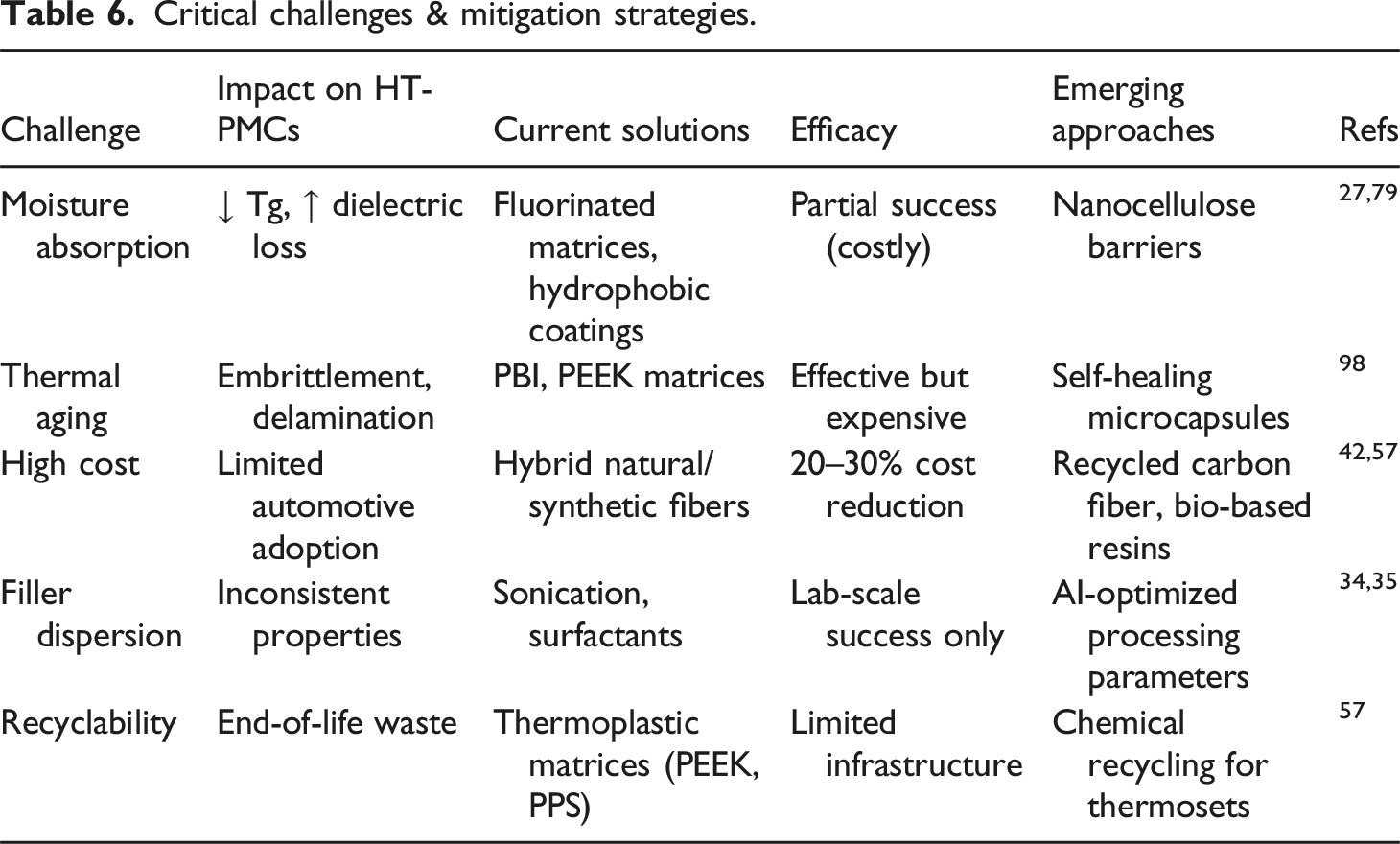
Table 6 synthesizes key insights, such as the partial efficacy of hydrophobic coatings and fluorinated matrices against moisture (still costly), the promise of self-healing microcapsules and PEEK/PBI for thermal aging, and 20–30% cost reductions via hybrid natural/synthetic fibers or recycled carbon. Recyclability remains limited for thermosets despite thermoplastic advantages (PEEK, PPS), with emerging chemical recycling and AI-optimized dispersion offering pathways forward; overall, integrating sustainability with performance through recycled/bio-based materials and advanced processing is essential for overcoming barriers to industrial scalability in automotive applications.
While ultra-high temperature ceramics (UHTCs) such as ZrB2–SiC and HfB2–SiC composites exhibit exceptional thermal stability, with melting points exceeding 3000°C and superior oxidation resistance up to ∼2000°C or higher in extreme environments, they primarily serve as benchmarks for high-temperature performance in aerospace applications like hypersonic vehicle leading edges and thermal protection systems. These materials demonstrate significantly higher thermal conductivity (often 50–150 W/m·K at elevated temperatures) and ablation resistance compared to conventional composites. However, their implementation in automotive systems remains highly limited due to several critical drawbacks, including the need for extreme processing conditions (e.g., hot pressing at temperatures >1900°C and high pressures), high production costs, low fracture toughness leading to brittleness, and overall incompatibility with the lightweight, cost-effective, and scalable manufacturing requirements of polymer matrix composites used in automotive components. Thus, while UHTCs provide a valuable reference point for assessing extreme thermal performance, polymer-based composites remain the most practical and industrially viable choice for automotive high-temperature applications.71–74
Fahrenholtz et al. 75 have examined both modern and historical findings on the oxidation behaviour of diboride ceramics at extremely high temperatures. HfB2 and ZrB2 both experience stoichiometric oxidation. When additives are not present, the protective oxide scale that develops at temperatures lower than 1100°C results in parabolic mass gain kinetics. On the other hand, creating a layered surface structure that would minimize negative impacts from chemical or mechanical incompatibility while offering oxidation protection would make for better oxidation protection. Therefore, even though the oxidation behaviour of diborides at ultra-high temperatures has been studied for a long time, more research could improve the oxidation behaviour of this class of materials, control the development of microstructures in the layered oxide scale, and gain a better understanding of oxidation mechanisms.
Recent advances in thermally conductive polymers leverage complementary strategies: molecular alignment in epoxies, intrinsic thermal stability in specialty resins, and optimized filler composites.76–78 Koda et al. 77 demonstrated that molecular ordering in liquid-crystalline epoxy resins critically governs thermal conductivity, with simulations revealing an “even-odd effect” where even-numbered methylene spacers achieve 15–20% higher alignment orders than odd-numbered counterparts, directly correlating with experimental phonon-mediated heat transfer (R2 > 0.9). For ultrahigh-temperature applications (>400°C), Chen et al. 76 developed polybenzimidazole (PBI) resins via melt polycondensation, exhibiting exceptional thermal stability with decomposition onset at 516°C and peak degradation at 536°C outperforming conventional BMI/polyimide resins in aerospace environments. To overcome intrinsic polymer limitations (0.1–0.5 W·m−1 K−1), Huang et al. 78 systematically reviewed filler-enhanced composites, highlighting boron nitride (BN) as optimal for dielectric applications due to its high thermal conductivity (29–300 W·m−1 K−1), electrical insulation, and low CTE. Critically, surface treatments (e.g., silanization) reduce interfacial phonon scattering, boosting epoxy/BN composite conductivity by >20% at 57 vol% loading, while high-aspect-ratio fillers enable percolation pathways at lower thresholds. Synergistically, Koda’s alignment strategy minimizes interfacial resistance in epoxies, a major bottleneck in Huang’s filler composites while PBI’s intrinsic stability provides a matrix solution for extreme environments where fillers degrade.
Complementing molecular design and filler strategies, experimental heat distortion temperature (HDT) testing provides critical validation for high-temperature polymer performance. Ahmed et al. 79 fabricated vinyl ester/polyurethane interpenetrating networks (IPNs) via vacuum bag molding, systematically evaluating HDT per ASTM D648. Their findings revealed that an 80:20 vinyl ester/polyurethane ratio achieved optimal elasticity and toughness – with HDT values 15–25% higher than other ratios (e.g., 60:40 or 20:80) that failed to form stable IPNs. 79 Azizi et al. demonstrated that chemical vapor deposition (CVD)-grown hexagonal boron nitride (h-BN) films transferred onto polyetherimide (PEI) substrates suppress electrical conduction losses near the glass transition temperature. 80 This “sandwich” architecture (h-BN/PEI/h-BN) creates a 5.1 eV electron barrier at interfaces, triple the barrier of bare PEI/Au interfaces, reducing charge injection and Joule heating. Consequently, the composite achieved >90% charge-discharge efficiency at 300 MV m−1 and 200°C, delivering 1.19 J cm−3 energy density, double that of cross-linked bisbenzocyclobutene/BN nanosheet composites (c-BCB/BNNS) and outperforming pristine PEI by 400% at equivalent conditions. Xu et al. pioneered a spider silk-inspired strategy where covalently bonded hexagonal boron nitride (BN-BCB) nanosheets anchor poly (aryl ether sulfone) (DPAES) chains, mimicking the β-sheet/protein confinement of natural silk. 81 Critically, covalent “molecular locks” between BN and DPAES suppressed chain mobility and charge hopping, reducing conduction loss by 50% versus physical blends. This bioinspired design validates Chen’s intrinsic stability principle (PBI) and Koda’s alignment theory at the nanoscale while overcoming dispersion limits in Huang’s filler composites.
Critically, NFCs bridge the gap between performance and planetary boundaries: Their adoption in EVs aligns with Xu’s high-efficiency capacitors (>90% at 150°C) to enable decarbonized transport, while their low embodied energy (2–4 MJ kg−1 vs 30–50 MJ kg−1 for carbon fiber) supports sustainable infrastructure. As industries accelerate toward net-zero goals, NFCs and high-temperature polymers form a complementary materials paradigm balancing operational extremes with circular design. 82 Liaw et al. comprehensively reviewed advanced polyimide materials, emphasizing monomer design strategies (noncoplanar, fluorinated, alicyclic, and unsymmetrical structures) to enhance solubility, thermal stability, and optical/electrical properties. They documented synthesis routes, including novel polymerizations (e.g., Mitsunobu, Diels-Alder), and correlated structure-property relationships. The work highlights key applications: photoresists, gas-separation membranes, fuel cell polyelectrolytes, electrochromics, electroluminescent devices, polymer memory, and nanocomposites. Critical advancements include sulfonated polyimides for proton conduction, triphenylamine-based electrochromics, and carbon-nanotube hybrids for conductivity tuning. The review underscores polyimides’ versatility in high-performance fields like aerospace, electronics, and energy technologies, providing a roadmap for tailored material design. 83
Kotera et al. used T-MDSC to resolve overlapping transitions (imidization, solvent evaporation, crystallization) during polyimide formation. They identified the glass transition of PMDA-ODA PAA (107°C for NMP-cast) and showed Tg increases with PI conversion due to cyclization-induced rigidity. Solvent systems dictated kinetics: THF/MeOH accelerated imidization (higher Tg = 122°C) via stronger polymer affinity, while NMP’s plasticization slowed the process. 84 Venkat et al. found that fluorinated polybenzoxazoles, adamantane-functionalized polyimides (PI-ADE), and diamondoid-incorporated fluorenyl polyesters (FDAPE) serve as dielectric films for aerospace capacitors operating at 250–350°C. These films exhibited exceptional thermal stability, low TCC, ultra-low dissipation, high breakdown strength, and stable dielectric constants, alongside minimal hysteresis during thermal cycling and retained mechanical integrity, addressing limitations of commercial polycarbonate dielectrics. 85 Li et al. engineered crosslinked polymer nanocomposites (c-BCB/BNNS) with boron nitride nanosheets (BNNSs) to overcome conventional polymer dielectrics’ sub-105°C operational limits. The nanocomposites achieved record-high performance at 250°C: a breakdown strength of 403 MV m−1 and energy density of 1.8 J cm−3, enabled by a 10,000-fold reduction in electrical conductivity and 9× higher thermal conductivity that prevents thermal runaway. They demonstrated unprecedented dielectric stability while remaining mechanically flexible, photo patternable, and lightweight, enabling harsh-environment applications where polyimides fail. 86
Bhalerao et al. studied polymer matrix composites (PMCs) for high-voltage applications (e.g., bushings, insulators, circuit breakers), highlighting their mechanical superiority via higher specific strength, stiffness, and reduced weight versus metals. PMCs offer dielectric tunability with fillers like CaCu3Ti4O12, reducing losses but exhibiting sensitivity to filler concentration and temperature. Challenges include moisture-induced flexural strength degradation and the need for thermoset matrices for high-temperature stability. 87 Plesa et al. explored polymer micro/nanocomposites for high-voltage insulation, focusing on XLPE and epoxy resins with inorganic fillers. Nanocomposites outperformed micro composites and unfilled polymers due to extensive interfacial regions that suppress space charge accumulation, reduce permittivity, enhance partial discharge resistance, and improve breakdown strength. However, homogeneous dispersion challenges necessitate surface modifications, and while electrical/thermal performance excels at low filler loadings, mechanical properties vary. 88
Among the various polymer composite strategies evaluated, certain approaches demonstrate strong potential for industrial adoption in automotive applications due to their favorable combination of scalability, cost-effectiveness, compatibility with high-volume manufacturing processes (such as compression molding or injection overmolding), and proven high-temperature performance. For instance, glass fiber-reinforced thermosets (e.g., sheet molding compounds, SMC) and emerging carbon fiber-reinforced thermoplastics (CFRTPs) stand out for their ability to achieve significant lightweighting while offering relatively mature processing routes, shorter cycle times, and enhanced recyclability compared to traditional counterparts. These attributes make them particularly attractive for semi-structural and structural components in mass-produced vehicles, where production volumes exceed 100,000 units annually. In contrast, many advanced solutions—such as high-performance thermoset carbon fiber composites with conventional epoxy matrices—face substantial barriers to widespread implementation, including elevated raw material and processing costs, limited recyclability owing to their crosslinked nature, insufficient long-term durability under combined thermal-mechanical loads, and challenges in complying with stringent automotive safety, regulatory, and end-of-life requirements. Recent assessments emphasize that reducing carbon fiber costs (ideally to the $3–5/lb range) and improving manufacturing efficiency remain critical for overcoming these limitations and enabling broader adoption.
Conclusions
This critical review highlights the significant potential of high-temperature polymer matrix composites (HT-PMCs) in advancing next-generation automotive systems, particularly through substantial weight reductions when replacing metals with reinforced thermoset polyimides (e.g., PMR-15) or thermoplastic matrices like PEEK and PPS combined with carbon, glass, or hybrid fibers. These materials provide essential thermal stability across a wide temperature range, enabling improved thermal management and performance in powertrains, electrification, and braking applications. However, key limitations persist, including thermal aging effects that lead to embrittlement and reduced mechanical properties after prolonged exposure at elevated temperatures, moisture absorption causing dielectric issues, and elevated processing costs that hinder broader adoption.89–93
Promising mitigation strategies include the use of recyclable thermoplastics like PEEK and PPS, which offer advantages in end-of-life processing over thermosets, alongside hybrid systems such as glass/PTFE in PA66 matrices for enhanced low-friction and wear resistance, and nanofillers like BN nanosheets or CNTs that can significantly boost thermal conductivity. These approaches improve sustainability, functionality, and thermal performance, though challenges in scalability, dispersion, and cost remain. Future efforts should focus on optimizing fiber-matrix interfaces (e.g., via silane treatments) to minimize degradation at high temperatures, incorporating self-healing mechanisms for extended durability, and advancing predictive modeling for material behavior.
Ultimately, polyimides and polyamides stand out as pivotal matrices due to their inherent thermal resilience and mechanical integrity, with emerging developments in bio-based variants (such as partially renewable polyphthalamides and polyamides) offering pathways to greater sustainability and reduced lifecycle impacts. Short- to medium-term priorities include enhancing recyclability (e.g., mechanical or enzymatic routes for CFR-polyimide systems) and cost-effective formulations, while long-term goals involve closed-loop ecosystems integrating bio-derived high-temperature polymers to support widespread, environmentally responsible adoption in high-performance automotive platforms. Continued research emphasizing processability, circularity, and affordability will be essential to fully realize the transformative role of HT-PMCs.
Footnotes
Declaration of conflicting interests
The authors declared no potential conflicts of interest with respect to the research, authorship, and/or publication of this article.
Funding
The authors received no financial support for the research, authorship, and/or publication of this article.
