



Abstract
This study investigates the mechanical, dielectric, magnetic and electromagnetic interference shielding behaviour of flexible PVA-based hybrid composites reinforced with silane-treated basalt microfibers, silane-treated nickel microwires and silane-treated hazelnut shell biocarbon. The results demonstrate that the incorporation of hybrid reinforcements significantly enhances the multifunctional performance of the composites. Among the investigated specimens, PMB2 exhibits the highest overall mechanical performance, with a tensile strength of 136 MPa, flexural strength of 142 MPa, impact energy of 3.8 J and hardness of 81 Shore-D. These improvements arise from the effective synergy between the fibers, microwires and 3 vol% biocarbon, which promotes optimal dispersion, strong interfacial adhesion and efficient stress transfer. In contrast, PMB3 shows superior functional properties, recording the highest dielectric permittivity (4.56) and dielectric loss (0.68), along with the highest magnetic permeability values across all tested frequencies, and maximum EMI shielding of 9.26 dB (E), 14.99 dB (F), 21.17 dB (I) and 31.31 dB (J). The enhanced electrical and magnetic responses of PMB3 result from the increased availability of polarizable and conductive pathways facilitated by 5 vol% biocarbon, which complements the ferromagnetic behaviour of the nickel microwire. SEM analysis further supports these findings, revealing clear improvements in interfacial bonding and filler embedding in PMB2, while PMB3 displays localized biocarbon agglomeration that promotes electromagnetic loss mechanisms. Therefore, PMB3 is well-suited for functional applications requiring high dielectric, magnetic, or EMI shielding performance, such as flexible electronics, electromagnetic protection devices, sensors, and wearable electronics. Overall, the results demonstrate the tunability of PVA hybrid composites through controlled reinforcement architecture, enabling tailoring of mechanical or functional properties according to specific application requirements.
Introduction
The rapid expansion of electronic communication technologies has intensified concerns regarding electromagnetic pollution, which can interfere with signal transmission, shorten device life, and contribute to broader environmental instability. These issues have created a critical need for environmentally responsible EMI shielding materials capable of delivering stable attenuation performance without contributing to ecological degradation. 1 In response, polymer-based shielding systems reinforced with naturally derived materials have gained considerable attention due to their sustainability, low density, tunable dielectric behavior, and mechanical robustness.
Natural fibers, in particular, have emerged as attractive reinforcements because of their biodegradability, renewability, and hierarchical microstructure composed of cellulose, hemicellulose, and lignin. Their intrinsic microchannels assist in scattering, absorption, and repeated internal reflections of incident electromagnetic radiation, thereby enhancing shielding efficiency. In the present work, the natural fiber phase is incorporated in microfiber form to ensure uniform dispersion, improved interfacial contact, and consistent electromagnetic response throughout the matrix. Basalt fiber was selected as the primary fibrous reinforcement because it is a naturally occurring engineering fiber derived from volcanic basalt rock. Its oxide-rich composition such as silica (45–52%), alumina (14–18%), iron oxide (10–12%), and magnesium oxide (4–6%) confers excellent thermal resistance, high tensile strength, and favourable interfacial compatibility in polymer matrices. Previous investigations have also highlighted the potential of basalt fiber for EMI shielding; for instance, Mohanasundaram et al. 2 reported a PVA–basalt–biocarbon composite with an EMI SE of 64.84 dB at 18 GHz. Similarly, Kaliappan et al. 3 reported that the optimal PVA composite (PCS2), containing 40 vol % natural fibers and 3 vol % macadamia shell–derived SiC, achieved the highest properties like tensile strength of 142 MPa, tear strength of 33 MPa, impact strength of 4.7 J, Shore D hardness of 82 and an EMI shielding effectiveness of 64.84 dB at 18 GHz due to improved interfacial bonding and polarization. Likewise, Mohnasundaram et al. 4 developed hybrid PVA composites reinforced with basalt fiber and silane-treated biocarbon. The best-performing specimen, PFB2 (50 vol% basalt fiber and 2 vol% biocarbon), achieved a tensile strength of 147 MPa, flexural strength of 163 MPa, impact energy of 5.0 J, Shore D hardness of 90, dielectric permittivity of 4.4, magnetic permeability of 4.30, and an EMI shielding effectiveness of 65.92 dB.
In addition to fibrous reinforcements, metallic microwires have attracted significant attention due to their ability to form conductive pathways at low filler loadings. Their extremely high aspect ratio promotes the formation of electrically percolating networks within the polymer matrix, and their metallic nature supports strong conduction-loss mechanisms that dissipate high-frequency electromagnetic radiation. 5 Accordingly, nickel microwire was incorporated in the present study to enhance the composite’s electrical conductivity, internal energy dissipation, and high-frequency attenuation behaviour. Previous research supports this approach: Hicyilmaz et al. 6 examined self-healing EVA films containing silver nanowires and found that the optimal recovery temperature was 130°C. Incorporating 5% (w/w) AgNw reduced scratch healing time by 66.66% (from 15 min to 5 min), a result further supported by tensile testing, and Liu et al. 7 reported a silver-nanowire system exhibiting an EMI SE of 94.1 dB.
While fibers and microwires contribute mechanical strength and conductive loss pathways, particulate fillers are necessary to enhance dielectric polarization, energy absorption, and structural stabilization. For this reason, biocarbon particles obtained from hazelnut shell biomass were incorporated as the particulate phase. 8 Hazelnut shell is a dense, lignocellulosic agricultural residue, and its derived biocarbon supports interfacial polarization, dipole relaxation, and electromagnetic absorption within the polymer matrix. This makes biocarbon particularly valuable for EMI shielding composites, as demonstrated in prior studies: Balajikrishnabharathi et al. 9 reported a biocarbon-reinforced hybrid composite with an EMI SE of 65.51 dB, Manivannan et al. 10 achieved 31.5 dB at 8 GHz, and Li et al. 11 recorded a shielding effectiveness of 81.6 dB.
However, even with the combined use of fibers, microwires, and biocarbon particles, challenges remain specifically poor interfacial adhesion, hydrophilicity, and localized stress concentrations. To address these limitations, silane surface modification was adopted for both the microfiber and the biocarbon fillers. Silane coupling agents form covalent linkages between the reinforcement surfaces and the polymer matrix, improving compatibility, reducing moisture sensitivity, and enhancing mechanical and dielectric stability. 12 Several studies have demonstrated these advantages: Srinivasan et al. 13 reported strengthened EMI performance in silane-modified natural fiber–biocarbon composites, while Babu et al. 14 and Kanchana et al. 15 each observed significant mechanical and shielding improvements in silane-treated reinforcement systems.
From the collective findings of earlier research, it is evident that natural microfibers, metallic microwires, and biocarbon particles independently provide valuable advantages. Yet, their combined potential within a single flexible polymer matrix remains largely unexplored, despite the possibility of achieving multiple complementary shielding mechanisms such as conductive loss from microwires, dielectric loss from biocarbon, and interfacial scattering from microfibers. This distinct gap in the literature highlights the absence of a synergistic hybrid reinforcement system that unites these mechanisms within a sustainable, lightweight, and flexible matrix.
The present work addresses this gap by developing a flexible PVA-based hybrid composite reinforced simultaneously with basalt microfiber, nickel microwire, and hazelnut-derived biocarbon particles, with all reinforcements optimized through silane surface treatment. The objective is to systematically evaluate the mechanical behaviour, dielectric response, and EMI shielding performance of this hybrid system and to demonstrate its suitability for lightweight shielding applications such as wearable electronic layers, portable device housings, communication equipment panels, and flexible electronic enclosures.
Experimental procedure
Raw materials
Polyvinyl alcohol (PVA) is a synthetic, water soluble polymer known for its excellent adhesive properties. PVA has a density of 1.31 g/cm3 and molecular weight of 200,000 g/mol which was secured from Pon Pure Chemicals, Chennai, India. Basalt microfiber were known for their high strength and temperature whose density was 2.8 g/cm3 collected from Siyaram Enterprises, Chennai, India. As well as the density of pure nickel micro wire was approximately 8.8 g/mol3 and it was caught from Nubic India Private Limited, Chennai, India. In this investigation biocarbon was separated from hazelnut shells whereas shells was Jay herbs, Chennai, India. Finally, chemical which was used for silane treatment was supplied by Laywell Composites Private Limited, Chennai, India. Figure 1) (a) represents nickel micro wire and (b) represents basalt microfibers. (a) Nickel micro wire and (b) Basalt microfibers.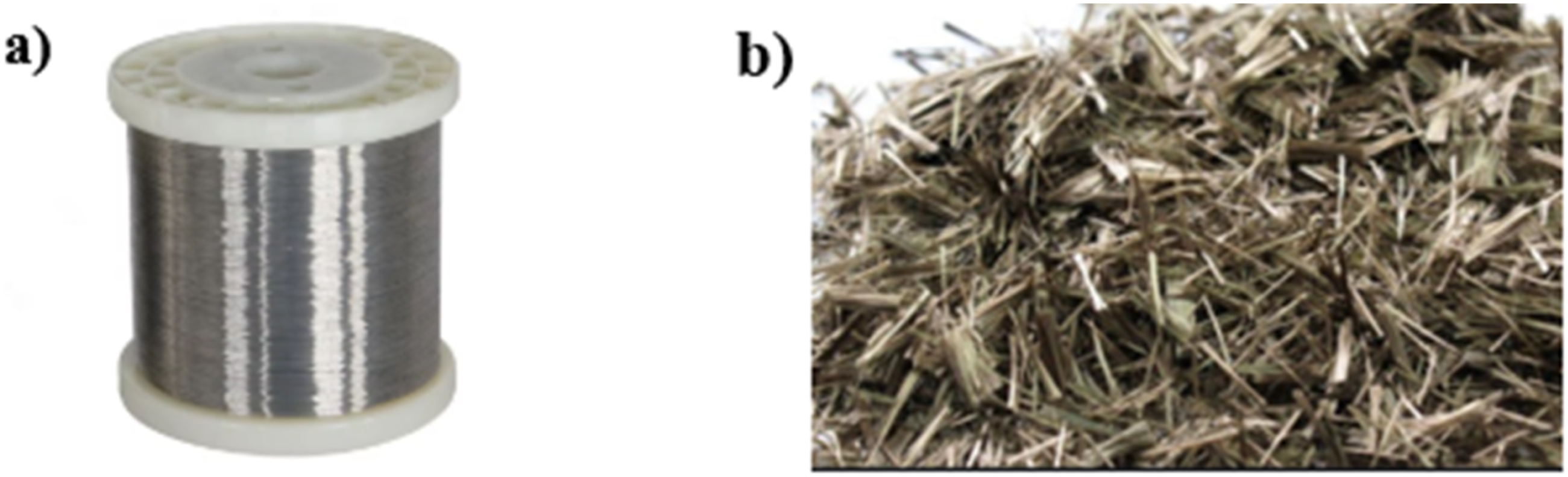
Biomass carbonization of hazelnut shells
The hazelnut shells were first cleaned and air-dried to remove moisture and surface impurities, as recommended in the literature.
16
The dried shells were then crushed into uniform small pieces to ensure consistent heat transfer during carbonization. The prepared material was placed in a stainless steel crucible with a tightly sealed lid to maintain an oxygen-limited environment, after which the crucible was loaded into a muffle furnace. Carbonization was carried out by gradually heating the sample from room temperature to 300°C to initiate dehydration, followed by further heating to 550°C and holding at this temperature for 2 h to achieve complete carbon conversion. Upon completion, the furnace was allowed to cool naturally to room temperature while keeping the system sealed. The carbonized hazelnut shell product was subsequently removed and manually crushed to obtain the desired particle size. The resulting biocarbon was stored in airtight containers for further use. Figure 2 illustrates the separation of biocarbon from the hazelnut shells. Biocarbon filler particles extraction process.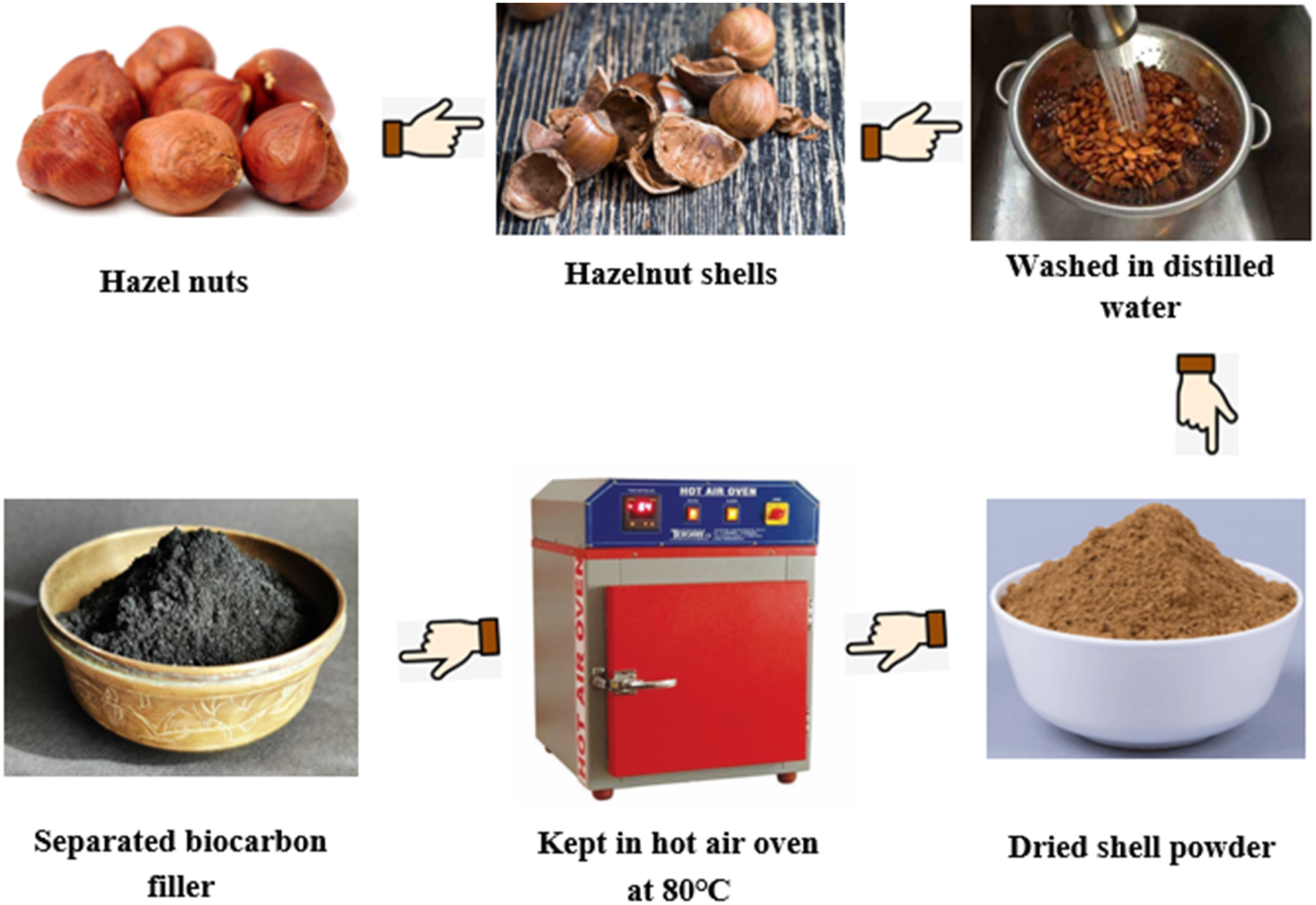
Figure 3 represents XRD pattern of the biocarbon filler exhibits a broad diffraction hump centered around 22–25° (2θ), indicating its predominantly amorphous carbon structure. The absence of sharp crystalline peaks confirms that the biocarbon lacks long-range atomic order, which is characteristic of pyrolyzed biomass materials. This broad peak validates the successful conversion of the precursor biomass into disordered carbonaceous particles, suitable for composite reinforcement applications. XRD image of biocarbon filler particles.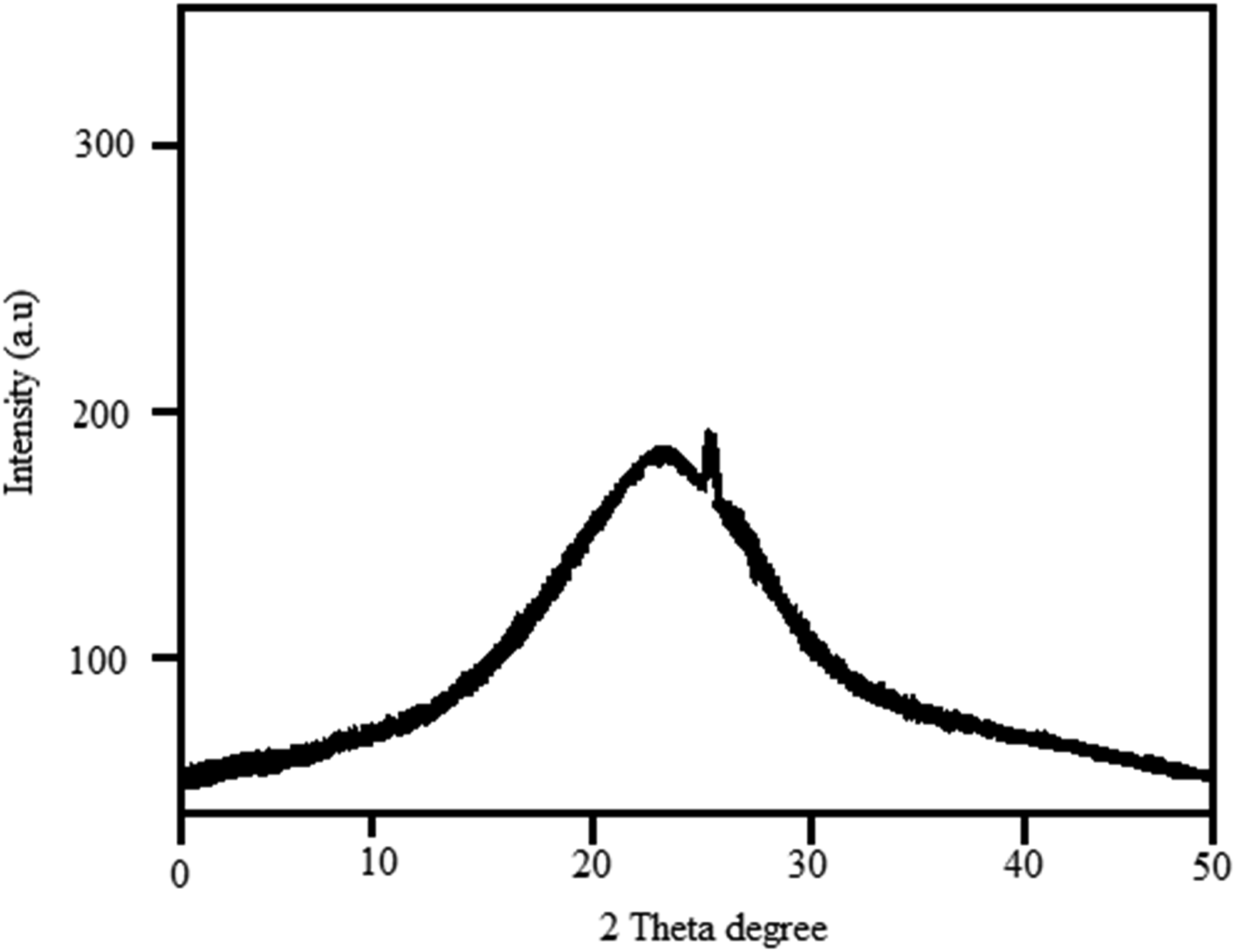
Silane bonding enhancement method
Prepare a 3 wt % silane solution by dissolving the selected silane coupling agent in a ethanol-water medium. Adjust the solution pH to around 5 using acetic acid to promote silane hydrolysis. Immerse the basalt microfibers and biocarbon fillers in the silane solution and stir continuously for 45 minutes to ensure uniform wetting.
17
Allow the hydrolyzed silane molecules to interact with hydroxyl groups on the filler surfaces, enabling chemical bonding. Remove the treated materials form the solution and drain off excess silane. Dry the silane coated fibers and particles at 110°C for 2hours to complete condensation and bonding reactions. Figure 4 highlights silane bonding method on fiber and filler particles. Silane treatment on microfibers and filler particles.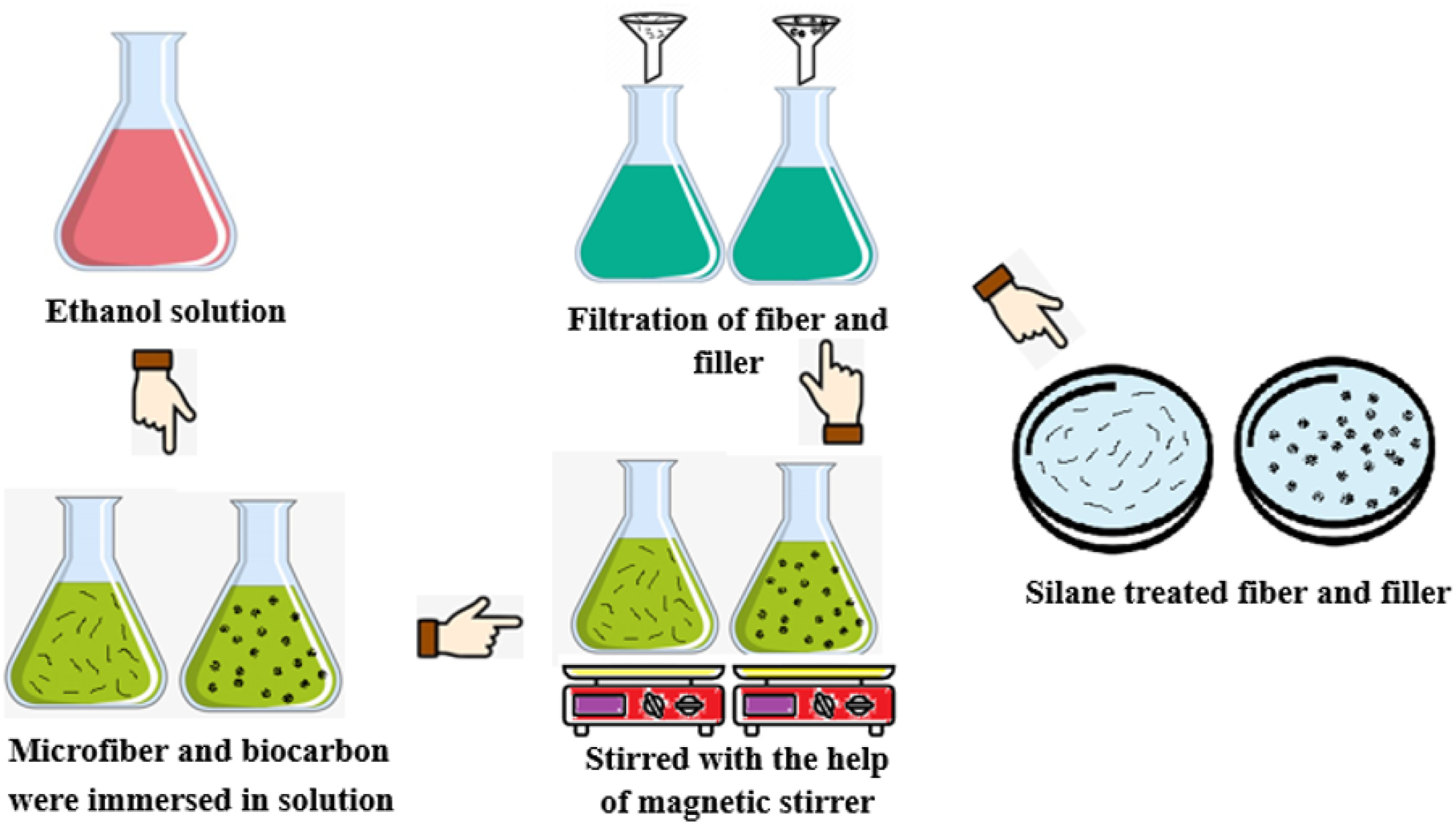
Treatment of basalt fiber and biocarbon with 3-aminopropyltrimethoxysilane (3-APTMS) introduces characteristic organic and siloxane functionalities that are readily detected by FTIR as shown in Figure 5. After silanization, both substrates exhibit new CH2 stretching bands at 2950–2850 cm−1 and N–H vibrations in the 3500–3300 and 1650–1550 cm−1 regions confirming the presence of aminopropyl groups. Basalt fibers additionally show a pronounced increase in Si-O-Si and Si-O-M intensities near 1100–1000 cm−1, indicating covalent anchoring of the silane through condensation with surface hydroxyls. In biocarbon, modifications in the C-O and C = O regions suggest interaction of the silane with oxygen-containing sites. Overall, the appearance of amine and siloxane bands demonstrates successful incorporation of functional groups capable of forming strong interfacial bonds with polymer matrices. FTIR peaks of (a) untreated and treated basalt microfiber and (b) untreated and treated biocarbon.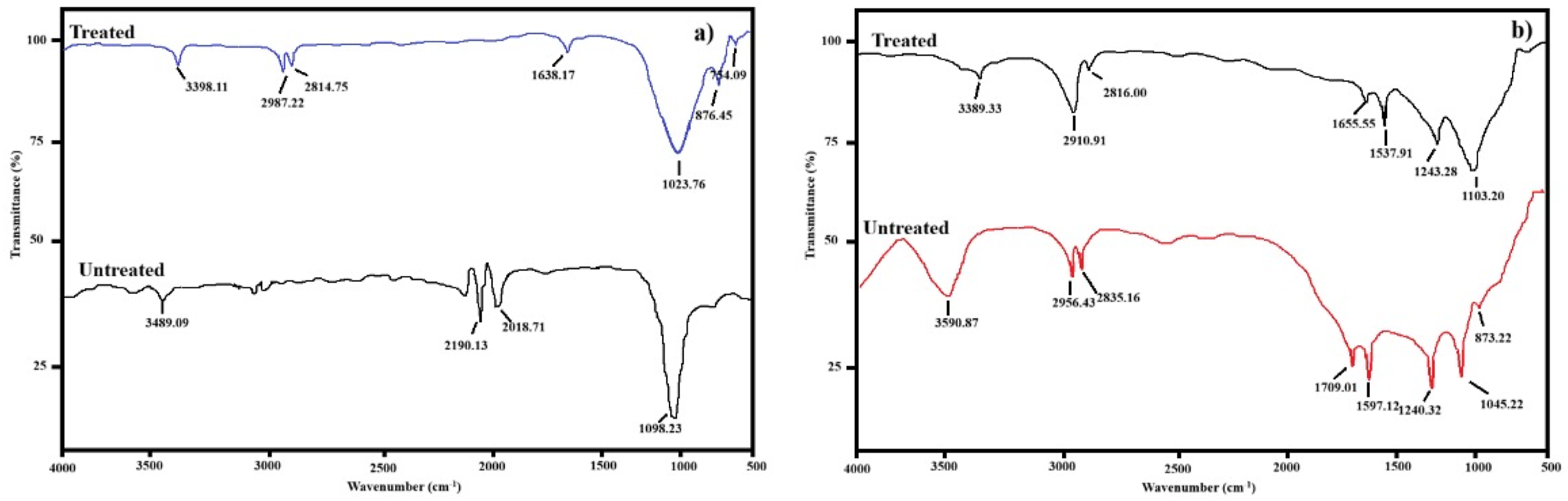
Composite fabrication process
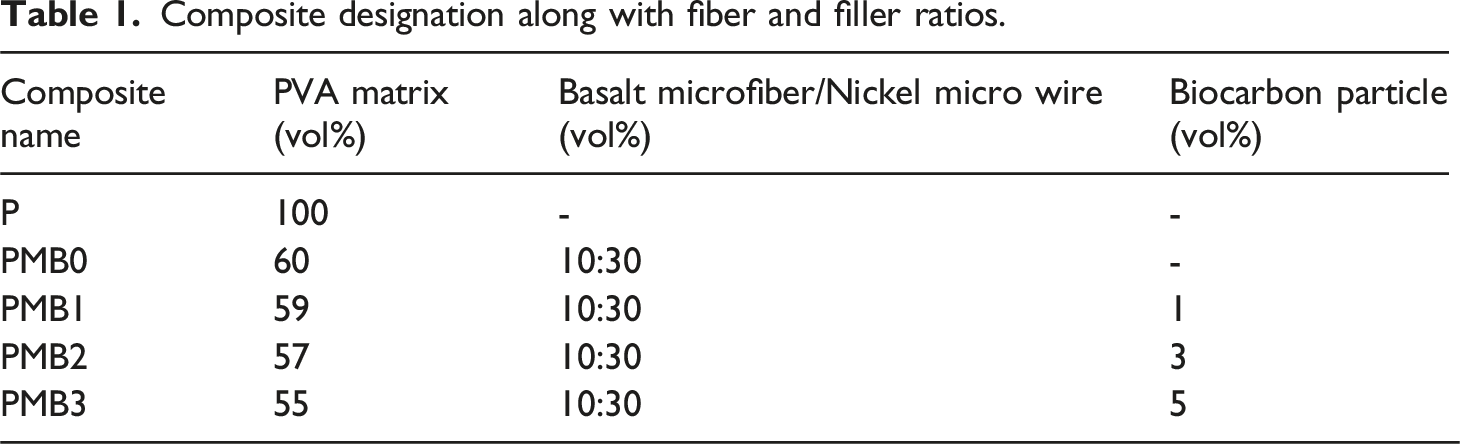
Composite designation along with fiber and filler ratios.
Characterization
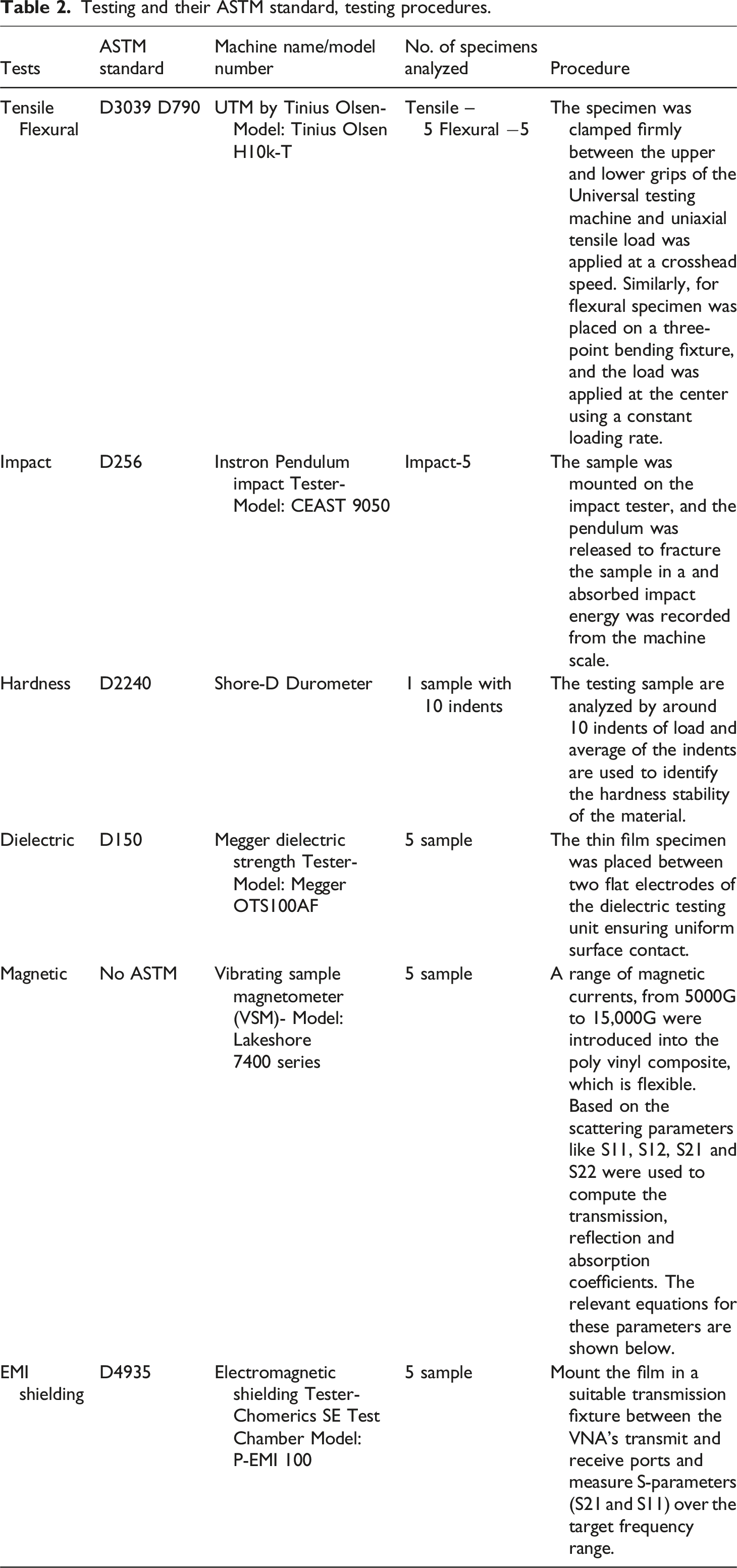
Testing and their ASTM standard, testing procedures.
Results and discussion
Mechanical properties
The mechanical behaviour of the neat PVA matrix and the reinforced composites shows a clear improvement that correlates with the vol% of the silane-treated reinforcements as shown in Figure 6. The unfilled PVA specimen P contained 100 vol% PVA and recorded a tensile strength of 58 MPa, a flexural strength of 64 MPa, an impact energy of 0.3 J and a hardness of 78 Shore-D. When a total of 40 vol% reinforcement was introduced in PMB0, consisting of 10 vol% silane-treated basalt microfibers and 30 vol% silane-treated nickel microwires, major enhancements were observed.
19
Tensile strength increased to 113 MPa, representing a 94.8% increase over P. Flexural strength rose to 120 MPa, corresponding to an 87.5% improvement, while impact energy increased to 2.8 J, an increase of 833.3%. Hardness increased to 79 Shore-D. These improvements result from the stiffening effect of the silane-treated basalt microfibers and the continuous load-bearing network formed by the silane-treated nickel microwires, supported by strong interfacial adhesion due to the silane treatment. Mechanical properties of various composite specimens.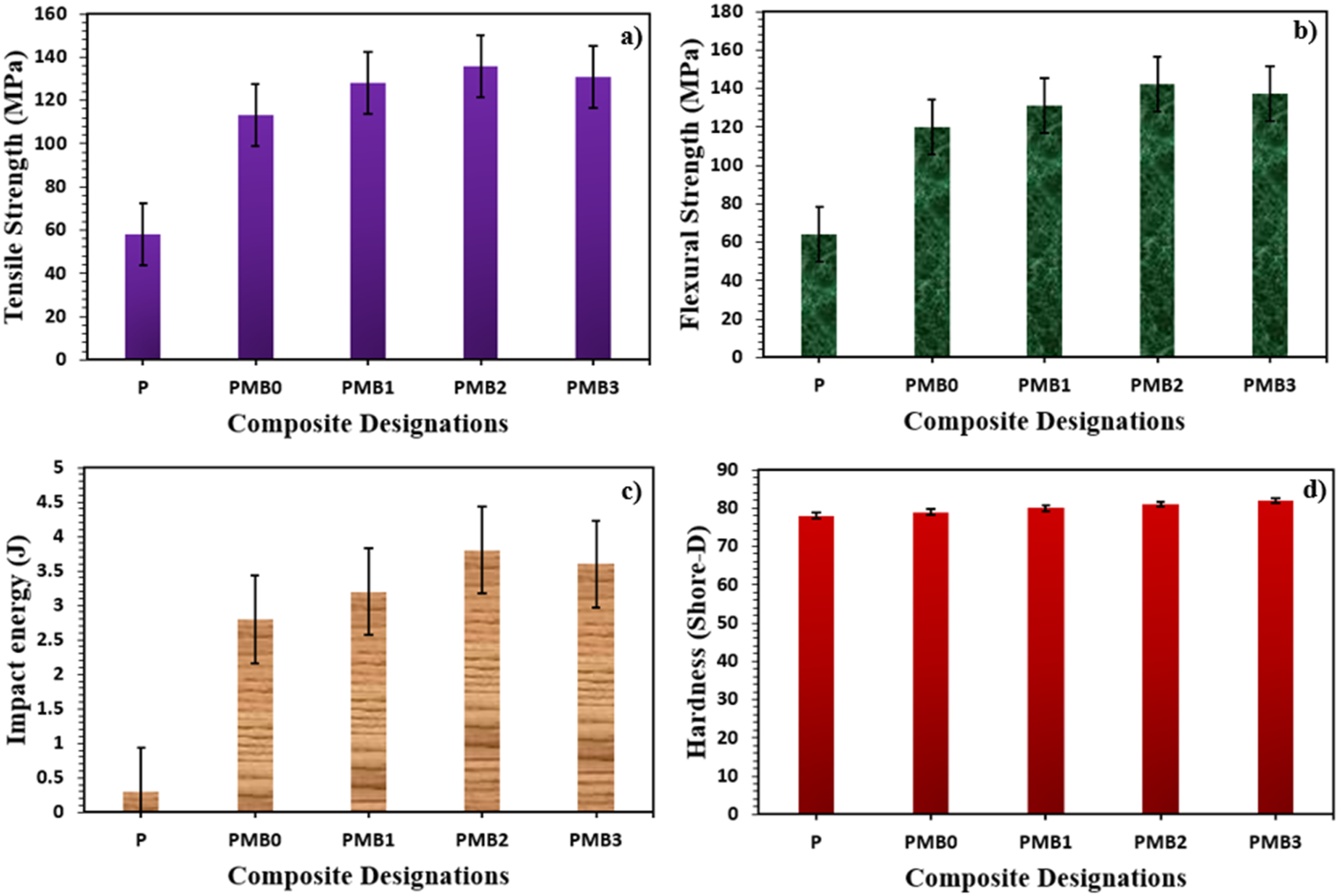
With the incorporation of 1 vol% silane-treated biocarbon along with 10 vol% basalt microfiber and 30 vol% nickel microwire in PMB1, the composite exhibited further enhancement. Tensile strength increased to 128 MPa, which is 120.7% higher than P. Flexural strength reached 131 MPa, a 104.7% increase, and impact energy increased to 3.2 J, a 966.7% improvement. Hardness increased to 80 Shore-D. At this loading, the biocarbon remains well dispersed and contributes to additional matrix stiffening without causing clustering. 20
At 3 vol% biocarbon, PMB2 exhibited the highest overall mechanical performance. Tensile strength increased to 136 MPa, which is 134.5% above P, while flexural strength reached 142 MPa, a 121.9% improvement. Impact energy rose to 3.8 J, corresponding to an increase of 1166.7%, and hardness reached 81 Shore-D. The combination of 10 vol% silane-treated basalt microfiber, 30 vol% silane-treated nickel microwire and 3 vol% silane-treated biocarbon appears to form an optimal hybrid reinforcement system, with effective dispersion leading to simultaneous improvements in stiffness, strength, crack-deflection behaviour and energy absorption. 21
At the highest biocarbon content studied, 5 vol% in PMB3, tensile strength measured 131 MPa, an increase of 125.9% compared with P, while flexural strength reached 137 MPa, a 114.1% improvement. Impact energy remained high at 3.6 J, corresponding to an increase of 1100.0%, and hardness further increased to 82 Shore-D. Although PMB3 still shows strong reinforcement, the slight decline in tensile and flexural strength relative to PMB2 suggests the onset of particle agglomeration at higher biocarbon levels, which introduces local stress concentration sites and reduces load-transfer efficiency. 22
Overall, the results demonstrate that 10 vol% silane-treated basalt microfiber and 30 vol% silane-treated nickel microwire establish a robust reinforcing framework within the PVA matrix, while the addition of 1–3 vol% silane-treated biocarbon produces the most effective enhancement in strength, stiffness, impact resistance and hardness. Among all formulations, PMB2 delivers the optimal balance of reinforcement and dispersion, resulting in the highest mechanical performance.
Figure 7 presents the SEM microstructural features of the fractured composite surfaces at different magnifications for a) PMB0, b–c) PMB2, and d–e) PMB3. In Figure 7(a), PMB0 exhibits clear evidence of fiber breakage and fiber pull-out, indicating insufficient interfacial bonding between the matrix and reinforcement. The presence of pull-out cavities confirms weak load transfer, which leads to premature fiber detachment during fracture. In Figure 7(b), PMB2 shows improved adhesion of filler particles, as the particles appear more firmly embedded within the matrix, and the reduction in pull-out regions indicates enhanced matrix–filler compatibility. The enlarged view in Figure 7(c) further confirms good dispersion of fillers in PMB2, as reflected by the uniform distribution of particles without visible clustering. This uniform dispersion contributes to improved stress transfer across the composite and enhances its mechanical performance. In contrast, Figure 7(d) and (e), corresponding to PMB3, reveal agglomerated filler particles and the formation of localized clusters. These clustered regions interrupt the homogeneity of the microstructure and act as stress concentrators, which can initiate microcracks during loading. The presence of such agglomerates explains the reduced mechanical efficiency of PMB3 compared to PMB2, despite the higher filler content. Overall, the transition from fiber pull-out in PMB0, to well-dispersed and strongly adhered fillers in PMB2, and finally to agglomeration and cluster formation in PMB3, demonstrates the critical influence of filler dispersion and interfacial interaction on the fracture behavior of the composites. SEM analysis of (a) PMB0 with 100 × magnification, (b) PMB2 with 100 × magnification, (c) PMB2 with 40 × magnification, (d) PMB3 with 100 × magnification and (e) PMB3 with 40 × magnification.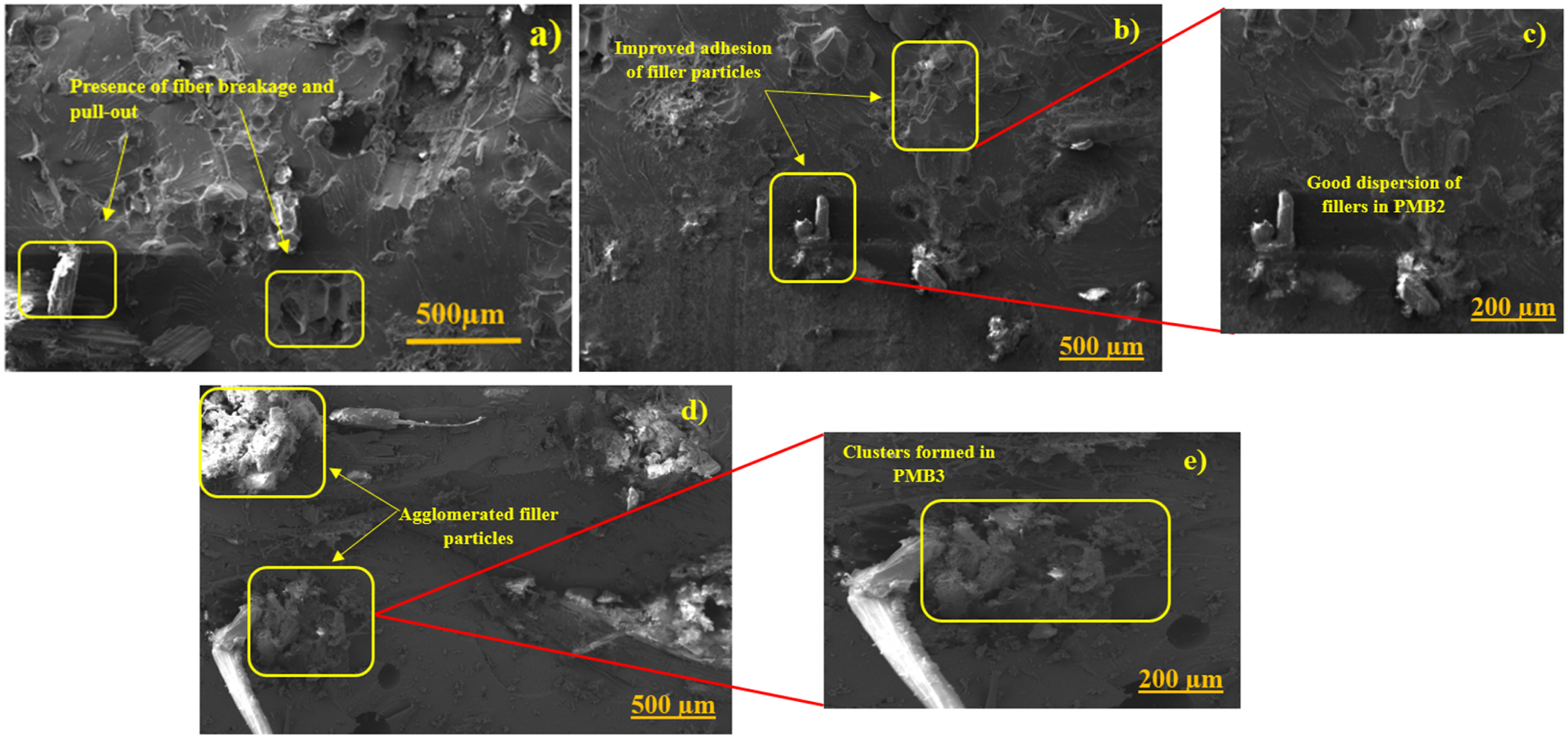
The TEM micrograph (Figure 8) reveals the coexistence of well-dispersed filler particles along with regions of noticeable agglomeration. The uniformly distributed particles indicate effective dispersion within the matrix, promoting better interfacial interaction and potential improvement in dielectric and mechanical behavior. However, the presence of clustered or agglomerated regions suggests localized particle–particle attraction, which can arise from high surface energy and insufficient separation during mixing. These agglomerates may act as stress concentration points or disrupt the uniformity of the conductive pathways, influencing the overall performance of the composite. The combined observation of dispersion and agglomeration reflects the heterogeneous microstructure typical of particulate-filled polymer systems. TEM image of filler illustrating dispersion and agglomerated particles.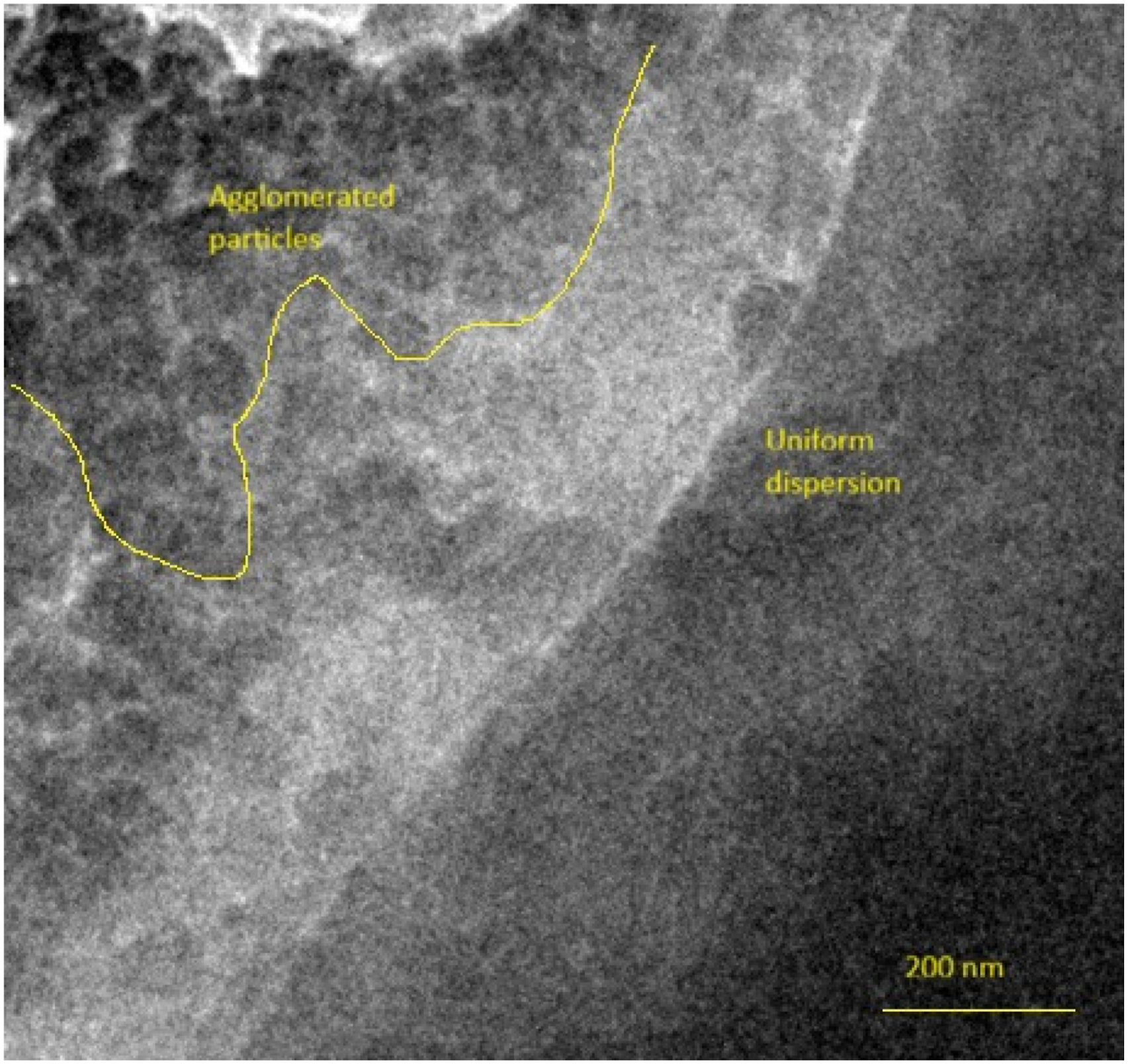
Dielectric Properties
The dielectric response of the neat PVA matrix and the hybrid composites shows a steady and substantial increase in both dielectric permittivity and dielectric loss as silane treated basalt microfibers, silane treated nickel microwires and silane treated hazelnut shell biocarbon are added as shown in Figure 9. The neat PVA specimen contained 100 vol% PVA and exhibited a dielectric permittivity of 2.52 and a dielectric loss of 0.43. Introducing a total of 40 vol% reinforcement in PMB0, consisting of 10 vol% silane treated basalt microfiber and 30 vol% silane treated nickel microwire, raises the permittivity to 3.04, a 20.6% increase versus P, and increases dielectric loss to 0.53, a 23.3% increase versus P. These changes are primarily due to the high polarizability of the metallic nickel phase and the generation of interfacial polarization at the numerous metal–polymer and fiber–polymer interfaces.23,24 The nickel microwires form electrically polarizable inclusions that increase the effective permittivity by acting as microcapacitive sites and by promoting Maxwell–Wagner–Sillars type interfacial polarization. Dielectric properties of various composite specimens.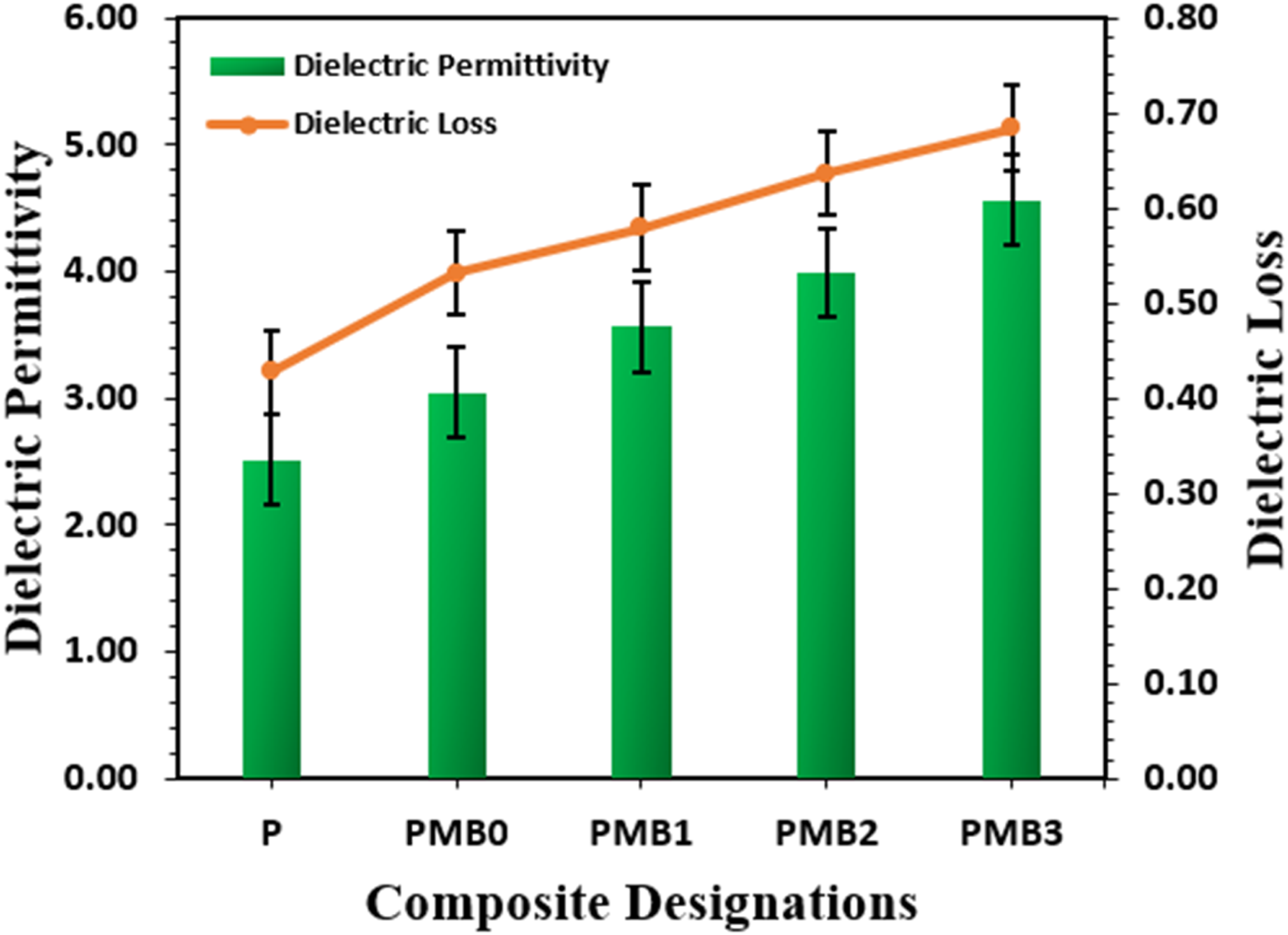
With the addition of 1 vol% silane treated biocarbon in PMB1 (10 vol% basalt microfiber and 30 vol% nickel microwire unchanged), permittivity increases to 3.56, a 41.3% rise compared with P, and dielectric loss increases to 0.58, a 34.9% rise. The biocarbon particles contribute additional polarizable domains and conductive carbonaceous regions, which further enhance interfacial and space charge polarization and therefore raise both permittivity and loss. 25 At 3 vol% silane treated biocarbon in PMB2, permittivity reaches 3.99, a 58.3% increase, and dielectric loss reaches 0.64, a 48.8% increase. This composition shows the largest combined effect of the metallic and carbonaceous phases on low frequency polarization and loss mechanisms, consistent with improved filler content and interface area producing stronger interfacial charge accumulation and dipolar response. 26
At 5 vol% silane treated biocarbon in PMB3, the permittivity increases further to 4.56, an 81.0% increase relative to P, while dielectric loss rises to 0.68, a 58.1% increase. The monotonic rise of both permittivity and loss across PMB0 to PMB3 indicates that increasing biocarbon loading strengthens the conductive and polarizable network within the matrix and amplifies interfacial and conductive loss channels. Although silane treatment improves filler–matrix adhesion and reduce void related dielectric dissipation, the dominant effect here is the increased interfacial polarization and enhanced conduction paths introduced by the nickel microwires and the carbonaceous filler, which together elevate both real and imaginary components of the complex permittivity. These results imply that the composite dielectric behaviour is governed by a combination of dipolar polarization of the PVA, Maxwell–Wagner–Sillars interfacial polarization at heterogeneous interfaces, and increasing conduction losses as nickel and carbon inclusions generate more continuous polarizable and partially conductive pathways. For a complete mechanistic picture it is recommended to present frequency dependent permittivity and loss spectra and to report temperature dependent measurements, which will separate the contributions from dipolar relaxation, interfacial polarization and dc conduction and help identify any percolation threshold for electrical connectivity.
Cole-Cole plot
Figure 10 shows the Cole–Cole plots (Z′ vs –Z″) for the PVA-based composite series (P, PMB0, PMB1, PMB2, and PMB3). All samples display a single depressed semicircular arc, indicating non-ideal Debye relaxation caused by heterogeneous dielectric polarization within the material. The pure PVA (P) exhibits the smallest semicircle, corresponding to its lower charge-transfer resistance and weaker interfacial polarization due to the absence of conductive or dielectric-enhancing fillers. When basalt microfibers and nickel microwires are added in PMB0, the semicircle diameter increases as a result of improved interfacial effects and the formation of enhanced charge transport pathways. With the addition of biocarbon from 1 to 5 vol% (PMB1 to PMB3), the semicircle radius continues to increase. This trend reflects higher dielectric relaxation resistance, stronger interfacial polarization, and increased conductivity, influenced by the higher dielectric constant of biocarbon. The presence of biocarbon also strengthens Maxwell–Wagner–Sillars (MWS) interfacial polarization arising from the multiple phase interfaces in the composite. Among all samples, PMB3 shows the largest semicircle, indicating the most pronounced polarization and relaxation behavior due to its highest biocarbon content. Overall, the results demonstrate that the hybrid reinforcement system progressively enhances electrical relaxation and interfacial charge dynamics with increasing biocarbon loading. Cole-Cole plot of the samples.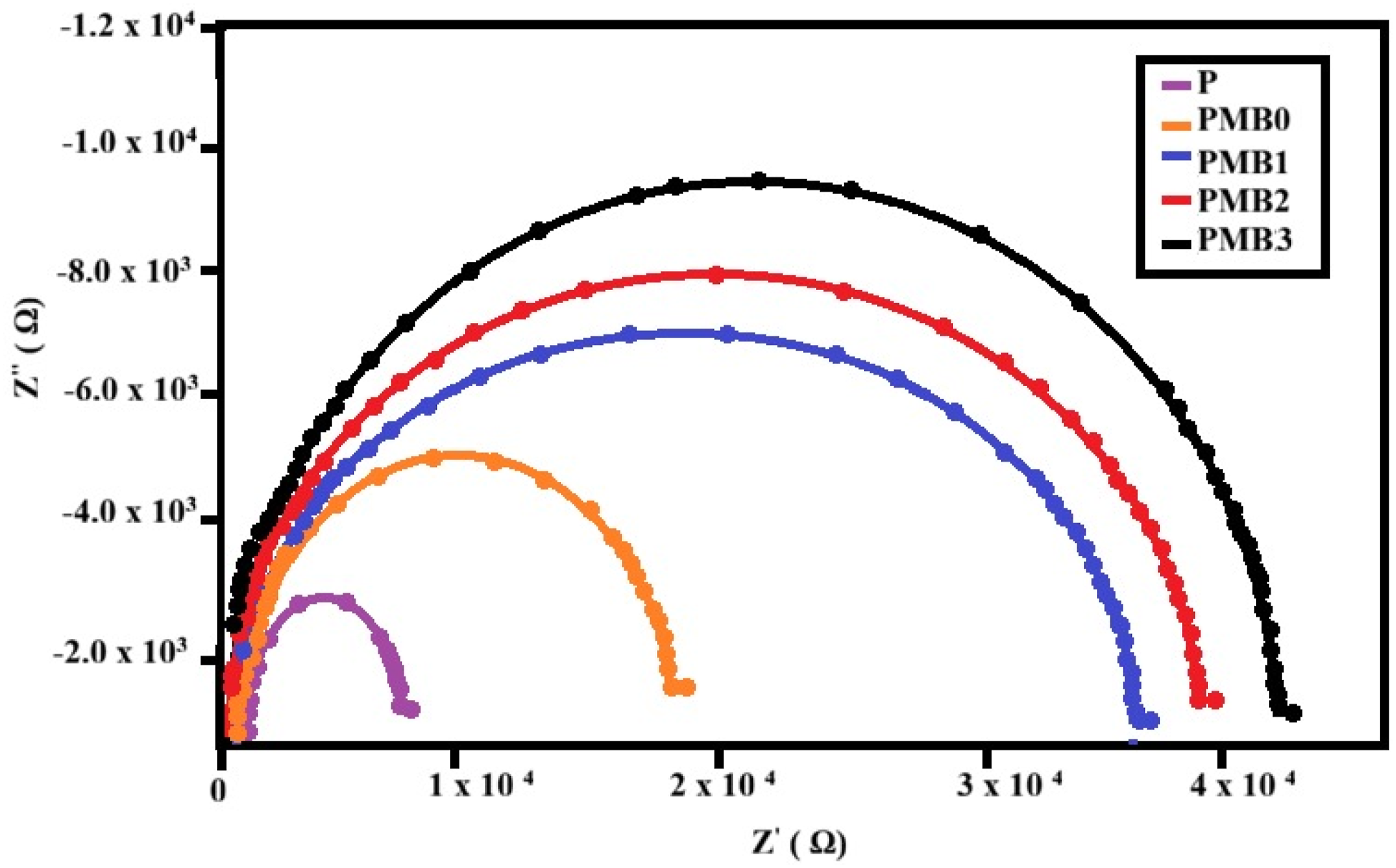
Magnetic permittivity
The magnetic permeability of all composites shows a strong dependence on both the frequency and the reinforcement content, reflecting the dominant influence of the silane-treated nickel microwire phase and the secondary contribution of the silane-treated biocarbon particles as shown in Figure 11(a) and (b). Since the neat PVA matrix is non-magnetic, only the reinforced composites PMB0 to PMB3 were evaluated. The real part of magnetic permeability, which represents the energy storage capability within the magnetic field, increases consistently with frequency from 8 Hz to 20 Hz for all composites. For PMB0, containing 10 vol% silane-treated basalt microfiber and 30 vol% silane-treated nickel microwire, the real permeability increases from 2.20 at 8 Hz to 4.10 at 20 Hz. The rise is attributed to the presence of ferromagnetic nickel microwires, which enhance magnetic dipole alignment under low-frequency excitation. Magnetic properties of various composite specimens.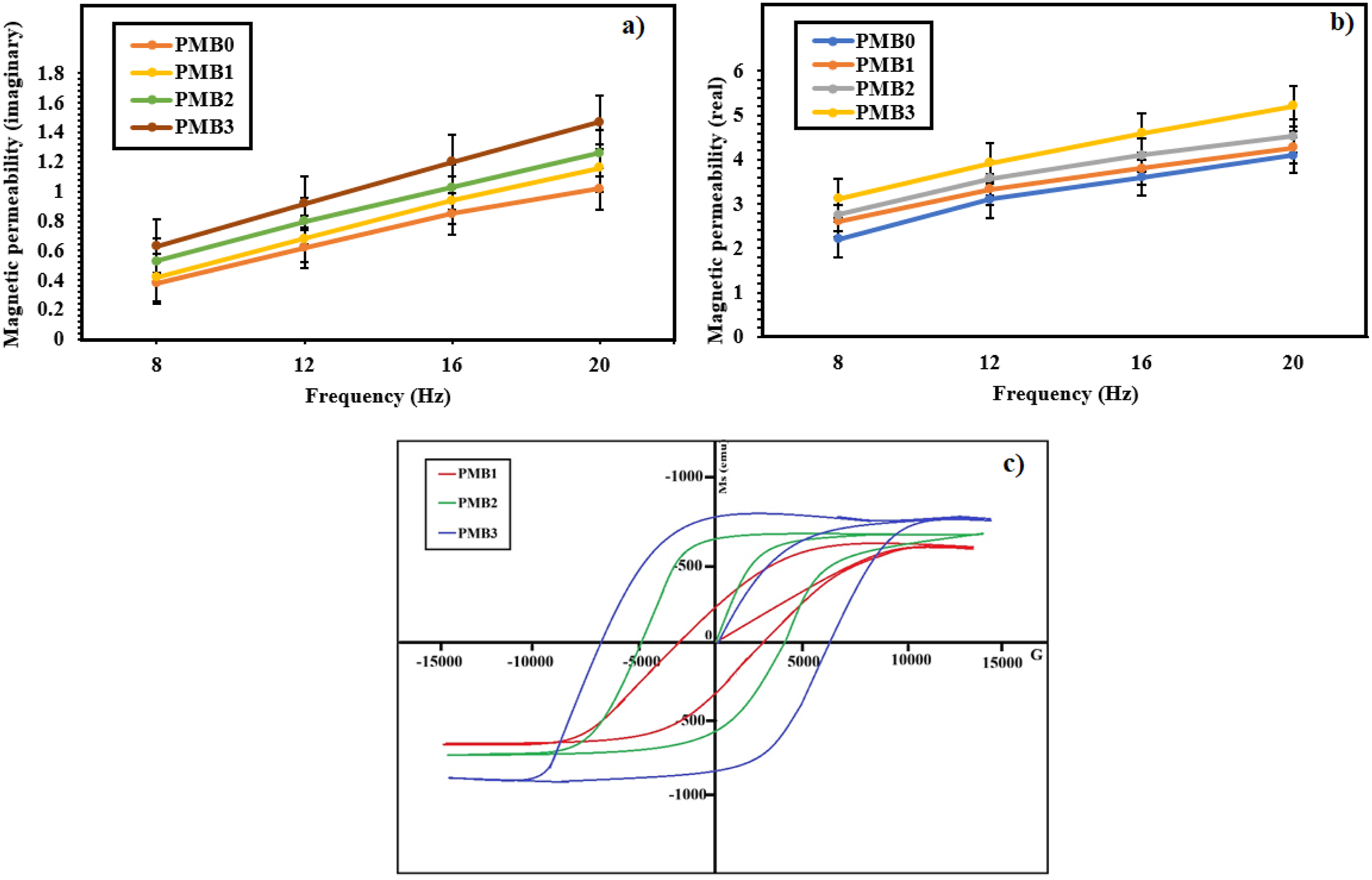
With the introduction of 1 vol% silane-treated biocarbon in PMB1, the real part of permeability further increases across all frequencies, reaching 2.61 at 8 Hz and 4.28 at 20 Hz. This gradual improvement results from the additional interfacial polarization and microcurrent formation promoted by biocarbon, which assists the magnetic response of the nickel phase. At 3 vol% biocarbon loading in PMB2, real permeability shows a further increase, rising from 2.76 at 8 Hz to 4.53 at 20 Hz. This enhancement indicates a more effective exchange interaction between the nickel microwires and the carbonaceous filler, which facilitates improved magnetic flux linkage within the hybrid network. 27
The highest permeability values are observed for PMB3 containing 5 vol% biocarbon, where the real part increases from 3.12 at 8 Hz to 5.21 at 20 Hz. The continuous improvement in real permeability from PMB0 to PMB3 suggests that increasing biocarbon content enhances the overall magnetic response by contributing to increased interfacial polarization, improved microstructural connectivity, and partial conductive pathways that assist magnetic domain rotation. The imaginary part of magnetic permeability, which represents magnetic energy loss due to domain wall motion, eddy current formation and magnetic damping, also increases steadily with both reinforcement loading and frequency. PMB0 exhibits values from 0.38 at 8 Hz to 1.02 at 20 Hz. In PMB1, the imaginary component rises to 0.42 at 8 Hz and 1.16 at 20 Hz, reflecting higher magnetic relaxation losses induced by the presence of biocarbon. PMB2 continues this trend, showing values from 0.53 to 1.26, while PMB3 reaches the highest loss values, ranging from 0.63 at 8 Hz to 1.47 at 20 Hz. This progressive increase in magnetic loss from PMB0 to PMB3 indicates that the greater availability of conductive and semi-conductive sites introduced by 1 to 5 vol% biocarbon enhances eddy current generation and domain-wall damping, leading to higher imaginary permeability. The combined effect of silane-treated nickel microwires, acting as the primary ferromagnetic phase, and the carbon-rich biocarbon filler produces a hybrid system in which magnetic energy is both stored and dissipated more effectively as the filler content increases. 28 Figure 11(c)) shows the magnetic hysteresis loops of PVA-based composites reinforced with basalt microfibers, Ni microwires, and varying contents of biocarbon particles (PMB1–PMB3). The pure PVA (P) exhibits negligible magnetization. With the addition of Ni/basalt hybrid reinforcement (PMB0), the loop opens slightly, indicating weak ferromagnetic behavior. Incorporation of biocarbon particles from 1 to 5 vol. % (PMB1–PMB3) enhances the magnetic response, reflected by increased saturation magnetization (Ms) and coercivity. PMB3 shows the widest loop, suggesting stronger magnetic interaction and improved energy dissipation due to higher biocarbon content. Overall, the addition of biocarbon particles systematically enhances the magnetic properties of the composites.
Overall, the results demonstrate that magnetic permeability in these hybrid PVA composites is governed by the volume fraction of ferromagnetic nickel microwires and further tuned by the addition of biocarbon. The increasing trends in both real and imaginary components with biocarbon content reflect improved magnetic coupling, stronger interfacial polarization, and increased eddy current losses. PMB3 therefore exhibits the strongest magnetic response, making it highly suitable for applications involving electromagnetic attenuation and low-frequency magnetic field interaction.
Electromagnetic interference shielding (EMI)
The electromagnetic interference shielding effectiveness measured at the four test points E, F, I and J shows a systematic and substantial improvement as the vol% of silane treated reinforcements is increased, as shown in Figure 12. The neat PVA specimen, containing 100 vol% PVA, recorded shielding values of 2.32 dB at E, 9.26 dB at F, 13.89 dB at I and 20.84 dB at J. Approximating the shielding components, the reflection (SER) and absorption (SEA) contributions were 0.81 dB and 1.51 dB at E, 3.24 dB and 6.02 dB at F, 4.86 dB and 9.03 dB at I, and 7.29 dB and 13.55 dB at J. Introducing the hybrid reinforcement in PMB0, consisting of 10 vol% silane treated basalt microfiber and 30 vol% silane treated nickel microwire, raises shielding to 3.53 dB at E, 11.58 dB at F, 17.42 dB at I and 25.47 dB at J, corresponding to increases of 52.2% at E, 25.1% at F, 25.4% at I and 22.2% at J relative to P. The corresponding SER/SEA values are 1.24/2.29 dB at E, 4.05/7.53 dB at F, 6.10/11.32 dB at I, and 8.91/16.56 dB at J. These gains are primarily attributed to the conductive and magnetic nature of the nickel microwire network, which enhances reflection of incident waves through impedance mismatch, and to increased magnetic loss from the ferromagnetic phase. EMI shielding behaviour of various composite specimens.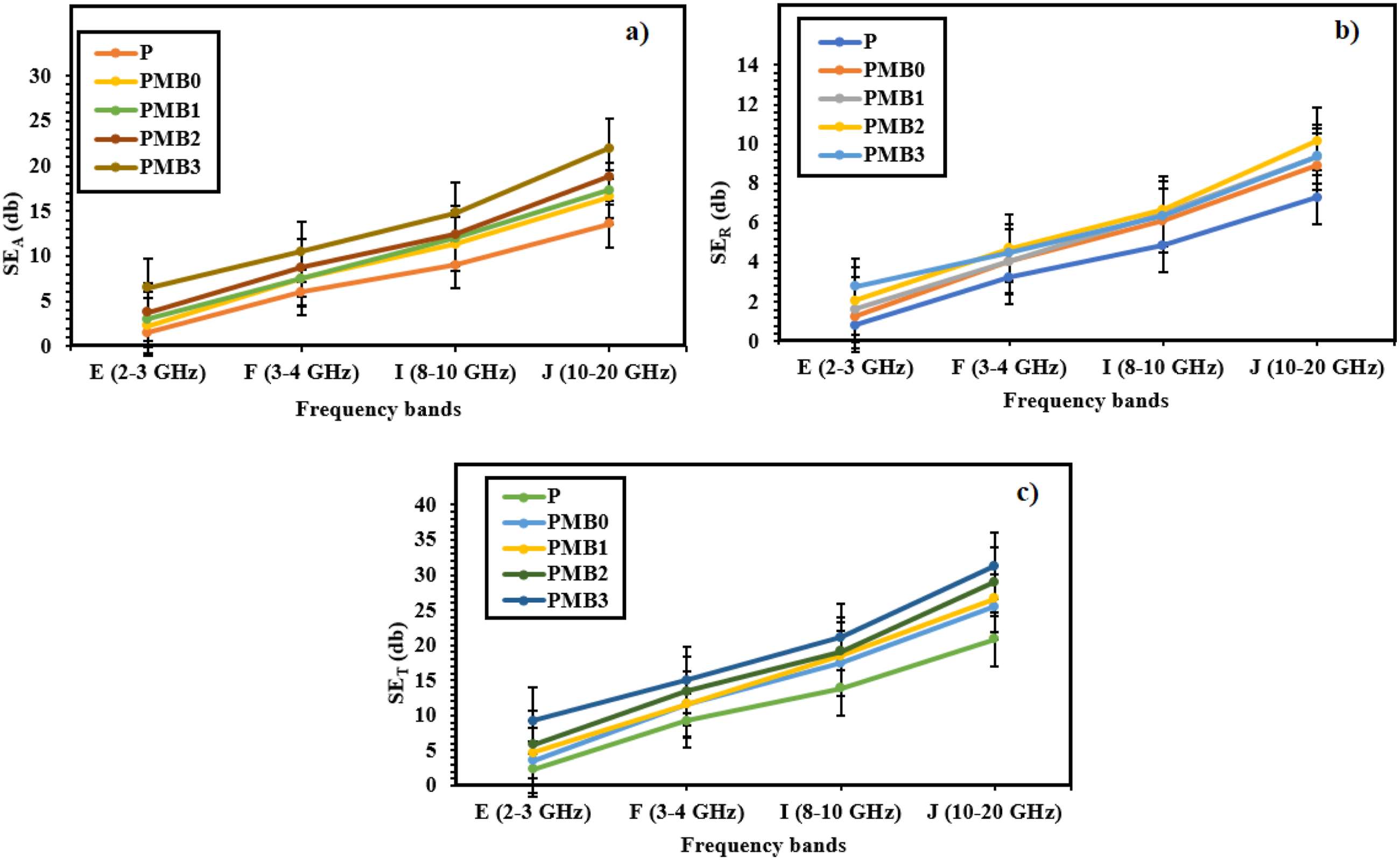
With the addition of 1 vol% silane treated hazelnut shell biocarbon in PMB1 (10 vol% basalt microfiber and 30 vol% nickel microwire unchanged), shielding improves further to 4.63 dB at E, 11.58 dB at F, 18.52 dB at I and 26.68 dB at J. The approximate SER/SEA values are 1.62/3.01 dB at E, 4.05/7.53 dB at F, 6.48/12.04 dB at I, and 9.34/17.34 dB at J. These values represent increases of 99.6% at E, 25.1% at F, 33.3% at I and 28.0% at J over P. The small biocarbon loading contributes additional dielectric loss and absorption through lossy carbonaceous domains and enhanced interfacial polarization, increasing the absorption component of shielding while preserving the reflection advantage provided by the nickel network. 29
At 3 vol% silane treated biocarbon in PMB2, shielding rises to 5.85 dB at E, 13.45 dB at F, 19.08 dB at I and 29.00 dB at J. The corresponding SER/SEA values are 2.05/3.80 dB at E, 4.71/8.74 dB at F, 6.68/12.40 dB at I, and 10.15/18.85 dB at J, equivalent to increases of 152.1% at E, 45.2% at F, 37.4% at I and 39.2% at J relative to P. This further enhancement reflects improved impedance matching and stronger absorption due to a more developed network of conductive carbon regions combined with the magnetic losses of the nickel phase; multiple scattering and internal reflections within the composite also increase the effective path length for dissipation.
The highest shielding performance is observed for PMB3, which contains 10 vol% silane treated basalt microfiber, 30 vol% silane treated nickel microwire and 5 vol% silane treated biocarbon. Measured values are 9.26 dB at E, 14.99 dB at F, 21.17 dB at I and 31.31 dB at J, representing increases of 299.1% at E, 61.9% at F, 52.4% at I and 50.2% at J compared with the neat matrix. The approximate SER/SEA values are 2.78/6.48 dB at E, 4.50/10.49 dB at F, 6.35/14.82 dB at I, and 9.39/21.92 dB at J. The pronounced improvement in PMB3 arises from a combined effect: the nickel microwires provide high reflectivity and magnetic loss, while the increased biocarbon content enhances dielectric loss, reduces skin depth locally and promotes absorption-dominated shielding. 30 The silane treatment on both fibers and particles aids interfacial contact, reducing voids that would otherwise diminish shielding efficiency.
In summary, the EMI shielding behaviour of the PVA composites is governed by an interplay of reflection from conductive and magnetic inclusions, absorption due to magnetic and dielectric losses introduced by nickel and biocarbon respectively, and multiple internal reflections enhanced by microstructural heterogeneity. The 10 vol% silane treated basalt microfiber plus 30 vol% silane treated nickel microwire backbone establishes the primary shielding mechanism, and the controlled addition of 1 to 5 vol% silane treated biocarbon progressively shifts the balance toward greater absorption and higher overall shielding, with PMB3 delivering the best performance across all measured points.
Conclusions
In conclusion, this work demonstrates the development of flexible, multifunctional PVA hybrid composites reinforced with silane-treated basalt microfibers, silane-treated nickel microwire and silane-treated biocarbon, showing that the performance of the material can be tailored by adjusting the reinforcement content. The mechanical analysis confirms that specimen PMB2 delivers the best structural performance, achieving a tensile strength of 136 MPa, flexural strength of 142 MPa, impact energy of 3.8 J and hardness of 81 Shore-D due to optimal dispersion and strong interfacial adhesion, which enables efficient load transfer and enhanced resistance to crack propagation. In contrast, specimen PMB3 provides the most favourable functional properties, showing the highest dielectric permittivity of 4.56 and dielectric loss of 0.68, the highest magnetic permeability across the measured frequency range and superior EMI shielding values of 9.26 dB, 14.99 dB, 21.17 dB and 31.31 dB at points E, F, I and J respectively. These enhancements result from the increased conductive and polarizable domains introduced by 5 vol% biocarbon, which strengthen interfacial polarization, enhance magnetic relaxation losses and promote absorption-dominated EMI shielding. SEM examination supports these trends, revealing improved filler–matrix bonding in PMB2 and the presence of beneficial agglomerated biocarbon clusters in PMB3 that contribute to electromagnetic attenuation. Overall, the findings highlight the potential of these PVA-based hybrid composites for applications requiring either superior mechanical stability or enhanced dielectric, magnetic and shielding performance, demonstrating their viability as versatile materials for next-generation multifunctional engineering applications.
Footnotes
Author contributions
Nagabhooshnam N –
Mong-Fong Horng–
Siva Shankar S
Chun-Chih Lo –
Declaration of conflicting interests
The authors declared no potential conflicts of interest with respect to the research, authorship, and/or publication of this article.
Funding
The authors received no financial support for the research, authorship, and/or publication of this article.

Data Availability Statement
All data in the publication.