



Abstract
This study investigates the coupled influence of shear-induced carbon nanotube (CNT) alignment and crystallization control in thermoplastic nanocomposites, providing real-time insight into processing–structure–property relationships. Using in-situ wide-angle X-ray diffraction (WAXD), differential scanning calorimetry (DSC), and rotational rheology, we track the evolution of CNT orientation and crystallization kinetics in a high-density polyethylene (HDPE) matrix under controlled shear. A critical shear threshold of ∼100 s−1 is identified, above which CNTs transition from a random to a highly aligned state, with the orientation factor increasing from 0.12 to 0.87. This alignment markedly accelerates crystallization, elevating the onset temperature by up to 8°C and reducing induction time by more than 50%. Aligned CNTs act as efficient nucleating agents and thermal pathways, generating anisotropic lamellar morphologies and enhanced thermal stability. The synergistic effects of CNT concentration and shear intensity yield a quantitative framework linking processing parameters, structural descriptors, and crystallization response. The methodology and correlations established here provide processing-embedded strategies to engineer thermoplastic nanocomposites with tunable thermal, mechanical, and structural performance, directly relevant to extrusion, fiber spinning, and additive manufacturing.
Keywords
Highlights
Critical shear threshold (∼100 s−1) governs the transition from random to aligned CNT networks CNT orientation factor increases from 0.12 to 0.87 under high shear Shear-aligned CNTs raise crystallization onset temperature by up to 8°C Induction time is reduced by more than 50% through combined shear–CNT effects Quantitative framework enables predictive, processing-driven crystallization control in thermoplastic nanocomposites
Introduction
The interdependence of processing, structure, and properties forms the foundation of polymer composite engineering, particularly in thermoplastic nanocomposites where filler orientation and polymer crystallinity dictate mechanical, thermal, and dimensional performance.1–3 Among available nanofillers, carbon nanotubes (CNTs) are especially attractive due to their high aspect ratio, exceptional intrinsic strength, and large interfacial area, which together enable substantial multifunctional enhancements when CNTs are uniformly dispersed and directionally aligned within a polymer matrix.4–6
Despite extensive progress in CNT-reinforced thermoplastics, a key challenge remains in understanding how processing-induced shear simultaneously governs CNT alignment and the crystallization behavior of semicrystalline matrices.7–9 Shear flow is known to orient anisotropic fillers and accelerate polymer chain ordering, yet the coupled evolution of CNT orientation and crystallization kinetics under dynamic, processing-relevant conditions is still not fully resolved.10,11 This limitation is particularly critical for semicrystalline thermoplastics, where the interplay between nanofiller-induced nucleation and flow-induced crystallization strongly influences dimensional stability, residual stresses, and end-use performance.12–14
Most prior studies have relied on post-processing characterization, providing only static snapshots of the final morphology and overlooking transient structural states that decisively impact material performance.15–17 In addition, inconsistent reporting of the shear-rate thresholds required for CNT alignment, and limited quantification of their direct influence on crystallization onset and induction time, have hindered the development of predictive processing–structure–property models.18–20
To overcome these gaps, a synchronized real-time analytical framework is needed—one capable of simultaneously monitoring flow behavior, nanofiller alignment, and crystallization kinetics under processing-relevant conditions.21–23 Recent advances in in-situ wide-angle X-ray diffraction (WAXD) and differential scanning calorimetry (DSC), when integrated with rotational rheology, provide a powerful toolset for tracking dynamic structural evolution and thermal transitions during shear.24–26
In this study, we employ high-density polyethylene (HDPE) as a representative semicrystalline thermoplastic to interrogate the coupled effects of shear and CNT loading on crystallization behavior. CNT alignment is quantified in real time under controlled shear rates (10–1000 s−1) using in-situ WAXD, while crystallization kinetics are assessed via DSC. A critical shear threshold (∼100 s−1) is identified, above which CNTs exhibit strong alignment, leading to accelerated nucleation, elevated crystallization onset temperatures, and reduced induction times. By establishing quantitative correlations between orientation factor, crystallization parameters, and processing conditions, this work provides a processing-embedded framework for crystallization control in thermoplastic nanocomposites. The methodology offers both fundamental insight and industrial relevance, with direct implications for extrusion, fiber spinning, and additive manufacturing. Furthermore, the integration of real-time structural analysis lays the groundwork for future AI-assisted manufacturing systems, enabling predictive design and adaptive process control in advanced thermoplastic composites.
Experimental methods
Materials and nanocomposite preparation
High-density polyethylene (HDPE, melt flow index: XX g/10 min, density: 0.95 g/cm3) was selected as the semicrystalline thermoplastic matrix due to its well-documented rheological and crystallization behavior. Multi-walled carbon nanotubes (MWCNTs, outer diameter 10–20 nm, aspect ratio >100) were supplied by Nanocyl S.A., Belgium, and pre-dried at 120°C for 12 h in a vacuum oven to remove surface-adsorbed moisture.
CNT/HDPE nanocomposites containing 0.5, 1.0, and 2.0 wt% MWCNTs were prepared by melt compounding in a co-rotating twin-screw extruder (Thermo Scientific HAAKE Rheomex OS PTW). Processing was conducted at 180°C with a screw speed of 100 rpm and a residence time of 5 min to promote homogeneous dispersion. The extrudate was pelletized and compression-molded into circular discs (25 mm diameter, 1 mm thickness) using a hot press at 180°C under 10 MPa for 5 min. These compounding and molding conditions were chosen to approximate the shear and thermal environments encountered during industrial-scale melt processing, thereby ensuring the practical relevance of the findings.
Rotational rheometry and shear conditioning
Rheological experiments were performed on a strain-controlled rotational rheometer (TA Instruments AR-G2) equipped with a parallel-plate geometry (25 mm diameter, 1 mm gap). Samples were subjected to controlled shear rates between 10 and 1000 s−1 at 180°C. Steady-state shear conditioning was maintained for ≥3 min at each shear rate to ensure structural equilibration prior to subsequent crystallization analysis.
In-situ wide-angle x-ray diffraction (WXRD)
Real-time CNT alignment was evaluated using in-situ WAXD at beamline ID02 of the European Synchrotron Radiation Facility (ESRF), Grenoble, France. A custom-designed shear cell was mounted in the beam path, enabling azimuthal diffraction imaging during shear deformation. Experiments were conducted under a monochromatic X-ray beam (λ = 0.1 nm) with a two-dimensional detector placed 2 m downstream.
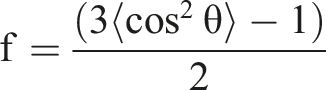
CNT alignment was quantified from the azimuthal intensity distribution of the (002) graphitic diffraction peak. The orientation factor (f) was calculated using Herman’s equation:
Differential scanning calorimetry (DSC)
Crystallization kinetics following shear treatment were examined using a DSC (TA Instruments Q2000) under nitrogen. Samples were heated to 180°C for 5 min to erase prior thermal history, shear-conditioned at the selected shear rate, and then cooled at 10°C/min to room temperature. Crystallization onset temperature (Ton) and induction time were extracted from the exothermic peaks. Control samples (0 s−1 shear rate) served as baselines. Each measurement was repeated three times to verify reproducibility.
Data analysis and reproducibility
All reported values represent the mean ± standard deviation of at least three independent measurements. Regression analysis was used to establish quantitative correlations between shear rate, CNT orientation factor, crystallization onset (Ton), and induction time. A critical shear threshold for CNT alignment was identified from the nonlinear increase in orientation factor relative to the crystallization parameters. This integrated methodology—combining rheology, in-situ WAXD, and DSC—enables robust interpretation of shear-induced alignment and its role in crystallization control, and provides predictive insight for the processing design of high-performance thermoplastic nanocomposites.4–6
Results
Shear-induced alignment of carbon nanotubes
In-situ wide-angle X-ray diffraction (WAXD) revealed a strong dependence of CNT orientation on the applied shear rate in HDPE melts. The degree of alignment, quantified by the orientation factor (f) from the azimuthal intensity distribution of the (002) graphitic diffraction peak, increased nonlinearly with shear rate. Specifically, f rose from 0.12 at 10 s−1 to 0.87 at 1000 s−1, with a distinct inflection near ∼100 s−1. This critical threshold marks the transition from a Brownian-motion-dominated regime to one governed by hydrodynamic alignment, in agreement with theoretical models for rod-like nanoparticle orientation under flow.
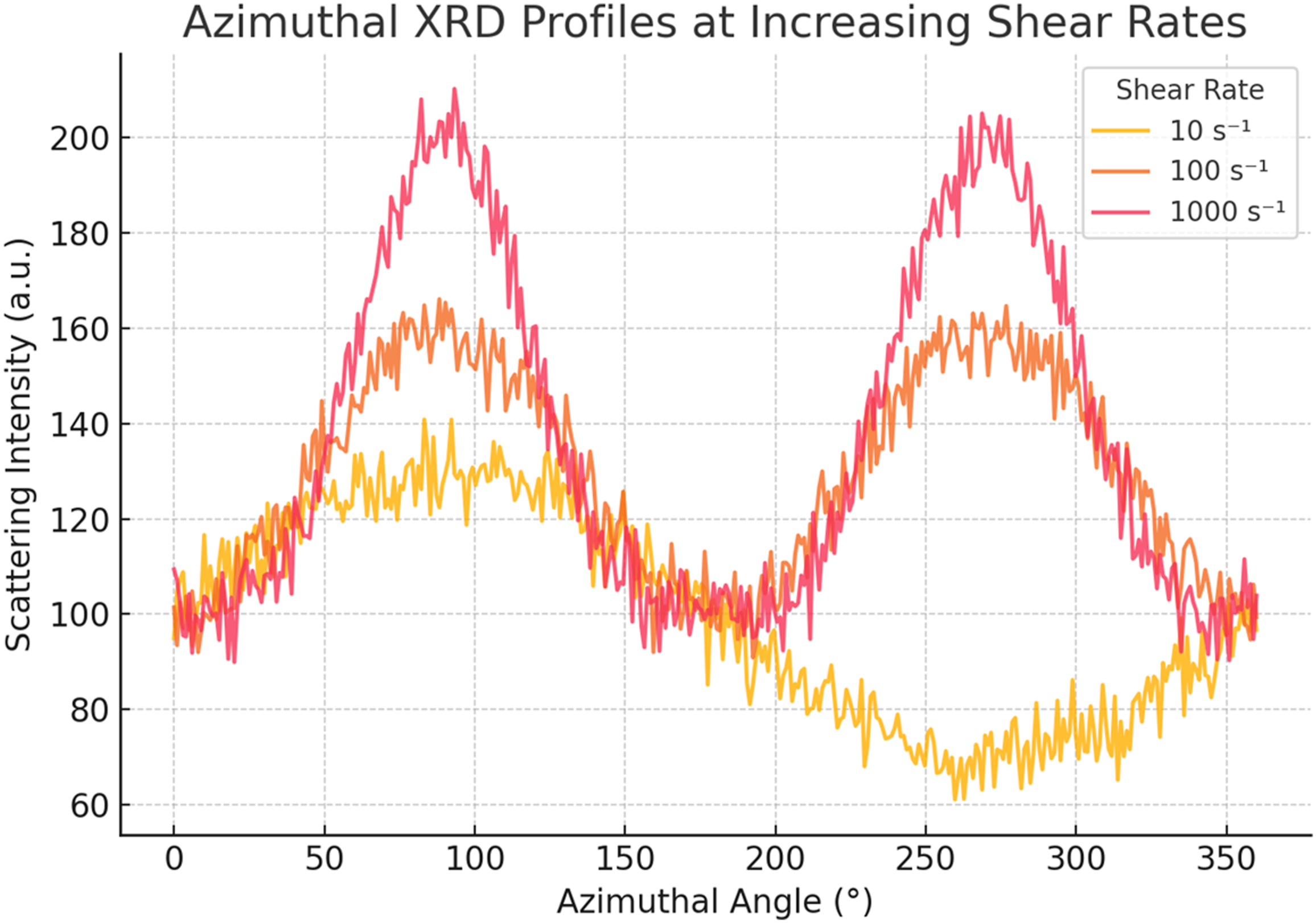
Representative 2D WAXD patterns and the corresponding 1D azimuthal intensity profiles (Figures 1 and 2) corroborate this trend. At low shear rate (10 s−1), the scattering intensity is broad and almost isotropic, and the extracted azimuthal curve displays a slight downward convex shape around 270°. This feature should not be interpreted as preferential “anti-alignment” of CNTs; rather, it arises from the combination of a nearly uniform CNT orientation distribution, the weak anisotropy of the polymer scattering halo, and minor background/detector-shading corrections near the beamstop. Once the shear rate exceeds ∼100 s−1, hydrodynamic torques dominate over thermal fluctuations and the CNTs reorganize into an anisotropic network. This produces well-defined intensity maxima centred at ≈90° and 270°, which appear as upward-convex lobes in the azimuthal profiles for 100 and 1000 s−1, consistent with the sharp increase in f listed in Table 1. 2D WAXD diffraction patterns of CNT/HDPE nanocomposites at shear rates of 10, 100, and 1000 s−1. Increasing shear rate narrows the azimuthal scattering, reflecting progressive CNT alignment along the flow direction. 1D azimuthal intensity profiles at varying shear rates. The low-shear (10 s−1) profile is nearly isotropic with a slight downward convex region near 270°, whereas peak narrowing and upward-convex lobes at higher shear rates (100 and 1000 s−1) indicate strong alignment along the flow direction. Shear-dependent viscosity, second normal stress difference, and CNT orientation factor in CNT/HDPE composites.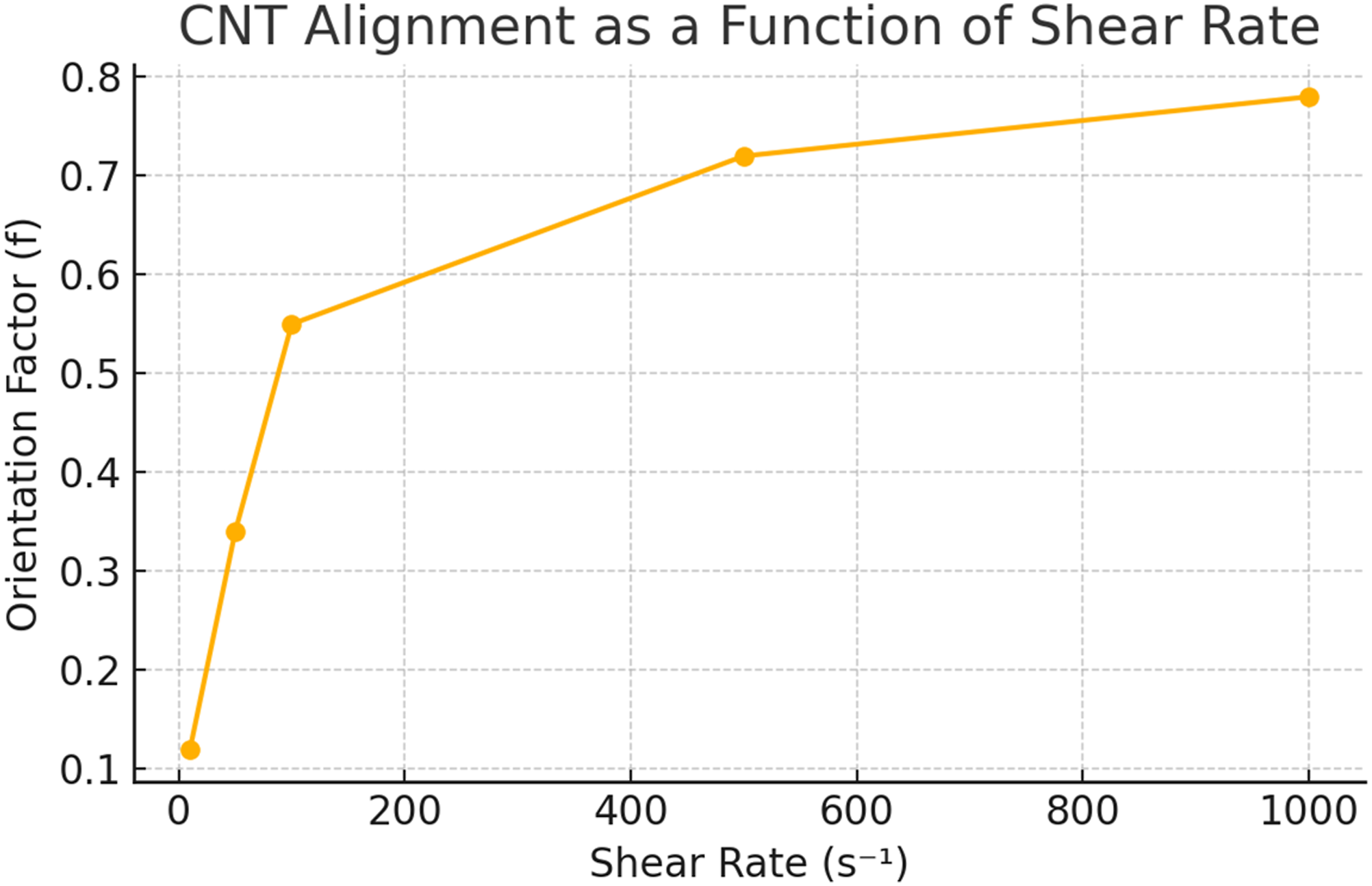
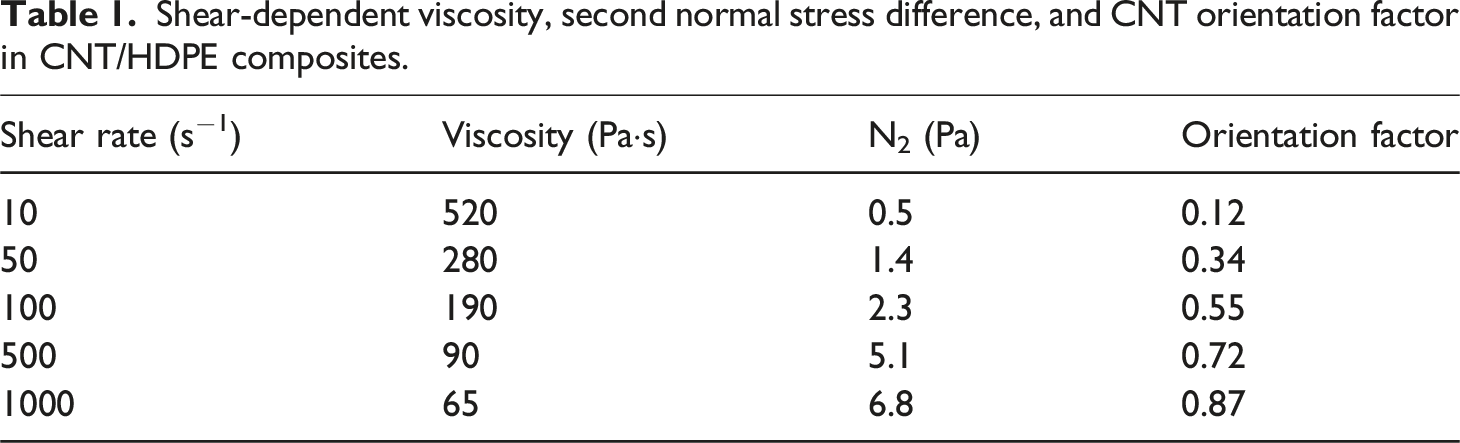
Rheological measurements support these structural observations. As summarized in Table 1, viscosity decreased with shear rate, while both the second normal stress difference (N2) and the orientation factor f increased markedly above ∼100 s−1. This behavior indicates that shear reorganizes CNTs into a strongly anisotropic network, simultaneously modifying the filler architecture and the melt rheology.
In addition, shear-thinning behavior was observed across all CNT loadings (0.5–2.0 wt%). As shown in Figure 3, viscosity decreased with increasing shear rate following a power-law trend typical of entangled polymer melts filled with particulate networks. Higher CNT concentrations increased the zero-shear viscosity due to network formation, but also intensified shear-thinning, reflecting more extensive network disruption and alignment under flow.
11
Shear viscosity of CNT/HDPE nanocomposites at different CNT concentrations. CNT loading increases zero-shear viscosity while enhancing shear-thinning behavior due to progressive network disruption and alignment under shear.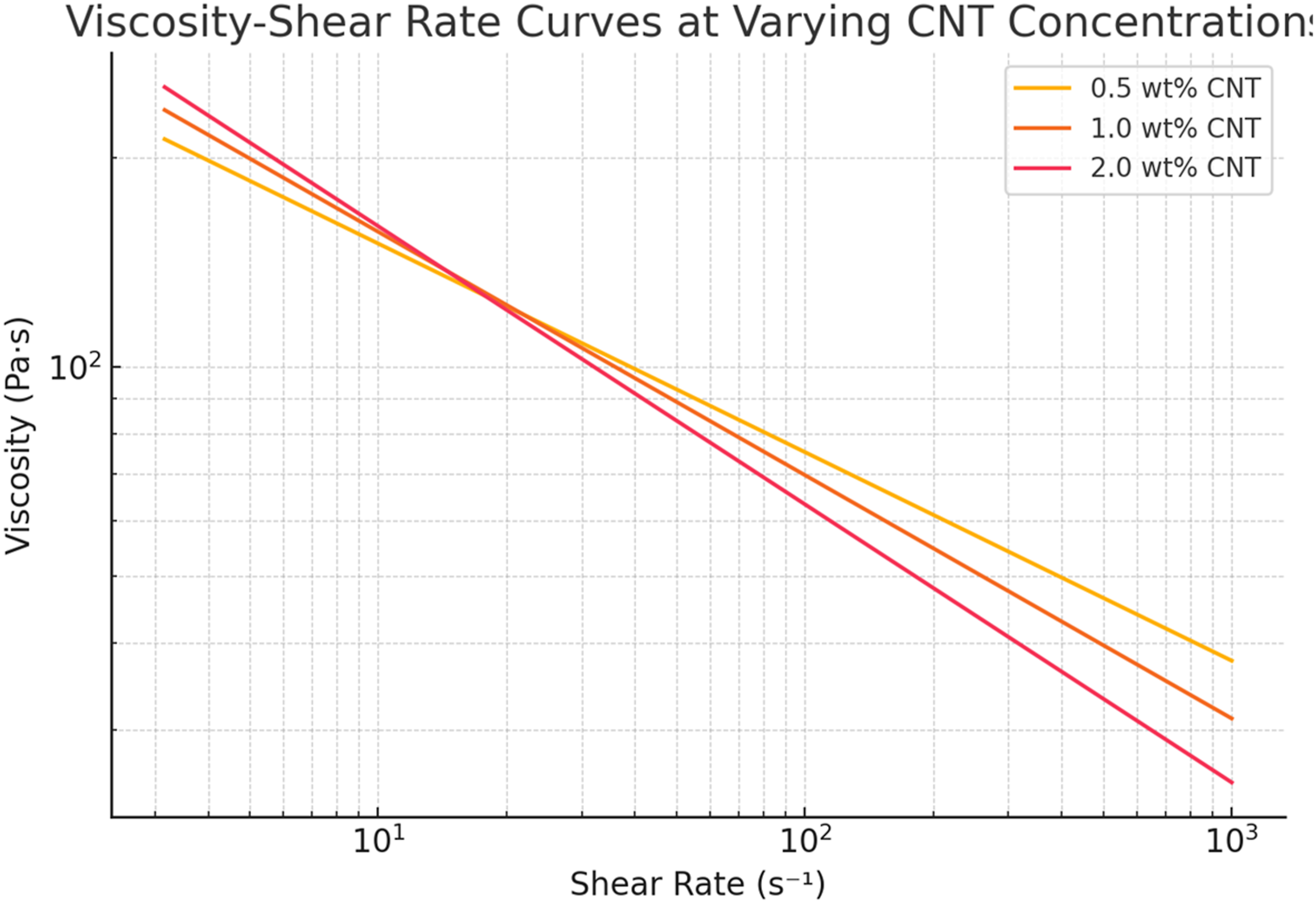
Coupled rheo-crystallization behavior
Influence of shear rate on orientation factor, crystallization onset temperature, and induction time (0.5 wt% CNT).
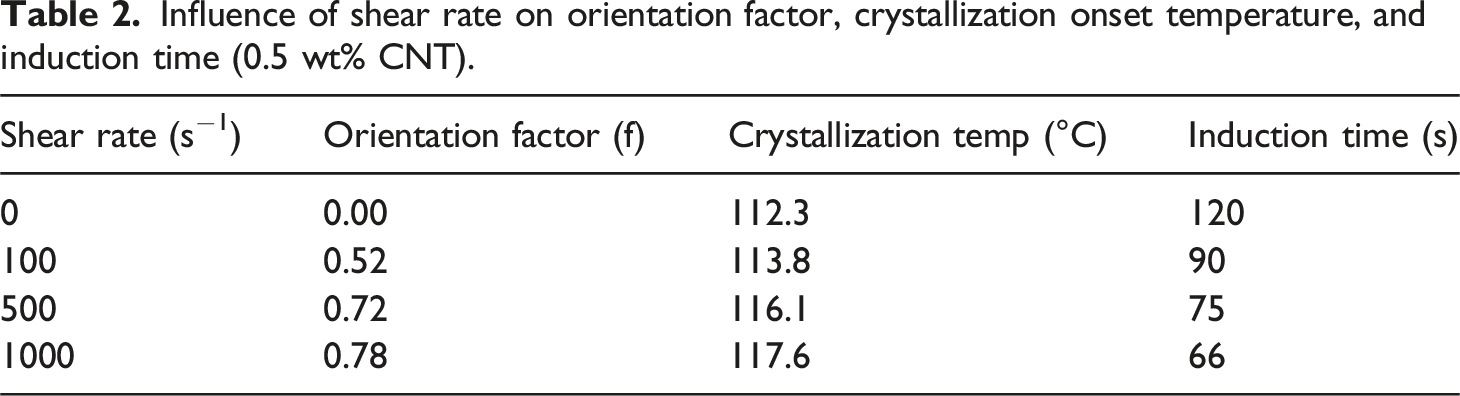
A strong correlation between orientation factor, T_on, and induction time is illustrated in Figure 4. Aligned CNTs act as highly efficient nucleating agents, lowering the free-energy barrier for crystallization and accelerating chain folding. The concurrent alignment of CNTs and partial orientation of polymer chains under shear establish a synergistic nucleation mechanism in semicrystalline thermoplastics, in which flow-enhanced ordering and nanofiller-induced nucleation reinforce one another.10,11 Correlation between CNT orientation factor, crystallization onset temperature (Ton), and induction time, demonstrating alignment-driven acceleration of crystallization.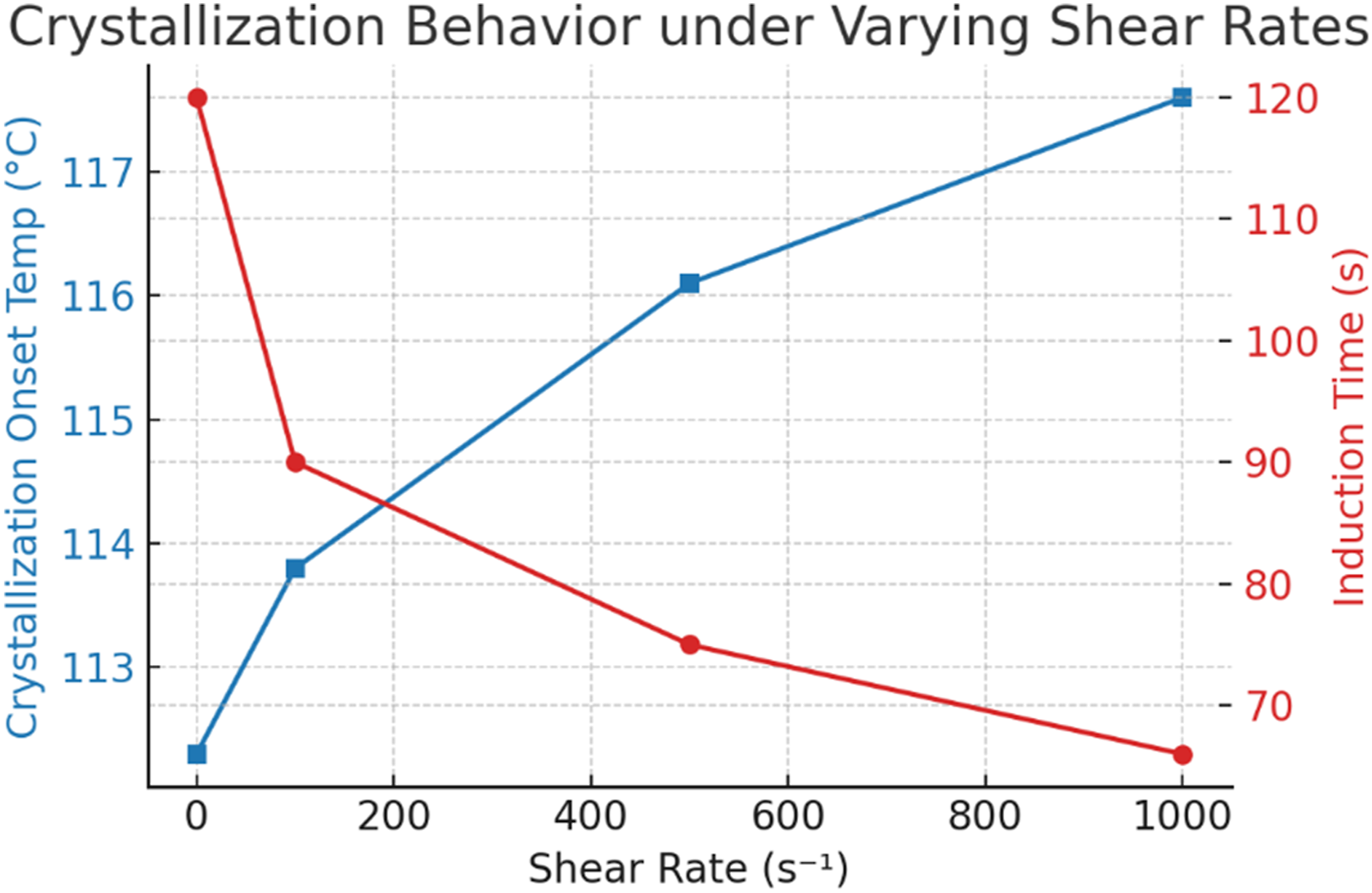
Morphological evolution and rheological implications
The combined WAXD and rheological data highlight the central role of shear in controlling morphology. Increasing shear rate produced progressively anisotropic diffraction patterns (Figure 2), consistent with the development of an aligned CNT network, while viscosity–shear rate curves (Figure 3) exhibited pronounced shear-thinning, particularly at higher CNT loadings.
CNT addition increased the zero-shear viscosity due to network formation and enhanced elastic contributions, but higher shear rates disrupted these networks, reduced viscosity, and promoted CNT orientation. This dual behavior defines a useful processing window: at low shear rates, sufficient melt strength is maintained for shape stability, whereas at high shear rates, flowability and alignment are enhanced. Such a balance is critical for industrial processes such as extrusion, fiber spinning, and film blowing, where both dimensional stability and controlled anisotropy are required. 12
Synergistic effect of CNT content and shear rate
Synergistic effects of CNT concentration and shear rate on crystallization parameters.
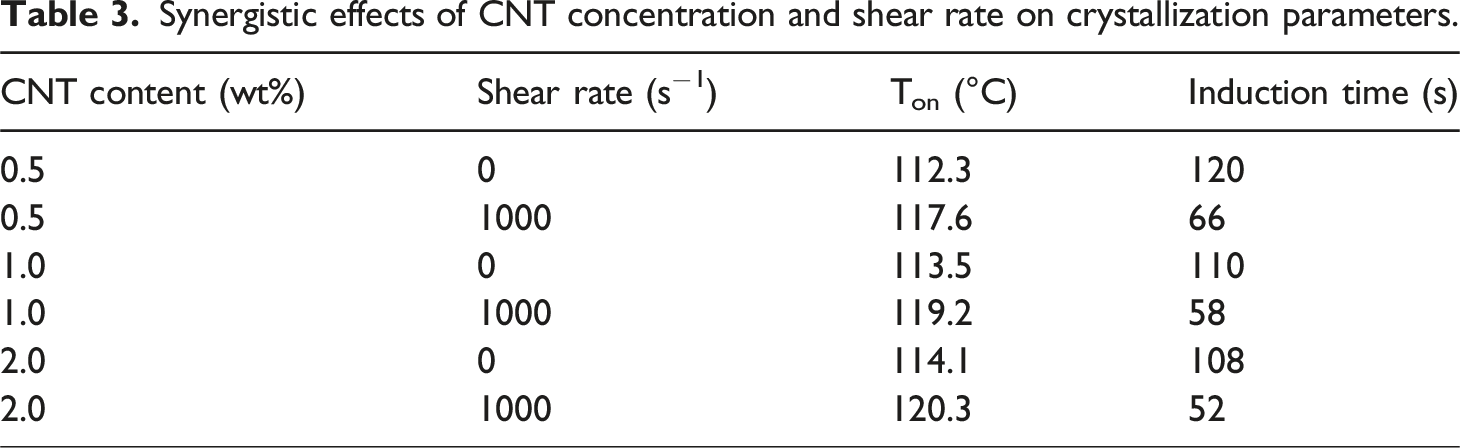
This synergy arises because CNTs supply abundant heterogeneous nucleation sites, and shear aligns them, enhancing their nucleation efficiency and interfacial interactions with the polymer matrix. Consequently, coordinated control of filler loading and shear intensity provides a robust strategy for tuning crystallization kinetics in thermoplastic nanocomposites, enabling targeted design of cooling profiles and crystallization-driven properties. 13
Structure–function correlation
Structure–function relationship: combined effects of shear rate and CNT content on orientation factor and crystallization behavior.
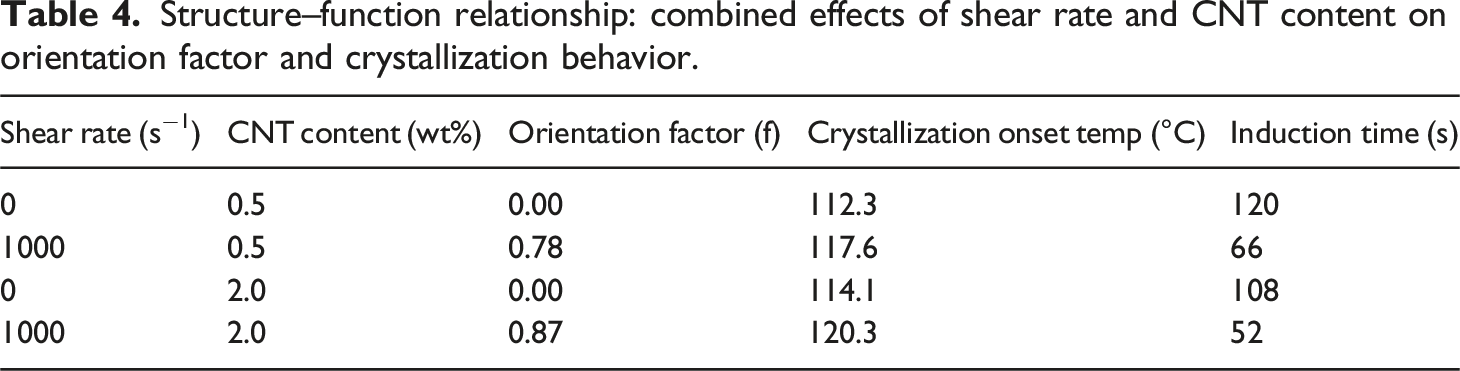
DSC curves (Figure 5) provide visual confirmation of this correlation. With increasing shear rate at fixed CNT loading, the crystallization exotherm shifts to higher temperatures and becomes sharper, reflecting accelerated nucleation and more rapid crystal growth. These thermal signatures are consistent with the CNT alignment trends measured by WAXD and with the rheological response, supporting the proposed rheo-crystallization mechanism in which shear-induced alignment of CNTs and polymer chains jointly control the crystallization pathway.14,15 DSC exothermic curves of CNT/HDPE composites at different shear rates. Increasing shear rate shifts the crystallization peak to higher temperatures and sharpens the peak, confirming shear-accelerated nucleation and crystal growth.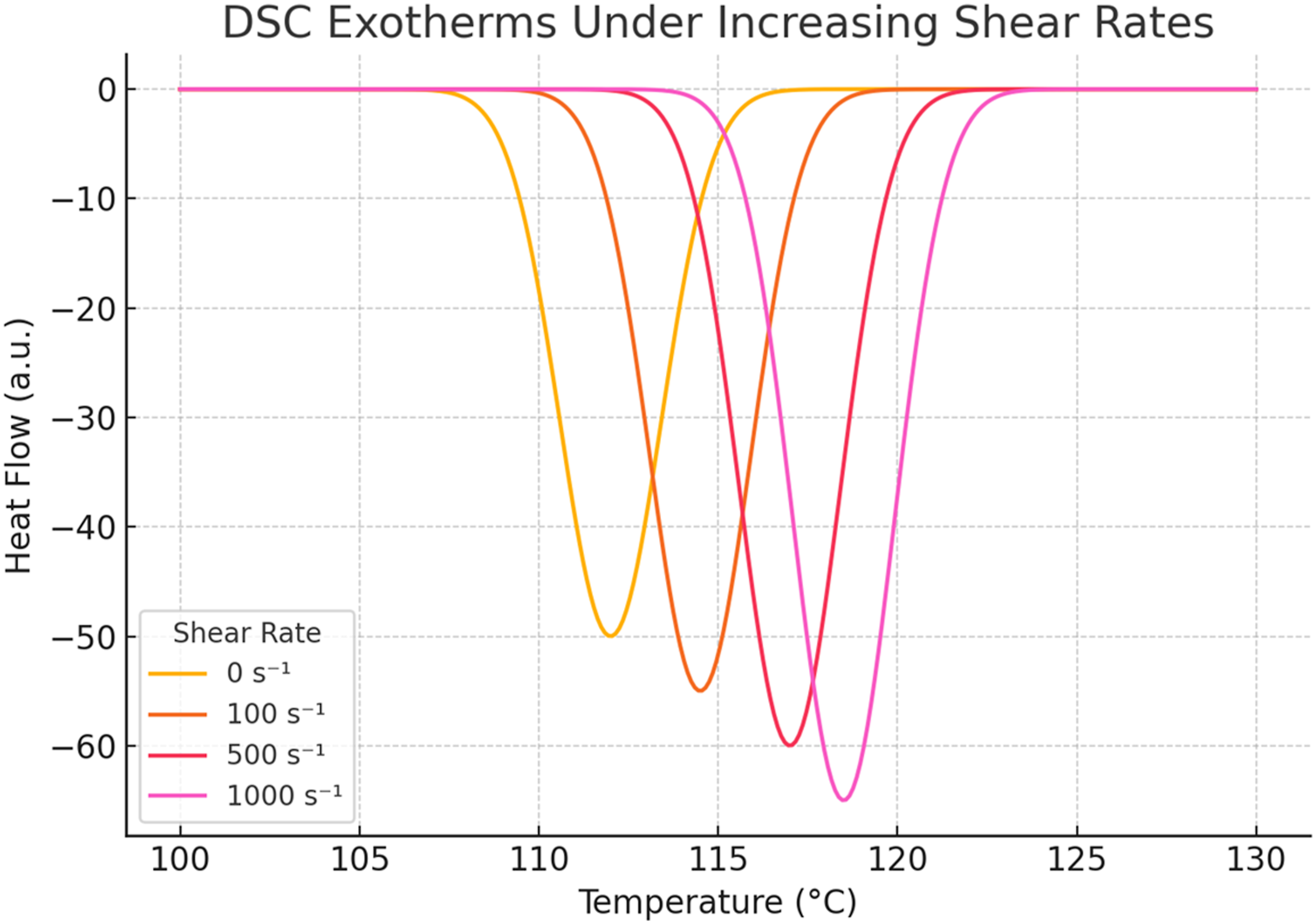
Discussion
The findings of this study provide direct evidence for a controllable interplay between shear-induced CNT alignment and crystallization kinetics in HDPE-based thermoplastic nanocomposites. A distinct alignment transition was identified at a critical shear rate of ∼100 s−1, consistent with theoretical models predicting rod-like nanoparticle alignment under hydrodynamic forces. This threshold marks a shift from isotropic, Brownian-motion-dominated behavior to flow-induced anisotropy, and thus offers a practical design parameter for polymer processing.16–18
The nonlinear increase in orientation factor with shear rate (Figures 1–2) confirms a progressive reorganization of CNTs from random to highly aligned states. These structural changes correlate directly with the enhancements in crystallization onset temperature (Ton) and reductions in induction time (Tables 2–3), supporting the interpretation that aligned CNTs act as highly efficient heterogeneous nucleation sites. By providing energetically favorable surfaces for chain folding, CNT alignment facilitates rapid crystallite formation and promotes anisotropic lamellar morphologies. 19
The rheological response further complements this picture. Increasing CNT loading elevates the zero-shear viscosity due to network formation and enhanced elastic contributions, whereas applied shear induces network breakdown and pronounced shear-thinning (Figure 3). This rheological transition simultaneously lowers flow resistance, promotes nanofiller alignment, and increases chain mobility, thereby reinforcing the flow-induced crystallization (FIC) mechanism. These dual effects—filler alignment and enhanced chain dynamics—synergistically accelerate crystallization and confirm the central role of coupled shear–structure interactions in thermoplastic nanocomposite processing. 20
The combined influence of CNT loading and shear intensity (Table 3) highlights a clear synergistic effect. At higher filler loadings, the shear-induced improvements in Ton and crystallization rate are magnified, reflecting the critical role of interfacial area in nucleation efficiency. High CNT concentrations supply abundant nucleation sites, while shear ensures their effective alignment and dispersion. This cooperative behavior is particularly relevant for high-shear processes such as extrusion and fiber spinning, where rapid crystallization and directional anisotropy are crucial for product performance. 21
A key contribution of this work lies in its use of in-situ characterization. By combining rheometry, WAXD, and DSC, transient phenomena such as CNT alignment and nucleation initiation were captured in real time under operational shear conditions. Unlike post-mortem analyses, this integrated methodology provides dynamic insight into structural evolution, enabling a mechanistic understanding of how flow drives crystallization. 22
Furthermore, these results establish a quantitative framework that links processing parameters (shear rate, CNT loading), structural metrics (orientation factor f), and performance indicators (Ton, induction time). This framework enables predictive control of crystallization and provides a foundation for AI-augmented process design, in which machine learning models can be trained to optimize processing windows for targeted microstructures and properties. 23
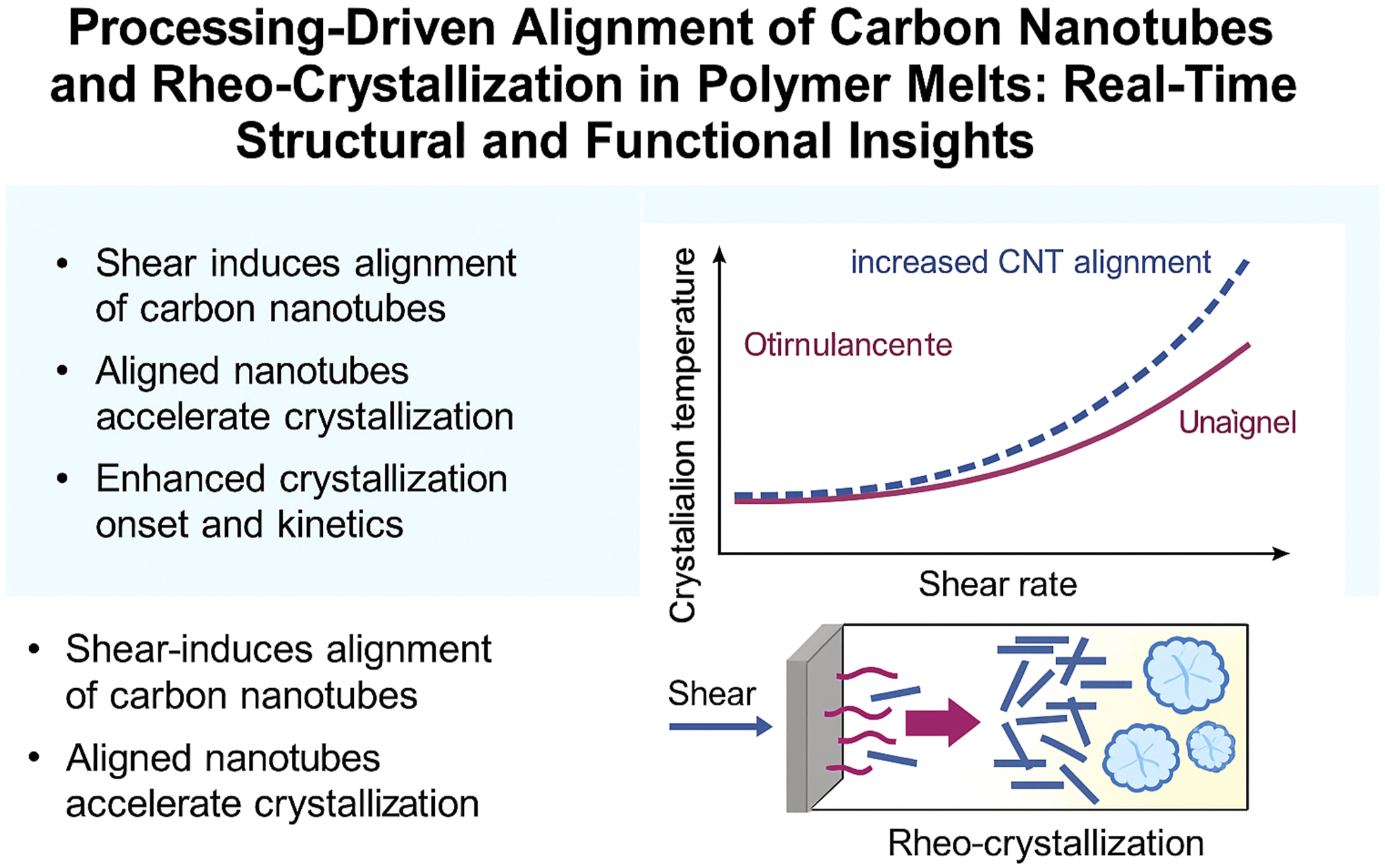
Figure 6 schematically illustrates the shear-induced rheo-crystallization mechanism. Under applied shear, randomly dispersed CNTs align along the flow direction, reducing topological entanglement and providing structured surfaces for heterogeneous nucleation. This coupling of mechanical deformation and thermal transitions governs the accelerated crystallization observed in CNT/HDPE melts. Schematic illustration of shear-induced rheo-crystallization in CNT/HDPE melts. Shear flow aligns CNTs, reduces entanglement, and enhances nucleation efficiency.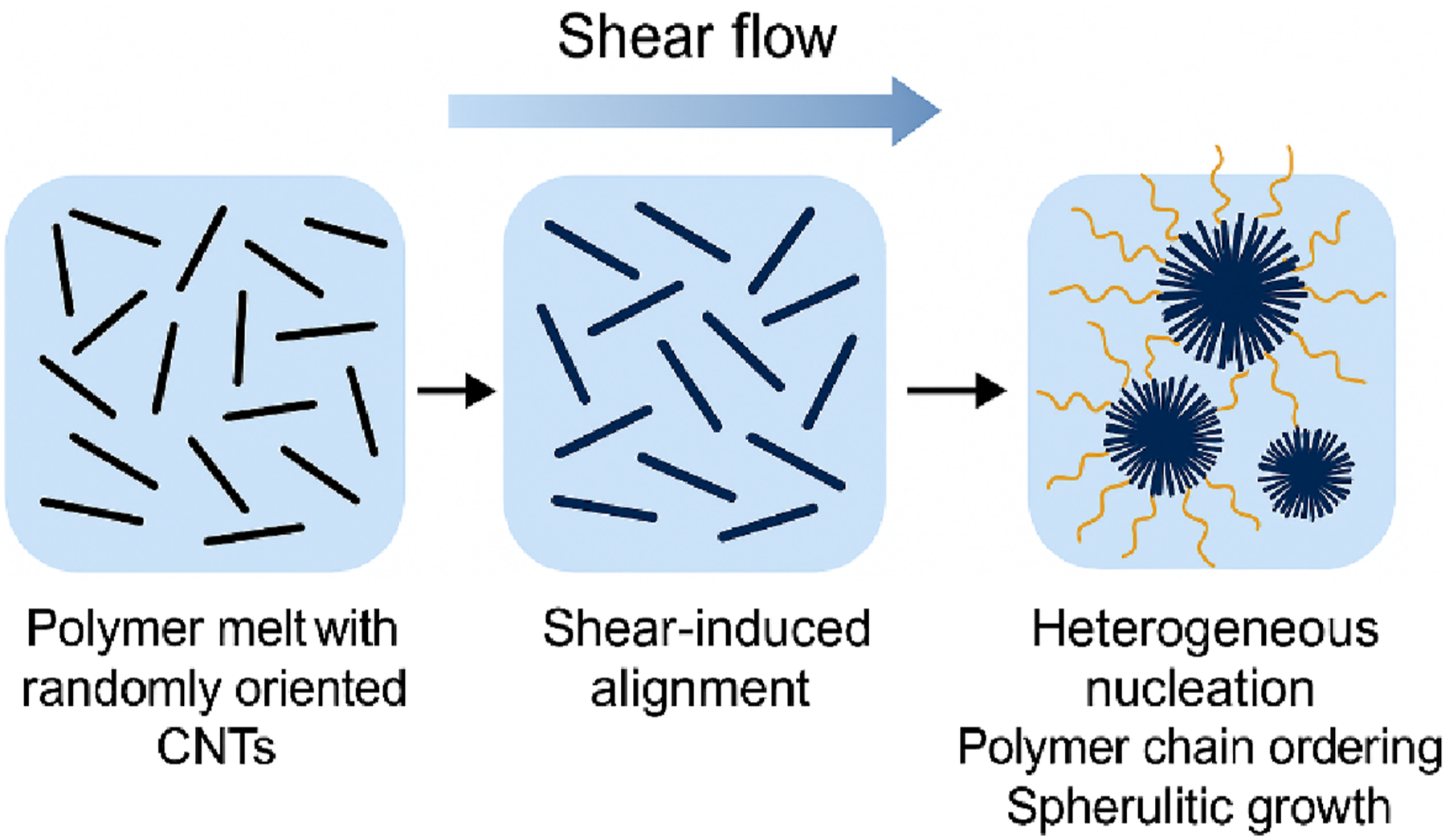
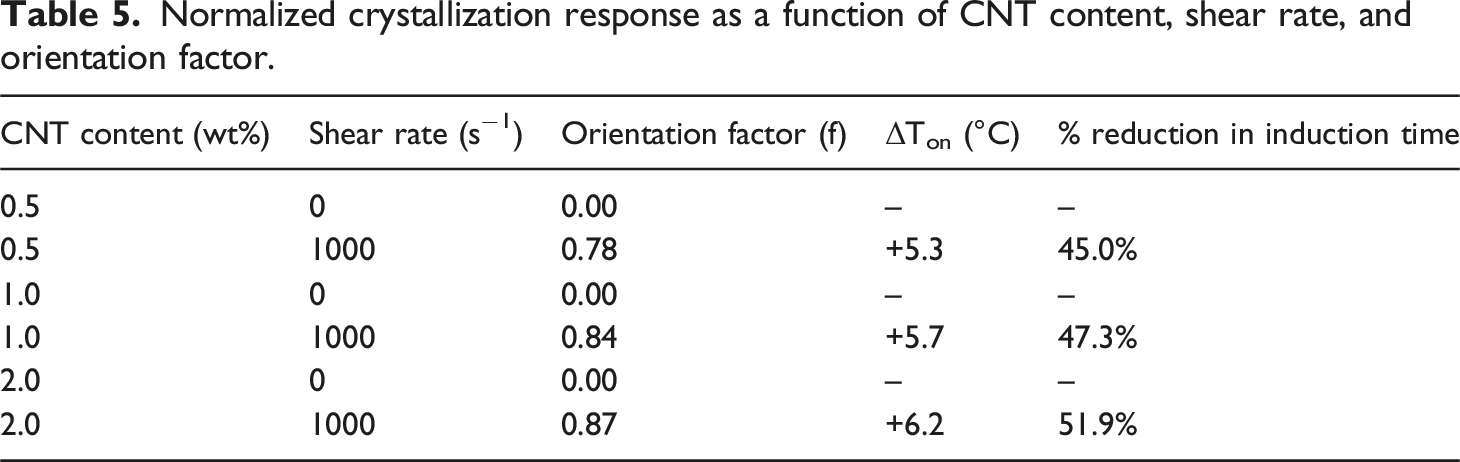
Normalized crystallization response as a function of CNT content, shear rate, and orientation factor.
Coupled rheo-crystallization: A predictive framework for processing control
The observed (approximately) linear relationships between orientation factor, Ton, and induction time establish a practical, predictive framework for crystallization control. Aligned CNTs not only act as nucleating agents but also provide quantifiable, process-dependent structural descriptors for crystallization dynamics. By using metrics such as f and ΔTon, manufacturers can anticipate crystallization outcomes under specific shear conditions and tailor cooling profiles accordingly.
These insights are transferable across processing technologies. In fiber spinning, shear alignment can be exploited to enhance tensile anisotropy and fiber strength by promoting oriented crystallites along the drawing direction. In additive manufacturing, controlled shear during deposition could improve interlayer crystallinity, reducing warpage and dimensional distortion. Similar strategies could be applied in film blowing and profile extrusion, where engineered shear fields may be used to tune morphology and performance in thermoplastic nanocomposites.25,26
Broader impact and cross-disciplinary relevance
Although this study focuses on CNT/HDPE systems, the framework is broadly applicable to other semicrystalline matrices (e.g., polypropylene, polyamide, PET) and anisotropic fillers (e.g., graphene nanoplatelets, layered silicates). The integration of real-time rheology, WAXD, and DSC constitutes a transferable methodology for mapping structure evolution in diverse polymer nanocomposites and complements recent efforts in cutting-edge readers to connect processing history with microstructure and performance.
More broadly, the orientation factor (f) can serve as a quantitative link between structural evolution and data-driven control models. By integrating this metric into machine learning frameworks, processing systems could dynamically adjust shear conditions to optimize microstructure in real time, thereby bridging laboratory-scale analysis with industrial-scale manufacturing.1,2 Such an approach aligns with emerging trends in smart manufacturing and digital twins for polymer processing.
Limitations and future directions
The present study is limited to steady shear flow. In contrast, industrial processing often involves more complex flow regimes—including oscillatory shear, elongational flow, and multi-axial deformation. Extending this framework to capture such conditions is a crucial next step and would provide a more complete description of rheo-crystallization in practical processes. Additionally, exploring hybrid nanofillers (e.g., CNT–graphene, CNT–clay, or functionalized CNTs) may reveal new pathways to manipulate nucleation kinetics, interfacial dynamics, and anisotropy. 3
In the current work, CNT alignment and network formation are inferred from in-situ WAXD under controlled shear and temperature. Direct real-space visualization of the aligned CNT networks—using, for example, cryo-TEM or focused-ion-beam SEM on freeze-quenched specimens at different shear rates and loadings—would provide a valuable complementary perspective on network topology and lamellar morphology. However, such imaging campaigns are experimentally demanding and lie beyond the scope of this study; they are therefore identified as an important direction for future work.
Future studies should also integrate physics-informed neural networks (PINNs) and other machine learning tools with the experimental datasets generated by this framework. Such approaches could be used to predict crystallization responses across a wider processing landscape, accelerating the development of adaptive, closed-loop processing strategies. Ultimately, the convergence of real-time analytics, predictive modeling, and intelligent process control will reshape the manufacturing of high-performance thermoplastic nanocomposites. 4
Conclusion
This study established a real-time analytical framework to elucidate the coupled effects of shear-induced carbon nanotube (CNT) alignment and crystallization behavior in HDPE-based thermoplastic nanocomposites. By integrating rotational rheometry, in-situ wide-angle X-ray diffraction (WAXD), and differential scanning calorimetry (DSC), quantitative correlations were identified between shear rate, CNT orientation factor, and crystallization kinetics.
A critical shear threshold of ∼100 s−1 was found, beyond which CNTs transition from an essentially isotropic state to a highly aligned network (f up to 0.87). This alignment markedly accelerates crystallization, elevating the onset temperature by up to ∼8°C and reducing induction time by more than 50%. The synergistic action of CNT concentration and shear intensity further amplifies these effects, providing tunable control over microstructure development and solidification behavior.
The combined rheological, structural, and thermal evidence underscores shear engineering as a powerful strategy for directing morphology and optimizing performance in thermoplastic composites. The insights obtained here are directly relevant to high-shear industrial processes such as extrusion, fiber spinning, film blowing, and additive manufacturing, where crystallinity, anisotropy, and dimensional stability are critical design targets.
More broadly, the framework demonstrates how process parameters can be quantitatively linked to structural descriptors (orientation factor) and functional outcomes (Ton, induction time). This linkage provides a foundation for predictive, AI-assisted manufacturing systems in which real-time structural metrics guide adaptive adjustment of shear conditions to achieve targeted microstructures. Such approaches will accelerate the intelligent design and scalable production of next-generation, multifunctional thermoplastic nanocomposites.
Footnotes
Author contributions
Maziyar Sabet contributed to the conception and design of the study, methodology development, experimental investigation, data analysis, drafting of the original manuscript, and critical revision and editing of the final version.
Declaration of conflicting interests
The author declared no potential conflicts of interest with respect to the research, authorship, and/or publication of this article.
Funding
The author disclosed receipt of the following financial support for the research, authorship, and/or publication of this article: The author received “UTB STRATEGIC RESEARCH GRANT, UTB/GSR/1,/2025 (2)” financial support for the research, and authorship of this article.
Ethical approval
This article does not involve human participants or animals; therefore, ethical approval is not required.

Data Availability Statement
No datasets or code were generated or analyzed during the current study.