




Abstract
Utilization of biodegradable thermoplastic polylactic acid (PLA) has restricted its widespread application because of the cost and brittle nature of materials. Therefore, this study focused on providing solutions to the brittle nature of PLA using a cost-effective and highly efficient filler material that could be accessed in abundance from agricultural industry. Firstly, different monomers were produced based on ultrafine fully vulcanized powdered natural rubber grafted methyl methacrylate monomer (UFPNR-g-PMMA) at various proportions and examined considering crosslink efficiency and morphology to determine the optimum proportion. Secondly, the optimized UFPNR-g-PMMA powder was used as a toughening filler in the PLA matrix to produce the composite. Furthermore, flexural and impact strength tests were used to examine the toughening effects of the UFPNR-g-PMMA filler. The results recorded suggests that the aim of the study has been achieved considering that 3-4 and 2-3-folds improvements achieved with flexural strain and impact strength with the UFPNR-g-PMMA filler at 5-20 wt/wt%, respectively. Thermal stability of the PLA/ UFPNR-g-PMMA composites has also improved drastically. The toughening performance exhibited by the UFPNR filler in the PLA matrix suggests its potential as an alternative material for 3D printing and packaging.
Introduction
Environmental issues have led to the worldwide demand for more greener material, especially biodegradable material. By utilizing renewable resources, the amount of CO2 can be decreased and also provided a cost reduction for manufacture. 1 Other problems of conventional plastics are long degradation time, high energy requirements, and damaging both environment and living organism. 2 e.g., polyethylene terephthalate, polyvinyl chloride, polystyrene, they are commodity plastics and being used in applications such as food containers, piping, and styrofoam. 3 The aftermath of decomposition such as microplastics and nano plastics is also another concern due to the direct influence on the well-being of living organism. 4 To address such a problem, the replacement of petroleum-derived material with more greener materials (i.e. biodegradable or/and biobased material) is very promising and has been continuously conducted, especially the alternative solution associated to Sustainable Development Goals (SDGs).5–9 Among the bio-based plastics, polylactic acid (PLA) showed many advantages properties such as good mechanical strength, non-toxicity, and easy processibility. It consists of a building block derived from lactic acid where the resources are from either carbohydrate (e.g., rice, corn, starch) or a petroleum based-starting type. 10
Applications of PLA could be towards production of plastic bags, bottles, filaments, and medical devices. However, its brittleness limits its wide range of applications. There are many several techniques to modifying such property, for example, co-polymerization, 11 blending with other polymers,12,13 and composite.6,14,15 Composite system proved as an efficient technique over other methods due to its ease of processibility, high stress to weight ratio, and lightweight, resulting in a ubiquitous usability in many industries. 16 Sun et al. 17 investigated the mechanical and thermal properties of PLA blended with TPSiU (Thermoplastic Silicone Polyurethane) elastomer. Results indicated that incorporating TPSiU at 15 wt% in PLA composite improved impact strength (IS) approximately 5-folds compared to that of PLA. In contrast, degradation temperature at 5 wt% decreased as TPSiU increased. Dechatiwong et al. 18 blended PLA/ ENR (epoxidized natural rubber) and compatibilized with PMMA (polymethyl methacrylate). The IS of PLA/ENR increased approximately 3-fold without compatibilizer and 9-fold with the help of compatibilizer. Sun et al. 19 studied effects of M-OH-ISSA (surface-modified incinerated sewage sludge ash) on PLA as reinforcing filler. Tensile results showed an increment of 59% and 26% in strength and strain at break, respectively. Yet, the thermal stability of PLA composite decreased with increasing filler content due to the degradation from inorganic filler. Some researchers also attempted to utilize the natural fibers for reinforcing PLA,20,21 however, a slight improvement in toughening property has been made as compared to elastomer.
Natural rubber (NR) is one of the abundant material products which can be found in Southeast Asia parts. It has a chemical structure of cis-1,4-polyisoprene and hydrophobic nature due to the long chain hydrocarbon. Furthermore, it categorizes in elastomer type leading to a unique properties such as good flexibility, tear resistance, abrasion resistance, and high elongation at break. 22 These unique properties lead to specific applications that require high elasticity such as tires, gloves, condoms, and automotive parts. In contrast, there are some undesirable properties such as low oil resistance, heat sensitivity, and strengths which need to be addressed. Among the chemical modification techniques, graft-copolymerization has been studied as a feasible method and requires less hazardous chemicals. It is widely-used technique for rubber modification by introducing a vinyl monomer onto the NR surface through free-radical polymerization. 23 The modified rubber consists of the core-shell structure which retains the intrinsic properties of NR, even though it is covered by a grafted polymer shell. There have been many research studies on different vinyl monomers grafted onto NR, such as styrene, 24 styrene-acrylonitrile, 25 methyl methacrylate (MMA), 26 and maleic anhydride. 27 Among these monomers, MMA has been studied by many researchers because it was a renowned monomer and compatible with PLA.26,28,29 The covered shell of the NR by grafting a monomer can improve the interfacial interaction between the targeted polymer and NR, which toughen the targeted polymer.6,30
Another concern on the nature of NR is high viscosity due to its high molecular weight which causes many problems such as blending compatibility, processing conditions, and time consuming leading to the complexity usage on both academic and industry fields until the arrival of rubber vulcanization.23,31 In the past few decades, there has been an emerging technology to produce the rubber particle called Ultrafine fully vulcanized powdered rubber (UFPR).6,32 It is the production of irradiation induced crosslinking in rubber and is subsequently spray dry to obtain a powdered material. Additionally, the utilization of irradiation has proved the efficiency of rubber vulcanization by several reports as following literatures. Lin et al 33 reports the swelling ratio was reduced and the ultrafine fully vulcanized powdered natural rubber (UFPNR) size was reduced 58% using ditrimethylol propane tetraacrylate (DTMPTA) at three parts per hundreds of dry rubber (phr) compared to without using coagent at the irradiation dose of 350 kGy. Rimdusit et al 34 studied the effect of the particles sizes and the irradiation dose on styrene grafted onto DPNR. As a result, the swelling ratios significantly reduced compared to without irradiation grafted DPNR. Additionally, the particles sizes were reduced by 78% after being exposed to irradiation at 300 kGy compared to those of 50 kGy. Sangthongyingdee et al. 30 studied the effects of NR-g-PMMA (natural rubber grafted with polymethyl methacrylate) content on PLA thermal and mechanical properties. The results reveal that the degradation temperature of PLA composites decrease as the rubber content increased. The impact strengths significantly improved 367% after incorporating rubber content at 25 phr compared to neat PLA. However, the researchers have no reports on other mechanical tests as the demand for PLA composite relying on the balance between strength and toughness. Furthermore, the researchers haven’t studied the effects of crosslinking on grafted NR. These studies demonstrated the UFPNR features and could be applied as toughening filler in another polymers.
In the current study, the graft copolymerization process commenced by tert-butyl hydroperoxide (TBHPO) and tetra ethylene pentaamine (TEPA) as a redox initiator and then methyl methacrylate monomer (MMA) was introduced onto deproteinized natural rubber (DPNR). After that, DPNR grafted with methyl methacrylate monomer (DPNR-g-PMMA) was further crosslinked by adding the coagent di-trimethylolpropane tetraacrylate (DTMPTA) at 3 phr and continuing with electron beam irradiation at a dose of 300 kGy, followed by spray drying to obtain ultrafine fully vulcanized powdered natural rubber grafted methyl methacrylate (UFPNR-g-PMMA). Finally, the total amount of UFPNR-g-PMMA content in PLA/UFPNR-g-PMMA composite was investigated based on physical, mechanical, and thermal properties. The results should provide useful information for toughening PLA to expand its applicability in high impact materials. 35
Experimental
Materials
The information related to all the materials used in the study is presented as an appendix I in the Supplemental Material.
Preparation of Composite Samples
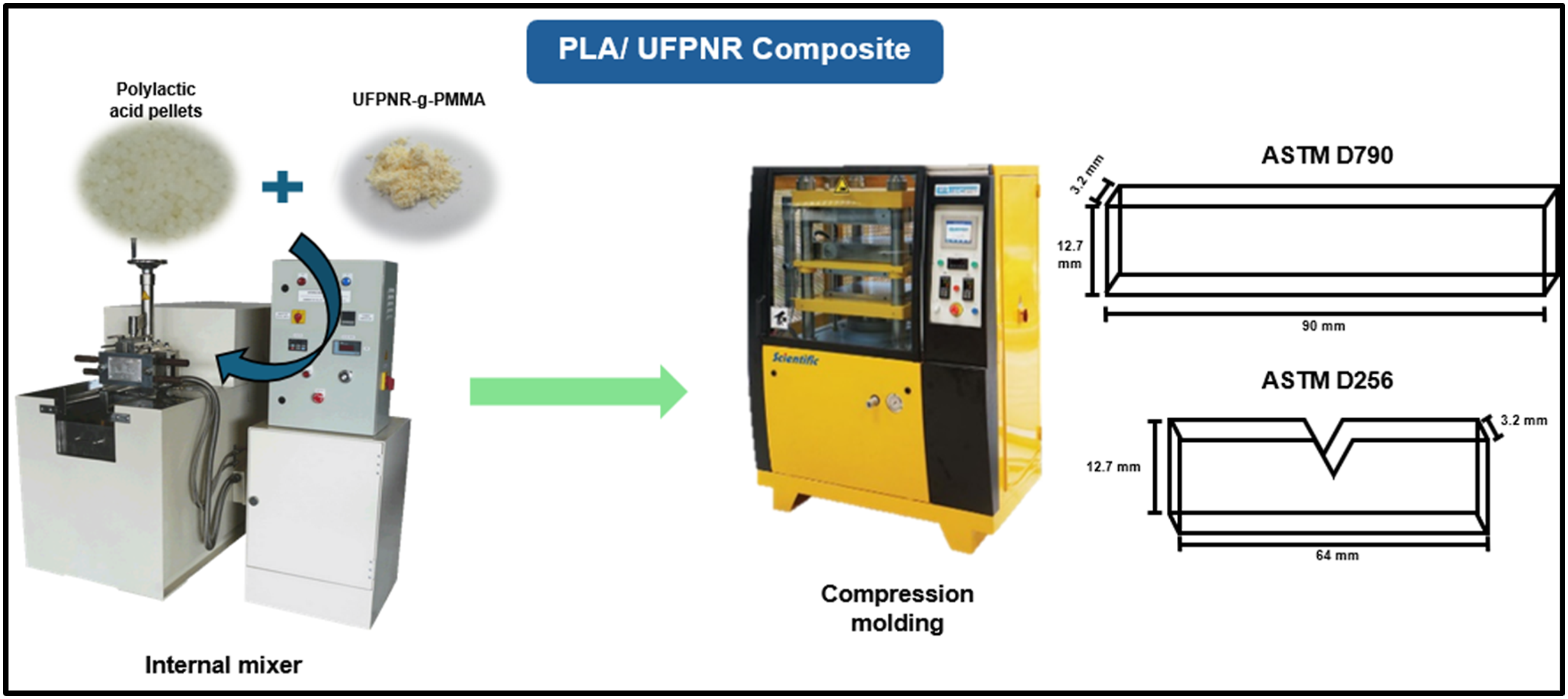
Figures 1 and 2 present schematic illustrations of PLA/UFPNR-g-PMMA composites production route. There are three major steps for this work: firstly, NR modification was done by grafting MMA monomer. Next, the monomer grafted NR was crosslinked using electron beam in the presence of coagent and spray drying the powder. Finally, PLA/UFPNR-g-PMMA composites were prepared by internal mixer and compression molding. Schematic of graft-copolymerization, e-beam irradiation, and spray drying process. PLA composite fabrication and specimen dimension.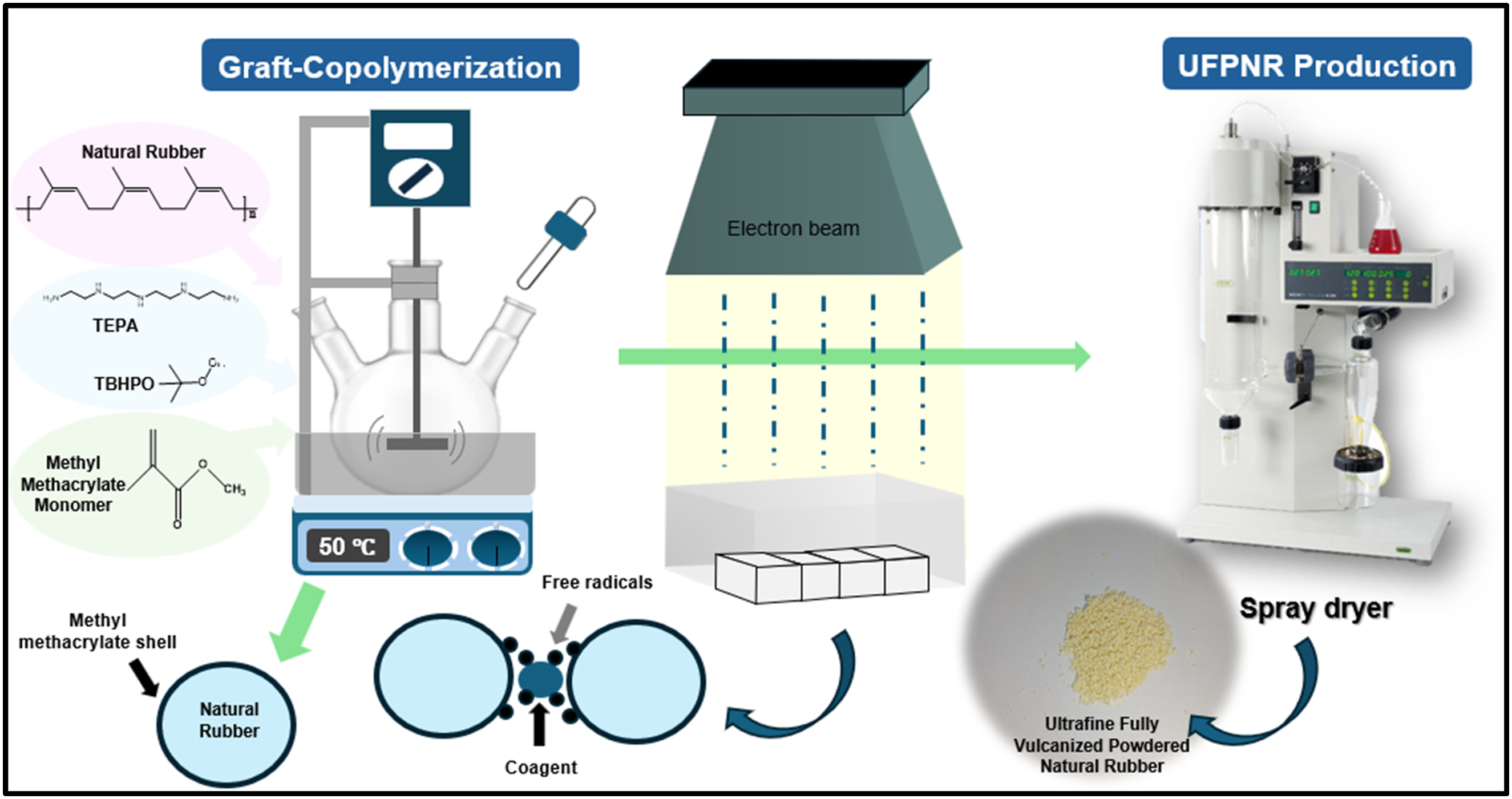
Preparation of Deproteinized Natural Rubber Grafted with Methyl Methacrylate Monomer (DPNR-g-PMMA)
The procedure adopted in the graft-copolymerization was prepared as report by Nguyen et al. 26 and Kochthongrasamee et al. 28 The MMA monomer was extracted with 10 wt% NaOH solution 2-3 times and washed with de-ionized water until neutral. It was later dried with MgSO4 7H2O to remove inhibitor. Firstly, DPNR (deproteinized natural rubber) latex (300g, 30% Dry rubber content (DRC)) was prepared by adding 150 g H-DPNR (60 % DRC) into a 1 L round-bottom reactor and followed by adding a mixture of 2.4 g (0.8 wt%) sodium dodecyl sulfate as emulsifier with DI water 147.6 g. The DPNR latex was purged O2 with N2 gas for 1 h with stirring speed of 200 r/min. Then, redox initiator (TEPA: TBHPO 1:1 mol ratio, 0.5 phr, 0.05 × 10⁻³ mol/g of dry rubber) and MMA monomer (varied at 5, 10, 15, and 20 phr) were added and reacted for 6 h at 50°C with stirring speed of 400 r/min. Finally, the unreacted monomer in latex was removed using evaporator at 80°C at 400 bar for 1 h and the respective films were casted in a Petri dish at 80°C for 24 h to calculate monomer conversion (Conv%). 34 The dried films at different monomer formulation were extracted using Soxhlet apparatus with petroleum ether in the dark for 24 h and dried at 80°C for 24 h. After that, the dried films were further extracted with acetone in the dark for 24 h before drying at 80°C for 24 h. Both organic solvents have proved their efficiency for removing the remaining homopolymer (e.g. free NR by petroleum ether and free PMMA by acetone) for determining grafting efficiency (GE%) and free natural rubber as described in Kochthongrasamee et al. 28
Crosslinking DPNR-g-PMMA and Producing UFPNR-g-PMMA
After finishing graft-copolymerization, the grafted DPNR (DPNR-g-PMMA) was diluted to 20% DRC (used the measured DRC of grafted DPNR for calculation) and added 3 phr of di (trimethyolpropane) tetraacrylate (DTMPTA, 1.32 g) and stirred for 15 min before pouring into microwavable container. Next, the DPNR-g-PMMA was subjected to electron irradiation under the following conditions 10 MeV power, 50 kW beam power, and a dose of 300 kGy, as this condition proved as its efficiency for grafted rubber in literatures reported by Rimdusit et al. 34 Lastly, the crosslinked DPNR-g-PMMA was further dried by a spray dryer (model B-290 from BUCHI, Switzerland) with the inlet temperature 190°C and outlet temperature approximately 80°C or above, feed flow rate at 7 mL/min, and air flow rate at 500 L/h (aspirator 100%). At low inlet temperature, the grafted rubber latex wasn’t fully evaporated and remained as a drop of latex. Finally, the obtained UFPNR-g-PMMA was collected at the product collection vessel before fabricating UFPNR-g-PMMA with polylactic acid as PLA/UFPNR-g-PMMA composites.
Preparation of PLA/UFPNR-g-PMMA Composites
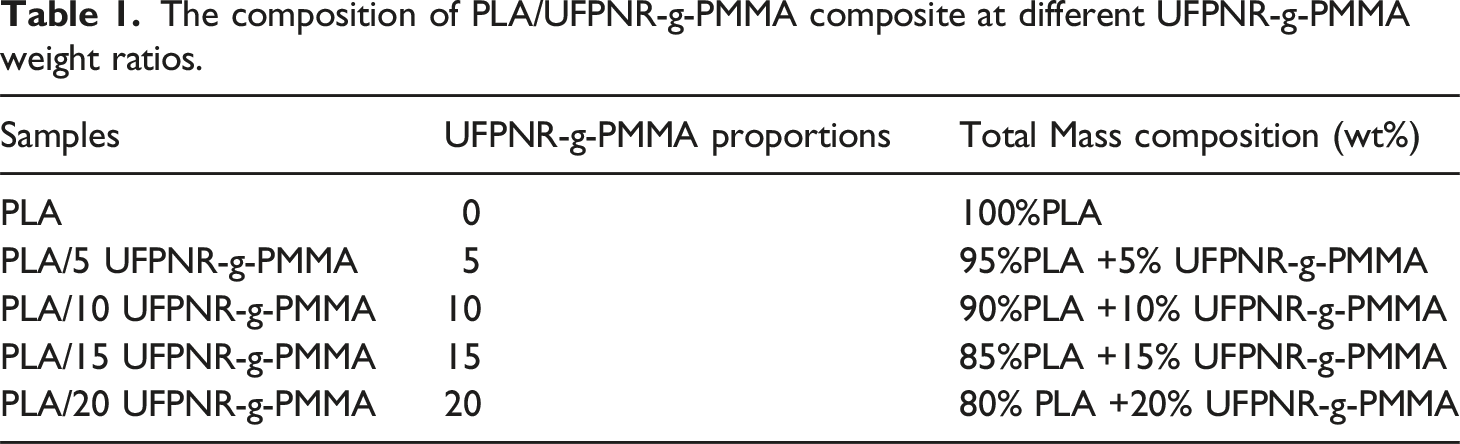
The composition of PLA/UFPNR-g-PMMA composite at different UFPNR-g-PMMA weight ratios.
Characterizations
The characterizations were divided into three parts, comprised of 1. DPNR-g-PMMA after graft-copolymerization 2. UFPNR-g-PMMA after crosslinking and spray drying to produce powder 3. PLA composites after fabricating PLA with UFPNR-g-PMMA.
Characterization of DPNR and DPNR-g-PMMA
Fourier Transform Infrared Spectroscopy (FTIR, FTIR Perkin Elmer 2000 model) was used to study the functional group of DPNR and DPNR-g-PMMA in the range of 600-4000 cm−1 with an averaging scan of 128 scans at a resolution of 4 cm−1. The DPNR-g-PMMA films were extracted using Soxhlet extraction as depicted in DPNR-g-PMMA preparation.
Monomer conversion (Conv%) was calculated based on gravimetric analysis method using equation (1) and Grafting efficiency (GE%) was calculated using equation (2) as reported in literatures of Rimdusit et al.
34
:

Swelling ratio and gel content of the crosslinked grafted DPNR films were evaluated at different ratios of the MMA monomer. Firstly, the crosslinked grafted DPNR-g-PMMA at 0.1 g (W1) were prepared same procedure as preparing in Soxhlet extraction, immersed in toluene 20 mL (0.05 w/v%) for 24 h. After that, the obtained films were immediately weighed (W2) and dried in an oven for 24 h. Finally, the final weight films (W3) were measured after complete drying. Swelling ratios (Q), molecular weight between crosslinks (Mc), and crosslink density (CLD) were calculated based on Flory-Rehner equation as follows in equations (3)–(5), respectively.
34
W1, W2, W3 are the initial, swollen, and dried weights of samples, respectively. 


Transmission electrons microscope (TEM) was used to investigate the morphology of particles after graft-copolymerization on the complete core-shell structure of grafted rubber compared to neat rubber and the crosslinked grafted DPNR. The investigation was taken by TEM (TEM, Talos F200X from JEOL Ltd (Bangkok, Thailand)) with an accelerating voltage of 80 kV. The NR sample was prepared by diluting NR latex approximately 1000 times with deionized water and placed on a carbon-coated copper grid and stained with 1.0 wt% osmium tetroxide (OsO4).
Characterization of UFPNR and UFPNR-g-PMMA
Surface morphology of UFPNR-g-PMMA at different ratios of grafting were coated with a thin layer of gold before undergoing the examination at an acceleration voltage of 10 kV. The investigation was performed using SEM (SEM, model JSM-IT300LV from JEOL Ltd (Tokyo, Japan)) and compared with neat UFPNR. Furthermore, the average particles sizes were evaluated using the Image J program, and approximately 300 particles were used for particle size calculation.
Characterization of PLA and PLA/UFPNR-g-PMMA
Fracture surface of PLA composites were analyzed by SEM (SEM, model JSM-IT300LV from JEOL Ltd (Tokyo, Japan)) and compared between neat PLA and PLA composites after impact testing to distinguish the influence of UFPNR-g-PMMA on PLA and compared them to neat PLA. All specimens were coated with a thin layer of gold before commencing analysis on surface morphology.
Thermogravimetric analysis (TGA) was performed using a thermogravimetric analyzer (model TGA1 Module Mettler-Toledo, Thailand). The samples were performed using the following conditions: 30 to 600°C with the heating rate of 20°C/min under N2 atmosphere (feeding rate 50 cm3/min). Thermal degradation was evaluated from thermal degradation at 5 wt% loss (Td5) of material.
Flexural testing was performed under three-point bending mode using INSTRON 5567 universal testing machine (1 kN load cell, Norwood, USA). PLA composites were prepared according to ASTM D790 standard. 36 The dimensions of specimen are 90 mm × 12.7 mm × 3.2 mm, span to depth are the ratio of 16:1, and crosshead speed of 1.5 mm/min for both PLA and PLA/composite, respectively. The results showed an average of five specimens. Additionally, the Izod impact test was conducted using Pendulum Impact Tester, according to ASTM D256 standard. The dimensions of the specimen are 64 mm × 12.7 mm × 3.2 mm, with V-notch on the specimen of 2.5 mm depth and 45°. The pendulum energy was set at 10.089 J for testing. Impact values were calculated based on an average of five specimens, and the impact energy per unit width of the sample.
Dynamic mechanical properties of neat PLA and PLA composites were investigated using DMA (model DMA1, Mettler Toledo, Switzerland) at 1 Hz frequency and 2°C/min using a dual cantilever. The dimensions of specimen are 20.4 mm × 10 mm × 2 mm with the temperature in the range of 30 to 100°C to determine the thermo-mechanical properties and glass transition temperature (Tg) of neat and composite specimens.
Results and Discussion
Properties of DPNR, DPNR-g-PMMA, and UFPNR-g-PMMA
Monomer Conversion and Grafting Efficiency
Monomer conversion (Conv%) was used to evaluate the amount of monomer converted to copolymer on cis-1,4-polyisoprene chain including all free homopolymer. Grafting efficiency (GE%) determines the amount of monomer grafted onto cis-1,4-polyisoprene chain compared to total gross copolymer.28,34 In Figure 3(a), the Conv% increased with the addition of MMA content which increased the generation of free polymer, especially the MMA (methyl methacrylate) homopolymer and grafted copolymer. GE% was calculated based on the gravimetric method after Soxhlet extraction, and it was seen that all graft-copolymerization show results above 80% which confirmed the successful grafting MMA onto DPNR. In Figure 3(b), free DPNR and free PMMA were calculated with the weight difference of before and after Soxhlet extraction with petroleum ether and acetone, respectively. It was found that increasing MMA content resulted in decreasing free DPNR and increasing free PMMA which associated to Conv% as mentioned. Effects of MMA content on (a) Conversion & grafting efficiency and (b) Free DPNR and free PMMA.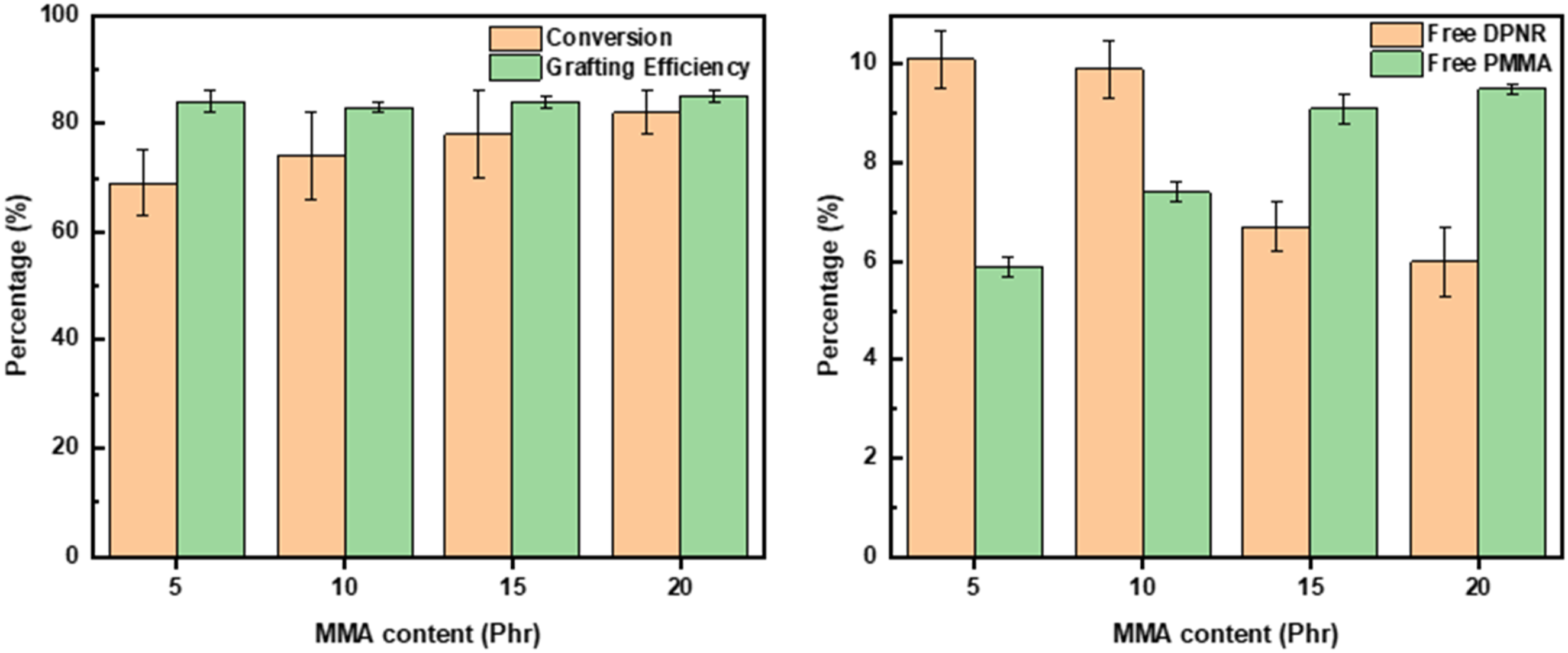
Fourier Transform Infrared (FTIR) Spectroscopy Analysis
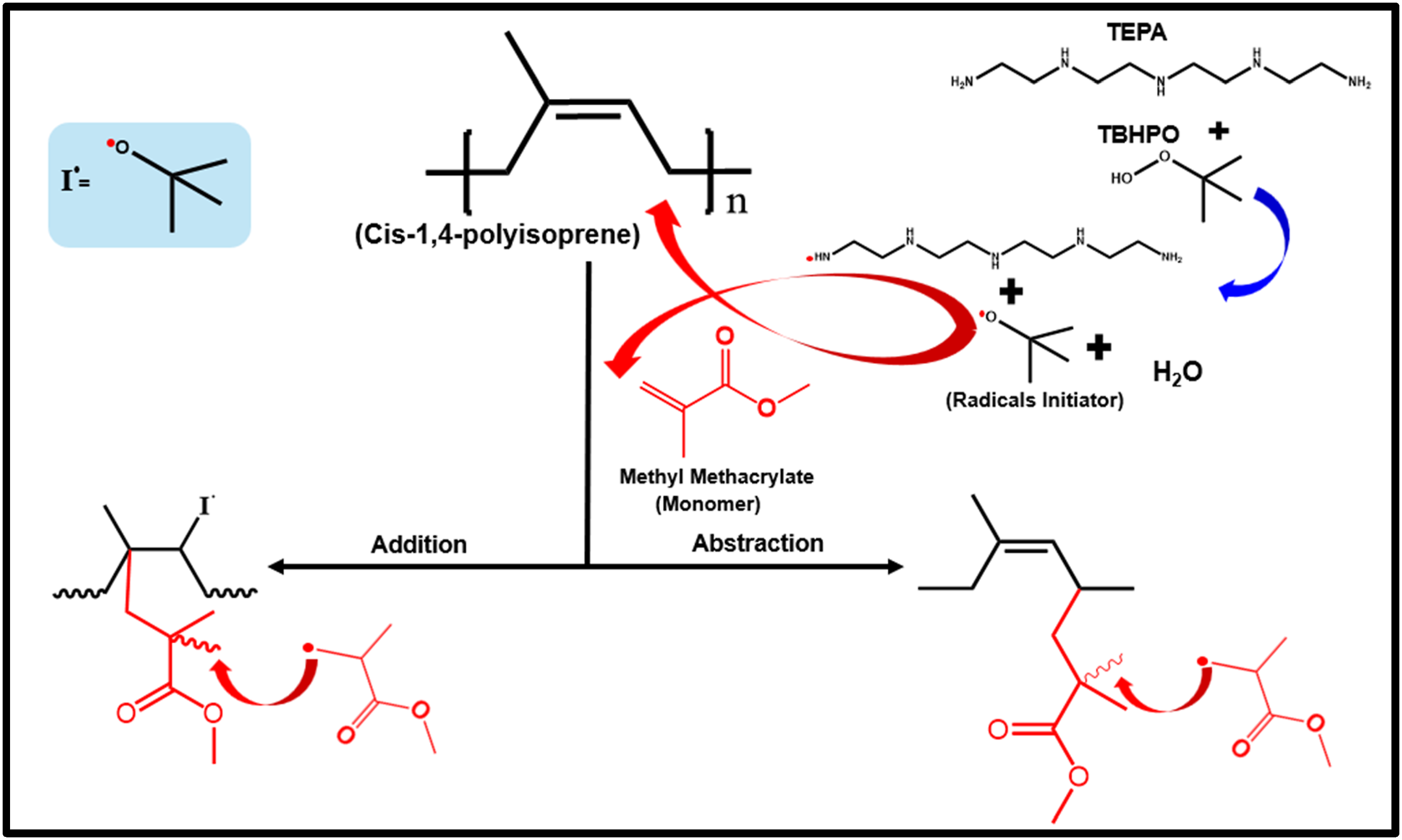
The chemical structure of DPNR and DPNR-g-PMMA at various ratios were evaluated and presented in Figure 4. As explained in FTIR analysis section, the prepared films of grafted rubber were subjected for analysis after Soxhlet extraction to ensure no free polymethyl methacrylate (PMMA) and cis-1,4-polyisoprene (DPNR) remained in samples. As observed in Figure 4, DPNR (or cis-1,4-polyisoprene) shows characteristics peaks at 2960, 2926, and 2853 cm−1 related to C-H stretching vibration of the C-H, -CH3, and -CH2-, respectively. The characteristic peaks at 1447 and 1375 cm−1 were assigned to C-H deformation of -CH2 and -CH-, respectively. Other characteristic peaks at 1664 and 840 cm−1 were assigned to C = C stretching vibration and C = C bending vibration, respectively.25,26,37 After grafting with MMA, the characteristic peaks appeared at 1149 and 1731 cm−1 which were assigned to C-O-C stretching and C = O stretching, respectively.26,28,30 The purpose mechanism of graft-copolymerization onto cis-1,4-polyisoprene can also be divided into two mechanisms, which are presented in Figure 5 as explained by Chueangchayaphan et al
38
and Songsing et al
39
. The first pathway is the generation of free-radical at α-methylenic hydrogen atom (or allylic carbon position) via abstraction mechanism. The second pathway is the generation of free-radical at C = C of polyisoprene macromolecules and resulted in the breakage of the double bond via addition mechanism.
34
From our perspective, the double bond remaining in cis-1,4-polyisoprene and grafted rubber indicated the abstraction route, which favored attaching at allylic carbon of rubber macromolecules. The Soxhlet extraction for eliminating homopolymer before analyzing with FTIR was investigated also by Chueangchayaphan et al.
38
A comparison on Soxhlet extraction was analyzed before and after extraction based on the FTIR spectra of NR-g-PHEA (poly 2-hydroxyethyl acrylate). It was found that the homopolymer of PHEA was eliminated from the samples due to a decrease in signal at 3398 cm−1 (-OH stretching) and 1713 cm−1(C = O stretching). This indicated that the homopolymers (i.e., cis-1,4-polyisoprene and poly 2-hydroxyethyl acrylate polymerized species) were eliminated after applying Soxhlet extraction process and the detected signals were prominently based on the grafted natural rubber. Fourier transform infrared spectra at 650-4000 cm−1 of DPNR and DPNR grafted with methyl methacrylate monomer at various ratios. Possible pathways for graft-copolymerization mechanism.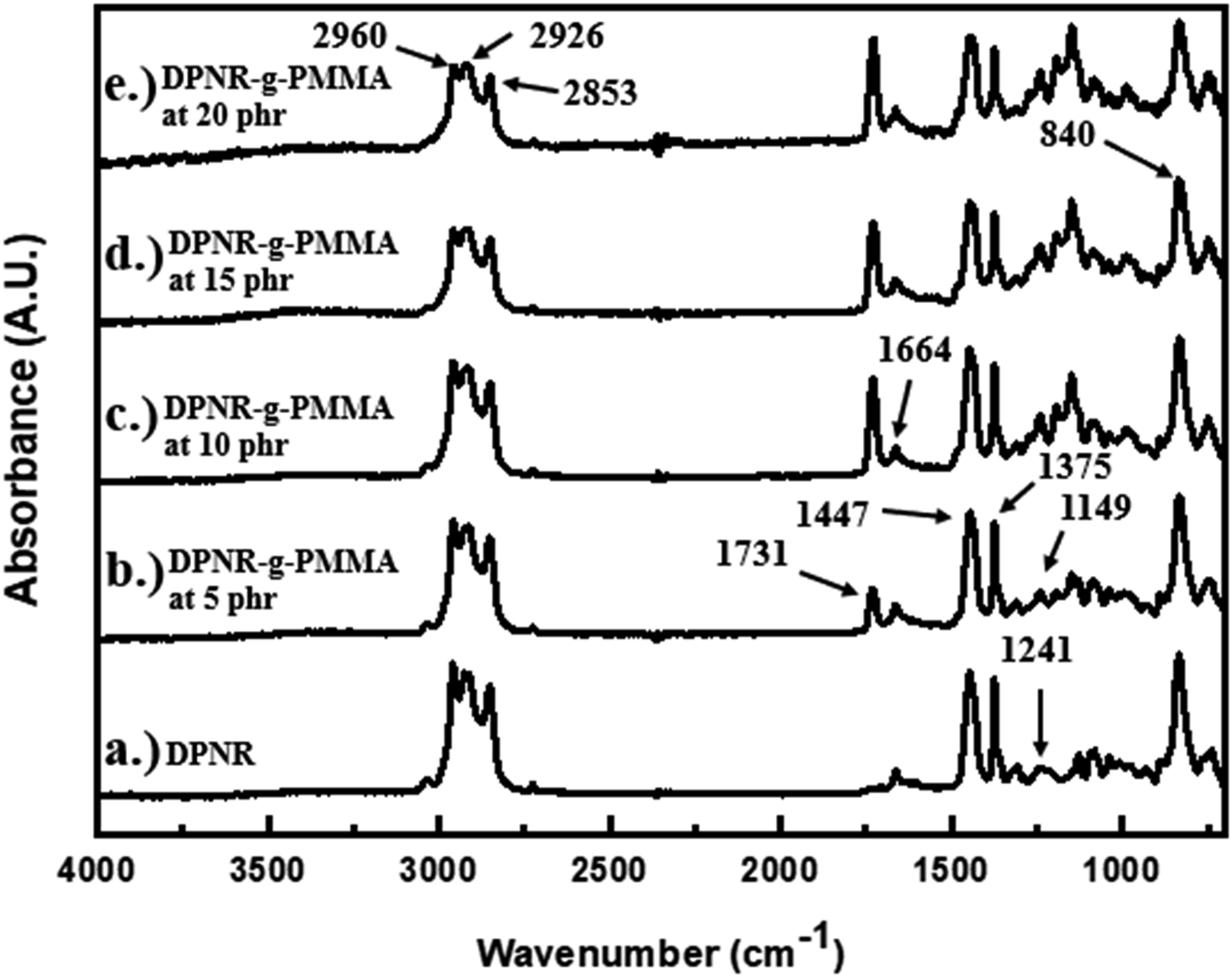
Transmission Electron Microscope (TEM) Analysis
After grafting MMA onto DPNR, the successful grafted rubbers were investigated by TEM micrographs in Figure 6. In this section, the effect of MMA content on the morphology of grafted rubber was investigated. As can be observed in Figure 6(a), DPNR shows a spherical dark particle with a smooth surface with a core-shell structure in which the bright layer outside surrounded the dark core. After investigating further in Figure 6(b)-(e), which represented DPNR-g-PMMA at 5, 10, 15, and 20 phr of MMA content, respectively, DPNR particles were grafted by MMA particles by diffusing into rubber particles and starting to form shell layer as a globular structure particle. It can be clearly observed that the shell layer was thicker with increasing monomer content due to the macroradical formation of monomer as reported by Arayapranee et al.
40
and Kochthongrasamee et al.
28
The macroradical started through redox initiator on the surface of either rubber or monomer, which continue to propagate the free radical to another species (either rubber or monomer) and terminate the reaction by combination of two radical species. As a result, the shell layer formed more denser with increasing monomer content and reached the highest level at 20 phr. TEM micrographs of (a) DPNR; (b) DPNR-g-PMMA at 5 phr; (c) DPNR-g-PMMA at 10 phr; (d) DPNR-g-PMMA at 15 phr; (e) DPNR-g-PMMA at 20 phr.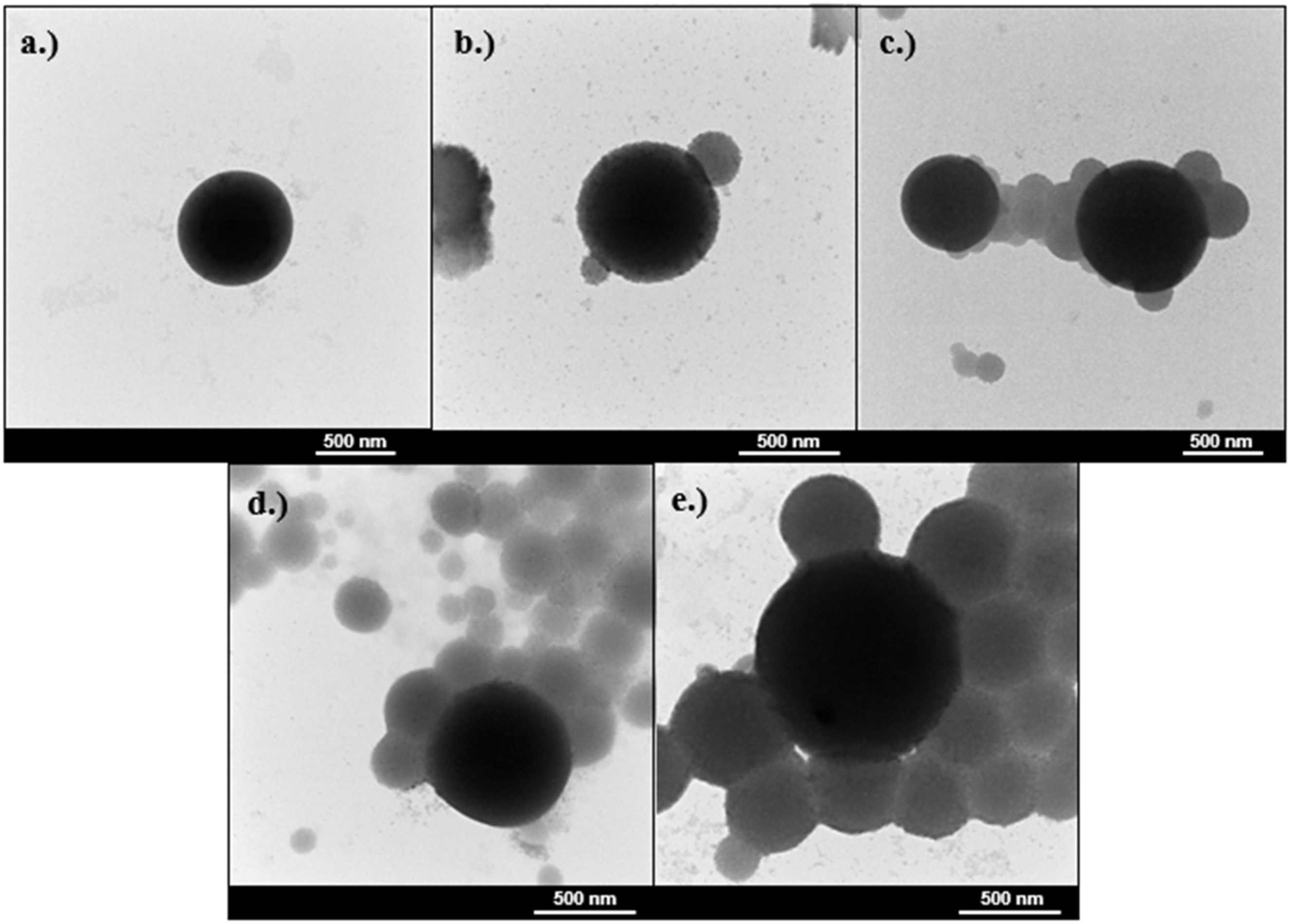
After e-beam irradiation, crosslinked DPNR and crosslinked grafted DPNR were investigated morphological property using TEM micrographs as shown in Figure 7. As depicted in Figure 7(a), the morphology of unmodified crosslinked UFPNR shows a spherical shape particle similar to those of DPNR and the radicals generated by irradiation occurred at the UFPNR surface. This could be attributed to some non-rubber organic compounds surrounding rubber particles unbound from the surface.
41
As the monomer content increased in Figure 7(b)-(e), the rubber agglomeration decreased clearly compared to grafted DPNR. These findings reveal that NR modified by graft-copolymerization and crosslinking via electron beam irradiation prevented aggregation by core-shell structure. These results are in accordance with George et al.
42
It was stated that the smoother shell surface obtained from grafted NR particles with higher crosslink density. Additionally, it can be observed that the boundary of PMMA shell started to form more visibly and accounted for this less-agglomeration. Addition of MMA content, the compact shell layers were formed more readily and attributed to fine particles. TEM micrographs of Crosslinked (a) DPNR; (b) DPNR-g-PMMA at 5 phr; (c) DPNR-g-PMMA at 10 phr; (d) DPNR-g-PMMA at 15 phr; (e) DPNR-g-PMMA at 20 phr.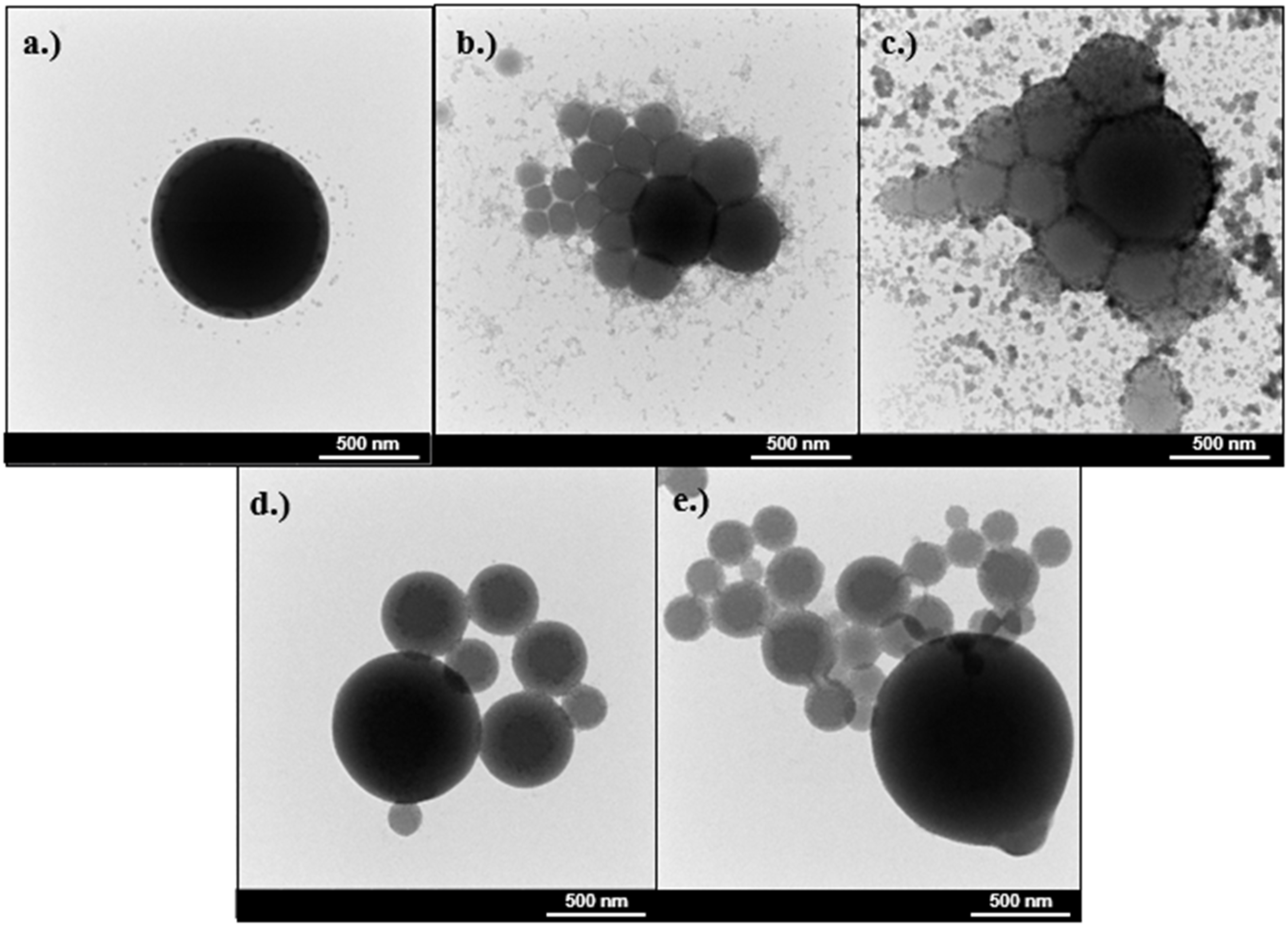
Swelling Behaviors
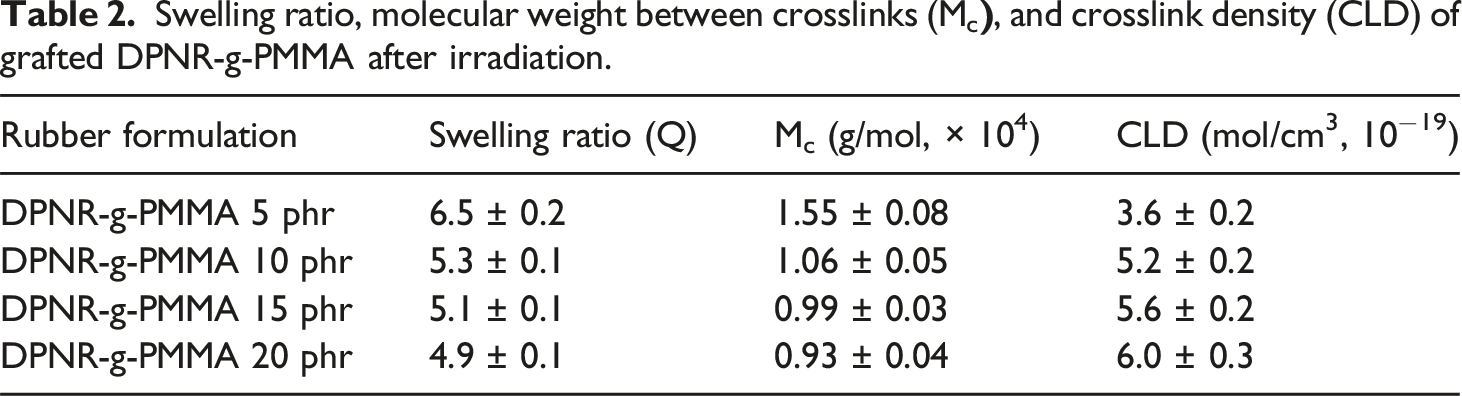
After subjecting the grafted rubbers to irradiation induced crosslinking, the crosslinking efficiency was evaluated by using swelling test. Swelling behaviors were studied on grafted DPNR at different MMA content as shown in Figure 8 and numerical data presented in Table 2. As a result, swelling ratios decrease as the amount of MMA content increased. These indicated that MMA monomers help enhance the crosslinking degree, thus lowering swelling ratio. These results are related to to the research of Rimdusit et al.
34
They studied swelling behavior of graft copolymer using styrene and acrylonitrile onto DPNR with varying monomer content. Uncrosslinked grafted DPNRs have shown a decrease in swelling ratio with increasing monomer content. This is ascribed to the grafted chains forming a denser, entangled network that physically restricts solvent penetration in a way that it effectively resembles a crosslinked structure. After irradiating at radiation doses of 300 kGy, a significant decrease in swelling ratio is presented due to the formation of crosslinked network between grafted rubber. Additionally, swelling ratio decreased with increasing radiation dose because the three-dimensional network formation occurred tightly at higher radiation dose.
43
Consequently, crosslink density was also improved with the increased proportion of MMA content as shown in Figure 6(b). Effects of MMA content (phr) on (a) swelling ratio and (b) molecular weight between crosslinking (Mc) and crosslink density (mol/cm3). Swelling ratio, molecular weight between crosslinks (Mc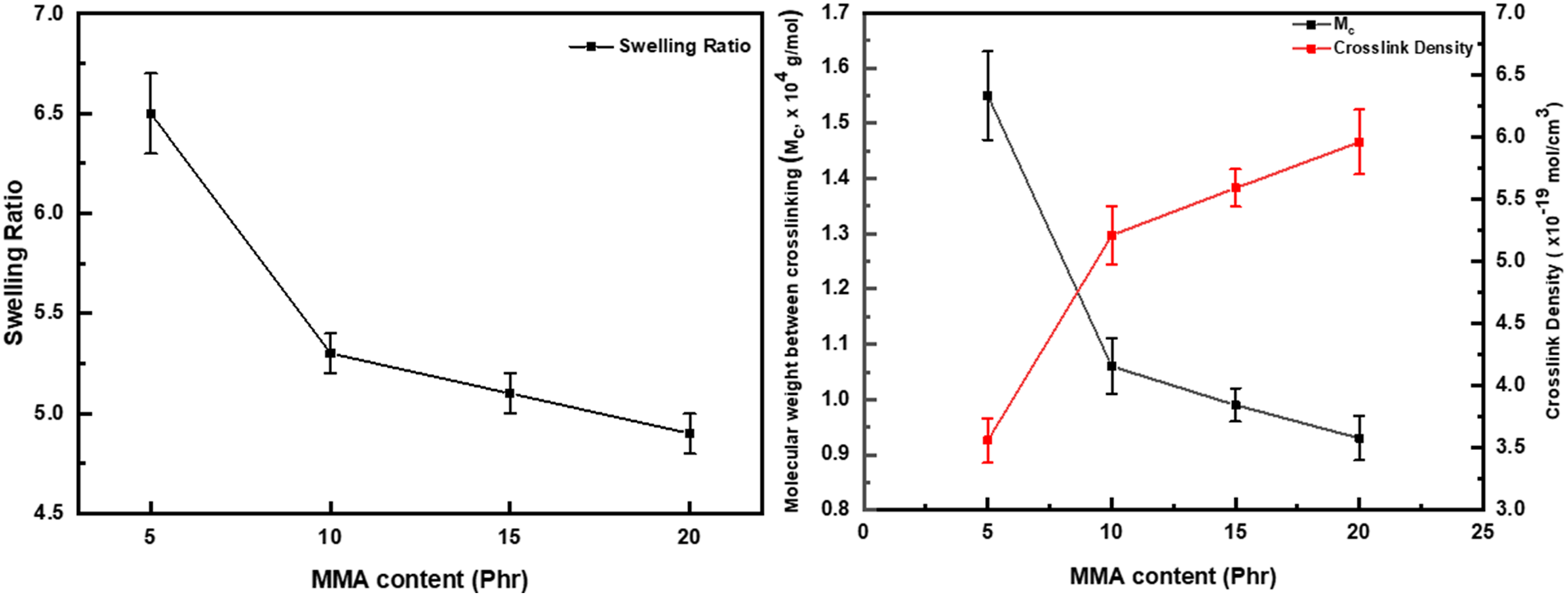
SEM Morphology
The vulcanized DPNR and DPNR-g-PMMA were subsequently spray dried to produce the NR powder. This method solved the problems of traditional blends such as reducing the energy consumption during process, preventing the reversible phase of rubber, and more importantly separating the aggregation of particles.44,45 Therefore, saving energy during processing helps to address issues in laboratories and industry. In this work, the influence of MMA content on the spray dried rubber powder was examined and represented in Figure 9. As can be seen in Figure 9(a), the unmodified crosslinked DPNR shows irregular shape with aggregation behavior due to the stickiness and coalescence nature of rubber. It must be noted that vulcanization was accounted for less aggregation. This results is in accordance with Lin et al.
33
They reported that rubber particles size tends to decrease with increasing radiation dose onto natural rubber because of the higher degree of crosslinking. Furthermore, utilizing ditrimethylol propane tetraacrylate (DTMPTA) for vulcanizing rubber helps to enhance the vulcanization efficiency as indicated by the decreasing of swelling ratio and the particles size. However, DPNR without any surface modifier couldn’t separate the aggregation completely, even expose to radiation dose of 300 kGy and DTMPTA because the partial coalescence from the chain entanglement on cis-1,4-polyisoprene at some certain points.
43
In contrast, the aggregation of UFPNR decreased with increasing MMA content as shown in Figures 9(b)–9(d). These results indicate that PMMA grafted onto cis-1,4-polyisoprene backbone acted as shell layer and protected a core structure which reduced the aggregation behavior of cis-1,4-polyisoprene. Upon increasing monomer content, the rubber particles undergo the core-shell structure more evenly and prevent the aggregation between particles more easily.
42
These results are associated with TEM micrographs of crosslinked grafted DPNR. SEM micrographs of (a) UFPNR; (b) UFPNR-g-PMMA 5 phr; (c) UFPNR-g-PMMA 10 phr; (d) UFPNR-g-PMMA 15 phr; (e) UFPNR-g-PMMA 20 phr.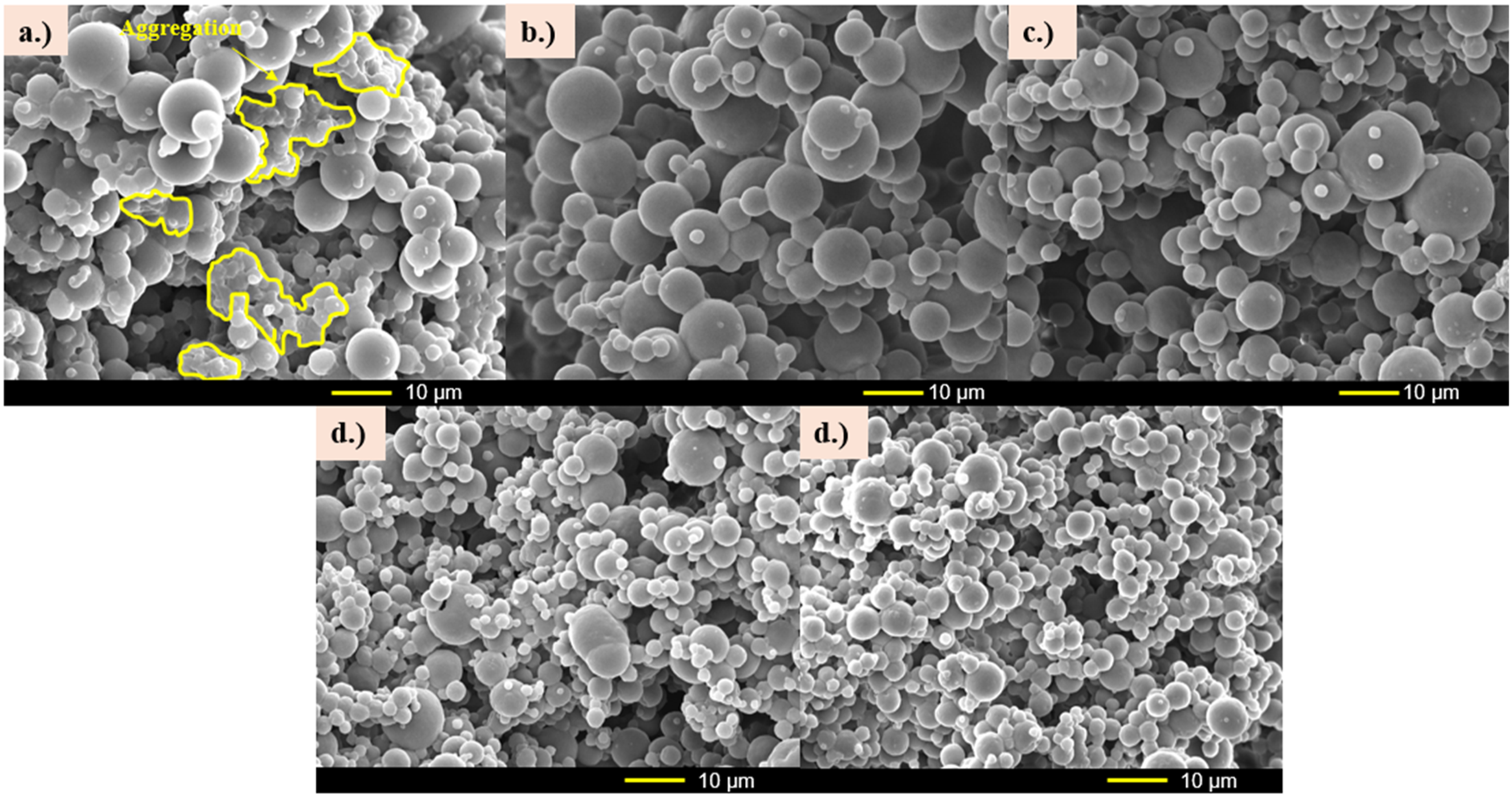
Particles Size Distribution
To evaluate the effects of MMA content on particles sizes of powder, the particles size distribution and their physical property are shown in Figure 10. The ImageJ software was used to calculate the particles size from SEM image of rubber particles with the following conditions: distance in pixels of 150, known distance of 10, and unit of length micron. The total number of particles was calculated based on an average of 300 particles and the average particles size are 7.8 ± 4.0, 7.7 ± 3.8, 6.5 ± 2.9, 6.2 ± 2.3, and 6.1 ± 2.9 µm, corresponding to 0 (unmodified UFPNR), 5, 10, 15, and 20 phr of PMMA content. The unmodified UFPNR was prepared as reference for morphological comparison. Rubber particles morphology had some partial coalescence and agglomeration as mentioned in the SEM results which results in large average particles size distribution. After modifying with 5 phr, the average particles size slightly decreased compared to that of neat UFPNR because of no sufficient content of PMMA to promote the core-shell structure which prevents the agglomeration. In contrast, a significant decrease in particle size was found at 10 phr of PMMA content afterward. Furthermore, the denser shell structure of grafted rubber accounted for this behavior as increased monomer content resulting in the decreased particle size. These results shows that 10 phr was an optimum ratio for PLA fabrication because of this drastic particle size transition. (A) Histogram of UFPNR particles and (B) Photographs of UFPNR irradiated at 300 kGy of a.) Unmodified UFPNR; b) UFPNR-g-PMMA 5 phr; c) UFPNR-g-PMMA 10 phr; d) UFPNR-g-PMMA 15 phr; e) UFPNR-g-PMMA 20 phr.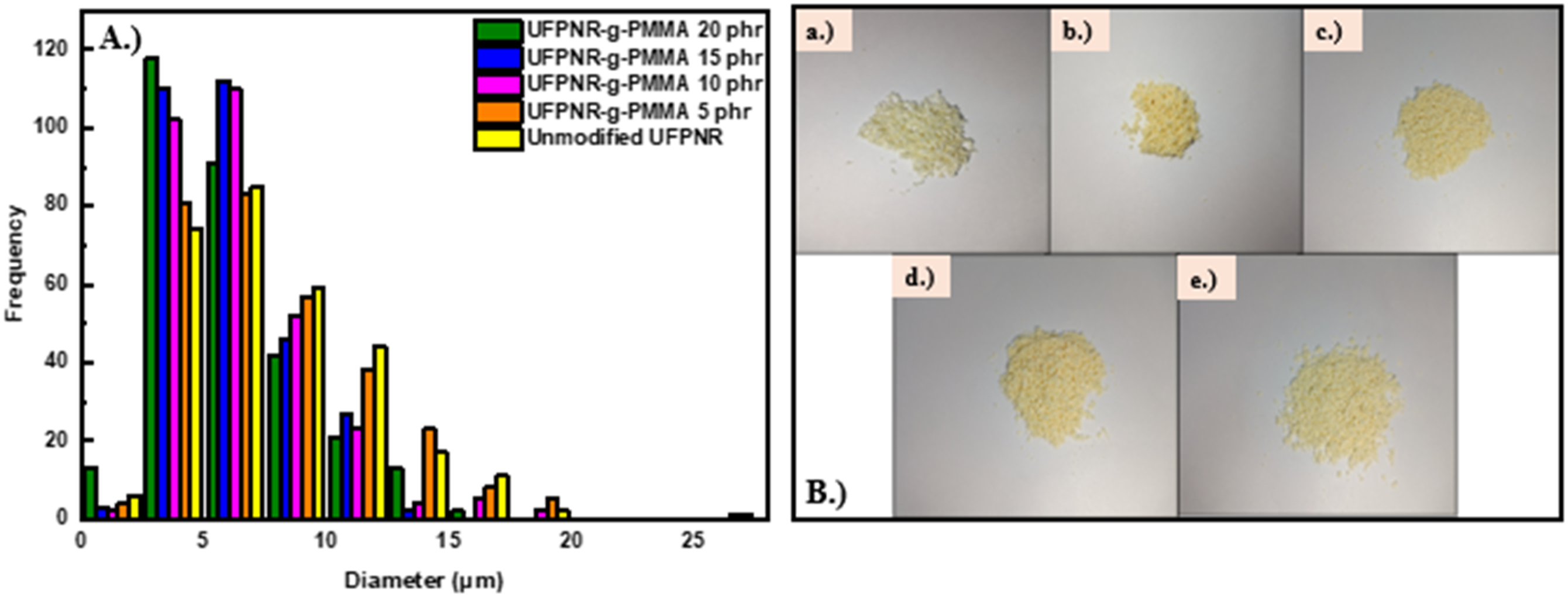
Effects of UFPNR-g-PMMA on the Properties of the PLA Composites
Thermal Stability
Effects of UFPNR-g-PMMA content on thermal degradation at 5 wt% loss (Td5) of PLA composites were evaluated and presented on Figure 11. Neat PLA and UFPNR-g-PMMA show Td5 at 312 and 343°C, respectively. UFPNR-g-PMMA has a higher Td5 than PLA because the influence of irradiation induced crosslinking improves thermal stability of rubber by a three-dimensional network formation and a grafted side chain.
25
After increasing UFPNR-g-PMMA content in PLA composite, an increase in Td5 of PLA composite was obtained because of the interfacial interaction from ester group between surface of UFPNR-g-PMMA and PLA.
46
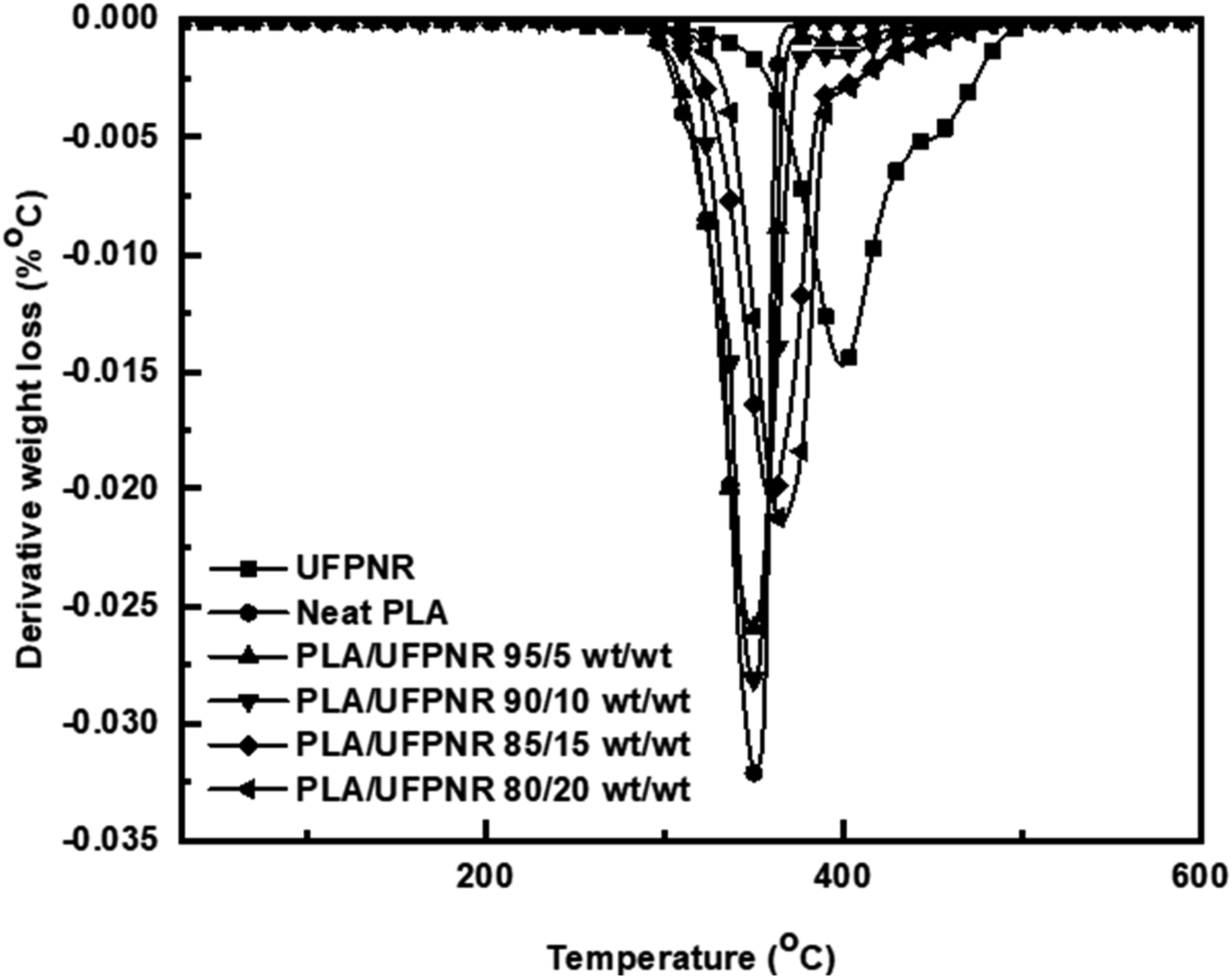
Typically, the blending between polymer and rubber cause phase separation due to the incompatibility, resulting in either decreasing or retaining the degradation temperature, especially at high filler content. As can be seen, PLA and UFPNR-g-PMMA show a single degradation curve step, however, PLA composites show two steps curve of degradation temperature. The 1st degradation of PLA composites starts to degrade approximately 300 °C–350°C which attributes to the degradation of PLA matrix because of low thermal stability. Next, the 2nd degradation occurs approximately 350 °C–480°C which attributs to the degradation of UFPNR-g-PMMA
47
as can be observed in derivative thermogravimetry in Figure 12. A similar behavior was found and conducted by Flaifel
48
et al. They investigated the effects of graphene nanoplatelets loading on Td5 of PLA/LNR/PANI/GNPs nanocomposites. The results indicated that the Td5 was increased 9°C after the addition of GNPs into polymer matrix because of molecular chains restriction which retards the degradation of composites. In addition, the PLA composites incorporated with UFPNR-g-PMMA shows good thermal stability at low temperature regions (low weight loss) compared to natural fillers due to the moisture elimination in the processing.49,50 These demonstrated benefits of filler not only thermal stability enhancement, but also the processibility at low temperature. Thermal degradation of UFPNR-g-PMMA, PLA, and PLA/UFPNR-g-PMMA at varying content of UFPNR-g-PMMA. DTG of PLA/UFPNR-g-PMMA at varying content of UFPNR-g-PMMA.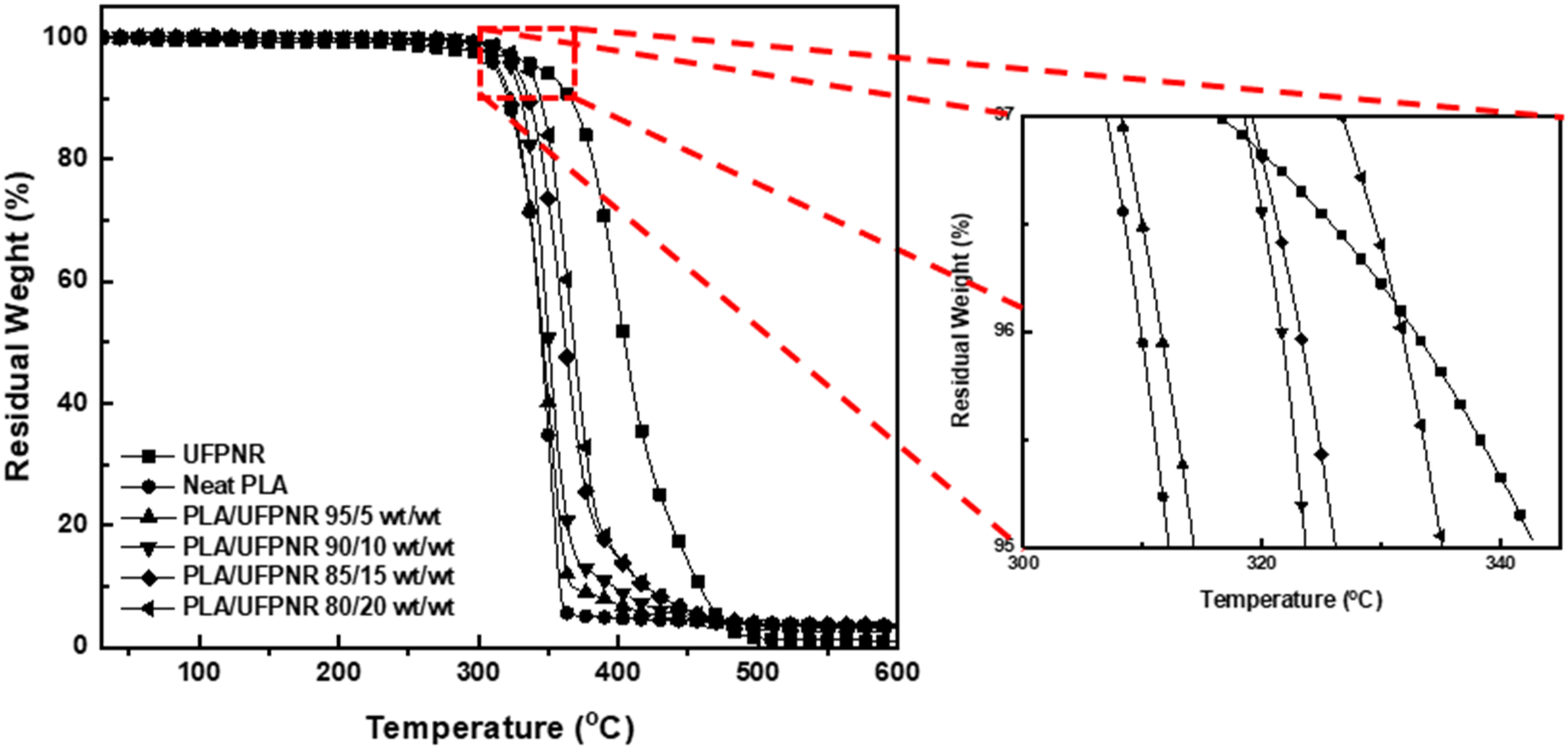
Dynamic Mechanical Properties
In this section, a study on UFPNR-g-PMMA content on dynamic mechanical properties of PLA and PLA/UFPNR-g-PMMA were conducted. PLA composites with varying compositions of UFPNR-g-PMMA were analyzed with their thermo-mechanical properties under different regions of temperature. The related parameters are presented below.
Storage Modulus (E′)
Storage modulus (E′) is the ability of material to store energy elastically and is used to determine the stiffness of material. All composite compositions were determined by their phase transition under temperature change. As depicted in Figure 13(a), a swift transition temperature appeared around 55 °C–70°C referring the change from glassy state to rubbery plateau of material. As can be observed on temperature below 35°C, neat PLA shows the highest storage modulus value because of its brittle behavior. After adding UFPNR-g-PMMA, the E′ started to decrease slightly with filling at 5-10 wt% and decrease significantly afterward. Upon increasing UFPNR-g-PMMA, the elasticity of rubber decreased the overall stiffness of composite material results in decreasing the E′ values. Dependence of (a.) storage modulus and (b.) tan δ of neat PLA and PLA composite at various ratio.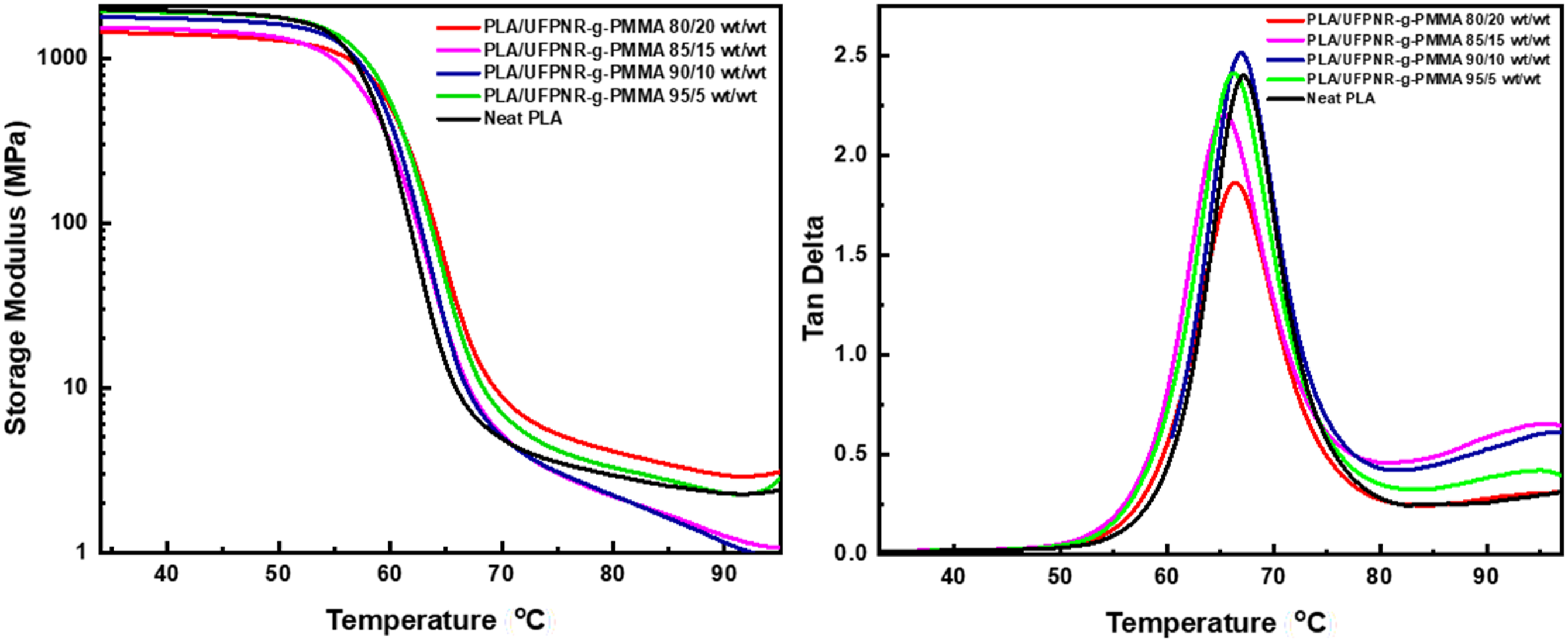
Tan Delta (Tan δ)
Tan δ is determined by the fraction between loss modulus and storage modulus or damping factor 51 and used for analyzing the glass transition peak for composites. A plot between Tan δ and temperature is presented in Figure 13(b). PLA and PLA composite at different ratios show the Tg in range of 65 °C–67°C, specifically for neat PLA, 5, 10, 15, 20 wt% of UFPNR-g-PMMA filled PLA at 67, 66, 66, 65, and 66°C, respectively. This inconsequential change in temperature can be interpreted that these two components have no interaction with each other. A similar result was observed in study of Sun et al. 17 They attempt to blend PLA with TP-SiU elastomer and found a slight shift in temperature (approximately 1°C). As can be observed, neat PLA and PLA filling with 5 wt% share the same peak height of Tan δ while a slight increase presented at PLA filling with 10 wt%. These results can be indicated that high crosslinked rubber was unable to dissipate the heat efficiently at low filler content due to the undeformed 3D network of rubber. These concluded that UFPNR-g-PMMA can toughen PLA matrix while doesn’t affect the original thermal property, hence slightly decrease the Tg of composites. Furthermore, it must be mentioned that the UFPNR-g-PMMA has a distinct characteristic from conventional nanoparticle 52 where it enhances E′ and Tg due to the hardness of filler restricting the polymer matrix chain mobility.
Mechanical Properties
The mechanical properties of PLA and PLA composite were investigated by flexural test and impact test as shown in Figures 14 and 15. As a result of flexural tests, neat PLA shows a brittle property as indicated by low strain at break. It is noteworthy that the crystallinity in PLA also accounted in this high strength.
53
After incorporating UFPNR-g-PMMA content at 5 wt%, flexural strain increased and improved to 16.1 ± 2.0% (392% improvement) compared to that of neat PLA. From observations, adding UFPNR-g-PMMA above 10 wt% doesn’t break the composite specimens and the presence of stress whitening zone occurred in all ratios of PLA composites. The UFPNR particles act as a stress concentrator in PLA and deform to dissipate energy inducing plastic deformation.
54
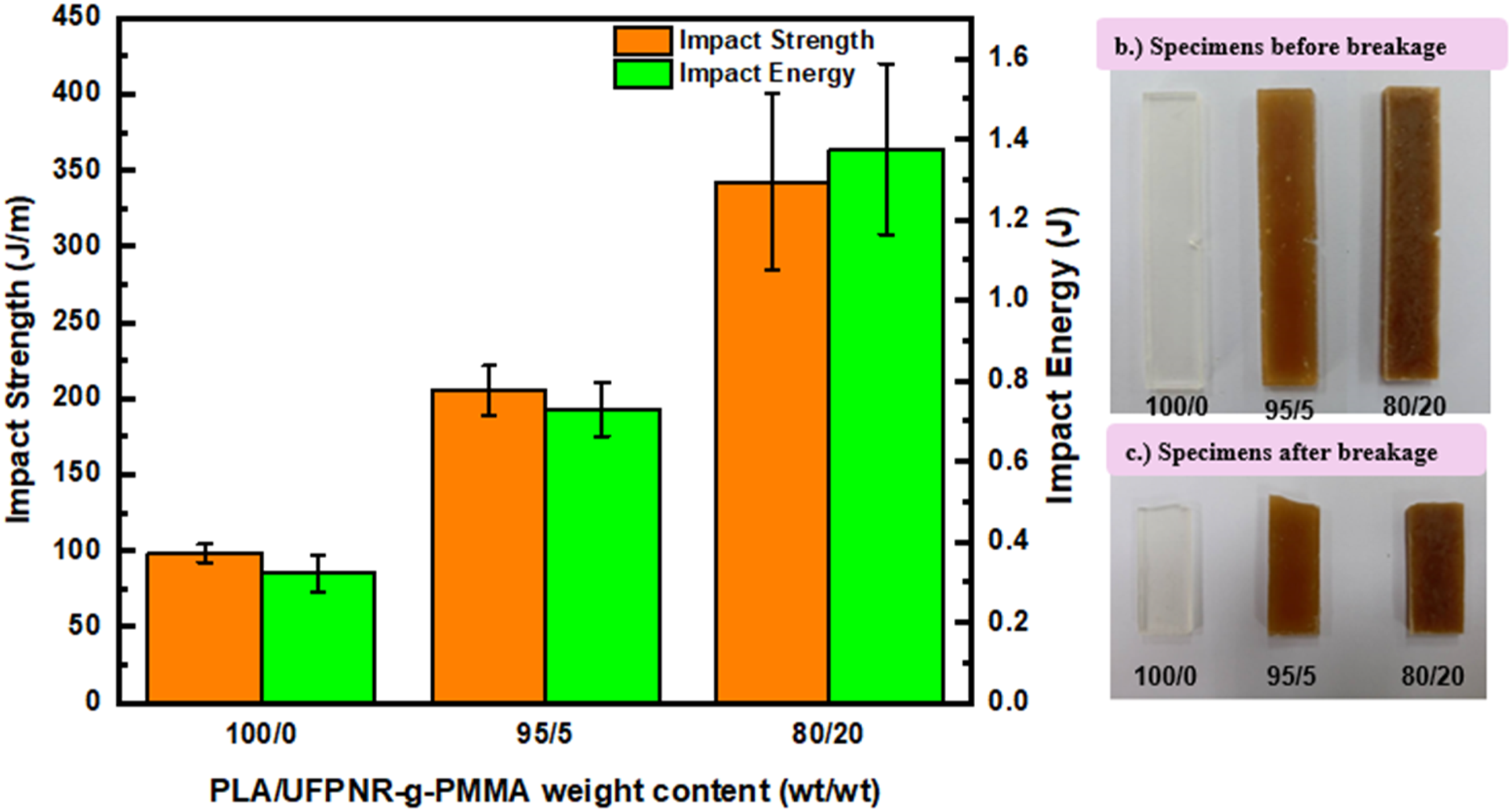
The images of all obtained composites samples are presented as appendix II in the Supplemental File. Additionally, the PLA/UFPNR-g-PMMA composite samples with 5 wt% and 20 wt% UFPNR-g-PMMA content were selected for detail analyses in impact test due to the extreme (lowest and highest, respectively) mechanical strengths exhibited. Another mechanical test for PLA and PLA composite for toughening improvement is impact strength. It is used to measure the ability of material to withstand a sudden shock load under external force. As can be seen in Figure 15, neat PLA shows an impact value of 98.6 ± 6.1 J/m, indicating its brittleness property. After filling UFPNR-g-PMMA content at 5 wt%, the impact value reached 205.1 ± 16.4 J/m (108% improvement). Additionally, incorporating further UFPNR-g-PMMA content at 20 wt% also improved impact value to 342.4 ± 58.0 J/m (247% improvement). These results indicate that UFPNR-g-PMMA helps promote the PLA’s toughness by absorbing the impact energy from external force and dissipating throughout the PLA matrix before the breakage happens.
6
To illustrate comparative analysis, many researchers have conducted to improve the PLA composite. Liao et al.
55
attempted to modify the brittleness properties of PLA using PBS and AHP for the treatment straw fiber. Upon conducting impact toughness evaluation, it was found that the PLA composite was improved 54% at the ratio between AHP/PBS of 2/5 phr compared to neat PLA. Li et al.
56
focused on utilizing DFs as a filler to solve the brittleness of PLA. The elongation of material was improved 18.5 % compared to that of neat PLA. These findings reveal that the fillers slightly improved material’s toughness as the benefit of hard filler unlike the elastomer-based type. Effects of UFPNR-g-PMMA content on (a) flexural stress-strain curve of neat PLA and PLA composites and (b) deformation behaviors. Effects of UFPNR-g-PMMA content on (a) impact strength and impact specimens (b) before breakage and (c) after breakage.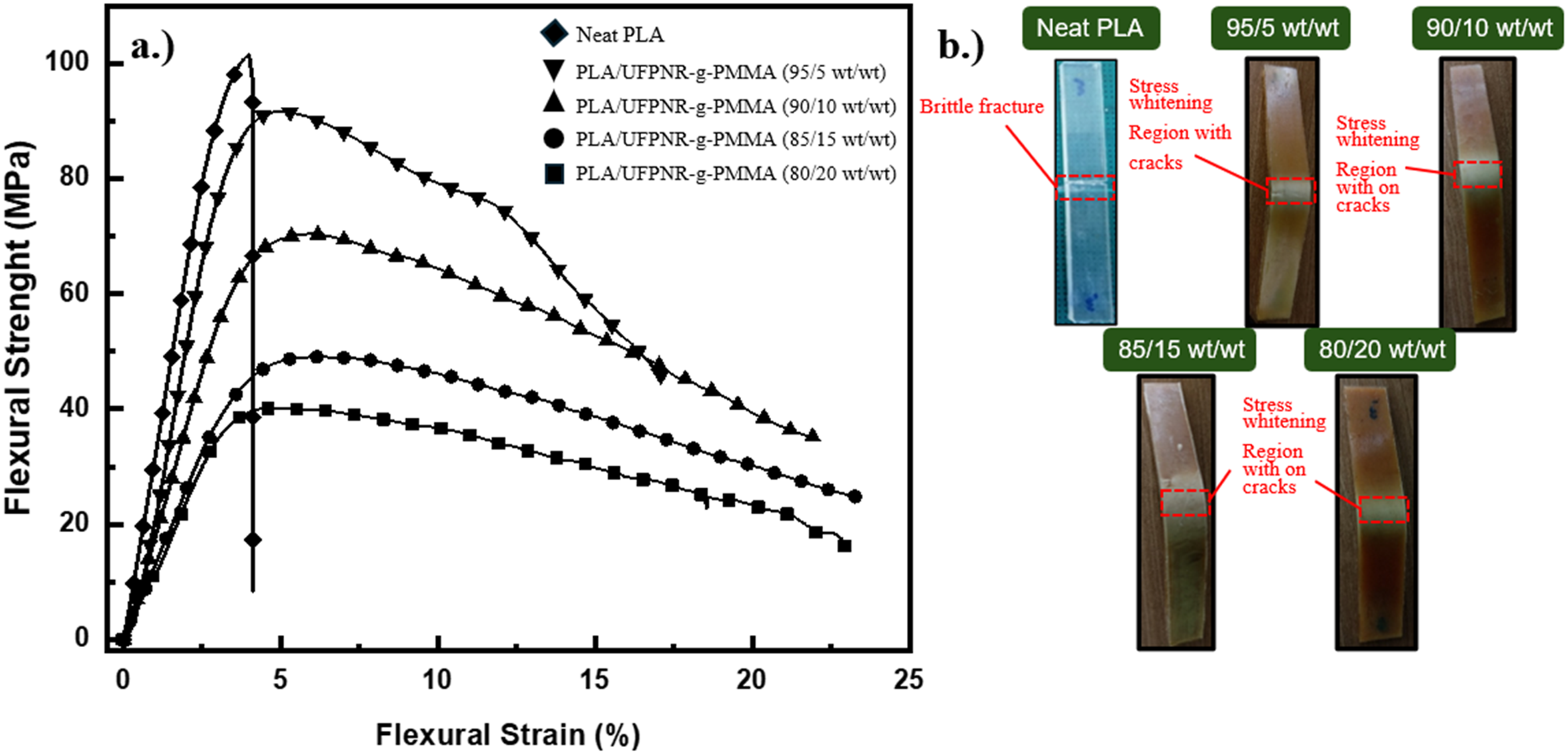
Fracture Surface Morphology of the Composite
To investigate the toughening mechanism of UFPNR-g-PMMA in PLA composite, the impact fracture surface specimens were explored and presented in Figure 16. Neat PLA shows a smooth surface without any strips indicating the brittle property. After adding UFPNR-g-PMMA at 5 wt%, PLA composites show much rougher surface compared to neat sample. To classify the related mechanism of this toughening behavior, the mechanisms are divided into two types, consisting of internal cavitation from strong interfacial interaction and interfacial cavitation from low interfacial interaction.
57
It can be observed that the rubber particles were equally distributed in PLA matrix without any agglomeration. After incorporating UFPNR-g-PMMA at 20 wt%, a similar characteristic was found, and the fracture surface was rougher than prior. These characteristics show that UFPNR-g-PMMA was well-dispersed in PLA matrix and dissipate the impact force through interfacial cavitation, multiple crazes, shear yielding, and prominently internal cavitation.
58
In addition, a shallow hole represents the shredded rubber particles which induces multiple crazes on PLA matrix, resulting in shear yielding because of highly cavitated particles. According to these behaviors, internal cavitation and multiple crazes are the main toughening mechanisms that improve impact strength significantly. Furthermore, no agglomeration was found as the characteristic of UFPNR-g-PMMA. These observations are in accordance to other study of Amran et al.
59
They studied the effects of GNPs loading in PLA/LNR matrix in which the filler are treated before the addition of filler. It was found that the treated specimens show a good dispersion compared to untreated specimens which are caused by the agglomeration of filler particles. It is worth noting that the interfacial interaction between matrix and fillers were vital for improving the mechanical properties in composite besides the dispersity of fillers.60,61 An increment in mechanical results could be due to good dispersion and interfacial interaction of fillers in polymer matrix. SEM fracture surface micrographs of (a) PLA, (b) PLA/UFPNR-g-PMMA 95/5 wt/wt, (c) PLA/UFPNR-g-PMMA 80/20 wt/wt.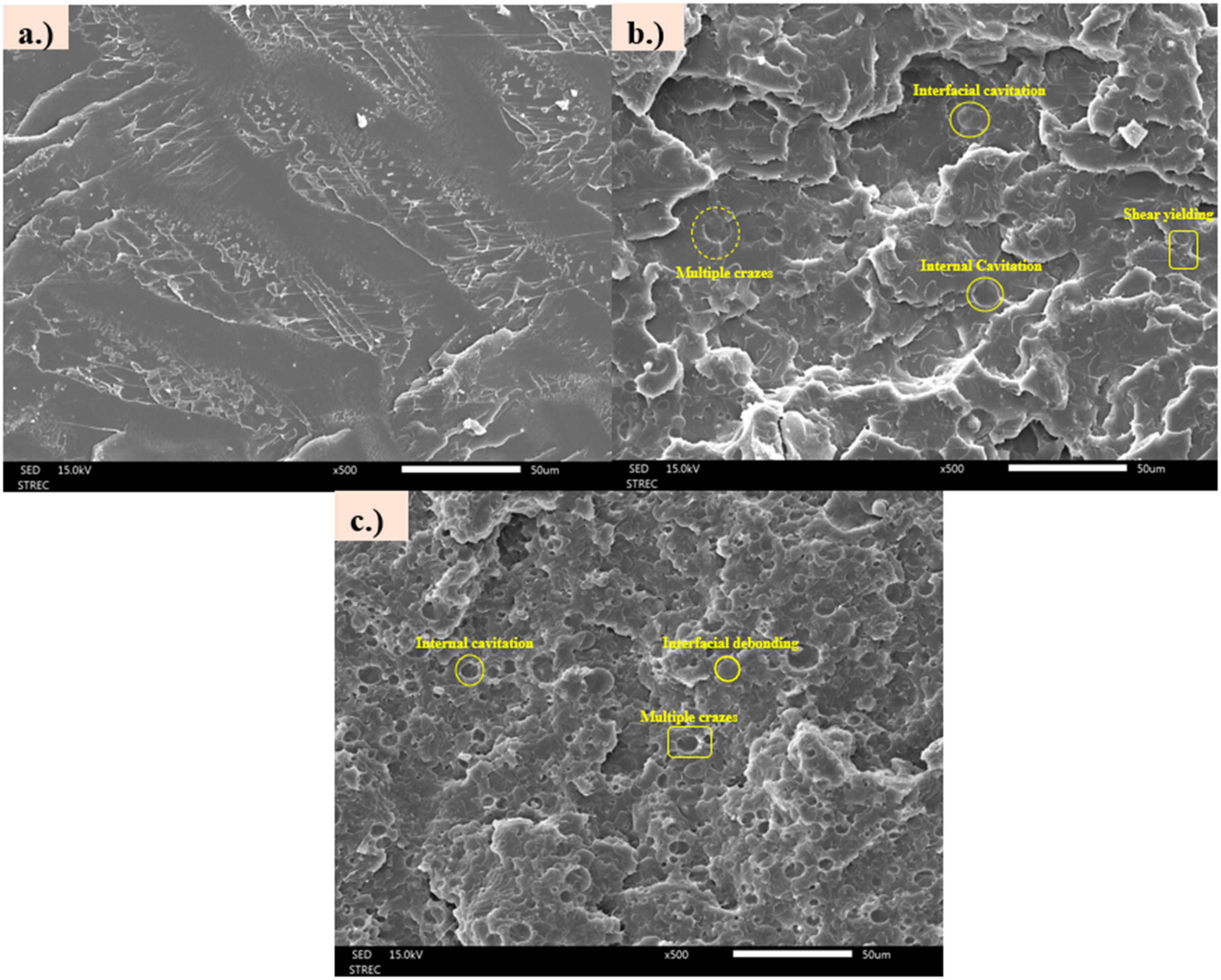
Conclusions
Based on the data obtained, and the analyses and discussions carried out, the following conclusions could be drawn; (i). Observations from the transmission electron microscopy reveals that DPNR was successfully grafted with MMA monomer and led to core-shell structure formation. Furthermore, the addition of MMA content prior irradiation resulted in less agglomeration of rubber particles due to irradiation crosslinking and core-shell structure of rubber particles. More so, SEM micrographs analyzed the agglomeration of rubber particles and found that the coalescence occurred in unmodified UFPNR. In contrast, modified UFPNR showed less agglomeration due to crosslinking and graft-copolymerization by MMA monomer. (ii). Particles size distribution reveals the average particles size decreased with increasing MMA content. The morphology of fracture surface of composites shows internal cavitation and multiple crazes as the main toughening mechanism. These shows the potential of the resulting UFPNR-g-PMMA as toughening filler. (iii). Swelling properties showed that the obtained UFPNR-g-PMMA was successfully crosslinked and the swelling ratios decreased with increasing MMA content because the compatibility between MMA and DTMPTA can improves crosslinking efficiency between grafted DPNR chain. (iv). The PLA/UFPNR-g-PMMA composite samples were successfully produced at 95/5, 90/10, 85/15, and 80/20 wt% ratios. (v). Addition of UFPNR-g-PMMA at 20 % wt into the PLA matrix enhanced the Td5 of the composite from 312°C to 337°C, suggesting that UFPNR-g-PMMA increases the thermal stability of the PLA composite. (vi). Dynamic mechanical analysis suggests the addition of UFPNR-g-PMMA in the PLA matrix doesn’t affect the glass transition temperature of the PLA composite. (vii). Flexural and impact strength tests suggest the addition of the surface-modified UFPNR in the PLA matrix resulted in the production of a bio-based composite with improved mechanical properties. As it could be observed that 3-4 and 2-3-folds improvements have been achieved with flexural strain and impact strength with the UFPNR-g-PMMA filler at 5 and 20 wt/wt%, respectively.
Supplemental Material
Supplemental Material - Effects of surface-modified ultrafine fully vulcanized powdered natural rubber on the mechanical and thermal properties of polylactic acid composites
Supplemental Material for Effects of surface-modified ultrafine fully vulcanized powdered natural rubber on the mechanical and thermal properties of polylactic acid composites by Panyawutthi Rimdusit, Reza Gholami, Ibrahim Lawan, Kasinee Hemvichian, Torntawat Kiratiphongwut, and Sarawut Rimdusit in Journal of Thermoplastic Composite Materials.
Footnotes
Acknowledgements
The authors acknowledge the Thailand Institute of Nuclear Technology (Public Organization) for supporting with the electron beam irradiation. Also, the authors would like to thank Dr Pattarin Mora of the Department of Chemical Engineering, Srinakharinwirot University, Thailand for providing the pendulum impact test equipment.
Declaration of conflicting interests
The author(s) declared no potential conflicts of interest with respect to the research, authorship, and/or publication of this article.
Funding
The author(s) disclosed receipt of the following financial support for the research, authorship, and/or publication of this article: This work was supported by the National Research Council of Thailand (NRCT) and Chulalongkorn University (N42A660910) and Thailand Science Research and Innovation Fund Chulalongkorn University (BCG_FF_68_206_2100_030) for the financial support.
ORCID iDs

Data Availability Statement
All the related data obtained from this study have been provided in the manuscript.
Supplemental Material
Supplemental Material for this article is available online.
References
Supplementary Material
Please find the following supplemental material available below.
For Open Access articles published under a Creative Commons License, all supplemental material carries the same license as the article it is associated with.
For non-Open Access articles published, all supplemental material carries a non-exclusive license, and permission requests for re-use of supplemental material or any part of supplemental material shall be sent directly to the copyright owner as specified in the copyright notice associated with the article.
