



Abstract
This paper presents a semi-analytical approach to investigate the nonlinear static and dynamic buckling responses of functionally graded porous graphene-reinforced spherical shells and circular plates with spider-web stiffeners and piezoelectric layer under mechanical and thermal loads. Graphene and porosity are designed to be continuously varied in the thickness direction of plates and shells. By applying the energy method, the equilibrium and motion equations for spider-web stiffened plates and shells are derived by using the improved smeared stiffener technique and the nonlinear Donnell shell theory, taking into account the geometrical imperfection. The resulting equations are solved to obtain explicit expressions for static buckling and postbuckling responses, and numerical results for dynamic responses. Static and dynamic buckling analysis of the considered structures shows the effects of the graphene, porosity, stiffeners, and other input parameters on the static and dynamic buckling behavior of plates and shells.
Keywords
Introduction
Circular plates (CiclPs) and spherical shells (SphrSs) are essential components in engineering, known for their structural stability and efficiency in pressure distribution. These designs are widely used in industries like construction, aerospace, and mechanical engineering for both aesthetic and functional purposes.
Research on CiclPs has explored various crucial aspects of mechanical behavior. By using the strain gradient theory and differential quadrature method (DQM), Li et al. 1 focused on the nonlinear axisymmetric bending analysis of CiclPs with both simply supported and fully clamped boundary conditions. The axisymmetric and asymmetric buckling behavior of annular and CiclPs was mentioned by Qolipour et al. 2 using the first-order shear deformation theory (FSDT), adjacent criteria, and perturbation technique. Najafipour and Shariyat 3 also used the FSDT to explore the dynamic and static behavior of the harmonically and suddenly compliant incompressible hyperelastic CiclPs with nonlinear large deflection assumption under pressurized and blasted loads. The CiclPs partially contacted with fluid were mentioned by Ardic et al. 4 in isogeometric analysis and experimental studies with clamped boundary conditions. Saltmarsh et al. 5 examined comprehensively vibrations of CiclPs, including experimental, analytical, and numerical approaches, taking into account the air-filled back cavity. Wang et al. 6 proposed and experimentally validated a sine-wave curved composite CiclPs for elastic couplings, analyzing the effects of surface geometry, ply angle, and angle ratios through numerical simulations and experiments. For SphrSs, Abels et al. 7 studied the stability of SphrSs under volume-preserving mean curvature flow using the generalized linearized stability principle with dynamic boundary conditions accounting for line tension. Shen et al. 8 proposed a numerical modeling and design method for the behavior of concrete-filled steel tube columns with spherical-cap gap imperfections under lateral impact. By using the higher-order shear deformation theory (HSDT), and the finite element method, the free vibration of composite SphrSs was investigated with and without cutouts by Ram and Babu. 9
The studies on functionally graded material (FGM) CiclPs were explored by various analytical and numerical approaches to understand their mechanical behavior. Reddy et al. 10 proposed the analytical approaches for FGM CiclPs with different boundary conditions using classical theory, FSDT, and HSDT. The finite Taylor transform and Runge–Kutta method were combined to develop a power series solution for the dynamic behavior of FGM CiclPs, considering the zigzag formulation by Shariyat and Alipour. 11 The static and dynamic snap-through buckling of FGM CiclPs in a thermal postbuckling state under static and dynamic loads was studied by Kiani 12 using the FSDT and Ritz method. The FSDT and DQM were applied to explore the free vibration behavior of porous FGM annular plates and CiclPs by Vasara et al. 13 The HSDT and perturbation technique were applied to investigate the thermo-mechanical postbuckling problems of FGM CiclPs on elastic foundation with circular cut-outs. 14 At the nanoscale, the nonlinear axisymmetric vibration behavior of thermally loaded FGM CiclPs exhibiting size effects was investigated by Ashoori et al. 15 using modified couple stress theory and bifurcation and limit-point instability analysis. Moreover, porous FGM was incorporated into nonlinear thermo-mechanical models of CiclPs and annular plates by Salari et al.,16–18 where the effects of porosity distributions, size dependency, and thermal loading were studied using nonlocal elasticity theory and Ritz-based numerical methods. For FGM SphrSs, the nonlinear responses of the shells under low-velocity impact were performed using the HSDT and Chebyshev collocation method. 19 Zhao et al. 20 analyzed the nonlinear axisymmetric buckling behavior under thermo-mechanical loads, focusing on the axisymmetric snap-through and non-uniform temperature rise. Focusing on the effects of edge restraint on the nonlinear buckling of porous FGM SphrSs, Long and Tung 21 presented an analytical solution for the problem with a nonlinear three-parameter elastic foundation applying the Galerkin method. Foroutan and Ahmadi 22 and Ahmadi and Foroutan 23 further investigated the nonlinear static and dynamic buckling behaviors of porous FGM SphrSs, emphasizing the influence of porosity distributions, elastic foundations, and thermal environments. Ly et al. 24 established an analytical solution for the buckling of porous FGM CiclPs and SphrSs using the Ritz energy method and HSDT under thermo-mechanical loads. Nonlinear forced vibration behavior of FGM and sandwich FGM SphrSs with uniformly distributed temperatures was explored using the FSDT by Phuong et al. 25 and Minh et al., 26 axisymmetrical deflection solution and the Galerkin method were applied. Barzegar and Fadaee 27 introduced a decoupling analytical technique for the thermal vibration behavior of FGM SphrSs using the separation method of variables. By using the DQM, the thermal shocks, and various boundary conditions were considered for FGM SphrSs in dynamic snap-through examinations by Javani et al. 28 By integrating the piezoelectric (PZE) layers, Yang et al. 29 analyzed underwater sound scattering and acoustic radiation forces of FGM sandwich SphrSs using the Fourier series expansion.
Graphene-reinforced nanocomposites exhibit enhanced electrical conductivity, mechanical strength, and thermal stability, making them highly promising for advanced engineering structures. 30 Many researches focused on the nonlinear behavior of functionally graded graphene platelet-reinforced composite (FG-GPLRC) CiclPs and SphrSs with different loads and mechanical conditions. The moving Kriging meshfree method and HSDT were used, and FG-GPLRC CiclPs were considered for linear buckling problems. 31 The nonlinear thermo-mechanical buckling and vibration of FG-GPLRC SphrSs and CiclPs, considering the axisymmetric and higher-order shear deformation, and Ritz energy method, were examined.32–34 Wang and Jiang 35 focused on the nonlinear vibration of dual-FG-GPLRC CiclPs using FSDT and an iterative displacement control method. Linear and nonlinear free vibration of FG-GPLRC SphrSs and CiclPs were explored using the three-dimensional elasticity solutions and FSDT, respectively, by Liu et al. 36 and Javani et al. 37 For stiffened FG-GPLRC SphrSs, Nam et al. 38 proposed an improved technique to model the stiffener behavior of spider-web (SW) FG-GPLRC stiffeners in nonlinear buckling problems combined with the Ritz energy method.
The porosities are integrated into the FGM, FG-GPLRC, and orther composite structures according to different distribution laws, creating the new composites, namely, porous FGM13,16,21,24,39 functionally graded porous graphene-reinforced composite (FG-PGPLRC),40–43 and other porous composite,44,45 allowing for taking advantage and optimizing the characteristics of the porous structures and the composite structures. The FG-PGPLRC CiclPs and SphrSs were also considered in problems of low-velocity impact, 40 thermal postbuckling stress, 41 buckling and postbuckling.42,43 Piezoelectric layers are commonly integrated into structures at the nanoscale46–48 and at the macroscale29,34,49–52 to enable active control of vibration, stability, and shape through electromechanical coupling. These layers can function either as sensors or actuators, making them particularly effective for enhancing the performance of structures.
This study introduces, for the first time, a comprehensive analysis of stiffened FG-PGPLRC SphrSs and CiclPs with SW stiffeners integrated PZE layers, addressing their nonlinear static and dynamic buckling behavior under thermo-mechanical loading. The graphene and porosity are continuously varied along the thickness of the structures. A stepped design is introduced for stiffeners, and the smeared stiffener technique is improved for the FG-PGPLRC SW stiffeners. Using the energy method and nonlinear Donnell shell theory, equilibrium and motion equations are derived, considering geometrical imperfections. The equations are solved to obtain explicit expressions for static and postbuckling responses, along with numerical results for dynamic behavior. The analysis reveals the significant effects of graphene, porosity, and SW stiffeners on the nonlinear buckling behavior of the CiclPs and SphrSs.
Configuration designs, problem assumptions, and fundamental formulations
Figure 1 presents the axisymmetrically deformed SphrSs made from FG-PGPLRC with the thickness Configuration, coordinate system, and stiffener design of FG-PGPLRC CiclPs and SphrSs.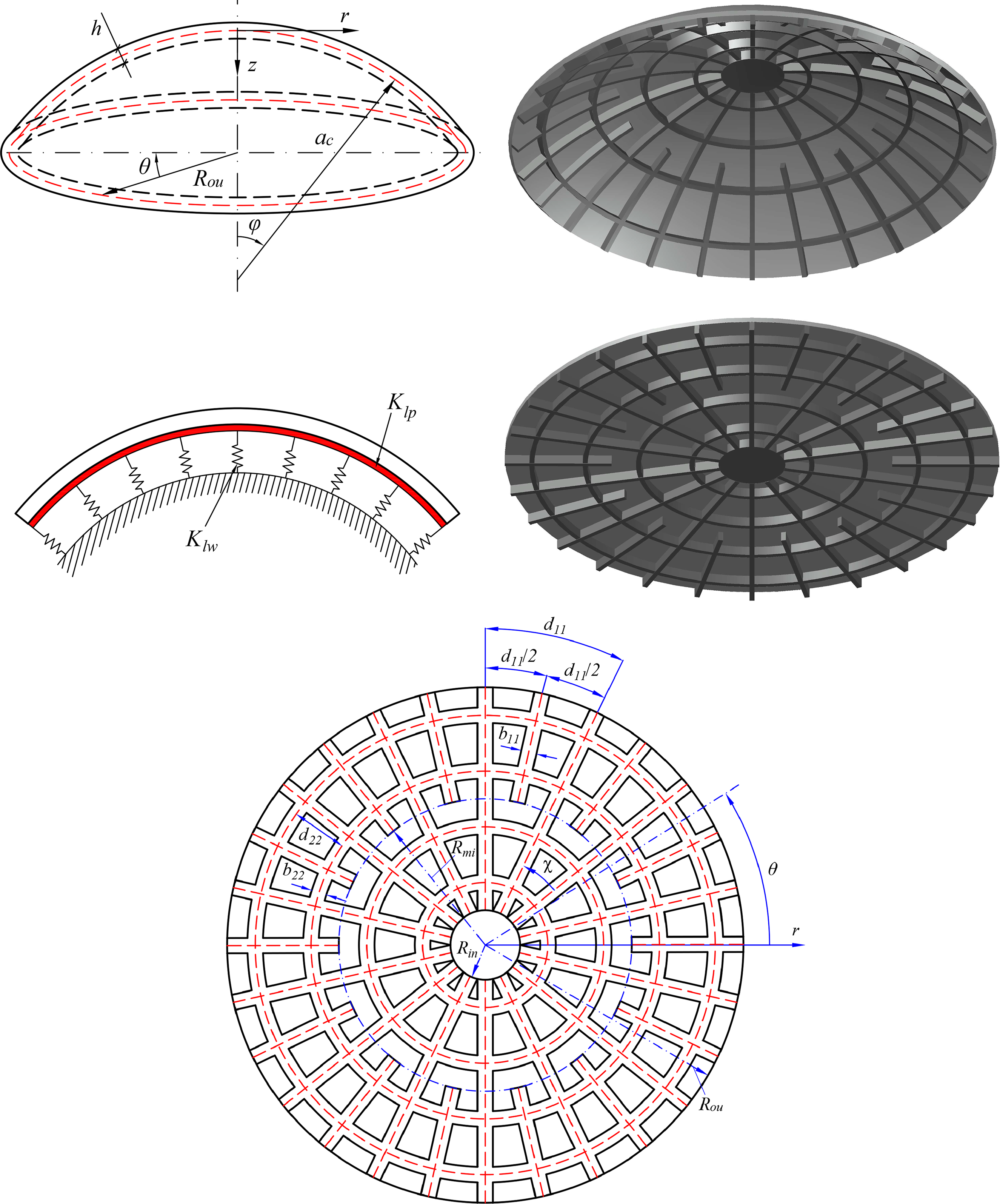
The FG-PGPLRC SW stiffener system is designed by combining the FG-PGPLRC meridian stiffeners and FG-PGPLRC parallel stiffeners. The meridian stiffener spacing is calculated as
In the thickness direction, two symmetrically distributed laws of porosity are denoted by PX and PO, where the porosities are mainly concentrated in the middle of the layer thickness for PX law and in the two surfaces of the layer for PO law. The reference case is PU with uniformly distributed laws of porosity in the thickness direction. PZE, FG-PGPLRC layers and stiffeners are combined into three types PZE/PX/PX, PZE/PO/PO, and PZE/PU/PU (Figure 2). The combinations of PZE, FG-PGPLRC layers, and stiffeners.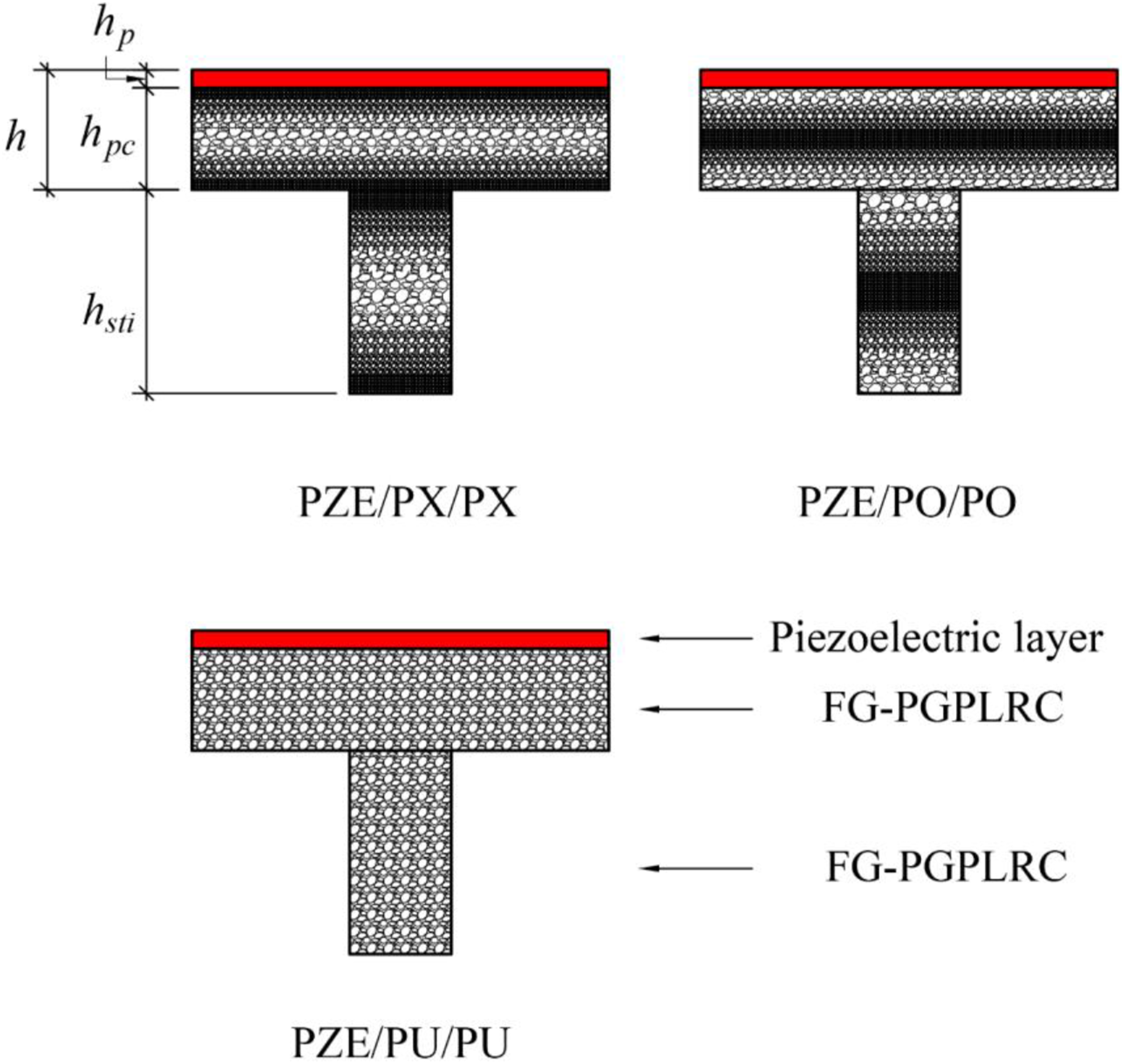
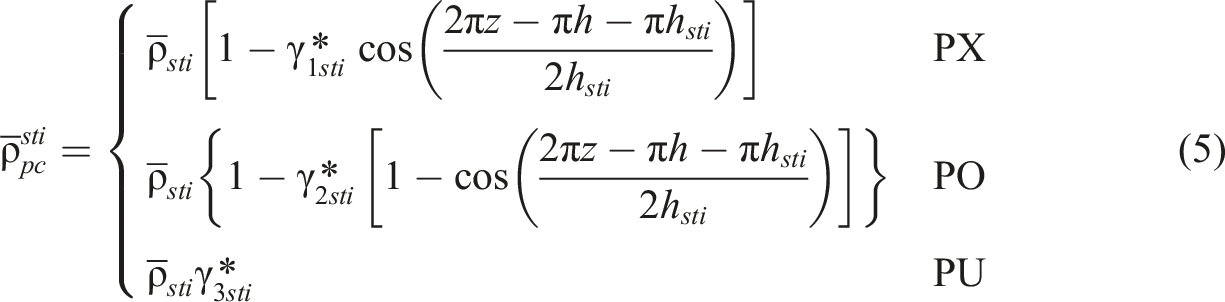
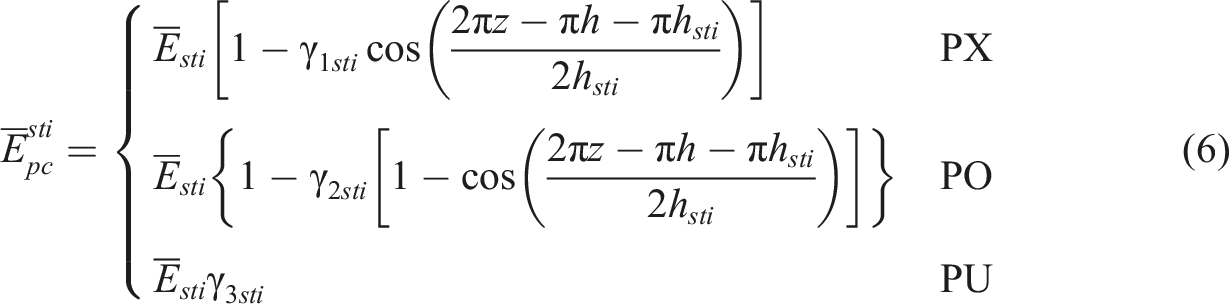
Since the coordinate origin is defined at the mid-surface of the overall shell skin (including both the FG-PGPLRC layer and PZE layer), the presence of the PZE layer causes the FG-PGPLRC layer to shift, and thus the Poisson ratios, thermal expansion coefficients, mass densities, and elastic moduli are modified following the expressions of Refs. 40–43, for the FG-PGPLRC layers of SphrS or CiclP skins

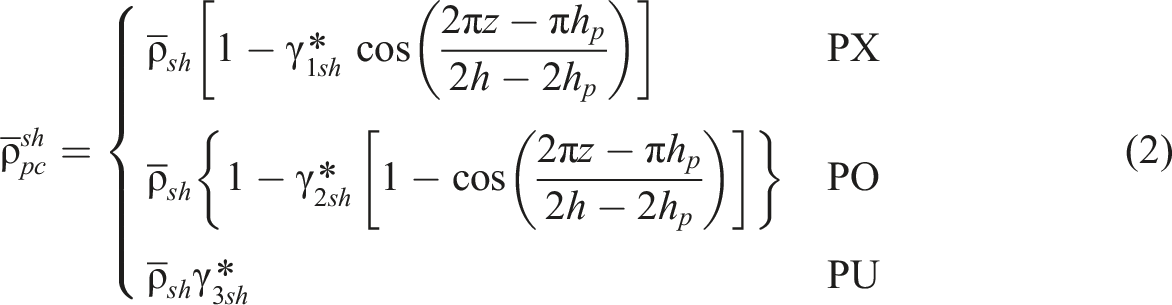
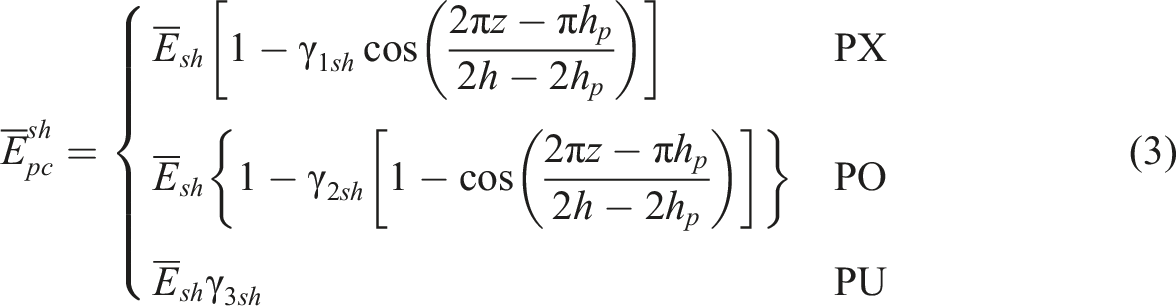
Similarly, those of SW stiffeners

The GPL volume fractions of the FG-PGPLRC layers of SphrS and CiclP skin and the SW stiffeners can be estimated, respectively, as follows

The elastic moduli of the FG-PGPLRC layers of SphrS and CiclP skin and the SW stiffeners are approximated using the Halpin-Tsai model, presented as



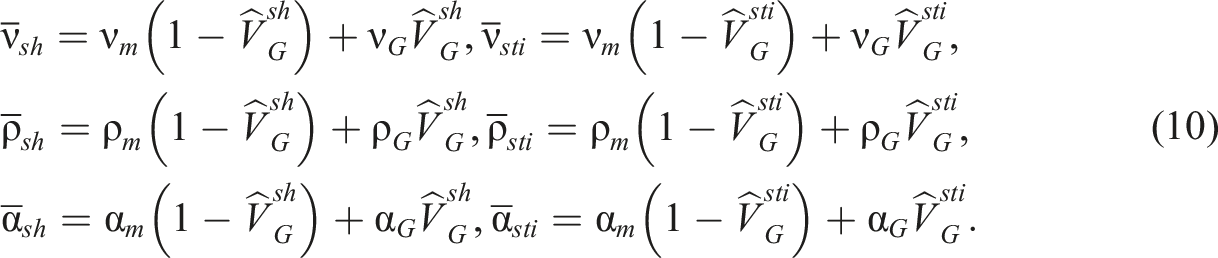
The rule of the mixture is applied to estimate the Poisson’s ratios, densities, and thermal expansion coefficients of the FG-PGPLRC layers of the SphrSs and CiclP skin and the SW stiffeners, obtained by
The elastic modulus and density of FG-PGPLRC are related together by using the relation for the SphrSs as


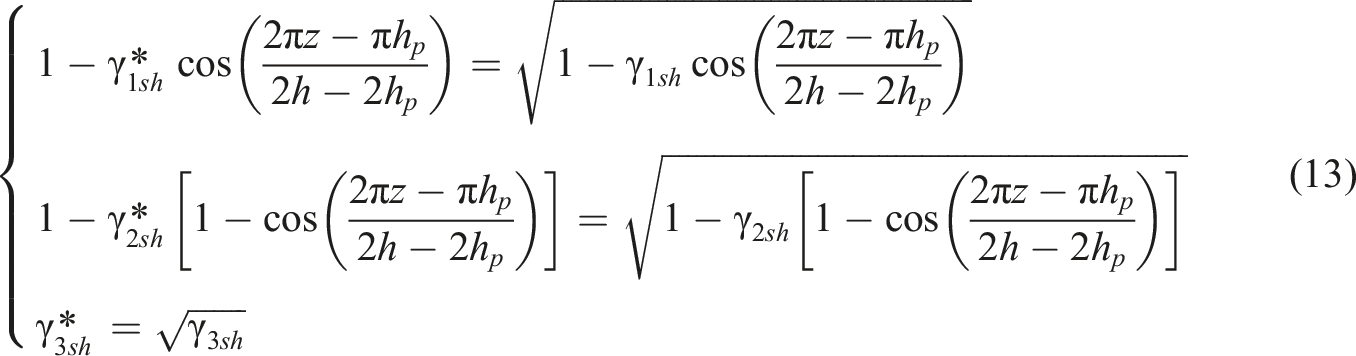
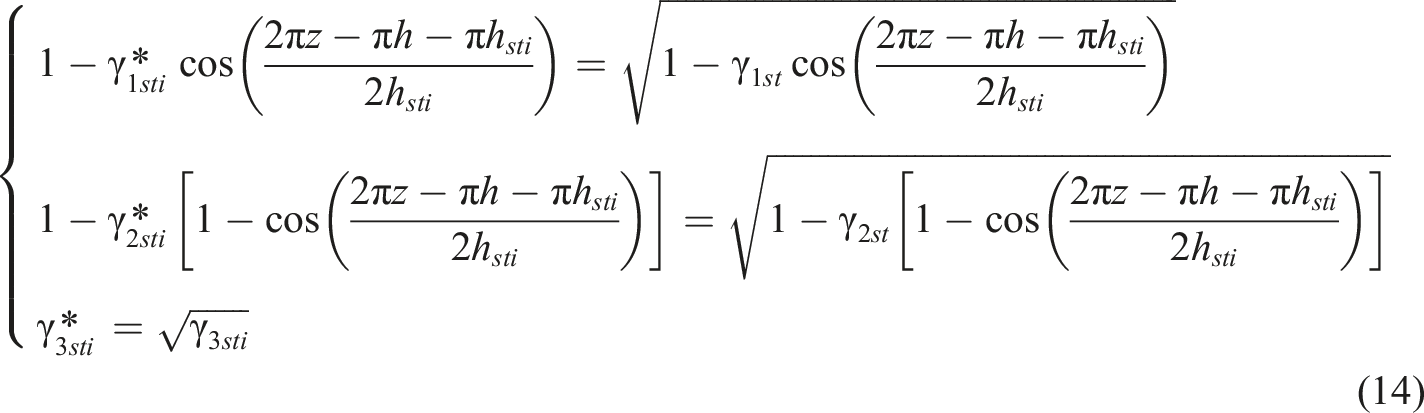
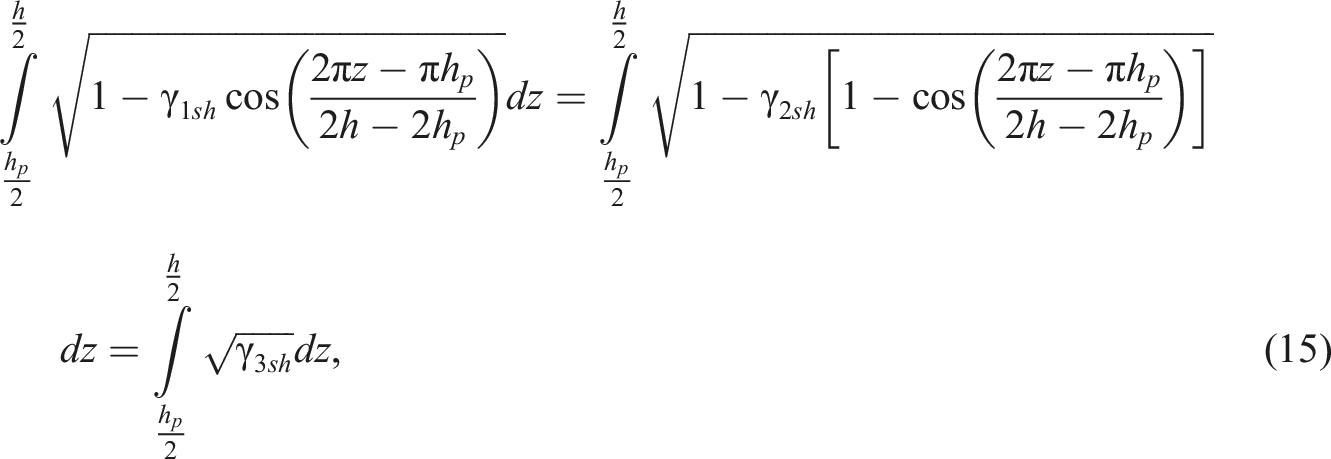
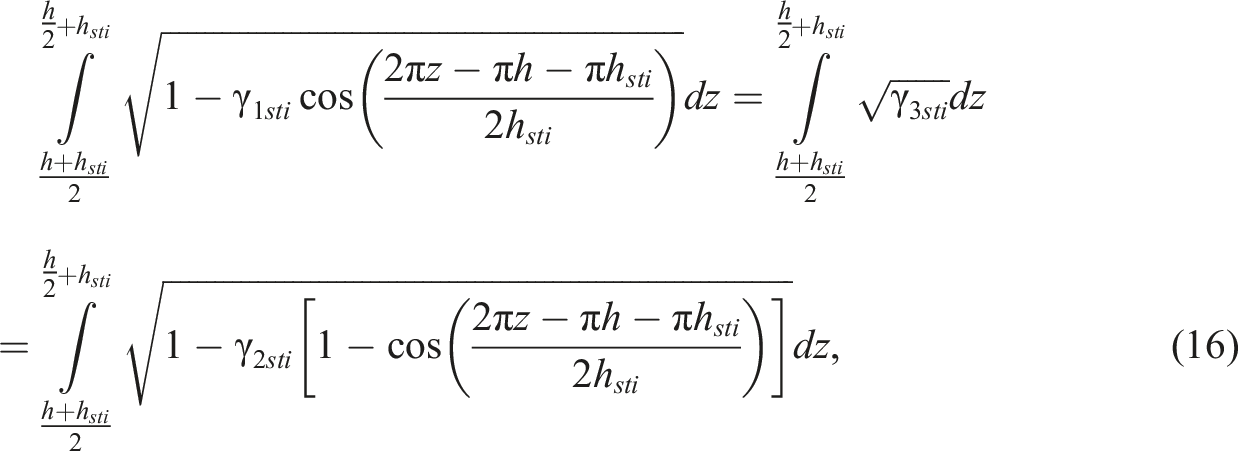
The relations (11) and (12) are applied to FG-PGPLRC by considering equations (2), (3), (5), and (6), presented for the FG-PGPLRC layers of SphrS and CiclP skins as
The PZE material used in this paper is PZT-5A with
Considering the thermal stresses of temperature rise




Donnell shell theory is employed in this study, offering a simple and efficient framework for analyzing thin shells, and is widely applicable to various engineering problems. Due to the axisymmetric deformations, the parallel displacement


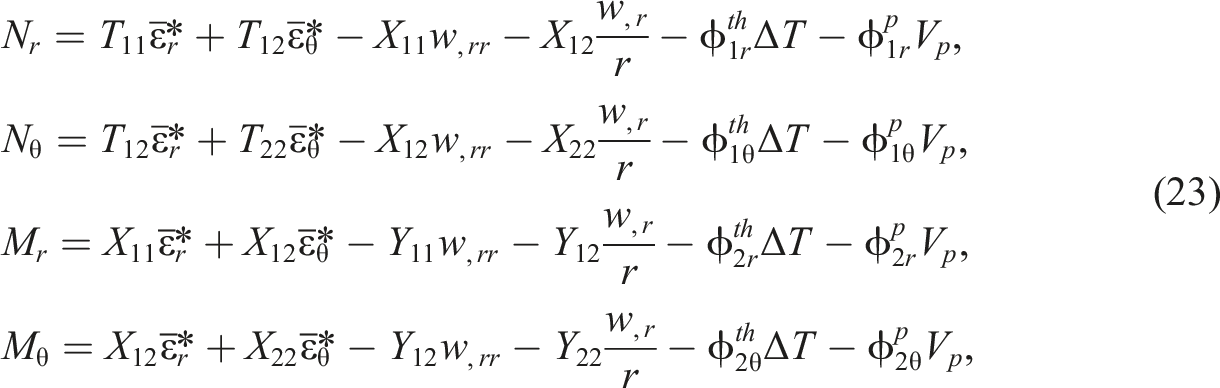
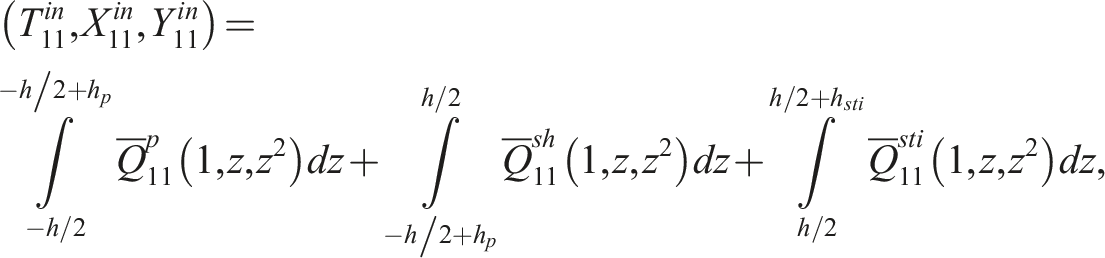
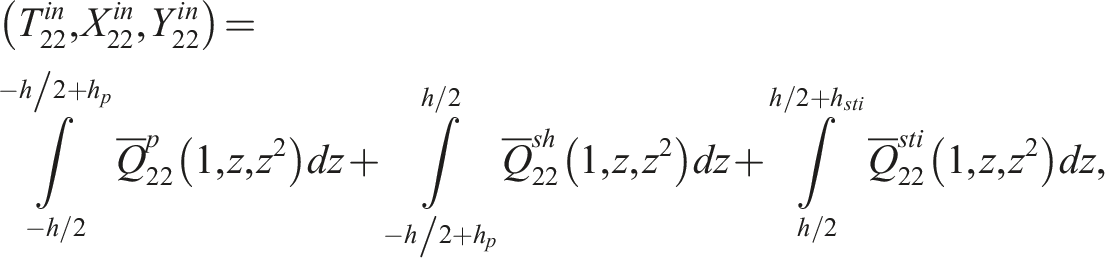
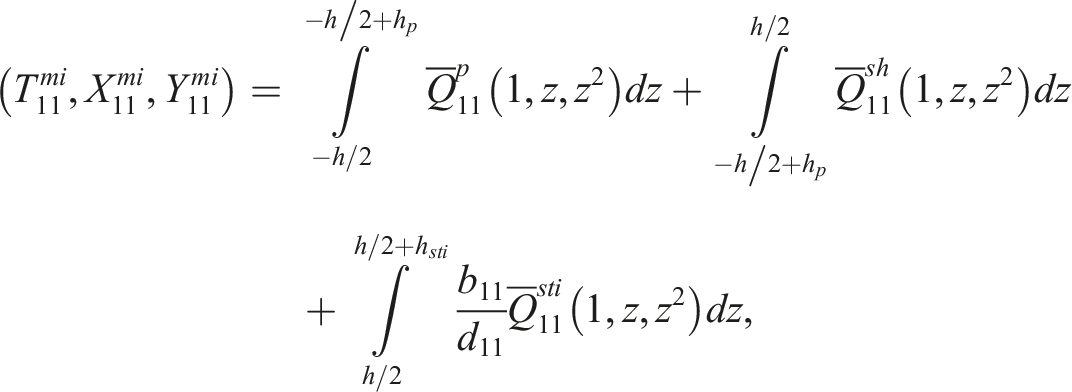
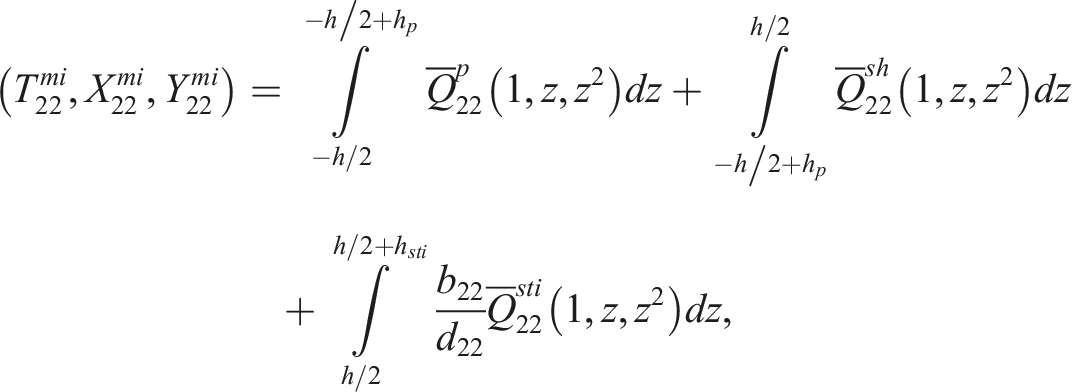
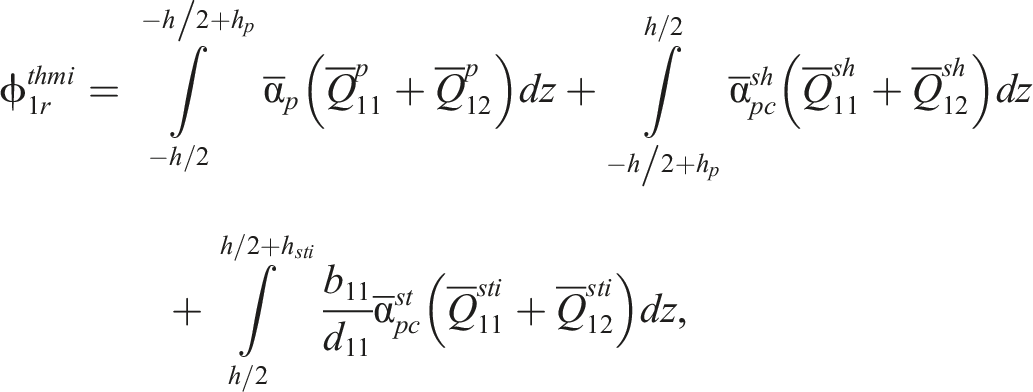
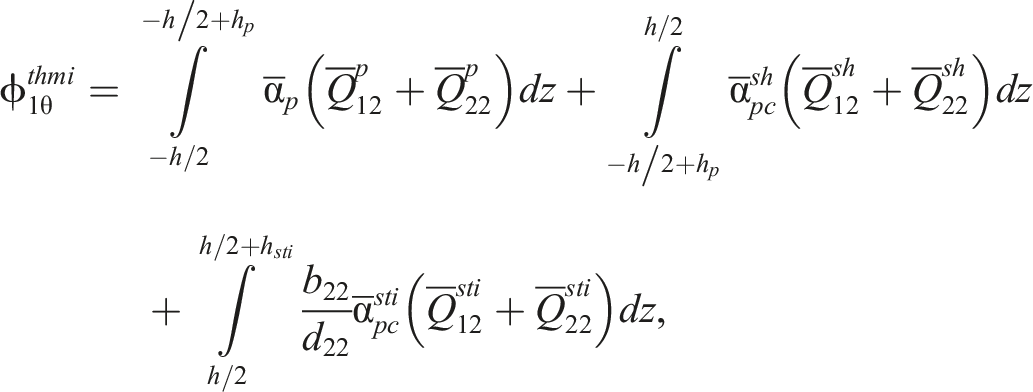
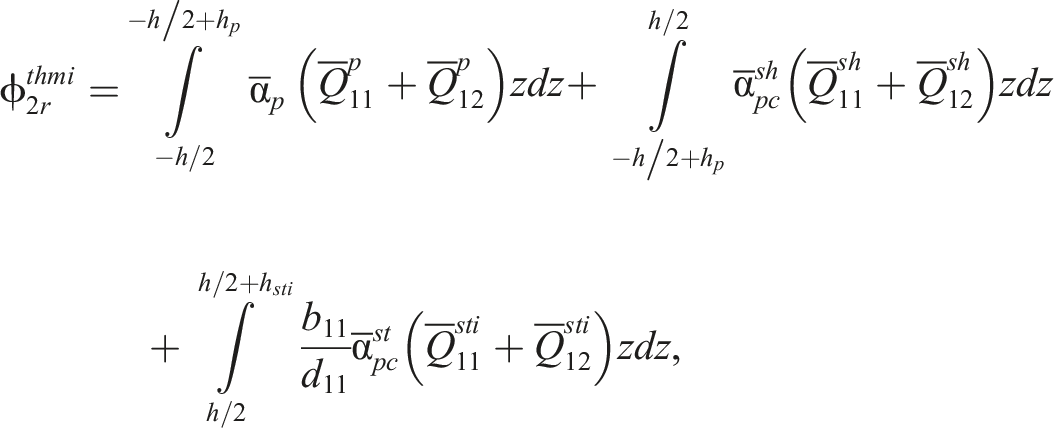
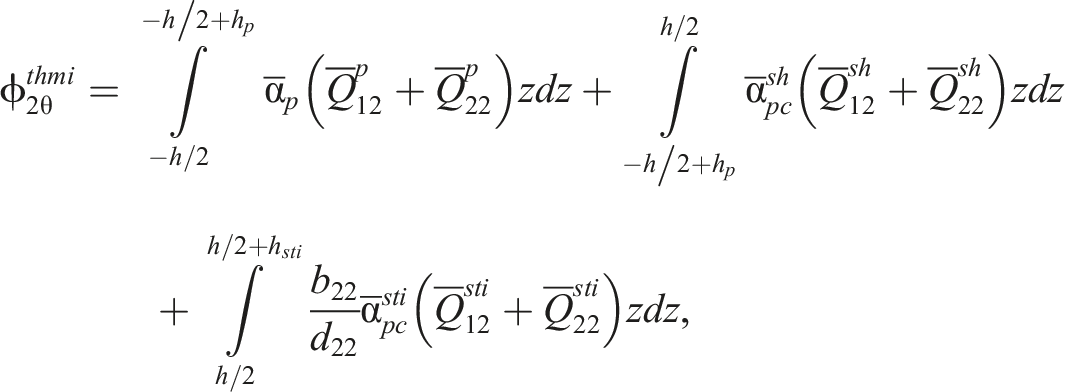
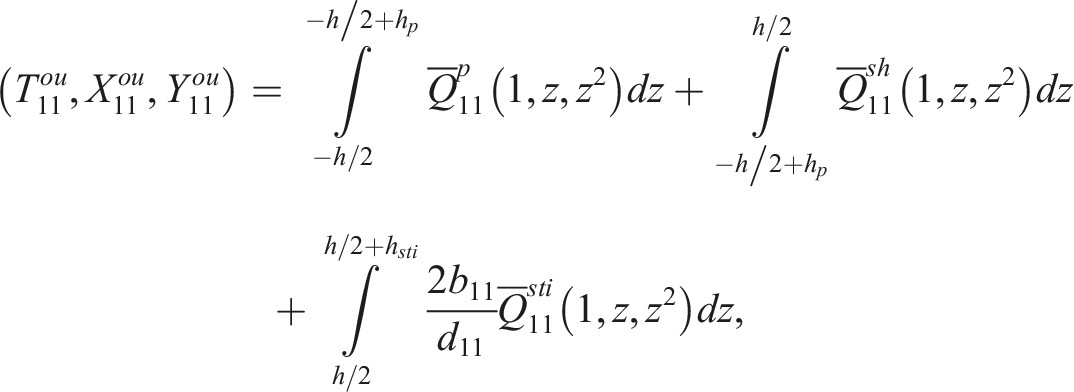
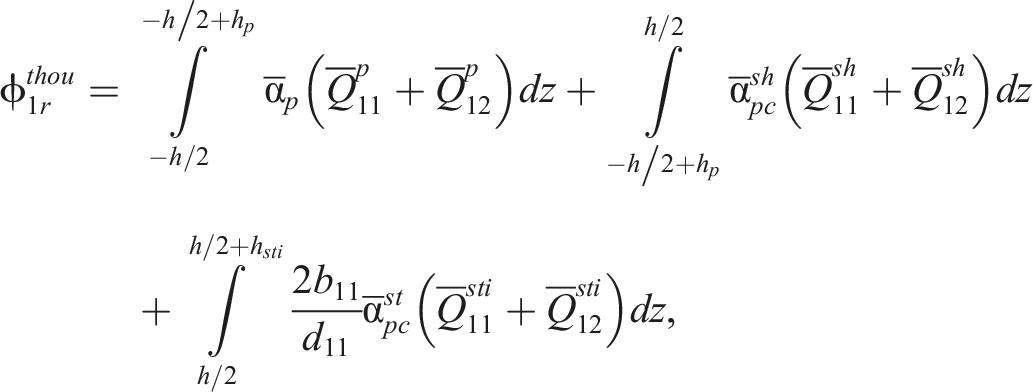
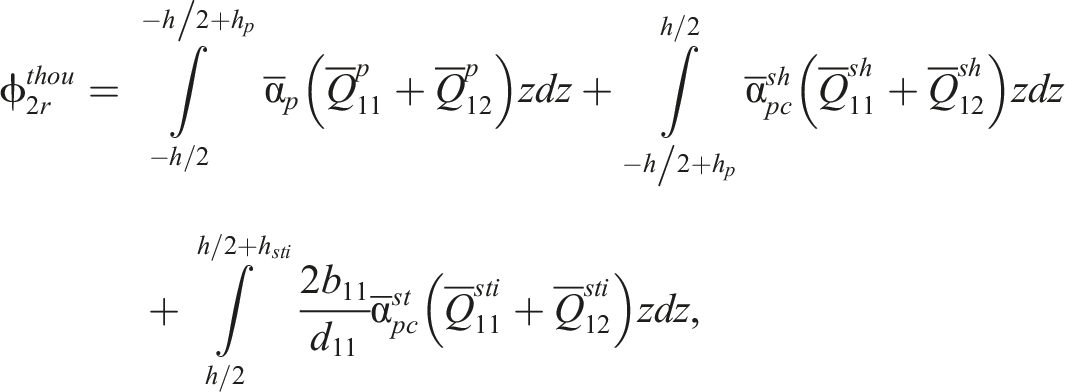
The classical smeared stiffener technique is established using the beam theory for the stiffeners, combined with the Kirchhoff-Love plate and/or Donnell shell theories for the skins. The stiffnesses of the beams are smeared into the stiffnesses of the CiclP or SphrS skins. However, for the classical smeared stiffener technique, the distances between two neighboring stiffeners are constant, and only the isotropic stiffeners are considered. Meanwhile, for the CiclPs and SphrSs, the distances between two neighboring meridian stiffeners are variable, and these stiffeners are amalgamated together when they are near the center/top of the CiclPs and SphrSs. The additional stiffeners are also added in the outermost area where the distance between the neighboring meridian stiffeners is too large to balance the stiffnesses over the entire plate and shell area. Finally, the orthotropies of the FG-PGPLRC stiffeners also complicate the problem compared to classical beam theory. The expanded technique is established and combined with the Donnell shell theory to obtain the internal forces and moments of CiclPs and SphrSs, as








The expressions of the strain energy, work done by the external pressure and interaction of the foundation, and inertial energy can be formulated by
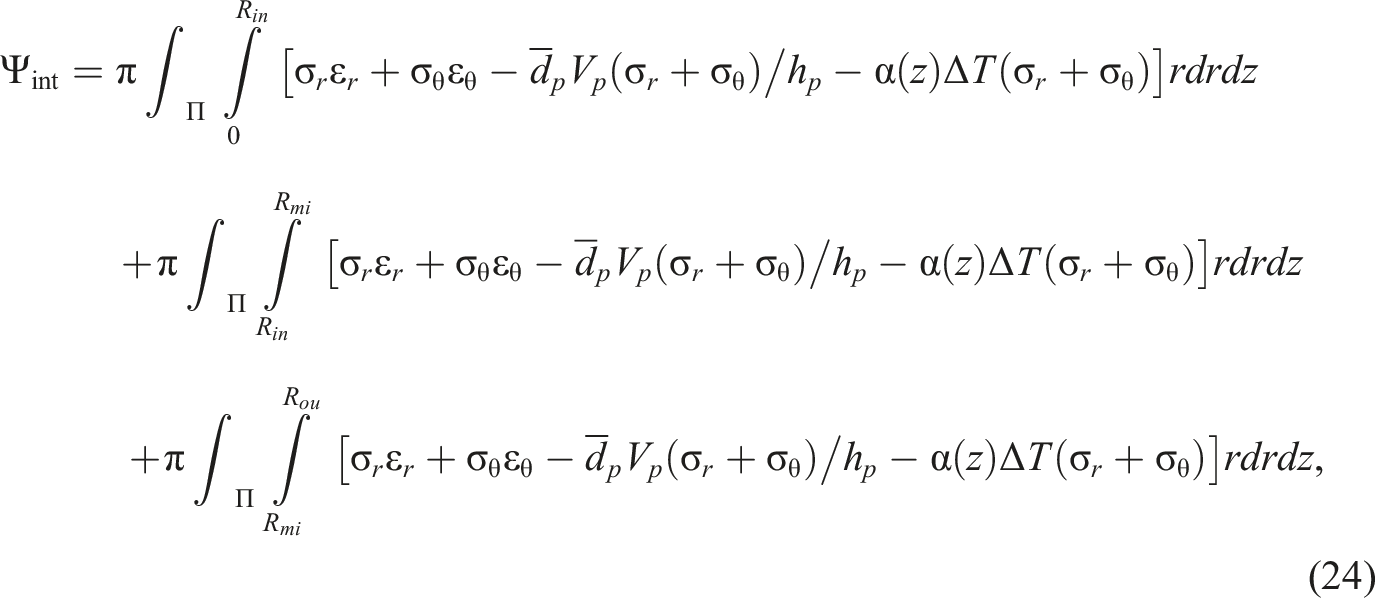


The total potential energy is established from equations (24)–(26), as

The Rayleigh dissipation function can be used to model the foundation damping, as

Polynomial displacement solutions and energy method
The CiclPs and SphrSs are designed with clamped and immovable boundary conditions at the circular edge, as

The polynomial solutions for the displacements are assumed for the CiclPs and SphrSs, as

To model the damping effect, the Rayleigh dissipation function is combined with the Euler–Lagrange equations, obtained by



The expression of displacement amplitude
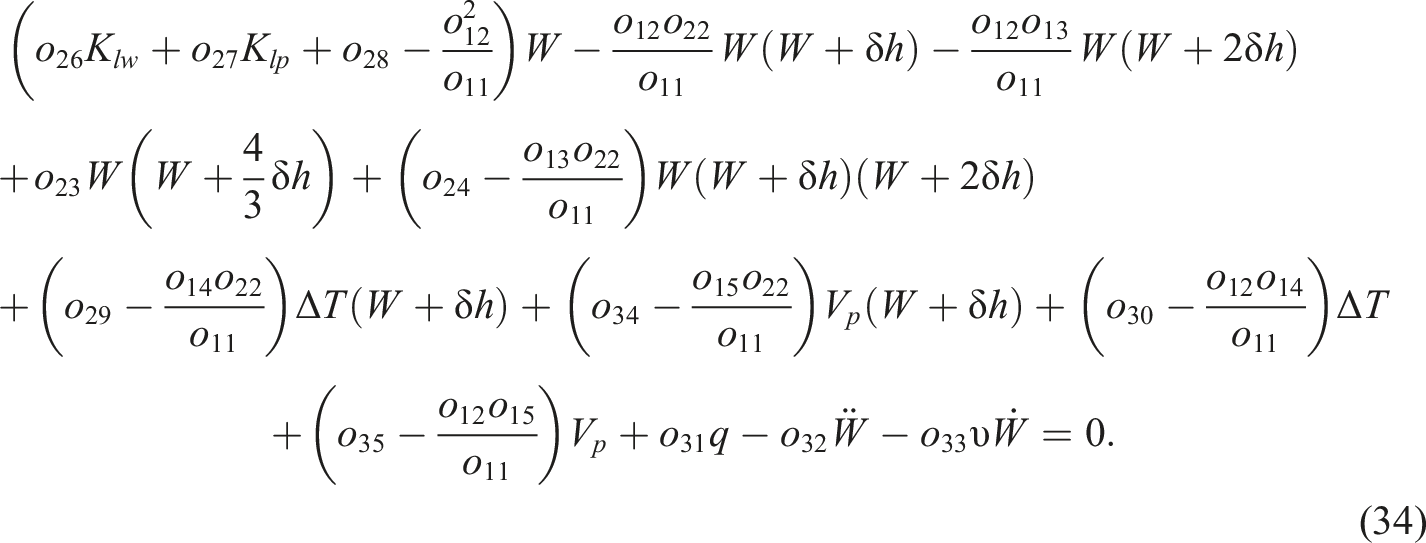
The dynamic response of the SphrSs can be determined numerically by solving the time-dependent differential equation (34) using the Runge-Kutta method. Assuming that the time-varying pressure and thermal loads follow the linear functions
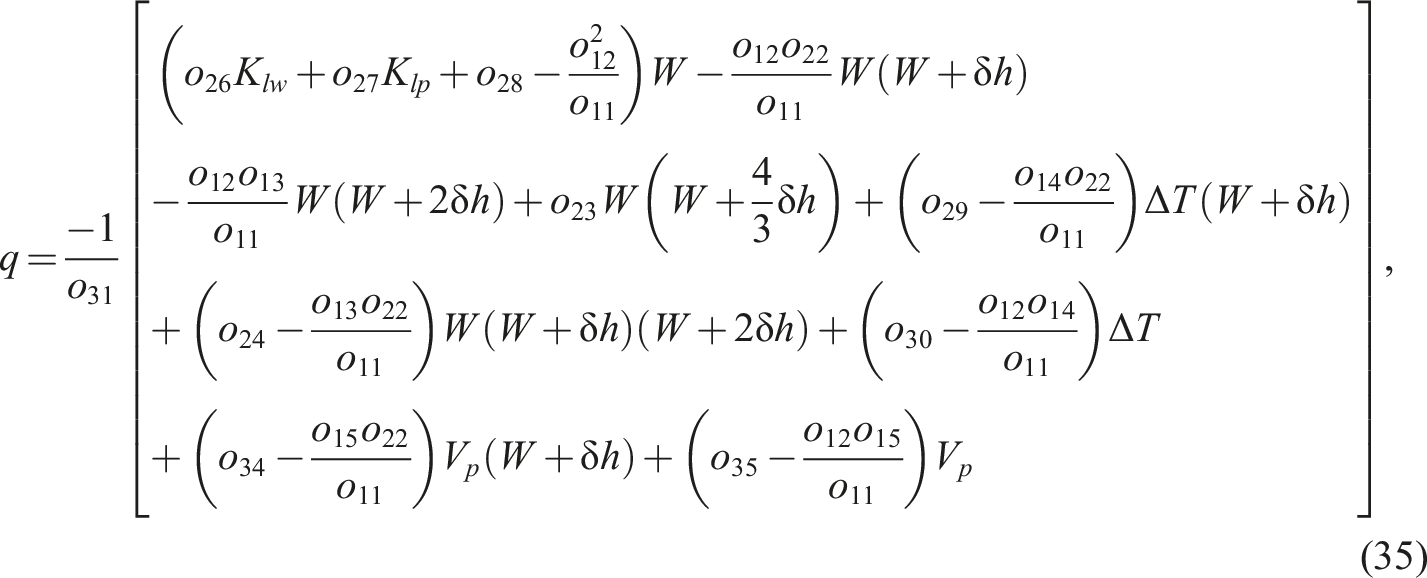
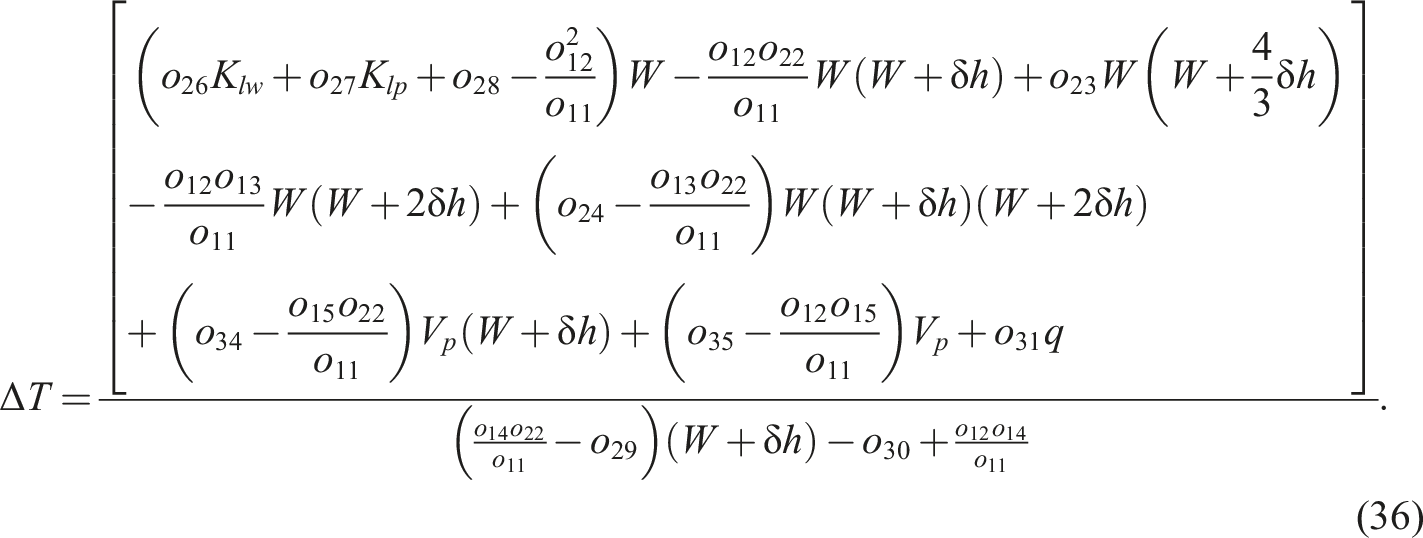
For static buckling behavior, the mechanical and thermal postbuckling responses can be derived by ignoring the dynamic terms, including inertia and damping terms in equation (34), respectively, as
Validation, investigations, and discussions
Comparisons of static critical thermal buckling load
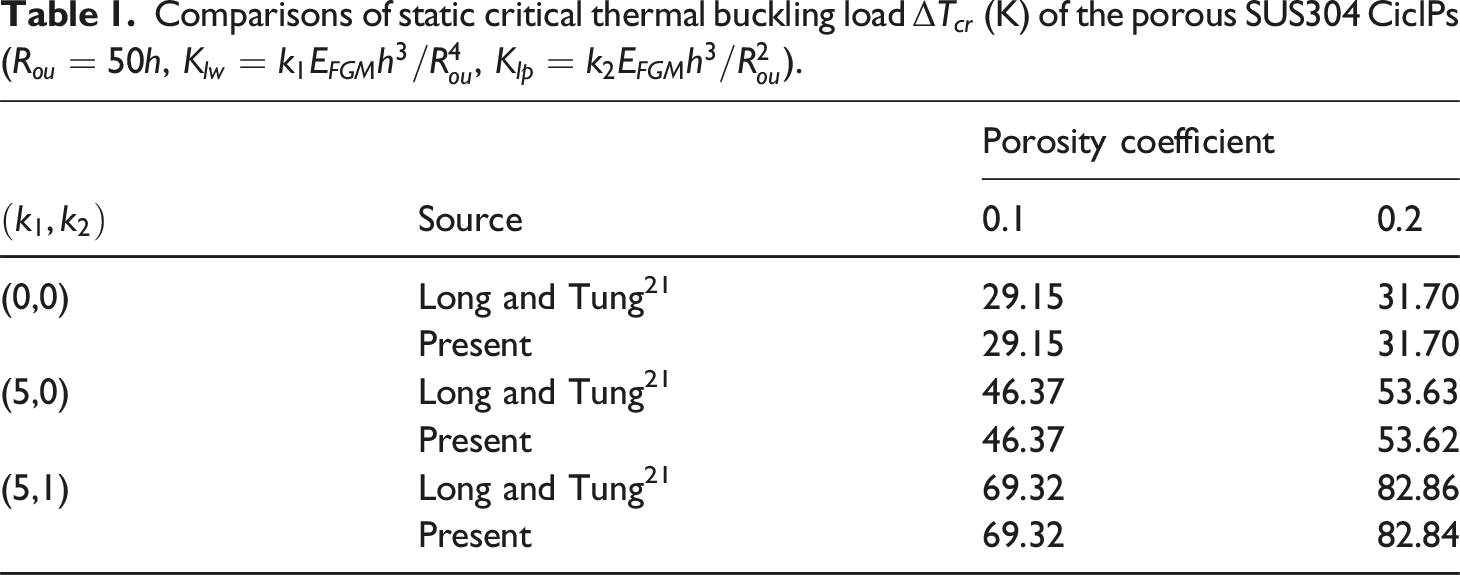
The numerical examples of static and dynamic buckling behavior of PGPLRC CircPs and SphCs stiffened by SW stiffeners are investigated in this section. The PGPLRC is chosen with copper matrix, and the matrix and GPL parameters are referred to in the report of Nam et al. 38
Figure 3 illustrates the static mechanical postbuckling behavior of FG-PGPLRC SphrSs and CiclPs with SW stiffeners and piezoelectric layer, with different stiffener types, number of stiffeners, porosity distribution laws, porosity coefficients, the voltage of piezoelectric layer, and thermal environments. Figure 3(a) shows that different stiffener types, such as parallel, meridional, and SW stiffeners, significantly influence the postbuckling strength. Owing to the additional stiffness contributions from the stiffeners, the overall rigidity of the stiffened SphrSs is significantly enhanced in comparison with their unstiffened counterparts. Additionally, the steady upward trends can be observed in all curves. Figure 3(b) demonstrates that increasing the number of stiffeners raises the buckling resistance, indicating enhanced structural rigidity; however, imperfections can markedly reduce the load-carrying capacity at small deflection, and inversely at large deflection. Additionally, the number of stiffeners also significantly reduces the snap-through intensity. In Figure 3(c), the effect of porosity distribution laws is analyzed, revealing that different distribution laws impact buckling behavior by altering stress distribution and material stiffness, thus affecting the load resistance. The postbuckling curves of different distribution laws do not differ much at small deflection, and become more pronounced at larger deflection. Figure 3(d) examines the influences of porosity coefficients, showing that higher porosity coefficients, which correspond to lower material density, generally reduce buckling resistance due to decreased stiffness. Additionally, the increasing and decreasing trends of the curves are quite similar, and the snap-through intensity does not change significantly. Static mechanical postbuckling behavior of FG-PGPLRC SphrSs and CiclPs with SW stiffeners and PZE layer. (a) Effect of stiffener type (b) Effect of number of stiffeners (c) Effect of porosity distribution law (d) Effect of porosity coefficient (e) Effect of applied voltage (f) Effect of thermal environment.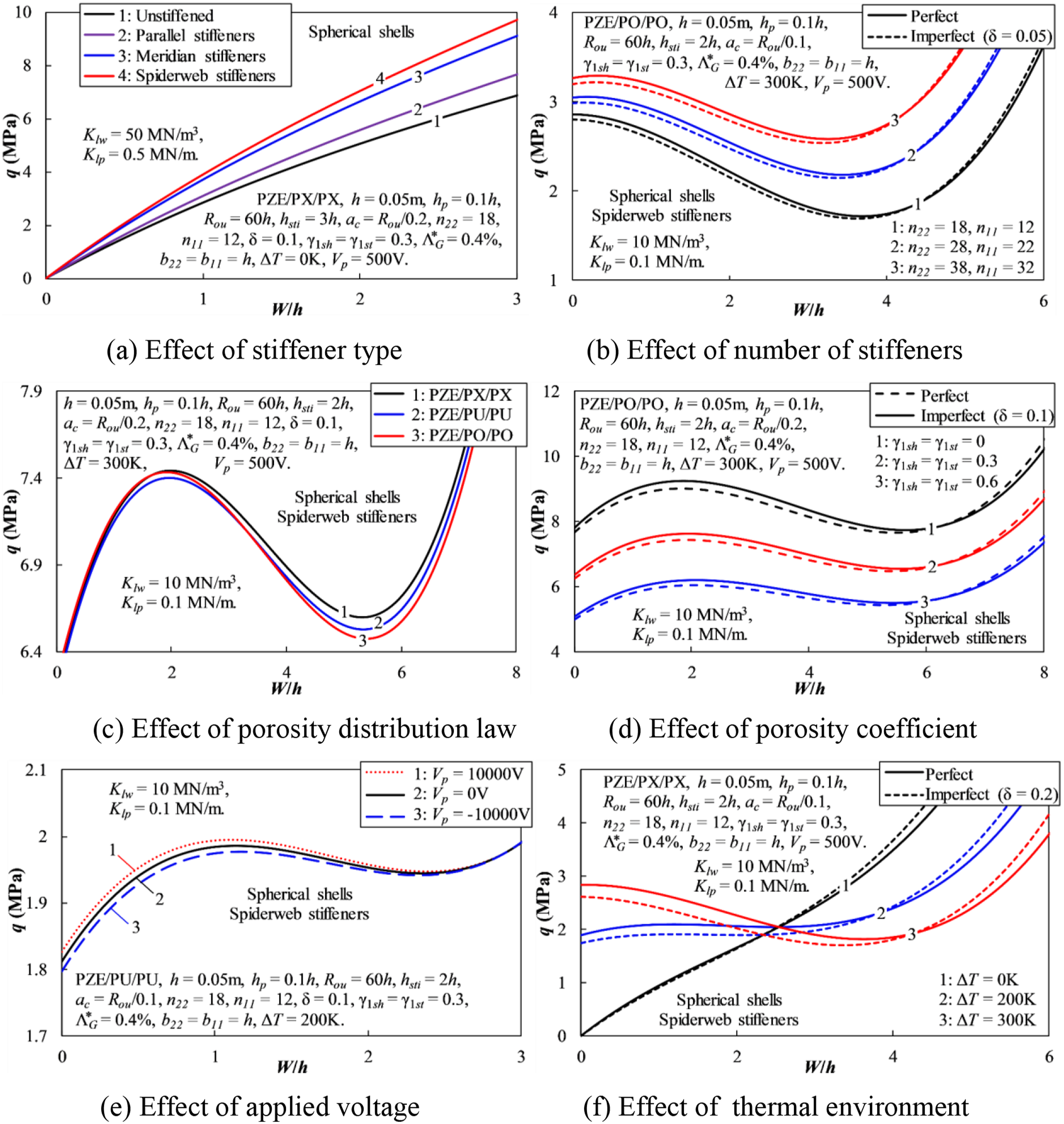
The influence of applied voltage on the piezoelectric layer, as shown in Figure 3(e), indicates that positive voltage can enhance load-bearing capacity, due to increased structural stiffness, conversely for negative voltage. These influences are clearly observed when the deflection is small and decrease when the deflection is large. Finally, Figure 3(f) illustrates the significant impact of the thermal environment on the postbuckling curves. The higher elevation of the curves with larger thermal environment in the small deflection region is due to the negative pre-deflection, which is created by the thermal expansion of the SphrSs under high temperatures. Interestingly, it appears that the curves for different thermal environments converge at the same point for both perfect and imperfect SphrSs. The snap-through phenomenon is clearly observed in SphrSs subjected to high-temperature environments, whereas it does not occur at room temperature.
Figure 4 illustrates the static thermal postbuckling behavior of FG-PGPLRC SphrSs and CiclPs with SW stiffeners and PZE layers under various conditions. Figure 4(a) explores the effects of different stiffener types, demonstrating that SW stiffeners significantly improve the thermal buckling resistance compared to meridian and parallel stiffeners, as evidenced by the higher thermal postbuckling curves. Meridian stiffeners also showed significantly greater efficacy than parallel stiffeners in the thermal postbuckling strength of SphrSs. In Figure 4(b), the effect of stiffener types on the thermal postbuckling strength of CiclPs is further highlighted. The positive deflection postbuckling curves are obtained for the cases of SW and parallel stiffener types, and the negative deflection one is observed for the cases of meridian stiffener type. Meanwhile, the deflection can be negative or positive in the case of unstiffened SphrS, and the bifurcation phenomenon is also observed only in this case. Clearly, in the case of unstiffened CiclPs, thermal expansion initially induces a membrane response, and bifurcation phenomenon occurs. In contrast, for CiclPs with stiffeners, due to the large eccentricity of stiffeners, bending moments are generated from the onset of thermal loading, thereby preventing the formation of a membrane state. Figure 4(c) examines the influence of stiffener height, revealing that an increase in stiffener height enhances the thermal buckling resistance, suggesting that taller stiffeners effectively increase the stiffnesses of the structure. The effects of pre-pressure on the thermal postbuckling curves of SphrSs are shown in Figure 4(d). It is clear that the positive deflection due to external pressure is in the opposite direction to the negative deflection due to thermal loads, leading to the higher thermal postbuckling curves of pressured SphrSs. Static thermal postbuckling behavior of FG-PGPLRC SphrSs and CiclPs with SW stiffeners and PZE layer. (a) Effect of stiffener type (SphrSs) (b) Effect of stiffener type (CiclPs) (c) Effect of stiffener height (d) Effect of pre-pressure.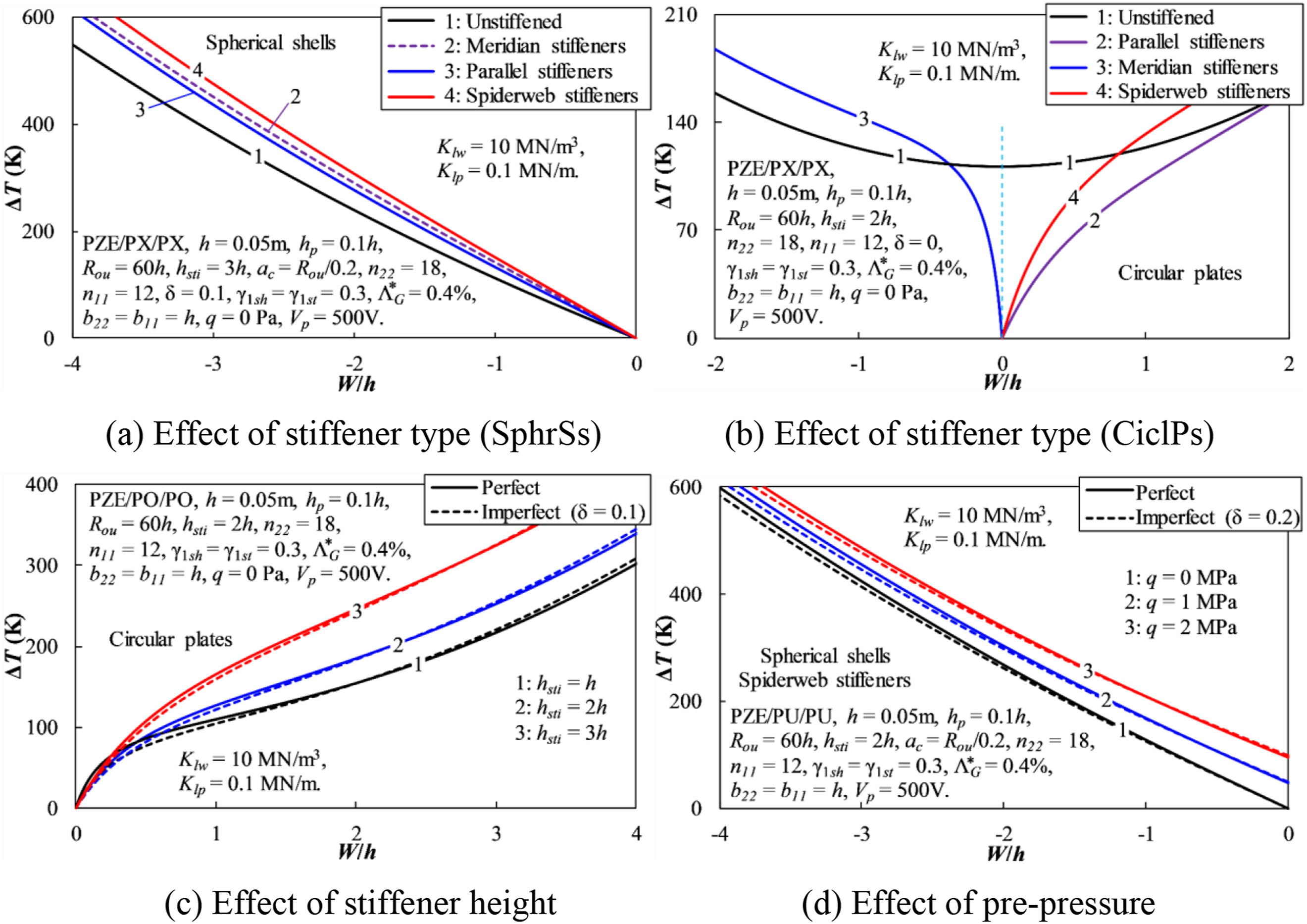
Figure 5 represents the dynamic mechanical postbuckling behavior of FG-PGPLRC SphrSs and CiclPs with SW stiffeners and PZE layers under varying conditions. In Figure 5(a) and 5(b), different stiffener types (unstiffened, parallel, meridian, and SW stiffeners) are evaluated for SphrSs and CiclPs, respectively. The curves initially rise sharply, indicating the dynamic buckling phenomenon, followed by a reduced growth rate with strong vibrations, and eventually exhibit a gradual decay in amplitude as the structure settles into a neighboring equilibrium due to damping effects. The SW stiffener configuration shows the most significant impact in increasing the dynamic critical buckling loads, indicating superior stability under increasing pressure. Additionally, dynamic response amplitudes in the case of SW stiffened SphrSs are significantly smaller than in the remaining cases. Figure 5(c) investigates the influence of the porosity coefficient, which is associated with the porosity fraction in the structures. Higher porosity fraction leads to decreased dynamic critical buckling loads and increased deflection of the postbuckling state, illustrating that increased porosity weakens the structure, making it more susceptible to deformation. Figure 5(d) explores the effect of GPL mass fraction on the dynamic buckling responses of SphrSs. As the mass fraction of GPL increases, the stiffnesses of the stiffened SphrSs improve, increasing the dynamic critical buckling loads and reducing dynamic response deflection. Additionally, the dynamic response amplitude differs more in the large deflection region. The particular influence of the base radius on the dynamic buckling response of the SphrSs can be observed in Figure 5(e). The dynamic buckling region does not change significantly, and the dynamic critical load does not differ much with different base radii, however, the dynamic response amplitude after buckling differs greatly in the dynamic postbuckling region, and the larger the base radius, the larger the dynamic response amplitude of the postbuckling state. Finally, Figure 5(f) examines the effect of foundation stiffnesses (Winkler and Pasternak stiffnesses), on the dynamic buckling amplitude of SphrSs. Since the stiffnesses of the foundation are positively correlated with the foundation reaction, increasing foundation stiffness reduces deflection, with a higher Dynamic mechanical postbuckling behavior of FG-PGPLRC SphrSs and CiclPs with SW stiffeners and PZE layer. (a) Effect of stiffener type (SphrSs) (b) Effect of stiffener type (CiclPs) (c) Effect of porosity coefficient (d) Effect of GPL mass fraction (e) Effect of base radius (f) Effect of foundation stiffnesses.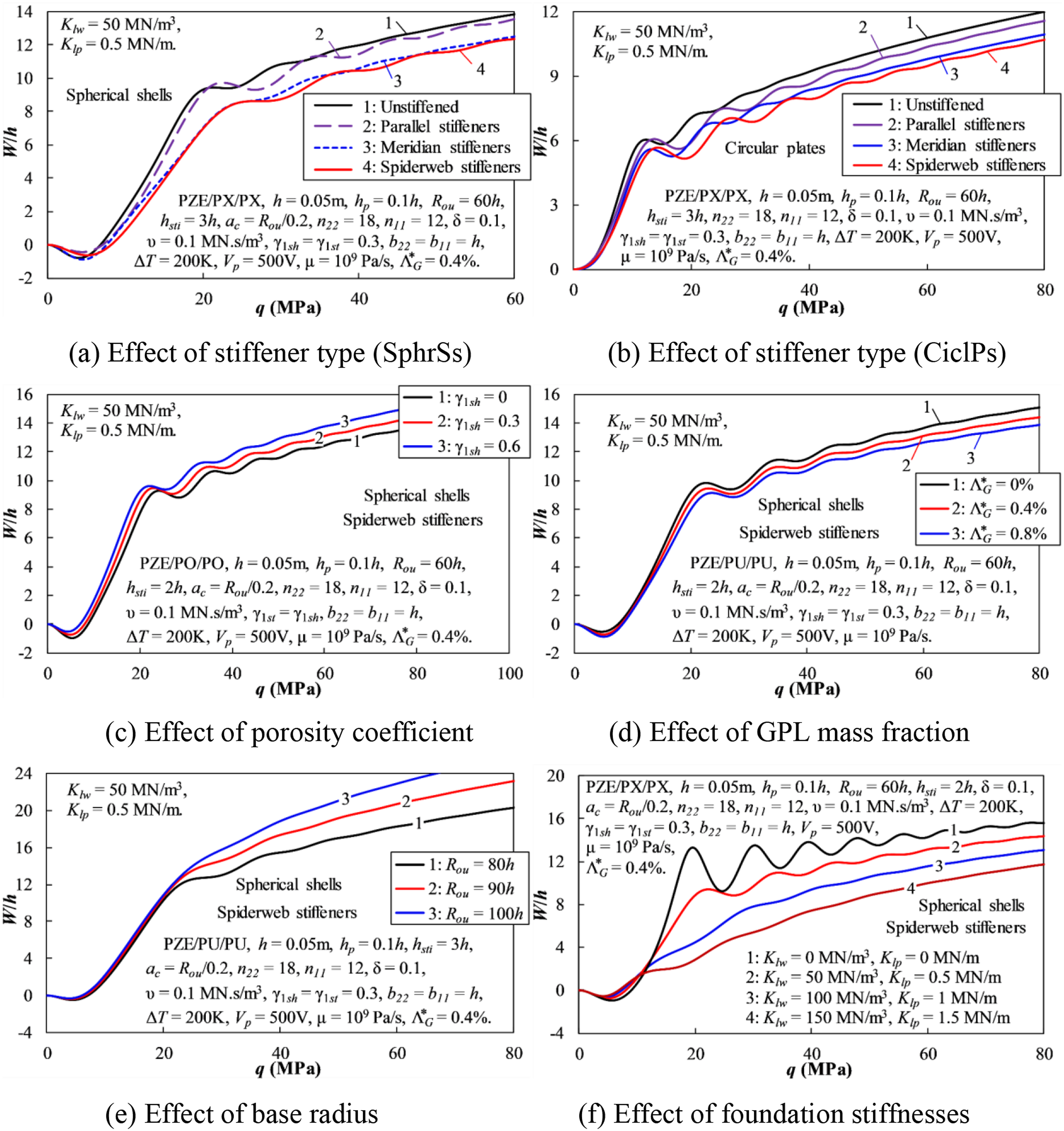
Figure 6 illustrates the dynamic thermal postbuckling behavior of FG-PGPLRC SphrSs and CiclPs with SW stiffeners and PZE layers under varying thermal load conditions. In Figure 6(a), the effects of different stiffener types on the dynamic responses of SphrSs are explored. The analysis compares the dynamic responses of unstiffened SphrSs with SphrSs stiffened by meridian, parallel, and SW stiffeners, with superior load-carrying capacity of SW stiffened SphrSs. Figure 6(b) focuses on the dynamic buckling responses of the CiclPs under similar dynamic thermal load and shows that the SW stiffeners again demonstrate the best performance in reducing dynamic response amplitude. Interestingly, the trend of smooth and regular response for stiffened SphrSs is in contrast to the strong vibration response of postbuckling state for unstiffened CiclPs. The combination of the PZT layer and the FG-PGPLRC layer results in an asymmetry with minor eccentricity relative to the mid-surface, for the unstiffened CiclP (curve 1). Under the fully clamped boundary condition, the plates are in a state resembling a membrane-like state as observed in static buckling analyses. Upon reaching the critical time, the structure undergoes a rapid transition marked by a sharp increase in deflection, similar to the snap-through behavior. This abrupt increase generates significant inertial effects, leading the CiclP to oscillate around a newly established equilibrium. In contrast, the mid-surface eccentricity is considerably higher for the stiffened CiclPs (curves 2–4). As a result, the membrane state does not appear, and the system transitions smoothly without any abrupt instability. Dynamic thermal postbuckling behavior of FG-PGPLRC SphrSs and CiclPs with SW stiffeners and PZE layer. (a) Effect of stiffener type (SphrSs) (b) Effect of stiffener type (CiclPs) (c) Effect of porosity coefficient (d) Effect of foundation stiffnesses.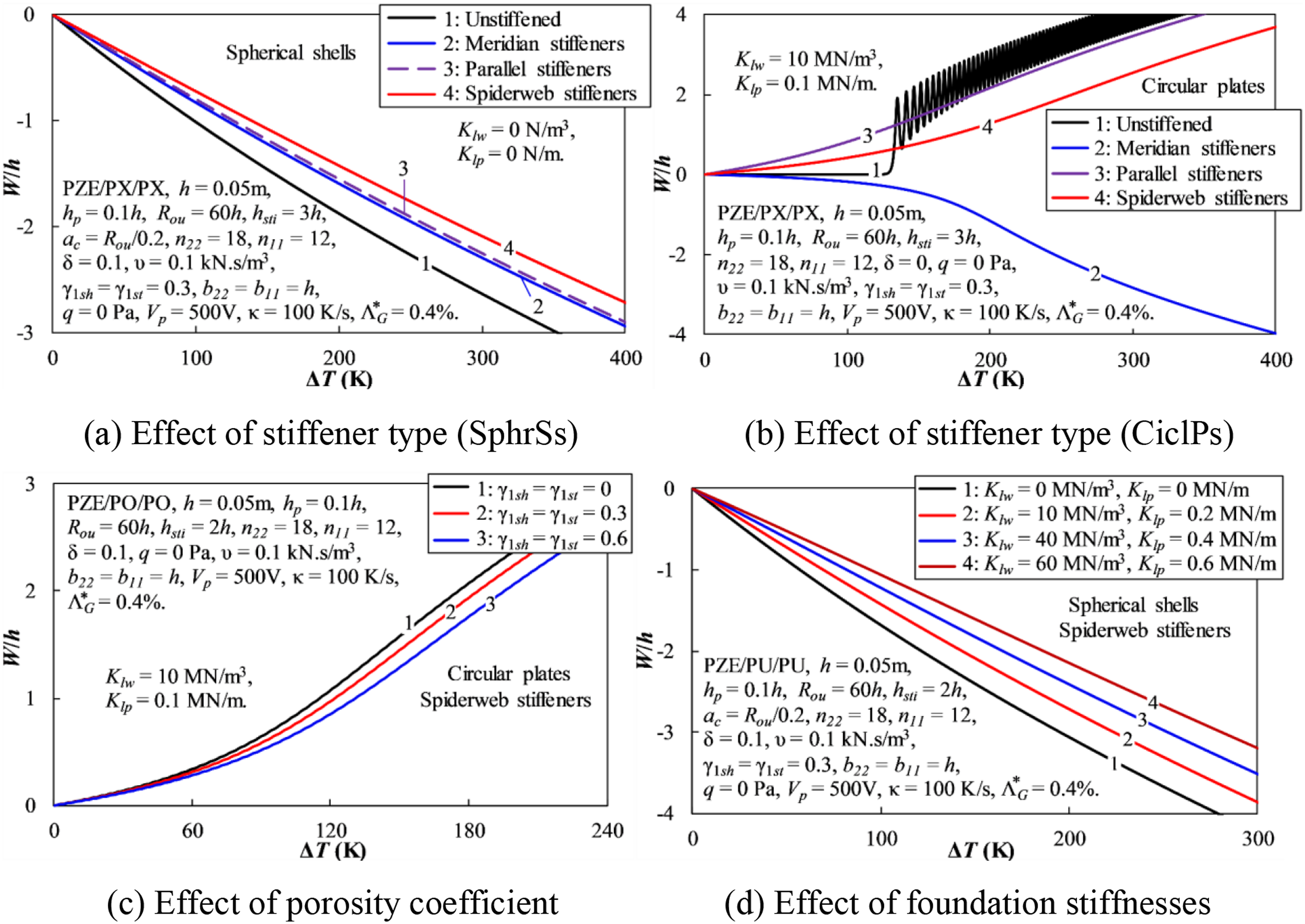
Figure 6(c) examines the effects of porosity coefficients on the dynamic responses of CiclPs. Higher porosity coefficients lead to decreased amplitude with rising temperature, indicating that when the porosity coefficient increases, the coefficient of thermal expansion decreases, leading to a reduction in the effect of thermal deformation on the structures. Figure 6(d) presents the effect of foundation stiffnesses on the dynamic thermal responses of SphrSs. Various stiffness values for Winkler and Pasternak stiffnesses are compared. Clearly, higher foundation stiffness provides greater resistance to dynamic thermal loading.
Conclusion
This paper presents a semi-analytical method to study the nonlinear static and dynamic buckling behavior of graphene-reinforced porous SphrSs and CiclPs with SW stiffeners under mechanical and thermal loads. Graphene and porosity continuously vary according to thickness, governing equations are derived using the energy method and nonlinear Donnell shell theory. The results highlight the effects of graphene, porosity, stiffeners, and other parameters on the static and dynamic buckling behavior of the structures. Meaningful remarks can be drawn as follows (1) In all four investigated cases, including static and dynamic mechanical and thermal buckling problems, the superiority of SW stiffeners in the improvement of the load-carrying capacity of CiclPs and SphrSs can be clearly observed. (2) While the directions of deflection of the SphrSs are the same for different stiffener types, the negative and positive directions of deflection are different in the cases of CiclPs. (3) The opposite influence of porosity coefficient on the structural behavior under mechanical and thermal loading can be observed. (4) The large influence of other geometric and material parameters can also be obtained from numerical examples.
The present analytical and semi-analytical approach offers promising potential for straightforward implementation in structural design calculations for aerospace, marine, and advanced civil engineering applications.
Footnotes
Declaration of Conflicting Interests
The author(s) declared no potential conflicts of interest with respect to the research, authorship, and/or publication of this article.
Funding
The author(s) disclosed receipt of the following financial support for the research, authorship, and/or publication of this article: This research is funded by Vietnam National Foundation for Science and Technology Development (NAFOSTED) under grant number 107.02-2023.45.

Appendix