



Abstract
The current study investigates a comparison of expandable graphite (EG) and montmorillonite clay (MMT) on the properties of polybutylene succinate (PBS)/maize stalk fiber (MSF) bio-composite. Maize stalk and fillers (EG and MMT) were incorporated into the PBS at 10 and 3 wt%, respectively. The scanning electron microscope (SEM) images showed a fibre pull-out from the PBS matrix, while the incorporation of 3 wt% of MMT improved the adhesion between the maize stalk and PBS matrix. In this study, the received MMT was already modified with octadecylamine and Aminopropyltriethoxysilane which improved the interaction between the fiber and PBS matrix. There seems to be a poor interaction between the MSF and EG, which influenced the properties between fiber and PBS negatively when compared with PBS/MSF/MMT hybrid composite. The flame resistance, and storage modulus of hybrid composites were improved due to better dispersion of MMT. The silane treated MMT based hybrid composite showed better flame retardancy (pHRR of 682.5 kW/m2) than the EG based hybrid composite system (pHRR of 697.6 kW/m2). The T10% and T50% of the PBS/MSF/MMT composite showed superior thermal stability than that of the PBS/MSF/EG composite. However, the T10% and T50% temperature values for PBS/MSF composite were revealed as 311.1°C and 363.9°C, respectively. Incorporation of MMT and EG to PBS/MSF enhanced the T50% values of the composite to 372.2°C and 366.7°C, respectively.
Introduction
The current society is facing a crisis in relation to environmental impact, which has prompted scientific researchers to design and develop green sustainable natural fiber-based biopolymer composites for advanced applications. 1 The utilization of natural fibers as reinforcing fillers has several advantages when compared to synthetic fibers such as biodegradable, low cost, no toxicity in nature and high specific strength. 2 The biodegradability of the natural fibers assists in terms of maintaining a healthy ecology, while their cheap option and better performance play a huge role in the economic needs of the industries. There are countries which are sources of well-known natural fibers such as pineapple, bamboo, palm oil and sisal fibers. For an example, pineapple is produced in the tropical area of Southeast Asia. Furthermore, Malaysia is also reported to be one of the top countries in the world in terms of the production of pineapple. 2 In China, bamboo is famous for its utilization in well-known applications such as composite boards, furniture, and flooring. 3 Bamboo has been utilized in construction applications such as scaffolding and bridges. 4 Sisal is produced from various countries such as Brazil, Venezuela, Tanzania, Kenya, Madagascar, and Mexico. The selective fibers mentioned above have been used as reinforcing fillers in various polymer matrices. Various authors reported on natural fiber reinforced polybutylene succinate polymer matrix.5–7 For an example, Arabeche et al reported on the physical and rheological properties of the composites consisting of alfa fiber and PBS matrix. 5 The Alfa grass is mostly found on the Southern Spain and Northwest Africa. The presence of Alfa cellulose fiber within the PBS matrix was found to have enhanced the crystallinity of the matrix, and it was concluded that alfa fiber cellulose acted as a nucleating agent. Feng et al 6 reported on the properties of the PBS/sisal-fiber composites. The influence of the mixing temperature as well as the steam explosion of the sisal fiber on the mechanical properties was investigated. It was revealed that the mechanical properties of the PBS/sisal fiber composites enhanced with an increase with mixing temperature until it reached the peak performance. This behaviour was associated with more active groups of the sisal fiber and polymer matrix at elevated temperatures and as a result there is an improved interaction between the two components. In some instances, PBS was reinforced with disposed wastes such as wastepaper. 8 The mechanical properties of the composites were found to improve in the presence of WP within the PBS matrix and the optimum mechanical performance was realized at 60 wt% of the WP. In most cases, authors incorporate nanoparticles into the biopolymer/natural fiber composites in order to enhance the properties of the fiber/polymer composites more in order to meet the needs of the current market. Dangtungee et al reported on the fabrication of the hybrid system consisting of sisal fiber/clay/ poly(hydroxybutyrate-co-hydroxyvalerate) composite. 9 The sisal fiber utilized in this study had different lengths that is, short fiber length of 0.25 mm and long sisal fiber of 5 mm. The incorporation of the clay nanoparticles increased the hardness and water resistance of the PHBV/sisal fiber composites. The influence graphite/carbon black and plasma treatment on the bending and electromagnetic shielding of the hemp fiber/polylactic acid was reported by Yao et al. 10 The bending strengths increased at lower graphite content and decreased at higher graphite content due to a possible agglomeration. The current market is diverting towards circular economic practices, with the idea of recycling in order to protect the environment. Most recently, maize stalk, an agricultural residue has been the major source of fibers, and they have been used as a reinforcing filler in polymer matrices. 11 Maize has been used as a major food crop in majority of the countries globally. The production of maize has been estimated to be 1147.6 million tons in the year 2018 and it has been mostly used to feed billions of people globally. 12 Maize stalk has been utilized for animal feed, while the rest of the maize stalk is burned due to limited landfill. Various authors reported on the potential recycling of maize stalk by using them as reinforcing fillers in various polymer matrices.11,13,14 For an example, Bavan et al. 11 reported on the properties of maize fiber polymer composites. There was an improvement in the thermal stability of the treated maize stalk fiber when compared to raw fibers, and furthermore, it was highlighted that the stiffness and glass transition of the treated fibers were better when compared with untreated raw maize stalk fibers. Based on the findings, the authors concluded that maize stalk fiber can be utilized as a reinforcing filler in polymer matrix. Łączny et al. 13 studied the mechanical properties of the polylactide/long maize stalk fibers. One of the key findings was poor adhesion between the fiber and polymer matrix which affected the overall properties the composites. A poor interaction between the long maize stalk fiber and polylactide (PLA) matrix resulted in poor mechanical properties. Another disadvantage of the natural fiber reinforced polymer composites is their poor flammability properties. It is well known that the halogenated and non-halogenated flame retardants are utilized to improve the flame resistance of the polymers. 15 However, the halogenated flame-retardant fillers are no longer used due to the release of dangerous gases such as hydrogen halides. Typical examples of halogenated flame-retardant fillers include Hexabromocyclododecane (HBCD), tetrabromophthalic anhydride (TBPA), and 1,4-di(ethoxycarbonyl-methoxy)-2,3,5,6-tetrachlorobenzene (TCHQA). 16 The preferred flame-retardant fillers currently are the non-halogenated flame retardants due to their non-toxicity. The well-known non halogenated flame retardants fillers are phosphorus, magnesium hydroxide, layered silicates and carbon-based materials. The idea of the current study is to compare the influence of the layered fillers in the form of clay and graphite on the properties of the PBS/MSF composite. The study discusses the effect of the expandable graphite and montmorrilonite (MMT) on the flammability, dynamical mechanical properties, and thermal stability of the maize stalk/PBS bio-composite. To the best of our knowledge there is limited or no studies which investigated a comparison of MMT and EG on the properties of the PBS/MSF biocomposite. This type of hybrid composites is required in the current market since it is eco-friendly and sustainable. Furthermore, the composites produced play a huge role in minimizing the environmental impact by replacing the synthetic fiber reinforced polymer composites in the current market. The composite also has advantage in relation to weight and as a result it can possible be applied to automotive industry thereby playing a role in the production of light weight vehicles and therefore enhancing the fuel efficiency. The study is widening the application of the fiber reinforced polymer composites towards circular economy since the reinforcing filler in this study is an agro waste.
Experimental
Materials
Maize stalk (MS) was supplied by the farm in the Eastern Cape Province, from a town called Cofimvaba, South Africa. Montmorillonite clay (MMT) was supplied in powder form by Sigma Aldrich, South Africa. MMT was modified with 15-35 wt% of octadecylamine and 0.5-5 wt% aminopropyltriethoxysilane, respectively. Polybutylene succinate (PBS) was supplied in pellets form by 2 MBIO- Engineering Polymers, India. It has a melting point range of 90 ∼ 120°C, and a density of 1.25 g/cm3. Expandable graphite, consisting of a mixture of sulphuric acid and an oxidizing agent was obtained from Qingdao Kropfmuehl Graphite (Hauzenberg, Germany).
Fabrication of the maize Stalk Fiber/PBS Composites
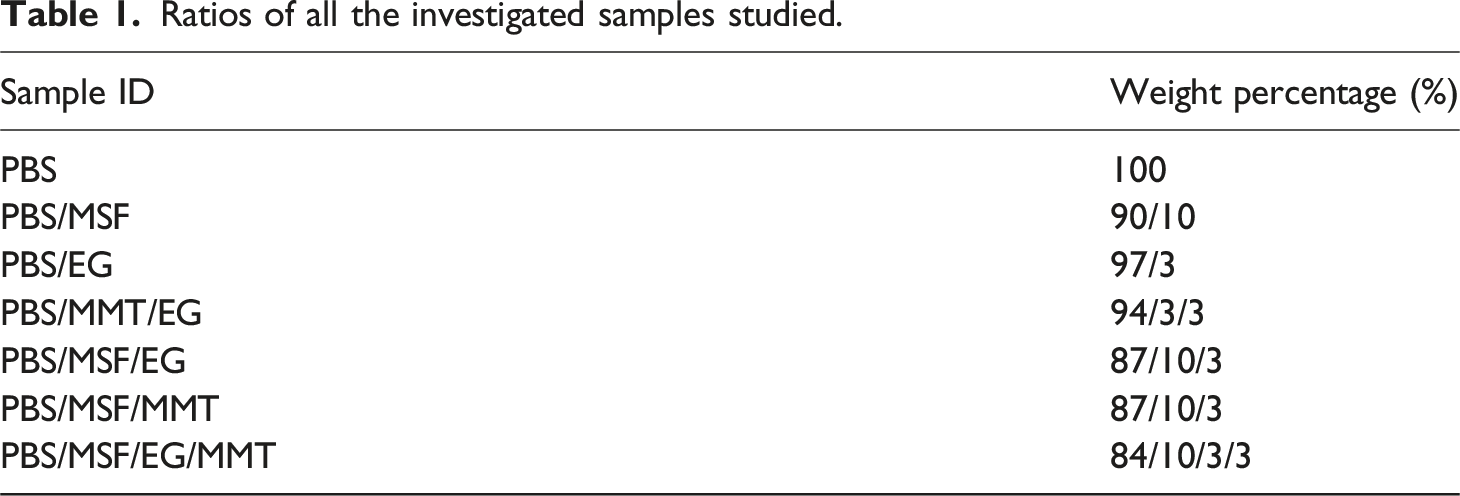
Ratios of all the investigated samples studied.
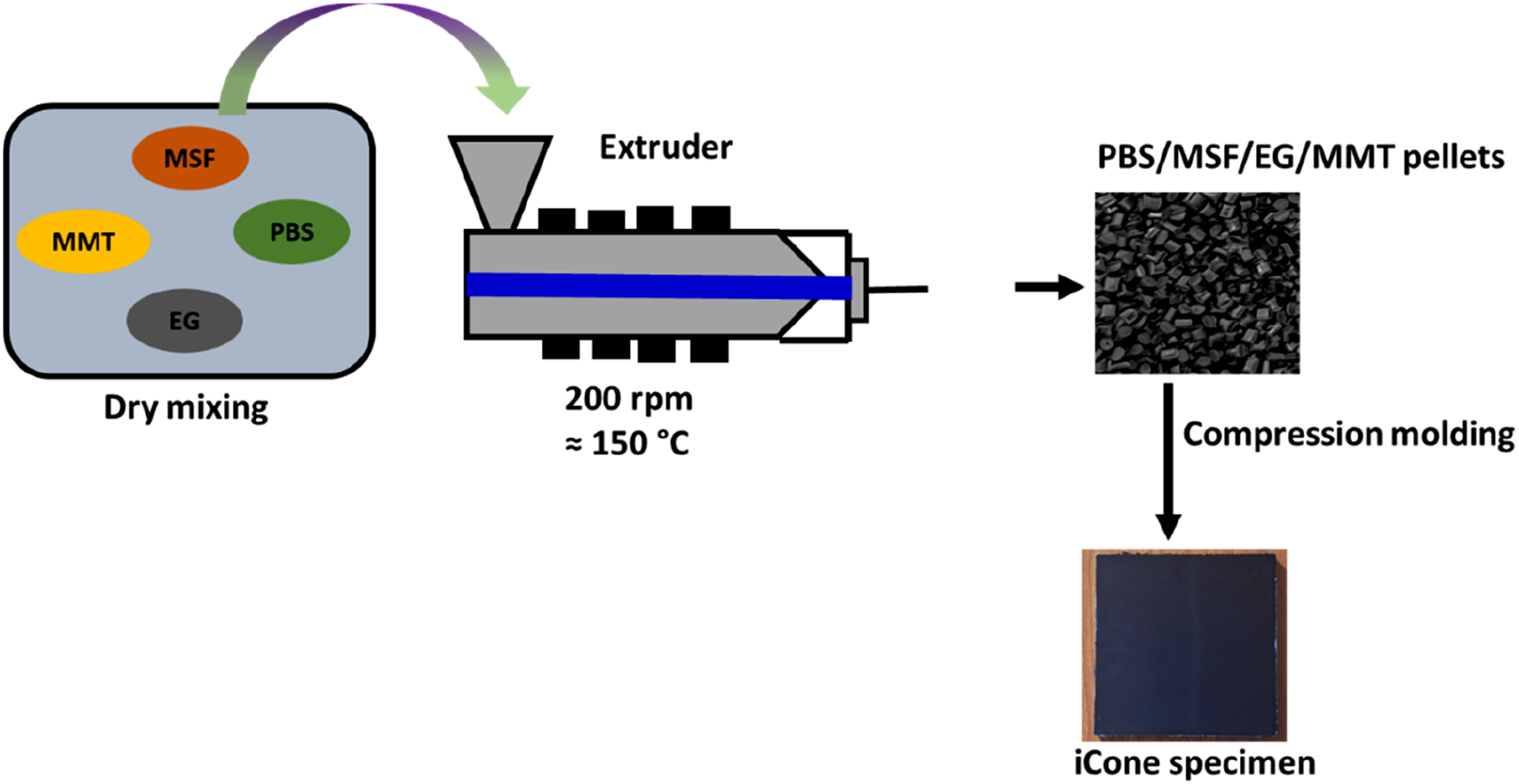
Schematic representation of the preparation method.
Characterizations of natural fiber binary composites and their hybrid composites
Morphology
To evaluate the interaction between the components of the binary composites and hybrid composites, a JSM-7500F, JEOL scanning electron microscope was utilized and the analysis were done at room temperature. The samples were fractured by submerging them in liquid nitrogen and immediately breaking the samples into a suitable size in order to fit the sample chamber. The specimens were gold coated by sputtering to generate conductive costings into the specimens.
Fourier transform infrared spectroscopy (FTIR)
To verify the presence of octadecylamine and Aminopropyltriethoxysilane in MMT, FTIR was utilized. The FTIR spectrum ((Perkin-Elmer Spectrum 100 spectrometer, Branford, CT)) of the modified MMT was recorded in the wavenumber range of 4000 to 400 cm−1 and with a resolution of 4 cm−1.
Thermogravimetric analysis
Thermogravimetric analysis (TGA) was done by Perkin Elmer Pyris-1. The specimens weighing 7-8 mg were heated from 25 to 800°C at a heating rate of 10°C/min under nitrogen.
Cone calorimeter
Flame resistance of the samples were analysed by Dual Cone calorimeter at the heat flux of 35 kW/m2. Samples were prepared by compression molding with dimensions of 100 × 100 × 6 mm3.
Dynamic mechanical analysis (DMA)
Dynamic mechanical analysis (DMA) was performed by Perkin Elmer DMA 8000 analyzer in a dual cantilever bending mode. The analysis was recorded in the temperature range of −50 to 90°C with a frequency of 10 Hz and strain amplitude of 0.02%. Rectangular specimens with dimensions of 12 × 9 × 0.8 mm3 were tested.
Differential scanning calorimetry (DSC)
DSC analyses were conducted using a Perkin Elmer DSC7 instrument. Samples with masses ranging between 5 and 10 mg were sealed in aluminium pans and heated under nitrogen flow of 20 mL/min from 25 to 160°C at a heating rate of 10°C/min and kept at this temperature for 1 minute to eliminate the thermal history, cooled to 35°C at the same rate, and reheated under the same conditions. The melting enthalpies and temperatures were determined from the second heating curve.
Results and discussion
Scanning electron microscopy (SEM) and Fourier-transform infrared spectroscopy (FTIR)
Figure 1 shows the SEM images of 97/3 PBS/expandable graphite (EG) and 90/10 PBS/maize stalk fiber (MSF) composites. The PBS/EG composites revealed a poor distribution of the EG phase due to inhomogeneity of the sample and poor interfacial interaction between the graphite and PBS matrix. Furthermore, there is a clear expandable graphite agglomerates within the matrix, as indicated by the arrows and symbol A and B (Figure 1(a)). It is well-known that the unmodified carbon-based nanoparticles tend agglomerates due to adherence of nanoparticles to each other by weak forces to form micro sized entities. It is seen in Figure 1(b) that there is a fiber pull-out from the matrix (symbol C) which is an indication of poor interfacial bonding between the fiber and polymer matrix. This behaviour is associated with an incomplete wettability or bonding between the polymer and fibre during the preparation. The incompatibility of the two systems is based on the hydrophilic nature of the fibers with the hydrophobic polymer matrix. Furthermore, another possible reason for an incompatibility between the fibre and PBS may also be associated with the waxes and pectin substances present in unmodified fibre which may act as steric hindrance for interlocking of the fibre with the matrix. SEM images of surface morphology for (a) 97/3 PBS/EG, and (b) 90/10 PBS/MSF.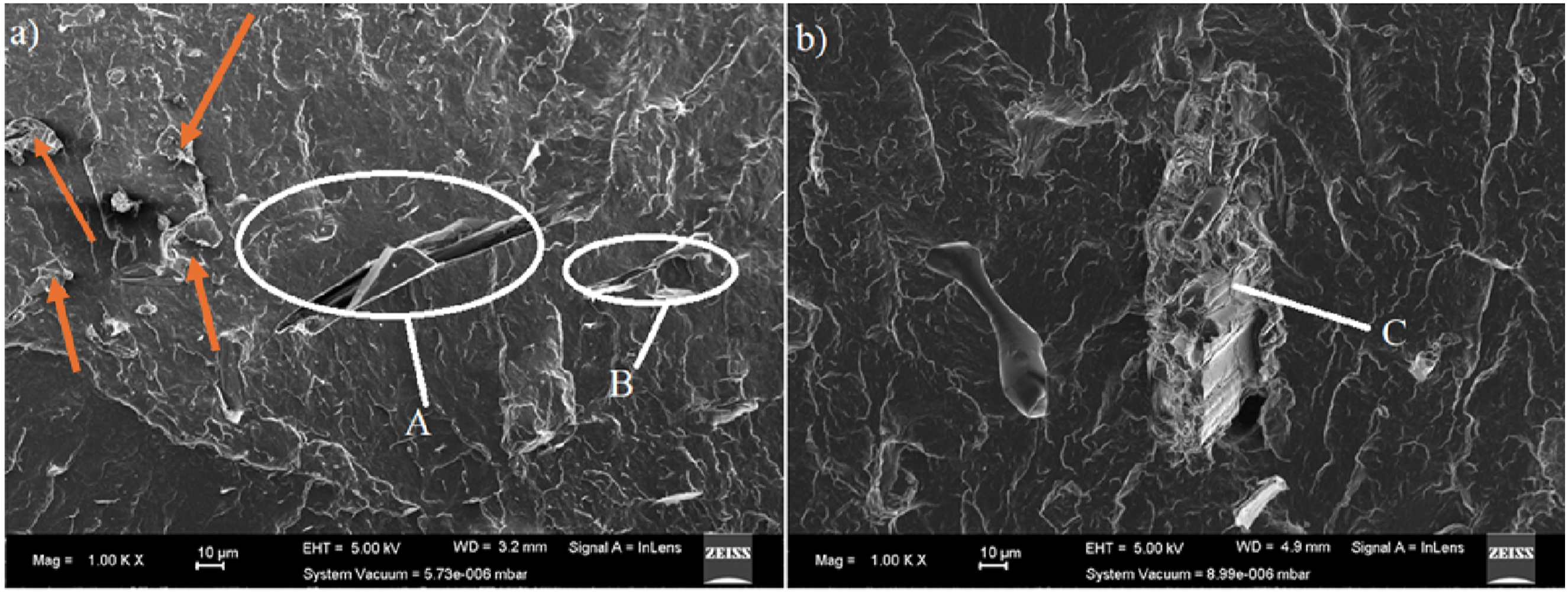
Figure 2 illustrates a comparison of the morphology of the 87/10/3 PBS/MSF/EG and 87/10/3 PBS/MSF/MMT composites with the aim of understanding which of the two fillers (viz expandable graphite and montmorillonite clay) has a positive impact on the interfacial bonding between the maize stalk fibers and PBS matrix. The incorporation of the expandable graphite seems to have a negative impact in facilitating a bond between the fibre and PBS matrix. According to Figure 2(a), there is a clear separation between the graphite (symbol D), fibre (symbol E) and polymer matrix. This is an indication that expandable graphite (EG) shows a poor dispersion within the PBS/MSF composite with less interfacial interaction. It is possible that less of the polymer chains penetrated the expandable graphite which in the process hindered the interaction between the fibre and polymer matrix. However, the incorporation of 3 wt% of MMT clay revealed better interaction between the fibre and PBS matrix with no fiber pull-outs, fracture, and/or micro-voids. The finding shows that clay nanoparticles are capable of acting as a compatibilizer for the fibre and PBS matrix. The improvement in interaction may also be associated with the presence of silane and octadecylamine in the MMT, since the received MMT was modified with aminopropyltriethoxysilane and octadecylamine. Silane is one of the well-known coupling agents and in this case, it is possible that it created the bonds between PBS/fibre and clay surface because silane can react with hydroxyl group of clay and their terminal groups can interact with PBS matrix. SEM images of surface morphology for (a) 87/10/3 PBS/MSF/EG, and (b) 87/10/3 PBS/MSF/MMT composites.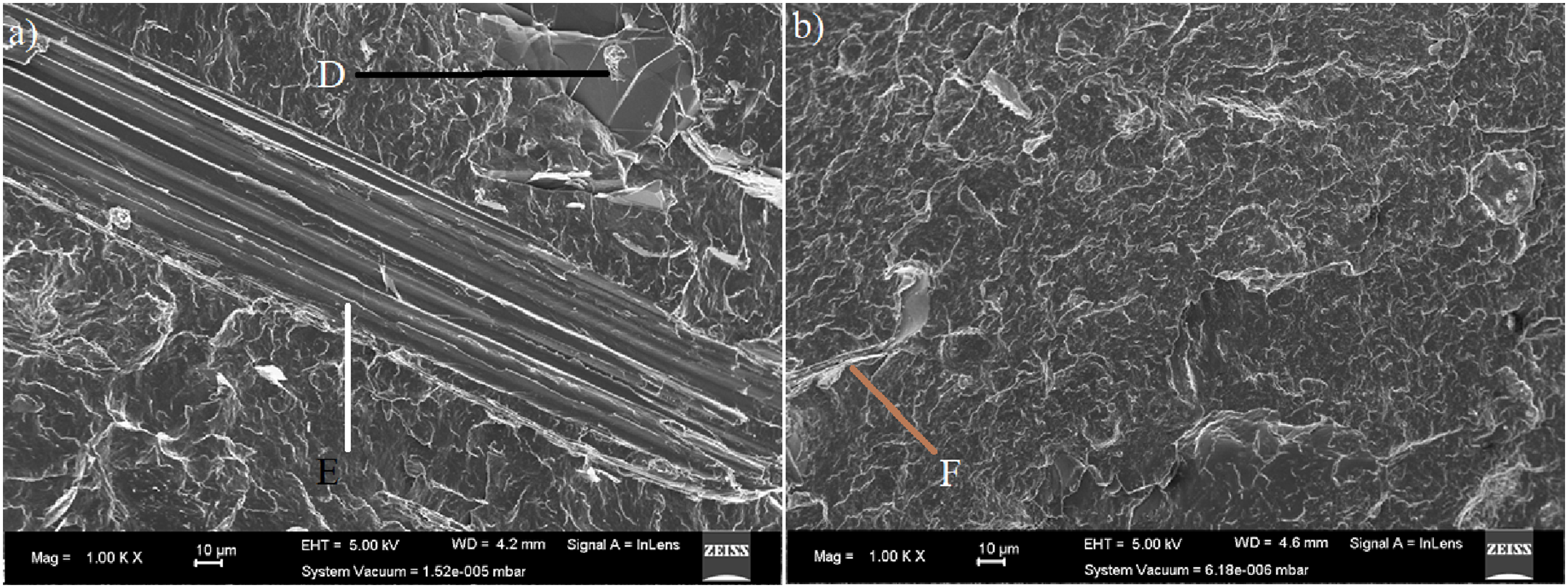
In order to prove the presence of silane in the MMT, FTIR was utilized (Figure 3). A characteristic peak of MMT is observed at 3636 cm−1, which is associated with the hydroxyl groups attached to the Al+ or Mg+. Furthermore, the peak observed in and around 1000 cm−1 is attributed to the Si-O-Si stretching bond, which confirms the presence of silane in the MMT. The peak at 1620 cm−1 may be attributed to the NH2 bending vibration in the silane.
17
The presence of the ODA was noted with peaks at 3380 and 1462 which are attributed to the N-H stretching mode and C-N bending, respectively.
18
FTIR spectrum of the modified montmorillonite (MMT) clay.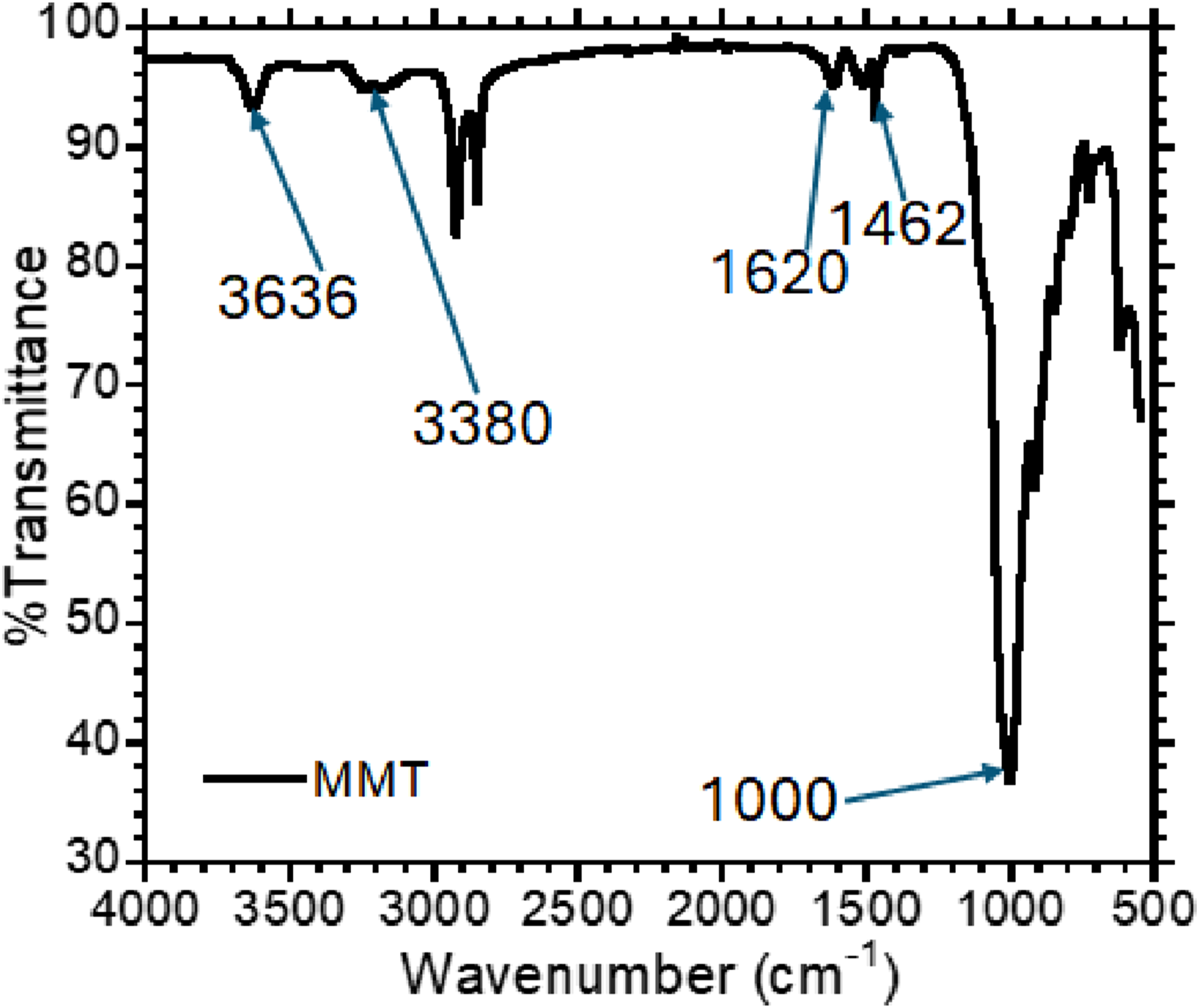
Flame Resistance properties (Cone Calorimeter)
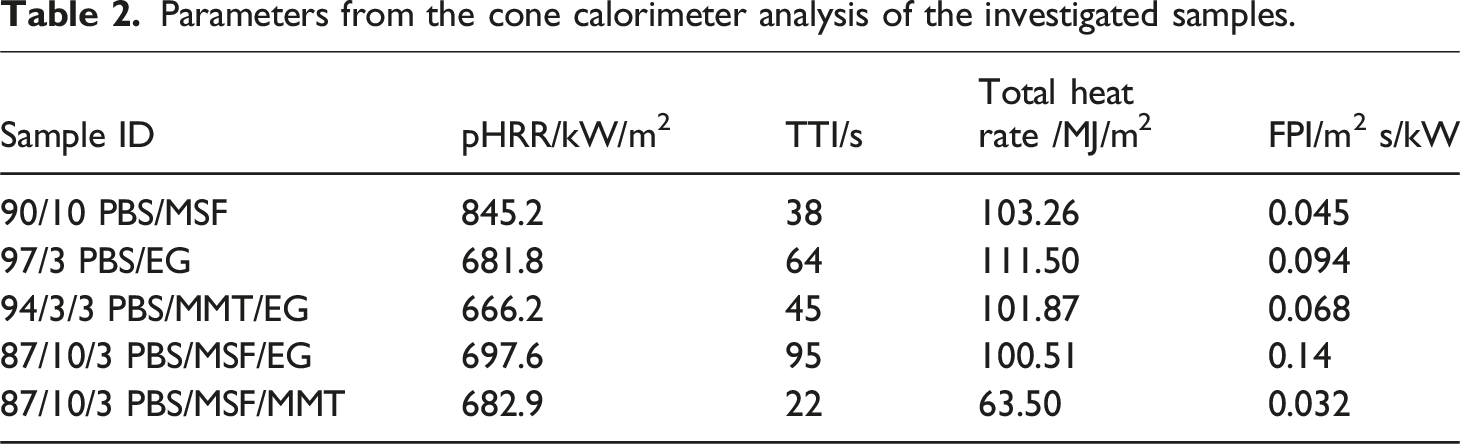
Parameters from the cone calorimeter analysis of the investigated samples.
To support the flame retardancy of the PBS/MSF composite in the presence of MMT and EG, selective digital images are shown below in Figure 4. A careful inspection of the two images reveals a very weak/poor char of the 90/10 PBS/MSF biocomposite and this solid remains seem to show heat in them (see arrows) (Figure 4(a)). This proves that the 90/10 PBS/MSF biocomposites burned completely without any protection against heat in the absence of fillers. However, the 87/10/3 PBS/MMT/EG composite seems to show a compact char with few cracks and with no heat remains within the char (Figure 4(b)) when compared to the 90/10 PBS/MSF composite. Such char layers are known to protect the substrate better from heat and as a result enhances the flame retardancy of the material. However, poor char layer such as the one in the 90/10 PBS/MSF biocomposite allows a lot of volatiles gases out of the system and ease of heat penetration into the system which results in poor flame retardancy. Digital images of (a) 90/10 PBS/MSF, and (b) 87/10/3 PBS/MMT/EG composites.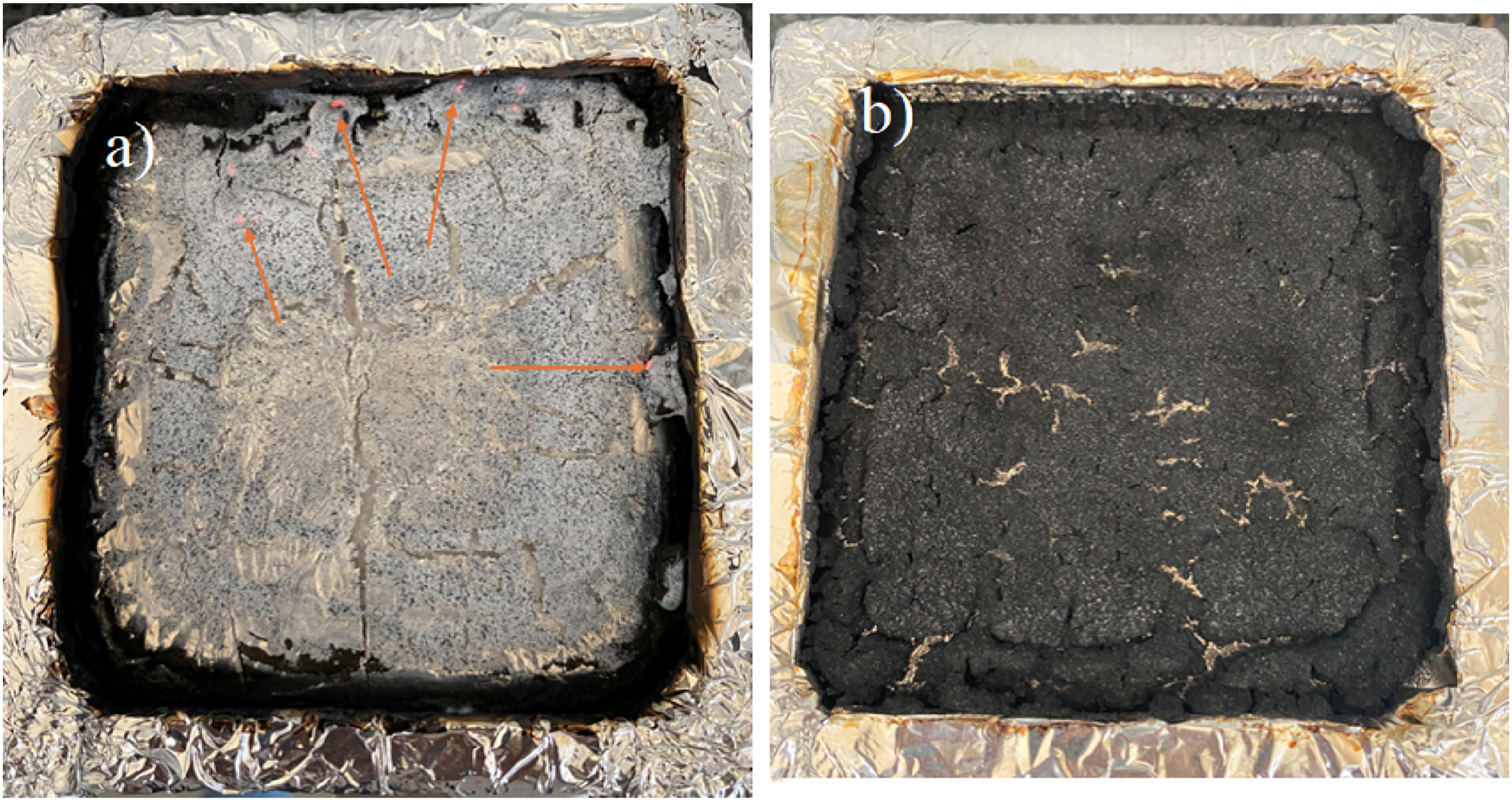
The HRR peaks values are well correlating with the SEM images of the char residues after burning. For an example, the 97/3 PBS/EG composite (Figure 5(a)) showed a better char than 90/10 the PBS/MSF composite (Figure 5(b)), which was well supported by the HRR peaks of the two composites. The 90/10 PBS/MSF composite showed a weak char layer (symbol A) with lots of small cracks when compared to the 97/3 PBS/EG composite, which revealed a better char layer even though there are few cracks as evident by symbol B. Char SEM images for (a) 90/10 PBS/MSF, and (b) 97/3 PBS/EG composites.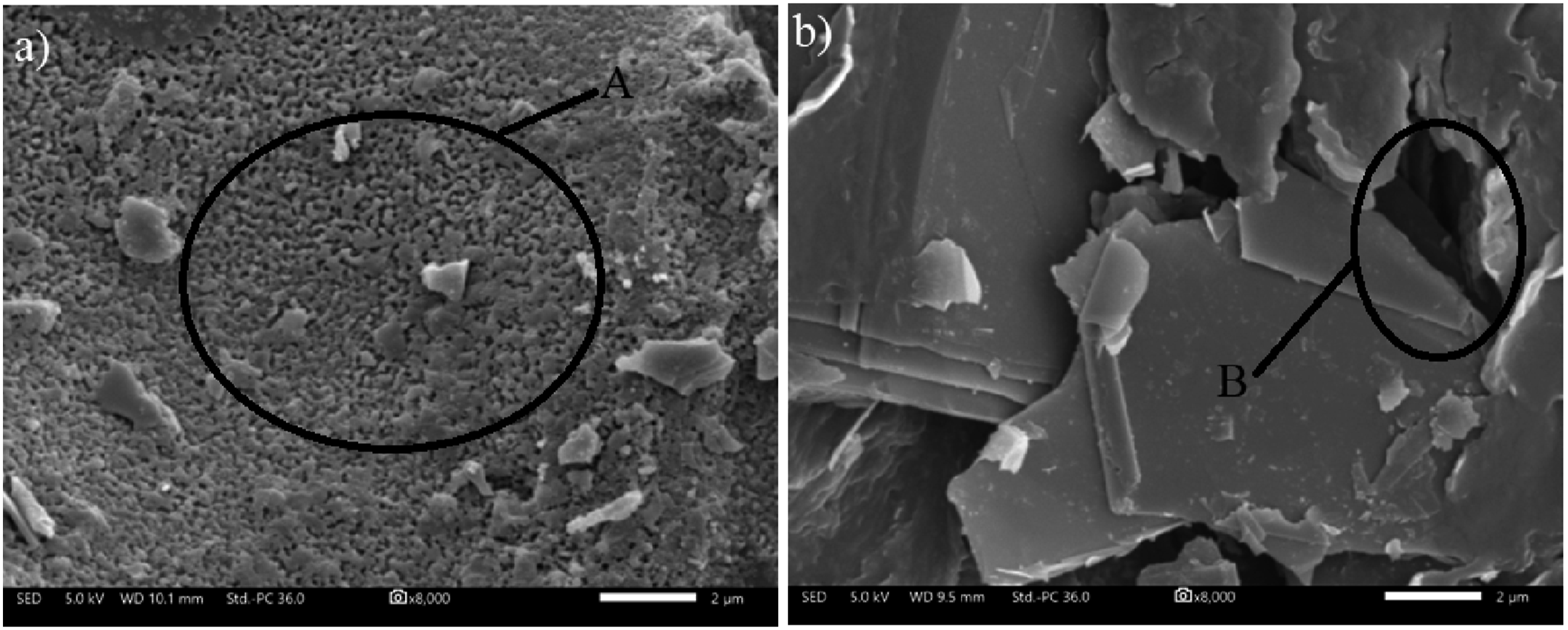
A comparison of the two flame retardant fillers that is, MMT and EG showed that a better flame retardancy was observed in the presence of MMT when compared with EG in the PBS/MSF composite. The HRR peak of 87/10/3 PBS/MFS/MMT composite was reported to be 682.9 kW/m2, while that of the 87/10/3 PBS/MSF/EG composite was recorded as 697.6 kW/m2. The slight difference of approximately15 kW/m2 in the HRR peaks is associated with the char residues presented in Figure 6(a) and (b). The 87/10/3 PBS/MSF/EG composite (Figure 6(a)) revealed a strong char layer with few cracks as indicated by symbol C, while the 87/10/3 PBS/MSF/MMT composite showed a strong, compact, and continuous char layer when compared to the 87/10/3 PBS/MSF/EG composite. The difference in the char layer is the main reason for a slight difference in the pHRR values of the 87/10/3 PBS/MSF/EG and 87/10/3 PBS/MSF/MMT composites. The behaviour is associated with a better dispersion of the maize stalk fibre in the presence of montmorillonite clay (MMT). The MMT modified with silane and octadecylamine ensures that the MSF is well covered by the clay and as a result improves the flame resistance properties of the composites. However, in case of expandable graphite there is a poor interaction between the fiber, EG and polymer, which makes it easy for heat to attack the flammable fiber component in the composites. Char SEM images for (a) 87/10/3 PBS/MSF/EG, and (b) 87/10/3 PBS/MSF/MMT composites.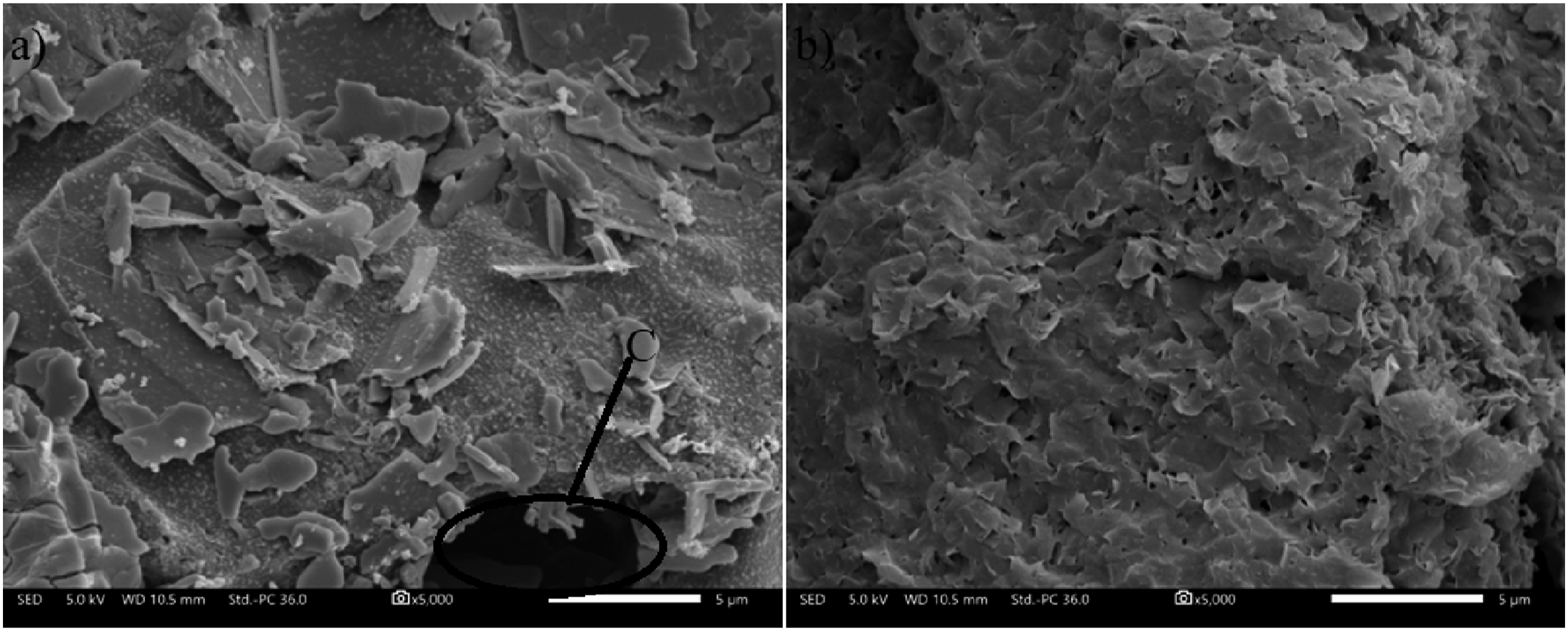
To support the improvement in flame retardancy in the presence of MMT and Expandable graphite when compared with the PBS/MSF composite, the fire performance index (FPI) of the investigated samples was calculated and reported in Table 2. FPI is defined as the ratio between the time to ignition and pHRR). The FPI parameter provide an information about the estimation of the spread and the size of the fire. Higher FPI value is an indication of flame retardancy. The 90/10 PBS/MSF composite revealed an FPI value of 0.045 m2s/kW, while the FPI value of the graphite containing samples seems to be higher than that of the 90/10 PBS/MSF composite and the clay containing composites. One can realize that the low TTI values of the clay containing composites played a key role in lower FPI values. The behaviour of lower HRR value and lower time to ignition has been reported elsewhere in the literature.
23
In their study, the authors reported that the organically modified montmorillonite (C30B) reduced the HRR peak of neat PA 6 by 55%, while reducing the time to ignition from 452 ± 48 to 367 ± 58 sec. It should be noted that the purpose of the flame retardant is not to prevent the ignition of materials, however, rather to decrease the rate of flame spread and inhibit burning of the material.
24
Figure 7(a) and (b) depict the total heat rate (THR) and carbon monoxide production (COP), respectively. The 90/10 PBS/MSF composite recorded a THR value of 103.6 MJ/m2, while the 94/3/3 PBS/EG/MMT and 87/10/3PBS/MSF/MMT recorded THR values of 101.8 MJ/m2 and 63.50 MJ/m2, respectively. Generally, the 87/10/3 PBS/MSF/MMT composite recorded the lowest THR value when compared with all the investigated samples, which correlates with lower HHR peak value. Based on lower THR and HRR values, it can be deduced that the 87/10/3 PBS/MSF/MMT composite showed superior flame retardancy when compared with the other composites. (a) THR, and (b) COP graphs of 90/10 PBS/MSF, 97/3 PBS/EG, 94/3/3 PBS/MMT/EG, 87/10/3 PBS/MSF/EG and 87/10/3 PBS/MSF/MMT composites.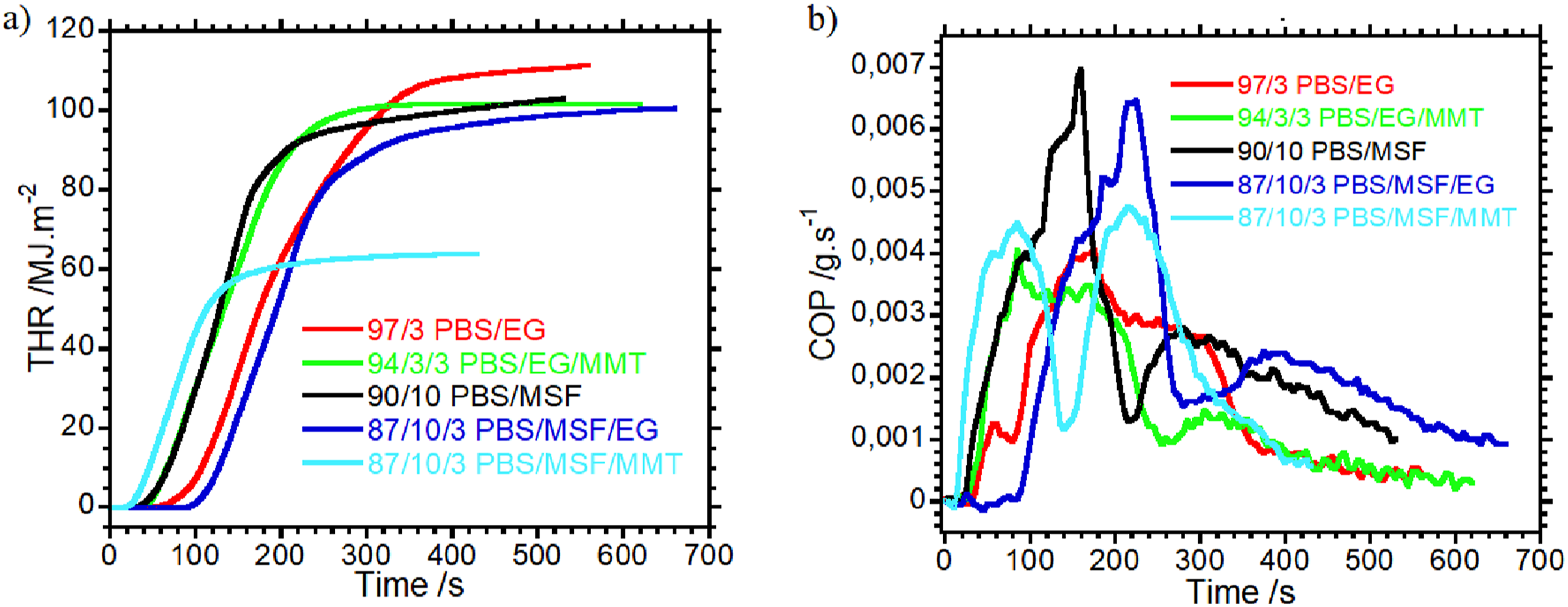
Carbon monoxide is gas that is produced from incomplete combustion of the fuels. In most cases when there a lot of carbon monoxide in the atmosphere, the body has a tendency of replacing oxygen in the red blood cells with the toxic carbon monoxide and as a result this might cause serious tissue damage and in extreme cases it may even cause death. Therefore, the production of carbon monoxide must be prevented. Figure 7(b) shows the carbon monoxide production of all in the investigated samples. Neat 90/10 PBS/MSF composite showed the highest production in terms of carbon monoxide (CO). This is expected since the 90/10 PBS/MSF composite does not have a flame-retardant filler and as a result, it burns very quickly and releases large concentrations of CO in the process. The 97/3 PBS/EG showed a lower peak when compared with the 90/10 PBS/MSF composite. This might be associated with a better char layer of the 97/3 PBS/EG composite when compared with the 90/10 PBS/MSF composite. Furthermore, there is a decrease in the COP peak of the 87/10/3 PBS/MSF/MMT composite when compared to the 87/10/3 PBS/MSF/EG hybrid composite. According to Figure 6, the 87/10/3 PBS/MSF/MMT hybrid composite showed a compact, thermally stable, and continuous char layer, while the 87/10/3 PBS/MSF/EG hybrid composite revealed a less compact char layer. The compact and continuous char is able to prevent heat from penetrating the system and blocks volatiles gases from moving out of the system and in the process reduces the release of carbon monoxide in the system. However, a weak char layer with cracks can easily allow the penetration of heat into the system and the release of volatiles gases and a result this increases the production of carbon monoxide in the system. Another parameter of importance in cone calorimeter is the total smoke production (TSP) (Figure 8). It is interesting to observe that the maize stalk containing samples revealed low total smoke production when compared with the non-maize stalk containing samples. For an example, the 94/3/3 PBS/EG/MMT and 97/3 PBS/EG composites showed the highest TPS values that is 17.7 and 12.1 m2, respectively. There is no clear explanation for such an observation since both composites showed lower HRR peaks when compared to 90/10 PBS/MSF composite, and it was probably expected to reveal a low TSP value. However, the 87/10/3 PBS/MSF/MMT and 87/10/3 PBS/MSF/EG composites recorded low TSP values, that is, 7.3 and 9.4 m2., respectively. Low TSP value is expected for 87/10/3 PBS/MSF/MMT composite due to a better interaction between the fiber and the MMT which might have trapped the volatile gases from moving out of the system and in the process reduces the total smoke production (TSP). Overall properties showed that the 87/10/3 PBS/MSF/MMT composite seems to show better flame retardancy when compared to all the investigated samples. Total smoke production (TSP) of all the investigated samples.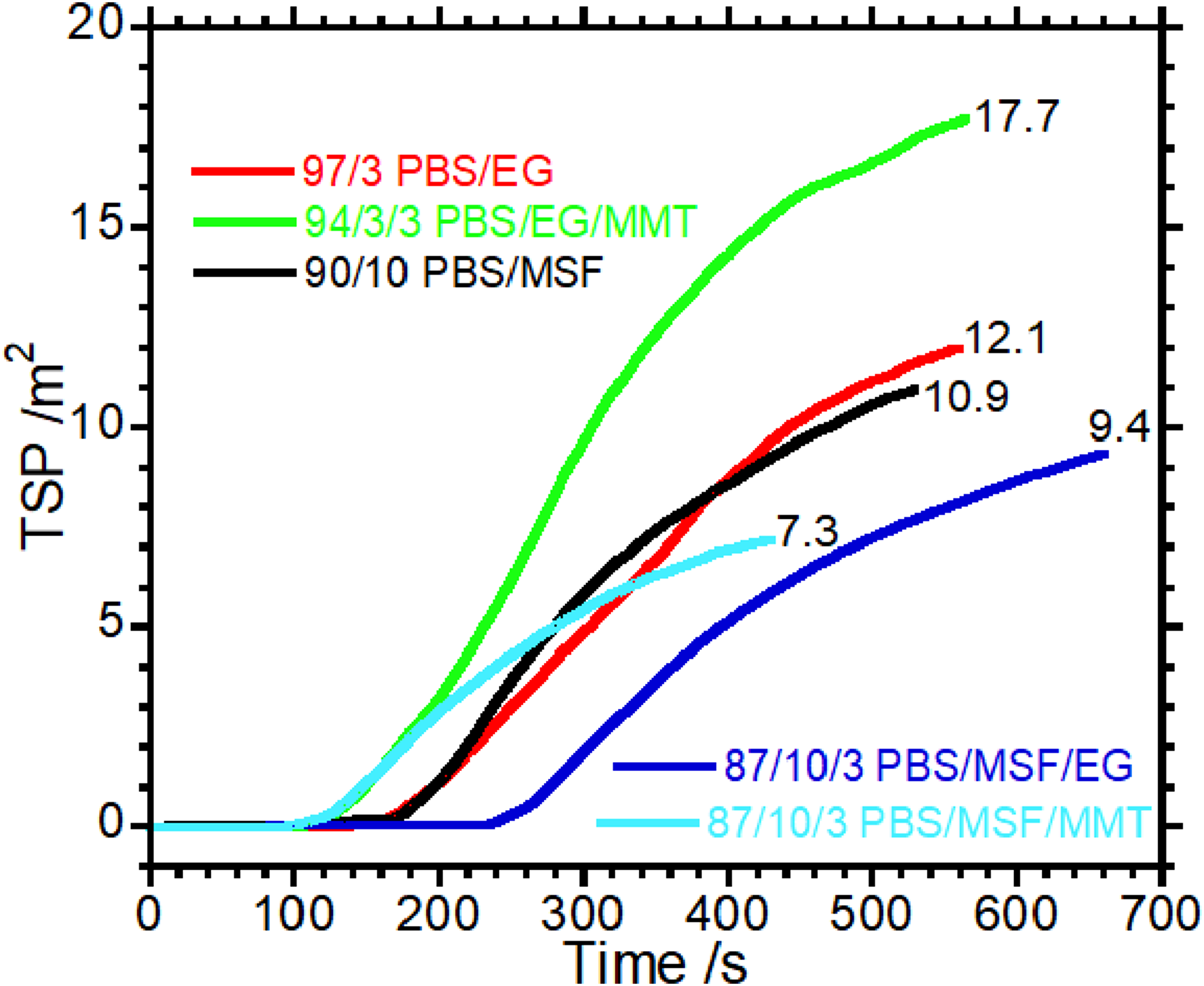
Thermal Stability of the samples
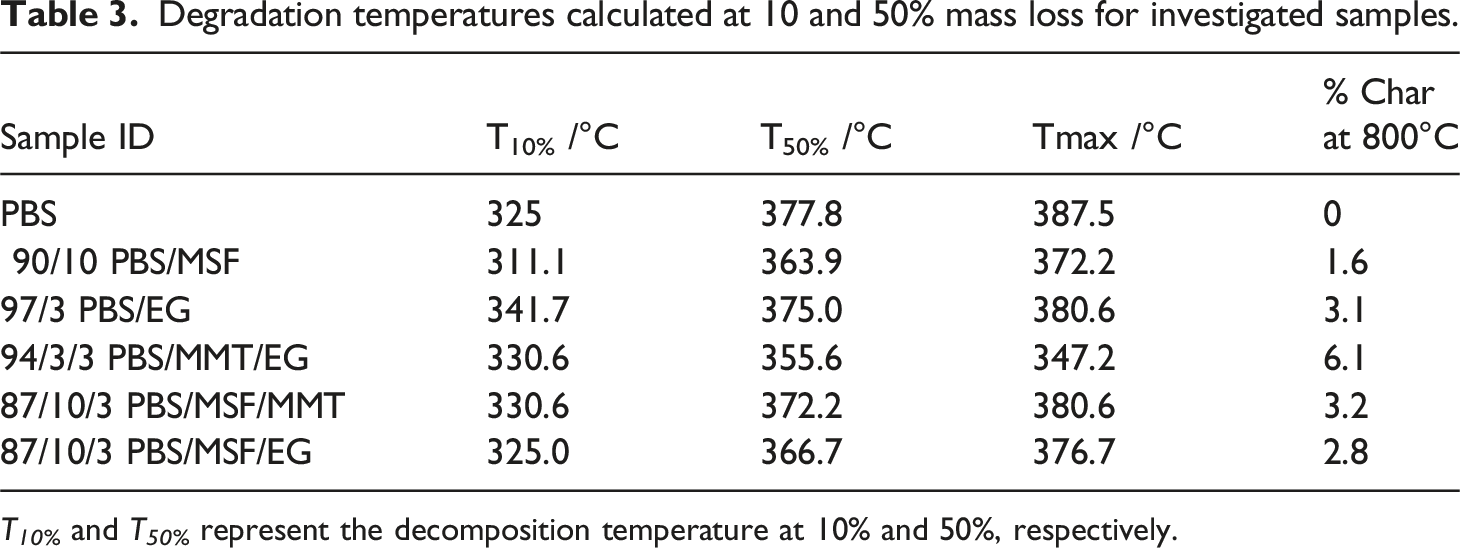
Thermal decomposition of polymers and their composites is an important parameter since it provides an information about the chemical change of the sample in relation to the heat. Thermal degradation is an activity that involves the action of heat on a material which causes a loss of material’s mechanical and physical properties. Thermal stability of natural fiber reinforced polymer composites and their hybrid composites is important as it has major constrain in advanced applications of the materials. Figure 9(a) and (b) and Table 3 depict the thermal stability of the investigated samples in this study. According to Figure 9 and Table 3 (viz T10%), incorporation of MSF into PBS reduced the thermal stability such that the 90/10 PBS/MSF composite shows the lowest thermal stability amongst all the investigated samples. There are various factors that affect the thermal stability of the composites in this system, such as the type of the fiber, content of the fiber, type of the polymer and the addition of a thermally stable filler(s). The lower thermal stability of the 90/10 PBS/MSF composite is associated with the low thermal stability of the fiber in the composite. The release of hemicellulose at lower temperatures (approximately 220°C) might have contributed to weakening majority of the bonds to reach a failure point and in the process speeding the release of gaseous molecules, which in turn decrease the thermal stability of the 90/10 PBS/MSF composite. The study by Prasad et al.
25
proved that the thermal stability of the coir fiber/polyethylene depended on the content of the fiber. For an example, the 20 wt% of the fiber was found to be more thermally stable than the 30 wt% fiber reinforced polyethylene. A possible reason provided for such an observation was based on the better fiber matrix interaction at 20 wt%, while for 30 wt% fiber the dominating interaction was based on the fiber-fiber interaction which resulted in lower thermal stability. The fiber-fiber interaction tends to promote incomplete wetting of the filler in the polymer. Incorporation of EG to PBS enhances the thermal stability due to the ability of EG to act as an effective heat barrier that impedes combustion within the polymer. The presence of MMT reduces the thermal stability of the PBS/EG composite, as revealed by T10% and T50% values of the 97/3 PBS/EG and 94/3/3 PBS/MMT/EG composites. The T10% and T50% values of the 97/3 PBS/EG composite were recorded as 341.7 and 375.0°C, respectively. However, the 94/3/3 PBS/MMT/EG composite produces lower values at T10% and T50% (viz 330.6°C and 355.6°C, respectively). The lowering of the thermal stability in the presence of the MMT clay is associated with the presence of organic components on the surface of the MMT which might have played a key role in lowering the thermal stability. However, the presence of both MMT and expandable graphite enhances the thermal stability of the PBS/MSF composite. The carbon based and silicate filler(s) can trap the volatiles materials from decomposing at an early temperature and in the process enhances the thermal stability when compared with the 90/10 PBS/MSF composite. It is also evident that the 87/10/3 PBS/MSF/MMT hybrid composite showed better thermal stability performance when compared to the 87/10/3 PBS/MSF/EG hybrid composite (Table 3). Due to a better interaction of the fiber with the PBS matrix in the presence of MMT, the barrier effect of the 87/10/3 PBS/MSF/MMT is predominant when compared to a poorly interacted system consisting of the 87/10/3 PBS/MSF/EG hybrid composite. A better interaction between the MMT and MSF ensures that the volatile products are trapped in the system and inhibit the entering of heat into the system, which result in a better thermal stability of the hybrid system. The 87/10/3 PBS/MSF/EG composite despite containing two fillers (MSF and EG) has similar T10% to that of PBS. This is attributed to two opposing effects in the 87/10/3 PBS/MSF/EG composites. EG enhances the thermal stability of PBS due to its barrier effect, whereas MSF lowers the thermal stability of PBS due to poor interfacial adhesion with the PBS matrix. The net effect is a T10% value of the 87/10/3 PBS/MSF/EG composite similar to that of neat PBS. The first derivative TGA (dTGA) curves of the samples are shown in Figure 9(b). In the dTGA curves, the temperatures at maximum degradation rates are represented by the peaks. The composites comprising MSF (90/10 PBS/MSF, 87/10/3 PBS/MSF/EG and 87/10/3 PBS/MSF/MMT) show occurrence of small peaks prior to reaching the Tmax. The small speak on the dTGA curves are attributed to thermal decomposition of hemicellulose and cellulose of MSF.
26
The Tmax peak for all the samples is associated with degradation of PBS. During degradation, PBS undergoes scission of β-hydrogen bond, resulting in cleavage of -O-CH2- bonds. As a result, alkenyl or compounds with carboxylic acid end-group such as succinates form in the process.
27
In Table 3, all the composite samples subjected to thermal degradation have residual char at 800°C, and the 94/3/3PBS/MMT/EG has the highest residual char content. Neat PBS burnt to completion leaving no char residue. Generally, MMT and EG are thermally stable and have residual char at high temperatures.
28
Hence, simultaneous incorporation of MMT and EG to PBS resulted in a relatively high char content for the 94/3/3 PBS/MMT/EG composite. TGA curves of all the investigated samples. Degradation temperatures calculated at 10 and 50% mass loss for investigated samples. T
10%
and T
50%
represent the decomposition temperature at 10% and 50%, respectively.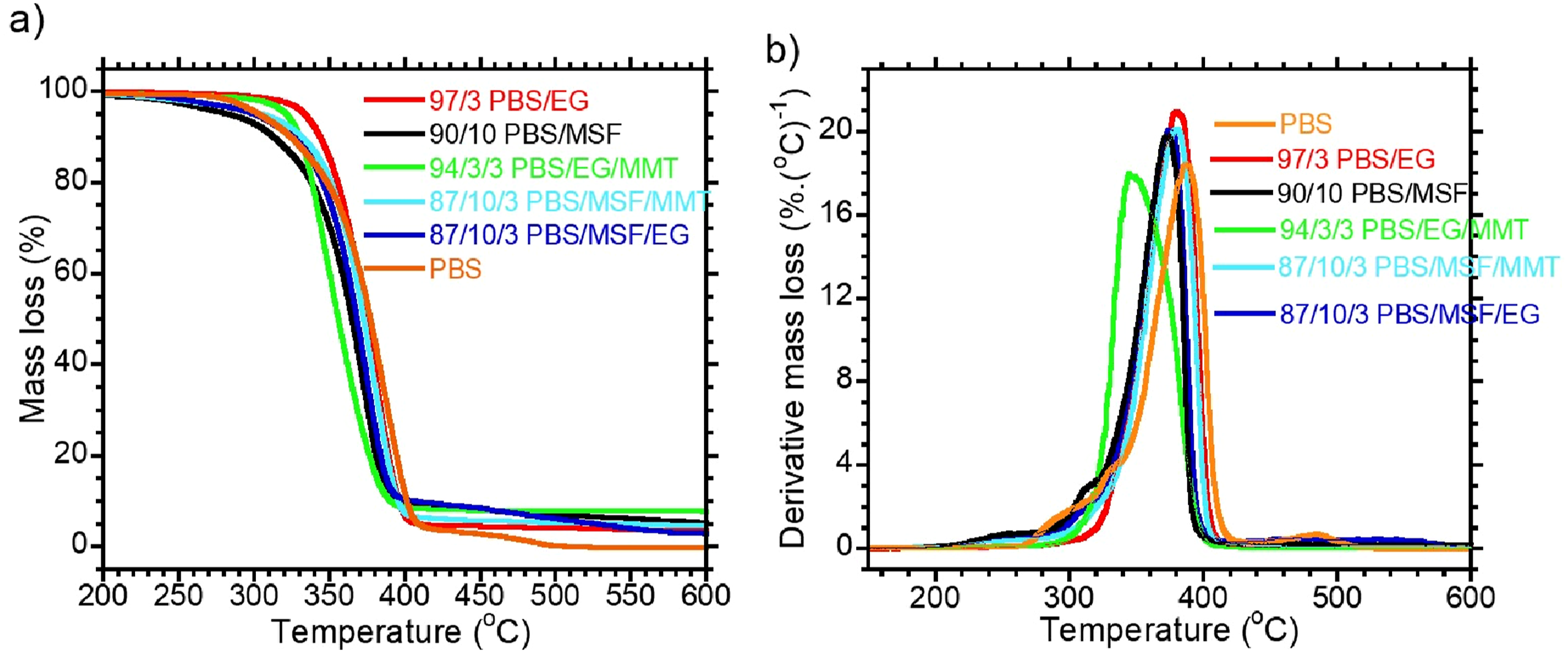
Dynamic Mechanical Analysis (DMA)
Figure 7 illustrates the dynamic mechanical properties (Storage and loss modulus) of the 90/10 PBS/MSF, 97/3 PBS/EG and their hybrid composites. Generally, there are various factors that are known to affect the storage modulus of the composites and/or hybrid composites. Those factors include the dispersion of the filler(s) within the polymer matrix, synergy of fillers, stiffness of reinforcing fillers, and the overall crystallinity of the composite. The 90/10 PBS/MSF, 97/3 PBS/EG, as well as the 87/10/3 PBS/MSF/EG hybrid composite showed lower storage modulus when compared to the 87/10/3 PBS/MSF/MMT and 94/3/3 PBS/MMT/EG hybrid composites. However, the 87/10/3 PBS/MSF/MMT hybrid composite showed the highest storage modulus. Based on the observations above, it is clear that there are factors that are playing a key role in affecting the storage modulus of the investigated systems are the dispersion of the fillers within the PBS matrix and their stiffness. In agglomerated systems such as those of 90/10 PBS/MSF and 97/3 PBS/EG composites, the matrix is not restricted enough by both graphite and fiber due to both fillers acting as stress concentrators, leaving a diluted matrix with less reinforcing fillers, in the process recording lower storage modulus values. However, in a well dispersed system such as 87/10/3 PBS/MSF/MMT hybrid composite, there is an improved stress transfer rate from the matrix to the fillers. Because of evenly distributed stress, the storage modulus of the 87/10/3 PBS/MSF/MMT hybrid composite is higher. Clay nanoparticles incorporated in polymer matrix have a tendency of forming strong interfacial bond due to their high surface area, layered structure and as a result they are capable of exfoliating within the polymer. Because of a good adhesion between the components of a hybrid composite, stress is evenly distributed throughout the composites and as a result the load-bearing capability of the composites is enhanced. Saffian et al reported on the storage modulus of the PBS composites fabricated from lignin, modified lignin and kenaf core fibers. 29 Kraft lignin was modified with phthalic anhydride. It was reported that the storage modulus of the composites was found to be higher than the neat PBS, with the modified lignin showing higher storages than the neat PBS and unmodified composites. This behaviour is associated with a better adhesion between the fiber and polymer matrix. It can also be recognized that there is a high storage modulus for all investigated samples in the glass state that is below the glass transition temperature. In the glassy region all components are frozen, which is characterized by immobilization of the components of the composites and or/ hybrid composites. In this state, the modulus is dominated by strength of the intermolecular forces that is, polymer chains are closed packed. 30 As the temperature increases, there is increase in free volume in the systems, whereby the components of the composites and/or hybrid composites become more mobile and as a result losing their closely packed arrangement.
Figure 10(b) depict the loss modulus of the investigated samples. The loss modulus is defined as the energy dissipated by the sample when that sample undergoes an oscillating load.
31
The loss modulus shows a similar trend as in the case of storage modulus and the loss modulus as well depends heavily on the stiffness material. The peak between the temperatures of −40 to 60°C is related to the glass transition temperature of the PBS. Storage and loss modulus of all the investigated samples.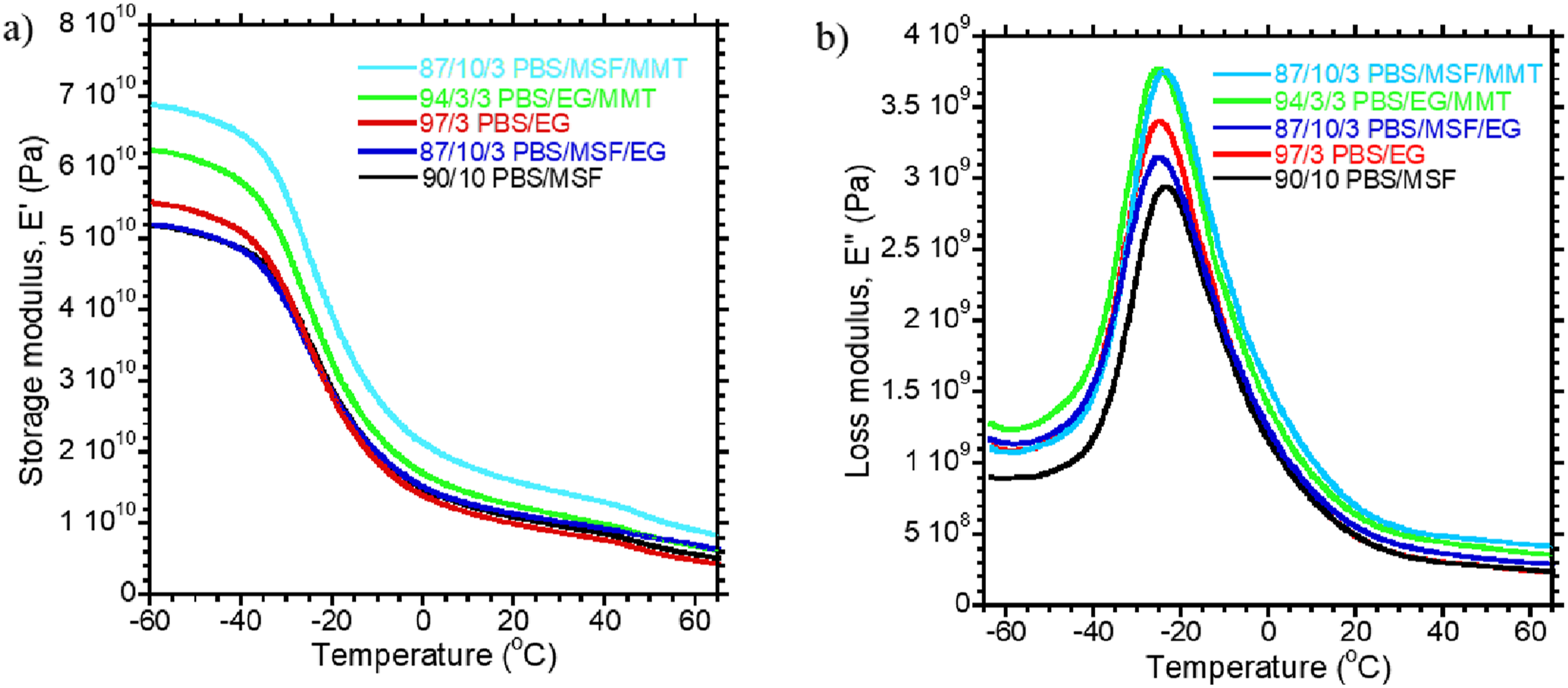
Differential Scanning Calorimetry (DSC)

Summary of the thermal properties of the investigated samples.
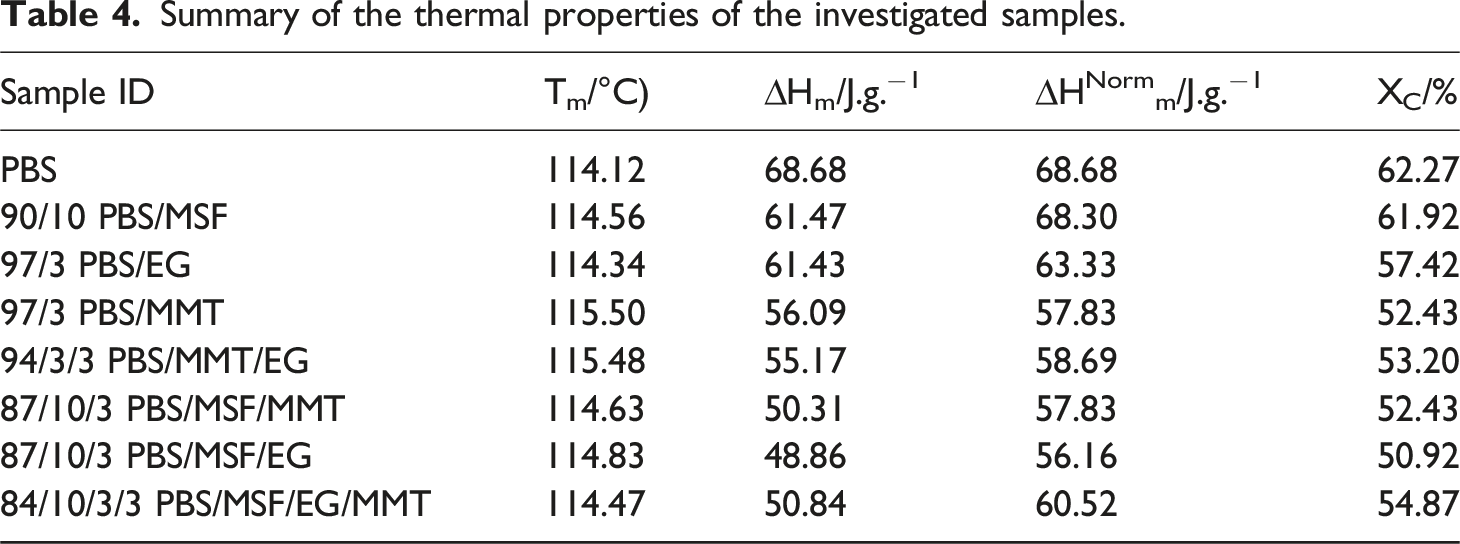
For the PBS, the melting enthalpy of a completely crystalline polymer, denoted as H°, is assumed to be 110.3 J.g−1. To account for the dilution effects associated with the addition of filler to the polymer, adjustments were made during the calculation of the composites’ normalized melting enthalpy, where w represents the polymer’s weight fraction. The DSC curves indicate that the melting behaviour of both the PBS and its composites remained constant, showing no notable shifts regardless of the filler content or type. In Table 4 it can be seen that the melting temperature were roughly constant (114 °C–115 °C). This indicate that the size of crystalline domains are retained. 32 There is no significant change in melting enthalpy and Xc when either MSF or EG. The unchanged crystalline domains in PBS may be attributed to the absence of interaction with the fillers, which suggests that the fillers do not alter the molecular chain arrangement of PBS. Mokhena et al. 33 observed that the secondary melting point of PBS was fairly constant, regardless of the presence of EG, MMT, or their combined hybrids. This consistency was ascribed to the fillers’ lack of influence on the PBS molecular chains. Table 4 clearly illustrates that the addition of MMT as a filler results in a minor reduction in melting enthalpy. This reduction could stem from a robust interaction between MMT and PBS, potentially disrupting the arrangement of PBS molecular chains and consequently decreasing the amount of crystalline domains. The hybrid system exhibits a comparable trend, showing a reduction in both the crystalline domains and the degree of crystallinity (Xc) upon hybridization. This phenomenon may be linked to the fillers, which by increasing the viscosity of the composite, could impede the mobility of the molecular chains and limit crystallization. According to Choi et al. 34 incorporating PBS into PLA resulted in a 2.8-fold increase in crystallinity compared to pure PLA. This increase is believed to be due to the improved mobility of PLA chains, which facilitates better chain packing.
Conclusion and future recommendations
The incorporation of the modified MMT improved the properties of the PBS/MSF biocomposite when compared to expandable graphite. The reason behind such an improvement is associated with MMT nanoparticles being capable of acting as a compatibilizer for the fibre and PBS matrix due to their modifications with silane, whereas EG shows a poor dispersion within the PBS/MSF composite with less interfacial interaction. Furthermore, because MMT is organically modified, there is a possible larger interlayer spacing than EG. Properties that were improved in the presence of MMT in the PBS/MSF composite are flame retardancy, thermal stability, and storage modulus. Better flame retardancy (i.e. lower HHR peak, THR and TSP) that were observed for 87/10/3 PBS/MSF/MMT hybrid composite when compared to the 87/10/3 PBS/MSF/EG composite were associated with a better char layer in the former when compared with a discontinuous char layer of the latter composite. Furthermore, it can be concluded that higher storage modulus values for the 87/10/3 PBS/MSF/MMT hybrid composite when compared with the 87/10/3 PBS/MSF/EG hybrid composite is due to better intercalation of PBS chains in the presence of MMT, hence better restriction in the molecular chain motion of PBS. There was better immobilization of volatile gases in the 87/10/3 PBS/MSF/MMT hybrid composite system than in the presence of EG for the 87/10/3 PBS/MSF/EG hybrid composite due to a better dispersion of the fiber into the PBS matrix in the presence MMT. As a result, better thermal stability was achieved for the 87/10/3 PBS/MSF/MMT hybrid composite. The crystallization characteristics of the composites varied based on the specific fillers incorporated. The introduction of fillers led to a higher viscosity in the composite materials, which in turn hindered the reorganization of molecular chains. Consequently, this restriction resulted in a decrease in both the degree of crystallinity and the melting enthalpies observed in the composites and their hybrid forms. Based on the above observation, one can conclude that the MMT may be utilized as a reinforcing filler and a compatibilizer for the PBS/MSF biocomposite. Based on the findings, the PBS/MSF/MMT hybrid composite seems to show better properties in relation to flame retardancy and thermal stability. This hybrid composite may be used in applications such as fire-resistant panels and high temperature industrial utilization.
Footnotes
Declaration of conflicting interests
The author(s) declared no potential conflicts of interest with respect to the research, authorship, and/or publication of this article.
Funding
The author(s) disclosed receipt of the following financial support for the research, authorship, and/or publication of this article: This work was supported by National Research Foundation, South Africa, Grant/Award Number: 127278, 129347.
