




Abstract
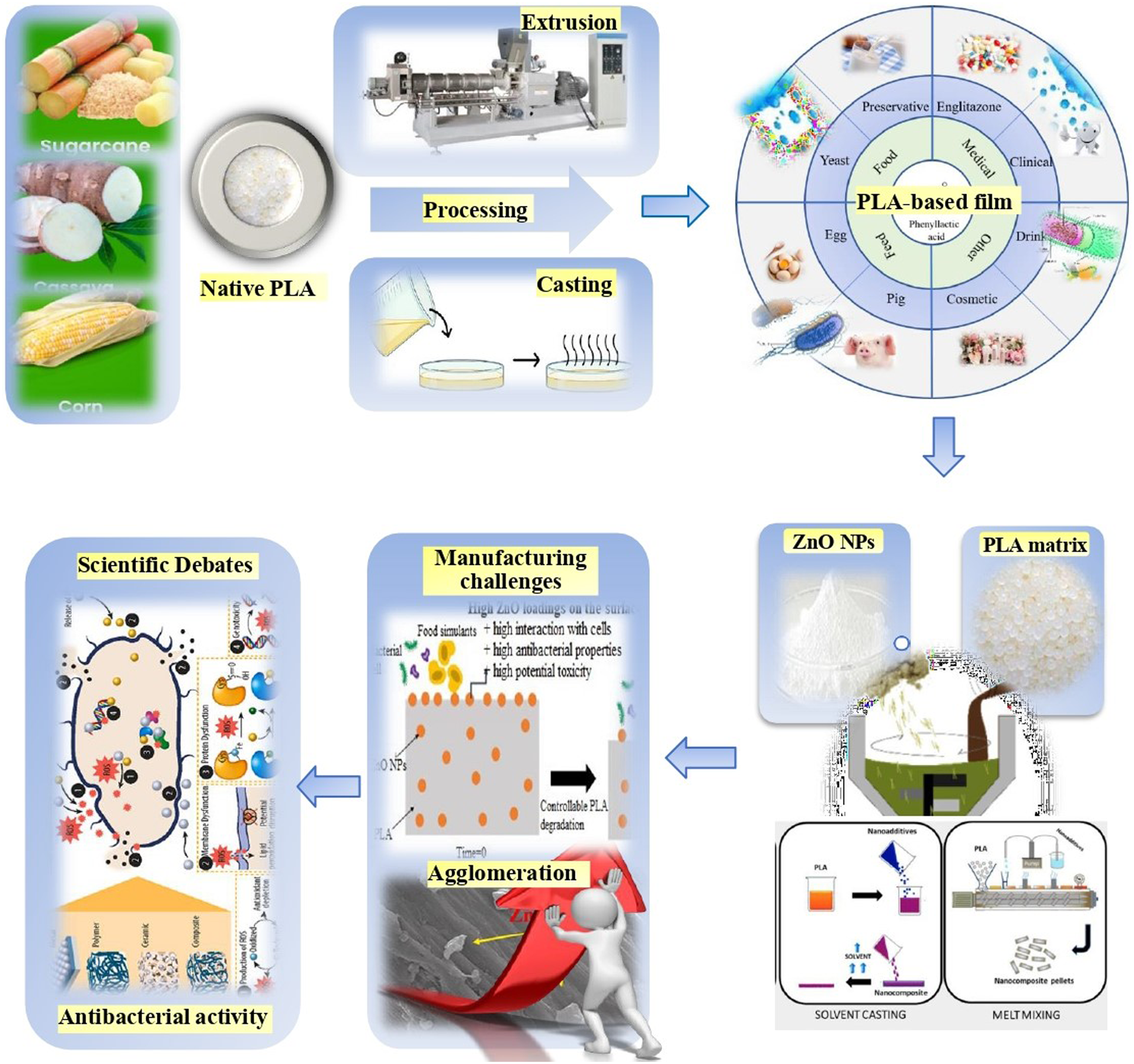
The growing demand for antibacterial materials, particularly for biomedical and packaging applications, has prompted significant interest in biodegradable alternatives to traditional plastics. Among these, poly(lactic acid) (PLA) is a biocompatible and biodegradable polymer that is increasingly being recognized as a promising matrix material for the development of functional nanocomposites. Notably, the incorporation of zinc oxide (ZnO) nanoparticles into PLA matrices enhances their antibacterial functionality, providing effective solutions against both Gram-positive and Gram-negative bacteria. However, challenges persist in manufacturing PLA/ZnO nanocomposites, including achieving uniform nanoparticle dispersion, ensuring interfacial compatibility, and addressing scalability issues for industrial applications. Moreover, ongoing scientific debates regarding the exact antibacterial mechanisms of ZnO, such as reactive oxygen species (ROS) generation, physical disruption of bacterial membranes, and zinc ion release, complicate the efforts to optimize these materials. This review summarizes the current state of research on PLA/ZnO nanocomposites, exploring both the manufacturing challenges and the scientific discussions regarding their antibacterial mechanisms. Consequently, by identifying unresolved questions and consolidating existing knowledge, this review provides valuable insights for researchers and engineers seeking to advance the development of effective antibacterial materials, ultimately contributing to solutions to global health and environmental challenges.
Keywords
Introduction
Plastics have become prevalent in our daily lives because of their attractive properties such as low density, high strength, ease of production, and affordability. In 2019, the global production of plastic products reached nearly 460 million tons, with a cumulative total of over 8 billion tons.1–3 Although plastics can replace traditional materials such as metals and wood, managing used plastic waste has become increasingly urgent.4–6 In 2022 alone, the amount of plastic waste generated owing to inadequate waste management and recycling technologies is estimated to be approximately 380 million tons, predominantly composed of commonly used plastics such as polyethylene terephthalate (PET), poly vinyl chloride (PVC), and polyethylene (PE).7,8 Unfortunately, the slow decomposition process of plastic waste leads to its accumulation, which harms both land and water environments. Therefore, scientists and industry professionals are actively pursuing biodegradable alternatives in response to these ecological challenges. Biopolymers and bioplastics derived from renewable or natural sources have gained significant attention because of their potential to mitigate plastic pollution.8,9 Biodegradable plastics such as poly(glycolic acid) (PGA), poly(lactic acid) (PLA), poly(hydroxybutyrate) (PHB), poly(caprolactone) (PCL), poly(butylene succinate) (PBS), and poly(butylene adipate-co-terephthalate) (PBAT) have become widely available for various applications including packaging, agriculture, and biomedical devices.1,3,10–13
Among the widely available biodegradable plastics, polylactic acid (PLA) has emerged as a highly regarded option, with a projected market share of $2.1 billion in 2021 and $4.1 billion by 2026.14–16 It has garnered significant attention owing to its biocompatibility and mechanical properties, which make it suitable for applications in biomedical devices, packaging, and textiles as a sustainable alternative to petroleum-based plastics.17,18 Additionally, the application potential of PLA has expanded to the realm of 3D printing, where its properties can be tailored through the addition of bio-reinforced materials.19–21 Despite these advantages, PLA presents several limitations that limit its broad application, such as limited thermal stability, brittleness, and poor antibacterial capabilities.22–27 PLA suffers from low thermal stability, which is a significant drawback compared with petroleum-based polymers.23,24,26–28 This thermal resistance limits their use in high-temperature environments and affects their processing stability.22–24 PLA’s inherent brittleness and poor barrier properties further restrict its use in various industrial sectors such as healthcare and food safety.23,25–27
Concurrently, the need for antibacterial materials is particularly critical in medical applications to prevent infections, in food packaging to extend shelf life and prevent spoils, and in water treatment to ensure sanitation.29,30 To address these pressing needs, researchers have developed PLA based composites by incorporating various fillers, including nanofillers, such as zinc oxide (ZnO) and titanium dioxide (TiO2), as well as clay and calcium phosphate.31,32 Among these, ZnO nanoparticles (ZnO NPs) stand out because of their favorable interactions with bacteria, high surface-to-volume ratio, enhanced mechanical properties, excellent optical absorption, and good thermal conductivity.33–35 It also classified as safe by the Food and Drug Administration (FDA), demonstrate antibacterial properties through mechanisms such as the generation of reactive oxygen species (ROS), disruption of bacterial cell membranes, and release of Zn2⁺ ions. 34 Therefore, the incorporation of ZnO NPs into PLA has been shown to enhance its antibacterial properties, thereby creating effective PLA/ZnO nanocomposites. These nanocomposites exhibit improved antibacterial activity against both Gram-positive and Gram-negative bacteria, thereby expanding the application potential to medical, food packaging and textiles sectors.36–38
However, the manufacturing of PLA/ZnO nanocomposites faces several challenges that must be addressed to unlock their full potential. Achieving efficient and homogeneous dispersion of ZnO NPs within the PLA matrix is critical, as uneven distribution can lead to localized weaknesses and reduced antibacterial efficacy. The interfacial compatibility between PLA and ZnO is another significant concern, as poor adhesion can compromise not only the mechanical integrity of the composites, but also their functional properties, including antibacterial performance.39–46 Furthermore, the scalability and reproducibility of these nanocomposites pose challenges for industrial applications. The processes used for synthesizing and incorporating ZnO NPs into PLA must be optimized to ensure consistent quality and performance across different production batches. This consistency is essential for regulatory compliance and commercial viability.37,45,47 Scientific debate further complicates the development of effective PLA/ZnO nanocomposites, particularly regarding the mechanisms by which ZnO NPs confer antibacterial properties. While some studies have emphasized the role of ROS generation and the disruption of bacterial cell membranes,48,49 others have focused on physical interactions and the release of zinc ions as key mechanisms.45,50 These differing perspectives highlight the complexity of the antibacterial mechanisms, which can significantly influence the design and optimization of nanocomposites for specific applications.
Understanding these manufacturing challenges and scientific debates are essential for advancing the development of PLA/ZnO nanocomposites. The interplay between the fabrication processes, the characteristics of ZnO NPs, and the resultant antibacterial mechanisms directly impact the potential applications of these materials. For instance, optimizing nanoparticle size and loading can enhance antibacterial efficacy but may also affect the mechanical properties and thermal stability of the composites.45,48,49,51 Striking the balance between the antimicrobial performance and material integrity is crucial for the successful implementation of these nanocomposites in real-world applications. This review aims to provide a comprehensive understanding of the manufacturing challenges and scientific debates surrounding the antibacterial capabilities and potential applications of the PLA/ZnO nanocomposites. This review serves as a valuable reference for researchers and engineers by exploring recent advancements in research, ongoing discussions regarding antibacterial mechanisms, and future directions for development. It aims to guide further exploration and innovation in this rapidly evolving field, ultimately facilitating the creation of effective, commercially viable antibacterial materials that can address pressing global health and environmental concerns.
Review methodology
PLA-based composites are emerging as sustainable alternatives to petroleum-based materials, particularly in packaging and biomedical applications, which enhances their utilization in these sectors. This review focuses on ZnO nanoparticle-functionalized PLA composites and involves a comprehensive evaluation of various aspects over the past decade. The methodology includes a thorough examination of original research and review articles concerning nanocomposites that utilized ZnO-functionalized nanofillers in conjunction with PLA. An iterative search process was employed with search terms updated as the review progressed. Literature selection was based on peer-reviewed scientific articles, book chapters, conference proceedings, and other relevant publications. A combination of keywords was used, including “polylactic acid,” “PLA,” “zinc oxide,” “ZnO,” “nanocomposite,” “antibacterial,” “antimicrobial,” “manufacturing,” “processing,” and “dispersion.” This review exclusively includes studies that focus on the development, characterization, performance evaluation, and application of PLA/ZnO nanocomposites. Studies that investigated only PLA or ZnO nanoparticles without their combination, as well as publications lacking detailed information on the manufacturing processes, antibacterial mechanisms, or scientific debates surrounding PLA/ZnO nanocomposites, were excluded. Review articles, meta-analyses, and systematic reviews of related topics were incorporated to provide a broader context and identify key themes and trends. Relevant information was extracted for each study, such as specific manufacturing techniques, characterization of nanoparticle dispersion and loading, evaluation of antibacterial performance, proposed mechanisms of action, and potential applications. The extracted data were organized into thematic categories, including “Manufacturing Challenges,” “Antibacterial Mechanisms,” “Scientific Debates,” and “Potential Applications.” This structured approach facilitated comprehensive analysis and synthesis of the findings using a narrative synthesis method. By employing this methodology, this review provides a rigorous, evidence-based synthesis of current research on PLA/ZnO nanocomposites, highlighting key manufacturing challenges, scientific debates, and insights into their antibacterial capabilities. The findings of this review can inform future research directions and contribute to the development of more effective and commercially viable antimicrobial materials.
Poly lactic acid (PLA): Production, properties and sustainability
PLA production
The production of polylactic acid (PLA) involves several critical steps, starting from the procurement of raw materials and culminating in the polymerization of lactic acid (LA). LA serves as the primary building block for PLA, derived from renewable resources such as carbohydrates found in corn, cereals, and food waste. 52 This renewable aspect is crucial for the sustainability of PLA, making it an attractive alternative to petroleum-based plastics. LA production primarily occurs through biological fermentation, where microorganisms convert sugars from biomass into lactic acid. Following fermentation, a crucial downstream separation process ensures high product purity and minimizes production costs. 52 This purification is vital, as impurities can significantly affect the properties of the final PLA product. Once purified, LA is converted into lactide, a cyclic monomer used in polymerization. The synthesis of lactide is less frequently reported in scientific literature compared to lactic acid production, with most methods described in patents. Current industrial processes for lactide synthesis are often energy-intensive and selective. 53 However, in comparison to other biopolymers, such as polyhydroxyalkanoates (PHAs) and starch-based polymers, PLA production is often simpler and more cost-effective. For instance, while PHAs require complex microbial fermentation processes that are sensitive to environmental conditions and substrate availability, PLA can be produced from widely available feedstocks, such as corn and sugarcane. This accessibility contributes to lower production costs and a more streamlined manufacturing process.54,55
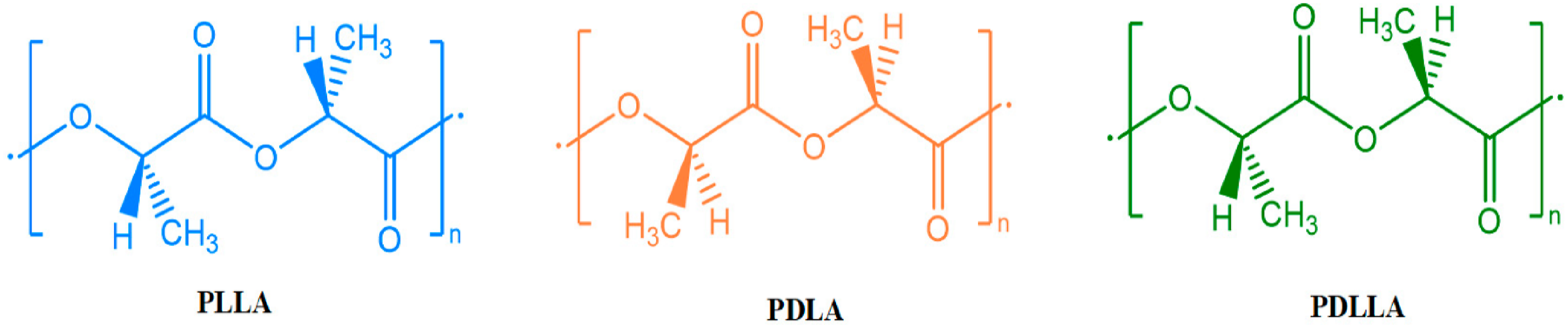
The polymerization of LA can yield different polymeric forms based on the stereochemistry of the monomer units. For example, poly L-lactic acid (PLLA) is synthesized using L-lactide monomers, while poly D-lactic acid (PDLA) is synthesized from D-lactide monomers. When both D- and L-lactic acid monomers are employed, a racemic mixture known as poly-D and L-lactic acid (PDLLA) is formed.56,57 Interestingly, the properties of these polymers can vary significantly due to their stereochemistry. PLLA and PDLA can form stereocomplexes, which exhibit enhanced thermal and mechanical properties compared to their individual homopolymers.58,59 This stereocomplexation is advantageous for applications requiring high-strength materials. In contrast, PDLLA, being a racemic mixture, does not form stereocomplexes and exhibits distinct characteristics, such as a lower melting temperature and different biodegradation rates.56,60 This indicated that, the choice of polymerization method and monomer composition directly influences the resulting polymer structure and its potential applications. Therefore, the polymerization of LA can result in pure PLA forms PLLA, PDLA, or a racemic mixture of PDLLA illustrated in Figure 1. This versatility enables PLA to be tailored for various applications, from biodegradable packaging to medical devices.
61
Structure of PLA isomers: L-PLA (PLLA), D-PLA (PDLA), and D, L-PLA (PDLLA).
6
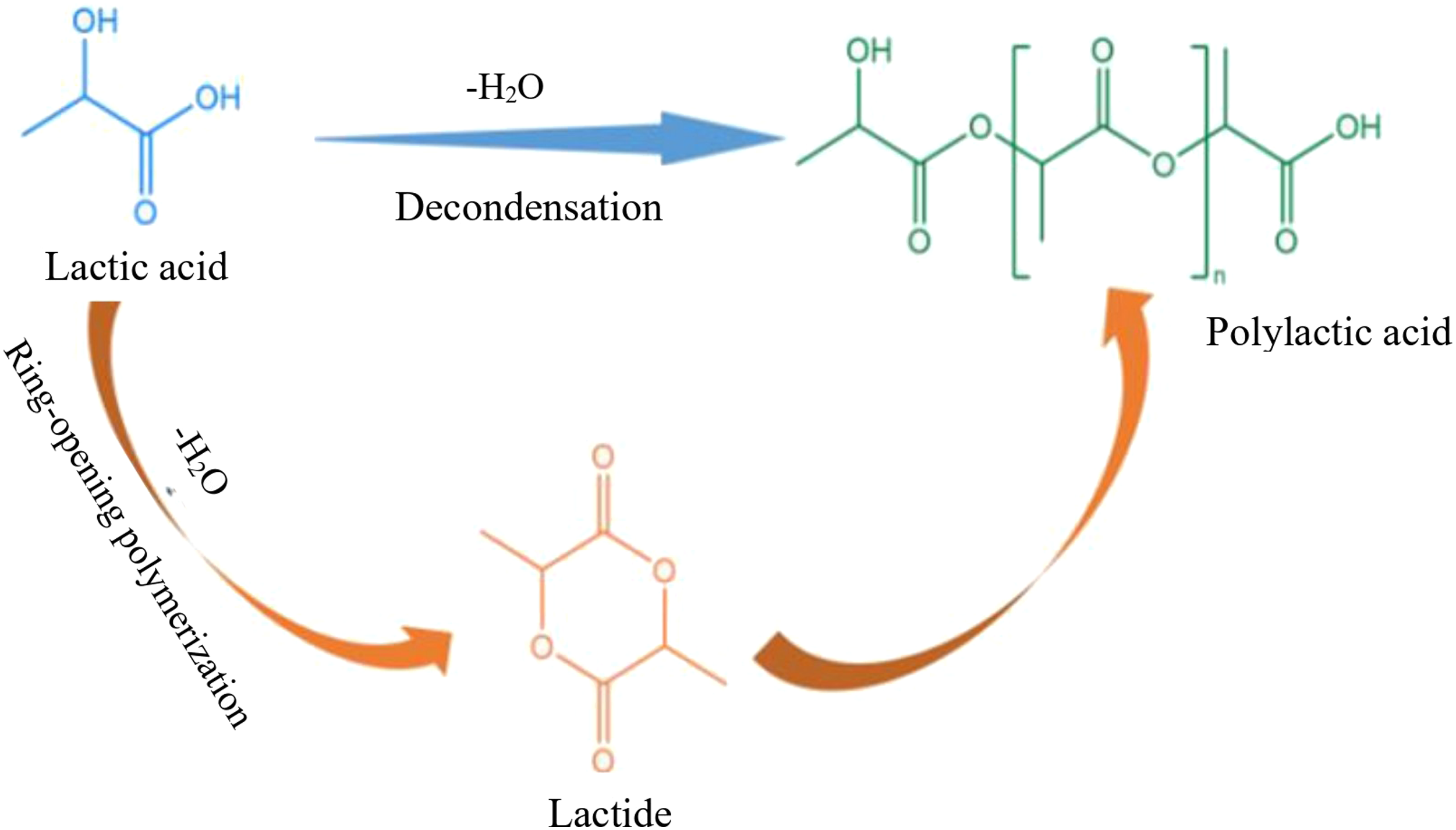
Moreover, LA monomers can be synthesized through several methods, including chemical processes, bacterial fermentation of sugars from corn, wheat, and sugarcane, or from biomass waste.63,64 The L-isomer, which constitutes approximately 99.5% of the LA produced via bacterial fermentation, is the primary product due to the preferential metabolism of certain microorganisms. This high yield enhances the economic viability of PLA production. High-molecular-weight PLA is typically produced from LA via polycondensation and/or ring-opening polymerization (ROP). Direct polycondensation is a less expensive method but often requires solvents, raising environmental concerns and leading to lower molecular weights. Conversely, ROP of lactides is the most common approach for producing high-molecular-weight PLA, essential for many applications requiring robust material properties. This process involves several key steps: the production of LA oligomers, conversion of the prepolymer into lactide, and purification through distillation, followed by the reverse reaction with metal catalysts.
45
The two primary methods for synthesizing PLA direct condensation and lactide ring-opening polymerization are illustrated in Figure 2. Each method has its advantages and limitations, impacting the quality and characteristics of the final product.
6
PLA synthesizes these pathways.
6
Notably, the crystallinity, thermal, and mechanical properties of PLA polymers are significantly influenced by the ratio of D- and L-lactic acid and their sequences. Increasing the concentration of D-lactide typically results in PLA polymers with crystalline structures, which enhance thermal stability, mechanical strength, and barrier properties. It is essential to consider that the overall concentration of L-lactide also affects the crystallinity of PLA. Generally, PLA with over 93% of the L-isomer is semi-crystalline, while PLA with 50%–93% L-isomer is amorphous.45,65,66 The amorphous nature of lower L-isomer concentrations can be beneficial for applications requiring flexibility. Moreover, poly (D, L-lactide) with an L-lactide concentration of 88%–90% is widely used for packaging applications due to its favorable balance of properties.45,67,68
Properties of PLA
Mechanical properties
Comparison of the mechanical properties of PLA with different polymers. 74
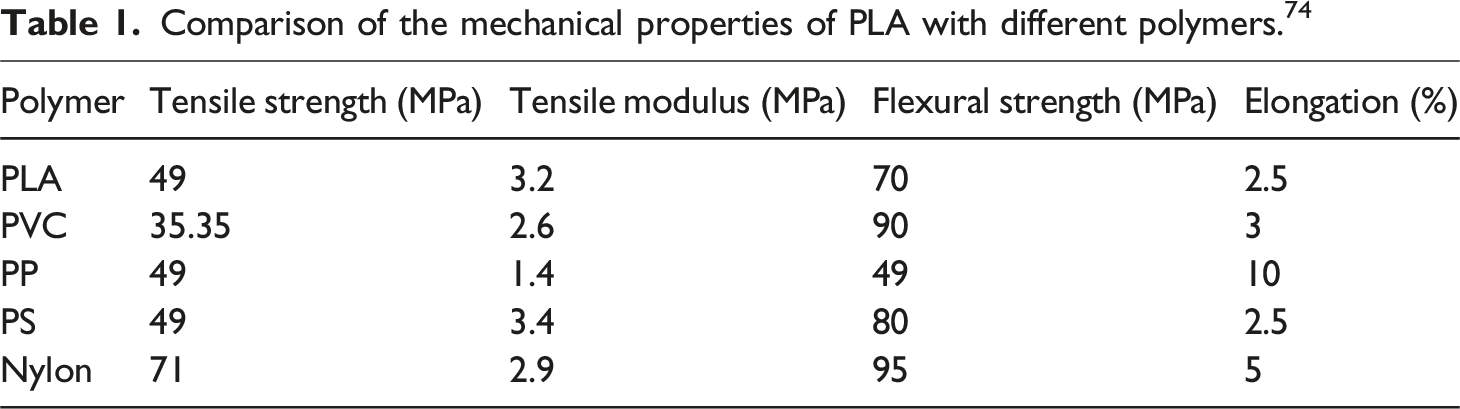
Compared to other biopolymers, PLA is notable for its versatility and is widely used in various applications, including packaging and agriculture. 75 However, the mechanical properties of PLA, such as its fragility and low thermal stability, limit its practical application. 76 The addition of ZnO NPs has been explored to enhance the mechanical properties of PLA. Studies have shown that incorporating ZnO NPs can improve the tensile strength, modulus, and thermal properties of PLA composites.37,77,78 For instance, the addition of ZnO overlaid on cellulose nanocrystals (CNCs) to PLA increases the mechanical and thermal characteristics and flame resistance of the PLA matrix. 78 Similarly, ZnO-functionalized halloysite nanotubes (HNTs) were found to enhance the tensile properties and thermal stability of PLA. 79 Moreover, the inclusion of ZnO NPs in the (PCL) blends led to an increase in the tensile modulus and degree of crystallinity. 77 Interestingly, mechanical improvements are not without trade-off. The addition of ZnO to PLA can accelerate polymer degradation at higher temperatures and shift the maximum degradation to lower temperatures compared with pure PLA. 78 Furthermore, the mechanical and thermal properties of PLA composites can improve with the addition of ZnO NPs up to a certain concentration, beyond which the properties may decrease. 46 These enhancements make the PLA/ZnO nanocomposites a more competitive material among biopolymers for industrial applications.
Physical and thermal properties
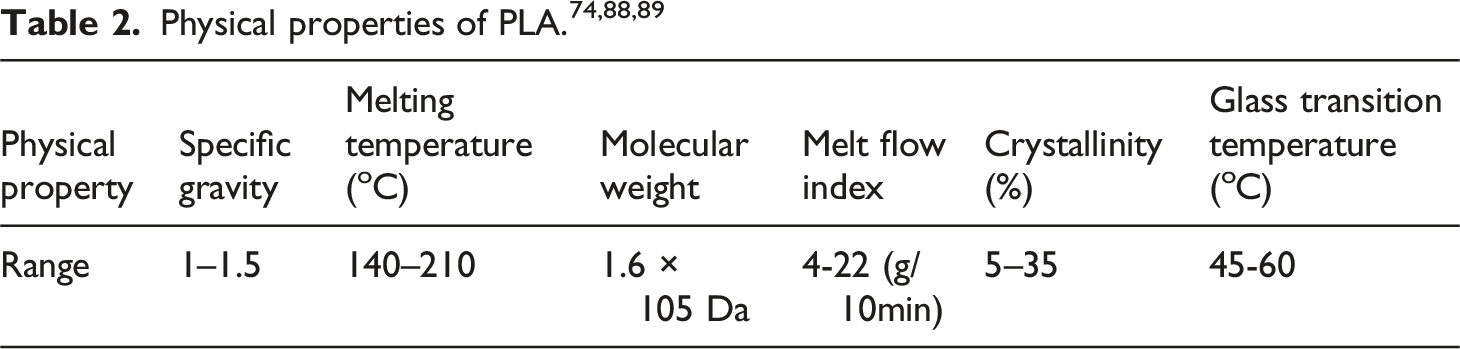
Moreover, PLA exhibits hydrophobic behavior because of the presence of CH3 groups in its chemical structure.88,89 The aforementioned properties of PLA have attracted growing interest for replacing traditional petroleum-based polymers in a wide range of applications. . PLA is a versatile thermoplastic polymer with excellent thermal stability and resistance to oil and grease at low temperatures, making it ideal for domestic appliances, such as bottles, cups, and trays, and can be cast and molded into various shapes.72,73 However, PLA’s inherent brittleness and low thermal resistance of PLA limits its use in some industries. 27 Compared to other biopolymers, PLA typically exhibits lower thermal stability, which can be a disadvantage in applications requiring high-temperature processing or performance. The addition of ZnO NPs has been explored to enhance the physical and thermal properties of PLA. Studies have shown that incorporating ZnO NPs can improve the UV resistance, tensile properties, and thermal stability of PLA composites. 79 For instance, the presence of ZnO NPs in the PLA/polycaprolactone (PCL) blend increases the degree of crystallinity and melting temperature of PLA, indicating improved thermal properties. 77 However, the addition of ZnO NPs is a challenging task. For example, the incorporation of ZnO into PLA can accelerate polymer degradation at higher temperatures, shifting the maximum degradation to lower temperatures compared with pure PLA. 90 Additionally, the optimal loading of ZnO NPs is crucial because excessive amounts can lead to a decrease in the mechanical and thermal properties. 46
Sustainability of PLA
PLA, an eco-friendly polymer, is well-known for its biodegradability and recyclability, resulting in significant energy savings and reduced greenhouse gas emissions, making it a crucial factor in promoting a sustainable environment.91,92 It decomposes in the environment, producing carbon dioxide and water. They are used in photosynthesis to produce vegetable products that are subsequently used for PLA production. The life cycle of PLA outlines the steps from production to decay, thereby ensuring sustainability of the PLA polymer (Figure 3(a)). PLA biodegradation emits approximately 1600 kg of CO2 gas per metric ton, which is lower than that of other polymers such as PP, PS, PET, and nylon, which emit 1850, 2740, 4140, and 7150 kg/metric ton, respectively. The carbon footprint for each step is shown in Figure 3(b).
93
CO2 is used to grow agricultural products, thereby reducing greenhouse gas emissions and contributing to sustainable agriculture.
74
The energy needed for producing PLA from corn growth to PLA pallets is 75.4 MJ/kg, which includes renewable energy (24.6 MJ/kg) and fossil energy (50.8 MJ/kg), which is 25%–55% less than petroleum-derived plastics.8,74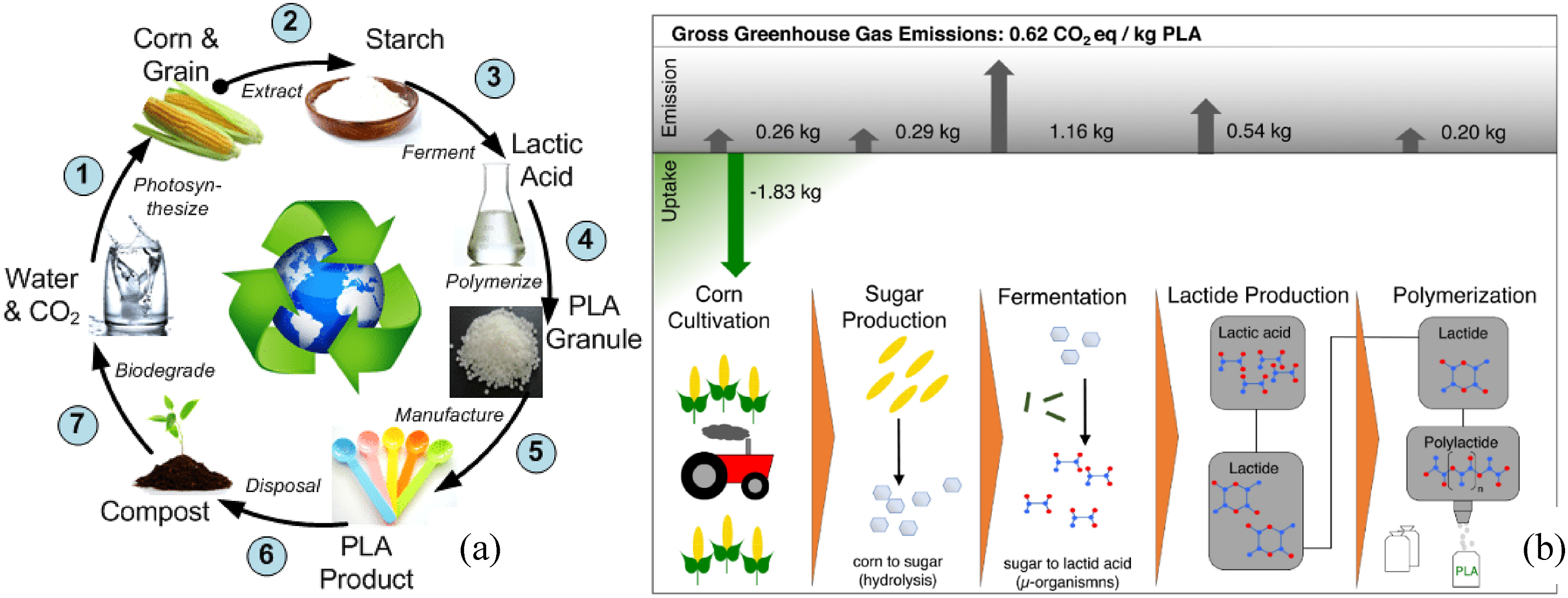
PLA has been extensively used in biomedical devices, anatomical models, and surgical templates, owing to its processability, biocompatibility, and biodegradability. PLA is ideal for bioresorbable implants because it degrades through hydrolysis without enzymes, forming non-toxic products that are eliminated through normal cellular activities. The median half-life of PLA is 30 weeks; however, the physical architecture of the device can control implantation duration.96,97 The degradation rate can be adjusted by adjusting the molecular composition, particularly the molecular weight and the L- or D-chirality. The degradation kinetics are sensitive to PLA crystallinity, with higher crystallinity prolonging degradation for long-term implants and lower crystallinity shortening degradation for temporary implants. 47 PLA, classified as “generally recognized as safe” by the FDA, is commonly used in biodegradable substances, drug delivery systems, and food packaging because of its biocompatibility with body fluids. 98 However, further improvements are required for scalability in biomedical and packaging applications, prompting extensive research on PLA-based nanocomposites with enhanced properties.
Advantages and potentials of PLA over other polymers
Numerous biopolymers, including poly(lactic acid) (PLA), poly(lactic-co-glycolic acid) (PLGA), polyethylene glycol (PEG), polyhydroxybutyrate (PHB), and polycaprolactone (PCL), are used as matrix materials for the development of biocomposites. Among these, PLA is a leading candidate owing to its biodegradability, eco-friendliness, antibacterial properties, and excellent mechanical and thermal characteristics.
74
Research has extensively explored the potential of PLA and its biocomposites for various applications, particularly in the medical and packaging sectors.74,99–101 In medical applications, PLA’s biocompatibility and biodegradability of PLA make it ideal for use in devices such as sutures, drug delivery systems, and scaffolds for tissue engineering. Their ability to gradually degrade in the body reduces the need for surgical removal, which is a significant advantage in patient care. Furthermore, PLA-based materials have been approved for use in food packaging and medical settings and have been recognized as safe (GRAS) by the Food and Drug Administration (FDA))
99
and endorsed by the European Commission.
102
As a testament to its growing popularity, the European Bioplastics organization
102
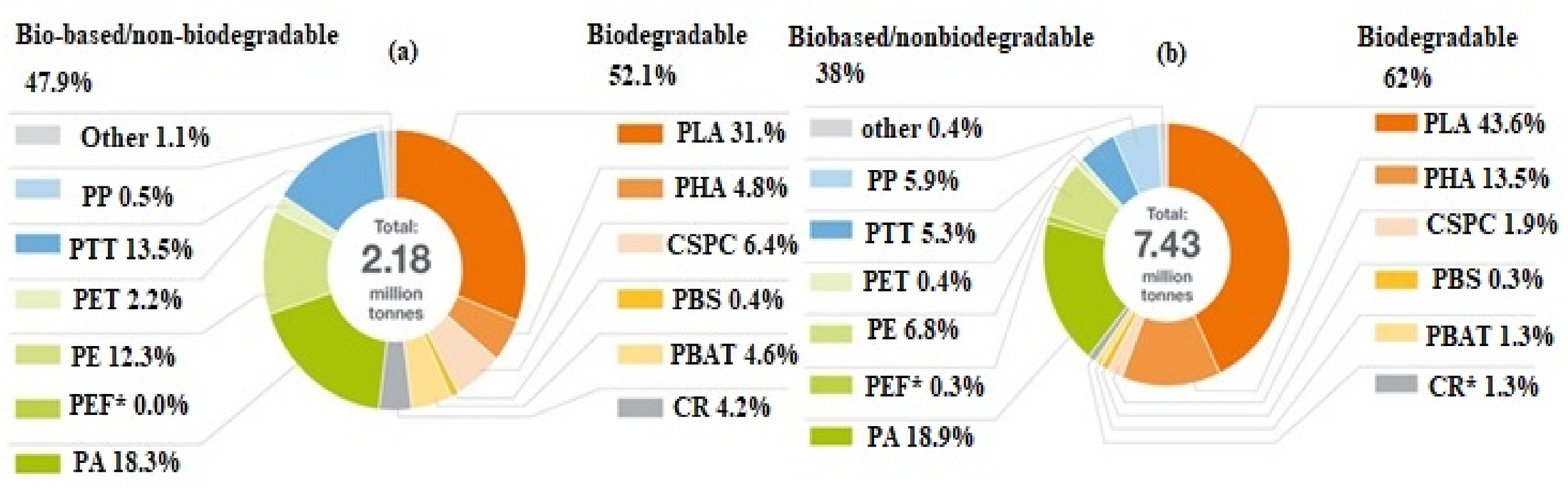
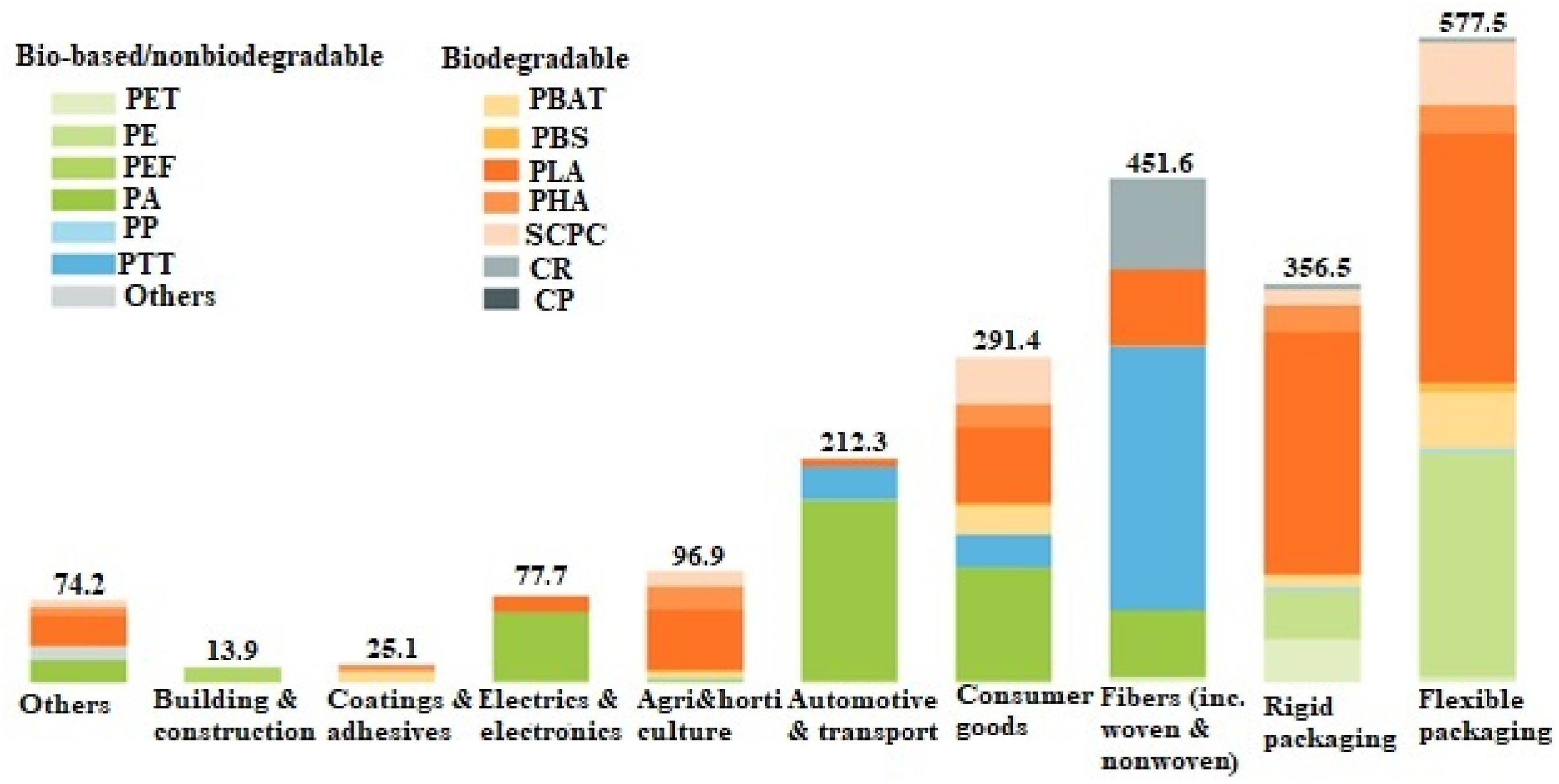
reports that bioplastics production capacity is projected to rise significantly, increasing from 2.18 million tons in 2023 to 7.43 million tons by 2028. Notably, PLA is expected to dominate this market segment, reaching 43.6% by 2028 (Figures 4(a) and (b)), particularly for rigid and flexible packaging applications (Figure 5). (a) Global production of bioplastics 2023, (b) forecasted global production capacities of bioplastics by 2028,
102
by material type. Global production of bioplastics in 2023 by market segment.
102
PLA exhibits a relatively wide range of mechanical properties and degradation rates compared with other biodegradable polymers. 103 It offers a good balance between strength and flexibility, making it suitable for various applications. For instance, PLA-based self-reinforced polymer composites (SRPCs) have shown potential as sustainable alternatives to commercially available SRPCs, offering an increased modulus and strength after orientation. 104 The other key advantages of PLA are its improved hydrophilicity and cell adhesion properties compared to those of PGA. In a study comparing PLA and PGA monofilaments, plasma-modified PLA2 samples showed a cell attachment ratio of 52.16% ± 1.05% after 48 h of culture, which was comparable to the 58.39% ± 2.07% observed for plasma-modified PGA2 samples. 105 This indicates that PLA can be effectively modified to enhance biocompatibility for biomedical applications.
In terms of biodegradability, PLA demonstrated a slower degradation rate than other biodegradable polymers. In a comparative study of polymer degradation in soil and compost, the order of degradation rate was found to be PBSA = PHB/V = PCL > PBS > PLA. 106 Although this slower degradation rate may be a disadvantage in some applications, it can be beneficial in other applications where longer-lasting materials are required. PLA also exhibited superior mechanical properties when blended with other polymers. For example, when blended with PCL, PLA exhibited a significant increase in tensile elongation of 139.3% and an increase in biodegradability of 38.9% in compost medium and 41.0% in seawater medium. 107 This demonstrates PLA’s versatility of PLA for creating composite materials with enhanced properties. Furthermore, PLA has shown promise in advanced manufacturing techniques such as 4D printing. When combined with polybutylene succinate (PBS), PLA-based composites demonstrate shape memory properties and photothermal responsiveness under near-infrared irradiation, opening up possibilities for applications in tissue engineering and photothermal therapy. 108
Interestingly, research has shown that L-lactide polylactic acid (PLLA) demonstrates significant piezoelectric characteristics, presenting exciting opportunities for cutting-edge applications such as piezocatalysis-based antibacterial protection. The piezoelectric effect in PLLA stems from the orientation of its polar molecular chains, which allows it to produce electrical charges when subjected to mechanical forces. This feature can be utilized to boost antibacterial efficacy because the resulting electrical fields may potentially damage bacterial cell membranes or affect microbial proliferation. By incorporating piezoelectric PLLA into various materials or surface coatings, we can develop novel solutions that offer both structural support and active antimicrobial protection. This combination of properties makes PLLA an attractive option for use in biomedical instruments, packaging materials, and other fields where both mechanical strength and antibacterial properties are essential.109,110 In general, while each biodegradable polymer has its own strengths, PLA’s overall balance of properties, including mechanical performance, biodegradability, and versatility in blending and manufacturing processes, contributes to its popularity and advantages over other biodegradable polymers in various applications.
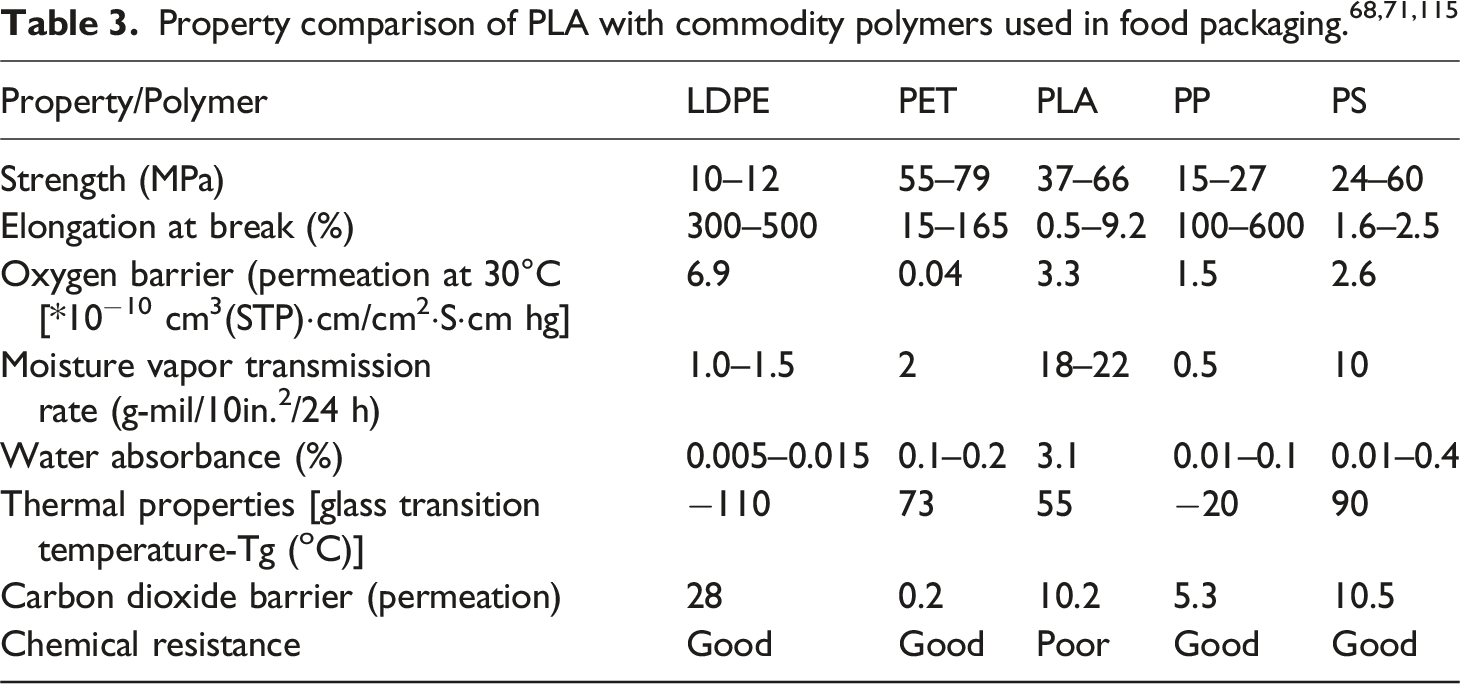
Zinc oxide: Production and properties
Zinc oxide (ZnO) exists as three main polymorphs: hexagonal zincite (wurtzite structure), cubic zincblende, and cubic rock salt. Hexagonal zincite is the most stable and common structure under ambient conditions. 116 Physically, ZnO nanofillers exist in various forms such as nanoparticles, nanocombs, nanowires, nanotubes, nanofibers, nanoflowers, and nanorods, which can affect the properties of nanomaterials and their components. Both the top-down and bottom-up approaches can be used to produce ZnO NPs. Top-down methods break down bulk materials to create nano-sized particles but may damage the crystal structure and affect the nano-articular properties.10,117–119 Bottom-up approaches begin with single atoms or molecules to build the desired nanostructure. These methods can be categorized into physical, chemical, and biological.120,121 However, both of these methods have drawbacks. New “green” methods utilize plant extracts or bacteria strains to minimize the environmental impact. 117 Wet chemical methods have been widely used to synthesize ZnO NPs for the fabrication of PLA matrix nanocomposites. These methods allow for greater control over the nanoparticle shape, size, and composition, which can be influenced by factors such as precursor nature, additive presence, time, and temperature. Examples include sol-gel, solvothermal deposition, precipitation, and co-precipitation, which have been successfully applied to synthesize ZnO NPs to fabricate PLA-matrix nanocomposites.19,20
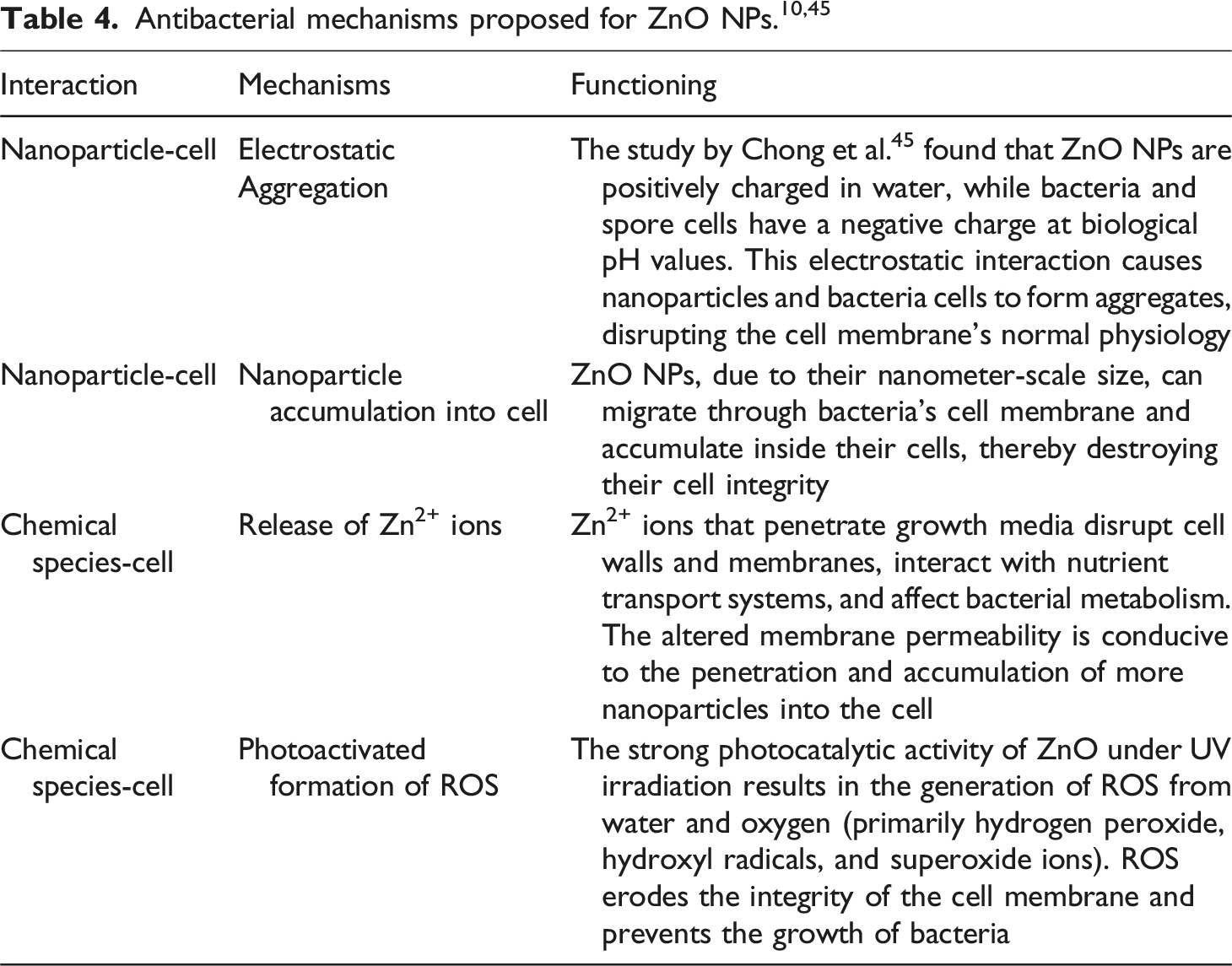
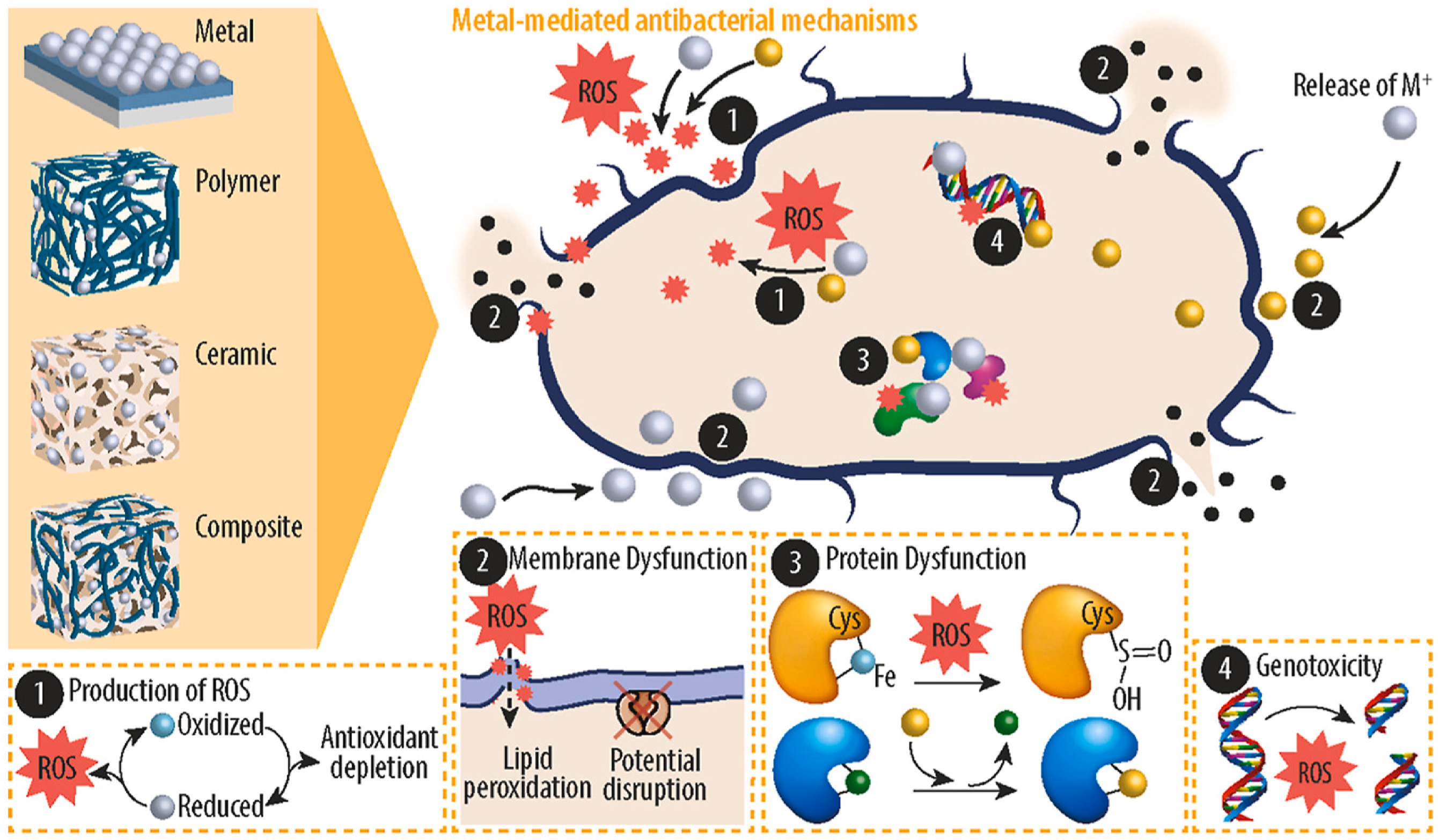
Antibacterial mechanisms of ZnO NPs. 125
ZnO NPs as a functionalizing filler in PLA matrix
Researchers are increasingly using nanomaterials in composite preparation owing to their large surface areas and quantum effects. 126 Various nanoparticles, such as CaCO3, ZnO, and TiO2, are currently being investigated for filler applications in PLA matrices and natural-fiber-reinforced polymer composites. ZnO NPs are an interesting candidate explored for filler applications due to their low cost, chemical stability, ultraviolet and infrared absorption, antibacterial properties, and biocompatibility. Furthermore, ZnO NPs have been extensively studied for packaging and medical applications owing to their exceptional antioxidative and antimicrobial properties.127,128 They are also widely studied owing to their ease of preparation, safety, and U.S. Food and Drug Administration (FDA) acceptance.129,130 These properties have led to continuous interest in zinc-based nanoparticles in the medical and food packaging industries. 129 Their unique features and high surface-to-volume ratio (less than 100 nm) can lead to distinct antimicrobial activities with minimal effects on human cells. Colorless and transparent ZnO NPs, with a wide direct band gap and high excitation binding energy (60 meV), are particularly interesting as ideal UV blockers and are often added to medical and packaging applications for ultraviolet protection.131–135
This metal oxide has been incorporated into PLA to improve its optical, functional, and mechanical characteristics.136,137 Chu et al. 138 developed antimicrobial active films using PLA with nano-silver and nano-zinc oxide. The addition of ZnO NPs significantly improved antimicrobial activity and inhibited Escherichia coli (E.coli) growth. This study suggests that PLA films with nanoparticles can be environmentally friendly packaging materials. Jamnongkan et al. 37 developed composite films of PLA coated with ZnO NPs via solvent casting. The ZnO NPs significantly affected the morphology, water absorbency, and the mechanical and antibacterial properties of the biocomposite films. The ZnO NPs dispersed within the PLA matrix enhanced stress and Young’s modulus. The PLA/ZnO NPs films demonstrated good antibacterial activity against both Gram-positive and Gram-negative bacteria. Akshaykranth et al. 139 studied the antibacterial activities of pure PLA, zinc-oxide-incorporated PLA, and ZnO nanorods grown on ZnO-incorporated PLA films. The ZnO nanorod-grown film showed a thermal stability enhancement of approximately 10°C compared to that of pure PLA. The films were tested against E. coli and Staphylococcus aureus bacteria, with ZnO nanorods showing more antibacterial activity. This process can easily be adapted for large-scale packaging applications.
Effectiveness of ZnO NPs compared to other nanofillers
The antimicrobial and mechanical properties of ZnO NPs were superior to those of TiO2 in the PLA matrix. Suryanegara et al. 140 compared antimicrobial bioplastics made from PLA with chitosan-ZnO and chitosan-TiO2 to enhance their properties. PLA-chitosan-ZnO showed strong antimicrobial activity against bacteria, yeast, and fungi. It has medium tensile strength, tensile modulus, elongation percentage, and low water vapor barrier ability. Chitosan-ZnO had a higher tensile strength than chitosan-TiO2. Hallak et al. 141 evaluated the antimicrobial properties of TiO2, ZnO, and Au/ZnO by measuring log reductions in E. coli and Aspergillus niger populations. The results confirmed that the bactericidal activities of ZnO showed the highest antimicrobial efficiency compared to TiO2, and increased photocatalytic activity when decorated with gold. Likewise, Phothisarattana and Harnkarnsujarit 142 investigated the impact of TiO2 and ZnO nanofillers on microstructural changes in bioplastic packaging. The results showed higher TiO2 particle aggregation than ZnO and higher hydrogen bonding between ZnO and the films, as revealed by energy-dispersive X-ray analysis. In terms of opacity, ZnO NPs had a higher opacity than TiO2 NPs in the packaging film. Azam et al. 143 comparing CuO, ZnO, and Fe2O3 found that ZnO NPs demonstrated significant inhibitory effects against various bacterial species, suggesting their potential as an antibacterial agent against various pathogenic bacteria. Threepopnatkul et al. 144 confirmed that, the addition of ZnO to the film resulted in increased transparency compared to TiO2, as the ZnO particles were physically larger.
ZnO NPs incorporated into a PLA matrix demonstrated notable antibacterial capabilities, albeit less potent than silver nanoparticles (Ag NPs). Although Ag NPs exhibit strong antibacterial effects at minimum inhibitory concentrations (MICs) of 1-10 µg/mL, ZnO NPs typically require higher concentrations, ranging–50-200 µg/mL, to achieve similar results.145,146 The antibacterial mechanism of ZnO NPs primarily involves the production of ROS, which can harm bacterial cells, particularly when exposed to UV light. However, the antibacterial effectiveness of ZnO NPs in a PLA matrix may be influenced by their release profile and interaction with the polymer, potentially leading to enhanced performance through gradual release. Furthermore, ZnO NPs are less prone to inducing bacterial resistance than Ag NPs, which is an important factor for extended-use applications. 145 Despite their lower immediate antibacterial strength, their favorable safety profile and decreased risk of resistance make ZnO NPs a valuable option in PLA-based applications, particularly in scenarios where biocompatibility and long-term effectiveness are crucial. Moreover, ZnO NPs have shown significant improvements in the mechanical properties when incorporated into PLA. For example, the addition of 0.5 wt % ZnO NPs increased the tensile strength of PLA films by 37.5%. 147 ZnO NPs also enhanced the water vapor barrier properties, reducing water vapor permeability by 30.5% at 0.5 wt % loading. 147 Although Ag NPs are known for their excellent antibacterial properties, they face challenges such as easy agglomeration and oxidation, limiting their application in food packaging. 148 In contrast, ZnO NPs offer a more stable alternative, with multiple benefits beyond antibacterial activity. However, it is important to note that the effectiveness of either nanoparticle depends on factors such as the concentration, dispersion method, and specific application requirements.
Manufacturing technique of PLA/ZnO nanocomposites
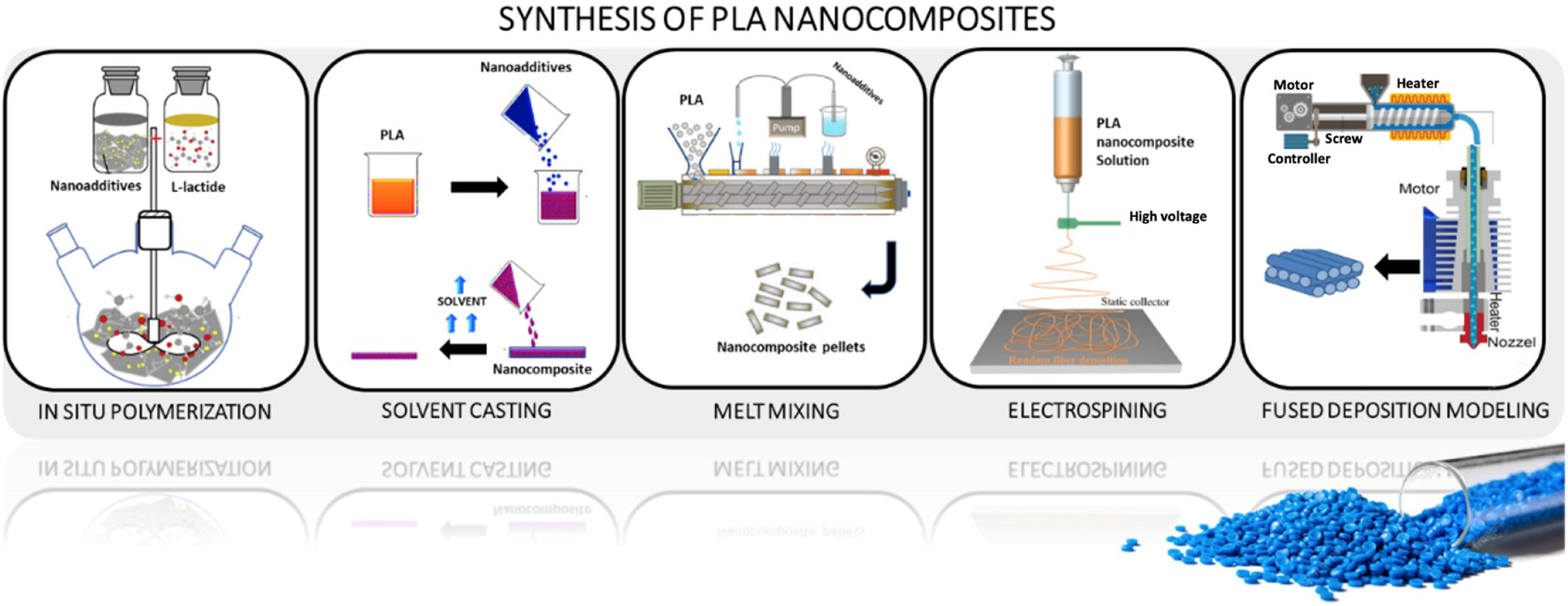
PLA/ZnO nanocomposites are typically produced using three main techniques: in situ polymerization, solution casting, and melt mixing, with electrospinning and additive manufacturing being less common,
149
as shown in Figure 7. These techniques are chosen based on the desired properties of the final composite material, such as the mechanical strength, thermal stability, and antibacterial activity.77,150 Optimal manufacturing settings and nanoparticle concentrations are crucial for achieving the best performance of PLA–ZnO composites. Synthetic routes for preparing PLA nanocomposites.
149
In situ synthesis of ZnO NPs within the PLA matrix
The in situ synthesis of ZnO NPs within a PLA matrix involves the direct formation of nanoparticles within the polymer substrate, as opposed to mixing pre-synthesized nanoparticles into the matrix. This method aims to achieve a more uniform dispersion of nanoparticles and better interfacial bonding between the nanoparticles and polymer matrix, which can enhance the material properties.43,77 The literature review does not explicitly detail the in situ synthesis of ZnO NPs within the PLA matrix. However, they discussed the incorporation of ZnO NPs into PLA and other polymers using various methods such as solution casting and melt mixing.43,77 Although the provided papers do not describe an in situ synthesis process within the PLA matrix, they offer insights into the benefits of incorporating ZnO NPs into PLA through an in situ synthesis process. These benefits include improved stability, mechanical properties, and potential antibacterial activity, which are critical for applications in food packaging and biomedical materials.36,43,77 Further research into in situ synthesis techniques could provide additional advantages for the dispersion and compatibility of ZnO NPs within PLA matrices.
Melt-compounding and extrusion techniques
Melt compounding and extrusion are common techniques used in the production of PLA/ZnO nanocomposites. Melt compounding involves physical blending of PLA with ZnO NPs at elevated temperatures, which allows the polymer to melt and mix thoroughly with the filler. This process is typically followed by extrusion, wherein the molten composite is forced through a die to shape it into the desired form such as filaments or sheets.78,90,151 Interestingly, studies have revealed that the incorporation of ZnO NPs into PLA via melt-compounding can have various effects on the properties of the resulting nanocomposites. For example, the addition of ZnO can enhance the mechanical properties, thermal stability, and UV-barrier properties of PLA. 151 However, ZnO has also been reported to accelerate the degradation of PLA at higher temperatures and negatively affect its molecular weight and glass transition temperature.78,90 These contradictory findings highlight the complexity of the interactions between PLA and ZnO during the melt compounding and extrusion processes.
It is worth noting that with the help of the surface treatment of ZnO NPs and the masterbatch technique, melt-compounding, and extrusion techniques are widely employed in the production of PLA/ZnO nanocomposites, as evidenced by several studies.152,153 Restrepo et al. 153 described the development of PLA/ZnO polymer nanocomposites through a melt blending route, where the ZnO NPs were coated with PVA to enhance their thermal stability when incorporated into the PLA matrix. Murariu et al. 152 discussed the melt-compounding of PLA with ZnO NPs surface-treated with silane, noting the significant enhancement of properties such as thermal stability and molecular weight when a chain-extender is co-added. Murariu et al. 42 emphasized the use of masterbatch (MB) technique, which involves premixing ZnO with PLA and then melt blending, to produce films with improved properties and reduced degradation effects. Chong et al. 154 investigated the masterbatch mixing strategy and the effects of ZnO concentration and surface treatment on the printability and mechanical performance of PLA/ZnO nanocomposites for fused filament fabrication (FFF). Babaei et al. 77 also utilized melt mixing to fabricate PLA/polycaprolactone blend nanocomposites with various loadings of ZnO NPs, examining their morphological, thermal, and mechanical properties. Interestingly, while these studies focused on the benefits of melt compounding and extrusion, they also highlighted the importance of nanoparticle surface treatment and the use of additives, such as chain-extenders, to mitigate potential degradation effects and improve the performance of nanocomposites. 154
Solution casting and solvent evaporation methods
The solvent mixing method involves dissolving the polymer in a suitable solvent and then mixing the filler with the polymer solution. The filler can be suspended in a liquid medium, which may not be the same as that of the polymer, or added directly to the polymer solution. Magnetic stirring is often ineffective for achieving a good distribution, and stronger agitation may be required to break down nanofiller agglomerates through sonication. 155 The polymer-filler dispersion can be used as a precursor for electrospinning or poured onto a flat surface, resulting in a polymer-filler nanocomposite film upon solvent evaporation or solvent casting. Solvent-cast composite materials can be further processed to obtain different geometries through melt processing such as compression molding, injection molding, film extrusion, and filament extrusion. 45
Solution casting allows for uniform dispersion of nanoparticles within a polymer matrix, which is crucial for achieving the desired structural and functional characteristics of nanocomposites.156–158 The solvent evaporation method is integral to solution casting because it determines the crystalline structure of the polymer during nanocomposite formation. 159 Research on the production of PLA/ZnO nanocomposite solution casting and solvent evaporation methods has been conducted to explore the potential applications of these materials, particularly in biomedical and packaging fields. Nonato et al. 44 described the preparation of PLA nanocomposites with 1 wt% ZnO nanofibers using solvent-cast 3D printing, where the ZnO nanofibers were dispersed in PLA by ultrasonic and the composite’s properties were characterized by various techniques. Similarly, Yan et al. 160 discussed the use of cellulose nanocrystals (CNC) as a template for CNC-ZnO nanocomposites, which were then incorporated into PLA composite films by solution casting, demonstrating improvements in crystallinity and thermal properties. Although these studies focused on the incorporation of ZnO into PLA matrices, they presented contrasting findings regarding the thermal stability of the resulting nanocomposites. Nonato et al. 44 reported a decrease in thermal stability due to the catalytic effect of ZnO on PLA hydrolysis, whereas Yan et al. 160 indicated an enhancement in thermal properties, with the CNC-ZnO nanocomposites acting as nucleating agents. This discrepancy may be attributed to differences in the ZnO forms, concentrations, and presence of other components, such as CNC. Further research in this area could provide a deeper understanding of the interactions between PLA and ZnO, thereby optimizing the properties of these composites for specific applications.
Comparison of solvent casting and melt compounding technique
Solution casting and melt compounding are two distinct methods for producing PLA/ZnO nanocomposites, each with its own advantages and limitations. Solution casting involves dissolving both the polymer and nanofiller in a solvent, followed by casting and solvent evaporation, which can lead to a high degree of nanofiller dispersion. 161 Melt compounding, however, involves mixing the polymer and nanofiller in a molten state. This solvent-free process is considered more environmentally friendly and scalable for industrial applications.78,90 In terms of efficiency, solution casting may offer better nanofiller dispersion owing to the molecular-level mixing that is possible in the solvent phase, which can enhance the properties of the nanocomposites. 161 However, this method is less efficient in terms of the production speed and solvent recovery. Melt compounding is generally more efficient for large-scale production because it is a continuous process that can be easily scaled up and integrated into existing polymer-processing lines. 42 Melt compounding also has a clear advantage in terms of scalability. It is compatible with industrial processes, such as extrusion and injection molding, making it suitable for large-scale production. In contrast, solution casting, which is useful for laboratory-scale research and small-scale production, faces challenges in terms of solvent handling and removal, which can be a bottleneck for scaling up. 154 In general, although solution casting can offer superior nanofiller dispersion, which may enhance certain properties of PLA/ZnO nanocomposites, melt compounding is more efficient and scalable for industrial applications. Both methods can produce nanocomposites with improved properties, but the choice of method depends on the specific requirements of the application and constraints of the production environment.161,162
Manufacturing challenges of PLA/ZnO nanocomposites
The manufacturing of ZnO NP-functionalized PLA composites presents several challenges. One of the primary objectives is to achieve uniform dispersion of ZnO NPs within the PLA matrix to ensure consistent material properties. The hydrophilic nature of ZnO NPs can lead to agglomeration, making dispersion difficult. 163 Additionally, the sensitivity of PLA to common sterilization methods and chemical disinfectants can impair its usage, necessitating careful consideration of the manufacturing process to maintain the biocompatibility and antibacterial properties of the PLA/ZnO composites. 45 Interestingly, while the addition of ZnO NPs can enhance certain properties of PLA, such as its mechanical and thermal properties, there is a threshold beyond which further addition of nanoparticles can lead to a decrease in these properties. 46 This indicates that the optimal concentration of ZnO NPs must be determined and maintained during manufacturing. 163 This section discusses the main manufacturing challenges of PLA/ZnO nanocomposites, such as dispersion, interfacial compatibility, ZnO catalytic degradation of PLA, and the scalability and reproducibility of these composites.
Dispersion and distribution of ZnO NPs in the PLA matrix
The dispersion and distribution of ZnO NPs within a PLA matrix can be challenging because of the tendency of nanoparticles to agglomerate. This agglomeration is attributed to the high surface energy of nanoparticles, which causes them to attract each other and minimize their overall energy states. 164 When ZnO NPs agglomerate, they form clusters within the PLA matrix, leading to a nonuniform distribution. This nonuniformity can result in rougher surfaces and inhibit water penetration, which in turn affects the properties of the material. 164 The detrimental effects of poor dispersion and distribution of ZnO NPs in PLA composites are multifaceted. Mechanical properties such as tensile strength and Young’s modulus can be negatively impacted when the content of ZnO NPs is increased beyond an optimal level, as seen in the decrease of these properties with higher ZnO loadings by Rihayat et al. 46 Additionally, the agglomeration of nanoparticles can lead to a reduction in the water permeability and moisture content, which may not be desirable for certain applications. 164 Furthermore, the presence of agglomerates can create weak points within the composite material, potentially leading to premature failure under stress. 46 Indeed, the hydrophilic nature of ZnO NPs leads to agglomeration, making dispersion in a hydrophobic PLA matrix difficult. 163 This agglomeration can be mitigated by surface modification of ZnO NPs with hydrophobic groups such as vinyl triethoxysilane (VTES), which enhances dispersity. A critical factor in this process is the hydrophobic/hydrophilic balance between the polymer matrix and the surface modifications applied to the ZnO nanoparticles. However, achieving uniform dispersion remains a challenge, as evidenced by the need for specific concentrations of VTES for effective surface modification. 163
It is important to mention that, the incorporation and dispersion of ZnO NPs into the PLA matrix can affect the mechanical, thermal, rheological and biocompatibility properties of the composite. While some studies have reported an increase in the tensile modulus with the addition of ZnO NPs, 77 others have noted that the mechanical properties may increase only up to a certain nanoparticle loading, beyond which it decreases. 46 This indicates that there is an optimal concentration of nanoparticles for improved mechanical properties and that exceeding this concentration can be detrimental. The thermal properties of the PLA/ZnO nanocomposites were also influenced by the nanoparticle dispersion. The addition of ZnO NPs can increase the degree of crystallinity and melting temperature of PLA. 77 However, similar to mechanical properties, there is a threshold for nanoparticle loading beyond which the thermal properties may not continue to improve. 46 The rheological properties of the PLA/ZnO nanocomposites are affected by their dispersion and distribution. The melt linear viscoelastic properties are influenced by the interaction between the nanoparticles and PLA/PCL chains, suggesting that nanoparticle dispersion plays a role in the flow behavior of the composite material. In addition, the biocompatibility of PLA/ZnO nanocomposites is crucial for biomedical applications. Although studies have shown high cell viability, indicating good biocompatibility, 77 the distribution of nanoparticles within the matrix is essential for maintaining this property across the composite material. In conclusion, the challenges in the dispersion and distribution of ZnO NPs in the PLA matrix are multifaceted, affecting the mechanical, thermal, rheological, and biocompatibility properties of the nanocomposites. Surface modification techniques and careful control of nanoparticle loading46,77 are among the strategies used to address these challenges. Further research is needed to optimize these parameters to fully harness the potential of the PLA/ZnO nanocomposites.
Interfacial compatibility and adhesion between ZnO and PLA
Interfacial compatibility and adhesion between ZnO and PLA are critical factors that influence the mechanical properties and functionality of their composites. Although some studies have successfully enhanced the interfacial adhesion through various treatments, challenges remain. For instance, the inherently poor interfacial adhesion between PLA and natural fibers, which can be mitigated by functionalizing ZnO nanowires on the fiber surface, requires careful control of the topological architecture to achieve substantial improvements in interfacial strength and debonding energy. 165 Additionally, the polarity of the functional groups and the surface roughness of cellulose when in contact with PLA affect adhesion, indicating that achieving optimal interfacial bonding requires careful consideration of these factors. 166 Contradictions and interesting facts have emerged from the literature. For example, while one study found that micro-arc oxidation (MAO) significantly improved the interfacial bonding between Mg-2Zn wires and PLA owing to electrostatic and micro-anchoring interactions, 167 another study reported that the presence of ZnO nanorods could lead to a reduction in the strength of PLA composites owing to PLA degradation under high-temperature conditions. 168
Furthermore, the development of a ‘zipper-like’ mechanical interlocking structure between ZnO nanorods and PLA has been shown to significantly improve interfacial shear strength, 169 highlighting the potential for topological manipulation to overcome interfacial challenges. Interestingly, while the focus of some studies has been on the interfacial bonding between PLA and other polymers or fillers, such as PLA/polybutylene adipate terephthalate (PBAT) blends 170 or the enhancement of mechanical properties through carboxymethylation and ZnO nanorod growth on jute fibers, 169 these approaches indirectly highlight the importance of surface treatments and compatibilization strategies for improving interfacial adhesion. Although advancements have been made in enhancing the interfacial compatibility and adhesion between ZnO and PLA, challenges such as poor interfacial adhesion and the delicate balance between the surface characteristics and bonding mechanisms remain. The reviewed studies suggested that strategies such as functionalization of ZnO, surface treatment of fibers, and careful control of processing conditions can improve interfacial properties but may also introduce new complexities.166–169 Further research is required to fully understand and optimize interfacial interactions in ZnO/PLA composites for various applications.
ZnO-catalyzed degradation of PLA
The catalytic degradation of PLA during the manufacturing of PLA/ZnO nanocomposites is primarily attributed to the presence of ZnO NPs, which are known to promote the hydrolytic degradation of PLA. 171 ZnO NPs act as catalysts, lowering the activation energy required for the hydrolysis of PLA, thus accelerating its degradation process. 171 Interestingly, while ZnO NPs facilitate PLA degradation, certain manufacturing techniques, such as the masterbatch (MB) approach, can mitigate these effects. The MB approach involves premixing ZnO with PLA, which reduces the residence time at high processing temperatures, thereby limiting the degradation effects on PLA chains. 42 Additionally, surface treatment of ZnO NPs, such as silanization, has been shown to enhance matrix-filler interfacial interactions and reduce the thermal degradation of PLA, thus improving the printability and mechanical performance of nanocomposites. 45
Degradation is also influenced by the concentration of ZnO NPs and the specific processing techniques used, such as melt mixing or solvent casting.43,154 In the context of PLA/ZnO nanocomposite manufacturing, the presence of ZnO NPs within the PLA matrix could potentially influence the thermal stability and degradation behavior of the composite material. 172 Although Nyiavuevang et al. 173 described the use of ZnO powder as a catalyst in the synthesis of lactide, which is a precursor for PLA, they did not directly address the degradation of PLA in the presence of ZnO. Similarly, other studies have discussed various aspects of PLA properties and applications, such as its biodegradability, mechanical properties, and use in additive manufacturing processes,52,174–178 but they do not provide specific insights into the degradation mechanism of PLA/ZnO nanocomposites. Further research is required to elucidate the specific interactions between the ZnO NPs and PLA, which may lead to degradation during the manufacturing process.
Scalability and reproducibility of the manufacturing process
The scalability and reproducibility of the manufacturing process of PLA/ZnO nanocomposites presents several challenges. Scalability refers to the ability to increase production to commercial levels, while maintaining consistent quality and performance. Reproducibility involves consistent production of nanocomposites with the same characteristics over multiple manufacturing cycles.42,179,180 One challenge in scalability is the selection of an appropriate large-scale production method that maintains the properties and functionalities of the nanomaterials. Different production methods, such as vapor, liquid, and solid-phase synthesis, have their own merits and drawbacks, which influence the final properties of nanocomposites. 180 Additionally, process engineering and scale-up are crucial for commercial production, as the properties and structure of nanomaterials are affected by engineering properties such as mixing, heat, and mass transfer. 179 Reproducibility issues arise from the need for consistent quality of the nanocomposite properties, such as mechanical and thermal stability, which can be influenced by factors such as the masterbatch (MB) mixing strategy, ZnO concentration, and surface treatment. 154 For instance, the masterbatch approach is promising for reducing residence time at high processing temperatures, which is beneficial for thermo-sensitive PLA matrices. 42 However, it is challenging to maintain consistency across different production batches. In short, the scalability of PLA/ZnO nanocomposites is challenged by the need to select and optimize production methods that can operate at commercial scales without compromising material properties.42,179,180 Reproducibility is challenged by the need to maintain consistent nanocomposite quality across multiple manufacturing cycles, which can be influenced by various factors in the production process.42,154 Addressing these challenges is essential for successful commercialization of PLA/ZnO nanocomposites.
Methods for resolving the challenges of PLA-ZnO nanocomposites
The manufacturing of PLA/ZnO nanocomposites involves several strategies to address challenges and improve the material’s properties, such as surface treatment of nanoparticles, masterbatch techniques, adding thermal stabilizers, and surface engineering. These are essential for creating PLA-ZnO nanocomposites with superior mechanical, thermal, functional, and barrier properties owing to their reduced agglomeration, enhanced interfacial interactions, and low thermal degradation. This section explains the strategies for mitigating the issue of PLA/ZnO nanocomposites.
Surface modifications of ZnO NPs
Surface modification of ZnO NPs plays a crucial role in addressing manufacturing challenges and issues related to the properties of PLA/ZnO nanocomposites. These challenges are often related to the dispersion of nanoparticles within the PLA matrix; compatibility between the hydrophobic PLA and hydrophilic ZnO; and functional, mechanical, and thermal properties of the resulting nanocomposites. Thus, surface modification techniques aim to decrease the hydrophilicity and increase the hydrophobicity of inorganic nanofillers to render them compatible with matrix materials. 181 This is used to prevent agglomeration in polymers by combining inorganic particles with polymers, improving the ZnO dispersion stability, and increasing the interfacial adhesion between polymers and ZnO NPs. 182 Coupling agent treatment is a widely used method to enhance the wettability of nanoparticles with matrix materials, with silane, zirconate, and titanate being commonly used coupling agents. 183 Additionally, surface modifications such as the use of oleic acid to modify ZnO (O-ZnO) have been reported to enhance the dispersion of nanoparticles and improve their interaction with the PLA matrix, leading to nanocomposites with excellent antimicrobial performance. 184 Similarly, immobilizing ZnO on halloysite nanotubes (HNT-ZnO) using a solvent-free technique was found to enhance the reinforcing ability, thermal stability, and UV-barrier properties of PLA nanocomposites. 151
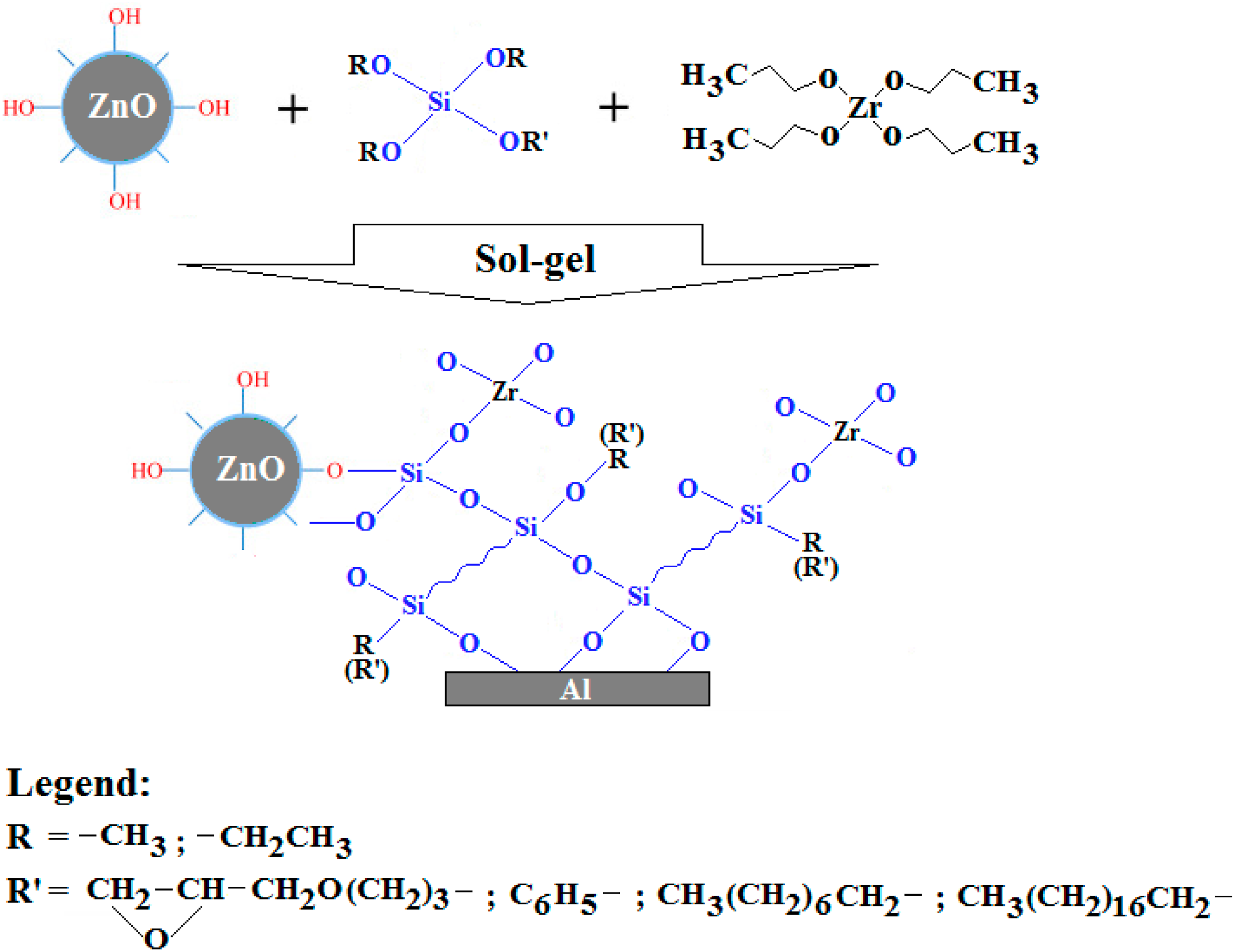
Surface-treated ZnO NPs, particularly silane-treated ones, are often preferred over untreated ones to enhance the dispersion as well as the mechanical, thermal, functional, and barrier properties of the nanocomposite. The silane coating reduces the interparticle attraction and interfacial energy between the polymer matrix and the nanofiller, thereby reducing the energy required for fine nanoparticle dispersion. Hydroxylated minerals, such as ZnO, bond with alkoxy-silanes, resulting in the application of multiple monolayers of silane to the filler surface. Purcar et al.
185
were modified ZnO materials through the sol–gel process using different silane precursors, as shown in Figure 8. This serves as a compatibilizer and dispersion agent, thereby enhancing the efficiency of the polymer dispersion process.
45
The silane coating shields the PLA matrix from the catalytic effect of ZnO NPs in the thermodegradative processes, increasing the surface hydrophobicity. This slows water diffusion into the PLA, reducing its susceptibility to hydrolysis.
186
A probable reaction mechanism can occur when ZnO is modified using silane precursors.
185
As mentioned in the previous section, PLA degradation by ZnO is severe in the melt-compounding method, and as a result, scholars prefer the solvent casting method; however, the melt-compounding method is more versatile than other techniques such as solvent casting. Thus, nowadays, the thermal degradation of PLA by ZnO in the melt-compounding method is reduced by surface treatment with ZnO NPs. Chong et al. 187 confirmed that, the surface treatment of ZnO powder improved matrix-filler interfacial interactions and decreased PLA thermal degradation. Murariu et al. 42 also reported the possibility of producing PLA-based nanocomposites through melt compounding in internal mixers or twin-screw extruders after surface treatment of ZnO NPs with specific silanes, creating new opportunities for large-scale applications. In addition, it is essential to decrease the PLA residence time at high temperatures in the presence of ZnO using a masterbatch. 42 Doumbia et al. 188 studied the antibacterial activity of PLA/ZnO structures with neat ZnO NPs or silane-treated ZnO NPs. All composites with 3 wt% ZnO showed strong antibacterial activity against gram-positive bacteria, but silane-treated particles significantly improved antibacterial activity against gram-negative bacteria. The stronger antibacterial effect was attributed to improved dispersion, photocatalytic activity, and ROS production.
However, the discrepancy in the reported antibacterial efficacy of silane-treated ZnO NPs in PLA/ZnO nanocomposites may be attributed to the interplay between the nanoparticle dispersion and surface modification. Silane treatment can enhance the dispersion of ZnO NPs within the PLA matrix, potentially increasing the available surface area for antimicrobial activity. 189 Improved dispersion can prevent agglomeration, which is known to reduce the effective surface area of nanoparticles and, consequently, their interaction with bacterial cells. On the other hand, some studies suggest that surface modification of ZnO NPs, such as with silane coupling agents, may alter the surface characteristics of the nanoparticles, potentially affecting their ability to generate ROS that contribute to their antibacterial action.49,190 The presence of a silane layer can inhibit the release of Zn ions or hinder the photocatalytic activity of ZnO, both of which are mechanisms through which ZnO exhibits antibacterial properties. In summary, silane treatment improved the dispersion of ZnO NPs within PLA, leading to enhanced antibacterial effects. This may also interfere with the intrinsic antibacterial mechanisms of ZnO. The overall impact on the antibacterial efficacy of PLA/ZnO nanocomposites is likely dependent on the balance between improved dispersion and the potential inhibition of antibacterial mechanisms due to surface modification.
Masterbatch technique
The masterbatch (MB) technique is a manufacturing process that involves premixing a high concentration of additives, such as ZnO NPs, with a polymer (PLA), before diluting this mixture to the desired final concentration in the end product, as shown in Figure 9(a). This approach is particularly beneficial for PLA/ZnO nanocomposites because it reduces the residence time at high processing temperatures, which is crucial given the thermo-sensitive nature of PLA and the tendency of ZnO to promote the degradation of polyester chains.191,192 Interestingly, the MB technique not only mitigates the degradative effects, but also enhances the distribution of ZnO NPs within the PLA matrix. This results in improved thermal stability, higher molecular weights of PLA chains, and better thermomechanical properties. Additionally, the use of silane-treated ZnO NPs in the MB contributes to these improvements by enhancing the interfacial interactions between the matrix and filler.
152
Although the MB technique has shown promise in improving the processing and properties of PLA/ZnO nanocomposites, it is not without challenges. For instance, the addition of ZnO can decrease the printability of nanocomposites, which is a critical factor for their application in additive manufacturing.
47
However, the surface treatment of ZnO can ameliorate this issue by enhancing the matrix-filler interactions. Moreover, the MB approach has been shown to produce nanocomposites with higher molecular weights and improved functional and thermal stabilities, which are advantageous for film extrusion.
47
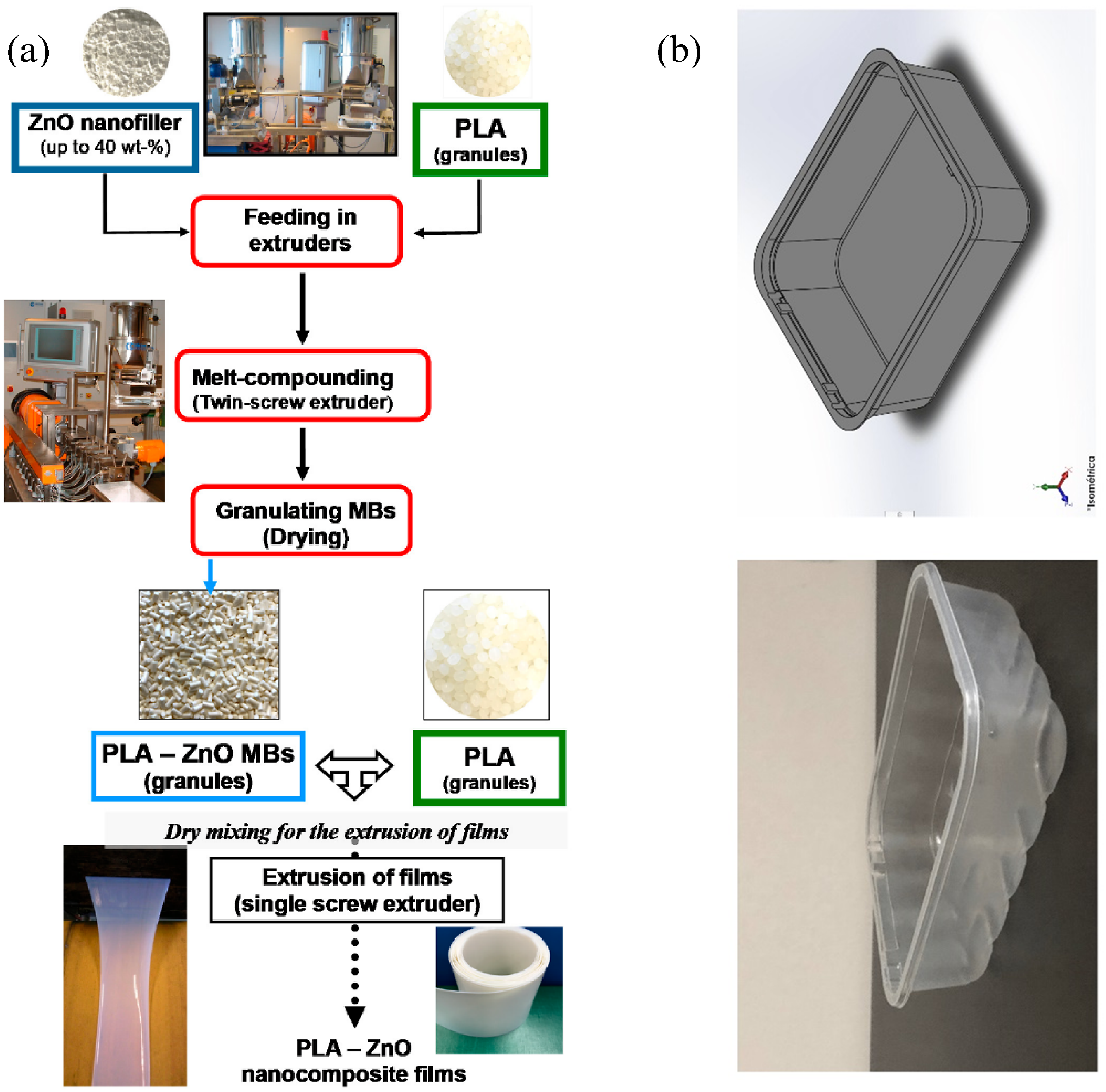
Notably, the first compounding step in the MB technique can be achieved by solvent mixing to further reduce thermal exposure. This method also enhances the homogenous distribution of nanoparticles, as they are initially dispersed across the masterbatch and then across additional PLA. However, Chong et al. 187 enhanced the properties of PLA-ZnO nanocomposites by using melt-mixed masterbatches in the initial compounding steps, as compared to the solvent mixed masterbatch. The main reason for this was the absence of matrix degradation from the solvent residuals during thermal processing, which improved the mechanical and functional performance of the nanocomposites. Furthermore, melt mixing, a solvent-free and high-shear mixing process, was found to be more effective and time-efficient for producing masterbatches of highly concentrated PLA-ZnO nanocomposites on a large scale. Murariu et al. 42 utilized the masterbatch method to create nanocomposite films with 1-3 wt% ZnO NPs, demonstrating improved thermal properties, rheological properties, and better ZnO dispersion within the PLA matrix compared to traditional methods. Oliver-Ortega et al. 193 demonstrated that the masterbatch methodology effectively maintained or enhanced the dispersion of PLA nanocomposites while facilitating the mixture process. This study modeled a food tray using PLA nanocomposites and common market plastics to evaluate their mechanical performance and sustainability as alternatives to traditional materials, as shown in Figure 9(b).
Use of additives and compatibilizer
PLA is sensitive to temperature, shear, and hydrolysis during melt processing. To counterbalance the degradation, multifunctional chain extenders (CE) are considered as an attractive and low-cost method. 194 In addition, PLA end groups (i.e., carboxylic acid and hydroxyl end groups) formed through thermal and oxidative degradation can react with epoxy functional groups, forming covalent bonds when heated in water. Recent developments in the production of masterbatches (MBs) for film extrusion have improved their characteristics by adding thermal stabilizers (U626) and chain extenders (CE) during the production phase of PLA–ZnO MBs.195,196 Multi-functional CE from epoxy functional styrene-acrylate oligomers is seen as a low-cost method to reverse molecular weight degradation and produce high-performance nanocomposites. 152
These additives are effective in producing PLA-based blends, increasing the hydrolytic stability, melt strength, and processing output at low loading levels, making them excellent alternatives for PLA production. 197 Ultranox 626 A (bis (2, 4-di-t-butyl-phenyl) pentaerythritol diphosphite)), a thermal stabilizer, is widely used to prevent thermal degradation and enhance the processability of PLA-ZnO nanocomposites. 198 The study also found that adding silane-treated ZnO NPs and a 1% epoxy functional styrene-acrylate oligomer chain extender significantly improved the mechanical, thermal, and rheological properties of the nanocomposites. This reduction in PLA thermolysis led to higher thermal stability and better processability without affecting end-use functionalities such as antibacterial and UV absorption properties.
Compatibilizers also play a crucial role in enhancing the interface adhesion between the polymer matrix and filler in nanocomposites, which is essential for improving the dispersion of nanoparticles and the overall properties of the material. In the context of PLA/ZnO nanocomposites, the use of compatibilizers can address manufacturing issues, such as poor dispersion and thermal degradation. The incorporation of maleic anhydride-grafted poly(lactic acid) (PLAgMA) as a compatibilizer has been shown to improve the dispersion of graphene oxide in PLA, leading to enhanced thermal and barrier properties. 199 Although this study does not directly address PLA/ZnO nanocomposites, the principle of using a compatibilizer to improve the dispersion and interfacial adhesion can be similarly applied. In another study, the use of silanization as a surface treatment for ZnO improved the matrix-filler interfacial interactions, which ameliorated the printability and tensile properties of PLA/ZnO nanocomposites. 47 This suggests that surface modification of ZnO can act as a compatibilizing strategy to mitigate manufacturing issues. Furthermore, a study of starch-based biodegradable materials highlighted the effectiveness of compatibilizers, such as citric acid and maleic anhydride, in improving the processability and mechanical properties of PLA blends. 200 This indicates that the selection of appropriate compatibilizers can significantly influence the functional properties of the PLA-based materials. In summary, the use of compatibilizers or surface treatments can effectively mitigate manufacturing issues in PLA/ZnO nanocomposites by enhancing the dispersion of ZnO NPs within the PLA matrix and improving the interfacial adhesion. This leads to improved mechanical, thermal, and barrier properties of nanocomposites, which are critical for their application in various fields.199,200
Surface engineering of PLA/ZnO nanocomposites
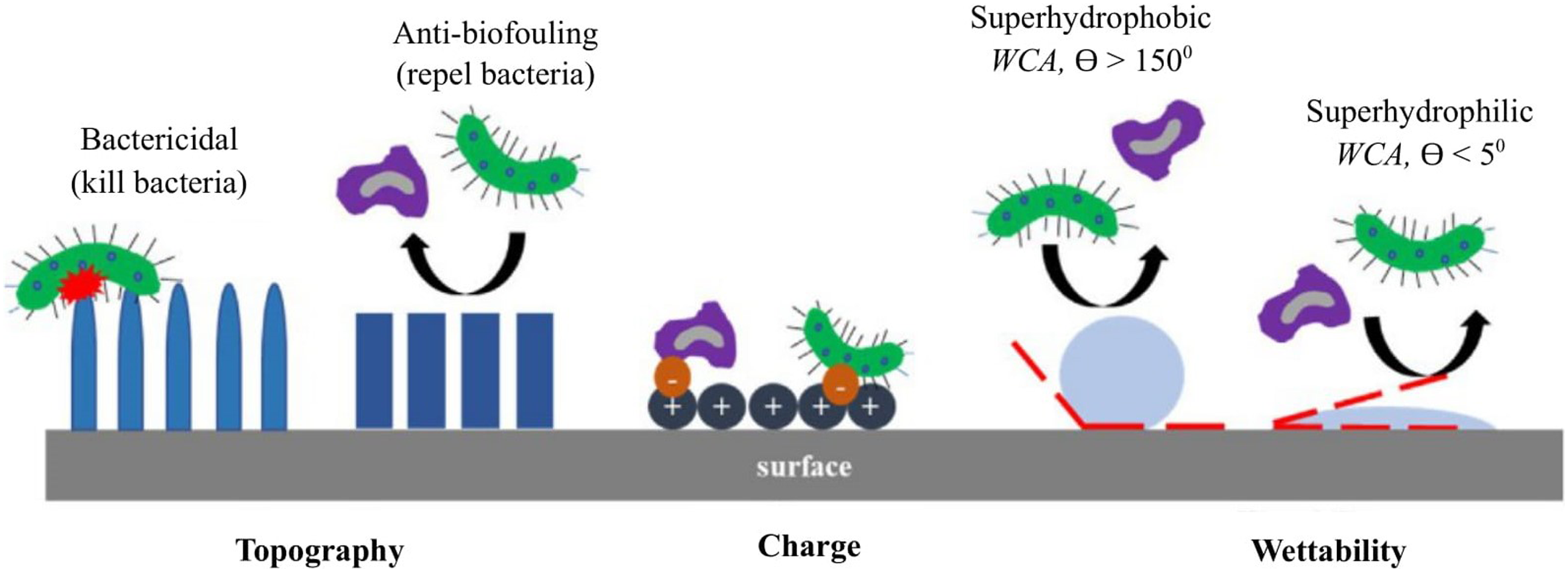
Engineering the surface properties of PLA/ZnO nanocomposites can achieve strong antibacterial properties while minimizing the concentration of ZnO NPs and addressing processing issues. Surface properties such as topography, roughness, energy, charge, and wettability significantly influence the antibacterial properties of composites. 201 This section discusses the surface properties of PLA-ZnO nanocomposites and suggests future research on their potential antibacterial effects for food packaging and medical applications. The surface charge influences the electrostatic interactions between the material surface and bacterial cells, with most bacteria having a global negative charge. This is caused by the presence of amino groups, carboxyl groups, and teichoic acid in the thick peptidoglycan layer of gram-positive bacteria. The outer membrane of gram-negative bacteria is primarily composed of a negatively charged lipopolysaccharide layer, which is a major glycolipid component.47,202 Hence, positively charged surfaces typically have stronger antibacterial activity owing to electrostatic attraction as they bring bacterial cells closer to the surface, promoting antibacterial mechanisms. However, some studies have suggested that negatively charged surfaces may also interact with bacterial cells. 203 This is because bacteria can bind to negative surfaces through appendage-like fimbriae by reducing the electrostatic repulsion of like charges. 201
The surface topography, as depicted in Figure 10, provides antibacterial properties to a material without altering its bulk properties. Bacteria typically prefer rough surfaces over smooth surfaces owing to surface protrusions, which shield them from external shear forces. However, bacteria cannot adhere if their topographical features are smaller than those of the cells.
47
Natural antibacterial surfaces, such as lotus leaves, are often found owing to their micro/nano features, making them a popular choice for self-cleaning and antifouling purposes. Consequently, numerous researchers have utilized biomimetic strategies inspired by nature to create micro/nanotextured surfaces with potent antibacterial properties.
117
For example, a novel morphology-regulating strategy has been reported for the fabrication of films with hierarchical micro-nano structures that exhibit superhydrophobicity.
204
Such surface modifications could potentially reduce the agglomeration of ZnO nanoparticles, which is a common issue at high filler loadings, by providing a more favorable interface for the distribution of nanoparticles. However, PLA/ZnO nanocomposites have not been thoroughly examined. The literature currently lacks specific studies on the impact of surface properties on the antibacterial efficacy of PLA/ZnO composites and the consequences of these properties on the active packaging capabilities. Further research is required to understand how the surface properties of PLA/ZnO composites can enhance their antibacterial and active packaging properties. Correlation between surface properties and antibacterial properties.
47
Optimization of processing parameters
Thermoplastic materials, such as PLA, require a high melting viscosity, high processing temperature, and difficulty in wetting out fibers or particles. High temperatures can cause severe degradation, rendering it vulnerable to degradation above 200°C. Understanding thermal properties of PLA, such as its Tg, crystallinity, and melt temperature/enthalpy, is crucial because these parameters define its rheological behavior under processing conditions. As a result of PLA’s high hygroscopicity, which makes it necessary to dry the material before processing to prevent a molecular weight reduction coming from hydrolysis, this is another crucial consideration. PLA must be dry during processing in areas with high relative humidity (RH). Some authors have suggested that PLA should be dried to a water content below 250 ppm (0.025 wt) in industrial processing. Therefore, the temperature profile during PLA extrusion must be tightly controlled because of factors such as water hydrolysis, depolymerization-type zipper, oxidative processes, intermolecular transesterification to monomers and oligomer esters, and intramolecular transesterification to monomers and oligomers.100,205,206
It is important to mention that optimization of the processing parameters is crucial for mitigating the manufacturing issues associated with PLA/ZnO nanocomposites. The reviewed studies provide insights into various strategies and considerations for optimizing these parameters. Vinay et al. 207 emphasized the importance of optimizing factors such as filling quantity, extruded temperatures, raster orientation, and film thickness to improve functional and mechanical characteristics like tensile strength and adhesion in FDM processes. Murariu et al. 152 introduced the addition of a chain-extender to increase the melt viscosity and molecular mass, which limits the degrading effects of ZnO and improves the processability of PLA/ZnO nanocomposites. Interestingly, while the focus of these studies was on PLA/ZnO nanocomposites, the principles of optimizing the processing parameters can also be applied to other polymer nanocomposites. For instance, solution processing and in situ polymerization have been highlighted as advantageous techniques for graphene-based nanocomposites because of their ability to achieve homogeneous dispersion. 158 Similarly, alignment techniques for carbon nanomaterials have been proposed to enhance the properties of polymer nanocomposites. 208 Therefore, optimization of the processing parameters for PLA/ZnO nanocomposite manufacturing involves careful consideration of the interaction between PLA and ZnO NPs, processing temperature, and desired mechanical properties. The MB approach, use of chain extenders, and control of FDM process variables are all effective strategies for addressing manufacturing challenges. These optimizations not only improve the material properties, but also enhance the overall manufacturability of PLA/ZnO nanocomposites.152,207
Antibacterial mechanisms of ZnO NPs in PLA composites
The antibacterial mechanisms of the ZnO NPs in PLA composites are multifaceted. Literature suggests that the bactericidal nature of ZnO NPs includes physical contact with the bacterial cell wall, generation of ROS, and release of Zn2+ ions. 209 These mechanisms are effective against both Gram-positive and Gram-negative bacteria, demonstrated by the enhanced antibacterial activity of PLA composites incorporating ZnO NPs.37,38 Interestingly, the addition of ZnO NPs to PLA not only contributed to the antibacterial properties but also affected the physical properties of the composites. For instance, the dispersion of ZnO NPs within PLA matrices can enhance mechanical properties such as stress and Young’s modulus. 37 However, there is a complex scientific debate regarding the antibacterial mechanism of PLA/ZnO nanocomposites. 40 This section discusses the factors affecting the antibacterial mechanisms of the PLA/ZnO nanocomposites and their scientific discourse.
Effect of bacterial species on the antibacterial mechanisms
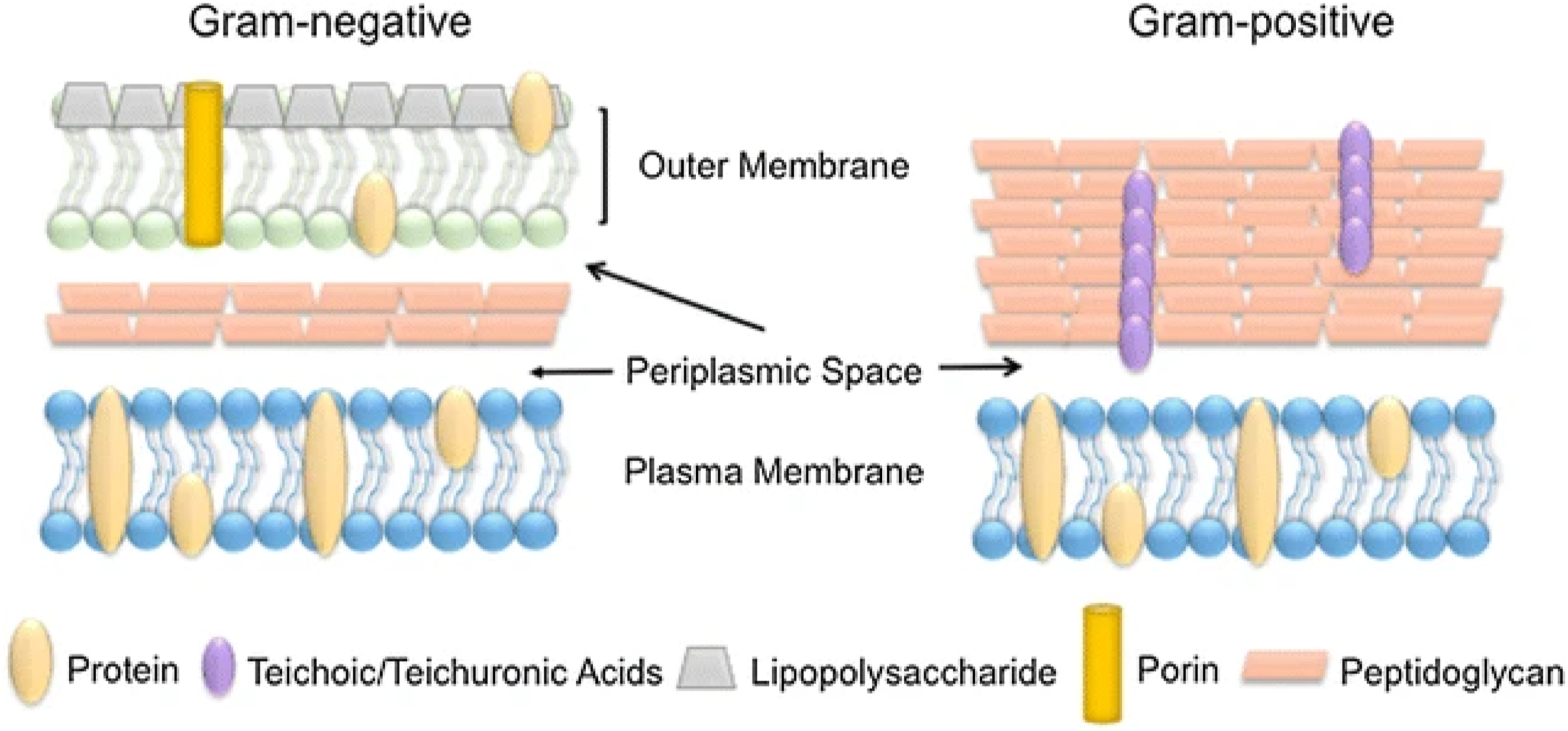
Bacteria are classified into two groups based on their cell wall structure: gram-positive and gram-negative. Gram-positive bacteria have a thick peptidoglycan layer, while Gram-negative bacteria have a thin peptidoglycan layer and an additional outer membrane made of lipopolysaccharide, resulting in an extra membrane layer called periplasm
210
(Figure 11). Comparison of bacterial cell wall structures.
210
The antibacterial mechanism of ZnO NPs in PLA composites appears to be influenced by the bacterial species. Jamnongkan et al. 37 reported that PLA/ZnO nanocomposites exhibited good antibacterial activity against both gram-positive (S. aureus) and gram-negative (E. coli) bacterial strains. This suggests that the antibacterial mechanism of ZnO NPs in PLA composites is effective against various types of bacteria. However, Mizielińska et al. 211 noted that while PLA films with incorporated ZnO NPs decreased the number of analyzed microorganisms, the antibacterial activity was differentially affected by accelerated UV aging depending on the type of bacteria, with Gram-negative cells and C. albicans being more affected than Gram-positive bacteria. Interestingly, the antibacterial activity of ZnO NPs did not seem to be uniform across all bacterial species. For instance, Mendes et al. 212 reported that ZnO NPs did not interfere with the assembly of the divisional Z-ring in B. subtilis, a Gram-positive bacterium, but did cause damage to the cytoplasmic membrane. This indicates that the antibacterial mechanism may involve different pathways or have varying efficacies depending on the bacterial species and structural components targeted by ZnO NPs.
Factors, such as the integrity of bacterial membranes and susceptibility to oxidative stress induced by ZnO NPs, may play a role in this variability. The antibacterial activity of ZnO NPs does not appear to require UV activation, and can occur under ambient lighting conditions, as demonstrated in a study on S. aureus. 213 This suggests that the antibacterial mechanism may involve the production of ROS and accumulation of nanoparticles in the cytoplasm or on the outer membranes of bacteria, which could be a common pathway affecting various bacterial species. Further research into the specific interactions between ZnO NPs and different bacterial species could elucidate the nuances of these mechanisms and potentially inform the design of targeted antibacterial species.37,211,212
Notably, the effectiveness of PLA/ZnO nanocomposites against gram-positive and gram-negative bacteria is a topic of interest in the scientific community. Discourse on the effectiveness of PLA/ZnO nanocomposites against bacterial strains does not yield a consensus on whether Gram-positive or Gram-negative bacteria are more susceptible. Chong et al. 45 discussed the antibacterial activity of PLA/ZnO nanocomposites without specifying a differential effectiveness between Gram-positive and Gram-negative bacteria. This highlights the need for further research in this area for the potential applications and manufacturing processes of PLA-ZnO nanocomposites. Contradictory results have been presented in other studies regarding the susceptibility of different bacterial types to ZnO NPs. Saif-Aldin et al. indicated that Gram-positive bacteria are more sensitive to ZnO NPs, while Emami-Karvani 215 suggested that Gram-negative bacteria are more resistant to ZnO NPs. Yusof et al. 216 also supports the notion that Gram-negative bacteria are more resistant to ZnO NPs than Gram-positive bacteria. Conversely, Negi et al. 217 reported that Ag2O nanoparticles exhibit higher antibacterial efficacy against gram-negative bacteria than gram-positive bacteria, which is not directly related to PLA/ZnO nanocomposites but is still relevant to the broader discussion of nanoparticle antibacterial activity.
Antibacterial properties of the PLA-ZnO nanocomposites against gram-positive and gram-negative bacteria.
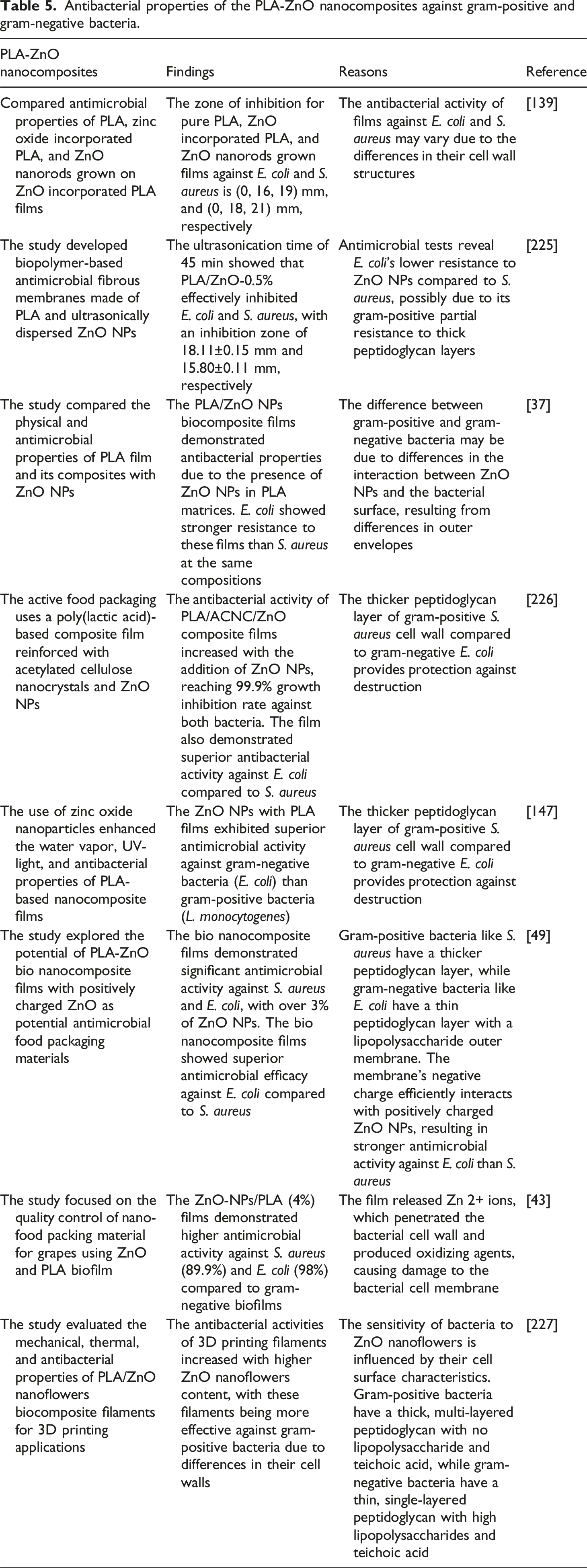
On the other hand, some researchers have discovered that PLA-ZnO nanocomposite films lack antimicrobial activity, possibly because of the hydrophobic nature of the PLA polymer, which restricts ZnO transfer to bacteria in agar. Heydari-Majd et al. 220 study revealed that PLA/ZnO films did not exhibit any antimicrobial activity against bacteria, as no inhibition zones were detected on agar plates. Ahmed et al. 221 found that PLA/ZnO films were ineffective in limiting bacterial growth on agar plates, as they were found to be similar to previous studies. The antimicrobial activity of the PLA/ZnO films was not widely agreed upon, but it was also observed for other nanoparticles. Rhim et al. 222 found that PLA/nanoclay films were ineffective against most foodborne pathogens due to their hydrophobic nature. Similarly, Jin et al. 223 found no inhibition of the antibacterial activity of hydrophobic polystyrene containing ZnO against Listeria monocytogenes. The authors claimed that tightly bound ZnO within the polystyrene film hindered its release and expression for antibacterial activity. Raquez et al. 224 found PLA/ZnO or PLA/Ag films effective against both gram-positive and gram-negative bacteria, suggesting no consensus on the antimicrobial activity of nanoparticle-containing PLA films.
Time dependent antibacterial mechanisms
The antibacterial mechanism of the ZnO NPs in PLA composites involves a multifaceted process that unfolds over time. The physical contact between ZnO NPs and bacterial cell walls is a critical factor.
209
This interaction is followed by the generation of ROS and free radicals, along with the release of Zn2+ ions, which collectively contribute to the antibacterial effect.
209
The time-dependent nature of this mechanism is likely due to the gradual release of Zn2+ ions and sustained generation of ROS over time, which continuously attacks and inhibits bacterial growth. For instance, Shankar et al.
228
tested the antimicrobial activity of PLA/ZnO composite films against food-borne pathogenic bacteria, E. coli and L. monocytogenes. The results showed that The PLA/ZnO NPs composite films exhibited distinctive antimicrobial activity against both bacteria, depending on the type of bacteria and the release rate of ZnO NPs from the PLA matrix (Figure 12). The initial increase in microbial count was likely due to the slow release of ZnO NPs from the PLA matrix, as shown in Figure 12(a).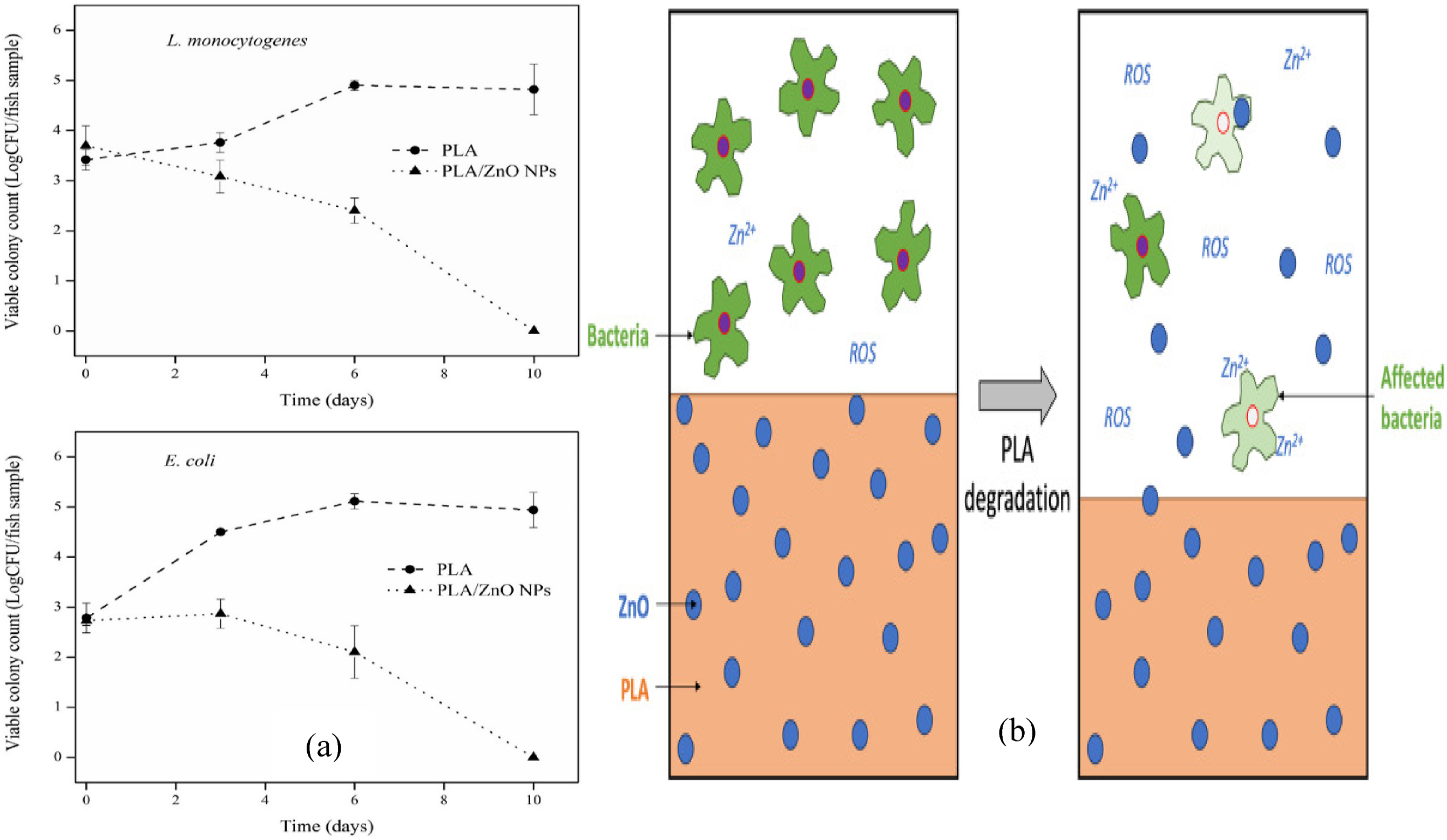
Interestingly, the incorporation of ZnO NPs into PLA composites not only enhanced the antibacterial properties but also affected the physical properties of the composite material. For instance, the addition of ZnO NPs to PLA has been shown to alter the crystallinity of the PLA matrix, which could influence the release rate of Zn2+ ions and, consequently, the time-dependent antibacterial activity.
38
Moreover, the addition of ZnO NPs to PLA matrices complicates the degradation mechanism of PLA because they are known to catalyze the hydrolytic degradation of PLA. The water molecules adsorbed on the surface of the ZnO NPs were partially dissociated to form hydroxyl groups.171,186 Figure 13(a) shows that the hydroxyl groups on ZnO interact with the acid end groups of the PLA chains, thereby promoting the hydrolytic degradation of PLA. The degradation of the PLA matrices in the PLA/ZnO nanocomposites resulted in the release of ZnO NPs and Zn2+.230,231 The catalytic degradation of ZnO on PLA can be regulated to release ZnO or Zn2+ at a rate suitable for food packaging and medical activities. The biodegradation release system offers advantages such as prolonging nanomaterial release for sustained antibacterial properties in long-term medical treatments or food packaging and minimizing the potential cytotoxic effects of ZnO and Zn2+ by preventing excessive exposure due to burst release from the matrix, as shown in Figure 13(b).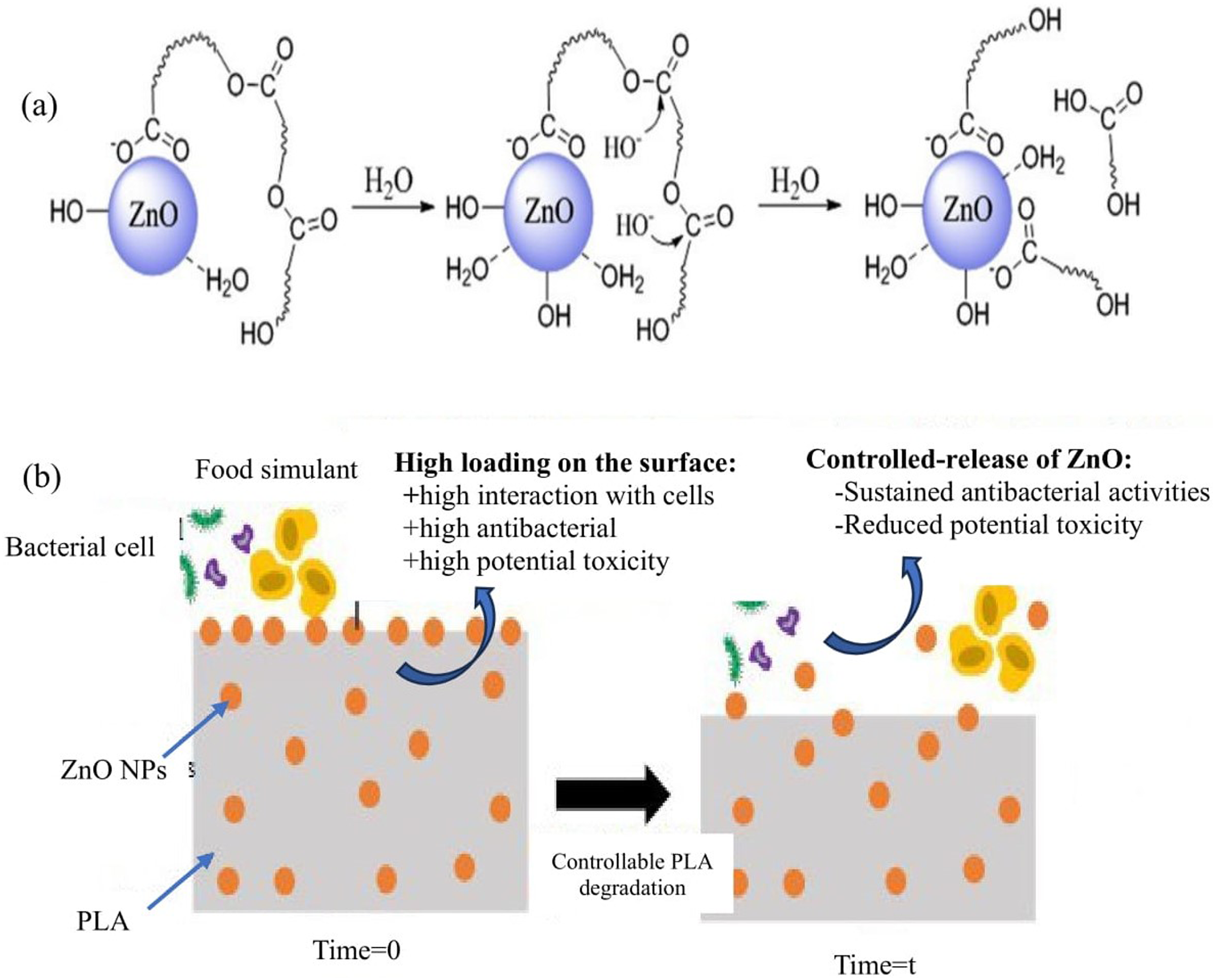
The release of ZnO and Zn2+ from PLA/ZnO nanocomposites can be regulated by altering various parameters. 47 The type of culture medium used was a key parameter. Lu et al. 231 found that the release of ZnO from PLA/ZnO nanocomposite films increased when incubated in 10% ethanol instead of 10% isooctane. The migration of Zn2+ was influenced by the concentration of ZnO nanofillers, degradation time, and food simulants in the culture medium. Heydari-Majd et al.’s 230 study substantiated the impact of culture medium type on Zn2+ migration from PLA/ZnO nanocomposites. Moreover, the release of Zn2+ increased with increasing temperature of the culture medium, indicating a significant impact on this process. One of the common findings of these studies was that Zn2+ migrated slowly from PLA and PLLA into the culture medium, and the concentration of released Zn2+ was non-cytotoxic.230,231 Therefore, material biocompatibility is typically favored by minimal metal ion release; however, this may not be sufficient for effective active food packaging and therapeutic treatment.
ZnO NPs location is another important factor that influences PLA dissolution and ZnO NPs’ antibacterial activity, since the effects vary depending on whether NPs are positioned inside or on top of the PLA matrix. ZnO NPs encapsulated within PLA, rather than protruding from the surface, typically exhibit weaker antibacterial activity within the first 24 h. This phenomenon is linked to the absence of an immediate interaction between the encapsulated nanoparticles and bacteria. 47 However, the gradual degradation of PLA releases or exposes antibacterial agents, leading to an increase in their antibacterial effect over time, as previously discussed. 229 Although a time-dependent increase in antibacterial activity was noted, it is also important to consider that nanoparticle agglomeration can reduce the antimicrobial efficiency of PLA mats beyond an optimal concentration, as observed by Rokbani et al. 232 This suggests that there is a balance between the effective release of nanoparticles and their tendency to agglomerate, which can influence the overall antibacterial performance.
However, there is a scientific debate regarding the time dependency and increased activity of PLA/ZnO nanocomposites over time, which can be approached by examining the findings from the literature. Pantani et al. 229 suggested that the antibacterial activity of PLA/ZnO nanocomposites is indeed time-dependent, with stronger activity observed after 7 days. This can be attributed to the gradual release of ZnO NPs or ions and the degradation of PLA, which are known for their antimicrobial properties, as shown previously in Figure 12(b). Additionally, it is important to note that the amount of ZnO NPs or ions released and the rate of PLA degradation can be adjusted to optimize the antimicrobial properties of the material. However, Emami-Karvani 215 indicated that the antibacterial effect of ZnO NPs is also time-dependent but does not explicitly mention an increase in activity over time; rather, it describes the effect as gradual. Therefore, it is important to consider the time-dependent nature of the antibacterial effect of ZnO NPs as this may not necessarily result in increased activity over time. Hence, the time-dependent nature of the antibacterial effect of ZnO NPs should be considered, as it may not always result in greater activity over time. In contrast to these results, Jalali and Allafchian 233 discovered that the composite with Ag NPs had a lower release of Ag + over time, suggesting that the release of antimicrobial agents from nanocomposites may decrease rather than increase with time.
Similarly, the antibacterial effect of ZnO NPs in PLA/ZnO nanocomposites may decrease over time owing to several factors, although the context provided does not explicitly address the temporal stability of the antibacterial effect. One possible explanation is the aggregation of ZnO NPs within the PLA matrix, which may reduce the surface area available for interaction with bacteria over time. 234 Additionally, the degradation of PLA could lead to a change in the distribution of ZnO NPs, potentially decreasing their effective concentration at the surface of the nanocomposite where they exert their antibacterial action.49,234 Another interesting aspect is the potential leaching of ZnO NPs from the PLA matrix, which could diminish the antibacterial effect as the concentration of active ZnO NPs at the surface decreases. 49 Furthermore, the generation of ROS by ZnO NPs, which is a key mechanism for their antibacterial activity, may be affected by changes in the PLA matrix over time, such as alterations in polymer crystallinity or the presence of other additives. 39 Further research is required to elucidate the specific mechanisms and develop strategies to maintain the antibacterial activity of the PLA/ZnO nanocomposites for extended periods.
Effect of ZnO morphology on the antibacterial mechanisms
The morphology of ZnO within PLA/ZnO nanocomposites plays a crucial role in determining the antibacterial mechanism of the material. The interaction between ZnO NPs and bacterial cells is influenced by the surface area and shape of the nanoparticles, which in turn affects the production of ROS and subsequent bacterial cell death. 49 The specific surface area and availability of active sites on ZnO are influenced by its morphology, which, in turn, affects its antibacterial efficacy. For instance, ZnO pillared organic saponite with a partially intercalated nanolayer structure was homogeneously dispersed in the PLA matrix, enhancing the antibacterial properties of the nanocomposite. 235 Interestingly, Otieno et al. 40 reported the presence of spherical and rod-shaped ZnO NPs, which could imply that the shape of these nanoparticles affects their interaction with the PLA matrix and, potentially, their antibacterial properties. Gharpure and Ankamwar 209 discussed the bactericidal nature of ZnO NPs, including the physical contact between the nanoparticles and the bacterial cell wall, generation of ROS, and release of Zn2+ ions. Although the paper does not directly link shape to the antibacterial mechanism, it is reasonable to infer that shape could influence these interactions.
Tajdari et al. 236 compared the antibacterial activity of composites loaded with ZnO nanorods or ZnO spherical NPs, finding no significant differences. However, Dash et al. 237 indicated ZnO nanostructures, such as wire and rod-shaped, have been found to penetrate bacterial cells more easily than spherical ones, and the biocidal activity of flower-shaped ZnO NPs is higher than those of spherical and rod-shaped NPs. Akshaykranth et al. 139 investigated the antibacterial properties of pure PLA, ZnO-incorporated PLA, and ZnO nanorods grown on ZnO-incorporated PLA films. The films were tested against E. coli and S. aureus. The zones of inhibition for pure PLA, ZnO-incorporated PLA, and ZnO nanorods were 0, 16, 19, 0, 18, and 21 mm, respectively. The ZnO nanorod film showed greater antibacterial activity than the pure PLA and ZnO-mixed PLA films. They also highlighted that this process could be easily adapted for large-scale packaging applications. Furthermore, Zubair and Akhtar 238 revealed that nanorod-shaped ZnO NPs demonstrated superior antibacterial activity against all tested strains compared with novel hierarchical flowers. Therefore, conclusions regarding particle geometry should be made cautiously, as they might be blurred by other competing mechanisms. The active surface available for interacting with bacteria is likely to be the governing factor, not the particle size or morphology. 236
Notably, the morphology of ZnO can also lead to variations in the physical properties of PLA/ZnO nanocomposites, which may indirectly influence the antibacterial mechanism. For example, the rough surface and poor dispersion of ZnO NPs can result in morphological defects that reduce the crystallinity of the material. 49 Conversely, well-dispersed ZnO NPs in the PLA matrix can improve the mechanical properties and thermal stability of nanocomposites, 235 potentially affecting the durability and longevity of the antibacterial effect. The scientific debate regarding the effect of ZnO morphology on the antibacterial mechanism of PLA/ZnO nanocomposites centers on how the shape, size, and distribution of ZnO particles influence the antibacterial efficacy and mechanical properties of composite materials. 239 Although ZnO NPs have been found to impart antibacterial properties to PLA composites, their morphology plays a crucial role in determining the overall performance of the material. The debate is ongoing, as researchers continue to explore optimal ZnO morphologies that balance antibacterial efficacy with desirable mechanical and thermal properties.
Effect of ZnO size and loading on the antibacterial mechanisms
The antibacterial mechanism of PLA/ZnO nanocomposites is influenced by the size and loading of ZnO NPs. Studies have shown that the antibacterial activity of ZnO NPs is directly related to their concentration and is size dependent. 237 Smaller ZnO NPs have a larger surface-area-to-volume ratio, which can lead to more effective contact with bacteria, thereby enhancing antibacterial activity. 49 The loading of ZnO NPs also affected the antibacterial properties of the nanocomposites. Higher loadings of ZnO have been shown to increase antibacterial efficacy, as demonstrated by the complete growth inhibition of E. coli with over 3% ZnO NPs. 49 However, excessive loading can lead to agglomeration and morphological defects, which may reduce the mechanical properties and thermal stability of nanocomposites. 90 Interestingly, while higher loadings of ZnO can enhance antibacterial activity, they can also negatively impact the physical properties of the PLA matrix. For instance, ZnO aggregates were observed at higher loadings, which led to a decrease in the molecular weight of PLA and a reduction in thermal stability. 90 Moreover, the positively charged surface of ZnO NPs can interact with the negatively charged bacterial membrane, leading to ROS production and bacterial cell death. 49 Therefore, optimizing the size and loading of ZnO is crucial for balancing the antibacterial performance with the material properties of PLA/ZnO nanocomposites. However, these studies did not directly compare the relative impact of ZnO size and loading on the antibacterial mechanism. Instead, they offer insights into how each factor contributes to the antibacterial properties of the nanocomposites.39,240,241
The scientific debate on the effect of ZnO size and loading on the antibacterial mechanism of PLA/ZnO nanocomposites centers on how these factors influence antibacterial efficacy and the underlying mechanisms. While some studies suggest that smaller ZnO NPs may have greater antibacterial activity owing to their larger surface-area-to-volume ratio, 242 others indicate that the loading level of ZnO is critical, with higher concentrations potentially leading to more effective microbial inhibition.184,243 However, the role of the particle size and leading remains controversial, as smaller particles are more likely to form agglomerations of larger clusters with a reduced active surface. Liu et al. 244 used 6 mm standard antibacterial tablets and observed an inhibition zone against S. aureus and E. coli after 18 h. As the ZnO content in the PLLA nanocomposites increased, an increasingly large inhibition zone was observed, indicating a high antimicrobial efficiency. Nevertheless, the choice of ZnO loading is a complex issue, as increasing filler loading can not only increase antibacterial activity, but also worsen processability, potential toxicity, and environmental hazards. Agglomeration phenomena are critical because they reduce the effective surface area of nanoparticles for bacterial interactions. 47 Kim et al. 49 confirmed that nanocomposite films with more than 3% ZnO NPs display rough surfaces, poor dispersion, hard agglomerates, and voids, resulting in reduced crystallinity and morphological defects. However, nanocomposite films containing >3% ZnO NPs demonstrated significant antimicrobial activity against S. aureus and E. coli. Likewise, Chong et al. 187 highlighted that ZnO nanofillers can accelerate matrix degradation and aggregate in PLA matrices, negatively impacting the printability and mechanical performance of nanocomposites. Therefore, two competing phenomena are involved, as the strong tendency to agglomerate at high filler loadings is expected to outweigh the advantages of an increased filler concentration. 245 Restrepo et al. 153 applied polyvinyl alcohol coating to enhance the dispersion of ZnO nanorods in PLA. Antibacterial assays showed increased antibacterial activity with increasing nanofiller loadings. Composites with 3 wt% coated ZnO particles completely inhibited bacterial growth after 2 h. Surface treatment improves the filler dispersion and distribution, increasing the effective surface area of ZnO for interaction with bacteria. However, complete inhibition was not achieved with uncoated nanoparticles, and the antibacterial activity did not improve with nanofiller loading owing to poorly dispersed and aggregated nanoparticles. Minimizing agglomeration is crucial for maximizing antibacterial activity and is a significant challenge in the production of PLA-ZnO nanocomposites.
Contradictions arise when the effects of ZnO on the mechanical and thermal properties of PLA nanocomposites are considered. For instance, high ZnO loading can enhance antibacterial properties but may also compromise the mechanical properties of the PLA matrix. 243 Conversely, the addition of ZnO NPs improves the mechanical and thermal stability of PLA/ZnO nanocomposites. 235 Furthermore, the size of ZnO NPs can influence the degradation of PLA, with smaller particles potentially accelerating the degradation. 90 In general, scientific discourse suggests that both the size and loading of ZnO NPs in PLA/ZnO nanocomposites are crucial factors that affect their antibacterial activity. Smaller nanoparticles may offer better antibacterial effects owing to their increased surface area, whereas higher loadings of ZnO can enhance antibacterial efficacy. However, these enhancements must be balanced against potential negative impacts on the mechanical and thermal properties of the PLA matrix. Further research is needed to optimize the size and loading of ZnO to maximize the antibacterial effects while maintaining or improving the material properties of PLA/ZnO nanocomposites.
Potential applications of PLA/ZnO nanocomposites
The potential applications of PLA/ZnO nanocomposites are diverse, primarily owing to the combination of biocompatibility of PLA and multifunctional properties of ZnO NPs.
246
Specifically, they have been identified for use in wound dressings, food packaging with antimicrobial properties,
164
and as part of controlled drug-release systems.
247
Interestingly, the addition of ZnO NPs to PLA not only imparts antibacterial properties but also enhances the thermal stability and mechanical performance of the material.45,246 Moreover, surface treatment of ZnO with silane compounds has been shown to improve the dispersion of nanoparticles within the PLA matrix, which is crucial for achieving the desired properties in the final product.
42
Additionally, the incorporation of chain extenders has been found to mitigate the degrading effects of ZnO on PLA, further enhancing the processability of nanocomposites.
246
Ongoing research and development in this area suggests a bright future for the wider adoption of PLA/ZnO nanocomposites in various industries (Figure 14). Potential applications of PLA/ZnO nanocomposites.
248
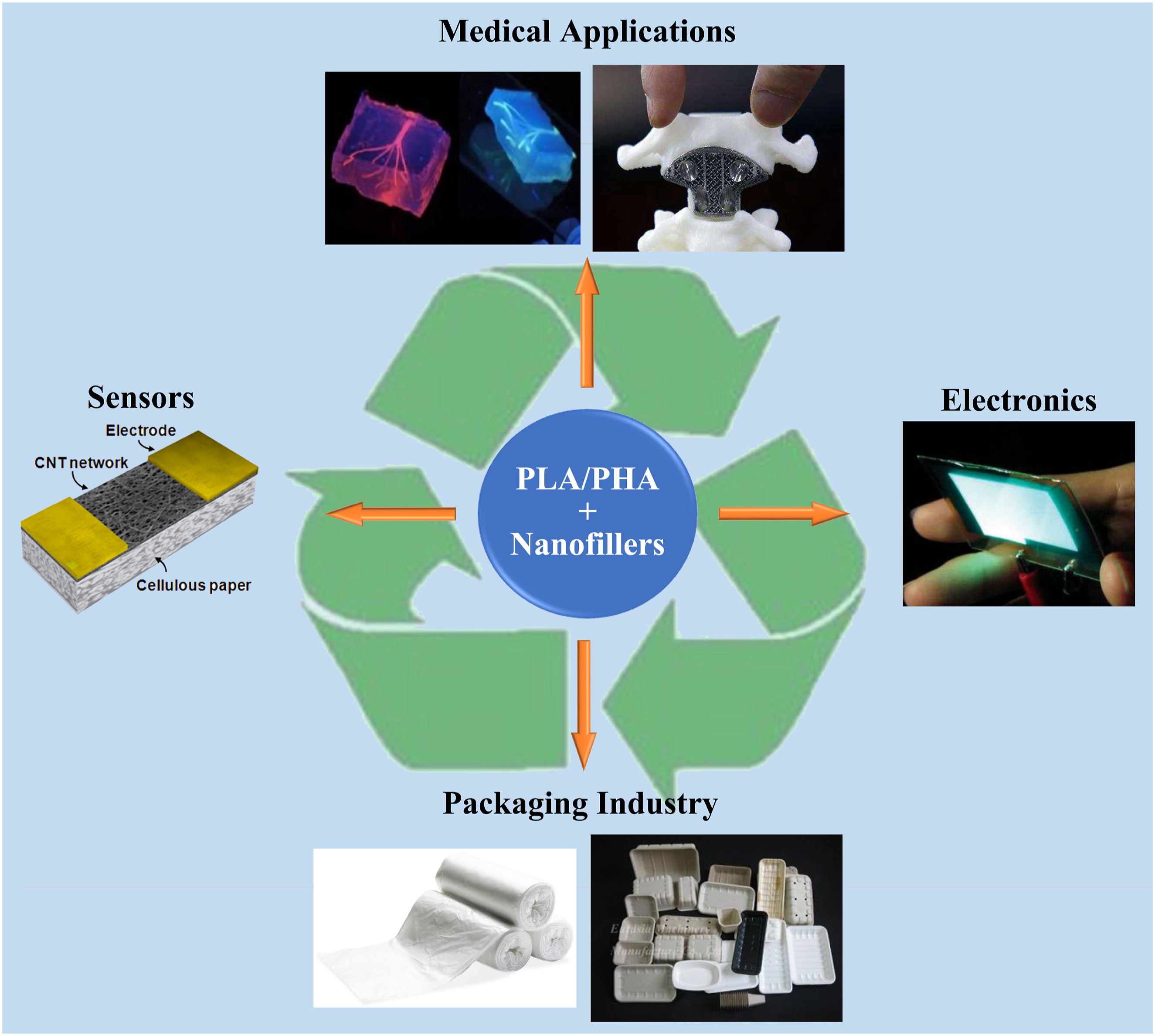
Medical application of PLA/ZnO nanocomposites
Medical devices and implants
PLA/ZnO nanocomposites has potential applications in biomedicine, particularly in the development of medical devices and implants. The unique properties of PLA, such as biodegradability and biocompatibility, make it an attractive polymer for medical applications, whereas the addition of ZnO NPs can enhance the mechanical strength and provide antibacterial properties.249,250 Nonato et al. 41 created films of PLA and PLA containing 1 wt% ZnO nanofibers. Their mechanical behavior was assessed using dynamic mechanical analysis (DMA) and a fatigue test at human body temperature. The results showed that PLA/ZnO had higher storage modules at higher temperatures and withstood more than 3600 cycles in the fatigue test. The antimicrobial effects of ZnO nanofibers and the PLA/ZnO composite were also observed in bacteria and yeast. These findings suggest that the material has the potential for use in bone implants owing to its antimicrobial activity and fatigue resistance. Interestingly, the nanocomposite could be utilized in the fabrication of containers for biomedical applications because of the properties of PLA and the enhanced barrier properties provided by ZnO nanoparticles. 249 Additionally, the antibacterial nature of ZnO could be beneficial in medical implants to reduce the risk of postsurgical infections. 250 However, it is crucial to consider the potential toxicity and ensure the biocompatibility of the nanocomposite for safe medical use. In general, PLA/ZnO nanocomposites are promising for use in medical devices and implants because of their improved mechanical properties and antibacterial effects. Further research on the biocompatibility and safety of these materials is essential to fully realize their potential in clinical applications.249,250
Catheters, bandages, and wound dressings
The application of PLA/ZnO nanocomposites in the medical field, particularly in catheters, bandages, and wound dressings, is an emerging area of research. Nanocomposite hydrogels incorporating ZnO nanoparticles have been shown to improve the mechanical properties and antibacterial activity of wound dressings.
251
This suggests that the PLA/ZnO nanocomposites could similarly enhance the performance of catheters and bandages by providing structural stability and reducing the risk of infection. A review of nanotechnology in wound dressings highlights the benefits of various nanomaterials, including metal oxides, in promoting wound healing and preventing infection.
252
This supports the potential applications of PLA/ZnO nanocomposites in these areas. The importance of nanoparticles in biomaterials for wound dressings is emphasized, with the specific properties induced by nanoparticles making them suitable for such applications.
253
Advancements in nanomaterials for wound healing, including their antimicrobial and anti-inflammatory effects, are also relevant.
254
These properties are critical for catheters and bandages, where prevention of infection is paramount. The use of nanoparticles for their intrinsic antibacterial and anti-inflammatory properties in wound healing is further discussed, which could be applicable to PLA/ZnO nanocomposites. Kazemi-Pasarvi et al.
242
conducted a study on ternary blends made from PLA/poly (ε-caprolactone)/thermoplastic starch with different concentrations of synthesized ZnO NPs and thymol. The study found that the addition of ZnO NPs and/or thymol diminished thermal stability and improved antibacterial activity. However, the addition of the 5 wt% ZnO NPs reduced cell viability to less than 20%. Thymol addition increased cell survival mainly because of its antioxidant properties. This study suggests that these nanocomposites could be used in innovative biomedical devices, such as wound healing films, owing to their high cell viability and superior antibacterial properties (Figure 15(a)). Rashedi et al.
247
created PLA/ZnO nanofibrous nanocomposites loaded with tranexamic acid (TXA) for wound healing patches. The nanofibers had a small pore size, which allowed for oxygen permeation. The wound dressing did not harm human dermal fibroblast cells, and antibacterial studies showed a 75% and 98% reduction in bacterial colonies against E. coli and S. aureus, respectively. In vivo tests on mouse models showed that the nanocomposites enhanced wound healing, indicating their potential as wound dressings for rapid healing and skin cell proliferation (Figure 15(b)).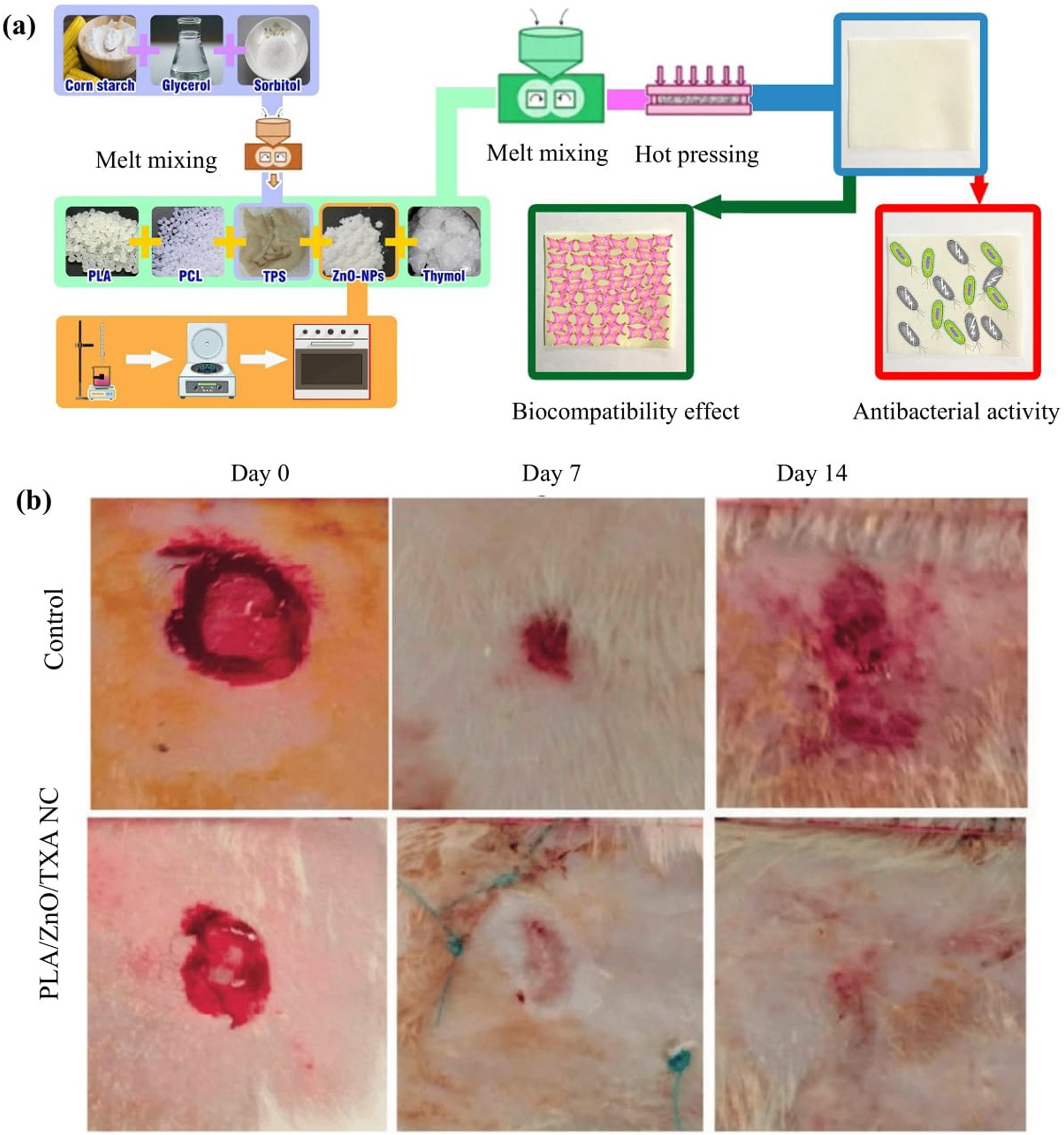
Additionally, the development of modern wound dressings with multilayer structures and specific functions has been mentioned,
255
which could be enhanced by the integration of PLA/ZnO nanocomposites. Hou et al.
256
created a nanofibrous bilayer membrane using electrospinning for wound dressing. Membranes made of PLA/ZnO–sodium polyacrylate (PAN) nanofibers and polyacrylonitrile-sodium polyacrylate (SPA) nanofibers have excellent physicochemical and biological properties. Its mechanical properties can reach 4.6 MPa, and when the hydrophobic layer is 3 µm thick and the hydrophilic layer is 44 µm thick, it can export excess biological fluid in 5.09 s, preventing the wound from wetting again. This membrane offers a feasible solution for chronic wound healing owing to its excellent water absorption, air permeability, thermal stability, and mechanical strength (Figure 16). Further research is needed to specifically investigate PLA/ZnO nanocomposites in this context and address any potential challenges related to their use.251–255 Preparation and characterization of unidirectional water-transported bilayer PLA/ZnO-PAN/SPA nanofibrous membranes for wound healing.
256
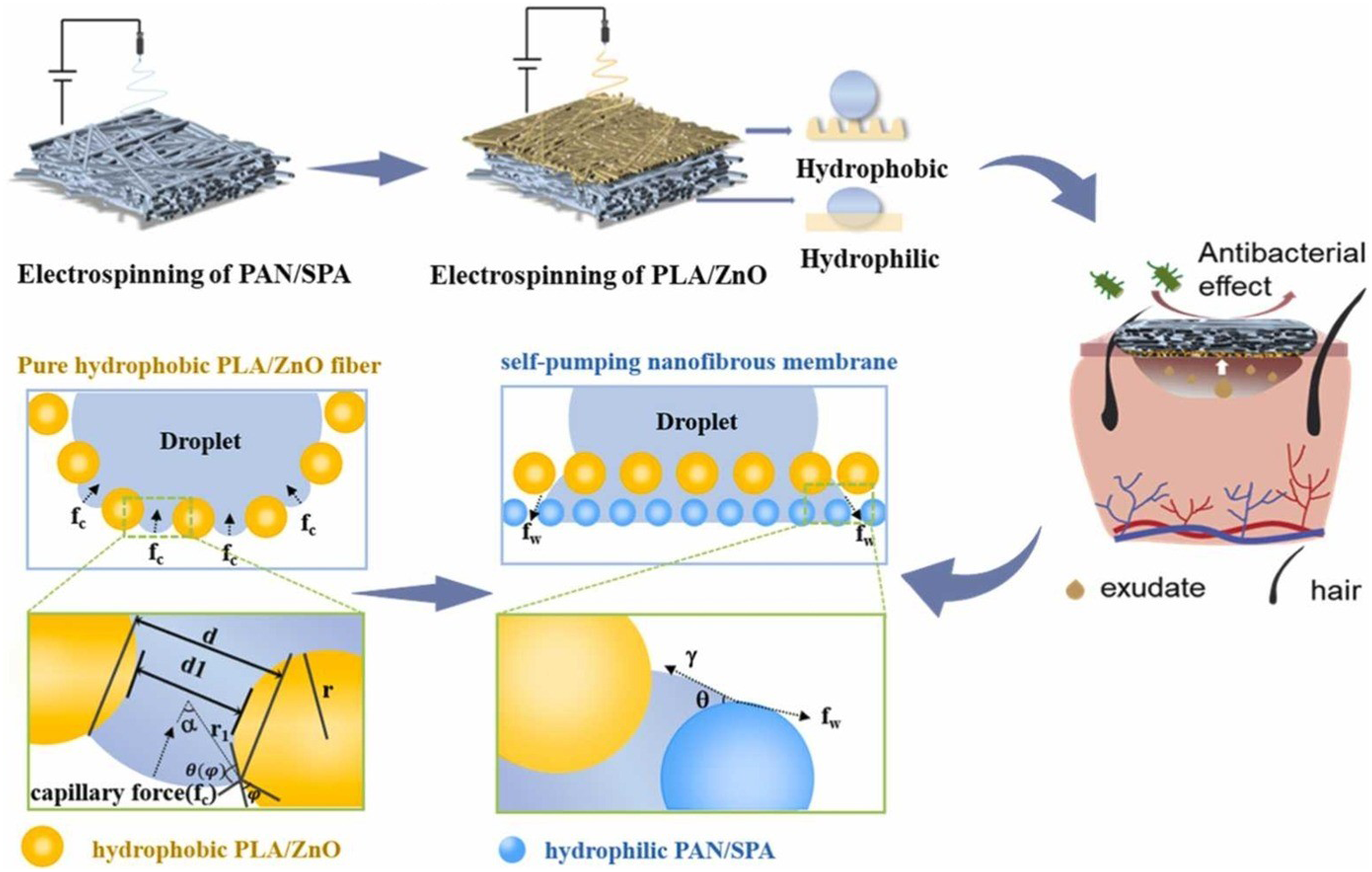
Drug delivery systems
PLA combined with ZnO NPs has been investigated for potential use in drug delivery systems. The incorporation of ZnO into PLA matrices aims to exploit the biocompatibility and biodegradability of PLA along with the antibacterial properties of ZnO, which could be beneficial for preventing infections associated with drug delivery devices.45,47 Additionally, PLA’s FDA approval of PLA for various biomedical applications supports its suitability for clinical translatability in drug delivery systems. 257 However, there are challenges in the formulation of PLA/ZnO nanocomposites, such as agglomeration of ZnO at high concentrations, which can be mitigated by the addition of plasticizers to improve the dispersion of ZnO within the PLA matrix. 48 Moreover, the surface treatment of ZnO, such as silanization, has been shown to enhance matrix-filler interfacial interactions and reduce thermal degradation, which could improve the mechanical properties of nanocomposites for drug delivery applications. 47 While research is ongoing to optimize the formulation and overcome challenges, such as nanoparticle agglomeration, these materials have the potential to contribute to the development of safer and more effective drug delivery devices. Further studies are needed to fully understand the processability and performance of PLA/ZnO nanocomposites for drug delivery applications.
Tissue engineering and regenerative medicine
PLA combined with ZnO NPs forms nanocomposites with potential applications in tissue engineering and regenerative medicine. PLA is a biodegradable and biocompatible polymer, whereas ZnO nanoparticles possess antibacterial properties and can enhance the mechanical strength of the composite.258,259 The integration of ZnO NPs into a PLA matrix can potentially create scaffolds with improved cell adhesion, proliferation, and differentiation, which are crucial for tissue regeneration. Grande-Tovar et al.’s
150
study on tissue engineering applications found that the addition of ZnO-NPs and TTEO to polycaprolactone and PLA membranes accelerated the degradation process of the PLA/PCL matrix. After 60 days, all membranes showed biodegradability and biocompatibility, allowing for healing without an aggressive immune response. Inflammatory cells fragment and reabsorb the membranes during resolution, while connective tissue with type III collagen fibers, blood vessels, and inflammatory cells continue the reabsorption process (Figure 17). Subdermal implants F1, F2, F3, and F4 at 60 days: (A) formulations from the 4 × HE technique, (B) formulations from the 10 × GT technique, and (C) formulations from the 100 × HE technique. Yellow oval: implantation zone. D: Dermis. M: Muscle. Fc: Fibrous capsule. IZ: Implantation zone. Col III: type III collagen. Yellow arrows indicate fragments of the materials. Red arrows indicate inflammatory cells. Blue arrows indicate the blood vessels. HE: Hematoxylin and Eosin staining. GT: Gomori technique.
150
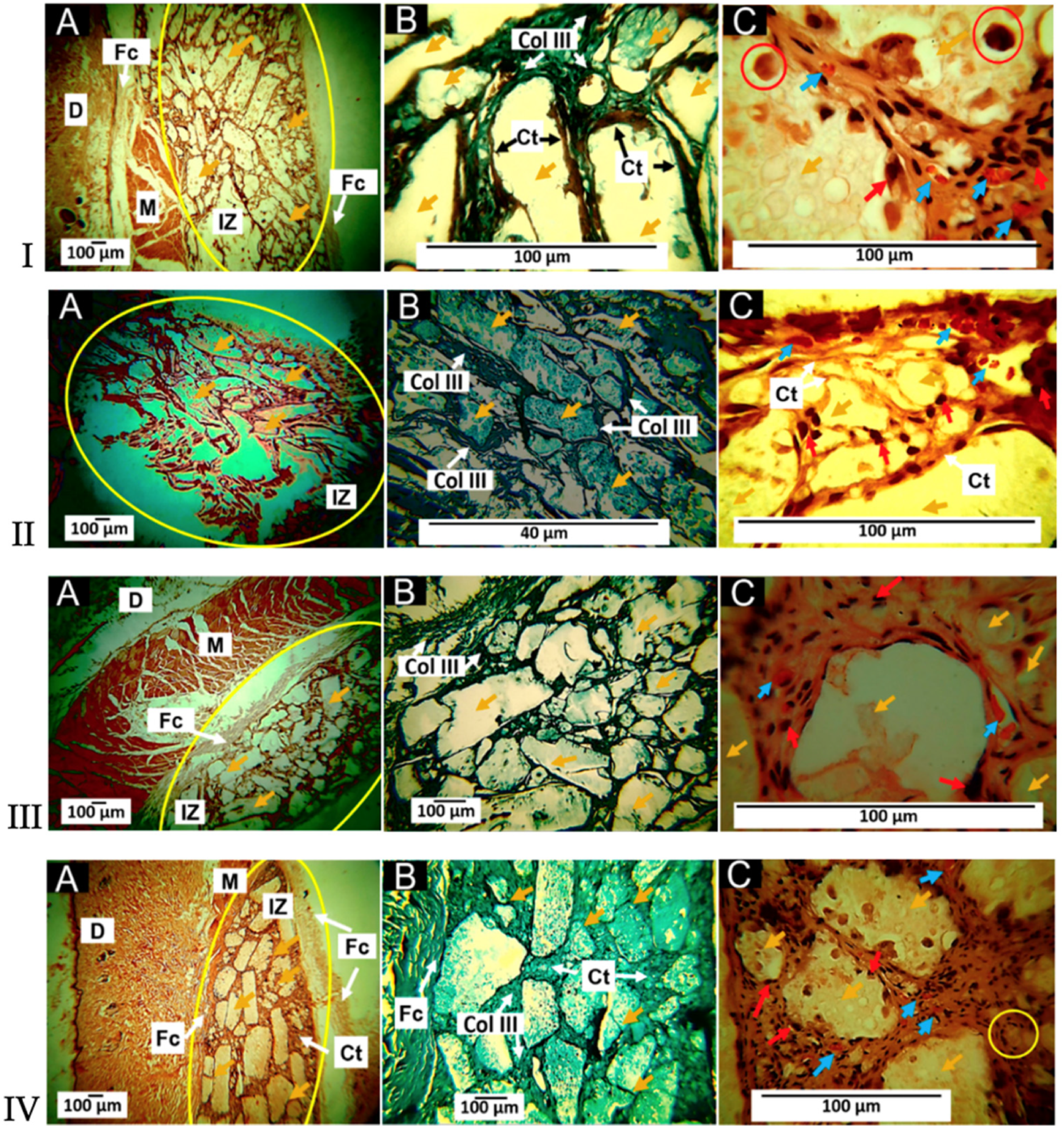
The properties of nanocomposites can be tailored to mimic the natural tissue environment, thereby promoting tissue repair and regeneration. The antibacterial nature of ZnO can also prevent infections at the implantation site, which is particularly beneficial in regenerative medicine.
258
Moreover, the mechanical properties of PLA/ZnO nanocomposites can be optimized to match those of native tissue, ensuring structural support and integrity during the healing process.
259
Jamnongkan et al.
260
created innovative biocomposite 3D printed filaments using PLA and ZnO nanoflowers. The filaments showed increased crystallinity compared to plain PLA, with slightly decreased properties and a higher ZnO nanoflower content. The filaments showed increased antibacterial activity, particularly against Gram-positive bacteria like S. aureus, and better performance against Gram-negative bacteria like E. coli (Figure 18). These filaments can be used for 3D printing and are applied in medical fields, indicating their potential for medical applications. However, further research is necessary to fully understand the interactions between these nanocomposites and biological systems and optimize their properties for clinical use.258,259 Comprehensive evaluation of mechanical, thermal, and antibacterial properties of PLA/ZnO nanoflower biocomposite filaments for 3d printing application.
260
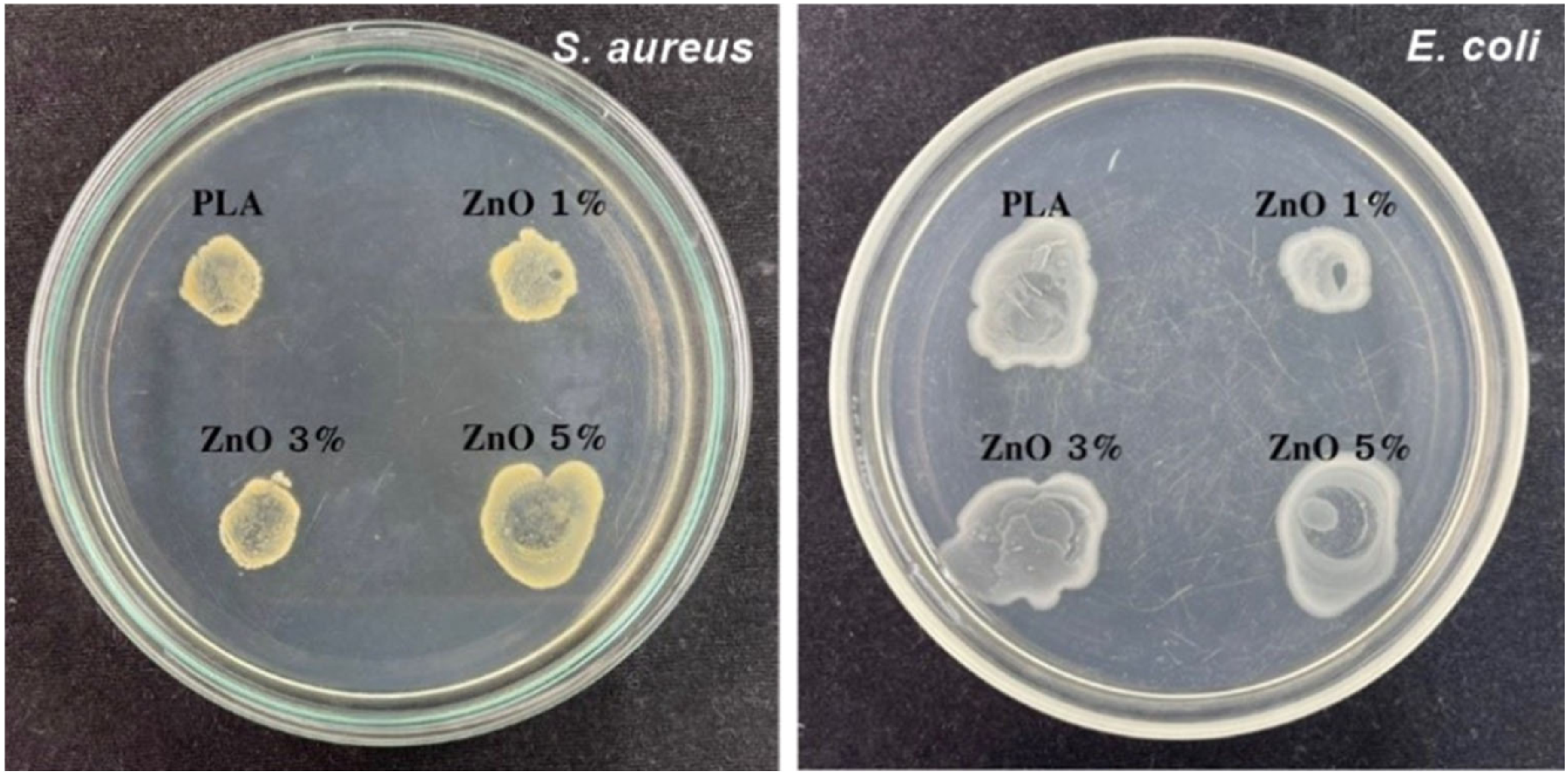
Food packaging and food contact materials
PLA combined with ZnO NPs has been extensively studied for application in food packaging, particularly as an active packaging material with antimicrobial properties. The integration of ZnO NPs into PLA matrices has been shown to enhance the mechanical, barrier, and antimicrobial properties of the resulting nanocomposites, making them suitable as food-contact materials.34,45,261 Interestingly, studies have revealed that the incorporation of ZnO into PLA significantly affects the properties of the final product. For instance, nanostructured aluminum-doped ZnO coatings sputter-deposited onto PLA films demonstrated uniform coverage and high visible transparency, along with strong antibacterial activity against E. coli.
262
Similarly, PLA/ZnO nanocomposites with halloysite nanotubes showed improved surface hydrophobicity, UV barrier properties, and antimicrobial activity, and practical packaging tests confirmed their efficacy in preserving cut apples (Figure 19(a)).
261
Kim et al.
49
created PLA/ZnO bionanocomposite films by introducing positively surface charged ZnO NPs into biodegradable PLA using a solvent casting method. The physical properties and antibacterial activities of the films were evaluated, and it was found that the ZnO NPs content significantly affected their properties. Films with more than 3% ZnO NPs showed rough surfaces, poor dispersion, hard agglomerates, and voids, reducing crystallinity and morphological defects. As the ZnO NPs content increased, the thermal stability and barrier properties decreased, whereas the hydrophobicity increased. The films showed significant antimicrobial activity against S. aureus and E. coli, with over 3% ZnO NPs completely inhibiting E. coli growth. The strong interactions between ZnO NPs and the bacterial membrane led to the production of ROS and bacterial cell death. Consequently, these PLA/ZnO bionanocomposite films can potentially be used as food packaging materials with excellent UV-protective and antibacterial properties (Figure 19(b)). (a) Antimicrobial bionanocomposites of PLA/ZnO-deposited halloysite nanotubes for potential food packaging applications.
261
(b) PLA/ZnO bionanocomposite films with positively charged ZnO as potential antimicrobial food-packaging materials.
49
(c) Bio-plastic composite film based on nanocrystalline cellulose-zinc oxide reinforced poly(lactic acid) with enhanced UV-shielding effect and antibacterial activity for food packaging applications.
263
(d) Antibacterial activity study of ZnO-incorporated biodegradable poly(lactic acid) films for food packaging application.
139
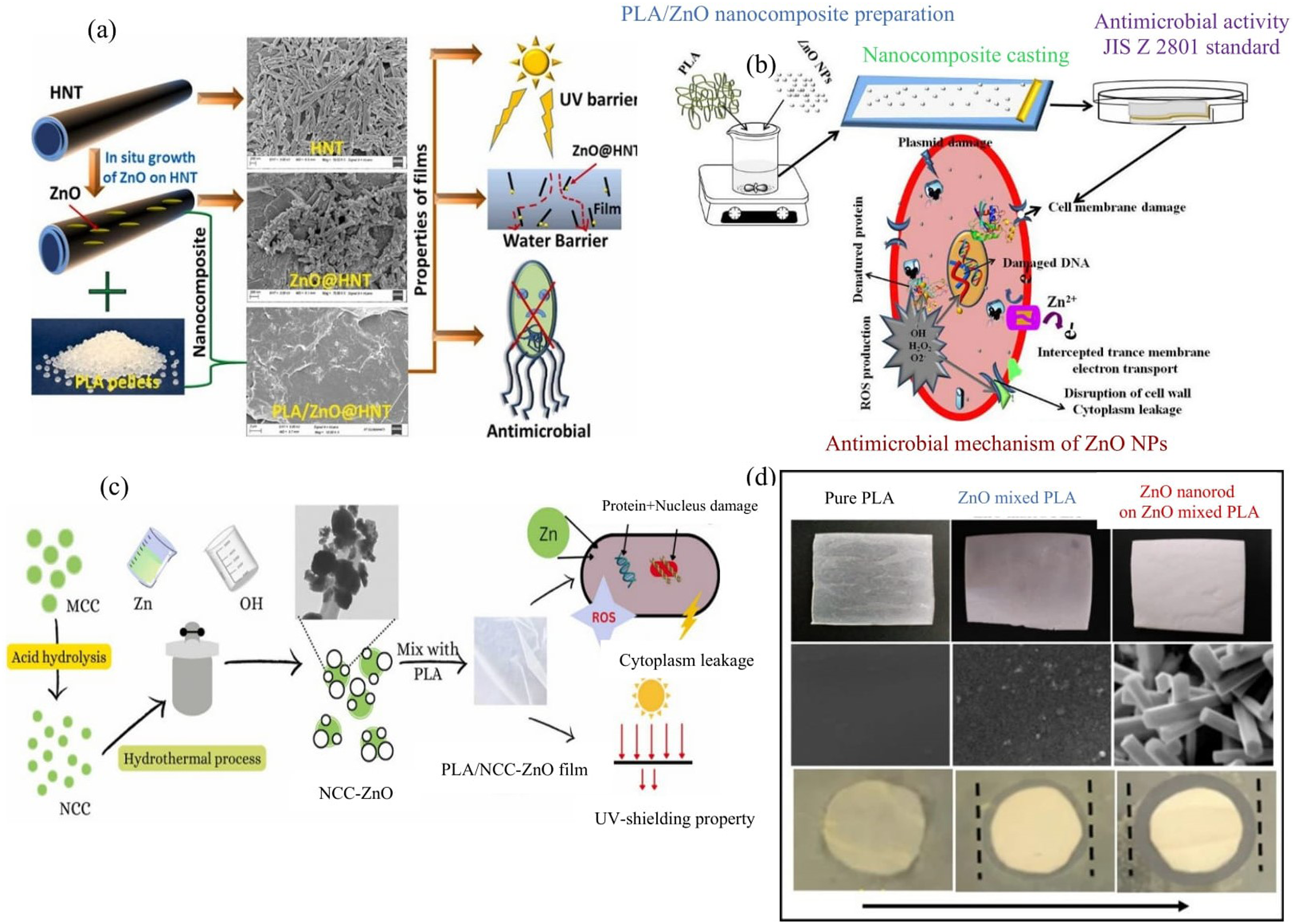
Boopasiri et al. 263 studied the properties of composite films made from biodegradable PLA with nanocrystalline cellulose (NCC) and zinc oxide (NCC-ZnO). NCC-ZnO exhibited higher reinforcement, tensile strength, and Young’s modulus than NCC. It also improved the UV-shielding efficacy and antibacterial activity, suggesting its potential as an alternative filler in active food packaging applications (Figure 19(c)). Akshaykranth et al. 139 studied the antibacterial activity of pure polylactic acid (PLA), Zinc oxide (ZnO) incorporated PLA, and ZnO nanorods grown on ZnO-incorporated PLA films. TGA analysis showed a thermal stability enhancement of approximately 10°C in the ZnO nanorods compared to the pure PLA film. The films were tested against E. coli and S. aureus bacteria. The zones of inhibition for the pure PLA, ZnO-incorporated PLA, and ZnO nanorods were 0, 16, and 19 mm, and 0, 18, and 21 mm, respectively. The process of growing ZnO nanorods on PLA film surfaces can be easily adapted for large-scale production in packaging applications (Figure 19(d)).
The addition of ZnO nanoparticles has also been found to improve the mechanical strength and barrier properties against gases such as CO2 and O2, while only slightly increasing water vapor permeability.
264
The development of these nanocomposites aligns with the growing demand for sustainable packaging materials that can reduce the environmental impact and improve food safety and quality.
265
The use of biodegradable and renewable materials, such as PLA, in combination with antimicrobial agents, such as ZnO, addresses both consumer expectations for eco-friendliness and the industry’s need for effective food preservation.266,267 However, natural fibers as reinforcements and ZnO nanofillers in PLA-based composites have gained attention in functional packaging. Dejene and Gudayu
10
review aimed to explore the effects of ZnO nanofillers in functional films and the effectiveness of natural fibers as reinforcements in PLA matrices. This review emphasized the need for future research on integrating natural fibers and ZnO nanofillers in PLA for active and rigid packaging (Figure 20(A)). In this regard, Dejene et al.
136
developed a biocomposite food packaging material for Ethiopian flatbread (injera) made from ‘eff grain. The biocomposite was designed using fiber-reinforcing materials, false banana (Enset) fibers (EFs),
268
and ZnO NPs in a PLA matrix. A central composite design (CCD) approach was used to evaluate the impact of the reinforcement fibers and ZnO NPs. The results showed that the inclusion of ZnO NPs improved the tensile strength, migration, and barrier properties, whereas the reinforcing fiber enhanced the mechanical and migration properties but reduced the barrier properties. The combined effect of the reinforcement fibers and ZnO NPs led to further improvements in the mechanical strength and migration properties; however, no interaction effect was observed on the barrier properties. The optimal solution, consisting of 6.7% ZnO nanoparticles and 6% Enset fibers, extended the freshness for over 8 days (Figure 20(B)). In conclusion, PLA/ZnO nanocomposites represent a promising avenue for active food-packaging applications. These studies collectively demonstrate that these materials can provide the necessary barrier and antimicrobial properties required for food-contact materials, while also contributing to sustainability goals. The research underscores the potential of PLA/ZnO nanocomposites to improve food safety, extend shelf life, and reduce plastic waste, thereby supporting a more sustainable food packaging industry.34,261,262,264–267 However, the potential implications for consumer safety and the need for regulatory controls are areas that require further investigation to fully harness the benefits of nanotechnology in food-contact materials. The balance between antimicrobial benefits and safety concerns will be pivotal in the advancement and acceptance of PLA/ZnO nanocomposites in the food packaging industry. (A) Eco-friendly packaging innovations: integrating natural fibers and ZnO nanofillers in PLA-based green composites.
10
(B) The traditional stable flatbread ‘Injera’ storage ‘Mesob’ and the food condition after 3 days (a, b); the newly developed biocomposite (6 % EFs and 6.7 % ZnO NPs) food storage for ‘Injera’ preservation and the food (Injera) stored after 8 days (c, d).
136
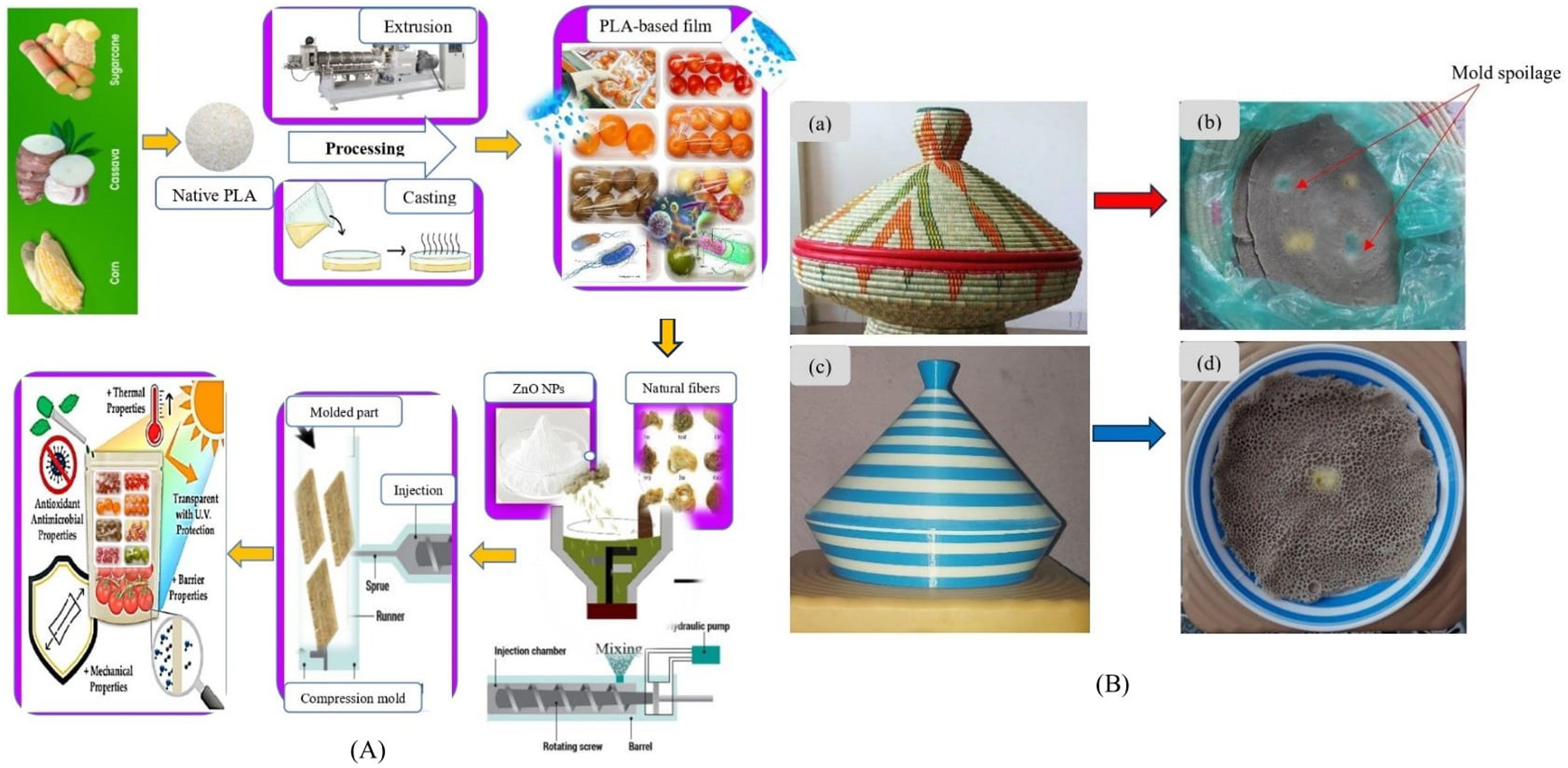
Textiles and personal care products
The application of PLA/ZnO nanocomposites in textiles and personal care products is a field of growing interest because of the inherent antibacterial properties of ZnO and biocompatibility of PLA. These nanocomposites are being explored for their potential in creating antimicrobial fabrics and garments as well as personal care products that require hygienic properties. The synthesis of ZnO NPs and their application to cotton fabrics have been shown to impart significant antibacterial activity, which is retained even after multiple washing cycles. 269 Similarly, PLA/ZnO nanocomposites have been developed for fused-filament fabrication, a 3D printing technique, with the aim of producing biomedical devices that combine the antibacterial properties of ZnO with the biocompatibility of PLA.45,47 The addition of ZnO NPs to PLA not only enhances the antibacterial properties but also affects the mechanical and thermal properties of the resulting composites. 51 Interestingly, the surface treatment of ZnO, such as silanization, can improve the interfacial interactions between ZnO and PLA, enhancing the printability and mechanical performance of nanocomposites. 47 Moreover, the incorporation of ZnO NPs into nonwoven PLA fabrics has been shown to provide good hydrophobicity and antibacterial properties, with a mechanism involving zinc ion release and photocatalytic reactions. 51
In the context of personal care, textiles modified with metal oxide nanoparticles, including ZnO, are being considered for their extended use in hygienic applications, such as cosmetotextiles and personal care textile products.270,271 The synergistic effects of combining ZnO with other nanoparticles, such as graphene oxide, have also been explored, showing the potential for enhanced antimicrobial properties suitable for food packaging and other applications. 164 In conclusion, PLA/ZnO nanocomposites are promising materials for the development of antibacterial fabrics and garments as well as antimicrobial personal care products. Literature indicates that these nanocomposites can be effectively applied to textiles, retaining their antibacterial efficacy even after repeated washing, 269 and can be processed using advanced manufacturing techniques such as 3D printing.45,47 The potential of these materials is extended to various applications, including healthcare textiles, cosmetotextiles, 270 and food packaging, 164 demonstrating the versatility and significance of PLA/ZnO nanocomposites in hygienic and personal care products.
Opportunities for further research and development
PLA combined with ZnO NPs presents a promising avenue for creating materials with inherent antibacterial properties, which are particularly relevant in biomedical applications and food packaging. Although the current body of research has established the fundamental benefits of PLA/ZnO nanocomposites, such as biocompatibility and antibacterial activity, there are opportunities for further research and development to enhance these properties.45,47 One area of interest is the development of synergistic antimicrobial agents. Studies have shown that incorporating ZnO NPs into PLA can impart antibacterial properties, but the challenge lies in achieving a uniform dispersion of nanoparticles to prevent agglomeration and enhance the mechanical properties of nanocomposites.48,164 Research could focus on optimizing the nanoparticle distribution within the PLA matrix, potentially through the use of surface treatments or compatibilizers. Additionally, the combination of ZnO with other nanoparticles, such as graphene oxide or multiwall carbon nanotubes, has been shown to enhance antimicrobial efficacy, suggesting that exploring other hybrid nanocomposite systems could yield materials with superior performance. Furthermore, the impact of the nanocomposite formulation on the release profile of antimicrobial agents and the mechanical properties of the resulting materials warrants further investigation. Controlled release mechanisms are particularly relevant for applications such as wound dressings and food packaging, where sustained antimicrobial action is. 264 Theoretical studies using computational approaches, such as density functional theory, can provide insights into the interactions at the molecular level and guide the design of more effective nanocomposite systems. 40
The literature presents a multifaceted view of opportunities for further research on PLA/ZnO nanocomposites, particularly in achieving an optimal balance between antibacterial activity and mechanical integrity. Although PLA’s biocompatibility and ease of 3D printing of PLA are well documented, its susceptibility to damage from sterilization and sensitivity to chemical disinfectants pose challenges for widespread use. The addition of ZnO nanoparticles has been shown to imbue PLA with antibacterial properties, but this can affect the mechanical performance and printability.45,154 Research has also indicated that the incorporation of nanofillers, such as ZnO, can enhance PLA’s mechanical and dynamic mechanical properties of PLA. Contradictions arise when considering the impact of ZnO on PLA’s biocompatibility of PLA, as it may compromise the safety of the material. Moreover, the interplay between the ZnO nanoparticle concentration, surface treatment, and presence of plasticizers or other additives significantly influences the mechanical properties and functionality of the nanocomposites. This indicates that the current body of research underscores the need for a deeper understanding of the processability, mechanical behavior, and antibacterial efficacy of PLA/ZnO nanocomposites. Future studies should focus on optimizing nanoparticle dispersion, surface modification techniques, and the use of additives to improve mechanical properties without compromising antibacterial activity or safety. Additionally, the development of new formulations and processing methods to enhance the printability and functional performance of these materials for biomedical applications is a promising avenue for research.
An area of interest is the exploration of natural antimicrobial agents as substitutes for ZnO in PLA nanocomposites. Current research indicates that while ZnO provides antibacterial activity, its incorporation into PLA can lead to agglomeration and other challenges affecting the properties of the material. 48 Moreover, the synthesis of ZnO NPs often involves chemical processes that may not align with the sustainability goals of PLA. Therefore, investigating natural antimicrobial agents that can be integrated into PLA without compromising its mechanical and functional attributes could be a significant area of research. Natural antimicrobial agents, such as those derived from agri-biomass like lignin, have shown promise owing to their antioxidant, UV-blocking, and antimicrobial properties. These agents could potentially offer a more sustainable and environmentally friendly alternative to ZnO nanoparticles. Additionally, the exploration of other natural compounds with antimicrobial properties that could synergize with PLA without causing agglomeration or affecting the mechanical properties of the material would be valuable. In summary, the literature suggests that PLA/ZnO nanocomposites are fertile ground for research aimed at improving sustainability and environmental compatibility. Future studies could focus on optimizing the concentration and surface treatment of ZnO, exploring the use of additional modifiers or plasticizers, and investigating the synergistic effects of combining ZnO with other nanoparticles. These efforts could lead to the development of PLA/ZnO nanocomposites with enhanced properties suitable for a wider range of applications.
Conclusion
The development of PLA/ZnO nanocomposites with enhanced antibacterial properties has emerged as a promising strategy for addressing the growing threat of antibiotic-resistant bacteria. This review highlights the significant progress made in synthesis as well as the ongoing scientific debates surrounding the underlying mechanisms of antimicrobial activity. This review demonstrates the versatility of various manufacturing techniques such as melt extrusion, solution casting, and in situ polymerization for the fabrication of PLA/ZnO nanocomposites. However, the review also identified persistent challenges in achieving uniform dispersion of ZnO NPs within the PLA matrix and maintaining their structural integrity during processing, which remain crucial for optimizing the antibacterial performance of nanocomposites. Scientific discussions regarding the antibacterial mechanisms of PLA/ZnO nanocomposites have revealed the complex interplay between factors such as nanoparticle size, shape, and concentration, as well as their interactions with the PLA matrix. Further research is required to elucidate the precise mechanisms responsible for the observed antimicrobial activity, which will inform the rational design of nanocomposites for specific applications. As the field continues to evolve, the successful translation of PLA/ZnO nanocomposites into practical applications such as medical devices, food packaging, and environmental remediation will depend on addressing the manufacturing challenges and scientific debates identified in this review. This review provides valuable insights into the current state of research on PLA/ZnO nanocomposites, highlighting the significant progress made and the remaining obstacles to be overcome. By synthesizing existing knowledge and identifying key research directions, this review aims to guide future investigations and drive the continued advancement of these innovative antimicrobial materials.
Footnotes
Acknowledgements
The author expresses gratitude to the current and previous group of researchers in the nanocomposites
Declaration of conflicting interests
The author declared no potential conflicts of interest with respect to the research, authorship, and/or publication of this article.
Funding
The author received no financial support for the research, authorship, and/or publication of this article.
