



Abstract
Trans-1,4-polyisoprene (a thermoplastic crystalline polymer) and polystyrene (an amorphous or semicrystalline polymer) have been frequently used as important matrix materials for the formation of nanocomposites. Trans-1,4-polyisoprene has crystallinity and toughness properties, whereas polystyrene has transparent and brittle nature. These matrices have revealed shape memory effects through the inclusion of carbon nanoparticles like graphene and carbon nanotube, as well as inorganic nanoparticles like titania, silica, and metal nanoparticles. The nanoparticle addition has been found to induce shape changes as well as microstructural and physical property alterations in the matrices. This state-of-the art review article reports on the stimuli responsiveness of important categories of trans-1,4-polyisoprene and polystyrene based nanocomposites. These nanomaterials revealed important thermal, electric, and radiation induced responses. High performance shape memory effects have been observed depending upon the nanoparticle type, contents, and interactions with the polymer network. With the carbon nanoparticles like carbon nanotube, graphene, or carbon black, trans-1,4-polyisoprene revealed high shape recovery responses of 95%–99%. The nanocomposites of copolymers or blends of trans-1,4-polyisoprene also depicted the shape recovery of up to 100%. The shape memory nanocomposites of polystyrene and its blends and copolymers with different types of nanoparticles exhibited effective thermo responsive and electro active shape memory behavior. Consequently, the effective shape memory effects have been attributed to the homogeneous nanoparticle dispersion as well as the network formation for an active polymer chain switching.
Introduction
Trans-1,4-polyisoprene is a unique type of thermoplastic polymer.1,2 This polymer has been efficiently applied to form the blends, composites, or nanocomposites materials. 3 Another important and commonly used thermoplastic is polystyrene. 4 Polystyrene has also been reported in the forms of copolymers, blends, and hybrid materials.5–7 Although polystyrene has been frequently applied in industrial and commercial products, however its applicability was found limited in high-tech engineering fields due to intrinsic brittleness. 8 Nanocomposites of polystyrene own design, structure, properties, and application advantages with the nanofiller reinforcements.9,10 High performance applications of polystyrene nanocomposites have been observed in the fields of engineering, electronics, packaging, and countless other technical areas.11–13 For the formation of shape memory materials, both the trans-1,4-polyisoprene 14 and polystyrene matrices have been applied.15,16
This important review documents the design strategies, properties, as well as potential aspects of the shape memory trans-1,4-polyisoprene and polystyrene nanomaterials. These nanocomposites have been prepared using facile solution processing as well as melt blending approaches. The nanofiller reinforcement has been found to affect the physical properties as well as shape switching behavior of the nanocomposites. In this concern, the carbon nanoparticles as well as inorganic nanofillers have been used to induce the shape changes in the trans-1,4-polyisoprene and polystyrene matrices. The nanofiller type and contents have been found to considerably influence the physical features and shape changing behavior of these polymers. Both the shape memory trans-1,4-polyisoprene and polystyrene nanocomposites revealed essential applications in industrial and commercial sectors. To the best of the knowledge, such specific overview on significant shape memory thermoplastic matrices like trans-1,4-polyisoprene and polystyrene has not been reported in literature before. Future endeavors on these important shape memory materials may unveil essential technical opportunities by overcoming the underlying field challenges.
Trans-1,4-polyisoprene and polystyrene
Polyisoprene is a thermoplastic polymer formed through the polymerization of isoprene units. It has two common isomeric forms as trans-1,4-polyisoprene and cis-1,4-poolyisoprene. Trans-1,4-polyisoprene is referred as Balata rubber or synthetic Gutta-percha. It has thermoplastic crystalline nature having the melting temperature of 60°C. The crosslinking density of trans-1,4-polyisoprene usually affects its important features. It has low crosslinking density due to crystallinity nature. On the other hand, cis-1,4-polyisoprene is commonly known and used as a natural rubber. Synthetically, trans-1,4-polyisoprene has been formed through the bulk polymerization technique with Titanium catalysts.17,18 This polymer has been explored for the thermal responsiveness properties. The high crosslinking density of trans-1,4-polyisoprene may affect the crystallization properties and so the polymer can behave as an elastomer rather than a thermoplastic.
19
Subsequently, trans-1,4-polyisoprene has revealed essential applications in wide ranging fields of bio medic, sports material, electrical insulation, shape responsive materials, and so on.
20
To enhance the processing, anticorrosion, and mechanical features, this polymer has been often blended with natural rubber, butadiene rubber, or styrene butadiene rubber.21–23 Wu and co-workers
24
reported on both the trans- and cis-1,4-polyisoprene. The glass transition and storage modulus of the polymers were investigated. Accordingly, the glass transition temperature values of trans-1,4-polyisoprene and cis-1,4-polyisoprene were found around ∼67°C and ∼62°C, respectively. Upon the blending of trans- and cis-isomers, a single glass transition value was observed in the range of about ∼45 °C–50°C due to miscibility of polymer chains (Figure 1). Zhao and researchers
25
investigated the effect of γ-ray radiations on the structure and properties of trans-1,4-polyisoprene. Exposure to the radiations (up to 1000 kGy) caused enhanced crosslinking (325 molm−3). Additionally, α and β phases were also generated in the polymer due to incident radiations. Consequently, the melting temperature and crystalline properties were found to be affected upon irradiation. Comprehensive studied have been found on the formation, structure, and properties of the polyisoprene nanocomposites.
26
Glass transition and storage modulus of trans-1,4-polyisoprene and cis-1,4-polyisoprene upon blending.
24
Reproduced with permission from Elsevier.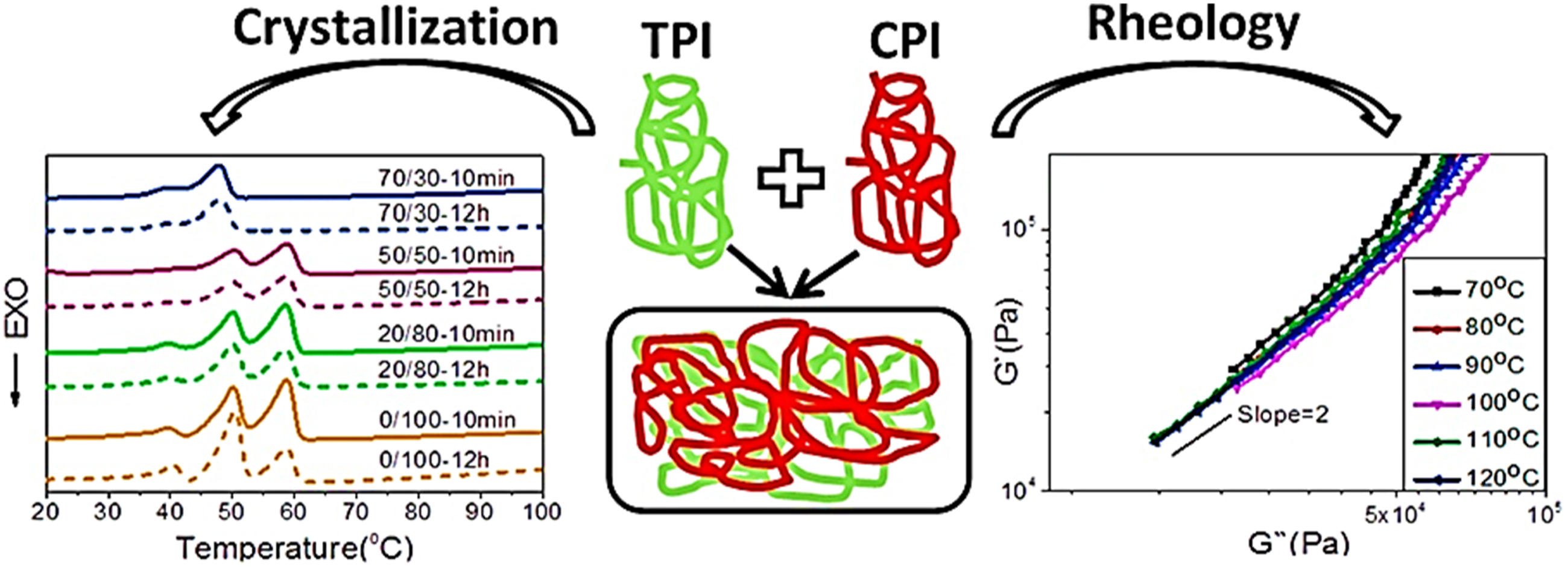
Polystyrene is usually an amorphous or semi-crystalline polymer in high density form. 27 It is a synthetic polymer formed through the in situ polymerization of styrene monomers using a catalyst. 28 It is a transparent commodity polymer. 29 Due to aligned chain structure, polystyrene has been found soluble in common organic solvents and has fine solution processing. 30 Melt processing has also been used for polystyrene.31,32 Polystyrene has found applications in the wide ranging fields such as energy, electronics, transportation, construction, sporting goods, and households. 33 However, the inherent brittleness of polystyrene has restricted its technical applications. 34 Consequently, various additives and strategies have been used to enhance the toughness and mechanical properties of polystyrene.35–37 Polystyrene has been processed as copolymers to enhance the structural, thermal, and physical properties.38–40
Shape memory nanocomposites of trans-1,4-polyisoprene
Shape memory polymers have been categorized as smart materials having shape altering properties upon exposure to the external stimuli (heat, electricity, light, etc.). 41 The versatile shape memory materials have found applications in variety of field such as electronics, transportation, textiles, construction, and biomedical fields. 42 In the polymeric shape memory materials, interactions and crosslinking between the chains have been found accountable for the shape changes.43,44 The polymer chain reversibility usually occurs due to the crystalline and flexible regions in the backbone. 45 The chain movements usually occur at the suitable transition temperatures like melting temperature 46 or glass transition temperature. 47 Accordingly, the shape switching has been found dependent upon the entropic elasticity of the polymer chains. In addition, the high performance shape memory polymers must have superior strain recovery and mechanical properties for technical uses. 48 Usually thermoplastic polymers have been studied for the shape memory phenomenon. 49 Like this, trans-1,4-polyisoprene has also been research for the shape memory properties.50,51 The crosslinking and network formation were seemed responsible for the stimuli responsiveness in this polymer. 52 In this regard, the shape memory blends of trans-1,4-polyisoprene with thermoplastic polymers like polystyrene, polyethylene, etc. Chains were reported having. 53 Such blends have revealed fine crosslinking between the blended polymer chains.
Shape memory thermoplastic polymers containing carbon nanotube nanofiller have been reported.54,55 Chen and researchers
56
investigated the trans-1,4-polyisoprene nanocomposites formed with graphene and carbon nanotube nanoadditives by the melt blending technique. The tensile modulus and tensile strength of the nanocomposites were increased up to 300% with the addition of nanoparticles. The nanocarbons were suggested to improve the crosslinking properties in the nanocomposites. Liu et. al.
57
used graphene oxide nanofiller in trans-1,4-polyisoprene matrix to investigate the shape memory effect. Graphene oxide nanofiller was prepared using Hummer’s method. Addition of 1.5 phr nanoparticle contents revealed fine stimuli responses and mechanical properties in these materials. Inclusion of graphene oxide enhanced the fracture stresses in the range of 56%–76%. The shape recovery ratio of these nanomaterials was found to increase with the adding nanofiller contents and rising temperature. Liu and colleagues
58
formed the trans-1,4-polyisoprene nanocomposites filled with a core-shell silica-graphene oxide nanoadditive. Graphene oxide was prepared using the Hummers technique, as given in Figure 2(a).
59
Then, graphene oxide was linked to amine modified silica through the hydrogen bonding route (Figure 2(b)). Melt blending technique was used in this research. Shape recovery behavior of trans-1,4-polyisoprene with the addition of nanofiller is given in Figure 2(c). The shape recovery rate was increased with rising nanoparticle contents up to 1.2 wt%. Increase in the nanoparticle contents caused crosslinking effect and so reduced the resulting shape recovery rates. Fabrication procedure of (a) graphene oxide; (b) silica-graphene oxide; and (c) shape recovery rates of trans-1,4-polyisoprene (TPI) nanocomposites with different contents of core-shell silica-graphene oxide (SiO2-GO) nanofillers at varying temperatures.
58
Reproduced with permission from Elsevier.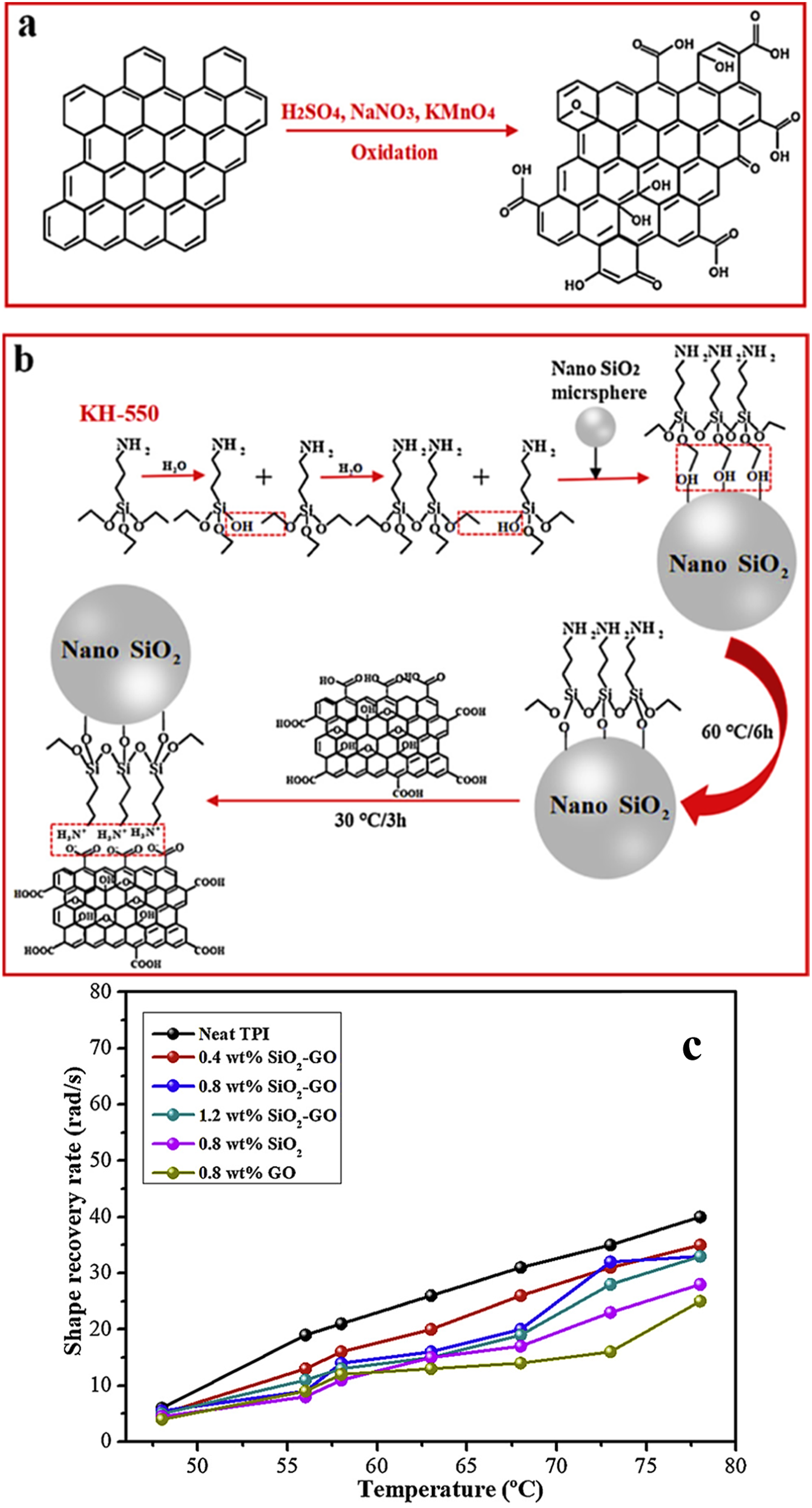
Zhang et. al.
60
used carbon nanotube and polydopamine modified carbon nanotube as nanofiller for trans-1,4-polyisoprene matrix. They adopted melt blending route to form the shape memory trans-1,4-polyisoprene, carbon nanotube, and polydopamine based nanocomposites. The nanotube modification enhanced the interfacial interactions, mechanical, and thermal features of the shape memory nanocomposites. Figure 3 shows the development of the modified carbon nanotube with polydopamine. In addition, the micrographs depicted the formation of finely aligned polydopamine modified carbon nanotube with least entanglement. (A) The schematic of preparation process of CNTs@PDA; (B) SEM images of CNTs@PDA; (C) SEM image of TPI with 3.0 phr CNTs@PDA; and (D) DMA curves of loss factor (tan δ) of TPI composites.
60
SEM = scanning electron microscopy; DMA = dynamic mechanical analysis; CNTs@PDA = carbon nanotubes@polydopamine; TPI = trans 1,4-polyisoprene. Reproduced with permission from MDPI.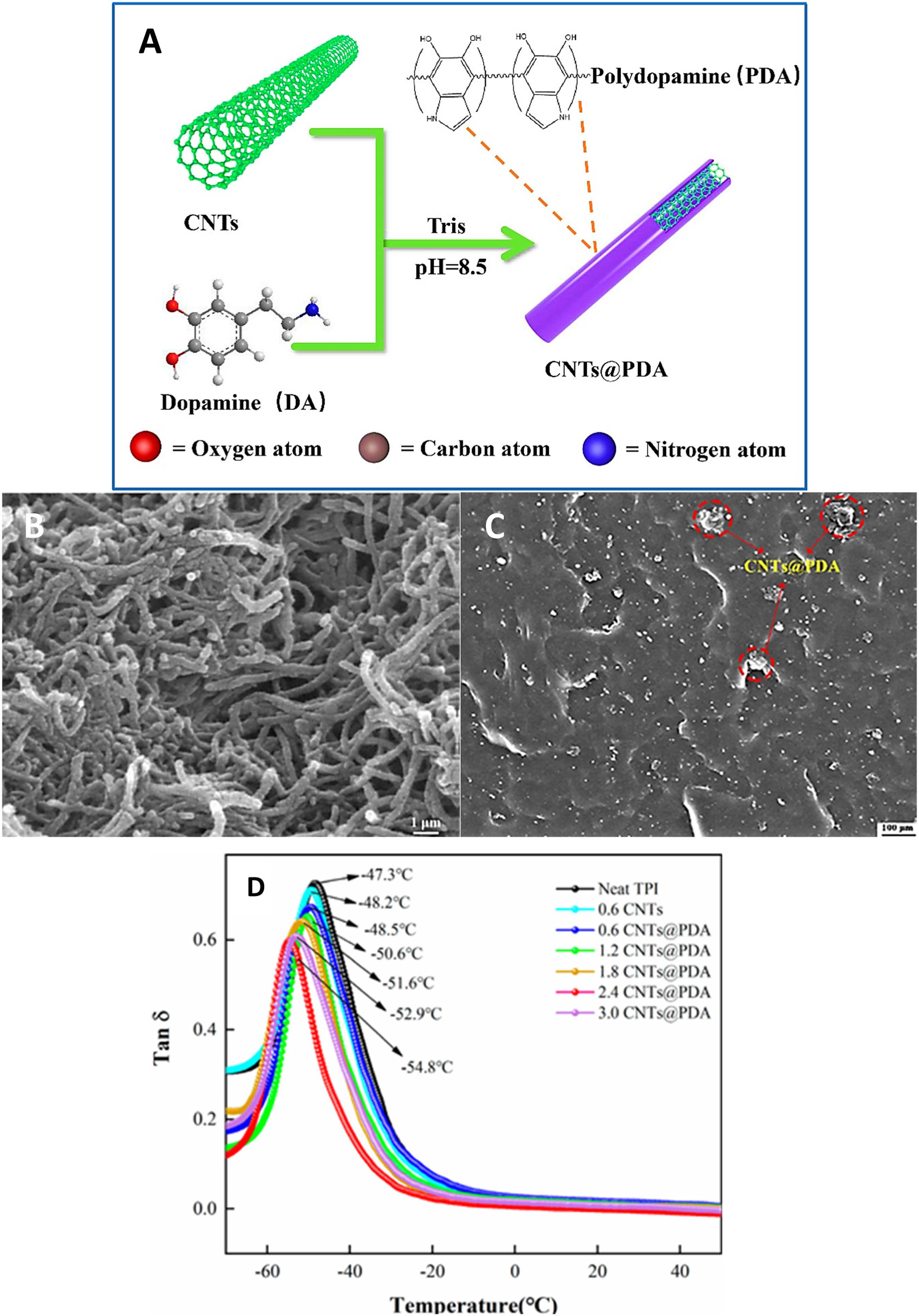
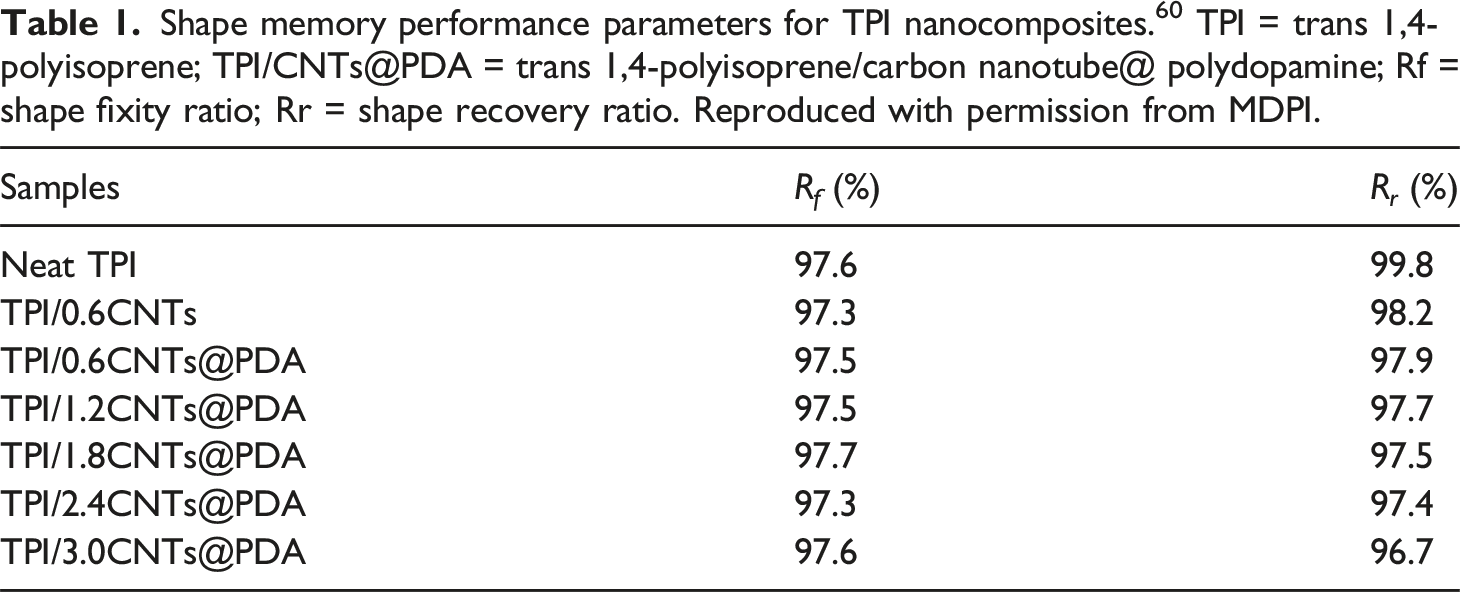
Shape memory performance parameters for TPI nanocomposites. 60 TPI = trans 1,4-polyisoprene; TPI/CNTs@PDA = trans 1,4-polyisoprene/carbon nanotube@ polydopamine; Rf = shape fixity ratio; Rr = shape recovery ratio. Reproduced with permission from MDPI.
Xia et. al.
61
investigated the blends of trans-1,4-polyisoprene and low-density polyethylene filled with carbon black. The nanocomposites were formed using the facile melt blending technique. The trans-1,4-polyisoprene/low-density polyethylene/carbon black with 5phr contents revealed the shape recovery and shape fixity ratio of around 95 %. The increase in the nanofiller contents also enhanced the mechanical features of the nanomaterials. Xin et. al.
62
reported on the triple shape memory behavior of trans-polyisoprene and poly (ethylene-co-vinyl acetate) based nanocomposites. Figure 4 shows the grafting reaction of trans-polyisoprene and poly (ethylene-co-vinyl acetate) by dicumyl peroxide. Due to the formation of free radicals by dicumyl peroxide, covalent crosslinking was observed between the trans-polyisoprene and poly (ethylene-co-vinyl acetate). Consequently, a compatibility was observed due to the interface formation between the trans-polyisoprene and poly (ethylene-co-vinyl acetate). Figure 5 shows the photographs of the triple shape memory behavior of the nanocomposite. Reactive compatibilization of TPI-g-EVA nanocomposites after addition of DCP.
62
TPI-g-EVA = trans-polyisoprene-graft-poly (ethylene-co-vinyl acetate); TPI = trans-polyisoprene; EVA = poly (ethylene-co-vinyl acetate); DCP = dicumyl peroxide. Reproduced with permission from MDPI. Photographs of triple shape memory effect of 0.4 % nanocomposite: (a) first shape memory cycle; and (b) second shape memory cycle.
62
Reproduced with permission from MDPI.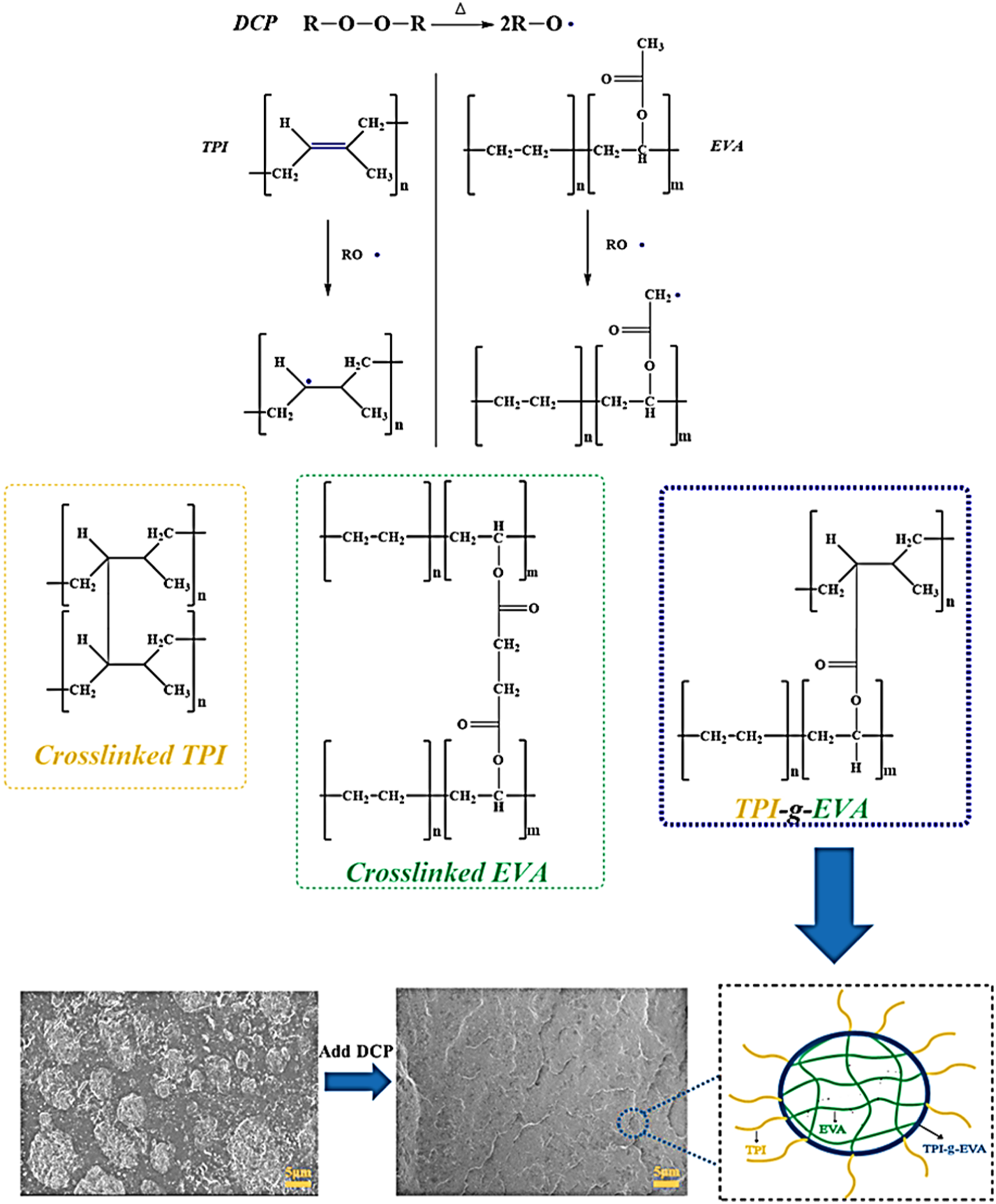
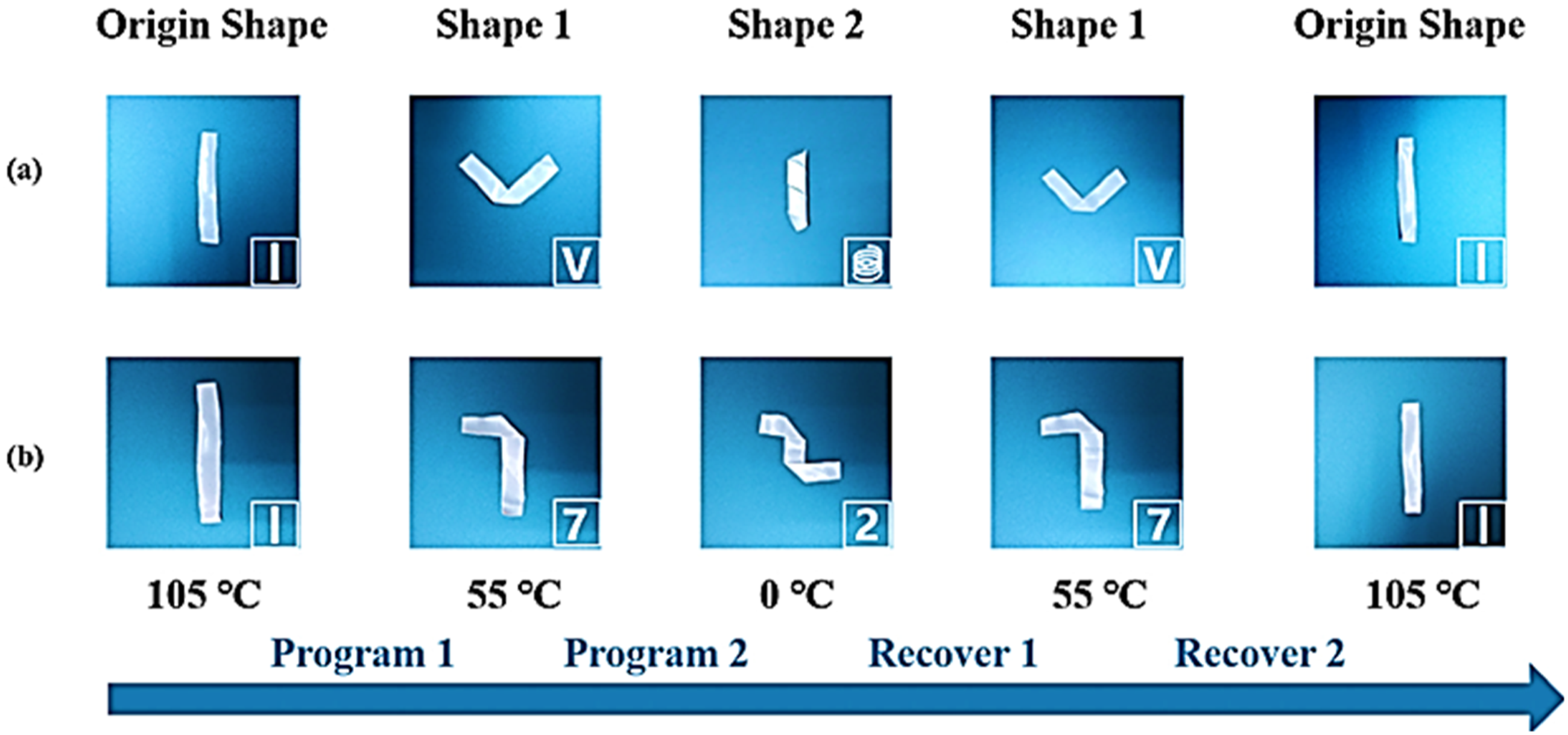
The sample was transformed into two forms and original shape was recovered. At 105°C, the rectangular shape was folded and ‘V’ or ‘7’ shape was formed at 55°C. The temporary spiral shape was fixed at 0°C. The process was reversible upon applying same conditions. The study revealed fine triple shape memory effect in the nanocomposites. The trans-polyisoprene/poly (ethylene-co-vinyl acetate) blend with 0.4 phr dicumyl peroxide had tensile strength and elongation at break of 24.3 MPa and 508%, respectively. Tsukada et. al.
63
formed the crosslinked cis- and trans-1,4-polyisoprene shape memory materials. The cylindrical shape specimens with length, diameter, and taper ratio of 6.0 mm, 9.5 mm, and 0.087, respectively, were observed (Figure 6(a) to (c)). For shape formation, the mold temperature was used in the range of 24 °C–150°C for 15-30 min. At 37°C, the shape recovery ratio was studied (Figure 6(d)). It was observed that decrease in the cis-1,4-polyisoprene in cis-/trans-1,4-polyisoprene blend ratio enhanced the shape recovery ratio up to 100 % in 4 min. Photograph of trial point: (a) original shape; (b) deformed shape; (c) recovery shape; and (d) shape recovery ratio of nanomaterials under fixed constant temperature of 37°C.
63
TPI = trans-1,4-polyisoprene. Reproduced with permission from MDPI.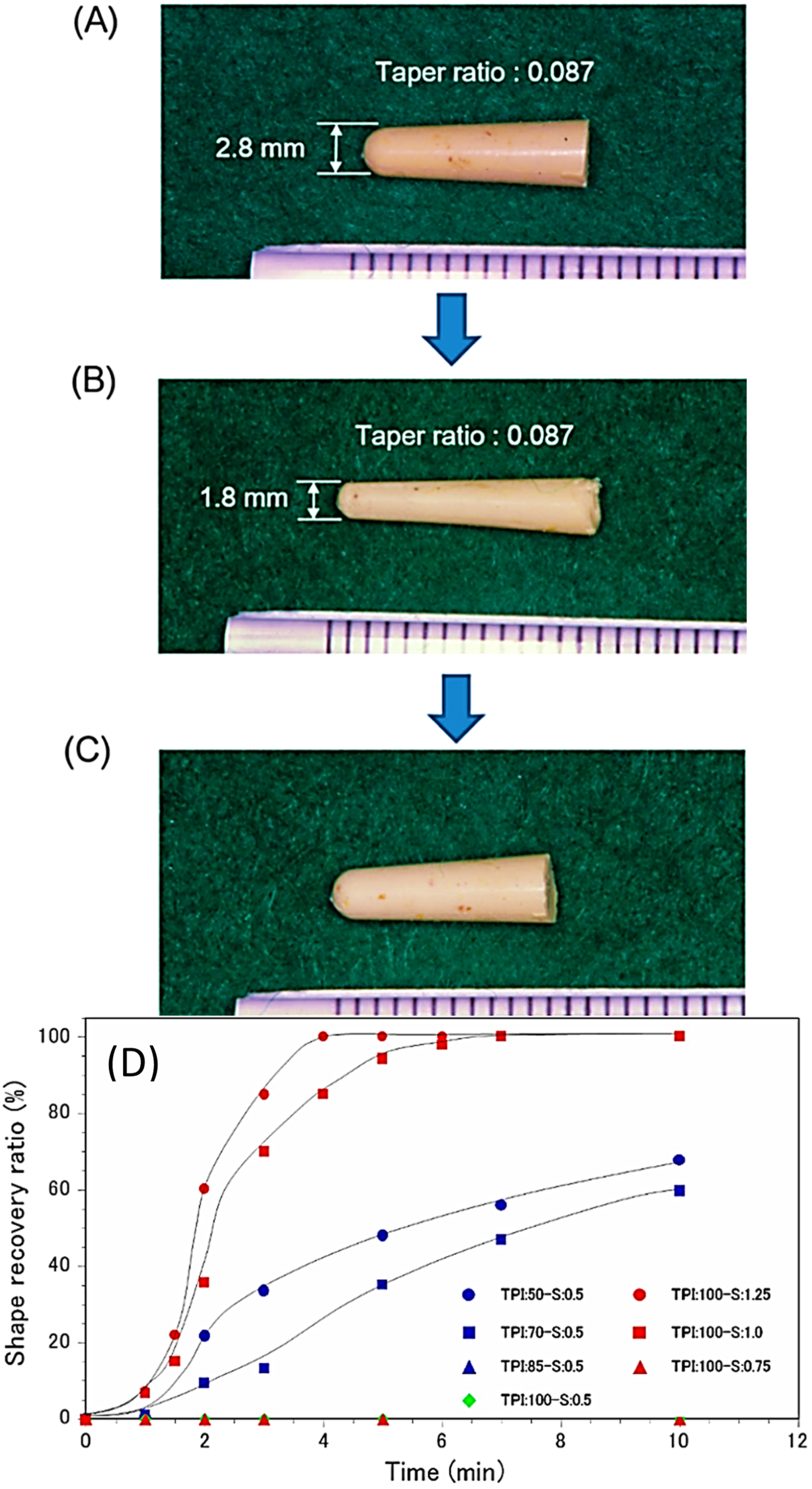
Stimuli responsiveness of polystyrene nanocomposites
Shape memory or stimuli responsive materials can switch shapes between the original form and the temporary or deformed state. 64 Initial attempts on the shape changing materials involved the use of metal based materials. 65 Subsequent research on the shape memory materials led to the use of polymeric materials. Consequently, the thermoplastics and thermosetting matrices have been employed to form the shape memory materials like polyurethane, polystyrene, epoxies, and others. 66 Main stimuli causing shape changes include the heat, electricity, light, pH, moisture, and other environmental factors. Formation of the interlinked chain network and switching segments have been found responsible for the shape changes in these smart materials.67,68 The shape changes usually occur at the transition temperatures and involve the melting transition, glass transition, crystallization, etc. 69 Wide ranging application areas of the shape memory polymers discovered so far include the energy, smart electronics, aerospace, biomedical, etc. 70 Polymers may have intrinsic shape memory effects or the shape changes can be induced by the inclusion of nanoparticles in these materials.71,72
The shape memory polystyrene nanocomposites have been designed with the carbon nanoparticles.73–75 The shape recovery and thermo-mechanical properties of these nanocomposites have been explored.76,77 In addition, the microstructural features of the shape memory polystyrene and carbon nanoparticle based nanomaterials have been scrutinized.78,79 Inclusion of carbon nanofiller affected the electron conduction and dielectric properties of the nanocomposites.
80
In addition to the thermal responses, the conducting polystyrene nanocomposites have been studied for electro-active shape memory effect. Ghosh and colleagues
81
fabricated the shape memory polystyrene and polyurethane based nanocomposite with graphene oxide nanofiller. The nanomaterial was used to form the artificial muscle and self-tightening behavior was studied. The stimuli responsiveness was observed due to the formation of interpenetrating network in the nanocomposite. The network formation in the polystyrene/polyurethane/graphene oxide nanomaterial was studied using the transmission electron microscopy (Figure 7). (a-c) Transmission electron microscopy images of the polystyrene/polyurethane interpenetrating network nanocomposite with different magnifications.
81
IPN = interpenetrating network. Reproduced with permission from Elsevier.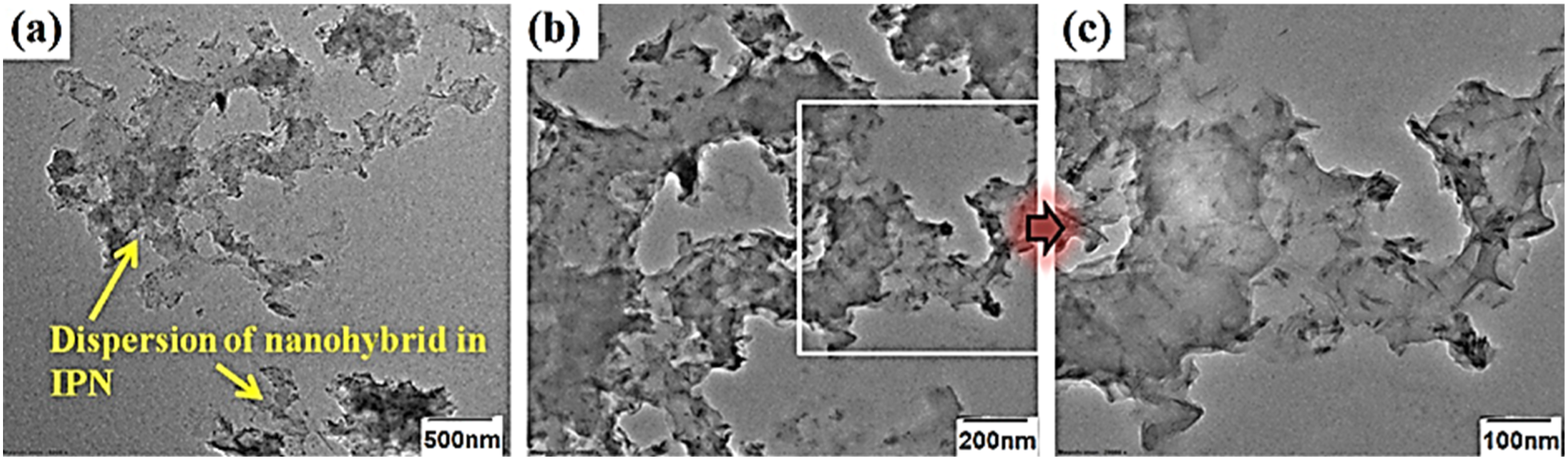
The network formation was attributed to the π-π stacking interactions in the nanocomposite components. The resulting artificial muscle had the self-tightening and shape recovery in 35-39s (Figure 8). The test was performed by stretching the artificial muscle to 200%. Hence, the shape memory polystyrene nanocomposites can be used for high performance tissue engineering application. Shape recovery behavior of the polystyrene/polyurethane interpenetrating network nanocomposite: (a) self-tightening behavior; and (b) artificial muscle behavior.
81
Reproduced with permission from Elsevier.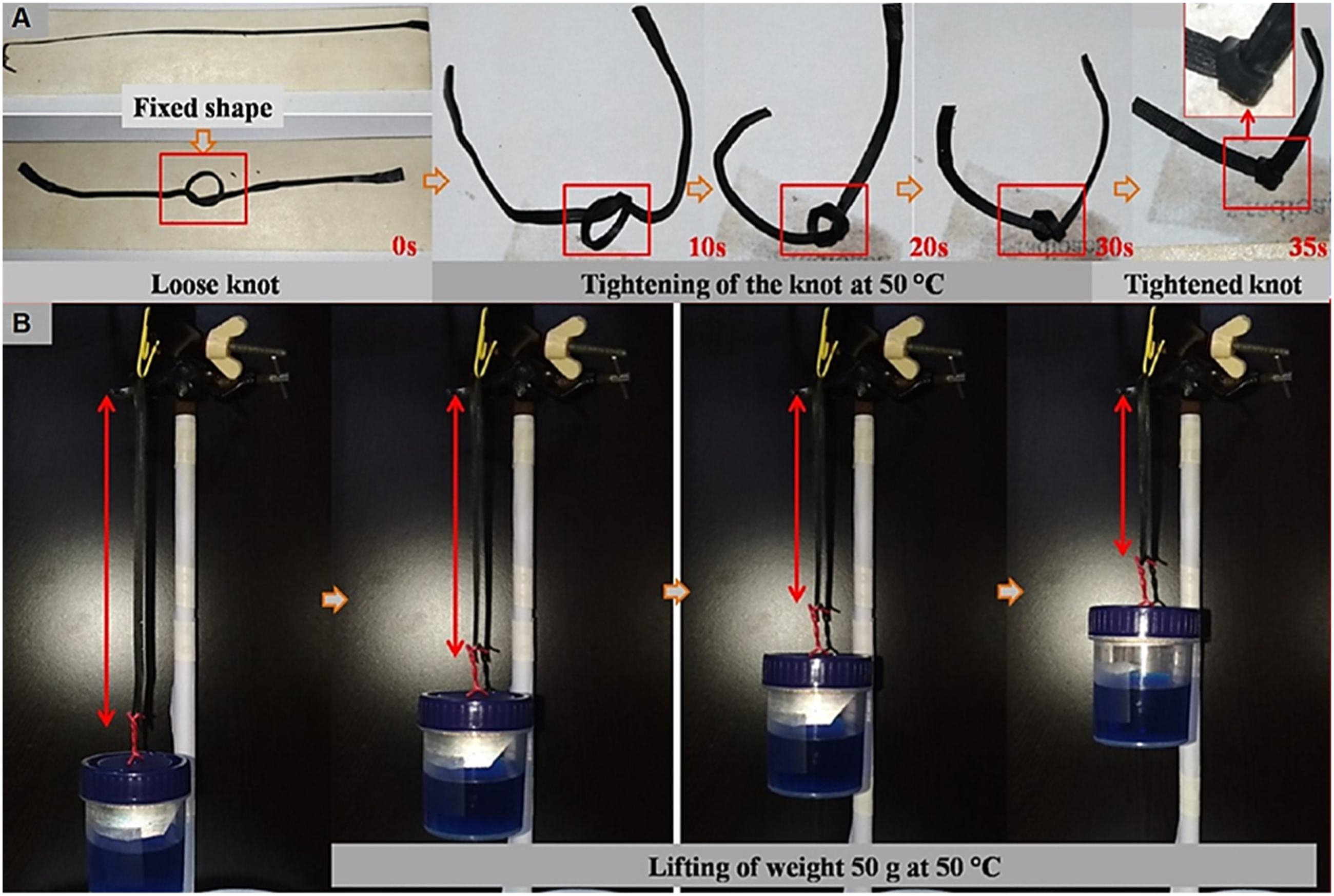
The crosslinked nanocomposites of polystyrene have also been reported.
75
These shape memory nanomaterials have been reinforced with the nanoparticles like alumina, silica, nanoclay, etc. Inclusion of nanoparticles was found to affect the shape changes and thermo-mechanical properties characteristics of the crosslinked polystyrene matrix.
82
In this context, Wang and co-workers
83
inspected the shape change behavior of the polystyrene/titania nanocomposites. The nanocomposites were formed using the solution and thermal curing technique. Addition of the titania nanoadditives induced the light responsive shape memory effect in these materials. The UV irradiation caused the shape recovery in 10 min. Gopinath and researchers
84
worked on a polystyrene copolymer, that is, polystyrene-block-polybutadiene-block-polystyrene-tri-block copolymer and blend formation with poly (ε-caprolactone). The melt blending technique was used to form the polystyrene-block-polybutadiene-block-polystyrene-tri-block copolymer/poly (ε-caprolactone) nanocomposite filled with CuO, Fe2O3, and CuFe2O4 nanoparticles. The resulting nanocomposites had fine heat responsive shape changing effect. According to differential scanning calorimetry, the glass transition temperature was found as −70°C and crystallization temperature as 40°C. The shape recovery ratio was observed as 92 %. Tekay et. al.
85
developed the maleic anhydride grafted polystyrene-block-poly (ethylene-co-butylene)-block-polystyrene, poly (caprolactone), and multi-walled carbon nanotube nanocomposite by the melt mixing method. The nanocomposites with 1-10 phr nanofiller contents were melt mixed at 180°C (8 min) and hot processed (Figure 9). The preparation procedure of SEBS-g-MA/PCL/MWCNT nanocomposites.
85
SEBS-g-MA/PCL/MWCNT = maleic anhydride grafted polystyrene-block-poly (ethylene-co-butylene)-block-polystyrene/poly (caprolactone)/multi walled carbon nanotube; SEBS-g-MA = maleic anhydride grafted polystyrene-block-poly (ethylene-co-butylene)-block-polystyrene; PCL = poly (caprolactone); MWCNT = multi walled carbon nanotube. Reproduced with permission from Elsevier.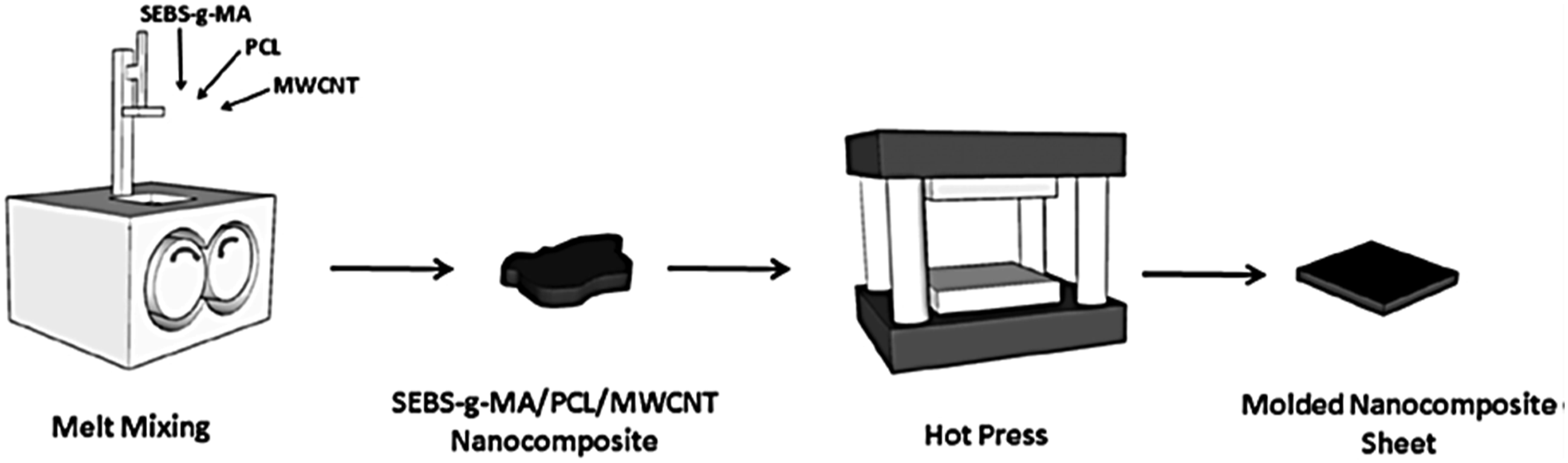
The nanocomposites were studied for the surface temperature at different voltages and time-temperature (Figure 10(a) to (c)). Up to 40 V, variation in surface temperature of infrared images of the nanocomposite was scanned and found to be enhanced. The transition temperature of 70°C was also observed at 40V in 86 s. Increase in the nanofiller enhanced the conducting network formation in the nanomaterials. Due to percolation threshold at 3 phr and higher nanotube contents, the volume resistivity was found to decrease (Figure 10(d)). Consequently, the electrical actuation was observed in 56s with high shape fixity and shape recovery ratio of 98.3 % and 88 %, respectively, noted at 40 V. Effective stimuli response was observed due to the electron conduction and joule heating effect. (a) Surface temperature evolution of nanocomposite at constant 40 V; (b) test sample; (c) temperature-time curves of nanocomposites at different voltages; and (d) volume resistivity of maleic anhydride grafted polystyrene-block-poly (ethylene-co-butylene)-block-polystyrene/poly (caprolactone)/multi walled carbon nanotube nanocomposites.
85
MWCNT = multi walled carbon nanotube. Reproduced with permission from Elsevier.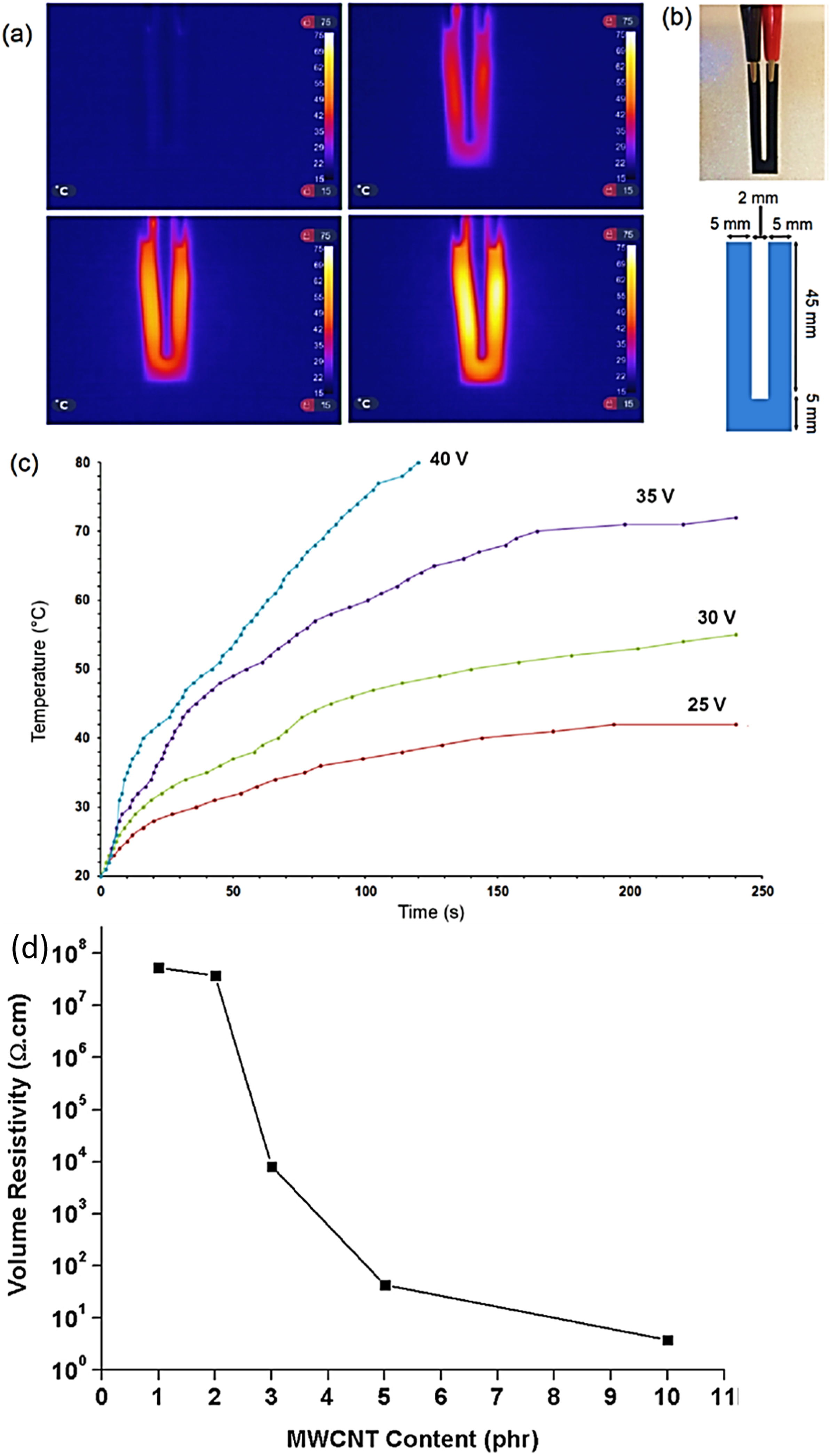
Mechanical properties of shape memory polymers have played essential role in enhancing the stimuli responsive properties. 86 Here, the mechanical features of polymers were enhanced synergistically with the shape memory properties upon the addition of different nanofillers. Quadrini et. al. 87 reported on the shape memory polystyrene and polyurethane blend foams with carbon fibers. The material strength was observed in the range of 0.71-0.88 MPa at 7% strain. The composites revealed thermos-responsive shape memory effect of up to 99%. Erkmen et. al. 88 reported on the mechanical and shape memory properties of carbon nanotube and carbon fiber filled polystyrene matrix. The nanocomposite depicted enhancements in the tensile strength and modulus of the nanocomposites by 521 % and 125 %, respectively. Furthermore, 100 % shape recovery in <60 s was observed in electroactive shape memory analysis. Panahi-Sarmad et. al. 89 studied the effect of graphene, graphene oxide, and reduced graphene oxide in the shape memory polymers. Adding 5 wt% graphene oxide-reduced graphene oxide nanofiller in polymer led to tensile strength, Young’s modulus, and storage modulus of 35.5 MPa, 19.8 MPa, and 18.9 MPa, respectively. The nanocomposite showed strain of 1066 %, which was sufficient to enhance the shape recovery features. The 5 wt% graphene oxide-reduced graphene oxide addition also revealed high shape recovery and shape fixity in the range of 97%–99%. Kang et. al. 90 investigated the polystyrene and edge-styrene graphene nanoplatelet based nanocomposites. Inclusion of 5 wt% nanofiller enhanced the tensile strength, Young’s modulus, and toughness of the polystyrene to 11.54 MPa, 809 MPa and 0.89 MPa, respectively. The chemical linking of the edge-styrene graphene nanoplatelet to the polystyrene matrix caused fine nanofiller dispersion, matrix-nanofiller compatibility, and superior load transfer properties.
Technical significance and forthcoming prospects of stimuli responsive trans-1,4-polyisoprene and polystyrene nanocomposites
Specifications of shape memory trans-1,4-polyisoprene and polystyrene nanocomposites.
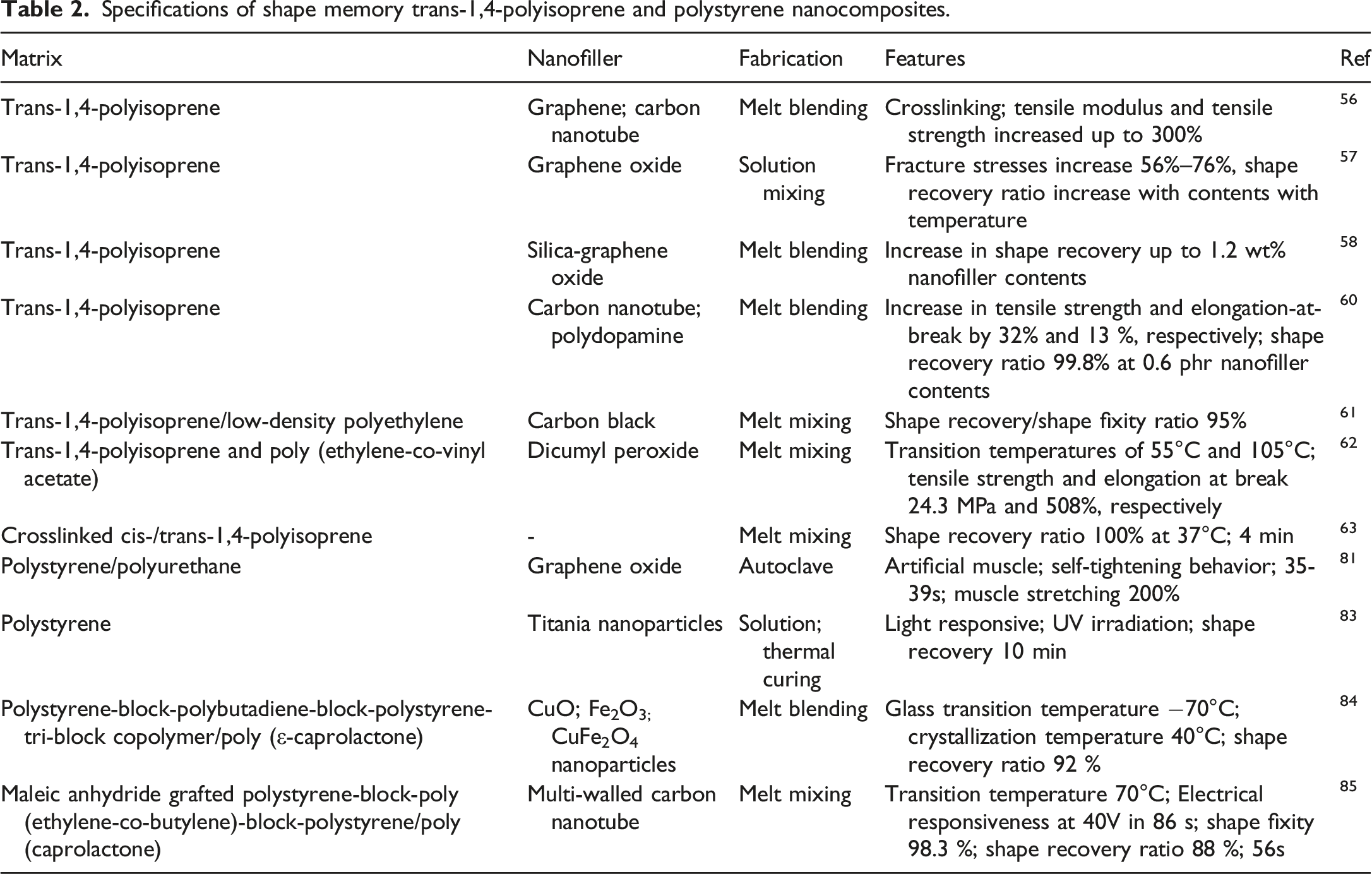
Despite the importance of shape memory nanocomposites, the ensuing properties and performance directly depend upon the selected nanofiller features. However, there are limitations associated with the inclusion of nanofillers to the shape memory matrices. Importantly, nanofiller nanoparticles usually have aggregation tendency in the polymers. To avoid this issue, amount of nanofiller must be optimized to attain fine dispersion in the polymer matrices for the formation of a well-defined interlinked shape switching network. In addition, traditional techniques like solution processing have not been found successful to optimize the nanofiller type, contents, and dispersion in the polymers towards large scale processing and commercial uses. Therefore, the sophisticated techniques like 3D or 4D printing and spin coating can be used to avoid the nanofiller aggregation problems. Further research on optimizing the aspects of nanofillers has been found indispensable to attain high the performance shape memory nanomaterials.
In addition, the microstructural properties like matrix-nanofiller compatibility and well-matched interface formation have been found indispensable to attain efficient shape memory materials.55,113 Advanced microstructural features can be attained through the superior nanofiller dispersion. 114 Consequently, to enhance the dispersion state of nanofillers in matrices, functional nanoadditives must be used for better linking to the polymetric chains. 115 Consequently, superior matrix-nanofiller interfacial interactions can be observed facilitating the crosslink network formation.
Conclusion
In short, the important shape memory thermoplastics (trans-1,4-polyisoprene and polystyrene) have been overviewed with different types of nanoadditives, in this article. Addition of nanoparticles caused essential microstructural, mechanical, thermal, and conducting property enhancements. In this context, the inclusion of very minor amounts of nanofiller depicted significant changes in the shape recovery and physical features of the nanocomposites. Facile processing approaches have been applied to form these nanocomposites. The shape memory effect in these nanomaterials has been observed up to 100 %. Blends and copolymers of trans-1,4-polyisoprene and polystyrene have also been used to form the shape memory nanocomposites. The values of shape recovery ratio and recovery time were found dependent upon the polymer type, nanofiller type and contents, fabrication method, and processing factors. Future research may lead to better design possibilities, high performance shape memory effect, physical characters, and technical applications.
Footnotes
Declaration of conflicting interests
The author(s) declared no potential conflicts of interest with respect to the research, authorship, and/or publication of this article.
Funding
The author(s) received no financial support for the research, authorship, and/or publication of this article.
