



Abstract
The main aim of this paper is to analyze the nonlinear electro-thermo-mechanical dynamic buckling and vibration of third-order shear deformable circular plates and spherical caps with functionally graded graphene platelet reinforced composite (FG-GPLRC) coatings, piezoelectric layers, and porous core. The circular plates and spherical caps are assumed to be rested on the Pasternak visco-elastic foundation, and subjected to dynamic external pressure in the thermal environment. The total potential energy expression of structures is established using the Lagrange function. The Euler-Lagrange equations and Rayleigh dispassion functions are applied to obtain the motion equation of structures. This motion equation can be solved using the Runge-Kutta method to obtain the dynamic responses of circular plates and spherical caps. Significant discussions of the different effects of graphene distribution, graphene volume fraction, piezoelectric layers, porous core, and foundation parameters are presented through the investigated examples.
Keywords
Introduction
Circular plate and spherical cap are two types of structures popularly designed in ocean engineering, civil engineering, aerospace, and spacecraft engineering. Due to its popularity in the application, many authors studied the electro-thermo-mechanical problems of these structures with different isotropic and advanced materials.
For isotropic materials, the linear mechanical and thermal buckling responses of shallow and deep spherical shells were investigated using Sanders’s shell theory, Euler equations, and the Galerkin method. 1 First-order shear deformation shell theory (FSDST) and an iteration method are applied to study the nonlinear buckling behavior of moderately thick spherical caps. 2 Nonlinear vibration responses of spherical caps were mentioned for moderately thick caps 3 and orthotropic caps. 4 Birman and Simitses 5 considered the orthotropic properties and investigated the vibration behavior of stiffened shallow spherical thin shells by the closed solution form.
The original idea of classical functionally graded material (FGM) created a revolution in advanced material technology. The mechanical and thermal load-carrying capacities of FGM structures were studied and validated in many different publications. The axisymmetrically mechanical buckling and free vibration behavior of FGM circular plates under in-plane peripheral load was mentioned taking into account the thermal environment and applying the classical plate theory (CPT). 6 By applying the differential quadrature method, the two-parameter elastic foundation model, and the first-order shear deformation plate theory (FSDPT), the FGM circular plates with variable thickness were performed for thermal buckling problems. 7 The snap-through phenomenon of FGM circular plates in the thermal postbuckling state was investigated for static and dynamic buckling problems. 8 Active control for thermal vibration of FGM circular plates with temperature-dependent and piezoelectric layers was investigated using FSDPT. 9 The analytical solutions to axisymmetric bending problems for FGM circular plates were presented using the CPT, FSDPT, and the third-order shear deformation plate theory (TSDPT). 10 By using the implicit layerwise shear correction factors, the dynamic behavior of FGM circular plates was investigated based on the zigzag-elasticity formulations. 11 The stability and hygro-thermal wave propagation of sandwich FGM plates were mentioned using the quasi-3D TSDPT.12,13 Nonlinear low-velocity impact responses of FGM spherical caps were investigated using the Chebyshev collocation and Newmark methods. 14 Nonlinear vibration and buckling behavior of FGM spherical caps under mechanical loads and temperature change was studied15,16 using the first-order shear deformation shell theory (FSDST) and third-order shear deformation shell theory (TSDST), Galerkin and Ritz energy methods, respectively. The thermo-mechanical postbuckling behavior of FGM plates with circular cut-outs was studied using the TSDPT taking into account the plate-foundation interaction. 17 The FGM annular spherical thin shell segments stiffened by isotropic stiffeners were considered for linear buckling problems using the closed-form solution. 18 By using the FSDST and penalty method, the vibration of spinning FGM spherical–cylindrical–conical shells was performed considering the Coriolis force, the centrifugal force, and the initial hoop tension. 19 The flexibility of FGM can be improved if the constituent materials are varied in two dimensions in space. The vibration and bending responses of bi-directional FGM plates and doubly curved shell panels were investigated using the finite element method.20,21
Graphene platelet (GPL) and graphene sheet are two excellent candidates for reinforcement into isotropic matrices, creating nanocomposite materials with outstanding thermo-mechanical properties.22,23 Functionally graded GPLs reinforced composite (FG-GPLRC) is manufactured by reinforcing the isotropic matrix with GPLs by the continuous distribution laws through the structure thickness. The great properties of FG-GPLRC can be expressed in the significant effects on the behavior of many beam, plate, and shell structures. Nonlinear deflection, stability, and vibration behavior of FG-GPLRC and porous FG-GPLRC rectangular plates were investigated using the Navier solution, 24 differential quadrature method,25,26 and variational differential quadrature-finite element method. 27 Free vibration and dynamic responses of FG-GPLRC rectangular plates were studied using quasi-3D plate theory,28,29 and FSDPT. 30 The free vibration behavior of FG-GPLRC point-supported skew plates was studied using the FSDPT. 31 FG-GPLRC doubly curved shells with arbitrary edge supports were considered in the vibration characteristic problem. 32 The FG-GPLRC cylindrical shells were also mentioned in many problems of dynamic analysis, 33 free vibration and buckling, 34 and thermo-elastic bending. 35 Thermal buckling, vibration, deformation, and stress analysis of FG-GPLRC annular plates was studied using the FSDPT, 36 TSDPT, 37 and under magneto-electro-elastic loads. 38 Linear and nonlinear free vibration behavior of FG-GPLRC circular plates was investigated using the meshfree method, 39 and differential quadrature method. 40 Thermal buckling, mechanical buckling, free vibration, and forced vibration of FG-GPLRC spherical caps were studied by applying the Ritz energy method,41,42 the analytical solution, 43 and the Galerkin method. 44 Stiffened FG-GPLRC spherical thin shells were also considered in the nonlinear thermo-mechanical buckling problems by improving a smeared stiffener technique. 45
Porous materials are suitably used as the core layer for multilayer structures with properties of lightweight, sound, and heat resistance. Many researches on the thermo-mechanical behavior of sandwich beams, plates, and shells with porous cores were performed, and the effects of porous cores were investigated and validated.46–54 The effects of porosity distributions and coefficients were investigated and discussed in detail.
Piezoelectric layers may be attached to the structures as sensors or actuators for the control system. Its effects on the wave propagation, and mechanical and thermal buckling behavior of plates and shells were shown in many works.55–58
For the first time, the semi-analytical approach of the dynamic responses and vibration behavior for FG-GPLRC spherical caps and circular plates with porous core and piezoelectric layers is mentioned in this paper. The mechanical, thermal, and electrical responses of the structures are considered simultaneously and a simple and effective algorithm is established. By using Reddy’s TSDST, 58 and von Karman nonlinearities, the basic formulas of the structures are established. The foundation interaction is simulated by the visco-elastic foundation model, and the thermal environment is considered. The motion equation can be obtained using the Euler-Lagrange equations with the viscous damping of the foundation modeled by the Rayleigh dispassion function. Then, the Runge-Kutta method is used to determine the dynamic behavior of considered structures. Remarkable investigations and discussions for the numerical results on the effects of graphene distribution, graphene volume fraction, piezoelectric layers, porous core, and foundation parameters are presented through the investigated examples.
Coordinate system, material, and geometrical properties of shallow spherical caps and circular plates
As shown in Figure 1, the FG-GPLRC spherical caps with porous core and piezoelectric layers are considered, with the thickness Geometrical parameters and Coordinate system of FG-GPLRC spherical caps and circular plates with porous core and piezoelectric layers.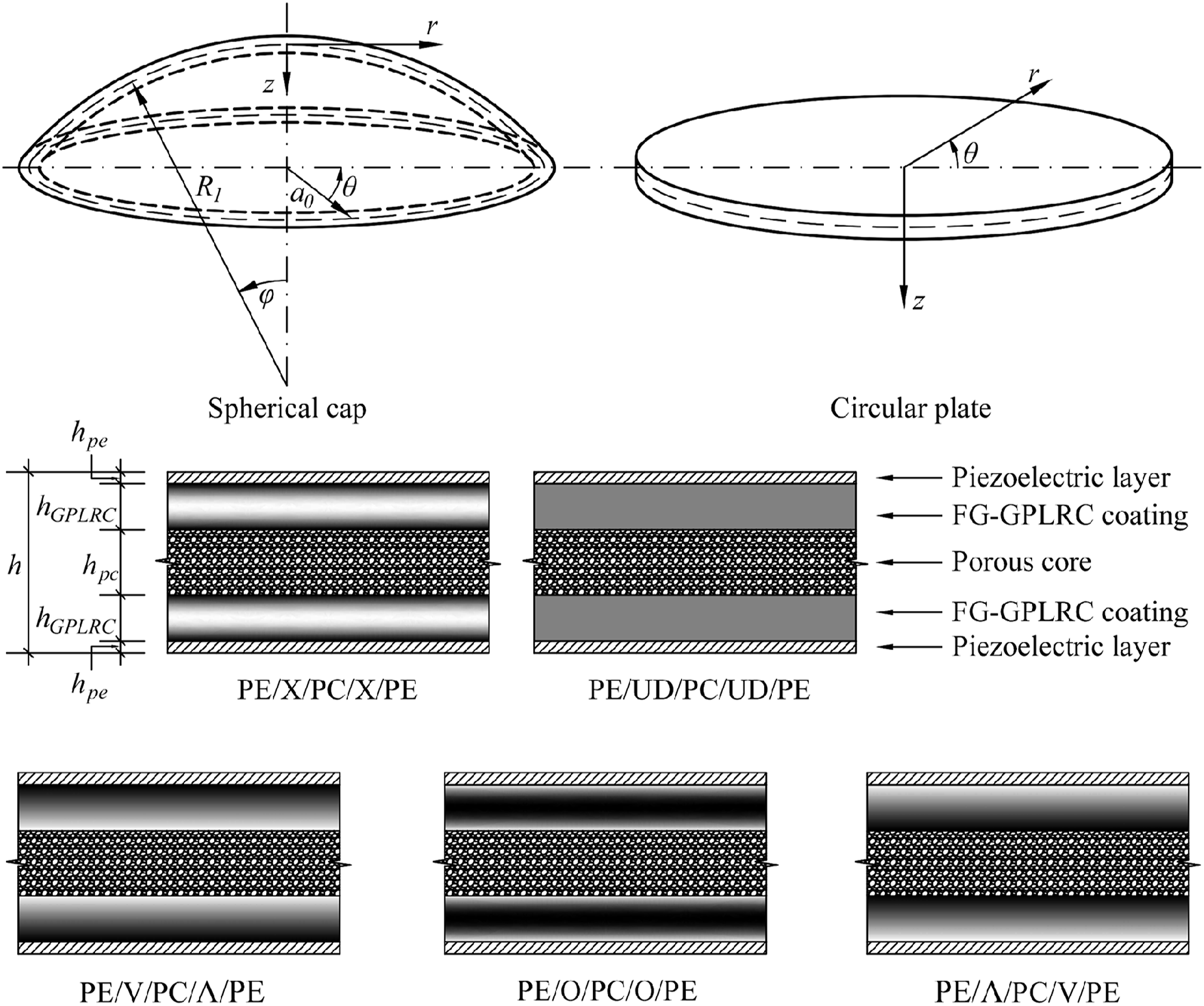
For the FG-GPLRC layers, the UD, X, O, V, and A types of GPL distributions are considered. Piezoelectric layers, FG-GPLRC layers, and porous core are combined into five models as PE/UD/PC/UD/PE, PE/X/PC/X/PE, PE/O/PC/O/PE, PE/V/PC/A/PE, and PE/A/PC/V/PE.
The Halpin-Tsai model is used to determine the elastic modulus as follows
37















The Poisson’s ratio and thermal expansion coefficient of FG-GPLRC spherical caps are determined according to the mixture rule as

The piezoelectric layers are assumed to be PZT-5A with

The core layers are made of the same material as the matrix in this paper. Effective features of the porous core including Young’s modulus, coefficient of thermal expansion, and Poisson ratio can be estimated as46

Hooke’s law is applied to the FG-GPLRC layers and porous core considering the thermal strains, presented as





Based on the TSDST of Reddy with the axisymmetrically deformed assumption, the displacement components at a distance

The strain components of the axisymmetric shallow spherical caps at a distance of

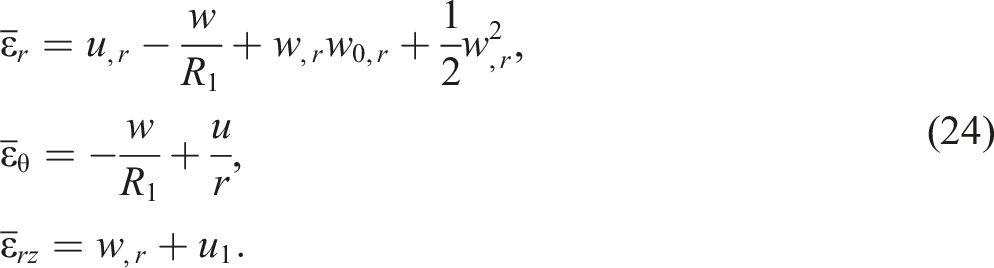
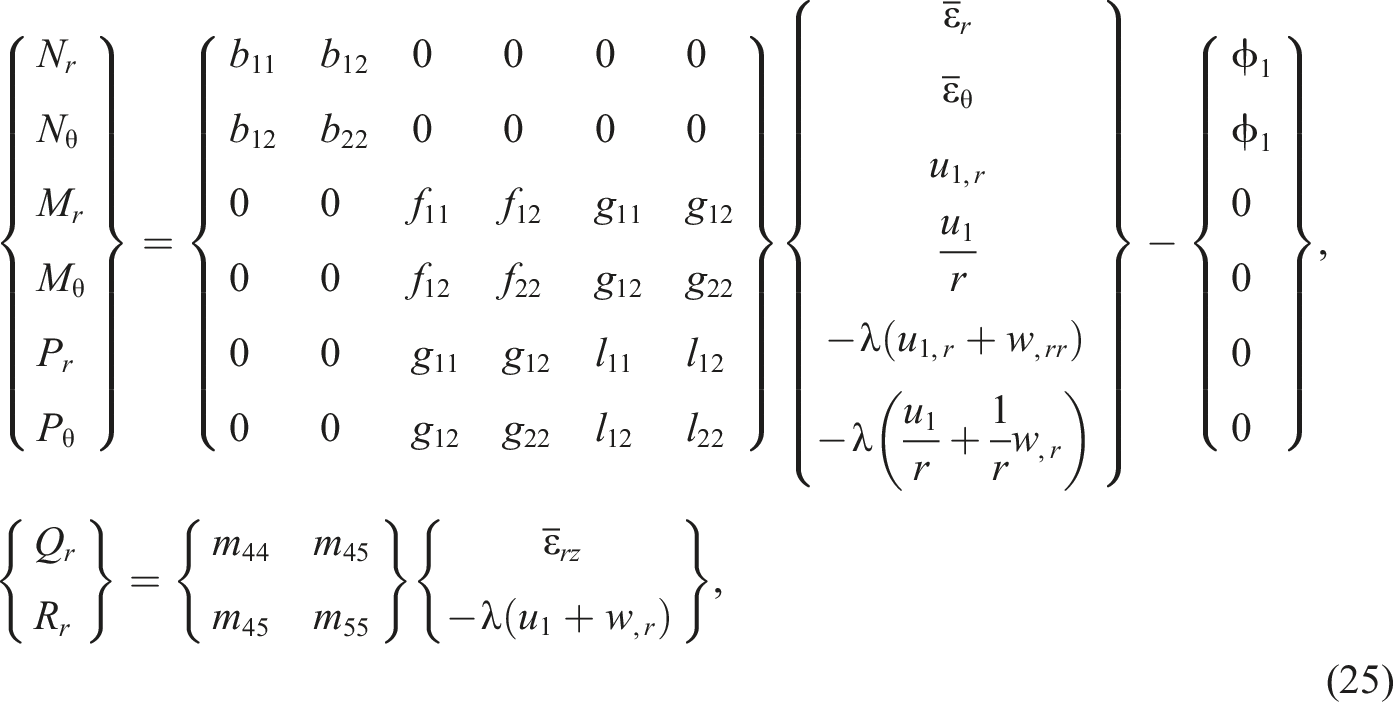
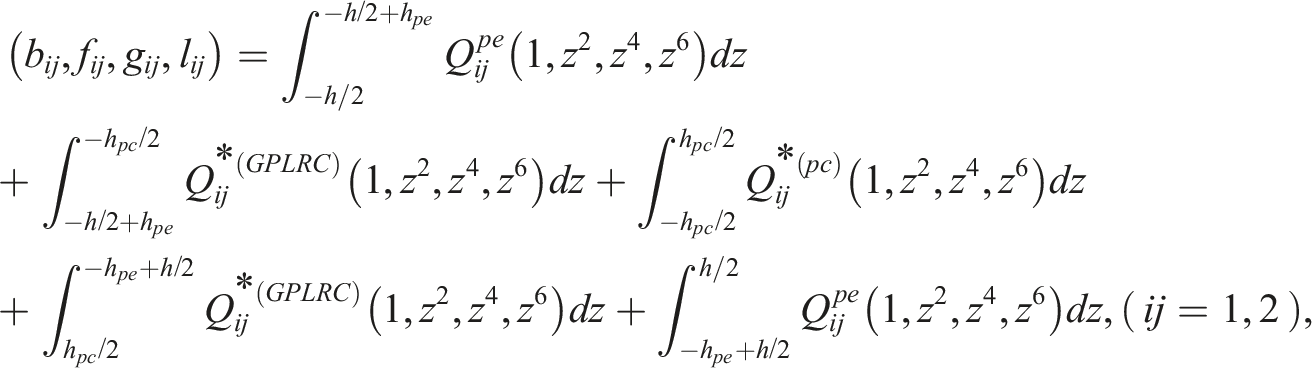
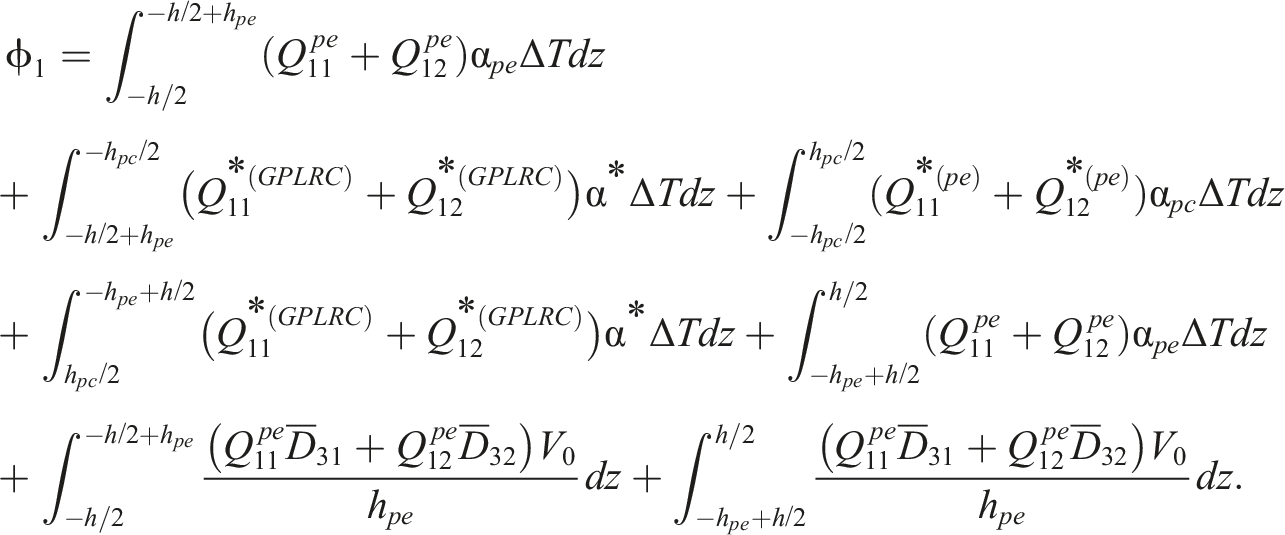

The electro-thermo-elastic strain energy of the shell caps and plates, the work done by the external pressure and foundation-structure interaction, and inertia energy are respectively calculated as



From equations (18) and (19), the total potential energy can be expressed as

Boundary Condition, Approximate Solutions, and Solving Problem
The FG-GPLRC spherical caps and circular plates with porous core and piezoelectric layers are supported by the clamped boundary condition as

The approximate solutions for the displacements and rotation can be chosen corresponding to the boundary condition (20), as
3

The geometrically imperfect deflection

Utilizing the Rayleigh dissipation function, the potential function of the viscoelastic foundation is presented by

The Euler–Lagrange equations are applied to obtain the motion equations of considered structures combined with the Rayleigh dissipation function, obtained as
















Substituting

The equation of motion (40) is used to analyze the dynamic buckling and vibration of plates and caps. The different functions of the radial load
For dynamic buckling behavior, a linear function over time
The fundamental frequency expression of linear and free vibration of plates and shell caps can be achieved by ignoring the nonlinear terms, applied loads, and damping term, presented as

For the vibration problem, In equation (40), the applied load is chosen in the harmonic form



Validation, Investigation, and Discussion
Validation of dimensionless fundamental frequency
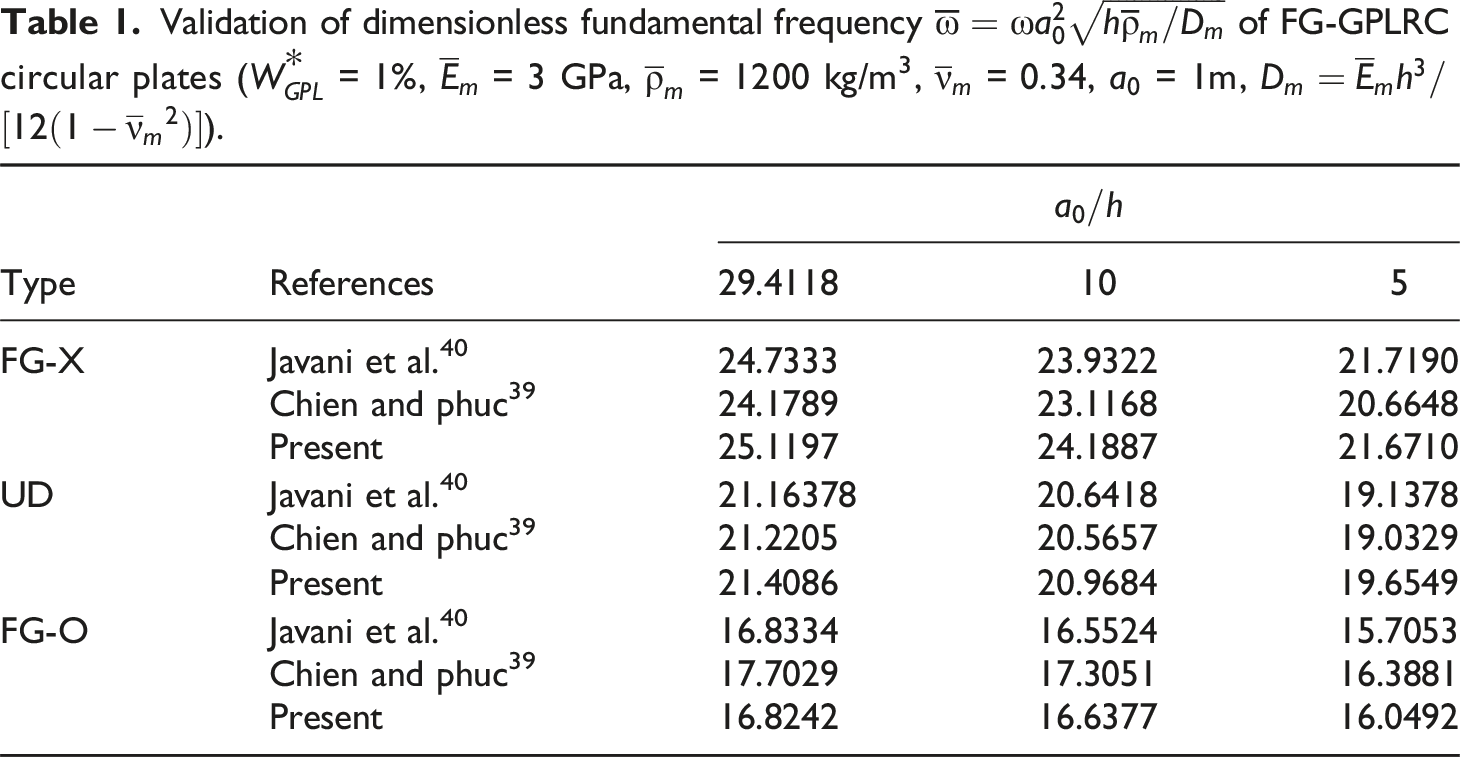
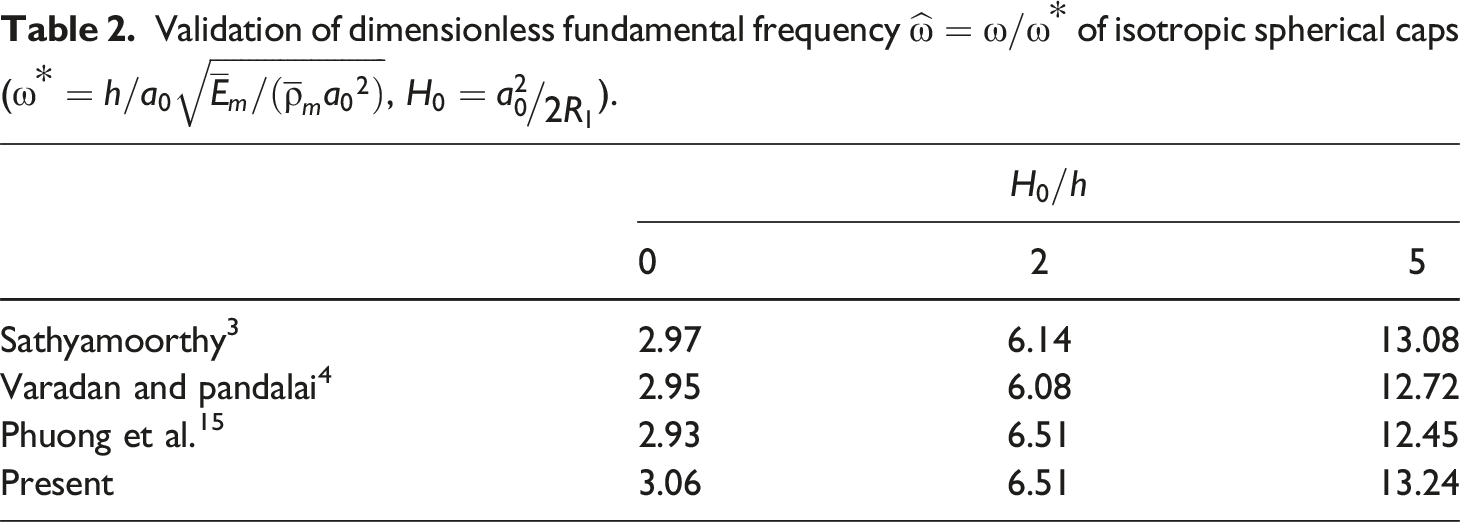
Validation of dimensionless fundamental frequency
In this paper, the copper matrix FG-GPLRC is chosen for the numerical examples. The porous core is made from copper with the same properties as the copper matrix of FG-GPLRC, and the PZT-5A is chosen for the piezoelectric layers. The material properties of FSG-GPLRC and PZT-5A are respectively referred to Wang et al., 37 and Shen. 56
Fundamental frequencies (rad/s) of FG-GPLRC plates and shell caps with piezoelectric layers and porous core (
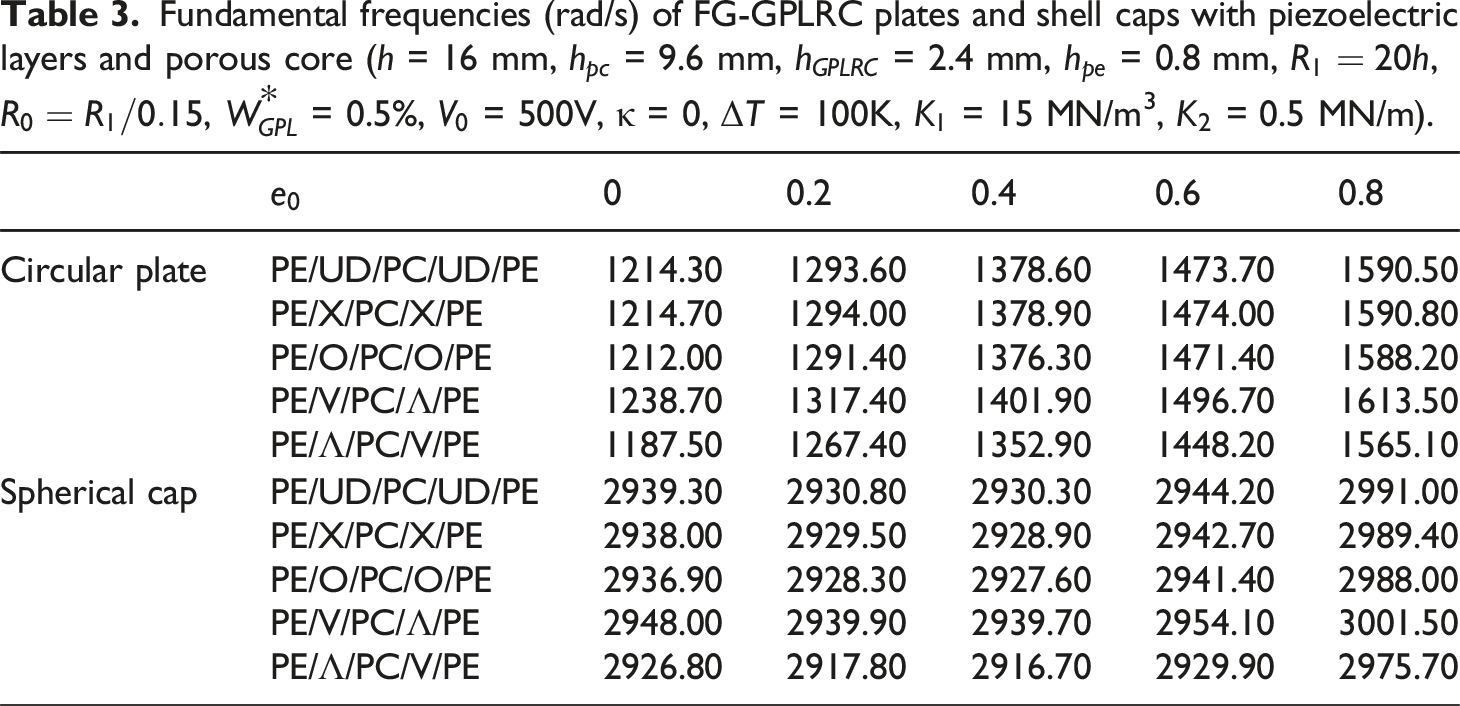
Figure 2(a) shows the effects of the porosity coefficient Effects of material and geometrical parameters on the dynamic responses of plates and shell caps under harmonic loads.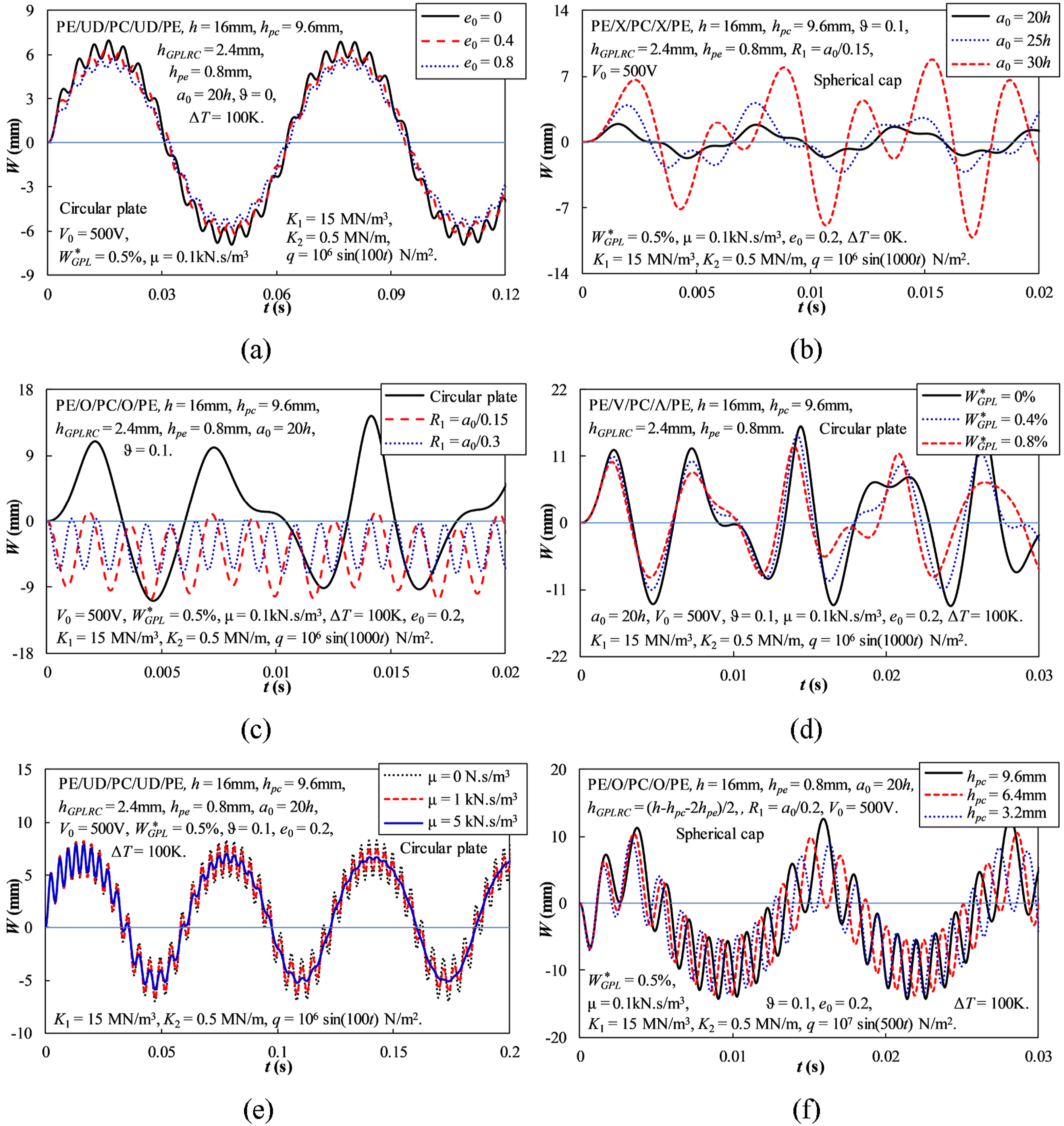
The viscous damping coefficient also strongly affects the vibrational behavior of the plates as in Figure 2(e). After a sufficient number of periods, the vibration response curve becomes noticeably smoother as the viscous damping coefficient increases. Figure 2(f) presents the effects of the porous core thickness on the vibration behavior of spherical caps. As can be observed, the vibration amplitude and tendency of the curves do not change significantly when the core thickness changes.
Figure 3(a) investigates the vibration behavior of FG-GPLRC circular plates with porous core and piezoelectric layers in the cases of forced frequency approximate to the fundamental frequency of the plates. The beat vibrations can be observed in the period and the amplitude of the envelope increases when the forced frequency comes closer to the fundamental frequency of the plates. The increase in the foundation stiffnesses also reduces the shell vibration amplitude as observed in Figure 3(b). Meanwhile, the positive and negative voltage of piezoelectric layers are considered in Figure 3(c). The results show the slight influences of voltage on the vibration behavior of the plates. The adverse effects of temperature on shell vibrations are shown in Figure 3(d). As can be observed, when the temperature change increases, the vibration amplitude largely increases. Due to the thermal expansion, the equilibrium position of the cap is moved to the negative deflection region, leading to the caps vibrating mainly in the negative amplitude region. Effects of material and geometrical parameters on the dynamic responses of plates and shell caps under harmonic loads.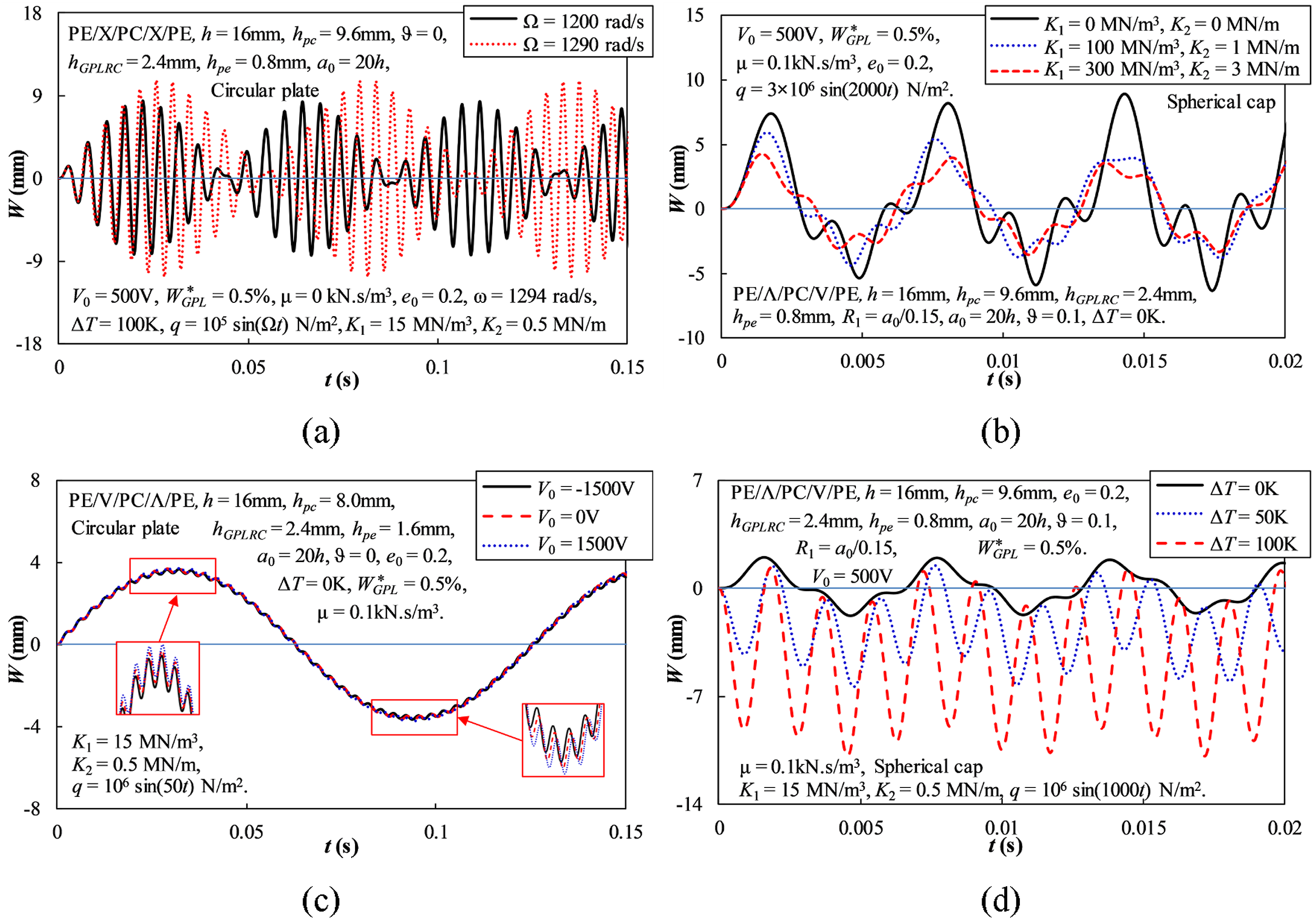
The frequency-amplitude curves of plates and shell caps for the nonlinear free and forced vibration are presented in Figure 4(a)–(d). The curves in Figure 4(a) show that there are nonlinear frequency regions in which there is more than one value of the vibration amplitude for each value of frequency. In other words, these frequency regions do not have stable solutions. For nonlinear free vibration, the unstable solution regions appear only with spherical caps and are not observed with circular plates. Meanwhile, this region shifts toward the lower frequency parameter with larger shell curvature. Figure 4(b) presents the frequency-amplitude curves of spherical caps with different porosity coefficients. The results show the unstable solution region of nonlinear free vibration is in the higher frequency parameter as the porosity coefficient increases. The results also show that in the large amplitude region, the frequency-amplitude curve does not change significantly when the porosity coefficient changes. Effects of the structure type, porosity coefficient, base radius, and amplitude of forced load on the frequency-amplitude curves of plates and shell caps.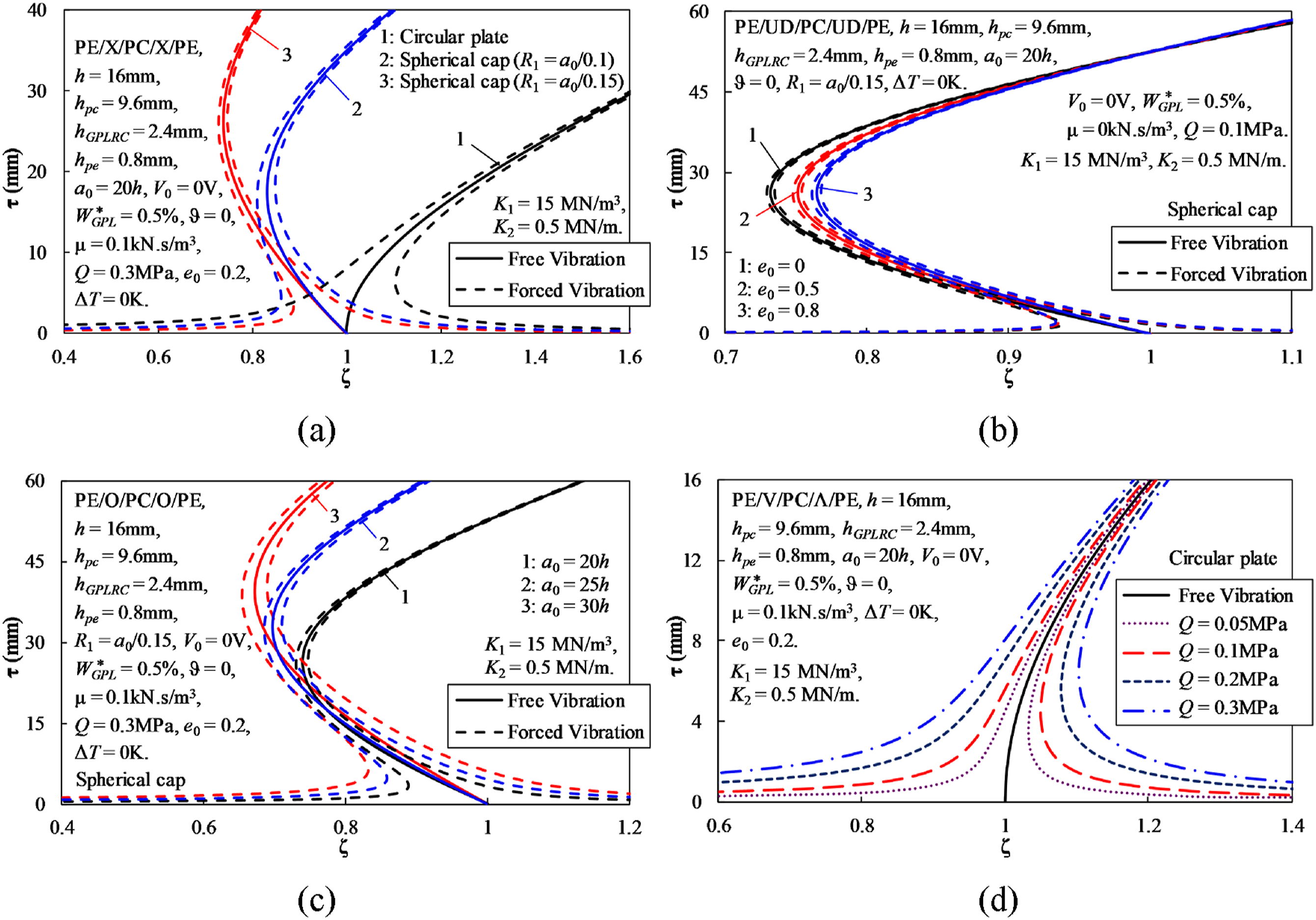
Effects of base radius on the frequency-amplitude curves of spherical caps are investigated in Figure 4(c). In the high-frequency parameter region, the vibration amplitude increases sharply as the base radius increases, while in the low-frequency parameter region, the difference is not large in the investigation cases. Effects of forced amplitude on the frequency-amplitude curve of the circular plate are investigated in Figure 4(d). The results show that the forced vibration curves are asymptotic with the free vibration curve, additionally, the curve of forced vibration diverges from the curve of free vibration as the amplitude of the forced load increases.
Effects of material and geometrical parameters on the dynamic responses of plates and shell caps under linear time-dependent loads are presented in Figure 5(a)–(d). As can be seen in Figure 5(a), the dynamic response curves of spherical caps are upper for a larger base radius. The dynamic buckling behavior can be observed in Figure 5(b) for the spherical caps, however, it cannot be obtained for circular plates. It can also be seen that as the shell curvature increases, the dynamic buckling region is obtained in the larger loads. Effects of material and geometrical parameters, and foundation on the dynamic responses of plates and shell caps under linear time-dependent loads.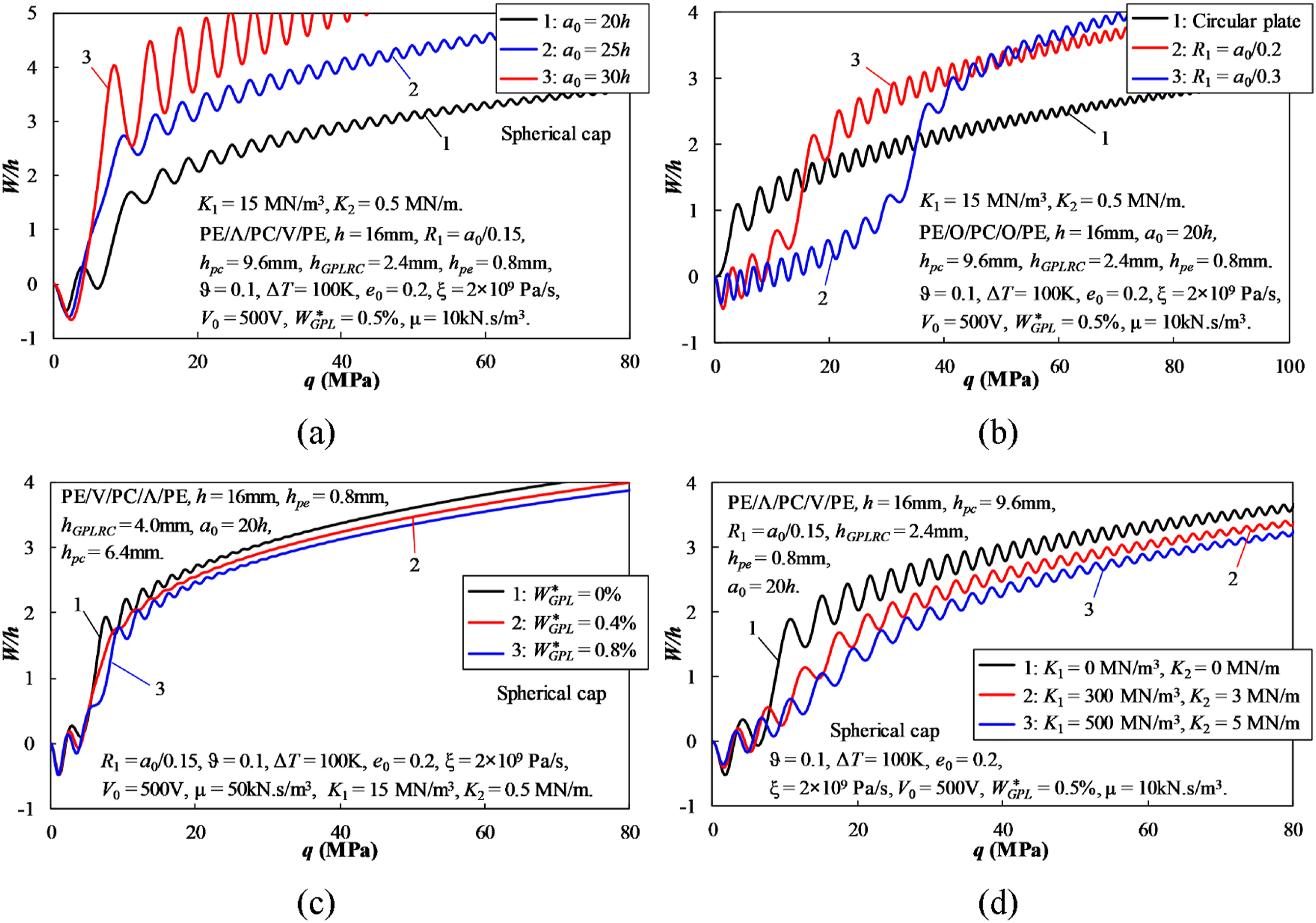
Figure 5(c) investigates the effects of the GPL mass fraction of two FG-GPLRC face sheets on the dynamic responses of spherical caps. Clearly, the dynamic response curve is upper with the lower GPL mass fraction of the face sheets. As in Figure 5(d), the dynamic response curve gets lower and smoother as the foundation stiffnesses increase. Due to the reaction of the elastic foundation is opposite to the direction of dynamic responses, the amplitude of dynamic responses reduces.
Conclusions
In this paper, the nonlinear dynamic response and vibration behavior of FG-GPLRC circular plates and spherical caps with porous core and piezoelectric layers resting on the Pasternak elastic foundation is considered. The TSDST and the Euler-Lagrange equations are used to formulate the motion equations of considered structures. The equation of motion, fundamental frequency expression, and frequency-amplitude expression are achieved in explicit forms. The results show that the present approach is simple and effective for the nonlinear dynamic response and vibration problems of the considered structures. From the investigations, some interesting remarks are achieved as - The fundamental frequency increases with the increase of the porosity coefficient, although the increases in the porosity coefficient reduce the stiffnesses of the structures, the densities of the core layer also decrease, reducing the mass of the structures. Additionally, as the porosity coefficient increases, the vibration amplitude of the circular plate decreases. - The sharp decrease of vibration amplitude of structures is obtained when only the small curvatures of structures are applied. - For nonlinear free vibration, the unstable solution regions appear only with spherical caps and are not observed with circular plates. Meanwhile, this region shifts toward the lower frequency parameter with larger shell curvature. - The dynamic buckling behavior can be observed for the spherical caps, however, it cannot be obtained for circular plates.
Footnotes
Declaration of conflicting interests
The author(s) declared no potential conflicts of interest with respect to the research, authorship, and/or publication of this article.
Funding
The author(s) received no financial support for the research, authorship, and/or publication of this article.
