



Abstract
The main aim of this research is to establish the algorithm for nonlinear thermo-mechanical buckling of sandwich functionally graded graphene platelet reinforced composite (FG-GPLRC) shallow spherical caps and circular plates with porous core under external pressure and/or uniformly distributed thermal load according to the higher-order shear deformation theory considering the von Karman nonlinearities. Sandwich spherical caps and circular plates are made by the porous core and two FG-GPLRC coatings and are assumed to be rested on an elastic foundation modeled by the Pasternak model. The equilibrium equation system in the form of nonlinear algebra can be approximately obtained using the Ritz energy method. The critical buckling loads and postbuckling curves can be explicitly determined. The effects of material parameters, geometrical parameters, porous core, and elastic foundation on thermo-mechanical buckling of sandwich spherical caps and circular plates with porous core and FG-GPLRC coatings are investigated and discussed in detail in the numerical investigation section.
Keywords
Introduction
Sandwich functionally graded materials (FGMs) are typically three-layer materials, in which the two outer coatings are made of high-strength FGM that function to withstand almost all of the loads of the structure. The core layer is usually made of porous and lightweight materials, which increases the eccentricity of the two coatings, thereby increasing the overall stiffness of the whole structures. In addition, due to two FGM coatings, FGM sandwich materials can overcome the phenomenon of stress concentration between layers as ordinary sandwich materials. Therefore, FGM sandwich structures are increasingly being applied in many engineering fields. The analysis of the mechanical behavior of these structures has received many good and meaningful results.
For the FGM and sandwich FGM rectangular plates, studies on the buckling, postbuckling, and bending behavior of the plates1–8 were performed using the classical shell theories (CST), first-order shear deformation theory (FSDT), and higher-order shear deformation theory (HSDT) and basing the analytical, semi-analytical or numerical approaches. Many types of loads were considered such as: axial compression load, external pressure load, thermal load. By applying different theories and methods, the natural frequency, vibration, and nonlinear dynamics of sandwich FGM panels have also been studied by Wang and Shen,8,9 Hadji et al., 10 Singh and Harsha, 11 and Vyacheslav et al. 12 Based on the CST, FSDT, HSDT, and improved shear deformation theory, Alibegloo and Liew, 13 Pandey and Pradyumma,14,15 Dong et al., 16 Long and Tung, 17 Dung and Dong, 18 Dong and Dung, 19 Hao et al., 20 Alibegloo 21 and Karakoti et al. 22 examined the buckling, free vibration, forced vibration and nonlinear transient responses of sandwich FGM plates, doubly-curved panels and shells subjected to different load types with different sandwich FGM models.
For the sandwich FGM cylindrical shells,23–33 the structure received a lot of attention in the world, the problems of buckling and nonlinear static postbuckling,23,24,26–30 nonlinear vibration problems23–25,27,31 and nonlinear dynamic responses32,33 were considered with different load types, theories and methods.
For sandwich FGM spherical caps and circular plates, the bending, buckling, vibration and nonlinear dynamic problems were analyzed by Reddy et al., 34 Phuong et al., 35 Minh et al., 36 Alipour and Shariyat, 37 Anh and Duc, 38 and Fu et al. 39
Based on the idea of FGM, in recent years, the types of nanocomposite including functionally graded graphene platelet reinforced composite (FG-GPLRC) and functionally graded carbon nanotube reinforced composite (FG-CNTRC) have also started to be studied.40–42 These types of material also have the advantages of FGM such as lightness and good load capacity. In addition, for the designs in sandwich forms of these materials, the top and bottom coatings are reinforced by graphene sheets (GPLs) or carbon nanotubes (CNTs) which have many outstanding mechanical properties such as high strength, and good electrical and thermal conductivity while being light in density. Therefore, sandwich FG-GPLRC and sandwich FG-CNTRC can be considered potential materials for engineering designs in the future. In addition, shear deformation theories are increasingly showing advantages in the thermo-mechanical analysis of composite structures. 43
Some remarkable studies on the thermo-mechanical behavior of FG-GPLRC structures were performed. By applying HSDT, Mohammadi and Nematollahi 44 studied forced vibration of sandwich FG-GPLRC beam with metal core taking into account the effects of external excitation via nonlinear dispersion pattern using the Galerkin procedure. By using the four-variable shear and normal deformable quasi-3D beam theory, the free and forced vibration behavior of FG-GPLRC beams subjected to moving loads was mentioned by Jafari and Kiani. 45 For the FG-GPLRC plates and doubly curved shells, by using the FSDT, the dynamic response and free vibration of rectangular and skew plates were also mentioned.46–48 The investigations of the free and forced vibrations of the sandwich cylindrical panels made from two FG-GPLRC coatings and the honeycomb auxetic core was carried out by Karimiasl and Alibeigloo. 49 In which, the basic formulations are established based on the HSDT and the gorvening equations are obtained through the generalized differential quadrature method (GDQM) and pertubation technique. The quasi-3D plates theory was also used to analyse the mechanical behavior of FG-GPLRC rectangular plates.50,51 For the spherical caps, based on the FSDT and Galerkin method, the nonlinear dynamic responses of the porous core sandwich FG-GPLRC shell were reported by Anh et al. 52 For FG-CNTRC plates, the postbuckling behavior and dynamic responses of rectangular and skew plates were studied using the FSDT,53,54 and using the HSDT 55 By using the self-consistent model, the degraded stiffness of cracked layers was predicted, and the multilayer composite plates and shells containing CNTRC layers and matrix cracked fiber reinforced composite layers were considered.56–58
It can be seen, in comparison with the rectangular plate, cylindrical panel, or cylindrical shell, only less number of studies of the spherical caps and circular plates can be observed. On the other hand, analyzing the mechanical behavior of these structures requires solving the partial differential equation system with coefficients as the function, therefore, studies on this structure, especially studies using shear deformation theories are often mathematically difficult. However, this is also a type of structure commonly used in civil engineering, space equipments, or fusion reactors. In addition, only a less number of studies on the thermo-mechanical behavior of sandwich FG-GPLRC structures, especially sandwich FG-GPLRC structures with porous core, were published.
According to the authors’ knowledge, there is no research on spherical caps and circular plates made of sandwich FG-GPLRC with porous core using the HSDT. Compared with the FSDT, the HSDT satisfies the boundary conditions for shear stress and strain at the top and bottom surfaces of the structure, leading to it not requiring the shear correction factor, and it describes the kinematics better. Therefore, in this study, an analytical approach for nonlinear buckling and postbuckling behavior of the sandwich FG-GPLRC shallow spherical caps and circular plates with porous core under mechanical and thermal loads based on HSDT is presented for the first time. Basic relations such as strain-displacement, stress-strain; internal force, and moment expressions are formulated. The potential energy expression of buckling and postbuckling of the spherical caps and circular plates is established. By applying the Ritz energy method, the load-deflection equations that are used to determine the buckling and postbuckling of the sandwich FG-GPLRC spherical caps and circular plates were obtained. In the numerical results section, the significant effects of the geometrical parameters, material parameters, elastic foundation parameters, and porous core on the nonlinear buckling behavior of the sandwich FG-GPLRC spherical caps and circular plates were found and validated.
Sandwich FG-GPLRC shallow spherical caps and circular plates with porous core
In this study, spherical caps and circular plates with thickness
+) The upper coating





+) The lower coating





The elastic modulus of the FG-GPLRC coating layer is determined by the extended Halpin-Tsai model as below



The core layers of the sandwich spherical caps and circular plates are made of the same material as the matrix of the FG-GPLRC. Effective properties of the core such as Young’s modulus

With the law of material distribution of two coatings and the porous core (PC), five material types of the FG-GPLRC sandwich spherical caps and circular plates are obtained as: X-PC-X; O-PC-O, UD-PC-UD, V-PC-A, A-PC-V (Figure 1). Configuration, geometrical parameters, and material design of sandwich FG-GPLRC shallow spherical caps and circular plates with porous core.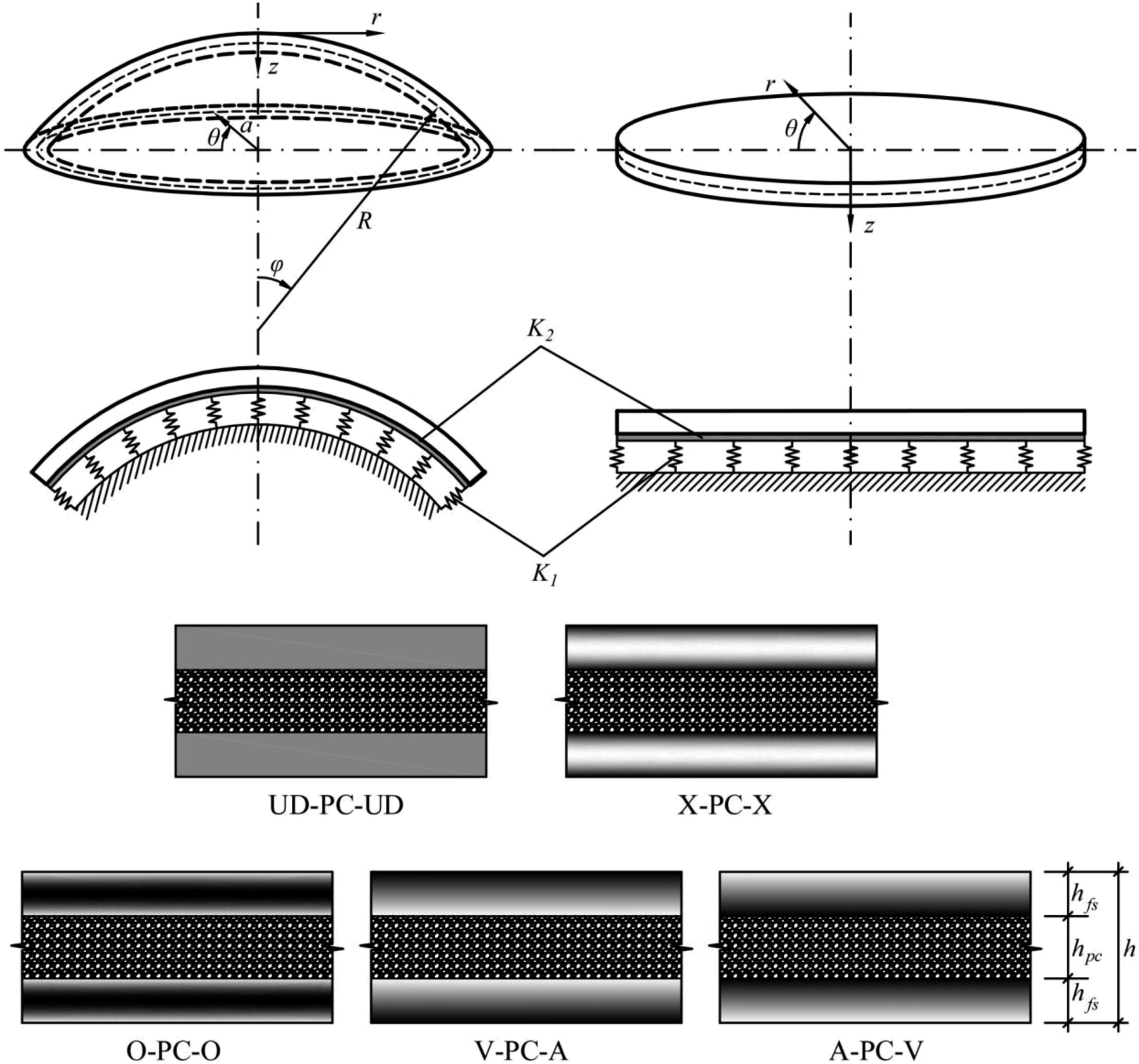
Fundamental formulations
Consider the sandwich FG-GPLRC spherical caps with porous core with radius of cap’s curvature Comparison of postbuckling curve of S-FGM spherical cap without foundation under external pressure.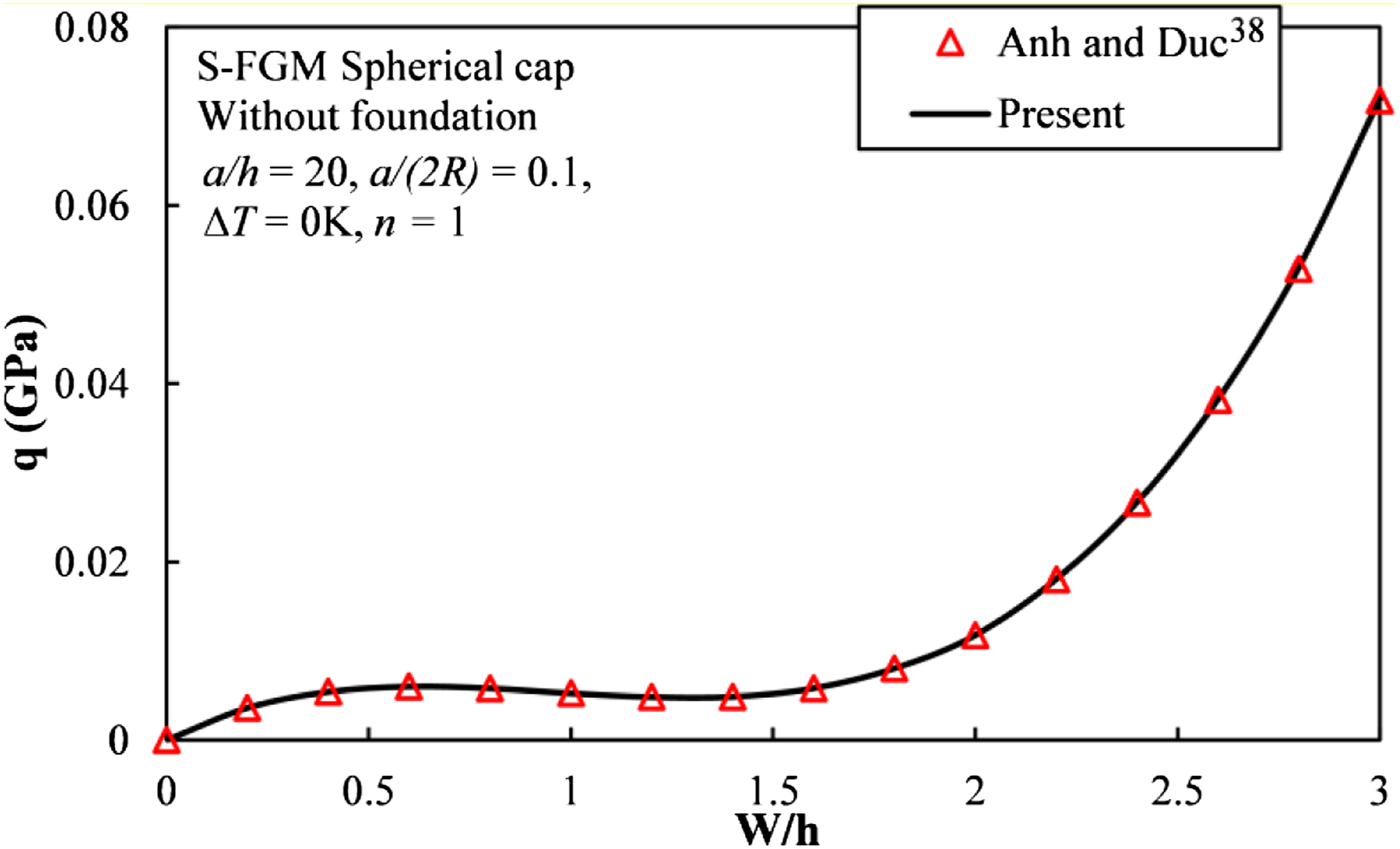
By applying the HSDT and the von Kármán nonlinearities, the basic formulations and equations of the nonlinear buckling problem of the spherical caps can be established. The basic formulas and equations of the sandwich FG-GPLRC circular plates with porous core are obtained by applying
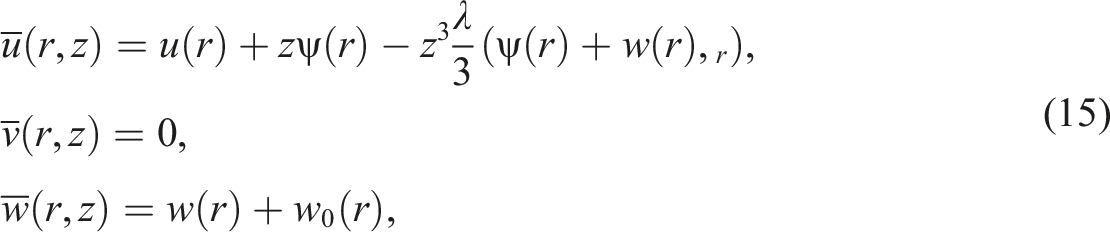
The displacements of any point on the spherical caps and circular plates at a distance z from the middle surface according to the HSDT are respectively as34,39
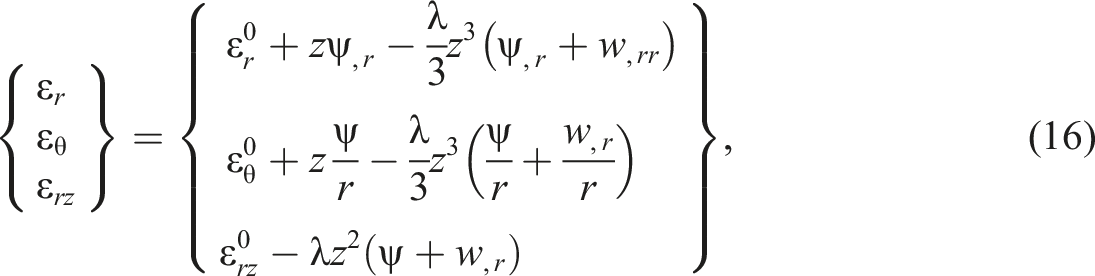
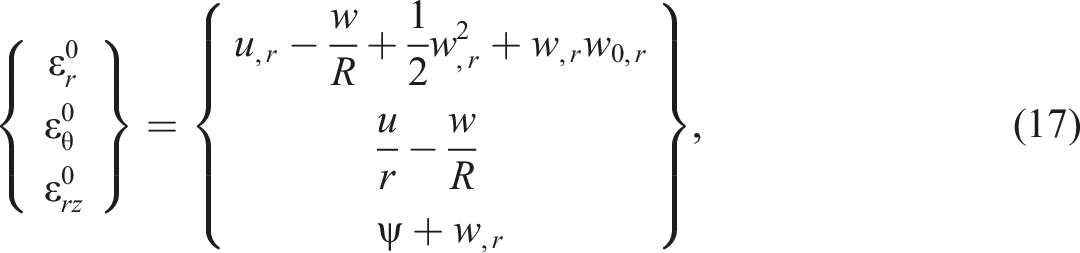
The strains of the spherical caps at a distance z from the middle surface are presented as
The relations between stresses and strains are presented by Hooke’s law for the sandwich FG-GPLRC spherical caps with porous core taking into account the temperature effect is as


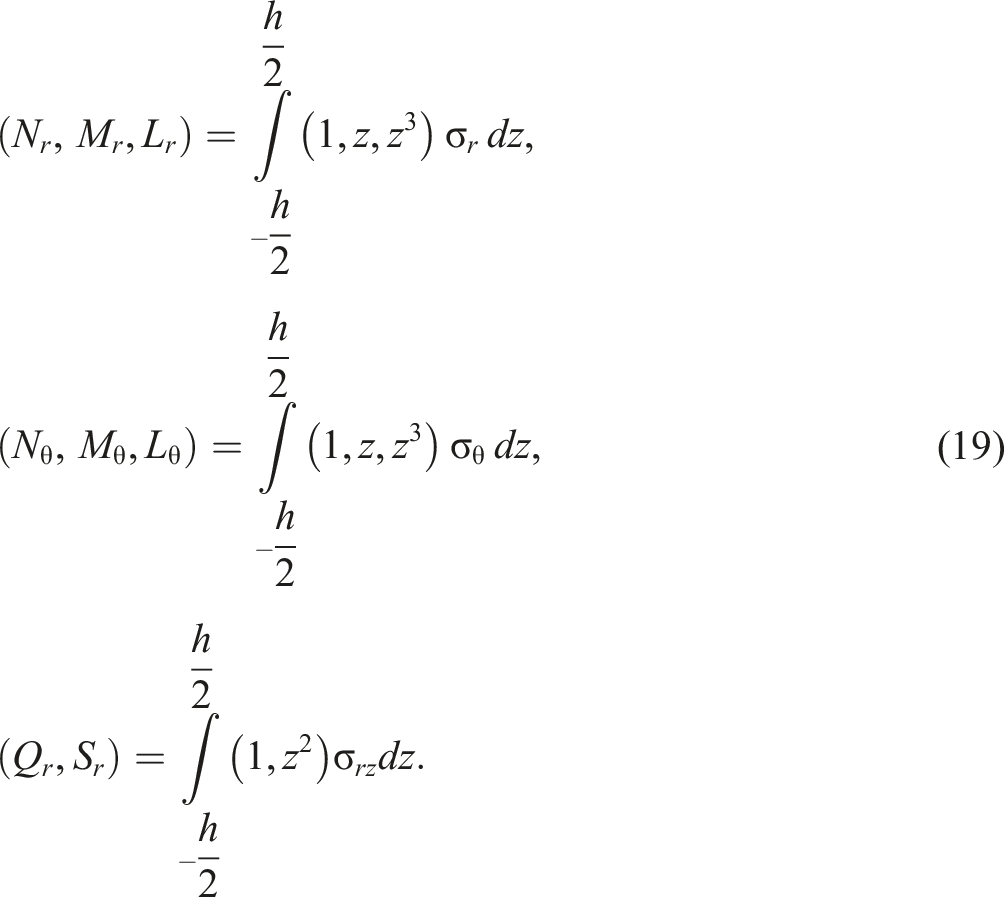
The expressions of the internal forces including: extension forces, moments, higher-order moments, shear forces and higher-order shear forces are determined by integrating the expression of stresses in equation (18) along the thickness of the shell/plate as follows
Substituting equation (16) into (18), then substituting the resultant equations into equation (19) the force and moment expressions are obtained as
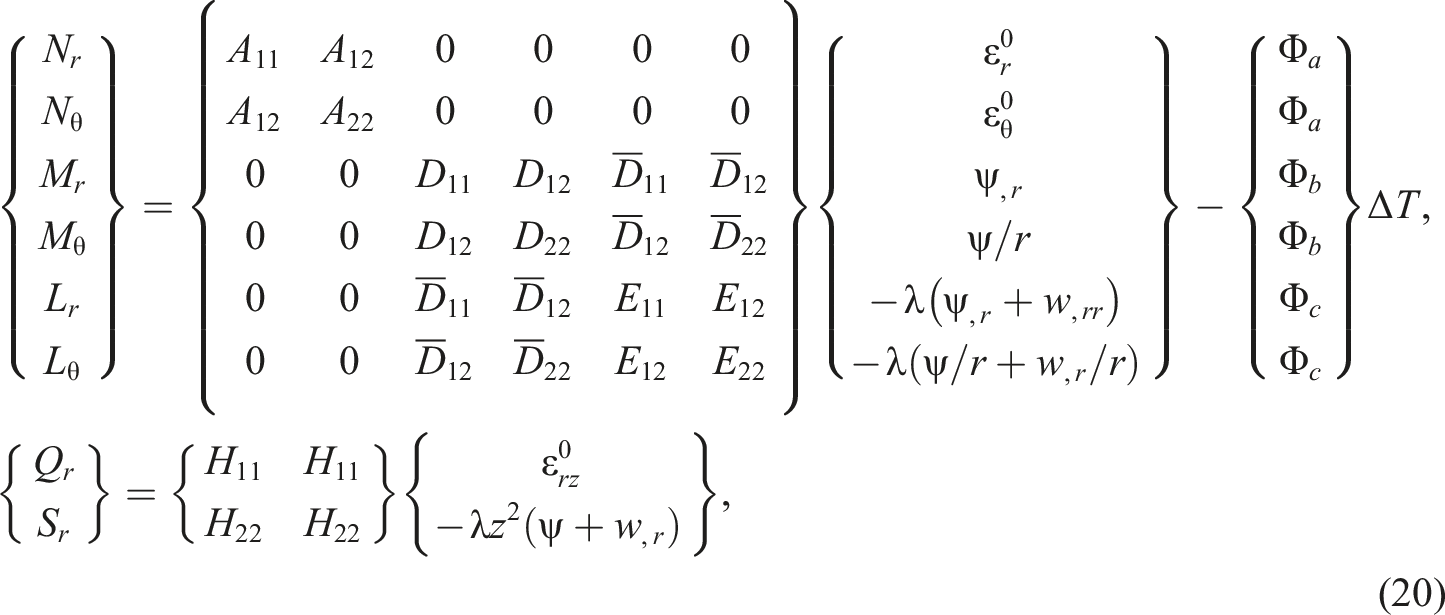
With
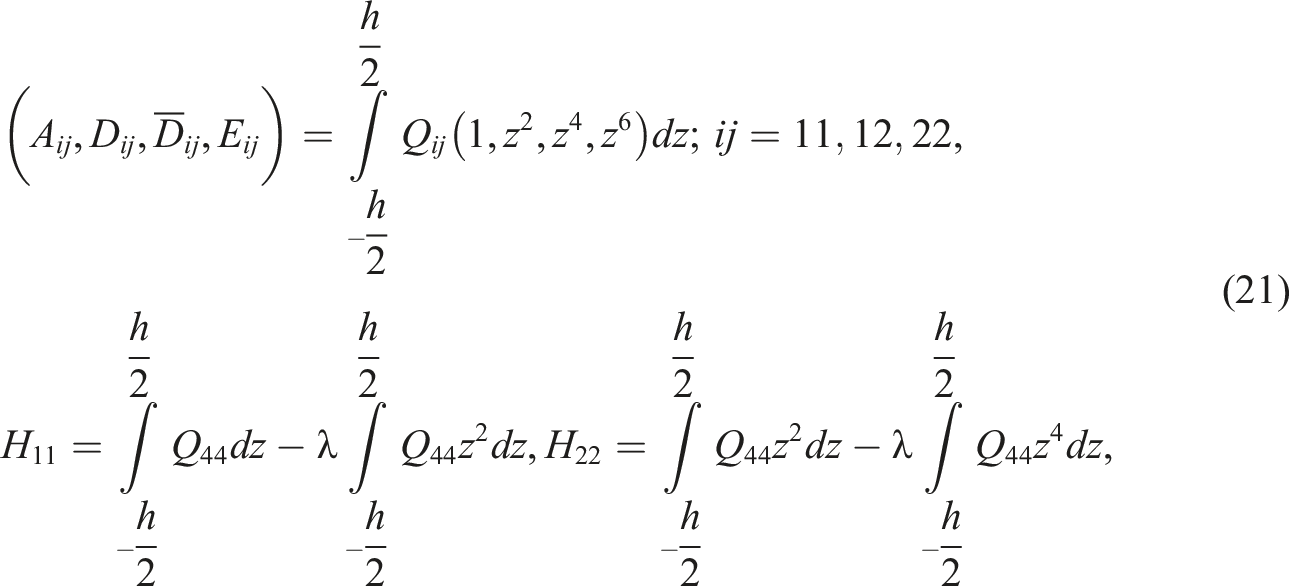
and

Boundary conditions, solution forms and the Ritz energy method
In this paper, the spherical caps and circular plates are considered with the clamped edges at the base circumference. The boundary conditions in these cases are

To satisfy the boundary condition (23), the approximate solutions of the problem are chosen as35,36,38

The Ritz energy method is applied by minimizing the total potential energy expression


and

The expression of total potential energy

By using the equations 17–20, the total potential energy (28) can be rewritten by three unknown functions



Where
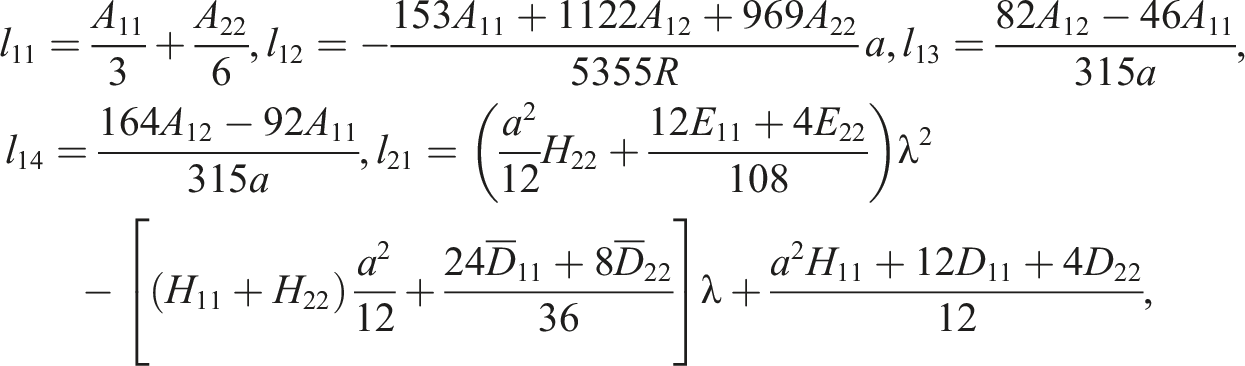
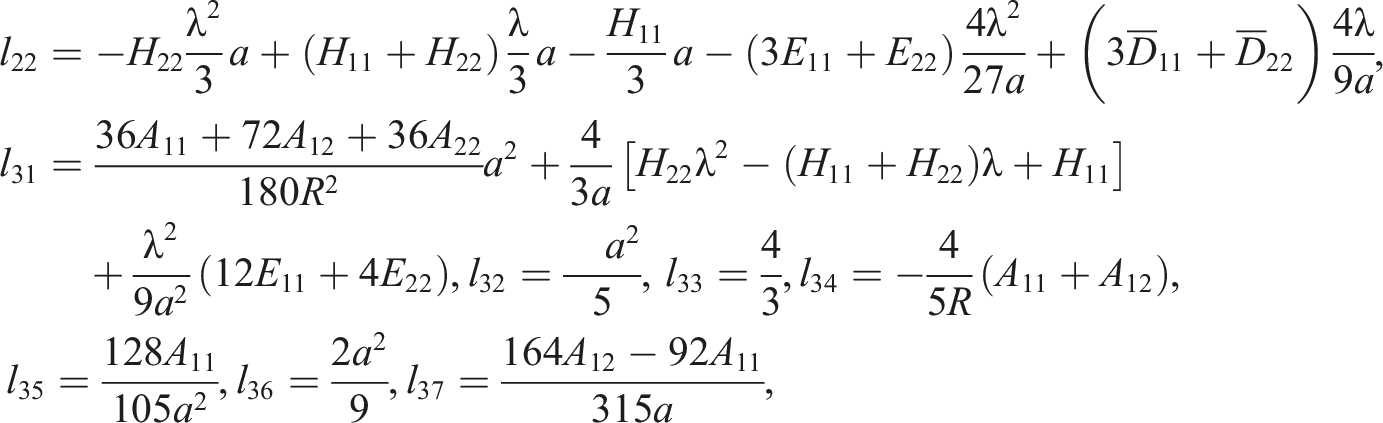

The expressions of




The relation between mechanical load-deflection is obtained from equation (32) is

Similarly, from equation (32), the thermal load–deflection relation of the FG-GPLRC spherical caps with porous is obtained as

In the case of a perfect circular plate subjected only to thermal loads, the critical thermal buckling load is obtained by applying

In order to analyze the nonlinear buckling of the sandwich FG-GPLRC spherical caps and circular plates with porous core under mechanical and thermal loads placed on the Pasternak elastic foundation, equations 33–35 are used. Equations (33) and (34) are used to investigate the postbuckling curves of the sandwich FG-GPLRC spherical caps and circular plates with porous core, and equation (35) are used to determine the critical thermal buckling loads of the perfect sandwich FG-GPLRC circular plates with porous core.
Numerical results and discussions
Validation results
Comparison of maximal deflection
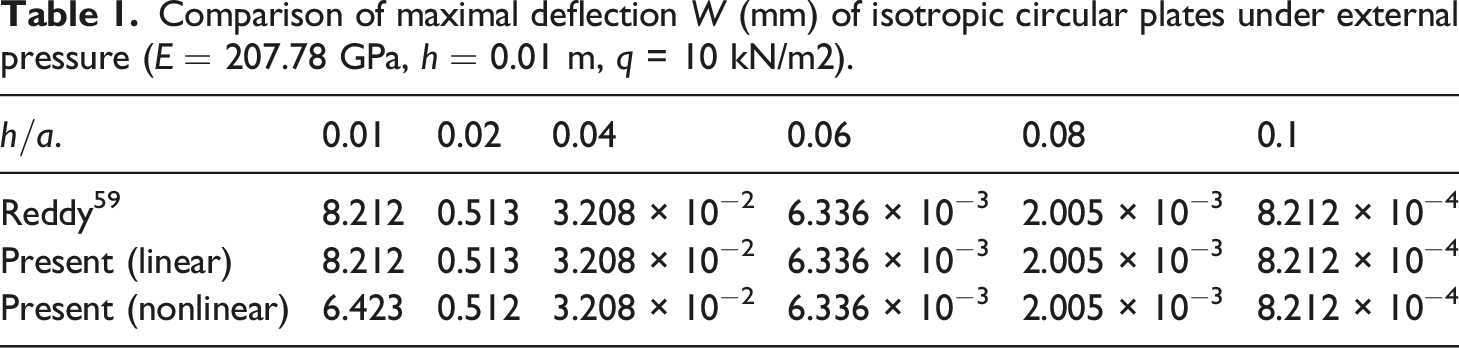
Clearly, the results of these comparisons affirm the validity of the present approach.
Results and discussions
In this paper, the matrix is made of copper, and the material properties and efficiency parameters of GPLs and matrix are chosen as reported by Wang et al. 60
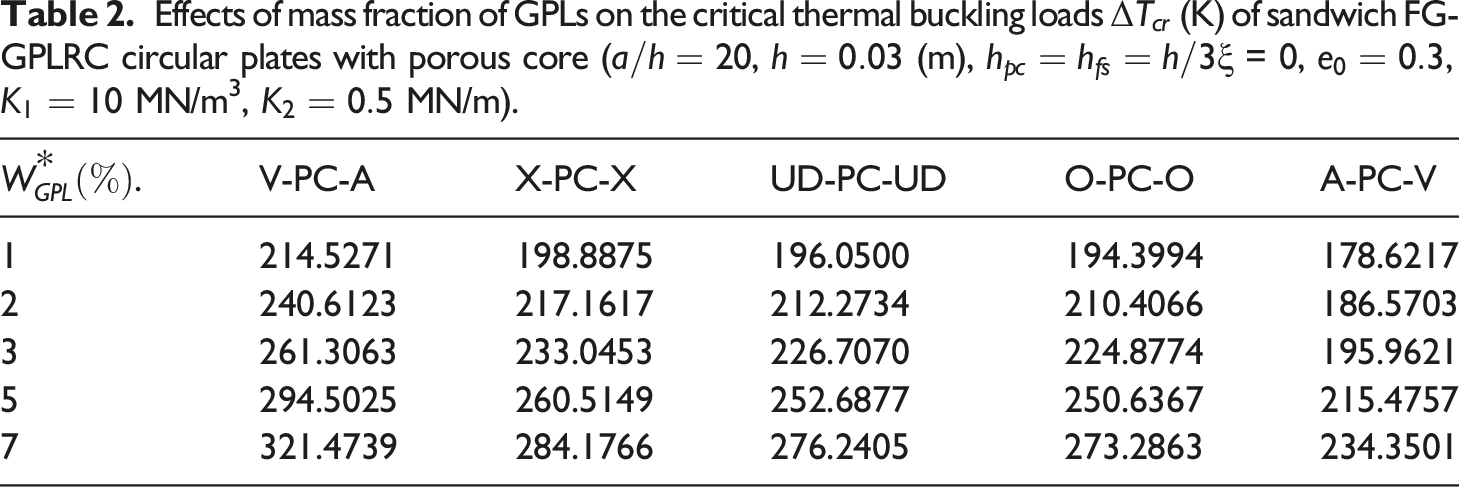
Effects of mass fraction of GPLs on the critical thermal buckling loads
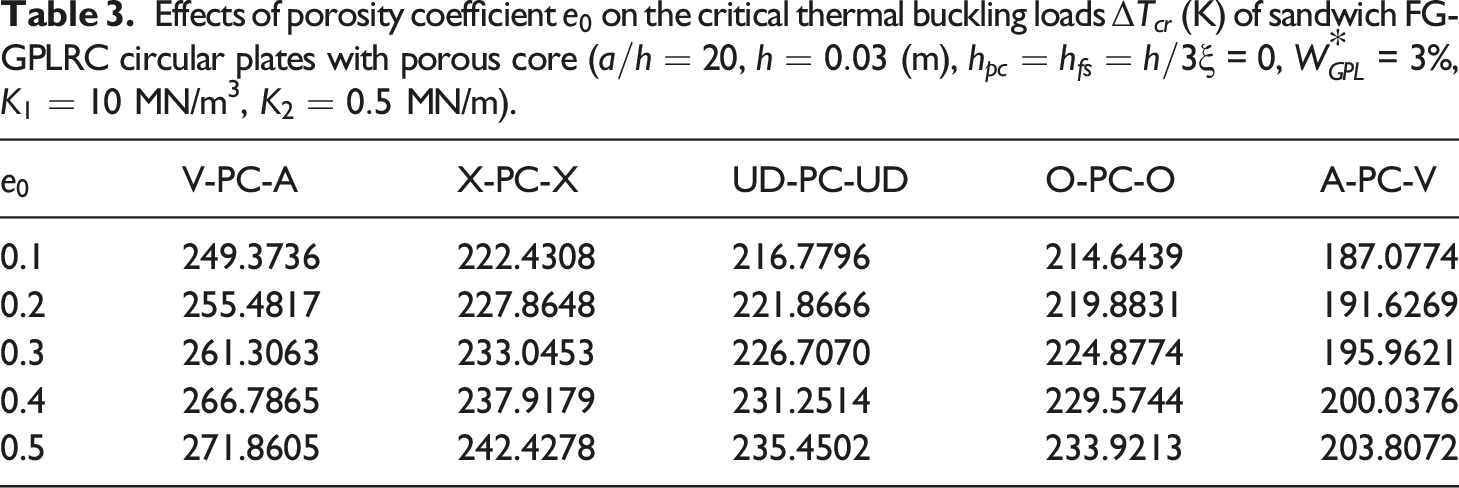
Effects of porosity coefficient
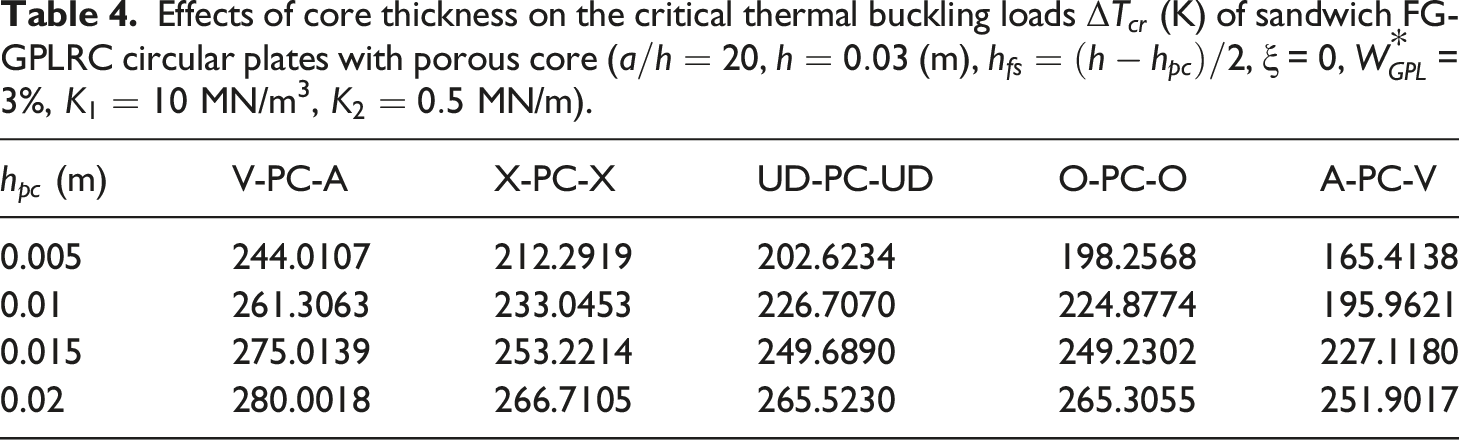
Effects of core thickness on the critical thermal buckling loads
Effects of foundation stiffnesses on the critical thermal buckling loads
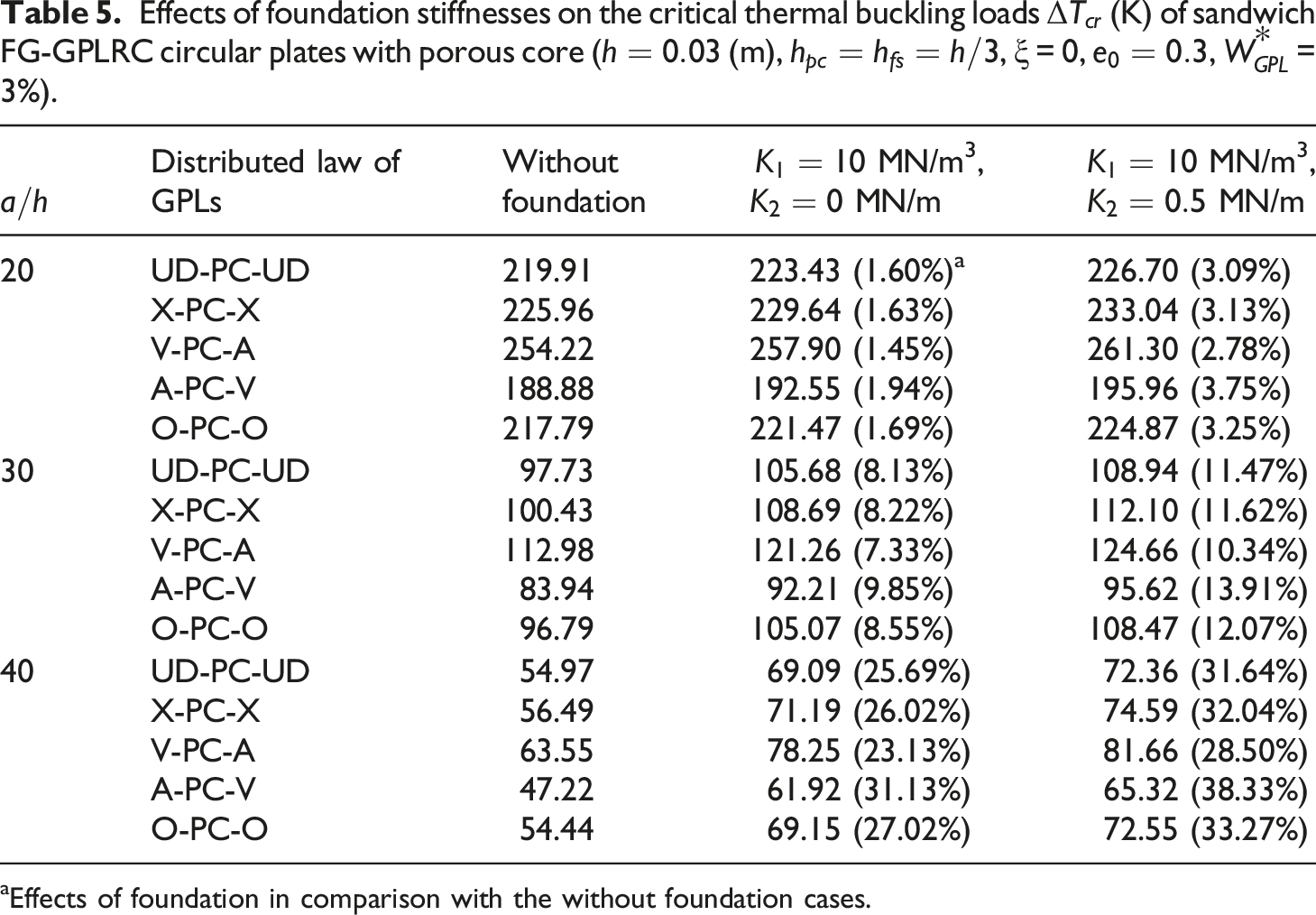
aEffects of foundation in comparison with the without foundation cases.
From Tables 2–4, it can be observed that, with all five material distribution laws, the critical thermal buckling loads of the sandwich FG-GPLRC circular plates with porous core are directly proportional to the mass fraction of GPLs, porosity coefficient, and the thickness of the porous core. Clearly, all the examined results in this paper show a large influences of mass fraction of GPLs, porosity coefficient, and core layer thickness on the critical thermal buckling loads of the circular plates can be observed.
Table 5 investigates the critical thermal buckling loads of the FG-GPLRC plates with porous core when the
Figure 3(a)–(d) examine the Effects of the GPLs distributed types and mass fraction of GPLs on the postbuckling curves of sandwich caps and plates with porous core (a) (b) (c) (d) (e) (f).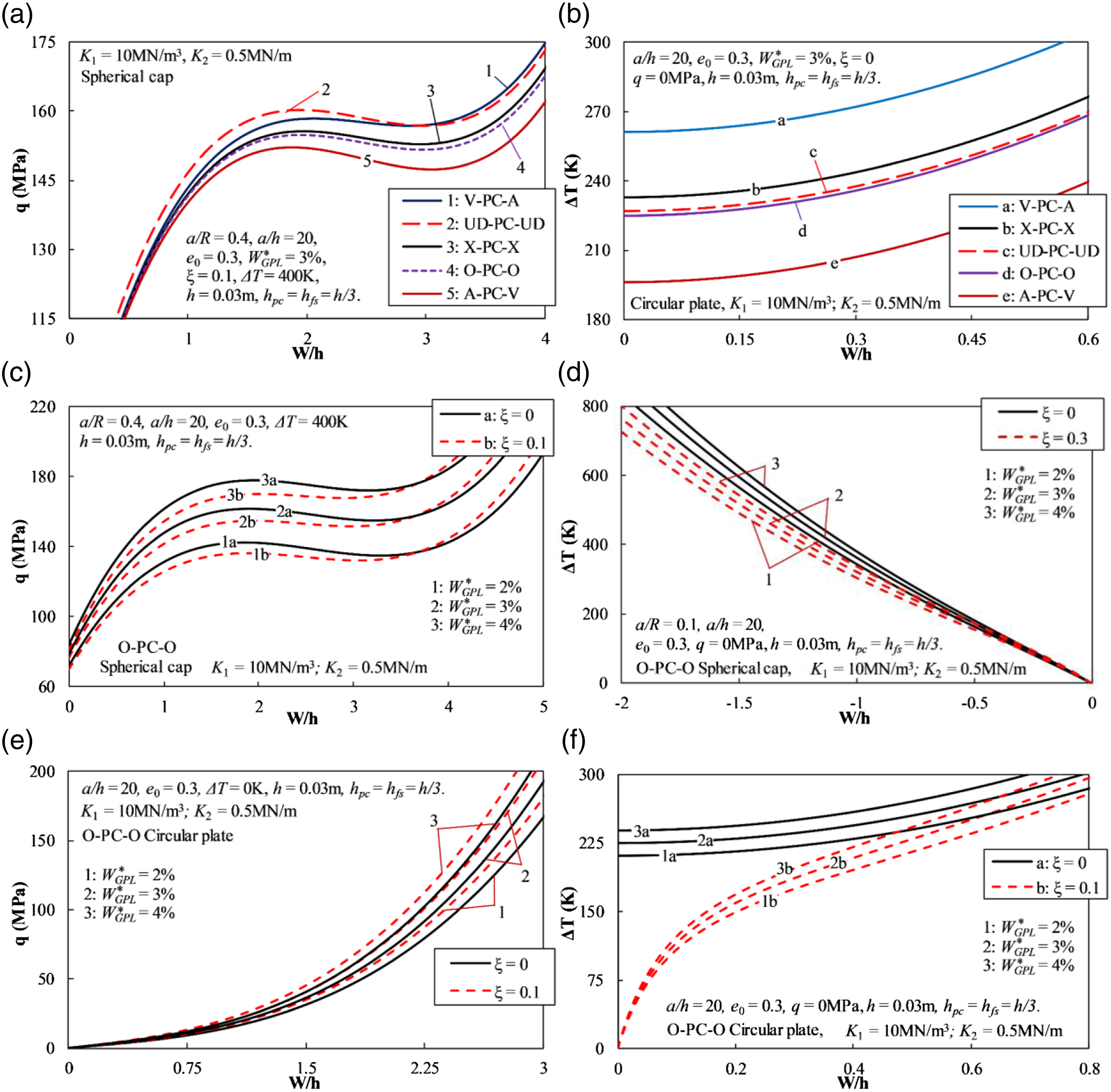
Additionally, in the cases of the spherical caps subjected to both external pressure and thermal load, the pre-deflection is created (Figure 3(c)), the postbuckling curves are derived from a point on the horizontal axis. Figure 3(c)–3(f) show the significant effects of GPL mass fraction on the
The mechanical and thermal postbuckling strength of sandwich FG-GPLRC spherical caps increases when the mass fraction of GPLs increases. Especially, the
Figure 4 shows the effects of porous core thickness Effects of core thickness on the postbuckling curves of sandwich caps and plates with porous core (a) (b) (c) (d) (e) (f).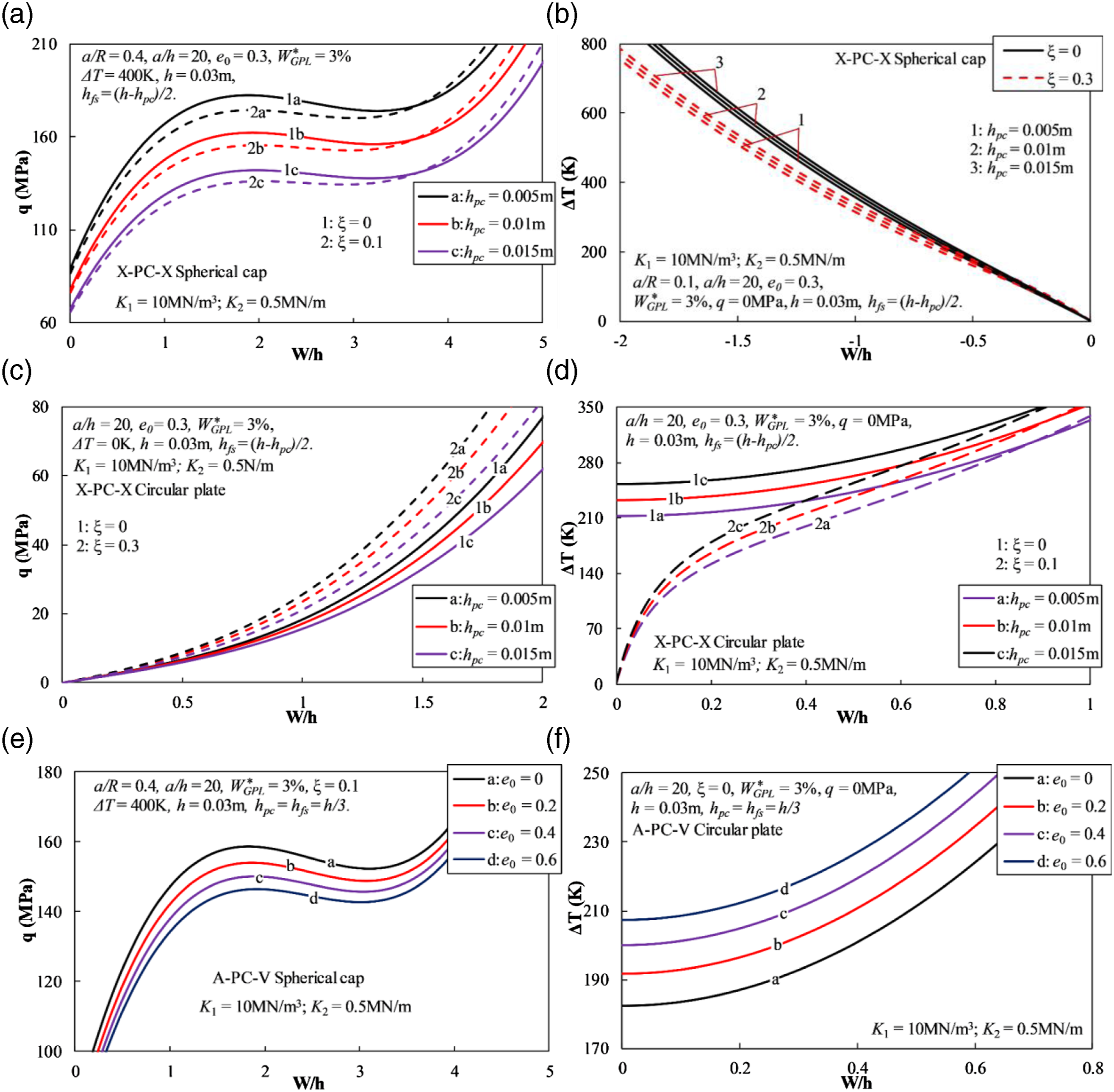
However, the opposite trend occurs for the
Figure 5(a)–(d) investigate the influence of Effects of 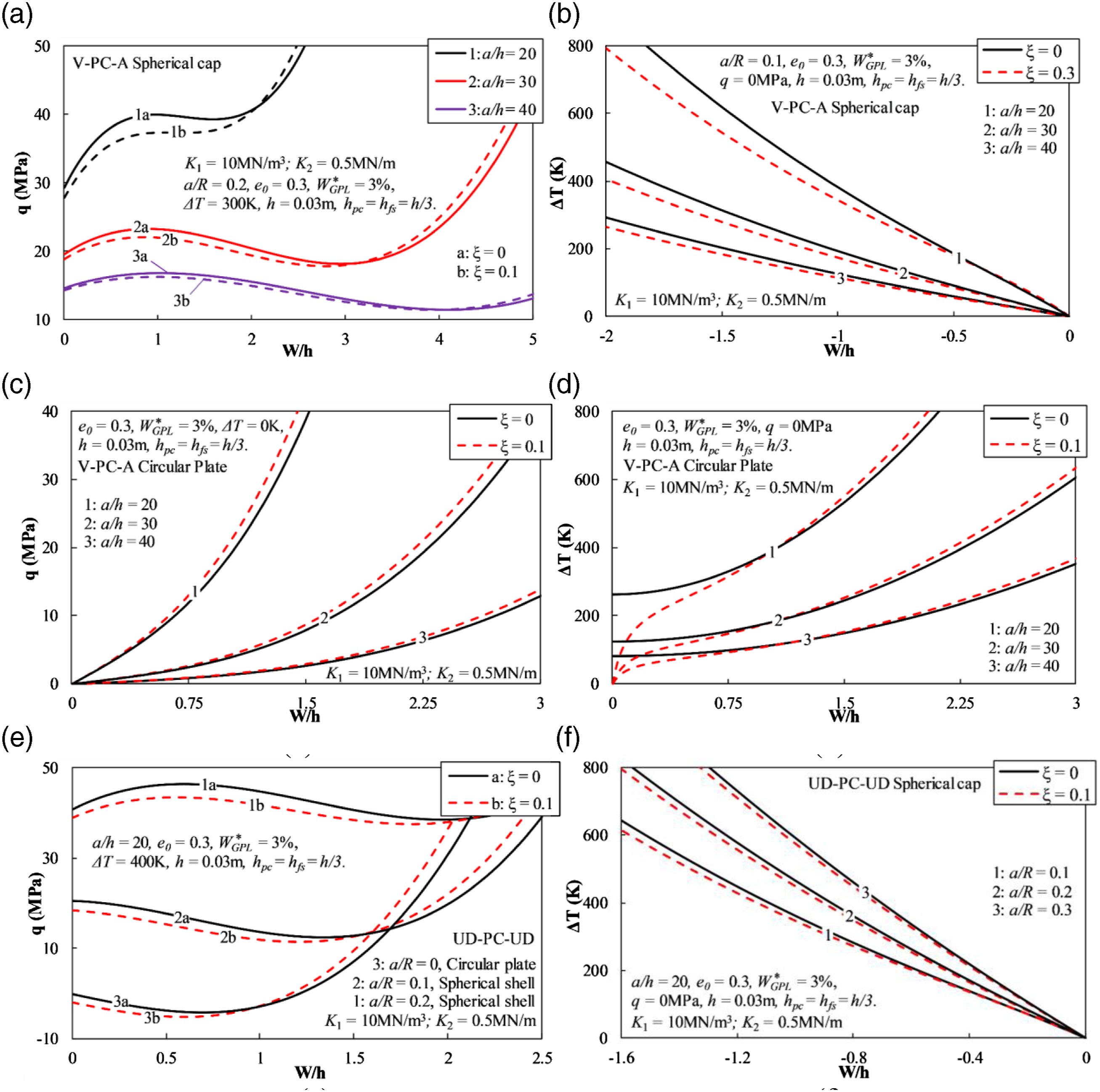
The influences of foundation stiffnesses on the Effects of foundation stiffnesses on the postbuckling curves of sandwich FG-GPLRC spherical caps and circular plates with porous core.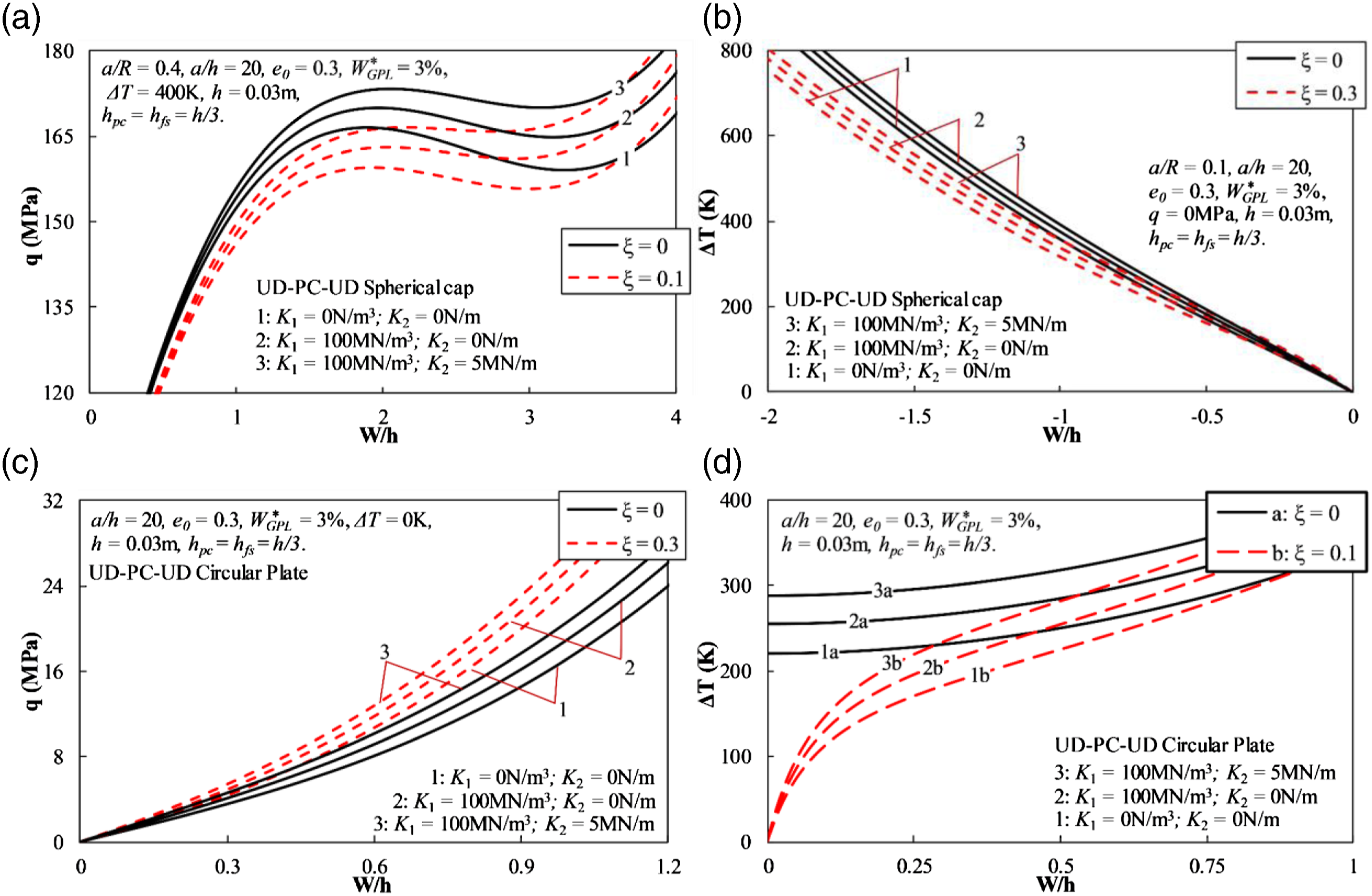
Conclusions
A new analytical approach to analyze the buckling and postbuckling behavior of circular plates and shallow spherical caps made of two FG-GPLRC coatings with porous core has been presented. In which, the basic equations and relations are established based on the HSDT. By applying the Ritz method, the expressions for determining the critical thermal loads of the circular plates and the mechanical and thermal postbuckling curves and of the circular plates and the spherical caps are obtained. Some obtained notable conclusions are as follows: (i) Perfect and imperfect sandwich FG-GPLRC circular plates and spherical caps with porous core with V-PC-A distribution law have the best load-carrying capacity in almost investigated cases. The only case with an adverse outcome for V-PC-A spherical cap is the mechanical postbuckling strength in the small domain of deflection. (ii) Porous core characteristics such as: core thickness and porosity coefficient are inversely proportional to the pressure load capacity of sandwich FG-GPLRC circular plates and spherical caps with porous core, oppositely, those are directly proportional to the thermal load capacity of the circular plates and spherical caps. (iii) The influences of the geometrical, material and elastic foundation on the buckling and postbuckling responses of the sandwich FG-GPLRC circular plates and spherical caps with porous core are significant.
Footnotes
Declaration of conflicting interests
The author(s) declared no potential conflicts of interest with respect to the research, authorship, and/or publication of this article.
Funding
The author(s) disclosed receipt of the following financial support for the research, authorship, and/or publication of this article: This research is funded by University of Transport Technology (UTT) under grant number DTTD2021-05.
