



Abstract
This work studied the role of the iron oxide and MWCNT in a change of the electrophysical properties of PP + Fe3O4 + MWCNT nanocomposite to evaluate the potential of these nanocomposites as magnetic field sensors and EMI materials. The morphology of the obtained nanocomposites was studied with a scanning electron microscope and investigated that the sizes of both magnetite nanoparticles and carbon nanotubes stay stable during the three-phase nanocomposite formation. In addition, the X-ray diffraction method revealed that MWCNT plays an essential role in the ordered structure-formation of a polymer nanocomposite more than iron oxide nanoparticles. Dielectric properties of the PP + Fe3O4 nanocomposite were studied. Both dielectric permeability and dielectric losses of PP+MWCNT+Fe3O4 nanocomposites were enhanced. The dielectric permeability of the nanocomposite increased due to the interphase polarization, which in turn related to the formation of ordered structure caused the partial arrangement of carbon nanotubes in the polymer. Furthermore, the study showed that the negative magnetoresistance effect of PP+MWCNT+Fe3O4 nanocomposites is more dependent on the amount of Fe3O4 nanoparticles than that of MWCNT, which explained by the spin polarization of Fe3O4 nanoparticles at room temperature. In this research, the PP+5%Fe3O4+1%MWCNT nanocomposites were considered to be an effective material for magnetic field sensors and EMI shielding.
Introduction
Polypropylene (PP) and its composites are materials of significant interest due to their excellent processability, resilience, and toughness. High isotacticity, narrow molecular weight distribution, mechanical properties such as lightweight, flexibility, high elasticity that is enough to bend without breaking, environmental friendliness, clarity, and low cost make polypropylene a desirable material for a range of applications such as preparation fibers, bottles, food packaging films, and tubes.1–3 However, pure polypropylene possesses certain drawbacks to its mechanical and thermal characteristics. Various types of additives with varying shapes and sizes, including carbon fiber, 4 glass fiber, 5 metal oxide nanoparticles, 6 and carbon black powder, 7 are added to polypropylene to improve its physical properties.
Magnetite nanoparticles with ultra-small size are one of the effective fillers for thermoplastic polymer due to the superparamagnetic nature of these materials. Synergistic effects between polymer and magnetic nanoparticles allow for obtaining unique materials with completely new properties based on these components. Ramazanov et al. 8 have produced PP-based nanocomposites with excellent magnetic nature by adding small amounts of Fe3O4 particles into the polymer matrix. The dependence of the magnetic properties of final nanocomposites on the concentration and coagulation degree of iron oxide nanoparticles was investigated both experimentally and theoretically. The electrical and mechanical properties of acrylonitrile butadiene rubber (NBR) composites loaded with manganese dioxide and magnetite have been examined by KF El-Nemr et al. 9 The DC conductivity results show that the NBR matrix’s conductivity significantly increased and its activation energy decreased when the filler concentrations (MnO2 and Fe3O4) increased. The frequency and AC electrical conductivity are intimately correlated. The increase of the nanocomposite hardness by increasing MnO2 and Fe3O4 contents proves the improvement of interfacial bonding between the filler and NBR matrix. Nasour et al. 10 have studied Fe3O4 nanoparticles/polyvinylpyrrolidone (PVP) composite nanofibers (FCNFs) as an electromagnetic interference (EMI) shielding material in the frequency range of 8.2–12.4 GHz. FCNFs showed an increase in EMI shielding efficacy of up to 22 dB. The primary shielding mechanism for FCNFs was absorption, whereas reflection served as the secondary shielding mechanism. The results of this work have demonstrated the potential use of magnetic FCNFs as EMI shielding and absorption materials. Weidenfeller et al. 11 investigated polyurethane magnetite shape memory polymer (SMP) composite and identified that the thermal diffusivity and conductivity of a composite increase by increasing the filler concentration. For temperatures below 350 K, the polymer mostly controls the thermal properties, particularly the specific heat capacity of the SMP-Fe3O4-composites, but at higher temperatures, the influence of the Fe3O4 particles becomes more significant. Poly (anthranilic acid-co-indole)/Fe3O4 composites have been studied by Jayakrishnan et al. 12 for gas sensing applications. The inclusion of nanoparticles resulted in a linear improvement in DC conductivity as demonstrated by filler-dependent electrical characteristics. In response to ammonia gas, the produced copolymer nanocomposites exhibited great sensitivity and quickness. The produced composite has favorable thermal, dielectric constant, magnetoelectric, and ammonia gas sensing characteristics, making it a viable option for application in nanoelectronic devices. Wang et al. 13 showed that temperature dependence of yield strength, relaxation modulus, and flow stress of the nano-Fe3O4 reinforced nitrile butadiene rubber (NBR) composites is sensitive to the concentration of the Fe3O4 nanoparticles.
Another effective filler for the PP matrix that has garnered attention recently is the carbon nanotubes. Carbon nanotubes (CNT), in particular, have become popular fillers for PP polymer due to their unique combination of mechanical, structural, electrical, and thermal properties, which lead to the development of advanced multifunctional composite materials.14–16
Li has found that elongation at break reduced as MWNT content in the polypropylene matrix rose, but tensile strength, bending strength, and impact strength increased. 17
Yetgin has reported that MWCNT and PP-based nanocomposite, prepared by melt processing methods employing extruder and injection molding techniques, possess enhanced mechanical properties (tensile strength, flexural strength, and elasticity). Furthermore, thermal analysis has shown that under non-isothermal conditions, the MWCNT addition somewhat raised the PP crystallization peak onset and peak maximum temperatures. 18
Liu et al. (2020) have provided information about how (MWCNTs)/isotactic polypropylene composites were prepared by the solution-melt blending method and molded by an overflow microinjection technique. In addition, the authors showed that a small number of MWCNTs (i.e., 0.1 wt %) can significantly improve the crystallization rate and crystallinity of PP-based composite. 19
When multi-walled carbon nanotubes are added to a polymer, new and distinct qualities are formed in addition to the polymer-based material’s improved mechanical capabilities. In several investigations, MWCNTs have been introduced to PP-based composites to enhance their electrical conductivity.20,21 The formation of a conductive network in a dielectric polymer leads to the appearance of high dielectric losses in these materials. Nanocomposites obtained by introducing a small amount of magnetic additives into materials with high dielectric losses have considerable application potential.22–24
Alaei et al. prepared a Fe3O4/MWCNT nanohybrid structure and introduced this structure into the paraffine matrix. Authors showed that magnetic loss doesn’t depend on the Fe3O4/MWCNT nanohybrid structure presence in the polymer in the frequency range of 2-18 GHz. However, the dielectric loss of nanocomposite increases obviously with increasing Fe3O4/MWCNT nanohybrid content. They concluded that Fe3O4/MWCNT nanohybrid has the potential to enhance microwave absorption and can be used as Radar Absorbing Material. 25
Wang et al. obtained epoxy nanocomposites based on MWCNT-Fe3O4@Ag through the blending-casting method. The scientists discovered that adding a small amount of magnetic component (Fe3O4@Ag) may increase the hysteresis and dielectric loss for electromagnetic waves, boosting the attenuation of the waves. 26
Dong et.al fabricated MWCNT@Fe3O4/polyimide flexible composite and aligned MWCNT@Fe3O4 filler in a polymer matrix with the help of a permanent magnetic field. It was shown that the dielectric and magnetic properties of the nanocomposite change depending on the presence of the external permanent magnetic field, which is very important for controlling the electromagneticshielding ability of produced nanocomposites. 27
Taufiq et al. reported on Fe3O4/MWCNT/ZnO nanocomposite fabrication for electromagnetic wave-absorbing materials. It was found that the µ″ part of magnetic permeability tended to be similar to ε″ part of the dielectric permittivity. It was also investigated that MWCNT-Fe3O4@Ag/epoxy nanocomposites present relatively higher electromagnetic shielding effectiveness in comparison to those of those without iron oxide nanoparticles. 28
Kazakova et al. (2021) distributed Co/MWCNT hybrid structure in the polyethylene matrix successfully. It was found that fluctuating part in the permeability is observed at relatively low frequency region and related to natural ferromagnetic resonance of the Co addition. 29
Afzali et al. (2022) synthesized novel quaternary MWCNT/CuO/Fe3O4/PANI nanocomposites. It was indicated that dielectric loss makes a higher contribution to microwave dissipation than magnetic loss. 30
Analyzing the works of the above-mentioned researchers, it can be concluded that the in-depth study of the electrophysical properties of polymer-carbon nanotubes-magnetic particles based nanocomposites is of greater importance in terms of their application as a shield against of radar systems. Furthermore, despite the numerous researches on the study of nanocomposites on the base of thermoplastic polymers, carbon nanotubes, and magnetic particles, there is still a need to study the influence of external factors on the electrophysical properties of these nanocomposites.
In this research work, for the first time polypropylene polymer (PP), iron oxide nanoparticles (Fe3O4), and MWCNT-based nanocomposite were prepared. The morphology and structure of the obtained nanocomposites were studied by modern microscopic and diffraction methods. The dependence of the dielectric constant and dielectric loss tangent of the PP + Fe3O4 + MWCNT nanocomposite on the electric field frequency, temperature, and the proportion of the filler has been investigated widely. Furthermore, when these nanocomposites are affected by a permanent magnetic field, the change in their specific resistance and the degree to which this change depends on the phase composition of the nanocomposite has been studied comprehensively. The major novelty of the presented work lies in the fact that the relationship between the structure and electrical and magnetic properties of novel-type PP + Fe3O4 + MWCNT nanocomposites was deeply studied. The results obtained made it possible to predict that the synthesized nanocomposites are potential candidates for producing EMI shielding materials.
Experimental part
Materials
Ferrous sulphate heptahydrate (FeSO4 × 7H2O, 98% chemically pure, PLC); ferric chloride hexahydrate (FeCl3 × 6H2O, 98% chemically pure, PLC); ammonium hydroxide [AR, 25% (by mass) NH3 in water]; polyethylene glycol 6000 (PEG-6000,); isotactic polypropylene (PP brand Sigma Aldrich P code 1,001,326,963); toluene (PLC 141,745); The MWCNT is product of the Sky-Spring nanomaterials (Lot 0554CA).
Preparation of nanocomposites
Magnetic Fe3O4 nanoparticles were prepared as described. 31 The Fe3O4 nanoparticles are produced by the co-precipitation method. FeSO4 × 7H2O and FeCl3 × 6H2O salts were dissolved in 100 ml-bidistilled water. As a surface-active compound, polyethylene glycol was used to stabilize iron oxide nanoparticles. Ammonium hydroxide (NH4OH) was added as a precipitation agent, and the mixture was stirred at 800 C for 1 h. The precipitate iron oxide powder was washed several times with distilled water and dried for 24 h by evaporation.
The synthesis of PP + Fe3O4 + MWCNT-based nanocomposites was carried out by the ex-situ method. 0.5 g of PP polymer granules was dissolved in 50 mL of toluene at 110°C. Fe3O4 magnetic nanoparticles were introduced into the dissolved polymer system in different mass amounts and were mixed on a magnetic stirrer at 80°C for 1 h.
The mixture of multi-layered carbon nanotubes with different mass amounts and 15 mL of toluene was processed under the influence of ultrasonic waves for 15 min in the ultrasonicator unit. The ultrasonification was performed to improve the MWCNT dispersion in organic media.
The MWCNTs + toluene mixture was added to the dissolved polymer + Fe3O4 system and mixed at 110°C for 1 h. The final PP/Fe3O4/MWCNT + toluene mixture is kept in a vacuum oven by completely evaporating the toluene. Then, nanocomposite layers with 100 μm thickness are obtained from nanocomposite ingots at the melting temperature of PP (160°C) and a pressure of 10 MPa by the hot pressing method. 32
Characterization of nanocomposites
X-ray diffractograms of nanocomposites were measured at room temperature on a Rigaku Mini Flex 600 diffractometer.
SEM analysis of nanocomposites was performed on a Jeol-JSM 7600 F scanning electron microscope. The accelerating voltage is 15 kV, the working distance = 4.5 mm.
Measurement of the dielectric permittivity, dielectric loss tangent, and resistivity nanocomposites conducted using immittance meter MNIPI E7-20 by applying a broadband meter E7-20 immittance measured the frequency dependence of capacitance and dielectric loss at a temperature T = 293 K in the frequency range f = 25Hz-1 MHz. Measurement of dielectric permittivity versus temperature was carried out at f = 1 kHz using MNIPI meter E7-21. The temperature dependence of specific resistance is measured by E7-13 A tera-ohmmeter.
Results and discussions
Figure 1 show X-ray diffraction patterns of multi-walled carbon nanotubes (a) and PP/MWCNTs-based nanocomposites (b) depending on the content of MWCNTs. XRD pattern of MWCNTs (a) and PP + MWCNTs based nanocomposites depending on the content of MWCNTs (b): 1) PP, 2) PP+.1%MWCNTs, 3) PP+10%MWCNTs, 4) PP+5%MWCNTs, 5) PP+3%MWCNTs, 6) PP+1%MWCNTs.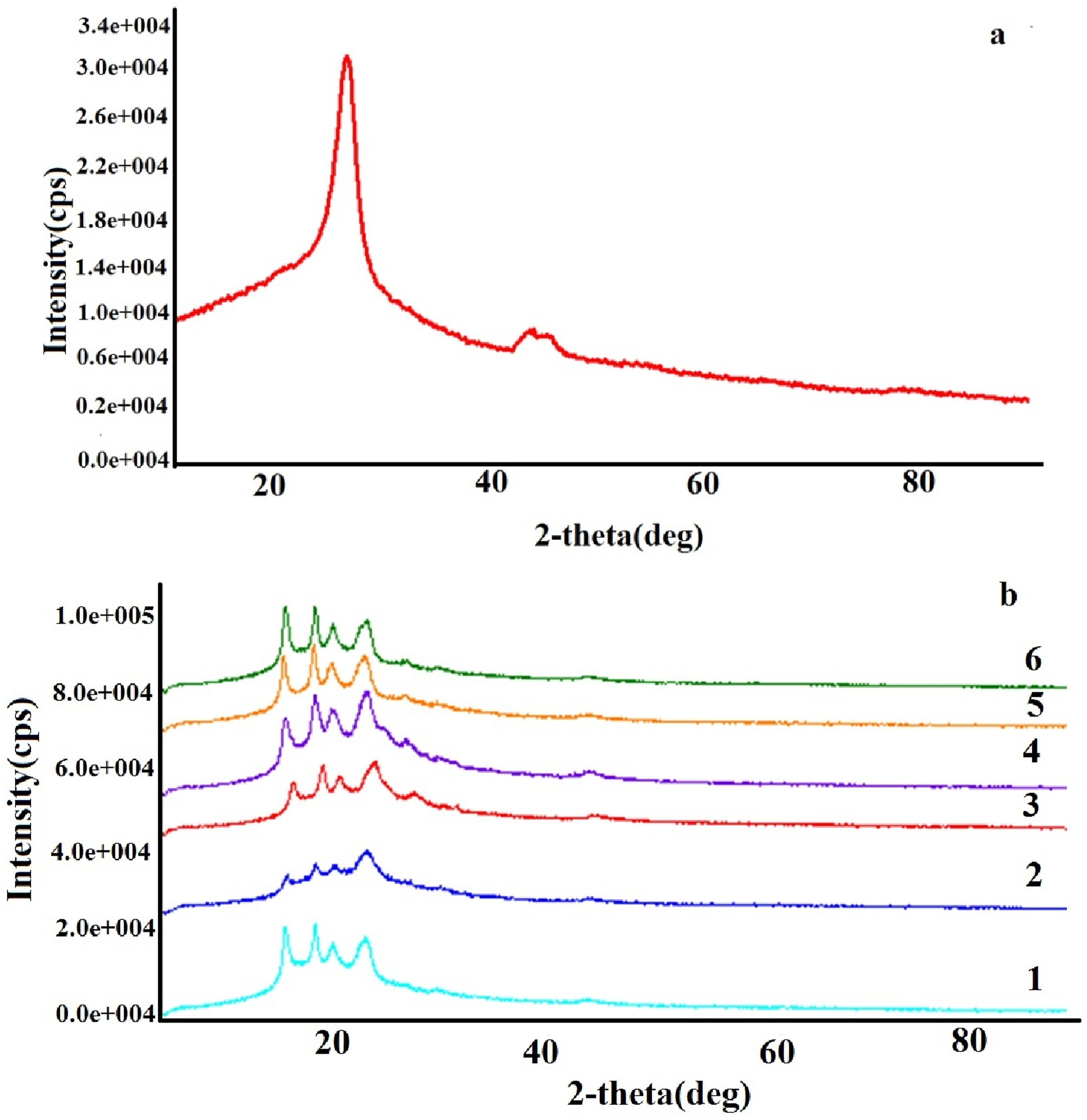
As can be seen from Figure 1(a), the peak observed at 2θ = 26.06° reflection belongs to multi-walled-carbon nanotubes. 33 Figure 1(b) demonstrates five peaks in the 5–30° range of 2θ angle which corresponds to polypropylene. The isotactic structure of polypropylene was attributed to the peak positions of 14°, 17°, 18.5°, 21°, and 25°. The diffraction maxima of the beta (β) and gamma forms (γ) of the polypropylene are not observed. This fact confirms the presence of only the monoclinic α-form polypropylene. 34 Furthermore, with the addition of MWCNTs into the polymer, only PP+.1%MWCNTs have a noticeable change occurred in the XRD pattern. A decrease in the intensity of polypropylene XRD lines at 14°, 17°, and 18.5°, which correspond to (110), (040), and (130) Miller indices, respectively, have been observed for PP+.1%MWCNTs. This indicates that low amounts of MWCNTs introduced into the matrix change the structure of the polymer. However, with the increase in MWCNT concentration, polypropylene completely recovers its structure. It can be explained by the strong alpha-nucleating effect of MWCNTs at relatively high concentrations.35,36
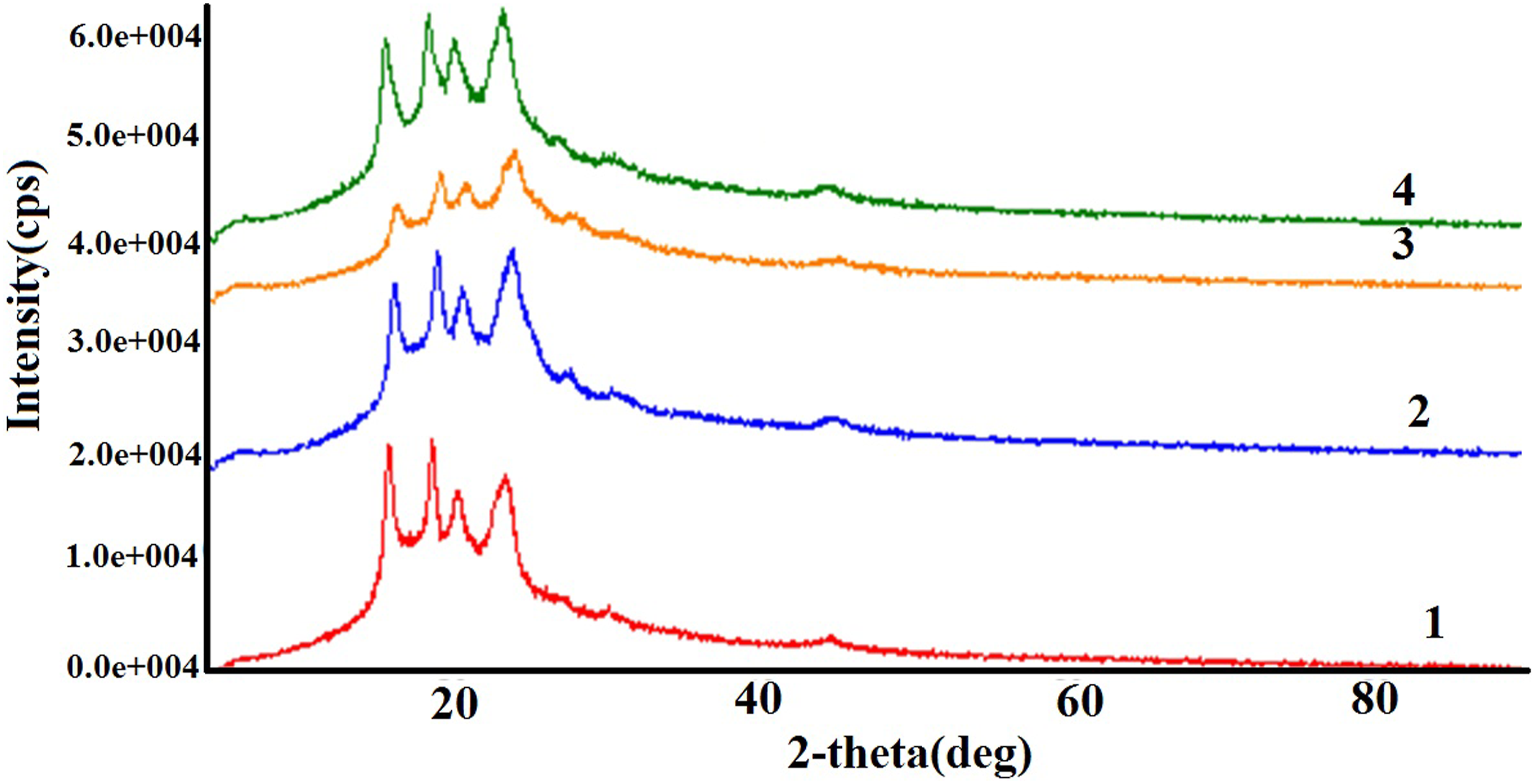
Figures 2 and 3 demonstrate X-ray diffraction patterns of PP + Fe3O4 + MWCNTs nanocomposites depending on the content of Fe3O4 nanoparticles and MWCNTs, respectively. XRD pattern of PP + Fe3O4 + MWCNTs based nanocomposites depending on the content of Fe3O4 nanoparticles: 1) PP +1%MWCNTs+1%Fe3O4, 2) PP+1%MWCNTs+3%Fe3O4, 3) PP+1%MWCNTs+5%Fe3O4. XRD pattern of PP + Fe3O4 + MWCNTs based nanocomposites depending on the content of MWCNTs: 1) PP, 2) PP+1%Fe3O4+3%MWCNTs, 3) PP+1%Fe3O4+5%MWCNTs, 4) PP+1%Fe3O + 1%MWCNTs.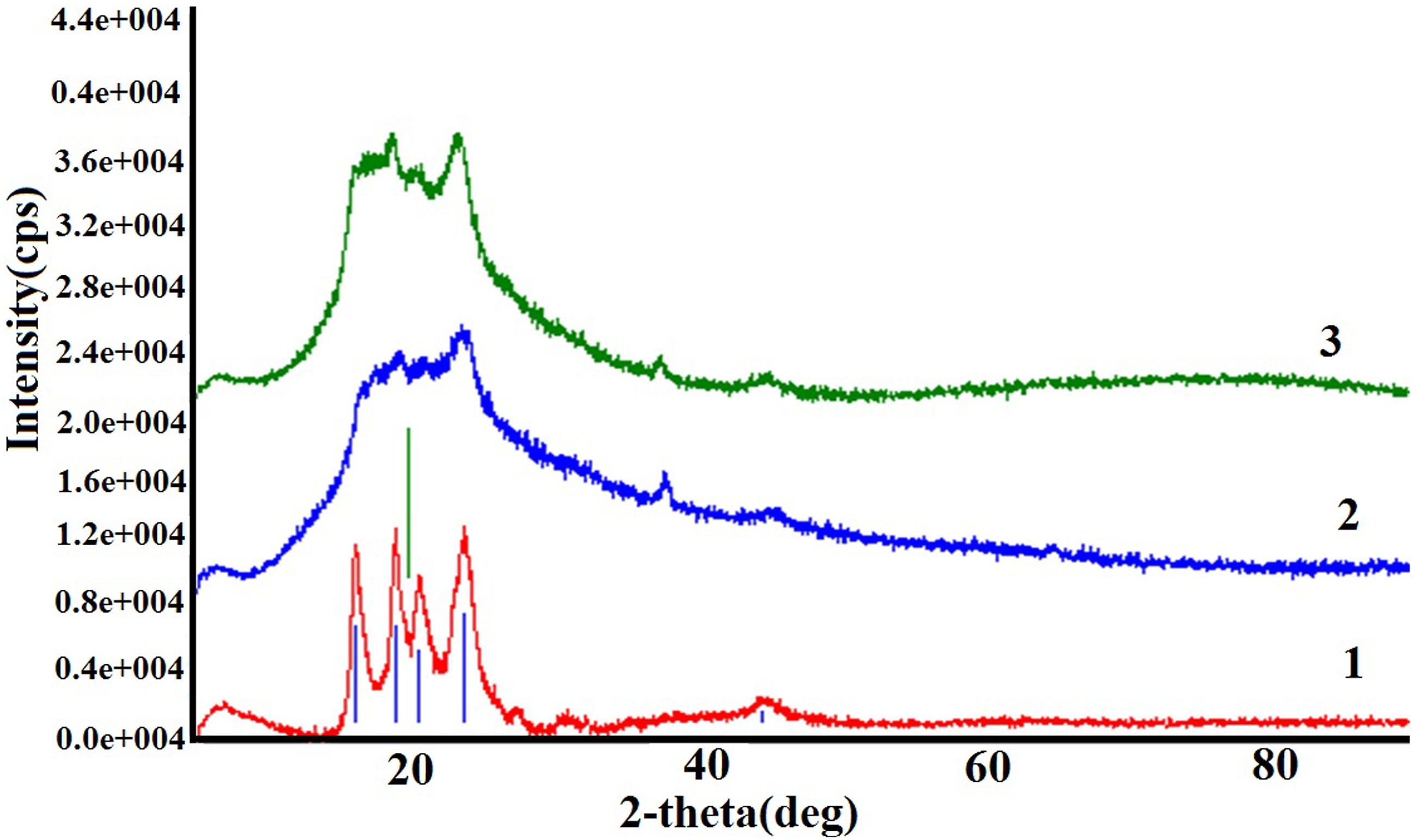
It is clear from Figure 2 that the increase in the amount of Fe3O4 nanoparticles in the PP+1%MWCNTs + Fe3O4 samples leads to a rise in the share of the amorphous phase in the structure. This fact explains the change in XRD in the range of 10-30°.
A comparison of Figures 2 and 3 shows that the role of multi-walled-carbon nanotubes in the ordered-structure-formation in the polymer nanocomposite is higher than that of iron oxide nanoparticles. It can also be explained by the strong nucleation nature of the MWCNT, which leads to a change in the crystalline content of the host polymer. 37 In polypropylene, the crystalline phase forms due to spherulites and lamellae. Polymer chain wraps around carbon nanotubes, and lamellae are oriented along the main axis. The kinetics of crystallization, the size of the lamellae, and the degree of crystallinity of the obtained nanocomposite depends on the adhesion between the polymer chains and the carbon nanotubes.
Figure 4 demonstrates SEM images of pure Fe3O4 nanoparticles (a); PP + Fe3O4 (b) and PP + MWCNT(c) nanocomposites. The average size of pure Fe3O4 nanoparticles is 5-9 nm (Figure 4(a)). After the introduction of Fe3O4 nanoparticles into the PP matrix, a slight agglomeration of nanoparticles occurs (8-15 nm). The average size of magnetite nanoparticles in the PP + Fe3O4 polymer nanocomposite is about 15 nm (Figure 4(b)). According to SEM images of the PP + MWCNT nanocomposites (Figure 4(c)), the average diameter of the MWCNT in the polymer matrix is approximately 20-40 nm. SEM images of pure Fe3O4 (a); PP + Fe3O4 (b), PP + MWCNT (c).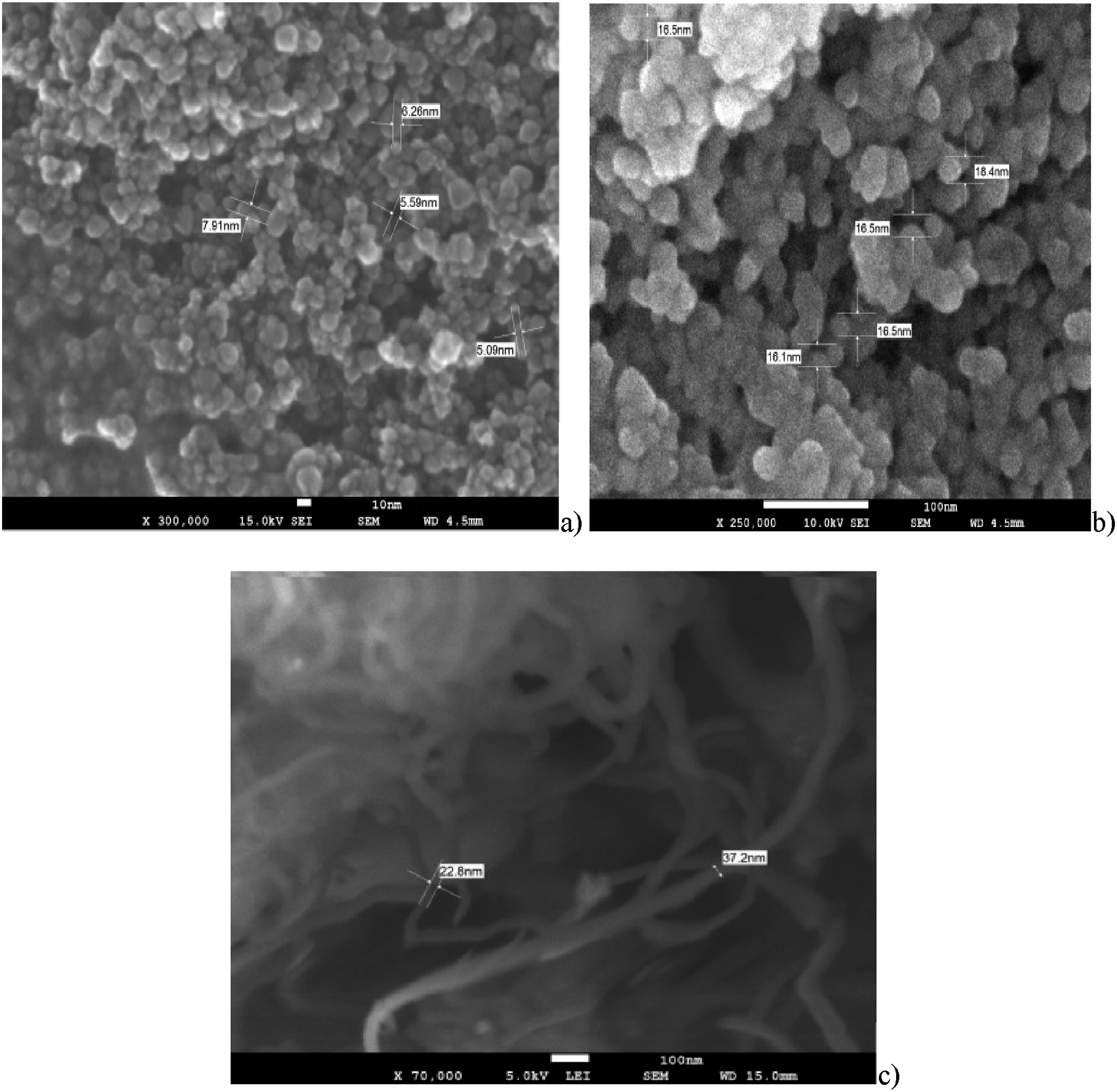
Figure 5 shows SEM images of PP+MWCNT+Fe3O4-based nanocomposites. The sizes of both magnetite nanoparticles and carbon nanotubes stay stable during the formation of a three-phase nanocomposite based on PP + Fe3O4 + MWCNTs. SEM images of PP + Fe3O4 + MWCNT based nanocomposites.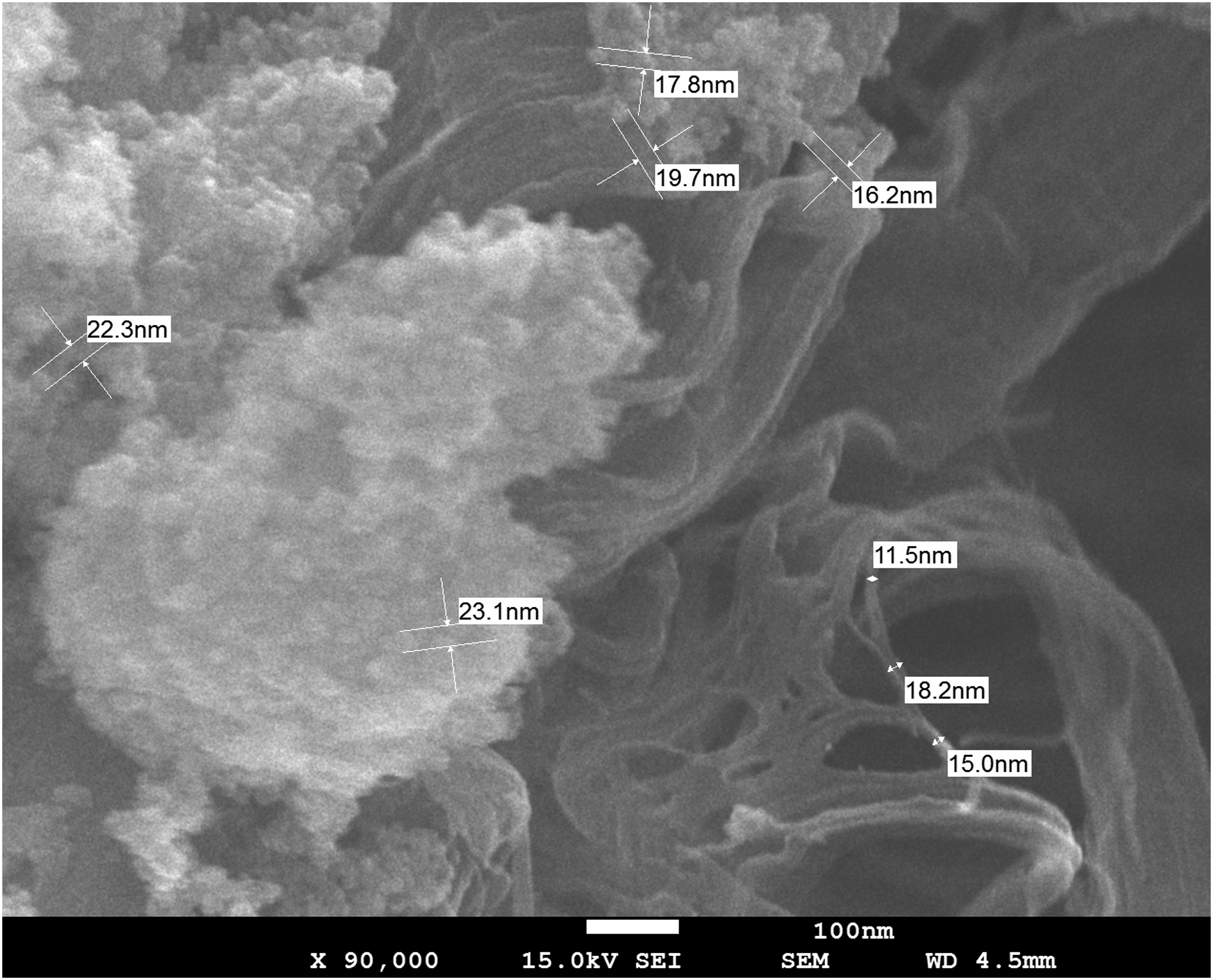
The electrophysical properties of two-phase and three-phase polymer nanocomposites were studied comparatively. Figure 6(a) and (b) show the frequency dependence of dielectric permittivity of two-phase and three-phase polymer nanocomposites, respectively. It is known that the dielectric constant of polypropylene is 2.2. The addition of the 5% iron oxide nanoparticles into the thermoplastic polymer matrix leads to the polarizability enhancement of the polymer approximately three times. (Figure 6(a)). One of the main reasons for the increase in polarization may be interfacial polarization.
38
Chi et al. (2017) have shown that for the polyethylene + Fe3O4 composites interfacial polarization occurs starting from 1.9 vol% of Fe3O4.
39
Moreover Ramazanov et al.
40
have reported that in the case of polyvinylidene fluoride + Fe3O4 nanocomposite, interfacial-polarization affects the dielectric properties up to 7 wt% of Fe3O4 nanofiller. Further increase of the iron oxide nanoparticles leads to decrement of the dielectric constant of nanocomposite that was explained by structural defects of nanocomposites. Frequency dependence of dielectric permittivity ε of polymer nanocomposites based on PP, Fe3O4, MWCNTs.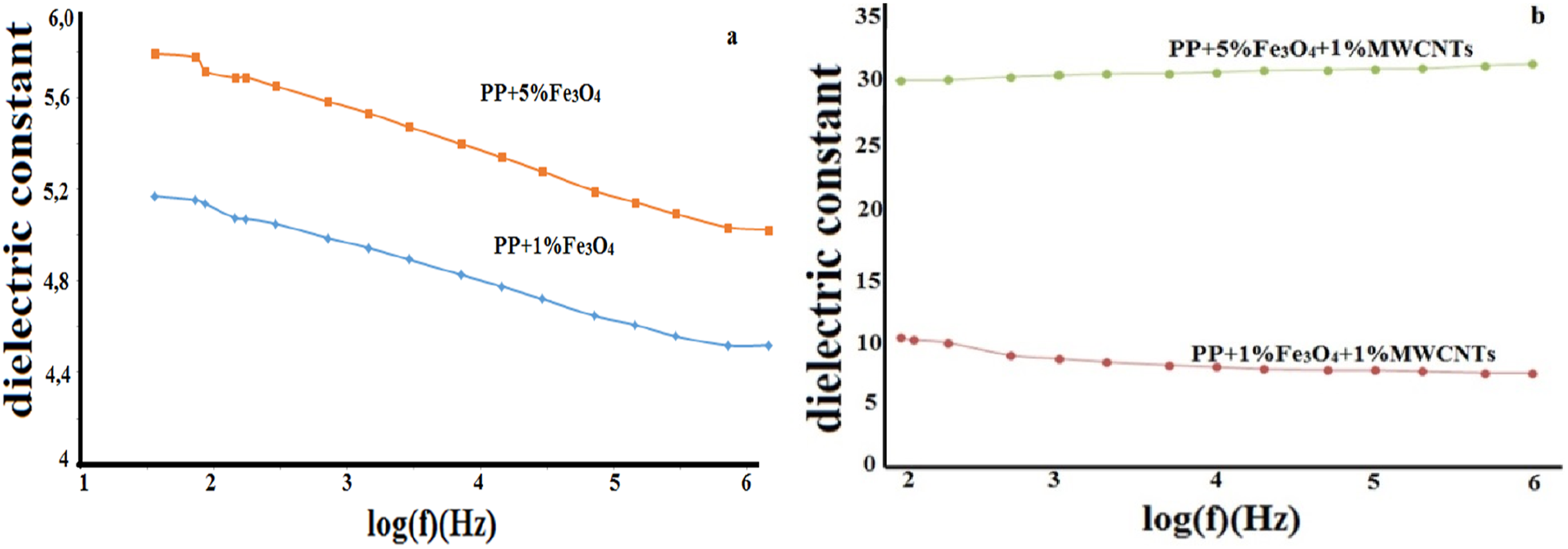
Figure 6(b) demonstrates that the addition of the MWCNT into the PP + Fe3O4 system caused the dramatic rise of the dielectric permittivity of the system. Even a low amount of MWCNT leads to 5 times enhancement of the dielectric constant of PP+5%Fe3O4+1%MWCNT nanocomposites compared to PP+5%Fe3O4. Dong et al. (2020) have studied the dielectric properties of the MWCNT@Fe3O4/polyimide nanocomposite and also proved that enhancement of the dielectric constant by adding Fe3O4 is limited, while MWCNTs play a major role in the improvement of the dielectric constant of the three-phase nanocomposites. 27 Analogically, Ji et al. (2021) have reported that dielectric constant increases by increasing MWCNT in PVDF+MWCNT+TiO2 due to the large interfacial polarization. 41
The polarizability rise of the nanocomposites could be related to structural changes by the addition of the MWCNTs. XRD data showed that the MWCNT incorporation into the system stimulates the formation of a more ordered structure in the nanocomposite. Polymer molecules oriented around partially aligned MWCNTs seem to be easily polarized by the influence of the external electric field. That fact leads to the enhancement of the dielectric constant.
Temperature dependence of dielectric permittivity of polymer nanocomposites shows stability for all nanocomposites (Figure 7). Temperature dependence of dielectric permittivity ε of polymer nanocomposites based on PP, Fe3O4, MWCNTs.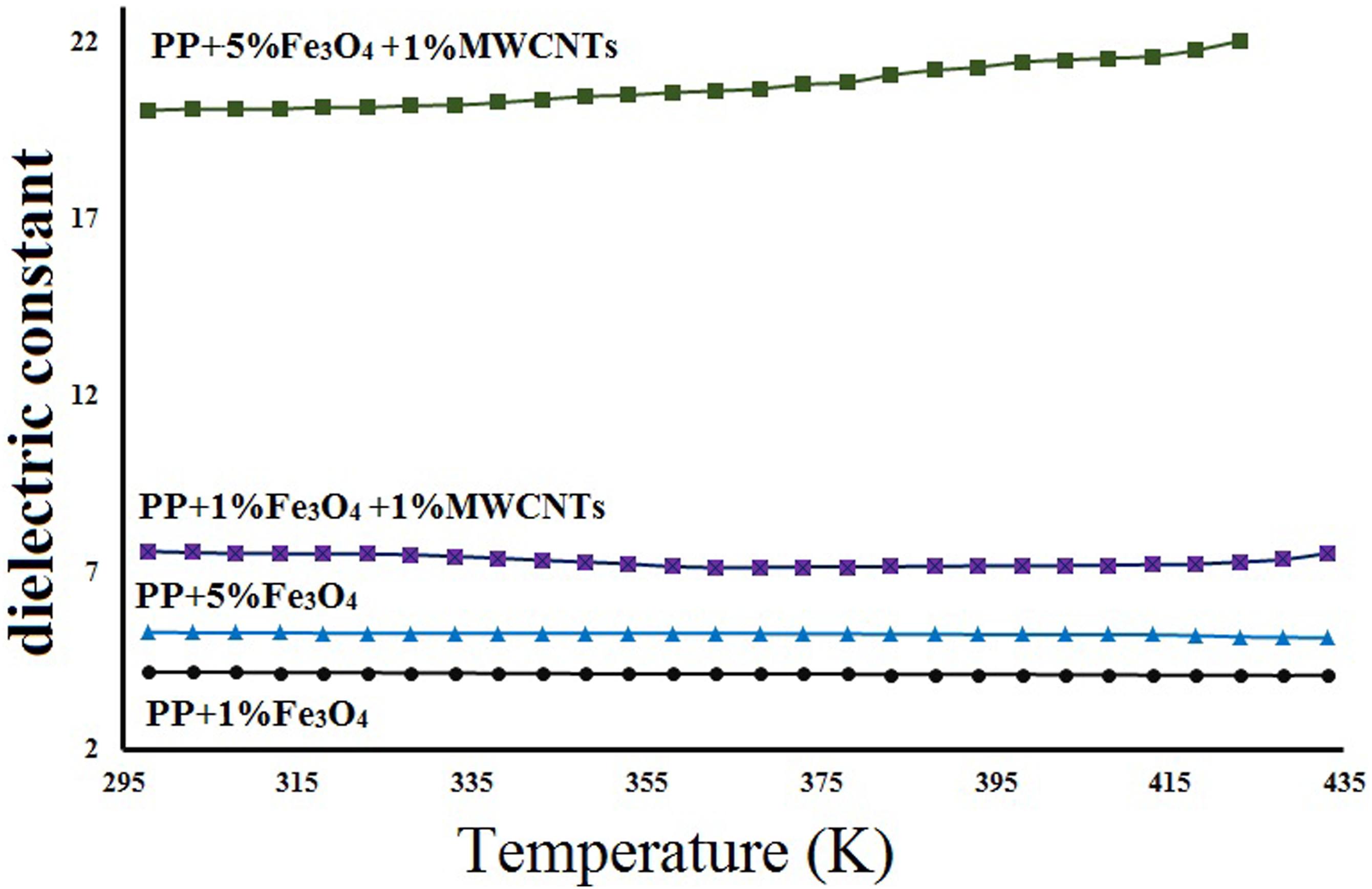
Figure 8 shows the frequency dependence of dielectric loss of the nanocomposites based on PP, Fe3O4, and MWCNTs. According to Figure 8, the addition of the MWCNT induces the rise of the dielectric loss, causing large energy consumption. Moreover, the value of the dielectric loss tangent of PP+5%Fe3O4+1%MWCNTs sample is higher than that of PP+1%Fe3O4+1%MWCNTs at the relatively high-frequency region. The result obtained from the frequency dependence of the dielectric loss curves suggests that the addition of 1% MWCNT causes a dramatic growth of the dielectric loss due to the increase of the proportion of the conductive phase. Shang et al. (2021) also state that besides the increase in dielectric constant, MWCNT’s addition into a thermoplastic polyvinylidene fluoride matrix also increases dielectric loss. That increase is explained by the formation of the conductive MWCNT network.
42
High dielectric loss composites are recognized to have a wide range of possible applications in electromagnetic shielding.42,43 Frequency dependence of dielectric loss of the nanocomposites based on PP, Fe3O4, MWCNTs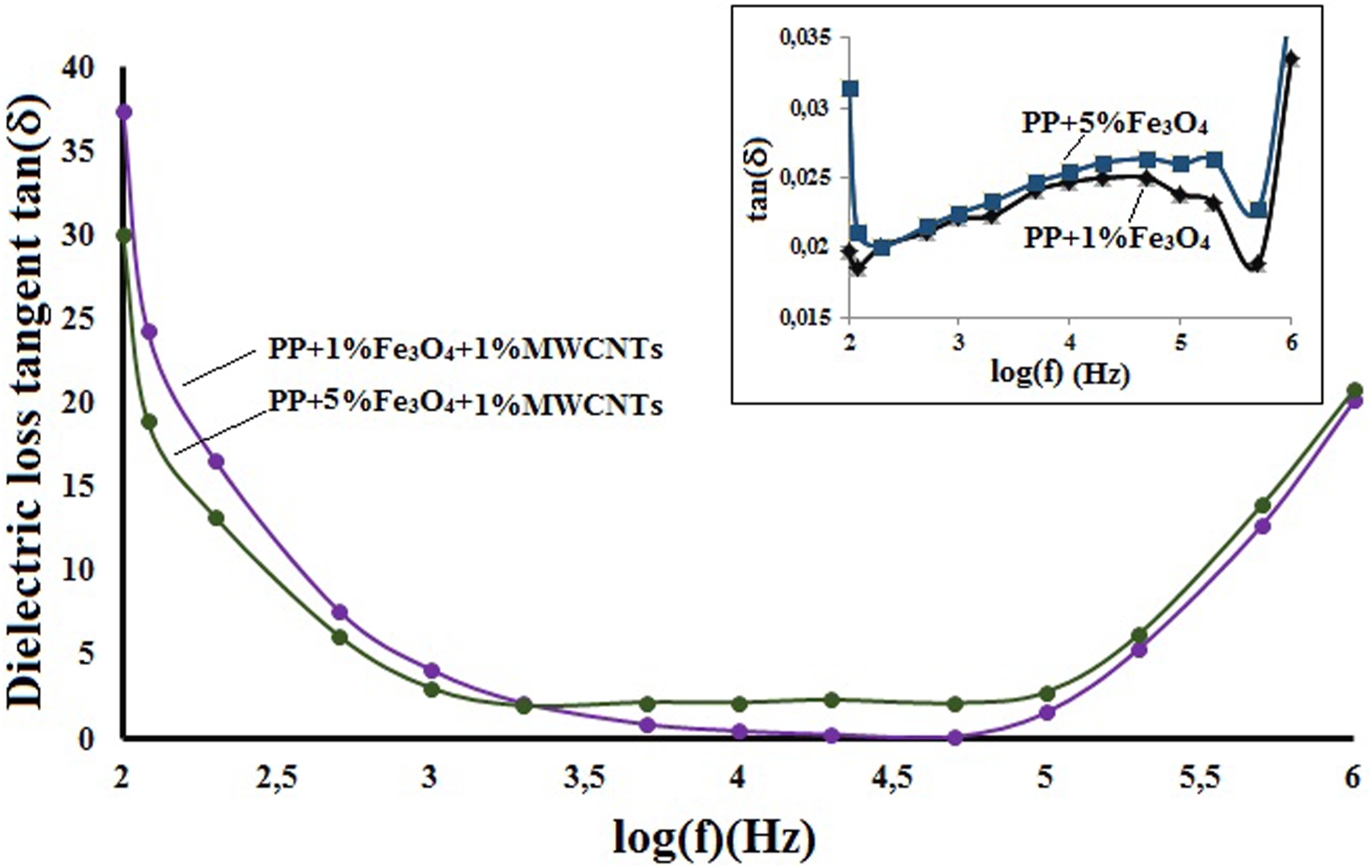
Furthermore, the influence of the external magnetic field on the electrical resistance of PP+MWCNT+Fe3O4 nanocomposites was investigated, assuming that this material could possess high potential as a magnetic field sensor.44–49 The electrical resistivity of PP + Fe3O4 PP + MWCNTs and PP + Fe3O4 + MWCNTs was determined in the absence and presence of a magnetic field. It was found that the resistance of nanocomposite samples in the magnetic field decreases. This change is defined by the following expression
50
:

Here, ρ(H)- is the electrical resistance at the given value of the magnetic field, and ρ(0)- is the electrical resistance in the absence of the magnetic field.
Magnetoresistive effect in polymer nanocomposites.
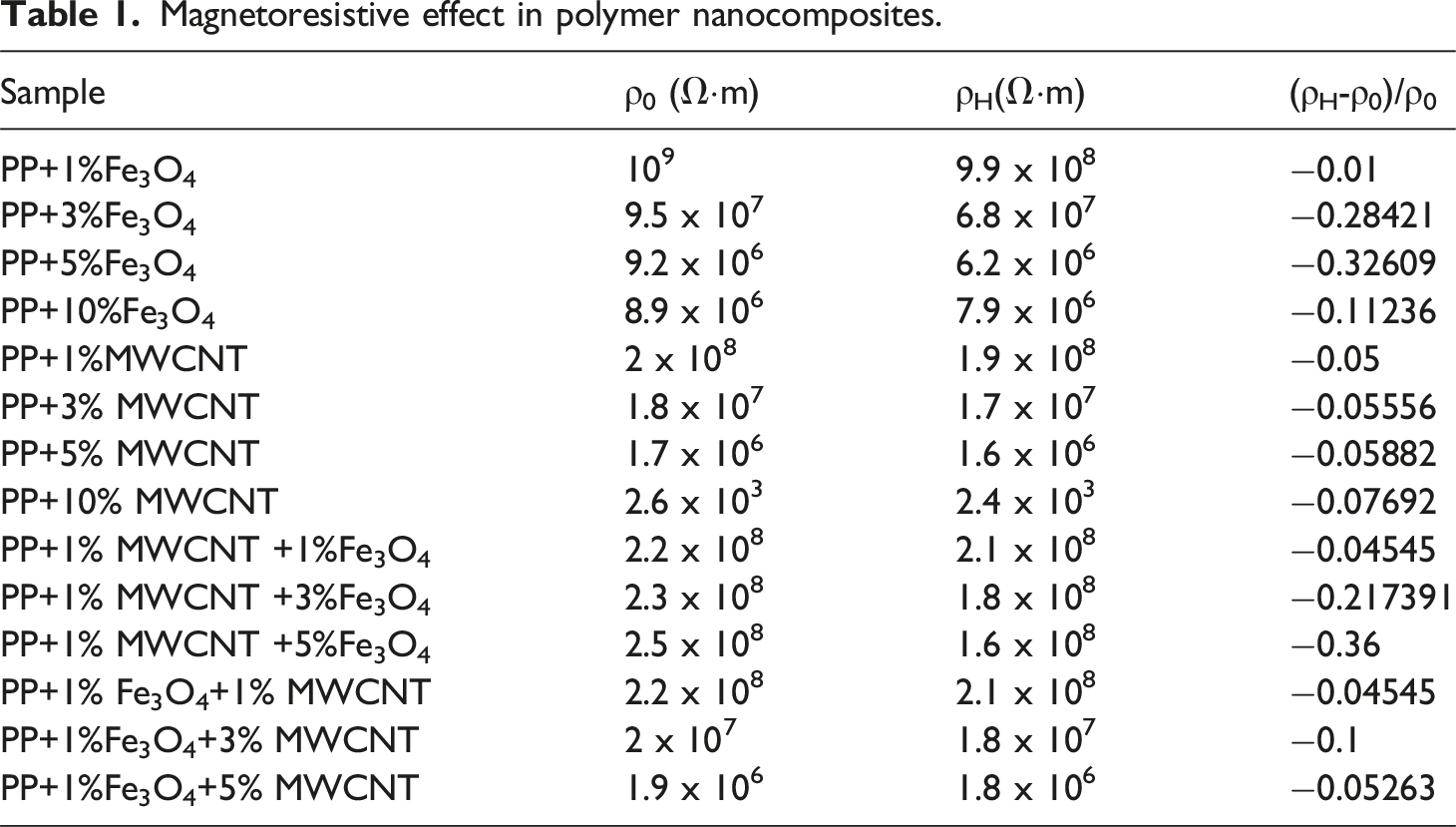
However, research shows that the negative magnetoresistance effect of PP+MWCNT+Fe3O4 nanocomposites is more dependent on the amount of Fe3O4 nanoparticles than that of MWCNT, which can be explained by the spin polarization of Fe3O4 nanoparticles at room temperature. 51 This nature of Fe3O4 nanoparticles, taken as a functional filler, explains the nature of magnetic tunneling in PP+MWCNT+Fe3O4 nanocomposites. This effect recorded in ferromagnetic-dielectric materials is sometimes called the negative tunnel magnetoresistance effect. Note that the nature of tunnel magnetoresistance in polymer matrix-based nanocomposite structures has not been explained fully yet.
Conclusion
In this study, polypropylene (PP), magnetite (Fe3O4) and multi-walled-carbon nanotubes (MWCNT) based-nanocomposite was produced by ex-situ method. Electrophysical parameters of the obtained nanocomposites were studied depending on the proportions of filler components, the frequency of the external electric field, temperature, and the presence of the magnetic field to evaluate the potential of application of the obtained nanocomposites as electromagnetic field shielding materials and magnetic field sensors.
It was found that both dielectric permeability and dielectric losses of PP+MWCNT+Fe3O4 nanocomposites enhance with the increase in the share of filler components (MWCNT and Fe3O4) in the polymer. However, this increase depends on the amount of MWCNT more sharply. The 1%MWCNT incorporation into the PP + Fe3O4 system causes an increase in the value of dielectric permeability and dielectric losses 6 and 103 times, respectively. This change in dielectric loss with the addition of a small amount of carbon nanotubes confirms that the obtained nanocomposite has considerable potential as an EMI shielding material.
Furthermore, the influence of the external magnetic field on the electrical resistance of PP+MWCNT+Fe3O4 nanocomposites was investigated. Electrical resistivity of PP + Fe3O4, PP + MWCNT, and PP+MWCNT+Fe3O4 nanocomposites decreases under the influence of a magnetic field. The room-temperature negative magnetoresistance effect is observed in both two-phase and three-phase samples. However, research shows that the negative magnetoresistance effect of PP+MWCNT+Fe3O4 nanocomposites is more dependent on the amount of Fe3O4 nanoparticles than that of MWCNT, which can be explained by the spin polarization of Fe3O4 nanoparticles at room temperature. The highest value of the negative magnetoresistance effect was observed for PP + 5% Fe3O4 + 1% MWCNT nanocomposites. Considering that PP + 5% Fe3O4 + 1% MWCNT nanocomposites also have a high dielectric loss, these nanocomposites can utilized as effective magnetic field sensors and EMI shielding materials.
Footnotes
Declaration of conflicting interests
The author(s) declared no potential conflicts of interest with respect to the research, authorship, and/or publication of this article.
Funding
The author(s) received no financial support for the research, authorship, and/or publication of this article.
