




Abstract
This interesting study investigated the effect of Maleic Anhydride-grafted-Polypropylene/Epoxidized Natural Rubber (PP-g-MA/ENR) as a compatibilizing agent (CA) on the properties of a 30/70 Polypropylene/Natural Rubber PP/NR blends. The effect of dynamic vulcanization with sulfur-donors (i.e.: Tetramethyl thiuram disulfide (TMTD) and 4,4 Dithiodimorpholine (DTDM)) which were used as vulcanizing agents was also reported. Several formulations of TPVs with different concentrations of CA (from 5 to 15 phr) were prepared by mixing in the molten state using a Haake Rheocord 90. The structural analysis of dual compatibilizer was examined by FTIR spectroscopy. The rheological behavior was examined using Haake Rheocord 90. The mechanical properties were determined by the tensile measurements. The dynamic mechanical thermal properties were investigated by DMA. A morphological examination was conducted using SEM Microscopy, respectively. FTIR analysis confirmed reactions between the MA group in PP-g-MA and the epoxy groups in ENR, resulting in ENR-grafted PP with an ester and acid-based linkage. The Haake plastograms revealed a proportional increase in the final mixing torque value with the increasing content of CA. The mechanical results exhibited higher values in terms of tensile strength and Young’s modulus for the TPVs containing CA compared to un-compatibilized ones. The compatibilized TPV blends exhibited a noteworthy increase in storage modulus and a notable decrease in loss tangent values with the CA concentration increased. Furthermore, the TPVs show two distinct-phase morphologies. That is, the TPV with CA showed the presence of smaller vulcanized rubber particles dispersed within the PP matrix, a phenomenon that becomes more pronounced with higher CA contents.
Introduction
Under established terminology, Thermoplastic elastomers (TPEs) possess the characteristics of thermoplastics during processing and exhibit elastomeric properties at operational temperatures. This distinctive combination, merging the attributes of rubber with the facile processability of plastics, allows TPEs to fill the gap between traditional elastomers and thermoplastics. Among various types of TPE, those created through the physical blending of an elastomer and a thermoplastic material in an internal mixer, employing high-speed mixing at temperatures surpassing the melting point (Tf) of the plastic, offer specific and notable advantages. In these TPE blends, the attainment of desired properties can be easily achievable by selecting the appropriate elastomer and plastic components and adjusting their proportions in blends.1,2 Blends of TPEs derived from natural rubber (NR) and thermoplastic (TP) are categorized as ‘Thermoplastic Natural Rubber (TPNR) blends’. Generally, there are two distinct product categories of TPNR. The first one is prepared by blending NR with TP to achieve co-continuous phase morphology and is technically categorized as ‘Thermoplastic Elastomeric Olefin (TPO)’. While the other one is referred to as ‘Thermoplastic Vulcanizate’ (TPV) and it is produced through the melt blending of NR with polyolefins. In this process, during the melt mixing at high temperatures, the rubber phase undergoes vulcanization, and a method commonly known as ‘Dynamic Vulcanization (DV)’. 3 Blends derived from polyolefins have garnered significant interest because of their convenient processability and diverse range of properties offered at a competitive cost. Within the category of polyolefins, polypropylene (PP) distinguishes itself as the most suitable polymer for blending with NR. This preference is attributed to its favorable characteristics, including a relatively low softening temperature of approximately 150°C and a correspondingly low glass transition temperature (Tg) when incorporated into the blend. 4 The TPV obtained from a mixture of NR and polyolefin has garnered growing industrial attention, primarily due to the superior elastomeric properties exhibited by the NR component when compared to synthetic rubber. Many studies on PP/NR TPVs have been investigated.3–22 Despite the thermodynamic incompatibility between the rubber and plastic components, TPV compositions with favorable properties were achieved. 10 In incompatible TPE/or TPV blends, the interfacial adhesion between the rubber phase and the plastic phase is notably weak and very poor. The applied physical forces are not efficiently transmitted to the minor and dispersed phase within the blend. Consequently, some properties fall significantly below expectations derived from the parent polymers’ characteristics. To transform non-compatibilized blends into valuable polymeric materials, the process of compatibilization is necessary to achieve a blend with a combination of desirable properties from each component. 23 Compatibilization can be achieved through various methods, such as physical blending (non-reactive compatibilization), reactive blending (chemical compatibilization), as well as technological compatibilization (dynamic vulcanization). 24 The physical compatibilization involves the addition of a third component, called a compatibilizer. The compatibilizer molecules can migrate to the interface between the two polymers and create a bridge, or a covalent bond, between the two polymer phases, thereby improving the interfacial adhesion and reducing the interfacial tension. Altering the chemical structure of polymers through the introduction of new reactive chemical groups along the polymer backbone is a highly appealing method for creating materials with either novel or improved properties. 25 This technique has been widely employed for chemically compatibilizing immiscible polymer blends and for producing functional polymers. Compatibilization of polymer blends has several advantages, such as improved mechanical properties, thermal stability, and processing characteristics. It also enables the creation of new materials possessing unique properties that cannot be attained with individual polymers alone. 25 Several experimental works have investigated on the preparation of TPVs using different CAs, such as; Ph-PP, and PP-g-MA.3,10 For example, C. Nakason et al, 3 have investigated the influences of blend ratios, types of CAs, dynamic vulcanization, and reactive blending on PP/ENR TPV blends. PP/ENR TPV blends were prepared using sulfur as a curing agent. Both Ph-PP as well as PP-g-MA were used as CAs in the Ph-PP/ENR and PP-g-MA/ENR blends. From their results, it was found that the addition of Ph-PP and PP-g-MA improved the rheological and mechanical properties of TPVs. This can be attributed to an increased compatibilizing effect resulting from the increased chemical interaction between epoxy groups in ENR and either MA groups in PP-g-MA or Phenolic groups in Ph-PP. In another publication, C. Nakason et al, 5 have studied the effect of epoxidation level in ENR on the properties of 25/75 PP/ENR TPV blends. TPVs with Ph-PP were prepared by DV using sulfur as a vulcanizing agent. The investigation revealed that higher levels of epoxide groups in the ENR molecules corresponded to increased mixing torque, tensile strength, and hardness properties in the TPVs. This can be ascribed to the chemical interaction between the methylol groups of the PP compatibilizer and the epoxy groups of the ENR molecules. Furthermore, the TPVs displayed a finer dispersion of vulcanized rubber domains and increased rigidity in the vulcanized ENR phase with higher epoxide groups.
For polymeric materials to exhibit a combination of desirable properties, it is essential to ensure compatibility among the constituent components of otherwise incompatible blends. The influence of PP-g-MA, as well as Ph-PP on the rheological behavior, mechanical properties, and morphological examination of PP/ENR TPVs, was investigated by A. Thitithammawong et al. 10 The properties of the blends improved within a certain range of compatibilizer loading levels. This is due to a higher chemical interaction and interfacial adhesion between distinct phases caused by the functionalized CAs. However, at higher compatibilizer levels, a decreasing trend in all properties is observed due to segregation. The CAs also acts as lubricants in the polymer melt flow causing a plasticization effect by reducing the viscosity of the system.
The effect of sulfur-donor as a vulcanizing agent on the mechanical, dynamic, and morphological properties of PP/NR TPV blends has been reported by C. Manleh and coworkers. 16 TPV blends were prepared using different types of sulfur donors (TMTD, DTDM, and Tetrone A) to cure the rubber phase. From their results, it was found that the TPVs with Tetrone A showed superior properties compared to those with TMTD and DTDM. In fact, the storage modulus, complex viscosity, and crosslink density of TPVs exhibited an upward trend with the escalating loading levels of sulfur donors for all types. It was observed that the thermal stability of PP/NR TPV blends surpassed that of neat NR. In another paper; S. Benmesli and F. Riahi, 26 have investigated the effects of chemical modification on the dynamic mechanical and thermal properties of a blend of PP-g-MA and NR-g-MA TPEs. The results show that the grafting of PP and NR with MA enhances the interactions between the two polymers, resulting in an increase in the Tg and fractional crystallinity of the TPE blends. In another study, L. Zhang et al, 27 have studied the effect of chlorinated polyethylene (CPE) as a compatibilizer on mechanical, dynamic mechanical, and morphological properties of the HDPE/NBR TPV blends. Their experimental results indicated that the significant improvement of mechanical properties of HDPE/CPE/NBR TPV systems was achieved in terms of the tearing strength and elongation at break. DMA findings showed that the Tg of the NBR phase was slightly shifted toward higher temperature with the CPE incorporation, leading to the increasing interface compatibility. Field-emission scanning electron microscopy (FE-SEM) showed that the size of the NBR particles was decreased with the existence of CPE compared to those of the control HDPE/NBR TPV system. Moreover, the fracture surface of HDPE/CPE/NBR TPV was relatively smoother than that of the HDPE/NBR TPV blend. In another paper, EV. Prut et al 28 have investigated the influence of a crosslinked system on the rheological, mechanical, and morphological peculiarities of isotactic polypropylene/ethylene propylene diene monomer iPP/EPDM TPV blends. Dynamic vulcanization was performed using phenolic resin and sulfur-accelerating systems as crosslinking agents. Dynamic vulcanization was shown to change the melt viscosity of TPV blends. These changes were found to depend on both rubber content and the type of vulcanizing agent. Dynamic vulcanization by phenolic resin system decreased tensile properties of TPVs in comparison with sulfur vulcanization. The morphology of iPP/EPDM blends studied by atomic force microscope was found to be dependent on the ratio of components, type of elastomer, and nature of the vulcanizing system. In another publication, IP. Mahendra et al 29 have reported the effect of nanocrystalline cellulose (NCC) and nanofiber cellulose (NFC) as reinforcing and compatibilizing agents on mechanical, thermal, and morphological properties of polypropylene/cyclic natural rubber PP/CNR blends. Their results indicated that the effect of NCC and NFC in the PP/CNR blends was evaluated for morphological and thermal stability. Moreover, the reinforcing and compatibilizing effects of the NCC and NFC in the PP/CNR blend were confirmed in terms of mechanical properties. In another investigation, X. Song and co-workers, 30 have studied the effect of styrene–butadiene–styrene block copolymer (SBS) as a compatibilizer on mechanical and morphological properties of the TPEs based on polypropylene/waste ethylene–propylene–diene terpolymer powder (PP/WEPDMP) composites. Their experimental results indicate that SBS had a good compatibilization effect on the PP/WEPDMP composites. Compared with PP/WEPDMP composites, the tensile strength and the elongation at break went through a maximum value at an SBS content of 6 phr. FE-SEM microscopy showed that the interface interaction of the PP/WEPDMP composites compatibilized by SBS was strong which contributed to the significantly improved mechanical properties. However, no existing literature provides insights into the application of PP-g-MA/ENR as a dual compatibilizer specifically in PP/NR TPV blends. This sets our work apart and introduces a novel approach to enhancing the compatibility and performance of these PP/NR TPV blends. The objective of this study was to examine the influences of the PP-g-MA/ENR with 25 and 50 mol% epoxidation at different loading levels of CA (from 5 to 15 phr) on the melt rheological behavior, mechanical, dynamic mechanical, and morphological properties of a soft grade of 30/70 PP/NR TPVs. Additionally, dynamically vulcanized PP/NR blends with sulfur-donor curing agents were also investigated. If the structure-property relationships in PP/NR TPV blend with the dual compatibilizer (PP-g-MA/ENR) may exhibit promising enhancements, the intricacies of these relationships underscore the need for a comprehensive approach. Further investigations and detailed analyses could provide a more nuanced understanding, facilitating the establishment of a clearer correlation between the molecular structures and resulting material properties. In the subsequent sections, we will present a detailed account of our experimental methodology, our findings, as well as our interpretations, aiming to enrich the comprehension of the novelty and scientific significance of our research in the field of Rubber Chemistry and Technology.
Materials and experimental methods
Materials
The commercial-grade NR was provided by HB Chemical (Twinsburg, USA). This NR is classified as SVR-CV60 grade, featuring a Mooney viscosity ML (1 + 4)100 of 60 and a density of 0.93 g/cm3.
The commercial-grade Polypropylene was obtained from (ENPC, Setif - Algeria). It’s an injection molding grade known as Clyrell RC1314 from Lyon dell Basel, featuring a melt flow index (MFI) of 9 g/10 min at (230°C/2.16 Kg) and a density of 0.90 g/cm3.
The PP-g-MA, featuring a MFI of 115 g/10 min at 190°C and a MA content of 0.6 wt%, was obtained by Aldrich Chemicals (Germany).
The dual compatibilizers (CA25 and CA50), are composed of PP-g-MA/ENR25 (50/50), and PP-g-MA/ENR50 (50/50), respectively. The ENR grades, with 25 or 50 mol% epoxidation, denoted as ENR25 and ENR50, were provided from Malaysia. They exhibit glass transition temperatures of −47°C and −24°C, with respective densities of 0.97 g/cm3 and 1.2 g/cm3. Their Mooney viscosities measured at ML (1 + 4) 100°C were 110 for ENR25 and 140 for ENR50.
The chemicals required for vulcanization were procured under the following specifications: Zinc Oxide (ZnO) was used as a co-activator and it was manufactured by Lanxess (Germany). The stearic acid was used as an activator and it was manufactured by Imperial Chemical, Pathumthani, Thailand. N-cyclohexyl-2-benzothiazolesulfenamide (CBS) provided by Biosynth Carbosynth (Berkshire, UK) as accelerator. Tetramethylthiuram disulfide (TMTD) was used as accelerator or as a sulfur donor, and it was provided by Flexsys Co. Ltd. Belgium. 4,4'-Dithiodimorpholine (DTDM) is mainly used as a sulfur donor and accelerator and it was provided by Flexsys (Brussels, Belgium).
The solvents used namely: xylene and cyclohexane were of a laboratory reagent grade material and were purchased from Sigma-Aldrich (Germany).
Blend preparation
Preparation of the dual compatibilizers
In a typical procedure, PP-g-MA was incorporated into the preheated mixing chamber of a Haake Rheocord 90 equipped with a cam-type mixer. PP-g-MA preheated for 5 min at 180°C without any rotation. Subsequently, the polymer underwent a melt mixing process at a rotor speed of 60 rpm for 2 min. Then, ENR was introduced, and mixing was persisted for an additional 13 min. Finally, the resulting CA was cooled and solidified in the open air to 25°C and cut into small pieces.
Preparation of PP/NR TPV Blends
Compositions, and designations of the TPV blends.
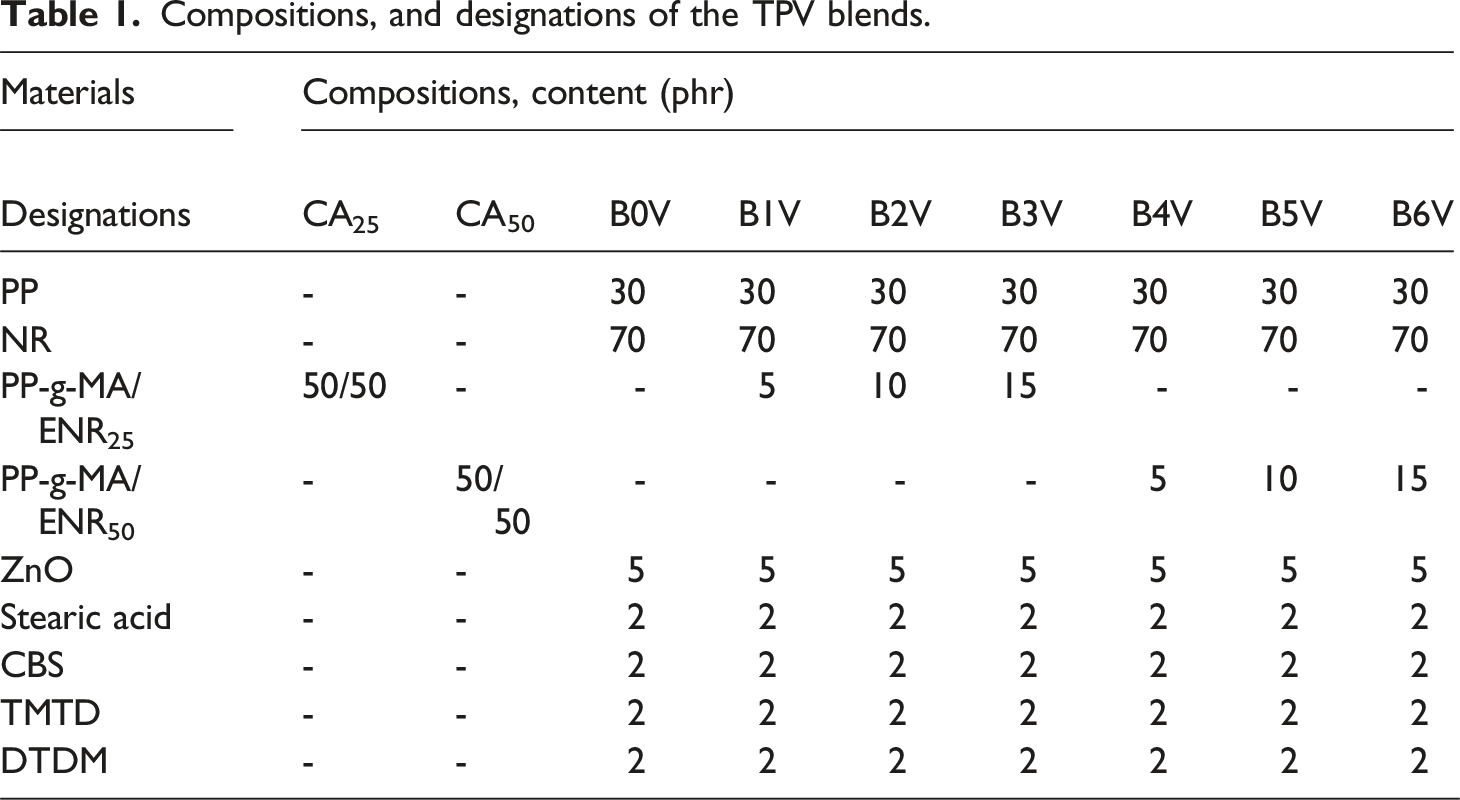
Moulding of samples
For testing, the specimens were obtained by cutting from sheets that were 1 mm thick and produced through the compression-molding machine at 180°C. An electrically heated hydraulic press, the Gumix hydraulic press Model Guix-TP 300/450/1, was used for this purpose. Teflon sheets were employed to facilitate the easy release of the molded items. The following protocol was followed:
First, the blended sheet was placed into the cavity of a square mold and compressed under 50 bars for 5 min before lowering the pressure. Next, without removing the platens, the pressure was increased to 150 bars, and the material was compressed for 2 min. After releasing the pressure once more, a final pressure of 200 bars was applied for 8 min. Finally, the cooling process occurred within the hydraulic press while cold water circulated around it.
Characterization techniques
Fourier transform infrared spectroscopy (FTIR)
The characteristic functional groups present in the modified polymers and the chemical interactions between ENR and PP-g-MA were analyzed using the attenuated total reflection (ATR-FTIR) technique. The selected spectrum resolution and the scanning range were 4 cm−1 from 500 to 3500 cm−1, respectively.
Haake plastograms
The investigation into the rheological properties of the dual compatibilizers as well as the thermoplastic vulcanizate (TPV) blends was performed using the rheograms giving the variations of the torque/mixing time through the melt mixing process in Haake Rheocord 90.
Swelling Index (SI)
To assess the extent of crosslinking in TPV blends, the SI was determined by initially measuring the sample’s weight and then immersing it in cyclohexane for 24 h at room temperature (25°C). The rectangular specimen, measuring 1 cm in length, 1 cm in width, and with a thickness of 1 mm was subsequently extracted from the cyclohexane solvent, thoroughly wiped to eliminate excess solvent, and then reweighed. The SI was calculated using the following equation:
SI = Final Swollen Weight/Initial Weight.
Stress-Strain behaviour
The tensile properties of the TPV samples were performed using the universal testing machine (Instron-3366) following to the ASTM D412 test method. A stress-strain behavior of TPV blends was evaluated at a cross-head speed of 500 mm/min at 25°C, and the machine recorded the load-extension curve. Average values from 10 measurements were calculated for each formulation.
Dynamic Mechanical Analysis (DMA)
Dynamic mechanical thermal properties of the dynamically vulcanized blends were determined using DMA 861E Mettler-Toledo equipment. Measurements of the various parameters (i.e.: the storage modulus (E'), the loss modulus (E''), and the damping factor (tan δ) were carried out in the range of temperature from −100°C to 100°C at a heating rate of 2°C per minute. Molded rectangular samples of dimensions (30 x 5 x1) mm3 were vibrated in tension mode at a strain amplitude of 0.2 mm and a frequency of 1 Hz.
Scanning Electron Microscopic (SEM)
Morphological examinations were carried out using a SEM microscopy model (XL30 Philips, Madrid-Spain) for TPV blends. To prevent any potential phase deformation during the cracking process, the molded TPV samples, derived from PP/NR blends, underwent cryogenic cracking in liquid nitrogen (N2). Preferential extraction of the polypropylene phase was accomplished by dissolving the fractured surface in hot xylene for duration of 30 min. The specimens were subsequently subjected to drying in a vacuum oven at 40°C for 12 h to eliminate any residual contamination from the xylene solvent. The dried surfaces underwent gold coating before they were characterized by SEM microscopy.
Results and Discussion
FTIR Characterization of the Dual Compatibilizer (PP-G-MA/ENR)
Upon blending PP-g-MA with ENR25 or ENR50, these two polymers react with each other through their polar functional groups. Therefore, and in order to check this possibility, Fourier-Transform Infrared Spectroscopy (FTIR) was carried out. The FTIR spectra of PP-g-MA, ENR50, and PP-g-MA/ENR50 are shown in Figure 1(a) to (c), respectively. In the spectrum of PP-g-MA, three distinctive bands are evident at 1854, 1785, and 1710 cm⁻1. The initial two bands arise from the symmetric and asymmetric C = O stretching vibrations of maleic anhydride, while the last one is associated with the vibration of the C = O group of an acid function. The presence of these bands is explained by the opening of the MA ring, a susceptibility attributed to its hydrolysis.
3
In contrast, the spectrum of ENR50 (Figure 1(b)) displays three bands at 1250, 875, and 840 cm⁻1. The initial two bands are associated with the stretching of the epoxide group, while the band at 840 cm⁻1 corresponds to the C = C groups of the polyisoprene (NR) chain. FT-IR spectra of (a) PP-g-MA, (b) ENR50 and (c) PP-g-MA/ENR50.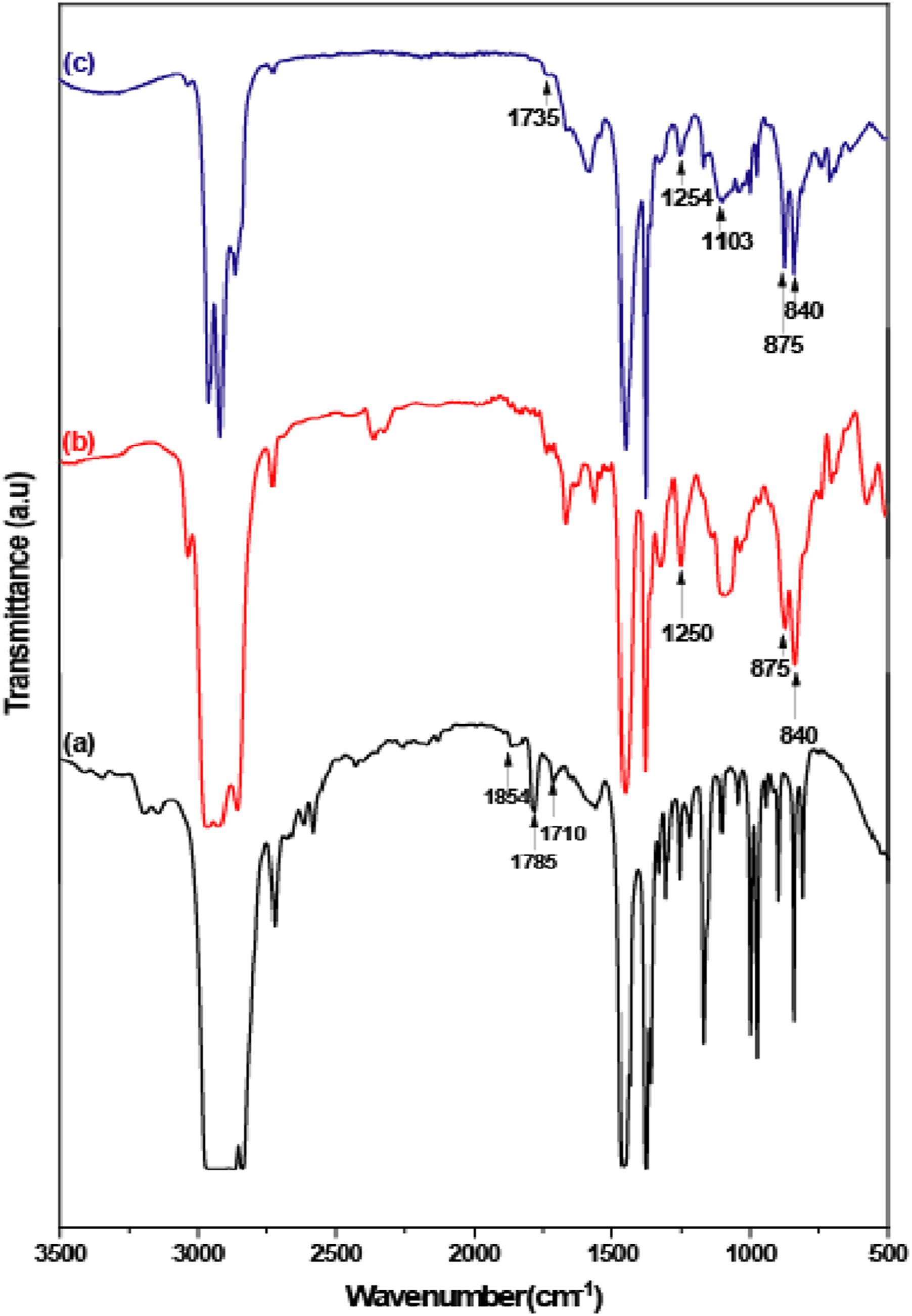
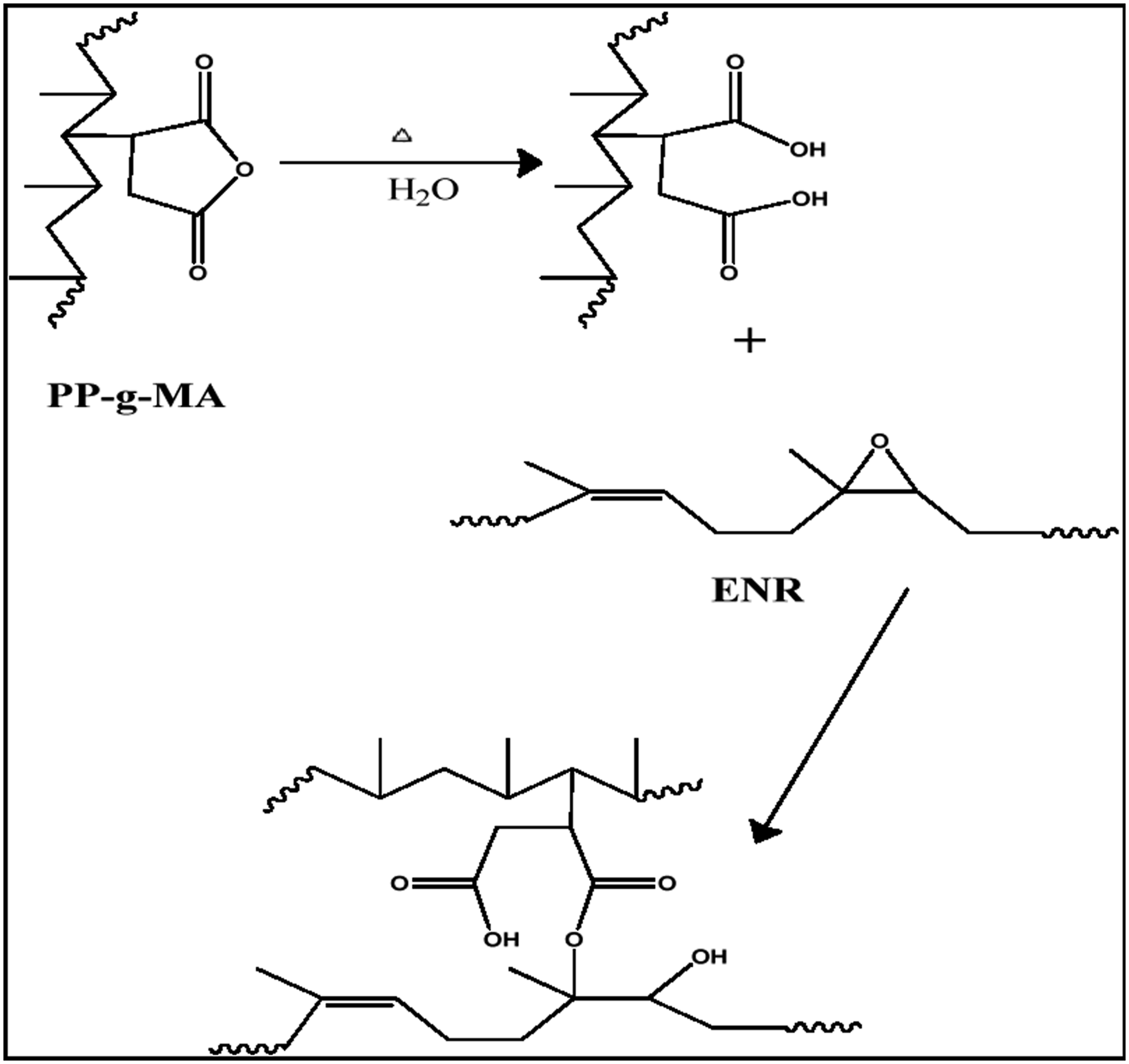
The spectrum of PP-g-MA/ENR50 reveals the absence of all bands assigned to anhydride groups, indicating their reaction with the epoxide groups of ENR50. Nevertheless, the bands corresponding to the characteristic epoxy groups at 1250, 875, and 840 cm⁻1 remain detectable. This implies that not all of the epoxy functional groups have undergone a reaction. Additionally, a novel absorption band emerges at 1735 cm⁻1, arising from the stretching vibration of carbonyl groups (C = O) and is ascribed to the formation of an ester function. These results indicate that a chemical reaction took place between PP-g-MA and ENR. These findings align with the chemical reaction mechanism proposed by C. Nakason et al. (Scheme 1).
3
As per this mechanism, the MA group in PP-g-MA undergoes ring opening in the presence of moisture (H2O), resulting in the production of succinic acid. This succinic acid then reacts with the epoxy groups of ENR50, leading to the formation of ENR-grafted PP characterized by an ester and acid-based linkage.
31
The FTIR analysis confirmed that blending PP-g-MA with ENR50 produced a crosslinked structure that could compatibilize the PP/NR TPV system and this structure may definitely affects the several properties of the resulting TPV blends. Possible mechanism of the chemical reaction between PP-g-MA and ENR molecules.
3
Plastograms of the dual compatibilizing agents (CA25, and CA50)
Figure 2 presents the plastograms for the two polymers used to prepare the compatibilizing agents CA25 and CA50; that is the 50/50 blend of ENR with PP-g-MA, in terms of the variation of the torque with mixing time. These plastograms are denoted by letters to mark the individual effects of the incorporation of each polymer. The two polymers were incorporated according to the following sequence: First, PP-g-MA was added to the mixing chamber and preheated for 5 min without any rotation. Then, it was melted at a rotor speed of 60 rpm for 2 min. Upon the addition of ENR, the plastograms displayed a swift rise (AB region) followed by a slight reduction of the mixing torque (BC region). Subsequently, a secondary torque increase persisted for approximately 5 min (CD region). The torque eventually stabilized, indicating the attainment of a homogenized state in the resulting blend (DE region). The initial torque rise preceding the final plateau is attributed to the crosslinking reaction between ENR and PP-g-MA. This suggests that the formation of crosslinks restricted the mobility of both PP and ENR chains, consequently elevating the viscosity of the resulting CA25 and CA50. This increase in torque confirms the proposed reaction mechanism by C. Nackason and coworkers.
3
Plastograms of the torque evolution with mixing time for dual compatibilizers.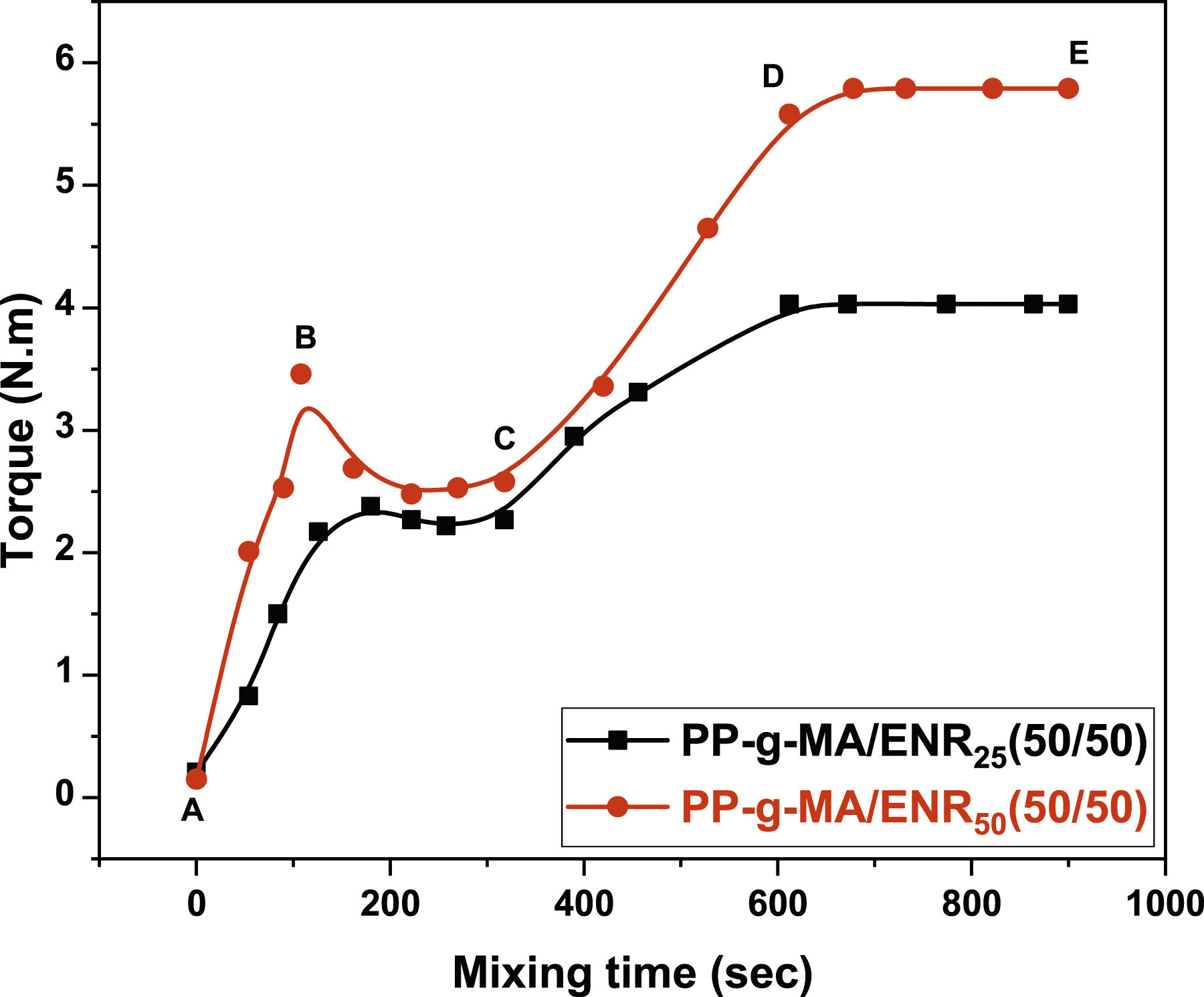
Plastograms of the CA-Containing PP/NR TPV Blends
The evolutions of the rheological properties in terms of the variation of the torque/mixing time curves of CA25 and CA50-containing 30/70 PP/NR TPVs are presented in Figures 3 and 4, respectively. These plastograms are denoted by letters to mark the individual effects of the curatives and those of the CAs and take into account the order of incorporation of each ingredient. It is to be recalled also that the different ingredients were incorporated according to the following sequence: First, Polypropylene was added to the mixing chamber and preheated for 5 min without any rotation. Then, it was melted at a rotor speed of 60 rpm for 2 min. After that, the dual compatibilizer was added (peak ABC) and mixed for 2 min. The NR compound, formerly denoted as NR/VI, was subsequently added, and the mixing process persisted until a plateau in the mixing torque was attained. The resulting TPV products were ultimately pelletized. Plastograms of vulcanized PP/NR, and CA25-containing blends with a crosslinking system based on a sulfur donor. Plastograms of vulcanized PP/NR, and CA50-containing blends with a crosslinking system based on a sulfur donor.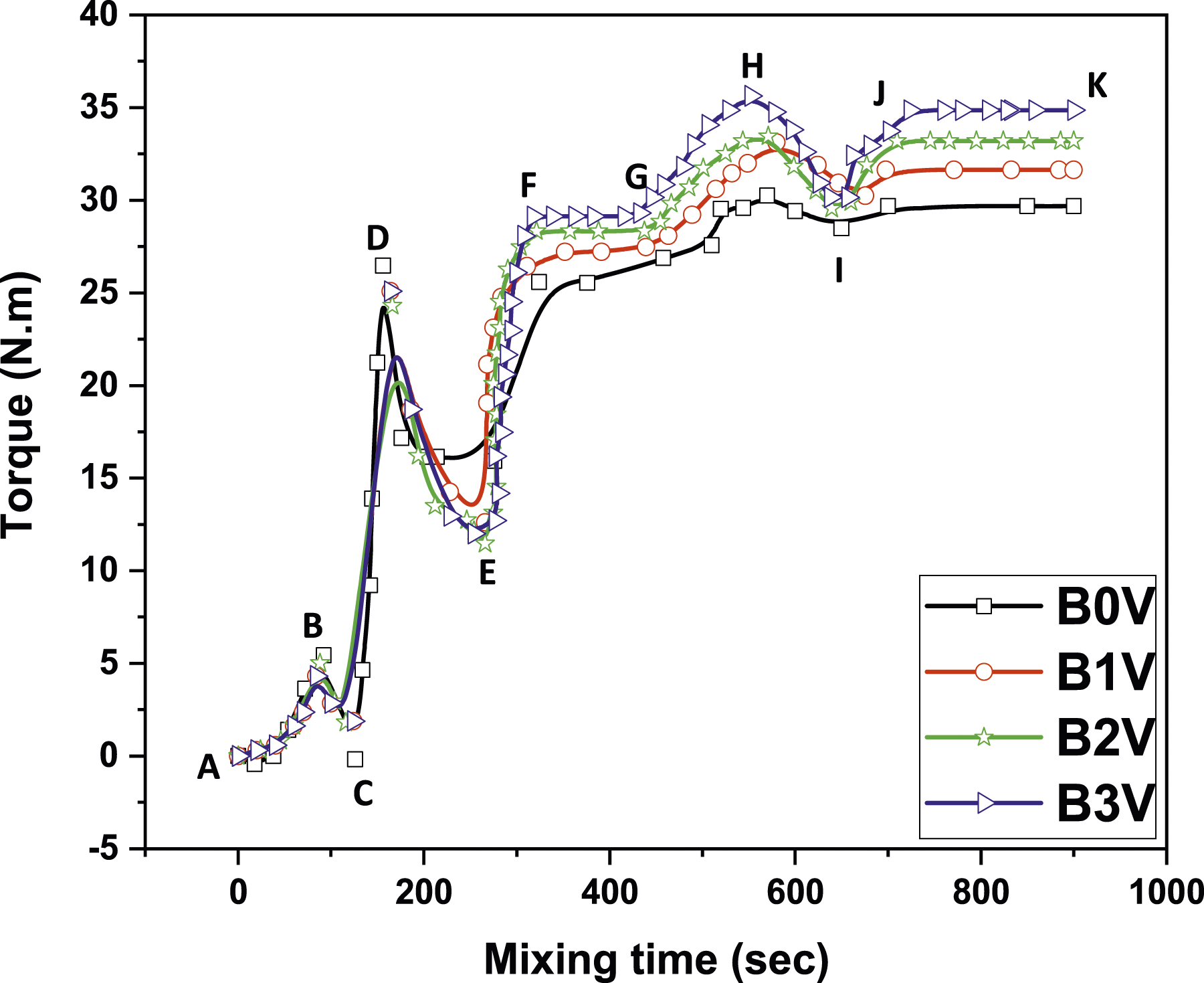
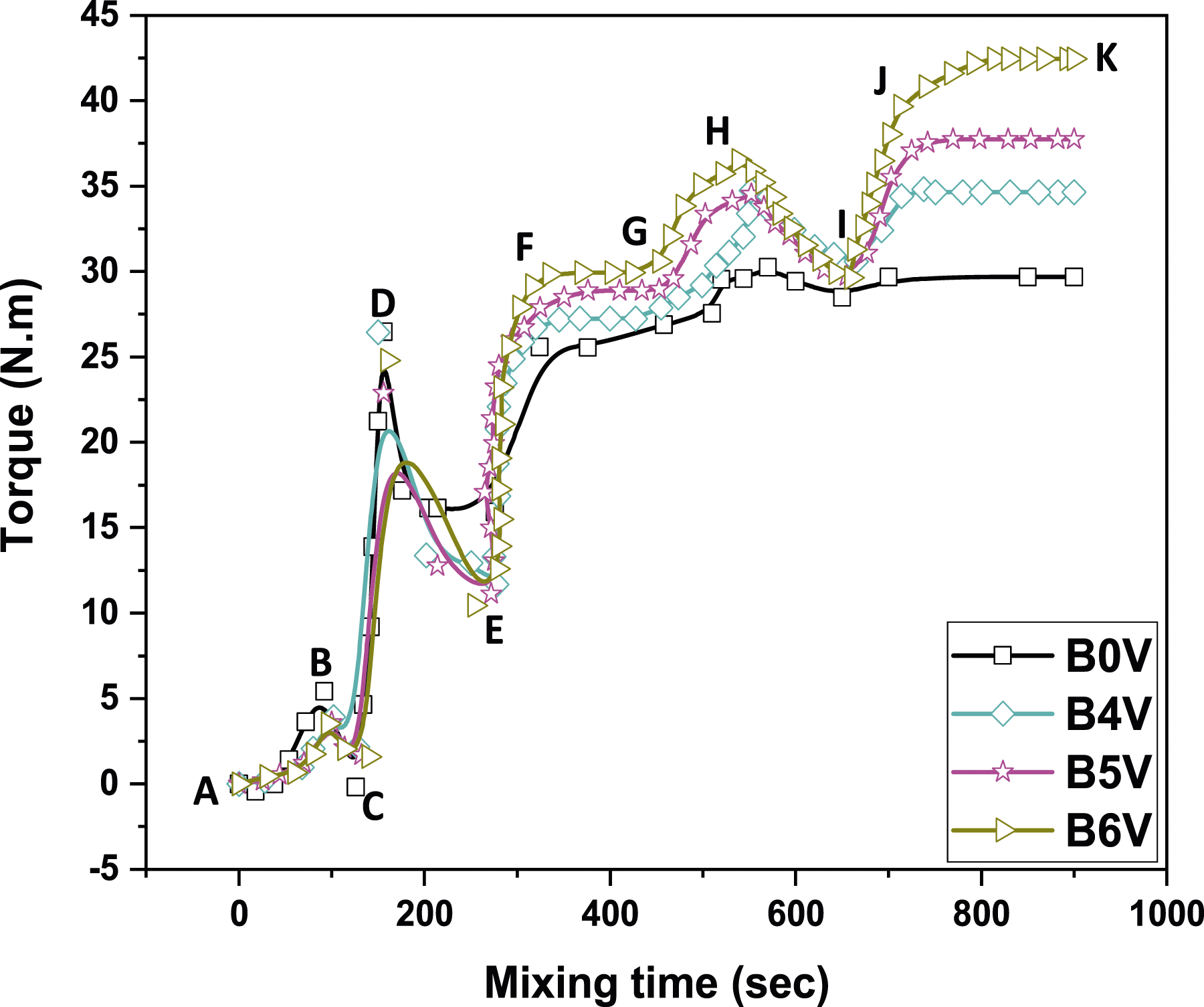
The first peak (ABC) is due to the increase in the torque after the introduction of the cold CA into the mixing chamber containing melting neat PP. Then as the CA undergoes shearing within the hot mixing chamber, it begins to melt, leading to a subsequent decrease in torque. Upon the addition of NR/VI compound, the torque raises (CD). The torque thereafter decreases during the mixing of the whole ingredients (DE). However, with blends containing the curatives, a substantial sharp increase in torque was observed (EF) with increasing mixing time. This increase in torque is attributed to the formation of crosslinks inside the rubber phase, a process known as (dynamic vulcanization), leading to increased resistance to rotation. A consistent mixing torque was subsequently noted and lasted for a mixing time of 400 s (FG). A second rise of the torque (GH) was observed followed by a mild drop (HI) and another increase (IJ) before levelling off. The data clearly shows a direct correlation between the concentration of CAs in the compounds and the corresponding increase in the ultimate mixing torque (JK).
Taking into account the complexity of the system used concerning possible chemical interactions that could take place through the functional groups present in the CA (MA of PP-g-MA, epoxy of ENR, the ester and the acid which form upon mixing PP-g-MA/ENR), 31 the first sharp rise of the torque (EF) could be attributed to a crosslinking reaction involving TMTD and/or DTDM. It is well established that TMTD can act as an ultra-accelerator for sulfur vulcanization as well as a sulfur donor and in this case would form monosulfidic crosslinks. DTDM is also expected to play the same role owing to its structure which is similar to that of TMTD.
The second rather milder increase observed (GH) could be attributed to another crosslinking reaction. However, the fall of the torque (HI) that followed could be considered as a reversion, a phenomenon that indicates the instability of some of the crosslinks formed. The last rise of the torque (IJ), which is more pronounced for the CA50-based system, was observed only for the compatibilizing agent-containing blends. Finally, the final torque value (JK) increases with increasing the concentration of the CA.
In our interesting study, the incorporation of PP-g-MA/ENR as a dual compatibilizer at various concentrations in the PP/NR TPV blend, affects much on the rheological properties, especially for the CA50-containing PP/NR TPV system, and this is reflected by the increase in viscosity of the compatibilized blends, compared to those of non-compatibilized ones, due to enhanced interfacial adhesion between the polymer counterparts. These relationships between the chemical structure of the CA and rheological properties are vital for tailoring processing conditions and achieving the desired material characteristics in TPV blends.
Swelling Index for PP/NR TPV blends
The extent of crosslinking in vulcanized rubbers can be estimated from the swelling measurements based on the fact that crosslinked elastomers will not dissolve in a solvent but swell. The crosslink density for such materials is determined using Flory/Rehner equation (1).
32

The variation of the swelling index (SI) with the CA concentration for PP/NR TPV blends is shown in Figure 5. According to Figure 5, it can be clearly seen that the SI decreases continuously with increasing CAs concentration. Therefore, it can be deduced that alterations at the molecular level have occurred as a result of the physical interaction between CAs with PP and NR. This is due to the formation of crosslinks which restricted the mobility of the polymer chains. It is also clearly seen that this decrease in the swelling index is a result of the dynamic vulcanization meaning that the vulcanizates have been converted to a stiffer and less penetrable materials by the solvent. This finding is in agreement with an analogous study on dynamically cured PVC/ENR blend.
33
Variation of the swelling index of vulcanized blends without and with compatibilizers.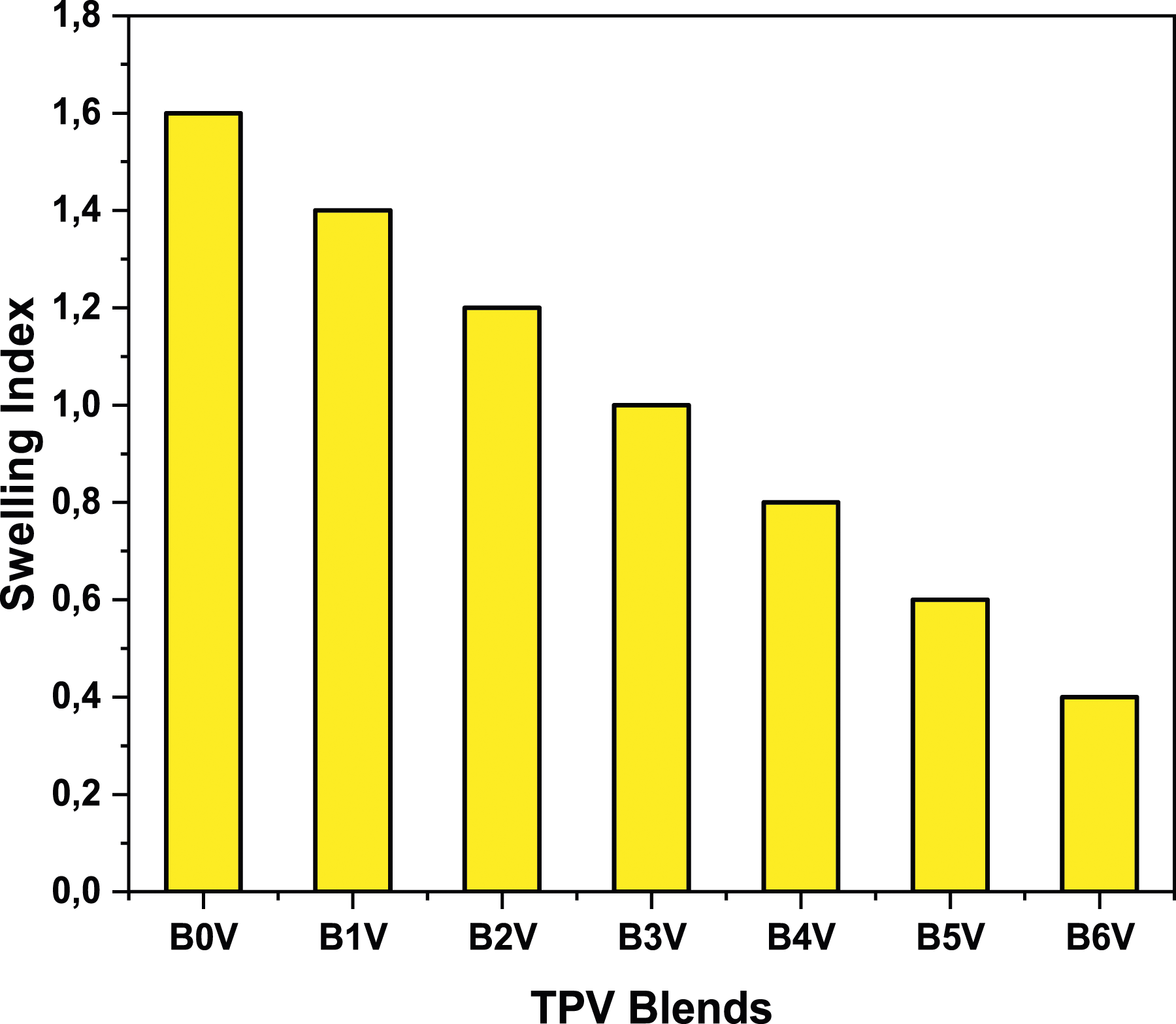
Tensile Properties of PP/NR TPV blends
Figure 6 presents the stress/strain curves of CA25 and CA50-containing 30/70 PP/NR TPVs with varying contents of CAs. These stress/strain curves demonstrate that the CA-containing TPV blends exhibit a shape typical of a soft material with moderate modulus values. From Figure 6, it was found that as the epoxidation content in the compatibilizing agent (CA) increases, there is a corresponding elevation in the ultimate stress at break (B4V > B1V, B5V > B2V, B6V > B3V) for TPV blends, accompanied by a decrease in the elongation at break (EB). For compatibilized TPV blend with 15 phr of CA50 (Figure 6), there is an observable trend in the stress-strain curve indicating a tendency toward an upward shift. This implies that beyond this concentration, the material’s rigidity would likely increase further. This phenomenon is associated with the crosslinked structure of the compatibilizing agent (CA), which reinforces the blend and enhances its rigidity. Stress/strain curves of vulcanized blends with and without compatibilizers.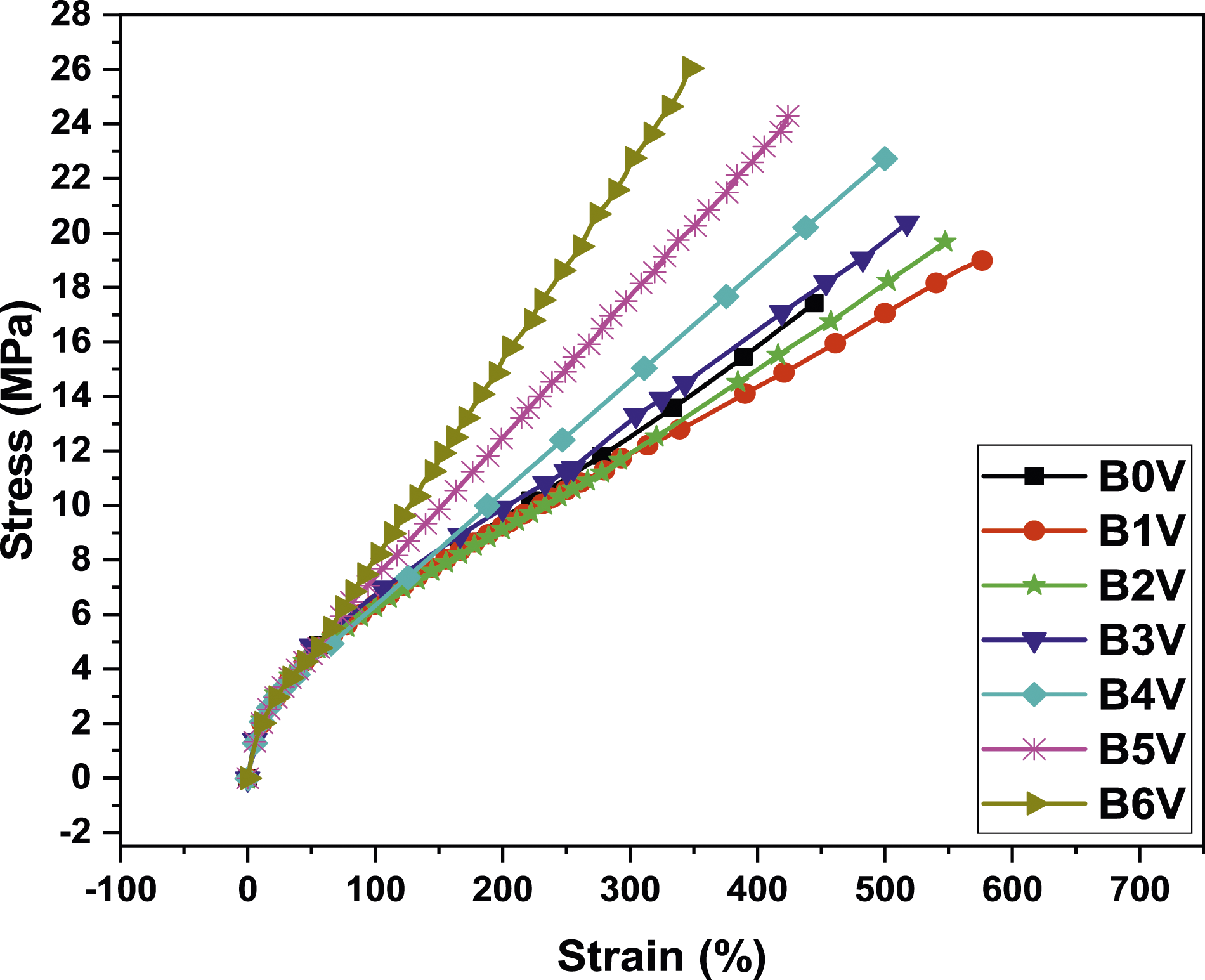
Figure 7 presents the tensile strength (TS), Young’s modulus (E), and elongation at break (EB) of vulcanized blends without and with compatibilizers. As shown in Figure 7(a) trend of increase in both (TS) and (E) and a decrease in (EB) were noted. This signifies that the incorporation of CAs increased the capacity of the TPV blends to withstand the tensile load, resulting in improved mechanical resistance. Tensile strength, Young’s modulus, and elongation at break of vulcanized blends with and without compatibilizers.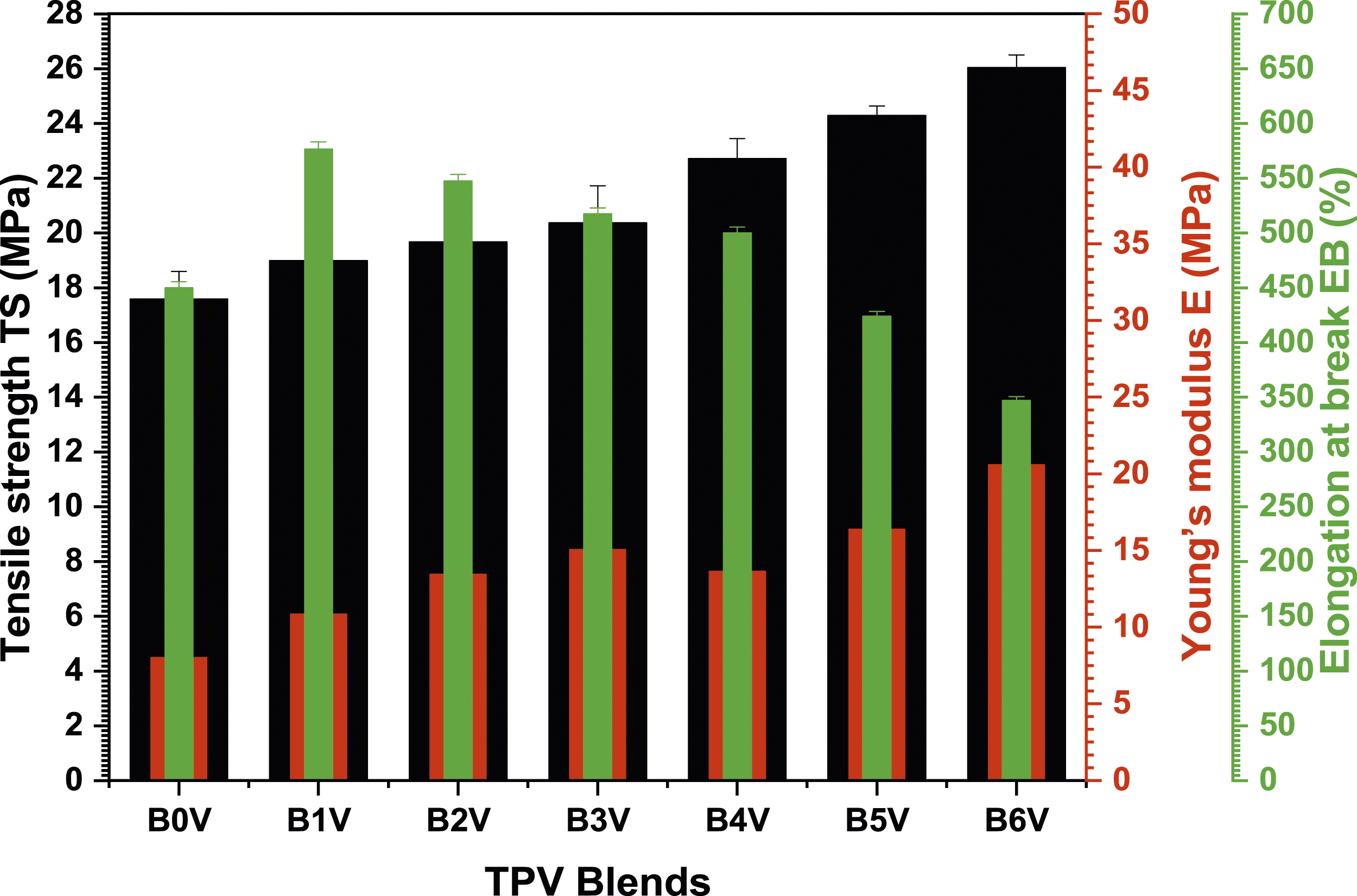
Considering the mechanism of the chemical reaction initially proposed by C. Nakason et al 3 and reported also by Balakrishnan et al, 34 we suggest attributing the enhancement in tensile strength (TS), and Young’s modulus (E) to the physical interactions which developed between CAs and parent polymers (i.e.: PP, and NR).
It’s also observed that the tensile strength (TS) and Young’s modulus (E) increased with increasing epoxidation levels in ENR molecules, owing to the higher presence of functional groups in CA50 compared to CA25. Moreover, the hydroxyl group in both compatibilizing agents (i.e.:CA25 and CA50) contributes to enhancing interactions between the blend constituents. From these results, it can be noted that the crosslinked structure in the compatibilizing agent imparts a reinforcing effect. This can be aligned with the earlier-discussed mixing behavior, where the torque was observed to increase upon the addition of both CA25 and CA50 to TPV blends. These results are analogous to those reported in literature5,10,35,36
Dynamic Mechanical Properties of PP/NR TPV Blends
The plots of E', E'', and tan δ as a function of temperature for the dynamically vulcanized blends are presented in Figures 8 to 10 for the CA25-based TPV systems and in Figure 11 to 13 for the CA50-based TPV blends, respectively. Variation of mechanical storage modulus (E') as a function of temperature of vulcanized PP/NR, and CA25-containing TPV blends. Variation of mechanical loss modulus (E'') as a function of temperature of vulcanized PP/NR, and CA25-containing TPV blends. Variation of mechanical loss factor (tan δ) as a function of temperature of vulcanized PP/NR, and CA25-containing TPV blends. Variation of mechanical storage modulus (E') as a function of temperature of vulcanized PP/NR, and CA50-containing TPV blends. Variation of mechanical loss modulus (E'') as a function of temperature of vulcanized PP/NR, and CA50-containing TPV blends. Variation of mechanical damping factor (tan δ) as a function of temperature of vulcanized PP/NR, and CA50-containing TPV blends.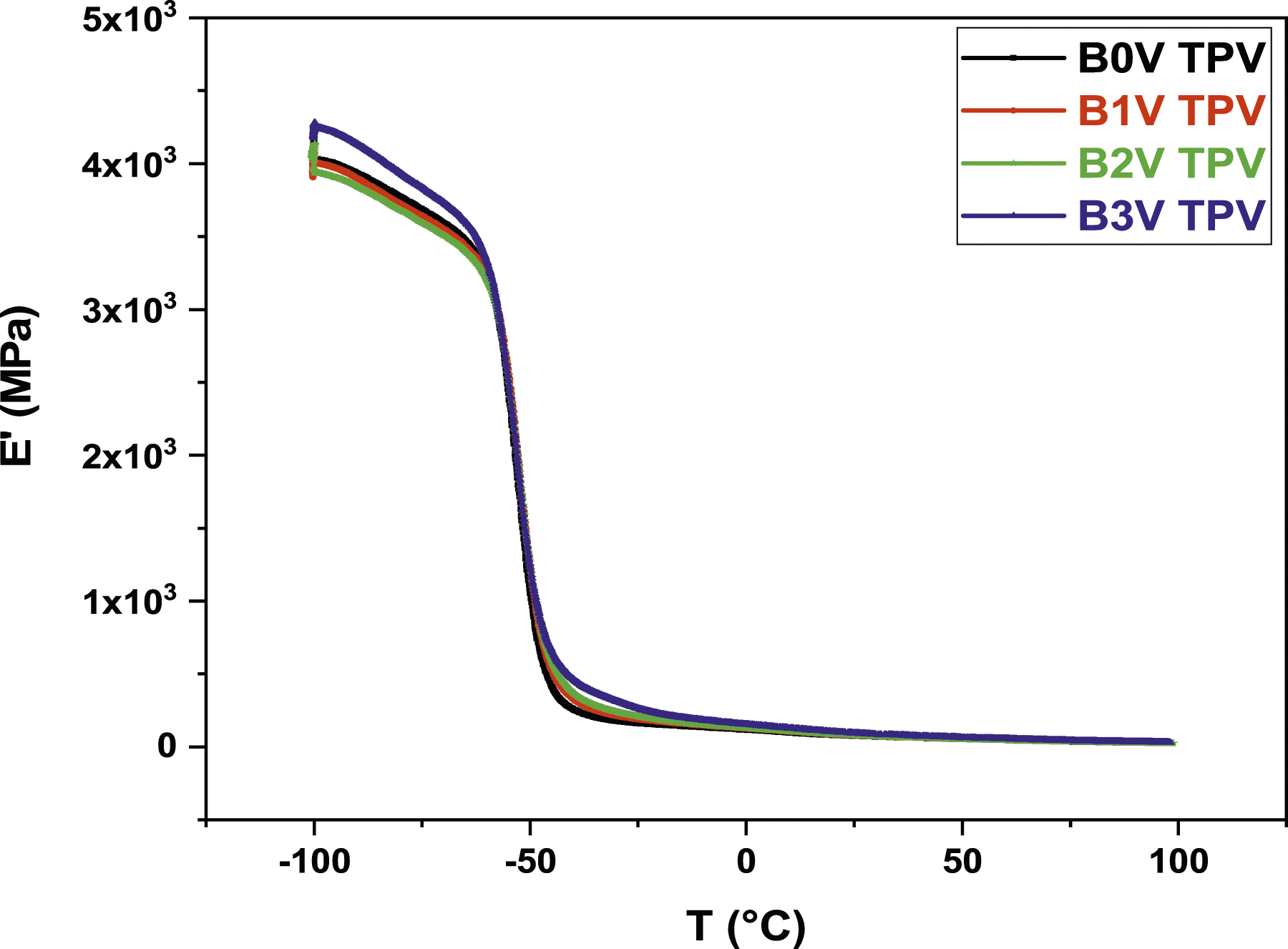
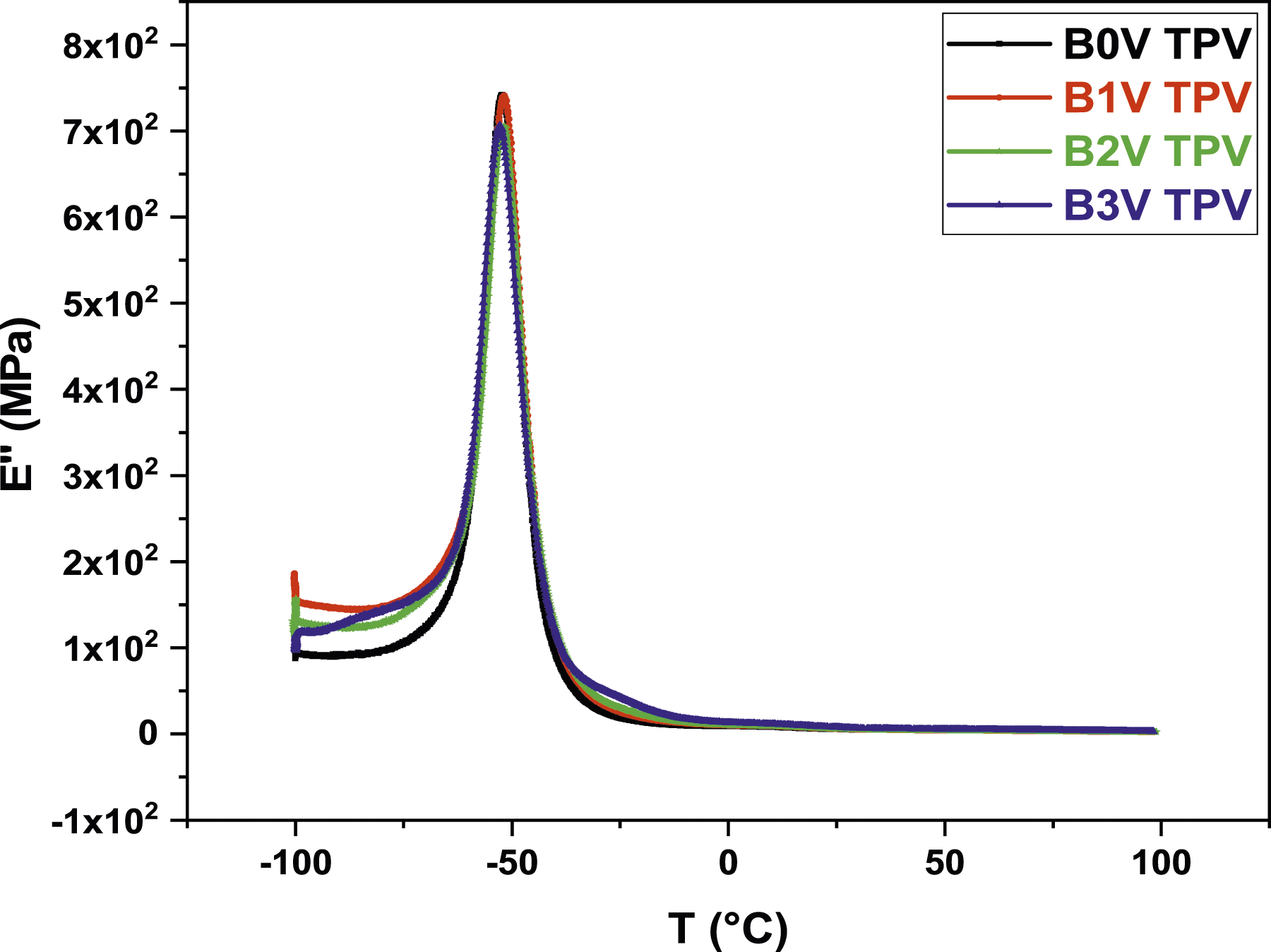
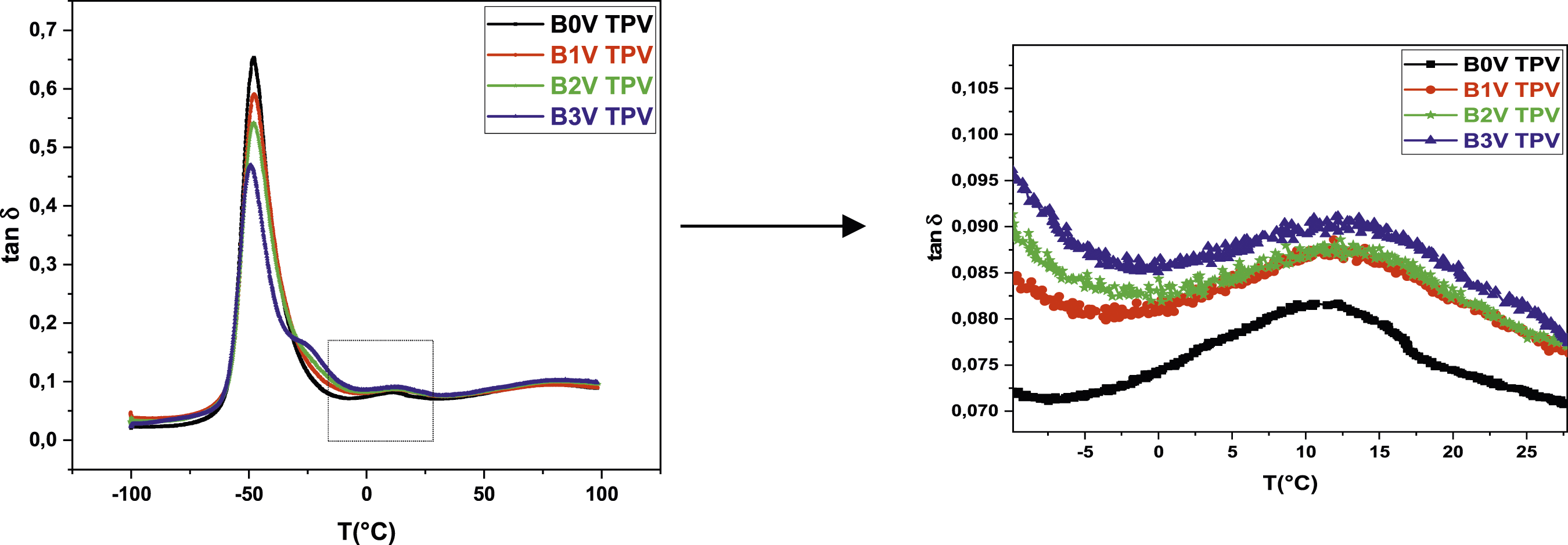
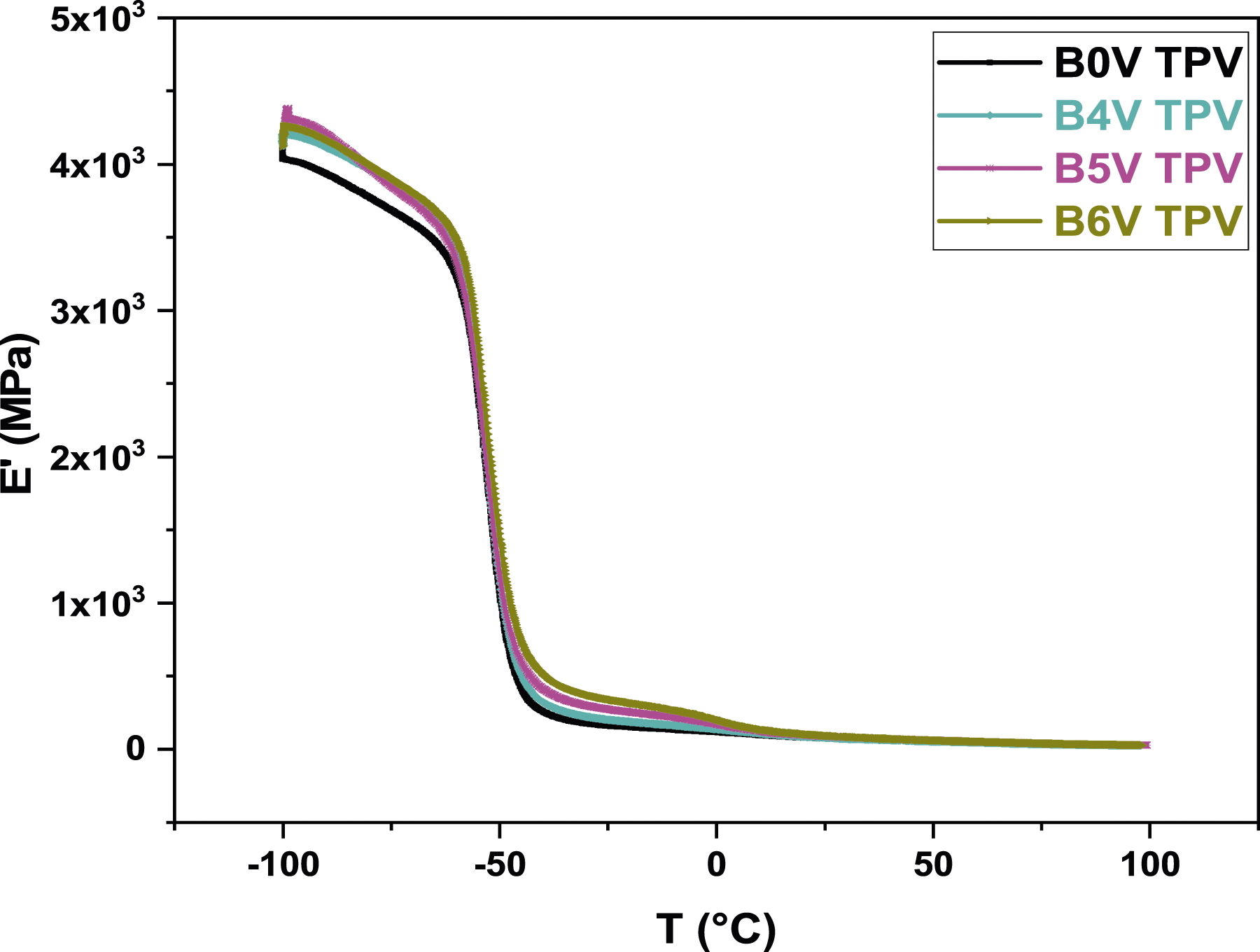
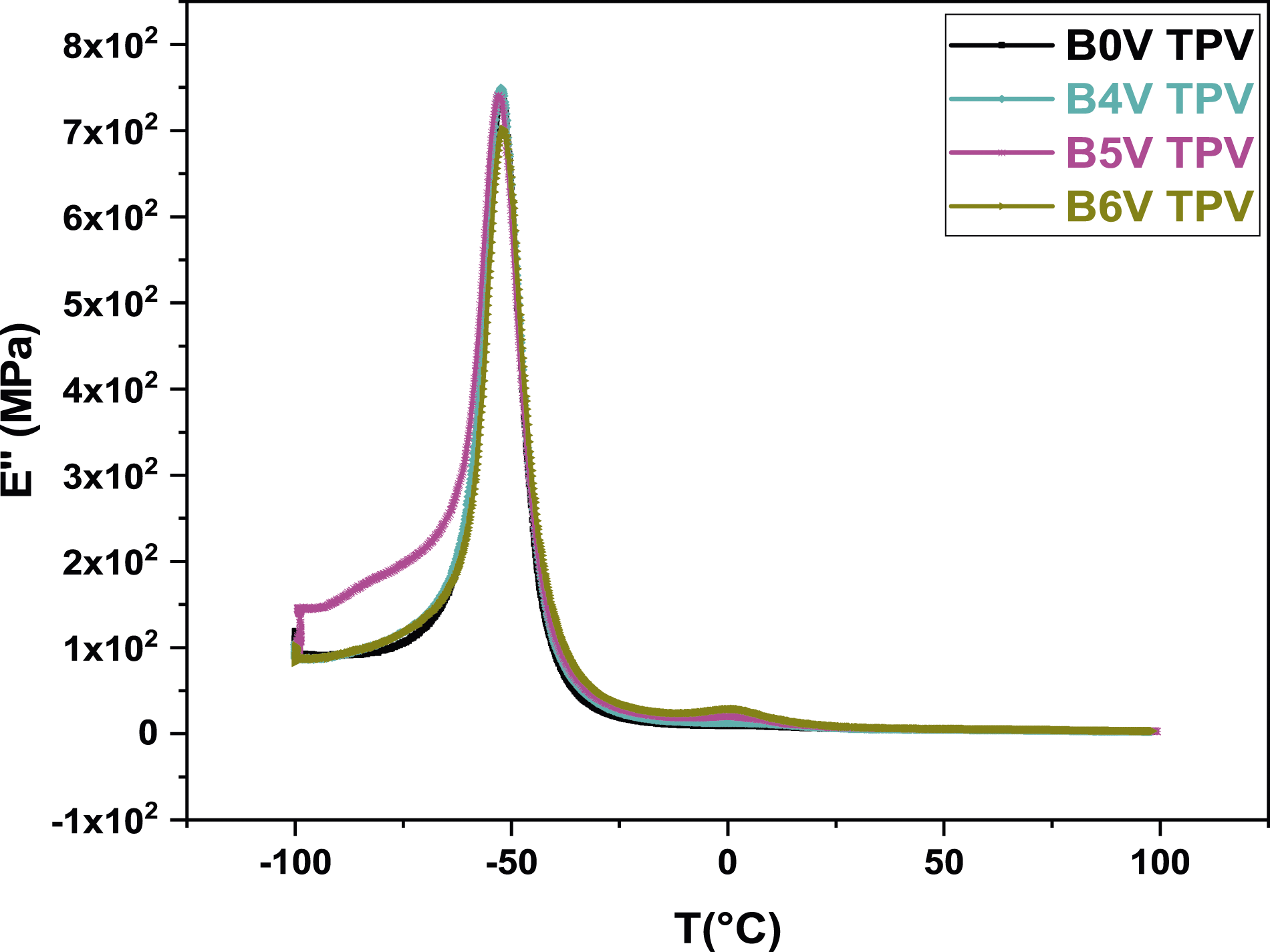
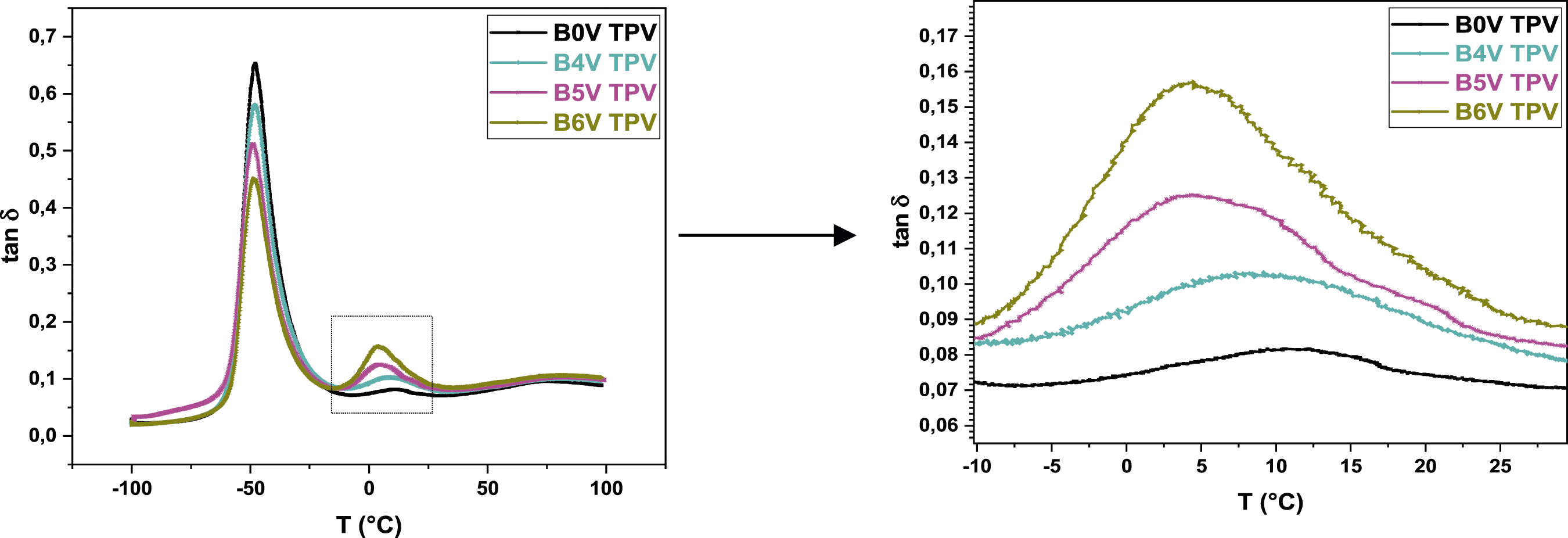
Figures 8 and 11, show that in the glassy region (below Tg), the storage modulus increases, as the concentration of the CA increases. However, these differences disappear in the flow region where all the curves superimpose. On the other hand, as shown in Figures 9 and 12, it is well noted that as the level of the CA increases the maximum E'' position and the maximum tan δ peak position decrease.
Values of the different transitions (Tg, Tβ) for TPV blends with and without compatibilizers.
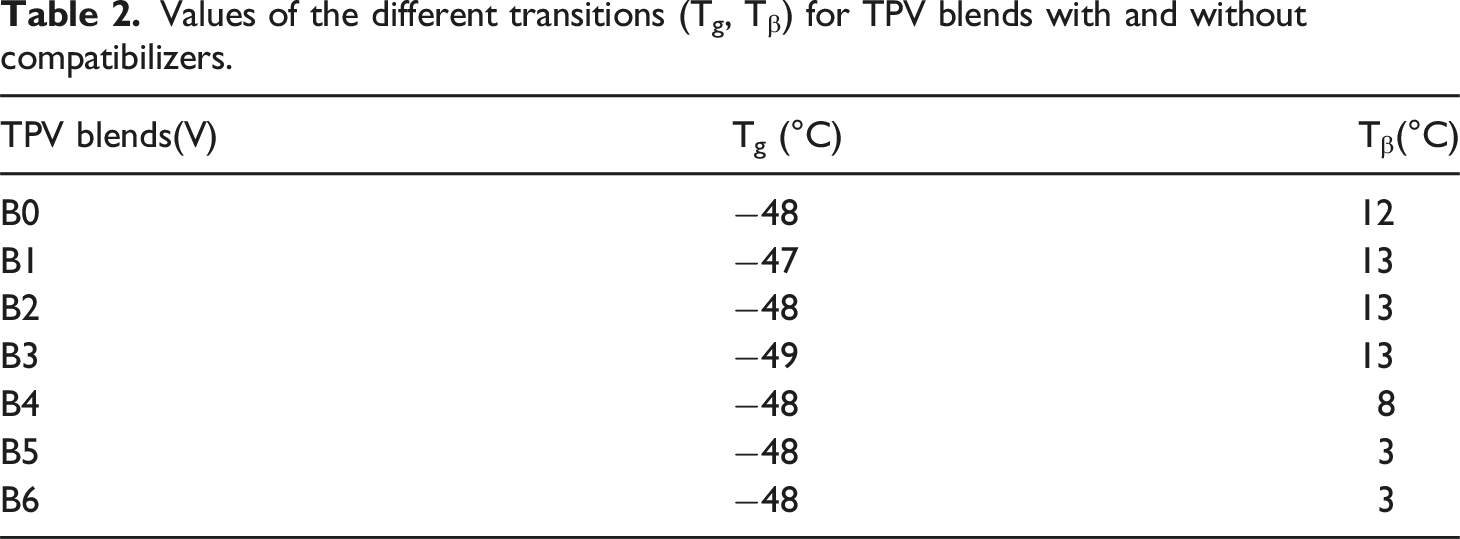
It is to be noted that increasing the concentration of the CA50 decreased much the value of the Tβ transition. For instance, Tβ decreased from 12°C for the PP/NR TPV system to 8°C for the 5 phr of CA50-containing blend. It decreased further to 4°C for the 10 phr CA50-containing blend. In fact, the Tβ peak shifted by almost 9°C for the CA50-TPV (Tβ = 3°C for 15phr of CA50) with respect to the control blend (Tβ = 12°C); an amplification of these transitions is shown in Figure 10 and 13, respectively.
A similar effect was found by S.Benmesli et al, 26 who reported a shift by 10°C of this transition as a result of the functionalization of the NR phase and that of the Polypropylene phase. It can therefore be stated that the introduction of the PP-g-MA/ENR as a CA resulted in an alteration of the PP/NR interphase. These conflicting effects reflect the complexity of the blend studied owing to the contribution of many factors which are the maleic anhydride group in PP, the epoxy group in ENR, the ester and acid-based linkage formed after mixing PP-g-MA with ENR and the vulcanization system.
Morphological examination by scanning electron microscopy
Effect of dynamic vulcanization
SEM micrographs of the solvent-etched cryogenic fracture surfaces of the 30/70 PP/NR TPVs with different concentrations of the compatibilizers are shown in Figure 14. Xylene solvent was used to extract the Polypropylene phase at high temperature. That is, the PP phase was dissolved in hot xylene solvent, which left the vulcanized rubber adhered at the surface. SEM micrographs of vulcanized blends without and with compatibilizers.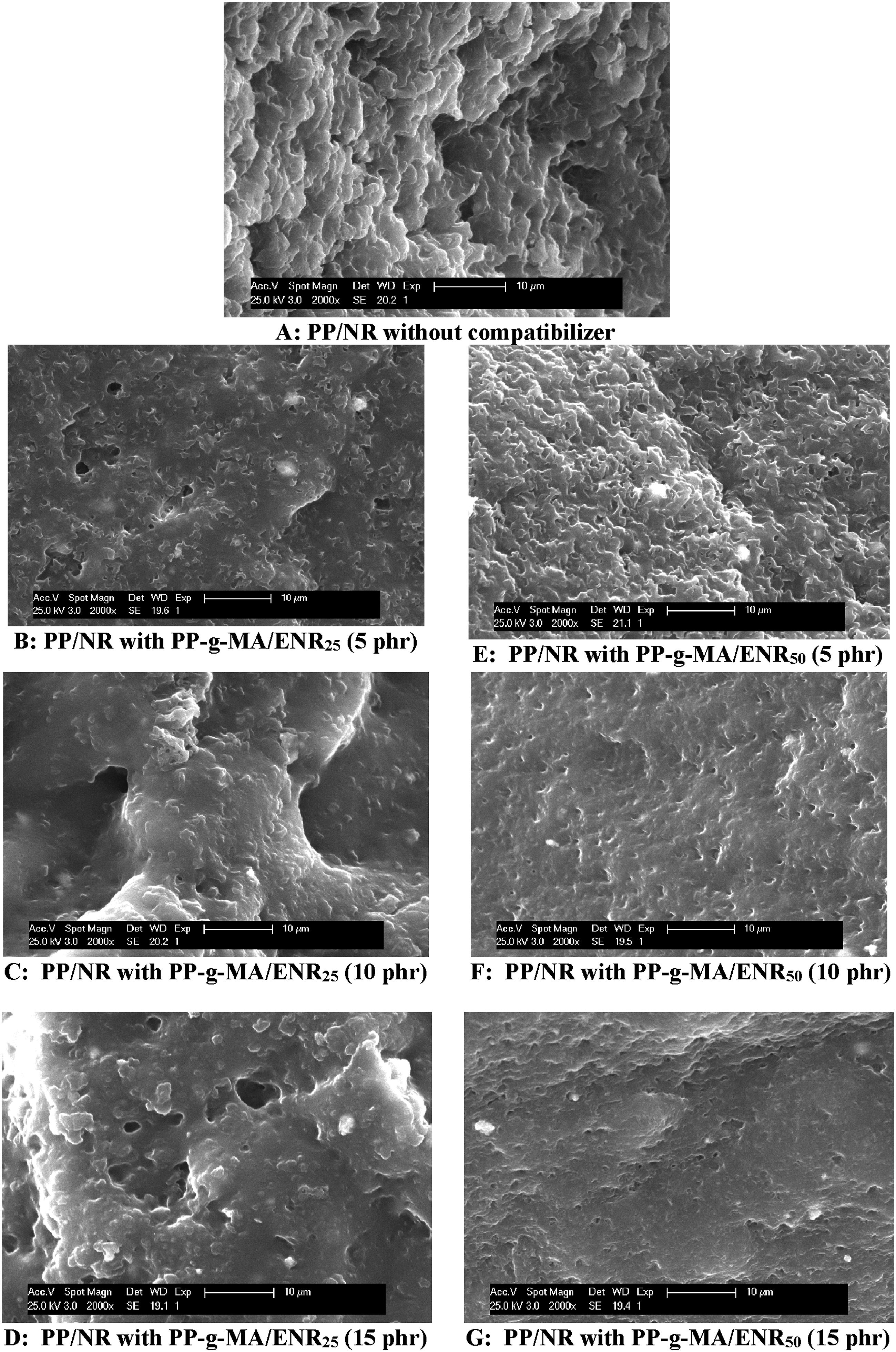
According to Figure 14, it can be observed that the TPV without dual compatibilizer (Control PP/NR (Figure 14(a)) shows large and non-uniform rubber domains, whilst the other compatibilized and vulcanized blends show smaller and finely dispersed rubber particle morphology.
It can also be clearly seen that the vulcanized rubber domains in the TPVs with CA25 show larger sizes than those of the TPVs prepared with CA50 at equal amounts. Therefore, it can be stated that the size of the dispersed vulcanized rubber domains decreased with increasing epoxide contents in the ENR molecules. These findings are analogous to those reported in the literature37–41 and are similar to previous results investigated by HJ.Radusch. 37
In the context of our study, structure-property relationships refer to the intricate connections between the molecular structure and the properties of the materials (such as the dual compatibilizer and the resulting TPV blends). Understanding these relationships is crucial for tailoring the material’s characteristics to meet specific performance requirements.
The structure-property relationships observed in the investigated TPV blends, particularly with the incorporation of a 50/50 blend of PP-g-MA/ENR as a dual compatibilizer, play a crucial role in influencing various material characteristics. Our results obtained through this research delve into the nuanced connections between the structural features and resulting properties. The FTIR analysis confirmed the occurrence of reactions between the MA group in PP-g-MA and the epoxy groups in ENR. This chemical interaction resulted in the formation of ENR-grafted PP with an ester and acid-based linkage. The chemical bonding revealed by FTIR directly impacts the material’s properties, influencing interfacial adhesion, compatibility, and overall blend structure, and based on these findings, we believe that the cross-linked structure of CA may enhance and improve the several properties and contributes to the modification of the material’s, especially the rheological, mechanical, and morphological properties. In this context of the structure-property relationships, and to the best of our knowledge, It can be asserted that rheology has consistently been recognized as a potent characterization tool, given the closely interconnected relationship between rheology and morphology. Typically, various elements, including the inherent rheological characteristics of the constituent polymers, interfacial properties, and the inclusion of additives like dual compatibilizers, significantly influence the rheological behavior of polymeric materials. In our findings, the rheological measurements provided valuable insights into the viscosity changes induced by the dual compatibilizers, because the final viscosity values of the CA50-containing PP/NR TPV system were higher than that of the CA25-containing PP/NR TPV blend, confirming hence the effect of a crosslinking reaction upon blending ENR with PP-g-MA as well as the epoxidation level of ENRs. Moreover, the concentration-dependent increase in viscosity demonstrates the role of the dual compatibilizer in influencing the DMA properties of the resulting TPV blends. As we are aware, the miscibility and phase behavior of polymer blends play a crucial role in numerous applications, and Dynamic Mechanical Analysis (DMA) is a widely acknowledged method for investigating the relationships between structure and properties in polymers. In miscible blends, a single distinct Tg, intermediate between those of the individual polymers, is observed. In cases of borderline miscibility, the transitions broaden, while completely immiscible blends may exhibit two separate transitions corresponding to the individual constituents. DMA properties are characterized by the storage modulus, loss modulus, and damping factor, which are influenced by factors such as crystallinity, structure, and the degree of crosslinking. Based on these parameters, the results obtained from DMA revealed an increase in the elastic modulus, and a decrease in the damping factor, with increasing concentration of the CA, and the observed changes in these parameters, signify altered damping characteristics resulting from high chemical interactions between the dual compatibilizer counterparts, and on the other hand, physical interactions between the CAs and parent polymers (i.e.: NR, and PP). These points to the importance of physical compatibility in dictating the DMA behavior of the resulting TPV blends. Furthermore, it has been confirmed that the characteristics of polymer blends are contingent on both the morphology and the interfacial adhesion formed between the matrix and blend components. Consequently, utilizing SEM to characterize morphology can serve as an effective method for establishing correlations with the material’s mechanical behavior. From our results; SEM microscopy indicated a more homogeneous distribution of the dispersed vulcanized rubber phase in the presence of the compatibilizer which led to improved interfacial adhesion and dispersion of the major phase in the minor phase (phase inversion). It can be said that the SEM results directly correlate with the chemical interactions identified by FTIR as well as mechanical properties, showcasing how structural changes impact the macroscopic morphology of the compatibilized TPV blends.
Based on the previous results obtained from this study, we aimed to investigate the effect of dual compatibilizers based on PP-g-MA/ENR on the properties of 30/70 PP/NR TPV blends. Our research makes several distinctive contributions to the existing literature, including novel methodologies, experimental techniques, theoretical frameworks, and insights gained. One of the key contributions of our study is the development and utilization of dual compatibilizers based on a blend of PP-g-MA and ENR. While previous studies have explored single compatibilizers in polymer blends, the combination of PP-g-MA and ENR as dual compatibilizers is novel. This innovative approach offers the potential for synergistic effects between the two compatibilizers, leading to improved compatibility and enhanced properties of the PP/NR TPV blends. Our study employs a comprehensive set of characterization techniques to evaluate the rheological, mechanical, dynamic mechanical, and morphological properties of the TPV blends. By utilizing Fourier Transform Infrared Spectroscopy (FTIR), swelling index measurements, tensile testing, dynamic mechanical analysis (DMA), and scanning electron microscopy (SEM), we provide a thorough understanding of the structure-property relationships in the TPV systems. This multi-faceted approach enhances the reliability and depth of our findings. We introduce also a quantitative analysis of crosslinking in the TPV blends using the swelling index (SI) measurements. By correlating the SI values with the concentration of dual compatibilizers, we gain insights into the extent of crosslinking and its impact on the material properties. This quantitative analysis adds a new dimension to the characterization of TPV blends and offers a valuable tool for assessing crosslinking in elastomeric materials.
This present study also provides detailed insights into the morphological changes induced by the addition of dual compatibilizers. SEM analysis reveals the dispersion of vulcanized rubber particles in the thermoplastic matrix, highlighting the role of compatibilizers in improving interfacial adhesion and phase dispersion. This detailed characterization of morphology enhances our understanding of structure-property relationships in TPV blends. By elucidating the effects of dual compatibilizers on the properties of PP/NR TPV blends, our study offers practical implications for material design and formulation. The insights gained from our research can inform the development of TPV blends with tailored properties for specific applications, such as automotive components, consumer goods, and industrial materials. This contribution bridges the gap between fundamental research and practical applications in the field of polymer science. Overall, our study presents a comprehensive investigation into the effects of dual compatibilizers on the properties of PP/NR TPV blends, offering novel methodologies, experimental techniques, theoretical frameworks, and insights that differentiate our work from existing literature. These contributions advance our understanding of structure-property relationships in polymer blends and pave the way for the development of advanced materials with enhanced performance characteristics.
Conclusions
Compatibilizing agents can enhance and partially improve the compatibility of incompatible and immiscible PP/NR blends. So this research was to investigate the effect of dual compatibilizers (CA25, and CA50) based on PP-g-MA/ENR on various properties such as: rheological behavior, mechanical, dynamic mechanical and morphological properties of a soft grade of 30/70 PP/NR TPV blends. This study leads to the following conclusions: The rheological properties revealed that the ultimate mixing torque value increased with increasing the concentrations of CA in PP/NR TPV blends. This can be attributed to a stronger compatibilizing effect resulting from the chemical interaction between MA groups in PP-g-MA and the epoxy groups in ENR which leads to the increased viscosity of the system. The extent of crosslinking in the elastomer phase within TPV blends using sulfur donors (TMTD and DTDM) at various CA concentrations was estimated by measuring the swelling index (SI). It was found that the (SI) decreases continuously with increasing the CA level. Therefore, it can be deduced that alterations at the molecular level have occurred as a result of the physical interaction between CAs with PP and NR, and that the vulcanizates changed to a stiffer and less penetrable material by the solvent. Both CAs provided the PP/NR TPVs with superior mechanical properties, even at a low loading level, compared to those of the uncompatibilized ones. The DMA findings indicated that an increase in CA contents led to higher storage modulus (E') and lower values of loss modulus (E'') and tangent δ. The morphology of the TPVs changes drastically with variation in the CA concentration and was characterized by the dispersion of small particles of the vulcanized elastomeric phase in the thermoplastic phase indicating the occurrence of phase inversion. Higher interaction between constituent components also caused smaller sizes of the dispersed vulcanized rubber phase domains in the thermoplastic phase PP matrix.
Footnotes
Acknowledgments
Dr Belhaoues Abderrahmane would like to acknowledge Pr.Riahi Farid, and Dr Angel Antonio Marcos-Fernández, Dr Rebeca Herrero Calderon, Dr Alberto Fernández-Torres, Dr Patricia Sampedro Tejedor, Pr. Rodrigo Navarro Crespo, Dr Juan.Lopez Valentin, Dr Maria del Pilar Posadas Bernal, as well as Elastomers Group for their generous hospitality at (ICTP-CSIC, Madrid, Spain) and for the access to the characterization techniques: Mechanical Characterization, DMA Analysis, and SEM Microscopy. Sincere thanks are also extended to all technicians in the lab. for their invaluable service and advice.
Declaration of conflicting interests
The author(s) declared no potential conflicts of interest with respect to the research, authorship, and/or publication of this article.
Funding
The author(s) disclosed receipt of the following financial support for the research, authorship, and/or publication of this article: This work was supported by The Algerian Ministry of Higher Education and Scientific Research (Algerian program P.N.E scholarship fund).
