




Abstract
The objective of this study was to investigate the impact of amylase treatment on the properties of polylactic acid (PLA) composite, using coir fiber. The coir fiber was treated with a 5% amylase solution and the modified coir/PLA composite was produced via hot pressing. The mechanical properties, water absorption and moisture absorption properties, and microstructure of the composites were analyzed. The findings revealed that the addition of amylase-treated coir fiber significantly enhanced the strength and stiffness of the composite. Specifically, the tensile strength, bending strength, and impact strength increased by 5 times, 3.6 times, and 2 times, respectively. Furthermore, the composite’s fracture mode changed from pure tensile to shear and tensile mixed fracture. The water absorption performance of the coir fiber composite increased by an average of 29.58% after amylase treatment, which improved the composite’s ability to withstand humidity. Lastly, the microstructure of the composite material was discussed. The enzyme decomposed the starch in the fiber, removing impurities and increasing the surface area, providing more sites for binding to polylactic acid and improving the interface compatibility between the two substances. The results are significant for developing new and sustainable bio-based composites.
Introduction
Fiber reinforced polymer (FRP) stand out from other materials because of their good mechanical properties. 1 Commonly used for reinforcing composites are synthetic fibers (nylon, acrylic, polyester) and natural plant fibers (coir, hemp, bamboo). However, synthetic fibers made from synthetic polymer compounds are non-biodegradable, toxic to the environment and not recyclable; They are difficult to dispose of after retirement and produce a large amount of carbon dioxide. 2 Plant fiber is a green material, which has many advantages compared with synthetic materials, such as easy processing, reducing CO2 emissions, biodegradable, recyclable, good thermal and mechanical properties, and will not affect human health. 3 Therefore, plant fibers are widely used as polymer modifiers. The main components of natural fibers are cellulose, hemicellulose and lignin. Cellulose is the main component that provides the strength and hardness of the fiber, while hemicellulose and lignin contribute to the flexibility and toughness of the fiber. However, plant fibers are often hydrophilic because they are derived from lignocellulose, which contains highly polarized hydroxyl groups. 4 This makes the major limitations of fibers as reinforcement materials include poor interfacial adhesion between polar hydrophilic fibers and non-polar hydrophobic substrates, And mixing difficulties due to poor wettability between fibers and substrates. Fibers are incompatible with thermoplastics, which are inherently hydrophobic. At present, the methods to improve interface compatibility mainly include: surface modification of plant fiber, addition of appropriate interface modifier, or surface modification of thermoplastic matrix, etc. 5 In this paper, the surface of coir fiber was modified by amylase treatment to improve the binding ability of the two materials. Amylase can break down the starch components present in the coir fiber. This process results in the removal of impurities and a more uniform fiber surface, which improves bond interactions with other materials. Polylactic acid (PLA) is a kind of polymer material with excellent biocompatibility and biodegradability obtained by chemical synthesis from corn starch or sugarcane. 6 However, its mechanical properties are not very good, and fibers are needed to enhance its strength and stiffness. Coconut shell fiber extracted from coconut shell is a natural and renewable reinforcing material, which can be used to improve the performance of biodegradable plastics such as PLA. 7
Over the past few years, several works have been published on the use of natural fibres as reinforcing materials for polymer composites. For example, Gowda et al. 8 published a comprehensive review of the use of natural fibres as sustainable and renewable resources to develop environmentally friendly composites. They discussed the various types of natural fibers that are widely used (such as silk, bamboo, kapok, coir fibers, etc.), how to enhance the properties of these fibers through chemical treatment, and how to enhance the application of composite materials. Their review deals with polymer composites in general and does not emphasize specific polymers, and their fiber treatment scope focuses solely on chemical treatments. Coskun et al 9 studied the effects of lipase, lactase, pectinase, and cellulase treatments on the mechanical properties of coir fiber/PLA composite. The tensile strength of the composite treated with lipase and lactase was improved, while the pectinase and cellulase treatments had no significant effect. Except for pectinase, the impact strength of the composite was improved by enzyme treatment. All enzyme treatments improved the elastic modulus of the composites. Enzyme treatment improved the interfacial adhesion between coir fiber and PLA by removing wax and fatty acids and/or increasing surface roughness. Karaduman et al 10 studied the treatment of jute fabric with pectinase, laccase, cellulase and xylanase liquids in different proportions of enzyme liquids and treatment time. It was observed that the enzyme destroyed pectin, hemicellulose and lignin at the fiber bundle interface, decreased the technical fiber diameter, and thus increased the fiber length-diameter ratio. Therefore, larger fiber-matrix interface area was generated after enzyme treatment, which was conducive to better fiber-matrix adhesion and improved mechanical properties of the composites. The results show that enzyme treatment can be used as an effective, cheap and environmentally friendly fiber modification method for the production of natural fiber reinforced composites. Zhuo et al 11 studied the effect of enzyme treatment on the properties of bamboo fiber/polyhydroxybutyrate valerate copolyester composite. The results showed that the enzyme treatment could reduce the water absorption of the composite, improve the adhesion between bamboo fiber and polymer, and improve the mechanical properties, thermal stability and crystallinity of the composite. Yang Xiongnan 12 prepared modified jute/polypropylene (PP) composite material by melt blending and injection molding, and explored the influence of different enzyme treatments on the properties of the composite material. When the fiber content was 30%, the tensile strength, bending strength and bending modulus of the composites prepared by using 4% wollastonite as filler and pectinase pretreatment of jute were increased by 14. 4%, 17.1%, 24.0%. The composites prepared by xylanase pretreatment of jute had the best thermal stability and crystallinity of 46.1%. The mechanical properties and thermal stability of the composites were improved after the enzyme treatment.
According to domestic and foreign research, enzyme-treated fibers have a significant impact on the performance improvement of composite materials. Therefore, we need to conduct in-depth research on the effect of enzyme-modified plant fibers on the performance of composite materials. In this paper, coir fiber/PLA composite was prepared by treating coir fiber with amylase, using PLA as matrix and different mass fractions of coir fiber as reinforcement. The effects of coir mass fraction andamylase pretreatment on mechanical properties, moisture absorption, water absorption, and microstructure of the composite were analyzed.
Experimental
Raw materials
Polylactic acid particles were produced by Shenzhen Shunjie Plastics Technology Co., Ltd. in China. α-amylase was produced by Jiangsu RuiKangLai Technology Co., Ltd. in China’s Jiangsu Province. Coir fiber was purchased from Hainan, China.
Pretreatment of materials
The material was washed with distilled water to remove dirt and contaminants. After washing, the plant fibers were dried at 80°C for 2 h. The dried fibers were trimmed into 4 to 6 mm short fibers, which were stored in an airtight bag.
Enzyme treatment and hot water treatment
The fiber was placed in a beaker filled with deionized water, heated in a water bath at 90°C for 2 h (as shown in Figure 1(a)), and then heat-treated at 105°C in an air drying oven for 2 h. The dried coconut husk fibers were added to a mixture containing 5% amylase and incubated at 55°C with 400 r/min agitation for 5 h (as shown in Figure 1(a)). Finally, the treated fibers were cleaned repeatedly with deionized water and then oven-dried at 70°C for 2 h. Example views of (a) Constant temperature water bath treatment , (b) Magnetic stirring for enzyme treatment , (c) The mix of materials is loaded into the mold , (d) Carry out the molding treatment, (e) Water cooling plate cooling, (f) The formed composite material.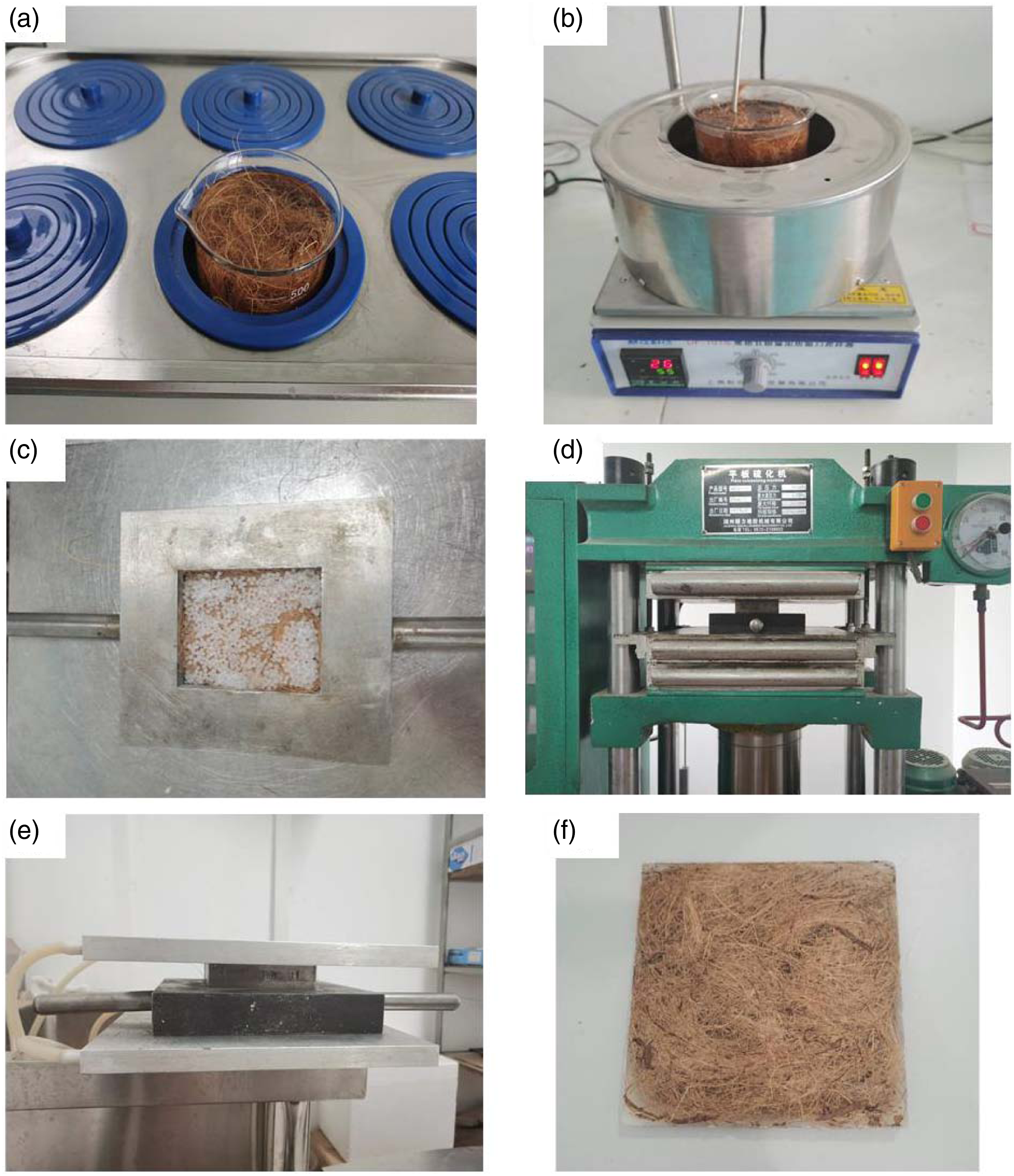
Composite preparation
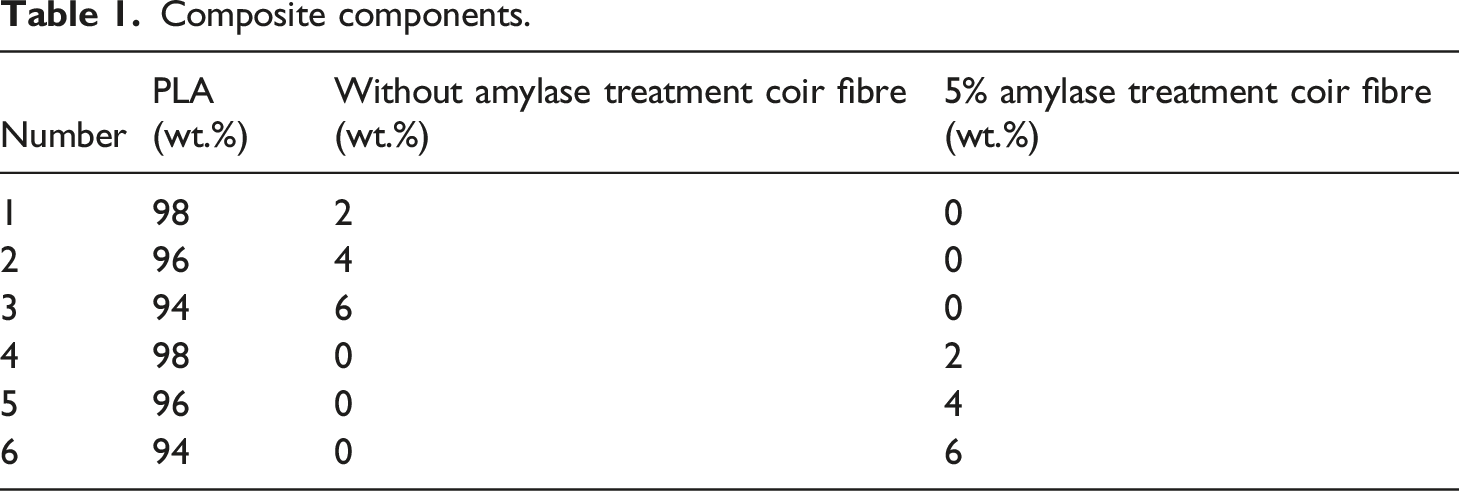
Composite components.
Mechanical properties
The SANS CMT6104 microcomputer controlled electronic universal testing machine (Ji 'nan Metz Testing Technology Co., Ltd.) was used. The loading rate was 2 mm/min, and the tensile strength of the composite was tested according to GB/T1040-2006. A TM2101-T5 simply supported beam impact testing machine (Guangdong Esiri Instrument Technology Co., Ltd.) was used to prepare samples in accordance with GB/T 1446-2002, and the impact strength of composite materials was tested with reference to GB/T1451-2005. The sample size was 100 mm × 10 mm × 10 mm (thickness).
Water absorption
The sample was placed into the 50.0°C oven to dry for at least 24 h. After cooling to room temperature, each sample was weighed. According to GB/T 21723-2008 Rice/wheat straw particleboard, the water absorption rate of the sample was determined. The sample was placed in a container filled with distilled water, and the water temperature was controlled at 23.0°C. After soaking for 24 h, the sample was removed, and all water on the surface of the sample was wiped away. Each sample was weighed again within 1 min after it was removed from the water. Water absorption (W) was calculated by equation (1),
Hygrometric performance test
Dried samples were placed in a box with constant temperature and relative humidity of 23 ± 0.5°C and 90%, respectively. Periodic weighing occurred at 1, 2, 3, 8, 12, 24, 48, 72, 96, 120, and 144 h. The moisture absorption rate Q (%) was calculated by equation (2),
The equilibrium moisture absorption rate 
Scanning electron microscope
The microstructure of the specimen section after tensile test was observed by Zeiss gemini360 scanning electron microscope. The sample was dried and sprayed with gold before observation, and the accelerating voltage was at 10 V.
Fourier transform infrared spectroscopy
The powder of coir shell fiber/PLA composite was scraped, and 0.002 g composite powder and 0.2 g potassium bromide were mixed on a tablet press. The resulting sheet was scanned by Nicoletis-1063001 FTIR spectrometer with wave number of 4000 to 400 cm−1, resolution of 4 cm−1, and scanning times of 16.
Results and discussion
Mechanical properties analysis of coir fiber/PLA composites
As shown in Figure 2(a), the tensile strength of the coir fiber composites after enzyme treatment were improved. When the coir fiber content was 2 g, the tensile strength of the composite was the lowest, 22.57 MPa, while the tensile strength of the coir fiber composite without enzyme treatment was 3.65 Mpa. The tensile strength of the coir fiber composite after amylase treatment was improved, up to five times. The coir fiber without enzyme treatment is an anisotropic material, which is distributed in the PLA matrix randomly, and the increase of its content improves the friction force between the coir fiber and the PLA matrix inside the composites.
13
Effect of coir fiber content and enzyme treatment on mechanical properties of coir fiber/PLA composites.Example views of (a) Tensile strength test results, (b) Bending strength test results, (c) Impact strength test results.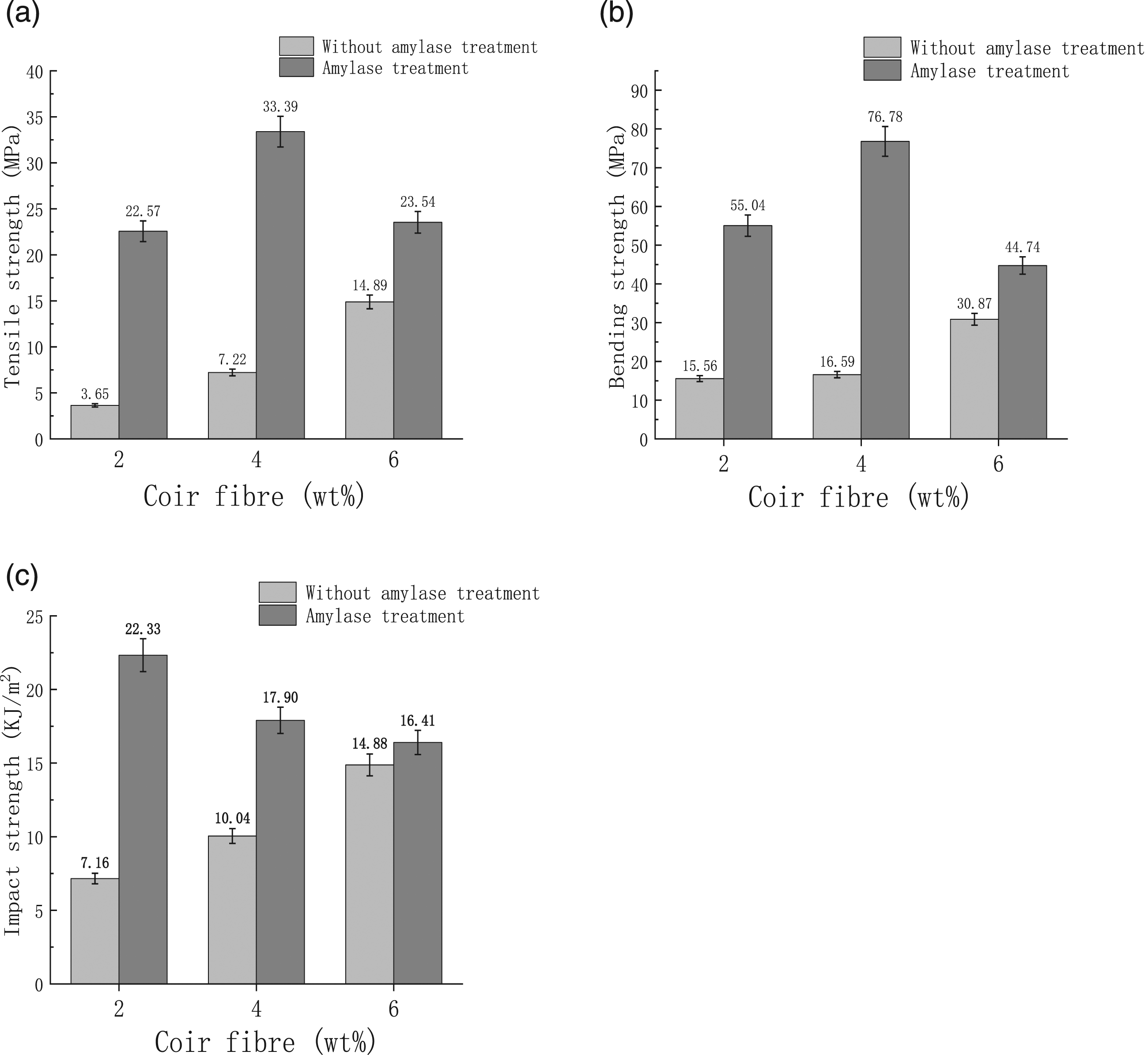
Figure 2(b) shows the bending strength of the coir composite material. The bending strength of the coir fiber/PLA composite treated with amylase was improved greatly. When the content of coir fiber was 4 g, the bending strength of the coir fiber treated with enzyme was 3.5 times higher than that of the composite without enzyme treatment, indicating that the coir fiber treated with amylase has a significant effect on the improvement of the bending strength of the composite. In the bending test, the lower part of the sample is under the tensile action and the upper part is under the compression action. Due to the poor toughness of PLA, the compression performance is poor. 14 However, coir fiber has strong toughness, 15 so with the increase of coir fiber content, the bending strength of coir fiber/PLA composite shows an increasing trend. Amylase treatment made the fiber rougher and enhanced the compatibility between the coir fiber and PLA. The energy of the fiber is transferred to the composite material, which increases the bending strength of the composite material.
Figure 2(c) shows the impact strength of coir fiber/PLA composite. As the content of coir fiber increased from 2 g to 6 g, the impact strength of the composite doubled from 7.16 kj/m2 to 14.88 kj/m2, indicating that the fiber content affects the impact strength of the composite. This is determined by the properties of coir fibre itself. 16 With increasing fiber content, more fibers need to be broken, and more energy is consumed. The impact strength of the composites was larger than that of the untreated, indicating that the fiber treated with enzyme can improve the impact strength of the composites. The improved mechanical properties of coir fiber after amylase treatment can be attributed to several factors. Firstly, the removal of impurities makes the fiber more homogeneous, which results in a more uniform distribution of stress throughout the fiber. Secondly, the increase in surface area provides more sites for bonding interactions, which can improve the adhesion between the fiber and Pla. Finally, the amylase treatment can also cause some degree of chemical modification of the fiber surface, which can enhance its mechanical properties.
In addition to the properties of coir fiber, the fiber treated with amylase increases the compatibility with the matrix, and the friction force between the two was also increased during impact, which makes a large number of fibers need more energy to be pulled out of the PLA matrix, 17 so the impact strength of the composites were improved compared with that without amylase treatment.
Lu et al. 18 prepared cellulose/polylactic acid composites by alkali soaking modification or silan-coupled cellulose and maleic anhydride grafted polylactic acid modification. The results showed that the strength and Young’s modulus of the composite obtained by alkali soaking were the highest, which increased by 6.34% and 6.115%, respectively, compared with the untreated sample. This is lower than the improvement of enzyme modification.
Hygroscopicity and water absorption
Figure 3(a) shows that the hygroscopic rate of the composite treated without enzyme is higher than that of the composite treated with amylase at 2 g coir fiber. The hygroscopic rate of composite material treated with enzyme is greater than that without enzyme treatment at 6 g coir fiber. After the coir fiber was treated by amylase, the starch in the fiber was decomposed by the enzyme, so that the impurities in the fiber were removed and the surface area was increased. This makes it easier for the fibers to absorb water. The hygroscopic properties of composite materials are divided into hygroscopic properties of matrix materials, fiber hygroscopic properties, and hygroscopic properties of the gap between fiber and matrix. Water molecules freely diffuse into the matrix or enter the composite materials through the hydrophilic functional group -OH on the surface.
19
Effect of coir fiber content and enzyme treatment on hygroscopicity and water absorption of Coir fiber/PLA composites.Example views of (a) Hygroscopicity test results, (b) Water absorption test results.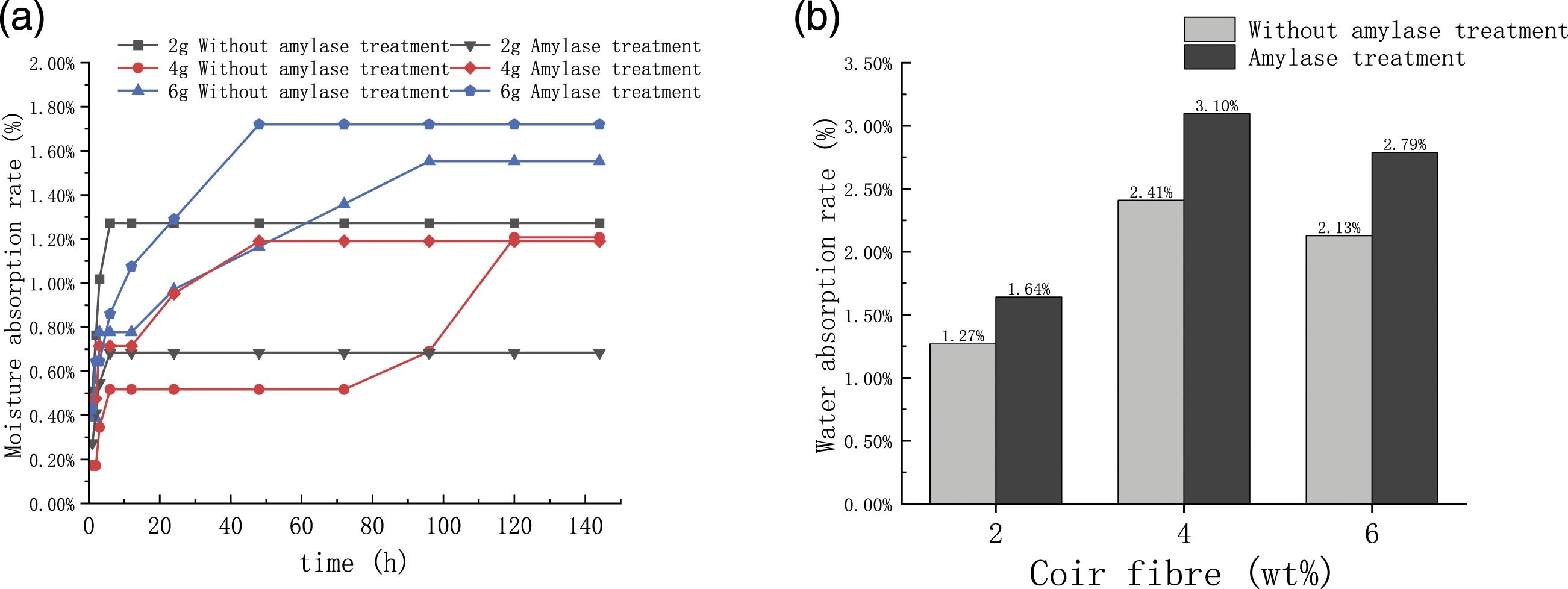
Figure 3(b) shows the water absorption comparison of the composite. According to the data, the water absorption properties of 2 g, 4 g and 6 g coir fiber composites treated with amylase were improved by 29.13%, 28.63%, and 30.98%, respectively. The reasons may be that coir fiber belongs to natural plant fiber. After being treated with amylase, the surface of the plant fiber is rougher and has higher porosity, which makes it easier for water molecules to enter the interior of the fiber. There is also a gap between coir fiber and polylactic acid matrix, which is easy for water molecules to enter. The fiber treated with amylase increased the number of hydrophilic functional group -OH in the composite, which made it easier to combine with water molecules and improved water absorption.20,21
In conclusion, the introduction of amylase enhances the water absorption and moisture absorption properties of the composites. As we know, increased water absorption makes composites more susceptible to environmental influences. 22 However, the increase measured in this paper is small and has little effect on the overall properties of the composites.
FT-IR analysis
Figure 4 shows the infrared spectrum, which is mainly used to test the information of some functional groups. The FTIR spectrum of 6 g coir fiber/PLA composite material changed after amylase treatment. The peaks of 3500 to 3000 cm−1 are the characteristic peaks of hydroxyl (-OH), andthe intramolecular -OH are mainly derived from cellulose, hemicellulose, polysaccharide and monosaccharide.
23
Compared with those without amylase treatment, the stretching vibration band of the amylase treated composites is enhanced here, indicating that amylase hydrolyzed polysaccharide generates more -OH. The absorption peak of 2800 to 3000 cm−1 represents the C-H stretching vibration peak of -CH3 and -CH2 groups in cellulose. The absorption peak of the composite treated with amylase is enhanced, indicating the presence of hydrocarbon-based carbon chains on the surface of the composite. At 1756 cm−1 is the stretching vibration peak of -C=O in acetyl or carboxylic lipid compounds in hemicelluloses224,25; The stretching vibration of C-O-ether bond in cellulose was observed at 1086 cm−1. The absorption peak of the composites treated with amylase was enhanced, indicating that more cellulose and hemicelluloses were synthesized from the products of amylase hydrolysis. FTIR of coir fiber/PLA composites.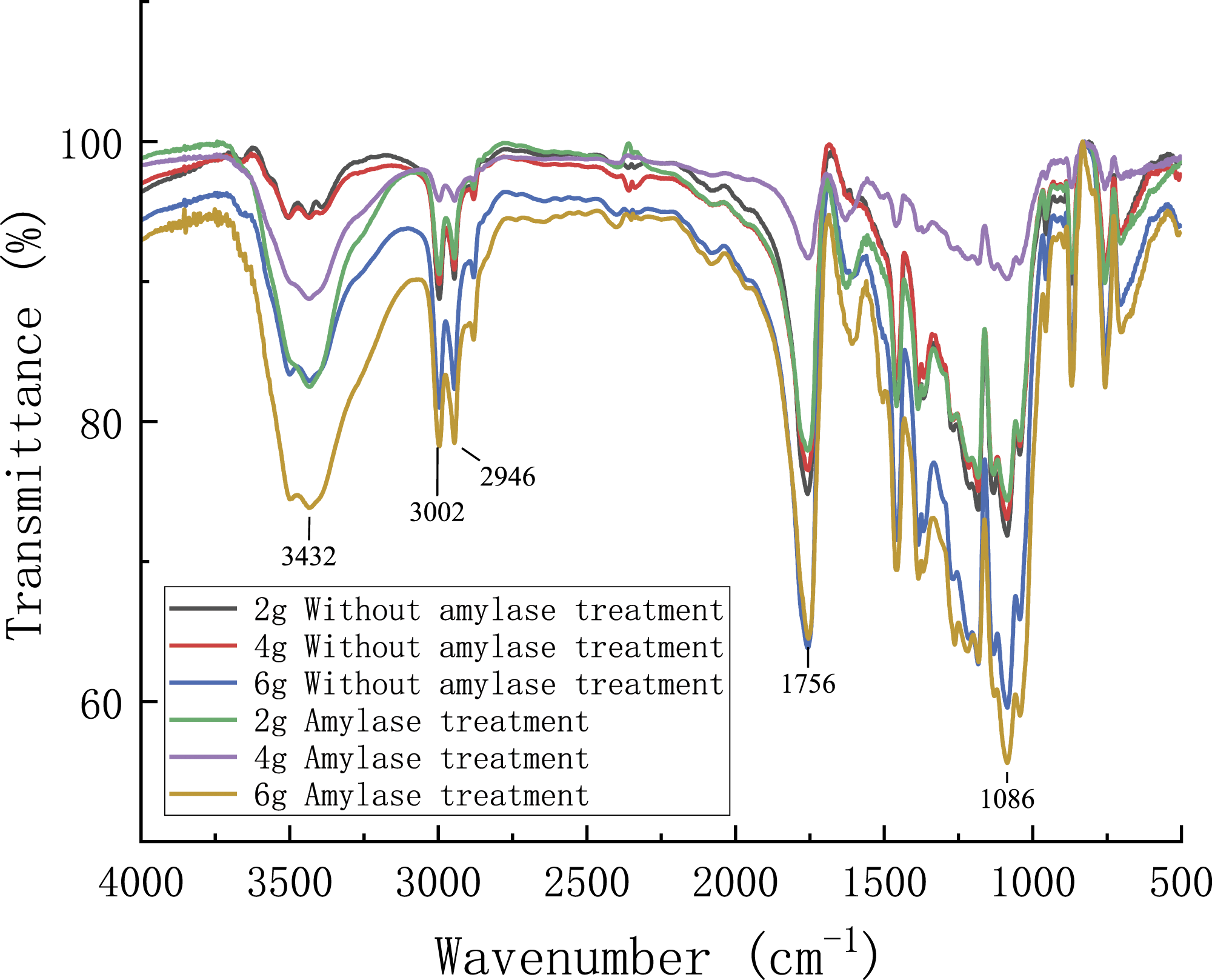
SEM analysis
Figure 5 shows the sections of coir fiber/PLA composites. There is a large gap between the coir fiber and the matrix without amylase treatment, and the fiber does not adhere to the polylactic acid matrix, and the fiber is easy to pull out from the composite material under stress. However, the gap around the coir fiber treated with amylase is smaller, coir fiber is adhered to the surface to a certain extent, fiber is more closely combined with the matrix, and the fiber can transmit the force to the whole composite material.
26
In addition, SEM images confirmed that the surface roughness of the amylase treated coir fiber was higher, with many bumps and pits, indicating that the compatibility between the amylase treated fiber and the matrix had been greatly improved, and the interfacial cohesiousness was better. Microstructure of coir fiber/PLA composites.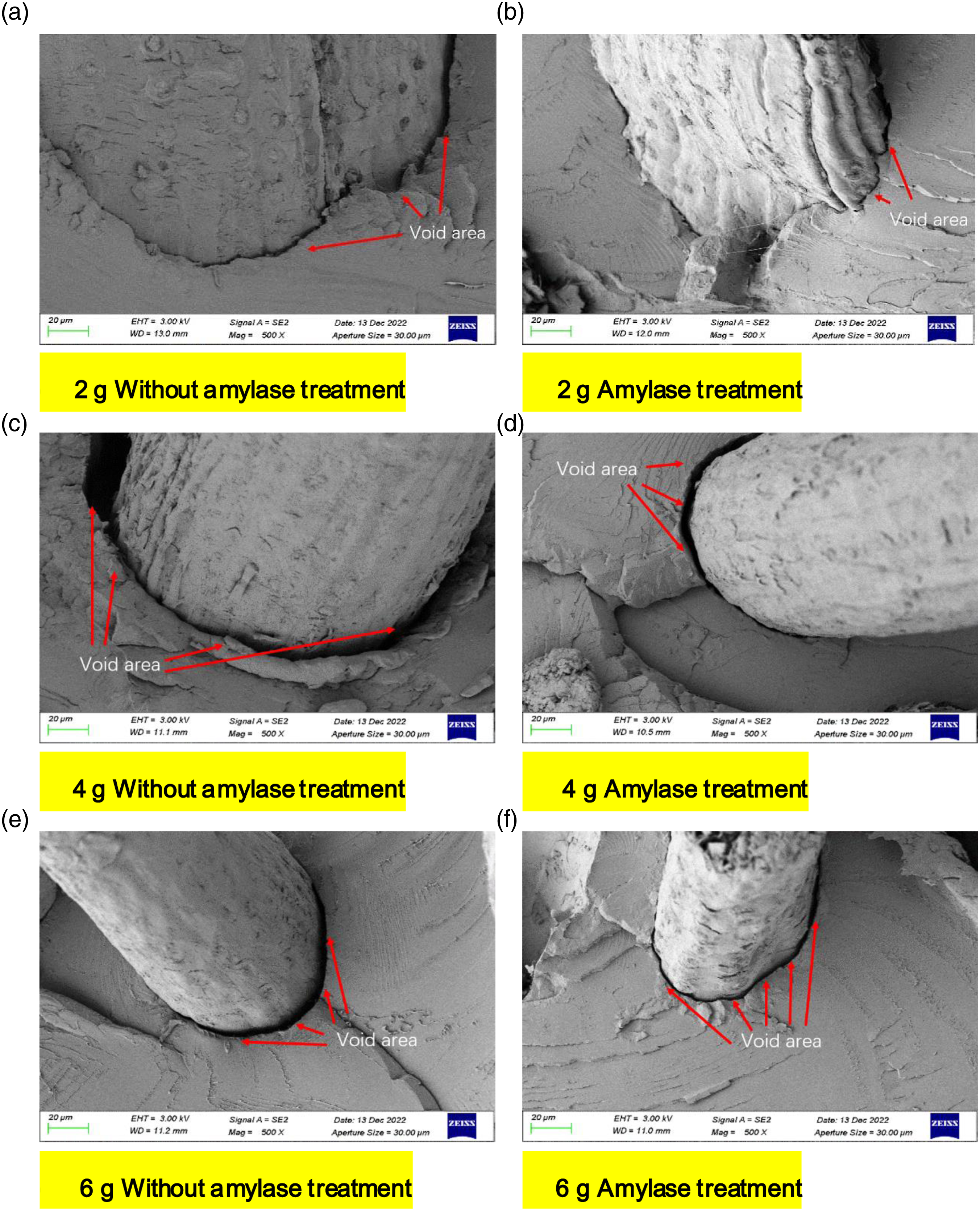
Ye et al. 27 treated sisal fiber modified with 0.5% NaOH alkali solution to enhance PLA. Alkali treatment could remove impurities such as hemicellullose and pectin on the fiber surface, but the improvement degree of sisal fiber interface was limited, so the interface strength of PLA matrix and sisal fiber was still poor.
Conclusions
The maximum tensile strength, bending strength and impact strength of the coir fiber/PLA composite treated with amylase increased by 5 times, 3.6 times and 2 times, respectively, compared with the composite without the addition of amylase. The tensile strength and impact strength of 2 g coir fiber composites increased significantly, from 3.65 MPa to 22.57 MPa, and impact strength from 7.16 kj/m2 to 22.33 kj/m2. The bending strength of 4 g coir fiber composite treated with amylase was 76.78 MPa.
FT-IR analysis showed that the coir fiber treated with amylase contained more hydroxyl (-OH), and the amylase hydrolyzed the materials on the fiber surface, making the surface of the plant fiber rough and easier to absorb water. Therefore, the water absorption and moisture absorption properties of the coir/PLA composite treated with amylase were enhanced, and the time for the composite to reach hygroscopic equilibrium was also significantly accelerated. The water absorption properties of 2 g, 4 g and 6 g coir fiber composites treated with amylase increased by 29.13%, 28.63% and 30.98%, respectively. This enhances the influence of ambient humidity on the composite.
The amylase treated coir/PLA composite has good tensile section microstructure, coir fiber binds more tightly to PLA matrix, which improves the interface compatibility between coir fiber and PLA matrix. Coir fiber is not easy to pull out from PLA matrix under stress, which improves the mechanical properties of the composite.
Footnotes
Declaration of conflicting interests
The author(s) declared no potential conflicts of interest with respect to the research, authorship, and/or publication of this article.
Funding
The author(s) disclosed receipt of the following financial support for the research, authorship, and/or publication of this article: This work was financially supported by National Scientific Research Program Cultivation Fund of Chengxian College of Southeast University (Grant No. 2022NCF003), and the support of Research and Development Fund for Young Teachers of Chengxian College of Southeast University (Grant No.2021z0022 and Grant No. z0023).
