




Abstract
Polyimide belongs to the class of high performance polymers containing imide functionalities in the backbone. Polyimide has wide ranging properties of optical transparency, heat stability, mechanical strength, dimensional stability, thermal conductivity, dielectric properties, etc. Fullerene is a zero dimensional hollow symmetrical nanocarbon, frequently employed as nanofiller in the polymers. Fullerene has been reinforced in the polyimide films to further augment the exclusive features and performance. This state-of-the-art review basically emphases the fundamentals, structure, properties, and applications of polyimide films, especially the films reinforced with fullerene nanofiller. The polyimide/fullerene nanocomposite films have been prepared using facile routes such as solution casting, spin casting, in situ method, and other film forming methods. Fullerene nanofiller has been filled in numerous designed polyimides. Number of experimental and theoretical studies have been performed on the high performance polymer/fullerene nanocomposite films. The structural diversity of the polymer/fullerene nanocomposite films and inimitable characteristics have led to significant applications in the optoelectronic devices, photodetectors, and sensors.
Introduction
Polyimide is an important thermoplastic polymer having rigid structure due to the presence of heterocyclic units in the backbone. 1 Polyimide is a high moelcular weight polymer, which can be easily transformed into transparent films using the facile solution route. 2 The exclusive thermal, mecanical, dielectric, thermal expansion coefficient. And other physical features of polyimide are ususally retained in the form of the transparent film. Polyimide films own wide spectrum of high-tech applications such as aerospace/automotive engineering electronics, microelectronics, photovoltaics, etc.3,4 Polyimide nanocomposites have been reported with superior properties, relative to the pristine polyimide. 5 Fullerene is a unique nanocarbon nanostructure having hollow cage like round symmetry.6,7 Applications of polymer/fullerene nanocomposites have been observed in wide ranging fields from electronics-to-biomedical. 8 Consequently, the fullerene nanofiller has been reinforced in the polyimide films to improve the exclusive features of the polymer matrix. 9 The polyimide/fullerene nanocomposite films actually combine the exclusive features of the polyimide with the fullerene nanocarbon. The polyimide/fullerene nanocomposite films have found sognificant technical applictaions in the fields of optoelectronics, photodetectors, and sensors. 10
This up-to-date review highlights some promising aspects of the polyimide films and the polyimide/fullerene nanocomposite films. To the best of knowledge, this is first innovative review on the polyimide/fullerene nanocomposite films, pointing towards the essential properties and uses to acilitate further innovations in this field. Inclusion of fullerene nanofiller in the various designs of polyimide films has brought about several novelties in the field of advanced high performance nanocomposite films. Besides, the polyimide/fullerene nanocomposite films can be further researched to overcome the fabrication and structure-property relationship challenges.
Polyimide films
Polyimide is high-performance thermoplastic engineering polymer, usually obtained through condensation process.11–13 High temperature stability is an important feature of polyimide, i.e. useful for aerospace, automotive, military, fuel cells, displays, microelectronics, and electronic devices. A very common commercial example of polyimide is Kapton i.e. formed through the condensation of pyromellitic dianhydride and 4,4′-oxydianiline. Polyimide films possess optical transparency, dielectric properties, thermal stability, mechanical properties, dimensional stability, etc.14–16 Polyimide has flexibly and can be molecularly or structurally modified.17,18 Polyimide has important film forming property and has high temperature stability >400°C. Polyimide films have mostly colorless and transparent texture.19–21 The polyimide film transmittance may exceed 90%.22–24 Ma et al.
25
produced polyimide film through the condensation of poly (pyromellitic dianhydride) and 4,4′-oxydianiline (Figure 1). First the poly (amic acid) was formed through the condensation of monomers, which was later converted to polyimide at high temperature. The polyimide film has tensile strength of up to 89.6 MPa and thermal conductivity of up to 0.019 W m−1 K−1. Thermal imidization of poly (amic acid) (PAA) to obtain polyimide (PI) film.
25
Reproduced with permission from Elsevier.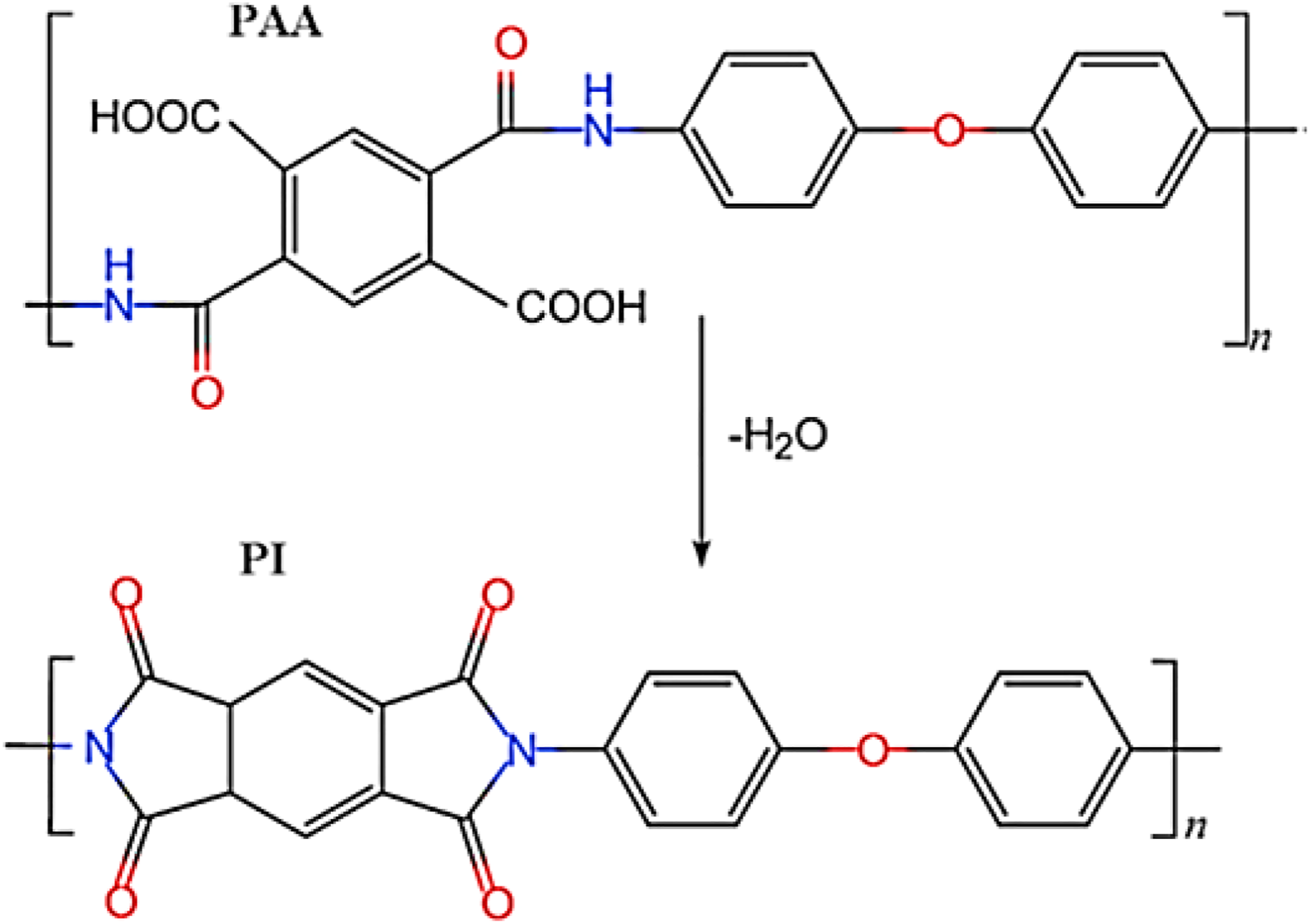
Li et al.
26
performed the solution polycondensation of diamines having sulphonyl group and aromatic/aliphatic dianhydrides. The transparent polyimide films were studied for the optical birefringences (Figure 2). The optical birefringences were observed in the range of 0.0020–0.0127. The films own high transparency of >86%. The polyimide films revealed high glass transition temperature of 200–339°C. The polyimide derived from 4,4′-(4,4′-isopropylidenediphenoxy)bis (phthalic anhydride) and bis [4-(3-aminophenoxy)phenyl] sulfone had low birefringence and fine optical transparency. Optical birefringences of polyimide (PI) film.
26
Reproduced with permission from Elsevier.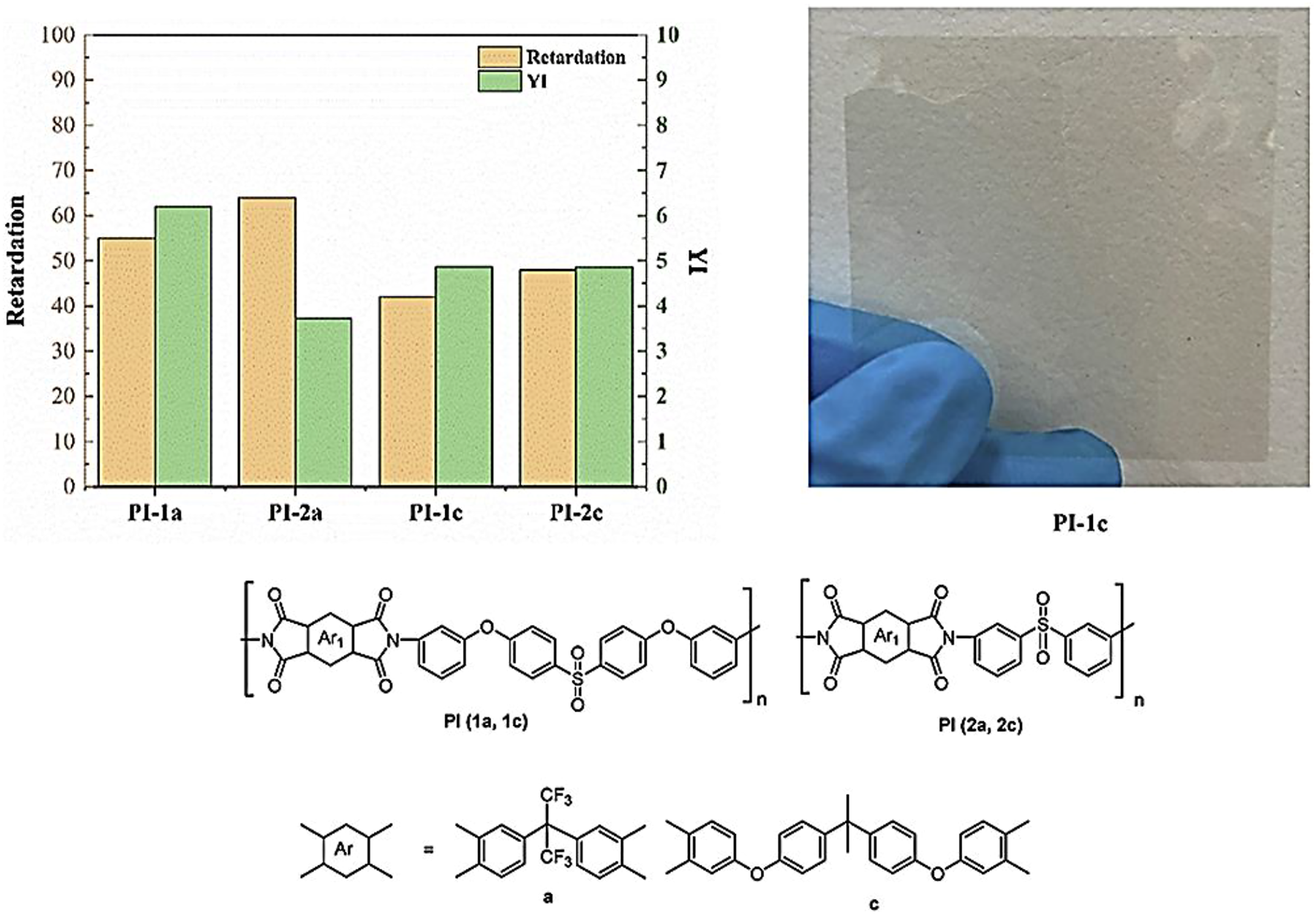
Applications of polyimide films have been observed in high temperature resistant applications.27–29 The polyimide films have found potential applications in flexible light emitting diodes, 30 photovoltaic cells, 31 thin film transistors, 32 printed circuit boards, 33 optoelectronics, 34 and wearable sensors. 35 However, challenges exist in the fabrication of high temperature polyimide films, having other superior physical features. 36 In this regard, polyimide structure has been modified using nanoparticles such as carbon nanotube, graphene, layered silicates, metal oxides, etc. 37
Fullerene
Fullerene is a symmetrical nanostructure made up of sp2 hybridized carbon atoms in the form of polygons. 38 Fullerene molecule was initially discovered in 1985. 39 The small fullerene molecules like C20 consist of twenty carbon atoms in hollow spherical caged structure. 40 Then, C25, C28, C30, and C28 fullerene clusters also exist.41,42 The most significantly studied form of fullerene is C60 with sixty carbon atoms.43,44 Fullerene molecules own inimitable architecture 45 and optical/electronic 46 and chemical 47 properties. Fullerene molecules have been prepared using various methods such as carbon source vaporization, combustion method, microwave synthesis, arc discharge, plasma method, and chemical synthesis approaches.48,49 Fullerene has found efficient solar cell, 50 nanosensor, 51 drug delivery, 52 tissue engineering, 53 and other applications.54,55 However, the solubility of fullerene molecules may limit applications in the formation of nanocomposites. 56
Polyimide/fullerene nanocomposite films
Polyimides own rigid backbone structure with high decomposition temperature of ≥400°C.57–59 The nanofiller nanoparticles have been incorporated in polyimide films to enhanced the surface and bulk properties of polyimide.
60
The nanofillers have been used to enhance the toughness and dimensional stability of the polyimide films, even at elevated temperatures.61–63 Nanoparticles have also been used to improve the thermal conductivity and liquid crystalline properties of the polyimide films, while maintain the structural integrity.
64
Moreove, enhancement in the dielectric and electrical properties of the films have been observed with nanofiller reinforcement.
65
Subsequently, the polyimide nanocomposite films own superior physical properties, relative to neat polyimide films.66–68 In this respect, nanocarbon nanofillers have been filled in the polyimide films.69–71 The polyimide/carbon nanotube nanocomposite films have been developed.
72
Inclusion of carbon nanotube overcome the dimensional instability of polyimide films and improved the mechanical properties. Similarly, the polyimide/graphene oxide nanocomposite films have been formed.
73
Due to hydrogen bonding interactions between the polyimide and graphene oxide nanosheet, tensile properties were found to improve. Like other nanocarbons, fullerene nanofiller has been reinforced in the polyimide films.74–76 Kamanina et al.
77
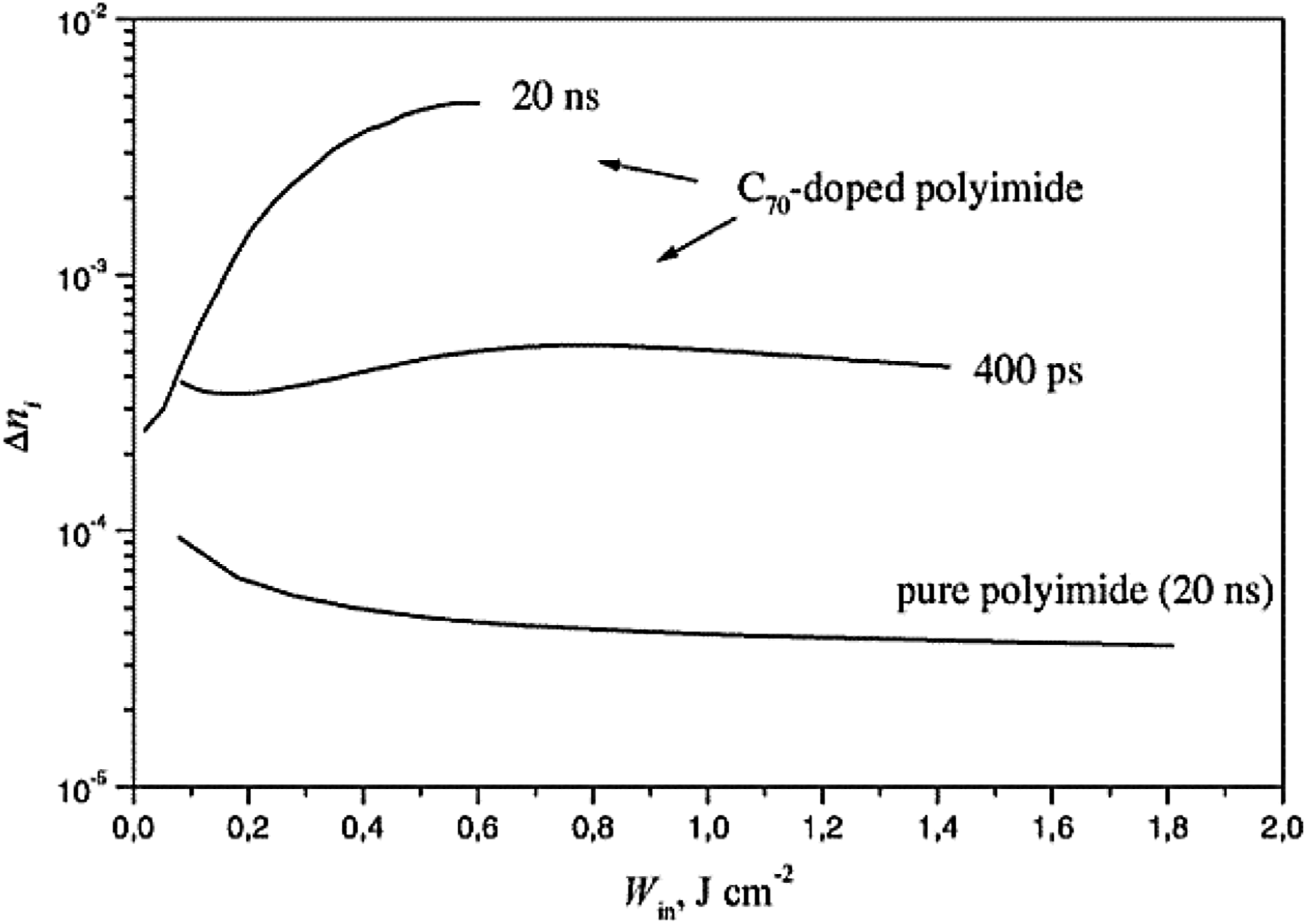
designed the pristine polyimide and polyimide/C70 nanocomposite films. The polyimide was obtained from the condensation of pyromellitic dianhydride with 4,4′-oxydianiline, and other diamines and films were formed by spin coating of polyimide solution in 1,1,2,2,-tetrachloroetane. The photoinduced change in the refractive index and current-voltage properties of the films were measured. Figure 3 depicts the current-voltage characteristics of neat polyimide and polyimide/fullerene films. The nanocomposite film possess higher current in visible light, relative to the pristine nanocomposite film, due to the inclusion of well dispersed fullerene nanoparticles. Figure 4 shows change in the refractive index of polyimide based films with incident energy density. The fullerene doped polyimide film revealed higher change in refractive index under power laser irradiation, relative to neat polyimide film.
78
The current-voltage characteristics of neat polyimide (1,3) and 0.2 wt.% C70 doped (2,4) polyimide films in dark (1,2) and light (3,4).
77
Reproduced with permission from Elsevier. Dependence of induced change in refractive index (n) on incident energy density (W
in
) for neat polyimide and polyimide with 0.2 wt.% C70 contents.
77
Reproduced with permission from Elsevier.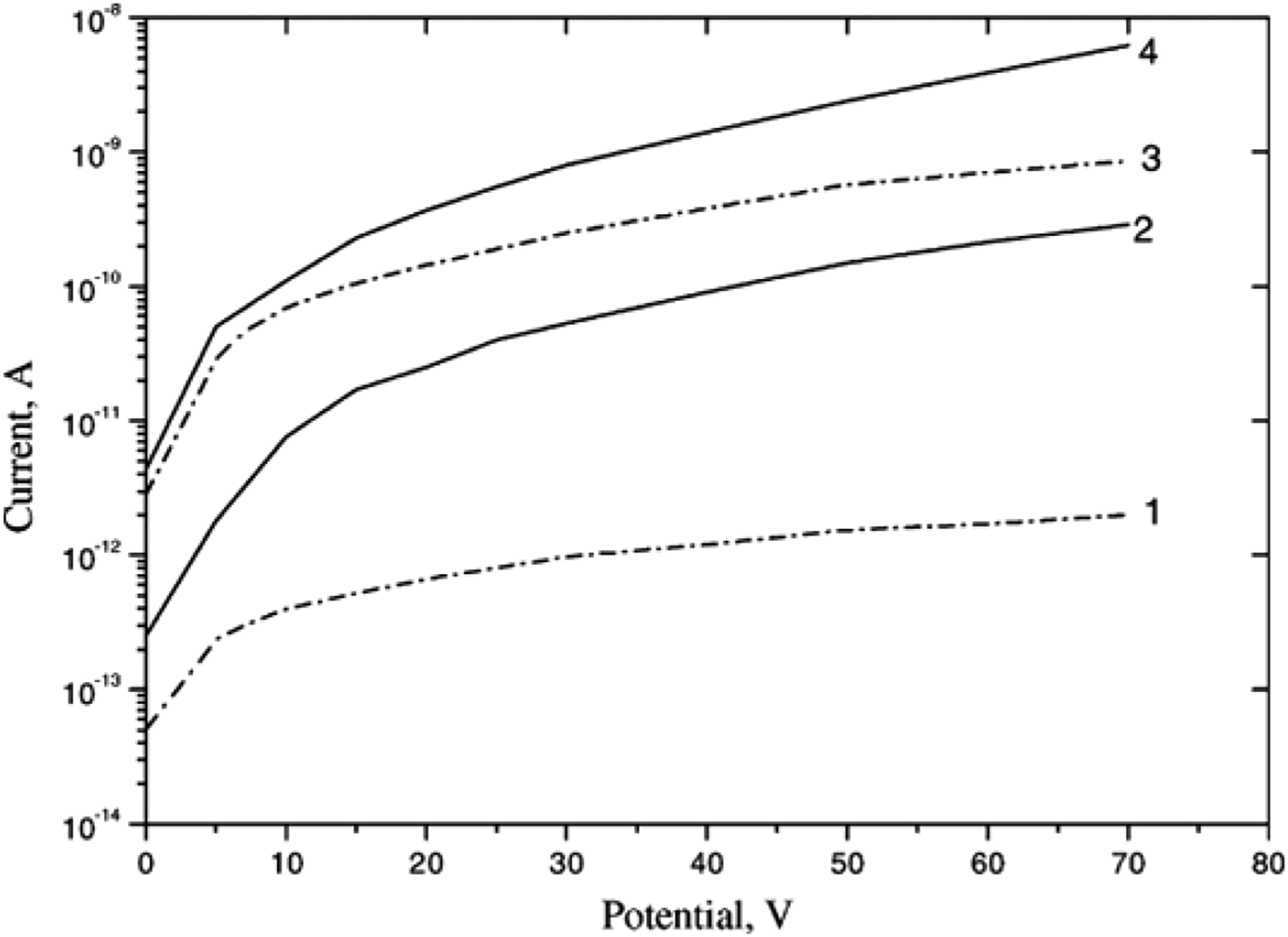
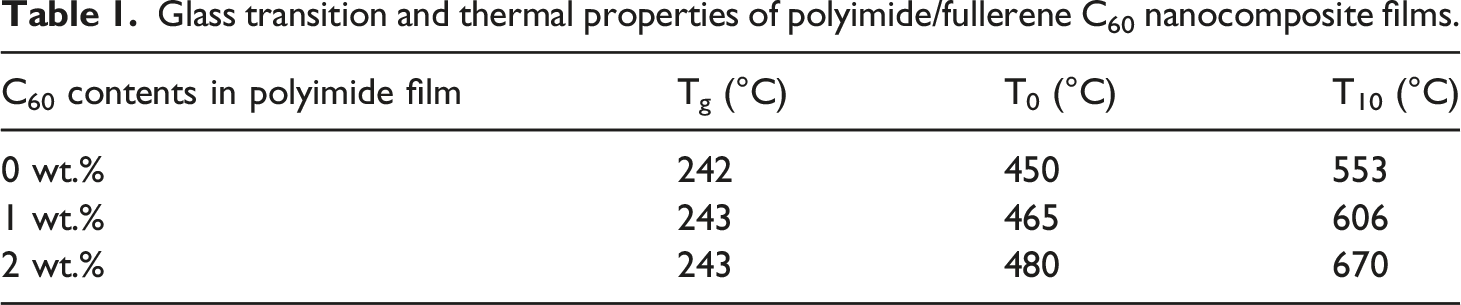
Glass transition and thermal properties of polyimide/fullerene C60 nanocomposite films.
Lee and co-workers
83
fabricated colorless polyimide films with fullerene using solution spin coating process. The nanocomposite film was fabricated for the organic detector. Figure 5 shows the steps involved in the formation of organic detector. The film was formed on the indium tin oxide substrate through hole transport layer spin coating. The organic detector had sensitivity of 46.8%. Chen et al.
84
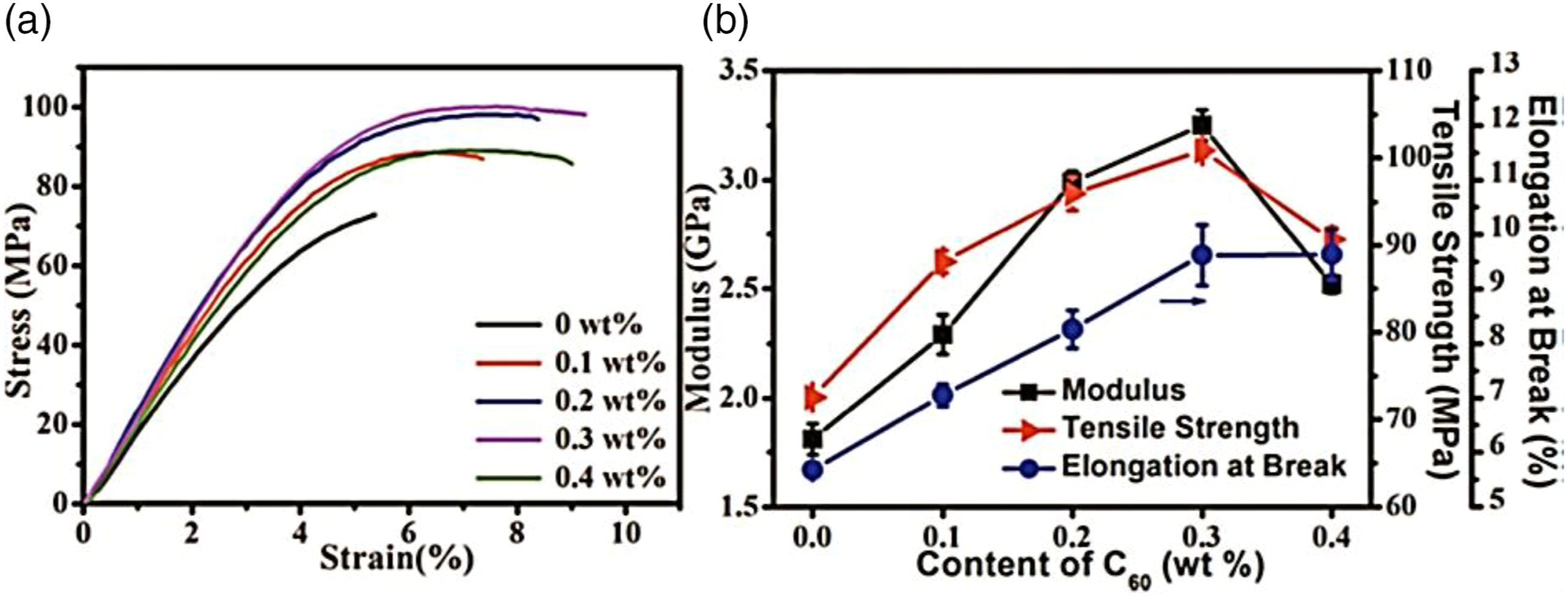
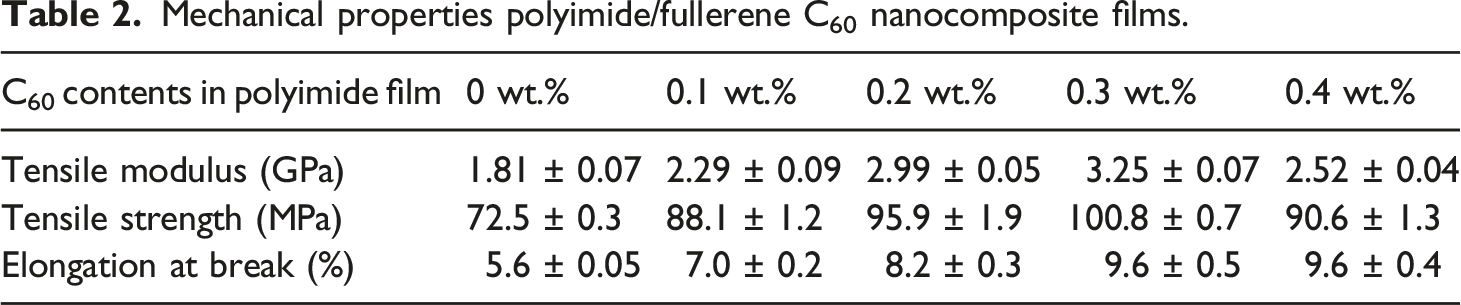
formed the polyimide films with furan functional fullerene C60. Diels-Alder reaction caused crosslinking between the polyimide chains and furan functional fullerene C60. Figure 6 shows the tensile properties of the pristine polymer and nanocomposite films. Moreover, the tensile modulus and elongation at break of the neat polymer and nanocomposite films have been studied. The tensile average modulus, tensile strength, and elongation at break are summarized in Table 2. Inclusion of 0.3 wt.% fullerene C60 caused 80.1% and 39.9% increase in the modulus and tensile strength of the nanocomposite, respectively, relative to neat polyimide. Consequently, the dispersion and interaction effect of fullerene nanoparticles with the polymer matrix have been experiential.
85
The unusual increase in the elongation at break properties of the nanocomposites were credited to the cross-linking of polymer chains due to the presence of C60. (a) Fabrication process of organic detector, and (b) images of fabricated detector on glass and colorless polyimide (CPI) substrate.
83
HTL = hole transport layer. Reproduced with permission from MDPI. (a) Typical stress-strain curves of polyimide and polyimide nanocomposite; (b) Comparisons of modulus, tensile strength, and elongation at break for neat polymer and nanocomposites.
84
Reproduced with permission from Elsevier. Mechanical properties polyimide/fullerene C60 nanocomposite films.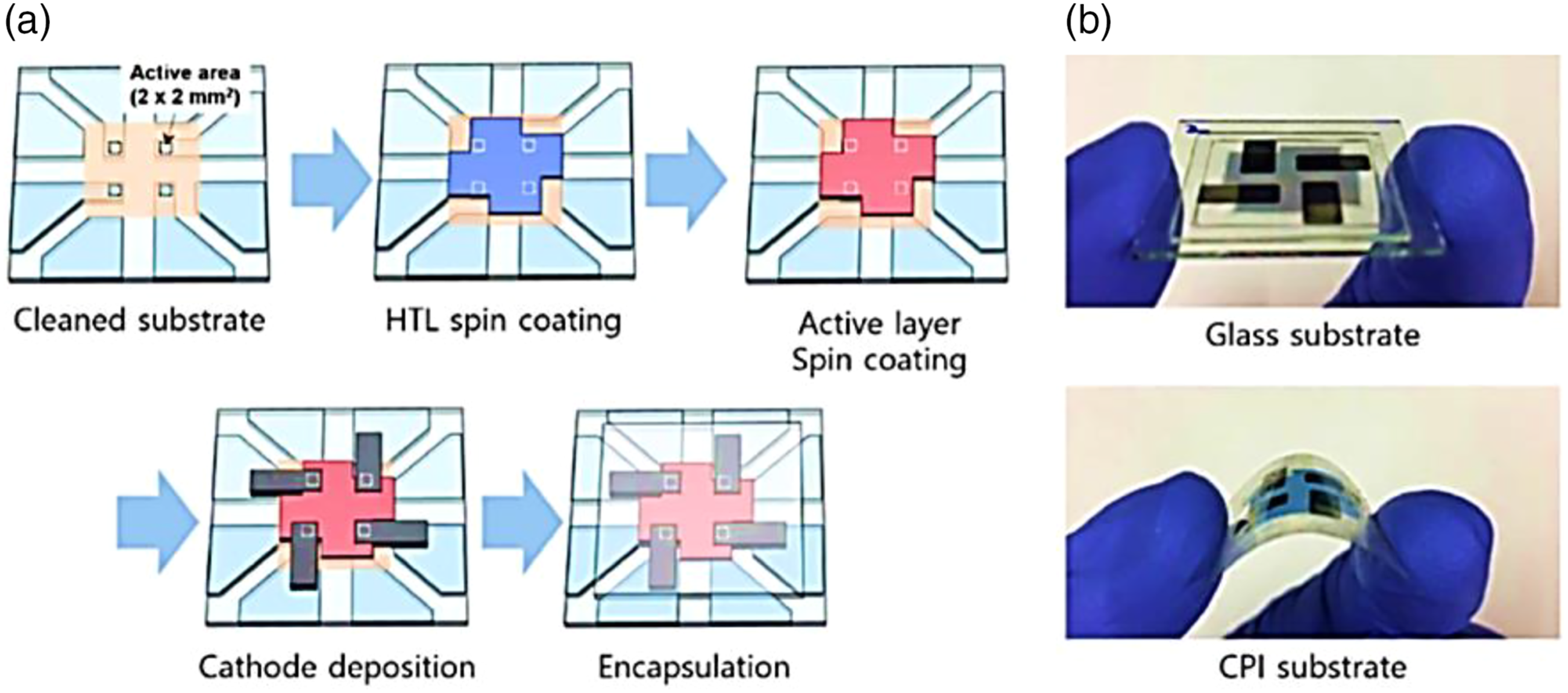
Volgin et al.
86
reinforced fullerene C60 and its derivative
6
-phenyl-C61-butyric acid methyl ester in the polyimide matrix and casted films using melt route. The polyimide was prepared through the condensation of the 1,3-bis(3′,4-dicarboxyphenoxy)benzene dianhydride and 4,4′-bis(4″-aminophenoxy) diphenyl. Figure 7 depicts the components of thin film of the polyimide/fullerene nanocomposite. The molecular dynamics simulations were used to study the microsecond time scale diffusion of fullerene in polyimide matrix. The molecular dynamics simulations revealed that the nanoparticle dynamics in polymer melts depend on the atomic level interactions. The nanocomposite film had high glass transition temperature of >400°C.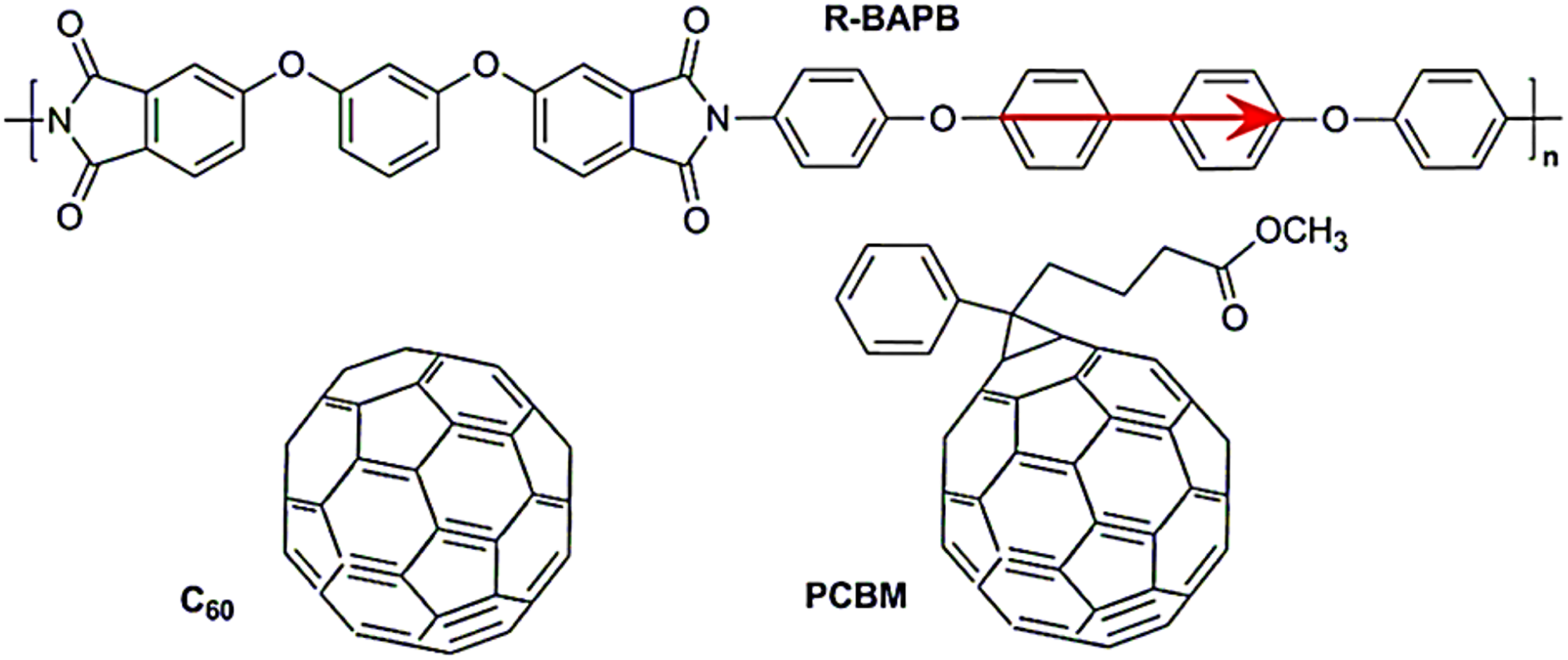
Zhang et al. 87 used Maxwell-Wagner modeling to study the interfacial carrier relaxation of the polyimide/fullerene film based double-layer device. The interfacial carrier relaxation was time and voltage dependent. Parajuli et al. 88 applied the polyimide/fullerene films to fabricate the triboelectric nanogenerators. The device revealed open circuit voltage and power density of ∼1.6 kV and ∼38 W m−2, respectively. Thus, an important use of polyimide/fullerene films have been observed in the double-layer devices and triboelectric devices. The controlled fullerene dispersal, morphology, and surface roughness have been found important to boost the device performance. 89
Technical significance of polyimide/fullerene nanocomposites
Technical applications of the polyimide/fullerene nanocomposite films have been observed in some fields. In optoelectronics, fullerene-doped materials have been used as optical limiting systems due to fine optical properties.90,91 With polymers, fullerene may form π-electron conjugation system for efficient photon and charge transfer desirable for the optoelectronic uses.
92
Kamanina et al.
93
prepared thin films based on the polyimide/fullerene nanostructures. The polyimide/fullerene thin films were used for the for nonlinear optics and solar cell device. Figure 8 illustrates a view of diffractive grating recorded under Raman-Nath diffraction condition for the polyimide/fullerene nanostructures. General view of diffractive gratings recorded under Raman-Nath diffraction condition at nanostructured organic material.
93
Reproduced with permission from Springer.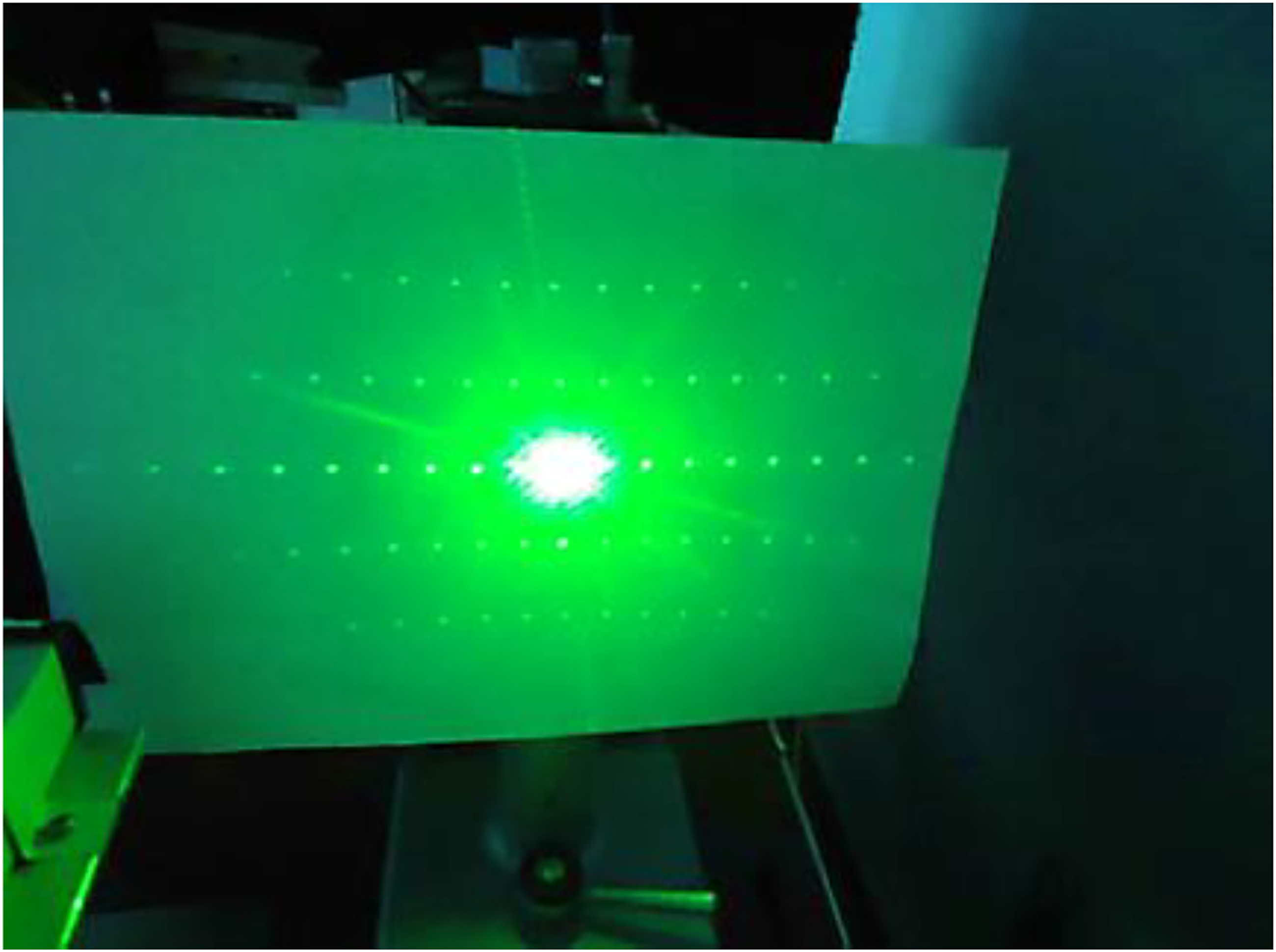
Photoetectors have been developed based on the polyimide thin films.94–96 Lee et al.
83
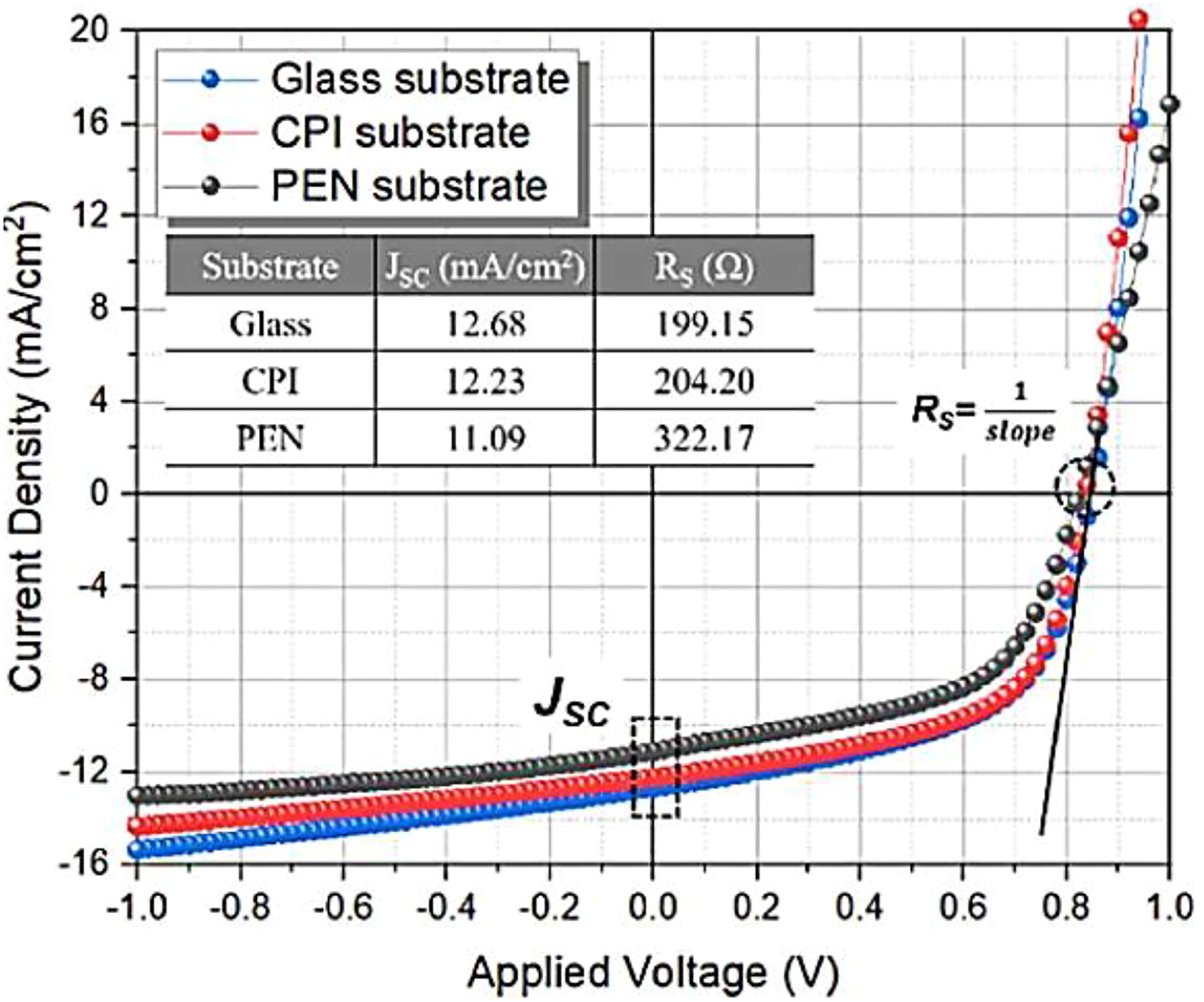
casted colorless polyimide nanocomposite based X-ray photodetector. Figure 9 demonstrates the set-up for assessing flexible polyimide based photodetector. The polyimide film is bent in nitrogen atmosphere, which is attached to the detector and the scintillator. The scintillator was used to convert the X-ray photons into visible-light photons. Figure 10 displays J-V curves of the photodetector. The short circuit density of the photodetector based on the colorless polyimide/fullerene system was found as 11.09 mA/cm2. Moreover, for the polyimide/fullerene system, the series resistance was found as 322.17 W. Experimental set-up for measuring photodetector parameters of scintillator decoupled detector and X-ray parameters.
83
Reproduced with permission from MDPI. J-V characteristics of photodetector.
83
CPI = colorless polyimide; PEN = polyethylene naphthalate. Reproduced with permission from MDPI.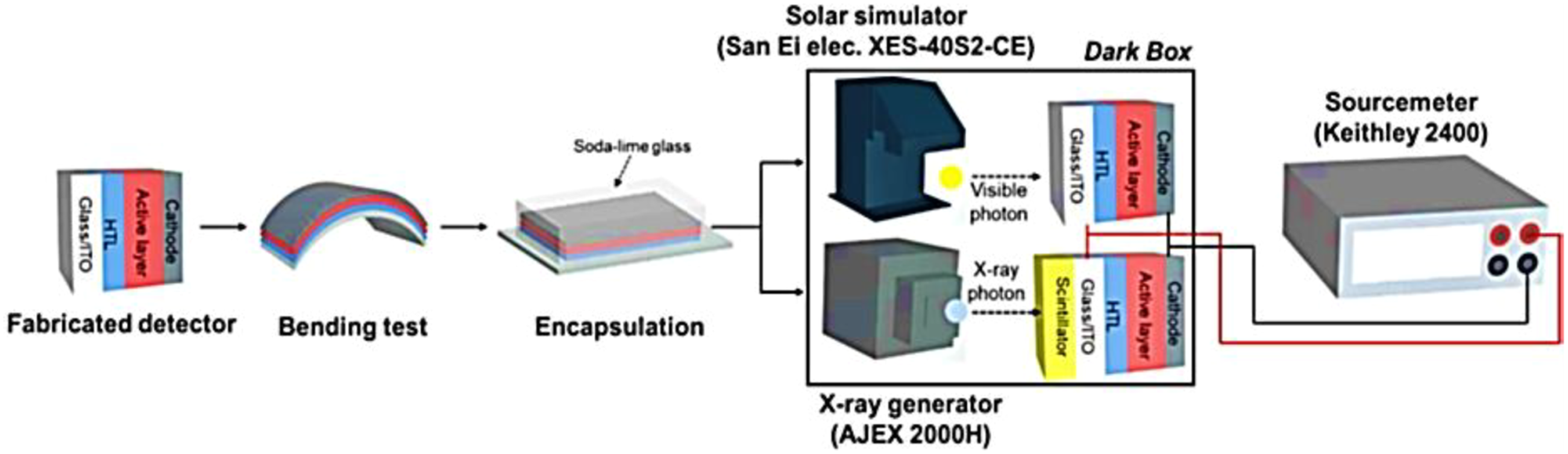
Polyimide and related nanocomposite films have been effectively applied in the chemical sensors.97–99 Salikhov et al. 100 designed the polyimide/fullerene nanocomposite films for chemical sensor. The films were prepared using spin coating method from the solution. The dielectric properties and current-voltage characteristics of the films have been studied. The polyimide/fullerene nanocomposite films have been investigated for the humidity sensing. Thus, the polyimide/fullerene nanocomposites have been found promising for the formation of thin polymer film chemical sensors.
Challenges and conclusion
The research on polymer/fullerene nanocomposite films pointed to superior optical, refractive index, current-voltage, thermal, mechanical, dielectric, and other physical properties via number of theoretical and experimental studies. Fullerene dispersion and interaction with polyimide have been found essential to develop the homogeneous transparent nanocomposite films. Moreover, the polyimide design and structural units have been considered important to develop the stable and consistent films. Choice of suitable film forming technique is also important to obtain high performance films. Mostly the solution blending and spin coating using solution or melt have been preferred. Nevertheless, sophisticated techniques such as lithography and 3D/4D printing need to be adopted to form the high quality nanocomposite films. Pristine polyimide films have vast applications in various fields, but polyimide/fullerene revealed applications in counted technical arenas such as optoelectronics, photodetectors, and sensors. Hence, more research is needed on the polyimide/fullerene nanocomposite films to unveil the uses in the microelectronics, solar cells, supercapacitors, batteries, and other device applications.
This review article presents progress in the field of polyimide and fullerene derived nanocomposite films. Inclusion of fullerene nanoparticles led to the development of high performance polyimide/fullerene nanocomposite films. Subsequently, the potential of these nanocomposite films has been deliberated regarding the technical applications related to optoelectronic devices and sensors. Development of functional polyimide/fullerene nanocomposite films for advanced applications still possess numerous challenges to overcome.
Footnotes
Declaration of conflicting interests
The author(s) declared no potential conflicts of interest with respect to the research, authorship, and/or publication of this article.
Funding
The author(s) received no financial support for the research, authorship, and/or publication of this article.
