




Abstract
Antibacterial materials are one of the important materials in our daily lives, especially in the medicine where antibacterial efficacy is indispensable. Moreover, the precise electronic instrument also requires highly electromagnetic interference shielding effectiveness (EMI SE) and as such to prevent mutual interference. Therefore, the acquisition of antibacterial property and EMI SE is essential. In this study, carbon nanotube (CNT) and triclosan (TCS) are used as conductive and antibacterial substances separately during the production of polypropylene (PP)-based antibacterial and conductive composite planks. The planks are tested for a series of physical property tests, EMI SE measurement, and antibacterial efficacy as related to the CNT content and the TCS content. The test results indicate regardless of whether it is CNT or TCS that is added, the planks exhibit good crystallinity. Furthermore, the presence of TCS contributes good antibacterial efficacy against staphylococcus aureus (S. Aureus), and the antibacterial efficacy effectuated by 0.1 wt% TCS also meets the related EU standard. In addition, the incorporation of both CNT and TCS adversely affects the EMI SE of the planks, but the resulting EMI SE remains to be between −15 dB and −20 dB.
Introduction
The medical equipment industry is a livelihood industry that synthesizes biomedicine, materials, machines, electronics, and multidisciplinary techniques. 1 Among biomedical materials, polymers are a prime material next to metal, ceramic, and natural materials. When it comes to blood bags and protective gloves that need greater flexibility and softness, a toughener is commonly added. 2 As for conduits and the minimally invasive device, a lubricant is required to prevent the adhesion of liquid or material during the medical surgery. For asthma inhaler, breathing tube, instrument housing, and medical clothing, conductive materials are added in order to acquire electrical conductivity and static electricity resistance.3–6 Besides, studies also indicated that many wound infections were attributed to the use of equipment.7–9 This study is conducted in order to prevent unnecessary infection and problems caused by instrument.
Polypropylene (PP) is featured by ease of processing, a low density (0.9 g/cm3), chemical stability, abundant sources, and a low raw material cost.10–12 It can be processed with injection, blow molding, and extrusion to form fibers and films that are used in automotive industry, household appliances, electronics, packaging, and building materials. However, PP has a disadvantage that is PP has a low impact strength and toughness, and there are many studies on the modification of PP.13–17 In this study, polyvinyl alcohol (PVA) is used as the toughener for it has wear-resistance, chemical stability, and biocompatibility.18–20 As far as mechanical properties are concerned, PVA exhibits greater tensile strength than common polymers, and can be made into highly toughening and tear resistant materials.21–25 The polymer processing technique allows polymer to remain the intrinsic advantages and improve the disadvantages. Besides, different functional materials and additives can be incorporated based on the demands by user ends, thereby provides better manufacturing process and greater design diversity.26,27 In this study, PP is modified and conductive substance (i.e. CNT) and antibacterial powders (TCS) are added in the extrusion process. Zare et al. examined the hydrolytic degradation and sensing behavior of PLA/PEO/CNTs nanocomposites in a neutral phosphate-buffered saline (PBS) solution. Before the degradation test, the composites were evaluated in terms of physical and chemical properties. The degradation test results indicated that the presence of CNTs expedited the degradation of PLA/PEO blends and the resulting electrical conductivity of CNTs nanocomposites increases when the degradation duration is increased. 28 Tang et al. combined triclosan (TCS) and a zwitterionic poly-(sulphobetaine methacrylate) (PSBMA) brush in order to obtain a high-efficiency antibacterial surface. The employment of surface-initiated atom transfer radical polymerization (SI-ATRP) successfully coated PSBMA over the polymer brush as well as grafted TCS onto the brush. The surface’s antibacterial performance was tested using Actinomyces naeslundii and Escherichia coli. The TCS-coupling PSBMA brush could resist bacterial adhesion and have high-efficiency antibacterial activity. 29
In this study, the melt-blending technique is used while the content of CNT and TCS is changed in order to produce polypropylene (PP)-based conductive antibacterial composite planks where CNT serves as conductive material and TCS provides antibacterial efficacy. The thermal performance, crystal properties, and functions including electrical and antibacterial functions of PP-based antibacterial and conductive composite planks. The planks are suitable for the applications to the medical equipment, construction materials for hospitals, and medical instrument.
Experimental
Materials
Polypropylene (PP, YUNGSOX 1080, Formosa Plastics Corporation, Taiwan) is a homopolymer and injection grade plastic with a melt flow index being 10 g/10 min (IOS1133). Poly (vinyl alcohol) (PVA, BF-17, Chang Chun Petrochemical, Taiwan) has a melt index of 1.67 g/3 min (160°C/10 kg measured) and is modified using a plasticizer (Phoenix Xiang Materials, Taiwan). Maleic anhydride grafted polypropylene (PP-g-MA, Fusabond P613, DuPont, US) has a melt flow index of 120 g/min (IOS1133) and a graft ratio of 0.5%. Carbon nanotubes (CNT, CF182 C, Advanced Nanopower, Taiwan) have a diameter of 5–20 μm. Triclosan (TCS, Great Chain Chemical, Taiwan) has a molecule weight 289.54. Staphylococcus aureus (S. aureus, ATCC25923) and Escherichia coil (E coil, ATCC25922) are both purchased from Food Industry Research and Development Institute, Taiwan.
Preparation of PP/PVA antibacterial and conductive composite planks
The preparation of PP/PVA antibacterial composite planks involves two steps. In the first step, PP/PVA blends are prepared with PP as the matrix, PVA as the toughener, and PP-g-MA as the compatibilizer. With a ratio of 67:30:3 wt%, PP, PVA, and PP-g-MA are mixed and dried at 70°C for 24 hours beforehand. The temperatures of melt-blending process are 190-200-210-190°C and the screw rate is 41 rpm (23 Hz), thereby forming PP/PVA blends. In the second step, functional fillers are added to the blends using a mixing machine that has processing temperatures being 200-200-200°C, the screw rate being 50 r.p.m, and the blending duration being 5 minutes. At the same time, the TCS concentration is 0.05 wt% or 0.1wt% while the CNT concentration is 0, 2.5, 5, 7.5, and 10wt%. Finally, the PP/PVA antibacterial and conductive composite planks are tested for crystallization property, thermal performance, electrical conductivity, and antibacterial efficacy.
Property evaluations of PP/PVA antibacterial and conductive composite planks
PP/PVA antibacterial and conductive composite planks are tested for different physical properties and functions as follows.
Results and discussion
Crystallinity of PP/PVA antibacterial and conductive composite planks
As for X-rays diffraction analyses, the physical features of materials can be characterized by the peak diffraction spectrum and spectrum strength as each material has a specified X-ray diffraction peak. PP is a semi-crystalline polymer with a Bragg characteristic peaks at 2θ being 14.19°, 17.05°, 18.65°, 21.34°, and 21.88° that corresponds to crystal plane being (110), (040), (130), (111), and (041).30,31
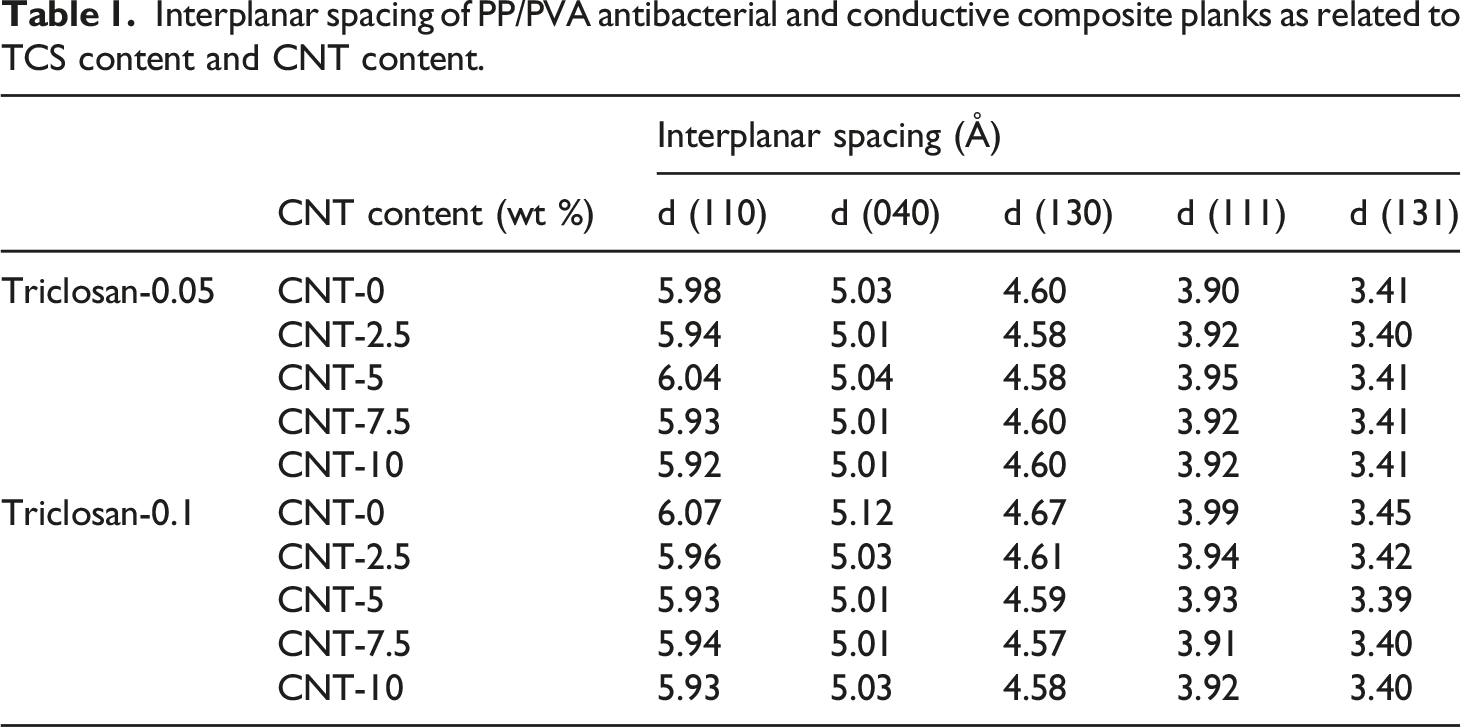
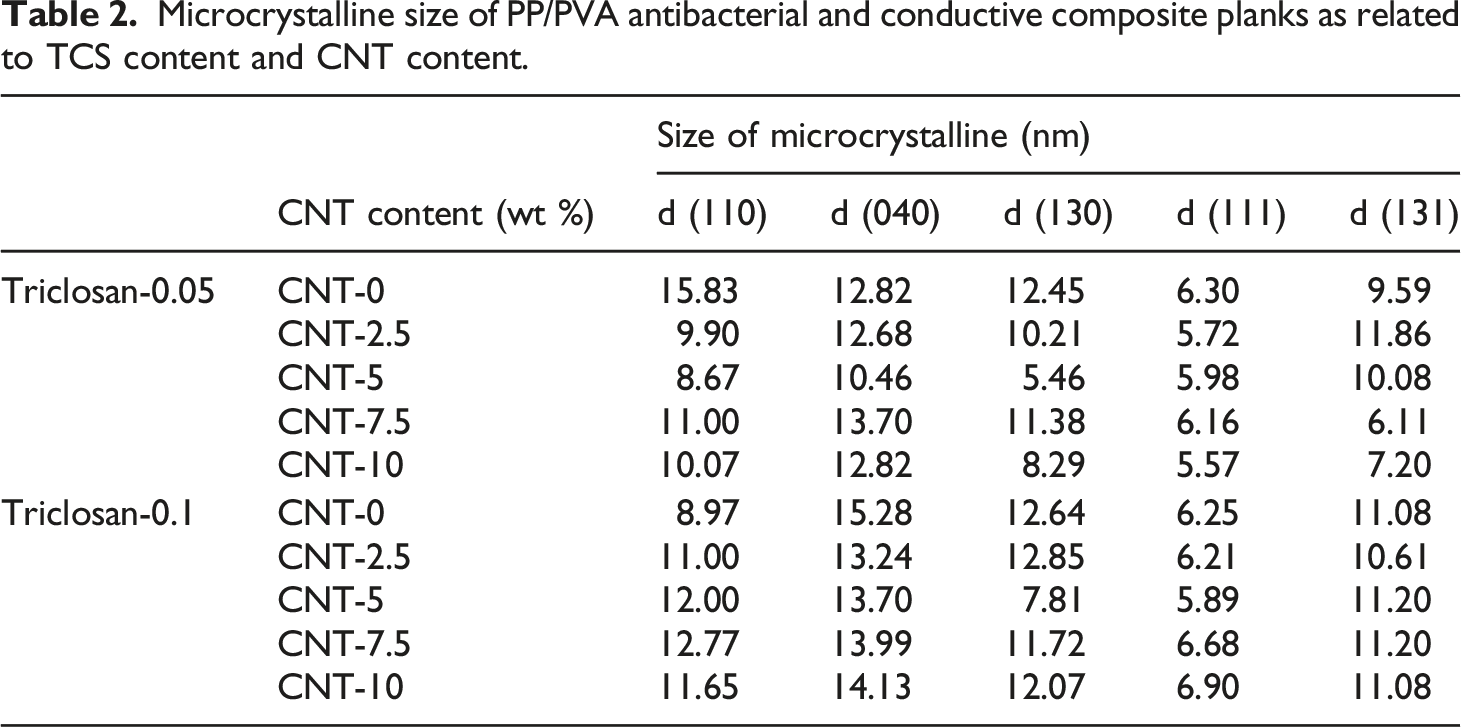
In this study, pure PP shows an α crystal form and PP’s Bragg characteristic peaks are presented when 2θ is 14.48°, 17.28°, and 18.92°. Figure 1 shows the crystallinity of PP/PVA antibacterial and conductive composite planks based on the TCS content and CNT content. No significant characteristic peak arises due to the presence of PVA and PP-g-MA, which indicates that the PP’s α crystal form does not change when a toughener, a compatilizer, or functional fillers are added. At 2θ = 14.1°, the diffraction peak strength of PP’s α crystal plane (110) is slightly decreased because the addition of CNT and TCS induces crystallization of PP phas.32,33 Moreover, the interplanar spacing (cf. Table 1) and the size of microcrystalline (cf. Table 2) can be computed by the diffraction curves using the Bragg and Scherrer equations. Based on Table 1, the interplanar spacing is not pertinent to the presence of CNT and TCS. Because CNT has a greater size than any crystal plane, it fails to enter PP crystals. In light of Table 2, the microcrystals of PP/PVA blends have a greater size as a result of more TCS content, so is the case for greater CNT content, which suggests that the CNT has a positive influence on the nucleation of PP crystallinity.
34
The XRD spectrum of PP/PVA antibacterial and conductive composite planks as related to the TCS content being (a) 0.05 wt% and (b) 0.1 wt% and CNT content. Interplanar spacing of PP/PVA antibacterial and conductive composite planks as related to TCS content and CNT content. Microcrystalline size of PP/PVA antibacterial and conductive composite planks as related to TCS content and CNT content.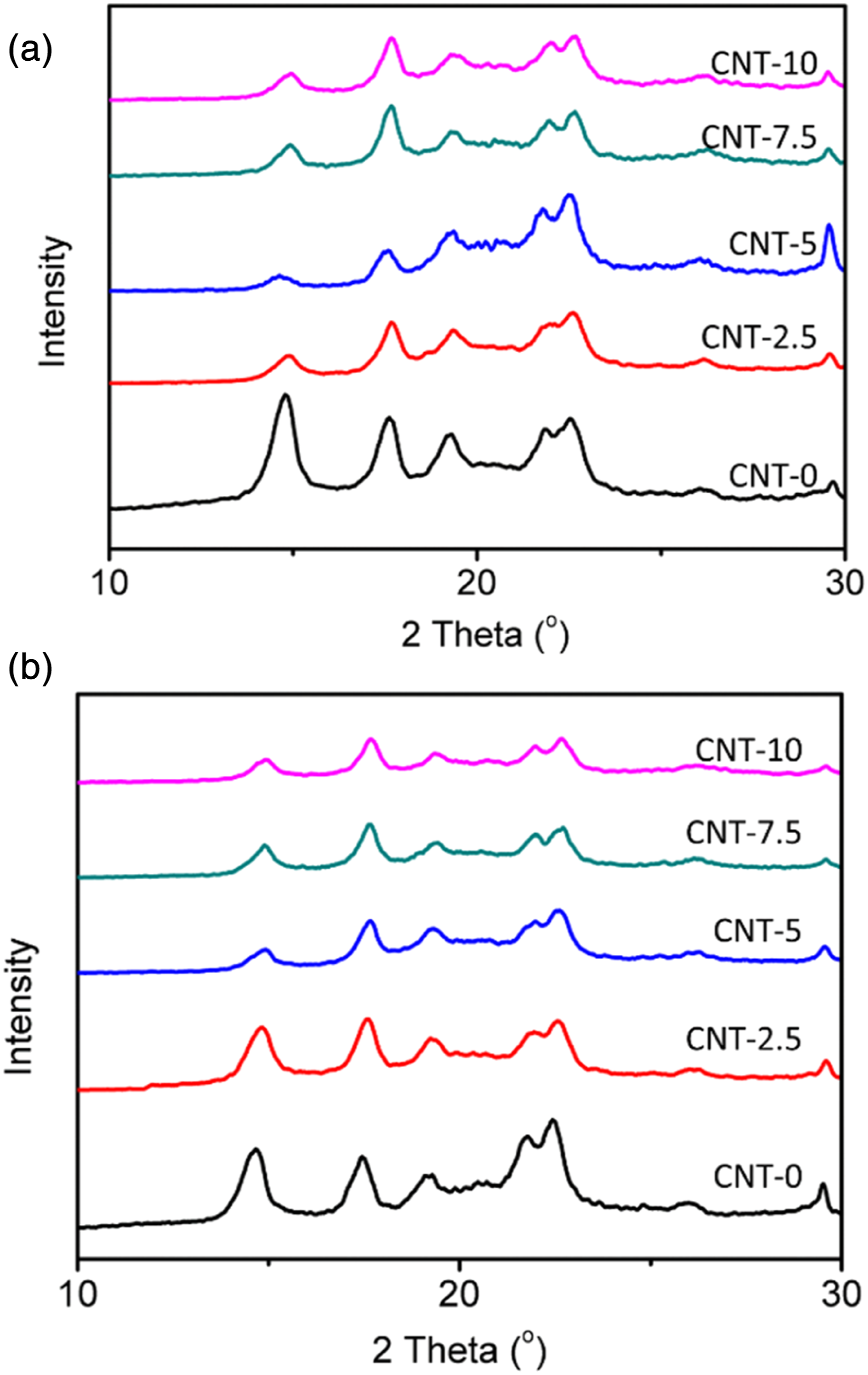
Thermal properties of PP/PVA antibacterial and conductive composite planks
Both of PP and PVA are semi-crystalline polymers. Polymers’ crystallinity affects the properties of polymers, such as mechanical properties, optical properties, and processing performance. Figure 2 shows the heating and cooling curves of PP/PVA antibacterial and conductive composite planks as related to TCS content and CNT content. Table 3 shows the crystallization temperature (Tc), melting point (Tm), crystallization enthalpy (ΔHc), melting enthalpy (ΔHm) of PP/PVA antibacterial and conductive composite planks as related to TCS content and CNT content. DSC chart of PP/PVA antibacterial and conductive composite planks: the heating curves for (a) 0.05 wt% and (c) 0.1 wt% of TCS, and cooling curves for (b) 0.05 wt% and (d) 0.1 wt% of TCS. Thermal properties of PP/PVA PP/PVA antibacterial and conductive composite planks as related to TCS content and CNT content.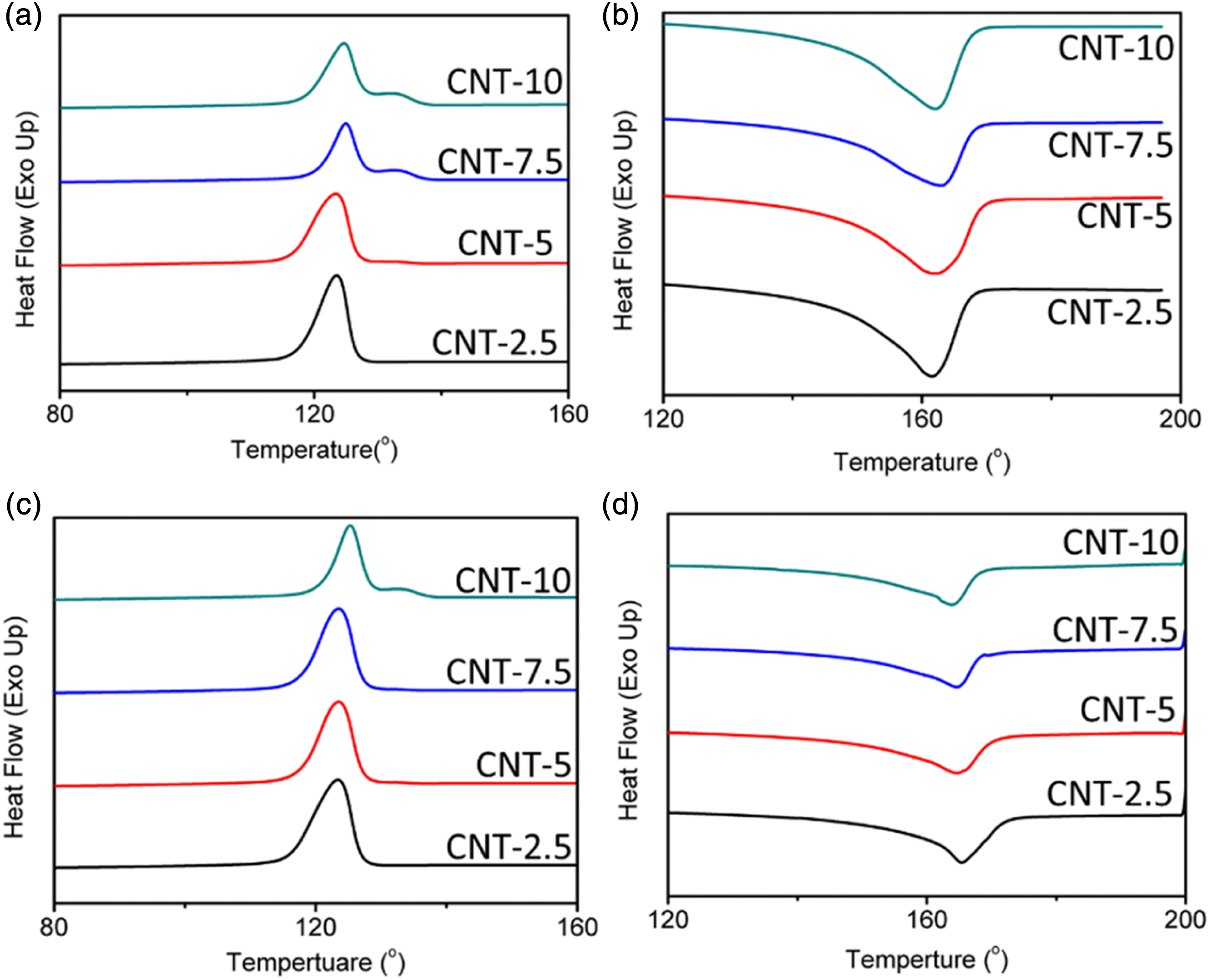
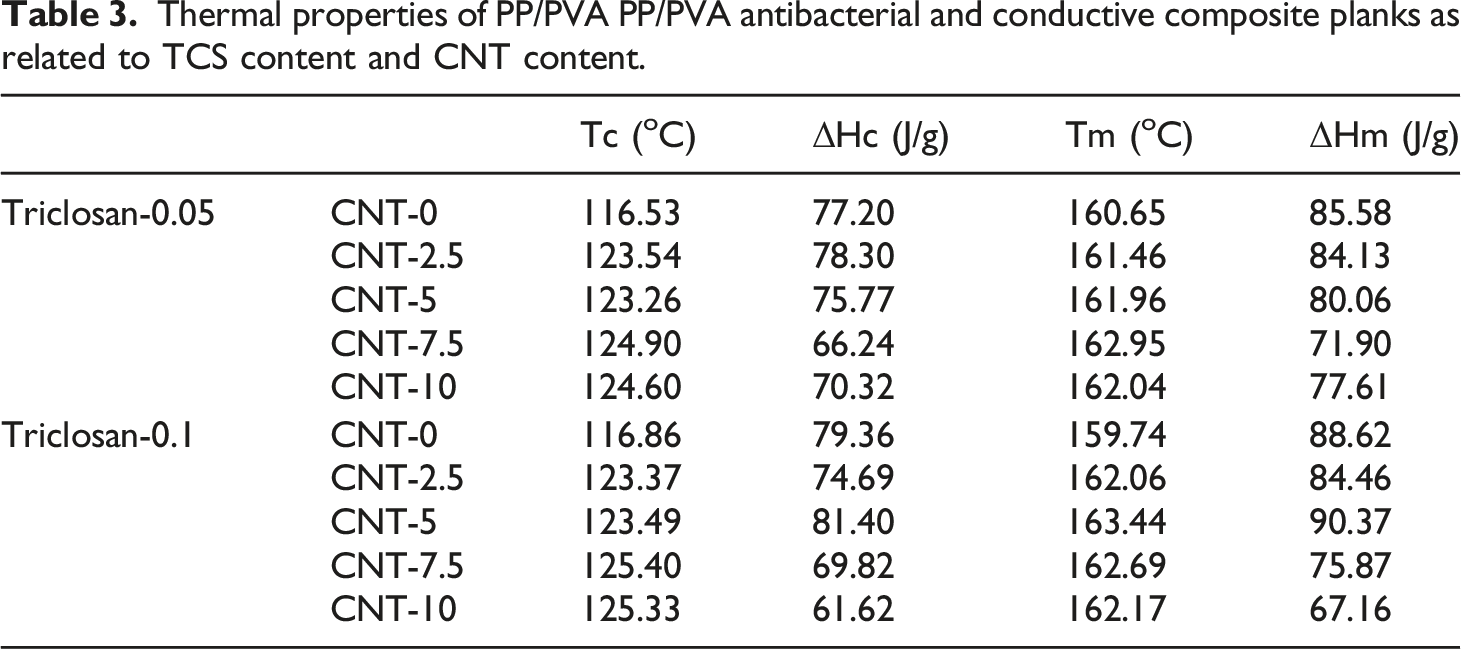
PP has greater crystallization enthalpy (105 J/g) than PVA (105 J/g), and the incorporation of PVA renders PP with a lower crystallization enthalpy. Hence, PVA can be used to modify PP. Based on Figure 2 and Table 3, when TCS and CNT are added concurrently, the resulting PP/PVA antibacterial and conductive composite planks have a 10° Chigher crystallization temperature than PP/PVA blends. However, the presence of TCS and CNT is not pertinent to the melting temperature. In short, TCS and CNT can serve as the nucleating agents so that their presence has a positive influence on the crystallinity of PP/PVA antibacterial and conductive composite planks. The presence of CNT has a negative influence on the melting enthalpy and crystallization enthalpy of PP/PVA antibacterial and conductive composite planks, which proves that functional fillers are not helpful to the incomplete and complete crystallinity. It is surmised that fillers only function as the nucleation agent, and they increase the number of crystals but diminish the crystal size. 35 As a result, the presence of functional fillers is not correlated with the crystallinity of PP/PVA antibacterial and conductive composite planks. 36
Electrical properties of PP/PVA antibacterial and conductive composite planks
Figure 3 shows the electrical properties of PP/PVA antibacterial and conductive composite planks, including surface resistivity in Figure 3(a), EMI SE for 0.05 wt% TCS in Figure 3(b), and EMI SE for 0.1 wt% TCS in Figure 3(c). The surface resistivity is decreased as a result of an increase in the CNT content. When then CNT content is lower than 5 wt%, CNT content is not sufficient to form an effective conductive network because the electrical resistivity does not fluctuate significantly. With a CNT content being 5 wt% to 7.5 wt%, the electrical resistivity starts descending, which is ascribed to the good electrical conductivity of CNT. A rise in the CNT content means equivalently there are more CNT that helps to build a conductive network, which in turn adversely affects the electrical resistivity.37–39 A CNT content exceeding 7.5 wt% provides the planks with a complete conductive network and a stable conductivity concurrently. Electrical properties of PP/PVA antibacterial and conductive composite planks as related to (a) the TCS content and the CNT content, (b) 0.05 wt% of TCS and (c) 0.1 wt% of TCS.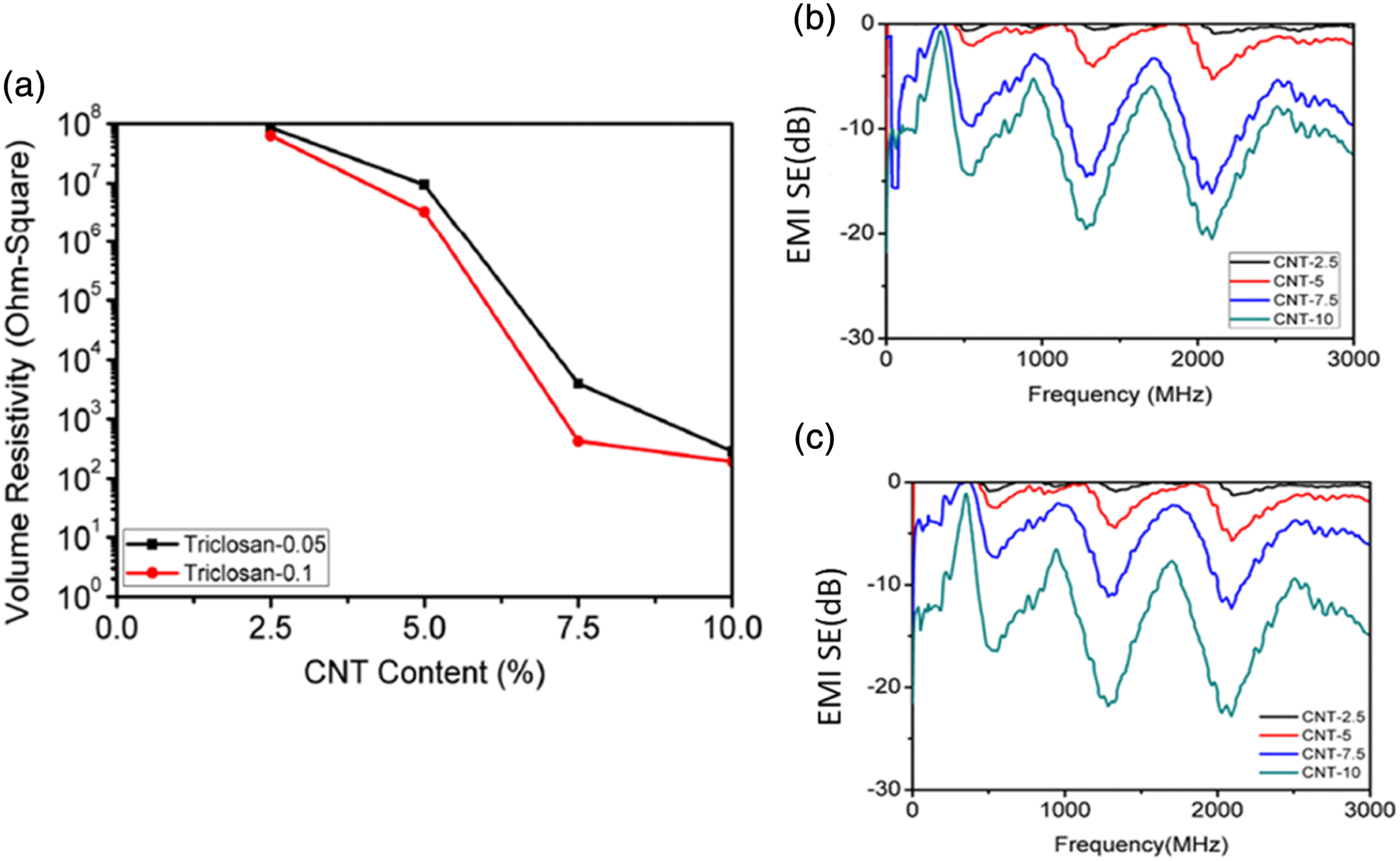
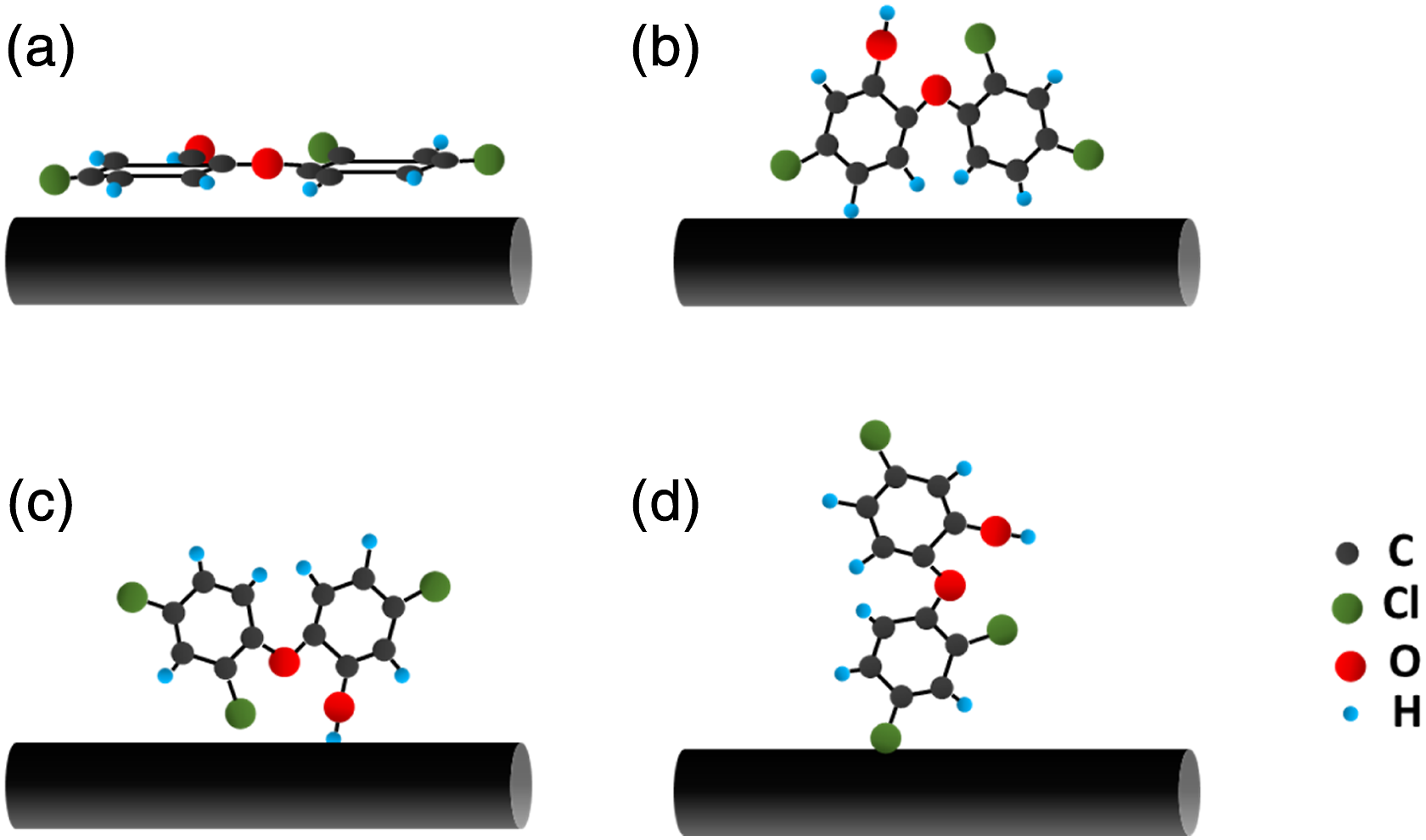
Besides, Figure 3(b) and (c) shows the EMI SE as related to the TCS and CNT contents. The EMI SE of the planks is proportional to the CNT content, especially a 10 wt% CNT content that results in the maximal EMI SE between −10 dB and −20 dB. The insulating PP/PVA antibacterial composite planks can acquire a good conductive network because of the presence of CNT. Comparing the two groups that are separately added with only CNT and both of CNT and TCS, the CNT/TCS-contained group exhibits 10 dB lower EMI SE than the CNT-contained group. For example, the EMI SE of 10 wt% CNT-contained group is between −25 dB and −30 dB. It is surmised that the CNT/TCS-contained group is composed of TCS that adsorbs CNT and thus induces the agglomeration of CNT (Figure 4),
40
which is detrimental to the EMI SE of PP/PVA antibacterial and conductive composite planks. Schematic diagrams of TCS (a) being adsorbed parallel to CNT, (b) being adsorbed to CNT via H atoms, (c) being adsorbed to CNT via O and CI atoms, and (d) being absorbed to CNT via CI atoms.
40
Antibacterial efficacy of PP/PVA antibacterial and conductive composite planks
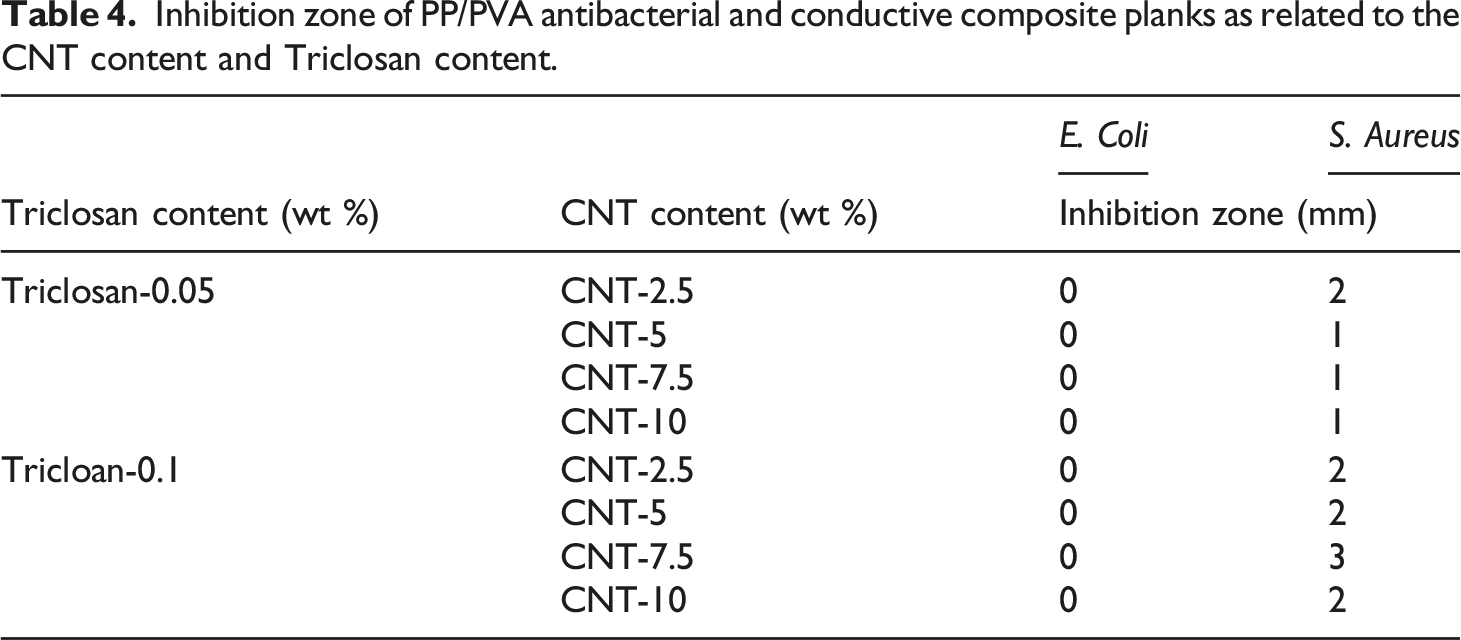
TCS serves as an antibacterial agent while S. Aureus is used as Gram-Positive bacteria and E. Coli is used as Gram-negative bacteria in this study. Figure 5 displays the qualitative antibacterial test results of PP/PVA antibacterial and conductive composite planks. Table 4 shows the inhibition zone of qualitative antibacterial test as related to TCS content and CNT content. The TCS-contained group outperforms the TCS/CNT-contained group in terms of the antibacterial efficacy. There are two possible factors. One factor is that the TCS/CNT-contained group has more complete and incomplete crystallization than the TCS-contained group, and then confines TCS in a compact crystal network without being released. Subsequently, composite planks composed of both TCS and CNT has lower antibacterial efficacy than composite planks composed of only TCS. The other factor is that CNT possesses excellent adsorption as per Figure 4, and retains TCS from being released, which in turn compromises the antibacterial of the composite planks. Moreover, Figure 5 and Table 4 show that a higher TCS content exhibit greater antibacterial efficacy, especially against S. Aureus. In other words, TCS shows better antibacterial efficacy against S. Aureus. TCS has the same antibacterial mechanism as silver ions. The surface with positive charges attract bacteria, then damage bacterial cell wall and refrain the synthesis of fatty acid, which interferes with the bacterial cell growth and function and eventually kills the bacteria. The difference between Gram-Positive bacteria and Gram-negative bacteria is the thickness of cell walls. TCS is able to penetrate the cell walls as well as prevent the synthesis of fatty acid in cytoplasm, demonstrated by the antibacterial efficacy or even sterilization.41–45 Qualitative antibacterial test of PP/PVA antibacterial and conductive composite planks using 0.05 wt% of TCS (a) E. Coli and (c) S. Aureus and 0.1 wt% of TCS (b) E. Coli and (d) S. Aureus. Inhibition zone of PP/PVA antibacterial and conductive composite planks as related to the CNT content and Triclosan content.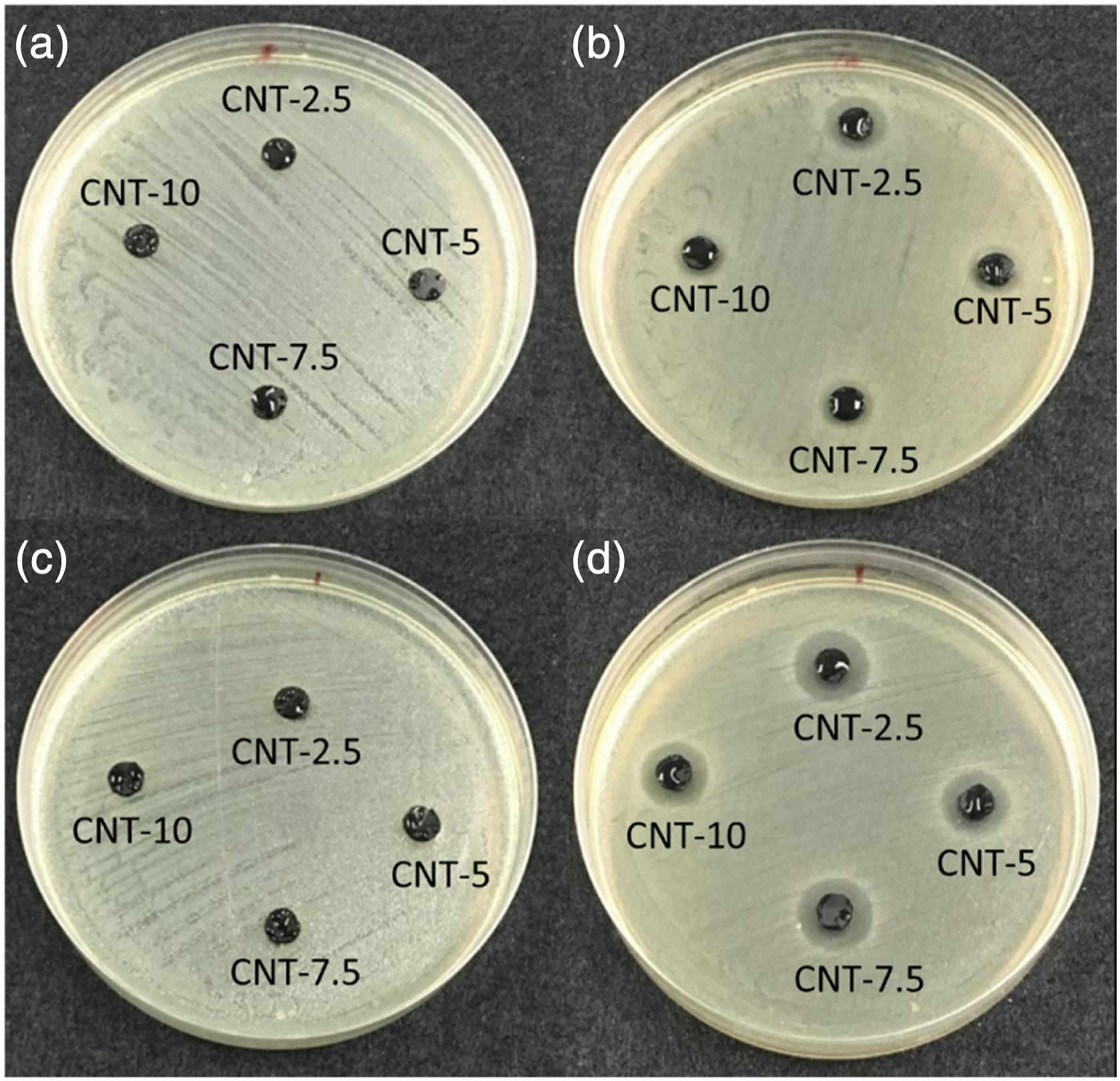
Conclusion
In this study, polymer melt-extrusion technique is employed to produce PP-based antibacterial and conductive composite planks successfully. Based on the thermal properties and crystallinity evaluations, the incorporation of CNT and TCS is not correlated with the crystal forms but facilitates the crystallinity, thereby enhances the mechanical properties. The electrical property tests show that when CNT and TCS are added concurrently, the EMI SE is compromised but remains to be between −10 dB and −15 dB. Finally, the antibacterial test results suggest that TCS-contained group exhibits the optimal antibacterial efficacy against S. Aureus and the applied dosage meets the EU standard.
Footnotes
Declaration of conflicting interests
The author(s) declared no potential conflicts of interest with respect to the research, authorship, and/or publication of this article.
Funding
The author(s) declared the following potential conflicts of interest with respect to the research, authorship, and/or publication of this article: Ministry of Science and Technology, Taiwan (111-2622-E-035 -001 -).
