




Abstract
This paper presents the mechanical behaviour of novel class composites consisting of ECR-glass type reinforced polyimide (PI) composite loaded with TiO2 nanoparticles. ECR glass reinforced PI composites were fabricated by adding TiO2 particles at three different concentrations namely; 2, 4, and 6 wt% using 3D-Turbula dispersion and Spark Plasma Sintering (SPS) method. The morphologies, crystallinity, mechanical, and electrical properties of the produced composites were evaluated using scanning electron microscope (SEM), X-ray diffractometer, nanoindentation test, and LCR meter device. The SEM results revealed that the TiO2 nanoparticles were homogenously dispersed into the PI composites. The mechanical properties, such as hardness, stiffness, and elastic modulus of the pure PI and ECR glass reinforced PI composite was improved by the incorporation of TiO2 nanoparticles. Maximum hardness and elastic modulus values of 2.19 GPa and 13.99 GP, respectively, was observed in ECR reinforced PI composited loaded with 6 wt% TiO2 nanoparticles. In addition, ECR glass reinforced PI composites with 6 wt% TiO2 nanoparticles depicted the lowest dielectric constant (1.18), dielectric loss (1.14) and electrical conductivity (3.16 × 10⁻⁶ S/cm). Finally, the findings suggest the easy processability of PI nanocomposites and their potential for mechanical and electrical insulation applications.
Introduction
Polymer based matrix composites are currently attracting the attention of scientists, engineers, researchers, academicians and industries as a promising material in the design and fabrication of structural and insulator components. As a result of their unique properties, such as strength-to-weight ratio, modulus-to-weight ratio, low dielectric constant, and insulation performance.1–3 Herein, polyimide (PI) as engineering thermoplastic exhibits excellent electrical insulation owing to its dielectric properties,3,4 and has been reportedly utilized in cable insulation, electromagnetic wire, microelectronics, motors and transformers.5–8 More so, in the design and fabrication of parts for thermal, mechanical, and tribological applications, PI materials have significantly become beneficial to numerous industries, such as electrical, power, and automotive and transportation as a result of its properties. 9 However, as power equipment/structures and electrical systems are developing towards high mechanical loads and high power, the used of polyimide composites become a challenge, for instance insulator core rods. Thus, using suitable reinforcement particulates to improve the mechanical and electrical insulation properties of PI remains a concern to researchers and industries.3,10 Electrical corrosion resistance (ECR) glass is a novel glass fiber, which is similar to E-glass fiber but happened to be boron and fluorine free. ECR-glass reportedly most favoured reinforcement for polymers owing to its specific properties, such as better strength, excellent elastic modulus, long-term chemical resistance, low coefficient of thermal expansion.11–15 This mentioned features of ECR-glass positioned its usage in the fabrication of high-performance composites. As such, ECR-glass is at all times used to improve the mechanical and electrical insulation performance of polymer matrix composites. Generally, ECR-glass can increase the hardness, yield strength, elastic modulus of polymer composites and reduced their dielectric constant with improved electrical insulation owing to its intrinsic nature. For instance, study conducted by Wieczorek et al. 16 on the aging resistance of ECR-glass fiber reinforced polymer core rod for use in composite insulators under direct current high voltage revealed no trace of degradation on the composite properties. In the study, after the long-term exposure of the polymer composites reinforced with ECR-glass to direct current voltage field condition in the direction parallel to the ECR-glass for 6000 h. It was captured that the composites depicted no mechanical or electrical insulation deterioration. Thus, it was concluded that ECR-glass remains an appropriate filler material in enhancing the properties of polymer composite insulator core rods for high voltage applications. Velaga et al. 17 study obtained that incorporation of the ECR-glass into polymer composite core rod improves its electrical and thermal insulation, hardness and structural integrity for mechanical load-bearing and high voltage insulation. Indeed, to achieve polymer matrix based composites with superior mechanical and electrical properties for mechanical load-bearing and electrical insulation, two or more types of particulates are usually introduced in the polymer matrix simultaneously. And numerous investigations revealed that glass fiber and micro- and nano-inorganic particles, for example TiO2, 18 SiO2, 19 Al2O33,20–22 and so on can improve the mechanical and electrical properties of polymer composites synergistically. Nallusamy 18 studied the effect of hybrid glass-reinforced fiber with epoxy nanocomposites. The nanocomposites were produced by hand lay-up method with different content of TiO2 nanoparticles. The results indicate that the addition of the TiO2 into polymer composite improved its strength and hardness. Sivabharathi et al. 20 evaluated the mechanical properties of glass fiber-reinforced polyester composite embedded with Al2O3 particles. The composites were prepared using hand lay-up fabrication process at different concentrations of Al2O3 particles. Characterizing the composites, it was recorded that glass fiber reinforced polyester composite hardness was enhanced by increasing the weight percent Al2O3 particles. Furthermore, study conducted by Yim et al. 19 showed that the introduction of SiO2 nanoparticles into the glass fiber-reinforced PI based composites primarily enhance its properties. As the SiO2 containing composites depicted low dielectric constant for insulation with superior mechanical properties. In the aforementioned study, the primary mechanism is that glass fiber with high strength and stiffness could carry load applied on the indenter tip in reducing the load effect of the indenter. Meanwhile, the nanoparticles can share stress within glass fiber in protecting glass fiber from being attacked. As such, it can be deduced that introduction of nanoparticles in the interface of glass fiber and host matrix, the resultant composites could exhibit much better mechanical, dielectric and electrical properties for load-bearing and electrical insulation applications. However, in the present study, to well advance the positive influence of inorganic particulates, a novel technique (SPS) is been adopted for enhancing the properties of ECR/PI by incorporating TiO2 nanoparticles into the ECR/PI powders using 3D-Turbula dispersion method. This can comprehend the simultaneous incorporation of TiO2, and ECR glass in the PI based composites. Besides, as ECR-glass addition is in micron size, it is easily dispersed in composites. Thus, the adopted method (3D-Turbula mixer) of introducing TiO2 nanoparticles into the ECR/PI frame work can solve the issue of agglomeration of TiO2 nanoparticles accordingly. The fabrication method differs from the past studies where the composites are prepared by hand lay-up method. As a result of this, the morphology and influence of TiO2 on the mechanical, dielectric, and electrical insulation properties of PI reinforced composites have been examined systematically and discussed in detail. Positively, this research can be a guide in the design and production of high performance polymer composite components for mechanical load-bearing and electrical insulation applications.
Experiments
Materials
An amorphous raw PI powder supplied by Xi’an Lyphar Biotech Co Ltd, China of purity 99.95%, with a particle size of 18–25 μm was used as the based polymer matrix. The ECR-glass powder (40–70 μm) as one of the reinforcing phase material used for the study was supplied by Hebei Yuniu Fiberglass Manufacturing Co. Ltd, China. The second reinforcing material, which is TiO2 nanoparticles (30–50 nm) of purity 99% plus was supplied by Hongwu International Group Ltd, China.
Fabrication of PI composites
The ECR/PI loaded with 2, 4, and 6 wt% TiO2 nanoparticles samples were produced using a KCE-FCT-HHPD 25 SPS sintering machine made in Germany. Prior to sintering, the nanoparticles were dispersed into the PI composites via 3D-Turbula blending method, and this was performed for 2 h in ensuring homogeneous dispersion of the powder particles. In accomplishing the blending process, the blended samples were weighed by an electronic weighing scale of sensitivity of 0.01 g in order to produce PI composites component of thickness 10 mm. Sintering was performed under a vacuum using graphite die mould of 30 mm in diameter at 320°C sintering temperature, 30 MPa pressure, 9 min dwell time, and 5°C/min heating rate to ensure temperature homogeneity inside the sample. In all the experiments, the sintering temperature was monitored using K-thermocouple, which was placed 2 mm from the internal die surface. For the fabrication of the pure PI and 5 wt% ECR/PI samples, the same sintering process was performed.
Characterization and measurements
The densities of the sintered samples were obtained using a digital Densimeter device (JA5003 J). X-ray diffractometer (XRD) (X’pert PRO PANalytical) was employed for the determination of the crystallinity index, amorphous region/pattern of PI, ECR/PI, and TiO2-containing PI composites. The XRD was carried out using Cu Kα radiation and a scanning speed of 5°C/min. The dispersion of the TiO2 into the PI matrix based fiber reinforced composites was evaluated by scanning electron microscope (SEM) (VEGA3 TESCAN). The SEM was performed on thin carbon-coated composite samples and conducted at an accelerated voltage of about 20 kV. The mechanical properties of the composites were determined using a nanoindentation tests in accordance with ASTM D785 standard. Applied load of 200 mN, penetration, holding, and retracting time of 20 s for each was adopted. The average mean of five tests per sample was incorporated in this research. The nanoindentation operation is based on Oliver and Pharr method; meanwhile, the hardness H (GPa), stiffness S (mN/nm), and elastic modulus E (GPa) of samples were extracted using the equations described in Ref. 23. The dielectric and electrical resistance of the samples were ascertained at room temperature using an LCR meter (B and K 891) at a frequency range of 100 to 50 kHz. However, the dielectric constant (ɛI), dielectric loss (ɛII), and electrical conductivity (σ) were determined using equations (1)–(3).
24



Results and discussion
Structure and morphology
Figure 1 shows the XRD patterns of the produced samples. The XRD was conducted to examine the amorphous and degree of crystallinity of the nanocomposites. In this study, the composites nature of bonding and structure of the resultant composites were characterized at different content of TiO2 nanoparticles. X’Pert Highscore plus software was used to analyze the XRD results. The XRD pattern of pure PI, ECR/PI, and TiO2 containing PI based reinforced fiber composites did not depict much diffraction peaks, hence demonstrating the amorphous behaviour and low degree of crystallinity of the pure PI and nanocomposites. Glass fiber as an amorphous substance on the other hand evident the amorphous nature of the composites.
25
The degree of crystallinity or crystallinity index of the samples was determined using equation (4).
26
X-ray diffractometer patterns of the PI and PI based-fiber reinforced composites. PI: polyimide.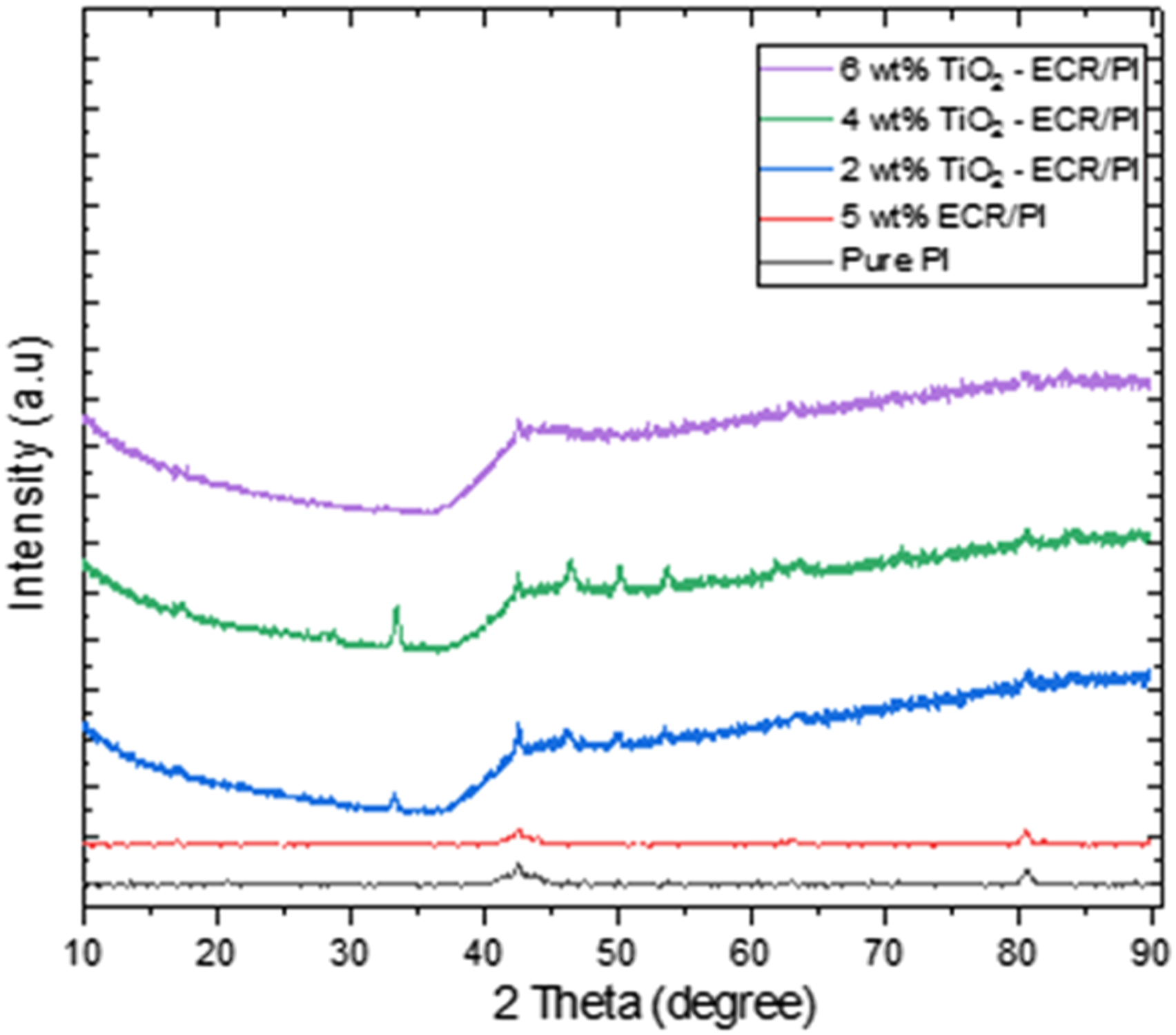

Physical and mechanical properties of the produced polyimide composites.
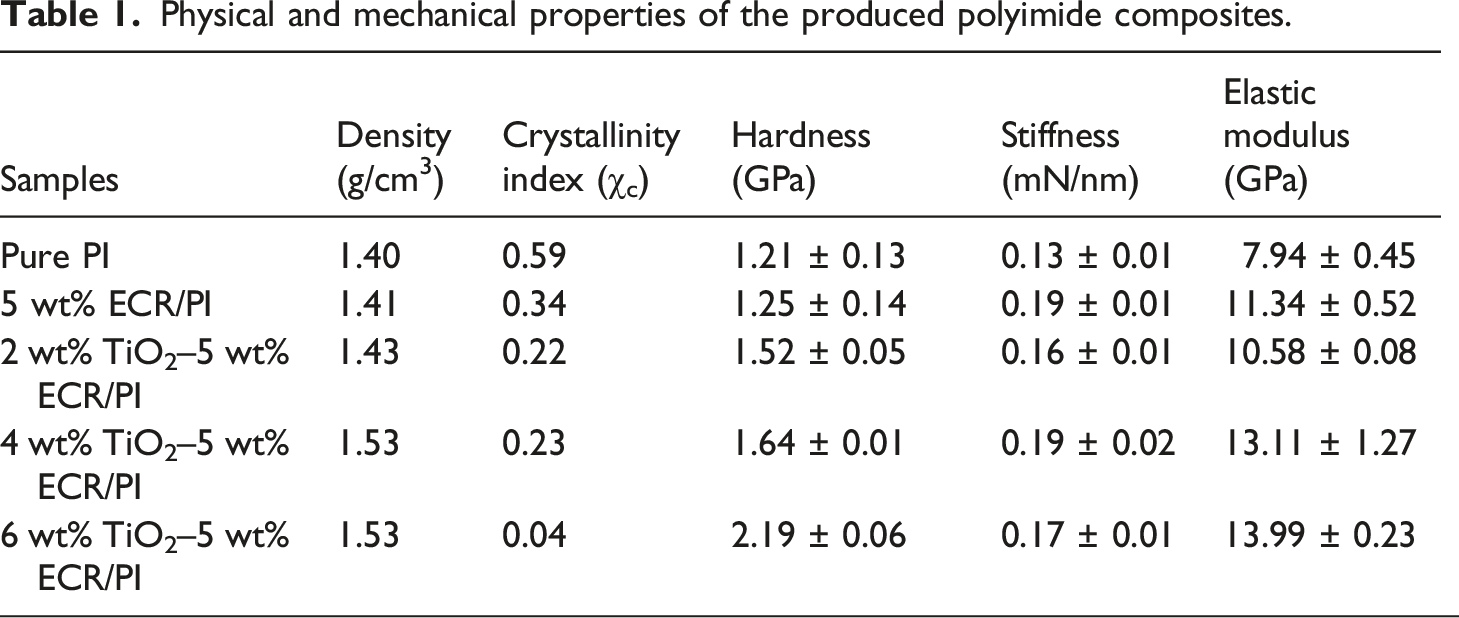
Figure 2(a)–(e) presents the SEM image of the pure PI and the PI composites. The SEM results revealed that the nanoparticles were uniformly dispersed into the PI matrix material without form of agglomeration, and all of the particles are separate in size i.e., the ECR micro particles and TiO2 nanoparticles. In all the microstructure images, it can be seen that the nanocomposites depicted negligible grain growth. And this could be attributed to the sintering process as SPS usually achieve better densification with negligible defect, minimal grain growth, and pores size acceptable for engineering applications over traditional methods.29–31 Furthermore, the SEM microstructure of 6 wt% shows that the TiO2 nanoparticles are distributed uniformly into the PI material in comparison with other weight percentage of reinforcement materials, such as 0, 2, and 4 wt% nanoparticles as can be seen in Figure 2. However, with aid of the SEM results, there is evidence that the TiO2 nanoparticles hybridized with ECR glass/PI particles. Such observation is in agreement with the study reported previously,
32
where TiO2 hybridized with SiO2. One can agree with this owing to the fact that ECR glass constitutes of metallic oxides with SiO2 tetrahedron as the backbone.
33
Figure 2(f) shows the SEM-EDS of the selected TiO2-containing glass fiber-reinforced PI matrix nanocomposites. The SEM-EDS results revealed the elemental composition of the nanocomposites to be carbon (C), oxygen (O), titanium (Ti), silicon (Si), calcium (Ca), and aluminium (Al), hence validate that the glass fiber used in the study is boron-free glass fiber. SEM images of the sintered samples (a) Pure PI, (b) 5 wt% ECR/PI, (c) 2 wt% TiO2–ECR/PI, (d) 4 wt% TiO2–ECR/PI, (e) 6 wt% TiO2–ECR/PI, and (f) SEM-EDS of 6 wt% TiO2–ECR/PI composites. PI: polyimide; SEM: Scanning electron microscope.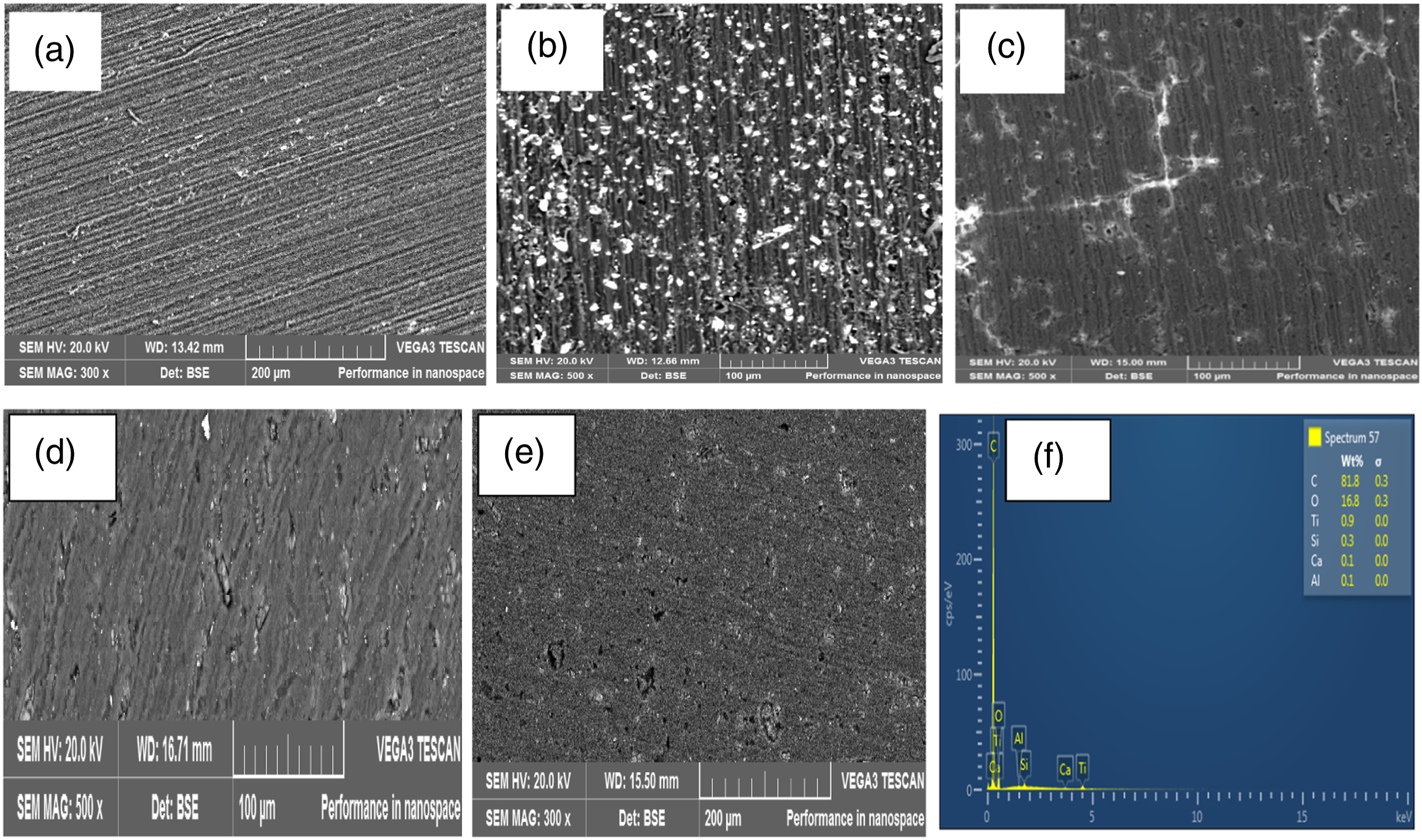
Density, nanoindentation and mechanical properties of the composites
Prior to material characterization, the sintered samples density was determined using densimeter device (JA5003J), which function with the Archimedes principle. As can be seen in Table 1, addition of the ECR in the PI matrix does not have much significant effect on the composite density. However, introducing the TiO2 nanoparticles into the ECR-reinforced PI yielded higher density of about 9% when compared to those of pure PI and ECR/PI samples. It is worthy to note that increased in the wt% of the nanoparticles showed no difference in the density (Table 1), 4 to 6 wt% TiO2 in particular. All these observation indicates that the SPS short sintering time in achieving full densification promotes lightweight and near zero grain growth with a controlled microstructure. And hence the improved properties recorded in the TiO2-containing ECR reinforced PI nanocomposites.
34
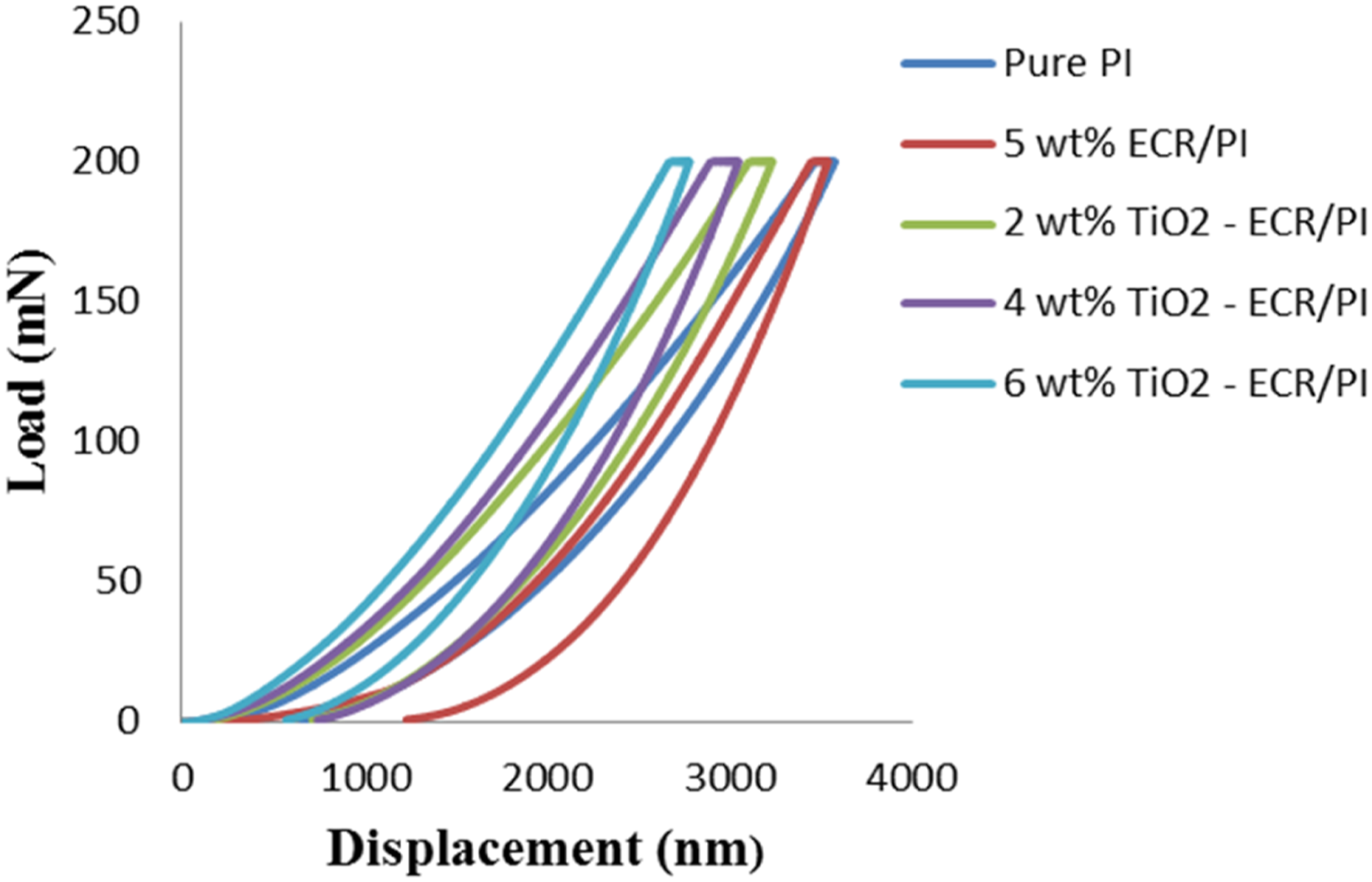
However, the nanomechanical analysis was conducted on the sintered samples in order to ascertain the hardness, elastic modulus, and stiffness by adopting nanoindentation test. Figure 3 displays the load against displacement or penetration depth curves of the composites. The loading plots revealed that loading was accomplished quite smoothly without any discontinuities, demonstrating no crack on the material surface during the loading process. The TiO2 reinforced ECR/PI nanocomposites shifted to lower penetration depth values in comparison with the pure PI and ECR/PI without TiO2 nanoparticles. Meanwhile, ECR/PI loaded with 6 wt% TiO2 nanoparticles depicted the lowest penetration depth as showed in Figure 3, thus illustrating an enhanced mechanical load-bearing capacity of the ECR/PI composites. The load against displacement curves were evaluated utilizing the inbuilt software provided by ‘Micro Material’ in determining hardness, modulus, and stiffness. These values were calculated using the below equations, as reported in Refs. 23 and 35. Nanoindentation curves of pure PI and fiber- PI based composite reinforced with TiO2. PI: polyimide.


Where H represent the hardness, F is the maximum load applied, A equals the contact area at maximum load, Er is the reduced modulus usually obtained from the indenter machine, E is the sample elastic modulus, Ei is the modulus of the diamond indenter (1141 GPa), υ is the Poisson ratio of the PI (0.34), υi is the Poisson ratio of the indenter (0.07), S is the stiffness, ∆L is the change in load, and ∆h is change in the penetration depth. To compare the obtained response properties after nanoindentation testing, the hardness, elastic modulus, and stiffness of the sintered samples tested are presented in Figure 4. From Figure 4, it can be seen that incorporation of the TiO2 nanoparticles in the PI materials improved its hardness, modulus and stiffness. The maximum hardness and elastic modulus in the sintered samples were recorded in ECR/PI composites loaded with 6 wt% TiO2 nanoparticles, which were 2.19 ± 0.06 and 13.99 ± 0.23 GPa, respectively. The enhanced hardness and elastic modulus of the ECR/PI containing TiO2 reinforcements could be attributed to the nanoparticle incorporation due to the free volume reduction in the PI matrix after sintering. Moreover, study conducted by Refs. 36, 37 and 38 evident that addition of nanoparticles do take up the free volume in host matrix, which in turn improves the resultant material properties. Again, uniform dispersion of the nanoparticles in the PI matrix material with improved load transfer in turn result to high plastic deformation resistance of the nanocomposites. Owing to the fact that the ECR having SiO2 as backbone,
33
and TiO2 nanoparticles will synergistically result to the plastic deformation resistance of the composites.39,40 Furthermore, the improved elastic modulus and stiffness of ECR/PI loaded with 4 and 6 wt% TiO2 on the other hand could be ascribed to active and strong interfacial interaction between the reinforcement and PI matrix
41
using 3D Turbula dispersion and SPS. In addition, fabrication process parameter remains a contribution to the improved properties of the thermoplastic polymer composites.
42
More so, TiO2 is known to be an inorganic material with good stress transfer properties and as such could play a vital role of reinforcing effect in carrying part of the stress in protecting ECR from being damage from the external load applied.
43
However, contributes in the improved mechanical properties of the PI composites when compared to those of the pure PI.
44
Mechanical properties: (a) Hardness, (b) Elastic modulus, and (d) Stiffness of the composites.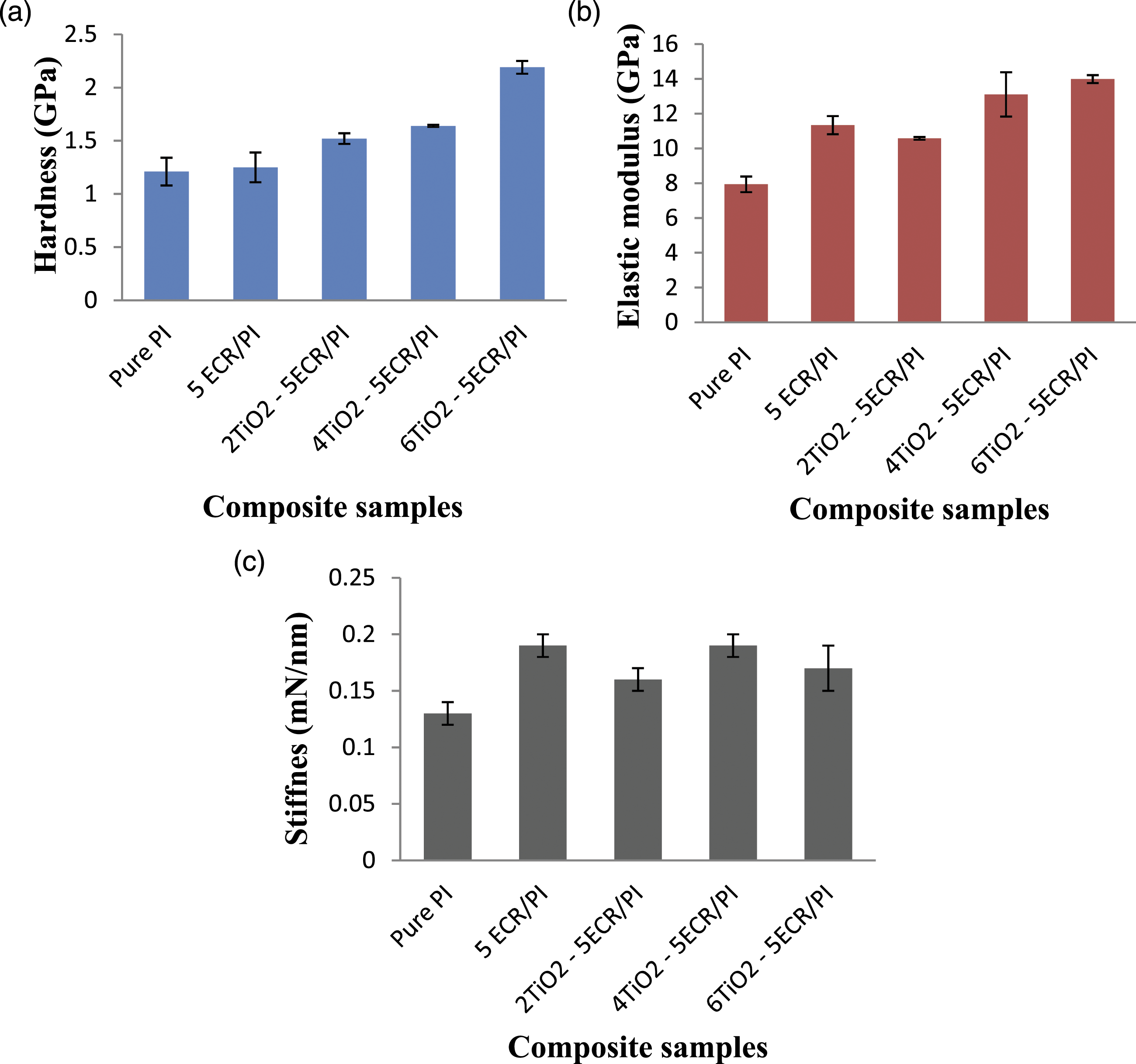
Electrical properties characterization
To produce PI nanocomposites with electrical insulation properties suitable for electronic device or insulator core rod application, PI nanocomposites with low dielectric constant and dielectric loss are urgently needed. However, the influence of varying TiO2 nanoparticles on the dielectric and electrical properties for the TiO2 – ECR/PI composites was carried out. Figure 5(a) and (c) showed the dependency of dielectric characteristics of the nanocomposites with different TiO2 content on the frequency. For the PI composites reinforced with or without TiO2, a decrease in dielectric constant is noticed as the frequency increases from 100 Hz to about 10 kHz, and then followed by a stable response. Thus, the space charge polarization, which generates from the nanocomposites interface could be attributed to the dramatically reduction of the nanocomposites dielectric constant as it could result to more or less charge barrier.
45
Basically, suppressing of space charge in polymer material remains a great significance in enhancing the electrical properties of polymer dielectric for insulation applications.
46
Interface formation between the particle and dipoles provides traps for trapping of charge carriers, basically in polymer nanocomposites. Thus in the sintered PI nanocomposites, the trapping of a large number of charge carriers is expected, and ECR having SiO2 as a backbone on the other hand could effectively act as a charge carrier trap. The dielectric constant for the pure PI, ECR/PI, 2 wt% TiO2–ECR/PI, 4 wt% TiO2–ECR/PI, and 6 wt% TiO2–ECR/PI samples at 50 kHz were 3.21, 2.71, 1.76, 1.54, and 1.18, respectively. Also, it is worthy to note that the introduction of the TiO2 nanoparticles in the PI matrix material contributed to the low dielectric loss and conductivity properties of the nanocomposites over the pure PI and ECR/PI samples (Figure 5(c)). Comparing the dielectric constant, dielectric loss, and electrical conductivity of the nanocomposites measured at 50 kHz with the ECR/PI as can be seen in Figure 5(a)–(c). ECR/PI reinforced with 6 wt% TiO2 nanoparticles depicted the lowest dielectric constant, dielectric loss, and electrical conductivity. This relates to the XRD results obtained as the nanocomposites possess low degree of crystallinity, which evidence their amorphous/insulation behaviour. In detail, the values of the dielectric constant, loss, and electrical conductivity decreased from 2.71 (ECR/PI) to 1.18, from 9.28 to 1.14, and from 2.59 × 10⁻⁵ to 3.16 × 10⁻⁶ (S/cm), respectively. This demonstrates that the high affinity of the reinforcements to the PI matrix, effectively restrict the mobility of PI chains, electron movement within the composites with reduced orientation polarization and electronic distortion.
47
The result also indicates that the reduced electrical conductivity of the nanocomposites is mainly caused by a degradation of the charge transport within the host matrix charge transfer sites, and similar has been reported elsewhere.
48
(a) Dielectric constant, (b) Dielectric loss, and (c) Electrical conductivity of the composite samples.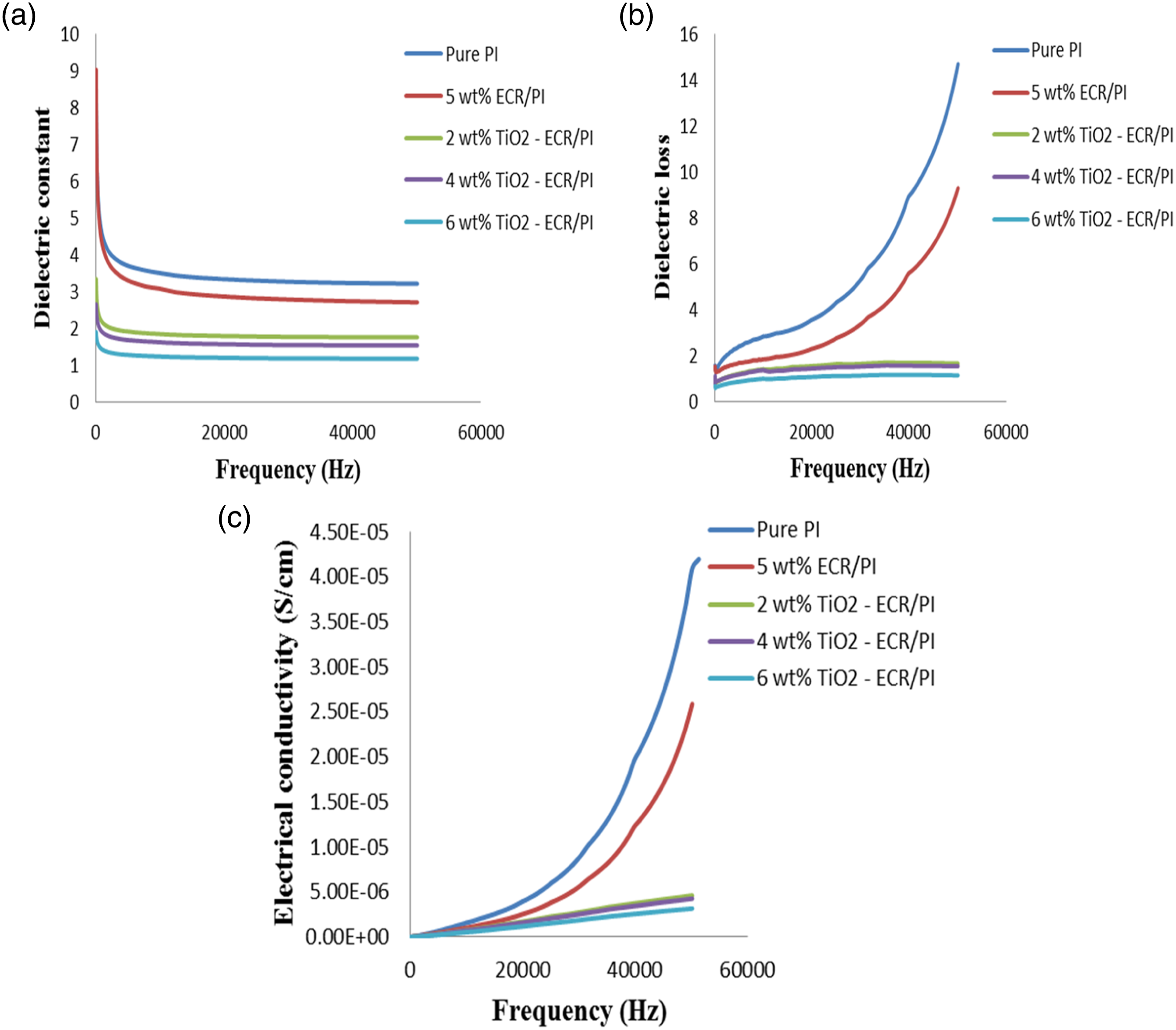
Conclusions
The novel ECR glass reinforced PI composites with varying concentration of TiO2 nanoparticles with enhanced mechanical and electrical insulation properties were successfully developed using SPS sintering technique. The PI composites with ECR and TiO2 nanoparticles were more effective than raw ECR glass in improving the mechanical properties. The hardness, elastic modulus, and stiffness remarkably increased with ECR and TiO2 loading and reached their maximum values of 2.19 GPa, 13.99 GPa, and 0.17 mN/nm with 6 wt% TiO2–5 wt% ECR/PI nanocomposites, corresponding to 80.9%, 76.2%, and 30.8% improvements, respectively compared to pure PI. Incorporation of the ECR and TiO2 nanoparticles reinforcements in the PI matrix based composites effectively restrain the mobility of PI chain, however, the electronic distortion of the composites. And this leads to the low dielectric constant, dielectric loss, and electrical conductivity of the TiO2-containing ECR reinforced PI nanocomposites when compared to the pure PI and ECR reinforced PI composites without TiO2. The analysis of the mechanical reinforcement efficiency indicated that the simultaneous addition of ECR and TiO2 in the PI composites display a better ability to improve its hardness and elastic modulus than most of the reported functionalized glass fiber in the past years. The improved mechanical properties were predominantly attributed to the intrinsic nature of TiO2 and enhanced interfacial interaction. Meanwhile, the nanocomposites depicted more electrical insulation behaviour based on the dielectric and electrical conductivity data obtained in the study.
Footnotes
Acknowledgements
The authors wish to thank the Center for Energy and Electric Power, and Center for Surface Engineering Research, Tshwane University of Technology (TUT) South Africa for their financial support in the course of this study.
Declaration of conflicting interests
The author(s) declared no potential conflicts of interest with respect to the research, authorship, and/or publication of this article.
Funding
The author(s) disclosed receipt of the following financial support for the research, authorship, and/or publication of this article: This study is supported by Center for Energy and Electric Power, and Center for Surface Engineering Research, Tshwane University of Technology (TUT) South Africa.
