



Abstract
The fire retardant performance of carbon fiber (CF) reinforced polyamide 6 (PA 6) composites plays an important role in their novel application fields. Thus, expandable graphite (EG) is integrated into CF containing PA 6 composite system to donate halogen-free flame retardant property based upon intumescence. The effect of EG amount on the thermal, flame retardant, and mechanical properties of CF reinforced PA 6 composites is examined. The properties of the composites are investigated using thermogravimetric analysis (TGA), limiting oxygen index (LOI), vertical burning test (UL-94 V), mass loss calorimeter (MLC), tensile, and impact tests. According to the test results, thermal stability reduces as the added amount of EG increases. The addition of EG improves fire performance and reduces the flammability characteristics of CF containing PA6 composites. The highest LOI value (36.4%), UL-94 V rating (V0), and the lowest peak heat release rate (pHRR) (74 kW/m2), total heat evolved (THE) (23.9 MJ/m2) values are observed with the inclusion of 30 wt% EG. The impact strength increases at 10 wt% EG addition, whereas negligible change is observed at higher EG loadings with respect to the reference sample. The increase in tensile modulus and the reductions in tensile strength and percentage elongation are observed as the added amount of EG increases. In brief, CF reinforced PA6 composites gain multifunctional characteristic with the help of interaction between EG and CF based on condensed phase fire-proofing behavior.
Introduction
Growing interest has been seen in the use of carbon fiber (CF) in thermoplastic composites rather than thermoset based ones owing to mass production and easy recycling with increasing environmental conscious in recent years. Polyamide 6 (PA6), which has readily flammable character with excessive dripping, is preferred as matrix material in various industrial sectors ranging from aviation to electronics.1–4 To enhance the fire retardant properties of CF reinforced PA6 composites can cause wider use in novel applications. Numerous additives including carbonaceous fillers are used to improve the fire retardant performance of neat and filled PA6 composites.5–8
Expandable graphite (EG) is considered as good choice to produce fully carbon-based eco-friendly fire-retardant CF reinforced PA6 composites in light weight due to its reasonable low density (true density 1.8–2.2 g/cm3). Besides the improvement in fire retardant properties, EG has also potential to produce composite material with multifunctional properties of improved thermal and electrical conductivity, electromagnetic interference shielding, and mechanical properties.9–14 Expandable graphite, which is classified into intumescent based flame retardant additives, is produced via the intercalation of graphite with sulfuric and/or nitric acids. Expandable graphite, is used as char forming agent, blowing agent, and smoke suppressant in numerous polymers either solely or with other flame retardant additives for its synergistic effect.15,16 Sover et al. used EG in PA 6.6 in three different concentrations of 10, 20 and 40 wt%. It was observed that 20 wt% EG was needed to get the highest UL 94V rating of V0. 10 Uhl et al. used EG in PA6 in three different concentrations of 1, 3, and 5 wt%. No meaningful change was observed in cone calorimeter studies in such low filler addition. 13 Tomiak et al. used EG in 25 wt% in PA6. They found that limiting oxygen index (LOI) value increased from 26 to 39% and V0 rating was obtained. 17 Jin et al. used EG in PA11 in two concentrations of 15 and 20 wt%. With the addition 20 wt% EG, LOI value increased from 22.5 to 28.5% and V0 was achieved. 18 Additionally, EG exerts effective flame retardant efficiency in different matrix/fiber systems including polyester resin/glass fiber, 19 polypropylene/flax, 20 undefined polymer/glass fiber, carbon fiber, 21 and epoxy resin/palm fiber. 22 The aforementioned promising fire-retardant performances of EG in polyamides and in fiber reinforced composites take into consideration for selecting EG as flame retardant additive in the current study, as well.9–16
The originality of this study lies on the hybrid inclusion of EG and CF in PA6 based composite system which is the first research attempt according to literature review. In the current work, the effect of EG amount on the thermal, fire retardant, and mechanical characteristics is examined for chopped CF reinforced PA6 composites. The flame resistance requirements of PA-based composites in major application areas including transportation, construction and electronics industries are the main driving force to develop halogen free intumescent CF reinforced PA6 composites involving EG. The performances of prepared composites are investigated using thermogravimetric analysis (TGA), LOI, UL-94V, mass loss calorimeter (MLC), tensile and impact tests.
Experimental
Materials
Polyamide 6 (Tecomid NB40 NL E) was purchased from Eurotec (Tekirdag, Turkey). It has the density and the melting temperature of 1.13 g/cm3 and 223°C. CF fiber with the commercial name of AC0101 was purchased from DOWAKSA (Yalova, Turkey). It has 6 mm length and is coated with 1.5–3 wt% polyurethane based resin. The density is 1.76 g/cm3 and the tensile strength is 4200 MPa. EG (Firecarb TEG-315), which appears as gleaming black flakes, was purchased from Minelco Ltd, (Italy). It has expansion coefficient, bulk density and pH value of >220 mL/gm at 1000°C, 0.45–0.5 g/cm3, and 5–7, respectively. It has particle mesh size, and carbon content over 80% and 95%, respectively.
Production of the composites
Polyamide 6, carbon fiber, and expandable graphite were dried in an oven at 80°C for 24 h before the extrusion process. The process was carried out in twin screw extruder (GULNAR MAKINA, Istanbul, Turkey) at 100 rpm with the temperature profile of 50, 225, 230, 230, 230, 225°C. The extrudate was molded by laboratory scale injection-molding machine (DSM Xplore 12 mL Micro-Injection Molder, Netherlands) for flammability and mechanical tests. The barrel and mold temperatures were set to 235°C, and 30°C, respectively. The samples for MLC test were produced using laboratory scale hot-press (GULNAR MAKINA, Istanbul, Turkey) for 3 min. At 230°C. The flame retardant performance of EG was studied under constant CF addition of 20 wt%. EG was used in three different concentrations of 10, 20, and 30 wt% to observe the influence of EG amount on the thermal, flammability, and mechanical performances of the composites. The added amount of EG by weight was removed from PA 6 content. For sample nomenclature, the abbreviations of PA6, CF, and EG were used for polyamide 6, carbon fiber, and expandable graphite (EG), respectively. The code, PA6/CF/20EG, represents the sample containing 20 wt% CF and 20 wt% EG.
Characterization methods
Thermogravimetric analysis tests (Hitachi-High Tech STA-7300) were carried out with the heating rate of 10°C/min from room temperature to 700°C under inert atmosphere. LOI values were determined according to ASTM D2863 standard using Limiting Oxygen Index Analyzer (FTT) on the test bars of 130 × 6.5 × 3.2 mm3 in size. UL 94 V tests were performed on the samples with the dimensions of 130 × 13 × 3.2 mm3 according to ASTM D3801 standard. The MLC test was performed on the samples with the dimensions of 100 × 100 × 3 mm3 according to ISO 13927 standard using Mass Loss Cone with thermopile attachment (FTT, U.K). The samples were characterized under the heat flux of 35 kW/m2. Tensile measurements were performed using Devotrans GP/R testing machine which was equipped with 5 kN load cell at room temperature according to ASTM D 638 standard. Tension tests were conducted on dog-bone shaped samples (7.4 × 2.1 × 80 mm3) at a crosshead speed of 5 mm/min. Tensile strength and percentage elongation at break values were recorded. All results were calculated with an average value of five samples with standard deviations. Impact tests were performed on unnotched samples with the dimensions of 3.2 × 6.5 × 130 mm3 using MITECH digital charpy impact testing machine at room temperature according to ASTM D256. The char residues remained after MLC test and impact fractured surfaces of the composites were examined in SEM (LEO 440 computer controlled digital, accelerating voltage of 20 kV) after sputtering with Au/Pd alloy.
Results and discussions
Thermal decomposition of the composites
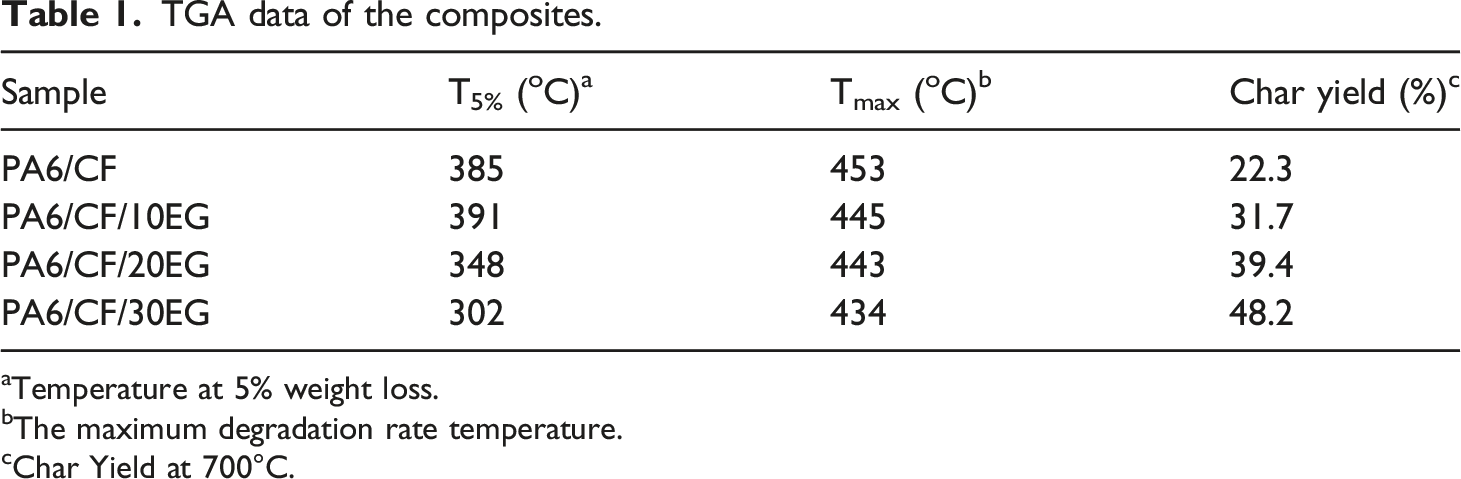
The decomposition characteristics of the composites are evaluated with TGA analysis under nitrogen atmosphere. TGA and DTGA curves of the composites are shown in Figure 1. The relevant data are given in Table 1. PA6/CF decomposes in single step with maximum degradation rate at 453°C with leaving 20.5% residue based on mainly undecomposed CF at 700°C. All EG containing composites also degrade mainly in one step. Low intensity peak becomes apparent at 310 and 296°C in 20 and 30 wt% EG containing composites due to the release of acidic intercalation compound (sulphuric acid) upon heating.
23
The addition of 10 wt% EG slightly increases the initial thermal stability (T5%) owing to its plate like structure which retards the release of volatile decomposition products. However, the further addition (20 and 30 wt%) distinctly reduces T5% value as the added amount increases. The maximum degradation temperature (Tmax) also reduces as the added amount of EG increases. It is suggested that the reductions in thermal stabilities are attributed to the lower thermal stability of EG and the acidic intercalation compound which accelerates the hydrolysis of PA6. Similar trend is also observed in the literature with the use of EG in PA6.11,13,17,24 The residue yield steadily increases as the added amount of EG increases due to the undecomposed part of it. Fluffy carbon-based structure also favors the char formation of PA6 due to the cage effect, as well.
23
TGA and DTGA curves of the composites. TGA data of the composites. aTemperature at 5% weight loss. bThe maximum degradation rate temperature. cChar Yield at 700°C.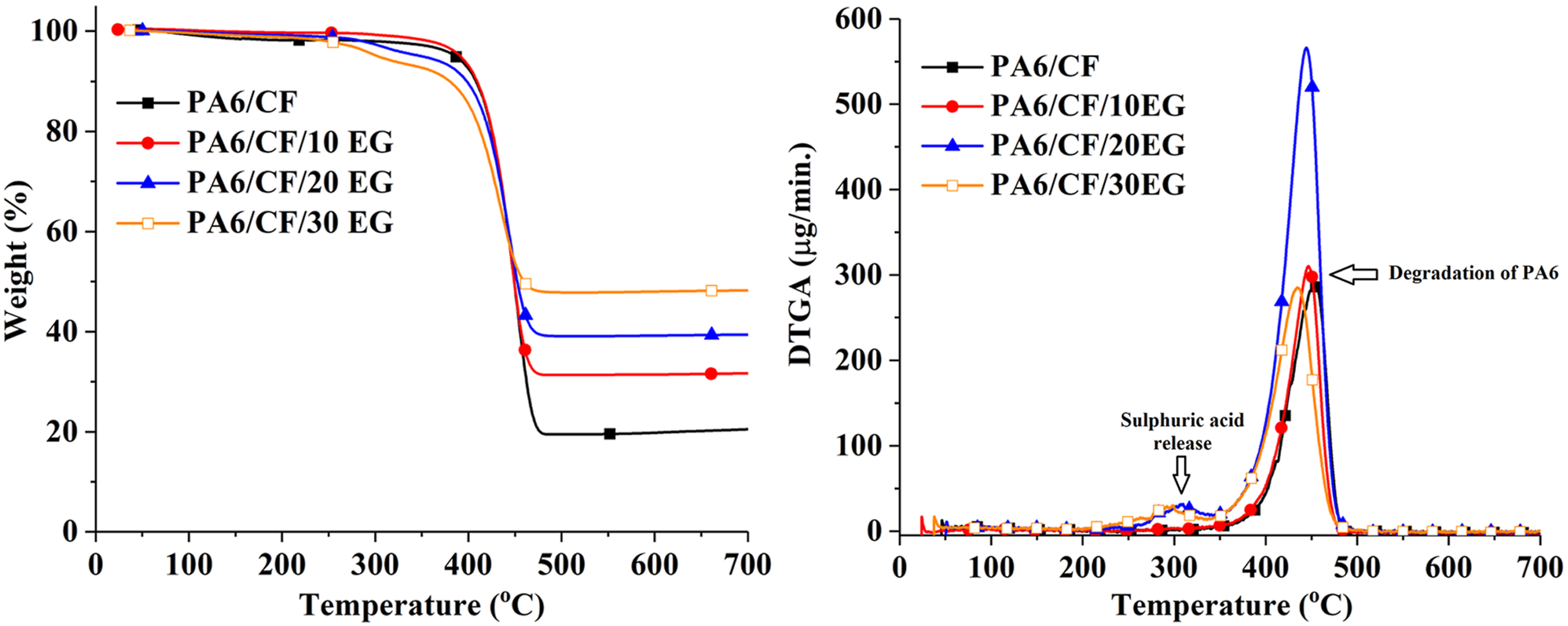
Mass loss calorimeter studies
Mass loss calorimeter test is widely used for evaluating the fire retardant performances of the polymeric materials. Numerous valuable data including time to ignition (TTI), peak heat release rate (pHRR), average heat release rate (avHRR), total heat evolved (THE), effective heat of combustion (EHC), and fire performance index (FPI) can be used to compare the performances of the composites. Fire performance index is the ratio of TTI to pHRR. Heat release rate (HRR) curves of the composites and the relevant data are given in Figure 2 and Table 2, respectively. The photographs and SEM images of the char residues are shown in Figure 3. HRR curves of the composites. Mass loss calorimeter data of the composites. Photographs and SEM images of the residues.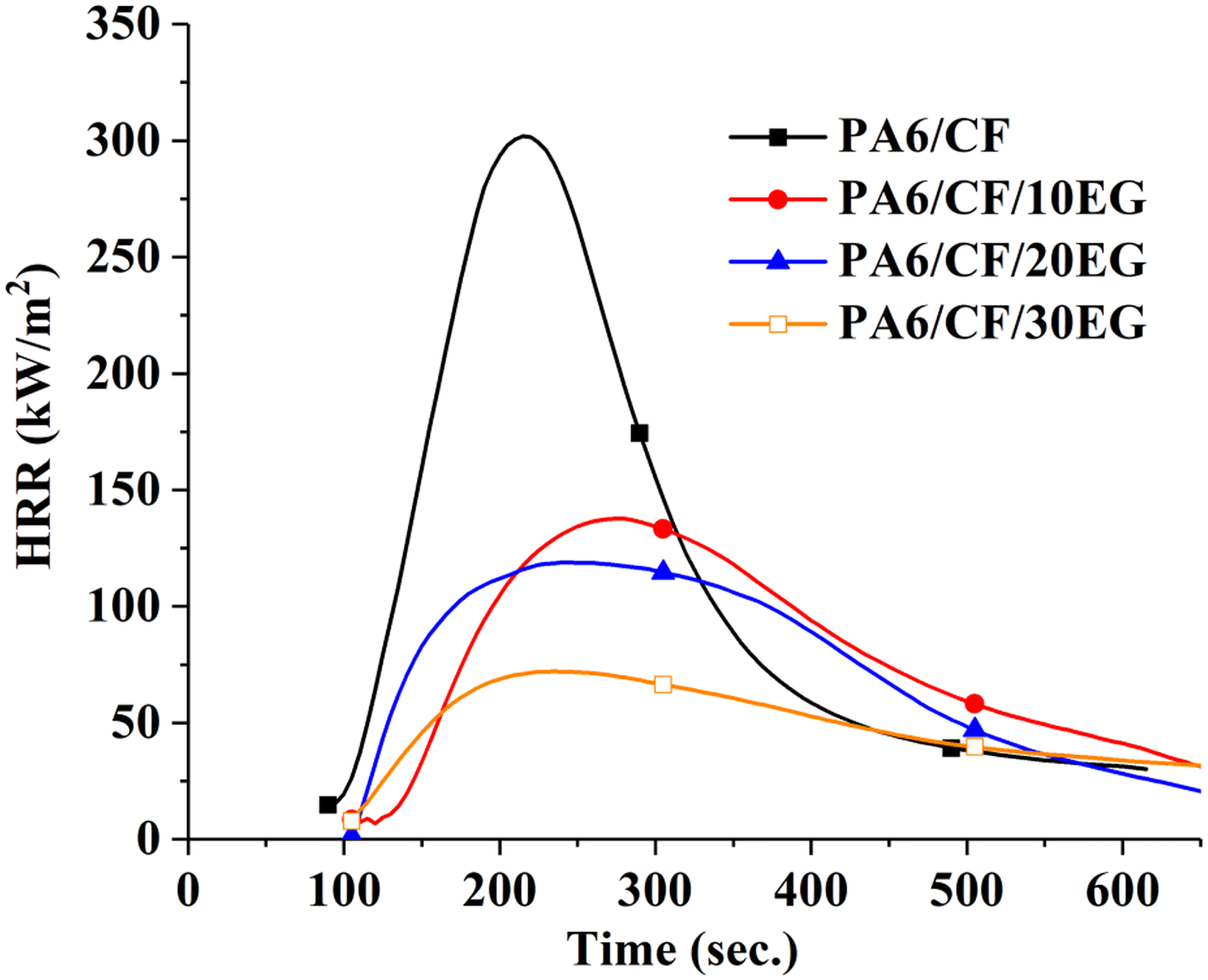
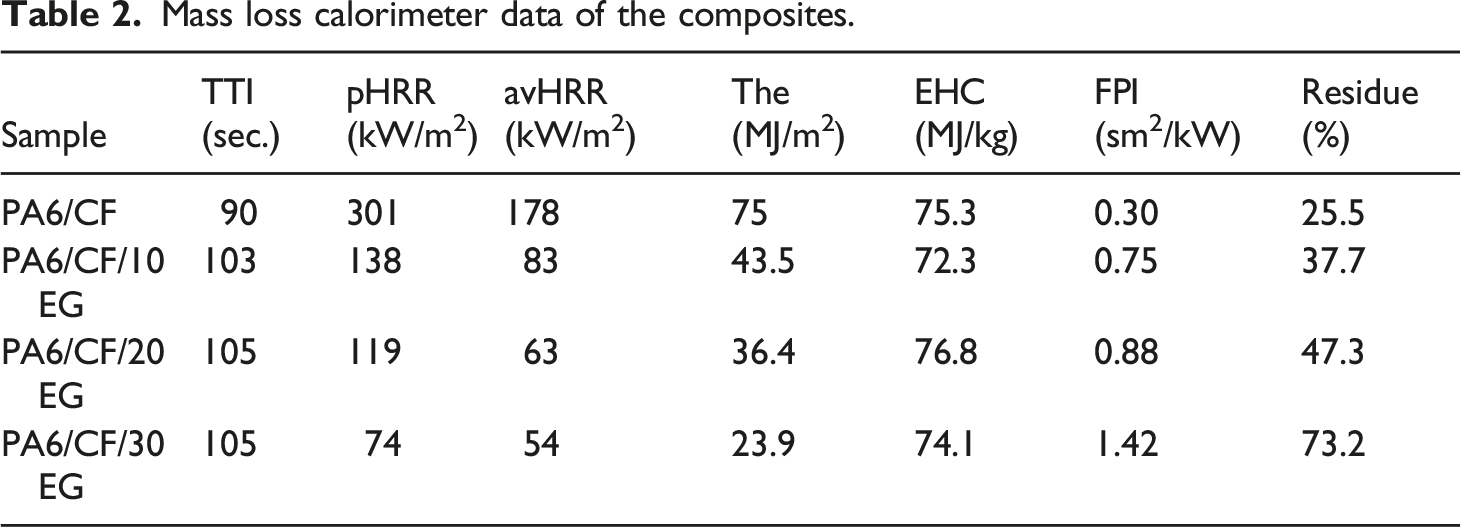
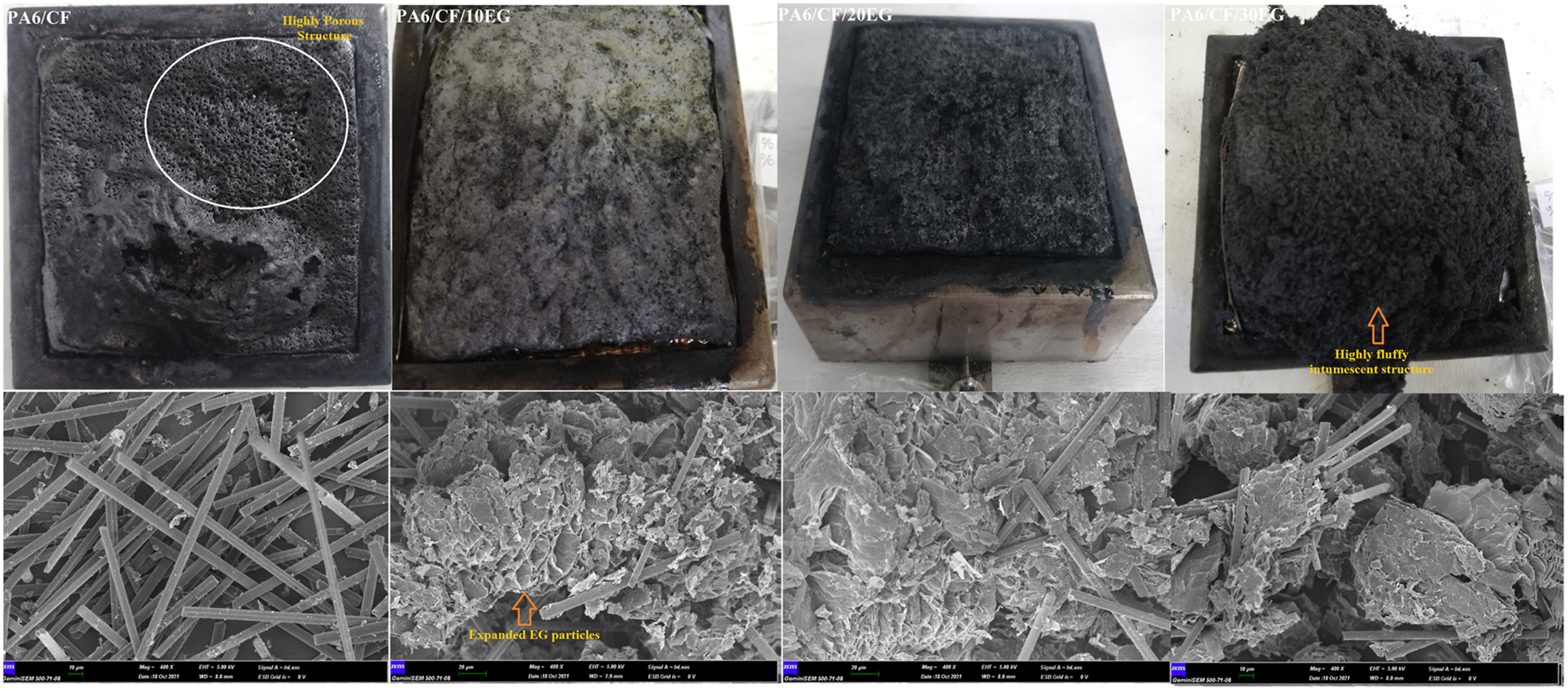
Carbon fiber containing PA6 composite burns giving one sharp HRR peak at 301 kW/m2 and leaves 25.5 wt% residue. Despite of the high residue yield, the protective function of residue is not good due to the highly porous structure with numerous holes as shown with white circle in Figure 3. With the inclusion of EG, the shape of HRR curve totally changes to typical insulating protective layer staying relatively constant during the combustion with very low pHRR. During the test upon heating, worm like structures, which are readily seen in SEM images, are formed via redox reactions with sulphuric acid and EG.25,26 At the beginning, these worm like structures fill the spaces among CFs. Accordingly, the porous residue turns to completely compact and uniform structure with the inclusion of 10 wt% EG. After the spaces are filled, the excess amount of expanded EG particles start to cover the surface. As the concentration of EG increases to 20 wt%, the fluffy EG particles become apparent and completely cover the surface of the residue. When the concentration reaches to 30 wt%, the residue structure gains highly intumescent character. The aforementioned changes in the residue structure give rise to enhanced barrier effect between condensed and gas phases. Thus, pHRR and avHRR values reduce steadily. pHRR value reduces at about 54, 60, and 75% with respect to reference sample as the EG amount increases. THE value reduces at about 42, 51, and 68% with respect to reference sample. The reduction in fuel source with enhanced char formation and the incomplete pyrolysis due to the enhanced barrier effect of the residue are considered as the possible reasons of the reduction in THE values.
The addition of EG causes increase in TTI, and FPI values. It is thought that the increase in TTI stems from the plate like structure of EG which retards the diffusion of combustible gases to the surface. The higher FPI value means the higher product safety rank. With increment in TTI and reduction in pHRR values, FPI value steadily increases with increasing EG content. The reduction in EHC value indicates the gas phase mechanism of the additive whereas no meaningful change is observed in EHC values. These finding clearly show that EG shows its flame retardant action in the condensed phase via improving the barrier effect of the residue.
Flammability properties
The flammability properties of the composites are characterized by LOI and UL-94 V tests. The related results are depicted in Figure 4. Carbon fiber containing PA6 has LOI value of 22.9% and burns to clamp in UL-94 V test. LOI value increases as the added amount of EG increases. The highest LOI value of 36.4% is achieved with the addition of 30 wt% EG. The addition of EG does not change UL-94 V rating up to 20 wt% addition. The highest UL-94 rating of V0 is achieved with the inclusion of 30 wt% EG. As stated in MLC section, the enhanced flammability properties are attributed to the condensed phase flame retarding mechanism of EG. LOI value of the composites.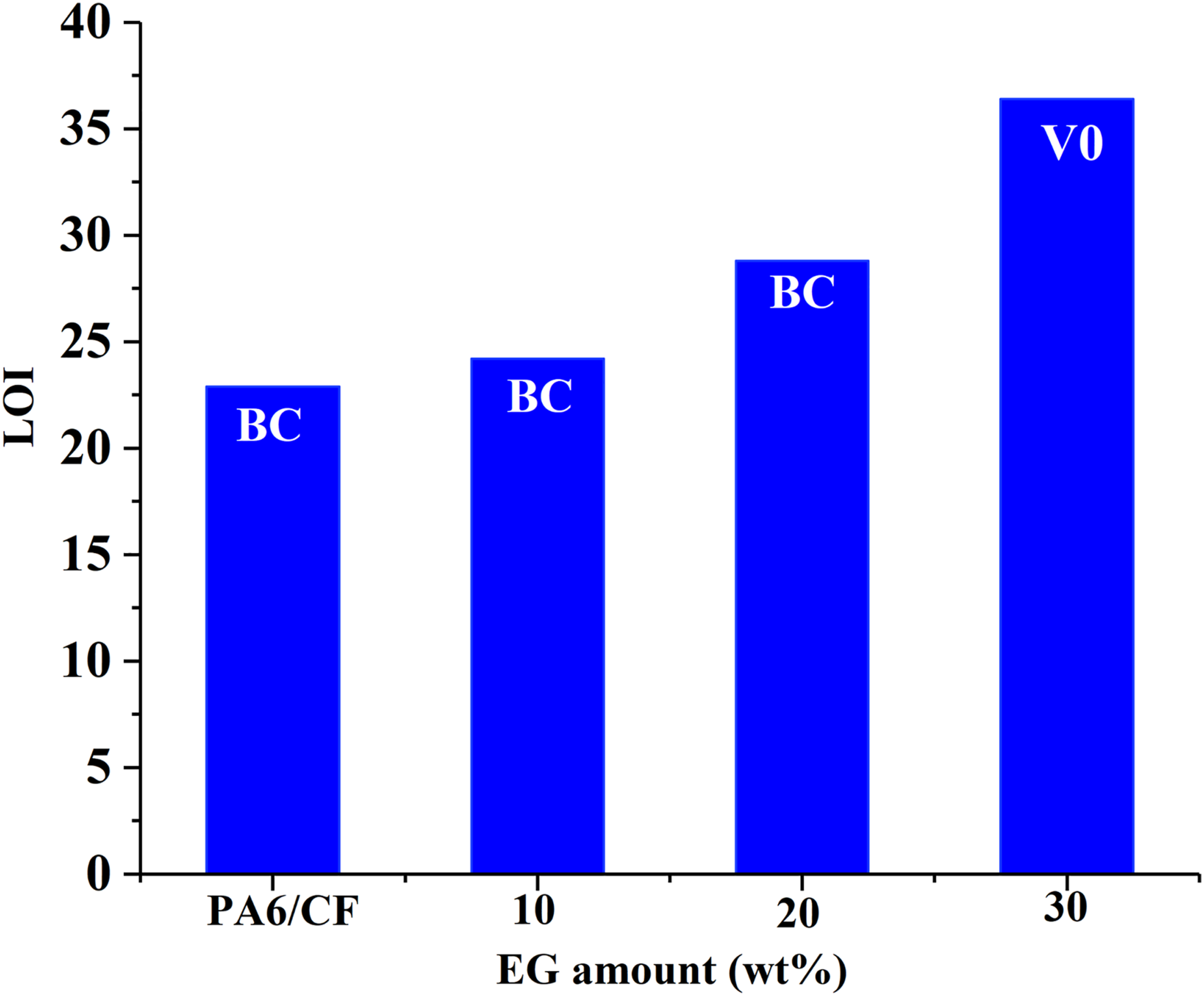
Mechanical properties
To examine the mechanical properties of composites, tensile and impact tests are carried out. The stress strain curves of the composites are shown in Figure 5. The related data is given in Table 3. SEM analyses are carried out on the impact fractured surfaces of composites. The related SEM images with x50 (top) and ×400 (bottom) magnifications are given in Figure 6. As seen from Figure 5, all composites failure in brittle manner. The tensile modulus increases as the added amount of EG increases as a rule of mixture in the presence of rigid fillers like EG. The addition of 10 wt% EG does not affect the tensile properties of the composites when the standard deviations are considered. The further addition of EG reduces the tensile strength significantly. The addition of 20 and 30 wt% EG reduces tensile strength at about 14% and 40% with respect to PA6/CF. The reduction in tensile strength arises from the large particle size of EG (see Figure 6) and the weak adhesion to PA6. The prominent reduction in strain is observed when the added amount of EG reaches to 30 wt%. The reduction in strain is attributed to the polymer chain mobility restriction.27,28 Similar reductions in tensile properties are observed in the literature with the use of EG in polyamides.13,14. Stress strain curves of the composites. Mechanical properties of the composites. SEM images of the impact fractured surfaces with x50 (top) and x400 (bottom) magnifications.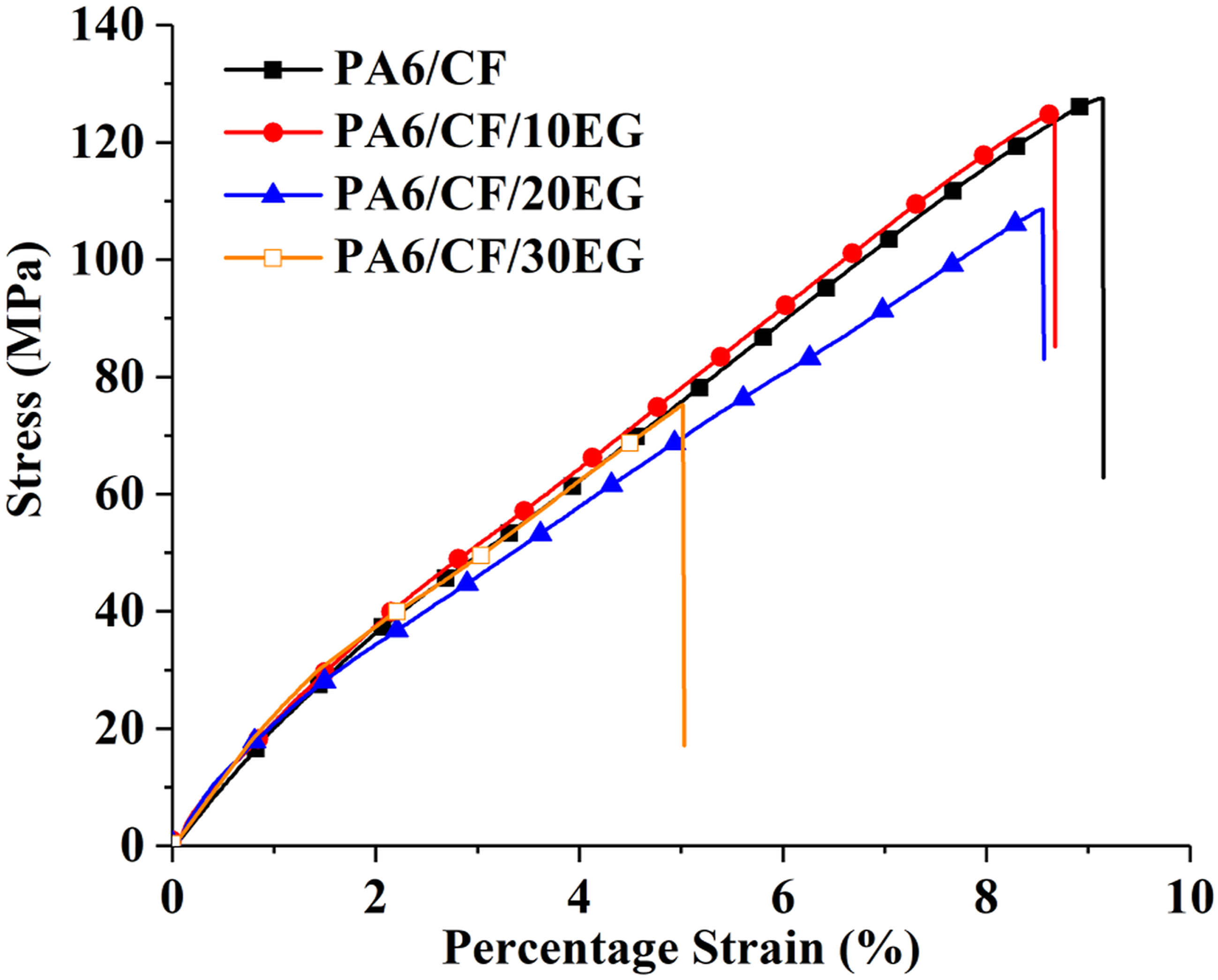
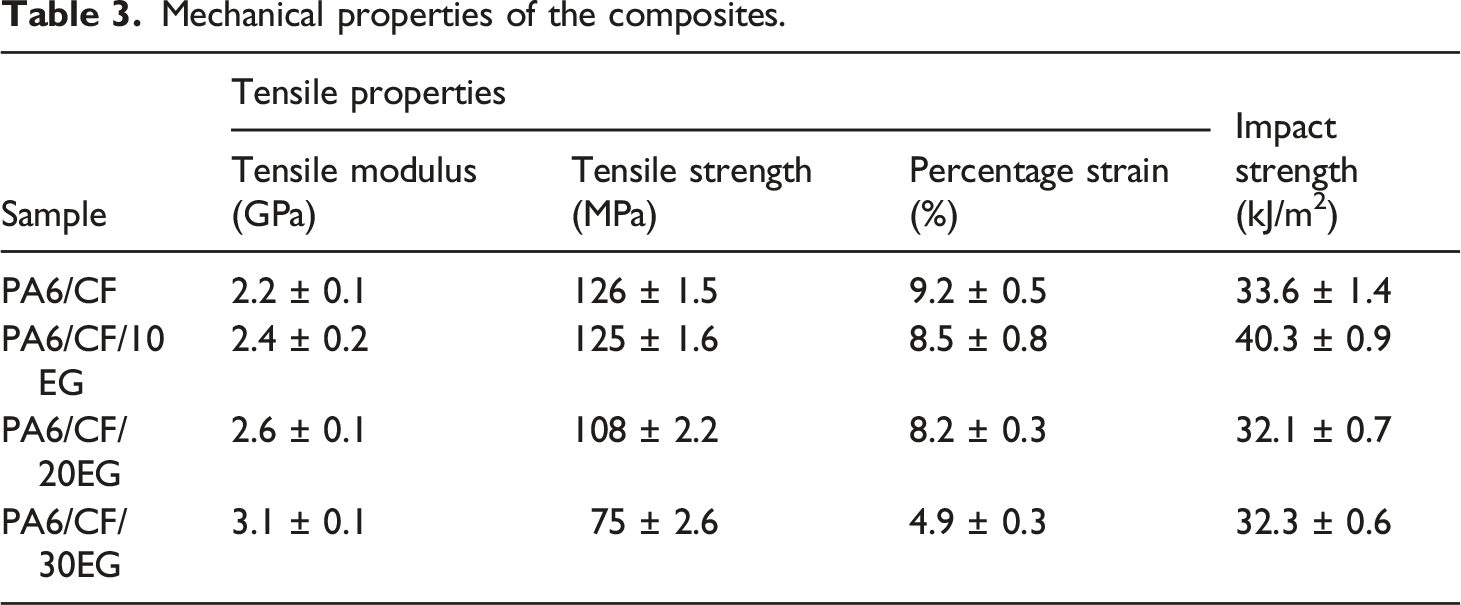
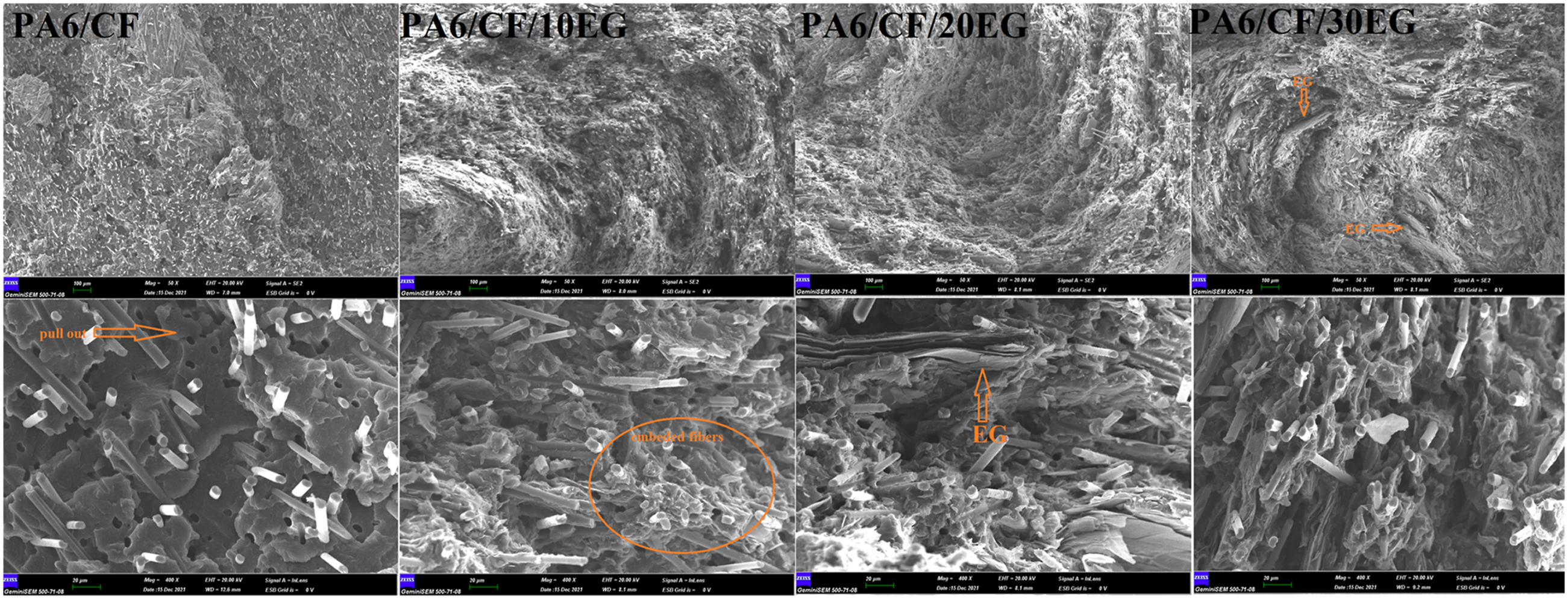
The addition of 10 wt% EG increases the impact strength at about 20% with respect to PA6/CF. The samples containing 20 and 30 wt% EG almost similar impact strength of PA/CF. The observed trend is caused mainly by the effect filler content on the impact strength. As stated earlier, impact tests are performed on unnotched samples. In unnotched samples, the energy is mainly dissipated through crack initiation and propagation.29–31 Crack initiation occurs easily as the concentration of filler increases since fillers act as stress concentration centers. As seen from Figure 6, the fracture surfaces of composites become rougher in the presence of EG. Accordingly, the increase in crack propagation pathway causes more energy absorption during the fracture. The matrix fracture, CF and EG pull out, debonding and breakdown are the other possible energy absorbing mechanisms during the crack propagation. In the presence of EG, more energy absorbed during crack propagation due to the increase in propagation pathway and debonding and fracture of EG.32,33 Thus, impact strength increases 10 wt% EG addition, whereas further addition reduces impact strength through easier crack initiation.
Conclusion
This study deals with the effect of EG on thermal, flame retardant, and mechanical properties of CF containing PA6 composites. According to the TGA results, the addition of EG reduces the thermal stability and increases the residue yield. According to flammability test results, it is found that the addition of 30 wt% EG is needed to get the highest UL-94 rating (V0). The LOI value steadily increases as the EG increases. The highest LOI value of 36.4% is achieved. According to the MLC results, the increase in TTI and FPI values and the reductions in pHRR, avHRR and THE values are achieved as the added amount of EG increases. According to the mechanical test results, tensile modulus increases with increasing EG content. The addition of 10 wt% EG improves impact strength whereas negligible change is observed tensile properties. The further addition of 20 and 30 wt% EG deteriorates tensile strength however the impact strength remains almost constant with respect to only CF containing PA6.
Footnotes
Declaration of conflicting interests
The author(s) declared no potential conflicts of interest with respect to the research, authorship, and/or publication of this article.
Funding
The author(s) disclosed receipt of the following financial support for the research, authorship, and/or publication of this article: This work was supported by the Erciyes University Scientific Research Unit under grant no BAP-FCD-2018-8392. Aysegul Erdem gets scholarship from Council of Higher Education (YOK) in the scope of doctorate program of 100/2000.
