



Abstract
Date palm (Phoenix dactylifera L) is one of the most widely cultivated crops in different parts of Saudi Arabia. The midribs rich in cellulose, hemicellulose, and lignin are often burnt in the farms, causes severe environmental problems. In the present study, date palm midrib (DPM), these waste materials were powdered and incorporated into polyvinyl alcohol (PVA). Composites were prepared by varying the DPM loading (0–10 wt.%) using the solution casting method. Tensile and thermal properties were analyzed for the composites with respect to filler loading. Addition of DPM as filler enhanced the tensile modulus while an inverse effect was observed in the elongation values. Differential scanning calorimeter (DSC) analysis showed a gradual increase in melting temperature (Tm) and crystallinity values for PVA. Thermogravimetric analysis (TGA) indicated that the incorporation of DPM into PVA can increase the thermal stability of PVA. Morphology of the composites was performed using scanning electron microscopy (SEM).
Introduction
During the last three decades, polymers are increasingly crucial as the material of choice to prepare varieties of products. Polymers’ versatility, durability, and diversity in properties continue to empower researchers to expand their applications and invent new plastic products to meet growing requirements for plastic materials with diverse properties and applications. However, tremendous use of plastics’ and discarding may cause a waste management challenge and environmental concern despite the clear advantages of plastics. They contribute significantly to the amount of reliable waste stream and represent the fastest-growing component of solid waste. Hence, researchers concentrated their focus on producing environmentally friendly products without sacrificing properties up to a limit. Natural and biodegradable fibers from natural sources like sisal, kenaf, jute, hemp, banana, starch, wood flour, and date seed can be used as filler to fabricate different bio-composites.1–12
Poly(vinyl alcohol), PVA often synthesized by the hydrolysis of poly(vinyl acetate), is a water-soluble, non-toxic, bio-compatible, biodegradable, and semi-crystalline polymer. It is used to fabricate eco-friendly bio-composites for different applications.13–15 PVA based composites have been successfully developed using renewable and biodegradable materials such as starch, gellan, wheat gluten, collagen, gelatin, and cellulose (micro and nanocrystalline) chitosan as reinforcing agent.16–31
Date palm (Phoenix dactylifera L) is one of the extensively cultivated traditional crops in different places in Saudi Arabia. According to a statistics, over 31 million date palm trees with an annual production of about 1.5 million tons of date fruits are there in Saudi Arabia. 32 Annual pruning of these date palm trees can cause a huge amount of agrowaste. The date palm seeds, leaves, and midrib are the primary agricultural waste components of date palm trees. Generally, date seeds are used in animal feeds, as an organic additive in soil, etc., while the roasted seed powder is used to prepare caffeine-free drinks. 32 However, the midrib cut off from the palm tree to burst date fruit production is often burnt in the farms, causing severe environmental concern. These rich waste materials are cellulose, hemicellulose, and lignin, could be used as a component of added value-products. Several investigations on the utilization of dates seed for different applications5,33–43 were conducted while the use of midribs waste has not been fully exploited. Few investigations have been reported to benefit date palm midribs for applications such as cement/concrete reinforcement, insulating panels, paper making, and particle boards. 34
According to the literature, the use of date palm midrib powders to prepare PVA composites has not been reported. Possibly, these types of biodegradable composites can find applications in the packaging industry and other consumer product manufacturing. Hence, this article aims to brief the fabrication and characterization of polymer film composite using PVA as the polymer matrix and date palm midrib (DPM) powder as a reinforcement agent by varying the filler content up to 10 wt.%. Also this article demonstrates the use of one of the significant waste components of date palm tree for the preparation of polymer bio-composite with the view of agricultural substantial waste reduction and utilization.
Experimental
Materials
Polyvinyl alcohol, PVA (98–99% hydrolyzed, low molecular weight), were procured from Alfa Aesar Company. Glycerol which is used as a plasticizer was purchased from Sigma Aldrich Company. Date palm midrib was obtained from local sources of Saudi Arabia.
Preparation of Date palm midrib powder
The date palm midribs were cut into small cubes and dried at room temperature for 24 h. The dried midrib was then grounded into a fine powder using High-Speed Multi-function Comminutor (RRH 200) and screened through a USA Standard Testing Sieve (ASTME-11 Specification). Only the particles that pass through the Tyler Equivalent 40 mesh (420 µm) were considered for the sample preparation.
Preparation of Composites
The solution casting process was used for the preparation of the date palm midrib reinforced PVA composites. At first, the suspension of PVA containing glycerol (3 mL) was prepared. Date palm midrib at various concentrations (1, 3, 5, and 10 wt.% concerning the total polymer content) was added by keeping the total solution volume constant. The solution was stirred at 80°C until gelation. The gel-like solution was then transferred to a mold and allowed to dry. The prepared composites were designated as M1, M3, M5, and M10, where the 1, 3, 5, and 10 represent the filler content.
Characterization
FTIR analysis
The Infrared spectra of pure PVA and composite samples were recorded in the range of 500–4500 cm−1 with a spectral resolution of 4 cm−1 and 32 scans per spectrum using the Thermo NICOLET 6700 FT-IR Spectrometer.
DSC analysis
Differential Scanning Calorimetry (DSC) was carried out to investigate the melting and crystallization behavior of PVA and its composites using TA Q-1000 DSC. Samples were heated in a nitrogen atmosphere from 30 to 240°C at the heating rate of 10°C/min. Then a cooling was done at a rate of 10°C/min from 240 to 30°C followed by a second heat from 30 to 240°C at the same rate of 10°C/min. The percentage degree of crystallinity was calculated using the equation (1)

XRD analysis
XRD analyses of the samples were done using LABX XRD-6000 (Shimadzu) X-ray diffractometer with Cu Kα radiation source (1.5410 A° wavelengths) and angle of diffraction (2θ) varied from 5° to 60°.
Thermal stability
TGA-Q500 (TA Instruments) was used to conduct thermal degradation studies. For each measurement, about 10 mg of the sample was heated in a nitrogen atmosphere (purge gas flow of 50 mL/min) at a heating rate of 10°C/min from 25° to 800°C.
Tensile Properties
Tensile tests of the samples were carried out according to ASTM D882-12 using Lloyd Universal testing machine (1 K LF PLUS-UTM) with a standard of 2 mm/min. Five samples were tested for each composition and average values were reported.
Scanning electron microscopy (SEM) Analysis
The microscopic images of the prepared samples were taken using the scanning electron microscope LYRA3 TESCAN Field Emission SEM. To avoid charging of the samples during imaging, the samples were cryo-fractured, and the cross-sections of the samples were coated with gold.
Results and Discussion
Fourier infrared transform spectroscopy (FTIR)
Pure PVA film and PVA containing varying amount of the date palm midrib powder (1.0%, 3%, 5%, and 10 wt.%) obtained by solution casting method were analyzed using FTIR. Figure 1 illustrates the FTIR spectra of pure PVA film (top) and PVA-DPM composites (M1, M2, M5, and M10). The IR of pure PVA is characterized and dominated by a broad and robust absorption peak at around 3300 cm−1 attributed by the hydrogen bonded –OH functional group of PVA. The peak appears in all PVA-DPM composites without significant changes. The absence of carbonyl (C=O) stretching peak at 1700 cm−1 in the PVA spectrum shows that the PVA used in this analysis is fully hydrolyzed. Other peaks of PVA at about 2900, 1650, 1430, 1330, 1096, and 920 cm−1 are due to the –CH stretching, H2O bending, –CH2 bending, –OH rocking, –CO stretching, C–C stretching, respectively. Similarly, the FTIR spectra of PVA-DPM composites are dominated by a broad and strong peak at 3300 cm−1 due to the overlap between the hydroxyl stretching vibrations of PVA and the cellulose component of midrib. FTIR spectra for the PVA composites having midrib filler content 0, 1, 3, 5, and 10 wt.%.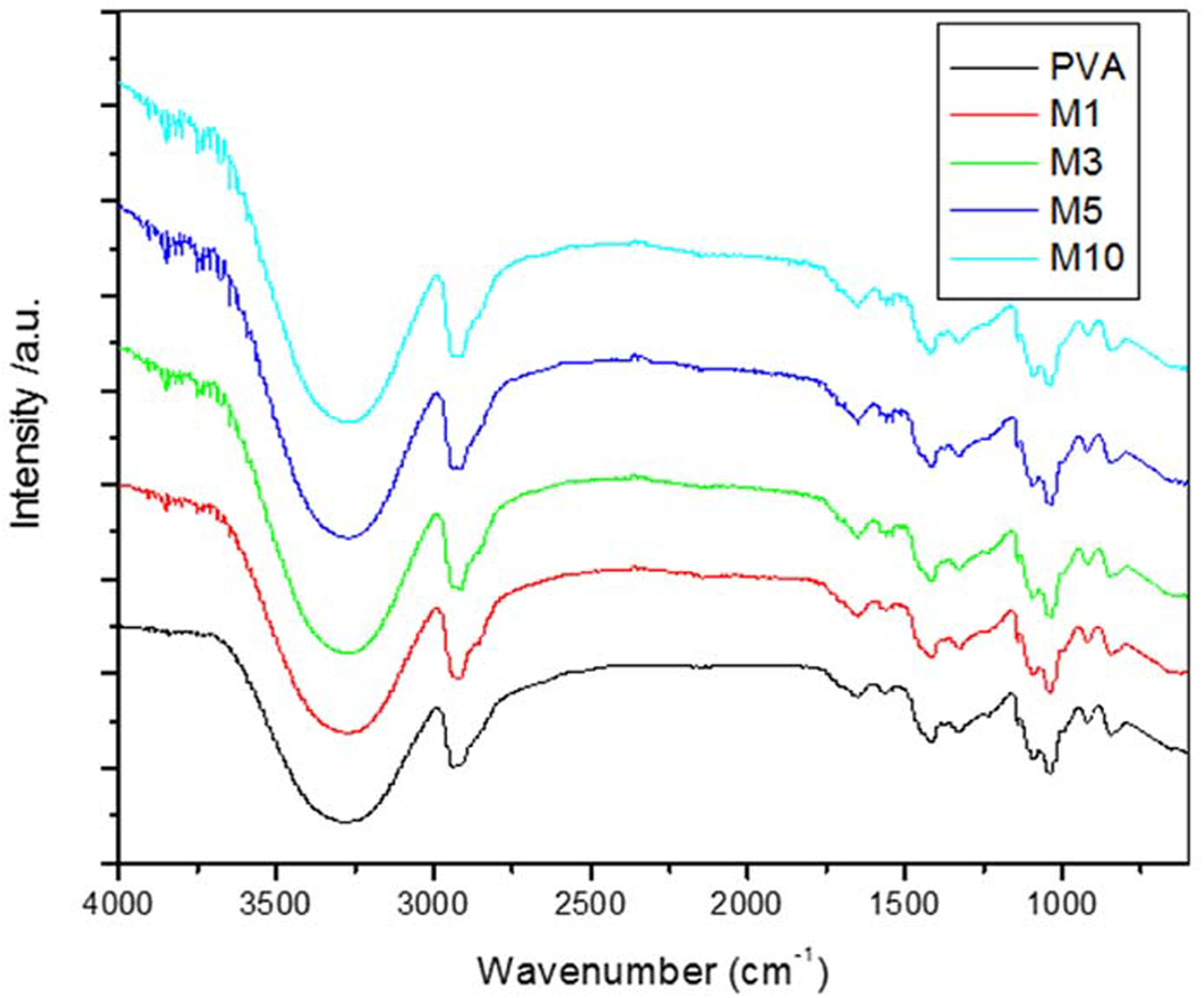
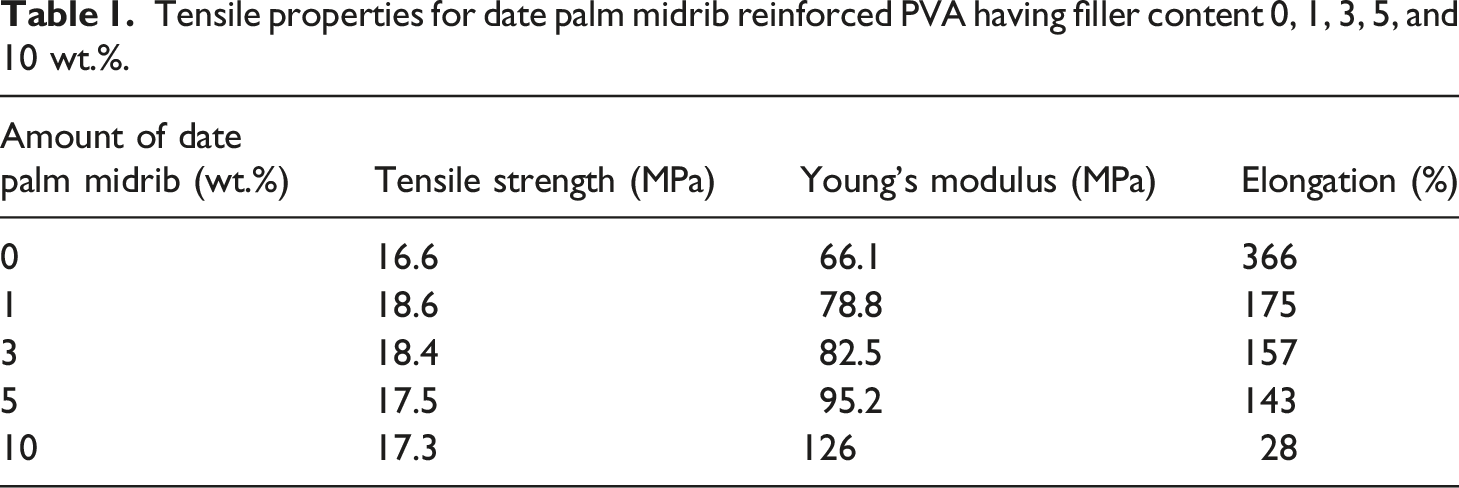
Tensile properties
Tensile properties for date palm midrib reinforced PVA having filler content 0, 1, 3, 5, and 10 wt.%.
X-ray diffraction
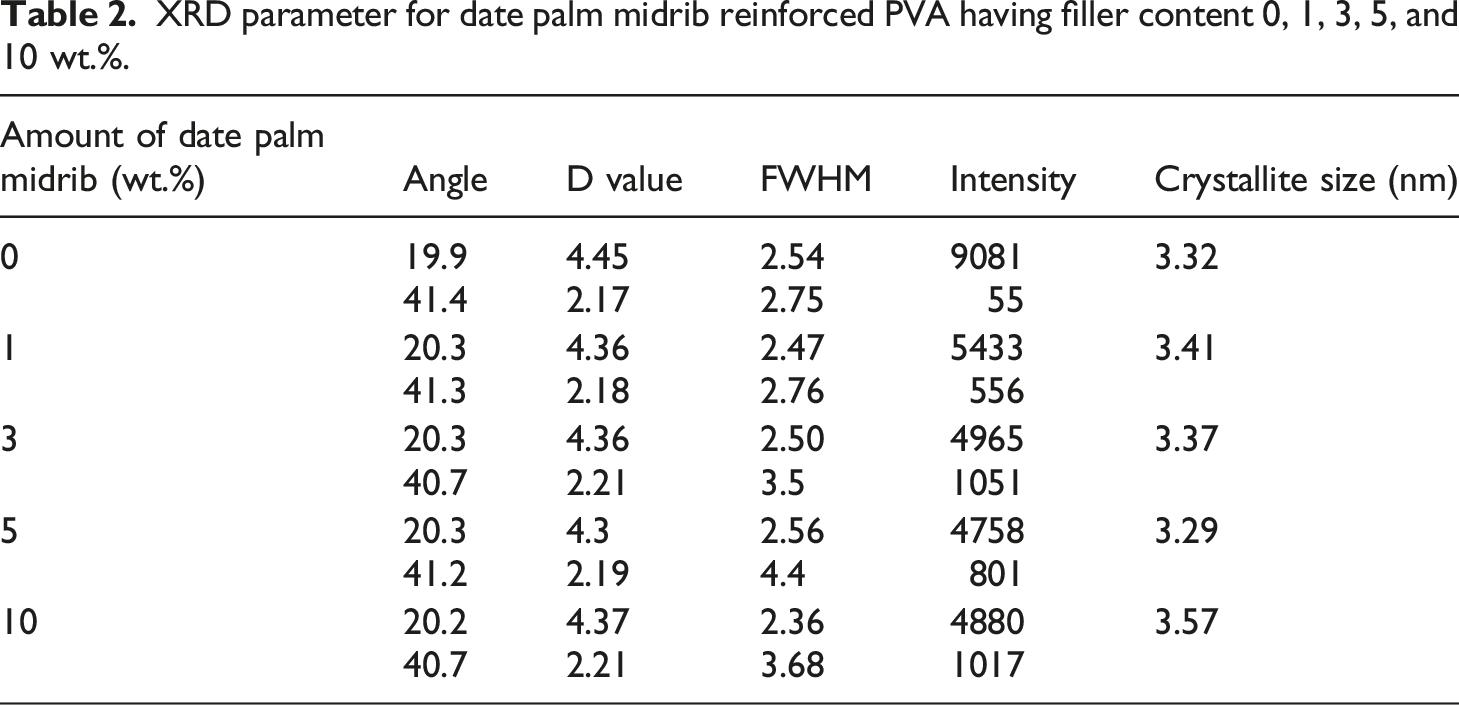
XRD spectra for PVA and date palm midrib reinforced PVA composites is as shown in Figure 2. The details of the XRD parameters are given in Table 2. As shown in the figure, the neat PVA exhibits peaks around 2θ =19.9° and 41° ascribed by the diffraction planes (200) because of the strong inter and intramolecular hydrogen bonding.46–48 The addition of date palm midrib powder resulted in a smaller shift in crystalline peak towards a higher angle. For PVA, which contains 5 wt.%, date palm midrib shows a crystalline peak at 2θ = 20.3° with an interplanar distance d = 4.3 A° and crystallite size = 3.29 nm. For composite having 10 wt.% date palm midrib, there is not much variation in the 2θ and d values. XRD diagram, shows that addition of date palm midrib decreased the intensity of peaks (2θ =19.9° and 41°) which can be seen in PVA. This variation may be resulted from the lowering of intramolecular hydrogen bonding and enhancement in inter-molecular hydrogen bonding with date palm midrib.
17
Moreover, polymer’s crystallinity is affected by the presence of date palm midrib.
49
XRD spectra for the PVA composites having midrib filler content 0, 1, 5, and 10 wt.% XRD parameter for date palm midrib reinforced PVA having filler content 0, 1, 3, 5, and 10 wt.%.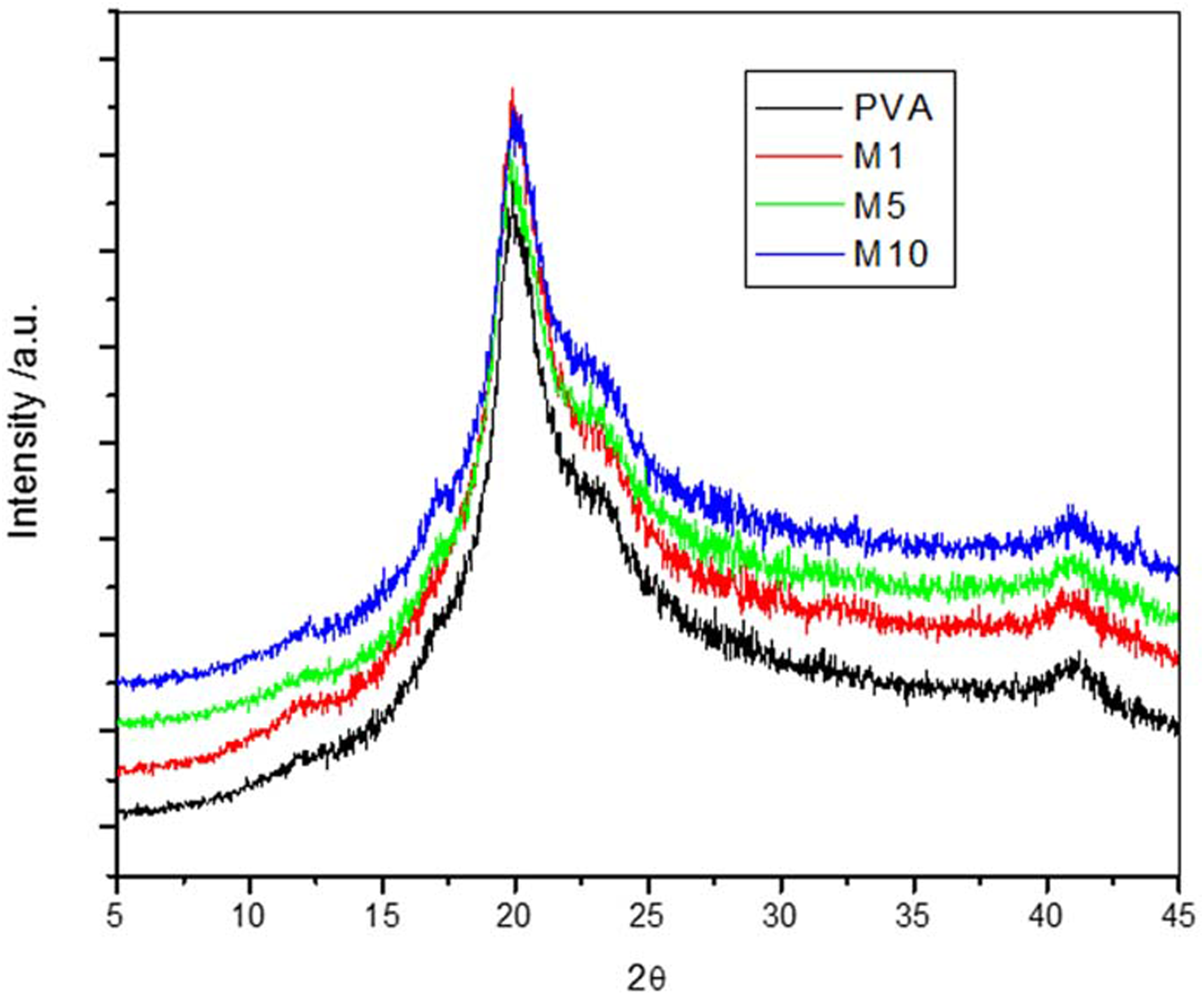
DSC analysis
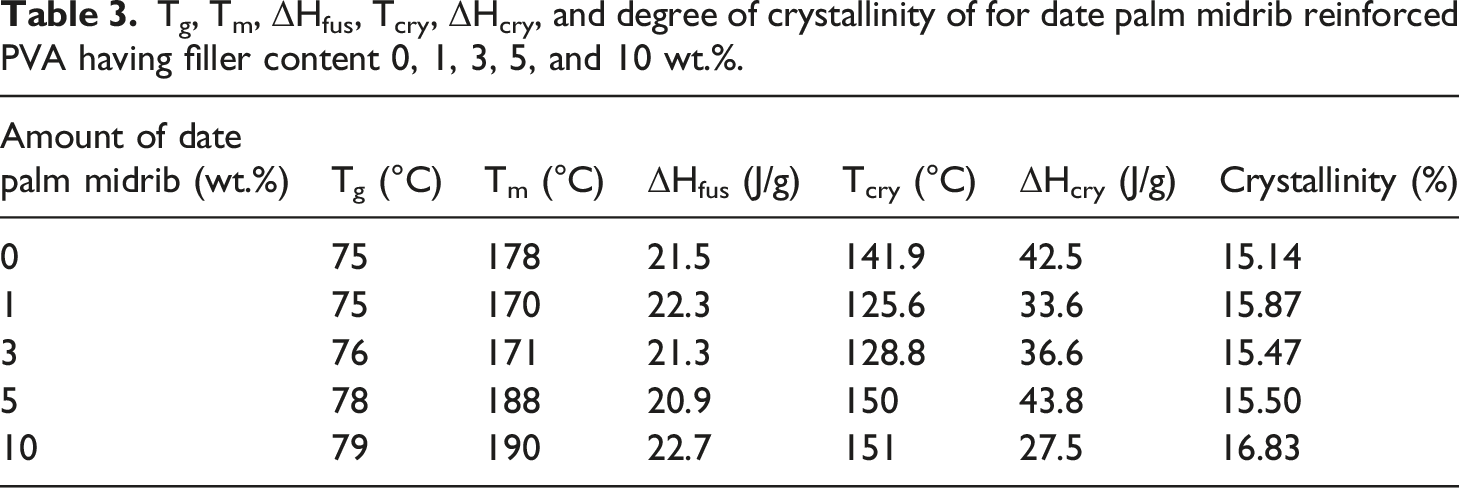
Thermal properties (melting and crystallization) for the PVA and PVA-DPM composites were performed using Differential Scanning Calorimeter. Figure 3 a and b represent the DSC heating and cooling curves for PVA and PVA composites having midrib filler content 0, 1, 3, 5, and 10 wt.%. The data collected from the DSC analysis is summarized in Table 3. It can be seen that the variation in the amount of the filler affects the Tm, Tcry, ΔHfus, ΔHcry values. A slight increase was seen for the composites having filler content of 5 and 10 wt.%. It has been reported that the Tg value of composite can vary due to the plasticizing effect of the water molecules. The Tg values obtained from the DSC thermogram showed that the newly formed interactions between the hydrophilic date palm midrib fillers and the water molecules were strong enough to reduce the PVA chains’ molecular mobility, thus shifting the Tg values to a slightly higher temperature. But roughly, the Tg values obtained for composites were close to that of neat PVA. This result indicates that the small size of the date palm midrib powder could not cause any significant breaks of hydrogen bonds in PVA. The increase in inter-molecular hydrogen bonding caused by glycerol addition seems to have further nullified the effect. Moreover, this behavior could also mean that the interactions between these DPM powder and PVA did not change the amorphous phase’s molecular conformations. Subsequently, the flexible nature and the mobility of the chain were witnessed at about the same temperature. The Tg of the PVA composites remained roughly constant while adding the DPM powder. A slight but negligible increase was observed, which can be due to the strong interactions between the DPM fillers and hydrolyzed PVA matrices. It can be understood that the PVA/DPM interactions tend to shift the Tg to a slightly higher temperature attributed by the decrease in the molecular movement of PVA chains at the interfacial zone. This re-localization effect could have caused a decrease in the plasticizing effect of water. Both Tm and degree of crystallinity of composite increased with the addition of DPM, also owing to the above explanations. (a). DSC heating curves for the PVA composites having midrib filler content 0, 1, 3, 5, and 10 wt.%. (b) DSC cooling curves for the PVA composites having midrib filler content 0, 1, 3, 5, and 10 wt.%. Tg, Tm, ΔHfus, Tcry, ΔHcry, and degree of crystallinity of for date palm midrib reinforced PVA having filler content 0, 1, 3, 5, and 10 wt.%.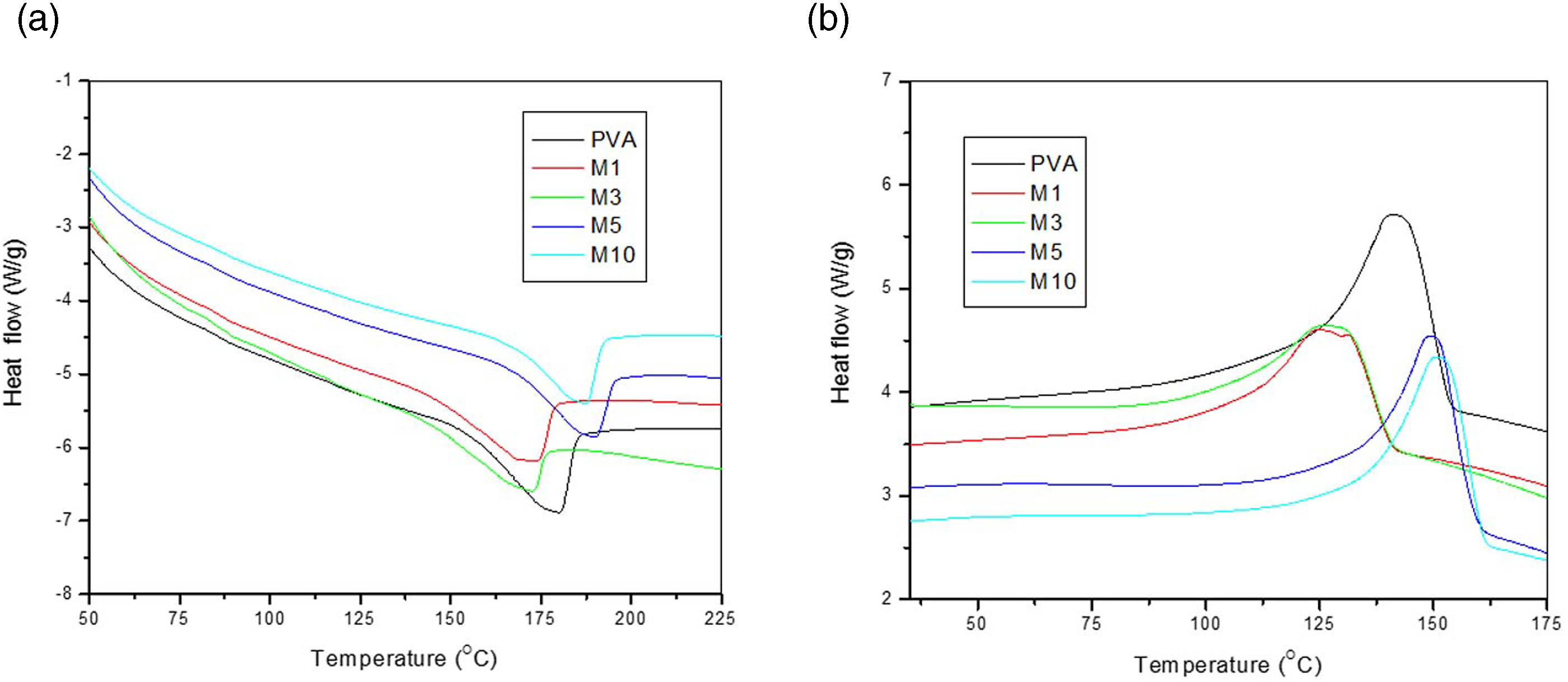
TGA analysis
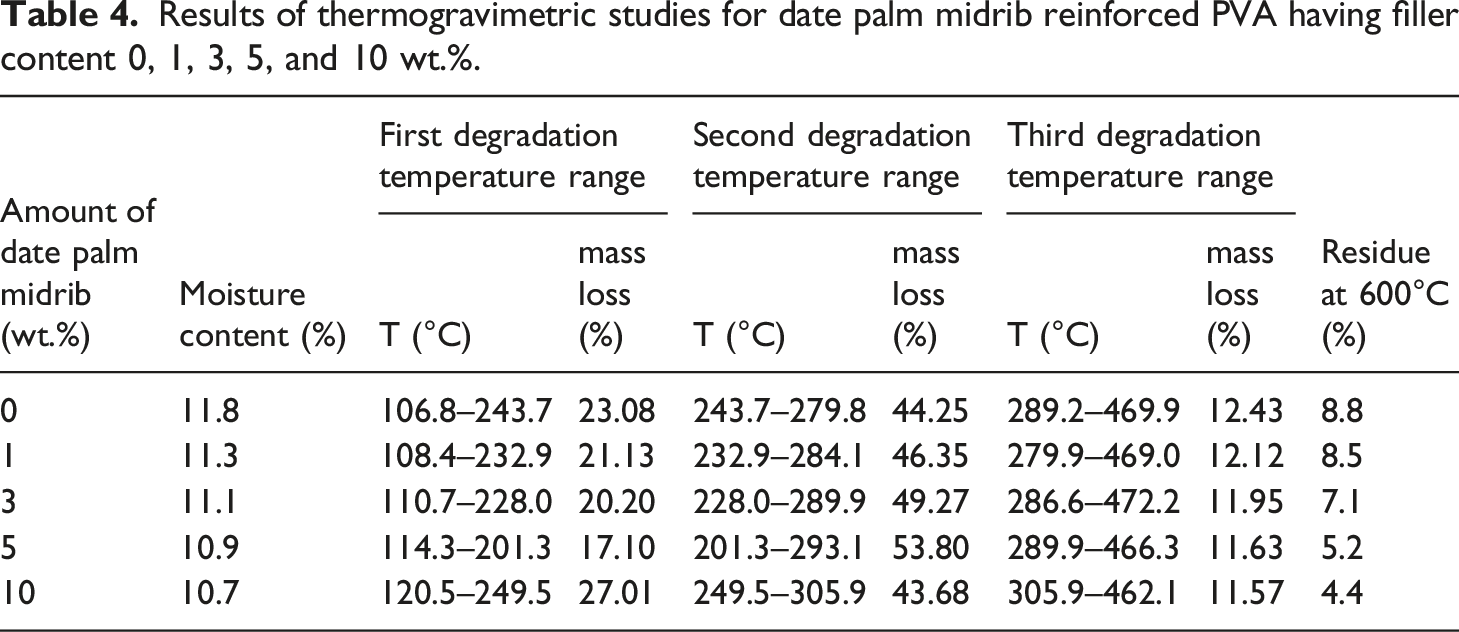
Results of thermogravimetric studies for date palm midrib reinforced PVA having filler content 0, 1, 3, 5, and 10 wt.%.
Morphology analysis
The degree of distribution and the attachment of fillers to the matrix are the most important factors that can determine the properties of any composites. Figure 4(a) to (c) represent the SEM of PVA and PVA composites which contains 1 and 5 wt.% date palm midrib, respectively. The SEM of neat PVA is very smooth and more homogenized. The addition of date palm midrib increased the heterogenic nature of PVA, and small cracks can be seen on the surface. Moreover, there is no agglomeration between the filler and matrix, which causes an increase in the tensile strength, Young’s modulus and thermal stability of the composites. (a) SEM image for the PVA. (b) SEM image for the PVA composites having midrib filler content 1 wt.%. (c) SEM images for PVA composites having midrib filler content 5 wt.%.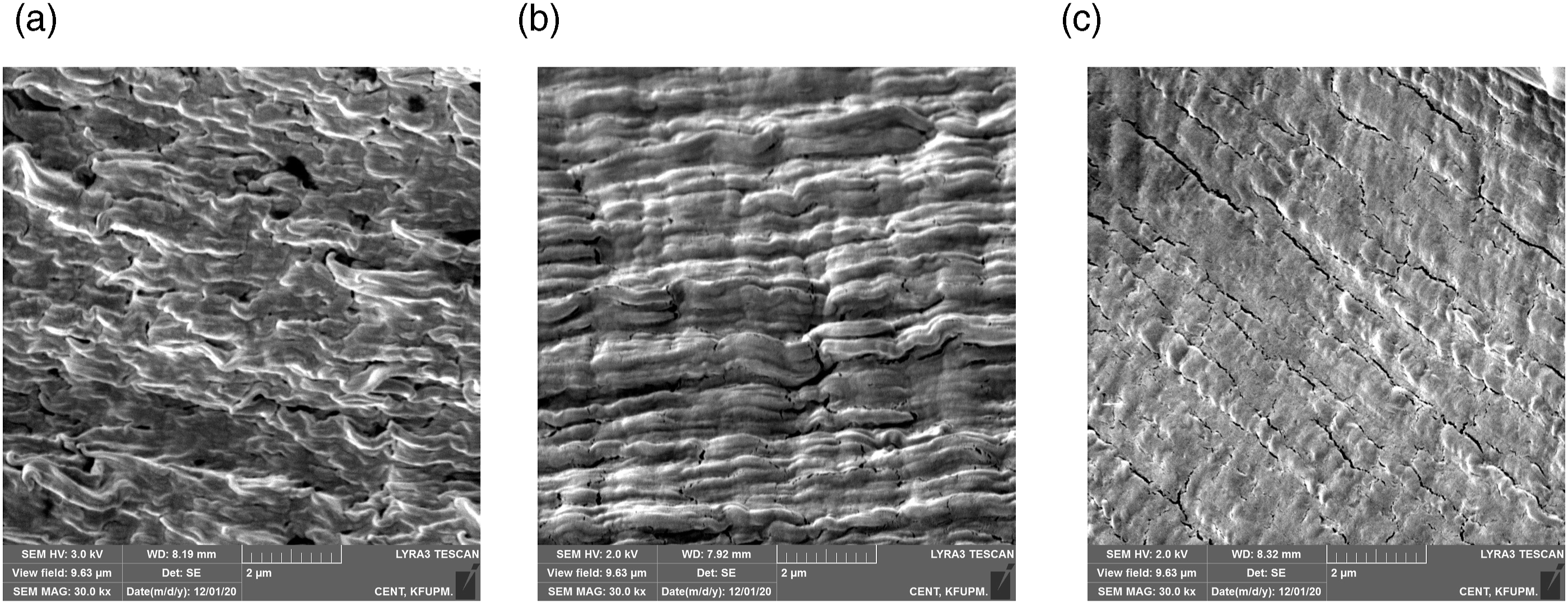
Conclusions
Date palm midrib powder reinforced PVA composites were prepared by varying the filler content using the solution casting method. The tensile modulus increased as a function of filler content while a decrease in its percentage of elongation. The intensity of peaks which are characteristics of PVA decreased with an increase in the amount of filler. DSC analysis showed that Tm, ΔHfus, and percentage of crystallinity can be influenced by the filler content. Also, the good compatibility between the date palm midrib and PVA resulted in better thermal properties and which can be corroborated with the SEM analysis.
Footnotes
Declaration of conflicting interests
The author(s) declared no potential conflicts of interest with respect to the research, authorship, and/or publication of this article.
Funding
The author(s) received no financial support for the research, authorship, and/or publication of this article.
