




Abstract
The quasi-static punch shear behaviors of thermoplastic composites with different polymer matrices and fiber types were investigated. This study was also focused on how much energy absorption capability can be increased by low fiber fractions. Maleic anhydride grafted polypropylene (MA-g-PP) and acrylonitrile butadiene styrene (MA-g-ABS) were used as the matrix material. One layer of aramid, carbon and glass fiber plain weave fabrics was used as the reinforcement material. Quasi-static punch shear test (QS-PST) was applied to the samples to understand the penetration behavior of the samples. The damaged areas were investigated and related to force-displacement curves. The results showed that the neat form of MA-g-PP exhibited 158% more energy absorption than the neat form of MA-g-ABS. In the samples containing one layer of fabric, the highest improvement was observed in the aramid fabric-reinforced MA-g-ABS matrix composites. Aramid fabric increased the energy absorption at a rate of 142.3% in comparison to the neat MA-g-ABS, while carbon fiber fabric and glass fiber fabric increased it by 40% and 63.52%, respectively. Aramid fiber fabric provided no significant improvement in the energy absorption in the MA-g-PP matrix composites, while carbon and glass fiber fabrics contributed to energy absorption at a rate of 48% and 41%, respectively.
Keywords
Introduction
Composite materials have been commonly used in different industrial applications in automotive, military and aeronautics due to their energy absorption capability, high strength to weight ratio and light weight properties. The common feature of the materials used in these industries is that they are always subjected to impact loadings. One of the most important properties of absorbing impact energy is the fiber/matrix interaction. Maleic anhydride is commonly used to improve interfacial adhesion between the fiber and the matrix in thermoplastic composites. 1 –4 Maleic anhydride also increases the tensile strength, flexural strength, tensile modulus and flexural modulus properties of composites which contain different types of fibers. 5 –10 Russo et al. 6 studied the effect of maleic anhydride compatibilizer content which ranged from 0% to 10% on the quasi-static and impact responses of woven glass fabric/polypropylene composites. They found that the compatibilizer improved the flexural strength and modulus, while the presence of the compatibilizer caused a negative effect on the impact response of the glass/polypropylene composites. Karsli and Aytac 11 investigated the effect of MA-g-PP on the properties of short carbon fiber-reinforced polypropylene composites. They observed that MA-g-PP improved the interfacial adhesion between the fiber and the matrix. In addition to this, they found that the ultimate tensile strength, hardness and modulus properties of the modified polypropylene composites were higher than those of the unmodified polypropylene matrix composites. Polypropylene may be effective in terms of increasing the energy absorption of composite structures against high-speed applications like ballistic loading. Carrillo et al. 12 investigated the performance of a polypropylene matrix in the ballistic tests of aramid fabric/polypropylene composite laminates. They found that using polypropylene reduced the number of aramid fabrics needed. The PP matrix provided propagation on the damage into the layers by different damage mechanisms such as fabric/matrix debonding, matrix cracking and delamination. Russo et al. 13 studied the impact and flexural response of MA-g-PP matrix glass fiber-reinforced composites. They found that using the compatibilizer improved the adhesion of the fiber and the matrix. This improvement was weakly affected by the flexural modulus of the composite sample, but it provided an increase in flexural strength by 30%.
The penetration mechanisms of materials are important in terms of understanding material responses against loadings which are applied to their through-thickness direction. Lee and Sun 14 developed a methodology named as quasi-static punch shear test to mimic the penetration behavior of composites against ballistic loading. Then, Jenq et al. 15 predicted the ballistic limit of plain weave glass fabric-reinforced epoxy matrix composites from QS-PST and good agreement were obtained among ballistic test and QS-PST results. Gama and Gillespie 16 reported that energy absorption in QS-PST constituted 81% of the total energy absorbed by the sample in ballistic tests. Erkendirci 17 investigated the quasi-static penetration resistance of unidirectional carbon fiber fabric-reinforced high density polyethylene (HDPE) matrix composites. They performed a series of tests at different span to punch diameter ratios. It was found that the carbon/HDPE composite had effective energy dissipation properties, and it was suitable for energy absorption applications.
When studies in literature are analyzed, it may be seen that they contain multi-layer fabric usage and focus on the effects of compatibilizer content. Claus et al. 18 investigated the effect of matrix and fiber type on the impact response of woven composites. They applied a low velocity impact test on aramid-epoxy, aramid-polypropylene, carbon-epoxy, and carbon-polypropylene composites. It was found that the aramid-polypropylene composite showed the highest energy absorption behavior among these samples. Kim et al. 19 studied the effect of maleic anhydride content on the mechanical properties of chopped carbon fiber composites. They found that excessive maleic anhydride content decreased the fracture toughness value of the composites. They reported that matrix modification plays an important role on the mechanical properties of composite structures.
Yudhanto et al. 20 studied the effect of matrix ductility on damage types in thermoplastic matrix composites against out-of-plane loading. They used ductile homopolymer polypropylene and less ductile copolymer polypropylene as the matrix materials and glass fiber as the reinforcement. They concluded that the ductile matrix improved the maximum reaction force and absorbed energy in the composite structures. Additionally, matrix ductility did not affect the through-thickness damage initiation stage because the transverse crack primarily influenced the inter-fiber distance within the plies.
To the best knowledge of the author, there has been no study related to the quasi-static penetration behavior of thermoplastic matrix composites which have low fiber content. This study focused on the effects of one layer of aramid, carbon, and glass fabric on the quasi-static penetration behavior of thermoplastic matrix composites which had maleic anhydrite grafted polypropylene and acrylonitrile butadiene styrene. The main reason for choosing these matrix materials is that they are widely used in industries such as the automotive industry which is manufactured parts are always subjected to impact loading.
Materials and experimental procedure
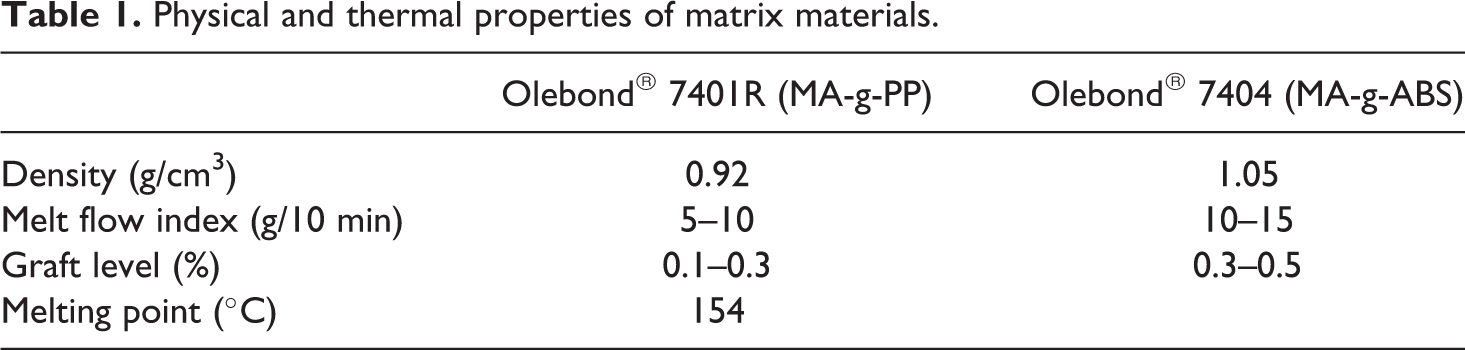
The quasi-static penetration behavior of thermoplastic matrix composites was investigated in this study. MA-g-PP and MA-g-ABS were used as the matrix materials. Table 1 shows the physical and thermal properties of these materials.
Physical and thermal properties of matrix materials.
Plain weave aramid fabric (Twaron CT709, Teijin Limited), plain weave carbon fabric (DowAksa) and plain weave glass fabric (Metyx) which respectively had 200, 200 and 300 g/m2 of areal densities were used as the fiber materials. The polymer matrix materials were donated from the Tisan Engineering Plastics Company in the granular form. Then, they were processed in a twin-screw extruder to obtain polymer film. The feeding speed and rotating speed of the screws were set as 9 rpm and 350 rpm in both polymers, respectively. The process temperature was set as 190–220°C from the inlet to the outlet. Hot compression molding was used to manufacture thermoplastic matrix composites. All plate dimensions were 150 × 150 mm, and plates had about 3.2 mm thick. Seven or eight layers of polymer film were used for manufacturing each of the composite plates, and one layer of fiber fabric was inserted into the middle of the polymer films. Each of one layer of fabric was weighed before the manufacturing. Then, final state of each of thermoplastic matrix composite specimen was weighed. Finally, the percentages of fiber weight in the thermoplastic composite samples were calculated by dividing these two values each other (fabric weight/total weight) and were found as 7%, 7% and 8% for aramid, carbon, and glass fiber, respectively.
Figure 1 presents the process conditions applied in the manufacturing of the samples. Firstly, pre-heating was applied to the film and fabric without pressure for 1–1.5 min. Then, pressure was gradually increased. First, 60–70 bars of pressure was applied, and the sample was depressurized again. This process was repeated three times to ensure that the distribution of the polymer phase was more homogeneous throughout the sample. Afterward, pressure was increased up to 110 bars. The sample was kept under this pressure for 1.5–2 min. Then, a cooling process was applied to the sample at 130 bars for 1–1.5 min.
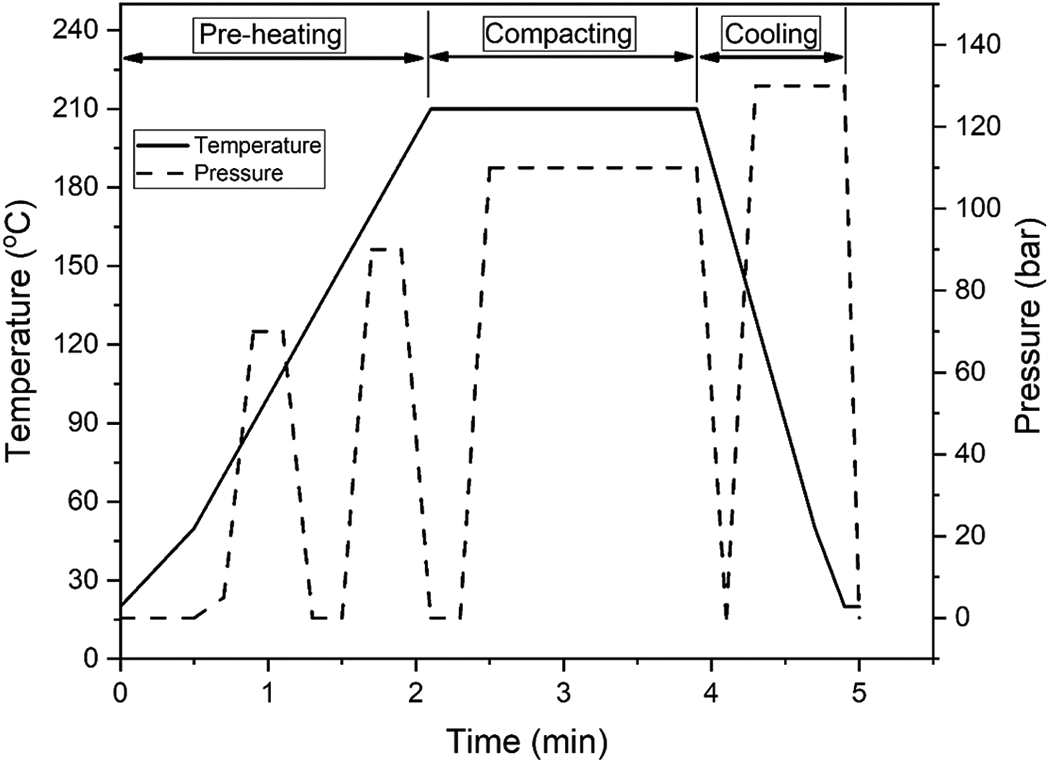
Processing conditions which were applied in manufacturing of thermoplastic matrix composites.
Quasi-static punch shear test (QS-PST) was applied to understand the penetration behavior of the sample against transverse loadings. Figure 2 presents the quasi-static punch shear test fixture and its components. The punch was connected to the 100 kN load cell of a Shimadzu AGS-X series universal test device. One of the main parameters in QS-PST is the span to punch ratio (SPR). This parameter is effective in terms of the penetration behavior of a sample.
16,21,22
SPR was 2 (Dspan = 25.4 mm and Dpunch = 12.7 mm) throughout experimental studies. Force-displacement curves were obtained at the end of the tests, and energy absorbed by the samples was calculated by software using the integration below: Quasi-static punch shear test fixture: (a) punch, (b) sample, (c) cover plate, and (d) support plate.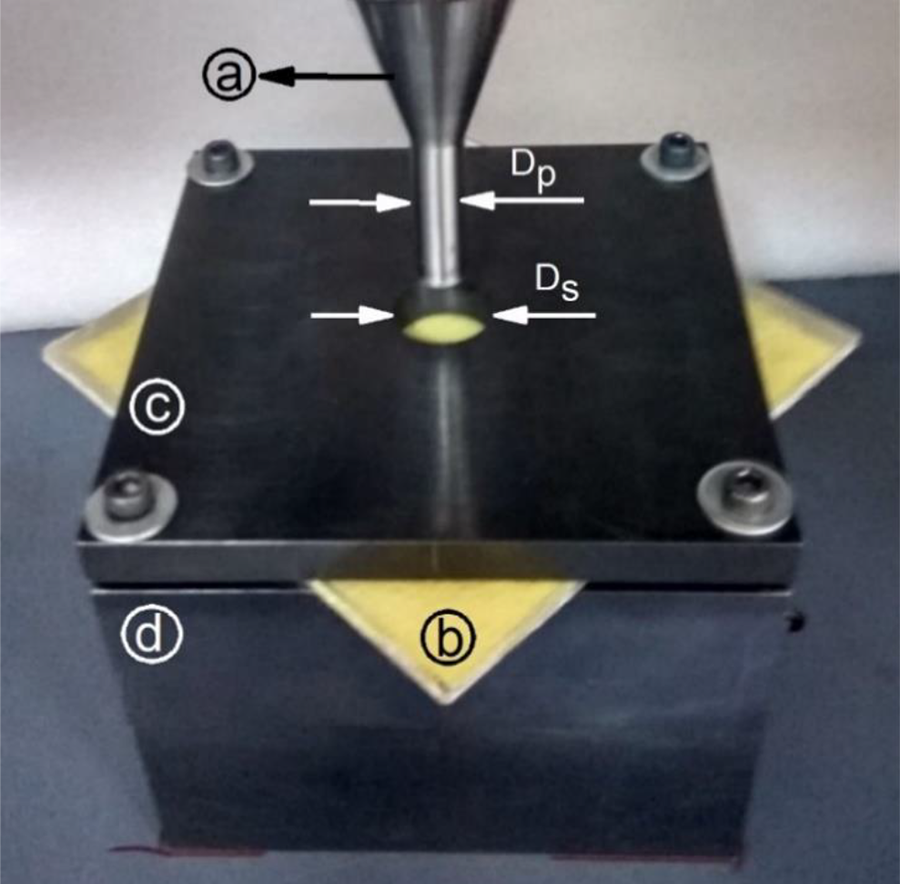

Here, F and
Results and discussion
Initially, quasi-static penetration tests of the neat forms of the two matrix materials were performed to understand the energy absorption capability and penetration behaviors of the fully polymer phase. Figure 3 represents the penetration behaviors of the neat forms of the MA-g-PP and MA-g-ABS polymers. MA-g-ABS performed more rigid behavior in the first part of the penetration test. After it reached its maximum force value at 4 mm of displacement, a load drop behavior was observed until 8 mm of displacement. When the penetration curve of the neat form of MA-g-PP was investigated, it could be seen that the MA-g-PP reached its maximum force value at 12 mm of displacement, then, it could resist more loading after its maximum value. This may be explained with fibrillation of polypropylene. MA-g-PP subjected to tension/shear loading which caused to membrane extension of annulus, then tension/shear dominated type of failure occurred at ultimate force. The elongated section of the MA-g-PP sample could resist a little amount of loading for a short time, and suddenly, load drop occurred.
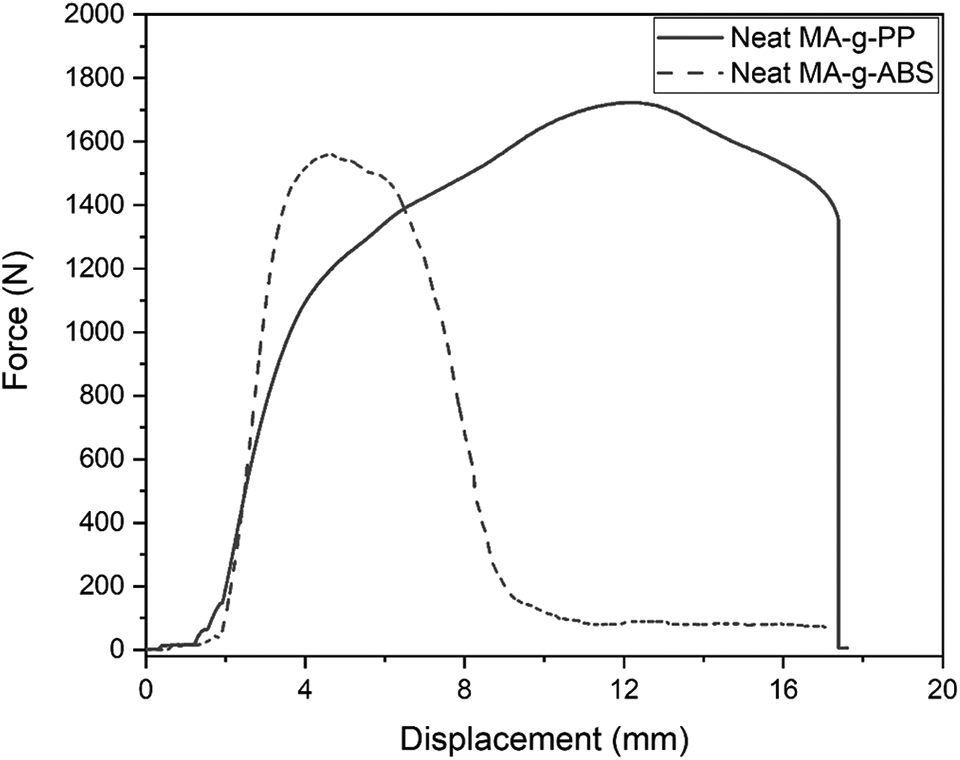
Force-displacement curves for neat form of MA-g-PP and MA-g-ABS.
Figure 4 shows a comparison about the effect of adding one layer of fabric in terms of the penetration behavior of the samples in both the MA-g-PP and MA-g-ABS polymers. The main difference of these two groups of curves is the shape of them. The shapes of the force-displacement curves of the MA-g-PP matrix composites were irregular, while the shapes of those of the MA-g-ABS matrix composites in Figure 4(a) were smooth. This smoothness in the curves may be originated by fiber/matrix compatibility of MA-g-PP composites was more than MA-g-ABS matrix composites. Fabric characteristics became more dominant in the samples containing the MA-g-ABS matrix due to the brittle nature of ABS compared to PP. Because MA-g-PP adhered to the fibers effectively, their composite structures showed more load drops throughout their penetration process. When the linear parts of the curves in Figure 4(b) are investigated, it can be seen that adding fabric layer into the structure increases the rigidity. Finally, the aramid fiber-reinforced samples exhibited the highest reaction force in comparison to the carbon and glass fibers.
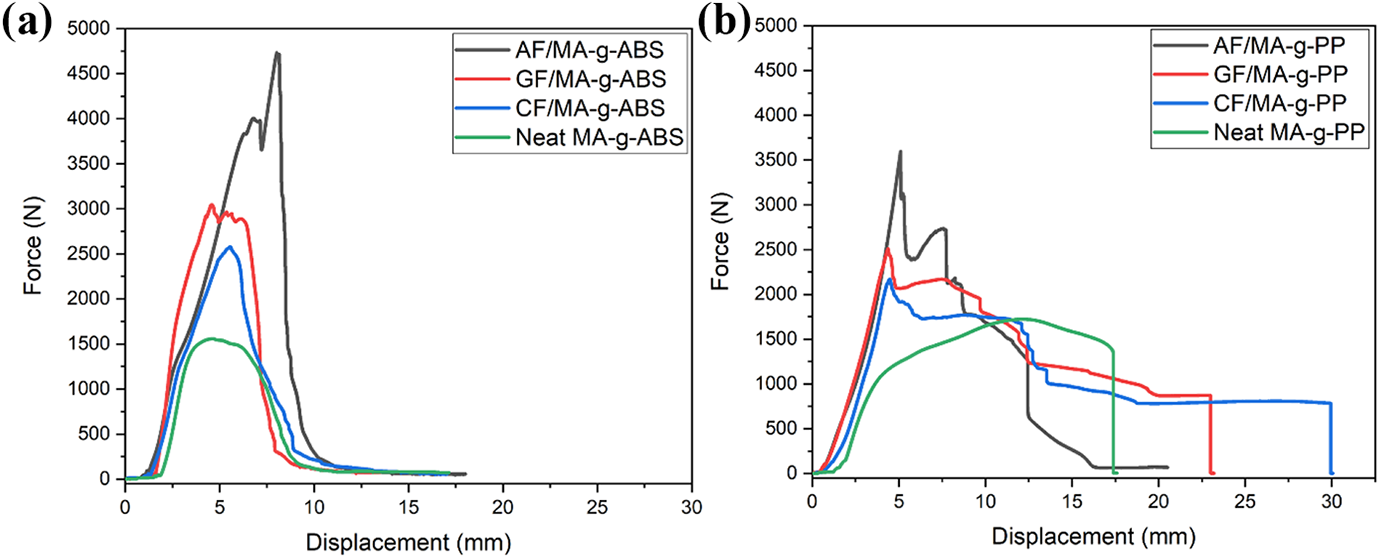
Comparison of force-displacement graphs of all fiber types (AF, GF, and CF) for two different matrix materials: (a) MA-g-ABS matrix composites and (b) MA-g-PP matrix composites.
Figure 5 compares the efficiency of the MA-g-PP and MA-g-ABS matrix materials with the same fiber type. As expected, the MA-g-PP matrix composites showed more elongation in all fiber types. The composite samples which included the MA-g-PP matrix showed more load drops than the MA-g-ABS matrix composites. This may be explained by that the MA-g-ABS matrix shows brittle fracture. Hence, sudden load drops may occur in its composite forms. Additionally, more oscillations were observed in the force-displacement plots of the MA-g-PP matrix composites, because they had more interfacial adhesion with fibers contrary to MA-g-ABS.
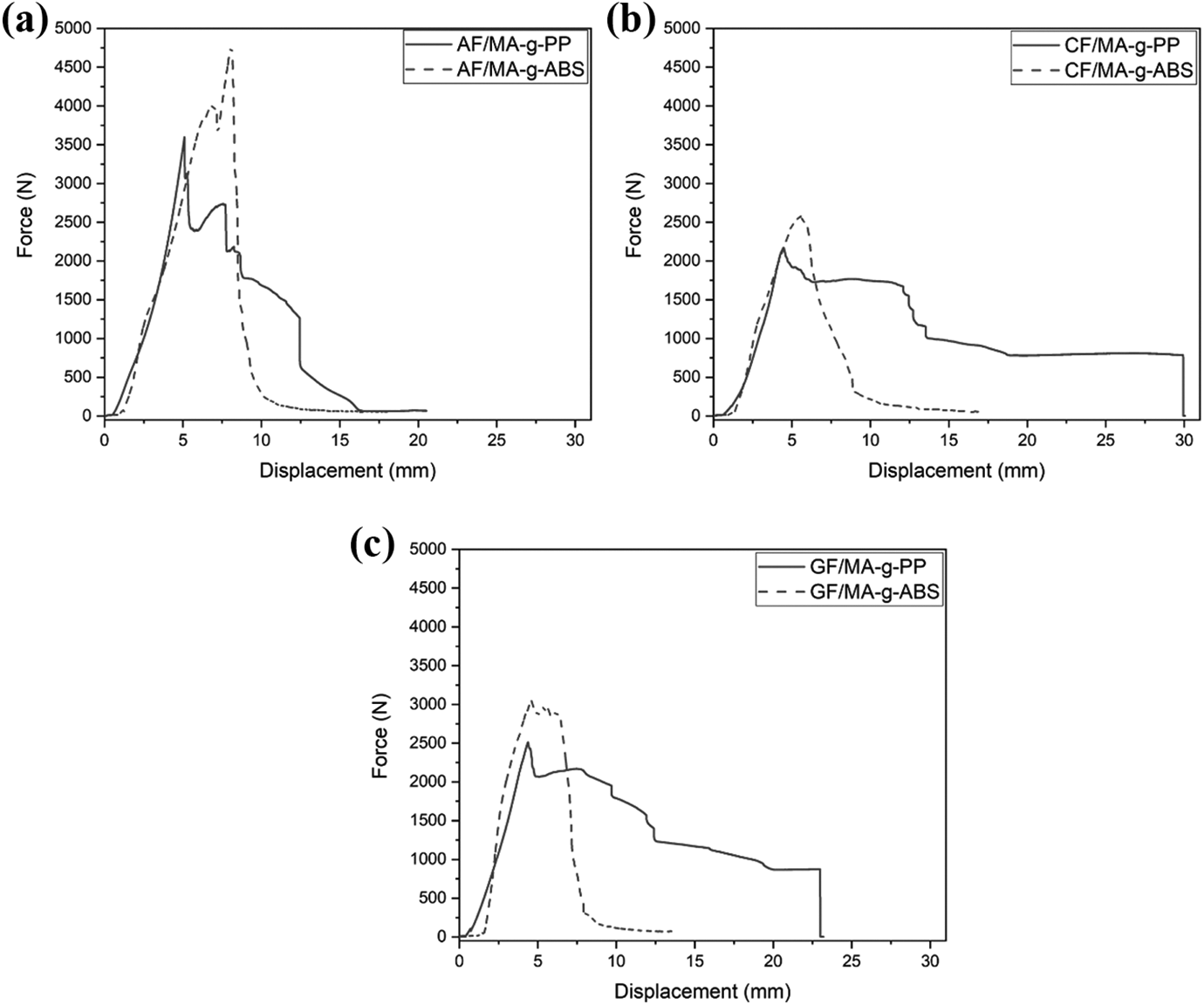
Comparison of force-displacement graphs of MA-g-PP and MA-g-ABS matrix composites for all types of fabrics: (a) aramid fiber-reinforced, (b) carbon fiber-reinforced, and (c) glass fiber-reinforced composites.
The bottom views of all types of samples to interpret the damage that occurred are presented in Figure 6. The first thing noticed here is that there was no adhesion between the aramid fiber fabric and the MA-g-ABS matrix. As a result of this, the aramid fiber performed the highest improvement in the ABS matrix as the fiber characteristics were more dominant than the matrix. Additionally, major damage mode was observed as matrix cracking in CF/MA-g-ABS and GF/MA-g-ABS composites due to the nature of ABS. On the other hand, shear plugging damage modes were occurred in PP matrix composites. Tension-shear damage mechanisms were observed in CF/MA-g-PP and GF/MA-g-PP composite samples. The carbon and glass fibers bonded to the ABS matrices as it can be seen in Figure 6. It may be seen that the samples showed matrix yielding due to the ductility of polypropylene by examining Figure 6. If Figure 4 is associated with Figure 6, the deflection behaviors of the samples may be more apprehensible. For instance, the carbon fiber-reinforced MA-g-PP matrix composite showed the highest displacement in QS-PST as it may be seen in Figures 4 and 6.
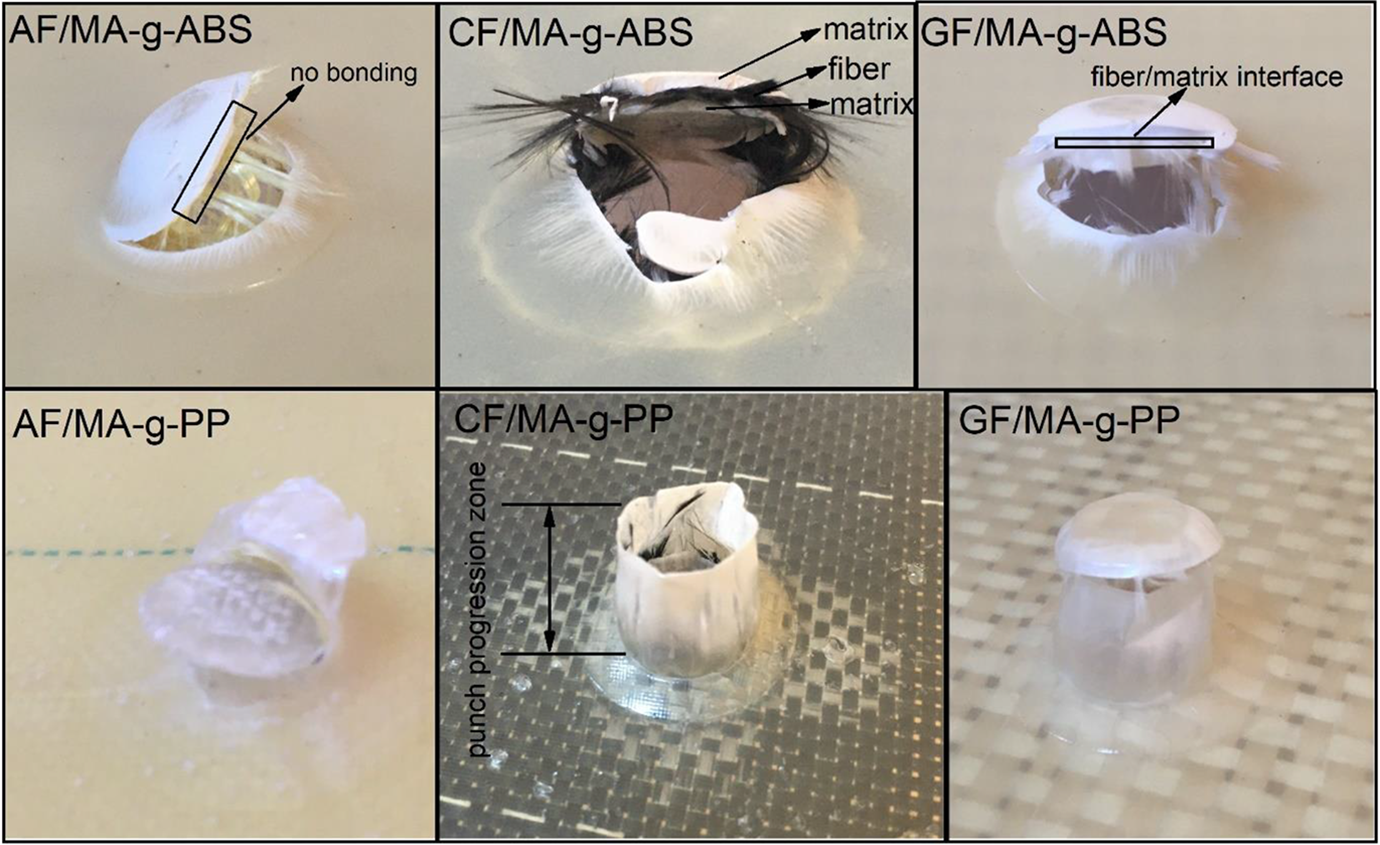
Bottom views of damaged samples.
Figure 7 shows the energy absorbed by different test samples during the punch tests until they were perforated. The first two columns present the penetration behaviors of the neat forms of the matrix materials. According to these results, the neat form of MA-g-PP showed 158% more energy absorption than the neat form of MA-g-ABS. When the fabric types were compared in terms of the efficiency in the polymer matrices, it may be concluded that the plain weave aramid fabric provided the most contribution in energy absorption among all MA-g-ABS matrix composites. The aramid fabric increased the absorbed energy at a rate of 142.3% in comparison to the neat form of MA-g-ABS, while the carbon fiber fabric and glass fiber fabric increased it by 40% and 63.52%, respectively.
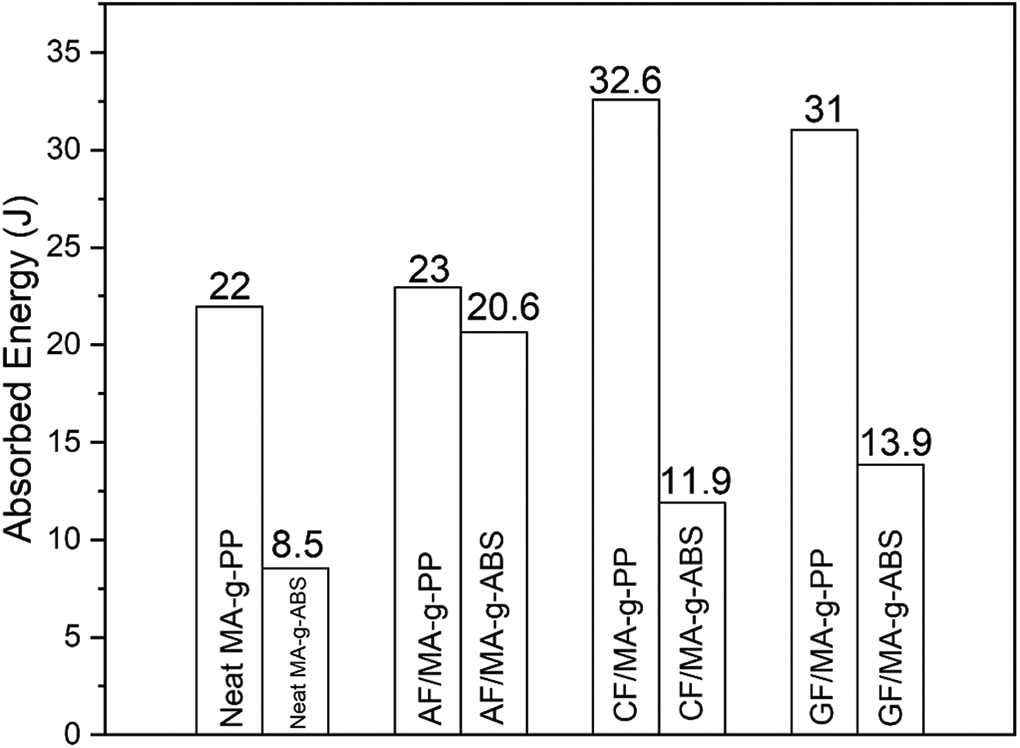
Absorbed energy by all samples in QS-PST.
When the MA-g-PP matrix composites were investigated, it could be concluded that the aramid fiber fabric had no significant improvement in energy absorption. The carbon fiber and glass fiber fabrics contributed to the energy absorption values of the MA-g-PP matrix composites by 48% and 41%, respectively. All cases of polypropylene demonstrated more energy absorption than the neat ABS and its composites. Punch shear strength is another parameter which can be obtained through a quasi-static punch shear test. It may be calculated as 23 :

where Dm is the mean diameter and can be calculated by equation (3), and Hc is the thickness of the plate.

Figure 8 presents the punch shear strength (PSS) values of all samples. Because PSS is directly proportional to the maximum force value, its results are different from the absorbed energy values. For example, the PSS value of the neat MA-g-PP was 10.4% higher than the neat MA-g-ABS, while the absorbed energy value of the neat MA-g-PP was 158% higher than the neat MA-g-ABS. The aramid fiber fabric provided the most contribution in terms of PSS in both the MA-g-PP and MA-g-ABS matrices. This results from that aramid fibers can resist against shear loadings due to their fiber friction mechanism. It may be stated that glass fiber fabric is more compatible with both of the matrix materials than carbon fiber fabric in terms of its strength against transverse loadings.
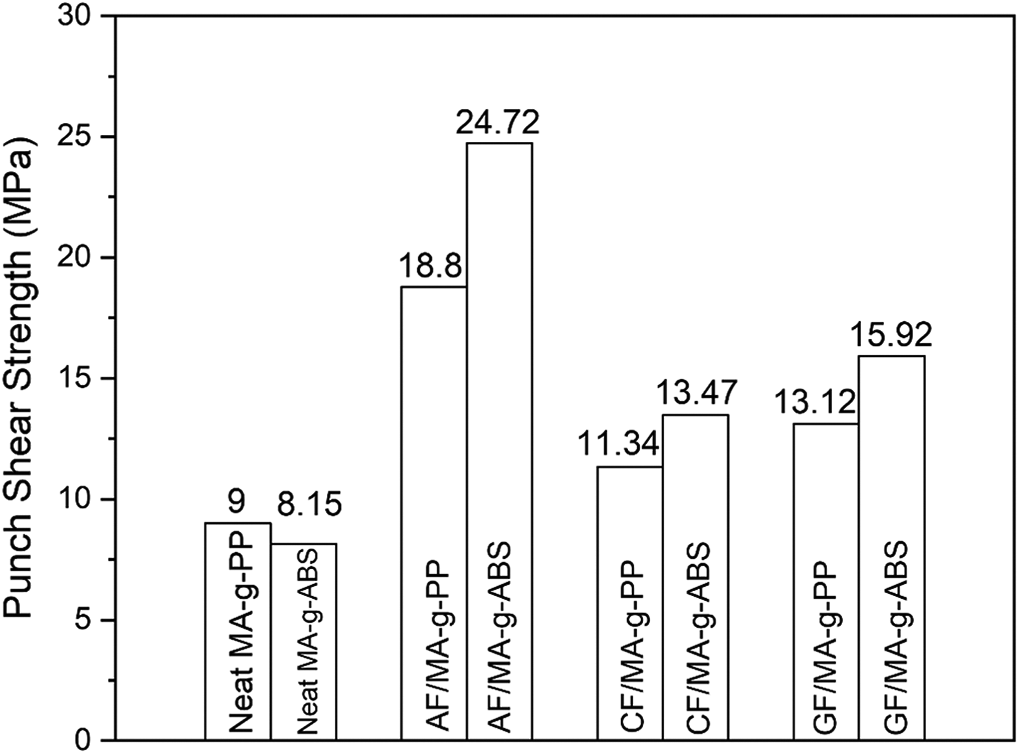
Punch shear strength values of all samples.
Conclusions
The quasi-static penetration behaviors of thermoplastic composites which had two different matrix and three different fiber materials were experimentally investigated in this study. The obtained results can be summarized that the neat form of MA-g-PP absorbed 158% more energy than the neat form of MA-g-ABS. One layer of plain weave aramid fiber fabric increased the energy absorption of the neat MA-g-ABS at a rate of 142.3%, while carbon fiber and glass fiber fabrics improved the energy absorption of the neat MA-g-ABS by 40% and 63.52%, respectively. Additionally, aramid fiber had no significant improvement on the energy absorption of the PP-g-MA matrix, while carbon and glass fibers provided an increase at rates of respectively 48% and 41%. Finally, composites which had aramid fiber fabrics performed better results in terms of the punch shear strength values as aramid fiber can resist against shear loadings.
Footnotes
Acknowledgements
The author thanks the Tisan Engineering Plastics Company for generously donating MA-g-PP and MA-g-ABS. The author is also grateful to Teijin Limited for supplying the aramid fabric. The author thanks Dr Mehmet Şahbaz and Hüseyin Çağdaş Aslan for performing quasi-static punch shear tests and manufacturing the polymer films, respectively.
Funding
The author(s) received no financial support for the research, authorship, and/or publication of this article.
