




Abstract
In this work, ultra-high molecular weight polyethylene (UHMWPE)/natural flake graphite (NG) polymer composites with the extraordinary high thermal conductivity were prepared by a facile mixed-heating powder method. Morphology observation and X-ray diffraction (XRD) tests revealed that the graphite NG flakes could be more tightly coated on the surface of UHMWPE granules by mixed-heating process and align horizontally (perpendicular to the hot compression direction of composites). Laser flash thermal analyzer (LFA) demonstrated that the thermal conductivity (TC) of composites with 21.6 vol% of NG reached 19.87 W/(m∙K) and 10.67 W/(m∙K) in the in-plane and through-plane direction, respectively. Application experiment further demonstrated that UHMWPE/NG composites had strong capability to dissipate the heat as heat spreader. The obtained results provided a valuable basis for fabricating high thermal conductive composites which can act as advanced thermal management materials.
Keywords
Introduction
In recent years, microelectronic packaging has played an important role in the rapid development of electronic appliances. With the size decreasing and power output increasing of electronic devices, the weight and heat dissipation of thermal management materials are becoming more and more important.1–3 In order to solve the problems associated with high heat flux in the device and avoid structural damage of electronic devices, the heat transfer efficiency of heat conducting materials is required to be higher.4–6 Therefore, enhancing the TC of thermal management materials is necessary. Although inorganic metals, ceramics and other traditional heat conduction materials have high heat conduction coefficient, but the characteristics of high density, difficult processing and expensive price limit their further application and development in thermal management materials. The polymer has the advantages of light weight, corrosion resistance and easy forming. Unfortunately, the TC of the polymer is usually very low (generally less than 0.5 W/(m·K)). 7 Therefore, the addition of fillers with high TC to polymeric materials has been increasingly studied.8–12 In order to obtain desired TC, it is generally necessary to add a high content of thermally conductive filler (>40 vol%).13–16 However, the high content and random distribution of fillers cannot significantly improve the TC of composites fabricated by traditional methods. More seriously, the traditional methods of preparing composites would lead to serious deterioration of mechanical properties and economic benefits.17,18 Therefore, controlling the distribution of the thermally conductive filler in the polymer is an important factor which affects the TC of composites, 19 and allowing filler to form a continuous thermal network can achieve a desired TC at low filler levels in composites.
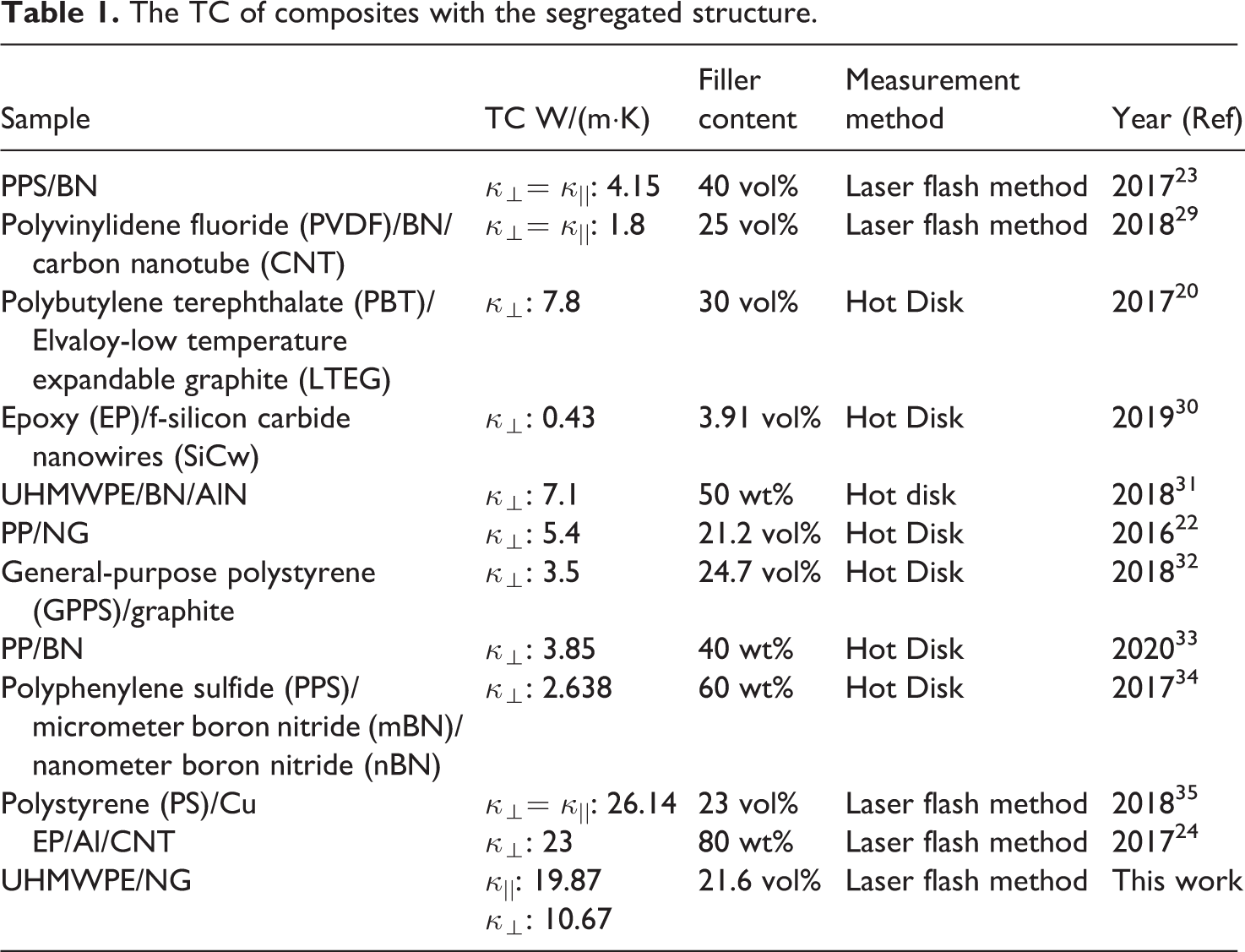
As an effective method to form a continuous network in composites, the segregated structure has received extensive research and attention.20,21 The TC of composites with segregated structure reported recently was summarized in Table 1. Feng et al. 22 prepared graphite/PP composites with segregated structure. At a graphite content of 21.2 vol%, the TC of composite reached 5.4 W/(m·K), which was attributed to the formation of perfect network. Yue Jiang et al. 23 showed that polyphenylene sulfite (PPS)/boronnitride (BN) composites could achieve a high TC of 4.15 W/ (m·K) containing 40 vol% BN. Ng et al. 19 fabricated a 3D segregated structure composite by sintering the polypropylene (PP)/aluminum nitride (AlN) particles with a core–shell structure. Although the formation of the segregated structure in composites can greatly improve the TC of the material, there is still a lot of room for improvement in TC. LK Olifirov et al. 24 created an effective heat transfer aluminum filler network in an epoxy matrix and achieved a high TC of 23 W/ (m·K).
The TC of composites with the segregated structure.
As an engineering thermoplastic, UHMWPE has many excellent properties such as outstanding wear resistance, good self-lubricating properties, low friction and outstanding chemical stability which has been widely used in shielding materials, electronic packaging material, transportation and medicine. Comparing with the existing conventional polyethylene, UHMWPE is easy to construct a well-segregated network due to its high molecular weight.25–27 NG, a kind of two dimensional (2-D) filler, has a high in-plane TC which shows great potential in the field of heat sinks, LED devices, and heat exchangers.24,28
In this work, on the basis of traditional powder mixing method, the highly thermally conductive UHMWPE/NG composites were prepared by the mixed-heating powder method. The method utilized the self-adhesiveness of UHMWPE granules in the condition of the high-temperature to better coat the NG flakes. Thereby, a more complete network was preparing to achieve a much higher TC in UHMWPE/NG composites. The maximum TC of composites reached 19.87 W/(m·K) and 10.67 W/(m·K) in the in-plane and through-plane direction, respectively. In addition, the application experiment further demonstrated that UHMWPE/NG composites had excellent thermal management capability as LED heat spreader.
Experimental
Materials
UHMWPE (GUR4150), with an average particle of 100 µm, the molecular weight of 5 × 10⁶ g·mol−1, the density of 0.93 g/cm3, melting temperature (Tm) of 134.85°C, volume resistivity R = 1017 Ω·cm−1 and crystallinity degree is 64.39% was obtained from Suzhou Jingkan plasticizing Co., Ltd. (JiangSu, China). Nature flake graphite (NG), with an average particle size of 6.5 µm and an apparent density of 2.25 g/cm3, was from Qingdao Shengda Carbon Machinery Co., Ltd. (Shandong, China).
Preparation of UHMWPE/NG composites
The preparation of UHMWPE/NG composites was schematically shown in Figure 1. First, NG and UHMWPE granules were mixed by mechanical stirring for the first time using a blender at a speed of 5000 r/min for 3 min. Then mixture was heated in the oven for 20 min at 200°C, following stirred at a speed of 5000 r/min for 3 min quickly, forming NG%UHMWPE coated granules. Finally, the coated granules were compressed under 10 MPa at 200°C for 10 min, and UHMWPE/NG composites sheet with segregated structures were obtained. The content of added NG was 2.13 vol%, 4.39 vol%, 9.37 vol%, 15.05 vol% and 21.6 vol%, respectively. For comparison, composites with the same NG content were fabricated by traditional powder mixing method without mixed-heating procedure under the same conditions.
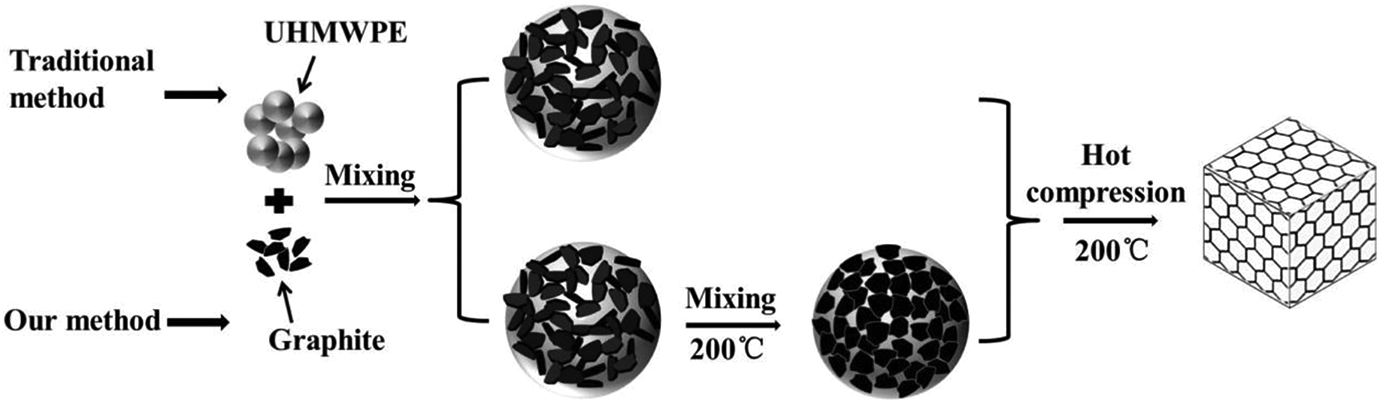
Schematic illustration to the preparation of UHMWPE/NG composites.
Characterization methods
The surface morphologies of NG%UHMWPE granules were carried out by a scanning electron microscope (SEM, Quanta 250, FEI, USA). X-ray diffraction (XRD, Rigaku, Ultima IV, Japan, 40 kV, 40 mA) was conducted to investigate the orientation distribution of NG. The TC was calculated according to the equation λ = α × ρ × Cp, where λ, α, ρ, and Cp represent the TC, thermal diffusivity, density, and specific heat capacity of the composites obtained by laser flash method at 25°C (LFA 467, Netzsch, USA). The segregated structures were conducted with an optical microscope (LEICA DMLP, Leica, Germany). Before observation, the specimens were cut into slices with a thickness of 50 µm by a RM2235 microtome.
Results and discussion
SEM measurements were employed in order to evaluate the distribution of NG on the NG%UHMWPE granules. Figure 2a and b were the pure UHMWPE granules and raw NG. As can be seen from the figure, the surface of the UHMWPE granules was not very irregular and rough. Figure 2(c–d) and Figure 2(e–f) showed the coated granules with a NG content of 21.6 vol% prepared by two different methods. A large amount of NG was well coated on the surface of UHMWPE in the Figure 2c and Figure 2f, while Figure 2e and Figure 2f showed a less effective NG coating. Obviously, the difference was caused by mixed-heating process. Under the heating condition, the UHMWPE surface began to melt, which created a certain viscosity. At this point, the melting layer acted as an adhesive and NG can be better coated on the surface of UHMWPE granules during stirring. Most of NG flakes were located at the interface of UHMWPE, which was tangent to the surface of UHMWPE. These differences in microstructure eventually leaded to differences in TC of composites.
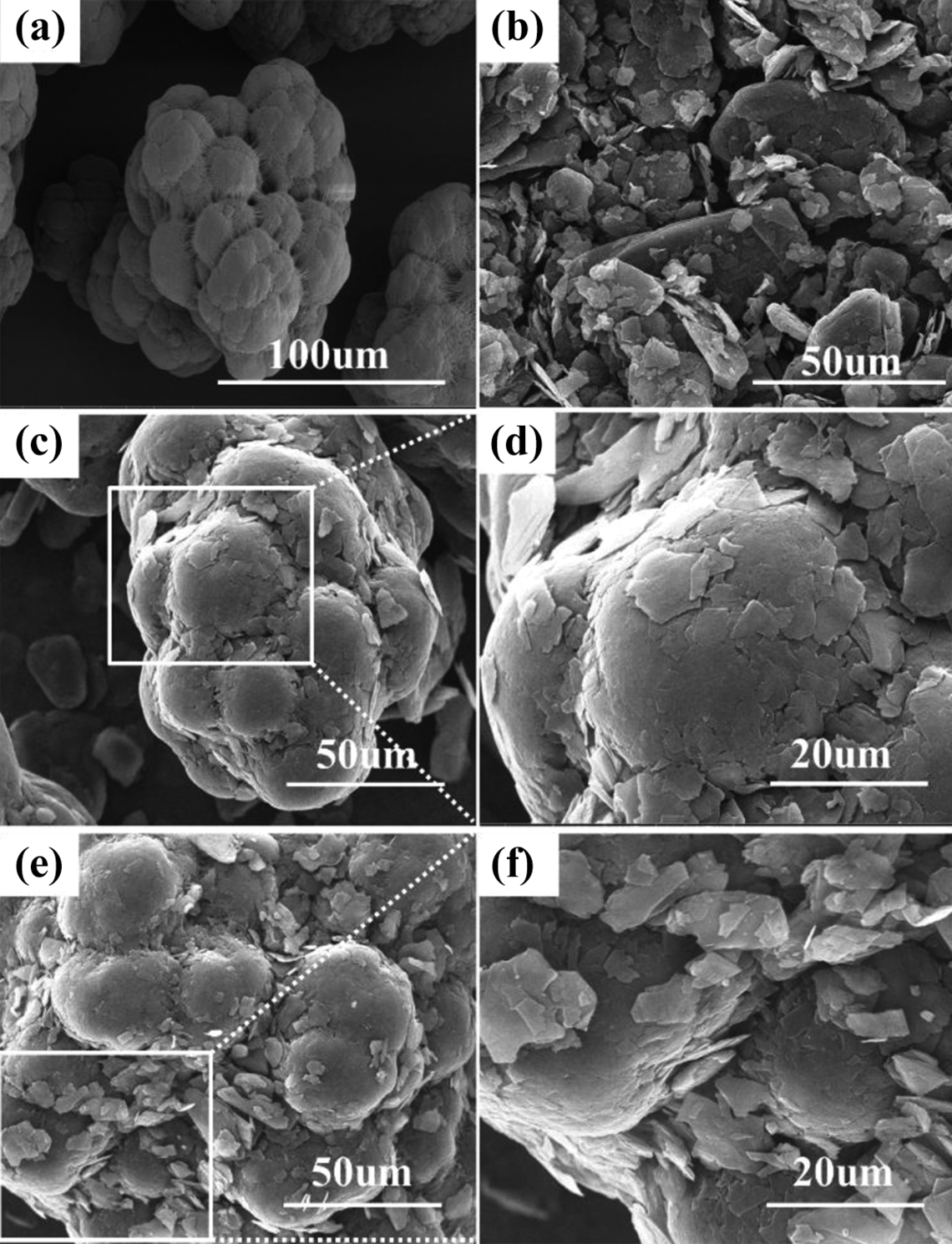
SEM image of NG%UHMWPE granules with 21.6 vol% of NG: (a) a pure UHMWPE, (b) raw NG, (c, d) the mixed-heating powder method, (e, f) the traditional powder mixing method.
According to the previous efforts to prepare NG blocks with preferred orientation and high TC by Yuan et al. 13 , the diffraction spectra characterized by XRD are different in the two directions of NG block, perpendicular and parallel to the hot-pressing direction, respectively. The insert map in Figure 3b shows a schematic illustration of a NG flake, revealing the difference in two different directions on the NG sheet. NG possess hexagonal crystal structure. If X-ray irradiates on plane of the NG flake, the diffraction peaks of (002) and (004) crystal planes satisfying Bragg’s equation 2dsin θ = nλ at 2θ = 26.5° and 54.7° will appear. Similarly, if the flank of NG is irradiated by X-ray, diffraction peaks of (100), (101), (110) and (112) crystal planes can be observed in the diffraction pattern. The intensity of the diffraction peak is proportional to the number of crystal planes irradiated by X-ray. Therefore, the orientation distribution of NG in the composites can be confirmed by comparing the relative strength of the diffraction peak from the different direction of composites. The diffraction pattern of composites in the two direction (side A perpendicular to the hot-pressing direction and side B parallel to the hot-pressing direction) are shown in Figure 3b. The relative strength of (002) and (101) crystal plane diffraction peaks of side A and side B calculated from XRD diffraction pattern is 190 and 2.54, respectively. This result indicated that the more side B of NG is monitored by X-ray diffraction. Thus, it’s not hard to draw a conclusion that a large portion of NG in the composites was arranged in perpendicular to the hot-pressing direction.
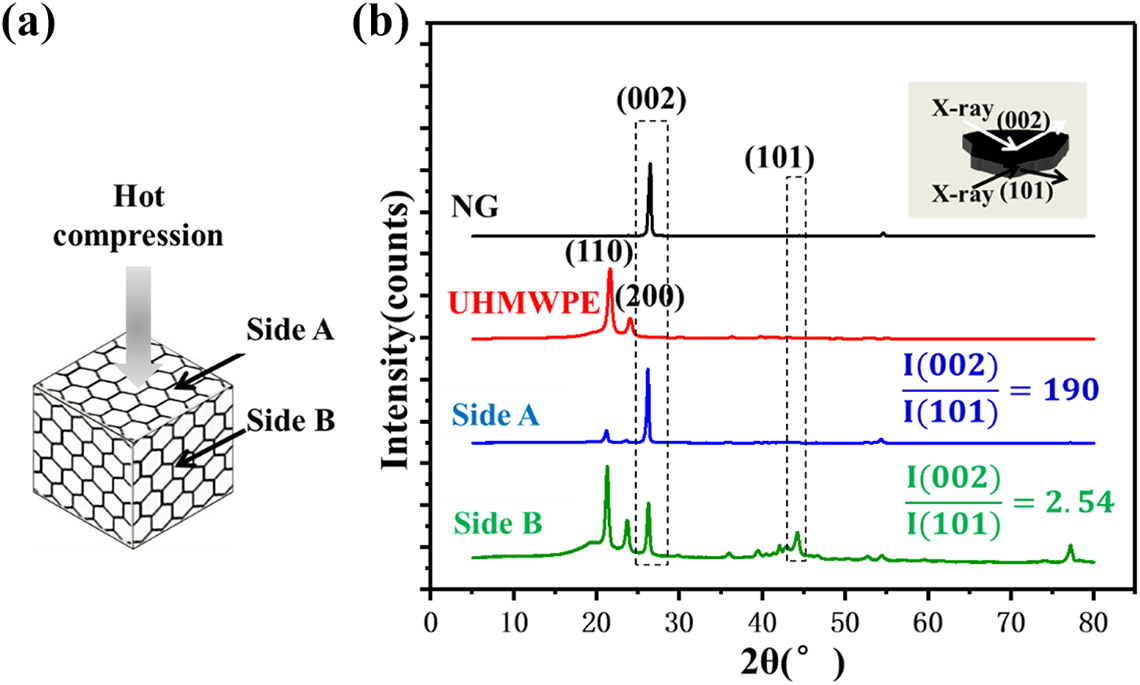
(a) The schematic of the relationship between X-ray diffraction plane and direction of hot compression, (b) XRD analysis for the pure NG, UHMWPE and composites with 21.6 vol% NG.
Figure 4 showed the TC of the UHMWPE/NG composites fabricated by the mixed-heating powder method and the traditional powder mixing method in two different directions, and the insert image showed the TC increment of UHMWPE/NG composites prepared by the mixed-heating powder method. Obviously, the TC of UHMWPE/NG composites in both directions increase gradually with the increasing content of NG. At low NG content (below 9.37 vol%), the increasement of TC was not obvious, which was attributed to that the thermally conductive network was not well established. When NG content was 9.37 vol%, the TC increased rapidly. In the in-plane direction (Figure 4a), the TC of UHMWPE/NG composites with the addition of 15.05 vol% NG flakes prepared by the mixed-heating powder method was 9.69 W/(m·K), which was 19.19% higher than that of the pure matrix (0.48 W/(m·K)). In addition, the TC of composites prepared by the mixed-heating powder method was improved by 16.05% compared with traditional powder mixing method. Moreover, these results were more obvious when the NG content is 21.6 vol%. At this loading, the TC of UHMWPE/NG composites with mixed-heating powder method reached 19.87 W/(m·K), about 35.87% higher than that of UHMWPE/NG composites fabricated by the traditional powder mixing method. Similarly, the TC of UHMWPE/NG composites with the addition of 15.05 vol% and 21.6 vol% NG flakes in the direction of through-plane increased to 5.56 W/(m·K) and 10.67 W/(m·K), an improvement of 1061% and 2127% compared with the pure UHMWPE and 20.08% and 34.07% compared with the traditional powder mixing method, respectively, demonstrating the positive effect of the mixed-heating in enhancing the TC of UHMWPE/NG composites.
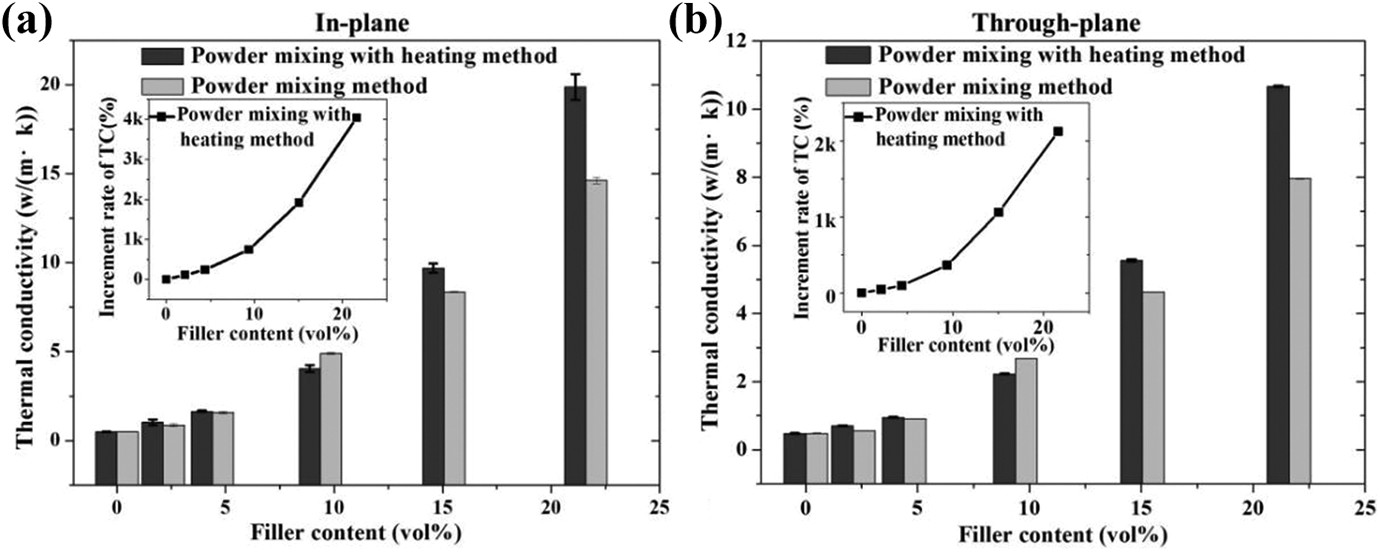
TC of UHMWPE/NG composites in the direction of in-plane and through-plane.
That the integrity of segregated structures is critical to enhance the TC of composites, owing to the separation structure using as thermally conductive paths. 19 Therefore, the thermally conductive network in UHMWPE/NG composites was studied by optical microscopy. Figure 5 clearly showed the thermally conductive network formed by NG in the composites. Figure 5(a–c) were optical microscope images of the thermally conductive network in composites with NG content of 4.39 vol%, 15.05 vol% and 21.06 vol% prepared by mixed-heating powder method, respectively. Figure 5(c1) was the optical image of thermally conductive network in composites fabricated by the traditional powder mixing method. When the addition of NG was 4.39 vol%, the thermally conductive pathway was very narrow and had many defects. NG flakes cannot form effective thermally conductive paths, resulting incomplete separation structure. When the NG content increased to 15.05 vol%, continuous and sufficiently wide thermally conductive paths had been constructed, and the TC increased to 9.69 W/(m·K) and 5.56 W/(m·K) in the in-plane and through-plane direction, respectively. Besides, a more continuous thermally conductive network was well established with the NG content increasing to 21.06 vol%. Thus, the thermally conductive pathway became wider, offering highly efficient heat dissipation. However, we can clearly see that the TC of composites fabricated by traditional powder mixing method has many breakpoints, so its TC was lower.
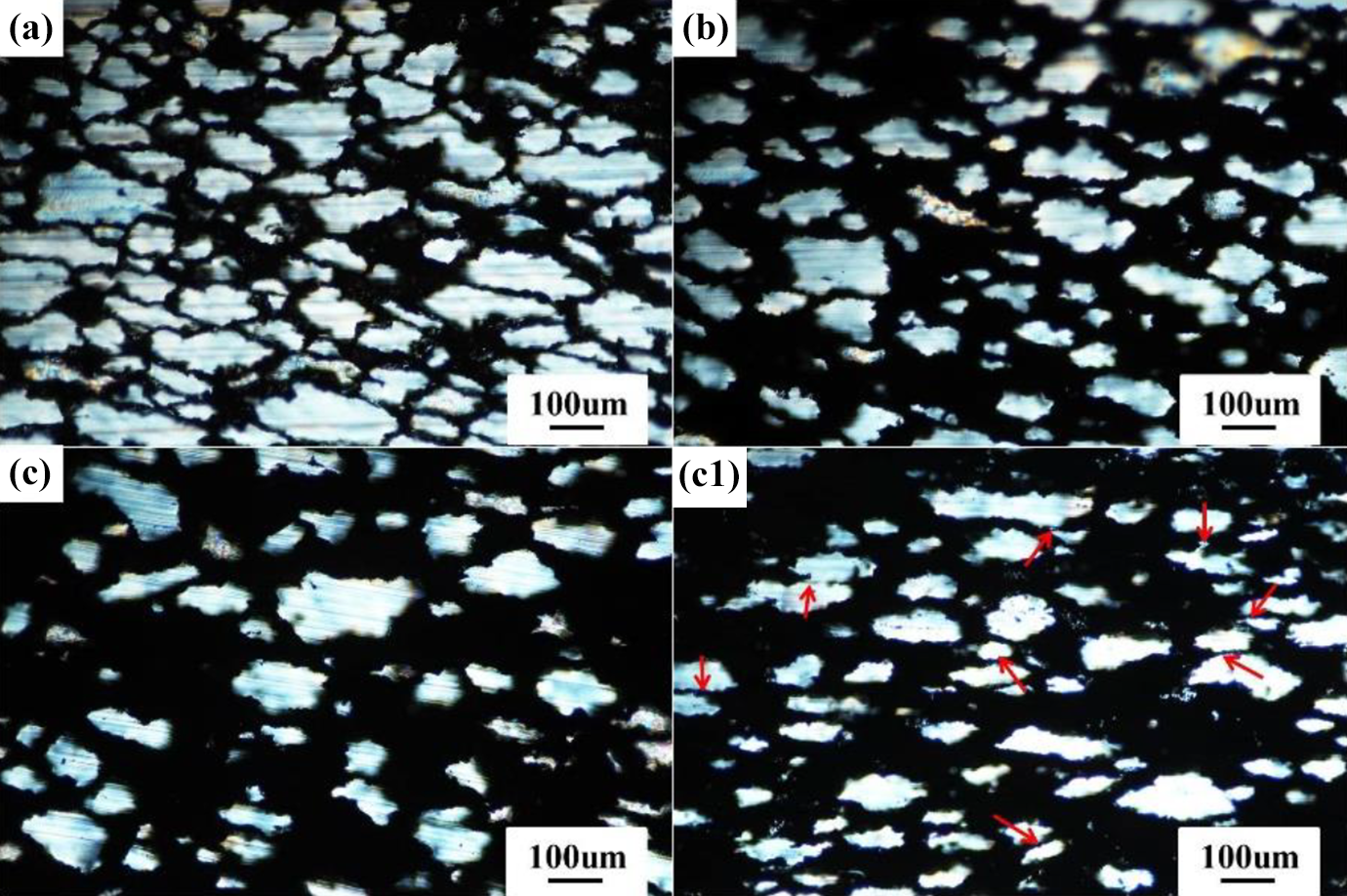
Optical images of UHMWPE/NG composites: the mixed-heating powder method (a, 4.39 vol%; b, 15.05 vol%; c, 21.6 vol%), the traditional powder mixing method (c1, 21.6 vol%).
One can find from that TC of the UHMWPE/NG composites with mixed-heating powder method were higher than that with the traditional powder mixing method both in the in-plane and through-plane direction (Figure 4). Under heating conditions, the UHMWPE surface began to melt, and the melting UHMWPE layer played the role of coating NG during stirring, so better coverage effect and complete network were formed and higher TC was obtained in UHMWPE/NG composites. On the other hand, after natural cooled, the edge distance of NG sheets was reduced and NG flakes were arranged more compactly with the surface area of UHMWPE granules reducing. At the same time, the overlap area of two adjacent graphite sheets increased, reducing the contact thermal resistance between the NG. 36
To visualize the difference of the heat transfer efficiency, the temperature response difference was recorded by infrared camera. The Figure 6(a) was the schematic illustration of chip heat transfer device. A heat resistor (used to replace the chip) can generate a lot of heat when applying voltage, which is attached to composites (acting as the heat spreader). When the power is switched on, the infrared camera begins to record the temperature of the sample and the heat resistor once every 10 s within 180 s. After that, the curve of temperature versus time was plotted. As shown in Figure 6(b), curves represented the temperature changes of the sample and the heat resistor respectively. Owing to that most of input energy of the heat resistor was converted to heat, the temperature of the heat resistor sharply increased when pure UHMWPE was used to transfer heat. However, the temperature showed a much slower increase when UHMWPE/NG composites with 21.6 vol% NG flakes was used. At this time, the role of the composites was to release the heat generated by the heat resistor in time, called the heat spreader. As shown in Figure 6c, after 180 s when UHMWPE/NG composite with 21.6 vol% NG flakes was used as the heat spreader, the temperature of the heat resistor increased to 73.4°C, much lower than 107.1°C (pure UHMWPE as the heat spreader), which fully demonstrates good heat transfer efficiency of UHMWPE/NG composites.
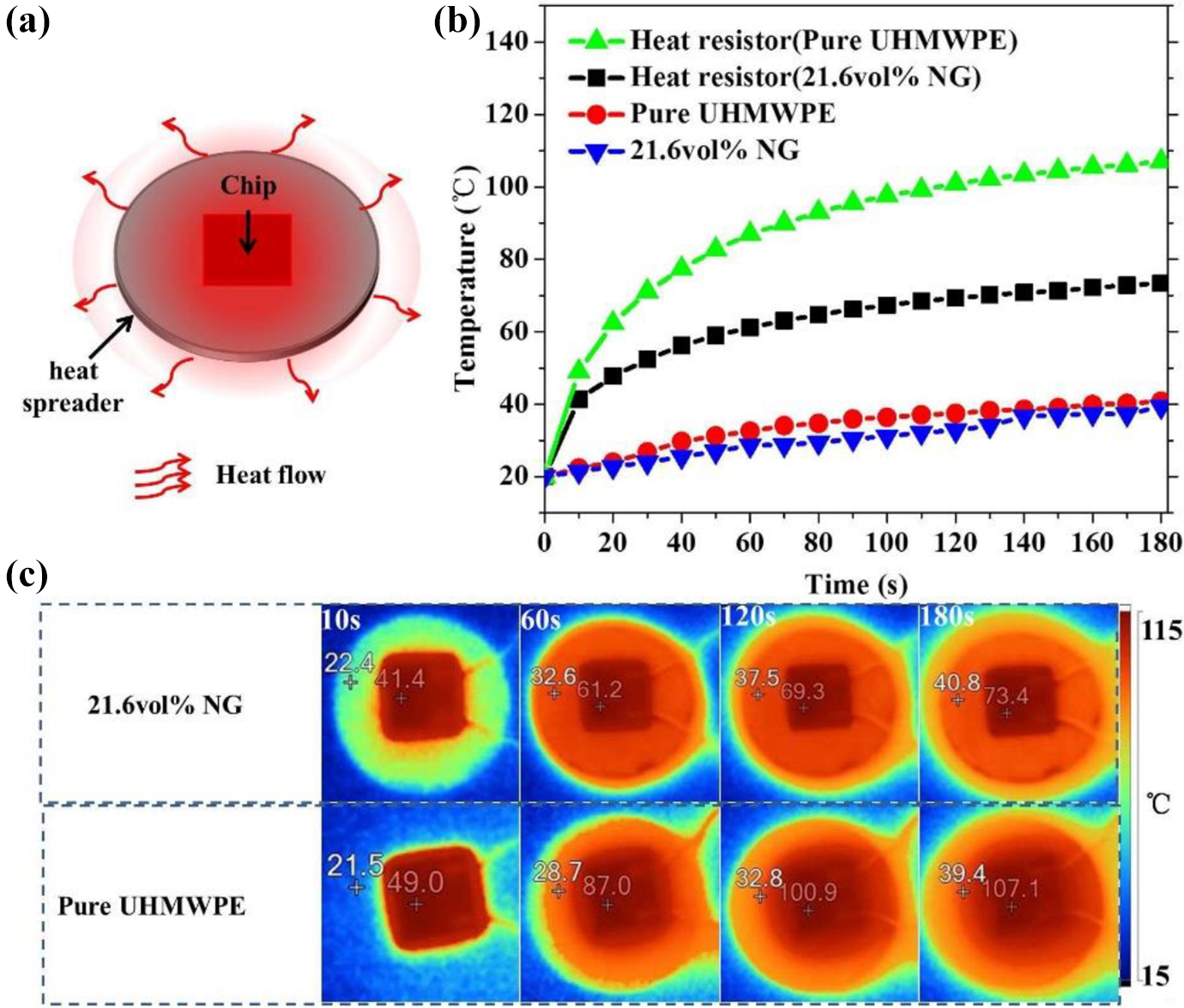
(a) The schematic illustration of chip heat transfer device, (b) temperature variation of the specimen and heat resistor with working time, (c) infrared image of the specimen and heat resistor at different working time.
Conclusions
The UHMWPE/NG composites with high TC in the in-plane (19.87 W/(m·K)) and through-plane (10.67 W/(m·K)) direction were successfully fabricated by a facile mixed-heating powder mixing method. Owing to the heated UHMWPE granules acting as the binder, the segregated structure was well established, which resulted in the obvious improvement of TC. The UHMWPE/NG composites shown excellent heat dissipation performance when using as the heat spreader for chip. Such superior performance indicated that this work could be used to design and fabricate thermal-management materials applied in electronic packaging.
