




Abstract
Influence of loading temperature on the damage mechanism of polyphenylene sulfide (PPS) reinforced by glass fiber (PPS/GF30) under tension was experimentally studied from quasi-static (QS) to high strain rates. Two kinds of PPS/GF30 samples were prepared: PPS-0° and PPS-90° (correspond to fibers oriented parallel and perpendicular to the injection direction, respectively). After microscopic observation and thermomechanical characterizations by dynamic mechanical analysis, tensile tests up to failure with strain rates varying from 10−3 s−1 to 100 s−1 have been carried out at 25°C and 120°C with regard to PPS/GF30 glass transition temperature. To achieve the coupling effect of high strain rate and high temperature, a special chamber was designed to install on the servo-hydraulic machine. The results of QS tensile tests confirm the significant effect of fiber orientation and temperature on the Young’s modulus, the ultimate stress, and strain. High strain tensile test results showed that the PPS/GF30 composite is strain rate dependent at both temperatures. The results indicated that Young’s modulus remains constant by strain rate increasing at both temperatures while ultimate stress and strain are increased. No significant damage has been observed at 25°C in QS loading, whereas the macroscopic damage variable is increased to 20% at 120°C. Debonding at the fiber–matrix interface is the main damage mechanism at 120°C.
Introduction
Last decades, polymer matrix composites have acquired a wide application in automotive and aerospace industries due to their low density, ease on manufacturing, low cost, and good performance.1,2 The mechanical properties of these materials should be studied at various conditions. Strain rate and temperature are two important parameters that considerably affect the mechanical properties of polymers and composites. 1 The development of micro-damage under the deformation conditions of various temperatures and high strain rates is extremely important for polymers and composites. Krajcinovic and Mastilovic 3 established the subject of continuum damage mechanics by introducing the concept of effective stress. This concept is based on comparing an undamaged configuration and the actual damaged configuration. Moreover, the architecture (Orientation of reinforcements, laminate) and the matrix behavior (Elastic, viscoelastic, visco-plastic) should be studied when analyzing the damage behavior of composites.3–6 For composite structures, several diffuse and progressive damage mechanisms occur at the local scale such as matrix micro-cracking, fiber failure, debonding at the fiber–matrix interface, delamination, or pseudo-delamination. 4
Several studies utilized this theory to demonstrate the damage mechanisms under different loading conditions for reinforced thermoplastics and thermosets. Fitoussi et al. 7 studied the strain rate effect on the tensile properties of ethylene–propylene glass fiber-reinforced composite. They presented that Young’s modulus, the damage thresholds, and ultimate stress and strain are increased with increasing the strain rate. They concluded that the shift in the first nonlinear part of stress–strain curves is related to the viscous behavior of the matrix.
In similar research, Schoßig et al. 8 investigated the mechanical properties of glass fiber-reinforced polypropylene (PP) and polybutene-1 (PB-1) composites at different strain rates. They showed that the behavior of both PP and PB-1 composites are strain-rate sensitive and tensile stress increased with increasing the strain rate. In another study on unidirectional glass fiber-reinforced PP under tension, compression, and bias-extension shear test by Kim et al., 9 they presented that failure strength increases with an increase in strain rate.
Among these studies, Mortazavian and Fatemi 10 investigated that the strain rate and the temperature effect on tensile properties and fracture surface of polybutylene terephthalate (PBT) and polyamide 6 (PA6) reinforced with short glass fibers. They concluded that the tensile properties of both PBT and PA6 composites are strain rate dependent and temperature dependent. For both composites, higher strain rates cause higher strength and Young’s modulus. Furthermore, tensile properties at temperatures of −40°C and 125°C showed that strength and Young’s modulus of PBT and PA6 composites decrease at 125°C. In addition, tensile properties are sensitive at the temperatures near to glass transition temperature (Tg).
In composite materials, fiber orientation has an important role on the mechanical properties. Wang et al. 11 studied the strain rate effect on short fiber-reinforced PA6 in the extrusion direction and perpendicular to the extrusion direction. They presented that for both samples, modulus and tensile strength increase with increasing strain rate, but the samples in extrusion direction show more increase than the samples perpendicular to the extrusion direction. They concluded that the samples in extrusion direction are more sensitive to strain rate due to the orientation of fibers in the tensile direction. In addition to thermoplastic composites, Shirinbayan et al. 12 studied the effect of strain rate on A-SMC composite (reinforced thermoset material) at strain rates varying from quasi-static (QS) to 100 s−1. They presented that elastic modulus is insensitive to strain rate, while threshold and ultimate values increase by an increase of strain rate.
Polyphenylene sulfide (PPS) is a thermoplastic semicrystalline polymer. PPS is a high-performance and important engineering polymer due to its properties such as good mechanical properties, thermal stability, dimension stability, and chemical resistant that no known solvent could dissolve it below the temperature of 200°C.13–15 Several authors explored the mechanical properties of PPS matrix composites reinforced by fibers or fillers.13–17 Zhai et al. 17 investigated the effect of the temperature and glass fiber content on the mechanical properties of PPS composite at 25°C, 85°C, 145°C, and 205°C. They detected that tensile and flexural strengths decrease by increasing the temperature. Moreover, they observed that tensile strength and flexural strength significantly decrease above Tg which is due to the increase in molecular chain motion in PPS matrix. In addition, they studied the tensile fracture surfaces of PPS reinforced by glass fiber (PPS/GF30) composite at different temperatures and they found that at 25°C, the matrix showed a brittle fracture, while fracture surfaces at 205°C presented a ductile fracture due to more plastic deformation of PPS.
In this article, an experimental study is performed to investigate the coupling effect of strain rate and temperature on the mechanical properties of PPS composite (PPS/GF30). The organization of this work is as follows: After describing the material microstructure and the thermomechanical properties, the results of QS tensile and loading–unloading tests at 25°C and 120°C are discussed. Moreover, the macroscopic damage analysis was studied. Furthermore, high strain rate tensile test results at 25°C and 120°C indicate the coupling effect of temperature and strain rate on the material characteristics. Finally, scanning electron microscopy (SEM) analysis emphasizes the effect of loading conditions and temperature on fracture surfaces.
Materials and characterization methods
PPS composite (PPS/GF30)
The material used in this study is the plate of PPS composite that was supplied by Valeo company and produced by the injection molding process. The PPS matrix has been reinforced by short glass fiber (30 wt% in weight). The density of the PPS composite is about 1.5 g cm−3.
Characterization methods
Microscopic observation
SEM has been used to investigate the microstructure of composite and qualitative study of strain rate and temperature effect on the fracture surface after tensile tests. SEM observation has been performed on the fracture surface by HITACHI 4800 SEM. Before observation, metal deposition has been carried out on the fracture surfaces to increase the observation quality.
Thermomechanical analysis
Dynamic mechanical analysis (DMA) has been used to determine the Tgs of PPS composite. DMA analysis was performed on the PPS composite by the Q800 V21.2 DMA analyzer using dual cantilever system, at the frequency of 1 Hz, amplitude of 30 µm, at temperature range from 25°C to 250°C, and the temperature rate of 2°C min−1. The rectangular specimen with the dimension of 60 × 13 × 3.2 mm3 has been used.
QS tensile test and loading–unloading analysis
QS tensile tests until failure have been performed to investigate the mechanical properties of PPS/GF30 (PPS-0° and PPS-90°) at different temperatures. Tensile tests were carried out by MTS 830 hydraulic machine with a capacity of 10 kN and a crosshead speed of 2 mm min−1. Room temperature (25°C) and 120°C have been chosen to investigate the effect of temperature on the mechanical behavior of PPS-90° under QS loading.
The loading–unloading tensile test has been performed by MTS 830 hydraulic machine with a crosshead speed of 2 mm min−1. Stiffness reduction in the composite material is one of the damage indicators which determine by the loading–unloading test. Loading–unloading test has been carried out at both 25°C and 120°C at different applied stress to study the temperature effect on the damage variable.
High-speed tensile test
To investigate the strain rate effect on the PPS/GF30 and to study the coupling effect of strain rate and temperature, high-speed tensile test until failure has been carried out at both room temperature and 120°C. The high-speed tensile test was conducted by the servo-hydraulic Schenk Hydropuls VHS 5020 machine that is equipped by a launching system. The crosshead speed range of the machine is from 10−4 m s−1 to 20 m s−1. Also, the load level during the test was measured by a piezoelectric crystal load cell with a capacity of 50 kN. To achieve a high temperature, a specific chamber was installed on the machine. Figure 1 shows the schematic representation of the servo-hydraulic high-speed tensile test machine. As illustrated in Figure 1, the specimen is placed between the load cell (upper extremity) and the moving device (lower extremity). The deformation was measured by a noncontact method with a high-speed camera (FASTCAM-APX RS).
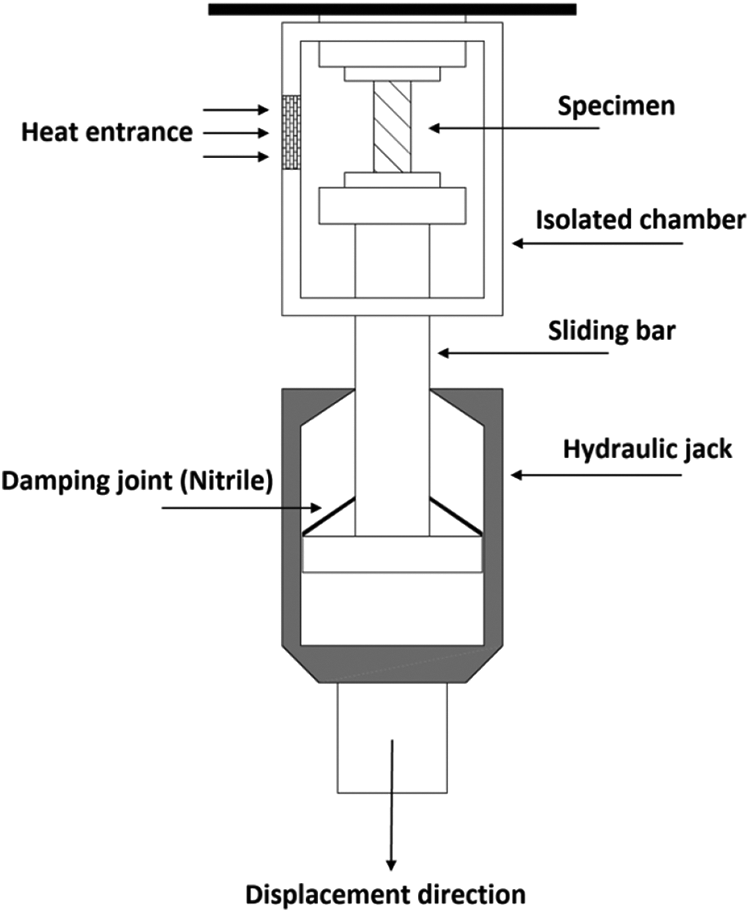
Schematic representation of servo-hydraulic high-speed tensile test machine.
Specimen geometry
The PPS/GF30 specimen geometry has been optimized because of numerical computations using ABAQUS finite element code 4 to reach a homogeneous strain distribution and a rapidly stabilized strain rate within the specimen gauge section at the beginning of the loading stage.4,5,15
Two types of PPS/GF30 samples were prepared (PPS-0° and PPS-90°). PPS-0° corresponds to fibers oriented in the injection direction, while PPS-90° originates from the samples with fibers oriented perpendicularly to it. Dumbbell-shaped specimen with the optimal dimension has been chosen to perform the high-speed tensile test and other mechanical tests that are shown in Figure 2. It is important to note that the specimens were cut by a water jet system.
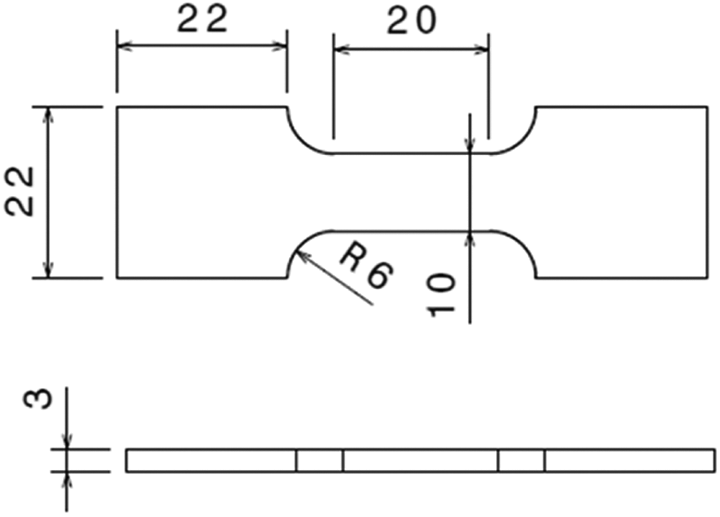
Detailed dimension of PPS/GF30 sample for tensile tests.
Results and discussion
Microstructure observation
The microstructure of the PPS/GF30 is presented in Figure 3. According to microstructure observation, the average diameter of the glass fibers is about 15 µm and the average length is about 220 μm. Moreover, the microstructure observation shows that the short glass fibers have good dispersion at the whole of the matrix.
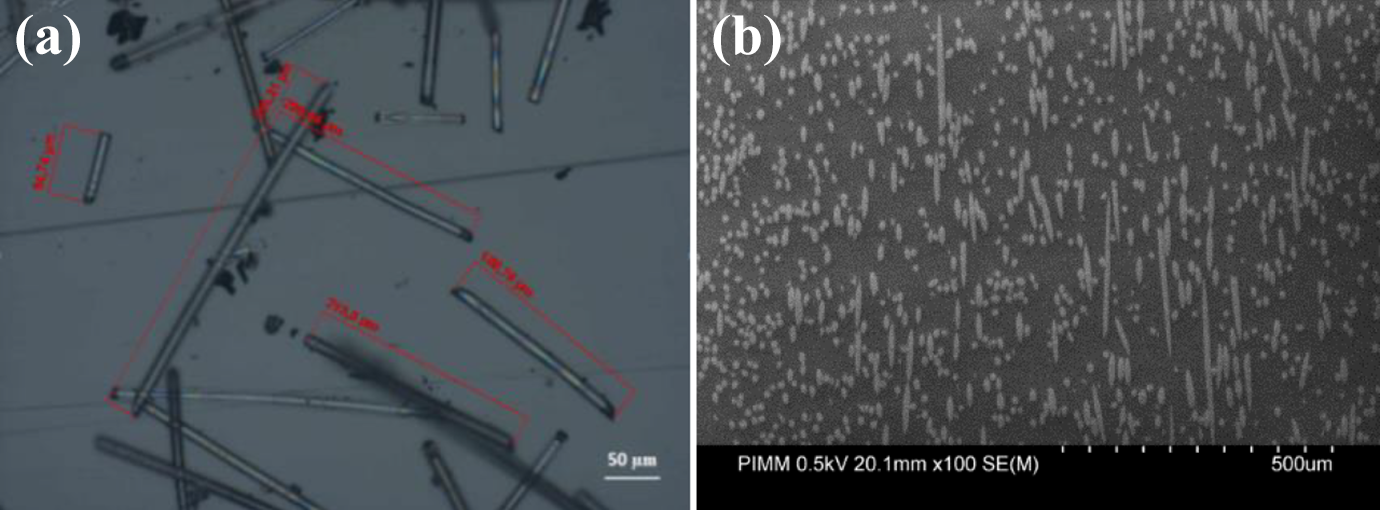
(a) Optical microscopic photo after pyrolysis and (b) typical SEM PPS/GF30 microstructure.
DMA analysis
Figure 4 shows the DMA results of PPS-90°. DMA curve indicates the evolution of the storage modulus, loss modulus, and tan δ (E′/E″) versus temperature. The storage modulus curve versus temperature indicates three different regions for PPS composite. The glassy state is started from room temperature to nearly 90°C. Glass transition (α-transition) region is between 90°C and about 150°C, and the rubbery state region corresponds after 150°C. The Tg has been selected at the maximum value of the loss modulus curve which is about 108°C. According to the DMA results at the glassy state, storage modulus at room temperature is about 4.4 GPa and it has no significant decrease in the glassy region. In the transition zone, storage modulus decreases considerably from 3.8 GPa to 1.1 GPa (nearly 70%). The decrease of the storage modulus value is due to the increase in the mobility of macromolecular chains.
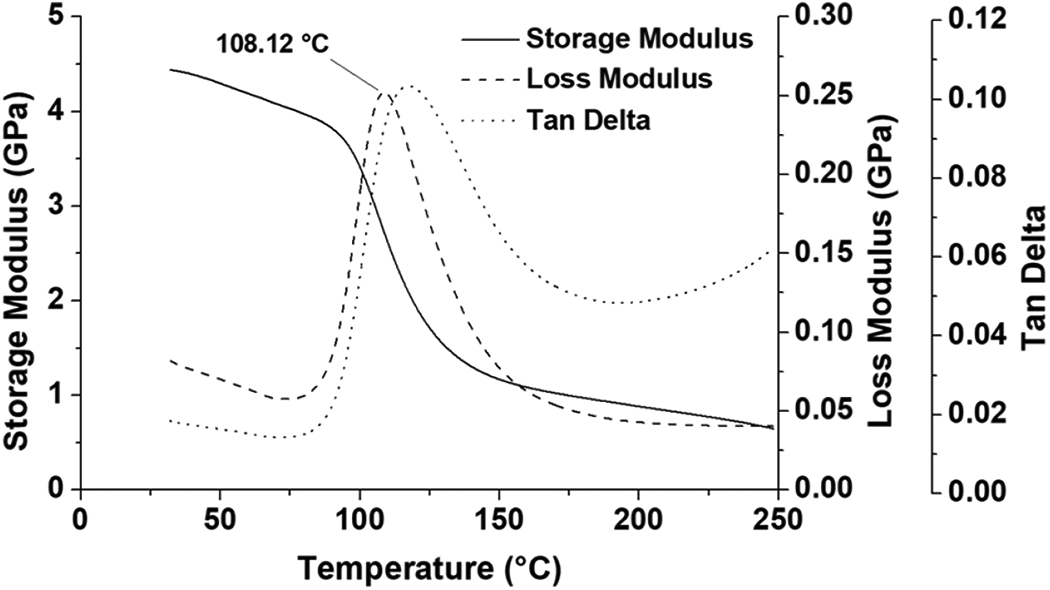
DMA analysis of PPS/GF30.
QS tensile behavior
The tensile tests results at the room temperature showed higher Young’s modulus value for PPS-0° (about 7200 MPa) than PPS-90° (about 6000 MPa). Moreover, PPS-0° has higher failure stress (105 ± 5 MPa) than PPS-90° (75 ± 4 MPa). These confirm the effect of fiber orientation on the mechanical behavior of PPS/GF30.
QS tensile test has been performed at two temperatures (room temperature and 120°C) to determine the temperature effect on the tensile behavior of the PPS-90° composite. The room temperature and 120°C (which is related to the transition zone and near to rubbery state) were selected based on the DMA results.
These tests were performed on the PPS-90°, because in this fiber orientation the effect of matrix is more recognizable.
The stress–strain curves (σ-ε) for PPS-90° composite at selected temperatures are shown in Figure 5. The tensile properties are presented in Table 1. The stress–strain curves indicate that the mechanical behavior of PPS-90° is considerably temperature dependent. Moreover, the results show that the stress continuously increases until the failure of the specimen. The stress–strain curves at both temperatures illustrate three different stages. The first stage is the linear stage which corresponds to the elastic behavior of the composite. The second stage is related to the end of linearity stage and the beginning of the nonlinearity stage. This point is called knee point and it can correspond to damage initiation point and correlate to the damage threshold. Finally, the last stage is relating to the nonlinear stage of the stress–strain curve which corresponds to damage propagation and plastic deformation.
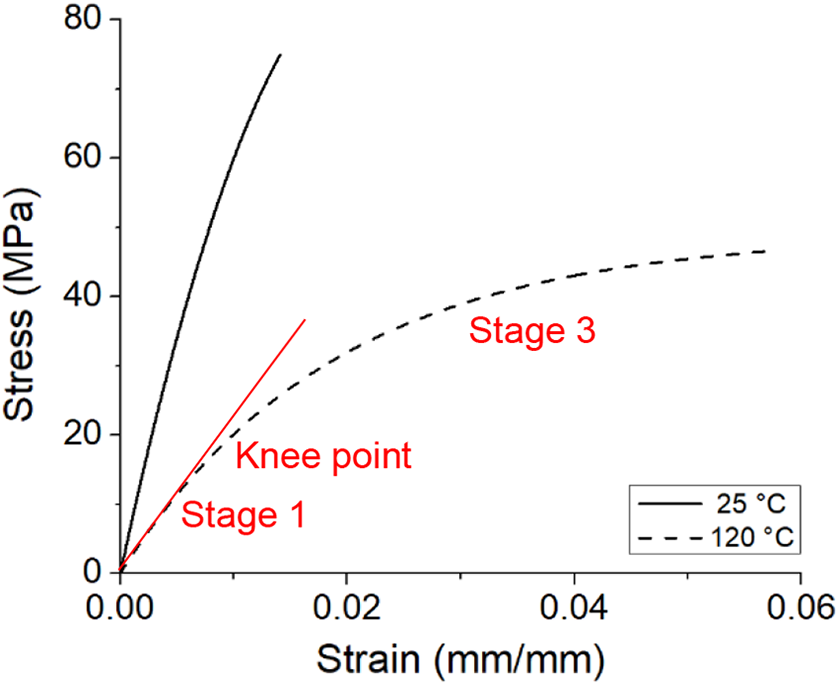
Stress–strain curves (σ-ε) of PPS-90° at 25°C and 120°C under QS tensile loading.
Tensile properties of PPS-90°.a
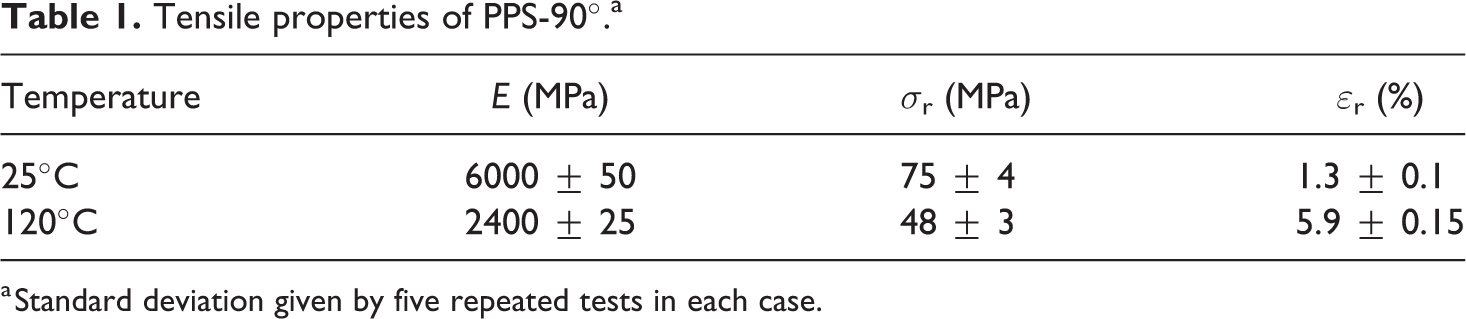
a Standard deviation given by five repeated tests in each case.
By analyzing the results, one can note that the temperature has a significant effect on the Young’s modulus as well as threshold and failure stress/strain values correspond to the stress/strain values at knee point and rupture points, respectively. Increasing the temperature up to 120°C leads to an abundant decrease of Young’s modulus from 6000 MPa to 2400 MPa (nearly 60%). Moreover, failure strain increases from 1.3% to 5.8% (nearly 4.5 times) by variation of temperature from room temperature to 120°C when the polymer is near to rubbery state. One can note that in rubbery state, molecular mobility of the structure increases significantly. Also, in the rubbery state, the failure behavior of the composite is characterized as a ductile behavior, while at the glassy state it has a brittle manner.
Damage analysis
Damage analysis was carried out at both 25°C and 120°C in a macroscopic scale to evaluate the temperature effect on the damage evolution in PPS-90°. Macroscopic damage variable is calculated using the stiffness reduction theory
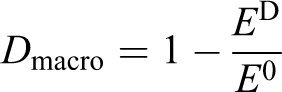
where E0 is Young’s modulus which is quantified by the initial slope of the stress–strain curve (undamaged material) and ED is Young’s modulus of damaged material which is quantified by the slope of each reloading curve in the loading–unloading test.
As illustrated in Figure 6, the temperature has a significant effect on the macroscopic damage indicator.
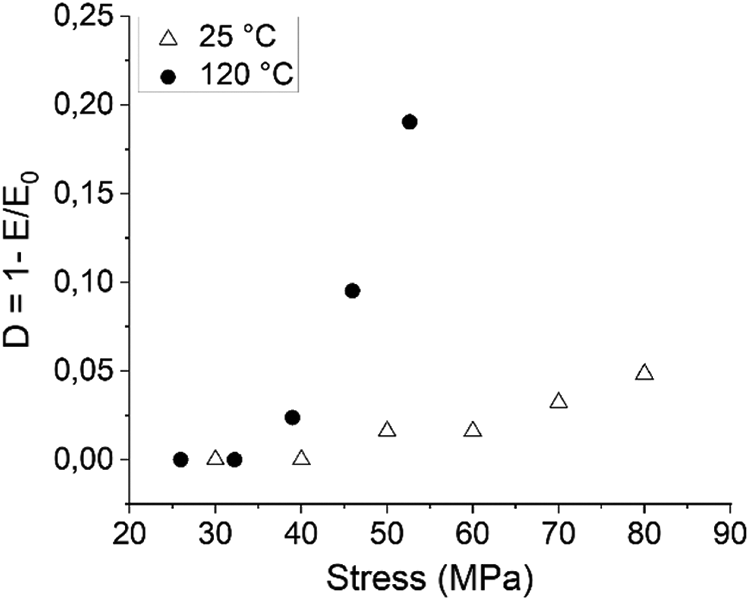
Macroscopic damage evolution of PPS-90° versus applied stress at 25°C and 120°C.
It can be noted that no significant damage is observed at 25°C, while the macroscopic damage parameter is about 20% at 120°C. One can conclude that damage parameter is more significant at 120°C. This is due to the state of the PPS material at this temperature which is near to rubbery state. One can note that to better understand the damage mechanism, it is necessary to observe the microstructure. Multi-scale damage analysis at room temperature has been performed at various studies,4–7,12 but at 120°C, it is not easy to perform the in situ tensile test to observe the damage mechanism. However, according to DMA analysis, this temperature confirms the effect of the matrix on the damage mechanism. To give more information about this phenomenon, microscopic fractography observations of PPS-90° composite under QS loading–unloading at 120°C and 25°C are presented in Figure 7. One can obviously observe that there is a little matrix around the fiber at 120°C in which the matrix is influenced by the loading temperature. However, the matrix is around the fibers in the case of the sample loaded at room temperature. Figure 7(a) indicates that the damage phenomenon is initiated and propagated from fiber–matrix interface deboning and it is followed by matrix breakage.
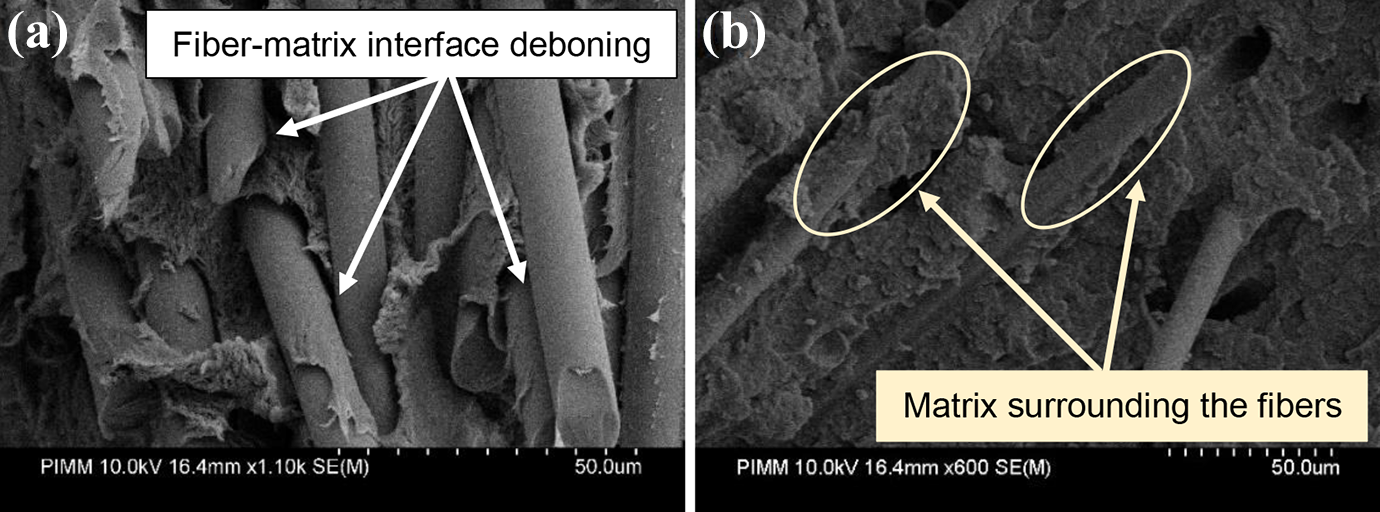
Microscopic observation of PPS-90° composite under quasi-static loading–unloading at (a) 120°C and (b) 25°C.
Indeed, the mobility of the macromolecules near to the fibers surface may be affected by the fibers rigidity. Moreover, by increasing the temperature, the relaxation time of polymers generally increases. Because of the lower bonding of the matrix around the fibers at 120°C, the mobility of the macromolecules near to the interface is not sufficient to accommodate the deformation. Therefore, fiber–matrix interface damage can occur.
Several researchers studied the strain rate effect at room temperature.4–7,12 The effect of strain rate on damage threshold in terms of stress and strain at high temperature is interesting to study. To perform this, as mentioned, a special chamber was installed on the servo-hydraulic high-speed tensile test machine.
Strain rate effect on mechanical properties
High-speed tensile test until failure has been performed with different strain rates at room temperature and 120°C to investigate the coupling effect of temperature and high strain rate on the mechanical properties of PPS-90° composite. Stress–strain tensile curves (σ-ε) of the composite under several strain rates at room temperature and 120°C are presented in Figure 8. For each condition, five samples have been tested. All strain and strain rates were measured by the contactless method. A comparison of the stress–strain curves (σ-ε) at each strain rate indicate that the overall tensile behavior of the PPS composite at both room temperature and 120°C is strain rate dependent.
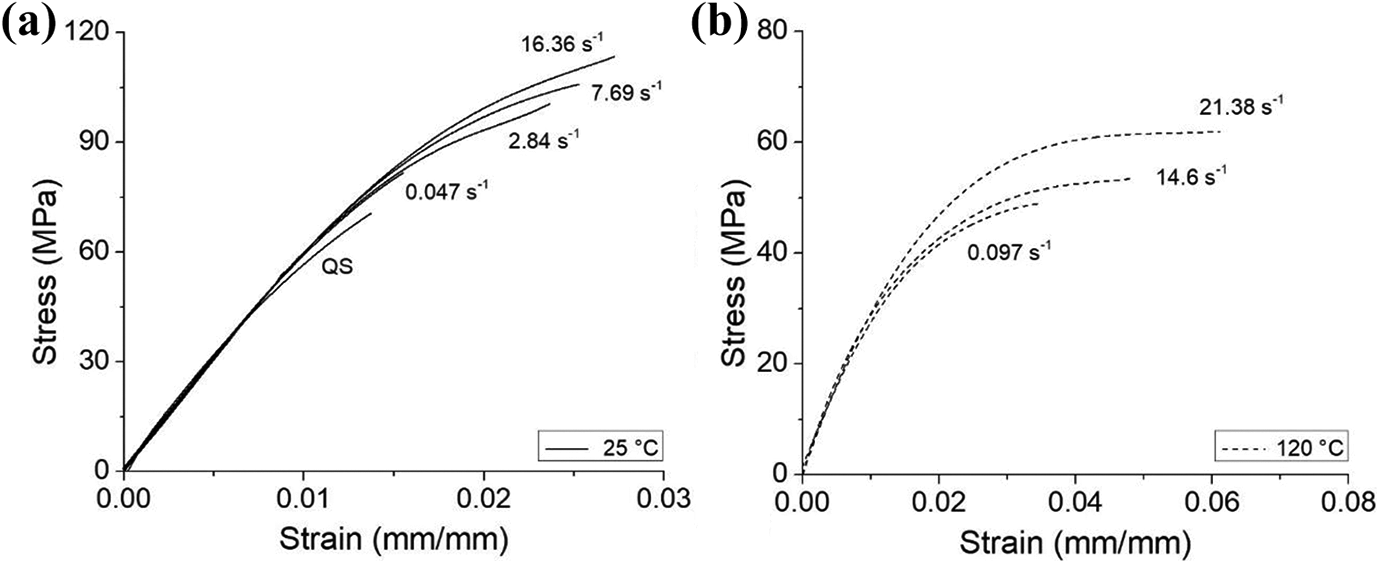
Stress–strain curves for PPS-90° at different strain rates at (a) 25°C and (b) 120°C.
From the section of damage analysis, it is remarked that the macroscopic damage variable at 120°C is increased to 20%, while there is no significant damage at room temperature. One can note from Figure 8(a) that the superposition of the curves at different strain rates is occurred just before failure. As mentioned, under QS loading, the stress continuously increases until the failure of the specimen. Here, with increasing the strain rate, the curves are superposed but just before failure, and they drive to rupture. This phenomenon can be indicated by the effect of matrix viscous nature and its viscoelastic behavior. Moreover, the analysis of the fiber–matrix interface shows that there is a good bonding in this composite. Also, the plastic deformation is not very significant. However, the effect of the strain rate at 120°C is not the same. This can be related to the existing the damage phenomenon at 120°C.
According to stress–strain curves (σ-ε), the evolution of material characteristics such as Young’s modulus, threshold stress and strain, and ultimate stress and strain versus strain rate can be plotted. Figure 9 presents the evolution of the material characteristics versus strain rate at both temperatures. It should be noted that Young’s modulus has been calculated at the linear stage of the stress–strain curves by linear regression. Hereafter, the effect of temperature and strain rate on each mentioned material characteristics is discussed:
Young’s modulus is not affiliated to the strain rate and remains constant with increasing the strain rate. This analysis is valuable for two applied temperatures.
Unlike Young’s modulus, threshold stress, threshold strain, ultimate stress, and ultimate strain are significantly strain rate dependent. The evolution of the threshold stress versus strain rate (Figure 9(b)) shows that the threshold stress value increases with increasing the strain rate. By increasing the strain rate from QS to 100 s−1, the threshold stress is increased from about 55 MPa to 82 MPa (approximately 30%) and about 20 MPa to 38 MPa (approximately 45%) at room temperature and 120°C, respectively. Thus, increasing in threshold stress leads to an increase in the knee point and postpone the damage initiation stress in the tensile test at 120°C. At the same time, the evolution of threshold strain (Figure 9(c)) presents that the threshold strain increases by increasing the strain rate. This increase is more significant at 120°C due to the applied loading temperature near to the rubbery state according to DMA results.
The evolution of the ultimate stress and ultimate strain is shown in Figure 9(d) and (e). It is noticeable that ultimate stress and ultimate strain increase by an increase of strain rate. The slope of ultimate stress evolution versus strain rate indicates that the ultimate stress at room temperature is more dependent on strain rate than 120°C. The evolution behavior shows that at higher temperatures, the dependency rate of ultimate stress as a function of strain rate decreases in comparison with room temperature which is due to the flow behavior of polymer matrix at elevated temperatures. In contrast, Figure 9(e) presents the ultimate strain evolution versus strain rate and indicates that the ultimate strain is more strain rate dependent at 120°C than room temperature.
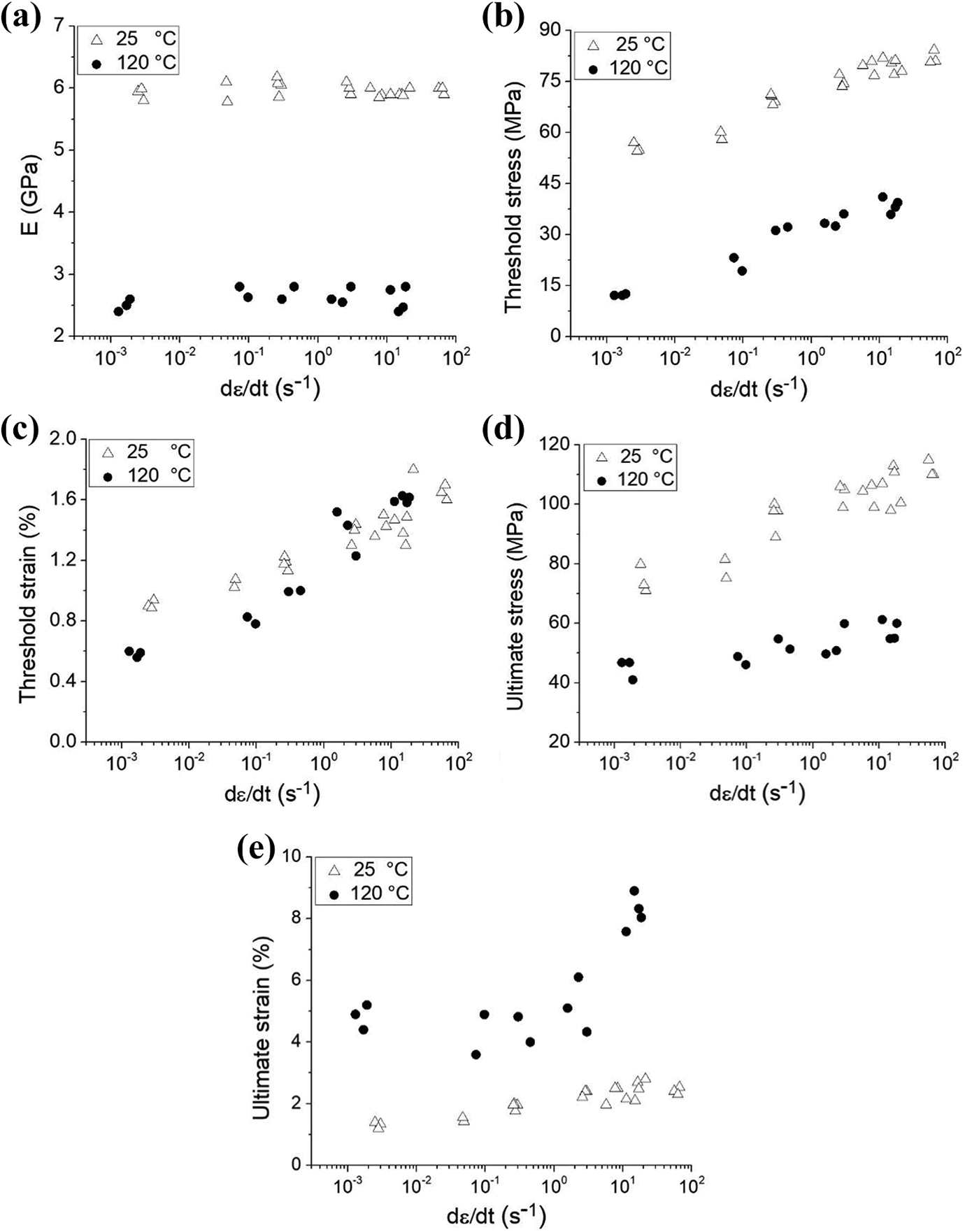
Evolution of the (a) Young’s modulus, (b) threshold stress, (c) threshold strain, (d) ultimate stress, and (e) ultimate strain versus strain rate at 25°C and 120°C—PPS-90°.
Fracture surface analysis
SEM analysis of the specimens for two applied strain rates of QS (10−3) and 100 s−1 at room temperature is presented in Figure 10. At room temperature, there is no significant difference in fractography of applied samples at two strain rates of QS and 100 s−1. The micrographs show that the matrix is around the fibers after a rupture in two cases. This phenomenon confirms the good adhesion between the matrix and the fibers.
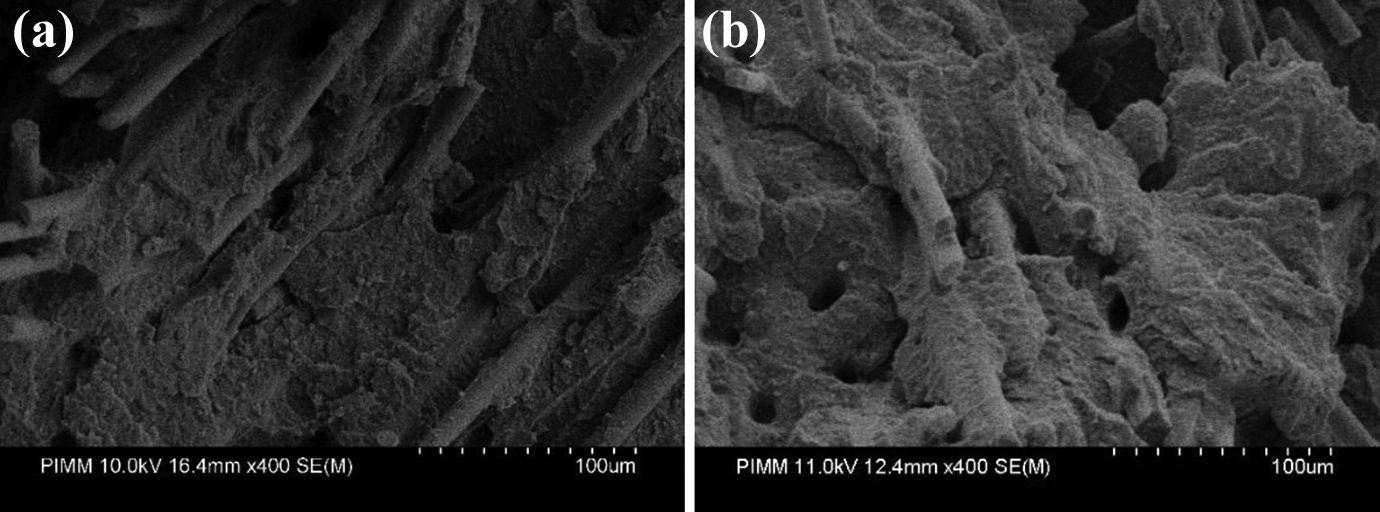
Microscopic observation of PPS-90° composite loaded at 25°C; and strain rate of (a) QS and (b)100 s−1.
Furthermore, SEM analysis of fracture surfaces at a strain rate of QS and 100 s−1 at 120°C are shown in Figure 11.
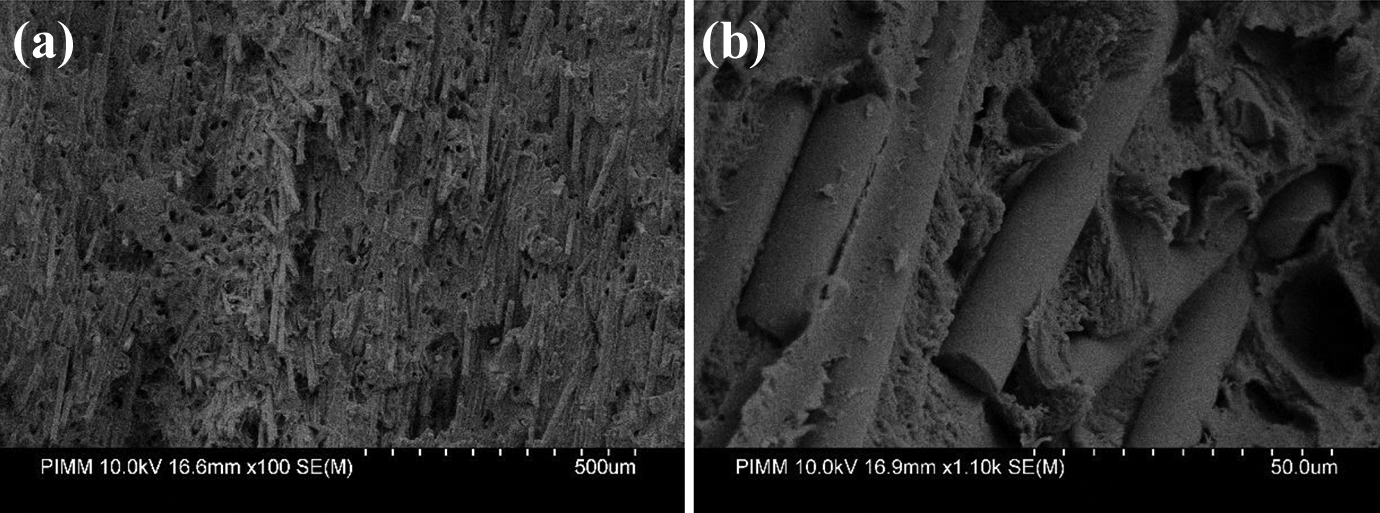
Microscopic observation of PPS-90° composite loaded at 120°C; and strain rate of (a) QS and (b) 100 s−1.
The matrix at 120°C shows high deformation and ductility than at 25°C. Additionally, for these two strain rates at 120°C, fiber–matrix interface deboning is observed. Moreover, one can note that an insignificant amount of matrix (PPS) can be seen around the glass fibers’ surface even at higher strain rates at 120°C as illustrated in Figure 11.
Conclusion
This article proposes the coupling effect of strain rate and temperature on the mechanical properties of a short fiber-reinforced PPS composite (PPS/GF30). Tensile tests were performed at 25°C and 120°C and at strain rates varying from QS to 100 s−1. In addition, SEM analysis was carried out to investigate the strain rate and temperature effect on the fracture surface. Based on the experimental results, the following conclusions can be drawn: Fiber orientation and temperature have significant effect on the mechanical properties of PPS/GF30. A reduction of about 60% in Young’s modulus appear at loading temperature of 120°C compared to 25°C. This is due to the higher molecular motion of the matrix chain at a higher temperature (near to the rubbery state). No significant damage has been observed at 25°C, while the values of damage variable of 0.2 (D = 20%) was observed at 120°C. Because of the lower bonding of the matrix around the fibers at 120°C, the mobility of the macromolecules near to the interface is not sufficient to accommodate the deformation. Therefore, fiber–matrix interface damage can occur. By increasing the strain rate from QS to 100 s−1, threshold and ultimate stress (strain) increased at both 25°C and 120°C while Young’s modulus was insensitive to strain rate and remained nearly constant at both temperatures. Elevated temperature alters the sensitivity of material characteristics to the stain rate. At 120°C, fractography analysis indicated more ductile fracture and a smaller amount of matrix was seen around the fibers’ surface.
