



Abstract
The mechanical properties of γ-irradiated ethylene propylene diene monomer (EPDM)/high styrene-butadiene rubber (HSBR) blends were investigated with special reference to the effects of blend ratio. Among the blends, the one with 80/20 EPDM/HSBR has been found to exhibit the highest tensile, hardness, thermal, and abrasion properties. The effect of γ-irradiation dose on the mechanical properties namely tensile strength and elongation at break was investigated. The effect of silane coupling agent on the mentioned properties of the EPDM/HSBR blend was studied. The results showed that the mechanical and the thermal properties of the γ-irradiated EPDM/HSBR blend improved with the addition of the silane coupling agent due to the increase in the cross-linking density. The inclusion of both the 30 phr fumed silica and N,N-m-phenylenedimaleimide coagent in the 80/20 EPDM/HSBR nanocomposite irradiated to 150 kGy leads to a synergistic effect. Thermogravimetric analysis was carried out to analyze the thermal stability of the nanocomposites. The mechanical properties have been interpreted in terms of the morphology of the blends as attested by scanning electron microscope.
Introduction
Rubber–rubber blends have practical importance in rubber industries. 1 They are used extensively in various applications such as the tire industry. The mechanical properties of rubber blends are affected by blend composition, properties of blend component, the situation of the process, the adhesion between the components, and the phase morphology of the blends.2–4 High styrene rubber is used for rubber compound reinforcement. Due to the high bound styrene content, it gives a high hardness, tears strength, wear resistance, tensile strength, thermoplasticity, and electrical insulating property so it can be used for high-rigidity and low-density products. Where the ethylene propylene diene monomer (EPDM) rubber has excellent outdoor properties such as good resistance to oxygen and ozone, 5 Dunn and Wall blended EPDM and butadiene rubber (BR) natural rubber to develop suitable materials for damping engine mounts having high resilience. 6 S. Vishvanathperumal and S. Gopalakannan 7 prepared the blends of ethylene propylene diene monomer and poly(styrene-co-butadiene) rubber filled with nanoclay and studied the effect of nanoclay loading and cross-linking systems on the mechanical properties of unaged and aged EPDM/styrene butadiene rubber (SBR) rubber blends. Cure study indicates that nanoclay not only accelerates the curing reactions but also gives rise to the torque values, representing the cross-linking density of the nanocomposites increases at the existence of nanoclay. The tensile strength and 100% modulus of EPDM/SBR nanocomposites increased with increase in nanoclay content up to 7.5 phr and then decreases for all the different cross-linking system. The use of high styrene-butadiene rubber (HSBR) has attracted much interest to improve the performances of EPDM rubbers, for example, tensile strength, abrasion resistance, and hardness by blending with it. 8 However, the poor compatibility of EPDM with synthetic HSBR limits the more versatile uses; for that blend to overcome this problem, compatibilizers were be used. 5 Dubey et al.9–11 have been studied radiation-induced compatibility properties of SBR-EPDM blends of different compositions. The results show that the gel fraction of the blends increased with EPDM content in the blend but not as expected on the weighted average value of SBR and EPDM incorporated in the blend. In the Dubey et al.’s report, some results on the radiation processing of SBR/EPDM blends and SBR/EPDM/Multiple Wall Carbon Nanotube nanocomposites are presented. The study confirmed that high energy radiation substantially improves the physico-mechanical properties of polymer blends, and the morphology of the blends can affect the radiation processing of polymer blends based on nanocomposites. 12 Silica is the important filler used in the rubber industry because the compounding of silica offers many advantages such as good tear strength, good abrasion resistance, and reduction in heat buildup.13–15 There are some problems 16 like higher compound viscosity due to the filler/filler interaction, difficult mixing and processing, long vulcanization time, and hence a lower network chain density. To overcome this deficiency of silica, silane coupling agents are added for the reinforcement of rubber vulcanizates. Coupling agents are specifically added to a rubber compound to form a physical or chemical bonding with inorganic fillers and to improve the dispersion properties of those fillers and allow the compound to have good mechanical properties. 17 The silane surface treatments remove silanol groups on silica surfaces and introduce new functional groups on silica surfaces, which can react with the rubber. The surface characteristics of silicas by silane treatments lead to an increase in the cross-link density of the silica/rubber composites. There are abundant silanol groups on the internal surface of the fumed silica, which essentially line the tubular channels and serve as sites for incorporation of the aminopropyl groups. The most probable mechanism for attachment of the aminopropyl groups to the internal surface of the fumed silica is through siloxane linkages (Si–O–Si) connecting aminopropylsilane silicon to the surface silicon atoms of the fumed silica. The function of a coupling agent is to enhance the rubber–silica interaction by acting as a bridge between the hydrophilic silica and the hydrophobic rubber. In previous works, using 30 phr fumed silica and 10 phr nanoclay or 10 phr zirconium silicate18,19 as inorganic fillers improved the mechanical and thermal properties of EPDM nanocomposite. The novelty of this work is replacing the inorganic fillers, namely nanoclay and zirconium silicate by HSBR as organic filler expecting extra improve in these properties. These HSBR/EPDM blends are expected to transcend conventional filler–elastomer interface limitations and offer high-quality products, as even small quantity of these HSBR as reinforcing organic filler is expected to render superior physical, thermal, and mechanical properties. This work aims to investigate the effect of γ-irradiation dose on the different ratios of ethylene BR (EPDM) and HSBR blend with 30 phr fumed silica and coagent to improve physical, thermal, and mechanical properties of EPDM rubber for industrial applications. The elongation at break, tensile strength, morphology, hardness, thermal, and abrasion resistance of the blends will be elaborated concerning the effects of the blend ratio and the coupling agent on the dispersion properties of the fumed silica and hence the compatibility of the nanocomposites
Experimental and techniques
Materials
EPDM (Buna G8850) was purchased from Lanxess, Germany, which contains (51%) ethylene content. HSBR (HSR1904) that contains (68%) styrene content was purchased from Astlett, Canada. Fumed silica was obtained from WACKER Chemie AG Company, Germany Brunauer–Emmett–Teller (BET) theory surface area 360–440 m2/g and the particle size = 28 nm. 19 Zinc oxide and stearic acid were obtained from El gomhoria Company, but Wingstay L antioxidant was obtained from ELIOKEM Company, Ohio, US. 3-Aminopropyl triethoxysilane is used as coupling agents, and N,N-m-phenylenedimaleimide as a cross-linking agent was obtained from Merck, Germany.
The ingredients and the recipes
Unfilled EPDM/HSBR binary blends were prepared using laboratory two rolls rubber mill with working distance 300 mm, outside diameter 470 mm, gear ratio 1.14:1, and the speed of the fast roll is 28 rpm according to ASTM standard D3182–89. The temperature of the surface of the rolls was controlled during mixing and did not exceed 700°C. The polymer ratios were 100/0, 80/20, 50/50, 20/80, and 0/100 EPDM/HSBR by weight. The blend containing 50/50 by weight EPDM/HSBR with or without coupling agent was prepared to study the effect of coupling agent on the different properties of the blend. Different formulations of EPDM and HSBR blends are listed in Table 1.
EPDM/HSBR blend with different concentrations loaded with 30 phr fumed silica as well as coupling agent and coagent.a,b
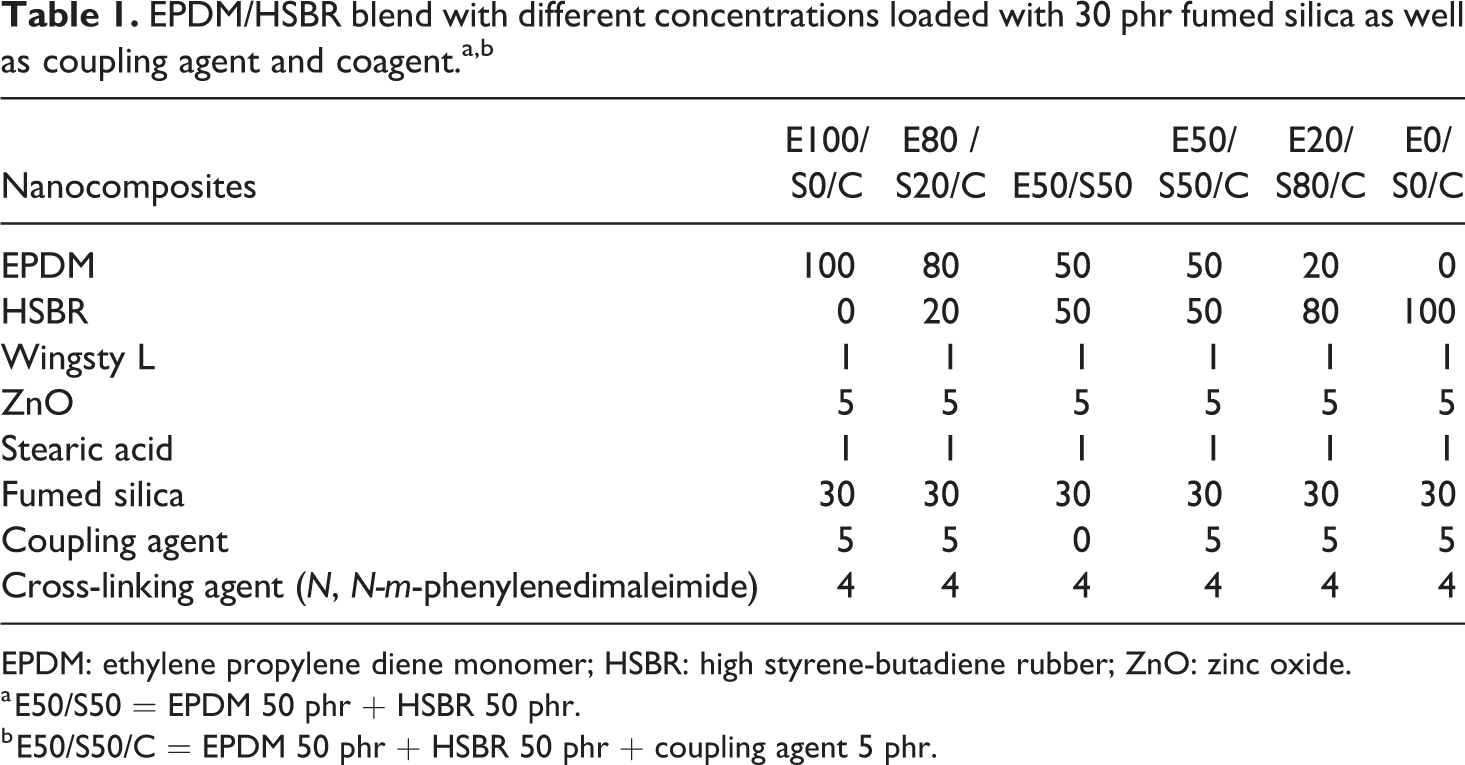
EPDM: ethylene propylene diene monomer; HSBR: high styrene-butadiene rubber; ZnO: zinc oxide.
a E50/S50 = EPDM 50 phr + HSBR 50 phr.
b E50/S50/C = EPDM 50 phr + HSBR 50 phr + coupling agent 5 phr.
Samples preparation for irradiation
The test specimens were pressed in an electrically heated hydraulic hot press (model M 154, 25 ton capacity) with 20 cm × 30 cm platen dimensions and compressed at a pressure of 160 kg/cm2 and 105°C for at least 2 min, just for shaping the film samples before rubber processing by irradiation treatment.
Irradiation procedure
Irradiation of samples was carried out by Cobalt-60 gamma rays (made in India) at the National Center for Radiation Research and Technology, Nasr City, Cairo, Egypt with about 1 kGy/h dose rate, and irradiation procedure was done in the presence of oxygen.
Mechanical measurements
Dumbbell-shaped specimens were cut from the sheets using a steel die of standard width of 4 mm and length of 15 mm. The stress and strain properties were measured according to ASTM D 412 at 25°C using a tensile testing machine of Hung-Ta Model HT-9112 (Taiwan) with load cell 100 kgf and 500 mm/min speed.
Scanning electron microscope (SEM) measurements
JEOL JSM 5400 high resolution (Shimadzu Co., Japan) was used to studying the morphology of samples; the orientation of photomicrographs was kept constant throughout the study. The surfaces of the samples were coated with a thin film of gold (about 300–400 µm thickness) using a vacuum evaporation technique.
Thermogravimetric analysis measurements
Thermogravimetric analysis was carried out using a TG-50 from Shimadzu (Japan) at a heating rate of 10°C/min and up to 600°C according to ASTM E1641-07. The sample weights were between 3 mg and 5 mg encapsulated in platinum pans. Measurements were carried out under nitrogen gas of flow rate of 20 mL/min.
Hardness measurements
The shore hardness of the specimen was done using durometer instrument type A and type D (Model 306L) from Pacific Transducer Corp., Los Angeles, California, US. The measurement was carried out according to ASTM D2240. Shore A is used for soft rubber and shore D for hard rubber.
Abrasion measurement
An abrasion tester of the type AP.40 (GmbH RAUENSTEIN THURINGEN, Germany) was used to measure abrasion loss according to the following equation:

where Wi is the initial mass of the sample (g), Wf the final mass of the sample (gm), and the number of revolutions (n) = 84. The load used is 1 kg; abrasion path is 40 m, which is equivalent to 84 revolutions.
Result and discussion
Mechanical properties
Figure 1 shows the variation of tensile strength (TS) as a function of γ-irradiation dose of EPDM/HSBR blend with different ratios and loaded with 30 phr fumed silica as well as the coupling agent and coagent. The values of TS for all blend raised by raising the irradiation dose up to 150 kGy, after that decreased with different rates on raising the irradiation dose to 200 kGy. Irradiation causes two competing reactions in the rubber matrix, namely, cross-link formation and scission of the macromolecular chains, depending on the total irradiation dose, dose rate, and irradiation condition (in the presence of air or inert gas). The cross-linking increase by irradiation dose but at high-dose reduction in tensile value may be due to the chain scission which is predominant at higher irradiation doses leading to polymer degradation. From Figure 1, it can be noticed that the nanocomposites containing high HSBR ratios (100% and 80%) relatively have higher TS at low irradiation doses (25–50 kGy) if compared with that of the other nanocomposites. Besides, the values of TS of these nanocomposites (100% and 80% HSBR) increased at a small rate with the increase of the irradiation dose up to 150 kGy and then declined slowly at 200 kGy. It seems that the mechanical properties/irradiation dose relationship of these nanocomposites follows the behavior of the thermoplastic containing a high content of phenyl groups. While the TS of the nanocomposites containing 100% or 80% EPDM increased at a great rate with the increase of the irradiation dose up to 150 kGy and then decreased significantly at 200 kGy. It appears to follow the behavior of the elastomeric materials. Also, the irradiated nanocomposites containing 80% EPDM/20 HSBR has the highest values of TS at the irradiation doses, 75–150 kGy. This improvement can be attributed to the mutual reinforcement of HSBR and EPDM in the blends at low HSBR percentage. While at higher HSBR content in the blend (50/50), the values of TS decreased if compared with those of the other nanocomposites. This may be explained as the agglomerate of long HSBR molecules hinders the dispersion of the blend phases. Consequently, the absence of a good dispersed phase in the blend causes easy crack propagation and hence, poor tensile strength. Besides, the blend E50/C containing silane coupling agent has higher values of TS if compared with that without the coupling agent (E50). This may be attributed to the effect of the coupling agent in raising the network-chain density in the irradiated blend vulcanization. Figure 2 illustrates the variation of the percentage of elongation at the break point (E %) against the irradiation dose of the former blends. The elongation at break initially increased due to the initiation of free radicals causing initial cross-linking at the low irradiation dose, namely 25 kGy, and then decreased with different rates with increasing the absorbed dose up to 200 kGy. This decrease indicates that the network structure of the rubber nanocomposites becomes tighter and less flexible, due to the restriction of molecular movements, as a result of the cross-linking of the rubber nanocomposites. The elongation at break for all nanocomposites increased with the increase in the EPDM content. On the other hand, the blend E50/S50/C containing silane coupling agent has lower strain than that without coupling agent. The chance of cross-linking could be raised using the silane coupling agent so the elongation at break decreased.
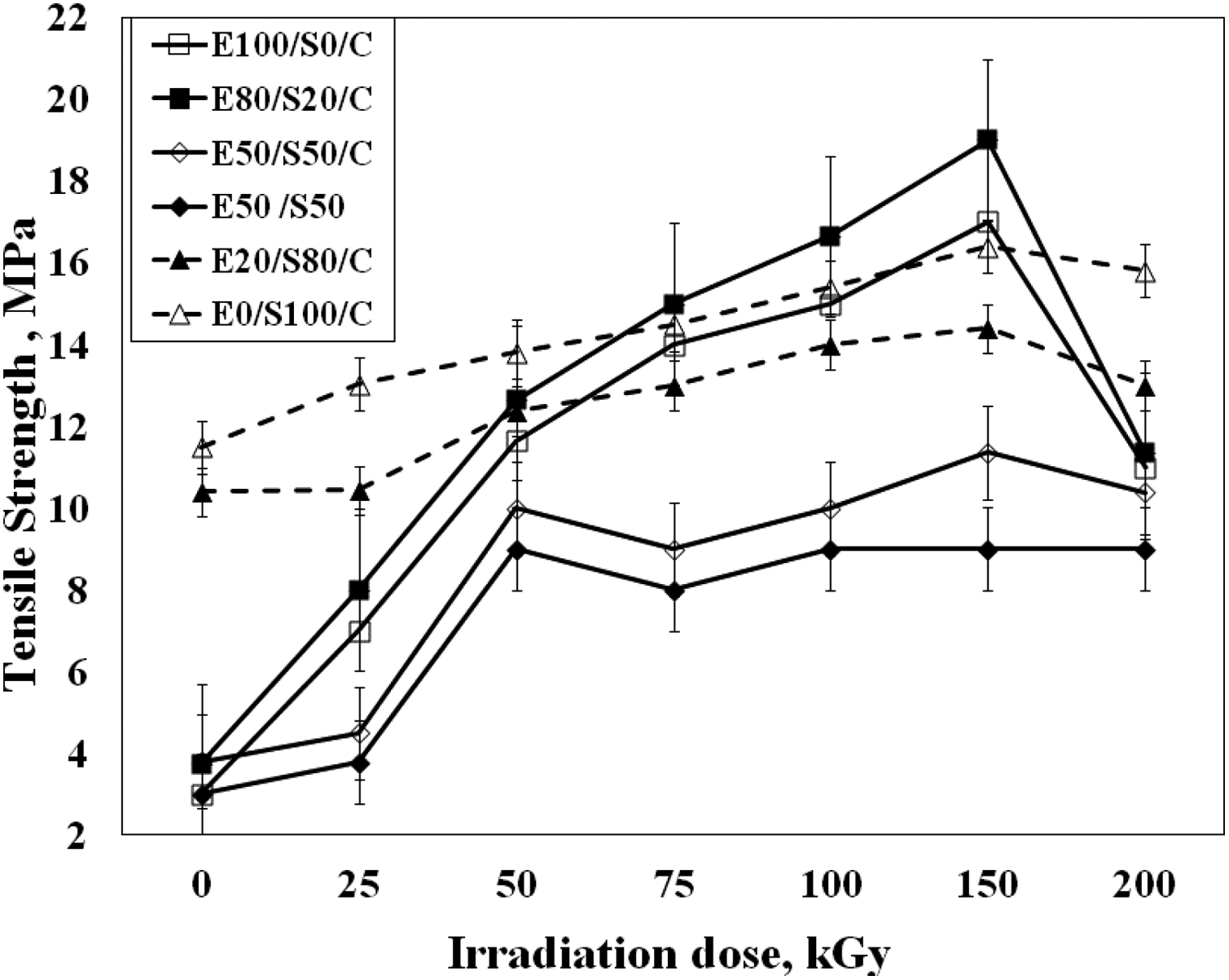
Relation between irradiation dose and tensile strength of EPDM/HSBR blend with different ratios loaded with 30 phr fumed silica as well as coagent and coupling agent.
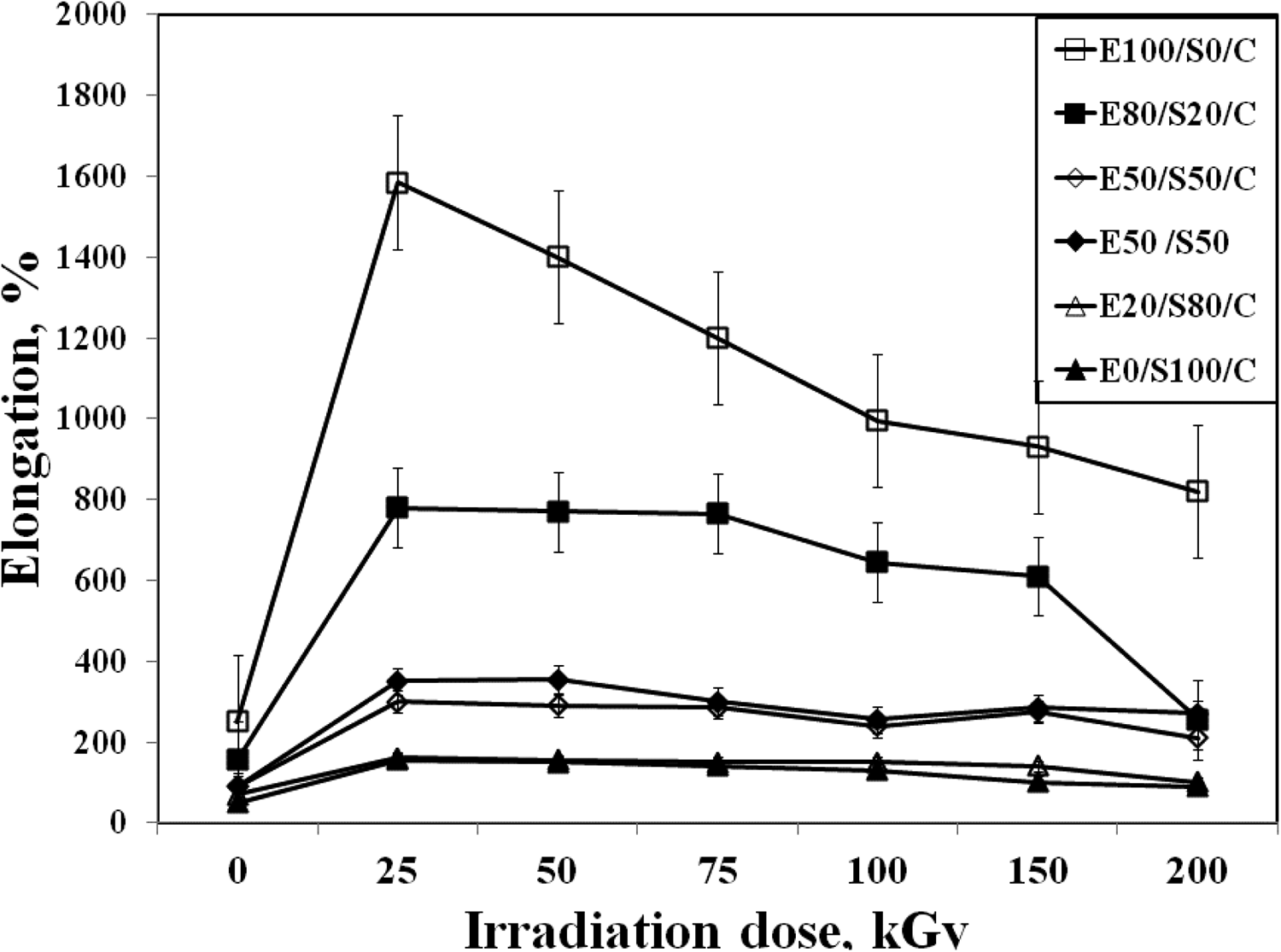
Relation between irradiation dose and elongation of EPDM/HSBR blend with different ratios loaded with 30 phr fumed silica as well as coagent and coupling agent.
Scanning electron microscope
The morphology of the blends containing different ratios of (EPDM-HSBR-coupling agent) and each one is loaded with 30 phr fumed silica and coagent ((a) = (100-0-5), (b) = (80-20-5), (c) = (20-80-5), and (d) = (0-100-5)) irradiated to 150 kGy was investigated. Figure 3(a) to (d) shows the morphology of these samples. The surface is homogeneous and smooth in Figure 3(a) while in the case of Figure 3(d), the reverse is observed due to excess of the bulky phenyl group in the matrix. It can be shown also from Figure 3(b) and (c), the changes in morphology with the introduction of different contents of HSBR into the EPDM matrix. Figure 3(b) shows that the small content of the dispersed phase HSBR is distributed relatively uniformly throughout the EPDM matrix, which prevents crack growth in the blend during tensile stress. As well as the surface is homogeneous, smooth and exhibits no indication of phase separation. While in Figure 3(c), as the content of the HSBR, was increased agglomeration of the dispersed phase particles happen. Consequently, miscibility of the blend decreases and the crack propagation increases in the blend. Earlier studies20–22 showed that crack bifurcation in blends can be prevented by small and uniformly distributed minor phase in the matrix. This matched with the obtained result that the minor phase in blend E80/S20/C is uniformly distributed, which helped to toughen the matrix and prevent crack propagation.
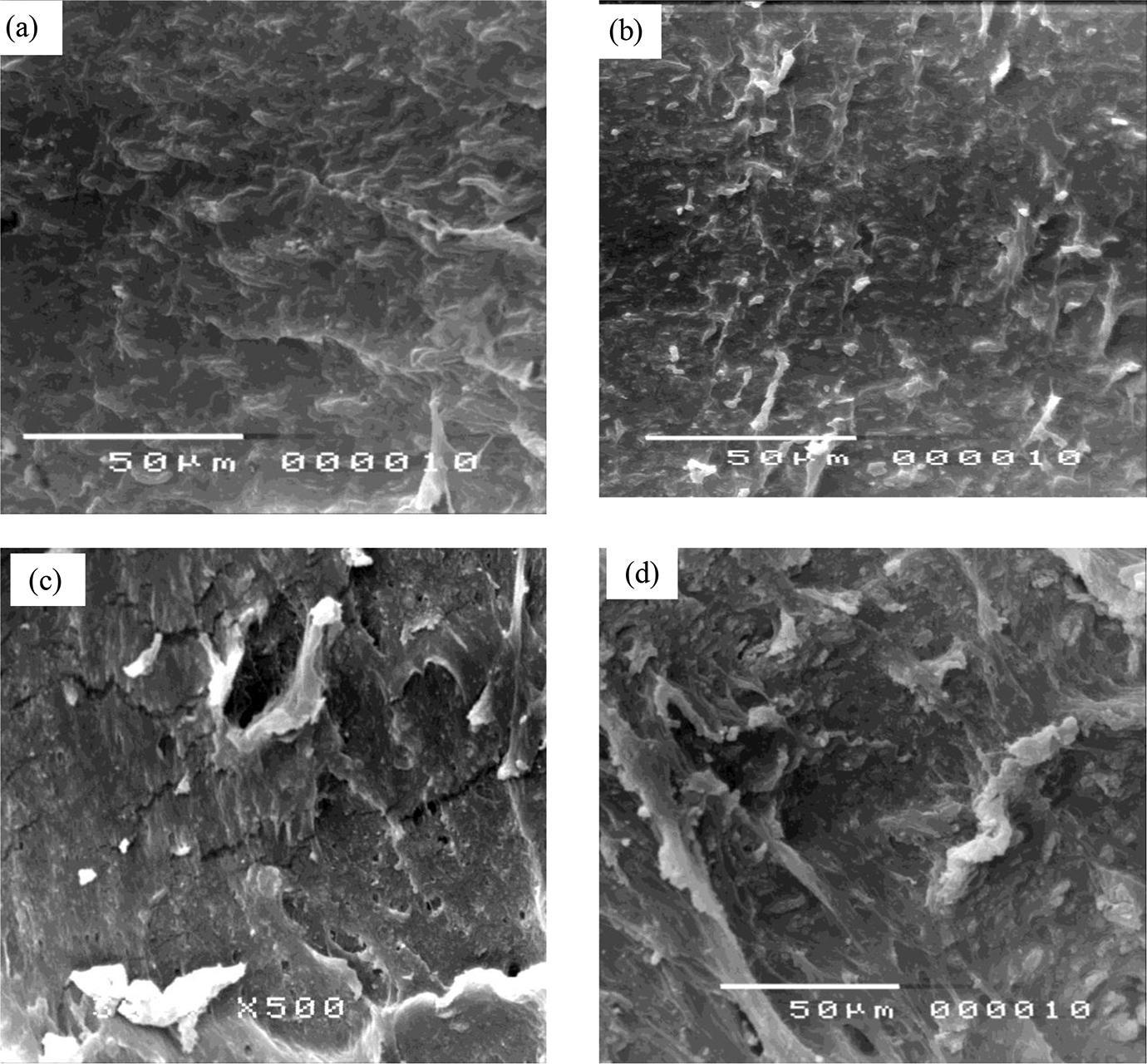
SEM of the blends containing different ratios of (EPDM-HSBR-coupling agent) and each one is loaded with 30 phr fumed silica and coagent irradiated to 150 kGy ((a) = (100-0-5), (b) = (80-20-5), (c) = (20-80-5), and (d) = (0-100-5)).
Thermal properties
The nanocomposites irradiated to 150 kGy relativity have the best mechanical properties, so their thermal properties have been studied. The thermal stability of different rubber nanocomposites usually tested using the thermogravimetric analysis (TGA) technique. 23 The effect of rubber ratio on the thermal stability of the different blends irradiated to 150 kGy characterized using the TGA technique. Figure 4 shows the TG and derivative thermogravimetric (DTG) curves for these nanocomposites. Besides, the data of the TG-DTG curves of all samples are mentioned in Table 2. From Figure 4, it can be seen that the TG curve for all samples indicates a two-stage mass change except the blend containing 20% EPDM decomposed in one step as shown in the thermogram. The stage, with a mass loss of about 60% in the temperature range 399–550°C, involves the complex thermal decomposition of the rubber and formation of new bonds as a result of cross-linking reactions. 24 The significant change in mass is also revealed by the sharp peak on the DTG curve, indicating that the rate of decomposition is very fast, 25 at approximately 419°C. For thermal processing above 550°C, the mass loss is little. All nanocomposites exhibit initial weight loss T onset starting above 350°C, indicating high thermal stability. The observed mass loss in the temperature range of 420–490°C is large, about 49–60%, which is attributed to the thermal decomposition of the rubber. This is confirmed by the clear peak appeared on the DTG curve. The rising of the decomposition temperature with the inclusion of 20% HSBR in the blend indicates the improvement of its thermal stability, that is, Tonset, Tmidpoint, and Tmax values of the sample containing 20% HSBR are 48°C, 48°C, and 48°C higher than those of HSBR only, respectively, and 65°C, 43°C, and 43°C higher than those of EPDM only, respectively. The incorporation of 20% HSBR into the EPDM matrix helps to reduce the degradation rate and weight loss. This may be due to the improvement being able to be attributed to the mutual reinforcement of HSBR and EPDM in the blends at low HSBR percentage. Figure 4(c) and (d) shows the effect of the coupling agent on the blend, and it can be concluded that the blend containing the coupling agent has relatively higher thermal stability, that is, Tonset, Tmidpoint, and Tmax values of the sample containing coupling agent are 17°C, 12°C, and 3°C higher than those with its absence, respectively. The coupling agent increased the cross-linking density and consequently the rigidity of the system increased, which in turn increased the thermal stability. The weight loss of the nanocomposite (E50/S50/C) containing the coupling agent (56%) is lower than that nanocomposite without the coupling agent (69%), which indicated its more thermal stability also.
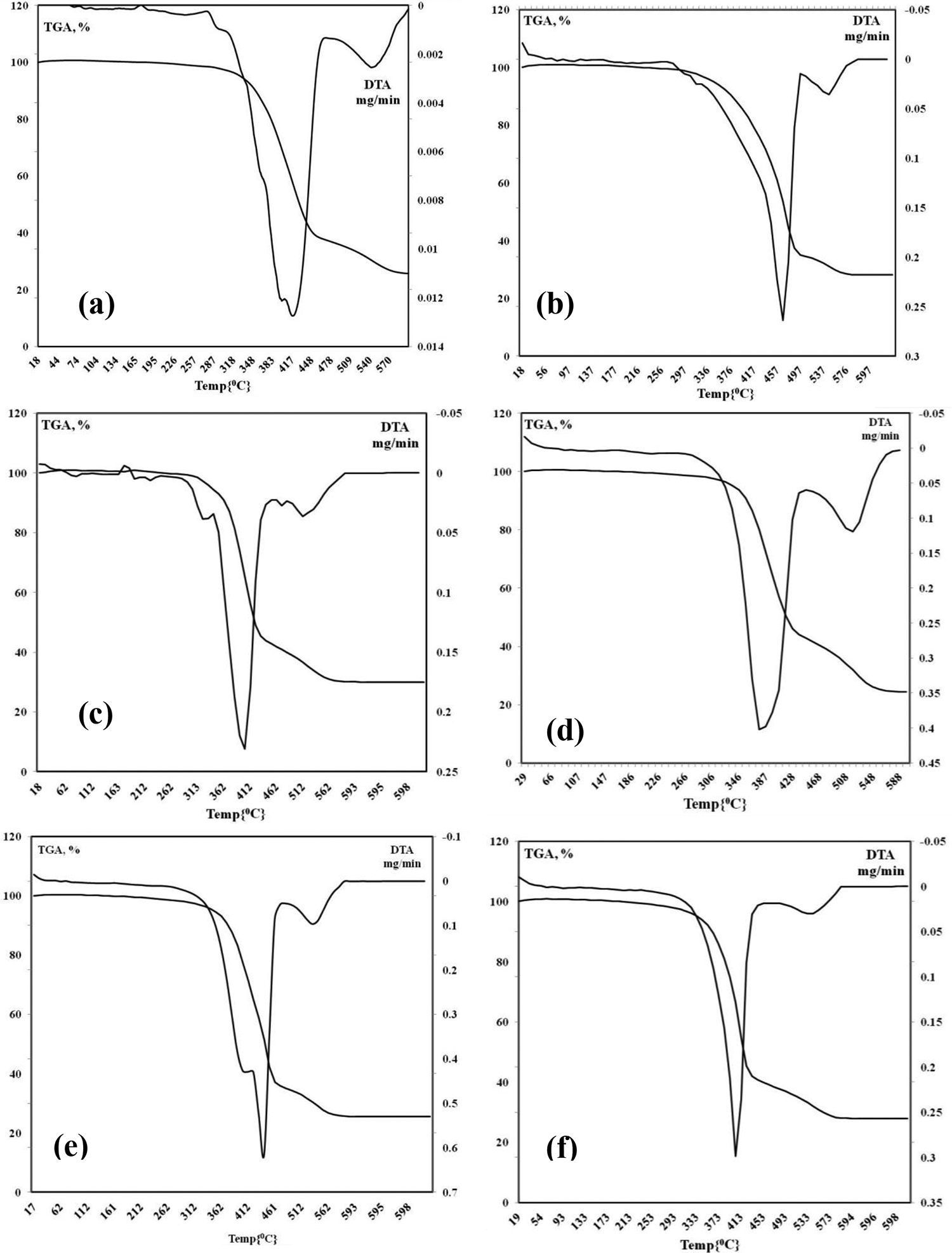
TGA and DTG of the blends containing different ratios of (EPDM-HSBR-coupling agent) and all are loaded with 30 phr fumed silica enhanced with 4 phr coagent and irradiated to 150 kGy ((a) = (100-0-5), (b) = (80-20-5), (c) = (50-50-0), (d) = (50-50-5), (e) = (20-80-5), and (f) = (0-100-5)).
Weight loss temperatures for different ratios EPDM/HSBR blends loaded with 30 phr fumed silica as well as coupling agent and coagent.a
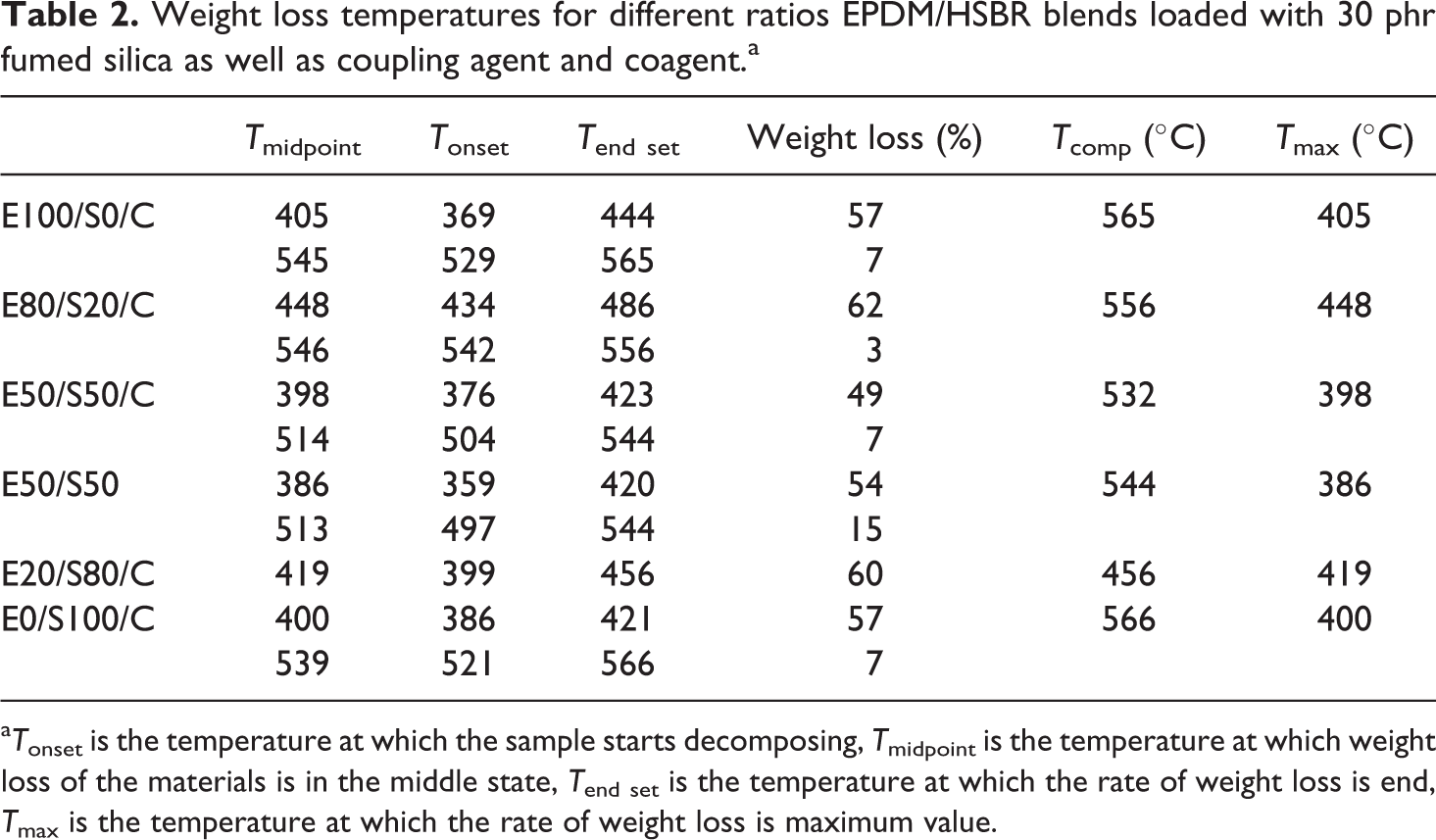
aTonset is the temperature at which the sample starts decomposing, Tmidpoint is the temperature at which weight loss of the materials is in the middle state, Tend set is the temperature at which the rate of weight loss is end, Tmax is the temperature at which the rate of weight loss is maximum value.
Hardness measurement
The effect of irradiation doses, namely, 25, 50, 75, 100, 150, and 200 kGy, on the hardness of the blends was studied using shore A and shore D. The obtained data are presented in Figures 5 and 6. It can be shown that the hardness increased by increasing the irradiation dose and/or the HSBR content. Hence, the sample containing 100% HSBR becomes very hard and lose its elasticity. On irradiation in the presence of the coagent, a considerable increment of cross-linking takes place depending on the irradiation dose. Cross-linking is causing a rising in the molecular weight of the blend and hence raising its hardness values.
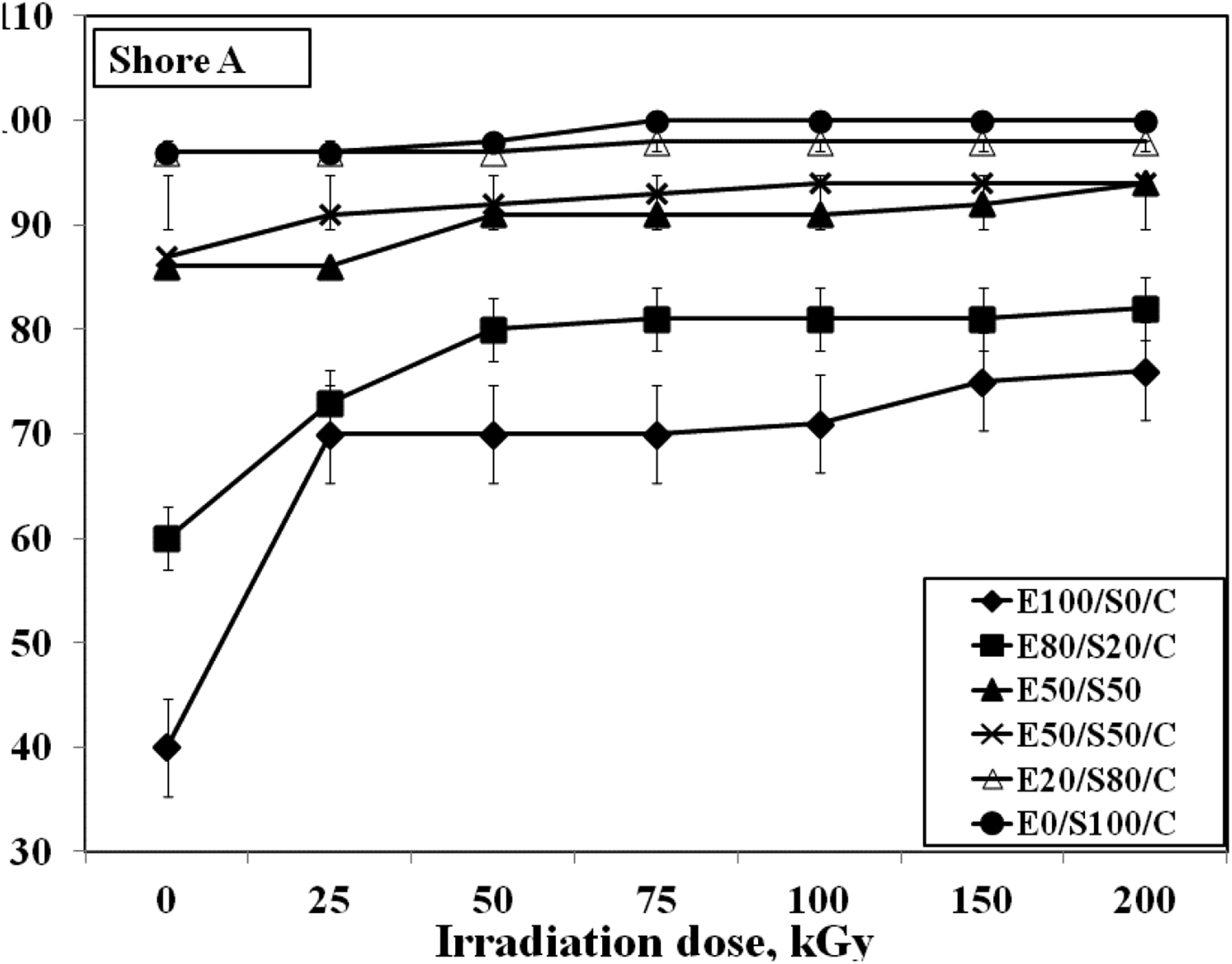
Relation between irradiation dose and shore hardness A of the EPDM/HSBR blends with different ratio loaded with 30 phr fumed silica as well as coupling agent and coagent.
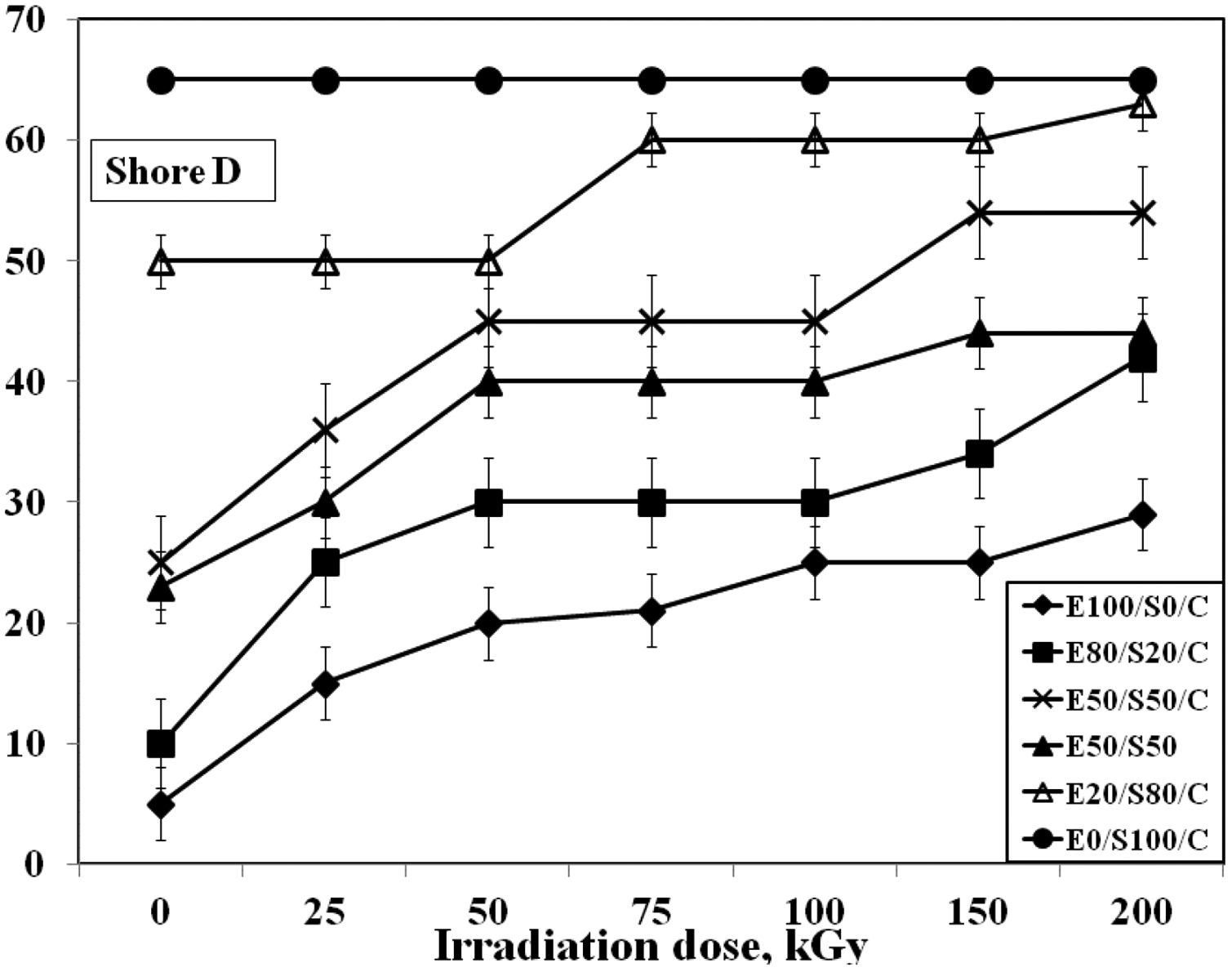
Relation between irradiation dose and shore hardness D of the EPDM/HSBR blends with different ratio loaded with 30 phr fumed silica as well as coupling agent and coagent.
Abrasion measurement
Figure 7 shows the abrasion resistance of EPDM/HSBR blends with different ratios. High styrene BR shows the lowest abrasion loss. On the other hand, the abrasion loss in the case of the blend E50/S50/C is lower than that without the coupling agent, indicating an enhancement of matrix–filler interaction has occurred. Consequently, better interface interaction in the matrix resulted in better abrasion resistance. Generally, the abrasion loss was lowered by the rising in cross-link density. These data indicated that the abrasion resistance of the nanocomposites enhanced by increasing the irradiation dose.
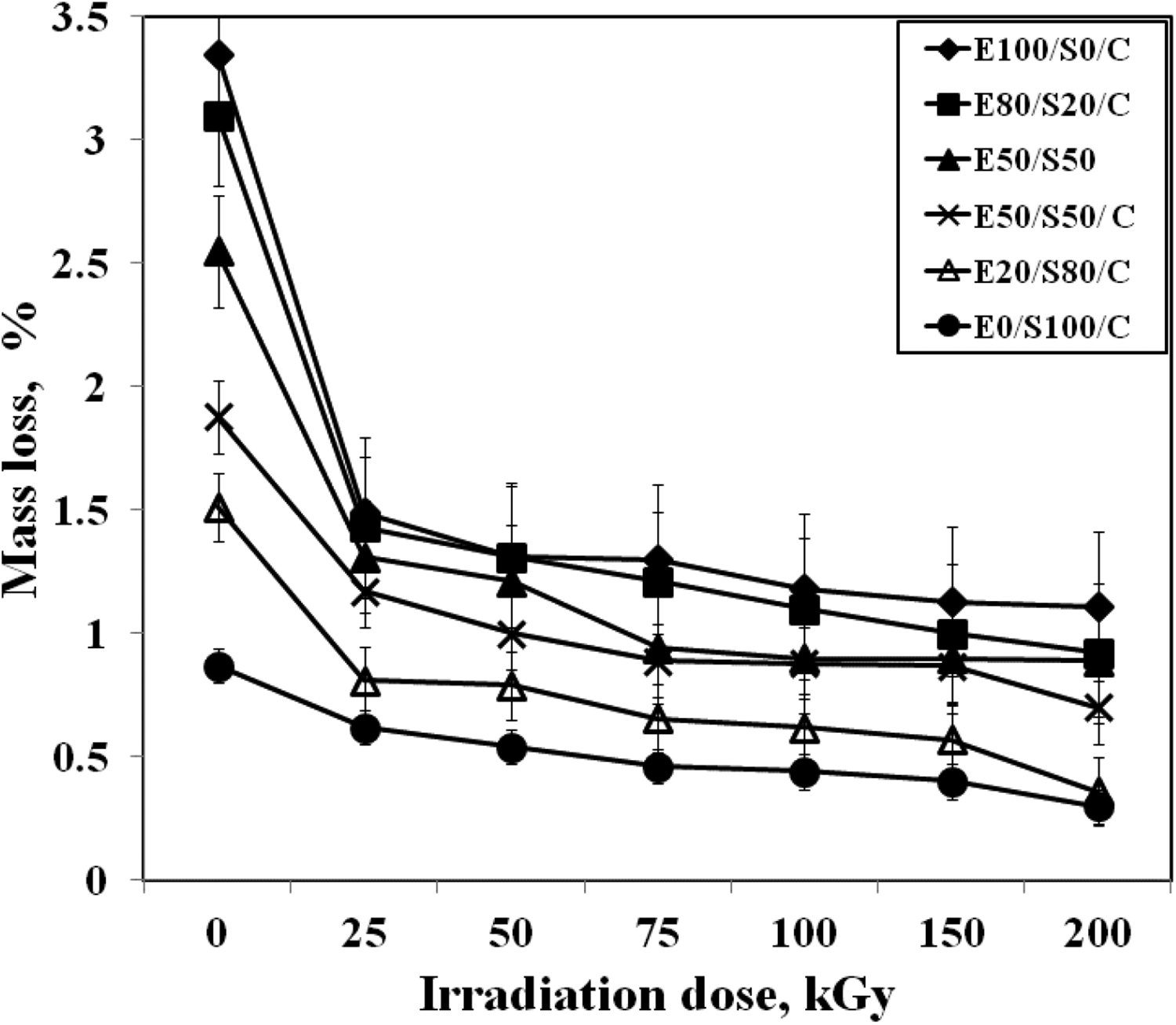
Relation between irradiation dose and mass loss percentage of EPDM/HSBR blend with different ratios loaded with 30 phr fumed silica as well as coupling agent and coagent.
Conclusion
The effects of the blend ratio and coupling agent on the mechanical properties of γ-irradiated EPDM/HSBR blends were investigated. The properties such as elongation at break, tensile strength, and thermal stability increased with the increase in the EPDM content in the blends, while the abrasion resistance and the hardness of the blends were increased with the increase in the HSBR content. The best thermal, hardness, abrasion, and mechanical properties were obtained for the blend containing 20% HSBR and 80% EPDM and irradiated to 150 kGy. Besides, the presence of the coupling agent leads to improvement in the mentioned properties. The mechanical properties have been interpreted in terms of the morphology of the blends as attested by SEM photographs. It can be generally concluded that the EPDM/HSBR blend containing 20% HSBR and 80% EPDM and 30 phr fumed silica and 5 phr coagent and irradiated to 150 kGy are characterized by having outstanding mechanical, thermal, hardness, and abrasion properties, and hence, it may have wide industrial applications, for example, as oven door seals, gaskets, hard rubber tube, and in the automobile industry like high-grade bike cover tire
