



Abstract
In this work, polystyrene (PS)/poly(styrene-b-isoprene-b-styrene) (SIS)/organophilic halloysite nanotube (Org-HNT) blend nanocomposites were produced by melt compounding technique. The significant improvements in both toughness and impact strength values were obtained in PS/SIS blends containing 20%, 30%, and 40% SIS elastomer as compared to neat PS. Among them, PS-30SIS blend with a co-continuous morphology exhibited moderate tensile and impact properties and its nanocomposites having 3, 5, 7 and 10 phr Org-HNT were prepared through the melt mixing method. All the nanocomposites exhibited continuous/fibrillar morphologies with smaller elastomer domains and higher tensile modulus and toughness as compared to PS-30SIS blend. Among them, the nanocomposite having 7 phr Org-HNT and 30% SIS phase (7H-30SIS) exhibited the highest impact strength with enhanced tensile properties. The same nanocomposite exhibited about 21% and 100% increments in the modulus and toughness in comparison to its blend, respectively. The 7H-30SIS nanocomposite increased storage moduli of PS-30SIS blend at glass transition regions of both polyisoprene and PS phases and also at room temperature. Moreover, the rubbery storage moduli of the nanocomposites were found to be about 37% and 53% higher for 7 and 10 phr Org-HNT loaded nanocomposites, respectively, in comparison with that of PS-30SIS blend. The creep deformation and permanent deformation of the blend both decreased via introduction of the nanotubes which is in agreement with aforementioned improvements in the stiffness.
Keywords
Introduction
Polystyrene (PS) is a commercial resin that is widely used in the plastics industry due to its good processing characteristics. On the contrary, its fragility under applied stress limits its use in many applications. 1 Melt compounding of PS with various types of thermoplastic elastomers has been done to overcome this disadvantage. 2 –4 Rubber toughening by elastomeric inclusions in the polymer matrix is one of the most efficient methods of toughening utilized for rigid polymers. 5 –7 The high-impact PS known as a commercial polybutadiene rubber–toughened polymer has been widely used in industrial applications such as packaging, toys, bottles, housewares, household electronic appliances, containers, and light-duty industrial components. 8,9 Wu et al. studied the effect of styrene-butadiene-styrene (SBS) thermoplastic elastomer in toughening of PS with high density polyethylene (HDPE) blend and reported that PS’ impact strength was increased about 10 times. 10 Toughening of PS has also be done by using natural rubber, polypropylene, polyethylene, and other rigid polymer components. 10 –13 Martinez et al. prepared PS/styrene-butadiene rubber (SBR) blends and discussed the effect of structure of SBR polymer (linear, star, and multiblock) on their mechanical properties. 14 The blends showed a lower tensile strength and higher elongation at break due to the presence of the rubbery phase, as compared to neat PS. Linear type SBR with an S/B ratio of 30/70 was reported to cause much higher impact strength and ascribed to its maximum crazing initiating ability confirmed by morphological analysis, absorbing more impact energy. Fang et al. 11 prepared a tough PS blend with ethylene propylene-diene terpolymer (EPDM), compatibilized with SBS block copolymer. The maximum impact strength was achieved with PS/EPDM/SBS blend (mass ratio: 69/21/10). Moreover, increment in impact resistance of the blend was found to be more than 20 times that of pure PS in case of 21 wt% EPDM usage. In another study, PS has been blended with 25% SBS and 1% SBS-g-MA and maximum 25% increase in impact resistance was achieved. 4
The PS polymer has been converted to polymer nanocomposites with different types of nanoparticles. 15,16 Halloysite nanotubes (HNTs) is a type of aluminosilicate clay with a hollow tubular geometry. Its inner diameter and length are approximately 20–50 nm and hundreds nanometers, respectively. 17 However, there are few studies about the effect of silica nanotubes on toughness and impact strength of PS. In a study of Lin et al., 18 PS/HNT nanocomposites were produced by emulsion polymerization of styrene in the presence of sodium dodecyl sulfate surfactant and HNTs. The nanocomposite including 5 wt% HNT was reported to result in 300% higher impact strength as compared to the neat PS and when the degree of clay was increased, the impact resistance decreased. Crazing formation and debonding cavitation at the interphase and pullout of the nanotubes were addressed as the main fracture mechanisms.
The main issue related to nanoparticle usage in brittle polymers is decrement in toughness while increasing modulus especially in case of nanoparticle agglomeration inside the polymer matrix. Therefore, using a rubbery material together with nanoparticle is a way to provide a balance between stiffness and toughness/impact when both are dispersed well in the matrix. 19 PS/clay nanocomposites has also been toughened with styrenic elastomers like maleic anhydride grafted poly(styrene-b-ethylene-co-butylene-b-styrene) (SEBS-g-MA). In the study of Yeniova and Yilmazer, 3 the impact strength of the blend prepared by adding 30% of the SEBS-g-MA toughener to the PS polymer was found to increase 200% compared to pure PS. Then, adding 2% organophilic MMT clay into this blend resulted in a decreased impact strength.
Viscoelastic properties of polymers have been widely investigated via dynamic mechanical analysis (DMA). Li et al. examined dynamic mechanical behavior of PS/CaCO3 nanocomposites modified with poly(styrene–isoprene–styrene) triblock copolymer (SIS) and maleic anhydride–grafted SIS (SIS-MAH). 20 It was found that nano-sized CaCO3 led to an enhancement in the storage modulus of PS/SIS blend. The temperature corresponding to the peak value of loss modulus of isoprene block in the blend was found to increase with 5 phr nano-CaCO3, while that of PS block exhibited a little change. This result was attributed to dispersion of CaCO3 mainly in the SIS or SIS-MAH domains or at the interface. Although there are some studies of HNT clay and SIS elastomer with different polymers in the literature, no attempt has been made so far to manufacture impact-modified/toughened PS/SIS blend nanocomposites with the HNT clay and impact-modified PS/HNT binary nanocomposites.
This work reports novel halloysite silica nanotube–reinforced general purpose polystyrene (GPPS)/SIS nanocomposites with enhanced mechanical properties. Firstly, PS/SIS blends were prepared and their morphological and static mechanical properties were studied to select the optimized blend composition. Then, the nanotube-reinforced PS/SIS nanocomposites were produced by melt mixing technique. The static and dynamic mechanical properties as well as short-time creep resistance of all the nanocomposites with their morphological structures are discussed as a function of the nanotube loading degree.
Experimental
Materials
GPPS 1540 with the melt flow index of 11 g (10 min)−1 (200°C, 5 kg) was obtained from Tabriz Petrochemical Company (Iran) and used as the polymer matrix. The radial triblock thermoplastic elastomer poly(styrene-b-polyisoprene-b-polystyrene) (SIS) (D1124, MFI: 4 g (10 min) −1, 200°C, 5 kg) which contains 30 wt% PS was purchased from Kraton Polymers (Belpre, Ohio, USA). HNT with a cation exchange capacity of 20 meq (100 g−1) was provided by Esan-Eczacıbaşı (Turkey). The average primary particle size of the nanotube aggregates is 6.1 µm (Supplementary Figure S1) and used as received. Dimethyl-dehydrogenated tallow quaternary ammonium chloride (Arquad, 2HT-75) and hexane were supplied from Sigma-Aldrich (Germany).
Modification of halloysite clay
The HNTs were modified with the quaternary ammonium salt based on the cation exchange capacity of the HNT clay. A certain amount of the dimethyl-dehydrogenated tallow quaternary ammonium chloride was dissolved in 200 ml of deionized water at 50°C. Then, this solution was added to nanotube/water mixture in which HNTs were dispersed in 300 ml of deionized water at 50°C for 1 h previously. The solution was vigorously stirred at 50°C using mechanical stirrer for 4 h. The organophilic halloysite (Org-HNT) was acquired through filtration of the solution under vacuum and then it was dried in vacuum oven at 50°C for 24 h.
Preparation of PS/SIS/Org-HNT nanocomposites
Org-HNT/PS masterbatch having the ratio of 20/80 was prepared using an internal mixer (RTX-M40 Kökbir Machine, Turkey). The Org-HNT and PS were mixed at 180°C with 60 r min−1 rotor speed for 5 min then the masterbatch was pelletized with a granulator machine (SPS Machine, Turkey). PS/SIS/Org-HNT nanocomposites were manufactured with utilizing a 16 mm corotating twin screw extruder (Gulnar Machine, Turkey). The temperature profile and the screw speed of the extruder were 180–190–200°C and 250 r min−1, respectively. The same technique was also applied to prepare PS/SIS blends. The amount of HNT clay used in the compositions ranges from 3 phr to 10 phr. Finally, these compounds were molded to prepare standard shapes according to ISO-180 (10 × 80 × 4 mm3) using a 10 ton plastic injection molding machine (Permak Machine, Turkey) with an injection pressure of 80 bar in the temperature range of 180°C–190°C. Table 1 shows the composition ratios of the materials.
The compositions of PS/SIS blends and nanocomposites.
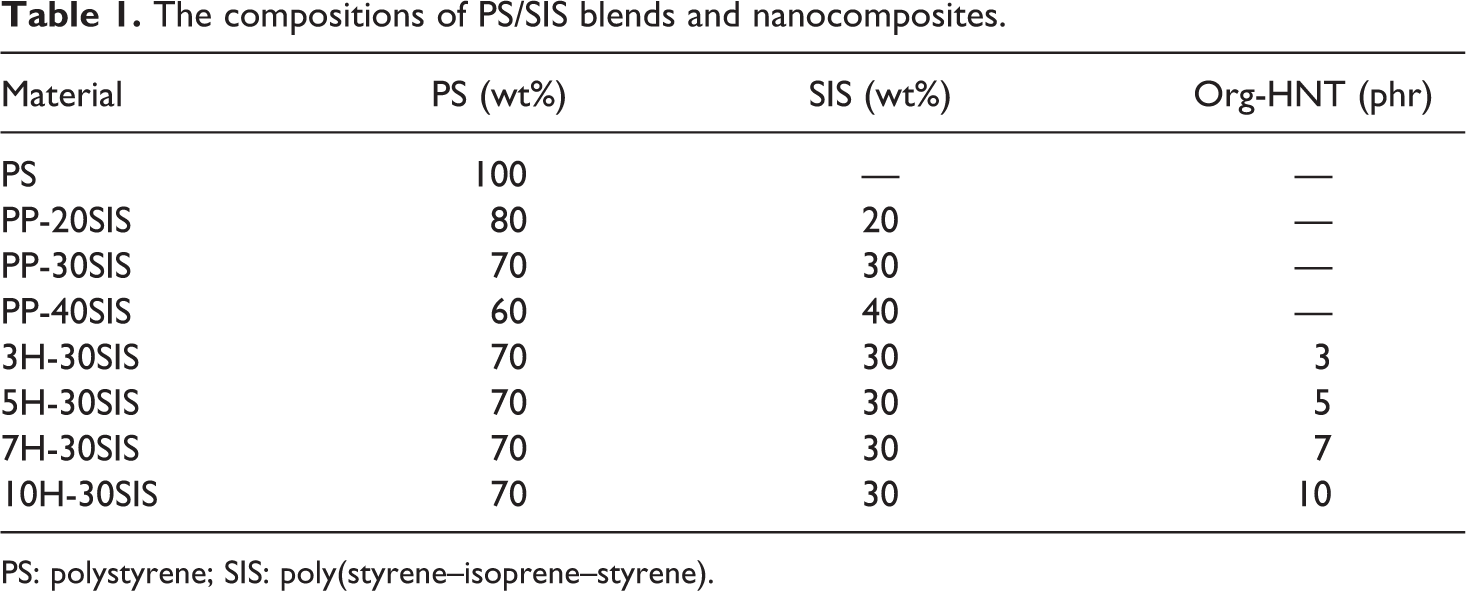
PS: polystyrene; SIS: poly(styrene–isoprene–styrene).
Characterization
Morphological analyses of the nanotubes (HNT and Org-HNT) were done with scanning electron microscope (SEM) (ESEM-FEG/EDAX Philips XL-30; Philips, Eindhoven, the Netherlands). Thermogravimetric analyses (TGA) of the nanotubes were carried out with a Seiko TG/DTA 6300 (Seiko Instruments, Tokyo, Japan) instrument in nitrogen atmosphere at 10°C min−1. Fourier-transform infrared (FTIR) analyses of HNT and Org-HNT were done with a Perkin Elmer 1600 FTIR-ATR spectrophotometer (Waltham, Massachusetts, USA). The silica nanotubes were also analyzed with X-ray diffraction (XRD) technique using a Rigaku D/Max 2200 Ultimat diffractometer (Rigaku, Tokyo, Japan) with CuKα radiation (λ = 1.54 Å) at 40 mA and 40 kV with a scanning rate of 2° min−1. The results of the SEM, TGA, FTIR, and XRD analyses of the nanotubes were presented in Supplementary Figures S2 to S5 and discussed in details.
Morphological analyses of cryo-fractured surfaces of the blends and nanocomposites were performed with SEM (ESEM-FEG/EDAX Philips XL-30; Philips). To follow the dispersion of SIS phase, the fractured surfaces of the samples were etched via hexane solvent at room temperature for 15 min, then dried in vacuum oven, and characterized by SEM technique. The tensile fractured surfaces of representative samples were also scanned by the scanning electron microscope. Transmission electron microscope (TEM) analyses of the nanocomposites were done with an FEI TecnaiTM G2 F30 (FEI, Hillsboro, Oregon, USA) instrument at an acceleration voltage of 200 kV. The samples were cut prepared by a cryoultramicrotome (Leica EMUC6/EMFC6, Austria) with a diamond knife and placed on copper grids for the analysis.
Tensile mechanical properties of the samples were investigated using a Zwick/Roell machine (Zwick GmbH & Co. KG, Germany) having 20 kN load cell. The samples having a dimension of 80 × 10 × 4 mm3 were tested at a drawing rate of 50 mm min−1 at room temperature. Their notched Izod impact strengths were achieved using a Ceast 9050 (Instron, Norwood, Massachusetts, USA) pendulum impact tester equipped with a 5.5 J hammer.
The glass transition temperature and heat capacity jump (ΔCp) values of the samples were found using a DSC Q200 (TA Instruments, New Castle, Delaware, USA) instrument under nitrogen flow. The samples were heated from −80°C to 140°C at a heating rate of 10°C min−1.
DMAs of the nanocomposites were done with a TA Instruments analyzer (Q800; TA Instruments) in a single cantilever bending mode using under a nitrogen atmosphere with a constant frequency (1 Hz) and at a heating rate of 10°C min−1. Moreover, the effect of temperature on storage modulus versus frequency data was investigated by applying different frequencies from 0.1 Hz to 10 Hz in the temperature range of 30°C to 130°C. The DMAs were performed with test specimens having dimensions of 35 × 10 × 4 mm3. The short-time creep performances of nanocomposites having the same dimensions were investigated by the DMA analyzer (Q800; TA Instruments) using a single cantilever mode. The creep deformation was obtained by applying a constant stress (3 MPa) at 30°C for 15 min. Then, the creep recovery was followed for 15 min after the load was removed.
Results and discussion
Morphological characterization and static mechanical properties of PS/SIS blends
Figure 1 shows SEM images of the fractured and etched surfaces of PS/SIS blends. It is clear from the SEM image of PS-20SIS that the SIS as elastomeric phase dispersed as droplets in the PS matrix as expected since it has a higher viscosity and higher volume fraction in the blend. 3,21 On the other hand, at higher SIS minor phase loadings (30 wt% and 40% SIS content), the structure changed from “droplet matrix morphology” to “co-continuous (fibrillar) morphology.” This change in morphology occurs at a certain elastomer ratio which is known as “phase inversion point.” 22,23 It is obvious in the Figure 1 that the inversion point is in between 20 wt% and 30 wt% of SIS content in the PS/SIS blends. It was also found that the co-continuous structure of SIS elastomeric domains showed more uniform shape and size distribution in PS-30SIS blend, resulting in enhanced interfacial adhesion, as compared to that observed for PS-40SIS one. As the SIS content in the blend increases furtherly to 40 wt%, higher domain sizes and size distribution with less uniform dispersion were found. This can be ascribed to an increased coalescence rate of SIS droplets during the melting process due to the presence of a higher amount of SIS elastomer domain colliding with each other much more. Moreover, shear stress subjected to molten polymer molecules may not be enough to disperse SIS domains into small droplets in the blend due to increased blend viscosity in the presence of 40 wt% high viscosity thermoplastic elastomer. 22 –24
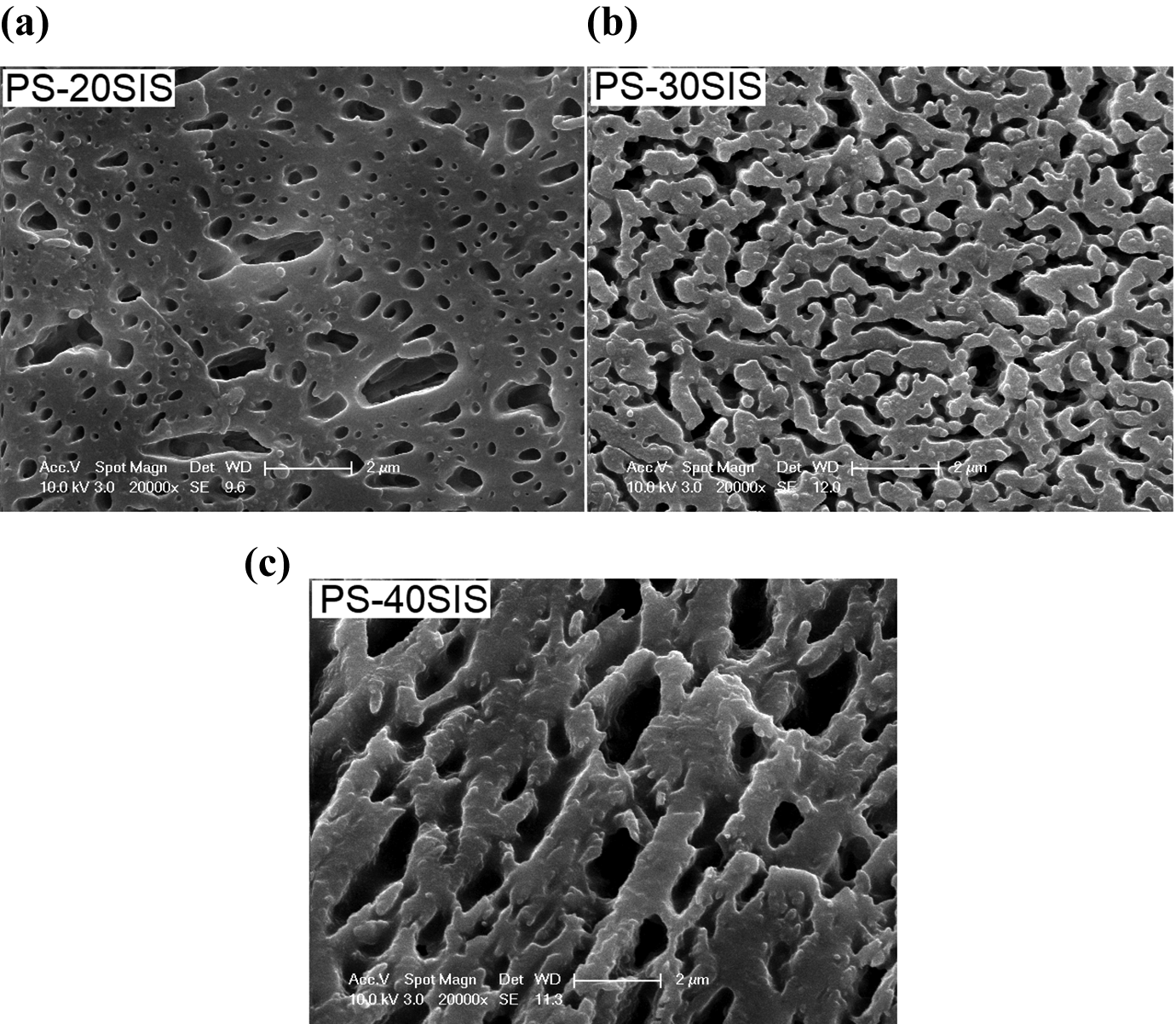
(a) to (c) SEM images of fractured and etched surfaces of PS/SIS blends.
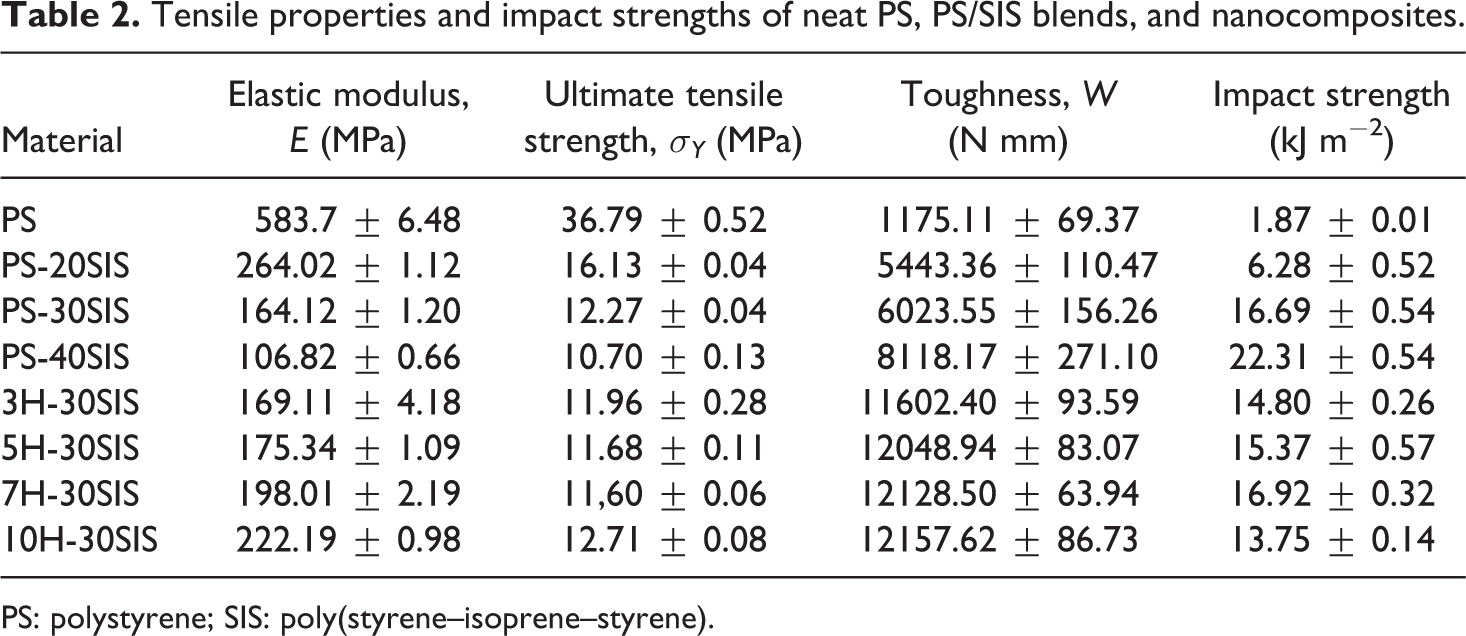
Table 2 indicates tensile properties and impact test data of PS/SIS blends. Compared to neat PS, all the blends were found to have lower elastic modulus and tensile strength values which is also clear in Figure 2 in which their stress–strain curves are given. The decrease in the modulus and strength with the addition of SIS can be ascribed to softness of the SIS elastomer. On the other hand, toughness and notched impact strength of PS/SIS blends were improved as compared to PS (Figure 2), particularly with the addition of SIS elastomer more than 20%. Moreover, appearance of the co-continuous morphology observed in PS-30SIS and PS-40SIS blends indicating a good interfacial adhesion between PS and SIS phases can be another factor for increase in impact strength and toughness values. 25 –28 Although PS-40SIS shows the highest toughness and impact strength among the blends, it exhibited the lowest strength and modulus values which is most probably due to its high amount of SIS elastomeric content. As a conclusion, PS-30SIS blend was selected to be an optimized blend with moderate toughness and impact strength values as well as higher modulus and tensile strength in preparation of blend nanocomposites.
Tensile properties and impact strengths of neat PS, PS/SIS blends, and nanocomposites.
PS: polystyrene; SIS: poly(styrene–isoprene–styrene).
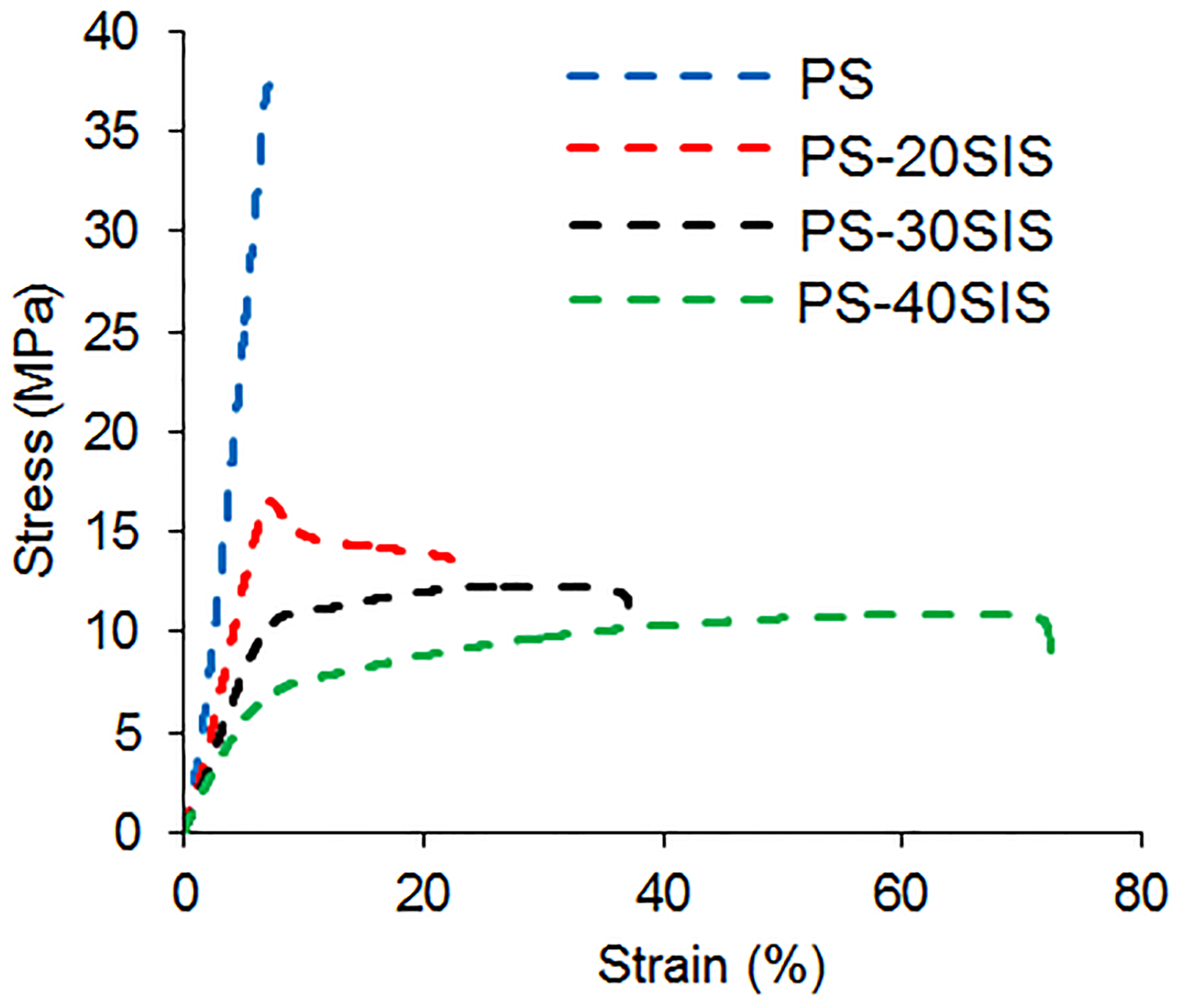
Tensile stress–strain curves of PS and PS/SIS blends.
Morphological characterization of PS/SIS/HNT nanocomposites
The SEM images (magnification 20,000×) of PS-30SIS blends and it nanocomposites including 3–10 phr Org-HNT clay are given in Supplementary Figure S6. The nanocomposites exhibited co-continuous morphologies (Supplementary Figure S6). The 3H-30SIS composite was found to have a “stratified morphology” which is known to be in between droplet matrix and co-continuous morphologies. 3 It includes a less uniform dispersion of SIS phase in the matrix. As the nanotube content increases, more uniform distribution of SIS domains were observed particularly for 7H-30SIS and 10H-30SIS composites exhibiting dispersed SIS phase in fibrillar form (Figure S6).
The high-magnification SEM images of the nanocomposites are presented in Figure 3 (magnification 50,000×) and Figure 4 (magnification 100,000×). In 5H-30SIS nanocomposite, SIS domains seem to be larger domains with a less uniform size (Supplementary Figure S6 and Figure 3) in comparison with 7H-30SIS and 10H-30SIS composites. This can be due to location of the nanotubes inside the elastomer domains (Figure 4) which result in stretched and enlarged elastomer domains in 5H-30SIS nanocomposite. 3 At a higher nanotube loading (7 phr), Org-HNTs were found to disperse in PS matrix and at interphase between SIS and PS phases (Figures 3 and 4). This may inhibit recombination of SIS elastomer domains via increased matrix viscosity 3,29 leading to more homogeneous SIS dispersion in 7H-30SIS nanocomposite. Although fibrillar form of SIS elastomer domains with smaller sizes was observed in 10H-30SIS composite (Supplementary Figure S6 and Figure 3) most probably due to the presence of more nanotubes, it also contains some nanotube aggregates in the matrix (Figure 4).
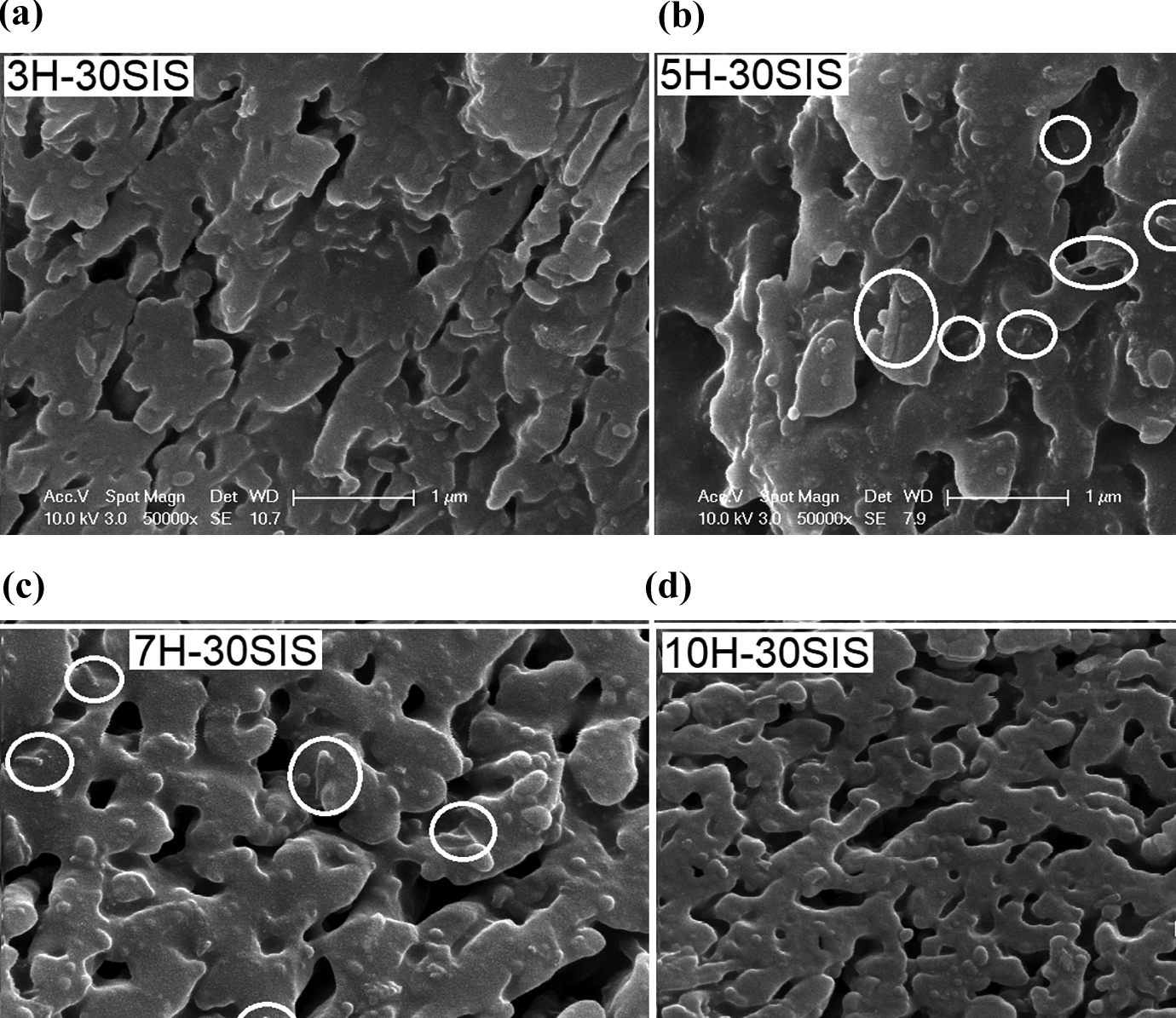
(a) to (d) SEM images of fractured and etched surfaces of PS/SIS blend nanocomposites.
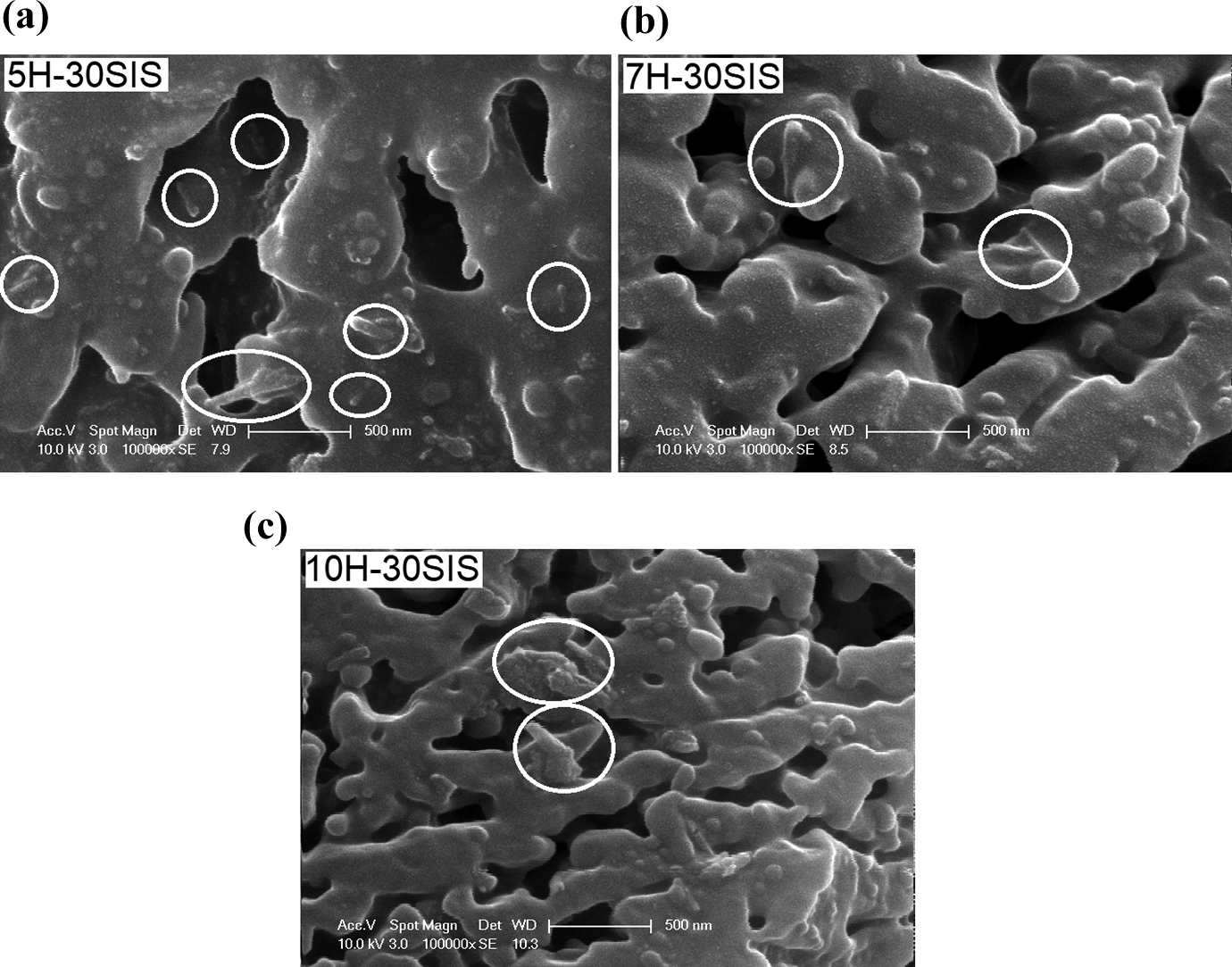
(a) to (c) SEM images of fractured and etched surfaces of PS/SIS blend nanocomposites.
TEM analyses of the nanocomposites were also conducted and images are given in Supplementary Figure S7. It is clear from the TEM images that the 3H-30SIS, 5H-30SIS, and 7H-30SIS show better nanotube dispersion as an indication of larger surface area for polymer–clay interactions, whereas 10H-30SIS composite exhibits HNT aggregates. This result is in agreement with that of the SEM images etched and fractured surfaces of the nanocomposites mentioned above.
Tensile and impact properties of PS/SIS/HNT nanocomposites
Elastic modulus, ultimate tensile strength, toughness, and impact strength values of PS/SIS/HNT nanocomposites are also given in Table 2. The related stress–strain curves of the nanocomposites and PS-30SIS blend are shown in Figure 5. Elastic moduli of the nanocomposites were found to increase with increase in the nanotube loading degree while their strengths exhibited a little change, as compared to that of PS-30SIS blend. The increase in toughness together with a slight decrease in yield strength for the PS30SIS nanocomposites can be attributed to the presence of a flexible interphase with elastomeric SIS phase between the nanotubes and the PS matrix. 30,31 The silica nanotubes seem to compensate adverse effect of SIS elastomer on the modulus. On the other hand, toughness values of all the nanocomposites having 3–10 phr Org-HNT loadings are about twice that of the respective binary blend (PS-30SIS) (Table 2). The improvements in both toughness and moduli in the nanocomposites can be ascribed to the presence of the flexible SIS domains and the nanotubes dispersed in the matrix and at the interphase, respectively. Moreover, smaller rubbery domains are known to increase toughness because they result in relatively smaller cavities under load. 3 As it can be seen from Supplementary Figure S6 and Figure 3, among the nanocomposites, the lowest size of the elastomer domain was achieved via 10H-30SIS nanocomposite leading to the highest toughness value for this composite (Table 2).
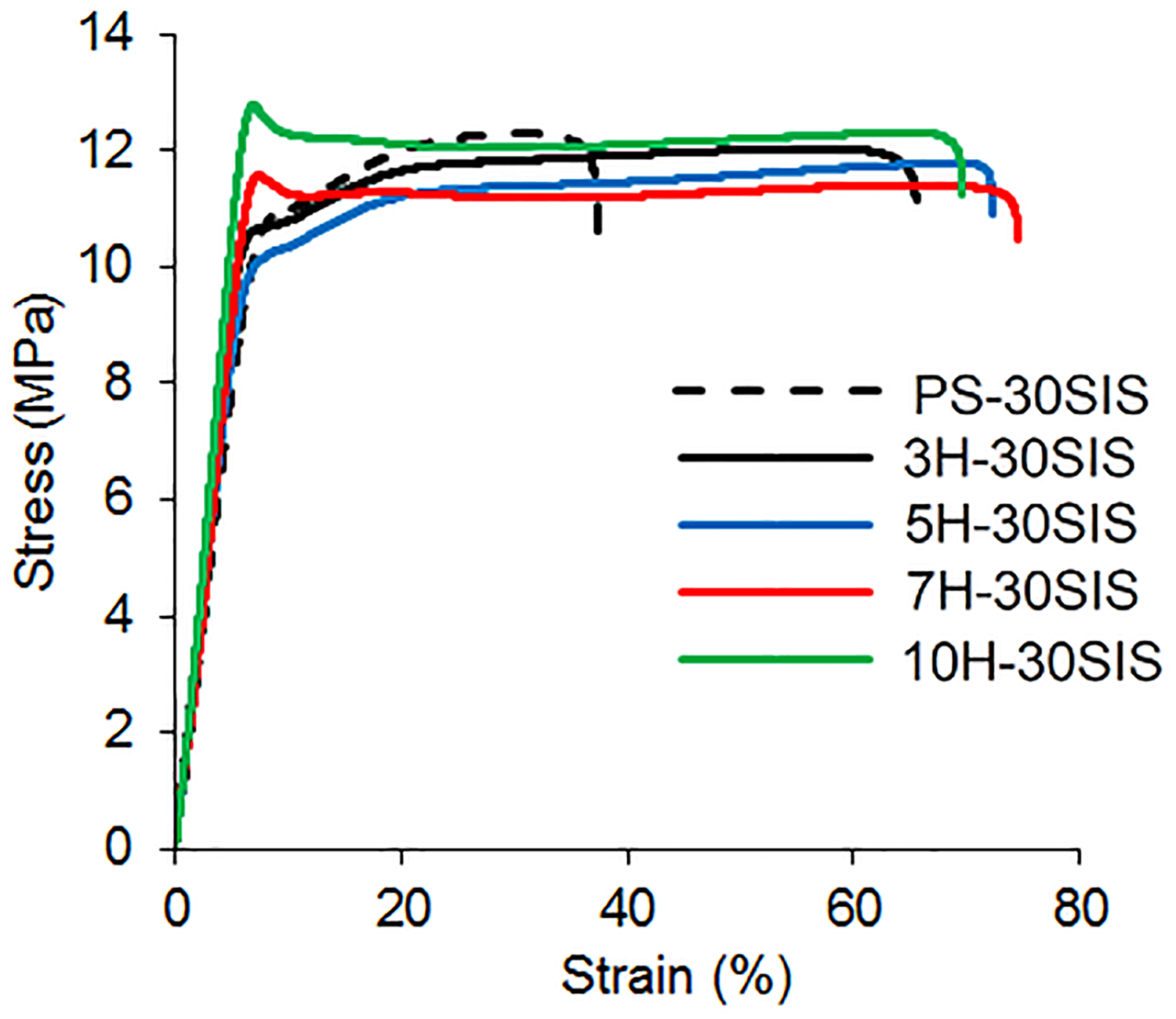
Tensile stress–strain curves of PS-30SIS and its nanocomposites.
Figure 6 shows SEM images of tensile fracture surfaces of PS, PS-30SIS, and representative 7H-30SIS nanocomposite. It is evident that a brittle fracture surface as typical of a glassy polymer having large cracks was observed for neat PS. On the other hand, PS-30SIS blend and 7H-30SIS nanocomposite exhibited rough surfaces with cavities showing tortuous crack propagation lines rather than straight lines observed for the neat PS polymer. The poor adhesion between PS and SIS phases may result in these holes on the fracture surface during deformation implying plastic deformation and shear yielding type fracture for PS. 32 –35 The shear yielding behavior of the matrix promoted by the cavities has been ascribed to difference in moduli of the elastomer and matrix phases. 36 These cavitations have been reported to form either inside the elastomer domains or at the interphase between the matrix and dispersed elastomer domains. 37 The formation of such cavities via micro-crack opening during tensile deformation process can be ascribed to more energy absorption for breakage of the nanocomposites. 37,38 The cavitation behavior of SIS domains can also be accepted as one of energy absorbing fracture mechanisms as previously observed in toughened plastics which promotes shear deformation of PS matrix. 39 Moreover, comparing with PS-30SIS blend, the 7H-30SIS nanocomposite was found to have more cavities with slightly smaller sizes (Figure 6). It can be attributed to good dispersion of the nanotubes in polymer matrix leading to relatively smaller SIS domains (Figure S6 and Figure 3) and thereby formation of a large number of cavities with smaller sizes (Figure 6). 40 This result is in good agreement with the higher toughness value of 7H-30SIS in comparison with that of PS-30SIS blend.
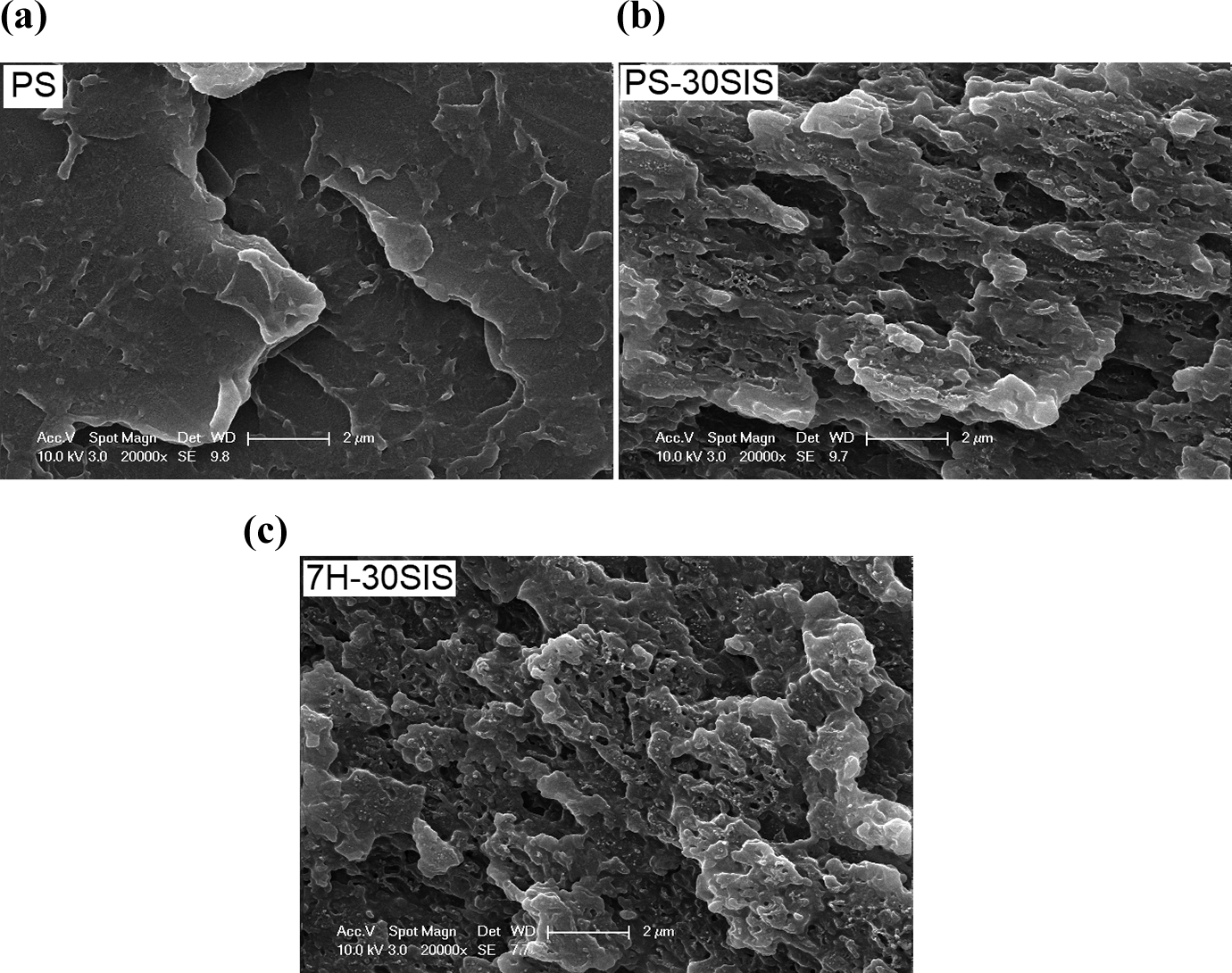
SEM images of the tensile fracture surfaces of (a) PS, (b) PS-30SIS blend, and (c) 7H-30SIS nanocomposite.
Table 2 shows Izod impact strengths of the nanocomposites. It is obvious that all the nanocomposites except 7H-30SIS exhibited a decrease in the impact strength as compared to PS-30SIS blend. This result can be attributed to dispersion of relatively smaller SIS domains in the PS matrix in the nanocomposites as compared to PS-30SIS blend. The impact strength was found to increase with increase in amount of the nanotube until 10 phr loading degree. The elastomer domains having very small dimensions have been reported to cause low impact strength values since the crack propagation occurs without touching the dispersed elastomer particles whereas it affects toughness positively, as observed in current study. 3 Moreover, fibrillar/co-continuous morphologies are known to enhance tensile properties while droplet matrix morphology increase impact resistance. 23,41 Among the nanocomposites, the lowest impact strength was obtained via 10H-30SIS nanocomposite (Table 2) and this is in consistent with the presence of its relatively much smaller SIS domains (Figure S6). It can also be ascribed to the presence of nanotube aggregates in that composite (Figure 4), acting as stress concentrators which results in weak interfacial adhesion between nanotubes and polymer molecules. This causes an early fracture with low energy absorption. 26,42,43 On the other hand, the 7H-30SIS exhibited the highest impact strength among the nanocomposites which may be resulted from better dispersion of the nanotubes in the matrix and at the interphase (Figures 3 and 4).
As a conclusion, even though 10H-30SIS nanocomposite shows the highest modulus, strength, and the toughness, it has the lowest impact resistance due to abovementioned reasons. The 7H-30SIS nanocomposite, on the other hand, seems to have an optimum composition with moderate modulus, strength, and toughness as well as the highest impact strength (Table 2).
Differential scanning calorimetric (DSC) analyses of PS/SIS/HNT nanocomposites
Table 3 shows glass transition temperature (T g) and heat capacity jump (ΔCp) values of PS, PS-30SIS, and blend nanocomposites. The DSC thermograms are also given in Supplementary Figures S8 to S10. The Tg of neat PS was found to be 92.94°C and it increased about 10°C in terms of the PS-30SIS and the nanocomposites but it is clear that glass transition temperatures of polyisoprene (PI) and PS phase of PS-30SIS blend seemed not to change to a large extent by adding silica nanotubes (Table 3). The ΔCp value as the change in Cp before and after the glass transition region of PS was found to be 0.254 J (g °C)−1 (Table 3) which is close to that reported in the literature. 44 On the other hand, the ΔCp values as the changes in Cp before and after the glass transition regions of PI and PS phases differ in PS/SIS/Org-HNT blend nanocomposites in comparison with that of PS-30SIS blend. Figure 7 presents ΔCp versus nanotube content plots for both PI and PS for all the blend nanocomposites and the ΔCp values showed a decrease with increase in Org-HNT content. The ΔCp value for the nanotube is assumed to be zero and those for nanocomposites exhibit the line drawn if polymer molecules did not interact with the silica nanotubes. 45 But for both PI and PS phases, it reduces drastically with increase in amount of Org-HNT in blend nanocomposites (Table 3 and Figure 7). This can be ascribed to the presence of rigid amorphous part of the amorphous PI and PS phases resulting from nanotube interactions with their molecules. 45 In the composites, amorphous phases of polymers are characterized as mobile and rigid fractions and rigid amorphous fractions involving high interactions with fillers do not increase specific heat capacity at glass transition regions as already reported in details in the literature. 45,46 As a result, decrease in the heat capacity change in PS/SIS/Org-HNT nanocomposites as compared to that of the blend demonstrates maximized interaction between the silica nanotubes and the molecules of both PI and PS polymer phases. 45,47
DSC data of PS, PS-30SIS, and blend nanocomposites.
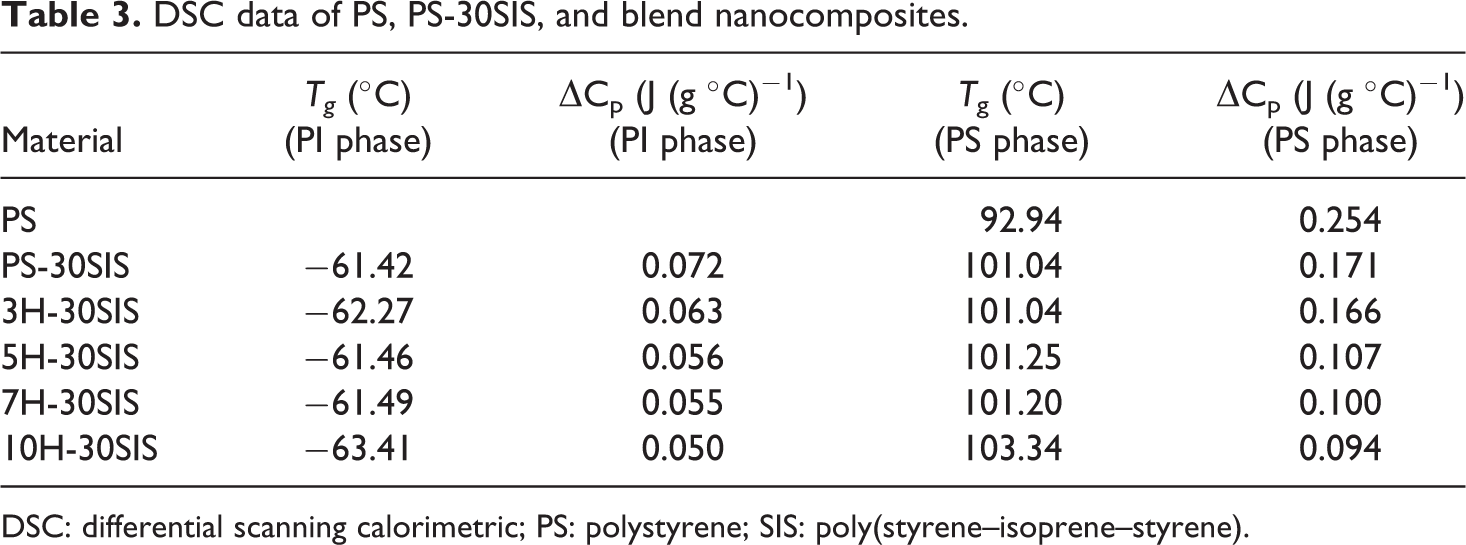
DSC: differential scanning calorimetric; PS: polystyrene; SIS: poly(styrene–isoprene–styrene).
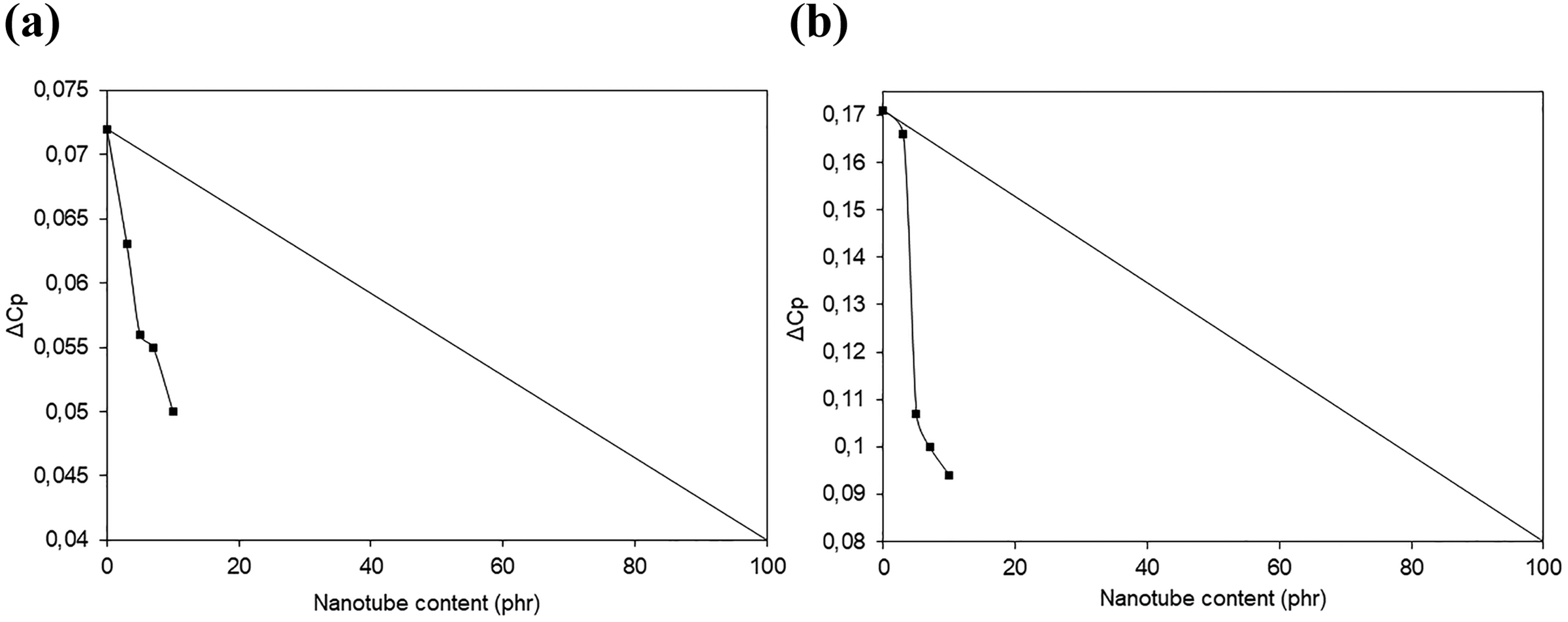
Changes in ΔCps at glass transition regions of polyisobutylene (a) and polystyrene (b) with respect to the nanotube loading of the nanocomposites.
Dynamic mechanical properties of PS/SIS/HNT nanocomposites
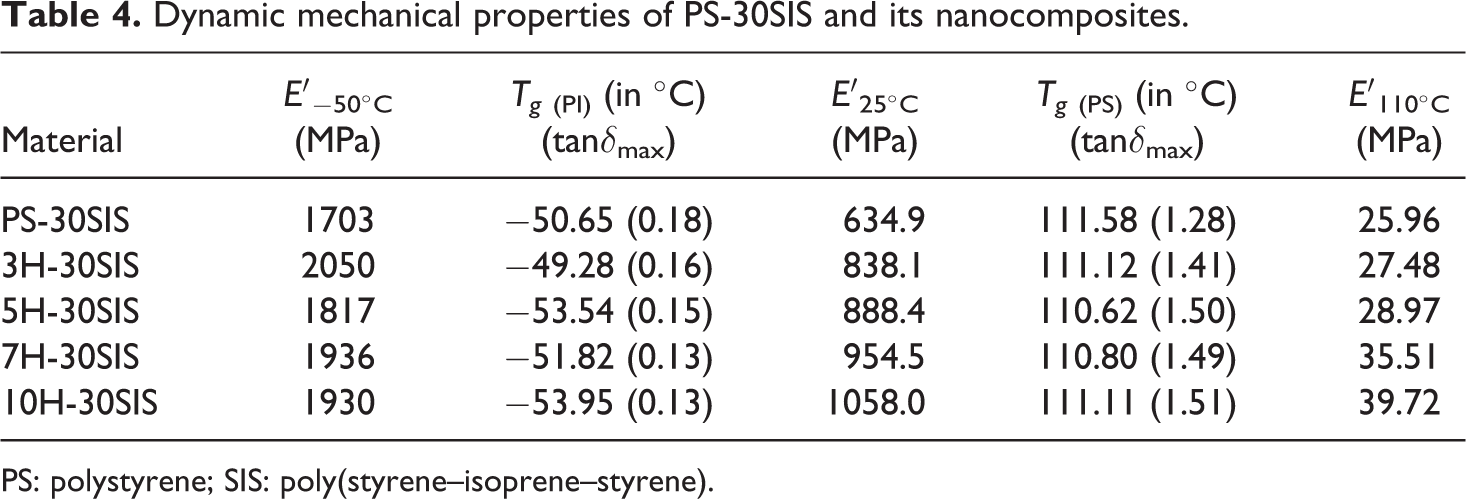
The temperature dependence of storage moduli and damping factors (tanδ) of PS-30SIS blend and the nanocomposites are shown in Figures 8 to 10 and the related data are given in Table 4. It is clear that the storage modulus of PI phase of PS-30SIS blend at low temperature region (E′−50°C) increased with the addition of Org-HNT increasing the stiffness of the nanocomposites which is consistent with the decrease in height of the tanδ peak as the damping factor (Table 4 and Figure 10). The increase in storage modulus can be ascribed to reinforcing effect of the nanotubes for PI molecules at its glass transition region, restricting their mobilities. 48 –50 On the other hand, dynamic Tg values of the nanocomposites taken as the tanδ peak maximum temperatures were found to decrease above 3 phr Org-HNT loading as compared to that of PS-30SIS. This shift of the damping peak to lower temperatures may be attributed to additional frictions between PI molecules having segmental motions and Org-HNTs surrounding them at the glass transition region. 51,52
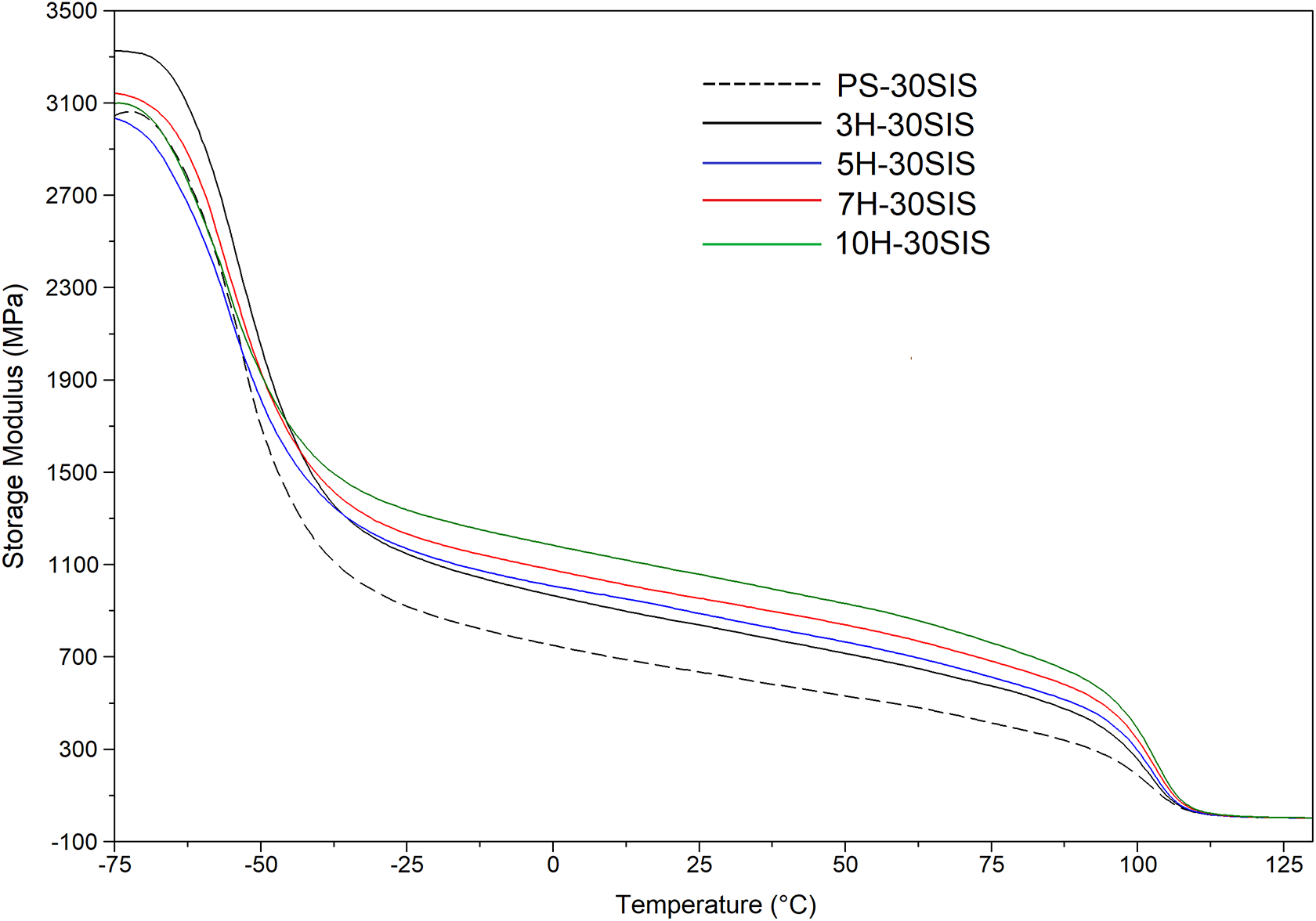
Storage modulus versus temperature plots of PS-30SIS and its nanocomposites.
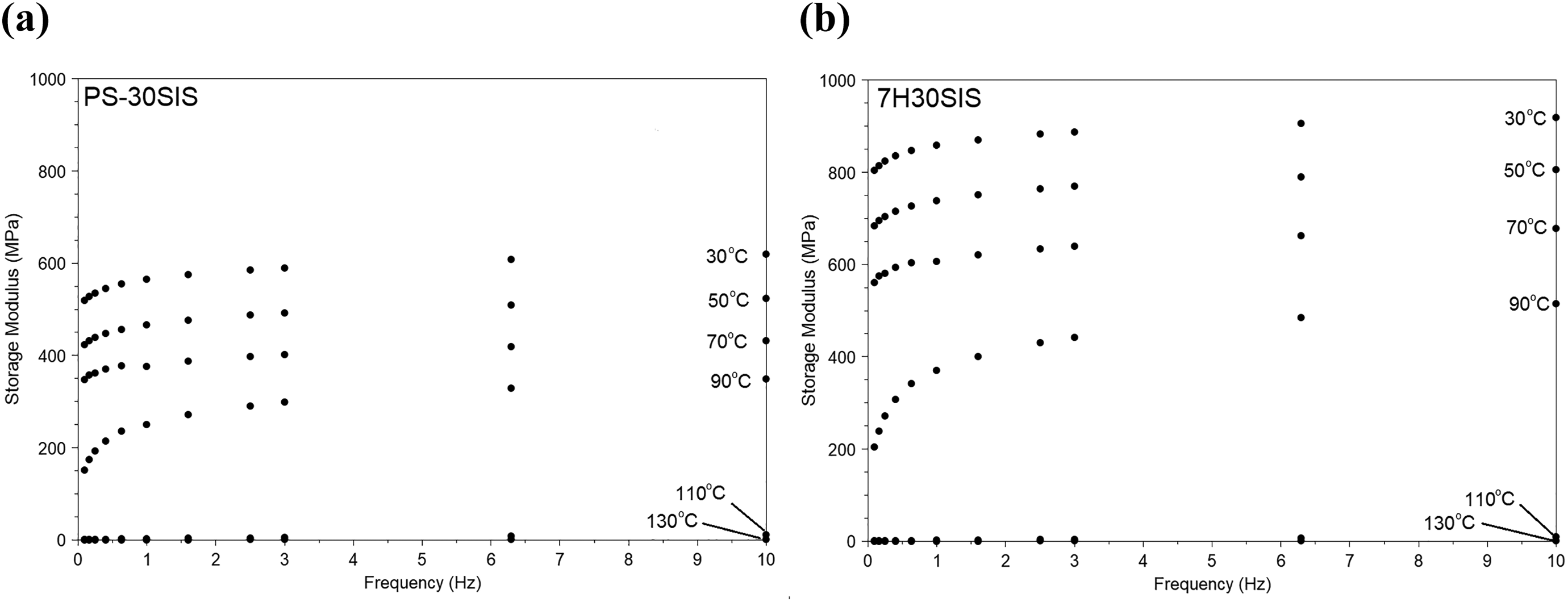
Storage modulus versus frequency plots of (a) PS-30SIS and (b) 7H-30SIS nanocomposite at different temperatures.
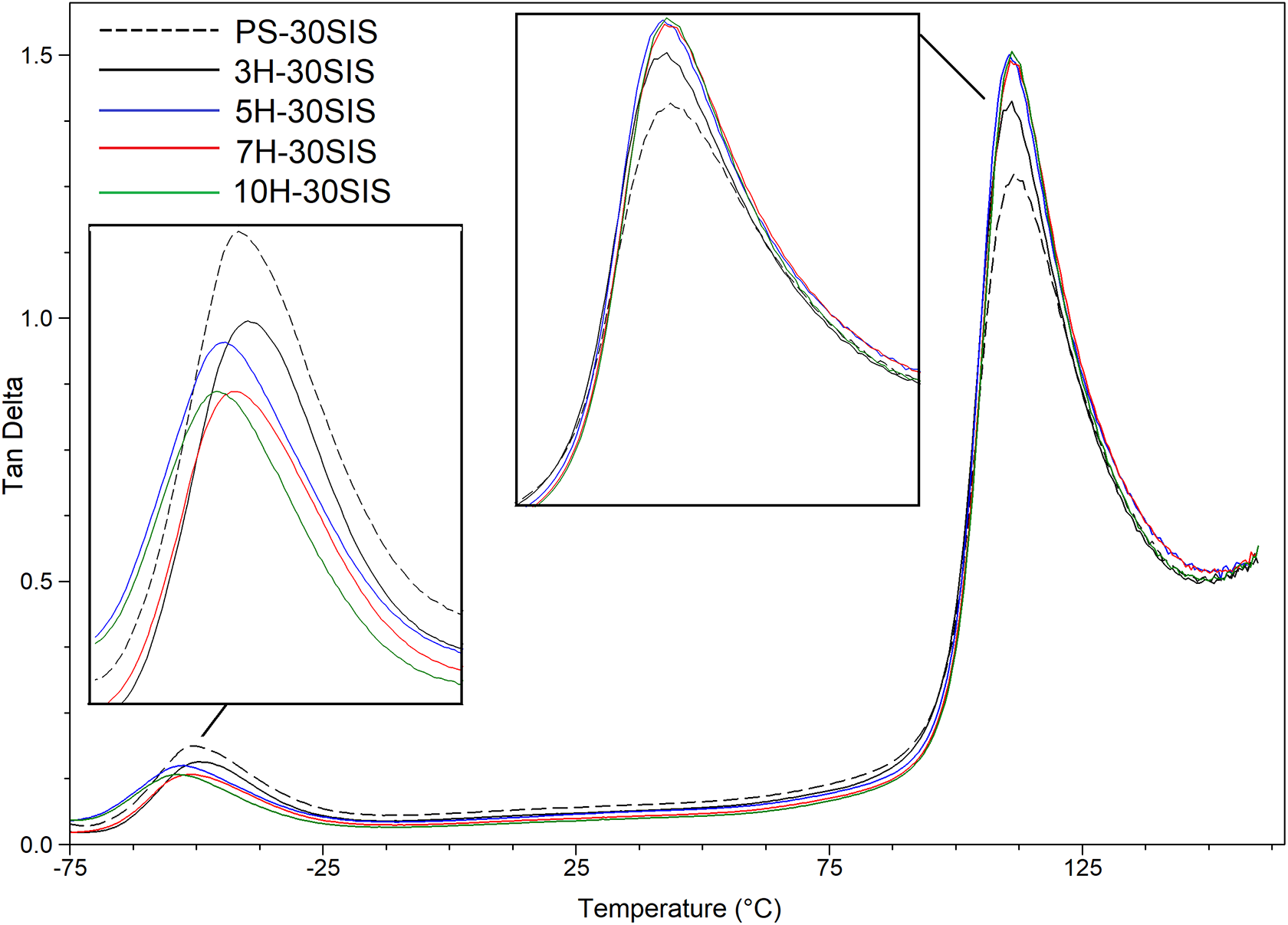
Tanδ versus temperature plots of PS-30SIS and its nanocomposites at both low temperature (a) and high temperature (b) regions.
Dynamic mechanical properties of PS-30SIS and its nanocomposites.
PS: polystyrene; SIS: poly(styrene–isoprene–styrene).
The storage moduli of all the nanocomposites at 25°C were found to be higher than that of PS-30SIS (Table 4 and Figure 8). This result is in a good agreement with Young’s modulus values (Table 2). The same trend was observed for the nanocomposites tested at different frequencies over a temperature range of 30°C–130°C. It is obvious in Figure 9 that storage moduli of PS-30SIS blend and 7H-30SIS nanocomposite increase as the test frequency increases (Figure 9). Moreover, 7H-30SIS nanocomposite showed higher storage moduli at each frequency and temperature than PS-30SIS blend. This is probably attributable to immobilization of polymer segments with Org-HNTs.
The tanδ peaks of the nanocomposites at glass transition region of PS phase (Figure 10) were found to be higher than that of PS-30SIS, indicating their high damping properties via the nanotubes at high temperatures whereas the Tg did not change (Table 4). The increased tanδ in the nanocomposites is most probably due to the presence of PS and PI blocks at their rubbery phases and the nanotubes. The frictions of all the polymer molecules with themselves and with the nanotubes can result in high damping property in the nanocomposites. 51,52 Moreover, Table 4 indicates the storage moduli at 110°C corresponding to rubbery phase moduli of the PS phase as well as PI phase as the mechanically weakest phase for any polymer. It is clear in Table 4 that the nanocomposites 7H-30SIS and 10H-30SIS exhibited about 37% and 53% increase in rubbery plateau modulus of PS-30SIS at 110°C, respectively. This can be accepted as a major advantage for nanocomposites that they can maintain high moduli even above glass transition region of PS phase by retarded segmental motions of polymer molecules via the nanotubes.
Creep behaviors of PS/SIS/HNT nanocomposites
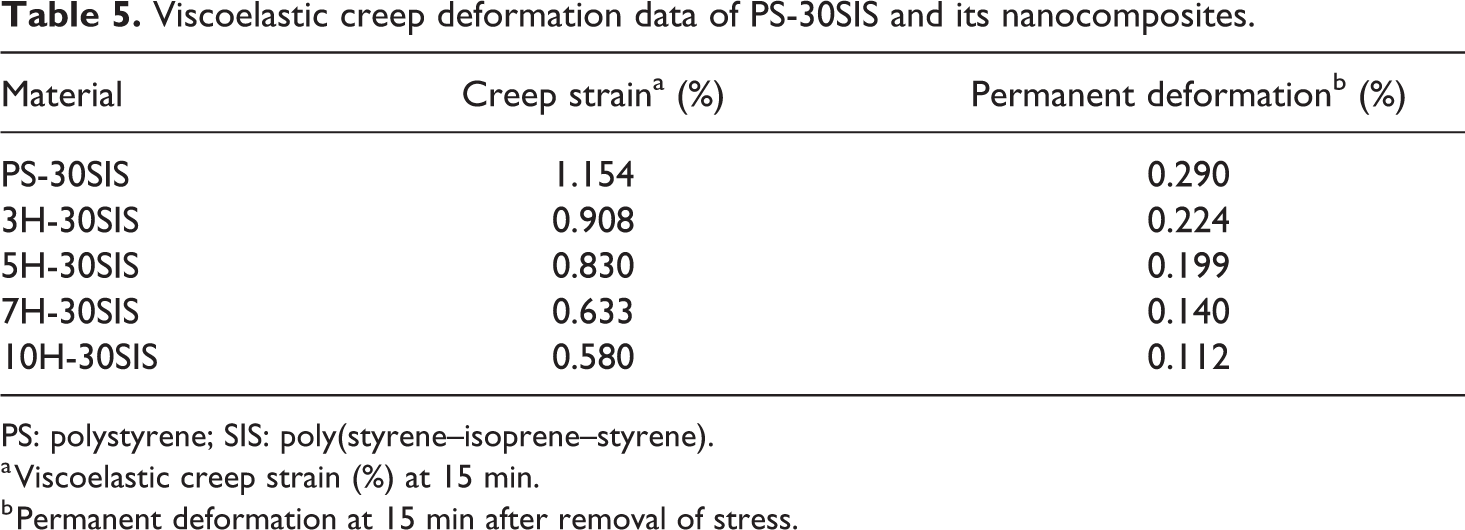
PS-30SIS blend and its nanocomposites were investigated in terms of their short-term isothermal creep behavior. Figure 11 shows creep strain and creep recovery curves as a function of time. The creep deformation data of the samples are given in Table 5. It is clear in Table 5 that the presence of Org-HNT clay enhances creep resistance of PS-30SIS blend and the increase in creep resistance is dependent on the amount of the nanotubes. The creep deformation of 7H-30SIS and 10H-30SIS composites decreased about 45% and 50%, respectively, in comparison to PS-30SIS blend. Moreover, permanent deformation values of the composites decreased with increasing Org-HNT loading degree and all composites showed lower permanent deformation than PS-30SIS blend. The lowest permanent deformation value was achieved with introduction of 10 phr nanotubes (Table 5). It indicates that relatively larger recovery of elasticity was obtained via the silica nanotubes limiting the mobility of the polymer molecules. 53,54 The higher creep resistance and lower permanent deformation obtained in the composites can be attributed to enhanced stiffness at all nanotube loading degrees and which is consistent with the aforementioned increased tensile and storage moduli of the nanocomposites as compared to that of PS-30SIS blend. Moreover, the lower creep strain and permanent deformation, and higher modulus and toughness values of the nanocomposites indicate an optimized balance between stiffness and toughness.
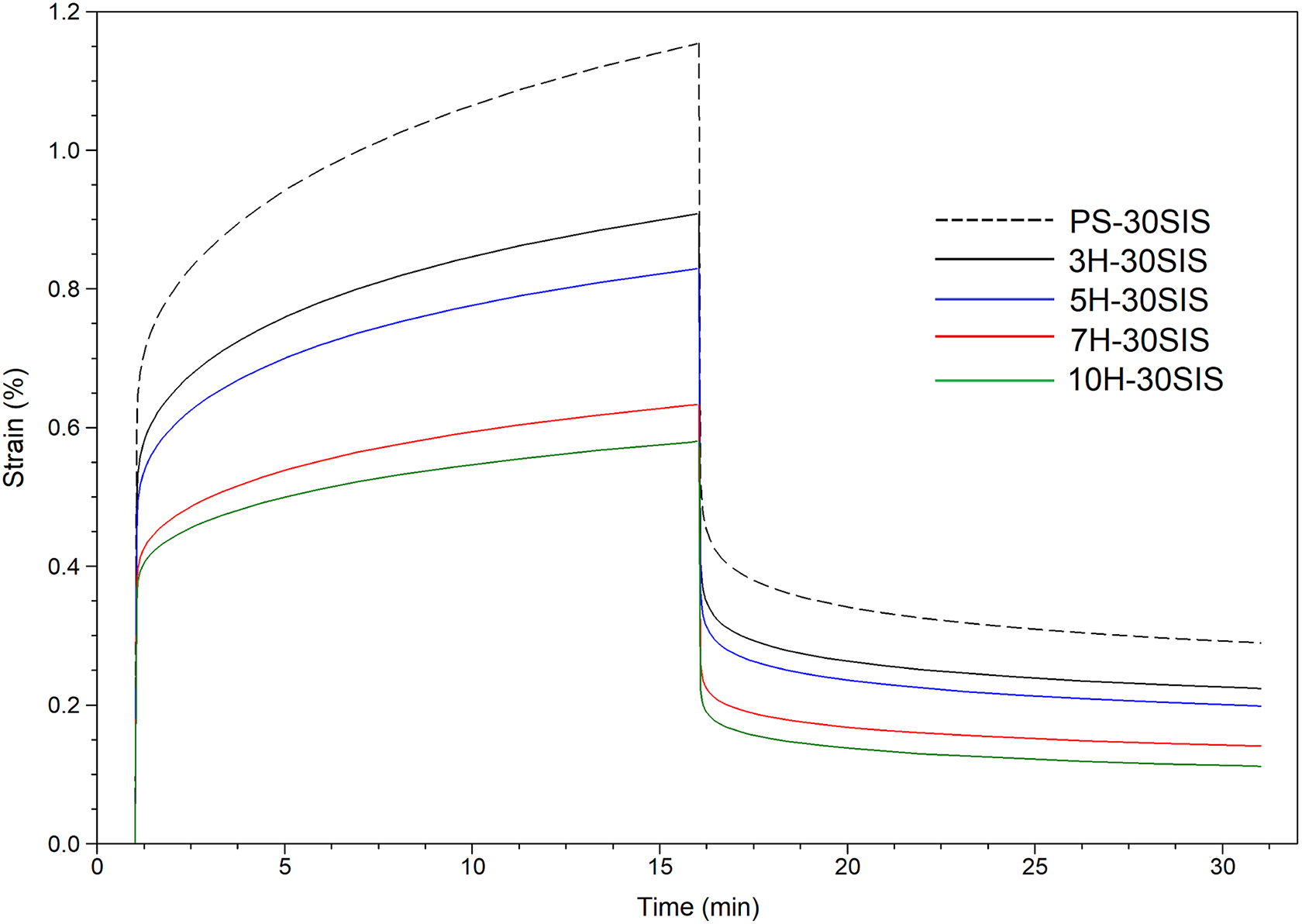
Creep strain of PS-30SIS and its nanocomposites as a function of time (T = 30°C, σ0 = 3 MPa).
Viscoelastic creep deformation data of PS-30SIS and its nanocomposites.
PS: polystyrene; SIS: poly(styrene–isoprene–styrene).
a Viscoelastic creep strain (%) at 15 min.
b Permanent deformation at 15 min after removal of stress.
Conclusions
PS/SIS blends were prepared using 20%, 30%, and 40% SIS elastomer using a corotating twin screw extruder. The PS-20SIS blend having the lowest SIS content exhibited droplet matrix morphology as expected, at low elastomer contents, because of low viscosity PS flowing around the high viscosity SIS domains. At higher amounts of elastomer phase, the morphological refinement was observed and the droplet matrix morphology turned to co-continuous/fibrillar one in which the elastomer domains are in elongated/deformed form in the matrix. Both impact strength and toughness of the blends were found to be much higher compared to those of neat PS but their moduli and strength values decreased. The nanocomposites were prepared via introduction of the silica nanotubes into PS-30SIS blend having optimum tensile properties by using melt compounding technique. The blend nanocomposite having 10 phr Org-HNT showed the highest tensile strength and modulus but the lowest impact strength values among the nanocomposites. The decreased impact resistance was attributed to relatively much smaller elastomer domains dispersed in the matrix which cannot inhibit crack propagation and presence of the nanotube aggregates in the structure. Therefore, the nanocomposite having the same amount of SIS phase but 7 phr Org-HNT (7H-30SIS) seemed to have an optimized composition with the highest impact strength and the moderate tensile properties. The higher storage moduli at both low and high temperatures, and the higher damping values of PS phase in the nanocomposites, as compared to those of PS-30SIS blend, show a highly remarkable consistency with the tensile and impact results. Also, enhanced creep resistance together with lower permanent deformation of the nanocomposites than that of the blend supports the static and DMA results. Finally, it can be safely stated that novel PS/elastomer blend nanocomposites with high modulus, toughness, and impact strength as well as high creep resistance values can be prepared using adjusted amounts of SIS elastomer and HNTs, leading to a maximized stiffness/toughness balance. As a future work, the effect of maleic anhydride–grafted SIS (SIS-g-MA)/neat HNT masterbatch in mechanical and thermal properties of PS nanocomposites prepared via two-steps melt mixing will be the subject of another paper.
Supplemental material
Revised_Supplementary_Material - Preparation of tough, high modulus, and creep-resistant PS/SIS/halloysite blend nanocomposites
Revised_Supplementary_Material for Preparation of tough, high modulus, and creep-resistant PS/SIS/halloysite blend nanocomposites by Emre Tekay in Journal of Thermoplastic Composite Materials
Footnotes

References
Supplementary Material
Please find the following supplemental material available below.
For Open Access articles published under a Creative Commons License, all supplemental material carries the same license as the article it is associated with.
For non-Open Access articles published, all supplemental material carries a non-exclusive license, and permission requests for re-use of supplemental material or any part of supplemental material shall be sent directly to the copyright owner as specified in the copyright notice associated with the article.
