




Abstract
Shape-memory polymers (SMPs) and their composites (SMPCs), as a kind of smart materials, can respond to particular external stimulus and recover the original shape. They present outstanding features encompassing shape-memory effect, deformability, biocompatibility, variable stiffness, lightweight, and so on. They have attracted considerable research interest in recent years. Several stimulation methods to actuate the deformation of SMPs and SMPCs, of which the thermal stimulation is the common one, and many types of reinforcements have been developed over the past few years. It is revealed that the SMPC thermal and mechanical properties can be improved by introducing a number of reinforcements. Therefore, to well investigate the SMPC characteristics upon exposure to a specific external stimulus, a deep knowledge and understanding of the potential reinforcements as well as the available stimulation methods are crucial. In this review, reinforcements such as fibers, ceramics, and nanocarbons are first concisely presented. Next, numerous novel stimulation methods used to trigger the memory effect of the SMPCs are introduced, where the mechanisms of electrical, magnetic, thermal, light, and solution stimulations are briefly discussed. Finally, considering the increase of the number of interesting reinforcements as well as the efficient stimulation methods, SMPCs are expected to have great potential applications in different fields.
Introduction
Shape-memory materials (SMMs) are characterized by the shape memory effect (SME), which is defined as the ability to recover the original form after a large deformation under the effect of a stimulus.1,2 Several SMMs have been developed over the past few decades. Shape-memory alloys (SMAs; Au-Cd) were first discovered in 1932 by Arne Ölander,3,4 whereas the shape-memory polymers (SMPs) were discovered by Vernon, who cited the SME for the first time in polymers in the year 1941. 5 Recently, shape-memory polymer composites (SMPCs) have attracted a lot of intention from the scientific community, as can be clearly seen in Figure 1, which depicts the increasing number of scientific publications over the past three decades. Many countries are involved in the SMPCs research field. China and United States are the leading ones, with more than 950 publications for both of them. Figure 2 shows the number of scientific articles produced by various active countries during the past three decades.
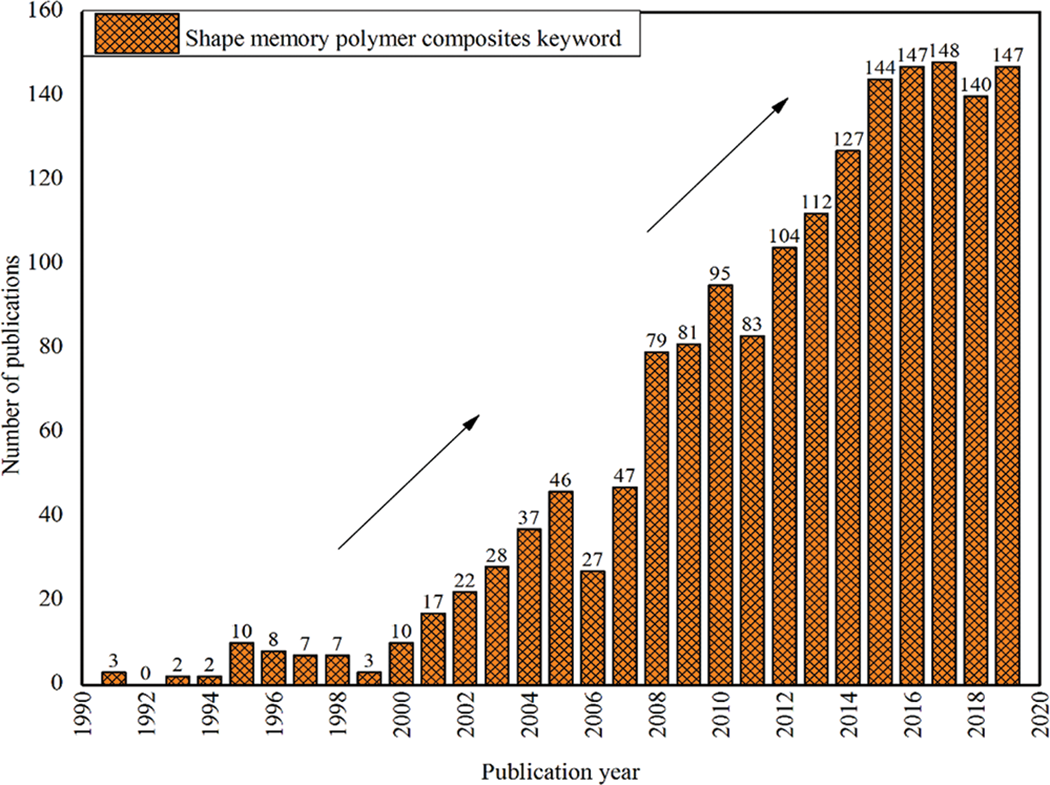
Illustration of the annual number of scientific publications since 1991, using the search terms “shape-memory polymer composites”. Data analysis completed using Scopus search system on October 3, 2019.
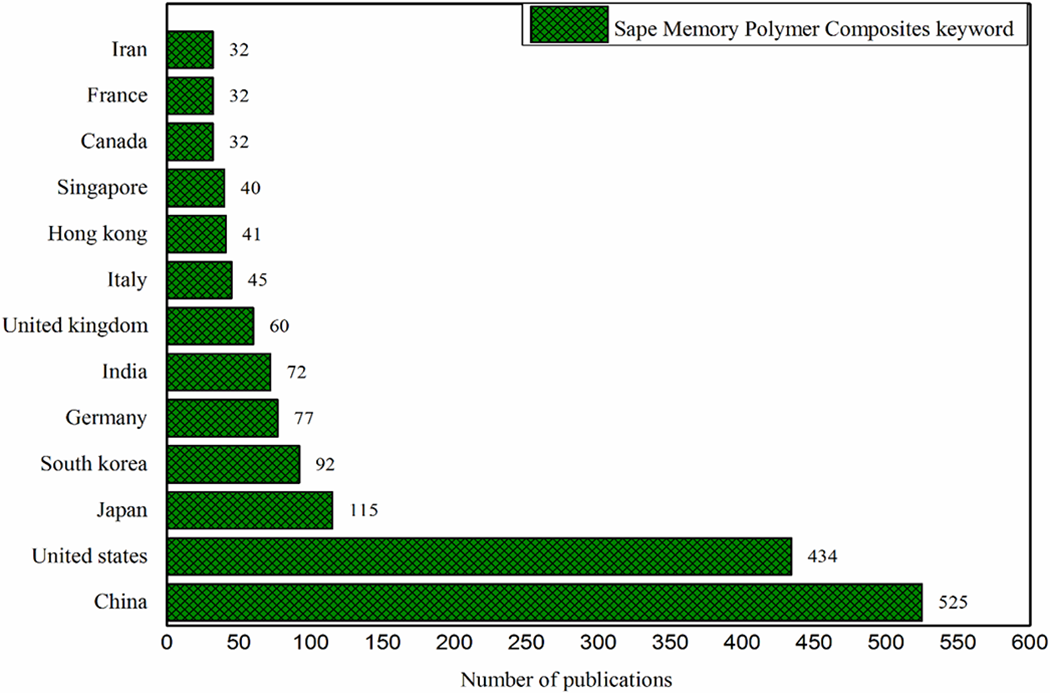
Illustration of the number of scientific publications by country, using the search terms “shape-memory polymer composites.” Data analysis completed using Scopus search system on October 3, 2019.
SMPCs (Figure 3) are reinforced polymeric matrices with improved properties compared to SMPs for which the application is restricted by their low driving force and evident viscoelasticity.6–8 The reinforcing phase with suitable volume fraction not only enhances the mechanical and thermomechanical features of SMPC’s but also enriches the driving methods such as light, magnetism, electricity, radio frequency, and so forth. This type of materials is able to recover its initial form when subjected to physical or chemical stimulations such as temperature variation,9–13 electric impulse, 14 magnetic field,15,16 light,17,18 solution, 19 and so on.
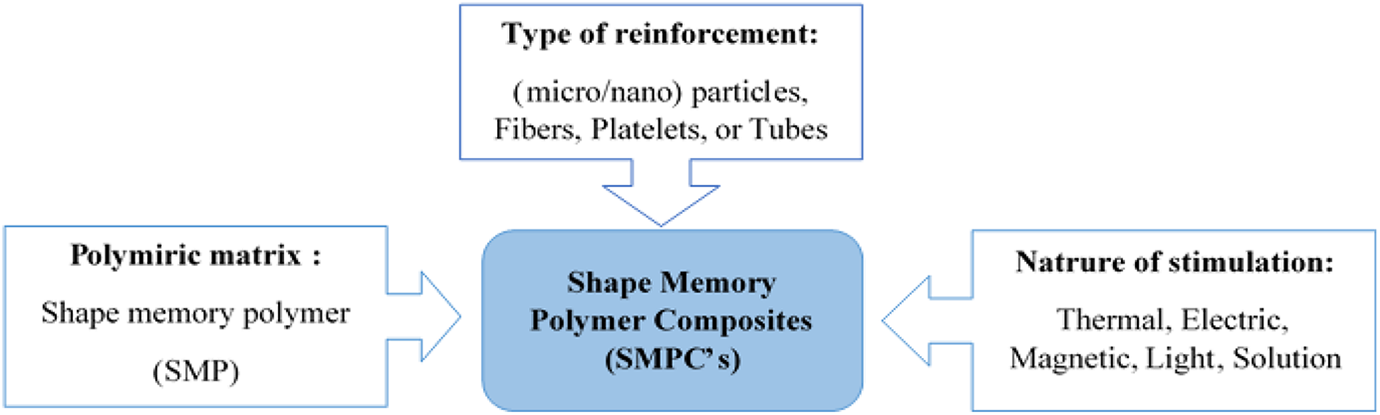
Composition of the shape-memory polymer composites.
Broadly, the memory effect encountered in SMPC’s is related to polymeric matrix. The introduction of reinforcement in the polymer matrix improves certain properties. It increases the recovery of the original form in addition to further interesting characteristics such as electrical conductivity,20–22 magnetism,23–25 optical,26,27 bio functionality…8,28
Over the last decade, SMPCs have received considerable attention because of their outstanding properties compared to the pure polymer matrices.29–31 Therefore, to elaborate an SMPC, it is necessary to choose the suitable polymer that contains desirable properties. The improvement of the characteristics of this latter can be achieved by the incorporation of numerous reinforcing agents such as ceramic, metal, organic, and inorganic, with different size, shape, distribution, volume fraction, alignment, and disposition of loads. These additives can be classified either by their geometrical shape (fiber, tube, particle, layer, etc.) or by their size (nano or micro).7,8,32 SMPC’s with nanometric charges have outstanding properties compared to those filled with micronized charges. Moreover, it was revealed that the use of higher volume fractions of reinforcement increases some properties of materials such as tensile strength. The addition of small amounts of active charges (metal oxide, nanometals, etc.) into the polymer matrix improves certain material properties such as electrical and magnetic properties.10,14,33
On the other hand, the dispersion of the reinforcement within the polymeric matrix and the degree of interfacial adhesion between them are considered as the key factors, which affect the performance of such materials. Thus, better interfacial bonding between the polymer and the fibers imparts good mechanical properties to the composite due to the hydrogen bonds between the (–OH) groups present on the fiber and the polymer matrix.34,35 The huge surface of the nanoparticles ensures a strong interfacial interaction between the nanoparticles and the polymer, which hence improves the properties of the composites. Several studies have confirmed that the formation of interfacial covalent bonds improves the uniform dispersion of the reinforcement by virtue of adhesive forces between the polymeric matrix and the reinforcement.36–38 This better dispersion results in good mechanical, electrical, and thermal properties.39,40 Moreover, the presence of better interfacial bonds and good reinforcement dispersion facilitates the stimulation of the composite material, which results in a good memory effect trigger.
The incorporation of reinforcements into SMPs has widened their application domains. For instance, in the field of aerospace,10,41 the addition of reinforcement charges with good electrical, magnetic or luminous properties contributes in stimulation processes such as electrical stimulation, magnetic stimulation, and light stimulation.14,41–44 This has led to the fabrication of many parts with SMPCs in this area. It is demonstrated that SMPCs are easy to use in various fields, inexpensive, potentially biocompatible and biodegradable, antimicrobial, and capable to undergo large deformations. Many researchers used these materials in the biomedical field45,46 such as endovascular thrombectomy devices,47,48 cardiovascular stent,48–51 and artificial muscles.48,52 SMPCs also have many applications in other fields such as smart textile,53,54 packaging and automotive field.8,55
Numerous review articles in the field of SMPCs dealt with the SME and the application of this type of materials. The present review however will focus on the recent advances in the field of reinforcing agents as well as the new stimulation methods. Firstly, the most types of reinforcements according to their shape are concisely presented. Then, the role of these reinforcements and their influence on the SMPC properties are introduced. Finally, the stimulation methods are discussed along with the advantages and drawbacks of each method supported by some examples from the literature.
Fiber-reinforced SMPCs
In recent years, researchers in the field of materials have given great importance for composite materials with SME. They focused their efforts on the improvement of the polymeric matrix properties of SMPC’s such as the deformation capacity, low density, rigidity, strength, and shape effect. Such improvements in properties are reached by the reinforcement of the polymeric matrix by using nanometal, nano-ceramic, fibers (glass or carbon), graphene oxide (GO), and so on.
Before discussing the SMP reinforced by fibers and their performance, a brief description of the types of fibers is presented. Short fibers, continuous fibers, particulate fibers, and uniaxial continuous and woven fibers are the most common fibers used as reinforcements in polymers composite. In the field of polymer composites, the influence of the fibers type on the composite properties has been extensively explored in several studies, whereas in the field of SMPCs, to the best of our knowledge, there are scarce investigations in the literature.56–60 Therefore, the influence of fiber types on the memory effect of such materials could be the scope of many future studies.
Generally, an SMPC with good characteristics is the result of the synergetic effect between polymer properties, the type of reinforcement, and the nature of stimulation. In addition, the SMPC characteristics depend closely on the reinforcement material type, volume fraction, and its orientation distribution. Table 1 presents some types of fibers as well as their corresponding physical properties.
Some of the fibers and their physical properties.
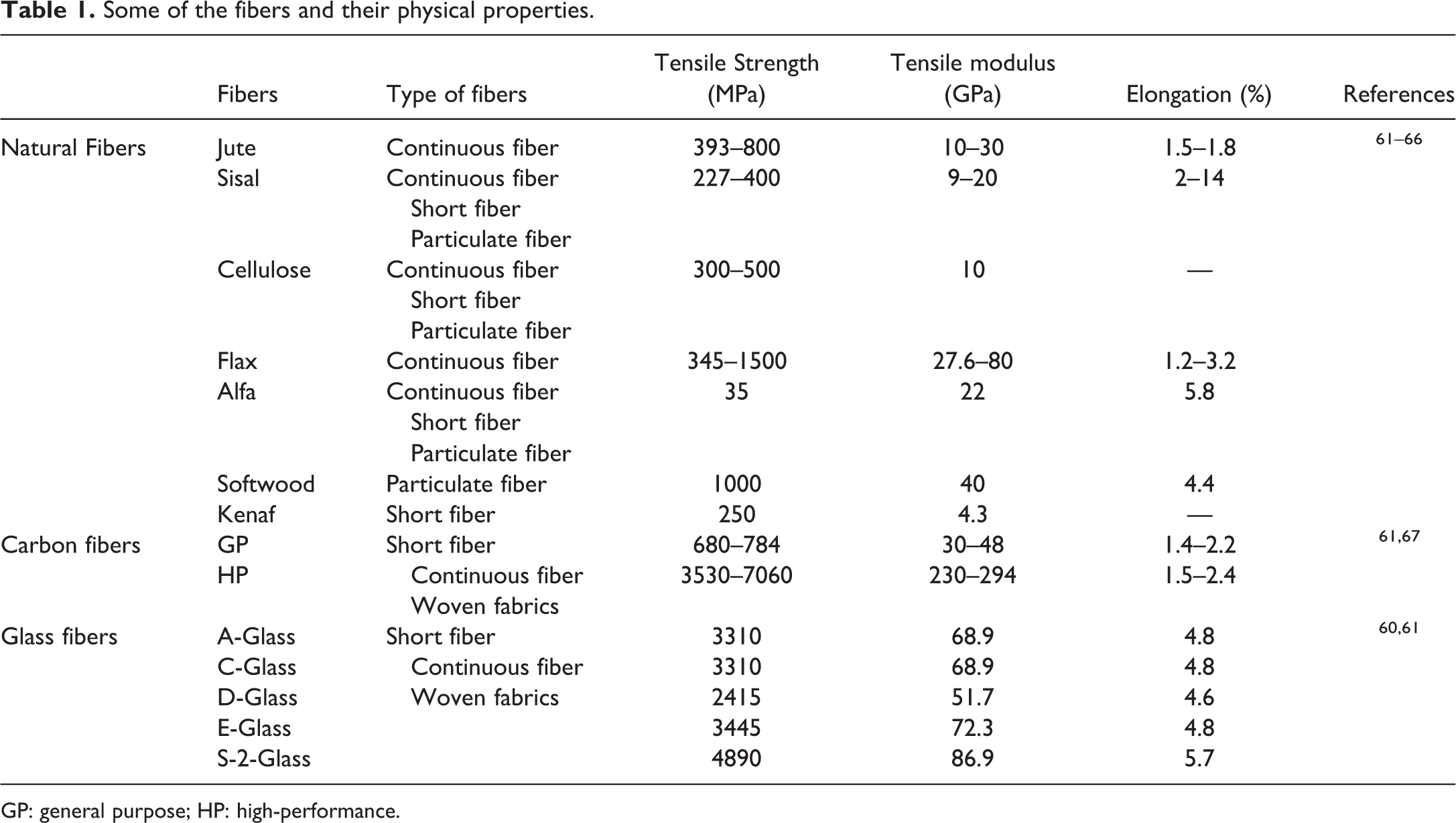
GP: general purpose; HP: high-performance.
Carbon fibers
Carbon fibers (CFs) have been widely used in extremely demanding applications requiring high modulus (HM), low density, and high resistance such as automobiles, sporting goods, aerospace, among others. CFs contain at least 92% carbon. This higher content of carbon provides higher tensile strength, resistance, fatigue resistance, and thermal conductivity, as well as excellent structural stability with a lower coefficient of thermal expansion.68,69 Consequently, the CFs are considered a promising reinforcement to improve the properties of SMPCs.68,70 Few years ago, Lan et al. have studied the shape recovery (Rr) behavior of a thermosetting styrene-based SMPC reinforced with CF fabrics. 68 They have shown that the SMPC exhibited a higher storage modulus than a pure SMP. At above Tg, the recovery rate of the SMPC shape after flexion is greater than 90%. The SMPC Rr properties become relatively stable after certain packaging/deployment cycles. It is revealed that the micro-fiber joint is the main mechanism for obtaining a significant stress during the flexion of the SMPC.
Glass fibers
Nowadays, glass fibers (GFs) have been widely used in numerous applications owing to their many interesting features such as low manufacturing cost and exceptional tensile strength. GF are the most commonly used fibers in the polymer composites field. The introduction of oxides such as silicon oxide (SiO2), alumina (Al2O3), B2O3, CaO, and so on proved the modification and improvement of the final properties of GF.71,72 Thus, to improve the mechanical weakness of PU, Ohki et al. 73 have reinforced it using GFs with different weight fractions. The obtained results claimed that the optimal weight fraction of the GFs was between 10% and 20% to generate an extremely low residual stress during the cyclic loading. The authors also showed that the SME is diminished with the increase of the GF weight fraction. 73
Natural fibers
The SMPCs are considered as a new generation of intelligent materials. High portions of research efforts within this field are concentrated on the employment of nanoparticles and carbon-based reinforcements. While a limited number of research articles treated the natural fiber (NF) reinforcements, intensive studies need to be conducted in the future to shed light on the impact of this type of reinforcement on SMPC properties.
NFs are widely used as polymer reinforcing agents. This is mainly due to their biodegradability and their interesting properties such as good mechanical properties, high strength, low cost, low density, and are nonabrasive.65,74–76 The most used NFs are categorized into three main categories as shown in Figure 4.
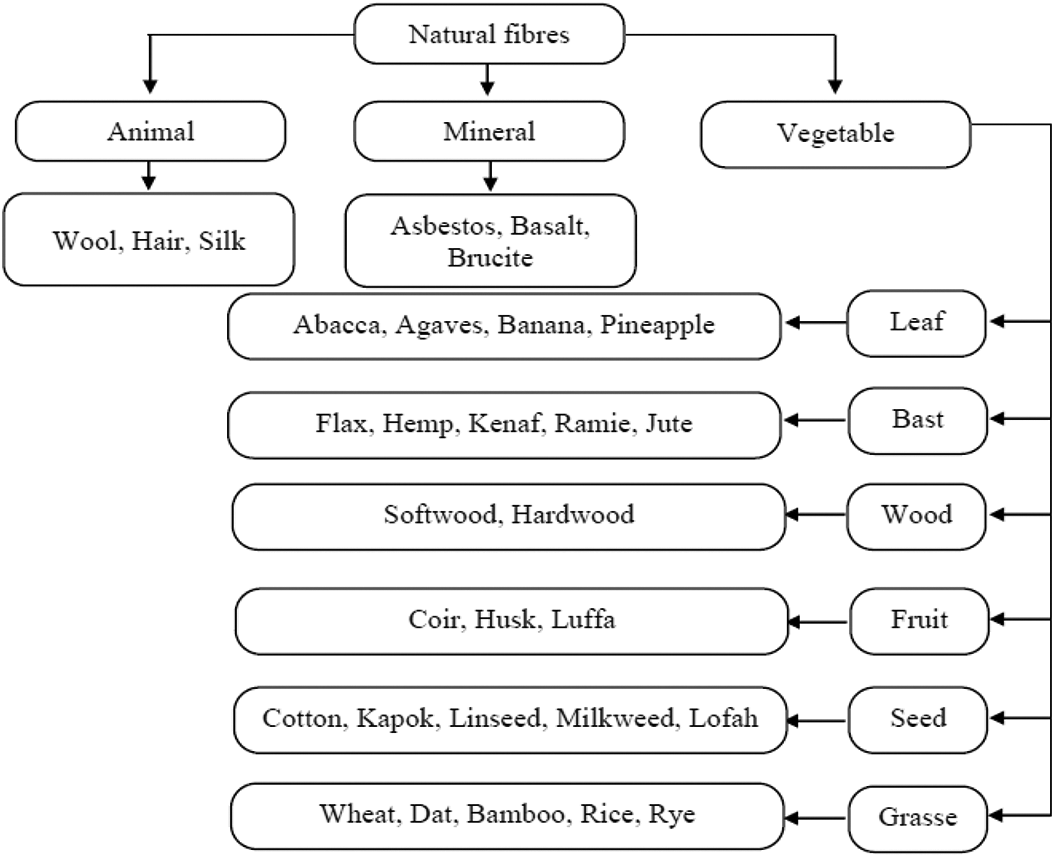
Natural fibers classification. 62
Composite fibers
Recently a new class of fibers has emerged and used to reinforce polymers such as the SMPs. These composites are fibers grafted in their surface one or more other fillers such as nanoparticles, graphene, GO, CF/GO,77,78 CNT/CF,79,80 GF/MWCNT, 81 and so on. These composite fibers present outstanding properties such as good mechanical properties, high strength, low cost, and low density.
Recently, a study, which investigated the Rr performance by electric stimulation (Joule heating) in SMP reinforced by composite fiber (CFs/GO), has been reported by Lu et al. 77 The GO is self-assembled and grafted onto CFs to improve THE interfacial bonding with the SMP matrix via van der Waals and covalent cross-linking as displayed in Figure 5. The experimental results confirmed that the electrical properties of the SMPC are considerably improved, thanks to the synergistic effect of composite fiber (CF/GO). 77
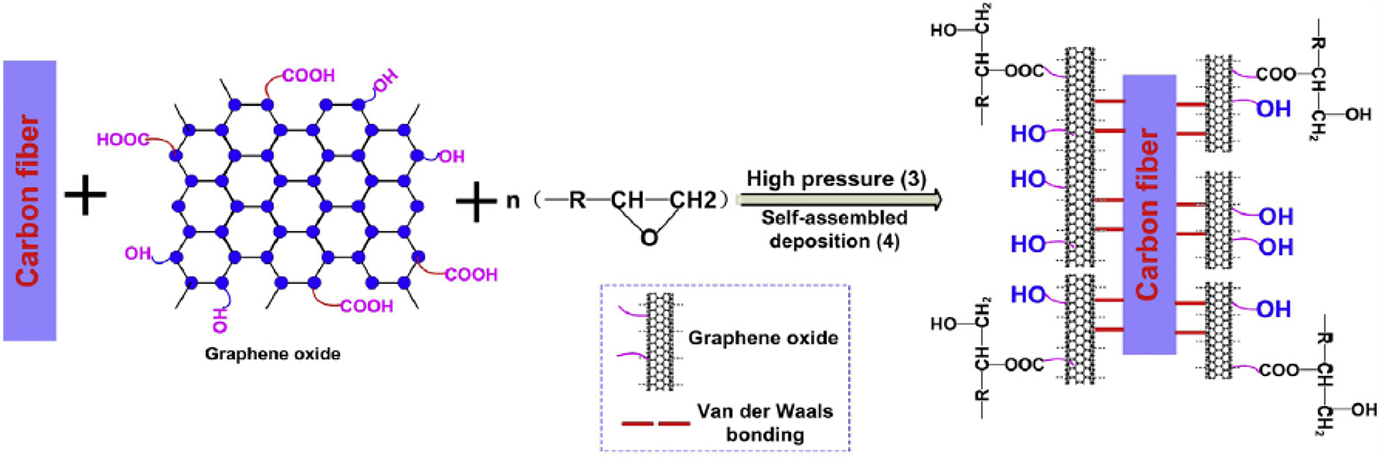
The role of GO in the interfacial bonding between carbon fiber and epoxy-based SMP matrix via Van der Waals bonding and covalent cross-linking. 77
Ceramic-reinforced SMPCs
A new and effective technique for improving the thermal and mechanical properties consists of reinforcing polymer matrices with micro- or nanoparticles.82–84 The fillers used should have interesting properties such as high strength, better wear properties, high hardness, corrosion resistance, high toughness, and high operating temperatures.85–88 Among the fillers, Al2O3, aluminum nitride (AlN), titanium oxide (TiO2), silicon carbide (SiC), SiO2, silicon nitride (Si3N4), and boron carbide (B4C) are the most common ones. Some of them are discussed below.
AlN has a high thermal conductivity and a low coefficient of thermal expansion and ideal dielectric properties. Because of their excellent properties, AlN fillers have been used successfully to improve the thermal and mechanical properties of polymer matrices. 89 To improve the thermal properties of SMPs, a composite matrices based on polyurethane (PU) loaded with AlN have been studied. 90 The reported results showed that the thermal conductivity of these SMPCs is related to the AlN charge concentration and could be improved by 50 times compared to that of a pure SMP. In addition, a significant decrease in the glass transition temperature (Tg) has observed. Concerning the mechanical properties of the composite storage module, the results showed that they increase with the increase of AlN content in vitreous and rubbery states. However, the final recovery rate of the shape-memory measurement has obviously decreased. 90
SiC has been widely used to strengthen various polymeric matrices such as epoxy resins, PolyetheretherKetone (PEEK), polyamide, polyester, PU, and phthalonitrile. SiC has excellent properties, such as high thermal stability, high resistance and modulus, good corrosion resistance, superior hardness, good wear resistance, and low dielectric constant.88,91 A study on a SMP reinforced with different fractions of SiC particles of an average diameter of 300 nm, namely, 10%, 20%, 30%, and 40% has been undertaken. 7 The obtained results showed that the addition of 40% by weight of SiC to the polymer enhances the microhardness and modulus of elasticity threefold. The Rr capacity depends on the SiC fraction. For instance, using the 180° bend tests, for SiC fractions less than 40%, the recovery capacity was perfect. 7
Owing to the high hardness, high chemical stability, very low coefficient of thermal expansion, low dielectric constant and losses dielectric of SiO2 nanoparticles, silicon dioxide (SiO2) has been widely used in polymeric materials as a reinforcing agent.92–94 Zhang et al. prepared a shape-memory composite (polycaprolactone (PCL)/SiO2). The comparison of this composite (PCL/SiO2) with traditional (PCL) has shown that the introduction of SiO2 imparts excellent mechanical strength and good shape-memory properties to the composite. For instance, the elasticity (E) and the tensile strength modulus (σ m ) of (PCL/SiO2) were increased up to 500 MPa and 90 MPa, respectively, at room temperature. High proportions (approximately 100%) and recovery rates (>95%) have also been reported for (PCL/SiO2). 95 In another work, Huang et al. have prepared a PU/SiO2 composite by solution method in tetrahydrofuran (THF). The scanning electron microscopy showed that the nano-SiO2 particles are well dispersed in PU matrix. In addition, the shape-memory performance of the pure PU is more than that of (PU/SiO2) composite with 3% SiO2. Moreover, differential scanning calorimetry and wide-angle X-ray diffraction indicated that the addition of SiO2 has very little influence on the crystallization process. 96 These two studies, among others,97,98 have demonstrated that SiO2 nanoparticles have excellent ability to reduce the coefficient of friction and improve the wear resistance of polymer composites.
Aluminum oxide (Al2O3), known as alumina, is one of the most cost-effective and widely used materials for its interesting properties such as HM, good hardness, improved thermal conductivity, and good dielectric properties.37,88 The introduction of alumina nanoparticles into SMPs can improve the overall thermal and mechanical properties of PVA/Al2O3. The physical cross-linking of 10% by weight of Al2O3 with PVA could considerably improve the mechanical and thermal properties of the materials. At the same time, the SMPC presents excellent Rr, induced by heat and water 99 as shown in Figures 6 and 7.
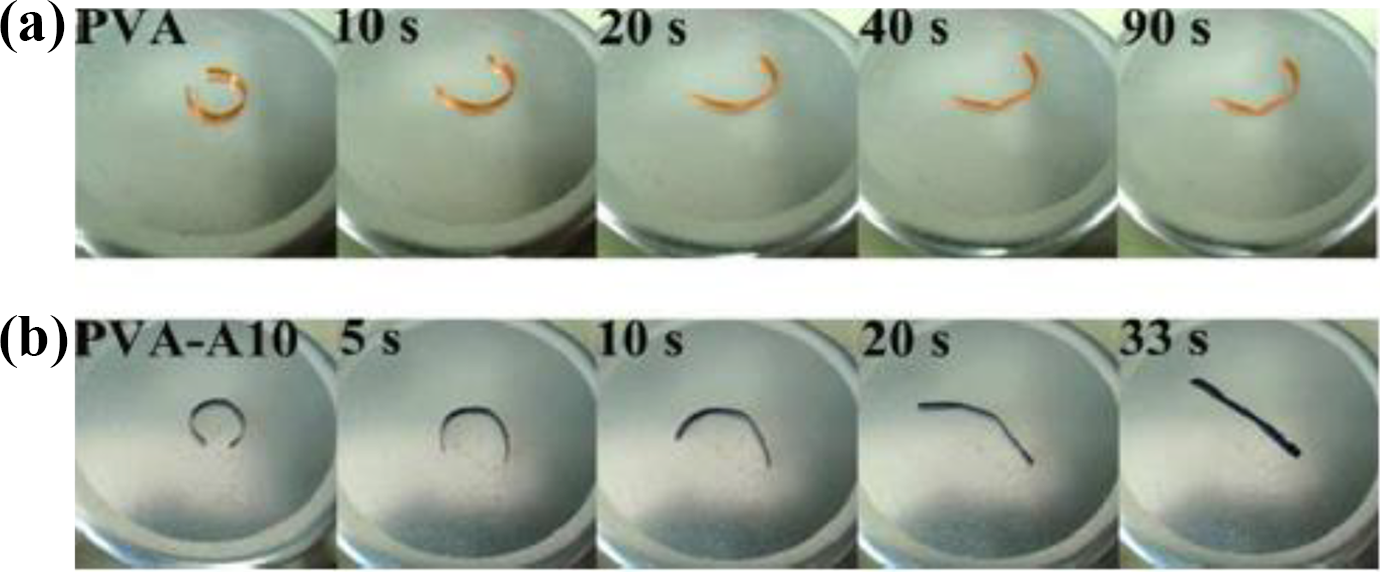
The shape recovery of (a) PVA-SMP and (b) PVA-A10 performed at 90°C. “Permanent shape is straight shape.”
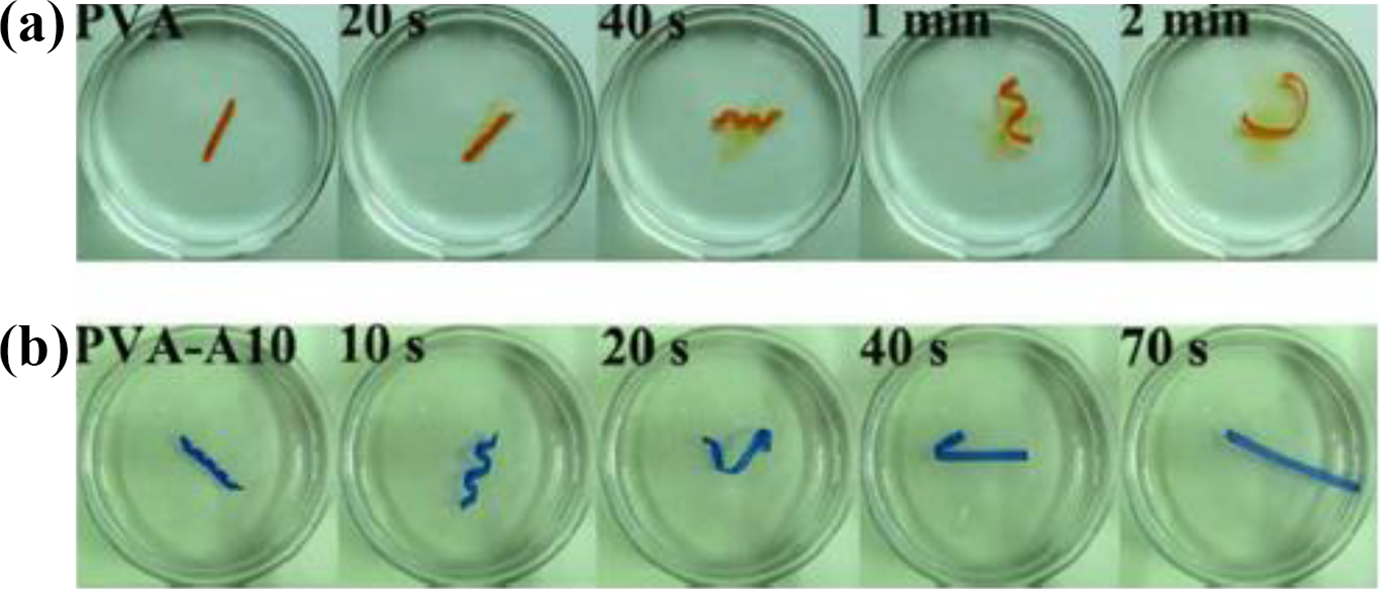
The shape recovery of (a) PVA-SMP and (b) PVA-A10 performed in water. “Permanent shape is straight shape.”
TiO2 has been the subject of many research works in recent decades. It is one of the most widely used nanometric materials as filler for polymeric matrices. This nanofiller can also improve the hardness, resistance, thermal, and thermomechanical properties of SMP’s. TiO2-loaded polymers are well-known antimicrobial materials in the biomedical field and have a positive effect on corrosion protection as well.72,100 For example, some research works on epoxy and polybenzoxazine reinforced with various amounts of titanium oxide nanoparticles have shown that excellent anticorrosion behavior has been obtained.101,102 Furthermore, a study on TiO2/poly(
Zinc oxide (ZnO): The reinforcement of polymeric matrix with ZnO nanoparticles improves the SMPCs properties. This is due to the ZnO physicochemical properties, including chemical stability, low dielectric constant, high light transmittance, high catalytic activity, and exceptional thermal stability. 104 In addition, ZnO nanoparticles have outstanding optical characteristics such as intensive absorption of UV and infrared rays. 105 Subsequently, it can be used in light-stimulated applications.
A series of hybrid nanocomposites has been prepared by a solution casting process with various weight fractions of ZnO nanoparticles (0, 1, 3 and 5%). 106 Thermogravimetric analysis showed that the thermal stability increases with the increase of ZnO nanoparticle fraction. On the other hand, the moisture in the hybrid nanocomposites decreases as the ZnO nanoparticle fraction increases. The mechanical properties of the material also increase with the increase of the ZnO nanoparticle fraction. In addition, SMPCs showed a shape-memory behavior by placing the sample at room temperature and then at 55°C. 106
Iron oxide is another interesting filler. Various types of iron oxides have been reported, among which there are hematite (α-Fe2O3), maghemite (γ-Fe2O3), and magnetite (Fe3O4). Each of these three forms has its unique biochemical, magnetic, catalytic, and other properties.107–109 The well-known mineral form is α-Fe2O3. It is ocher to rust in powder form but gray to black in crystallized form. It is a stable paramagnetic iron oxide, a hydrated form of which constitutes rust. It is one of the three main oxides of iron, the other two being iron oxide (II) FeO, rather rare, and γ-Fe2O3 and Fe3O4. Their structures have been illustrated in Figure 8.
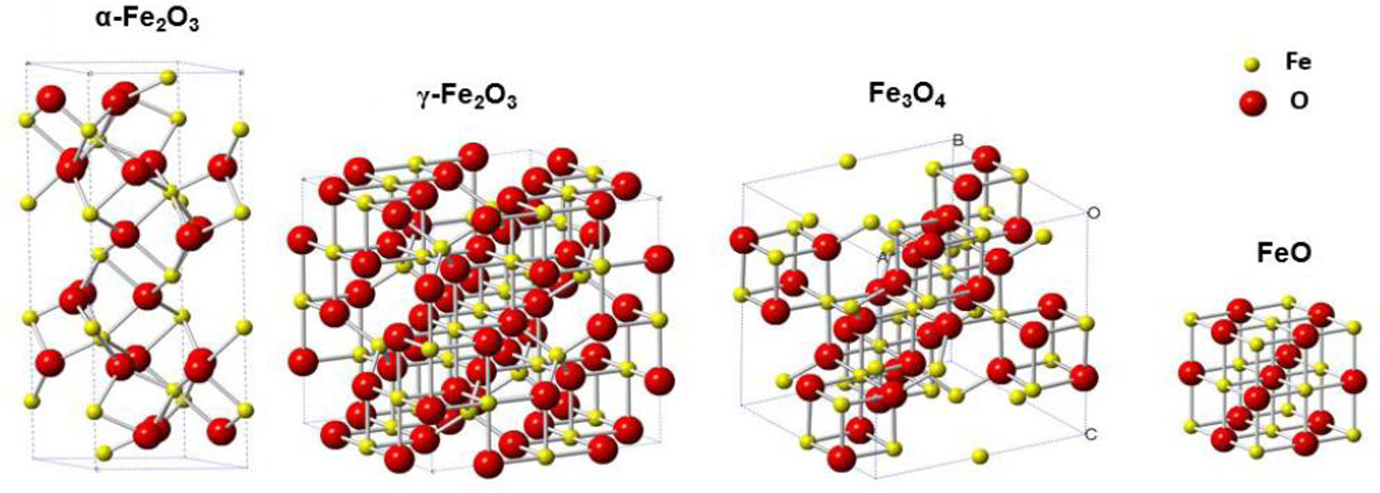
Crystallographic of different iron oxides. 110
A shape-memory composite based on (PU/Fe3O4) was prepared by Soso et al. 108 The recovery of the initial shape was triggered when the composite is exposed to an alternating magnetic field with a frequency of 260 kHz and a magnetic field density of 48 kA/mw, with a recovery time of less than 30 s. The use of this type of reinforcement in the field of shape-memory composite will be explained in the magnetic stimulation section.
Si3N4 has been revealed to an interesting filler and has been used to reduce the brittleness of materials, improve breaking strength, as well as to reduce friction and improve wear resistance. Si3N4 nanofillers are recognized as one of the most important materials for high temperature and strength applications because of its advantageous characteristics, such as good corrosion resistance, better wear properties with low dielectric constant and superior hardness with low density. 111 Numerous studies have investigated the effects of Si3N4 reinforcement on different polymer matrices, such as epoxy polymers, polypropylene, polyethylene (PE), polyimide 6, cyanate ester, PEEK, and bismaleimide.112–115
Carbonic fillers
The incorporation of carbonic fillers in SMPCs has recently attracted many attention due to their naturally high mechanical performance and their exceptional transport features.38,116 Besides, their addition at low concentrations in polymers could solve problems such as the transport properties of materials. This type of reinforcement leads to the decrease in electrical resistance. Significant improvements in shape-memory properties related to the geometric characteristics of this type of carbonic fillers, which provide better interaction with the polymer matrix.38,40 Carbon filler reinforcements, for example, graphene, GO, carbon nanotube (CNT), and so on. Carbonic fillers have very different physical and electrochemical properties from each other (Table 2).
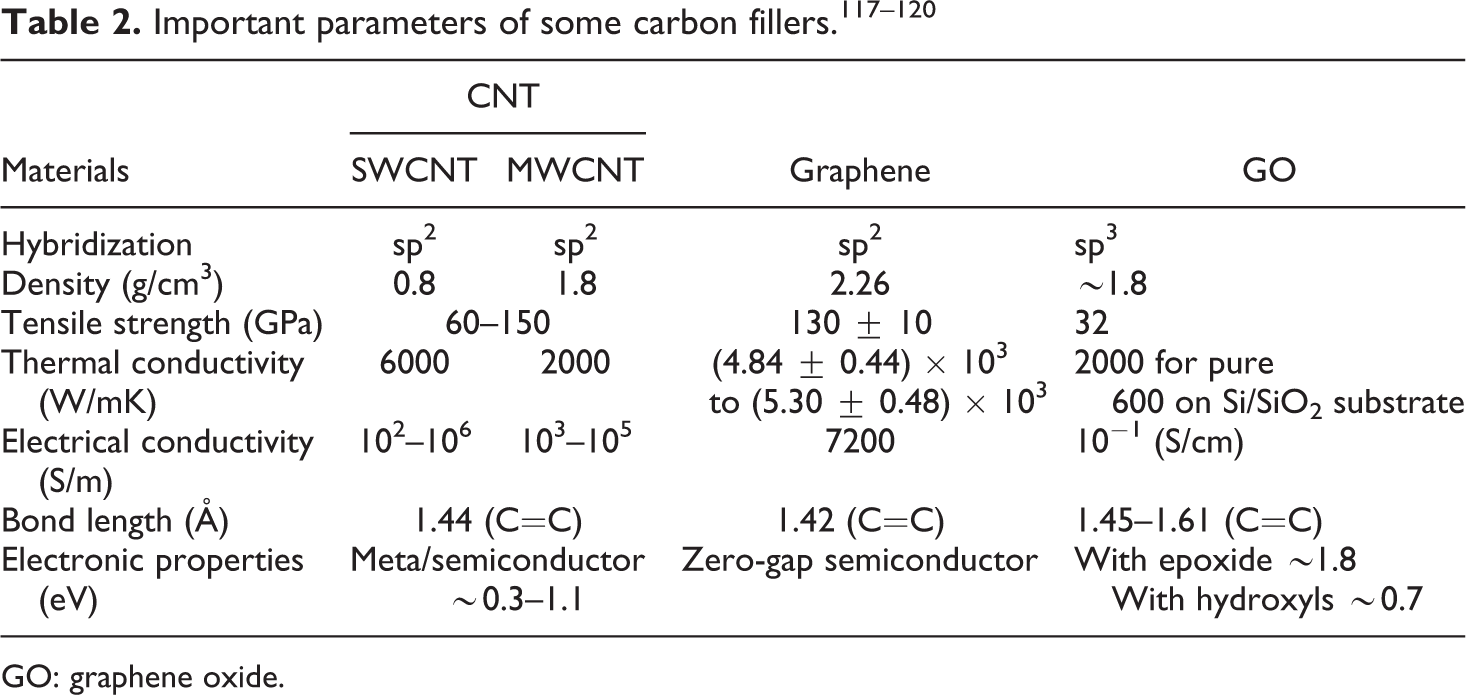
GO: graphene oxide.
Carbon nanotubes
Since the discovery of CNTs by Iijima,121,122 CNTs, as shown in Figure 9, have been widely studied in the last decade because of their unique electrical, mechanical, optical, and thermal properties.116,123–127 Depending on their structural parameters, CNTs are the only material that can be metallic and semiconductors. CNTs are one-dimensional systems, graphene sheets wound on themselves, where (sp2) bonds have a character (sp3).125,128
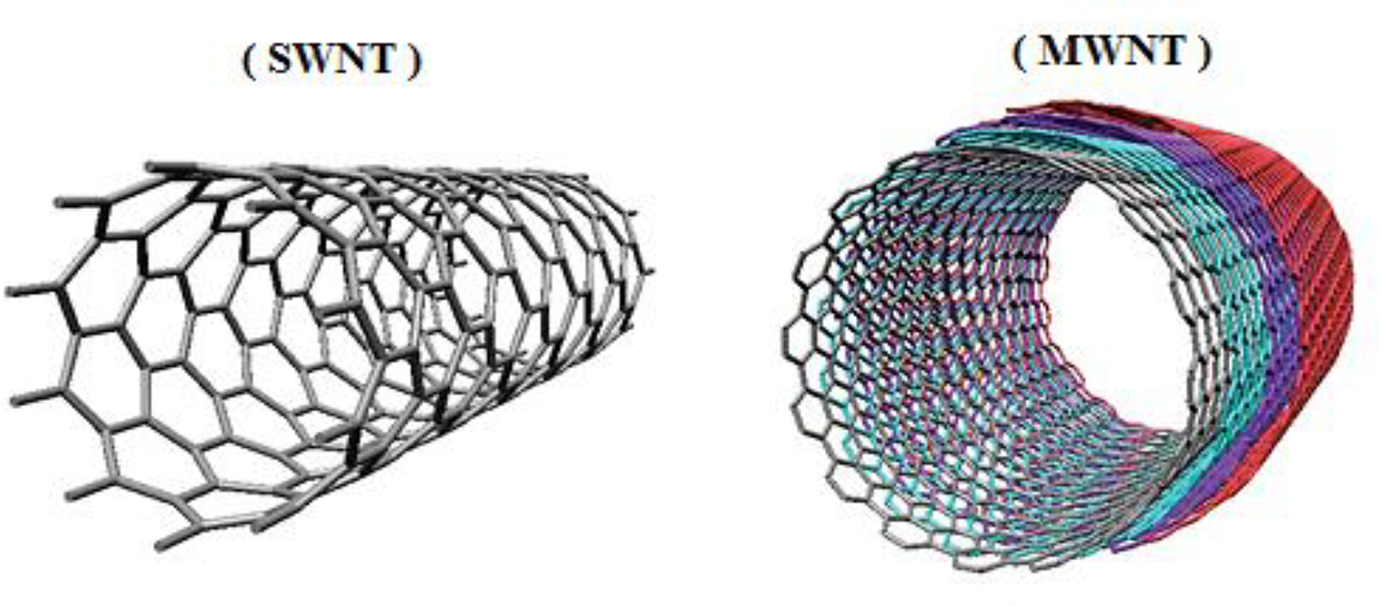
The types of carbon nanotubes.
The most used types of CNTs are: Multi-walled carbon nanotubes (MWNT), CNTs multi-walled; Single-walled carbon nanotubes (SWNT), CNTs single-walled.
To investigate the influence of MWNT weight percentage on the spinning capacity, fracture morphology, thermal and mechanical properties, and shape-memory behavior of the SMP, Meng et al. 129 synthesized shape-memory polyurethane (SMPU) containing various amounts of MWNT by melt spinning. The results showed that the spinning capacity of (SMPU-MWNT) decreased considerably with the increase of MWNT percentage weight. If the MWNT weight percentage exceeds 8%, the SMPU cannot be produced due to the poor rheological properties of the composite. At low MWNT level, the crystallization in SMPU is favored because the MWNT acted as a nucleating agent, whereas, at high MWNT levels, the crystallization is hampered due to the restricted movement of PU chains. It is exhibited that MWNT aligned and homogeneously distributed what preserved the SMF with high tenacity and initial modulus. During stretching and fixing, the MWNT fibers facilitate the storage of internal elastic energy, which improves the recovery ratio as well as the recovery force. 129 SMPU reinforced by CNT/Graphene was studied by Kang et al. 130 This composite is used in the field of soft electronics and wearable technology, where a combination of mechanical and electronic deformations are needed. The characterization of the resulting micro-honeycomb (graphene/CNT/SMPU) composites showed a relatively low resistivity of 5 Ω, a resistance variation of less than 10% in the (stretching/loosening) states of 50%, long-term stability and superior shape memory, including 95.6% form fixity and a recovery rate of 90.6%. A regular distribution of graphene-CNT structures provides heterogeneous nucleation sites and undisturbed crystal growth in well-designed SMPU abutments, thus conferring superior shape-memory properties. This type of composites (graphene-CNT/SMPU) offers potential applications as an emergency circuit breaker in telephone batteries. 130 In another work, Yi et al. 131 used a 1D thin-walled carbon nanotube (TWNT) compound and a 2D reduced graphene oxide (GRO) to strengthen the PU shape memory. A photothermal process using a near infrared laser activated the Rr of the composite. The best laser-induced Rr was obtained for composites (TWNT/RGO) of (7/3) with a nanocarbon content of 1% by weight (Figure 10).
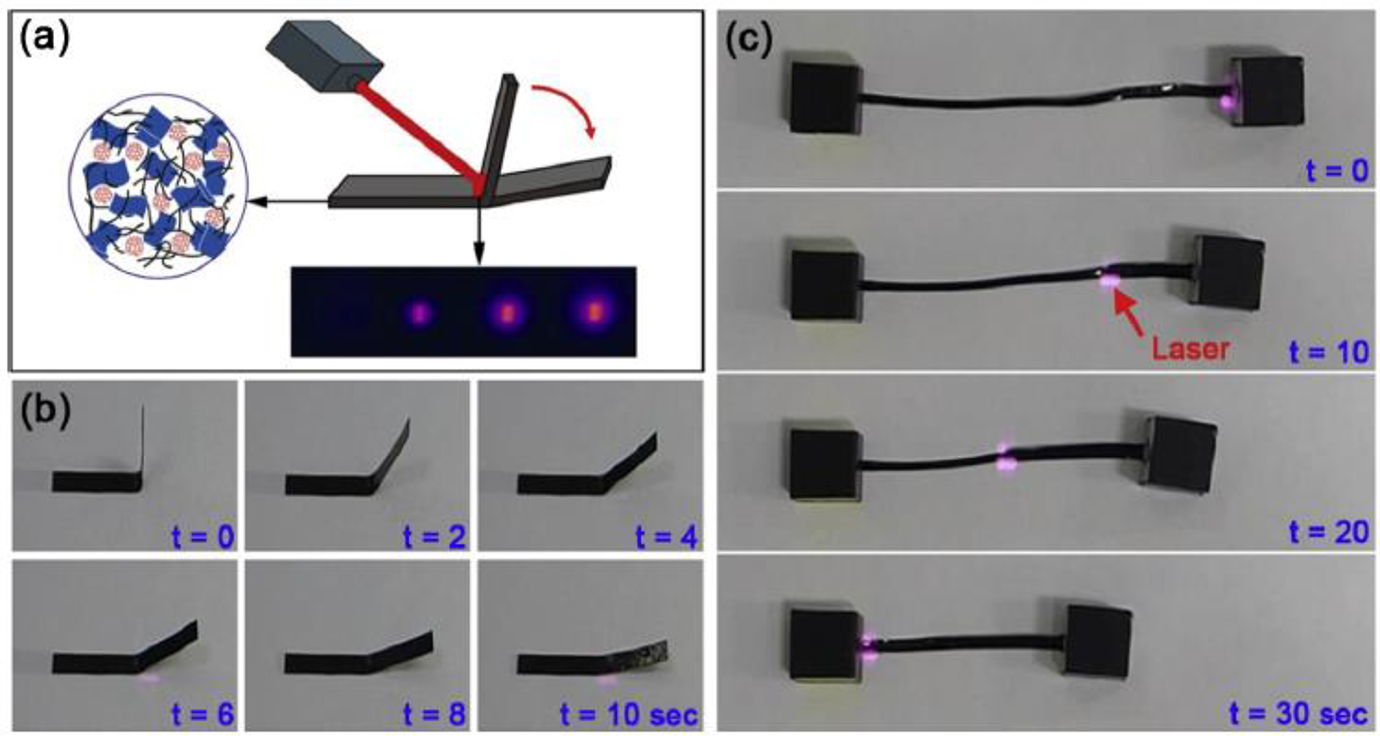
(a) Scheme of laser-induced actuation for (TWNT/RGO/PU) composite, (b) the photothermal shape recovery actuation behavior in a bending mode for the (TWNT/RGO/PU) composite (7/3 TWNT/RGO composition ratio and 1 wt% nanocarbon content) during the NIR irradiation, and (c) the photothermal shape recovery actuation behavior in an extension mode for the (TWNT/RGO/PU) composite (7/3 TWNT/RGO composition ratio and 1 wt% nanocarbon content). 131
The tensile modulus and the electrical conductivity of the composites also showed a similar dependence of the TWNT/RGO composition ratio on the recovery of the photothermal form. 131
Graphene
Graphene is the two-dimensional building block for carbon allotropes of every other dimensionality.132–134 Graphene can be transferred in other forms such as GO, fullerene and CNTs (Figure 11). The prominent conductivity, electron mobility, and large specific surface area are the main characteristics of graphene.133,135 The use of graphene in polymer matrices as reinforcement confers unique mechanical, chemical, electrical, and optical properties. The employment of graphene in several applications such as sensors, supercapacitors, solar cells, transistors, biosensors, and drug delivery systems has been reported.133,136
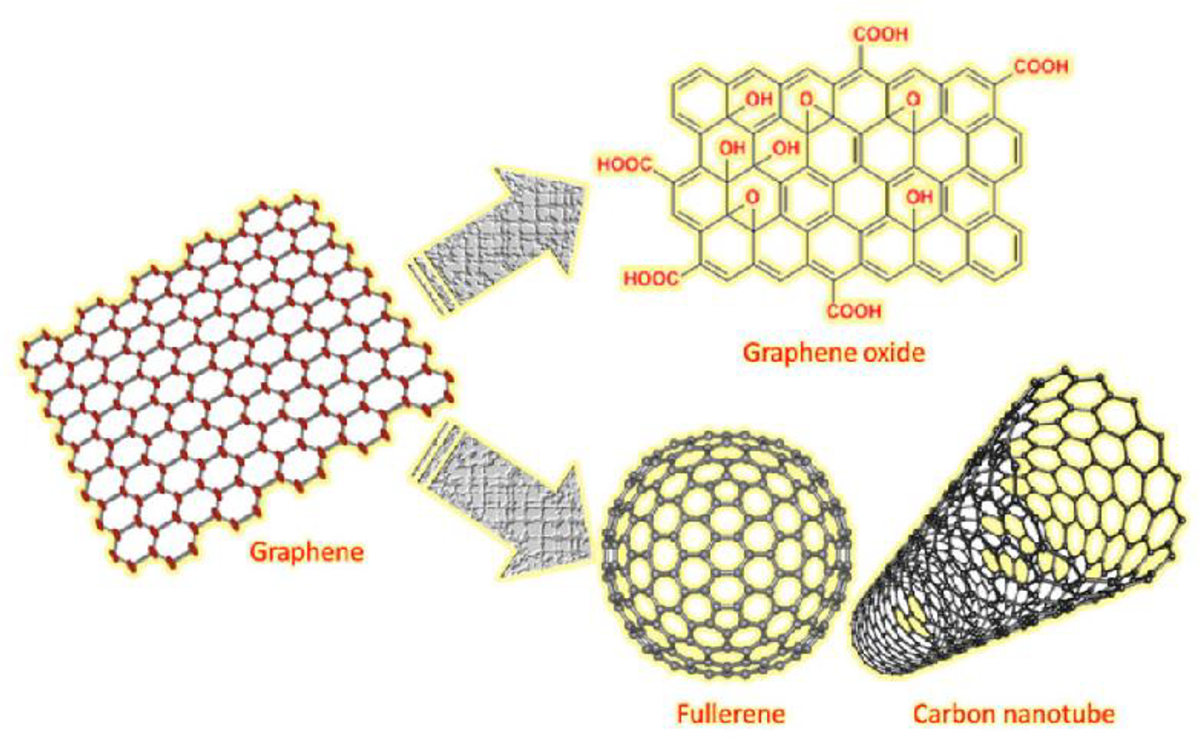
The structure of graphene and its derivatives. 133
Abbasi et al. studied the effect of incorporating graphene nanoplates (0.5%, 1%, and 1.5% by weight) into a matrix of PCL-PU. The obtained results showed an Rr rate of around 95–99% and a shape fixity (Rf) rate of around 91–96%. 137
Graphene oxide
GO is commonly considered as precursor material of graphene. However, it has different properties compared to graphene.39,138 Firstly, the structure of the GO is characterized by the fact that GO sheet is composed of a hexagonal ring carbon lattice having both sp2 and sp3 hybridized carbon atoms bearing oxygenated functional groups (Figure 11). GO has a better solubility than graphene in different solvents and has a low electrical conductivity.39,134,138–140 However, the incorporation of GO into the polymer matrix improves the actuation strain of elastomeric composites and increases the dielectric permittivity.134,135,141–144 GO has good mechanical properties with a Young’s modulus of 32 GPa. In addition to these different characteristics, GO also has interesting optical properties due to the presence of photoluminescence phenomenon. This luminescence is in the UV-near infrared region.39,145,146 Recently, PU/GO composite was studied. 146 Three different weights (0.5%, 1%, and 2%) GO are incorporated into the PU matrix. Performance studies for 2% of GO showed a considerable improvement in toughness (2540–6807 MJ/m−3), as well as tensile strength (7–16 MPa), elongation at break (695–810%) and the scratch hardness of the formation (5–6.5 kg). Such SMPCs retained their Rr (approximately 99.5%) and Rf (approximately 90%) behaviors, as depicted in Figure 12, where the recovery shape memory of the SMPCs and the molecular mechanism are illustrated.
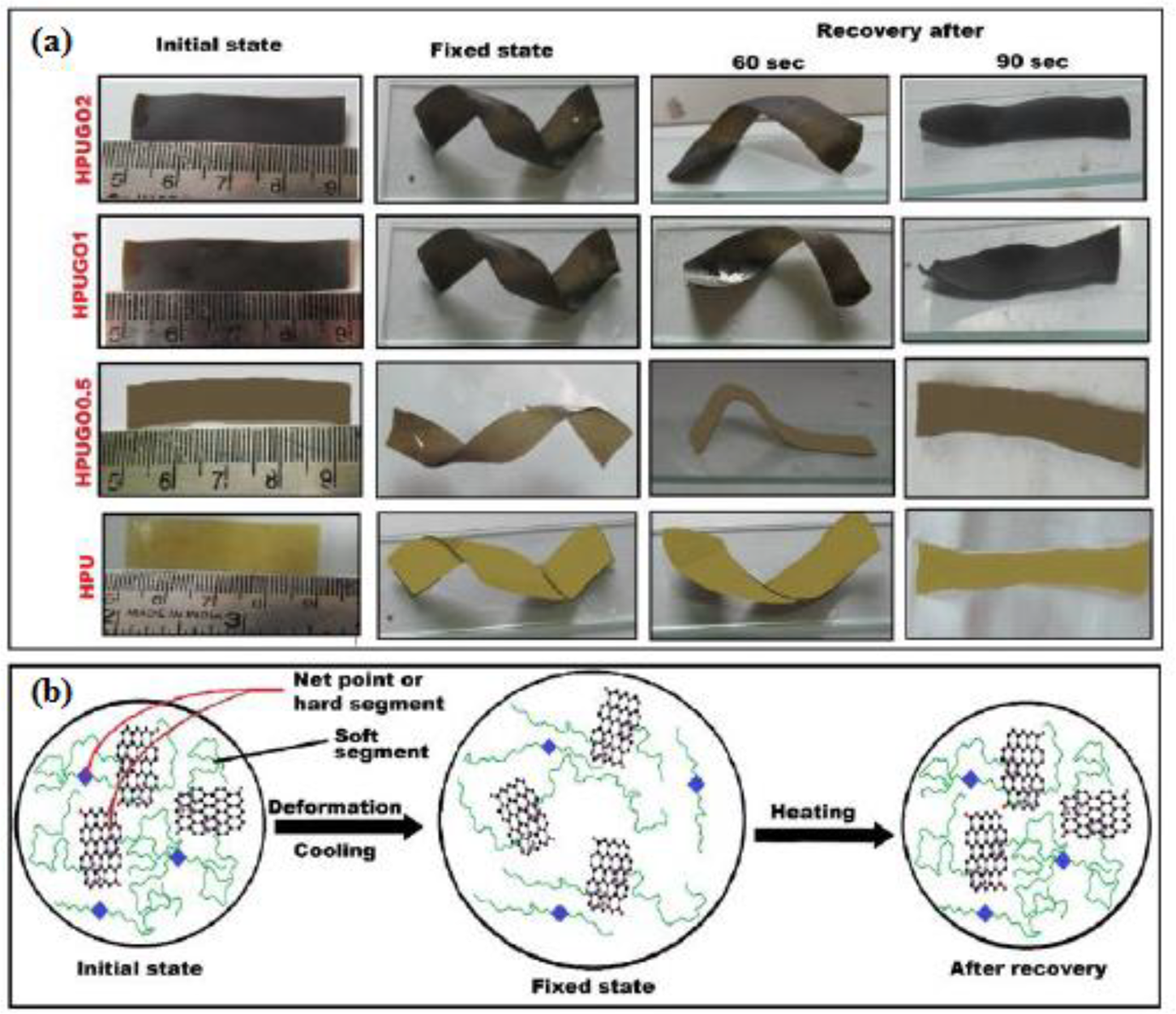
(a) Recovery shape memory of HPU and their composites and (b) possible molecular mechanism of the SMPC. 146
Stimulation methods of SMPCs
Composite materials with shape memory (SMPs and SMPCs) are part of intelligent, controllable, and programmable materials. 41 Stimulation methods are actions to activate the SMP and SMPC memory recovery process. The thermal stimulation method is the most common approach used in the field of SMPs and their composites. However, new stimulation methods such as electrical, magnetic, light, and solution stimulations have emerged during the last few decades.6,10,44
Thermal stimulation
The thermal stimulation is one of the most used methods in the fields of SMPs and SMPCs. Heuchel et al. explains the phenomenon relying on the transmission of the thermal energy from external environment to the thermal sensitive SMP via conduction, convection or thermal radiation in a direct contact way. 147 Figure 13 illustrates the mechanisms of heat-sensitive SMP. At low temperatures (a), the elastic and transition segments are hard. When the heating exceeds the transition temperature (glass transition or melting), the transition segment becomes soft and can be easily deformed (b). As a result, the elastic segment is deformed and the elasticity energy is accumulated and stored therein. Cooling below the transition temperature triggers the hardening of the transition segment. If a temporary deformation is maintained during cooling, it will also be maintained largely even after displacement of stress (c). 148 Below the transition temperature, the transition segment is hard, which prevents elasticity recovery of the segments.
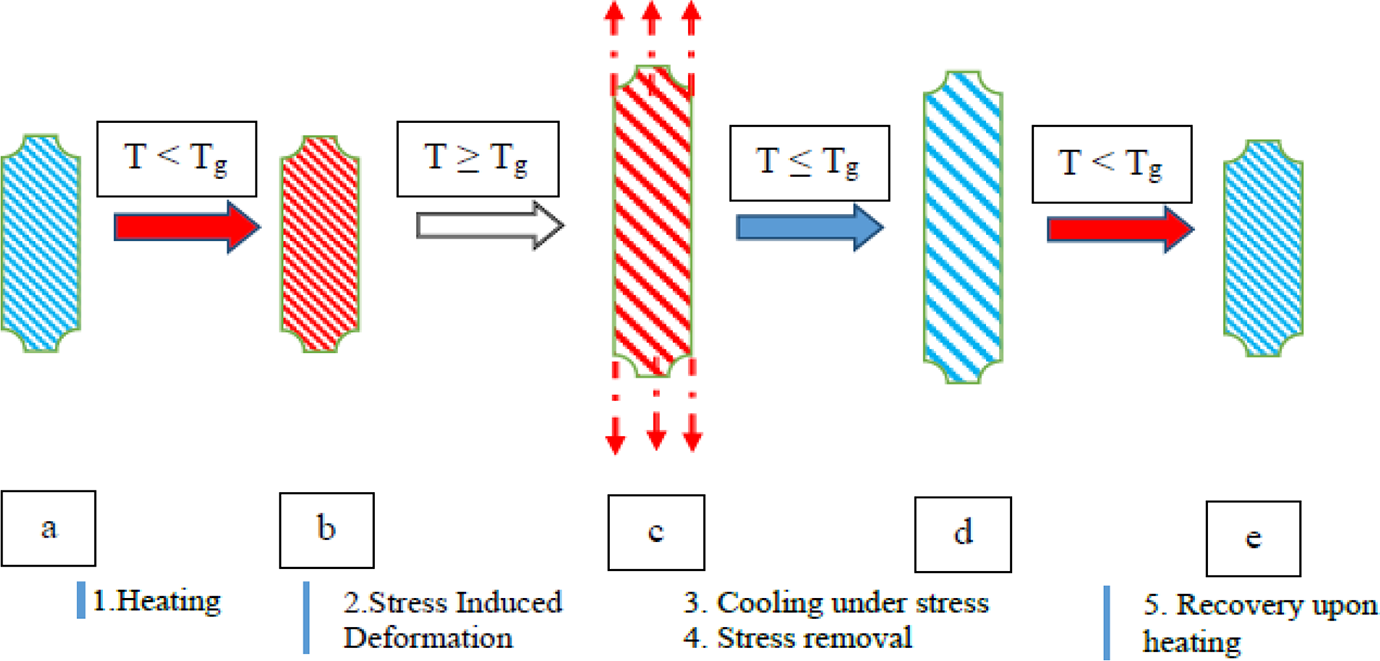
The mechanism of thermal stimulation and shape-memory effect in SMPs.
The transition segments relax after another heating above the transition temperature. Therefore, the elastic segments cannot be hold in their places anymore. The free end of PMF gains back its original shape as a result of elasticity energy released by the elastic segments (e). 148 Currently, a lot of research activities have been done worldwide on SMPs and SMPCs. Several investigations on the nature of the recovery of the initial form and their applications under the stimulus of heat have been reported. The mechanical performance and heat transfer efficiency of SMPs can be ameliorated by the incorporation of nanoparticles into its structure. 44 As an example, integrating spherical Ni nanoparticles into epoxy SMP reduces its Tg,6,149 while the addition of CNF/MWCNT in styryl SMP augments its Tg.6,150 The comparison of the thermomechanical behavior by the bending test was made between the pure epoxy resin SMP and the epoxy resin reinforced with SiC nanoparticles. The obtained results revealed that the SMPC had a higher modulus of elasticity and recovery force. 151 Likewise, the reinforcement of pure SMPs by fiberglass has been carried out to validate the SME of the produced SMPCs using a thermal stimulation. 10 It is demonstrated that fiberglass is an interesting reinforcing agent which confer a better feature to SMPs.
As an example in the medical field, it is important to obtain materials that retain their shape memory as a function of the body temperature of 37°C. Lendlein et al. have reported a series of biodegradable thermoplastic polymers such as (PU-PCL) to obtain an SMP that reacts at the temperature of the human body.48,152 Figure 14 shows an SMP stent manufactured to react and modify at human body temperature.152,153 The stent showed an excellent behavior with high corrosion resistance, biocompatible, and nonmagnetic. 4
Novel stimulation of SMPCs
Electric stimulation
Electrical stimulation is the most used process in the field of SMPC. 6 Since external heating is undesirable in many applications, much research activities have been devoted to electricity as a stimulant to study the Rr mechanism, the electrical properties of the reinforced SMPs and the corresponding applications.155,156 It is widely reported that SMPs reinforced with carbon (conductive) materials such as CNT and graphene,157–160 fibers, and nanometals161,162 provide numerous advantages such as high efficiency, stability, and ease of design.10,14,163 Figure 15 shows the recovery of the initial form of a reinforced SMPC sample stimulated at a constant voltage of 30 V DC. The recovery of the initial (permanent) form took 80 s. 162
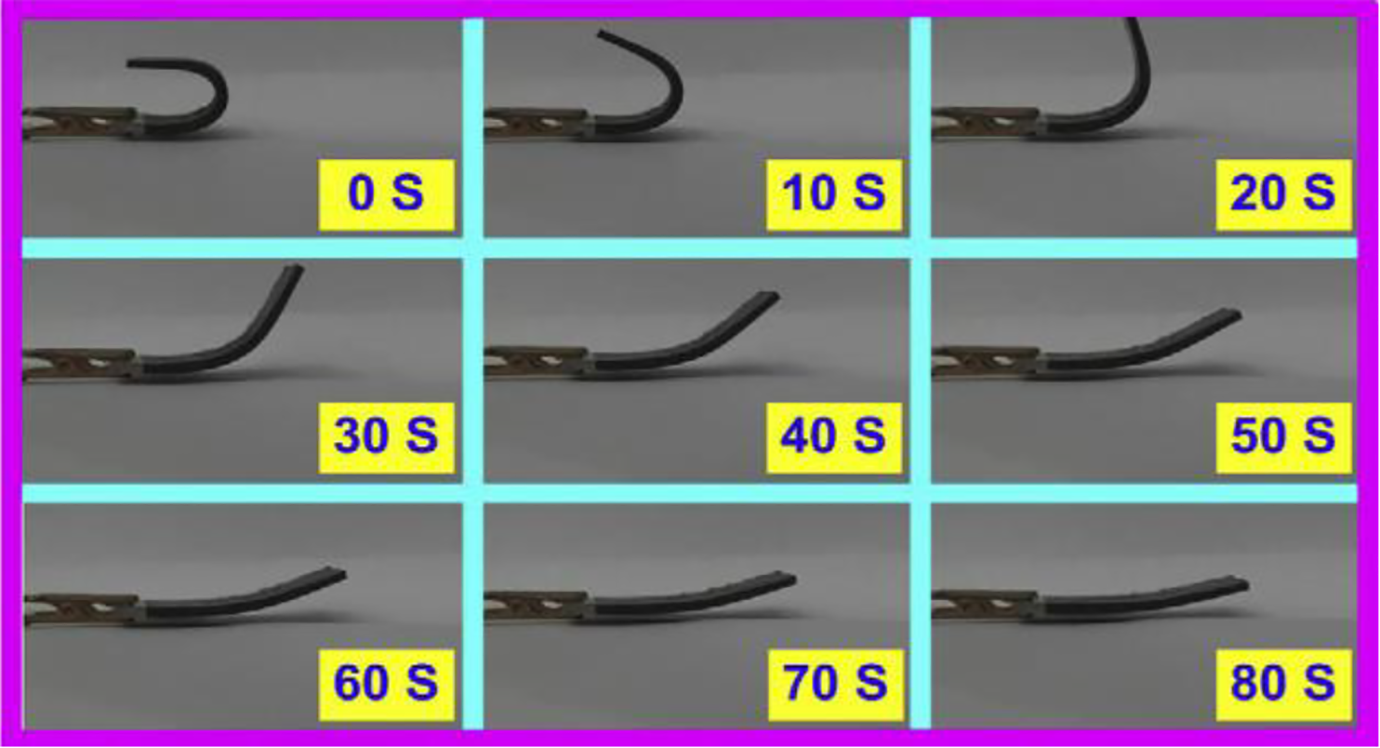
Electrical stimulation for the recovery of the initial form of SMPCs. 162
Several research studies have shown that the electrical stimulation of the SMPC has a recovery effect of the initial shape. The work of Goo et al., who added MWNT to the SMPU to improve mechanical properties and electrical conductivity, confirmed such behavior.164,165 An analysis of the electrical resistivity and electric conductivity of an SMP reinforced with powders or nano-CFs has been carried out by Leng et al.166–168 They revealed that the addition of a reduced size nickel powder to the SMP could significantly improve the electrical conductivity. 149
In the field of electrical stimulation results, electro-reactive SMPs can be manufactured to be intelligent stress structures or temperature sensors in application, because of the relationship between stress and electrical resistivity with different temperatures.149,166,168,169
Figure 16 shows another example of shape-memory conductive composites using a conductive polymer reinforced with a CNT. Such composite seems to be prominent to be used as electro-stimulated actuators and remote sensing.164,170
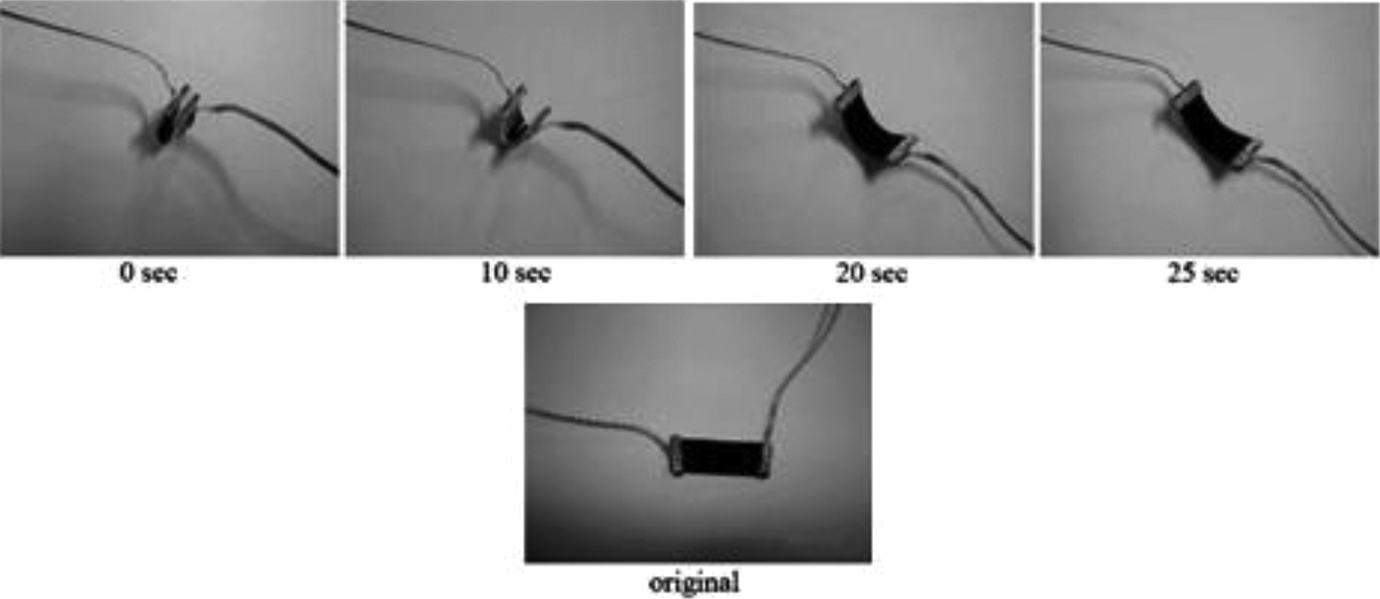
Most of SMPs have high electrical and thermal resistance. Therefore, when temperature is used as the main actuator to activate the memory effect of the matrix, conductive charges are integrated as heating sources inside the SMPs to facilitate the passage of electric current and Joule heating. When the internal temperature is higher than the transition temperature, the recovery of the deformation is triggered.14,44,170
The type of charges, their orientation, and volume play a very important role to control the rate of matrix recovery. The effect of the type of charges is due to their electrical conductivity in the matrix, while the volume of the charges increases the intensity of the electrical current, which automatically increases the polymeric matrix temperature. This has a direct influence on the Rr.
Magnetic stimulation
The SME of SMPC’s can be activated by a magnetic stimulation, also known as inductive heating, when an alternating external magnetic field is applied to SMP matrices reinforced with magnetic nanoparticles such as Fe2O3, Fe3O4, and Ni.171–175 An inductive heating is a technique based on the application of a low-frequency alternating current to generate a magnetic field at the SMPC particles.176, 177 Huang et al. presented a systematic study of the influence of magnetic particles on the thermomechanical properties of SMPCs. They have even explored some unconventional applications of magnetic particles (Fe3O4 and Ni) to modify the surface roughness and morphology to improve the electrical conductivity of SMPs. 148 Buckley et al. confirmed the usefulness of such contactless approach to stimulate SMPCs as well as their suitability for many applications, especially in biomedical devices for reducing invasive surgeries.178,179 For an efficient inductive heating, a certain size limit needs to be applied to nanoparticles. 180 As an example, the magnetically induced SME is demonstrated in Figure 17. 16
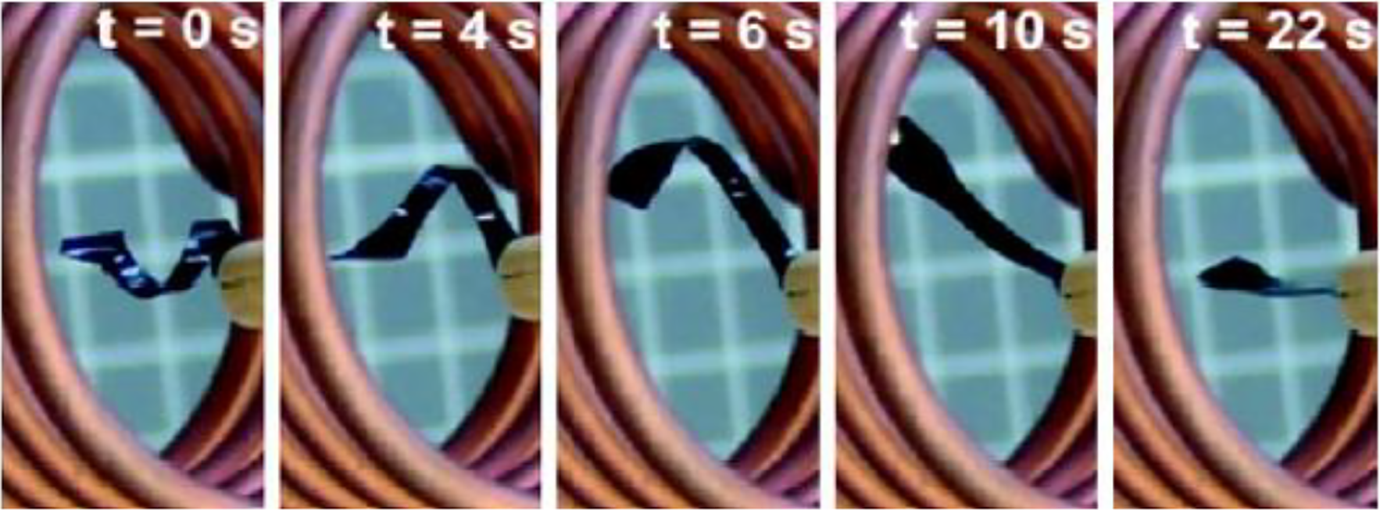
The shape-memory effect of a SMPC at 10% nanoparticle (Fe2O3). 16
Light stimulation
As the stimulation using heat, electricity, or a magnetic field has various negative effects on the SMPCs, another stimulation method based on the light has emerged to avoid the disadvantages of other stimuli. 181 According to Razzaq, Lendlein, Long et al., SMPs and SMPCs can react either with light alone to produce a Rr 182 or with both light and temperature to regain its original shape.10,182,183
The nature of the materials involved to strengthen SMPs plays an important role in the response to light to recover the initial state of the SMPCs. Among the materials used, one can cite gold nanoparticles (AuNPs), 184 carbon black, 185 and CNTs. 186 Figure 18 shows an AuNP-reinforced PU, which can stretch until 100% deformation at room temperature. A recovery of its initial shape was done by laser exposure. The SMPC raises a load of 350 times of its weight. 184 Leng et al. uses carbon black to absorb a light wave and convert it into heat, which activates the process of recovering from the original shape. 185 In this field, researchers have encountered some issues because most of the SMPCs are thick, while light penetrates only thin films. 44
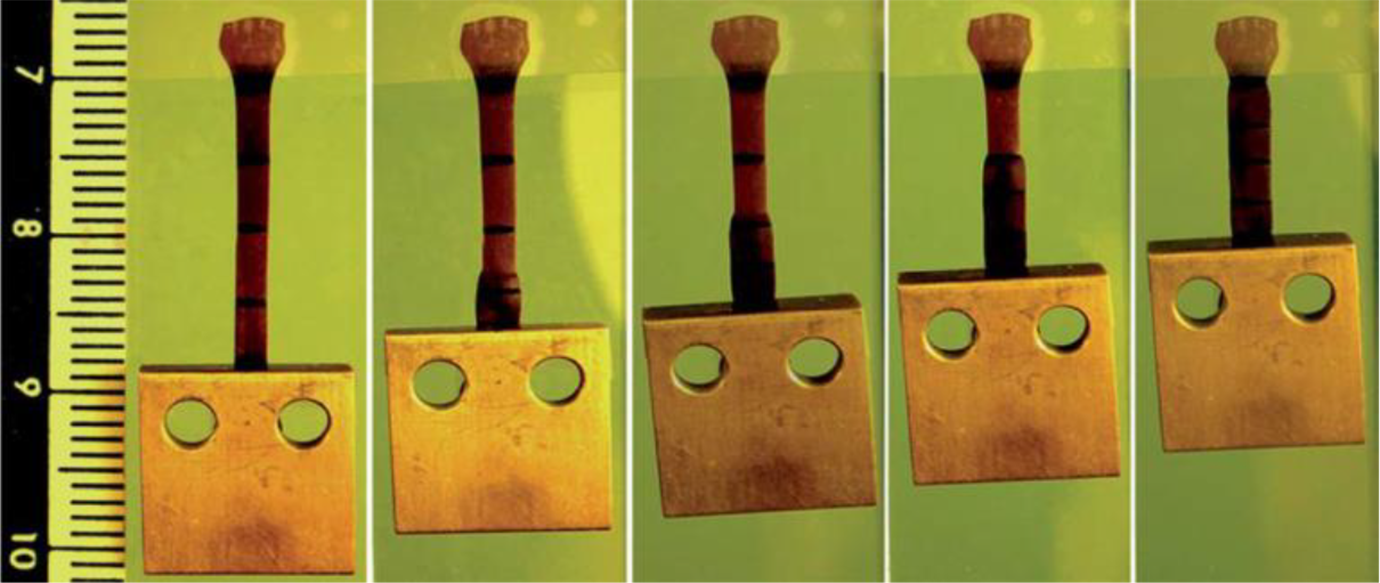
AuNP-reinforced PU, the recovery of its initial shape was performed by laser. 184
Solution stimulation
Another less known stimulation method for the Rr SMPs and SMPCs is the solution stimulation. It is based on the principle of reducing the Tg to trigger the original Rr process. In general, the mechanism of the Rr of SMPs and SMPCs by stimulation in a solution (water, solvent, or mixture) consists of the fact that the solution has a plasticizing effect on the polymers, which increases the flexibility of the macromolecules and decreases the Tg until the recovery of the form.19,187–190
Water stimulation
As shown in Figure 19, Huang et al. have studied the action of initial form recovery of the PU-type SMPC reinforced by CNTs. 188 The water plays the role of a plasticizer that diffuses into the polymer, which activates the process of reducing the Tg to recover the initial form.
Initial form recovery of an SMPC (PU/CNT) immersed in water. 188
In another work, Wang et al. have synthesized new shape-memory composite films (PU reinforced with cellulose nano-fibers) with water stimulation. The PU/CNF composite film with a composition of 70/30 shows a high recovery ratio (95%) and a fast-form recovery rate (1 min), which gives fast and excellent shape-memory capabilities. A schematic presentation of the process is displayed in Figure 20. 190
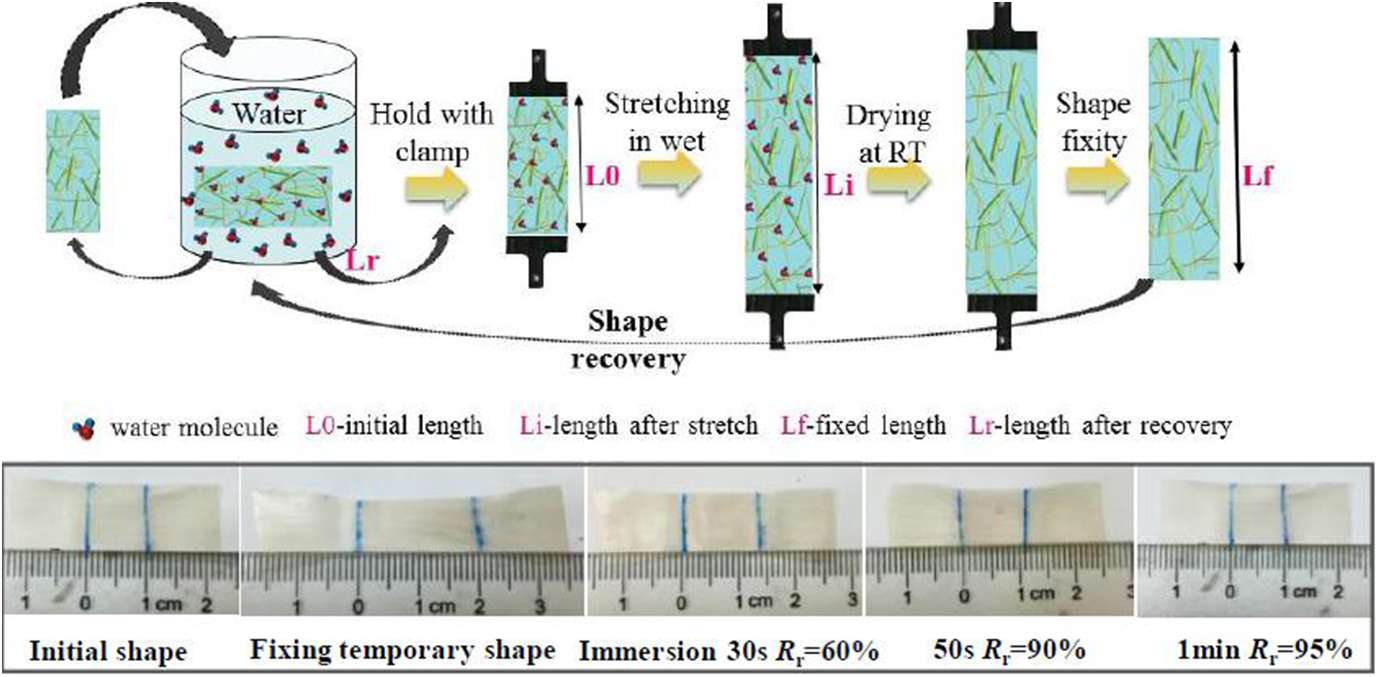
Recovery procedure of initial shape of a shape-memory composite film (PU/CNF) with a water stimulation. 190
Solvent stimulation
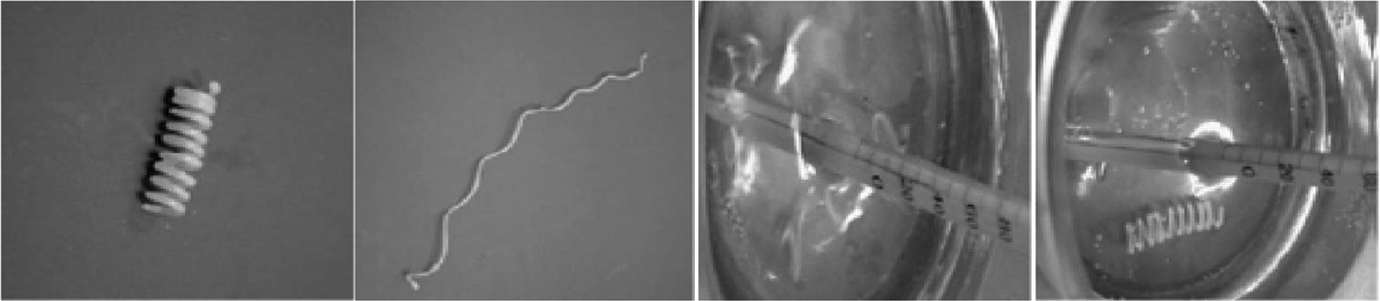
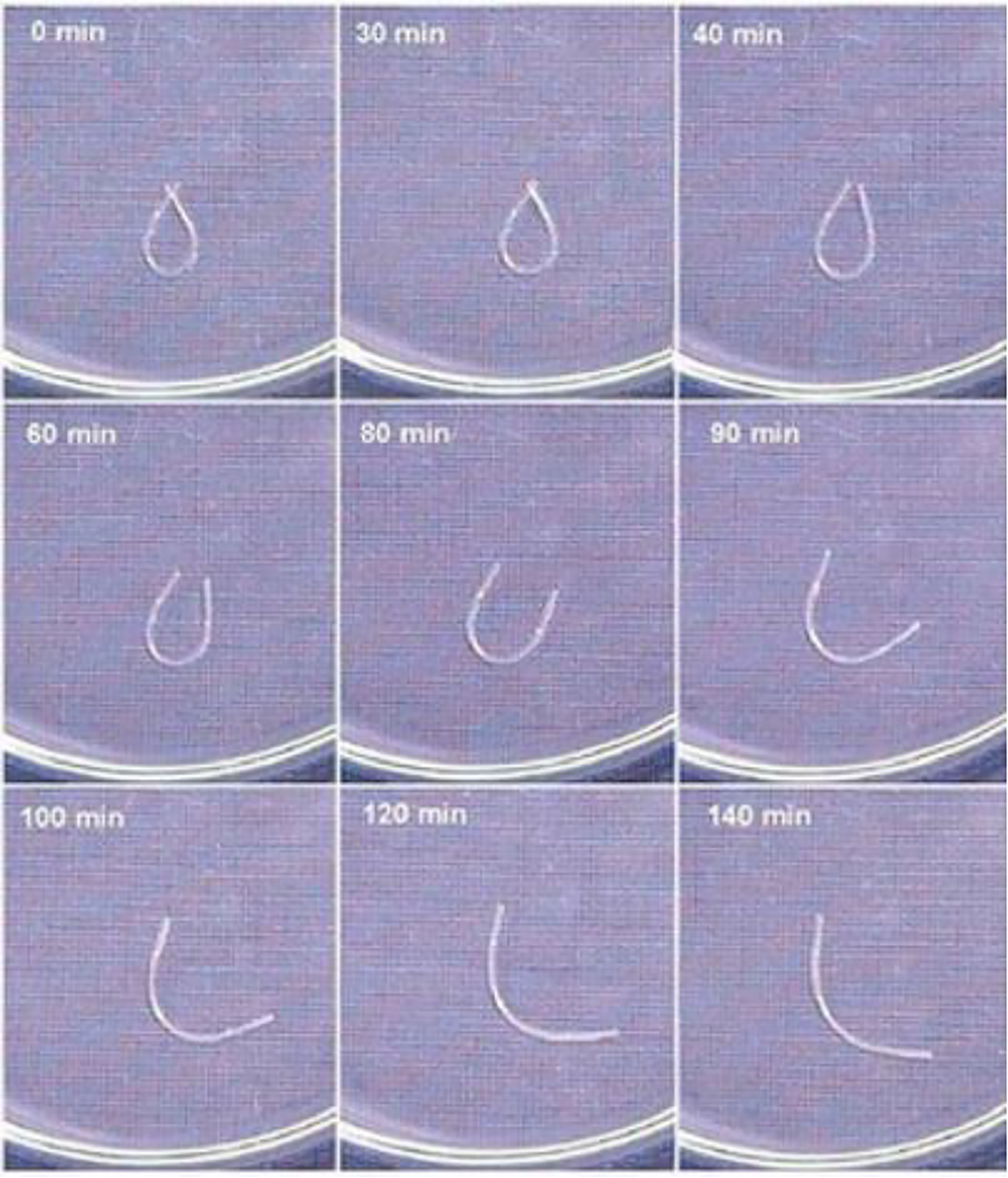
Using the solvent stimulation, the recovery of the initial shape of the material can be obtained by reducing the Tg of the material itself during the immersion in a solvent. The actuation triggered when the material is immersed in the solution instead of heating the material above its Tg. This decrease in Tg is related to the absorption of the solvent molecules on the SMP, which weakens the elastic modulus and activates the recovery of the initial form. Recently, Lv et al. studied the recovery of the form of thermosetting styrene-based SMP (Tg = 65°C) in a solution of 100 ml of N, N-dimethylformamide (DMF). The polymer was thrown into the DMF at a temperature of 22°C. This work demonstrated that the SMP recovers its initial form after the formation of hydrogen bonds, which directly influences the Tg of the material, and therefore the activation of the recovery of the form (Figure 21). 189

Shape recovery of SMP styrene wire in DMF. 189
Mixing solution stimulation (water/solvent)
The initiation of the Rr in a solution started with the reduction of the Tg) of the materials during the stimulation by mixing (water/solvent). In the recent years, Zhang et al. studied the Rr of chitosan (CS)/glycerol (GL) composite film in a solution (water/ethanol) at 50% v/v. This study has proved that the formation of hydrogen bonds must belong to residual water molecules, which interacts with CS molecules and releases the memory effect of the composite film (Figure 22).190,191
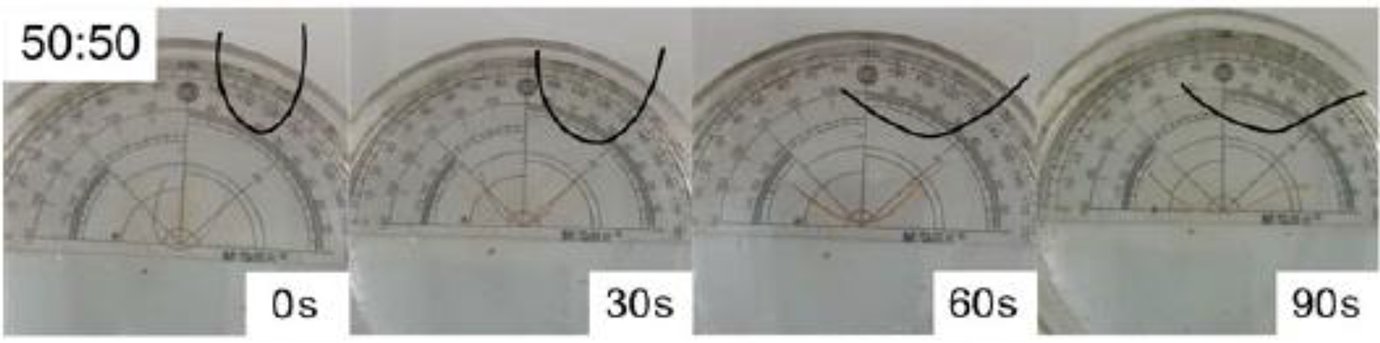
Recovery process of (CS/GL) composite film in mixed (water/ethanol) solution. 191
Based on the excellent performance of fast-acting shape-memory trigged by solution (water/solvent), SMPCs with solution stimulation can find applications in various potential uses such as in biomedical field as drugs, medical devices, and intelligent sensors.
Conclusion and future trends of SMPC research
SMPs and SMPCs have demonstrated exceptional characteristics that led to suggest them to be implemented as advanced intelligent materials for the current and potential applications. The present review has systematically discussed two main aspects of SMPC’s, encompassing the following points: The common fillers used as reinforcements provided quite limited shape-memory features and characteristics because their abilities to recover the original shape are only based on heating sources. Therefore, the emergence of new fillers, fibers, and particles at micro/nano and their hybrids is principally crucial to be considered to meet the required functions and performance. The use of emerging and new fillers to reinforce SMPs and SMPCs will not only improve the mechanical and shape-memory properties but also will allow obtaining noble features after being subjected to any thermal, electro-, magnetic, light, or solution stimulation. Since they have high design variety, numerous SMMs can be developed through the modification of their physicochemical features to meet the requirements for different applications. The use of reinforcements that are chemically linked with the polymer matrix are more effective in improving the mechanical properties as well as the performance of shape memory of SMPCs. The use of blends SMPs with reinforcements can open new research studies.
However, there are still many challenges to overcome in SPMC materials for practical application or commercial uses. The development of efficient fillers and the synthesis of SMP material systems with broad transition temperature ranges, large modulus spans, multiple SME in addition to the development of novel effective fabrication methods with complicated structures (3D and 4D) and coupling of different actuation methods to obtain programmable and remotely controllable actuation. Another aspect that needs to be taken into account is the current environmental issues through the employment of petroleum-based polymers. Thus, the development of bio-based SMPs is important in addition to the employment of natural reinforcements to manufacture a new generation of environmentally friendly SMMs. Therefore, the combination of several factors such as the suitable chemical composition, good compatibility, biodegradability, sustainability, simple and efficient stimulation mode, SMPs, and SMPCs are expected to a broaden application in widespread uses from medical to aerospace.
