




Abstract
In this study, the effect of cold environment on the buckling behavior of hybrid composites kept at −18°C for certain periods was investigated. For the buckling tests, hybrid composite plates with different fiber combinations were produced using three different fibers—carbon twill, E-glass twill, and aramid twill—and an epoxy resin (Araldite/Aradur) as the matrix material. Specimens for the buckling experiments were cut from the 12-layer hybrid composite plates and the hybrid composite specimens were then divided into three different groups. The specimens in Groups I and II were kept in a refrigerator for 90 days and 150 days, respectively, while Group III specimens were kept under room conditions as the control group. The hybrid composite specimens were subjected to buckling tests as soon as their waiting times were over. The buckling behaviors of hybrid composites with different stacking sequences were examined on the basis of the data obtained from the buckling experiments. The load–displacement curves obtained from the experiments were used to calculate the critical buckling loads (Pcrs) for each hybrid configuration. The Pcr was found to be highest for the hybrid configuration CAG (carbon/aramid/glass) with the stacking sequence [(0/−90)3]s and lowest for the hybrid configuration CAG45 with the stacking sequence [(45/−45)3]s. The hybrid composite specimens kept in a cold environment were found to have higher Pcrs than those kept under room conditions. The difference was greater in the case of the hybrid specimens kept in the cold environment for 150 days.
Keywords
Introduction
Hybrid composite materials, as materials that contain two or more different fibers within the same matrix, are high-strength materials that are highly resistant to impact loads. Some characteristics that cannot be obtained with well-known composite materials can be obtained with hybrid composites of components with different structural characteristics. Hybrid composites have been used now successfully in various applications such the aerospace, automotive, electronics industry, wind power generation, solar cell, and nanotechnology because of their low density, lightness, wear resistance, flexibility, high stiffness, and strength.1–4 By selecting suitable fibers and resin matrix, it is possible to obtain the required properties of the hybrid composites in the field of application. 5 For example, combining good mechanical properties of brittle fibers with excellent impact strength of ductile fibers, the hybrid composites with high impact strength can be obtained.
Carbon fiber provides low-density reinforcement through its strength and superior rigidity but is costly. Fiberglass, on the other hand, is relatively cheaper but lacks the rigidity of carbon. Glass fiber offers superior mechanical characteristics, low cost, and low thermal resistance. Also it does not conduct electricity, making fiberglass composites ideal for applications requiring electrical insulation. Combining glass and carbon provides more strength, a firmer structure, and a higher resistance to impact. Aramid fibers are known to have a combination of high stiffness, high strength, and low density, which rival the properties of reinforcing fibers such as carbon and glass. However, since the aramid fibers have a high elongation at break, they have excellent impact strength. Therefore, aramid fibers have the potential to increase the impact toughness of glass fiber-reinforced composites. 6 Aramid fibers, on the other hand, stand out among other polymer materials with their superior temperature characteristics and their high resistance to corrosion.
There are several studies on the fabrication, characterization, and mechanical properties of hybrid composites.7–12 Song 13 studied the pairing effect and tensile properties of laminated high-performance hybrid composites prepared using carbon/glass (CG) and carbon/aramid fibers and found that the lamination position of the carbon fiber had an important role in the stacking design of the hybrid composite.
Hybrid composites are commonly used in the aerospace sector, where the load-bearing capacity of the hybrid composite material is of utmost importance. Given their smaller cross-sections, high-strength materials are susceptible to buckling, which can be sudden in the case of loaded elements, and structural elements may face the grave danger of collapse in the event of a loss of stability. There have been numerous studies examining the buckling of composites. In a study of layered composite plates with symmetrical sequences and different orientation angles, Joffe et al. 14 examined the critical buckling loads (Pcrs) that formed on the plates when the orientation angles were changed and found that Pcrs were different at different angles and found also that thicker plates may have higher Pcrs. In another study, 15 the buckling analysis was performed on rectangular composite plates with single and double circular notch using the finite element method. Yeter et al., 16 the fiber orientation angle was found to have a significant effect on the buckling loads of composite plates, with the minimum buckling load reported at an angle of 45°. Öndürücü and Kayıran 17 carried out an experimental study into the effect of seawater on the buckling behavior of hybrid composite materials and found that specimens kept in seawater had lower Pcrs than those kept under room conditions. The authors also reported that hybrid composite specimens kept in seawater from the Mediterranean Sea, which has a higher salt content, had lower Pcrs than those kept in seawater from the Black Sea. Aktaş and Karakuzu 18 conducted an experimental study of the changes in the mechanical characteristics of glass/epoxy layered composites under high temperatures and found that the mechanical characteristics of glass epoxy composites improved under higher temperatures.
The correct identification of the mechanical behavior of composite behaviors in low-temperature environments is just as important as examining their behavior under high temperatures. Accordingly, the present study examines the effect of cold ambient conditions on the buckling behavior of hybrid composite materials. For the buckling experiments, hybrid composite plates were produced using three different fibers (carbon twill, E-glass twill, and aramid twill), with epoxy resin used as the matrix in each sample. The produced materials were kept under room conditions for 90 days, in a refrigerator (−18°C) for 90 days and in a refrigerator (−18°C) for 150 days. Once the waiting times were over, the specimens were removed from the cold environment and subjected to the buckling experiment without delay so as to examine the effects of the cold environment and different stacking sequences.
Materials and method
Manufacture of hybrid composites
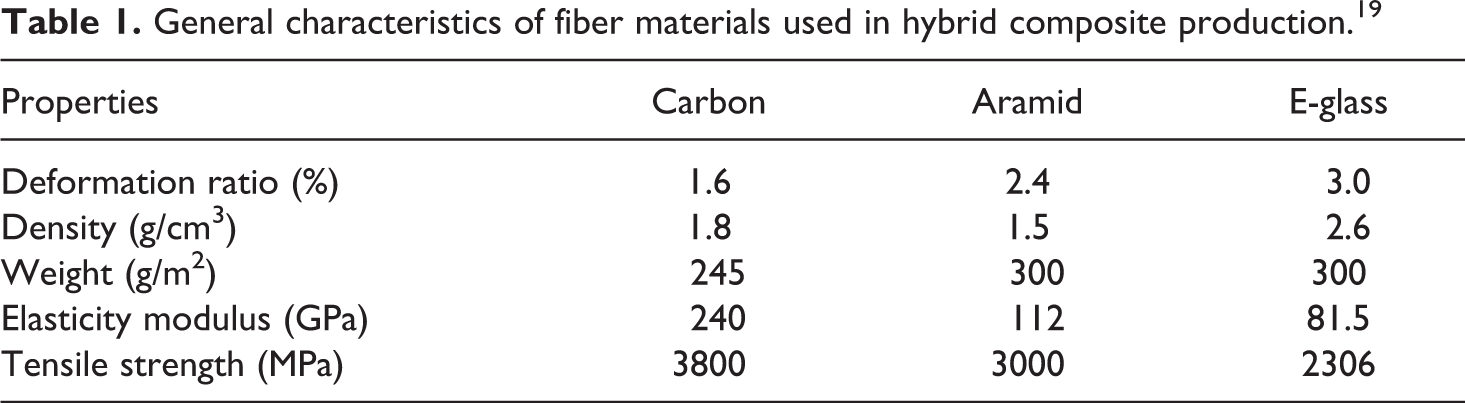
The hybrid composite samples were made using three different fibers, namely carbon twill, E-glass twill, and aramid twill, and the matrix material used was the epoxy resin system. The epoxy resin system, formed using epoxy resin (Araldite LY1564, Huntsman Corp., Germany) and hardener (Aradur 3486, Huntsman Corp., Germany), with a mixture ratio of 100:34 was used as the matrix. Twelve-layered hybrid composite plates were produced, with symmetric orientation angles [(0/90)3]s, [(30/−60)3]s, and [(45/−45)3]s and asymmetric orientation angles [(0/90)3]as. A hand lay-up method was employed for the production of the hybrid composite materials. Table 1 reports the general characteristics of the fibers used in the production of the hybrid composites. 19 The hybrid composite materials were produced using the hot-pressing method. Figure 1 shows the stages involved in the production of the hybrid composite materials. Samples measuring 20 × 200 mm2 were cut from the produced hybrid composite plates using a professional cutting machine (water cutting) for the experiments. Figure 2 shows the hybrid composite experiment specimens with symmetric orientation angles [(0/90)3]s, [(30/−60)3]s, and [(45/−45)3]s and asymmetric orientation angles [(0/90)3]as. In this study, hybrid composites with different configurations were designed to investigate the effect of stacking sequence on buckling behavior. Table 2 lists the configurations and material sequence angles of the produced hybrid composites.
General characteristics of fiber materials used in hybrid composite production. 19
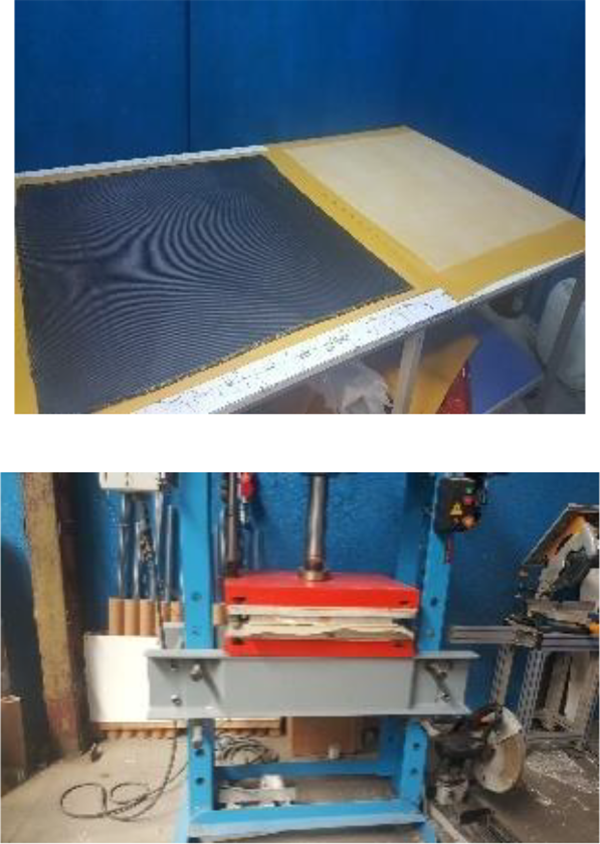
Production steps of hybrid composite material.
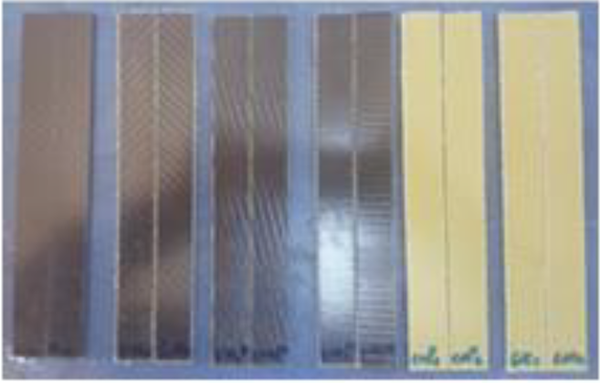
Buckling test specimens.
Configurations of the hybrid composites.
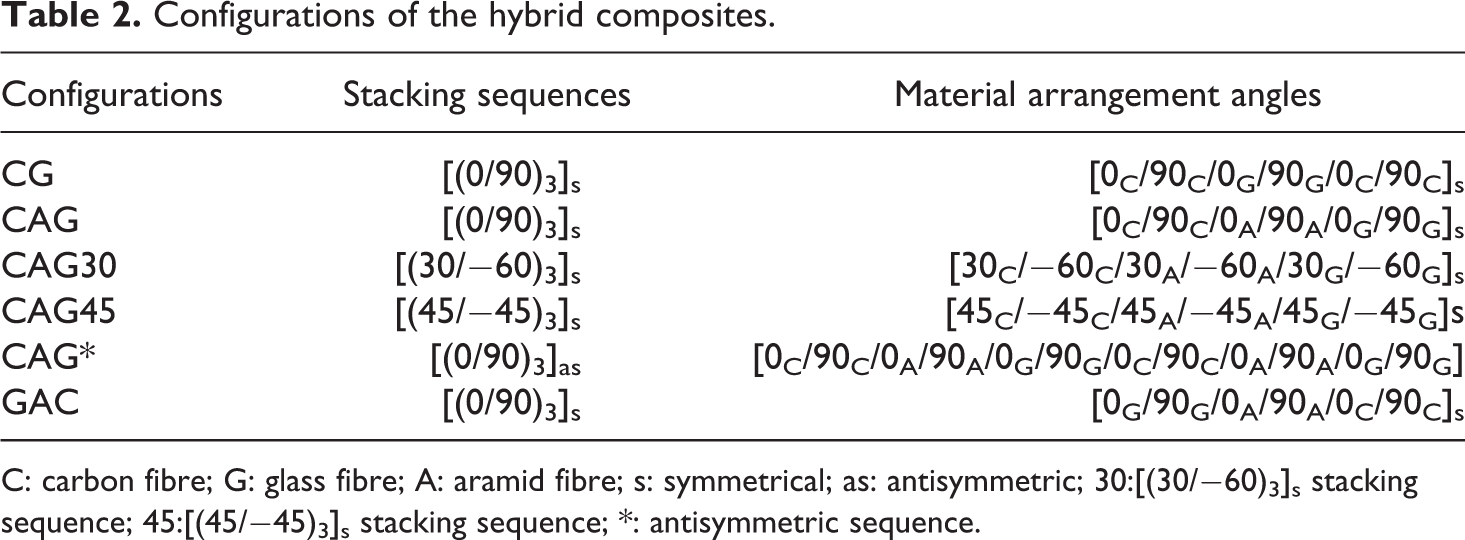
C: carbon fibre; G: glass fibre; A: aramid fibre; s: symmetrical; as: antisymmetric; 30:[(30/−60)3]s stacking sequence; 45:[(45/−45)3]s stacking sequence; *: antisymmetric sequence.
Hybrid composites are produced to combine the best properties of each reinforcing element. For this study, hybrid composites are designed with different combinations of carbon/aramid/glass fibers. Lamination combinations formed using different fibers are called as “pairing.” To determine the pairing effects of the lamination structures on buckling behavior, both CG fiber (CG-type) and carbon/aramid/glass fiber (CAG and glass/aramid/carbon (GAC) types) hybrid composites were produced. Laminating structure of the configurations is shown in Figure 3. In the CG configuration, it is seen that carbon fibers (C) are present in the outermost layers and in the center of symmetry of the layered composite structure, and the intermediate layers consist of glass fibers (G) (Figure 3(a)). In the CAG configuration, the outermost layers are again made of carbon fibers, but it is seen that glass fibers are at the center of symmetry of the plate. The CAG configuration, unlike the CG configuration, includes aramid fiber elements as well as carbon and glass fiber elements. In the CAG configuration, it is seen that the outermost layers are carbon fiber and the layers in the center of symmetry are glass fiber (Figure 3(b)). The GAC configuration, like the CAG configuration, includes carbon, glass fiber, and aramid reinforcement elements. However, in the GAC configuration, it is seen that the outermost layers contain glass fiber and the layers in the symmetry center are made of carbon fiber (Figure 3(c)).
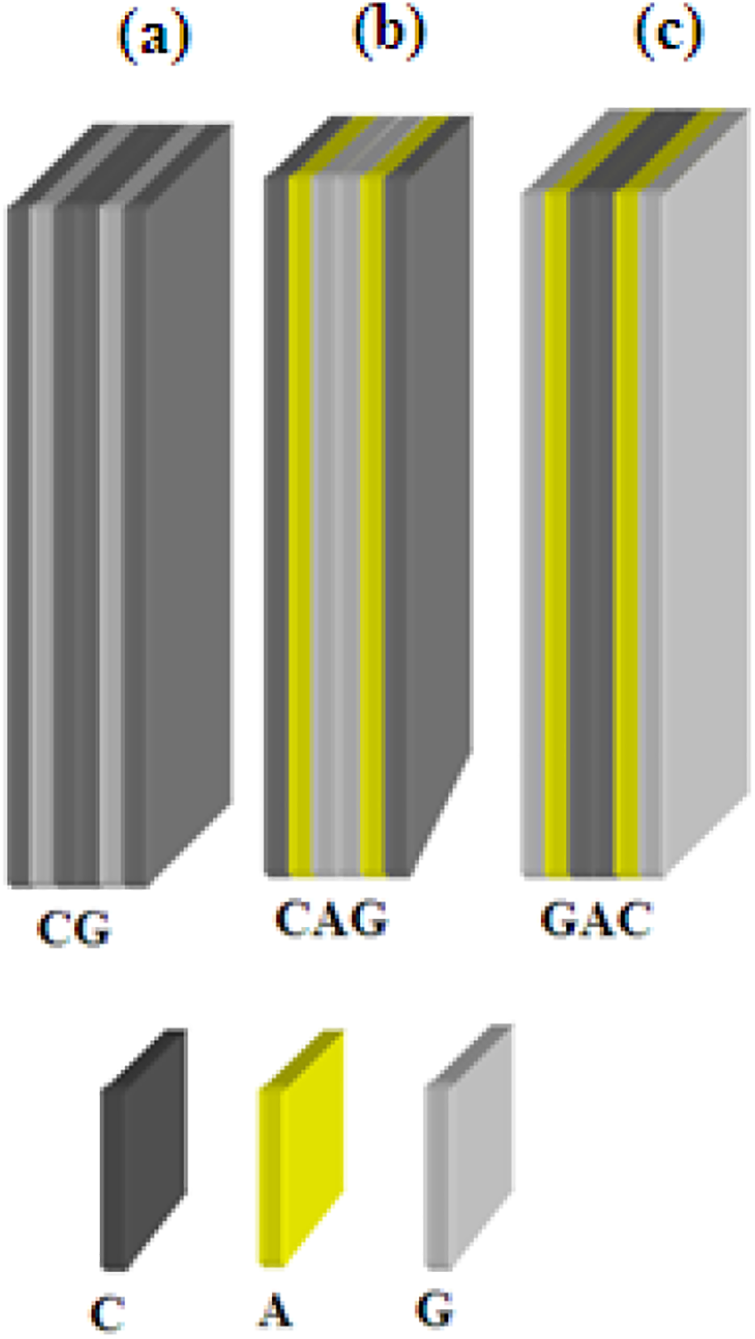
Laminating structure of hybrid configurations. (a) CG, (b) CAG, and (c) GAC.
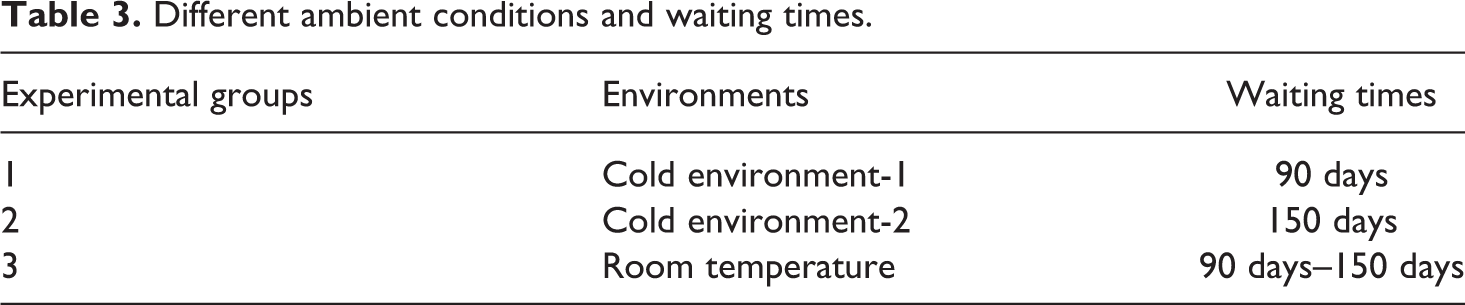
To examine the effect of cold ambient conditions on buckling behavior, the hybrid composite specimens were divided into three groups. Group I was kept under room conditions as the control group. Table 3 reports the durations for which the hybrid composites were kept in the cold environment. As Table 3 presents, Group I specimens were kept in the refrigerator (−18°C) for 90 days (cold environment-1), Group II specimens were kept in the refrigerator (−18°C) for 150 days (cold environment-2), and Group III specimens were kept under room conditions as the control group. Buckling experiments were conducted using a 100-kN Shimadzu Autograph-X series (Japan) universal tensile testing device (Figure 4). As soon as their waiting times were over, the hybrid specimens were subjected to buckling experiments involving the application of vertical force after anchoring the samples at both ends. The experiments were conducted with a pressing rate of 1 mm/min. Three experiments were conducted for each group of specimens, and the averages of the results were used. Figure 5 shows the damage mode observed in the CAG hybrid composite specimen with the sequence [(0/90)3]s after the experiment.
Different ambient conditions and waiting times.
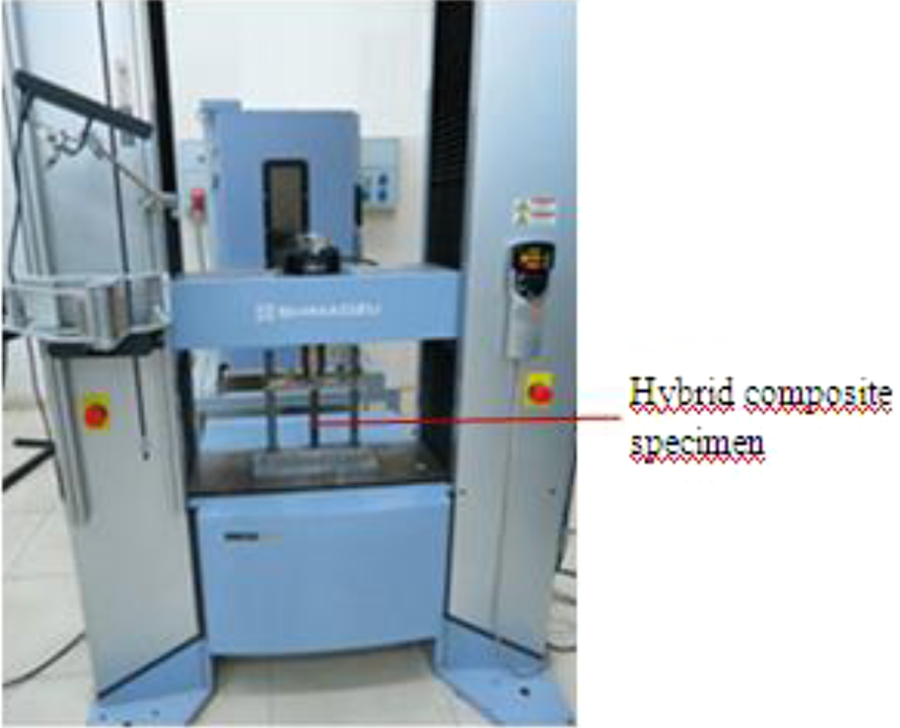
Shimadzu Autograph-X series serial testing machine.
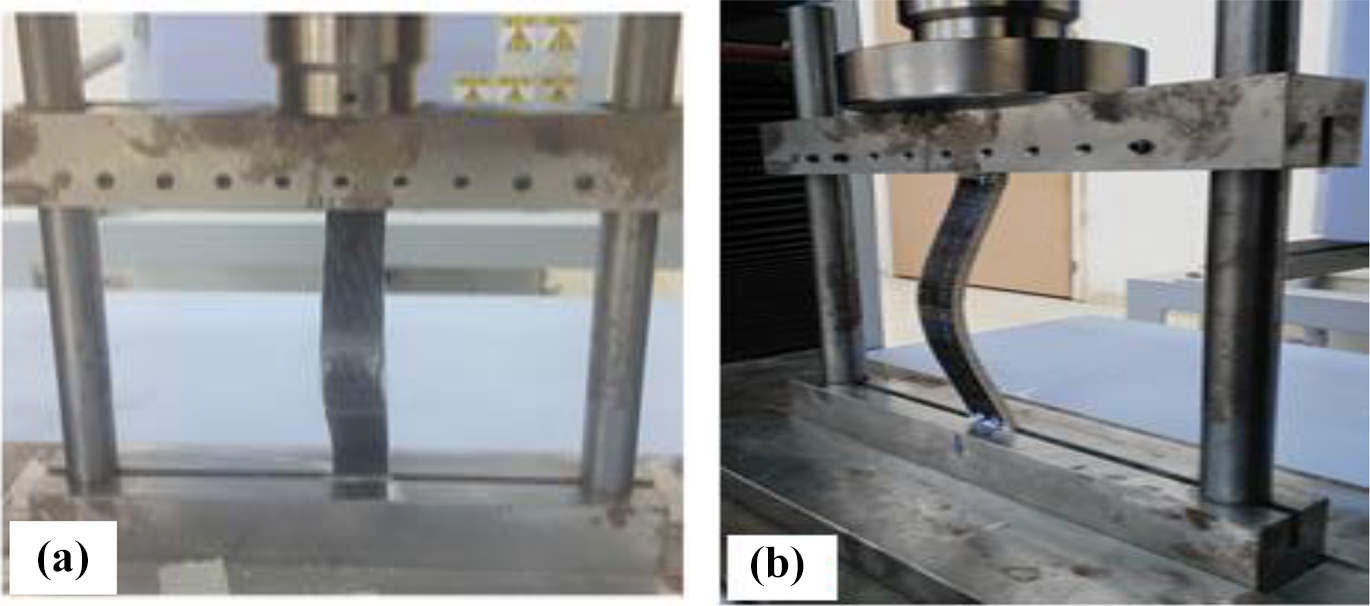
(a) and (b) Deformations in CAG composite specimen after load application.
Results and discussion
The E1 longitudinal elasticity modules of the hybrid composite specimens, identified after their waiting times in the relevant environments were concluded, are shown in Figure 6. Figure 6 shows that hybrid composites kept in the cold environment (−18°C) had higher E1 longitudinal elasticity modules than the specimens kept under room conditions (25°C). From this point of view, it was concluded that the compressive strength in the longitudinal axial direction of the composite increases with the decrease of the temperature. These conclusions are also supported by existing literature. To characterize the temperature-dependent behavior of unidirectional glass/epoxy laminates, an experimental study was carried out by Torabizadeh. 20 Thermomechanical loads were applied to glass/epoxy unidirectional laminates at room temperature (25°C), −20°C and −60°C. It was reported that compressive strength in longitudinal direction increased significantly by decreasing temperature (from 570.37 MPa at room temperature to 731.94 MPa at −60°C).
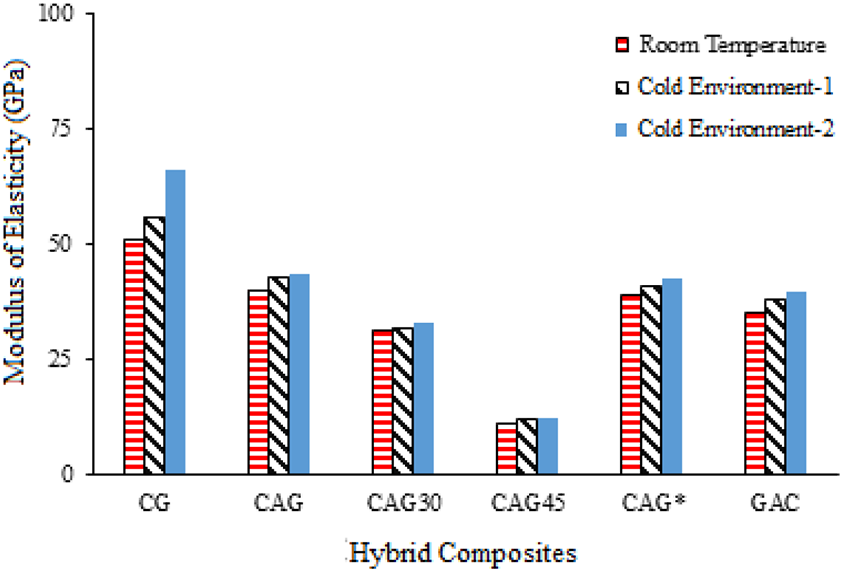
Modulus of elasticity (E1) of hybrid composites.
As can clearly be seen in Figure 6, the E1 longitudinal elasticity module of the CG configurations kept at room temperature (25°C) was lower than that of the CG samples kept in the cold environment (−18°C). CG samples kept in the cold environment-2 (150 days) have the highest the E1 longitudinal elasticity module. For all configurations, the highest E1 elasticity module was observed in CG, while the lowest E1 elasticity module was observed in CAG45. When the configurations of CAG and GAC are compared for all ambient conditions, it can be observed that the CAG samples have higher E1 longitudinal elasticity module than the GAC samples.
As a result, in the light of experimental data, the hybrid composite materials kept in a cold environment (−18°C) were observed to have higher E1 longitudinal elasticity modules than those kept under room conditions (25°C). The difference was greater in the case of hybrid specimens kept in a cold environment-2 (150 days).
Results of the buckling experiments
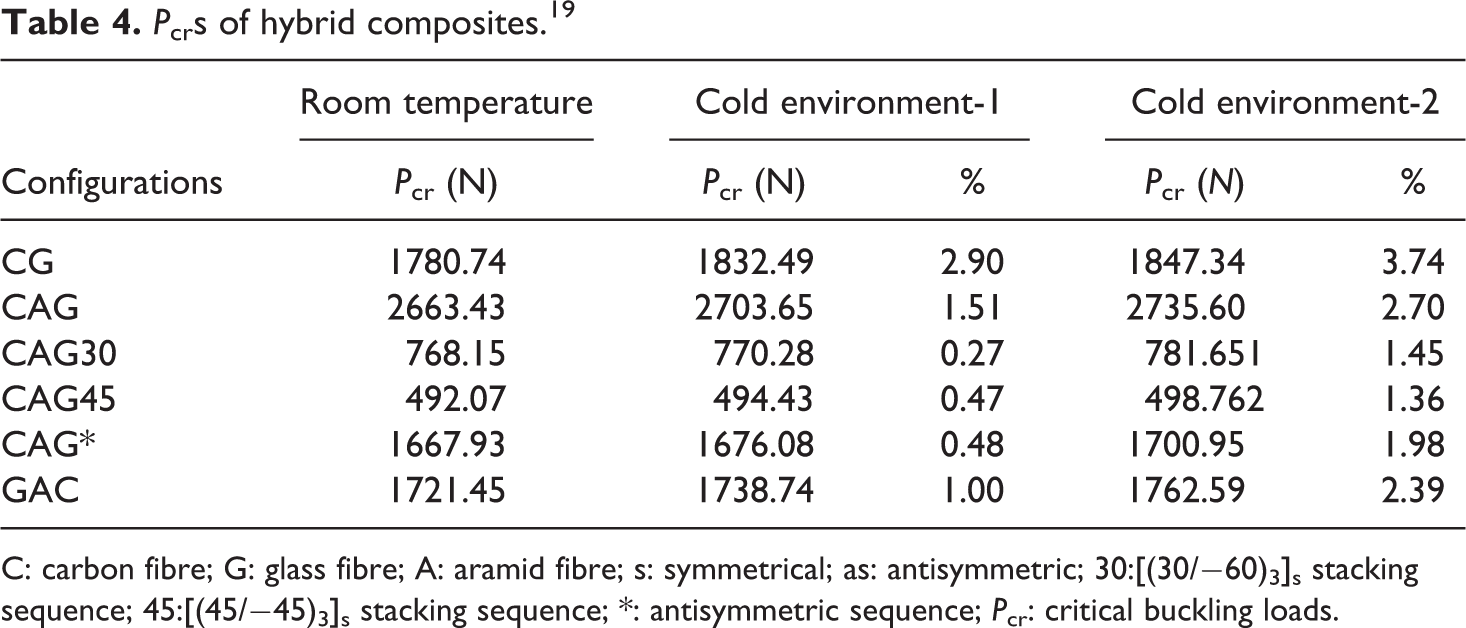
Buckling tests were applied as compressive load in longitudinal (axial) direction for the hybrid composite laminate specimens. Using the data obtained from the buckling tests, load–displacement graphs of the hybrid composites with sequences of [(0/90)3]s, [(30/−60)3]s, [(45/−45)3]s, and [(0/90)3]2were drawn. The Pcrs of the specimens were calculated using the Southwell Plot method, based on the load–displacement curve obtained from the experiments (Figure 7). Table 4 reports the Pcrs and displacement values of the hybrid composites. 19 Table 4 presents that under all ambient conditions, the highest Pcr was recorded for CAG, and the lowest Pcr was recorded for CAG45. For all configurations, the specimens kept in the cold environment had higher Pcrs than those kept under room conditions, and this difference was larger in the case of the specimens kept in the cold environment for 150 days. For example, the Pcr of GAC kept in the refrigerator for 90 days was 1.00% higher than those kept under room conditions, whereas GAC kept in the refrigerator for 150 days had a Pcr that was 6.31% higher than those room condition samples. Figure 8 shows the Pcrs of the hybrid composite configurations for all ambient conditions.
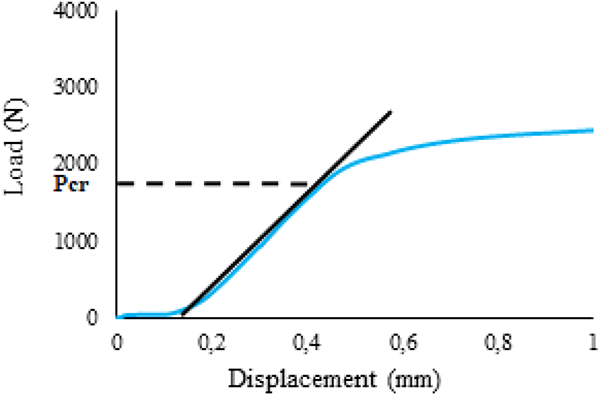
Determination of the Pcrs of hybrid composites.
Pcrs of hybrid composites. 19
C: carbon fibre; G: glass fibre; A: aramid fibre; s: symmetrical; as: antisymmetric; 30:[(30/−60)3]s stacking sequence; 45:[(45/−45)3]s stacking sequence; *: antisymmetric sequence; Pcr: critical buckling loads.
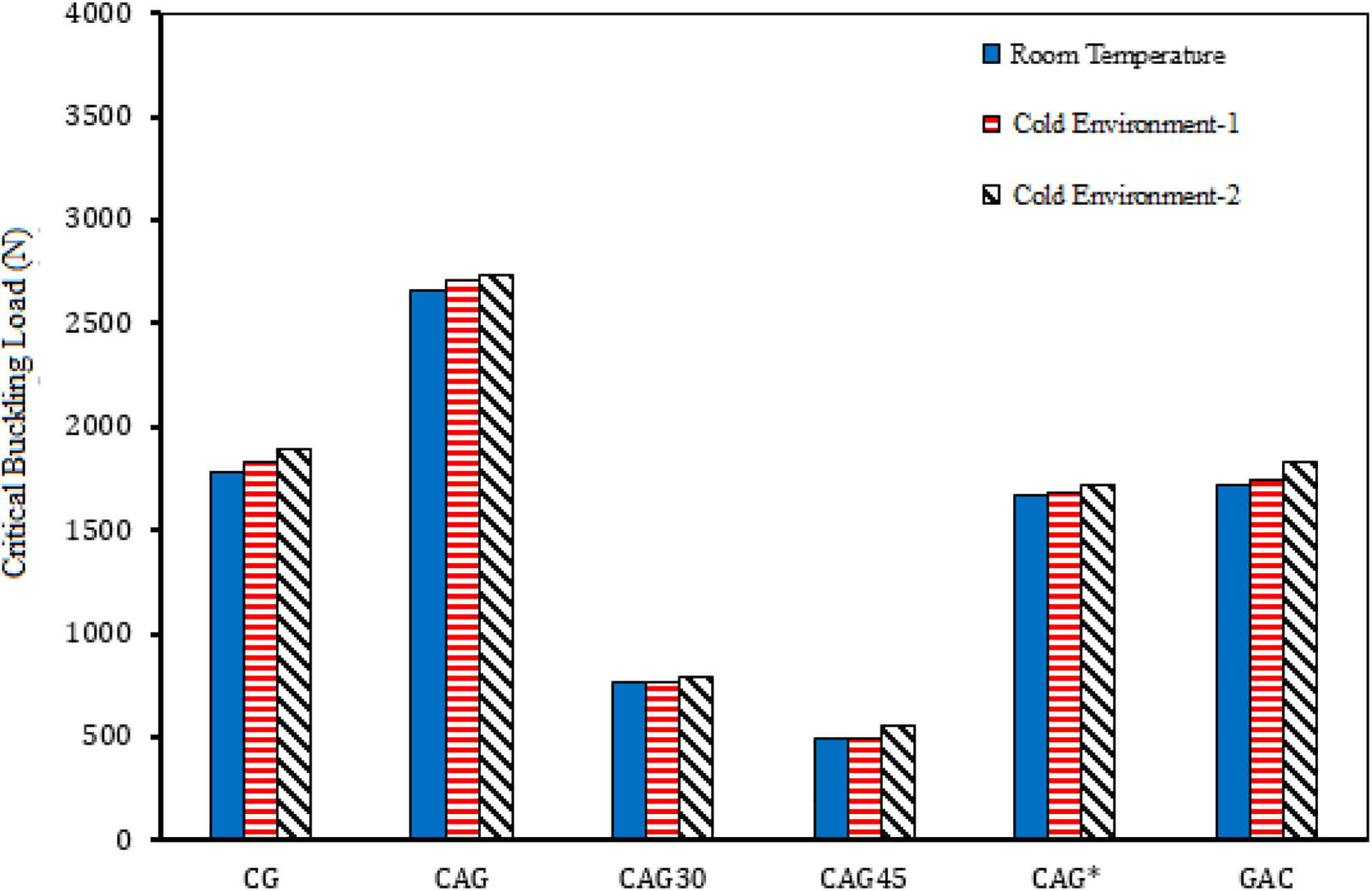
Pcrs of hybrid composites for all ambient conditions.
The effect of stacking sequences
The hybrid composite plates were designed at the symmetric orientation angles of [(0/90)3]s, [(30/−60)3]s, and [(45/−45)3]s and an antisymmetric orientation angle of [(0/90)3]2. As a result of the experimental study, Pcrs were determined for all hybrid configurations. Figure 8 shows the Pcrs of the hybrid composite configurations under all ambient conditions, in which the highest Pcr was recorded for CAG, followed in order by CG, GAC, CAG*, CAG30, and CAG45. It was concluded that different fiber materials and orientation angles affected the buckling behaviors of hybrid composite materials. Figure 8 shows that the CAG configuration with stacking sequence [(0/90)3]s had the highest Pcr, and CAG45 with the stacking sequence [(45/−45)3]s had the lowest Pcr. Therefore, the Pcr was found to be higher in specimens that had sequences with an angle of 0° and lower in the case of sequences with angles of 30° or 45°. It can thus be concluded that fiber configurations and orientation angles all affect the buckling behaviors of hybrid composite materials, which is a conclusion that is supported by previous literature.14,16 Erkliğ et al. 21 reported the material with the orientation sequence [(0/90)3]s to have the highest buckling load. They found further that the Pcr was directly affected when the angles were changed, with greater angles producing smaller Pcrs. In another study conducted by Shukla et al., 22 it was reported that the buckling strength of laminated plate was significantly affected by material properties such as the modulus of elasticity, the plate aspect ratio, and the stacking sequence.
As can be seen in Figure 8, the Pcr of the CAG configuration was higher than that of the CG configuration under all ambient conditions. Therefore, it was concluded that the use of aramid fiber in hybrid composites increases the Pcr. It was known that aramid fibers have greater mechanical properties and increased strength.13,23,24
While all of the hybrid composite material samples had 12 layers, they did not have the same thickness due to the different fiber configurations used. To account for the differences in thickness, the Pcr values of each hybrid configuration were divided by thickness. The resulting Pcr/t values are reported in Figure 9. Figure 9 shows that in all three environments, the CAG configuration recorded a higher Pcr than the CG configuration, which contained no aramid fiber. This leads to the conclusion that use of aramid fiber in the inner layers of hybrid composites increases the Pcr of the composite. This may be due to the aramid, when used between carbon and E-glass, being able to distribute the applied load equally between the layers thanks to its high flexibility and pressing resistance. Thus, when the highly flexible aramid fiber is used in the inner layers, the material is better able to adjust to the changes in shape induced by tension, and the composite thus gains strength. This conclusion is also supported by existing literature. Previous studies have reported that aramid fibers have a lower density, stiffness, and strength but present higher elongation and fracture toughness.5,13,23,24 In composites, the outer layer of the buckling surface does not undergo complete deformation, as the deformation is limited by the adjoining inner layers, which bear the brunt of the deformation. Thus, the use of flexible aramid fibers in the intermediate layers of layered hybrid composites results in a more homogenous distribution of loads to other layers, helping protect the connection between the matrix and the fiber.
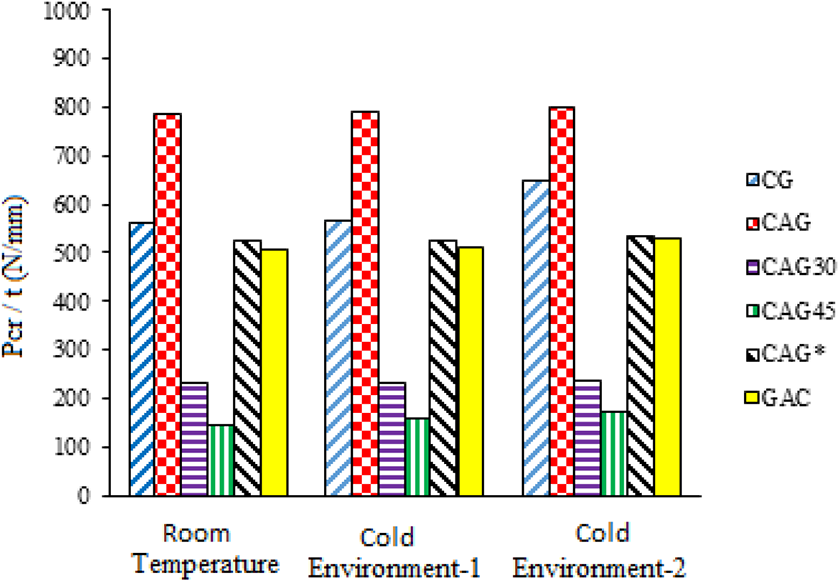
Pcr
The outer layer plays the most significant role in the load carrying capability of the composite laminate. In all three environments, the CAG configuration had a higher Pcr than the GAC configuration (Figure 8). In the CAG configuration, the outermost layers consist of carbon fibers, while the axis of symmetry of the plate includes glass fibers. However; in the GAC configuration, the outermost layers are made of glass fibers, while the center of symmetry of the plate is made of carbon fibers. In a comparison of CAG and GAC, the CAG configuration with outer carbon layers was found to have a higher Pcr, which can be attributed to the greater load-bearing capacity of carbon fiber relative to E-glass, being a strong and highly rigid material. Although both the CAG and the GAC configurations contained carbon, CAG had a higher force-bearing capacity as a result of having carbon as an outer layer. This leads to the conclusion that the buckling behavior of hybrid composites can vary depending on their stacking sequence and the mechanical characteristics of the fiber materials that make up the composite. From this point of view, it was concluded that the outer layers have a significant effect on the buckling strength of the laminated hybrid composite material. This result is also consistent with previous literature. Dhuban et al. 25 investigated the effect of fiber orientation and ply stacking sequence of basalt–carbon hybrid composite laminates on the critical buckling strength, experimentally and by using nonlinear finite element analysis. As a result of this study, it was reported that the outer layers have the most significant influence on the buckling strength of the laminated composite material. It has been reported that the placement of carbon fiber-reinforced layers on the outer surface of basalt–carbon hybrid laminates results in higher buckling strength. It has reported that placing carbon fiber-reinforced layers in the outer surface of the basalt–carbon/epoxy hybrid laminates results in significant increase in the Pcr compared to placing basalt fiber-reinforced layers in the outer surface. They also reported that 0° fiber orientation on the outer layer retain higher buckling loads. From this point of view, it has been concluded that the outer layers have a significant effect on the buckling strength of the layered hybrid composites. Based on these findings, it was concluded that the orientation angle and fiber material of the outer layer affect the buckling behavior of hybrid composites.
The effect of cold ambient conditions
Cold ambient conditions affect the buckling behaviors of hybrid composites. Buckling load–displacement curves were created for the hybrid composite plates following the buckling experiments, with the buckling load–displacement curve of the hybrid composite specimens kept in the refrigerator (−18°C) for 90 days shown in Figure 10 (Group I). Figure 11 shows the buckling load–displacement curve for the hybrid composite specimens kept in the refrigerator (−18°C) for 150 days (Group II). As Figure 11 shows, the highest Pcr was obtained for CAG with the stacking sequence [(0/90)3]s, and the lowest Pcr was obtained for CAG45 configuration with the stacking sequence [(45/−45)3]s. Figure 12 shows the buckling load–displacement curve of the hybrid composite specimens kept under room conditions (Group III). The individual buckling load–displacement curves of the hybrid configurations for all ambient conditions are shown in Figure 13.
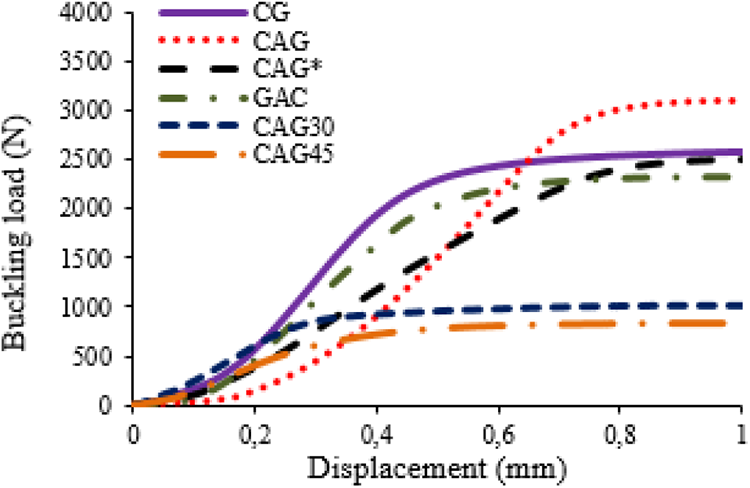
Buckling load–displacement curve of the hybrid composites kept in cold environment-1 (90 days).
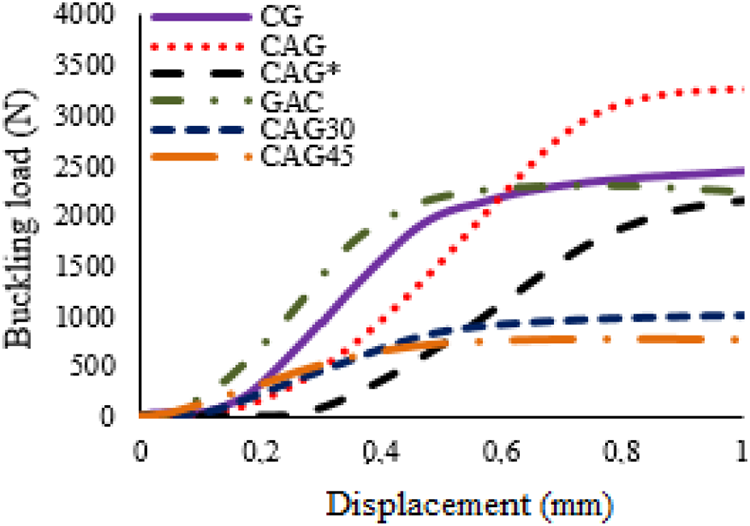
Buckling load–displacement curve of the hybrid composites kept in cold environment-2 (150 days).
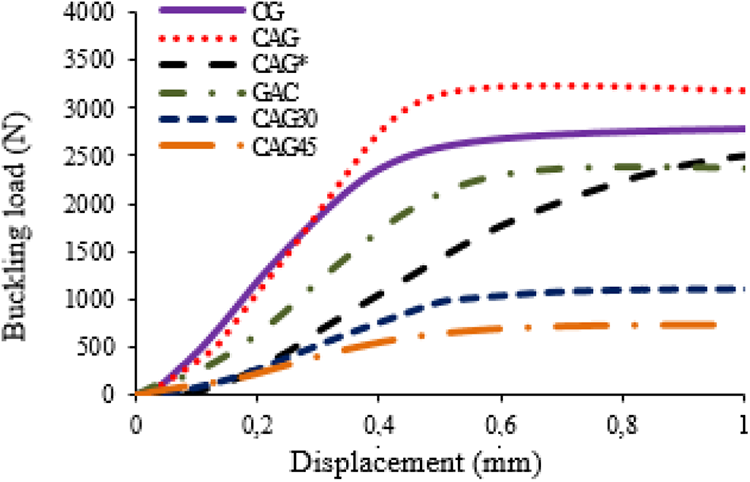
Buckling load–displacement curve of the hybrid composites kept under room conditions.
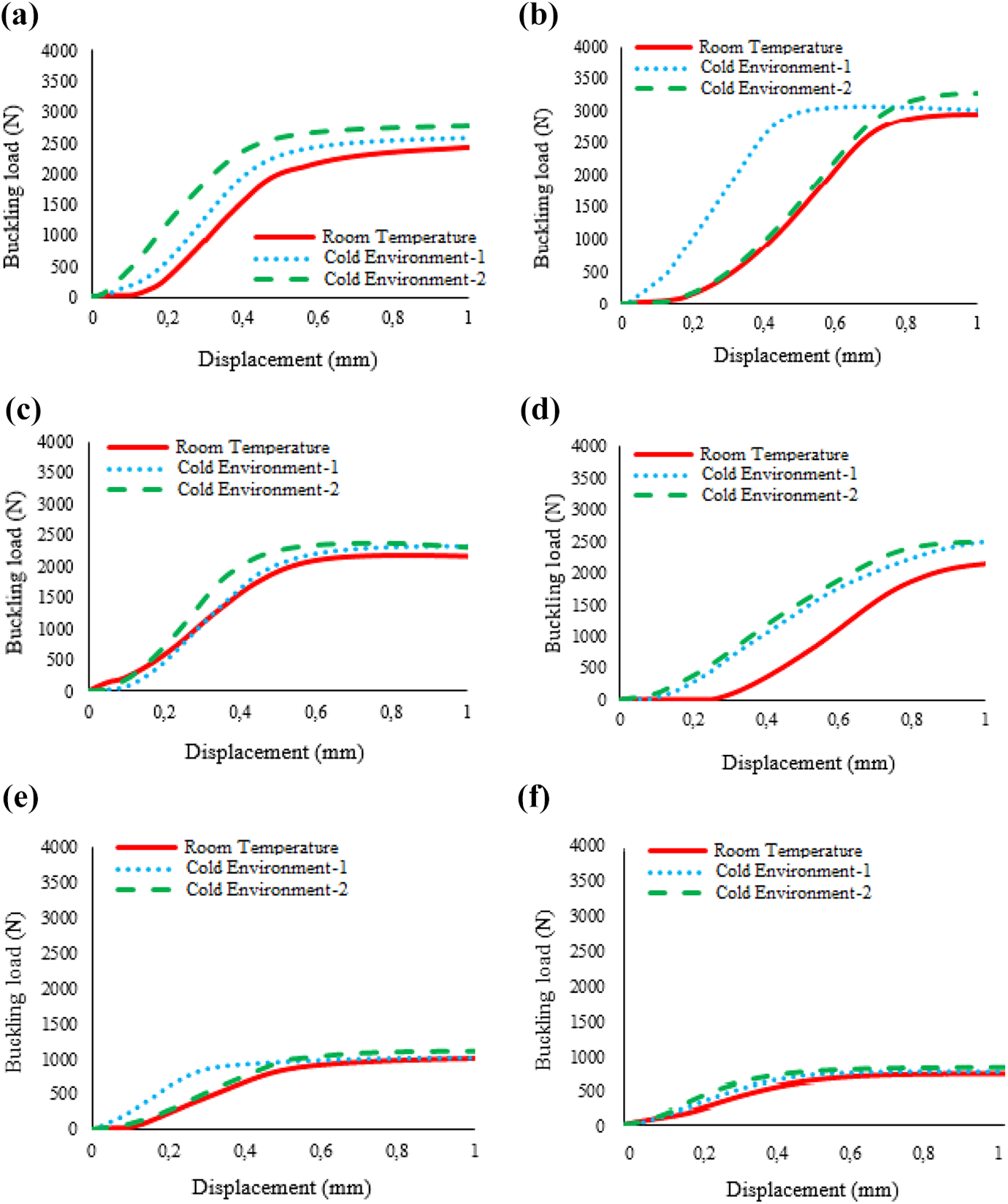
Buckling load–displacement curves for all hybrid configurations. (a) CG, (b) CAG, (c) GAC, (d) CAG*, (e) CAG30, and (f) CAG45.
Table 4 presents the Pcrs of the hybrid composite configurations for all ambient conditions. As presented in Table 4, it is clear that the cold environment affects the buckling behavior of hybrid composites. Hybrid composite specimens kept in a cold environment (−18°C) had higher Pcrs than those kept under room conditions (25°C), which is a finding that is consistent with previous literature. In the study conducted by Jiangbo and Junjiang, 26 it was investigated the temperature effect on the buckling properties of ultrathin-walled lenticular collapsible composite tube subjected to axial compression. They conducted buckling tests at temperatures of −80°C, 25°C, and 100°C on composite tubes with ultrathin membranes subjected to an axial pressing load. The Pcr obtained at −80°C was found to be 2.2% higher than at room temperature, which can be attributed to the fact that the material hardens in cold environments. The Pcr obtained at 100°C, on the other hand, was found to be 19.5% lower than at room temperature due to the softening of the matrix material. In another study, Torabizadeh also reported that compressive strength in longitudinal direction of the composite increased significantly by decreasing the temperature. In this regard, it is concluded that the cold environment positively affects the compressive strength in the longitudinal direction of the composite.
Conclusions
In the present study, experiments were conducted to examine the effect of cold ambient conditions on the buckling behavior of hybrid composite plates kept at −18°C for certain periods, and the following findings were made: It was observed that for all configurations, the Pcrs of the samples kept in a cold environment were higher than those of the samples kept at room temperature. The hybrid composite specimens kept in a cold environment (−18°C) were found to have higher E1 longitudinal elasticity modules than those kept under room conditions. For all ambient conditions, the highest Pcr was observed in CAG with the orientation angle [(0/90)3]s, whereas the lowest Pcr was observed in CAG45 with the stacking sequence [(45/−45)3]s. It was observed that the outer layers have a significant effect on the buckling strength of the layered hybrid composite material. It was observed that the Pcrs of the CAG configuration were higher than those of the GAC configuration. Although both CAG and GAC configurations contain carbon, it has been found that the CAG configuration, which has carbon as the outer layer, has a higher force carrying capacity. The hybrid composite materials kept in a cold environment (−18°C) were observed to have higher Pcrs than those kept under room conditions (25°C). The difference was greater in the case of hybrid specimens kept in a cold environment for 150 days. It was found that the longer hybrid composite specimens were kept in a cold environment (−18°C), the higher their Pcrs. It was also found that Pcrs and displacement values of hybrid composite materials were affected by stacking sequences, with CAG with the sequence [(0/90)3]s demonstrating the highest Pcr and CAG45 with the sequence [(45/−45)3]s having the lowest Pcr. The symmetrical CAG configuration with the sequence [(0/90)3]s had a higher Pcr than the antisymmetric (CAG*) configuration with the sequence [(0/90)3]as. From this, it was concluded that the Pcr varied depending on the fiber orientation angles. The Pcr was found to be higher in specimens that had sequences with an angle of 0° and lower in the case of sequences with angles of 30° or 45°. Specimens with 0° fiber sequences offered larger load-bearing advantages in composite materials, as the load applied is carried by the fibers. In the 30° and 45° sequences, on the other hand, load-bearing is shared between the fibers and the matrix, resulting in reduced strength. In all three environments, the CAG configuration containing aramid fiber had a higher Pcr than the CG configuration, which contained no aramid fiber. This led to the conclusion that use of aramid fiber in the inner layers of the hybrid composite increases the Pcr of the composite.
Based on these findings, it was concluded that cold ambient conditions, different fiber materials, and orientation angles affected the buckling behaviors of hybrid composites. Besides, it was concluded that the outer layer of the hybrid composite plays an important role in the stacking design. When designing with hybrid composite materials, using hybrid composites with a stacking sequence [(0/90)3]s should be considered a safer option when there is a risk of buckling. Using materials with higher load-bearing capacities is recommended to mitigate the risk of buckling, while the use of hybrid composites with the sequence [(45/−45)3]s is not recommended, given their low resistance to buckling. Moreover, in terms of stacking sequences when designing hybrid composites, it is recommended to use highly rigid carbon fibers for the outer layers and highly flexible aramid fibers and low-cost glass fibers in the inner layers.
Footnotes
Acknowledgements
We would like to thank Fibermak Composites who undertook the manufacturing of the hybrid composite materials used in the experiments, and Dokuz Eylül University’s Department of Mechanical Engineering, where the buckling tests were conducted.
Funding
The author(s) disclosed receipt of the following financial support for the research, authorship, and/or publication of this article: This study was conducted as part of Süleyman Demirel University’s (SDU) research project No. 4681-D1-16. We would like to express our gratitude to SDU’s Coordination Committee for Research Projects for the support they provided to project 4681-D1-16.
