




Abstract
The practical application of carbon fiber (CF)-reinforced polyimide (PI) resin composite was hampered seriously by the poor interfacial adhesion property. In this work, a novel surface treatment agent was designed and prepared to improve the interfacial strength by covalently bonding CF with PI matrix, which is beneficial to the uniform dispersion and impregnation of PI between CF, thereby improving the mechanical properties of CF/PI composites to some extent. The CF was characterized by high surface roughness, which means better wettability by PI. As a result, the interfacial shear strength and interlaminar shear strength of CF/PI composites were enhanced, benefited mainly from the strong and tough interphase.
Introduction
Multi-walled carbon nanotubes (MCNTs) are ideal reinforcements for polymer functionalization because of their excellent mechanical, thermal, and electrical properties.1– 3 Since MCNTs have large specific surface area and long aspect ratio, they are easily entangled and agglomerated, and the uniformity of dispersion in the resin is maximized.
The key to the performance of composite materials is the interface.3,4 Since PI contains a large amount of volatile styrene cross-linker, the dispersion process of MCNTs is difficult to control. In addition, the PI curing mechanism is a free-radical copolymerization process, and the strong electrophilic ability of the surface of MCNTs consumes the free radicals generated by the copolymerization process, resulting in a significant decrease in the carbon glass transition temperature (Tg) and mechanical properties of the PI-containing MCNTs.5–7 Chen Hongyan et al. 8 used a PI hand lay-up process with 0.4 wt% MCNTs to prepare a carbon fiber (CF) composite board. Compared with the CF composite without MCNTs, the interlaminar shear strength (ILSS) was significantly reduced. After the benzoyl peroxide (BPO) initiator, its ILSS increased by about 21%.
Gohardani O et al. 9 used spray coating to adsorb single-walled carbon nanotubes (SCNTs) on the surface of CF fabrics. PI was prepared by vacuum-assisted process and solidified at room temperature to prepare CF composites containing 0.1% SCNTs, supplemented with high-temperature initiator compensation. After that, the ILSS is enhanced by about 35% compared to the composite without SCNTs.
In this article, in view of the shortage of ILSS in PI pultruded CF composites, industrial-grade carboxyl MCNTs were introduced into PI-pultruded resin to study the co-initiator to compensate the free radical trapping effect of MCNTs and improve the interlaminar bonding strength of pultruded composites. The mechanism of enhancement of MCNTs between the composite layers was discussed.
The interfacial connection plays the most important role in the overall performance of carbon fiber-reinforced polymer with the given CF and resin matrix.10,11 To improve the interfacial properties, the most common method is to change the chemical/molecular features and atomic composition of the fiber surface as well as the fiber’s topographical nature,7,8 such as oxidation, 9 electrochemical method, 10 plasma treatment,11,12 grafting, 13 and sizing process. 14 Recently, extensive research studies have been devoted to the improvement of interfacial strength between CF and PI. The graft modification of oxidized CF surface can significantly improve the interfacial shear strength between CF and PI. 15 However, the acid oxidation treatment process may cause the decline in CF strength. Moreover, oxidized CF is easy to fluff and break without sizing agent on the surface. Graft modification on a sized carbon fiber (SCF) surface may be a better solution to avoid these drawbacks. 16 But this method will increase the processing steps and affect the surface quality of the CF.
Sizing process may be the best CF surface modification method to improve the interface property. Either epoxy sizing 17 agent or thermoplastic sizing agent18–20 could swell in PI resin and counteract its cure volume shrinkage to relax the residual stress in interphase, which is conductive to the improvement of interfacial property. Nevertheless, both sizing agents cannot chemically cross-link with the PI resin matrix during curing.
In the current study, a novel sizing agent emulsion for CF was designed according to the molecular structures of the PI resin and fiber surface. After sized by the new sizing agent, the surface energy of carbon fiber (SCF) and its wetting property in PI were significantly increased benefited from the polar functional groups of N-(4′4-diaminodiphenyl methane)-2-hydroxypropyl methacrylate (DMHM). Due to the functional groups of DMHM, the SCF and PI were chemically linked by the sizing agent. The amino and hydroxyl groups can enhance the fiber-sizing adhesion due to the strong hydrogen bonds and chemical bonds, while the unsaturated double bond could cross-link with the PI molecular chains during curing process. As a result, the interfacial shear strength and ILSS of SCF/PI composites were improved significantly.
Experiment
Materials
Carboxy MCNTs (industrial grade, diameter 20–40 nm, length 30 μm), produced by Chengdu Institute of Organic Chemistry (China), Chinese Academy of Sciences (China); CF roving (469L-4800), vinyl ester resin MFE-30 (PI), Dibenzoyl peroxide (BPO), tert-butyl peroxybenzoate (LMP), and other fillers and anti-shrinkage agents are provided by Nanjing Sbel Composite Materials Co., Ltd China).
PI resin weighing 1000 g was placed into a three-necked flask, and 1.0 g of MCNTs was slowly added to the above PI resin with stirring, and alternating stirring speed was used according to the dispersion, and stirring was continued for about 1 h to increase MCNTs. Between the shear force and the dispersibility, a PI resin containing 0.1 wt% of carbon nanotubes (CNTs) was obtained. The stirring conditions of alternating stirring speed from 400 r min−1 to 600 r min−1 were selected. In the above PI resin containing MCNTs, various additives such as filler and anti-shrinkage agent were added according to the formula amount and stirred at high speed for 30 min in a water bath.
Interlaminar properties of composite materials
The interlaminar properties of composite materials are measured by the (WDW; Shanghai Unical, China) series universal material testing machine according to the ASTM-D2344 three-point bending mode. The span is 16 mm, the span thickness ratio is 4, the sample size is 4 × 8 × 24 mm3, the loading speed is 1.0 mm min−1, and the average value of the five samples is taken as the final ILSS value. The cross-sectional morphology of the composite is observed under a S-4800 field-emission scanning electron microscope (SEM; Hitachi, Japan) at 2000 times.
Phosphate treatment of CF will give meta-carbon-chopped fiber at a certain concentration of linear alkylbenzene sulfonate (LAS) solution. The cleaning is carried out to remove the oil stain on the surface of the fiber, then dried, and treated with a phosphoric acid solution having a mass fraction of 20% at 40°C for 2 h, followed by repeated rinsing with water and dried in an oven at 105°C for 4 h, until it is absolutely dried. 13
Preparation and properties of CF/CNT-based materials
CF/CNT composite fiber with a basis weight of 100 g m−2 was prepared, and the chopped fiber and fibrid fiber after phosphoric acid treatment were added to a ratio of 4:6. %PEO (relative to dry fiber quality) as a dispersant was dispersed into a mixed slurry by a standard disintegrator, followed by adding different amounts of CNT dispersion and copying fiber on a sheet former. CF/CNT fiber-based material is treated with constant temperature and humidity, according to Tappi standard T410om-01, using Swedish L&W Company.
The tensile strength was measured by SEO64 tensile strength meter; according to Tappi standard T410om-04; the tear strength was measured by the ProTear 60-2600 tear strength tester of American (MIT; Cambridge, Massachusetts) Company, the KRK 2085-D layer of (Shanghai Forestry and Paper Scientific Instrument Co., Ltd; shanghai pudong) was adopted. Interlayer bonding strength is measured by an interbond strength meter.
Characterization of micromorphology and properties of CF/CNT composite
The semiquantitative analysis of the surface group of phosphoric acid-treated CF and the chemical bonding at the interface of CF/CNT composite fiber were carried out by a German Bruker PICTOR22 Fourier transform infrared (FTIR) spectrometer with a resolution of 4 cm−1 and a scanning range of 400–4000 cm−1 using the Japanese Hitachi S-4800SEM to observe the apparent morphology of the CF and the interface state of the CF. The dried sample was sprayed with gold and then accelerated by secondary electron imaging mode. The voltage is 3.0 kV; the absolute dry CF is observed by atomic force microscopy (AFM) of SPA400-SPI3800 N produced by Seiko (Japan). The scanning range is 2 × 2 μm2. The surface roughness of the fiber is calculated by the software, and the three-dimensional view of the fiber is produced.
Results and discussion
FTIR spectroscopy
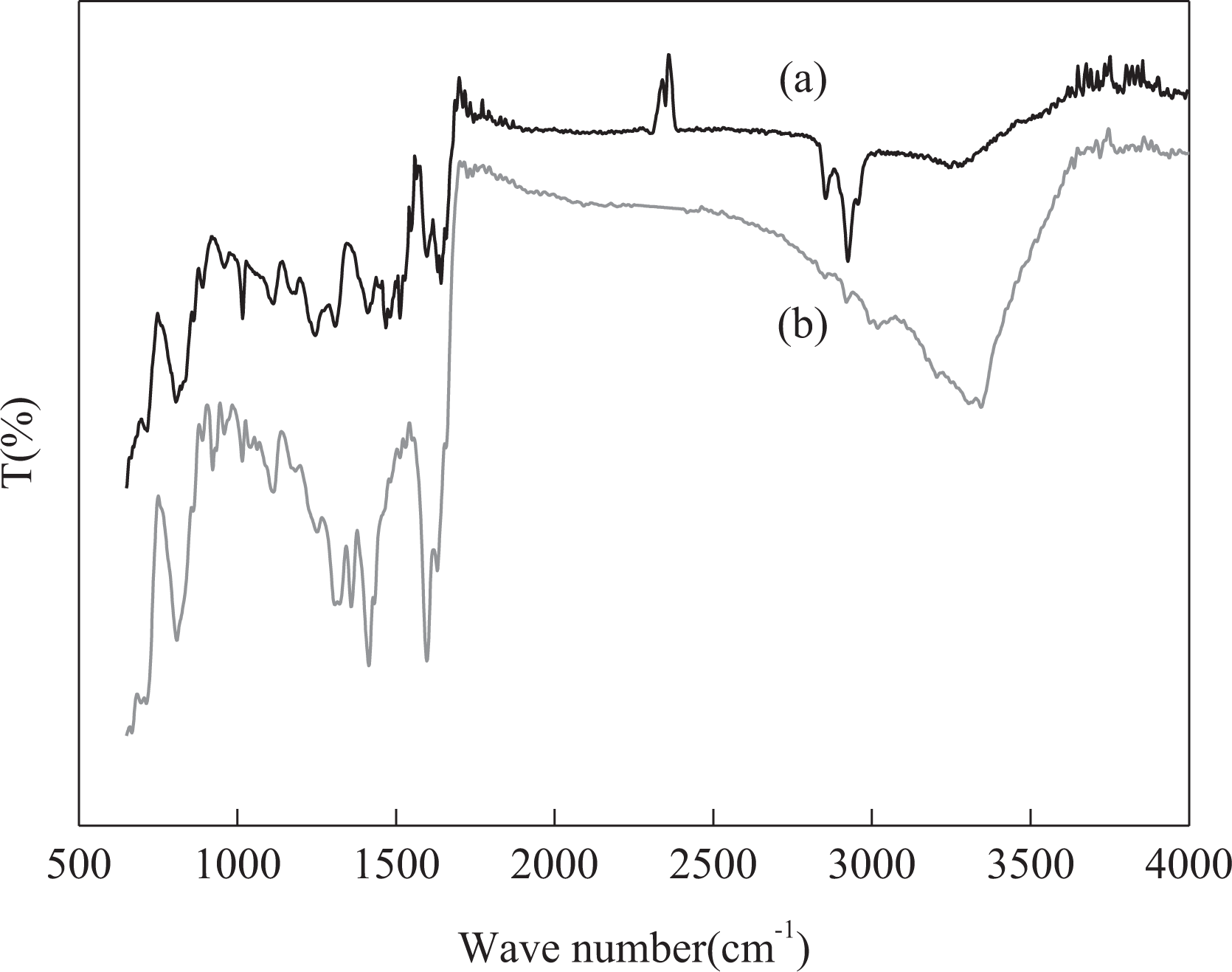
Figure 1 shows an infrared (IR) spectrum of CF treated with phosphoric acid. It can be seen that the shape of the IR peak of the carbon chopped before and after modification is almost similar. The sharp absorption peak at 1654 cm−1 is the stretching vibration of C=O (amide I band), and 1535 cm−1 is N–H. The absorption band caused by the in-plane bending vibration and the stretching vibration coupling of part of C–N (amide II band), 1308 cm−1 is caused by the stretching vibration of C–N (amide III band), and the absorption strength of the amide II band is strong. In the amide III band, 690 cm−1 is the out-of-plane bending vibration of N–H (amide I band).
FTIR transmittance spectra of carbon fiber.
The difference is that the intensity of the absorption peak at 3301 cm−1 is enhanced after the modified chopped, and the peak shape is broadened, indicating that a reactive group such as a hydroxyl group is formed. Due to the strong power supply capability of the amide bond in the carbon chopped strand, the ortho-position of the benzene ring has higher reactivity, while the phosphoric acid has the ability of surface etching and oxidation, and the ortho-position of the benzene ring acts as a Lewis acid. It is prone to electrophilic substitution reaction 16 ; in addition, the amide bond will also undergo a small part of hydrolysis, resulting in a more polar amino group. 17
During the composite forming process, the complex physical interaction and chemical reaction between the matrix and the reinforcement form an interface that is different from the structure and properties of the matrix and the reinforcement. 21 To further analyze the mechanism of action of CNT-reinforced CF, FTIR spectroscopy was used to study the chemical structure changes of CNT/modified carbon chopped fibers and CNT/CF interface joints, as shown in Figure 1(a). As shown, the intensity of the absorption peak of the CNT/modified carbon chopped fiber at 3297 cm−1 is enhanced, the range of the peak is broadened, and the wave number is slightly shifted, indicating the surface of the modified carbon chopped fiber. The reactive group –OH can form a strong hydrogen bond association with –OH in CNT, 22 so that CNT adheres to the chopped fiber; similarly, the fibrid form is soft and has a film fold.
The shape of this special form has a large surface area and a high surface roughness. The fiber has a large amount of free-NH2 exposed in water, 23 which is easier to combine with CNT, as shown in Figure 1(b). The intensity of the absorption peak at 296 cm−1 is enhanced, and the range of the peak is broadened, and the movement to the low wave number is small, indicating that the free-NH2 on the surface of the fibrid and the small amount of –C=O and CNT are produced. The peak shape is basically similar, and no new characteristic peaks appear, indicating that CNT/CF does not show new chemical bond.
Surface morphology and surface roughness of CF
The surface morphology of the CF is shown in Figure 2(a). Due to the unique core structure of the fiber, the surface of the fiber is dense, the axis is highly oriented, and the surface has a smooth rod-like structure. Therefore, the fiber surface has less active groups. 14 After the fiber is modified by phosphoric acid, as shown in Figure 2(c), the surface has uneven grooves and gullies distributed along the axial direction of the fiber. These depressions and peaks increase the specific surface area and contact point of the CF. AFM measured the surface wrinkles of the carbon chopped fibers before and after phosphoric acid modification, and the changes of surface roughness Ra and surface root mean square roughness are presented in Table 1. It can be seen that the roughness of the microscopic surface of the fiber increases after the phosphoric acid treatment. In general, for the fiber-filled system, the greater the surface roughness of the fiber, the better the wetting property of the carbon chopped fiber and the matrix, the stronger the mechanical interlocking effect between the two, the better the interface bonding. 15 For CF, phosphoric acid modification can improve the interfacial compatibility of carbon chopped fibers and fibrids to a certain extent, which in turn improves the interfacial adhesion of CF.
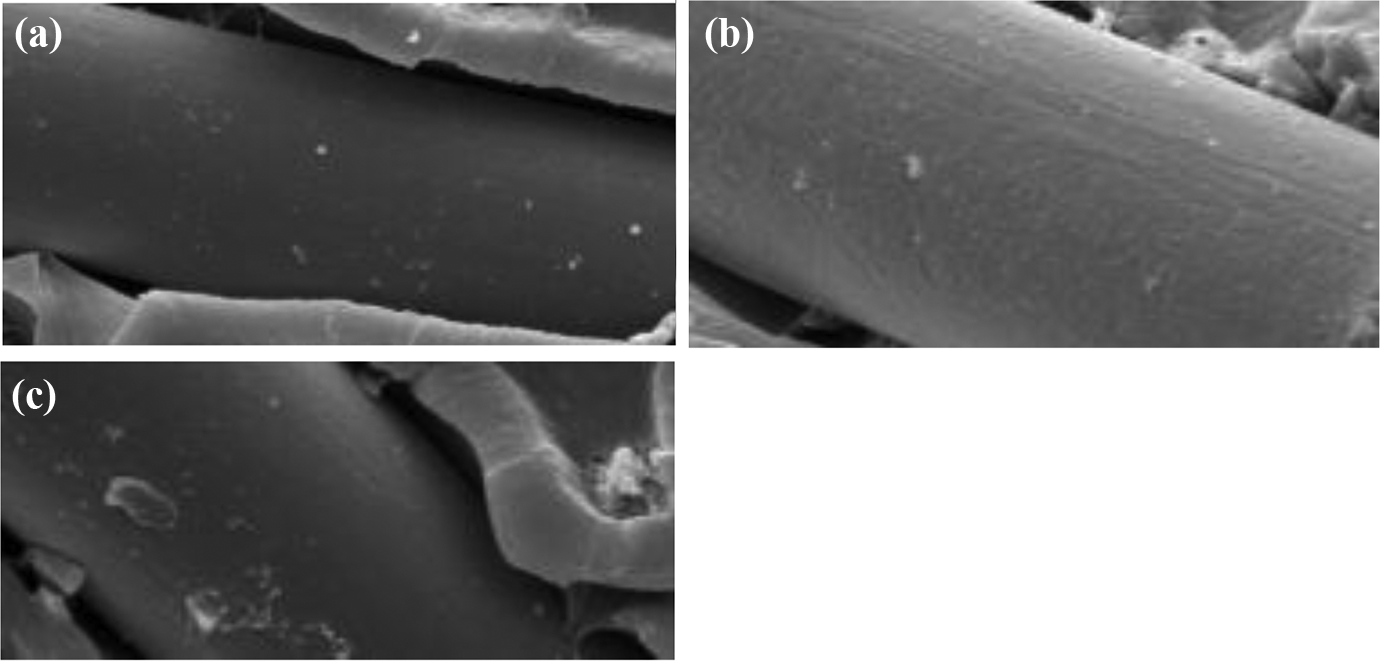
SEM images for (a) DCF, (b) CF, and (c) SCF.
Surface roughness of different carbon fibers was calculated from the AFM images.
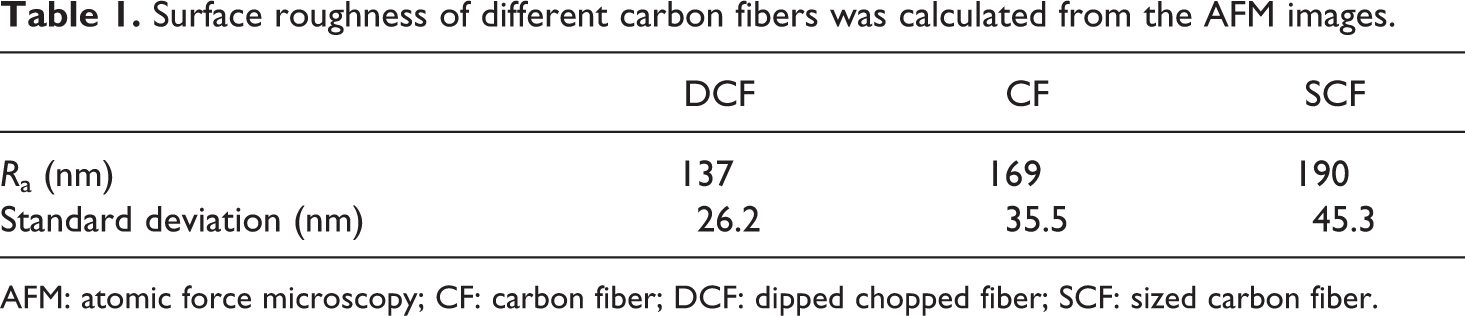
AFM: atomic force microscopy; CF: carbon fiber; DCF: dipped chopped fiber; SCF: sized carbon fiber.
It can be seen from Figure 3 that the addition of MCNTs can significantly improve the interlayer bonding of PI pultruded composites and improve their ILSS. As the concentration of MCNTs increases, the ILSS of the pultruded composite increases first and then decreases. When the MCNTs reached 1% by weight, the ILSS reached a maximum value of 59.8 MPa; further increasing the concentration of MCNTs to 1.2 wt%, ILSS began to decrease slightly; upon still increasing the concentration of CNTs, ILSS continued and significantly decreased. This is related to the increase of the entanglement probability between MCNTs, and the agglomeration after the concentration of MCNTs increases.
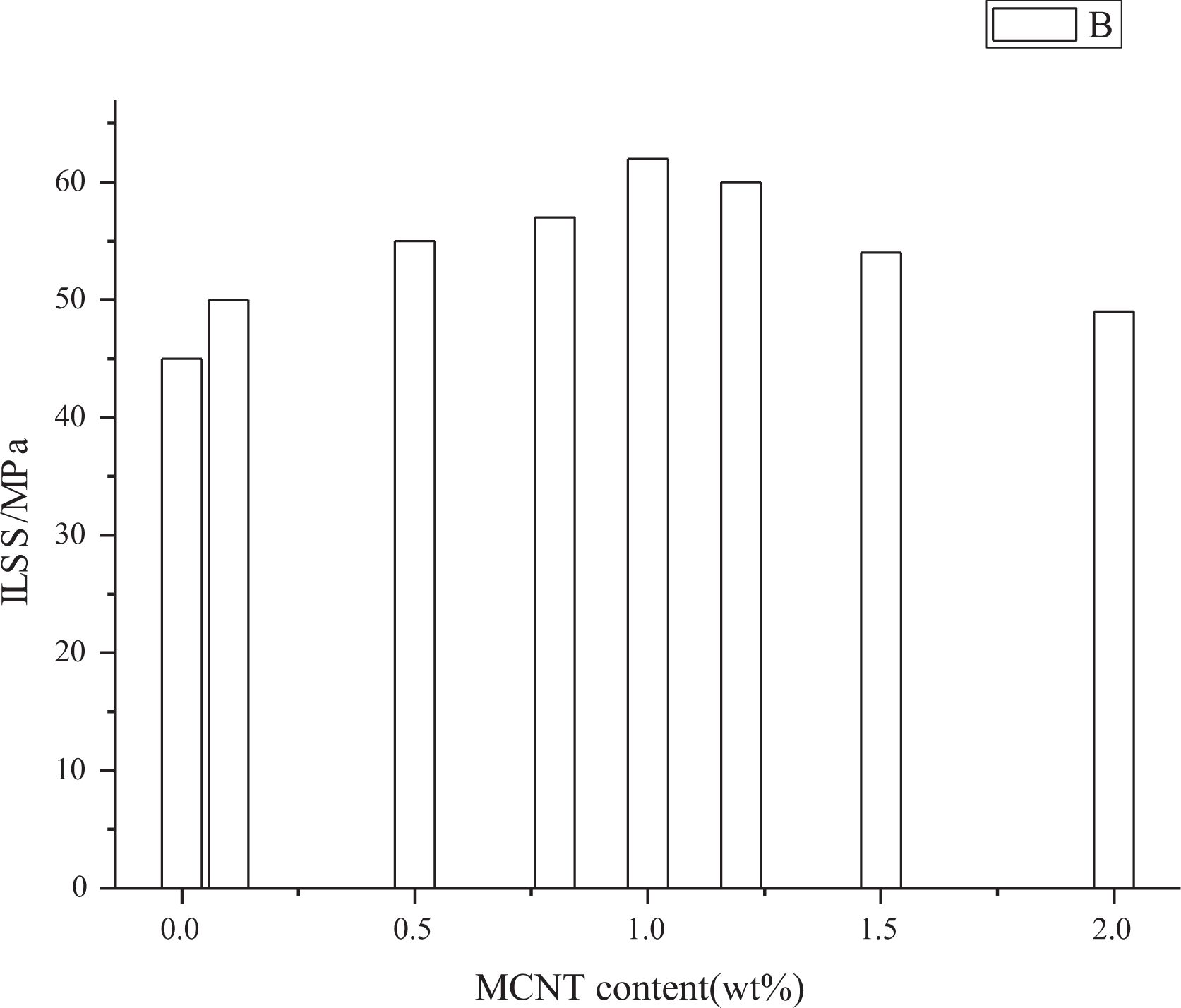
ILSS of CF/CNT/PI composites.
In summary, MCNTs can significantly improve the interfacial interface adhesion properties of PI pultruded composites. However, excessive MCNTs will aggravate the agglomeration of MCNTs and the effect of improving the bond strength of the composite interface resin is weakened.
The interface between the fiber and the matrix serves as a bridge between the reinforcing fiber and the matrix and is one of the key components in the fiber-reinforced composite. The bond strength of the interface directly affects the stress-transfer capability between the fiber and the matrix, which plays a decisive role in the macroscopic mechanical properties of the composite.24,25 The ILSS (Z-direction bonding strength) obtained by pulling CF from Z to two layers can be used to measure the interfacial adhesion of CF-based materials from macroscopic mechanical properties.26–28 It can be clearly found that when the CNT content is 20%, the interlayer bonding strength of the composite fiber reaches 1.66 times that of the base fiber. CNT as a good interlayer adhesive effectively bonds carbon chopped fibers and fibrids, which helps to overcome the friction between molecules and limits the relative migration between molecules, thus improving the carbon paper interface bond strength.
In summary, the short-cut smooth surface after phosphoric acid modification is etched, and active groups are introduced.
Effect of pultrusion speed on ILSS containing MCNTs pultrusion composites in the pultrusion process, in addition to the initiator formulation, the pultrusion speed also affects the cure degree of PI, the exothermic peak temperature, the exotherm, and the gel time.
Generally, when the resin formulation and the mold temperature are constant, the temperature at which the curing exothermic peak occurs decreases as the pultrusion speed increases. The relationship between the shape and the position of the gel zone and the pultrusion speed is shown in Figure 4. Under the condition of constant temperature, appropriately reducing the pultrusion speed can increase the residence time of the pultrusion in the cavity, which is equivalent to increasing the curing time of PI, which is beneficial to the decomposition of free radicals to fully participate in resin curing and improve PI. The degree of cross-linking. Under the three different MCNTs content, the pultrusion speed was reduced from 0.3 m min−1 (V1) to 0.20 m min−1 (V2), and the ILSS change of the pultruded composite is shown in Figure 5.
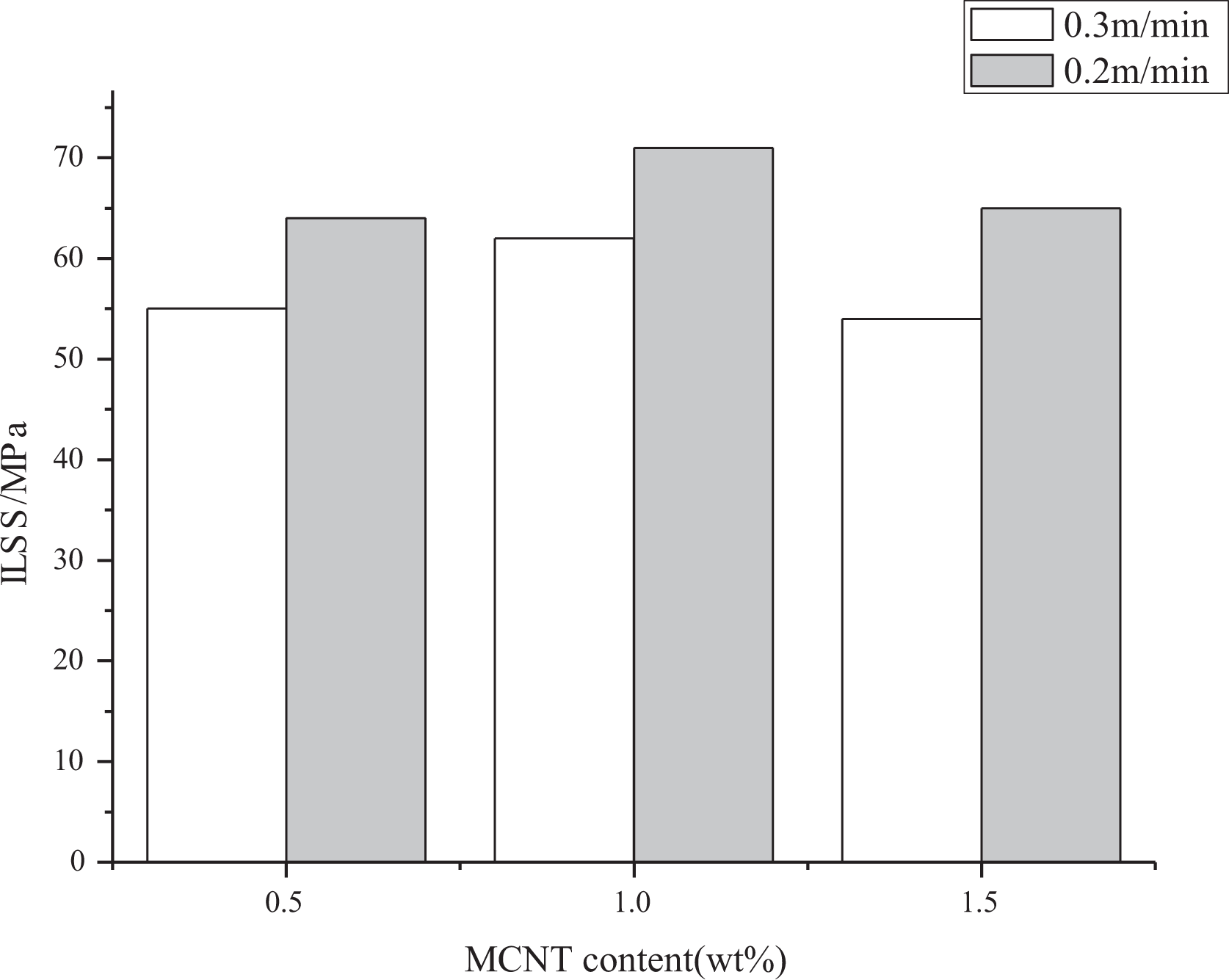
The effect of pultrusion speed on ILSS of CF/CNT/PI composites.
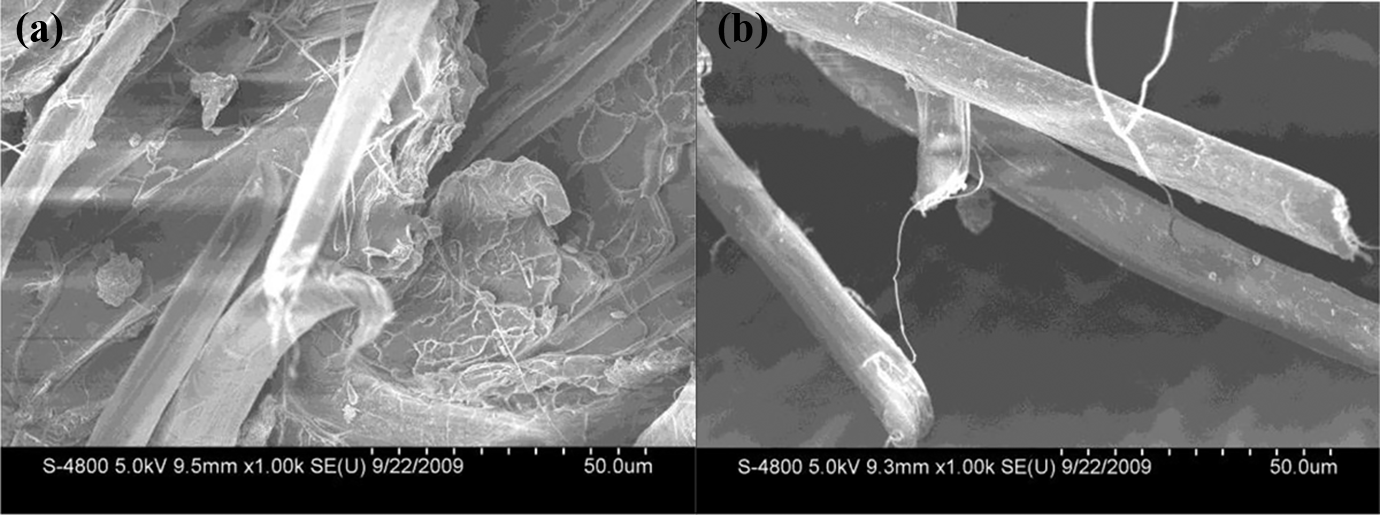
(a and b) SEM of fracture surface for CF/CNT/PI composites.
It can be seen from Figure 4 that the reduction of the pultrusion speed can improve the ILSS of the pultruded composite regardless of the amount of MCNTs added. The ILSS of the MCNTs of the pultruded composite material increased by a maximum of 2.2%.
It can be seen from Figure 5 that the composite resin/fiber interface CF without MCNTs has a smooth surface with only a small amount of resin crumb, which is an interface debonding, and the surface of the composite material containing 1 wt% MCNTs has more fiber surface. Resin fragments have no obvious debonding, and resin/fiber interface bonding is better.
This is because the maximal aspect ratio of MCNTs has a significant enhancement to the interfacial resin, and it can penetrate with the PI segment to form physical cross-links, 14 limiting the movement of PI segments, thereby increasing the Tg of PI. The carboxyl group in the hydroxy group can form a hydrogen bond or a chemical bond with the hydroxyl group in the PI, and MCNTs and PI have good compatibility. In addition, the CF surface sizing layer contains functional groups such as amino groups, which have hydrogen bonding with the carboxyl groups on the surface of MCNTs. 15 MCNTs can bridge the PI and CF, which can effectively enhance the adhesion properties of the interface resin.
Figure 6 shows that with the gradual increase of CNT addition, the tensile strength of the fiber has a large increase. When the CNT content is 20%, the tensile strength and the tear strength reach a peak. CNT has a large specific surface area, high adhesion, and a surface with a large amount of free hydroxyl groups, which makes it beneficial to adhere to CFs. Therefore, CNT can be used as a bonding bridge and a filler between the chopped fibers and the fibrids.
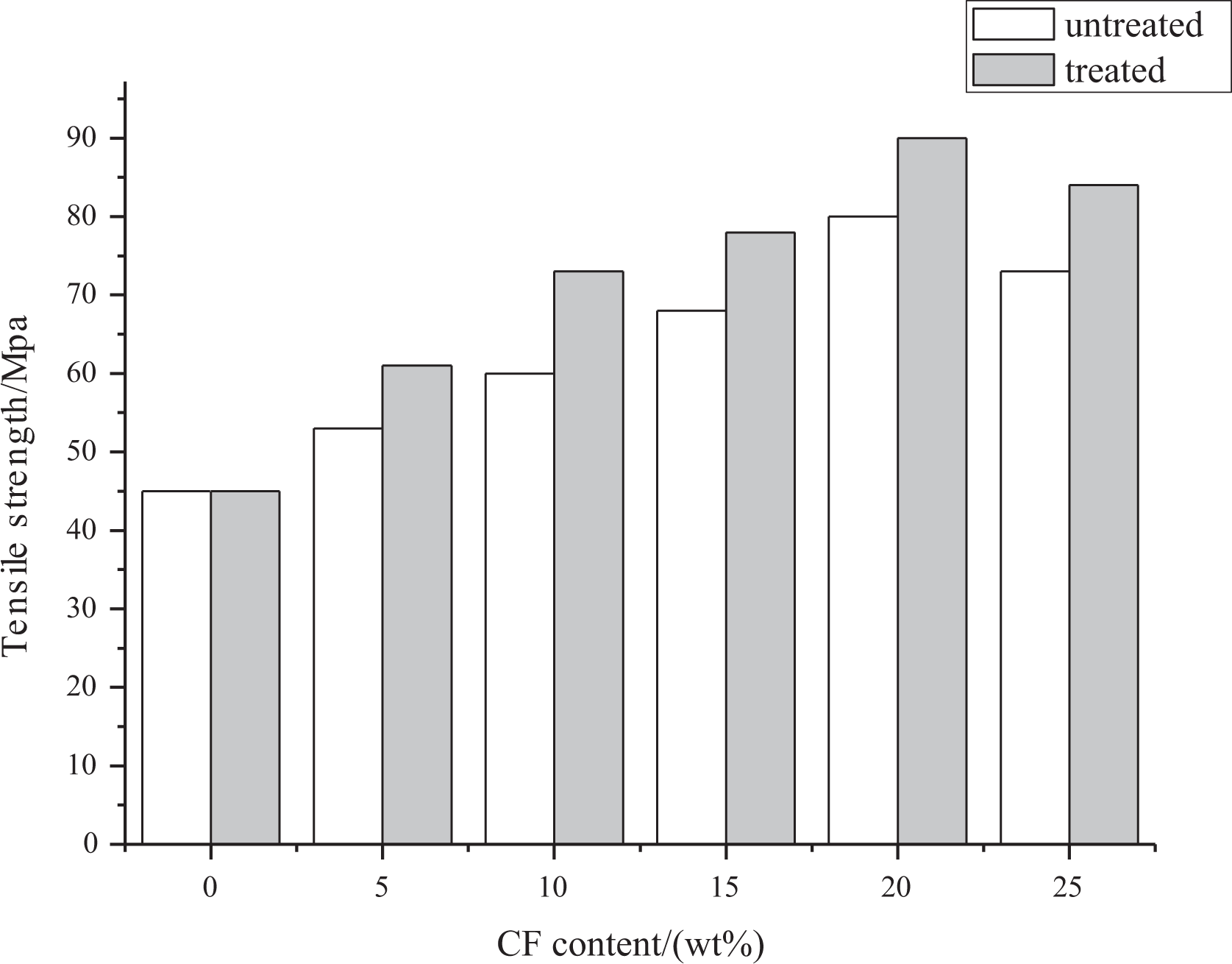
Tensile strength of CF/CNT/PI composites.
The mechanical lock and interface adhesion between the fibers increase. In addition, the excellent strength properties of nanocellulose are the ideal reinforcement for CF. When subjected to a certain tensile stress, CNT can fully realize the stress transfer as an interfacial stress transfer bridge, which can improve the stress concentration and improve the mechanical properties of the composite fiber. However, the mechanical strength does not continue to increase with the addition of CNT when the CNT content exceeds 25%.
The mechanical strength of the fiber begins to decrease. It is likely that excessive addition of CNT will reduce the water filtration of the fiber, and the decrease of the filtration rate will result in a large amount of CNT flocculation and will not bridge.
The mechanical strength of the composite fiber during stretching can be evaluated by static strength and dynamic strength. Tensile strength refers to the maximum tensile stress that CF-based materials can withstand during use, which can reflect the static strength of fiber. The dynamic strength can be measured by tensile energy absorption, which is the fiber.
The equivalent work of the area under the stress–strain curve of the tensile sheet depends on the tensile strength, elongation and tensile deformation process of the fiber, and more fully represents the strength properties of the fiber. The addition of CNT increases the toughness and fracture work of the fiber. Due to its high strength and modulus, CNT is added to the CF as a reinforcing phase and binder, which can fully consume the energy generated by stress accumulation in the fiber.
Conclusion
In this fiber, MCNTs were dispersed in PI by alternating mechanical stirring method, and PI-pultruded CF composites with low MCNTs were prepared by pultrusion process.
The addition of MCNTs can significantly improve the ILSS of PI-pultruded composites. The pultruded composite ILSS containing 0.1 wt% MCNTs is about 20% higher than the composite without MCNTs.
The increase in the total amount of initiator can compensate for the free radicals lost by the trapping effect of MCNTs, thus increasing the ILSS of the pultruded composites containing MCNTs.
Properly reducing the pultrusion speed can promote the full curing of PI and improve the adhesion between the composite layers and heat resistance;
The interfacial bonding properties of the composites are improved by chemical or physical crosslinking interaction between MCNTs, PI, and CF.
