



Abstract
Abundance, affordability, and also the usability of sulfur as a part of the binder are the main reasons for using this additive in asphalt mixtures. However, lack of proper adhesion and brittle behavior of sulfur-modified asphalt mixtures could make them susceptible to moisture damage and fatigue cracking. In this regard, anti-stripping agents and some polymers like crumb rubber may be used to overcome these types of distresses. This research aimed at investigating the effects of polymeric sulfur and crumb rubber on the moisture sensitivity and fatigue behavior of asphalt mixtures. To this end, asphalt mixtures were subjected to 1 and 3 freeze-thaw cycles. Then, an indirect tensile fatigue test was carried out. Moreover, the response surface method (RSM) was used to assess the interaction between various parameters in samples containing polymeric sulfur and crumb rubber. Results showed that with an increase in polymeric sulfur content, the fatigue life was reduced and the moisture sensitivity was increased. Additionally, the RSM was found to be effective in ranking parameters influencing the performance of asphalt mixtures. According to the experimental results, a crumb rubber-modified binder could improve the fatigue life of the polymeric sulfur-modified mixture up to 70%. Furthermore, experimental results and RSM analysis indicated that crumb rubber would be more effective in higher numbers of freeze-thaw cycles and raised temperatures, in which polymeric sulfur-modified asphalt mixtures are probably prone to moisture damages (i.e. the lack of adequate cohesion and adhesion).
Keywords
Introduction
The fatigue cracking is one of the major distresses which affects the asphalt pavement performance and causes its early deterioration. This failure is caused mainly by repeated traffic loading. In this regard, different factors such as environmental conditions and the intensified loading effect can lead to a significant reduction in the pavement serviceability.1–4 Over service life, binder aging, and traffic loading can reduce tensile strength and develop brittle behavior of asphalt concrete layers. This can result in the accumulation of micro-cracks at the bottom of these layers and then extend to the pavement surface.1,5
Nevertheless, moisture sensitivity highly affects the pavement service life. In fact, poor coating and reduced adhesion between binder and aggregates, over an extended period of time, reduce the structural strength and stiffness modulus of asphalt concretes.6,7 Moisture sensitivity is a complex failure, which is affected by three groups of parameters. The first group contains the chemical and physical properties of aggregates and asphalt. The second group includes asphalt mixture features such as asphalt content, aggregate particle coating thickness, and permeability of asphalt mixture. The third group consists of external factors such as quality of pavement, traffic, and environmental conditions.8,9 Traffic-generated stresses and penetration of moisture into pavement layers during its service life are the major parameters that intensify the loss of adhesive strength in asphalt mixtures and binder–aggregate separation, which in turn can form the bases for other damages and early destruction of pavements.7,10–12 In particular, the moisture damage leads to a reduction in mixtures modulus up to 25%, an increase in rutting up to 60%; and decreased fatigue life up to 30%. 13 Nowadays, researchers investigate the effectiveness of different additives such as hydrated lime, cement, amines, and polymeric materials to overcome this type of damage.14–16 Among different materials, the use of sulfur and crumb rubber as waste materials in asphalt mixtures can be considered as environmentally beneficial methods to reduce the waste material accumulation as well as could improve the performance and enlarged the service life of asphalt pavements.
The use of sulfur in asphalt mixtures is an economical approach to reduce the amount of asphalt binder and improves road pavement service quality. 17 Formerly, hot liquid sulfur was used and the pilot applications of sulfur asphalt mixtures were limited due to excessive emission of hydrogen sulfide gas (H2S). 17 In the late 1990s, with the advancement of sulfur production technology in solid pellets, as well as the possibilities of adding other additives such as a variety of polymer materials, reducing production costs, reducing emissions of dangerous H2S gas, the application of sulfur-modified asphalt mixtures became economical and a desirable approach by some highway agencies.17,18 As an advantage of this new product, mixing and compaction temperatures of mixtures could reduce to 135°C and 90°C, respectively, and could be added during mixing and there is no need to be blended with hot asphalt binder.18,19 In this respect, Strickland et al. studied the performance of asphalt mixture containing polymeric sulfur. The results showed that the application of polymeric sulfur improved the stiffness modulus and the rutting resistance of asphalt mixtures, while the indirect tensile strength value and the tensile strength ratio (TSR) 1 were reduced. 20 Moreover, Tim et al. studied the moisture sensitivity and dynamic modulus of modified polymeric sulfur asphalt mixtures. They concluded that although the application of polymeric sulfur could improve dynamic modulus, it can decrease the moisture resistance of asphalt mixtures. 21
Pavement strength and its durability depend on the cohesive resistance of asphalt, the adhesive bond resistance between binder and aggregates, and aggregate interlock in the compacted mixtures. 22 Despite the above-mentioned advantages of sulfur, lack of proper adhesion between polymeric sulfur binders and aggregates results in an increased moisture sensitivity of asphalt mixtures.17,21 Moreover, fatigue performance of sulfur-modified asphalt mixtures is still unclear due to the high stiffness, low adhesion between binder and aggregates, and low internal cohesion of asphalt mixtures which require further research works. 17 Cooper et al. reported that the use of polymeric sulfur reduces rutting susceptibility of asphalt mixtures and improves their fatigue life, 19 while Faramarzi et al. concluded that the application of polymeric sulfur reduces fatigue life and tensile strains in the asphalt concrete. 23
Meanwhile, with the rapid development of automobile industry, the accumulation of waste tires has increased dramatically. 24 Many researches on the application of waste tires in roads return back to several decades in America, Canada, and Sweden. 24 Generally, the application of crumb rubber in asphalt mixtures is carried out using the dry and wet methods. In the wet method, crumb rubber is added to the binder and the reaction will take place during sufficient time and adequate temperature. The major advantage of this method is the inflation of crumb rubber due to the adsorption of the oily content of asphalt binder. While in the dry method, crumb rubber is replaced with a part of aggregate gradation. 25 Previous investigations show that using the wet method results in better volumetric parameters and causes an improvement in the physical and functional properties of asphalt binders and the mixtures. 26 In fact, crumb rubber can affect the physical properties and rheological features, as well as can reduce the cracking and rutting potential in the asphalt concrete, resulting in reduced maintenance costs.25–28
Xhiao et al. studied the crumb rubber-modified asphalt mixtures containing Sasobit and Asphamin. He concluded that the use of crumb rubber improves the fatigue life of these modified mixtures. 29 Further, Liu evaluated the moisture sensitivity of a porous asphalt mix containing crumb rubber. The results showed that the use of warm mix asphalt additives reduces the TSR parameter, while the application of crumb rubber improves their performance and could reduce distress. The relationship between indirect tensile test and fatigue characteristics of mixtures containing crumb rubber showed that wherever the tensile strength of samples is high, the asphalt mix withstands more strains before failure. Thus, samples containing crumb rubber has a better resistance to fatigue effects. 30 In addition, Parvez et al. evaluated crumb rubber effects on the performance of asphalt binder containing sulfur. The results showed that utilizing crumb rubber can improve the rheological properties of asphalt binder containing sulfur and reduce the susceptibility to rutting and fatigue distresses. 31
Taking into account the above-mentioned literature, although the use of polymeric sulfur is an appropriate approach to enhance the dynamic properties of mixtures and can help in reducing bitumen consumption, its extensive application in pavements requires further research, particularly with respect to the fatigue life and moisture resistance. Furthermore, the combined effect of polymeric sulfur and crumb rubber-modified binder on asphalt mix performance has not been addressed in previous researches. Accordingly, it seems important to investigate and clarify the effect of crumb rubber on fatigue response in polymeric sulfur-modified asphalt mixture at different temperatures and under freeze-thaw conditioning. Therefore, the research objectives can be presented as follows: Investigation of the effects of load cycling and environmental conditions (i.e. temperature and moisture) on the fatigue performance of polymeric sulfur-modified asphalt mixtures. Investigating the effect of crumb rubber-modified binder on the fatigue performance of polymeric sulfur-modified asphalt mixtures. Presenting the mathematical model for fatigue performance in polymeric sulfur-modified asphalt mixtures produced by a crumb rubber-modified binder.
Materials and experimental program
Aggregates
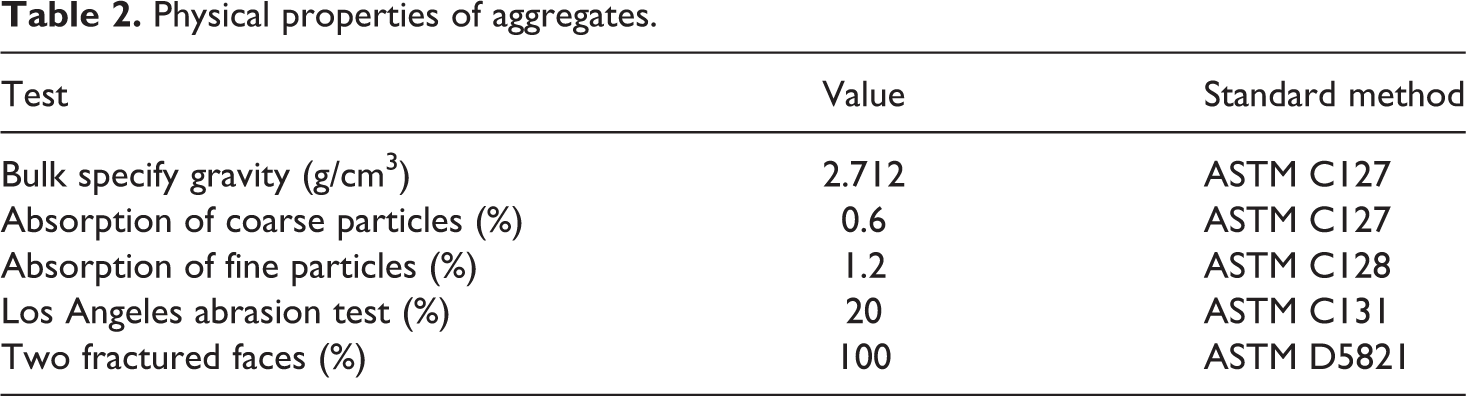
The aggregates were provided from a calcareous quarry in Yazd province (in the central part of Iran). The chemical compositions of these aggregates which were determined by X-ray fluorescence analysis are presented in Table 1. Figure 1 depicts the gradation curve of aggregates. Additionally, some physical properties of aggregates can be observed in Table 2.
Chemical composition of aggregates.

LOI: loss on ignition.
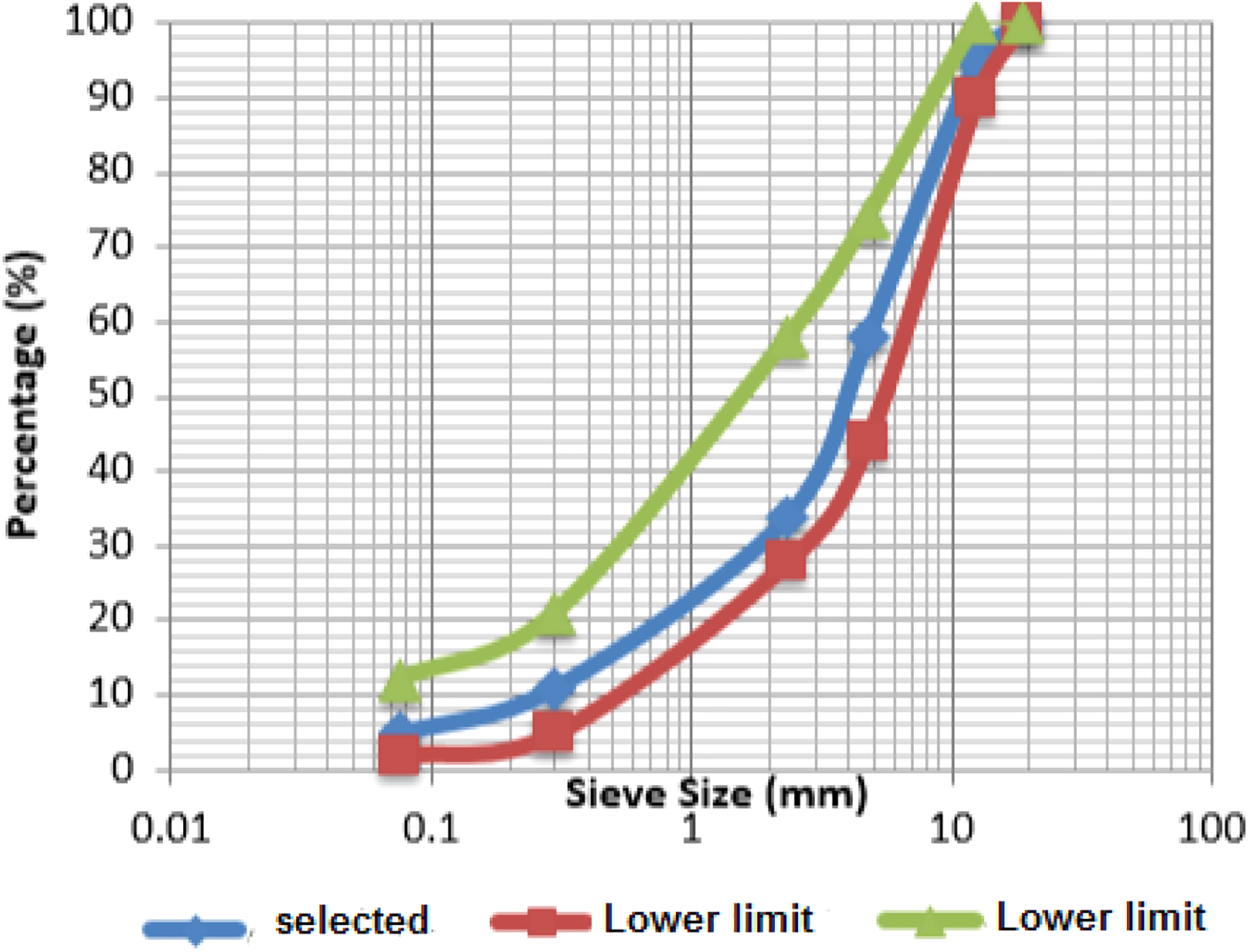
The aggregate gradation curve.
Physical properties of aggregates.
Asphalt binder
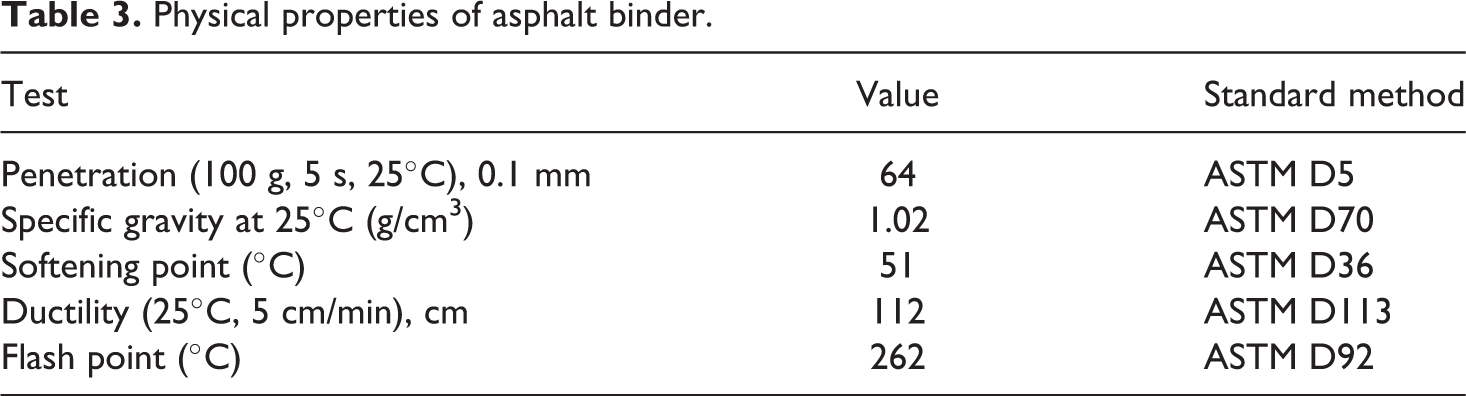
The binder was a 60/70 penetration grade asphalt produced by Isfahan Oil Refinery (Isfahan, Iran). Some physical properties of asphalt binder are shown in Table 3.
Physical properties of asphalt binder.
Crumb rubber
The utilized crumb rubber was produced from waste tires of both passenger cars and trucks (produced at ambient temperature in the Yazd Tire Co., Yazd Province, Iran). Compared to crumb rubber produced by applying the cryogenic method, this crumb rubber contains more particles with irregular shapes and rough surfaces, resulting in a better reaction with asphalt binder. However, this crumb rubber requires higher shear rate mixers and greater mixing times at processing stages. 32 The moisture content of these materials was within standard limits (i.e. less than 0.75% by total weight). The gradation of crumb rubber used in this research is presented in Table 4.
Gradation curve of the crumb rubber.

Crumb rubber-modified binder
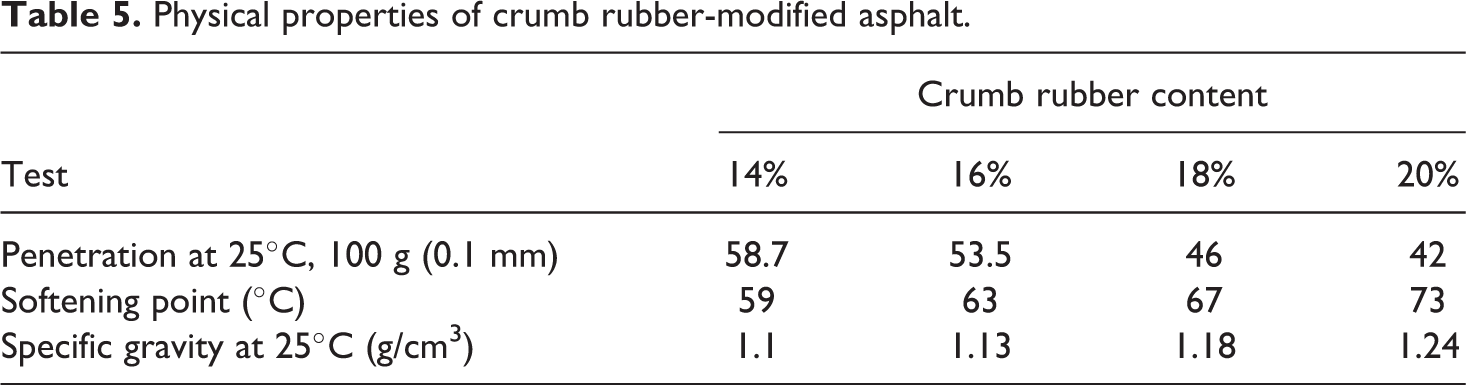
The crumb rubber-modified binder was produced by applying the wet process, according to ASTM D6114. According to this standard, crumb rubber-modified binder is a combination of asphalt binder, crumb rubber, lubricating oil, and special additives that should be mixed and react in sufficient timing and temperature.32–34 To prepare a crumb rubber-modified binder, a high-shear mixer was used. Asphalt binder and crumb rubber were thoroughly mixed in the mixer for 60 min with a rotational speed of 5000 r/min at 175°C. Finally, modified asphalt binder with 14–20% crumb rubber (in accordance to the design of experimental program) was prepared and physical properties of some samples are reported in Table 5 (nonetheless, penetration and softening point tests are not considered as reliable methods to describe the physical properties of crumb rubber-modified binders).
Physical properties of crumb rubber-modified asphalt.
Polymeric sulfur
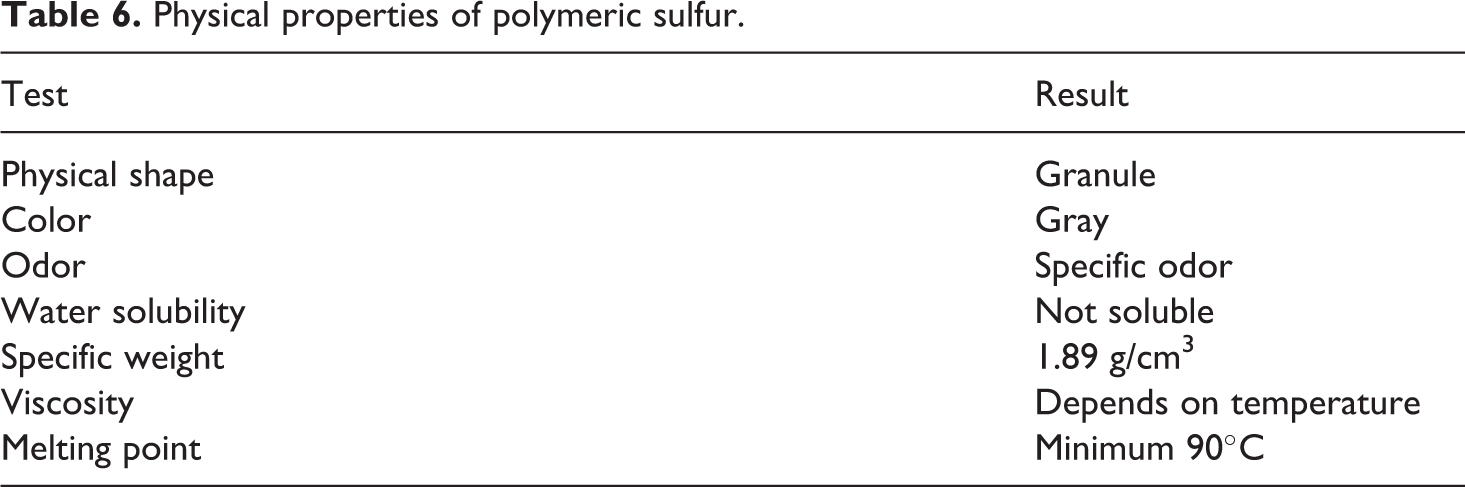
This additive is produced by Zenit Company (Mashhad, Iran) and consists of sulfur, plasticizer, and components which enhance the melting, freezing, and evaporation points. Sulfur has been extracted from sour gas during the refining processes. Physical properties of polymeric sulfur are reported in Table 6.
Physical properties of polymeric sulfur.
Specimen preparation
In order to evaluate the fatigue and moisture resistance of the control and modified asphalt mixtures, different specimens were prepared. In this respect, 30–50% polymeric sulfur by weight of binder added to the mixture. Although the addition of this material with a granular form to asphalt mixture is possible through various methods, in this study, dry method was used. It should be mentioned that the asphalt binder was previously modified by different crumb rubber contents (14–20% by weight of binder).
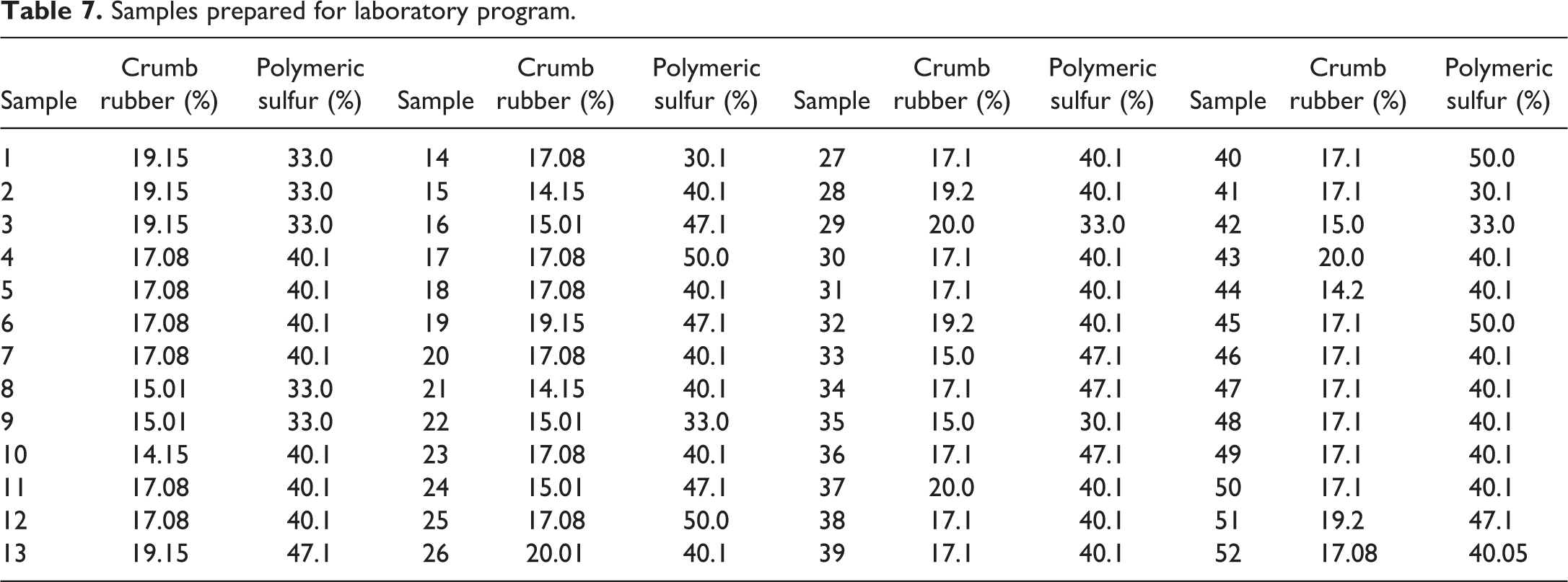
To determine the optimum binder contents of mixtures, the Marshall mix design procedure was carried out according to the ASTM D1559. Care was taken to ensure that the polymeric sulfur temperature does not exceed 150°C in order to prevent excess emission of H2S or ignition. Based on the Marshall parameters, the optimum binder content of 4.8% was selected for the preparation of all specimens. The amount of polymeric sulfur in mixtures was obtained according to equation (1). In this equation, it is assumed that with replacing a part of asphalt binder with G polymeric sulfur, the mixture volumetric parameters do not change appreciably.35,36 Finally, sample types were prepared according to the experimental program (Table 7).

where PSA is the percentage of sulfur asphalt binder, A is the percentage of optimum asphalt binder content, R is the polymeric sulfur/binder specific gravity ratio, and PS is the mass% polymeric sulfur in total binder.
Samples prepared for laboratory program.
Testing
Since the objective of this study was to evaluate and analyze moisture effects under freeze-thaw cycles on fatigue life of the control and modified asphalt mixtures, the modified Lottman (AASHTO T283 standard method) and the indirect tensile fatigue test (ITFT) according to EN 12697-24 were carried out. The ITFT was performed by using Nottingham asphalt tester, exerting repetitive loads under two conditions of constant stress and constant strain. The cylindrical samples in this experiment had 101.6 and 40 mm diameter and thickness, respectively. The loading regime was applied at 1 Hz frequency (0.1 s loading and 0.9 s rest) and the fatigue failure criterion in vertical displacement was equal to 9 mm. The test was performed at 5°C and 25°C under a constant stress of 200 kPa. Additionally, indirect tensile stiffness modulus (ITSM) test was performed based on EN 12697-26 to achieve a better understanding of fatigue behavior in modified mixtures.
Design of experiments
Response surface method (RSM) is an appropriate approach that has been applied by many researchers to derive the relation of major parameters and responses and to present the mathematical models. 36 This method helps researchers to predict the responses for given variables, identify the significance of the various parameters, and optimize their amount due to the generated responses.37,38 In this regard, pavement engineers recently used this approach to investigate factors affecting asphalt material performance versus parameters such as temperature, frequency, and loading regime. 38 Using RSM, Kavussi et al. evaluated the interaction of the parameters affecting the moisture susceptibility of warm mix asphalt. 39 Additionally, Haghshenas et al. also used the RSM to investigate the effects of various factor levels, including asphalt content, grading, and lime content on moisture susceptibility in a hot mix asphalt. 38
To identify the effects of various factors and explore their interaction in this research, central composite design parameters were determined using the RSM. Testing data consisted of 52 experiments were analyzed applying Design Experiments Software Version 7. Table 7 reports combinations of the different factor levels.
A quadratic polynomial regression model, proposed by Montgomery, as shown in equation (2) was selected by the software for predicting the response parameters based on four independent variables chosen in this study:

In this equation, Y (i.e. ITFT) is the response variable and b0, bi, bii, and bij are constant coefficients of intercept, linear, quadratic, and interaction terms, respectively. Xi and Xj represent independent variables (sulfur content, crumb rubber content, temperature, and freeze-thaw cycles). In order to prevent any systematic bias, the experiments were carried out in a randomized order.
In addition, analysis of variance (ANOVA), containing the statistical significance of the model, as well as the effect of linear, quadratic, and interactive terms were evaluated (using Design Expert Version 7). Finally, the models were employed to predict ITFT results for samples containing 30–50% polymeric sulfur and 14–20%, crumb rubber at two temperatures (5°C and 25°C) under two freeze-thaw cycles (1 and 3).
Results and discussion
Polymeric sulfur-modified asphalt mixtures
Polymeric sulfur-modified asphalt mixtures were conditioned under freeze-thaw cycles according to the AASHTOT283 standard method. ITFT procedure was carried out to evaluate the effects of moisture on fatigue performance. Figures 2 and 3 show the fatigue life of asphalt samples.
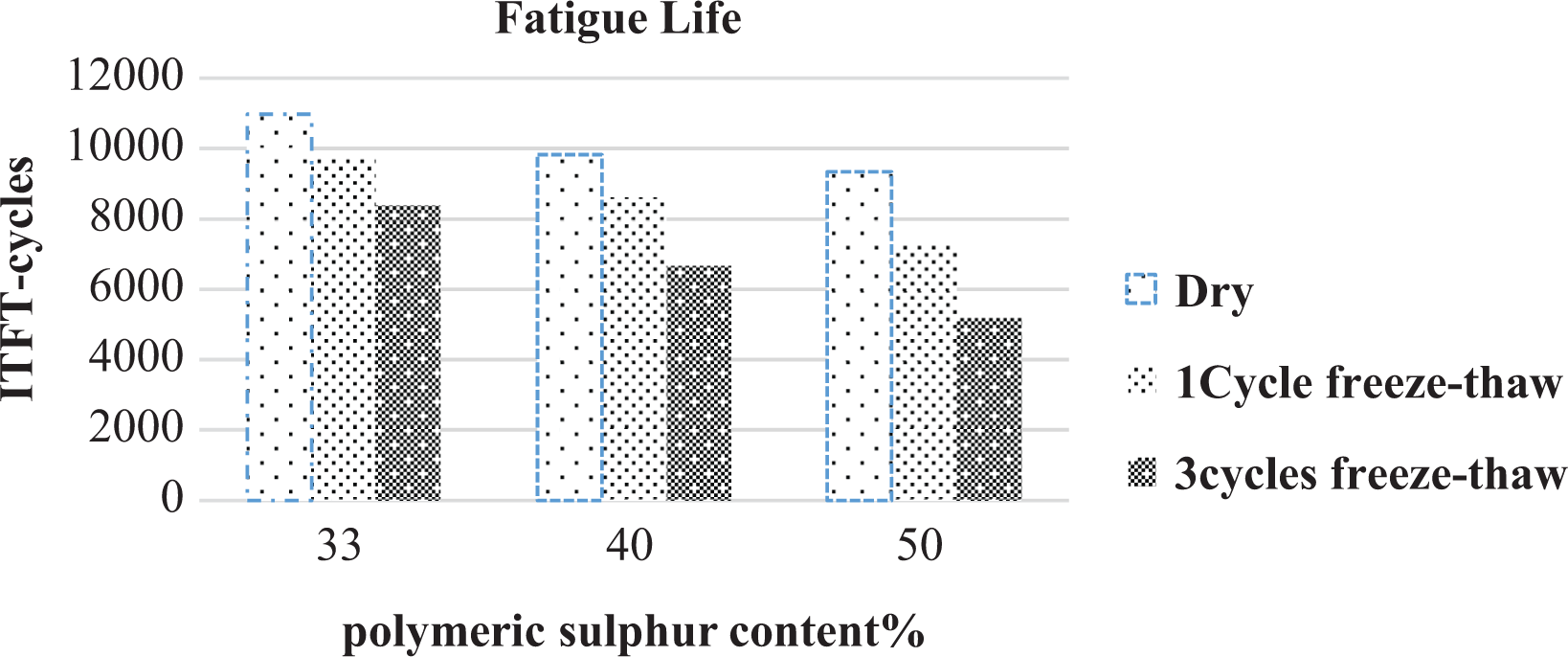
ITFT results of polymeric sulfur-modified asphalt mixtures at 5°C.
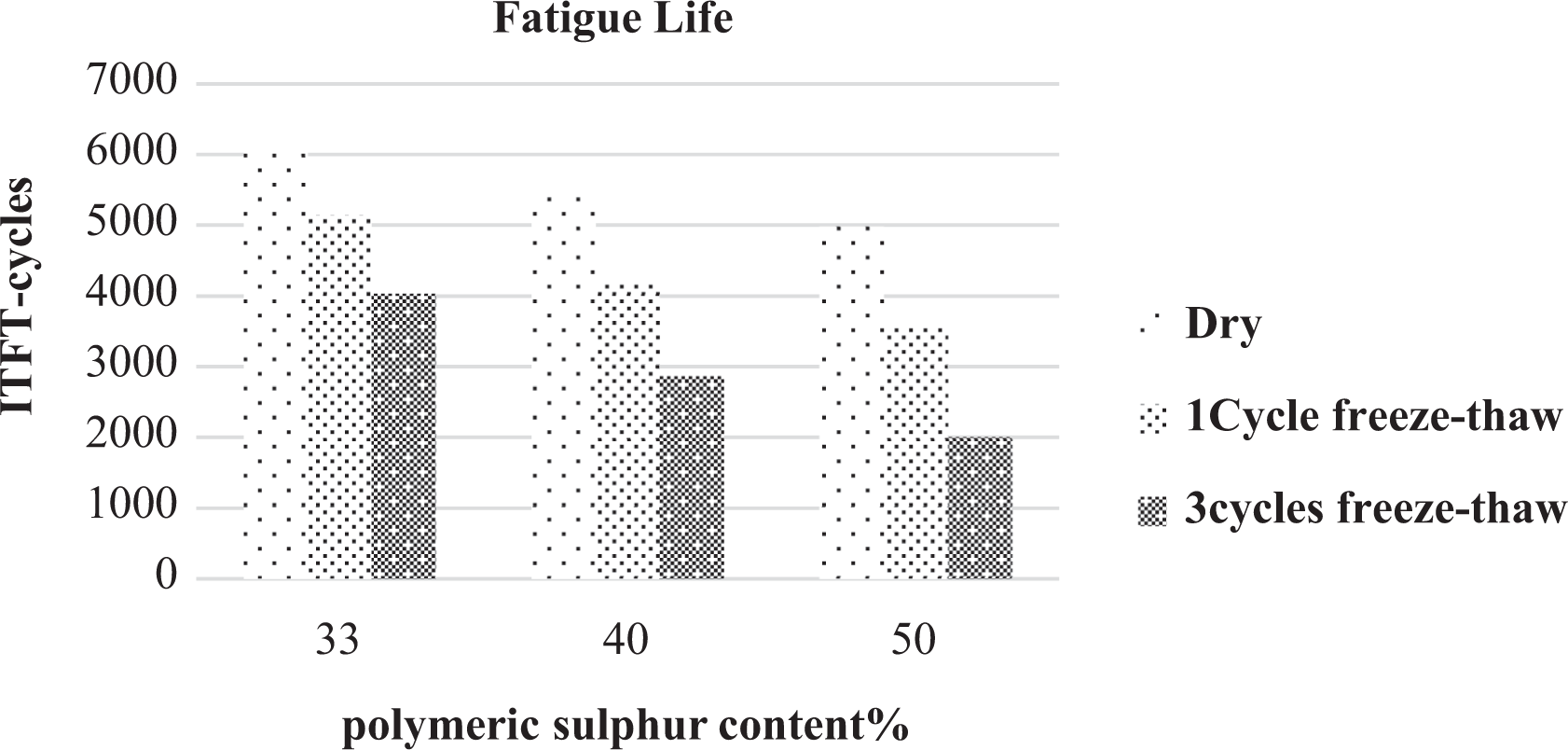
ITFT results of polymeric sulfur-modified asphalt mixtures at 25°C.
Figures 2 and 3 show that with an increase in polymeric sulfur content, fatigue life is reduced. The minimum value is related to the sample containing 50% polymeric sulfur additive. It can be observed that with an increase in temperature from 5°C to 25°C, fatigue life is reduced by approximately 45%. The results show that samples are significantly affected by the moisture and the freeze-thaw cycling conditions, resulted in the reduction of fatigue life. This could be due to the poor binder-aggregates adhesion and inappropriate binder coating around aggregates in the mixtures containing polymeric sulfur. 40 Generally, the properties of asphalt mixtures are reduced with increasing the testing temperature from 5°C to 25°C and the number of freeze-thaw cycles from 1 to 3.
Polymeric sulfur-modified asphalt mixtures containing crumb rubber
RSM analysis was performed on test results of the modified mixtures. All combinations of the derived factorial levels are reported in Table 8. Regarding the laboratory responses introduced to the software, the quadratic model was best fitted to the data.
Combinations of the different factorial levels.
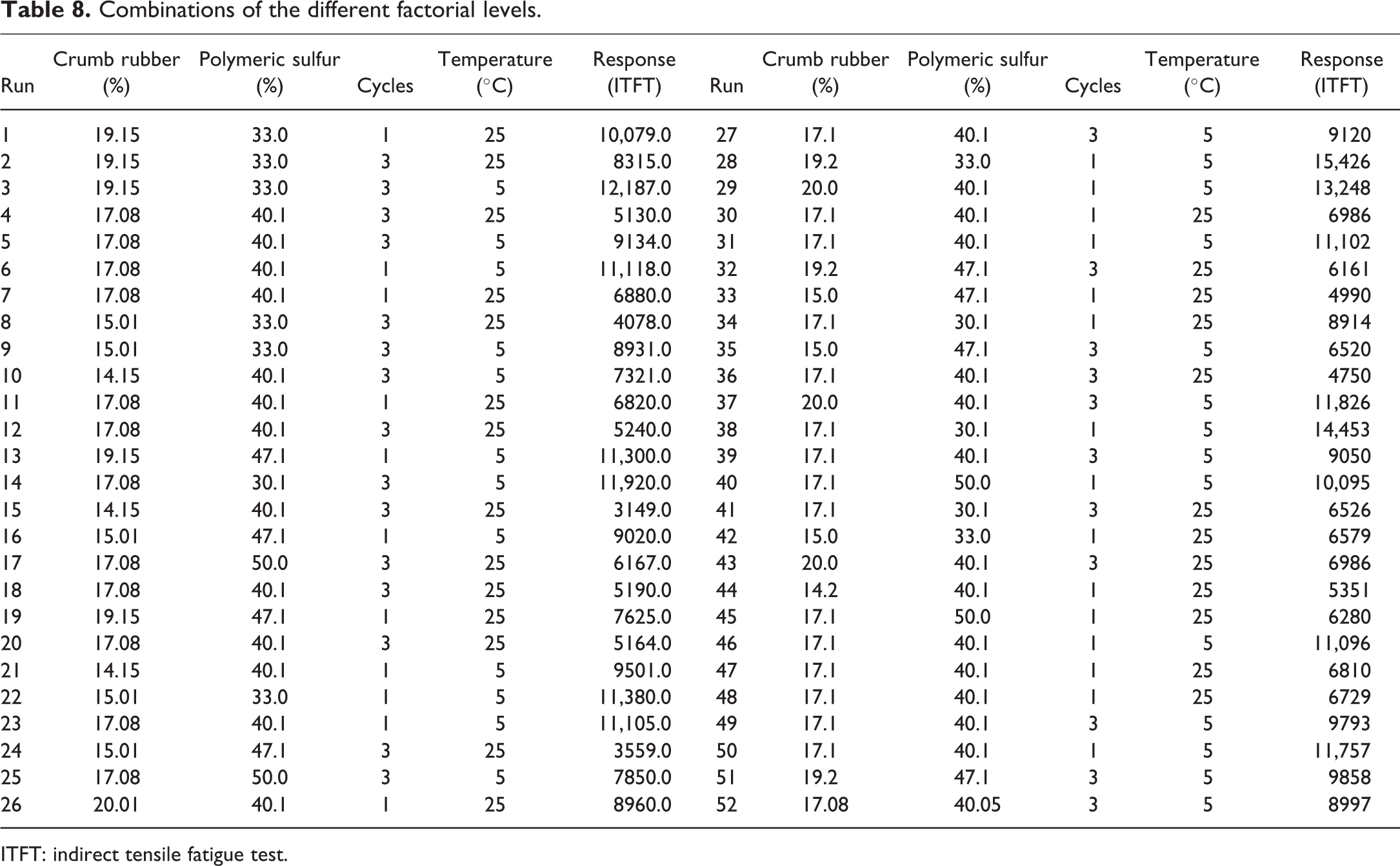
ITFT: indirect tensile fatigue test.
Table 9 presents the ANOVA analysis of the model. The overall model F-value was approximately 330, implying that the model is significant. According to the statistics illustrated in the last column of Table 9, values of “Prob > F” were less than 0.0500. This indicates that the model terms were significant with a 95% confidence level.
ANOVA for response surface quadratic model.
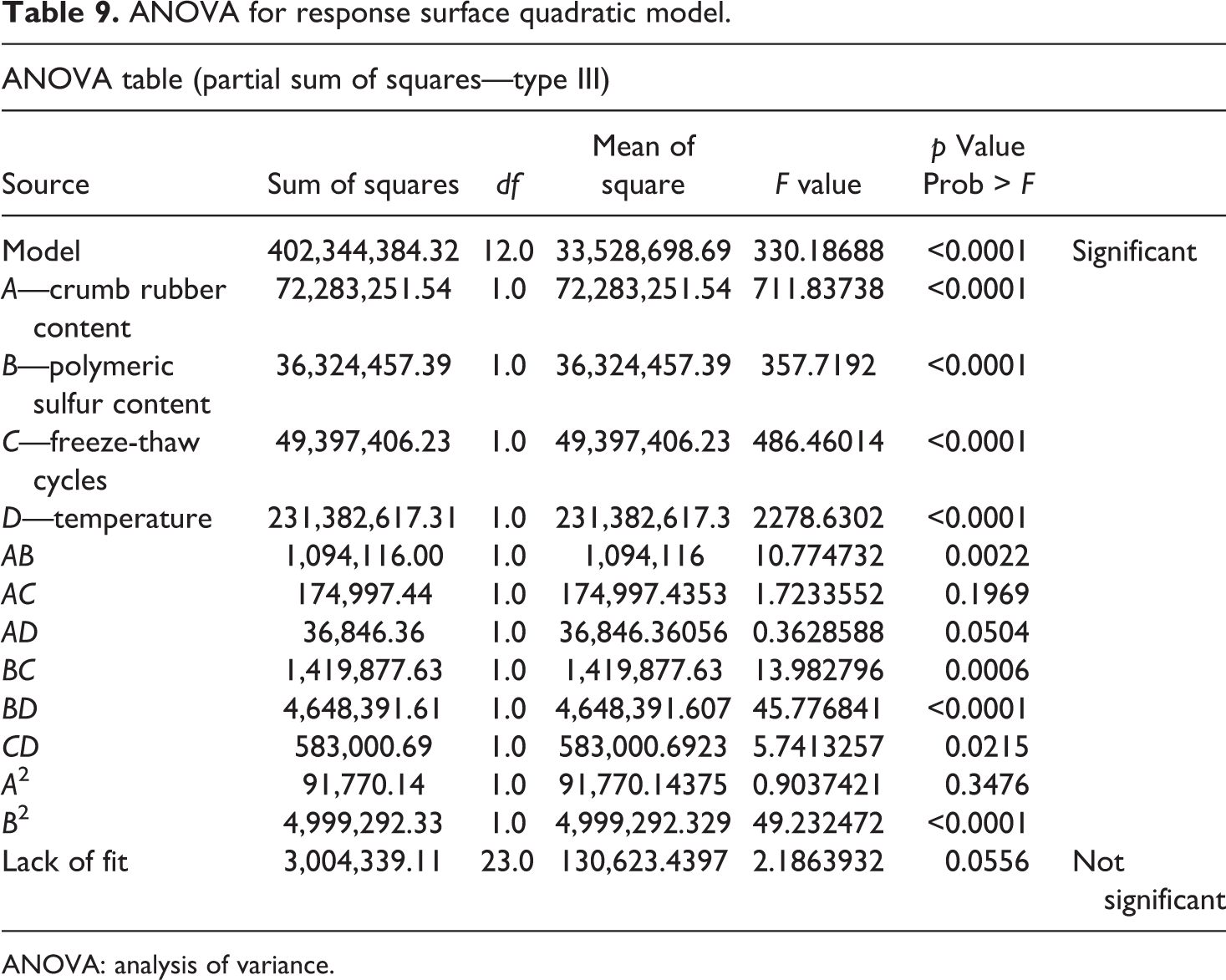
ANOVA: analysis of variance.
In this case, A, B, C, AB, AD, BC, BD, CD, and B2 are significant model terms, due to different term levels, and have important roles in ITFT response. Values greater than 0.1000 indicate that the model terms are not significant with a 90% confidence level. Hence, AC and A2 are not such significant terms. ANOVA analysis showed that the interaction of polymeric sulfur–crumb rubber is significant and it is not suitable to explore and determine the effect of these parameters gradually. The R2 value of the model is 0.99, and the adjusted R2 is 0.98. This implies that the model is very robust. “Pred R-Square” of 0.9803 is in reasonable agreement with the “Adj R-Square” of 0.9873. “Adeq Precision” measures “signal to noise ratio.” A ratio greater than 4 is desirable. Model ratio of 75.932 indicates an adequate signal. Therefore, this model can be used to navigate the design space.
The final coded model is shown in Table 10. Rows 1–4 present model equations for predicting ITFT at different freeze-thaw cycles and temperature levels. The evaluation of the coded model—presented by the software—shows that the crumb rubber has a positive role and the polymeric sulfur has a negative role in reducing the value of ITFT parameters. Moreover, the evaluation of coefficients of these two variables indicates that due to higher rates, crumb rubber has a greater role in ITFT changes compared to the polymeric sulfur. Considering the combined effects of the two additives (as a separate variable), the variable has a negative coefficient.
Model equations for the predicted ITFT.
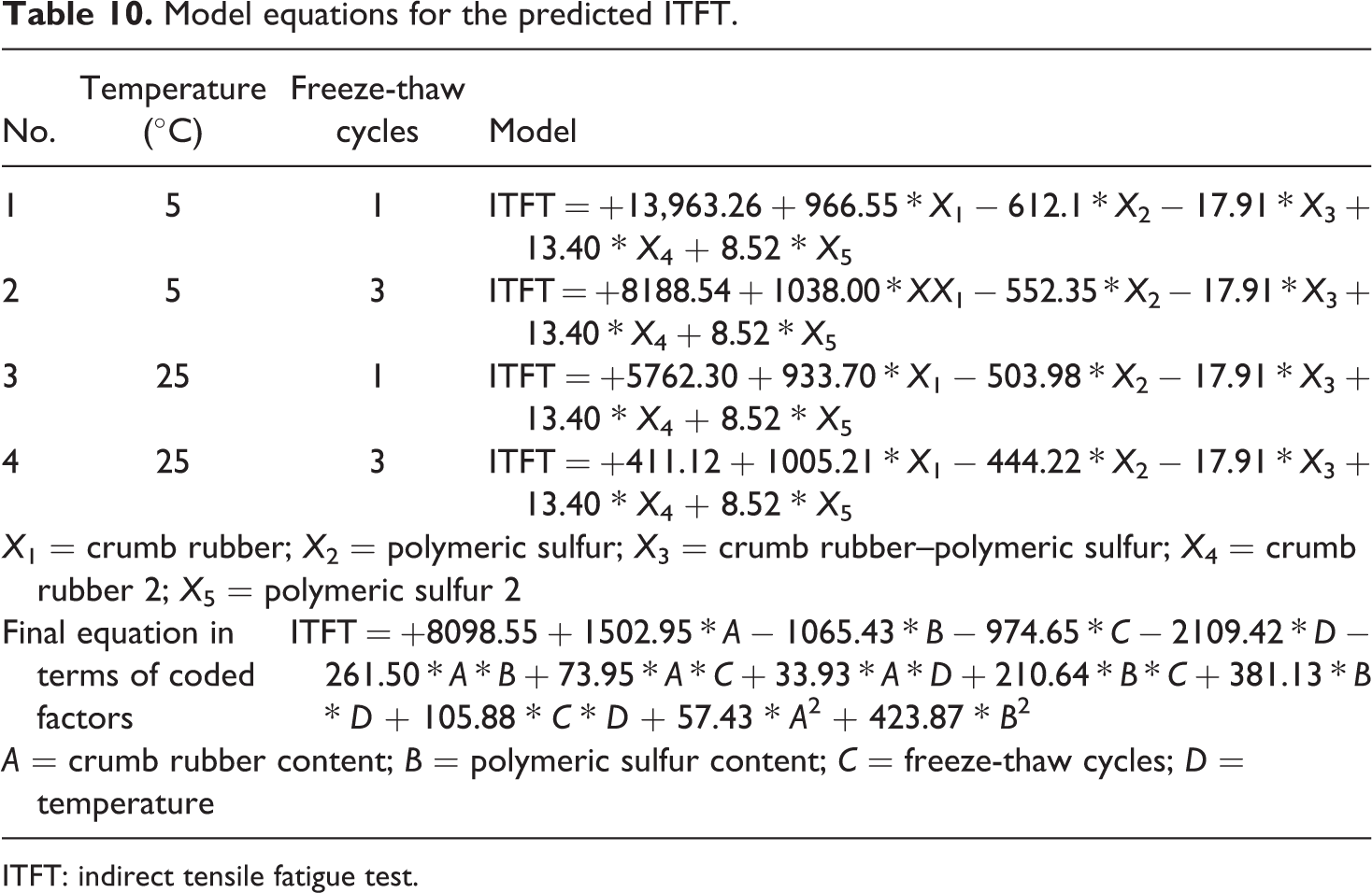
ITFT: indirect tensile fatigue test.
In order to verify the above-mentioned model, four samples were prepared with different crumb rubber and polymeric sulfur contents (that were not used before in Table 8). These four samples which contain 18% crumb rubber and 35% polymeric sulfur have been tested under 1 and 3 freeze-thaw cycles and at 5°C and 25°C. The predicted values and ITFT results are reported in Table 11. The results showed that there is a good correlation between model prediction and experimental values (coefficient of variation: 97%). Then, it could be considered that its accuracy is good enough to predict the different level of parameters within the selected ranges.
Model verification example.
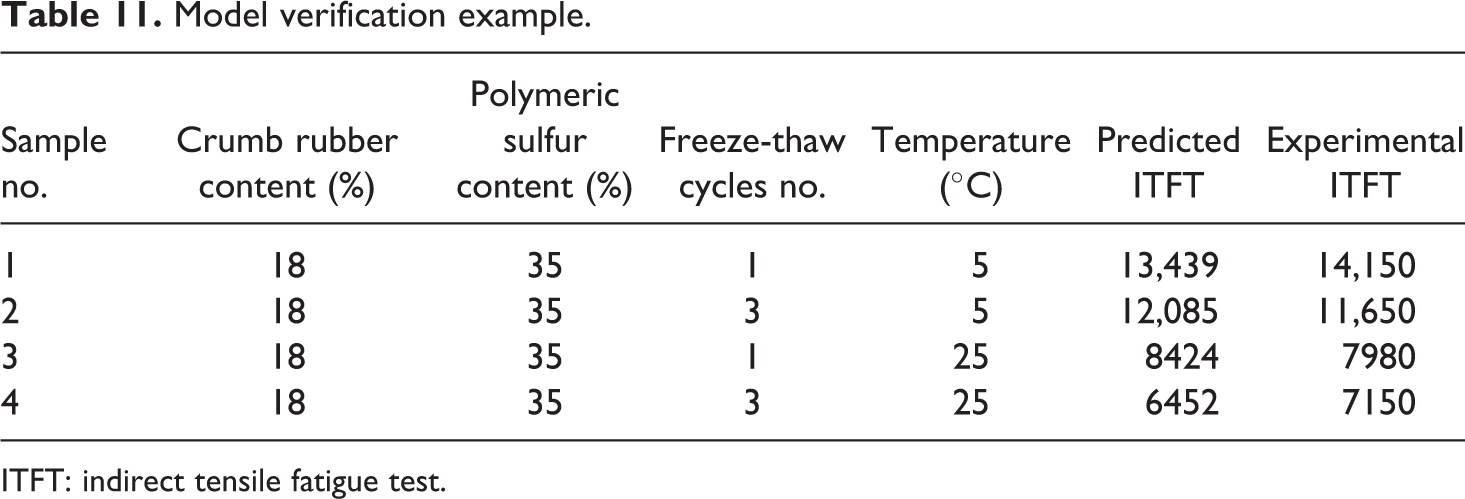
ITFT: indirect tensile fatigue test.
Figure 4(a) to (d) shows the 3-D interpretation of fatigue lives, crumb rubber, and polymeric sulfur contents at 5°C and 25°C and at 1 and 3 freeze-thaw cycles. The results show that the addition of polymeric sulfur and crumb rubber, respectively, has positive and negative effects on the fatigue life of asphalt mixtures. With increased amounts of polymeric sulfur in asphalt mixtures, the crystals and unresolved parts of polymeric sulfur were increased.40,41 This indicates that polymeric sulfur reduces the ductility and flexibility of the binder and mixtures, respectively. However, the addition of crumb rubber in mixtures containing polymeric sulfur resulted in increased viscosity, increased adhesion, and increased elasticity of asphalt mixtures which finally leads to increased fatigue life of the mixtures. In addition, by comparing Figure 3(a) and (c) with Figure 4(b) and (d), it can be seen that fatigue life is reduced as a result of increased temperature, which indicates the temperature sensitivity of asphalt binder. It should be noted that this reduction was lower in low binder contents. The reason could be due to the lower temperature sensitivity of crumb rubber-modified asphalt binders compared to the conventional non-modified binders.
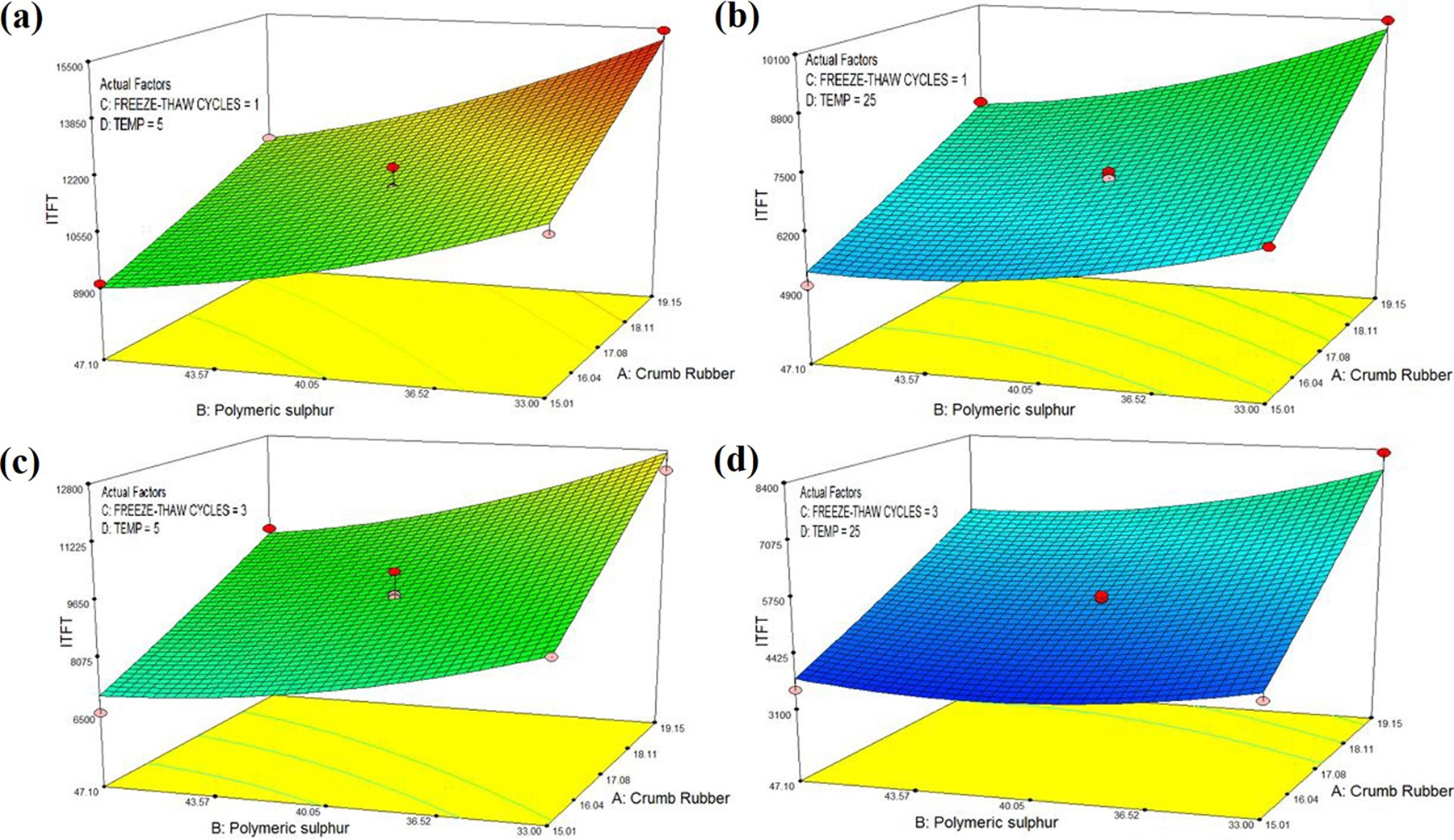
Polymeric sulfur, crumb rubber, and ITFT 3-D graphs.
Figure 5(a) to (d) shows the results of the interaction between crumb rubber and polymeric sulfur at 5°C and 25°C before and after freeze-thaw cycles. Comparing the results of Figure 4(a) and (c) with Figure 4(b) to (d), it can be observed that the interaction between the two materials and ITFT improvement were reduced as a result of increased temperature at any freeze-thaw cycle. The reduced distance between the lines in Figure 5(d) and (c) and Figure 5(b) and (a) indicates that the improving role of crumb rubber is reduced as a result of increased temperature. In addition, the temperature sensitivity and ITFT values are reduced when the number of freeze-thaw cycles increases.
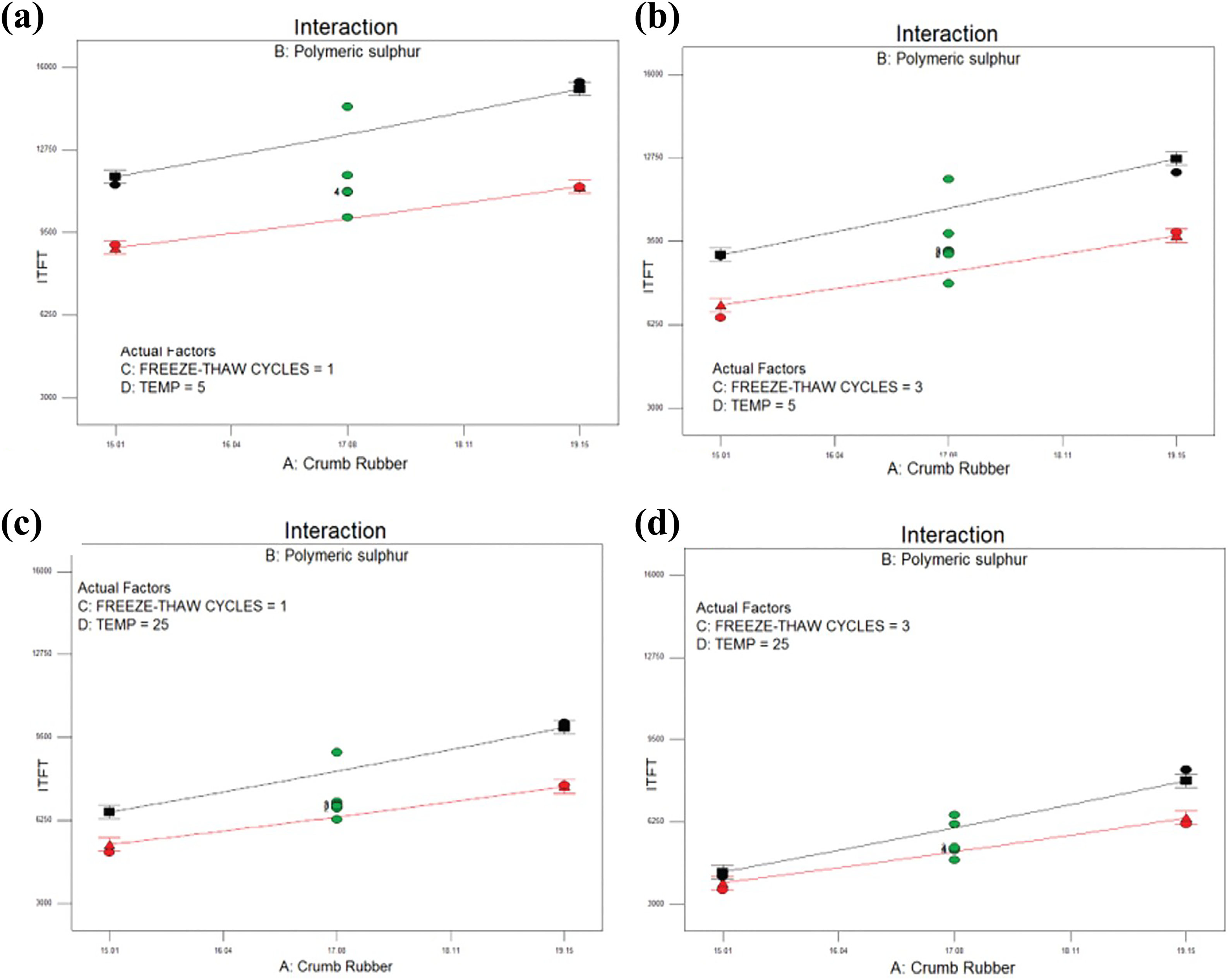
The interaction of polymeric sulfur and crumb rubber in mixtures (dark line: polymeric sulfur content lower limit (33%), light line: polymeric sulfur content upper limit (50%)).
The above-mentioned figures show that the crumb rubber could compensate the perceptible weaknesses of asphalt mixtures containing polymeric sulfur in terms of moisture sensitivity at any temperature and freeze-thaw cycles. With increasing crumb rubber content, the mechanical improvement of samples containing crumb rubber-modified binder is more obvious. This may be due to increased adhesion properties, thicker coating, and increased viscosity in mixtures. For instance, the sample containing 20% crumb rubber had the greatest ITFT values. By evaluating and comparing these figures, it can be understood that the interactions of crumb rubber with mixtures containing polymeric sulfur is reduced as a result of increasing freeze-thaw cycles. Furthermore, the improving effects of crumb rubber increased with an increase in temperature. In fact, the distance between the dark and light lines is reduced (Figure 5) and the reduced differences in ITFT samples (Figure 5(d) and (c)) are higher than Figure 5(a) and (b). This indicates that the fatigue life of samples subjected to higher numbers of freeze-thaw cycles is affected by moisture sensitivity of polymeric sulfur rather than crumb rubber’s positive effect.
Indirect tensile stiffness modulus test
Figures 6 to 8 represent ITSM values for dry samples and conditioned samples under 1 and 3 freeze-thaw cycles, respectively. The results showed that the modified samples have higher stiffness compared to the control samples, and by increasing the additive contents (i.e. crumb rubber, polymeric sulfur), the ITSM increased. Nevertheless, by increasing the temperature from 5°C to 25°C, the stiffness of samples decreases due to the change in viscosity and particles slippage. Furthermore, it can be seen from Figures 6 to 8 that the freeze-thaw cycles can considerably affect the ITSM values. Due to a more brittle behavior and less adhesion in polymeric sulfur-modified asphalt mixtures, the ITSM reduction arising from freeze-thaw cycles is more tangible compared to other mixtures.
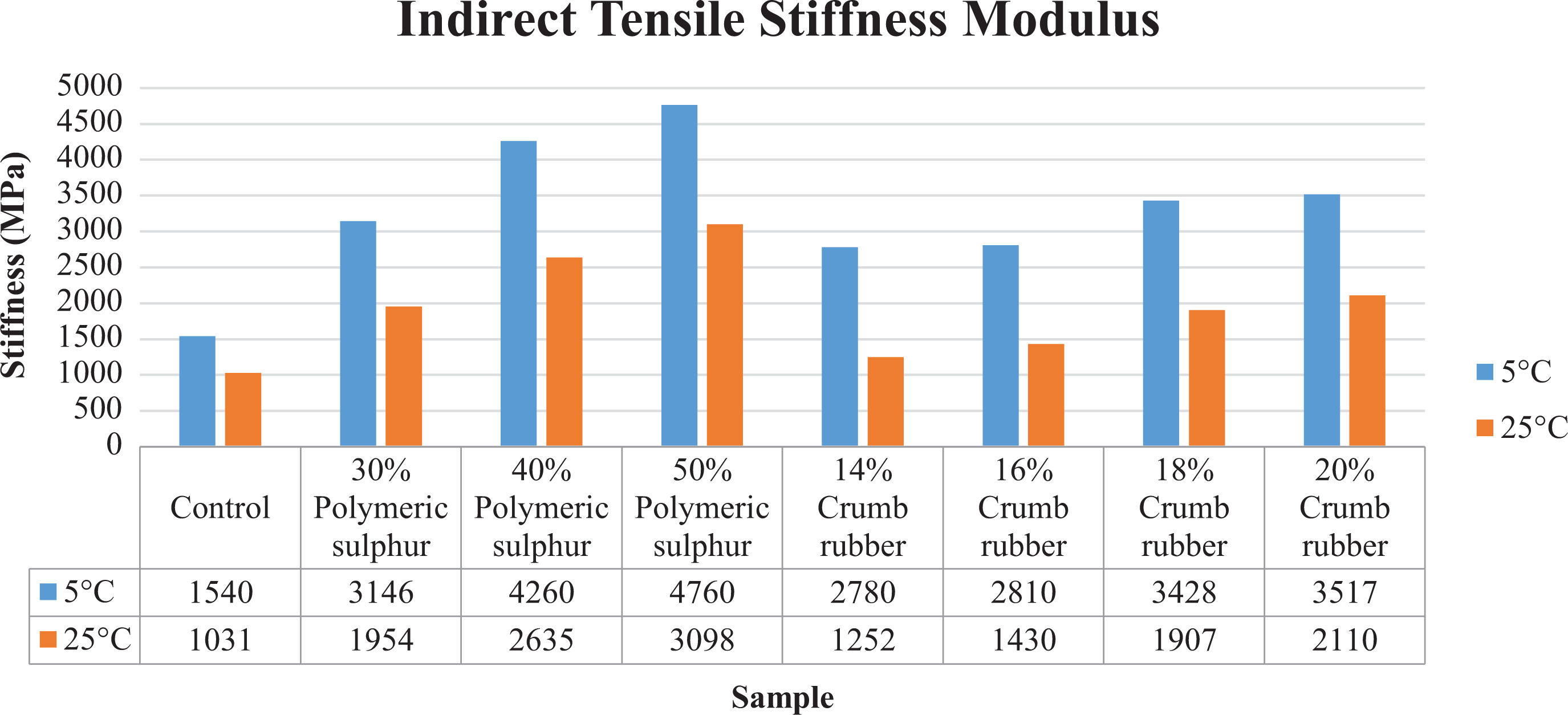
ITSM results of control and modified samples under dry condition.
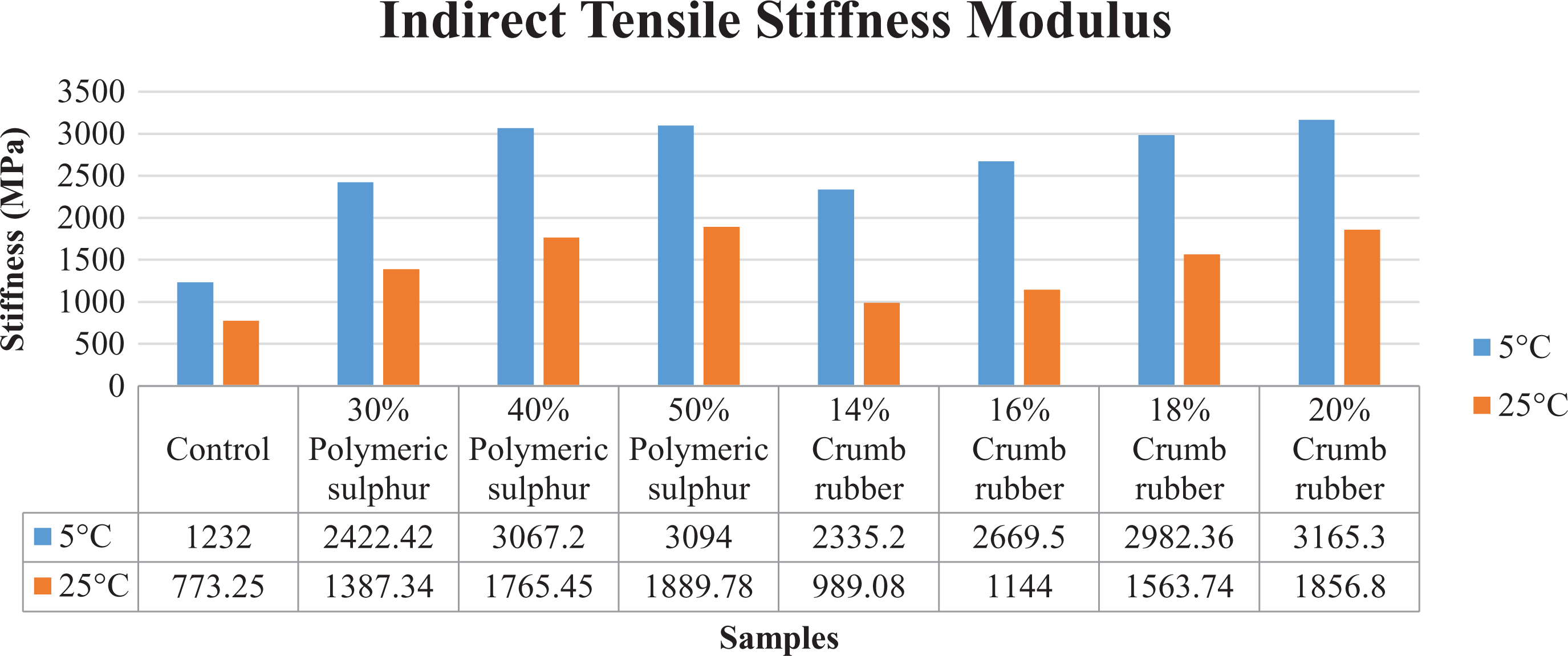
ITSM results of control and modified samples under 1 freeze-thaw cycle.
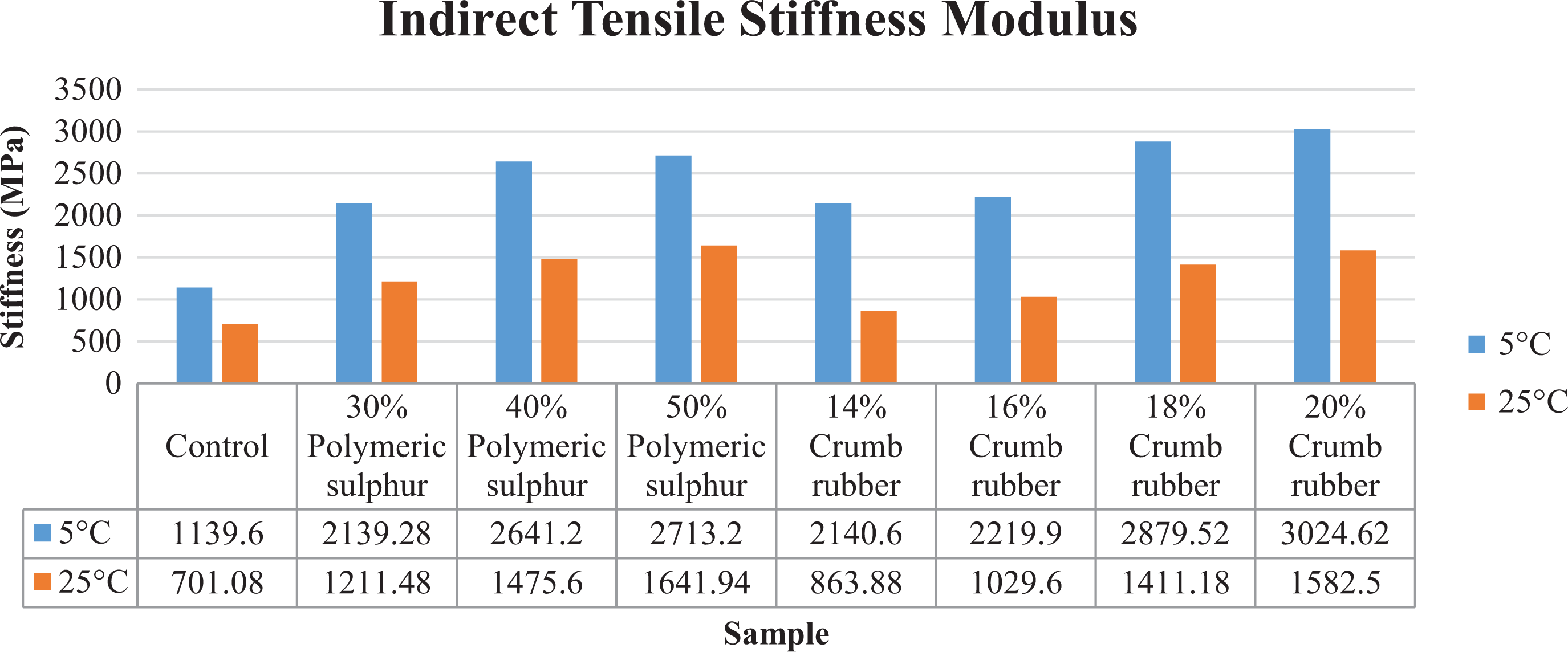
ITSM results of control and modified samples under 3 freeze-thaw cycle.
It should be noted that although polymeric sulfur-modified asphalt mixtures have relatively higher stiffness values (Figures 6 and 7), the fatigue life of samples when crumb rubber incorporated in modifying binder is higher (Figure 5). This may be caused by insufficient melting of polymeric sulfur pellets or their recrystallization 40 in the mixture which results in a higher stiffness, tendency to brittle behavior, and consequently less fatigue life.
Conclusions
This research analyzes the effect of crumb rubber on fatigue response in polymeric sulfur-modified asphalt mixture at different temperatures and under freeze-thaw conditioning. Based on the experimental results and the statistical analysis of data, the following conclusions can be drawn: The moisture sensitivity of polymeric sulfur-modified asphalt mixtures is high. Further, the presence of solid crystalline particles of polymeric sulfur in asphalt mixtures could reduce flexibility. In fact, these mixtures show more brittle behavior and consequently their fatigue life is reduced. ITSM experiment results showed that polymeric sulfur increases the stiffness of asphalt mixture. This may exacerbate the tendency of asphalt mixtures to brittle behavior. According to conditioned ITSM values, as the amount of polymeric sulfur increases, the moisture sensitivity of the mixture increases. Nevertheless, the ITSM values indicted that the crumb rubber-modified mixtures are less sensitive to freeze-thaw conditioning and temperature. ANOVA analysis of the data showed that all factors gradually, and in the interaction with other factors, are significant at the 90% level, except crumb rubber–freeze-thaw cycle (A–C) and crumb rubber–crumb rubber (A2). Analysis of properties of mixtures containing crumb rubber and polymeric sulfur shows that crumb rubber plays a more significant role than polymeric sulfur. However, the combined effect of these two additives, presented as a factor named crumb rubber-polymeric sulfur (A–B), indicates that the impact of polymeric sulfur is more than crumb rubber and this factor gets negative points in the equations. The interaction of polymeric sulfur and crumb rubber is highly affected by testing temperature than that of freeze-thaw cycles. The use of crumb rubber-modified binder in polymeric sulfur-modified mixtures could enhance the moisture resistance and its flexibility. This resulted in a better performance of mixtures against fatigue failure.
