




Abstract
Due to the extensive excavation of open-pit coal mines in northwest of China, the rock slopes formed by special environments are subjected to freeze-thaw (F-T) action, which has a certain impact on their stabilities. In order to evaluate the mechanical properties and micro damage characteristics of coal under different freeze-thaw cycles, uniaxial compression experiments combining acoustic emission tests were conducted. The results suggest that as the number of freeze-thaw cycles increased, elastic modulus of coal samples decreased, the samples showed ductile damage characteristics and initial compaction stage gradually increased. Compared with unfrozen-thawed coal sample, the compressive strength of the coal samples decreased by 23.27% after 10 F-T cycles, 31.06% after 15 F-T cycles, and 36.01% after 20 F-T cycles. The internal fissures in the coal samples transitioned from tensile fissures to shearing fissures, and the samples gradually showed tensile-shear combined failure. The final cumulative energy of the coal sample became lower, the cumulative energy duration increased and the time point of the energy surge was delayed with the increase of cyclic freeze-thaw times. A damage model based on the evolution law of the cumulative energy was established to bridge the gap between macro-micro damage mechanics.
Introduction
As the most important energy source in China, the demand for coal resource is large every year. With the rapid exploration of coal in recent years, the coal mines in several southern and eastern regions are gradually depleted (Shen et al., 2021; Xie et al., 2019), and the coal resource mining is gradually concentrated in the northwestern regions. Although high-quality coal mine resources such as open-pit coal mines are rich in the northwest of China, the frozen rock slopes of open-pit coal mines formed by special high-altitude environments are subjected to freeze-thaw (F-T) action, which has a certain impact on their stabilities.
Coal is a typical complex heterogeneous material that consists of multiple pores and micro-cracks. At present, a large number of laboratory experiments have been conducted to study the mechanical properties and freezing-thawing mechanism of freeze-thawed rocks, many scholars also focus on dynamic and static combined loading characteristics of rocks subjected to F-T cycles. Compared with those rocks with high strength such as granite and sandstone, the microstructure of coal is prone to change under the interference of external factors, which causes severe constraints to the research on coal. Coal is a relatively plastic material, and always shows ductile damage characteristics under external loads, which increases the discreteness of coal samples and has an important impact on the experimental results (Gong et al., 2021). With the change of seasons in the northwestern region where extreme cold and heat alternate, the pore water in coal undergoes two-state cycles of freezing and melting, which changes the microstructure of the rock slope of open-pit coal mine in high altitude. During the freezing period, some pore water gradually solidified into ice crystals that absorbed on pore walls, and the unfrozen water in macro-pores migrated to micro-pores because of the pressure difference caused by the expansion of volume. The interlinks of coal were destroyed and the micro-pores enlarged under the combined actions of hydrostatic pressure and fluid corrosion, which led to the deterioration of mechanical properties of coal. Sometimes the compressive strength of coal can be improved due to the additional reinforcement produced by ice crystals at the beginning of freezing time (Ritchie and Davison, 1968; Scherer et al., 2001). In the actual mining process of open-pit coal mines, the coupling disturbances of various factors such as excavation, blasting, mechanical vibration have a great effect on the stability of the slope, which further causes safety risks of coal mining (Deb et al., 2011; Li et al., 2020, 2021; Liu et al., 2020). Therefore, it is significant and meaningful to study the influence of F-T cycles on the mechanical properties of coal. It also has a positive effect on understanding the way to improve the frost resistance of rock slope of open-pit mine and provides theoretical and experimental supports for evaluation on the safety of coal mining.
Many researchers have studied the mechanical properties and phenomenon of coal under different conditions. Nikolenko et al. (2021) proposed an ultrasonic sounding method using shear polarized waves to study crack formations in anthracite, lignite and hard coal. Wei et al. (2019) revealed coal damage and cracking characteristics due to liquid nitrogen freeze-thaw by conducting nuclear magnetic resonance (NMR) tests. Yang et al. (2020) focused on induced pore structural alterations due to cryogenic treatment and their effects on gas sorption and diffusion behaviors. Chen et al. (2018) studied the microwave effect on the physical and mechanical properties of coal samples, and the causes of coal samples influenced by microwave based on Fourier Transform Infrared Spectroscopy (FTIR). Yao et al. (2016) conducted acoustic emission (AE) tests under uniaxial compression to study the mechanical properties and crack propagation in coal after water intrusion. Gu et al. (2018) discussed the effects of the soaking time on the fracture expansion and dynamic mechanical properties of coal at different stages by conducting X-ray diffraction analysis, static load uniaxial compression test and Split Hopkinson Pressure Bar (SHPB) test. At present, the theoretical and experimental researches on coal have been relatively mature, and the deep coal mining technology has also been well developed. As the development of coal resource extend to northwest of China, coal mining faces a new challenge of seasonal temperature differences, and the effective implementation of coal mining methods into the northwest open-pit coal mine should be a hot spot for future research.
In recent years, some researchers have also started to study the mechanical properties and microstructure of coal subjected to F-T cycles and made some achievements. Qin et al. (2017a, 2017b, 2022) found that different freezing times, coal moisture contents and anhydrous liquid nitrogen F-T cycles had significant influences on the mechanical properties of coal, and a freeze-thaw method using liquid nitrogen (LN2) was proposed to improve coal permeability for the production of coal bed methane. Zhai et al. (2017) studied the impact of consecutive freeze–thaw cycles on the coal pore structure deterioration by NMR and scanning electron microscope. Sun et al. (2018) proposed a method of cyclic cryogenic fracturing based on F-T fracturing effects to increase the permeability of coal, and used NMR tests and an ultrasonic test to investigate the evolution of coal pore structure under different freezing temperature F-T cycles and the mechanism of F-T fracturing. Gong et al. (2021) used Geotechnical Consulting and Testing Systems (GCTS) multifunctional rock mechanic experimental apparatus and SHPB dynamic loading apparatus to evaluate the dynamic mechanical properties and deformation characteristics of coal under cyclic F-T conditions. Although the relevant stability protection theory on frozen rock slope of the open-pit coal mine has been established, the research on the micro damage of coal under external load disturbance after freeze-thaw cycles is insufficient, which desires to conduct further research works such as AE tests and microscopic damage mechanism analysis.
In this study, multiple F-T cycles were conducted on the coal samples under −10°C temperature environment as the preparation for uniaxial compression experiments. The compressive strength, axial stress and strain were obtained and the effects of F-T cycles on the mechanical properties of coal were analyzed. After that, the change of microscopic damage was analyzed by performing AE tests. In order to study the stability of open-pit coal mine slope under the action of various factors, especially the mechanical properties and damage characteristics of coal subjected to the combined effects of F-T cycles and external load, a damage constitutive model of coal samples based on AE characteristics was established to quantify the damage. This model can well reflect the evolution law of micro damage, and provide reference for the relationship between macro and micro mechanical phenomena of coal to a certain extent.
Samples and test methods
Samples preparation
The coal samples were taken from Yulin city in Shanxi province of China. According to the standards developed by the International Society for Rock Mechanics and Rock Engineering, the samples were machined into Φ 50 mm × 100 mm cylinders in Figure 1. As shown in Figure 2, The specific compositions of coal samples used for experiments were obtained from XRD tests, and the coal samples are made of quartz, kaolinite, orthorhombic pyroxene, cronstedite, silicon sodium lithium stone and clinochlore. The average density of the samples was 1.47
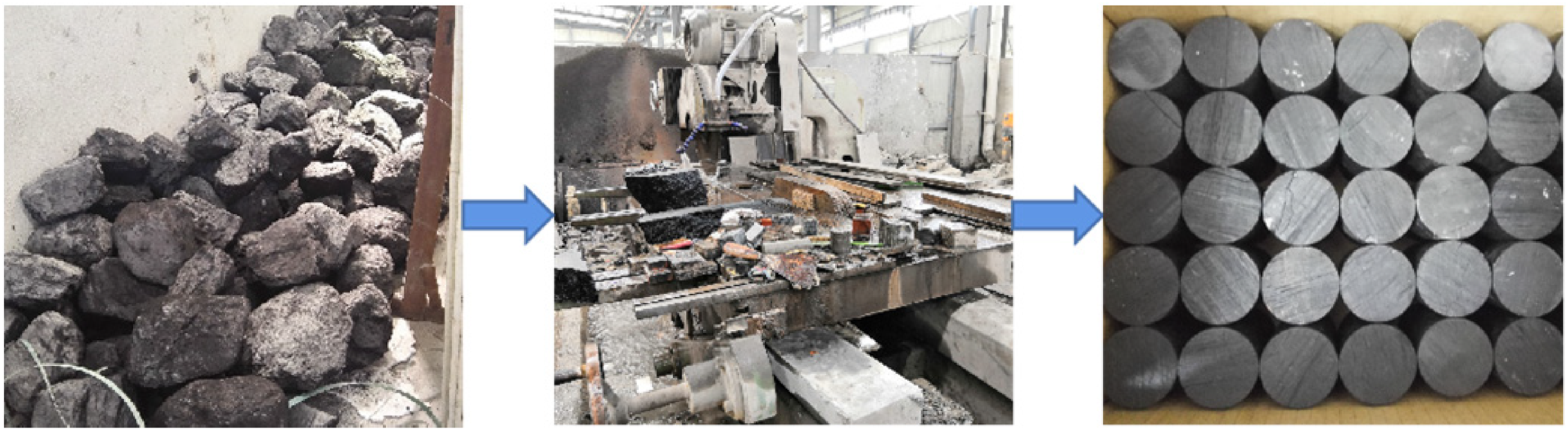
Coal samples processing process.
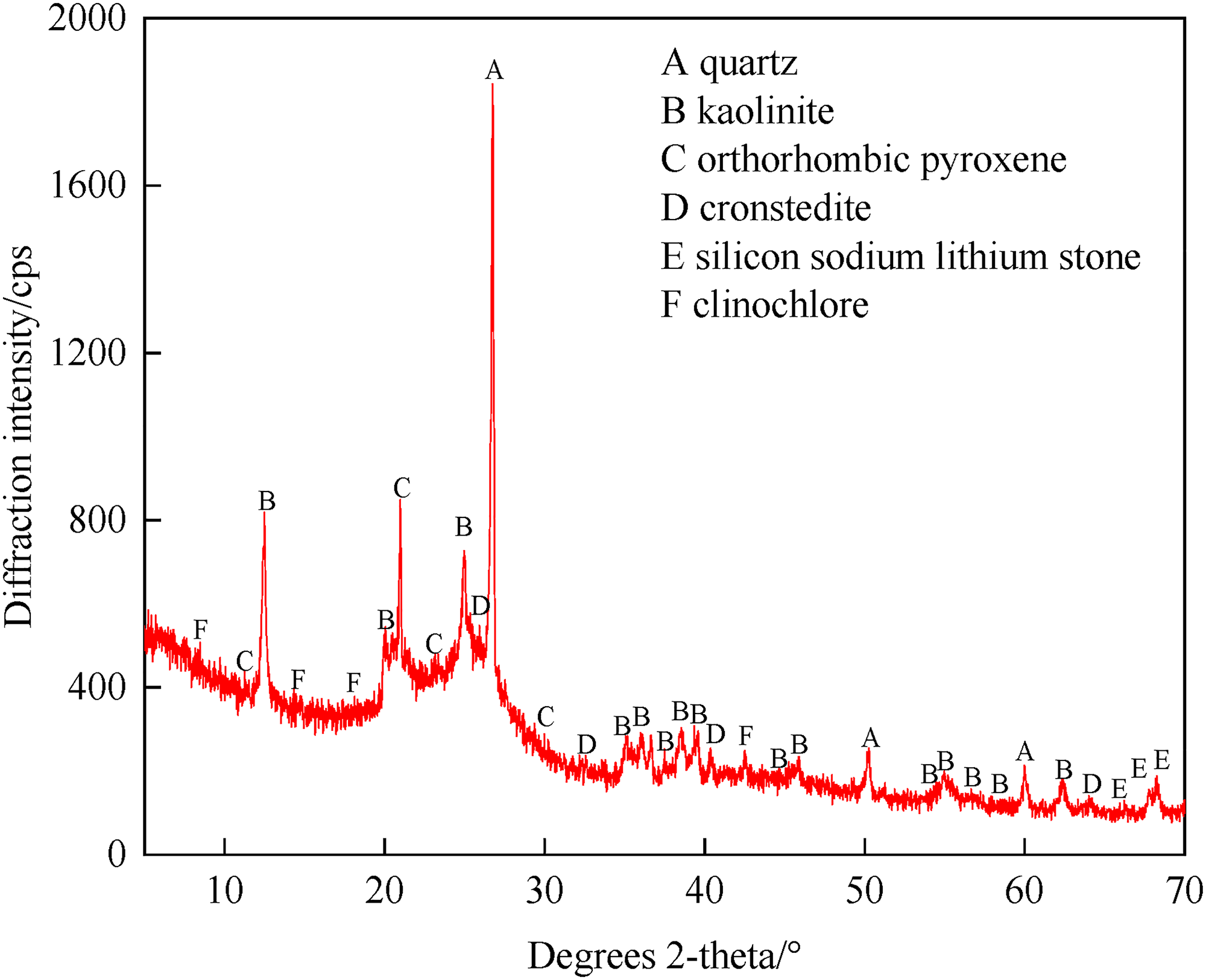
XRD experiment of the coal sample.
Temperature and humidity chamber
The freezing-thawing tests were conducted in a temperature and humidity chamber of TEMI850 Series, as shown in Figure 3. The advanced Proportional Integral Derivative (PID) controller is used to measure and control the freezing environment. The freezing temperature of samples was set to − 10°C, and the thawing temperature was 25°C. The samples were immersed in water at room temperature for 120 h to reach a water-saturated state. After that, the samples were placed in temperature and humidity chamber, the temperature inside the experimental apparatus decreased to required freezing temperature for more than 4 h, and then, the samples were thawed at the thawing temperature for over 4 h. The temperature can be adjusted directly on the display screen of instrument and the cyclic F-T process is shown in Figure 4.

The freeze-thaw instrument.
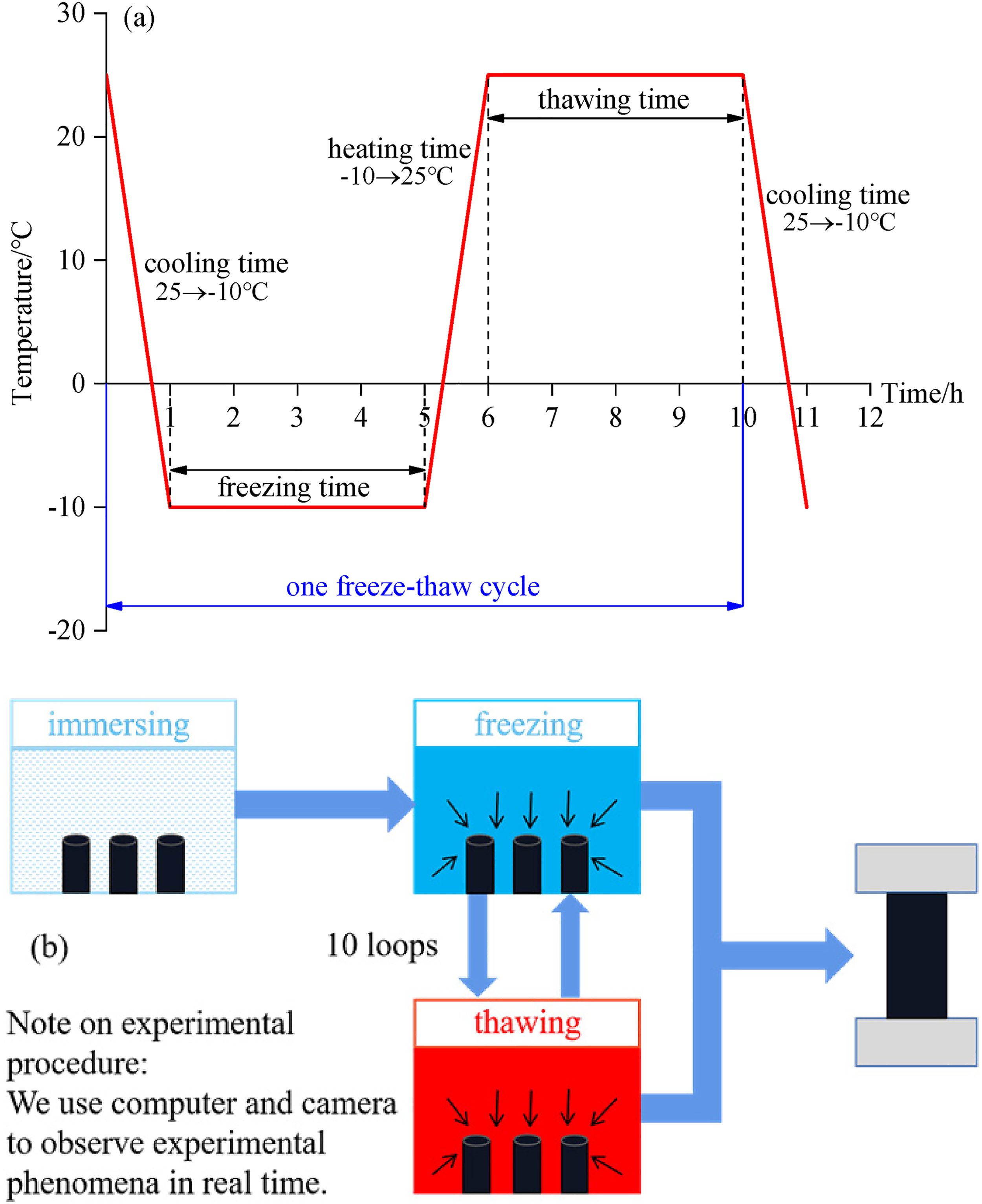
Cyclic F-T process. (a) Cyclic F-T schematic diagram. (b) Experimental physical map.
Uniaxial compression testing machine
The mechanical experiments were carried out by the MTS816 electro-hydraulic servo system, and the displacement control mode is adopted during the loading process with rate of 0.003 mm/s. The whole experimental process is controlled by computer system and automatic data collection is allowed, as is shown in Figure 5. The PCI-E AE analysis system is used to monitor the AE information by fixing six sensors on the samples.
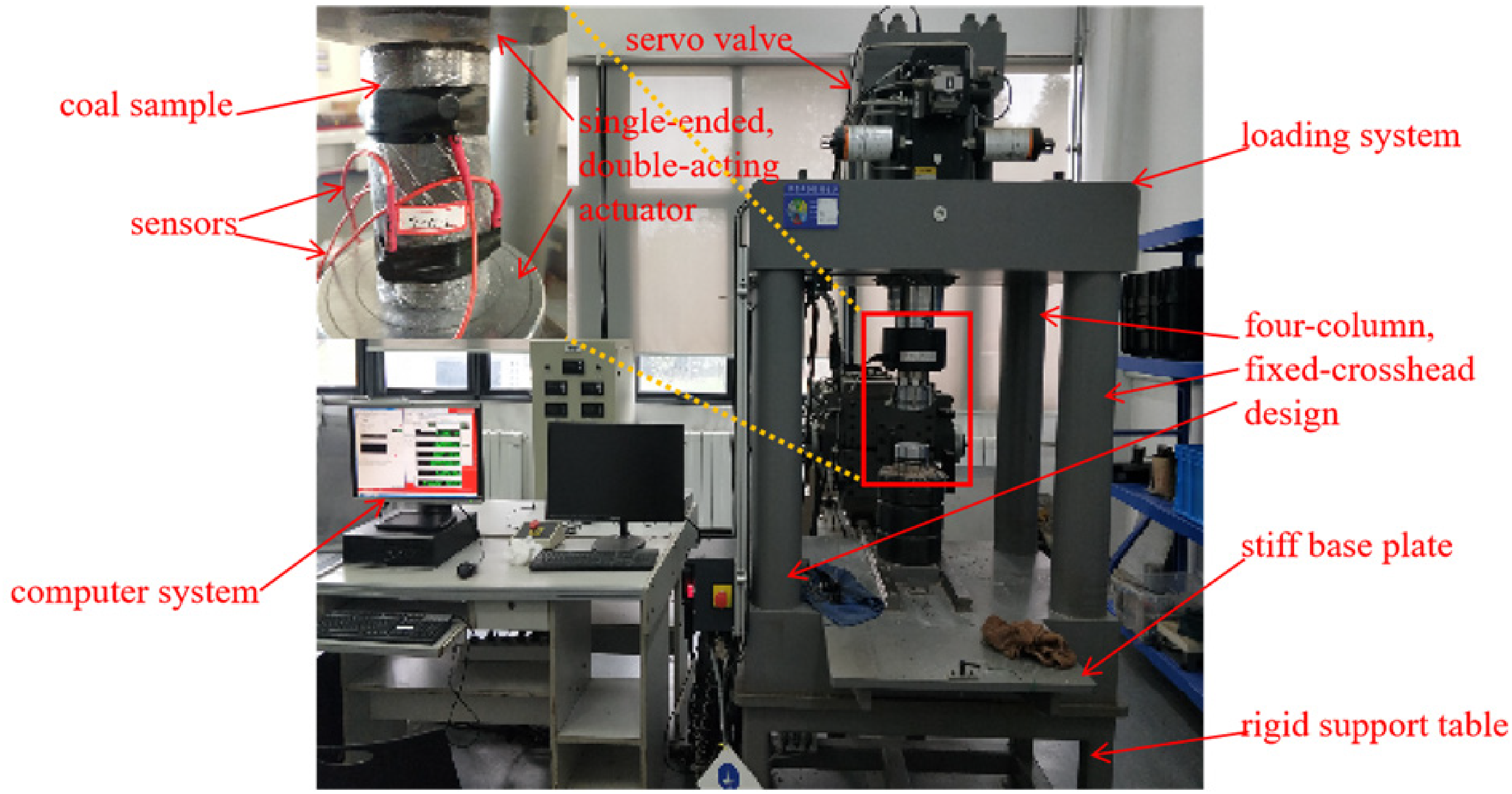
The MTS816 testing machine.
Results and discussion
Mechanical behaviors of coal samples
Stress-strain curves
The stress-strain curves subjected to different F-T cycles at −10°C were analyzed to describe the damage of coal under compression. As is shown in Figure 6, all the stress-strain curves have similar change trends, which can be divided into four stages: initial compaction stage (I), linear elasticity stage (II), damage accumulation stage (III), unstable rupture stage (IV). At the initial compaction stage, the internal pores and micro-cracks of coal samples gradually close under the action of external forces, and the density increases at this stage, however, the stress is still at a low level. At the linear elasticity stage, the compacted coal sample has linear response to external load, and the tangent deformation modulus approximately keeps unchanged (Gao et al., 2021). At this time, the sample is mainly elastically deformed. At the damage accumulation stage, the internal damage and deformation of coal sample increase rapidly, and the sample undergoes plastic failure. The tangent deformation modulus significantly decreases so that some micro-cracks gradually appear on the surface of coal sample. At the unstable rupture stage, the major mechanical damage inside the sample has formed and the micro-cracks evolve into macro-cracks, which leads to the macroscopic failure. The load-bearing capacity of the sample decreases rapidly with the severe deformation and fracture failure at this stage.
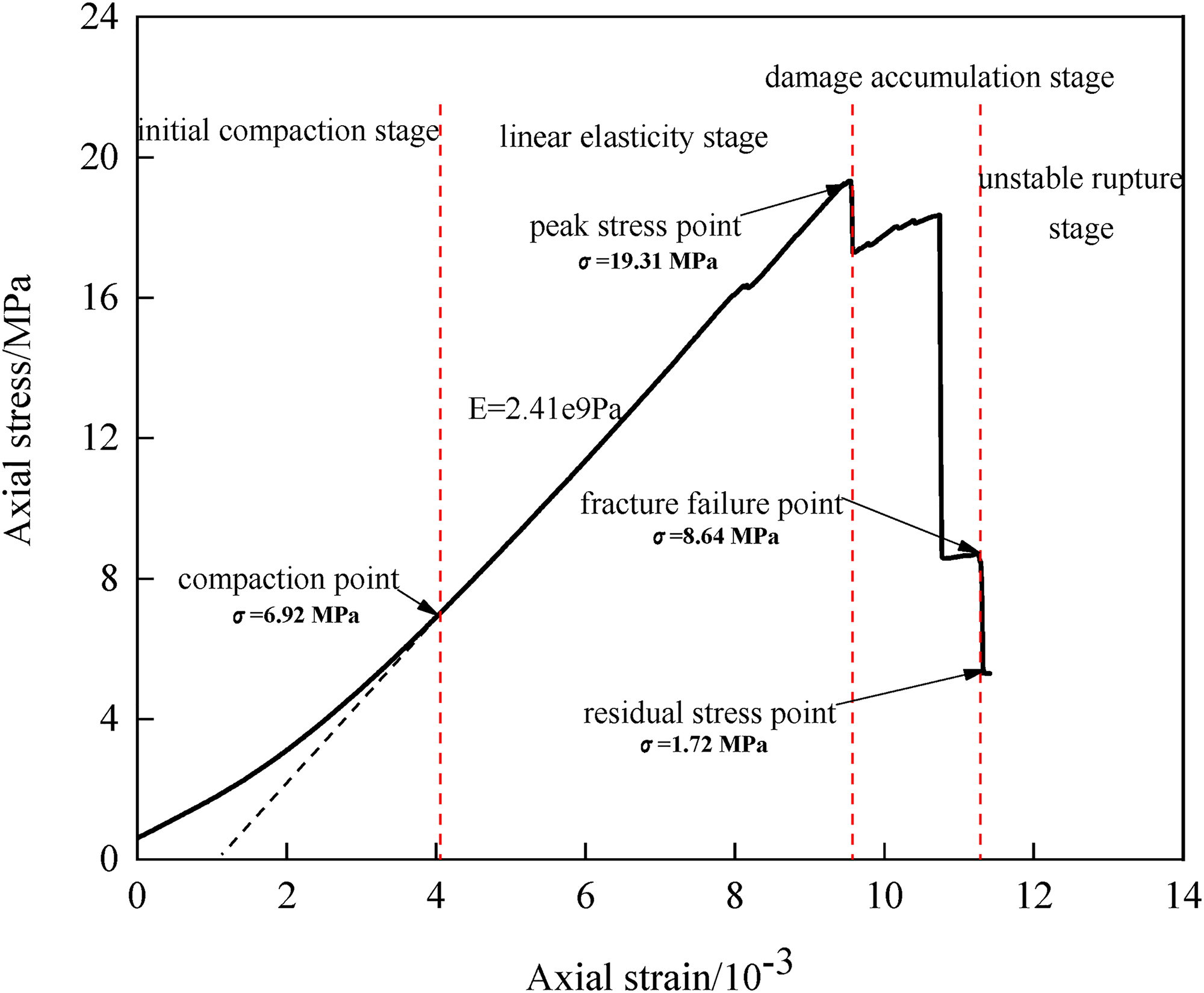
Divisions of the stress-strain curve.
Typical stress-strain curves of coal samples subjected to 0, 10, 15 and 20 F-T cycles are shown in Figure 7. With the increase of cyclic F-T times, the samples showed ductile damage characteristics and initial compaction stage gradually increased. This might be due to the destruction and reconstruction of the microstructure of coal under the action of low-temperature F-T cycles. When the sample is under compression, the initiation and propagation of cracks are closely related to the sudden fluctuations of the stress-strain curve, and the specific performance is the stress drop, which reflects the damage accumulation (Miao et al., 2018). Considering the discreteness of coal sample, the initial damage inside it gradually evolved into microscopic cracks during the compression process, which was the main reason that the stress fluctuated before reaching the peak stress.
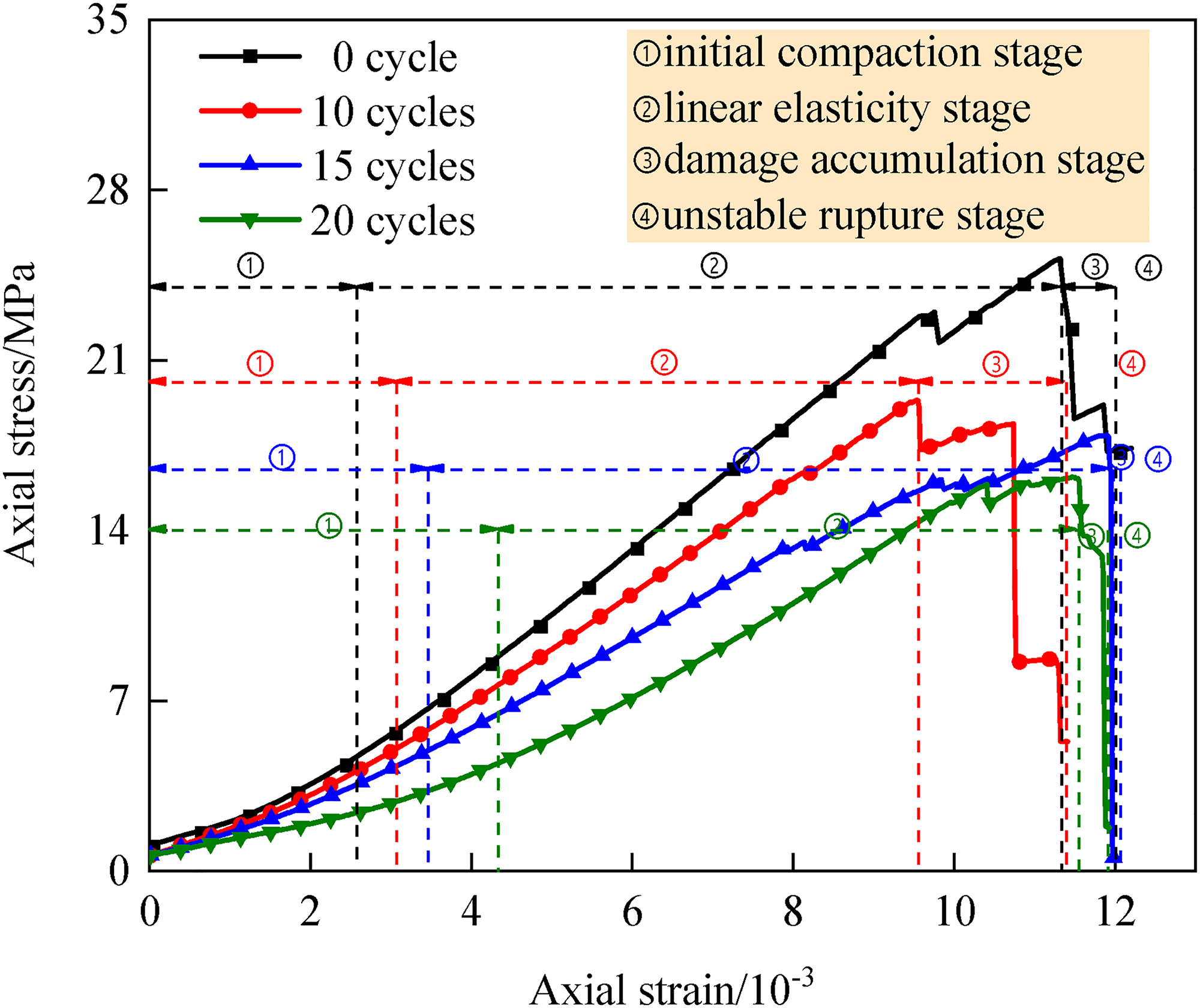
Stress-strain curves of coal samples at different F-T cycles.
Compressive strength and elastic modulus
Uniaxial compressive strength and elastic modulus are important parameters to characterize the mechanical properties of coal samples. The compressive strength reflects the compression resistance of the samples, which is the peak stress of the full stress-strain curve. The elastic modulus reflects the difficulty of the elastic deformation on coal samples. As is shown in Figure 8, with the number of F-T cycles increased, the compressive strength gradually decreased. Compared with the unfrozen-thawed coal sample, the compressive strength of the coal sample subjected to 10 F-T cycles decreased by 23.27%, 31.06% after 15 F-T cycles, and 36.01% after 20 F-T cycles. This is because the low temperature and cyclic F-T froze some macro-pore water inside the coal sample, thereby generating hydrostatic pressure, which promoted the migration of remaining unfrozen water to micro-pores. The microscopic pores were destroyed by migration of water, and finally interlinks of the sample were broken, which led to the deterioration of mechanical properties. When compacted, the sample suffers from elastic deformation and the stress-strain curve of the sample can be approximately expressed by a straight line at this stage. The slope of the curve can be fitted by linear regression method, which is elastic modulus of the sample. The figure suggests that the elastic modulus decreased with the increase of the number of F-T cycles, however, the decreasing trend gradually slowed down after the 15 F-T cycles, which might be because the low limit of coal sample prevented the mechanical properties of the sample from continuously deteriorating under the influence of F-T action.
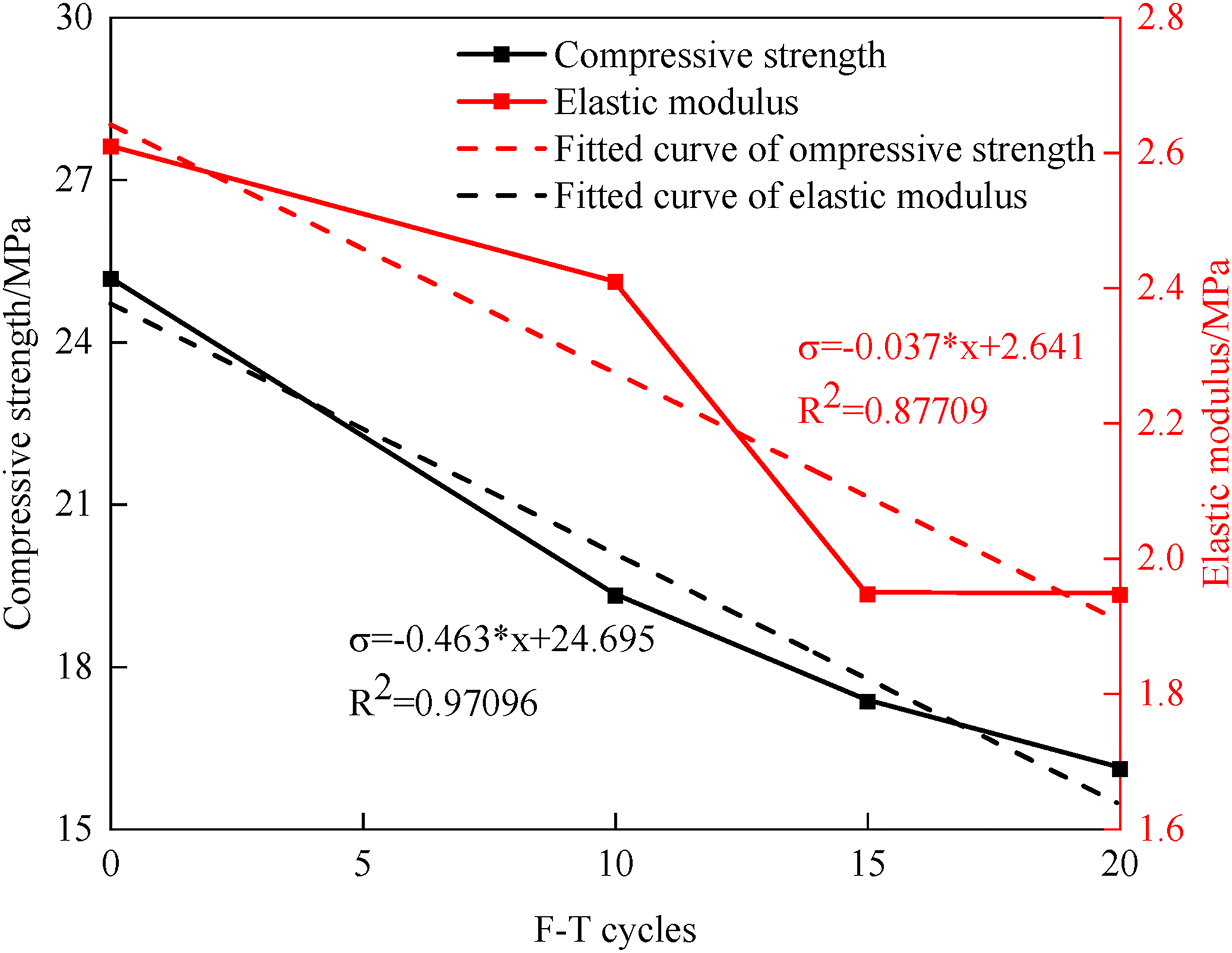
Compressive strength and elastic modulus of coal samples at different F-T cycles.
Acoustic emission characteristics of coal samples under uniaxial compression
Under the action of external load, the internal energy of the coal sample is released through the development, expansion and destruction of cracks on the sample. Elastic waves also generate during this process, which is the AE phenomenon of the sample. In order to study the evolution of internal fissures of coal samples and analyze the failure mechanism, the AE activities were monitored during the compressing process.
Analysis of the source of cracks
The peak frequency (so-called amplitude) of AE waveforms can be used to classify the crack sources (Farnam et al., 2015). In order to study the crack evolution of coal samples under uniaxial compression, the AE localization data was processed. Each point represents an AE positioning event, and the color represents the amplitude of the AE event. The final AE real-time positioning three-dimensional stereograms of the samples at different F-T cycles are shown in Figure 9. As the number of F-T cycles increased, the AE signals became dense and increased rapidly. This might be because the microstructure of the sample was destroyed by low-temperature F-T actions and load-bearing strength was weakened, which reduced the energy required for damage. More F-T cycles make it easy to generate micro-damage inside the sample, and relatively more AE signals were monitored. Therefore, the fractures of some samples were not obvious. Larger amplitude is related to severe damage of the sample. As can be seen, the sample can be roughly divided into three situations based on damage and failure: fractured and peeled side faces, internal damage concentration and shear failure.
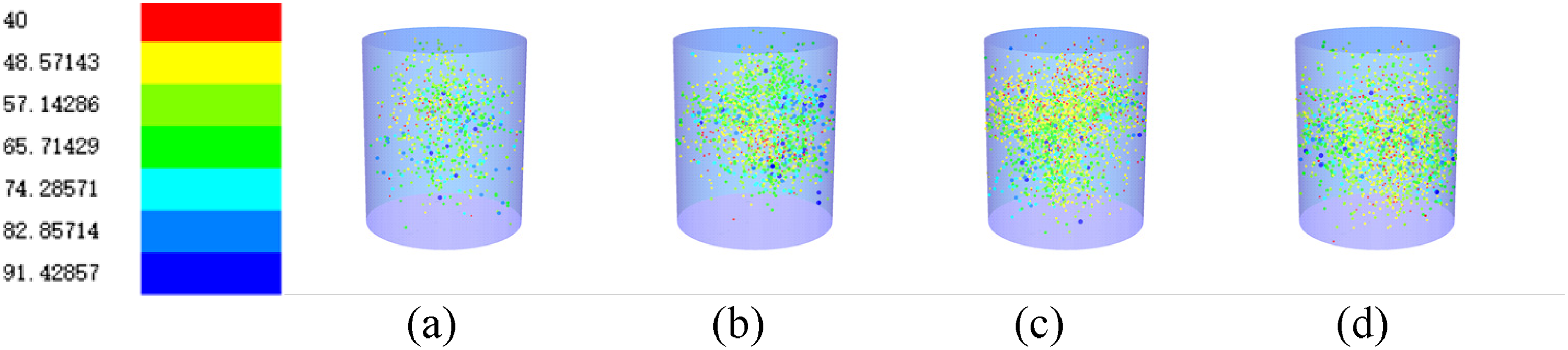
Distribution of final AE positioning signals at different F-T cycles. (a) 0 cycle, (b) 10 cycles, (c) 15 cycles, (d) 20 cycles.
In order to characterize the temporal and spatial evolution of AE localization data with compression time changes, the whole AE process was divided into 8 stages based on the total strain
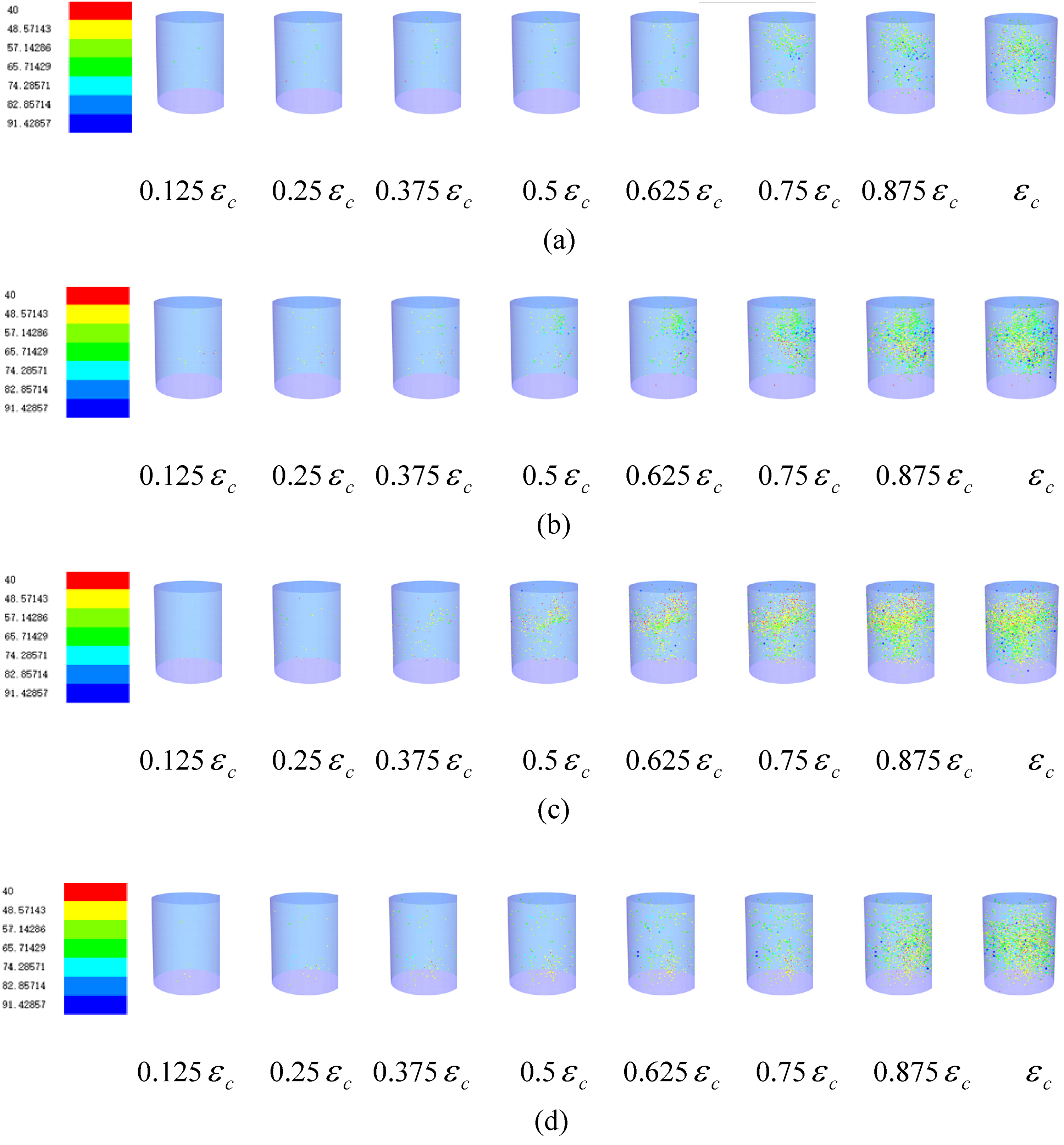
Distribution evolution of AE positioning signals at different F-T cycles. (a) −10°C/0 F-T cycle; (b) −10°C/10 F-T cycles; (c) −10°C/15 F-T cycles; (d) −10°C/20 F-T cycles;.
Evolution of AE energy
The AE energy is the energy released by the tested samples in per unit time during the collection of AE signals, which reflects the severity of crack propagation or failure of the coal samples at a certain time. The cumulative energy-time curves were analyzed to evaluate the evolution of the AE energy at different F-T cycles.
According to the crack evolution of the coal samples in the process of uniaxial compression, the curves can be divided into the following four stages considering cumulative energy in Figure 11: stable period (I), linear rising period (II), rising fluctuation period (III), invalidation (IV). At the stable period, few energy events are monitored. At this time, the coal sample is in the initial compaction stage, and the pores and micro-cracks inside the sample gradually close, which causes little damage. At the linear rising period, more energy events are monitored and the cumulative energy approximately increases linearly. At the rising fluctuation period, most of the energy events can be centrally monitored, and the cumulative energy increases rapidly accompanied by sudden changes because of the development and expansion of fissures. In the early rising fluctuation period, the coal sample is still in the linear elastic stage, however, the cumulative energy increases sharply because of the damage caused by poor toughness of the sample. At the invalidation period, the sample is completely destroyed, and there is no AE activity.
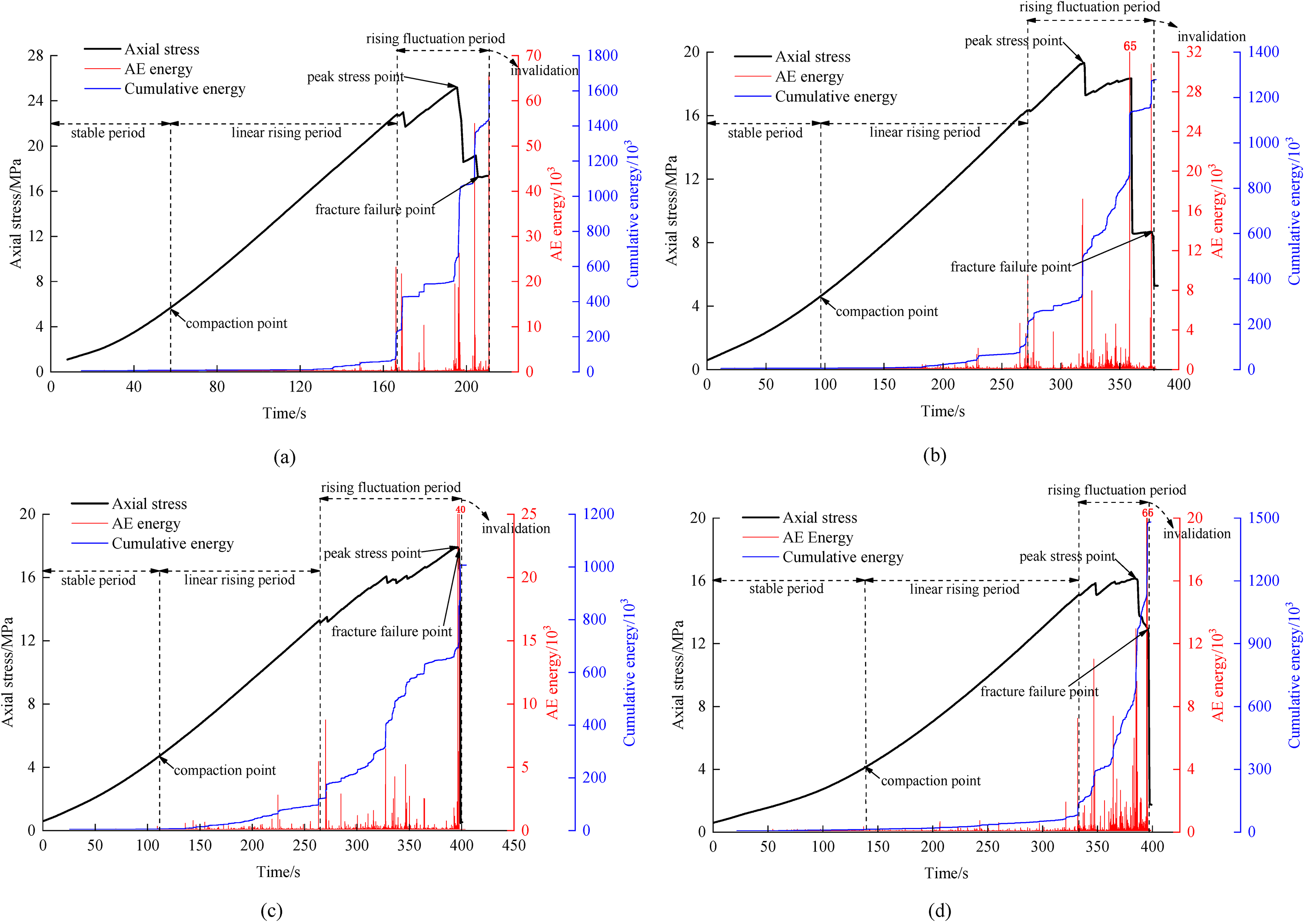
Evolution of AE energy at different F-T cycles. (a) −10°C/0 F-T cycle; (b) −10°C/10 F-T cycles; (c) −10°C/15 F-T cycles; (d) −10°C/20 F-T cycles.
Moreover, the Figure 11 indicates that most AE energy events were of low intensity, and hardly no energy events were monitored in the stable period. After that, the energy events appeared more frequently and the high intensity energy event could be monitored occasionally in the sample. As the number of F-T cycles increased, the possibility of energy germination gradually increased at each stage. Sometimes high intensity energy event was monitored before the peak stress point, which might be due to the destruction caused by initial internal damage of coal samples. The high intensity energy concentration phenomenon was observed during the rising fluctuation period, which led to the dramatic increase of the cumulative energy. This means that the internal destruction of coal samples was severe and the development and expansion of micro-cracks were rapid. Cracks finally were interrelated with each other while the overall shape was relatively complete because of the transient and sharp process. As shown in Figure 12, final cumulative energy of the coal sample subjected to more F-T cycles was lower than that of fewer F-T cycles when considering the discreteness of coal samples. As the number of F-T cycles increased, the energy accumulation duration increased and the time point of energy surge was delayed. The cumulative energy has a closely association with the degree of crack damage, which means high intensity energy causes internal damage easily. The tested samples can be divided into two kinds according to the fluctuation of the cumulative energy-time curves: gentle type and bursting type. No obvious macro-cracks were observed on the sample of gentle type. At the sample of bursting type, a large amount of internal damage caused multiple cracks, and some fragments sputtered out during the compression experiment.
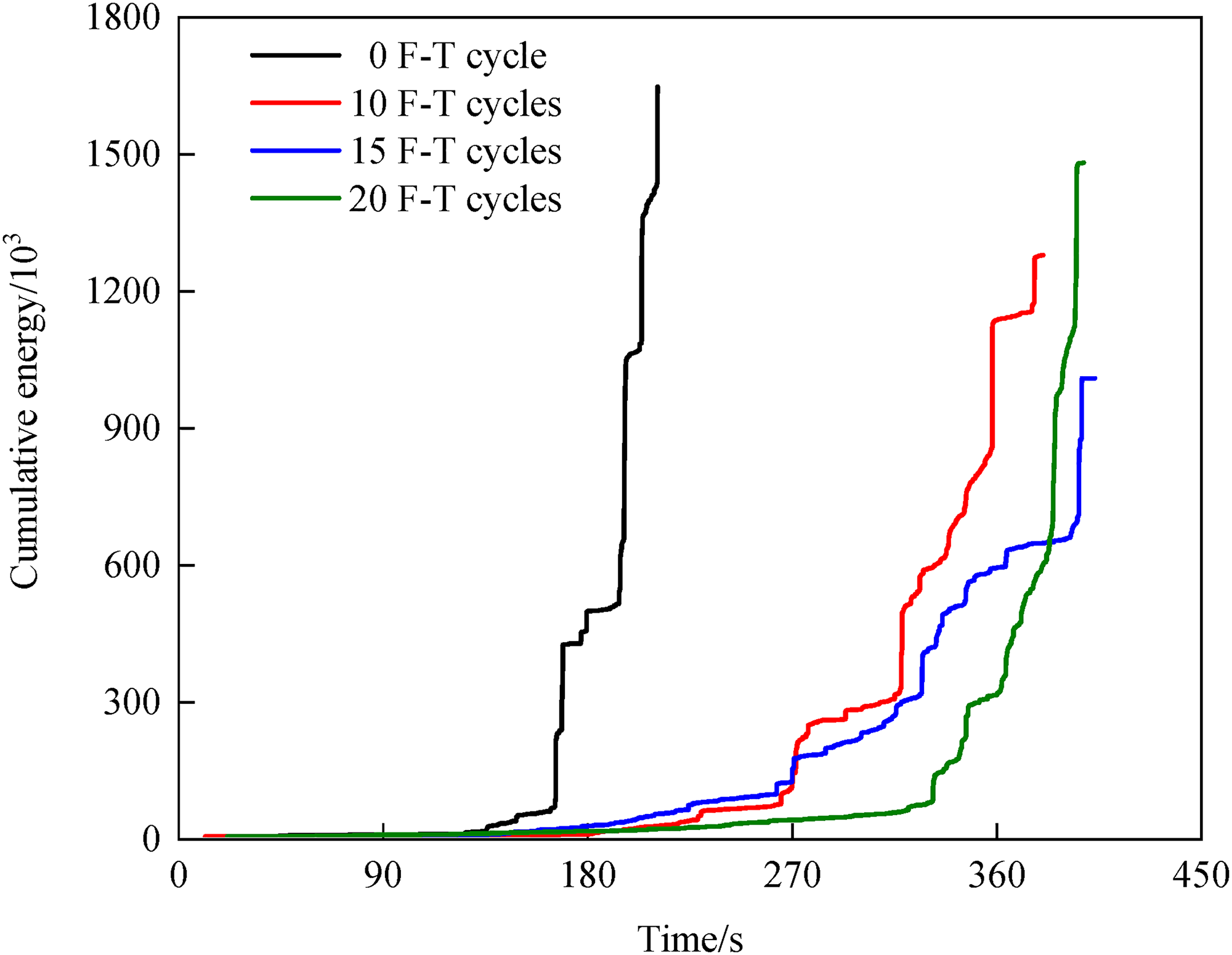
Cumulative energy at different F-T cycles.
Evolution of coal fracture based on RA and AF values
The rise time/amplitude (RA) value and the average frequency (AF) in the AE events can reflect the type of internal cracks in the material. The RA value is the ratio of the rise time to the amplitude, and the AF value is the ratio of the ring counts to the duration. As is shown in Figure 13, when AF values of the sample are low and RA values are high, the sample shows shear failure. On the contrary, the sample shows tension failure (Ohno and Ohtsu, 2010).
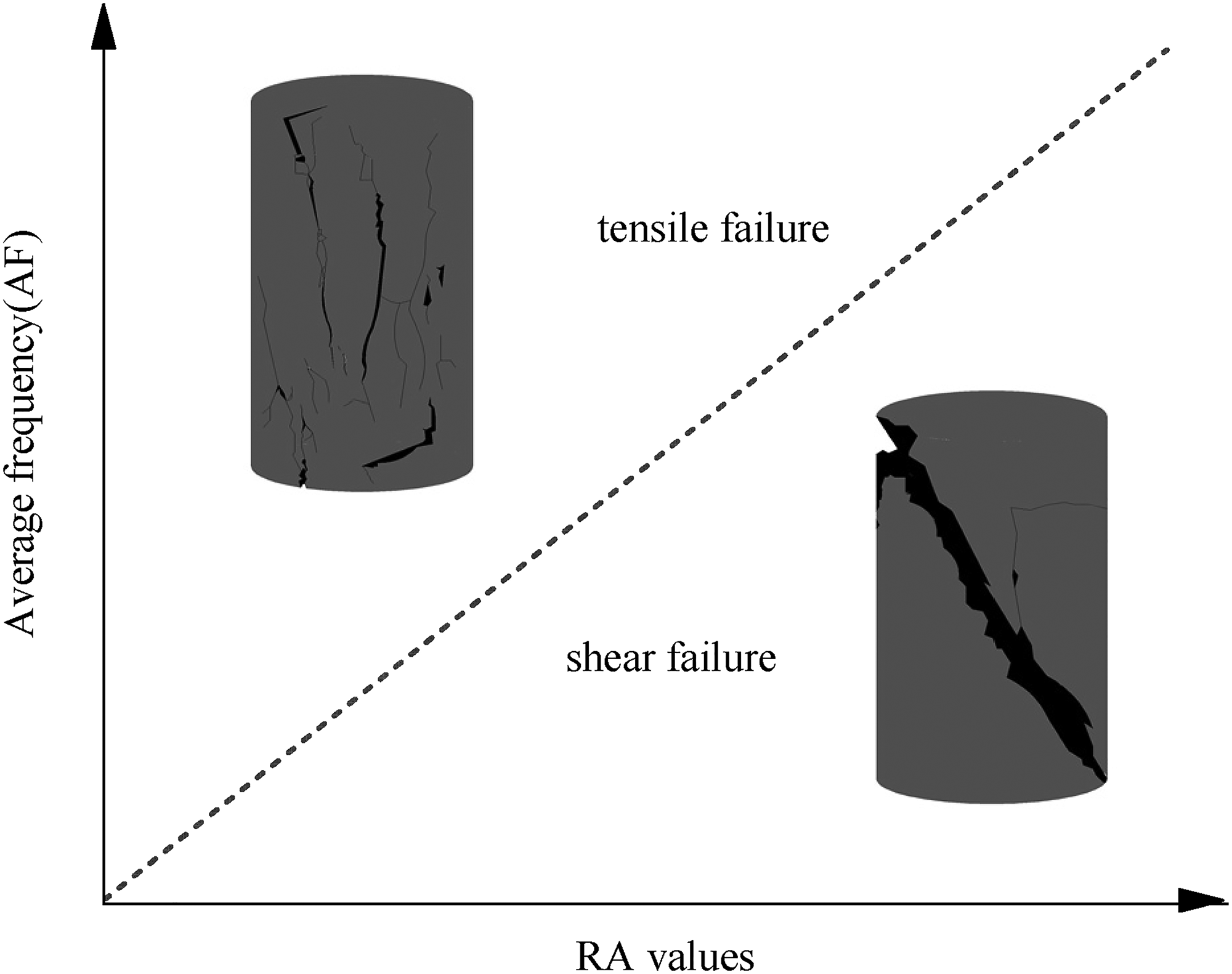
Crack classification based on AF and RA values.
The evolution characteristics of micro-cracks under uniaxial compression experiments based on AF and RA values were analyzed, which have the guiding significance of the development and expansion of micro-cracks. The AF-RA curves at different F-T cycles are shown in Figure 14. As the number of F-T cycles increased, the figure showed a trend that the AE events with low AF and high RA gradually increased, and the samples subjected to relatively fewer F-T cycles mainly produced higher AF and lower RA. This means the internal fissures of the coal samples transitioned from tensile fissures to shearing fissures, and the samples gradually showed tensile-shear combined failure.
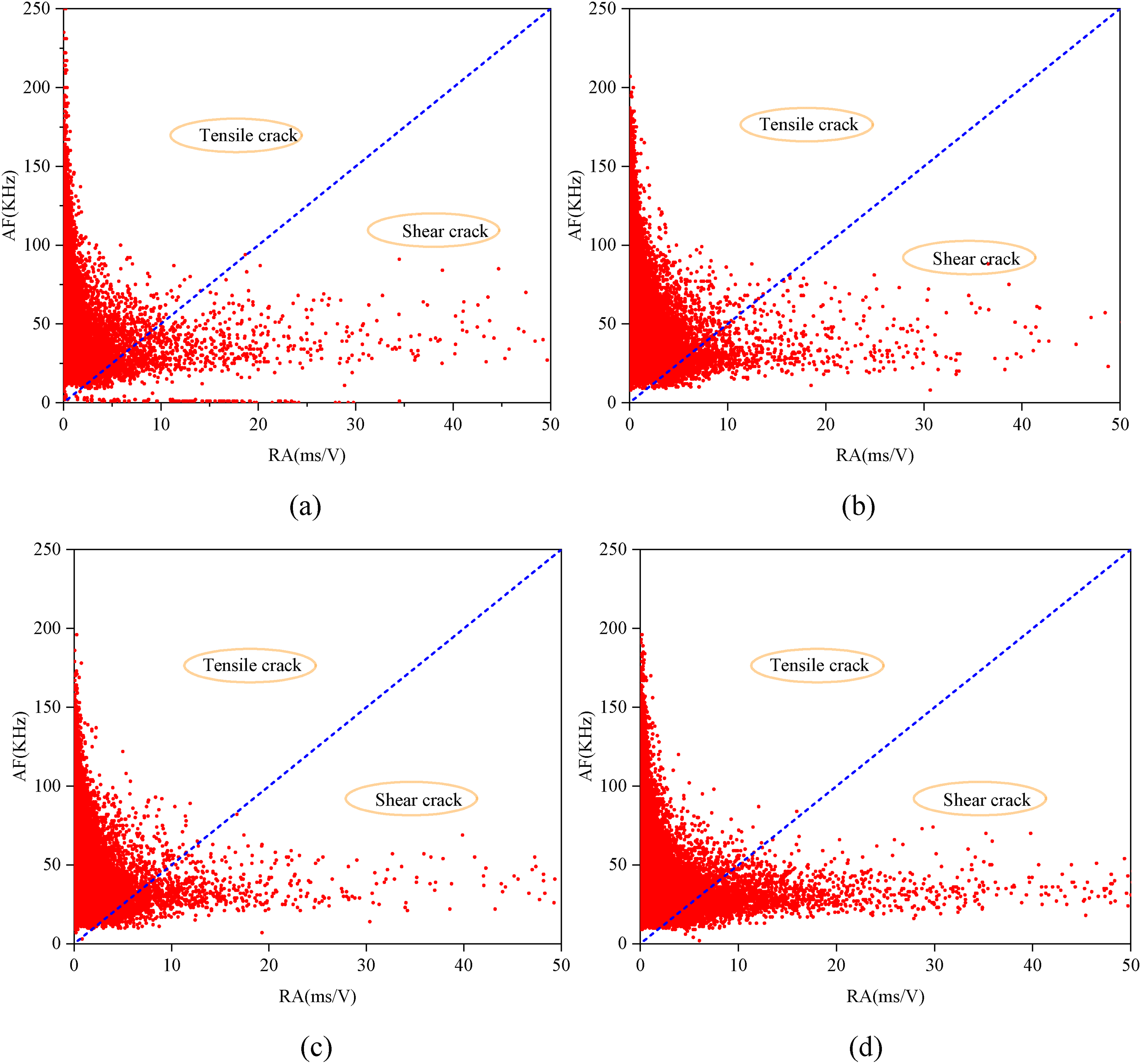
AF-RA curves at different F-T cycles. (a) 0 F-T cycle, (b) 10 F-T cycles, (c) 15 F-T cycles, (d) 20 F-T cycles.
Damage model based on AE characteristics
Damage model
From the analysis of AE activities above, it can be seen that the amplitude and the energy of AE activities play important roles in the evolution of damage. Therefore, the combined effects of these factors were considered to evaluate the damage.
A damage variable called D defined by Kachanov was used to construct the constitutive equation of coal samples:

Assuming that the cumulative energy of AE activities is




Finally, damage model of coal samples under uniaxial compression experiments based on AE characteristics was constructed:

Analysis of damage evolution
The representative samples were selected as the research objects to analyze and determine the modified coefficient


As is shown in Figure 15, the overall trends of the damage variables of coal samples under different F-T cycles decreased first and then increased. Comparing the representative curves of the 10 F-T cycles and 20 F-T cycles, the curve fell faster and rose more slowly with more F-T cycles, which might be due to the compaction of the micro-cracks and micro-pores inside the coal sample during the initial stage, so that the compressive strength and elastic modulus increased at this time. The F-T action destroyed the micro-structure and caused damage of the sample, as the number of the F-T cycles increased, the initial damage gradually increased and the damage variable of the sample decreased rapidly under the uniaxial compression experiment. The increasing damage variable meant the sample was gradually in the damage accumulation stage and the ductile damage characteristics of the sample gradually appeared with more F-T cycles, so the damage variable of the sample subjected to 10 F-T cycles rose more quickly.
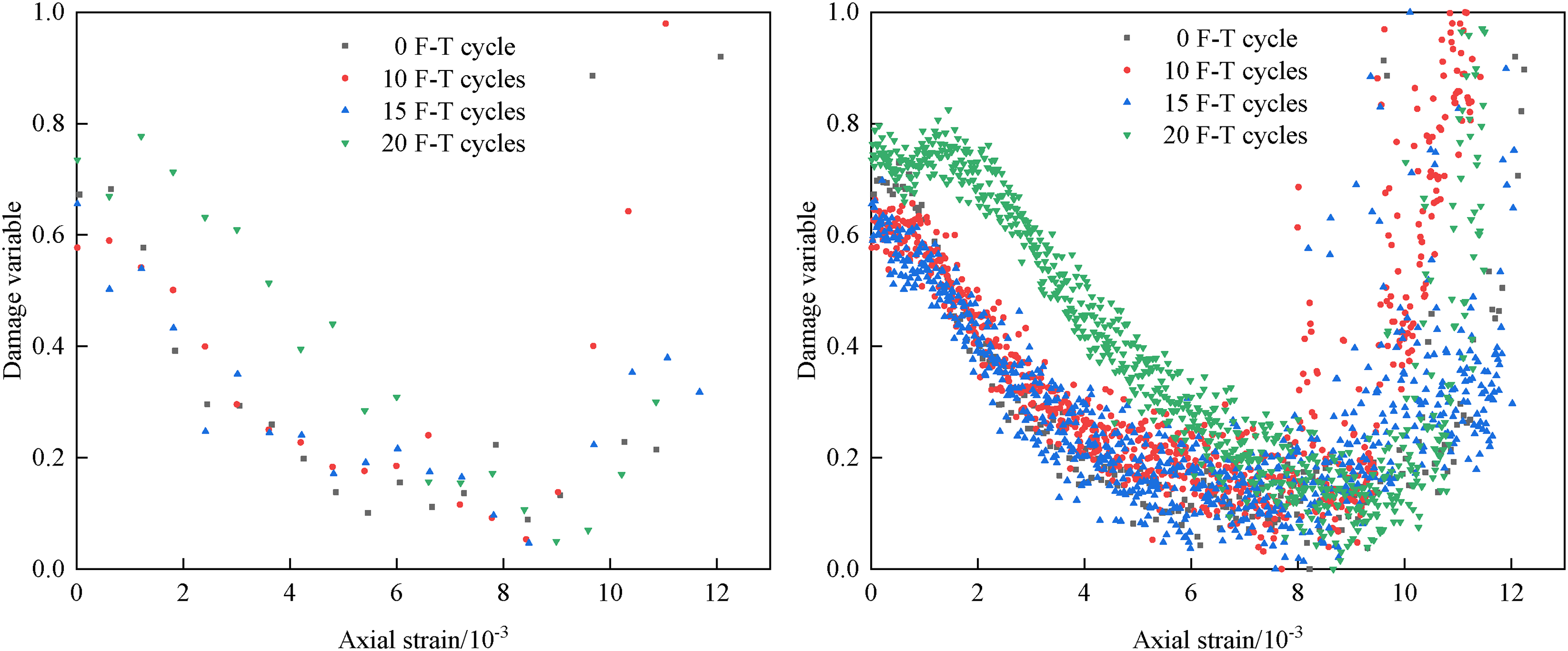
Actual damage variables at different F-T cycles.
The formula (6) indicates that the damage variable in the damage constitutive equation is closely related to the cumulative energy of AE, so the damage variable can be divided into two stages based on cumulative AE energy:

According to the damage variable in formula (9) based on the cumulative energy, the unknown parameters a, b,
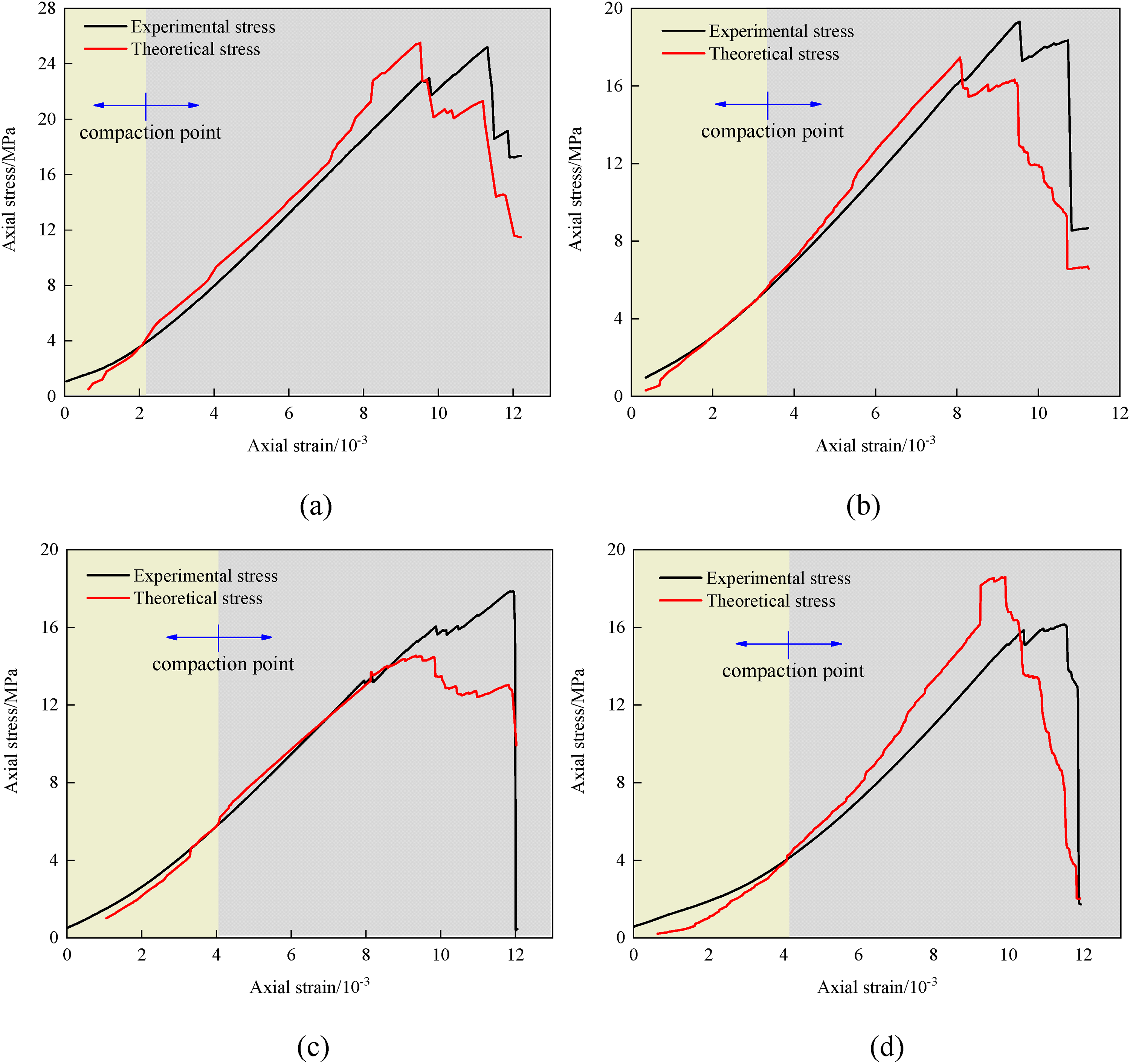
Comparison between theoretical and actual tested stress-strain curves. (a) 0 F-T cycle, (b) 10 F-T cycles, (c) 15 F-T cycles, (d) 20 F-T cycles.
The values of the unknowns.

The Figure 16 suggests that the theoretical curves were in good agreement with the stress-strain curves obtained from the actual experiments. In particular, it can accurately reflect the overall stress-strain characteristics of coal samples at different F-T cycles. Under the condition of uniaxial compression, the coal sample undergoes the initial compaction stage. At this time, the microscopic cracks and pores inside the coal sample gradually closed, and the deformation resistance and elastic modulus of the sample increased. The damage showed a nonlinear change with the increase of the cumulative AE energy, and the specific trend of damage variable decreased first and then increased. This damage constitutive model conformed to the damage evolution law inside the coal well.
Conclusions
In this paper, uniaxial compression experiments were presented on coal samples subjected to different F-T cycles at −10°C. The main results show that with the increase of F-T cycles, elastic modulus of coal samples gradually decreased, the samples showed ductile damage characteristics and initial compaction stage gradually increased. The compressive strengths of frozen-thawed coal samples are all lower than that of unfrozen-thawed coal sample, the compressive strength of the coal sample subjected to 10 F-T cycles decreased by 23.27%, 31.06% after 15 F-T cycles, and 36.01% after 20 F-T cycles.
The AE positioning signals showed a trend that with the deformation increased, the AE events gradually increased. As the number of F-T cycles increased, the internal fissures of the coal samples transitioned from tensile fissures to shearing fissures, and the samples gradually showed tensile-shear combined failure. The final cumulative energy of the coal sample subjected to more F-T cycles was lower than that of fewer F-T cycles, the energy accumulation duration increased and the time point of the energy surge was delayed with the increase of cyclic F-T times.
A damage model based on the evolution law of the cumulative energy was established to bridge the gap between macro-micro damage mechanics. The damage showed a nonlinear change with the increase of the cumulative AE energy, and the overall trends of the damage variables of coal samples at different F-T cycles decreased first and then increased. The theoretical curves were in good agreement with the stress-strain curves obtained from the actual experiments by comparison.
Footnotes
Acknowledgements
This research was supported by the National Natural Science Foundation of China (41871063), the Fundamental Research Funds for the Central Universities (2019ZDPY18).
Declaration of conflicting interests
The author(s) declared no potential conflicts of interest with respect to the research, authorship, and/or publication of this article.
Funding
The author(s) disclosed receipt of the following financial support for the research, authorship, and/or publication of this article: This work was supported by the Fundamental Research Funds for the Central Universities, National Natural Science Foundation of China, (grant number 2019ZDPY18, 41871063).
