



Abstract
Thermal, electrical, as well as mechanical behavior of blends of polyamide 6/polystyrene (PA6/PS) (50/50 wt/wt%) loaded with different concentrations of lead dioxide (PbO2) were investigated for X-ray shielding. Thermal stability and hardness (shore D) of these composites are studied. Addition of PbO2 decreases the thermal stability of the prepared composites. Stability of thermal properties confirmed by determining the activation energy for the thermal decomposition of unfilled PA6/PS and filled composites according to the Horowitz and Metzger method. Dielectric properties of bulk PbO2 have been investigated as a function of frequency and temperature in the frequency range from 40 Hz to 5 × 10⁶ Hz and in the temperature range from 293 K to 423 K. The characterization of the prepared composites is done using scanning electron microscope. With PbO2-loaded PA6/PS blends composites, the dielectric properties were significantly influenced by γ-irradiation effects that ε′ and
Introduction
Compounds with high molecular weight constitute one of the major fields of modern technology, which either natural or synthetic high polymers, and participate in a wide range of industrial applications 1 ; these compounds can also be acquired in different forms such as powders and thin films. 2 To set a material appropriate for applications in different innovative fields, one needs to defeat certain constraints, such as poor mechanical properties and process ability and instability in ambient conditions. A few methodologies have been made by numerous scientists to improve these properties. 3
New materials are being offered in each region and novel items are always being presented. 4 Among these new materials, composites dependent on polymers are the most encouraging on the grounds that they are light in weight, adaptable, and more affordable. Conductive polymer composites with great handling and mechanical properties for given applications can without much of a stretch be created by blending conductive polymer or fillers into protecting polymer lattices.
A composite material has been characterized as an artificial or man-made material comprising of at least two physically as well as synthetically particular, reasonably masterminded or circulated stages with an interface isolating them and having properties that are not controlled by any of its segments in isolation. Such materials are required in numerous applications where the desired material ought to have a combination of properties not normally controlled by a single-phase material. 5 The design of polymer composites is emphatically impacted by the need to accomplish valuable mechanical, thermal, electrical, and other physical properties, such as ecological degradability or resistance to degradability. To make exceedingly inflexible, high-performance composite, we need a profoundly cross-linked molecular structure that is defect-free and a high Tg. Properties such as mechanical strength, hardness, fatigue resistance, heat distortion temperatures, and chemical resistance are related to molecular architectures and chemical composition.
Polymer and polymer-based composites with electroconductive properties have been used in various high innovation applications in energy storage, antistatic packaging, electro-optical devices, welding of plastics, organic light-emitting diodes,6–8 sensors for unsafe gases and lethal exhaust, and erosion inhibitors for iron and gentle steel. In our modern age, there are special plastic shields which attenuate gamma or X-ray radiation. Lead-polymer composites are used to make electrical insulator items.
Abdel-Aziz et al. 9 prepared a composite of styrene-butadiene-rubber (SBR) with three unique sorts of lead oxide (PbO, PbO2, and Pb3O4) for their γ-radiation shielding properties. As a result of the innovative significance of these composites, their electrical properties have been considered to a great extent. Nonetheless, a large portion of these investigations are identified with the direct current electrical conductivity of these composites. Very little consideration appears to have been paid to the dielectric properties and alternating current (AC) conductivity of these composites; this is particularly the situation with metal–polymer composites. Conductor-polymer frameworks containing carbon-based fillers, then again, are all the more completely examined. Accordingly, information on the AC electrical properties of particulate-filled composites, especially metal–polymer composites, is inadequate.10,11
Dang et al. 12 mentioned that an expanding enthusiasm for the polymer-–lattice composites is arranged by blending at least two constituents to make up certain drawbacks in a single material. For instance, by consolidating diverse conductivity fillers with polymer,13,14 polymer composites with uncommon physical property applied in electronic industry territories, for example, capacitor, can be created. 15 The conducting polymers are brittle and thus have a negligible mechanical utility. Blends with thermoplastics have been concentrated to scan for answers for these problems. 16
The investigation of dielectric constant and electrical loss of different polymers illuminated with various types of radiation, for example, protons, neutrons, electrons, and gamma rays, is of great practical importance. 17 Polymers are adaptable and can be handled effectively, yet their dielectric constants are relatively low, hence, the use of an individual polymer is enormously confined in numerous perspectives. 18 By joining the benefits of the two stages, the composite of polymer/filler can offer improved properties. Furthermore, its dielectric and different properties can be planned by explicit prerequisites by altering the general part of the materials, 19 treating the component with different chemical or physical methods, and changing the processing techniques.
To set up the composites with magnificent dielectric property, it depends on the homogeneous distribution of the filler in the matrix. Moreover, the interface among the distinctive stages in the composites assumes likewise a vital job on choosing the dielectric property. The dielectric property of the composites relies upon the volume fraction, size, and shape of conducting fillers, also on other factors, such as preparation method, interface, and interaction between the fillers and the polymer.20–22 In this manner, understanding the dielectric behavior of the polymer–matrix composites is essential in building utilization of new materials. 12
Ionizing radiation can be a genuine worry in nuclear power facilities, modern or therapeutic X-ray frameworks, radioisotope ventures, particle accelerators, and a number of other circumstances. X-Ray and gamma ray sources are being utilized in a wide exhibit of therapeutic and industrial apparatus, and the development of such use extends from year to another. Therapeutic hardware and devices that produce X-rays and γ-rays must be shielded to ensure administrators, clinicians, patients, and sensitive electronic components from tube leakage and scattered radiation.
According to Bennett, 23 about 80% of the X-ray doses received by the public are caused by medical diagnostic X-ray examinations. Consequently, due to these X-ray adverse effects, lead (Pb) and its compounds had been used as the preferred material for X-ray shielding because of its high efficiency in protecting humans.24–26 Moreover, Pb has a high atomic number (Z: 83) and high density (8.90 g cm−3), which are the two main concerns when selecting the good X-ray shielding material. Pb is the most widely recognized shielding material used to secure against X-rays and γ-rays. In this way, Pb-polymer composites are utilized to make electrical encasing things. Pb has been used as a solid encased within a polymer matrix or as a filler. 27
Many researchers have tried to fabricate polymer composite to replace Pb glass as the X-ray shielding material due to their unique properties such as low toxicity and cost-effectiveness for use in various applications.28,29
The improvement in the utilization of electronic devices over a wide scope of military, mechanical, business, and client zones has made another kind of defilement known as noise or radio frequency interference or electromagnetic interference that can cause obstruction or breaking down of equipment. Thusly, there is an increasingly conspicuous necessity for the effective shielding of segments from its unfavorable effects.
Whenever γ- or X-ray radiations occur on a limited thickness of material, the incident radiation will interact with the material and will be attenuated. The total probability of the interaction which called linear attenuation coefficient μ for the photons of the energy of interest in the shield material can be calculated by plotting the variation of X-ray intensity versus thickness x of the absorber materials, which is given by the Beer–Lambert’s law 30

where I0 is the initial photon intensity and I refers to photon intensity at a point of interest outside the shield. Values of μ (cm−1) for each material depend mainly on its atomic number and the energy of the incident radiation. The half-thickness or the half-value layer (HVL) for a particular shielding material is the thickness required to reduce the intensity to one half its incident value, that is, HVL is given by (ln 2)/μ. 31
Polystyrene (PS) which is a transparent, rigid, and a brittle thermoplastic polymer that softens slightly over 100°C turns into a viscous liquid at around 185°C. It is resistant to acids, alkalis, oils, and alcohols and can be used in many applications that include electrical and thermal insulation, food packaging, audiocassette housings, and toys. PS finds a diversity of applications in a wide range of markets due to its properties, low cost, and ease of fabrication.32,33
Polyamides (PAs) incorporate a scope of materials, contingent upon the monomers utilized. Nylon-6,6 and nylon-6 keep on being the most well-known popular types, still accounting for more than 90% of nylon use.
Nylon, especially nylon-6, is known to be amazingly score notch-sensitive and brittle at low temperature. Including some thermoplastic elastomers or exceptional added substances is a regular practice to get new materials with great effect properties. 34
The present investigation aimed to fabricate an economic, easily workable, and environmentally friendly X-ray shielding composite material using polyamide 6/polystyrene (PA6/PS) with blending ratio (50:50 wt/wt%) loaded with different weight percentages (wt%) of inorganic fillers, such as PbO2 for X-ray shielding. Moreover, we report on thermal stability and hardness of the prepared materials, also it is convenient to clarify the effect of ionizing radiations on the electrical properties of these composites.
Experiment
Materials and preparation of sample
Preparation of samples
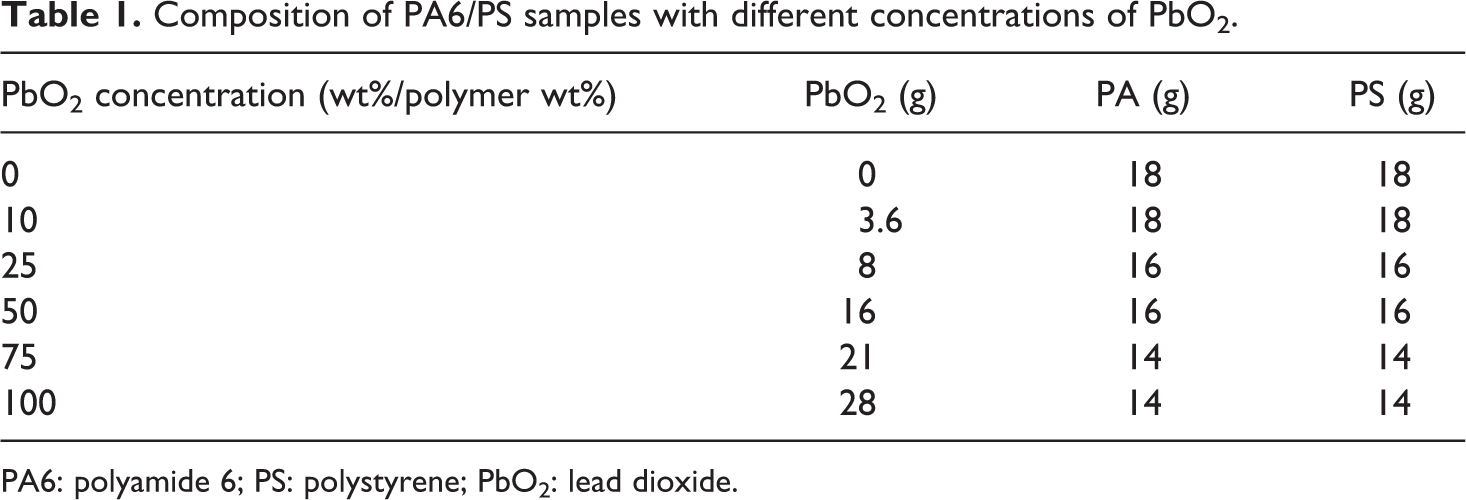
PA6 was supplied from El-Nasr Company for chemicals and drugs (Egypt) with 99.99% purity and PS was supplied from Sigma-Aldrich company (Germany) with an approximate average Molecular weight of 192,000 were used in this study. The formulation of different mixes is presented in Table 1 and the blended composites were prepared. The samples (PA6/PS) with different weights of filler (0, 10, 25, 50, 75, 100 wt/wt%) of PbO2, which has been supplied by Sigma-Aldrich company with maximum particle size 45 µm and purity 99%, were prepared as follows. The PA6/PS (50:50) was loaded into the Brabender and mixed for 5 min. PbO2 was added into the composites and mixed for 4 min. The final mixing was carried out for 2 min in the two-roll mill. Finally, the composites were molded between smooth Teflon sheets at a temperature of 240°C and a pressure of 25 MPa in an electrically heated press for a specific time (10 min). The compression-molded samples were allowed to cool at room temperature and kept for maturation (24 h) before measurement.
Composition of PA6/PS samples with different concentrations of PbO2.
PA6: polyamide 6; PS: polystyrene; PbO2: lead dioxide.
Measurements
Thermogravimetric analysis
The thermogravimetric analysis (TGA) thermograms were performed on a Shimadzu-50 instrument (Kyoto, Japan) at a heating rate of l0°C min−1 from room temperature to 600°C and under constant rate of nitrogen (20 ml min−1) to prevent thermal oxidation processes of polymer samples and to investigate the thermal stability.
Dielectric properties of polymer blend
The dielectric properties were measured using a bridge (3538-50 LCR Hi Tester; Hioki, Japan) in the frequency range of 102–106 Hz. The bridge is connected via a standard interface (RS-232C interface; Hioki) to a PC for instrument control and data processing. The samples were in the form of disks of 0.2–0.3 cm thick and 1.0 cm in diameter and were then sandwiched between two brass electrodes; dielectric constant and dielectric loss of the samples were measured at different temperatures.
Microstructural characterization and mechanical testing
The prepared composites were subjected to microstructural characterization using scanning electron microscopy (SEM) [Model Quanta 250; FEI Company, the Netherlands) with an accelerating voltage 30 kV, magnification 14× up to 1,000,000, and resolution for Gun is 1n to identify morphology and distribution of PbO2 particles in the PA6/PS matrix. Samples were fractured in liquid nitrogen, and the fractured surfaces were gold-plated and then mounted over an aluminum stub with double-sided electric adhesive tape. The vacuum was on the order of 10−4–10−6 mmHg during the scanning of the composite samples. Samples were characterized by studying the physical properties like hardness (shore D) according to the American Society for Testing and Materials Standard ASTM-D-785, the test was held at room temperature for each composition and the average value was represented for each sample.
Irradiation of samples
Selected samples were exposed to Co60 gamma rays at National Center for Radiation Research and Technology (NCRRT), Atomic Energy Authority (AEA), and at a temperature of 25°C with doses from 10 Gy up to 200 kGy, the activity of the source was nearly 500 Curie and the half-life time was 5 years (all measured points are the average of three times measurements).
X-Ray shielding measurement
X-Ray shielding ability of the prepared composites (PA6-PS/PbO2) was studied at different applied voltages (70 and 100 kV) of X-ray machine by continuous X-ray source tube (Philips-MCN 323 metal-ceramic double pole, United Kingdom) with maximum voltage 320 keV and maximum current 22 mA. The relation between the linear attenuation coefficient μ and PbO2 filler concentration was studied, μ and HVL were calculated for unfilled PA6/PS blend and its composites filled with different concentrations of PbO2, at different applied voltage of X-ray machine (70 and 100 kV).
Results and discussion
Thermal stability and analysis
Thermogravimetric analysis
Various examinations have demonstrated that non-isothermal TGA is an integral asset to describe the thermal degradation of polymers, which gives a technique for thermal stability testing.35–42 Likewise, the underlying (TGA) thermograms can be utilized to calculate the activation energy (Ea) of thermal decomposition reaction.43–45
With legitimate trial methodology, data about the kinetics of decomposition can be acquired and the information obtained from thermogravimetric investigations might be utilized as criteria for the decision of a polymer. The assurance of kinetic parameters as observed from the nonisothermal thermogravimetry is a standout among the most troublesome kinetic problems. Numerous creators have ordered strategies for kinetic data analysis into integral, differential, and specified methods,46–48 which have more often than not been connected to ponder the deterioration of polymeric materials from thermogravimetric information.
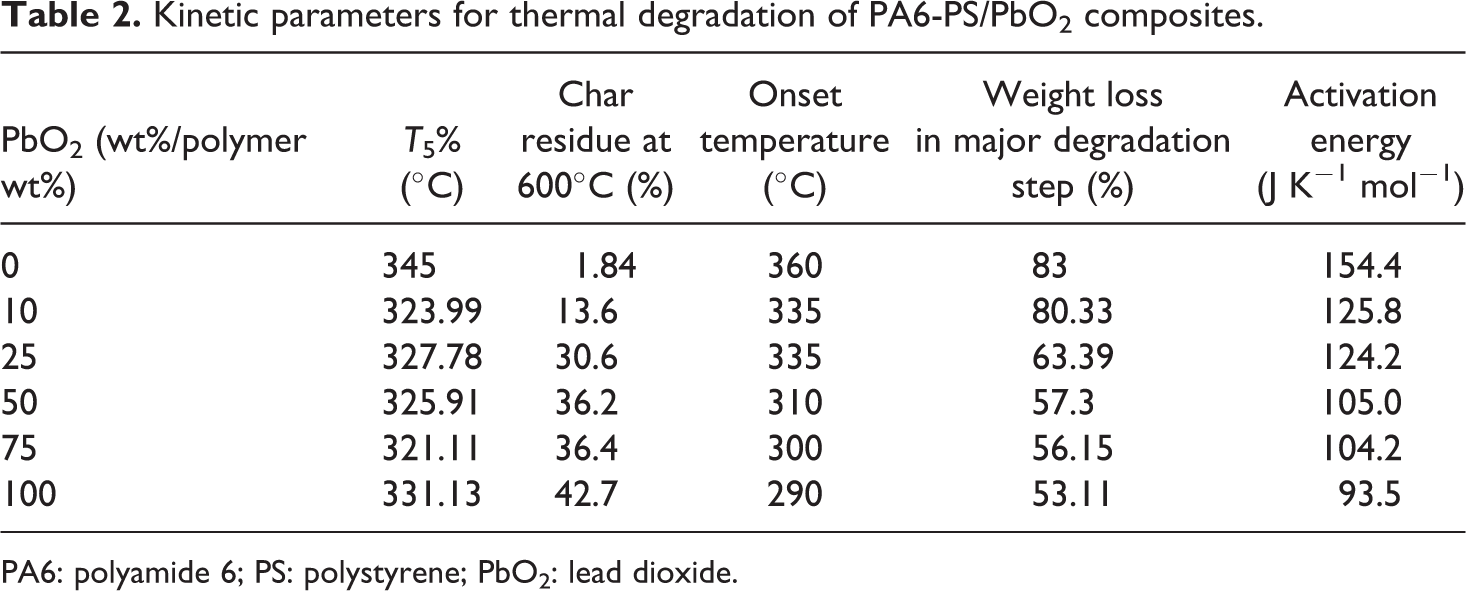
The TGA thermograms of PA6/PS loaded with different concentrations (0–100% wt/wt%) of PbO2 are shown in Figure 1. Results of unfilled blend are also given for comparison. The TGA thermograms of PA6-PS/PbO2 composites show a three-step weight loss. We use T5%, the temperature at which a sample loses 5% of its weight to compare the thermal stabilities of the blend composites, T5% thus stands for the onset of a thermal decomposition. At 520°C, PA6/PS blend got completely decomposed, while in the composites a char residue of about 1.84% up to 42.7% was left depending on filler loading. The onset of thermal degradation of PA6-PS/PbO2 composites appears at a lower temperature as presented in Table 2. The onset temperature is decreasing with increasing filler loading, and this is an indication that the exchange reaction (polymer–filler) produces less thermally stable compounds compared to the unfilled polymers. Moreover, the char residue increases systematically with increasing filler loading.
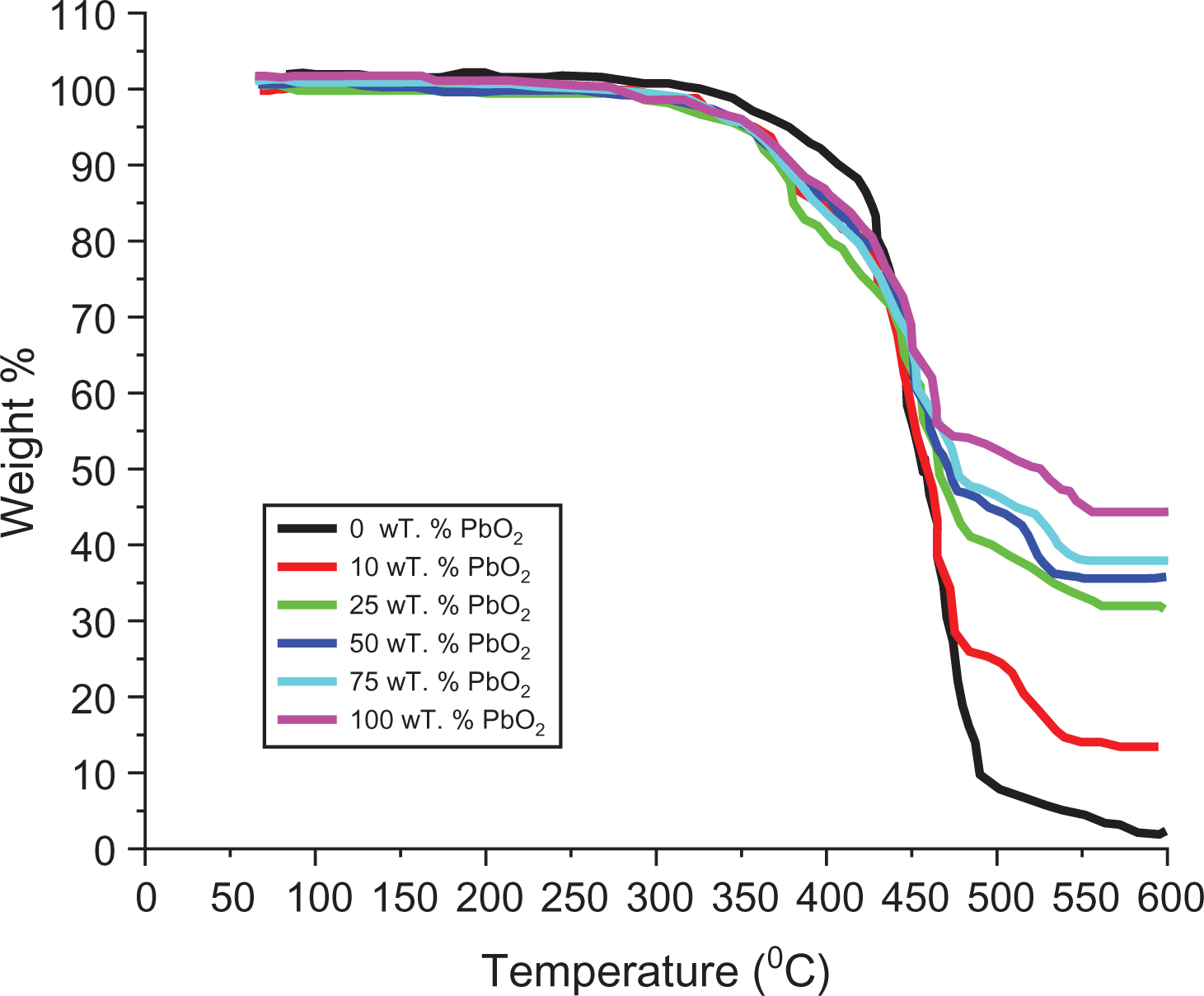
TGA thermograms for samples PA6-PS loaded with different concentrations of PbO2 filler particles and unfilled one.
Kinetic parameters for thermal degradation of PA6-PS/PbO2 composites.
PA6: polyamide 6; PS: polystyrene; PbO2: lead dioxide.
Activation energy
Ea determined thermal stability by evaluating thermal decomposition of unfilled PA6/PS and filled composites according to the method represented by Horowitz and Metzger.49,50 Plotting a relation between ln{ln[(X0−Xr)/(Xt−Xr)]} and Θ (see Figure 2) gives a straight line, which the Ea can be calculated from a slope of

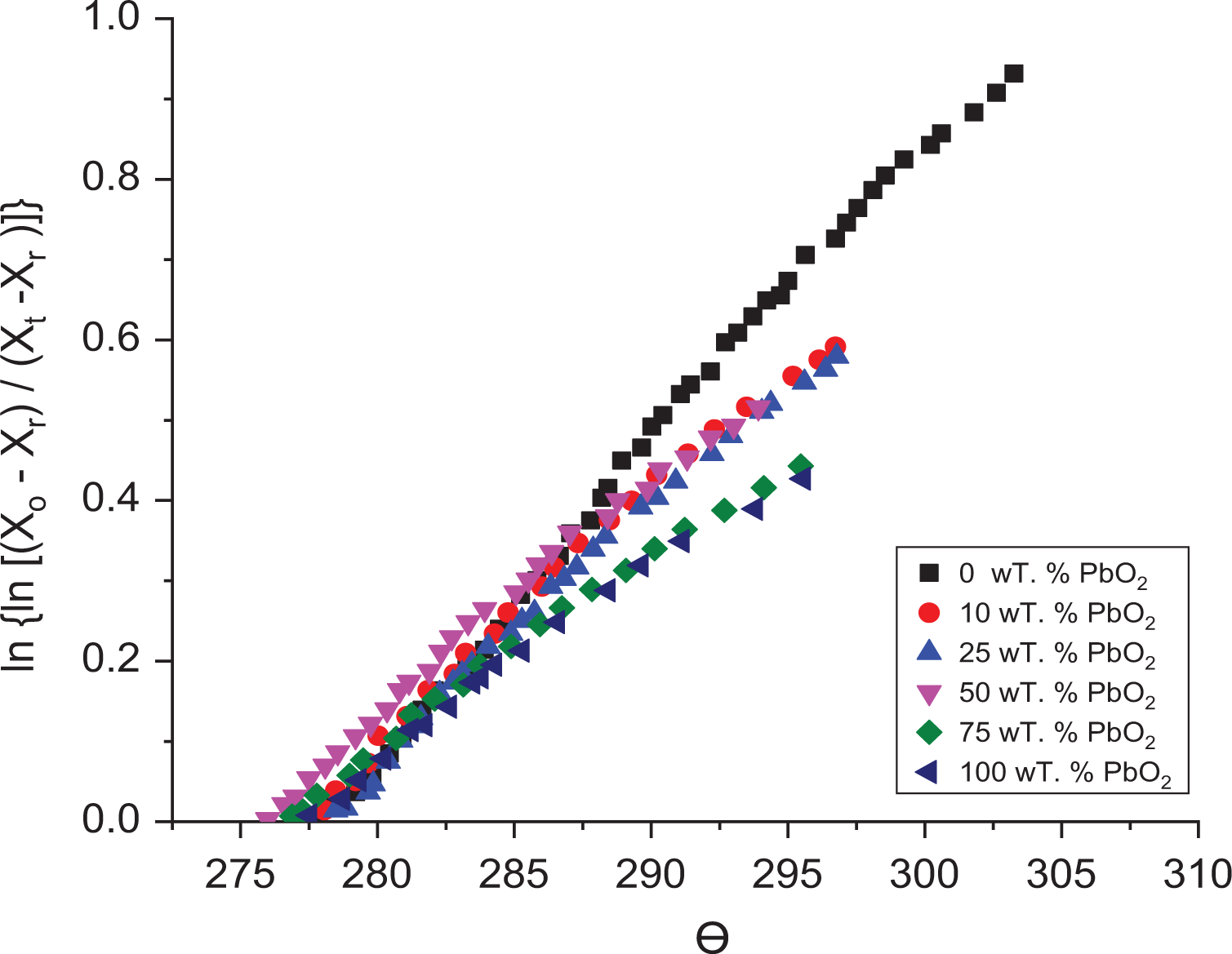
ln{ln[(X0 − Xf)/(Xt − Xf)]} against θ for calculating the slope of samples PA6/PS loaded with different concentrations of PbO2 filler particles.
where T is the sample temperature and Ts the reference temperature, which is the temperature where 52

The Eas are calculated for PA6-PS/PbO2 composites and the results are shown in Figure 3. The Ea for the thermal decomposition of the polymer loaded with PbO2 decreases steeply with increasing the filler loading which confirmed the reduction of thermal stability. As a conclusion, the incorporation of PbO2 with blend matrix decreases its thermal stability.
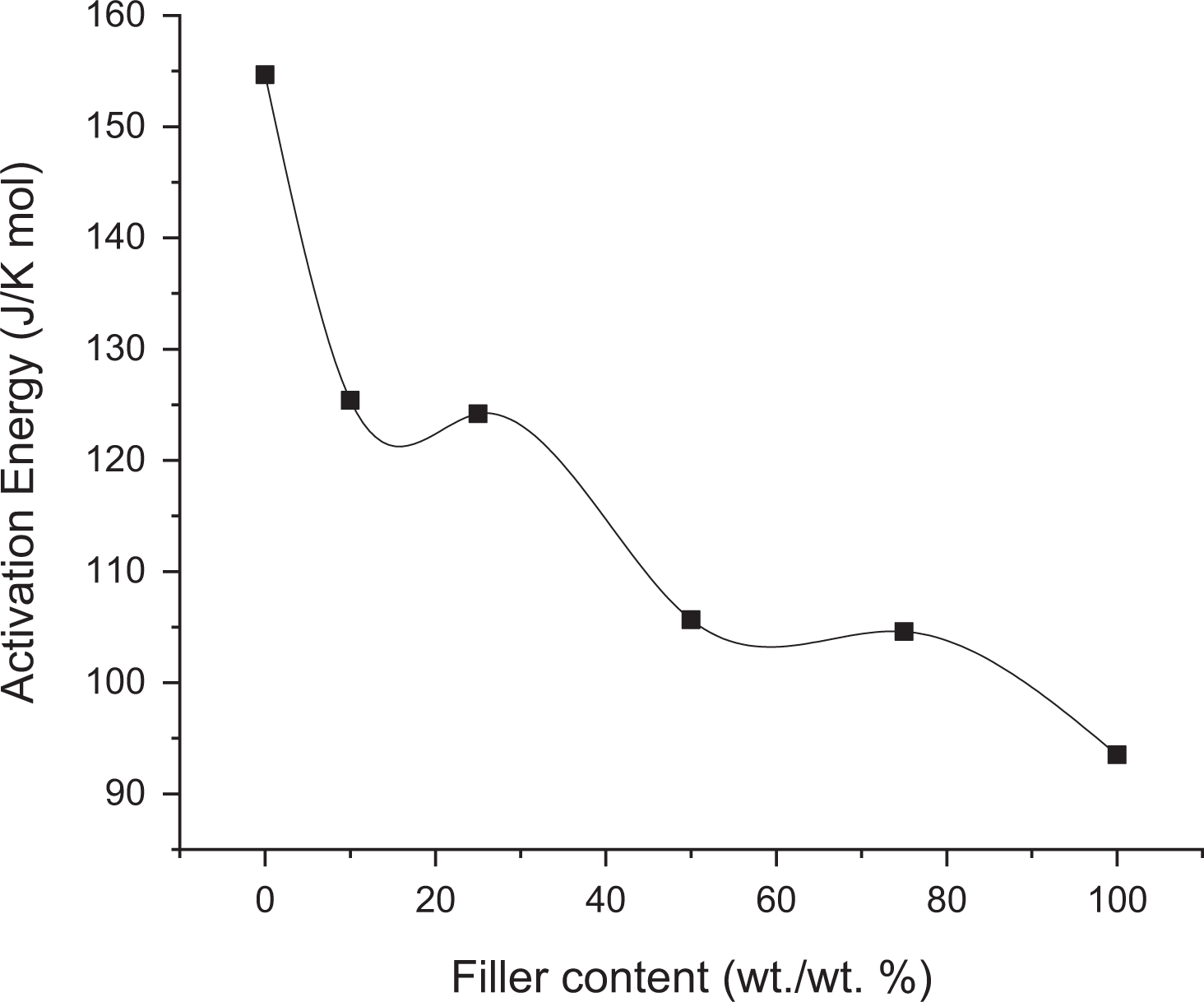
The activation energies versus concentration PA6-PS/PbO2 composites.
Mechanical properties
The mechanical properties such as surface hardness (shore D) of PA6-PS/PbO2 composites are shown in Figure 4, the surface hardness increases with increasing PbO2 content. The general pattern in filled material is that fillers increment hardness as the filler concentration is increased. In profoundly filled materials, the hardness of the composite shows ways to deal with the hardness of the filler. Meanwhile, a few fillers, for example, PbO2, were found to induce a hardening effect in the polymer matrix. 53 PbO2 is a hard material yet at the same time may either increment or decline the hardness of a polymer relying upon its interaction and particle size. The surface hardness of the blend increases from 67 to 75 (shore D) as shown in Figure 4, with an increase in PbO2 (rigid component) content.
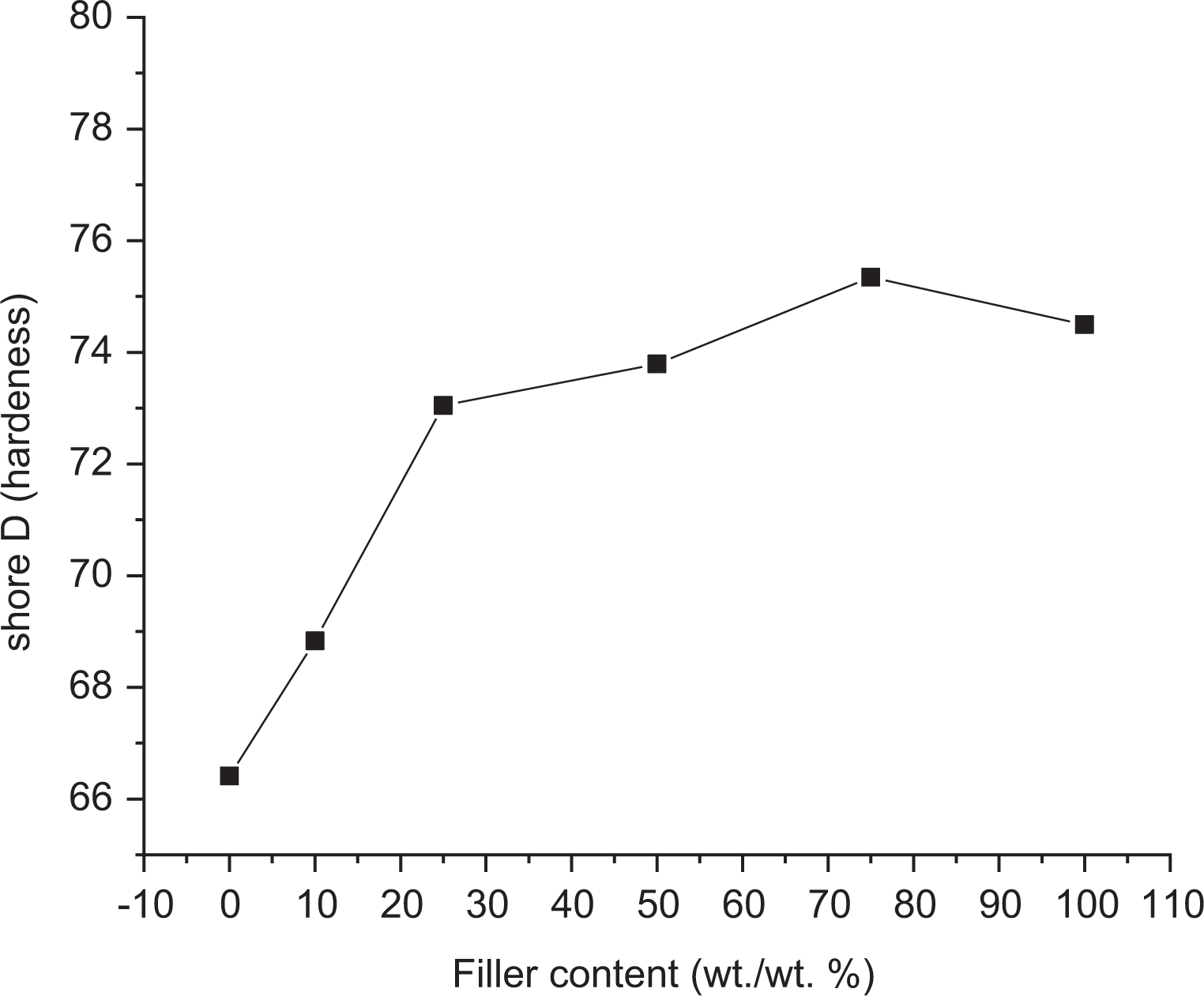
Shore D hardness versus concentration of PA6-PS/PbO2 composites.
AC electrical properties
For potential applications in solid-state devices, conductivity relaxation behavior in conducting polymer composite materials studies has become an interesting area of active research.54–56 The permittivity or dielectric constant (ε′) which is a measure of the energy stored in a sample during a cyclic electric excitation and loss factor, which are used to characterize molecular relaxations, is measured, and usually the energy stored in the form of a nonuniform dipole distribution or ionic charge layers.
The dielectric constant ε′ versus temperature of PA6/PS blends loaded lead dioxide (PbO2) is shown in Figure 5(a) and (b) at constant frequencies of 1 and 100 kHz also at temperatures varying from 293 K to 423 K, respectively.
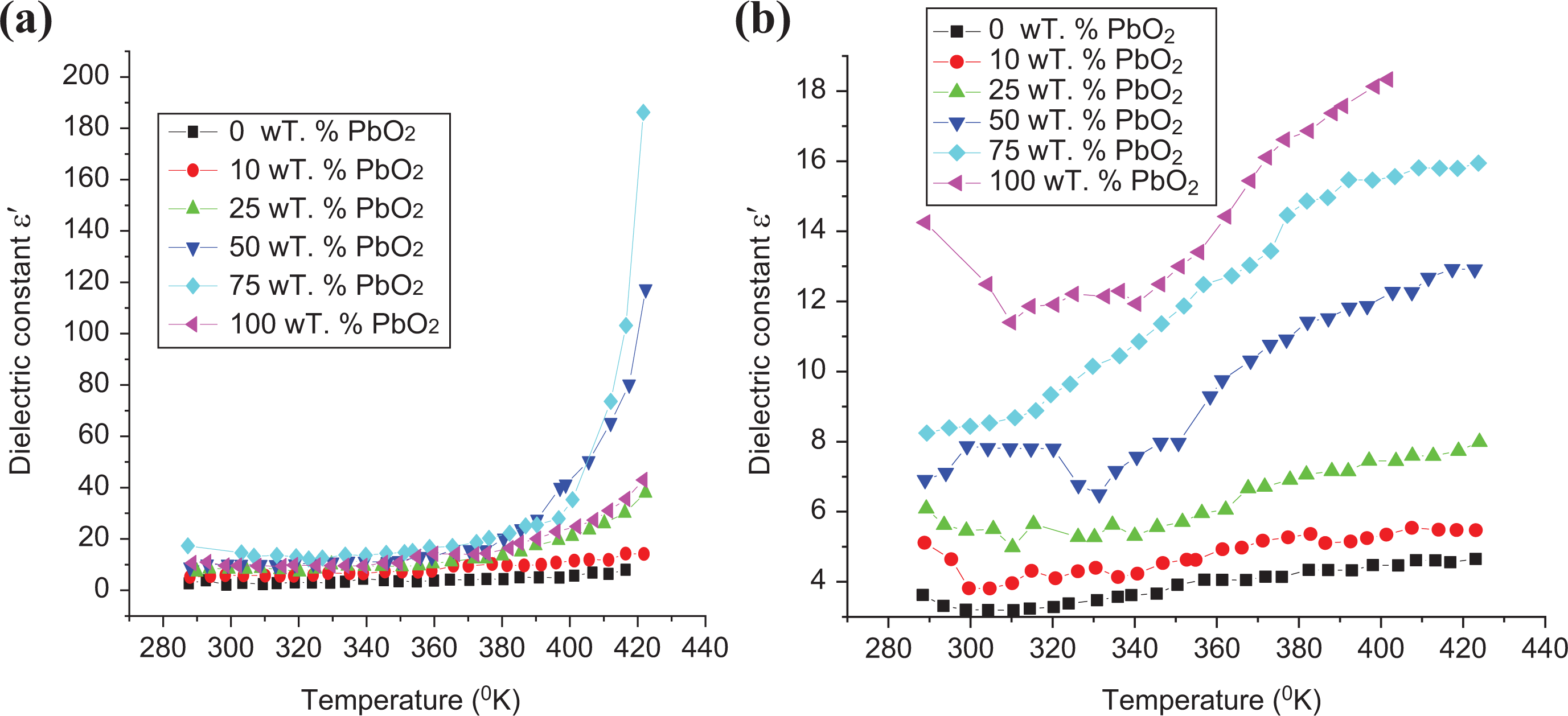
The dielectric constant versus temperature at (a) 1 kHz and (b) 100 kHz of PA6-PS sample loaded with PbO2.
The dielectric constant ε′ decreases with the incorporation of PbO2 particles. In the dielectric constants versus temperature plots of all composites, it can be seen that there is a marginal increase in ε′ that occurs for all composites up to 400°K. At temperature above 400 K and at 1 kHz, ε′ dramatically increases with temperature and then decreases to its original value as the frequency increases to 100 kHz which indicates the existence of a dielectric relaxation.
However, the loss peaks related to this relaxation are not evident in Figure 6(a) and (b), showing the dielectric loss
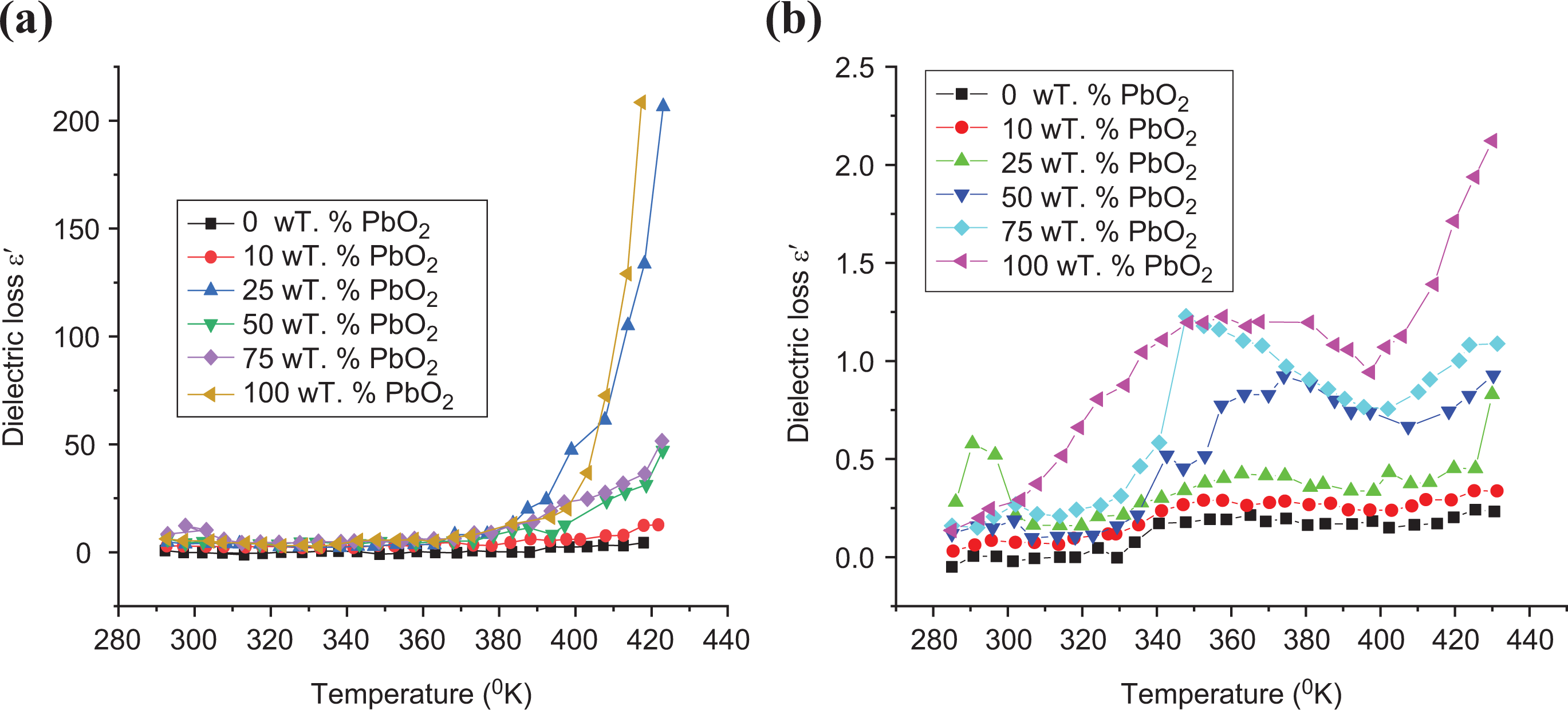
The dielectric loss versus temperature at (a) 1 kHz and (b) 100 kHz of PA6-PS sample loaded with PbO2.
Effect of γ-irradiation on the dielectric properties of PbO2 loaded PA6/PS composites
Ionizing radiation impacts on polymers have been broadly researched. They comprise chiefly of free-radical creation. These free radicals can thus prompt degradation and or cross-linking phenomena, whose extent relies upon numerous factors, for example, the synthetic structure and morphology of the polymer, specific additives used to compound the polymer, the sample thickness, the absorbed irradiation dose and dose rate, the irradiation atmosphere, and so on.57–61
Samples containing 25% and 100% wt/wt% PbO2 were picked to examine the effect of γ-irradiation dose on its dielectric behavior. The dielectric behavior of illuminated unfilled sample was likewise examined for examination. The abovementioned samples were exposed to γ-irradiation in air with different doses 10, 50, 100, and 200 kGy to study its radiation stability. The effect of radiation doses on ε′ and
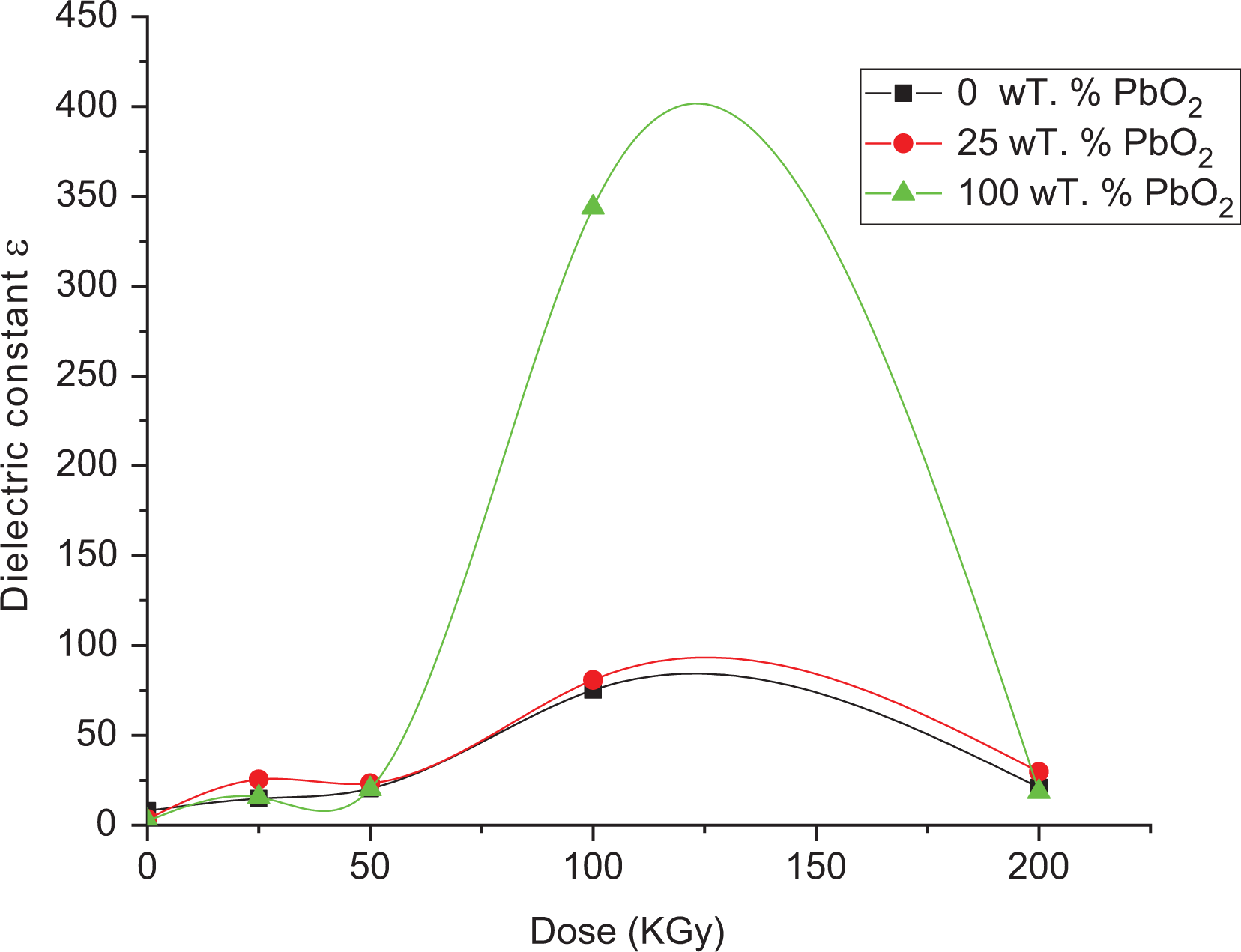
The dielectric constant versus radiation dose at 10 kHz of PA6-PS/PbO2: 0 wt/wt%, 25 wt/wt%, and 100 wt/wt%.
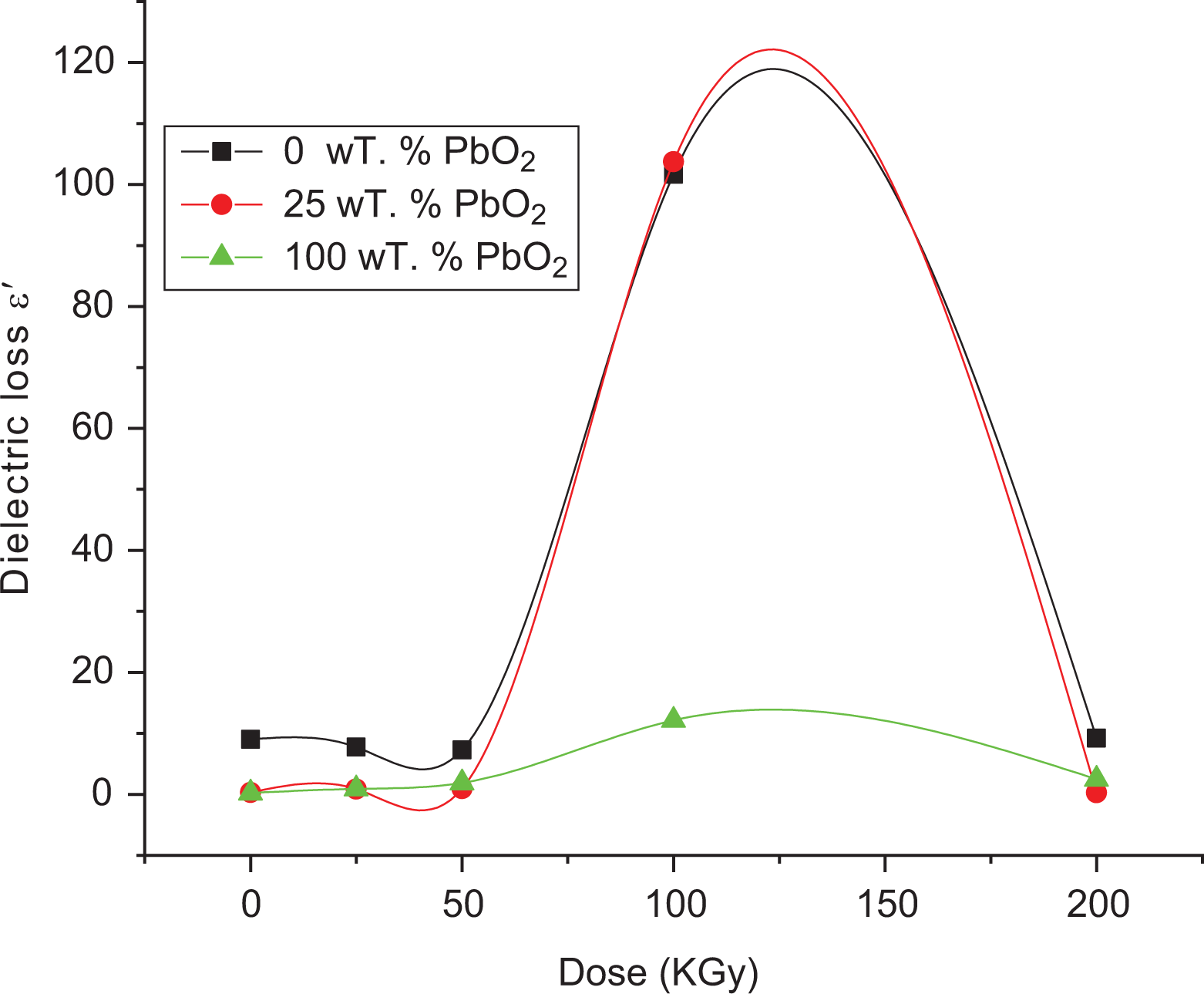
The dielectric loss versus radiation dose at 10 kHz of PA6-PS PbO2: 0 wt/wt%, 25 wt/wt%, and 100 wt/wt%.
The permittivity of the polymer is illustrative of the different polarization wonders that become possibly the most important factor when the polymer is exposed to an electric field. The general polarization of a polymer, similar to PS, is the entirety of four terms: electronic, atomic, orientation, and space-charge polarization; among them, the initial two are characteristic in nature and for nonpolar polymer they are significant. For polar polymers, both the atomic and electronic polarization are frequently unimportant contrasted with orientation and space-charge polarization. 65 At doses >100 kGy, the ε′ value decreases because there is a possibility of chain scission in the hall heterogeneous matrix, which in turn decreases the charge carriers’ mobility.
X-Ray shielding ability
μ and HVL were calculated for unfilled PA6/PS blend and its composites filled with different concentrations of PbO2 at different applied voltages of X-ray machine (70 and 100 kV). The values of μ and HVL are presented in Table 3. Figure 9 represents the relation between μ and PbO2 filler content. The linear attenuation coefficient was calculated from the plots of ln I0/I versus the shield thickness. Figure 10(a) and (b) represents this relation for all composites at 70 kV–l0 mA and 100 kV–10 mA of X-ray machine, respectively. As shown in Table 3, the unfilled blend showed μ < μ of samples loaded with PbO2.
The value of μ and HVL for PA6-PS/PbO2 at 70 and 100 kV.
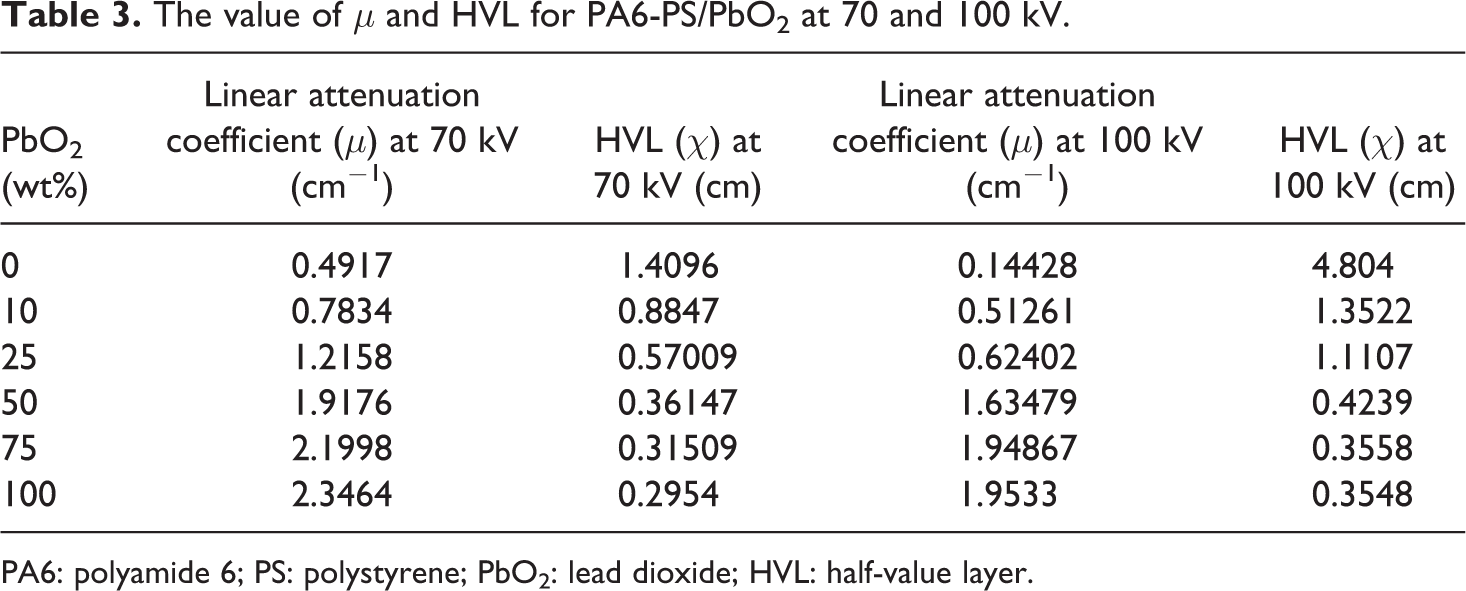
PA6: polyamide 6; PS: polystyrene; PbO2: lead dioxide; HVL: half-value layer.
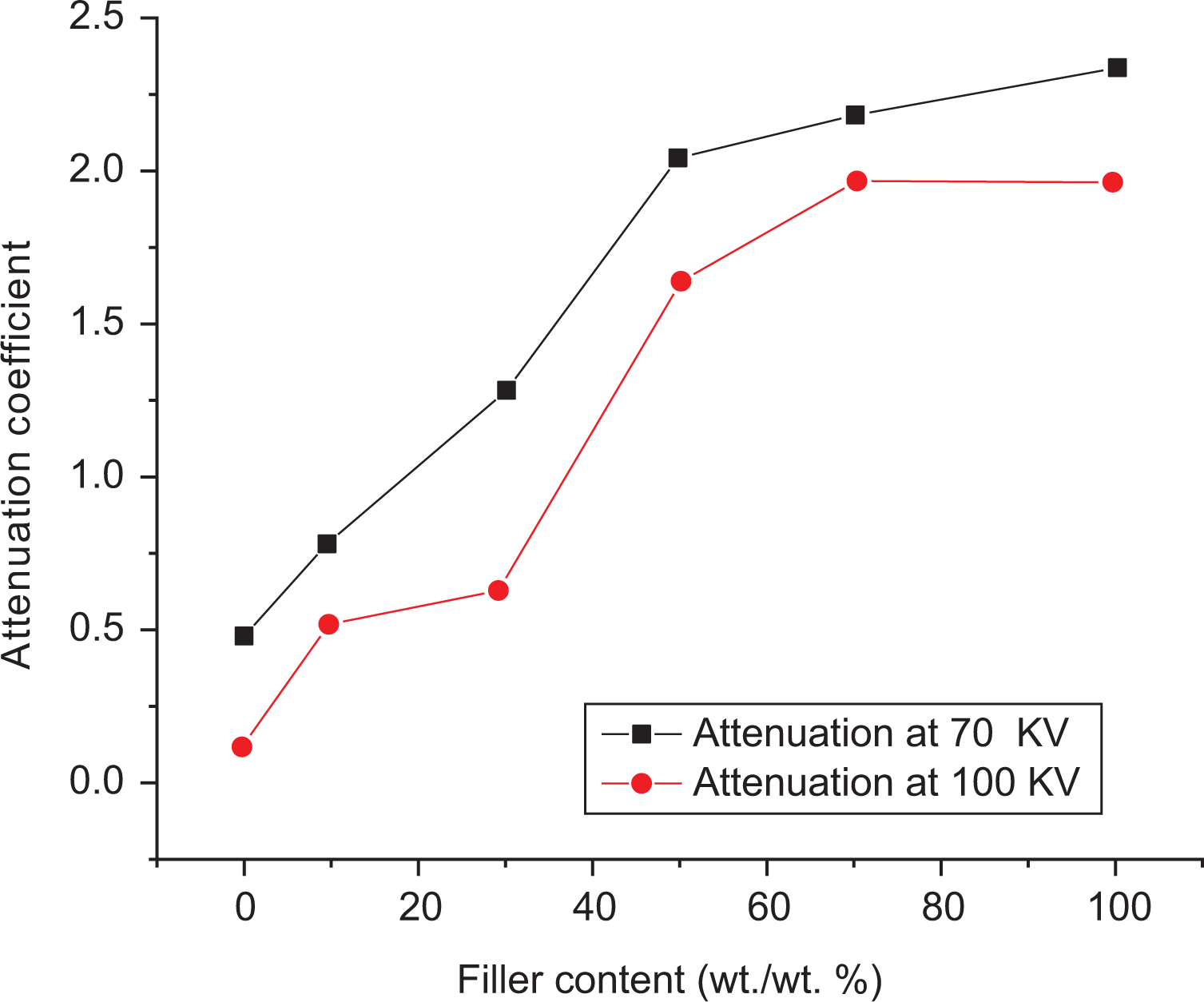
Linear attenuation coefficient versus concentration of PA6-PS/PbO2.
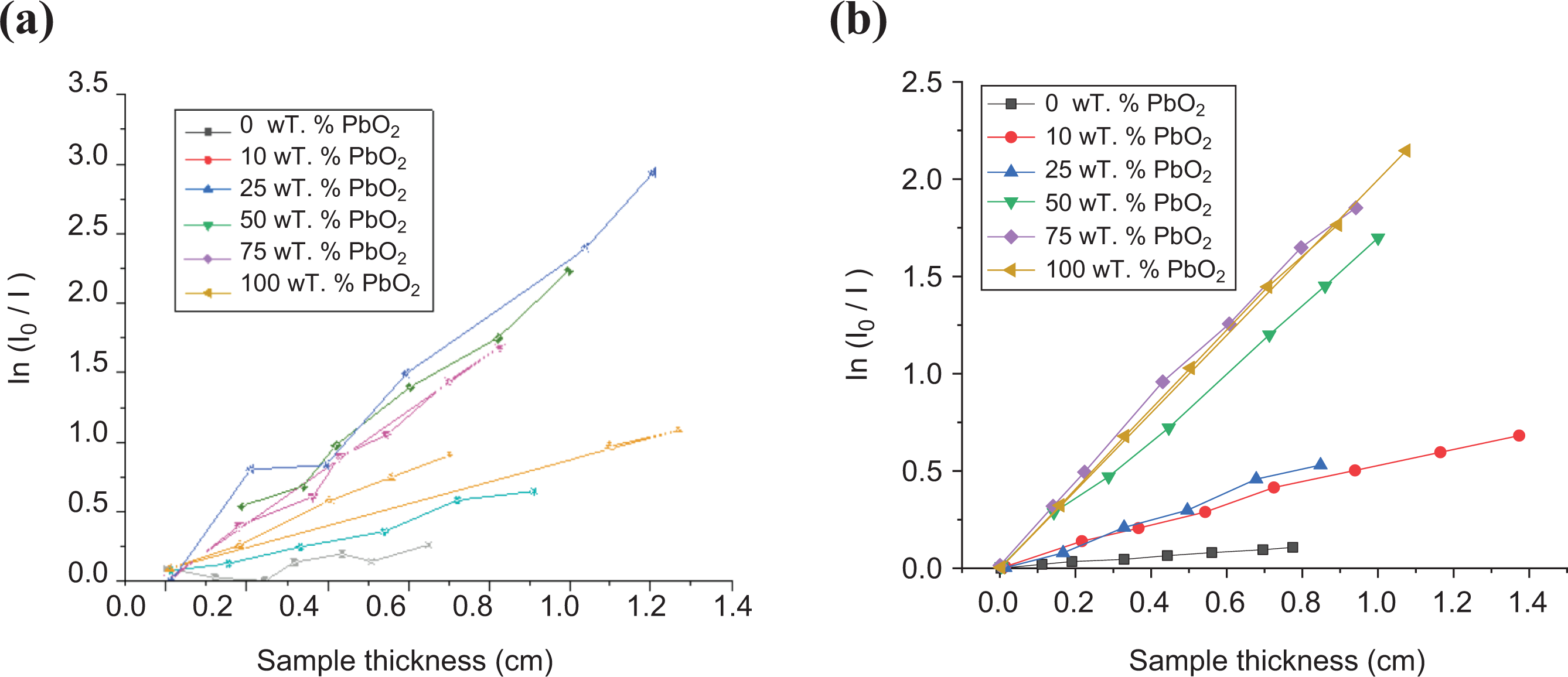
(a) and (b) ln I0/I versus the shield thickness for PA6-PS loaded with different concentrations of PbO2 with applying voltage 70 and 100 kV.
When the applied voltage of X-ray machine raised from 70 kV to 100 kV (at the same current, l0 mA), μ decreased (HVL increased) for the same comparative samples.
As a conclusion, both μ and HVL of all composites strongly depend on (1) the concentration of the filler used and (2) the applied voltage of X-ray machine. HVL of the obtained composites that loaded with 100 wt/wt% of PbO2 nearly3 mm can be used as X-ray tube housing, equipment housings comparing with 3-mm-thick Pb sheet as mentioned by the literature, 66 and castings. In case of electronic components and devices protection of X-ray, a box made of Pb with a thickness about 5–6 mm is used, 67 so the sample can be used for electronic components and devices protection.
Scanning electron microscope
Figure 11 shows the images of the PA6-PS loaded with different concentrations of PbO2 (10, 25, and 100 wt/wt%) matrix. On the micrograph, dark areas are the regions of almost pure polymer material free of the filler while light areas are the regions with PbO2. It can be seen that the PbO2 particles are dispersed in the PA6-PS composite matrix. However, as the content of the PbO2 in the PA6-PS matrix increased from 10 wt% to 100 wt%, agglomerations of the PbO2 particles could not be avoided, as shown in Figure 11(c). This is due to the decrease in the interparticle distances between the PbO2 particles with increasing PbO2 content in the matrix.
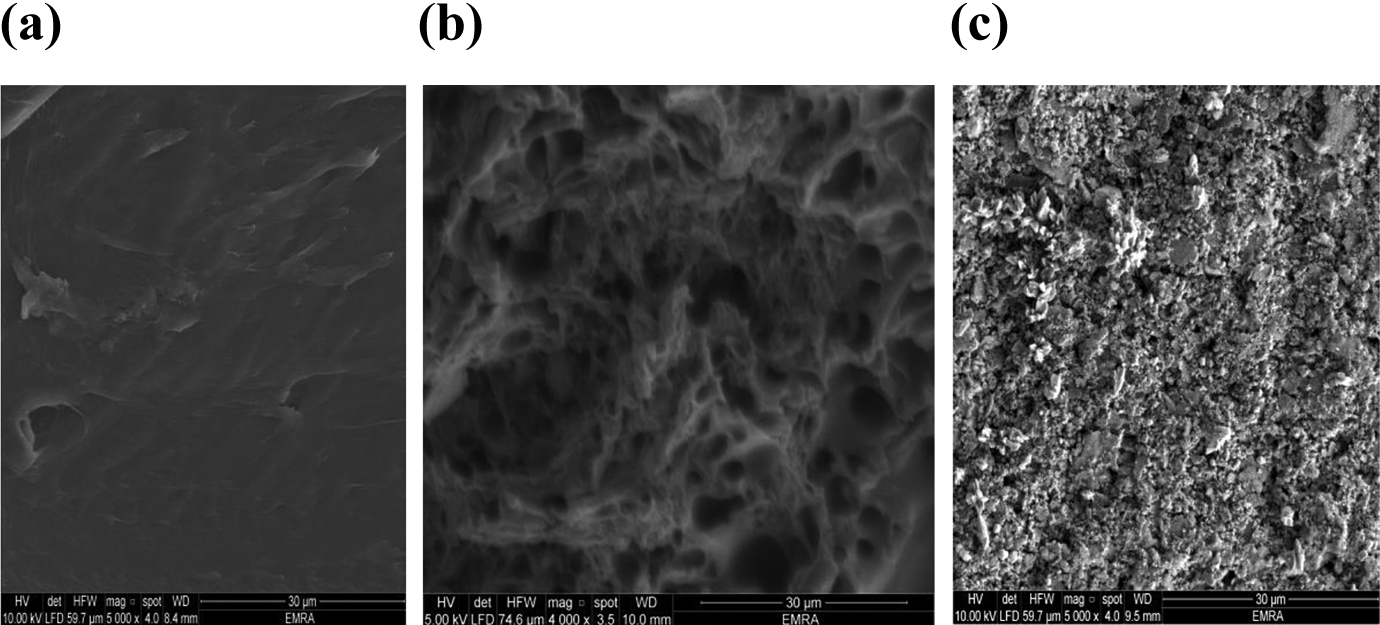
SEM microphotographs of PA6-PS composite matrix with PbO2 as filler: (a) 10 wt/wt%, (b) 25 wt/wt%, and (c) 100 wt/wt%.
Conclusion
The effect of concentrations of fillers on the physical properties of our composites was discussed, and the linear attenuation coefficients were measured for all samples to show how far these samples could be used as ionizing and nonionizing radiation shielding materials. From the obtained results the following conclusions can be derived. The addition of PbO2 decreases the thermal stability of the blend; the onset temperature is decreasing with increasing filler loading. Moreover, the char residue increases systematically with increasing filler loading. The Ea for the thermal decomposition of the polymer loaded with PbO2 decreases steeply with increasing the filler loading. The surface hardness increases with increasing PbO2 content from 67 to 75 (shore D), the Ea highly affected by filler concentration is situated within the range of 0.61–1.01 eV for samples loaded with PbO2. The dielectric constant ε′ decreases with the incorporation of PbO2 particles. Relaxation process is attributed to an interfacial polarization, Maxwell–Wagner–Sillars effect, which is a phenomenon appearing in heterogeneous media due to the accumulation of charges at the interfaces. The dielectric properties were significantly influenced by γ-irradiation effects; that ε′ and
