




Abstract
This article examines the application of simplified Mindlin’s strain gradient theory to free vibration analysis of functionally graded carbon nanotube–reinforced composite (FG-CNTRC) thick rectangular nanoplates resting on Kerr elastic foundation in thermal environment. The theory contains only one length scale parameter corresponding to strain gradient effects. Also, a quasi-3D hyperbolic theory considering transverse shear deformation and thickness stretching effects is employed to present the formulation. In this study, properties of the carbon nanotubes (CNTs) and the polymeric matrix are assumed to be temperature dependent. Distribution of CNTs across the thickness of the nanoplate is considered to be uniform (UD) or functionally graded (FG-X, FG-V, and FG-O). According to Hamilton’s principle and the generalized differential quadrature method, the governing equations and associated boundary conditions are obtained and discretized, respectively. The natural frequencies of FG-CNTRC nanoplates are determined by solving eigenvalue problem. The numerical results of the present formulation are compared with those available in the literature to explain the accuracy of the suggested theories. Then, parametric studies are presented to examine the effects of elastic foundation coefficients, size parameter, temperature change, volume fraction and dispersion profile of CNTs, aspect ratio, length-to-thickness ratio, and different boundary conditions on vibration behavior of FG-CNTRC nanoplates. The results confirmed that size parameter and changes in temperature play an important role in determining natural frequencies. In addition, the shear layer parameter of Kerr foundation has more influence with respect to the coefficients of the upper and lower layers.
Keywords
Introduction
In recent decades, nanotechnology is becoming a challenging area of research. Nanotechnology is concerned with the fabrication of functional materials and systems at the atomic and molecular levels. 1 A nanostructure is a small object of intermediate size between molecular and microscopic structures. The remarkable properties of nanostructures are the cause of intense research around the world. 1 Some of the nanoscale structures include nanowires, nanobeams, nanorings, nanoplates, and carbon nanotubes (CNTs). The invention of CNT by Iijima has initiated a new era in nanoworld. 2,3 Some of the excellent properties of CNTs are high stiffness, low density, very high aspect ratio, remarkable electronic properties, high conductivity and strength. 4 Indeed, the combination of CNTs as fiber reinforcements into composites and the application of functionally graded materials (FGMs) concept produced a new material called functionally graded carbon nanotube–reinforced composites 5 (FG-CNTRC). Nanoplate is a subclass of nanostructures which have many engineering applications, for instance, in information storage, transducers, solar cells, MEMS/NEMS, and components in nanomachines. 4 Furthermore, fiber-reinforced composites have several applications in industries. In the past few years, static and dynamic behaviors of FG-CNTRC plates have become one of the interesting topics. For the first time, the investigation of the mechanical behavior of FG composite plates reinforced by CNT is carried out by Shen. 5 Thermal buckling and post-buckling analysis of FG nanocomposite plates reinforced by CNTs was studied by Shen and Zhang. 6 Wang and Shen 7 examined the nonlinear vibration analysis of CNTRC plates in thermal environments. Zhu et al. 8 investigated the vibrational and static behavior of a FG-CNTRC plate using the first-order shear deformation theory (FSDT) and finite element method. Mayandi and Jeyaraj 9 investigated the bending, buckling, and free vibration behaviors of FG-CNT-reinforced polymer composite beam under different nonuniform thermal loads by utilizing the finite element method. Thermal buckling (Mirzaei and Kiani 10 ) and post-buckling (Kiani 11 ) behaviors of the temperature-dependent CNTRC rectangular plates were also investigated based on FSDT. Ansari et al. 12 examined the buckling and free vibration behavior of CNTRC annular sector plates in thermal environments using the generalized differential quadrature method (GDQM). George et al. 13 investigated the buckling and free vibration response of CNT polymer plates subjected to nonuniform temperature fields using finite element approach. Phung-Van et al. 14 used isogeometric analysis and generalized higher-order shear deformation theory (HSDT) to consider the influence of size dependency of FG-CNTRC nanoplates. Based on modified couple stress theory, Farzam and Hassani 15 studied the thermal and mechanical buckling analysis of FG-CNTRC plates using isogeometric analysis. The frequency, deflection, and stress values of CNT-reinforced sandwich plate structure were investigated numerically under the influence of the mechanical loading and thermal field by Mehar et al. 16 Torabi and Ansari 17 reported the impacts of thermal loading on the vibration and buckling of FG-CNTRC conical shells based on the variational differential quadrature method. Ansari et al. 18 analyzed the thermal buckling behavior of temperature-dependent FG-CNTRC quadrilateral plates using GDQM. Ansari et al. 19 studied the free vibration of arbitrary shaped thick FG-CNTRC plates based on the HSDT using a variational differential quadrature approach. Torabi et al. 20 examined the unified numerical formulation on the thermal buckling analysis of FG-CNTRC plates with different shapes using the variational differential quadrature method.
Similar to CNTs, nanoplates have aroused interest due to their unique superior properties. Nanoplates are nanoscale, two-dimensional structures that improve the electrical properties, strength, and flexibility of the materials thanks to their particular atomic arrangement. For proper design of such nanostructures to be practically useful, fundamental understanding of their mechanical behavior is essential. The mechanical behavior of the nanostructures can be studied by both experimental and numerical approaches. Given the fact that experimental methods are difficult and costly at the nanoscale, three numerical simulation methods such as atomistic, hybrid atomistic–continuum mechanics, and continuum mechanics have received much attention. 14,21 Due to the limitations concerning time and the maximum number of atoms in the simulation, the first two methods are costlier than modeling based on continuum mechanics. Since classical continuum theories cannot capture the size effects, nonclassical continuum theories have been proposed to assess the significant size effects in small scale. Strain gradient theory (SGT) initiated by Mindlin is a nonclassical continuum theory which can capture the size effects and stiffness enhancement. 22 For this objective, a material length scale parameter is involved to evaluate the strain gradient effect. In this theory, the total stress field accounts for additional strain gradient terms to consider microstructural deformation mechanism at small scale. 22 Strain gradient theories have been widely studied in the works of Toupin, 23 Mindlin, 24,25 and Koiter. 26 Aifantis 27 and Yang et al. 28 were proposed simple models with only one length scale parameter. Akgöz and Civalek 29 employed strain gradient and modified couple stress theories for buckling analysis of axially loaded microscaled beams. Ansari et al. 30 developed a nonclassical SGT to study the thermal buckling behavior of rectangular FGM microplates with different boundary conditions. The resonance behaviors of FG micro/nano plates were presented based on nonlocal elasticity and strain gradient theories with one gradient parameter by Nami and Janghorban. 31 Shahriari et al. 32 analyzed the free vibration behavior of FG-CNTRC nanoplates based on third-order shear deformation theories and Mindlin’s strain gradient. They obtained the numerical results using Navier technique. Gholami et al. 33 investigated the free vibration and buckling analysis of first-order shear deformable circular cylindrical micro/nano-shells based on Mindlin’s SGT. Torabi et al. 34 developed a hexahedral C 1 continuous element for the three-dimensional nonlinear free vibration analysis of rectangular nanoplates with circular cutout based on the strain gradient elasticity theory. In the other work, Torabi et al. 35 investigated the application of a nonconforming tetrahedral element in the context of the linear 3D strain gradient elasticity for the free vibration analysis of circular/elliptical microplates.
Since the shear deformation effects are more pronounced in advanced composite, shear deformation theories such as FSDT and HSDT should be used. In these theories, the in-plane displacement is assumed to be constant across the thickness and the thickness stretching effect is ignored. 36 Among HSDTs, in quasi-3D hyperbolic theory, both shear deformation and thickness stretching effects are developed by a hyperbolic variation of all displacements across the thickness. In addition, the theory satisfies the stress-free boundary conditions on the top and bottom surfaces of the plate without requiring any shear correction factor. 36 There are several quasi-3D theories proposed in the literature. For example, Neves et al. 37 presented a quasi-3D hyperbolic shear deformation theory for the bending and free vibration analysis of FG plates. In the other work, Neves et al. 38 investigated the static, free vibration, and buckling analysis of isotropic and sandwich FG plates based on quasi-3D shear deformation theory using meshless technique. Thai and Kim 39 proposed a simple quasi-3D sinusoidal shear deformation theory for the bending analysis of FG plates. Benahmed et al. 40 developed a simple quasi-3D hyperbolic shear deformation theory for the bending and vibration analyses of FG simply supported plates resting on a Pasternak elastic foundation. Mahmoudi et al. 41 employed a refined quasi-3D shear deformation theory to examine the thermomechanical analysis of FG sandwich plates resting on a Pasternak elastic foundation. Sobhy and Radwan 42 employed Eringen’s theory to capture the effect of the nonlocal parameter on natural frequency and buckling of the FGM nanoplates in thermal environment based on quasi-3D theory. Karamanlı and Vo 43 investigated the flexural behavior of 2D functionally graded microbeams subjected to uniformly distributed load with various boundary conditions based on quasi-3D theory.
A familiar situation in engineering problems with great significance in civil, mechanical, and aerospace engineering is when a mechanical structure is placed on top of such elastic materials as soil or foam. Solving these problems requires modeling the mechanical behavior of the plate, the soil (as the elastic foundation), and the interactions between them. The study of plates resting on flexible soil is often necessary and essential in the analysis of the foundations of structures. 44 Three-parameter elastic foundation models are developed to describe the complex behavior of soil. The three-parameter models constitute a more generalized form of two-parameter ones; as incorporating the effect of soil on either side of the structure. Also, they take into account the “discontinuity” caused by soil surface deformations in the boundaries between areas subjected to loading and unloading states. 45 This feature enables the models to properly distribute the stresses in both consistency and inconsistency states of soil. Due to the occurrence of concentrated line reactions along the free edges of the structure in the Pasternak model, Kerr 46,47 introduced a generalization of the Pasternak model by adding a spring layer above the shear layer. Therefore, in Kerr foundation, the concentrated reactions do not occur due to existence of upper layer of springs. Barati and Zenkour 48 investigated the size-dependent forced vibration behavior of FG nanobeams resting on Kerr foundation subjected to an in-plane hygrothermal loading and lateral concentrated and uniform dynamic loads via a higher-order refined beam theory. Moreover, Barati 49 explored dynamic response of porous inhomogeneous nanobeams subjected to concentrated and distributed loads resting on Kerr foundation. They obtained the governing equations of nanobeam with hygro-thermo-elastic material properties via Hamilton’s principles. Shahsavari et al. 50 examined the free vibration behavior of porous FG plates resting on Winkler/Pasternak/Kerr elastic foundations based on new quasi-3D hyperbolic theory using Galerkin method. In the other work, Shahsavari et al. 51 investigated the shear buckling of porous FG nanoplates resting on Kerr elastic foundation in hygrothermal environment using a new size-dependent quasi-3D shear deformation theory.
Following the literature, in this study for the first time, an efficient and simple quasi-3D hyperbolic shear deformation theory is developed for the vibration behavior of FG-CNTRC rectangular nanoplates resting on Kerr-type three-parameter elastic foundation in thermal environment. To consider the small-scale effects of nanoplate, the simplified Mindlin’s SGT is used which includes one length scale parameter. The thermomechanical properties of FG-CNTRCs are considered to vary continuously through the thickness direction of the nanoplate and temperature dependency is taken into account. The extended rule of mixture is also employed to present the effective physical properties of CNTRCs. Since the stiffness of the composite structure is highly influenced by the boundary condition, in this study to provide a deeper view into the effects of boundary condition, various combinations of clamped, simply supported, and free edges are considered. The governing equations and boundary conditions are obtained using Hamilton’s principle. They are discretized and numerically solved by utilizing GDQM. After performing the convergence and comparison studies to verify the stability and accuracy of the proposed formulation and solution method, parametric studies are given to explore the influences of various involved parameters such as size parameter, temperature change, volume fraction and dispersion profile of CNTs, aspect ratio, length-to-thickness ratio, elastic foundation coefficients, and boundary conditions on vibration behavior of nanoplate.
Theoretical formulations
Simplified Mindlin’s SGT
Due to the complex deformation of nanostructures, using continuum models with a lower order deformation mechanism may prove unreliable for obtaining the correct mechanical properties. Strain gradient elasticity theories feature higher-order strain gradient terms and can exhibit the impacts of high-order deformations of nanomaterials and increase in the stiffness. The strain energy in higher-order elasticity theories is dependent on strain and strain gradient. 23 –26 Mindlin rewrote the higher-order stress theory which takes strain gradient into account. In this state, strain energy has five linear elastic constants in which the size parameter is considered. Aifantis simplified the Mindlin’s SGT and replaced the five parameters with a single one. 27 In fact, this theory takes into account the impacts of strain gradient by introducing one length scale parameter. In this study, a simplified form of Mindlin’s SGT is used to model the nanoplate as follows 32

where
To consider thermal effects, equation (1) can be written as

where
A quasi-3D hyperbolic theory
The displacement field of the present formulation is obtained based on quasi-3D hyperbolic shear deformation theory. The transverse displacement is composed of three components, namely, bending (wb
), shear (ws
), and stretching effect (
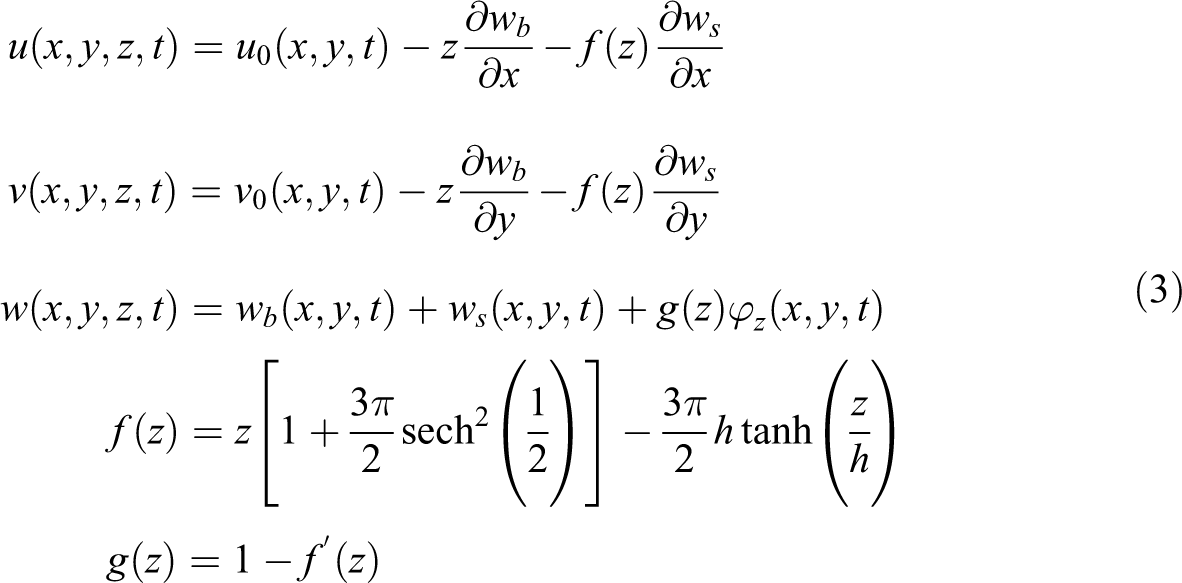
where t denotes the time and u
0, v
0 indicate the in-plane displacement field at the middle surfaces of the nanoplate.
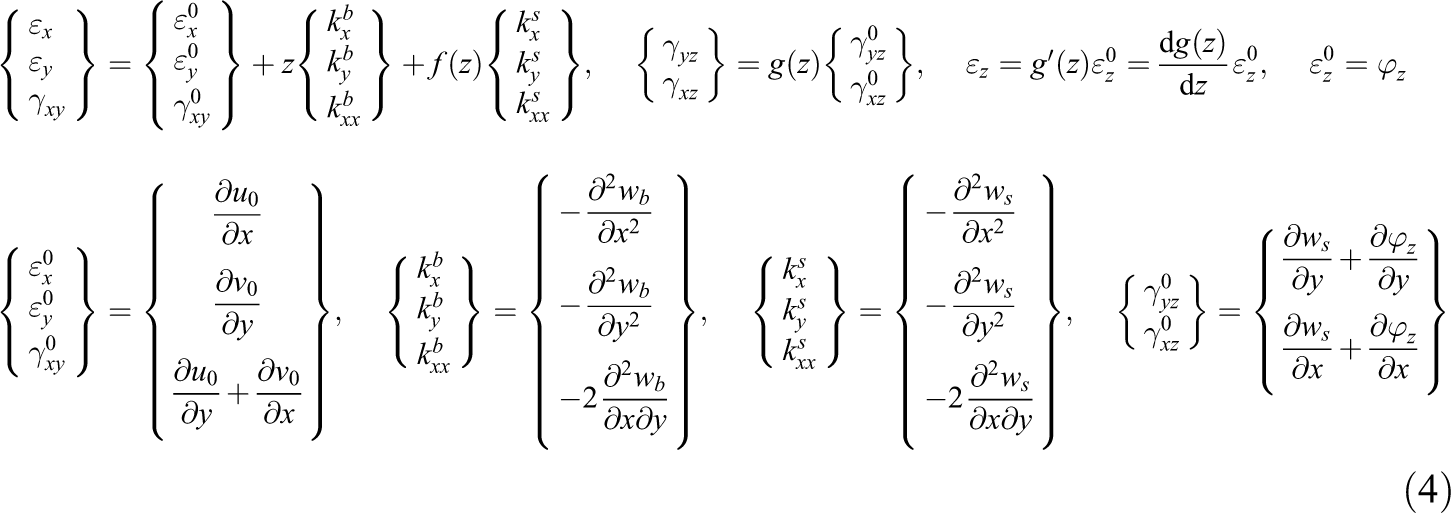
Hence, the nonzero strains associated with the displacement field in equation (3) are given as
Basic equations
In this research, an FG-CNT-reinforced composite rectangular nanoplate resting on Kerr elastic foundation is considered, as shown in Figure 1(a). Length, width, and thickness of the nanoplate are denoted by a, b, and h, respectively. Nanoplate is made from a polymeric matrix reinforced with single-walled carbon nanotube (SWCNT). Distribution of CNTs across the thickness of the nanoplate is considered to be uniform (UD) or functionally graded (FG-V, FG-O, and FG-X) as shown in Figure 1(b).
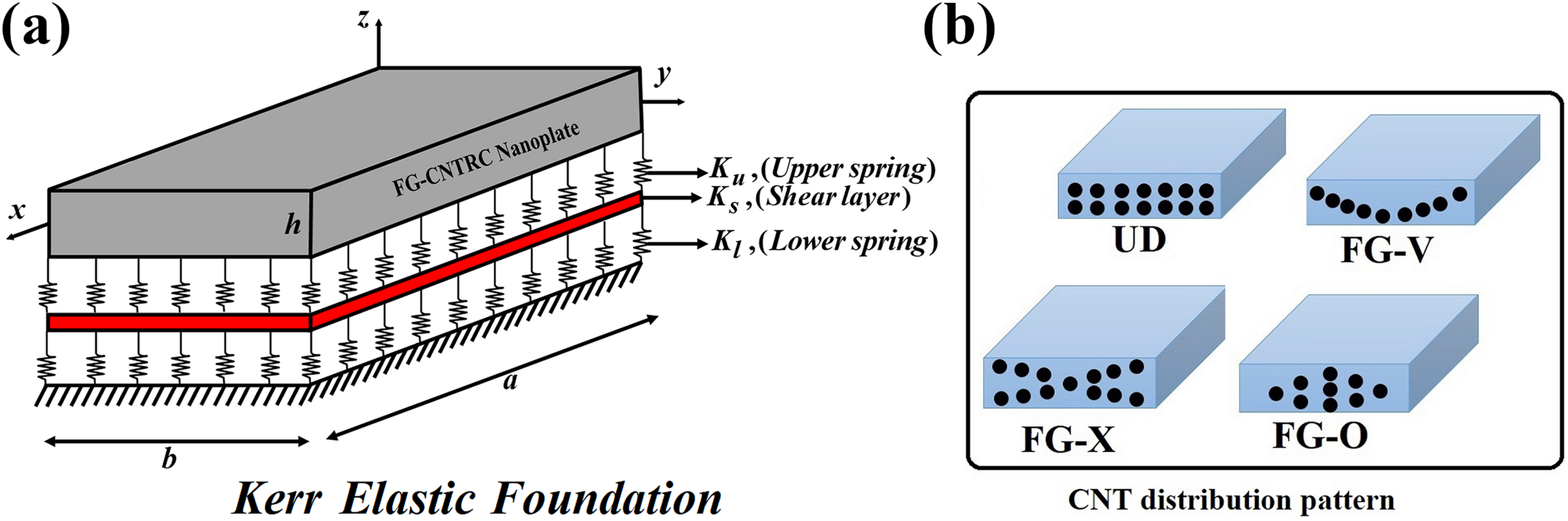
FG-CNTRC rectangular nanoplate resting on Kerr foundation.
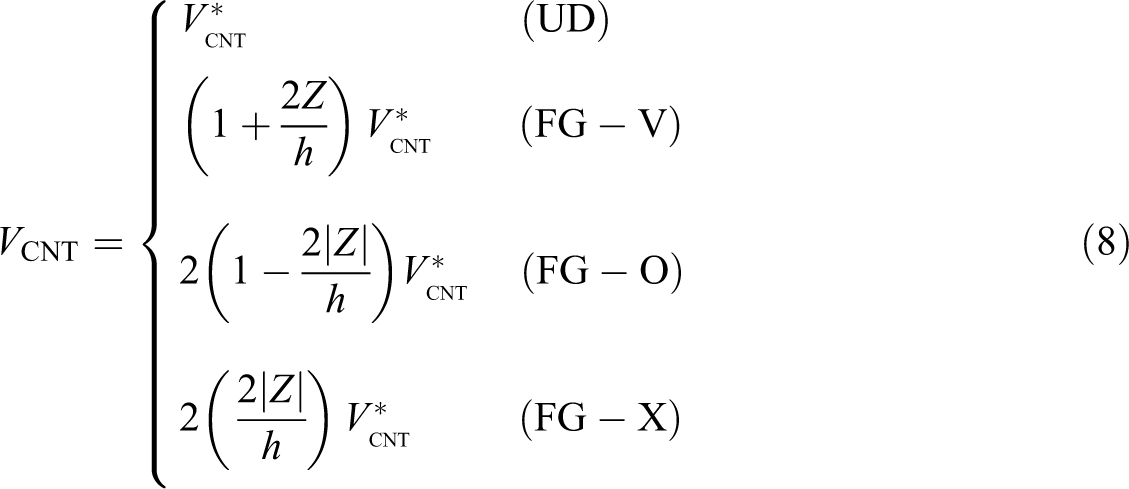
The effective thermomechanical properties of FG-CNTRC nanoplate can be estimated on the basis of extended rule of mixture as follows 52



In the above equations,

where
In addition, the thermal expansion coefficients of CNTRCs can be defined as 6


where



Based on equation (2), for linear thermoelastic materials, stress field may be written as a linear function of strain field and temperature difference as
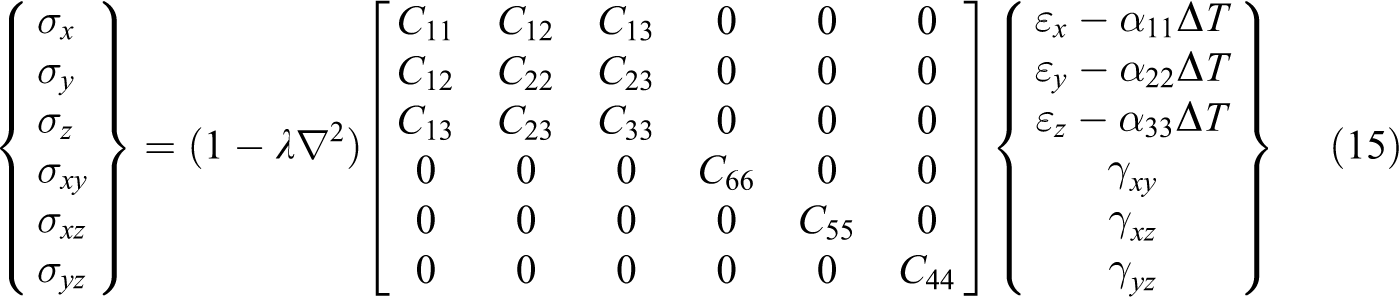
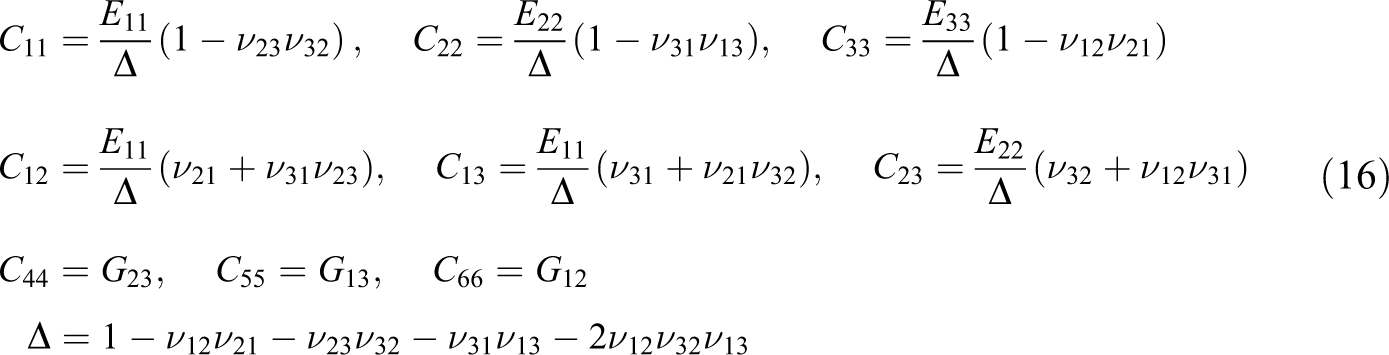
In above relation, the components of constitutive matrix (
Governing equations of motion
In this research, to establish the governing equation of motion of a nanoplate resting on Kerr elastic foundation in thermal environment, we use the Hamilton’s principle

where
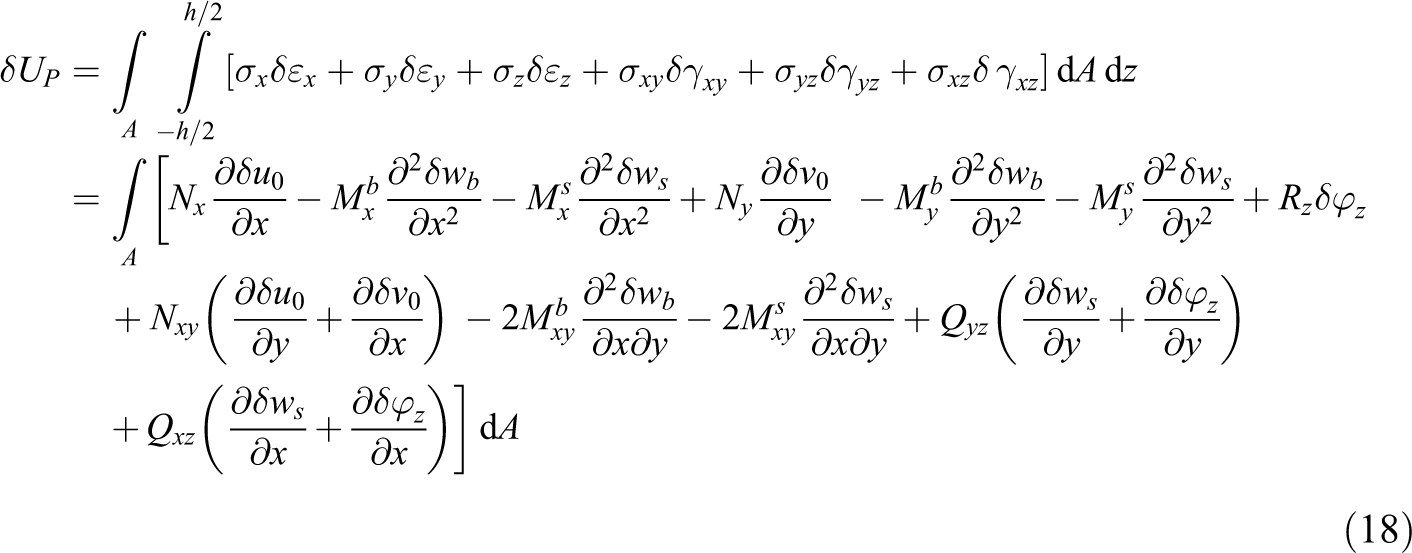
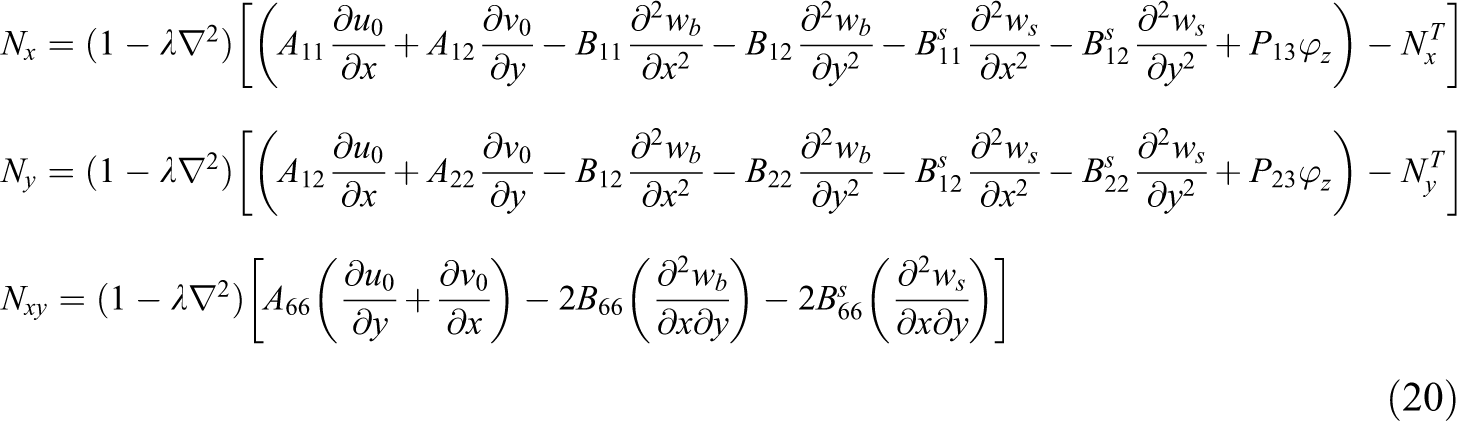
where the stress resultants can be defined as
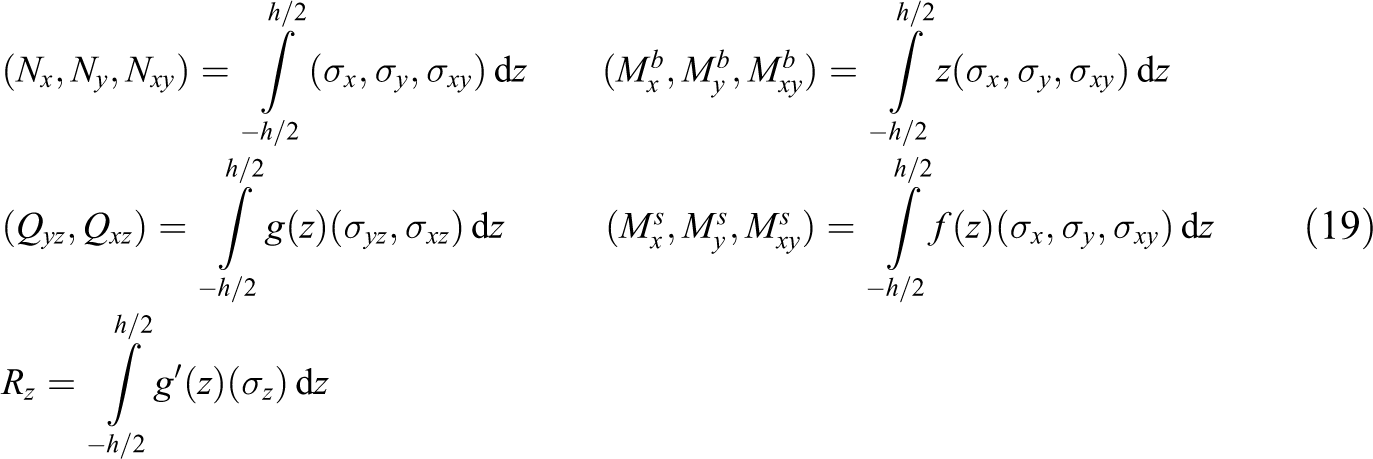
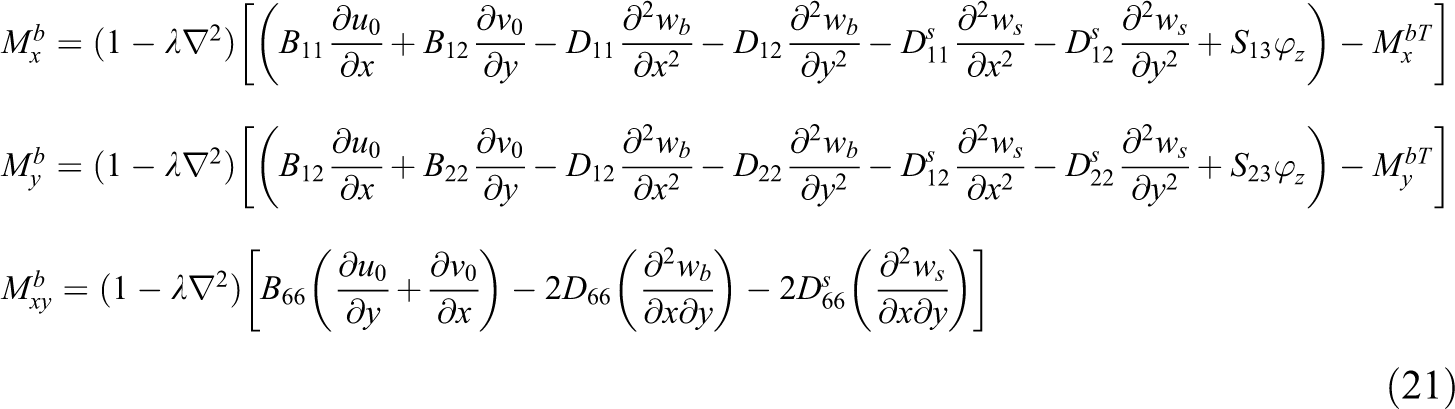
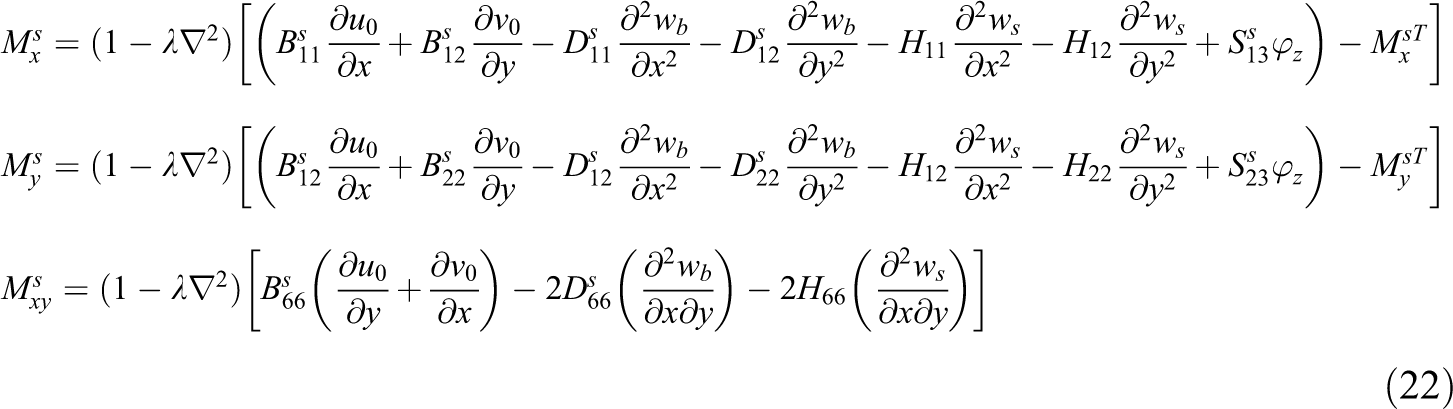
Substituting equation (4) into equation (15) and the subsequent results into equation (19), the stress resultants can be represented in terms of displacement fields as


where


In addition, the force and moment resultants due to thermal loading (




The strain energy induced by elastic foundation can be defined as 48 –51

The distributed reaction of Kerr elastic foundation model is defined as follows

where
The first variation of work done by uniform thermal forces can be stated as

where

The variation of kinetic energy is given as
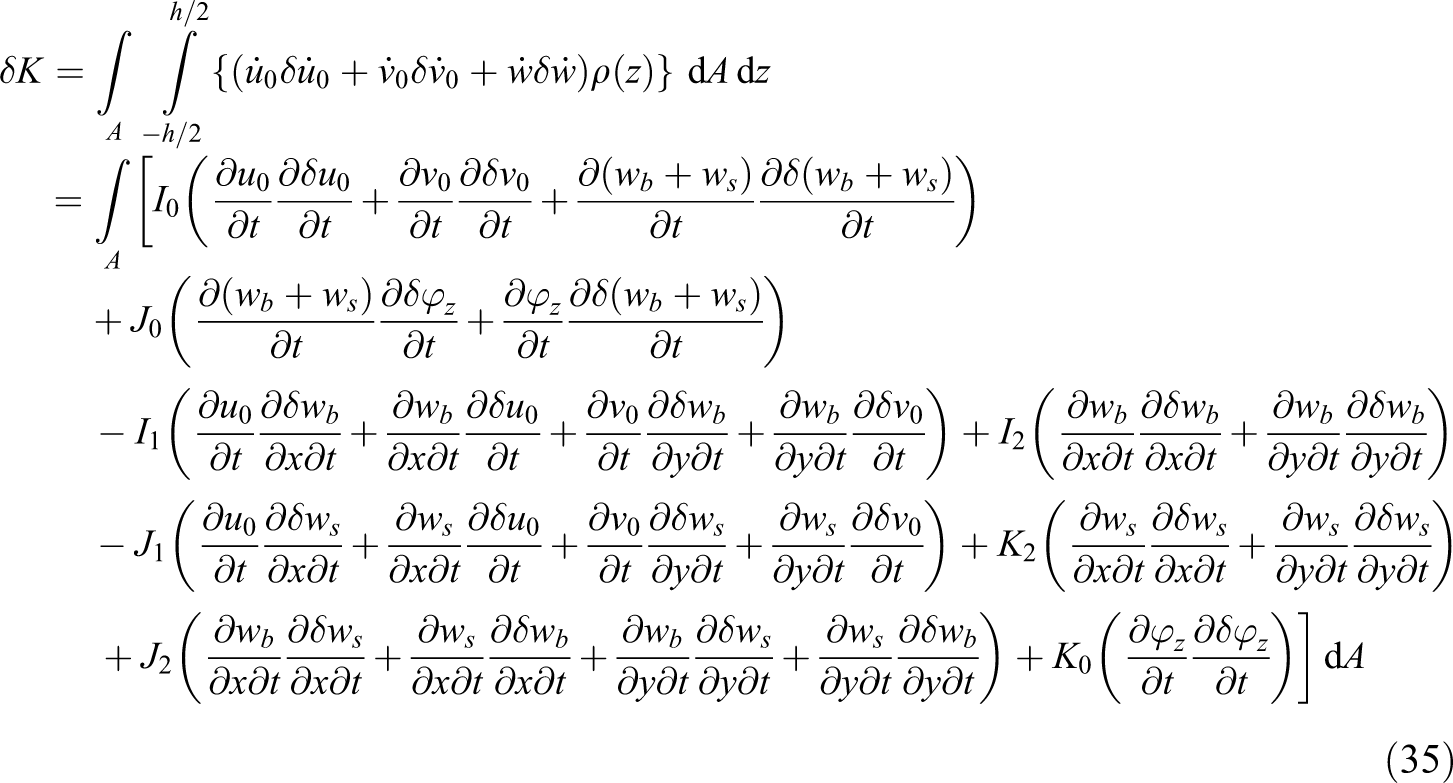
where
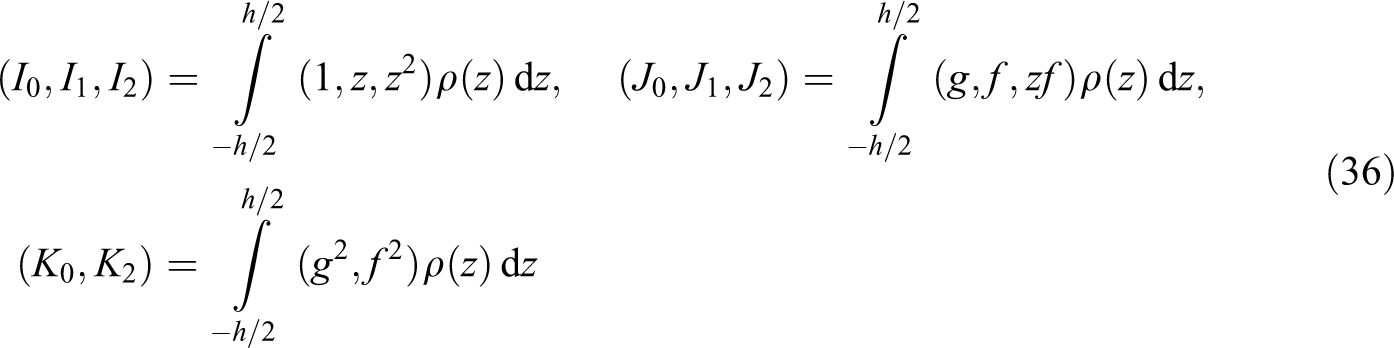
Substitution of equations (18), (31), (33), and (35) into equation (17) and integration by parts and setting the coefficients of





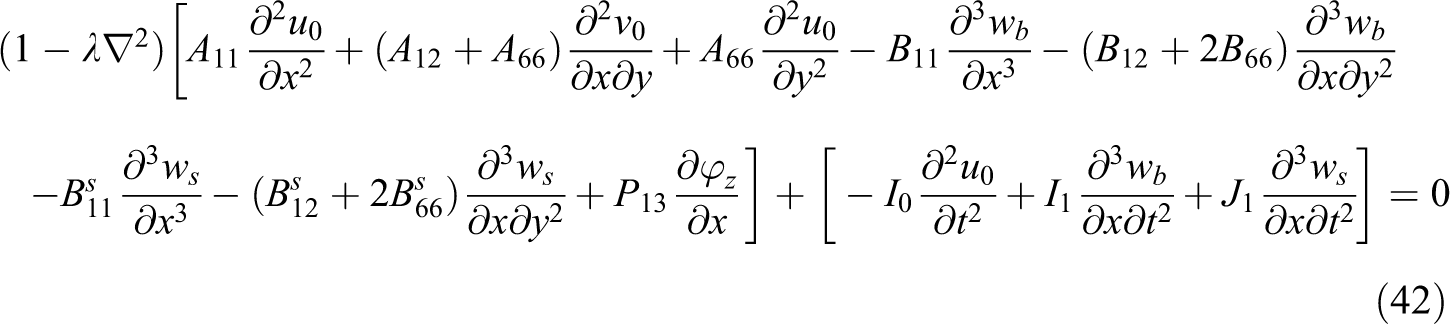
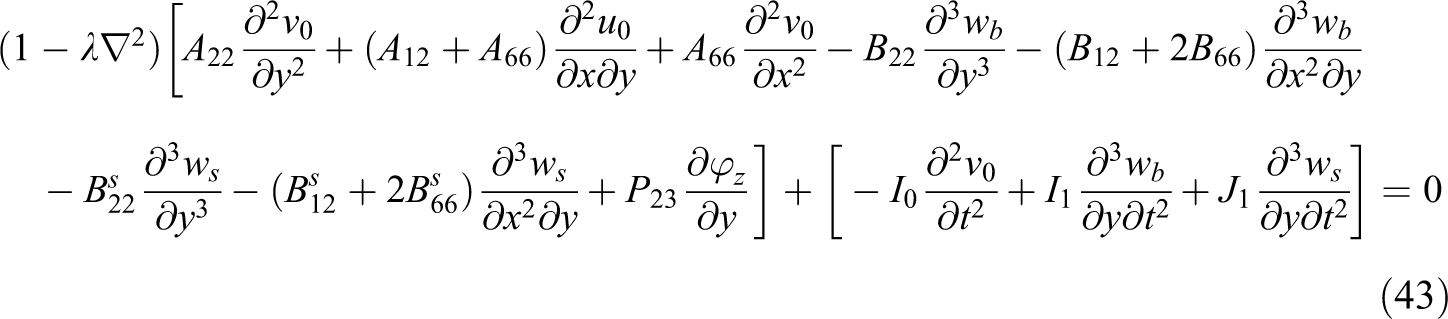
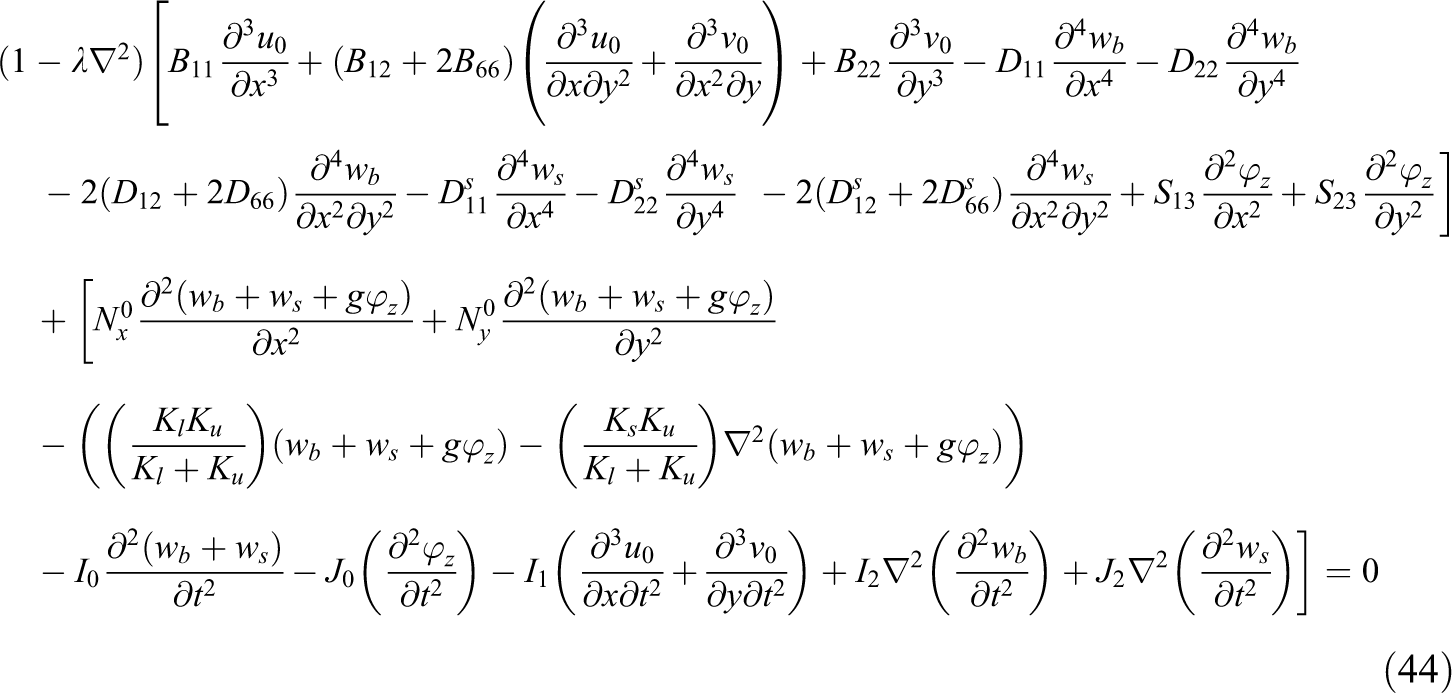
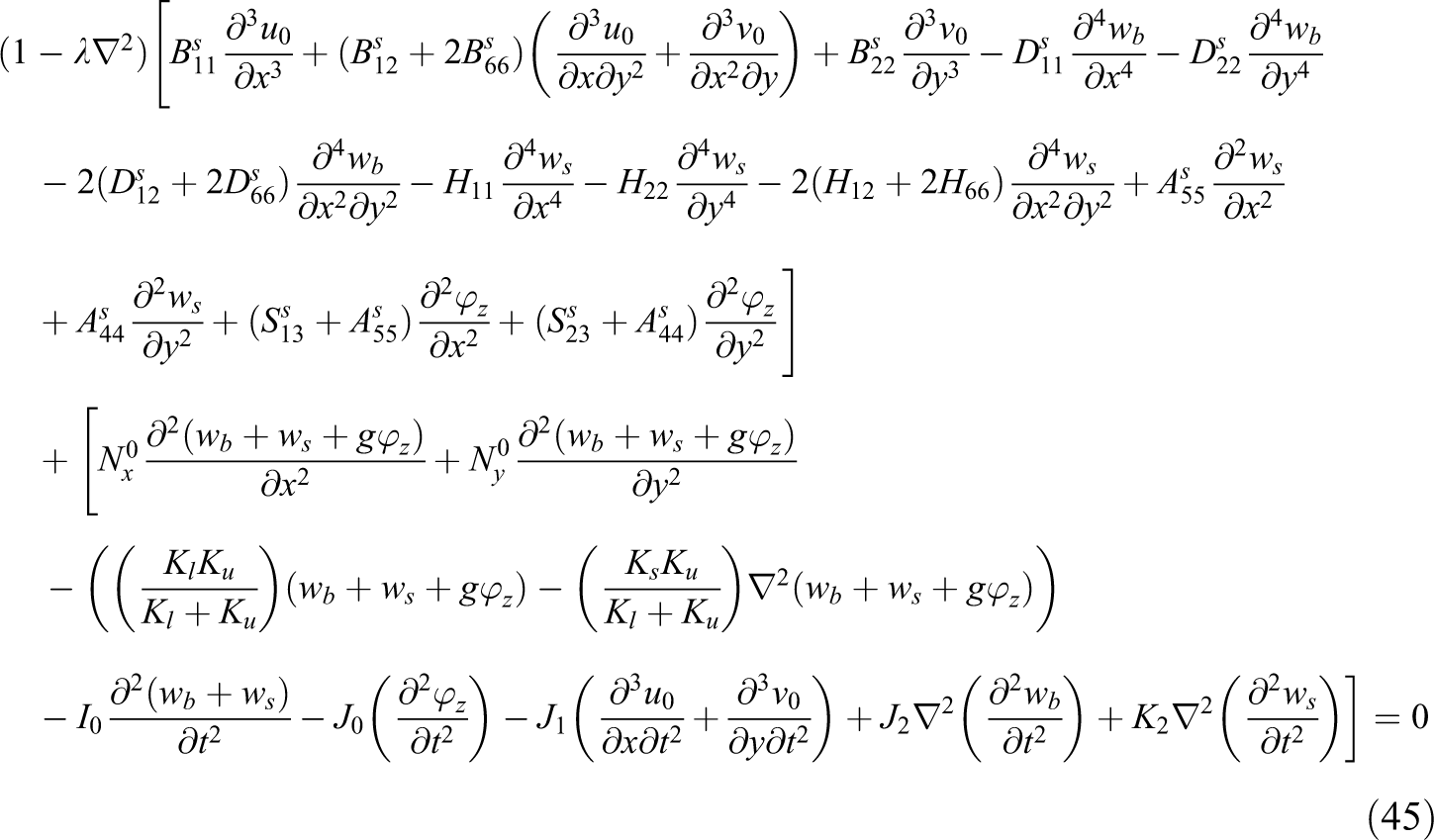
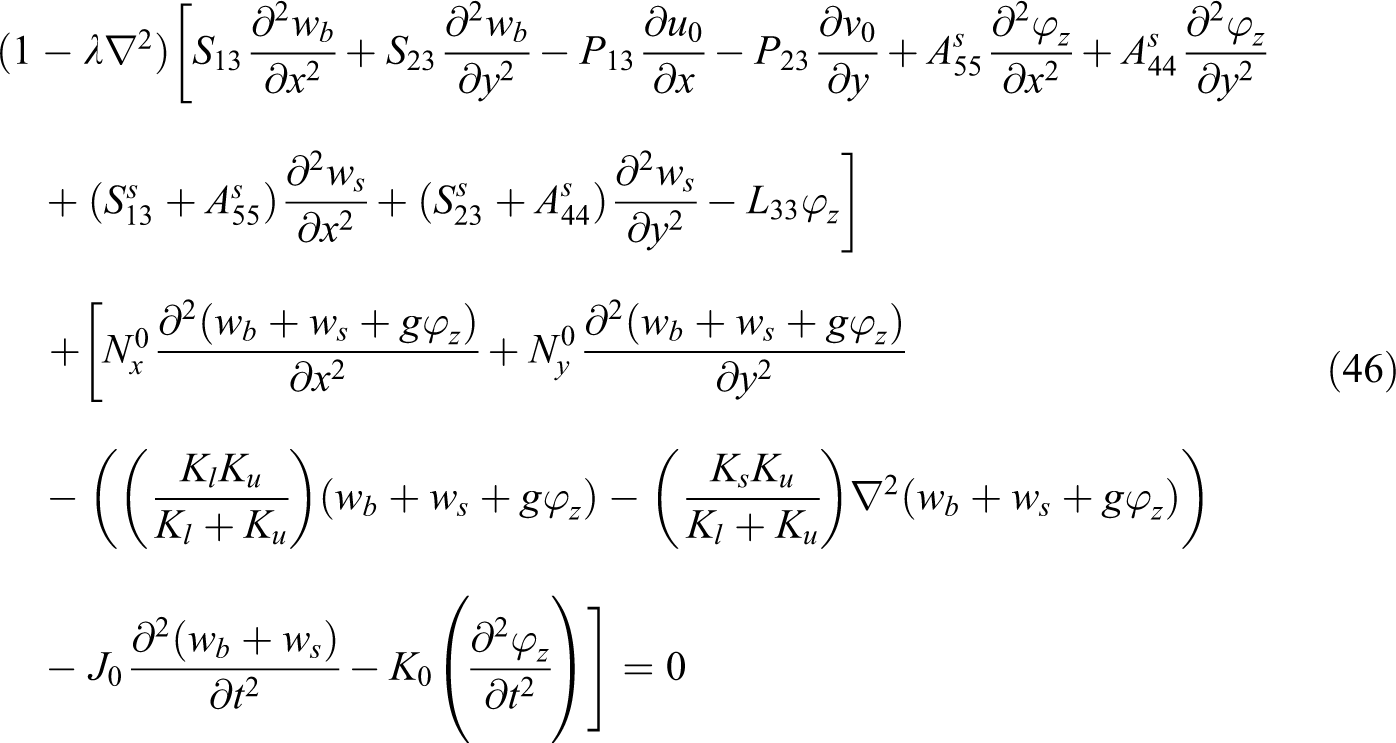
By substituting equations (14), (32), and (34) into equations (37) to (41) and based on the references, 48 –51 the equations of motion of the presented theories can be rewritten in terms of displacements as follows
The classical and nonclassical boundary conditions can be obtained in the derivation process when using the integrations by parts:
classical boundary conditions
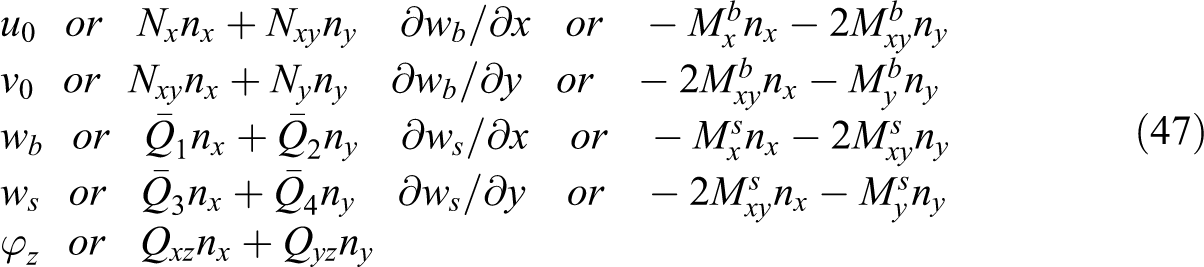
where
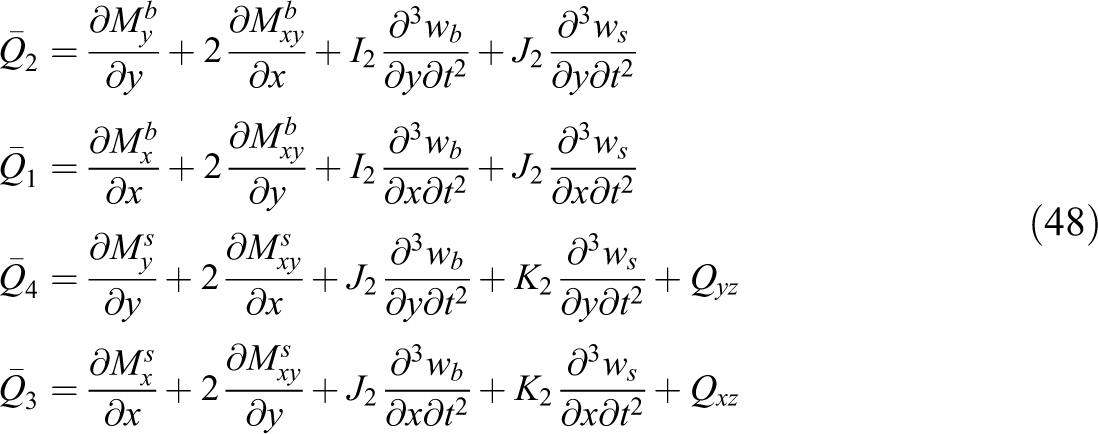
and
nonclassical boundary conditions
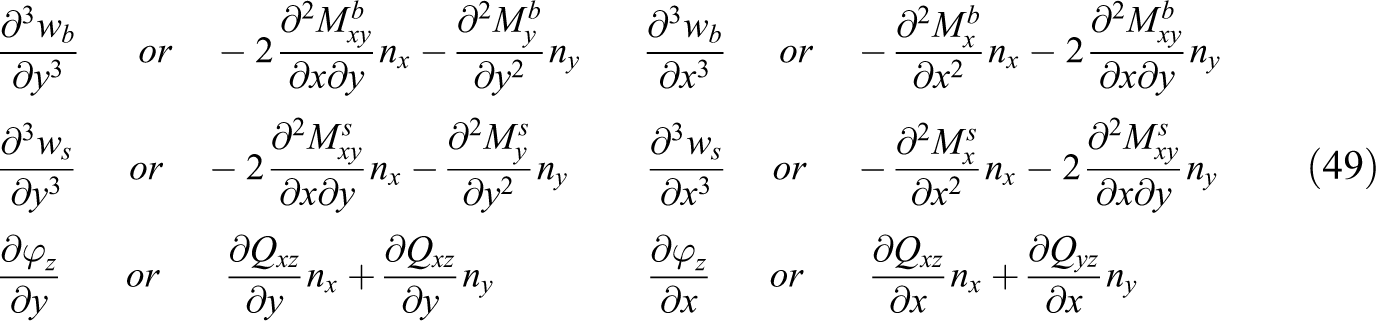
where
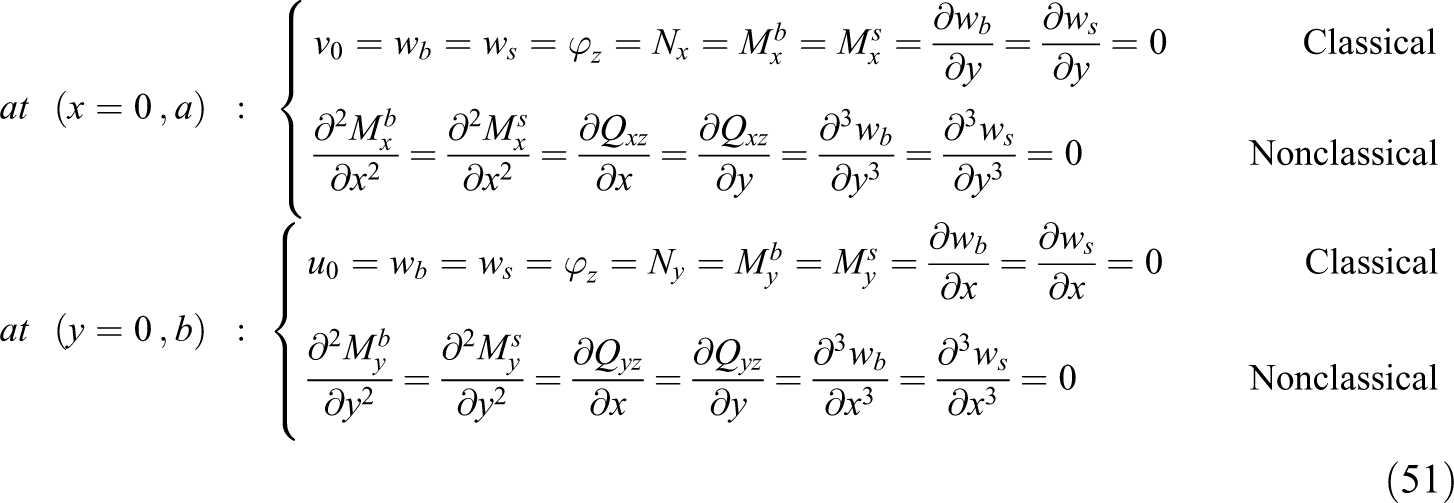
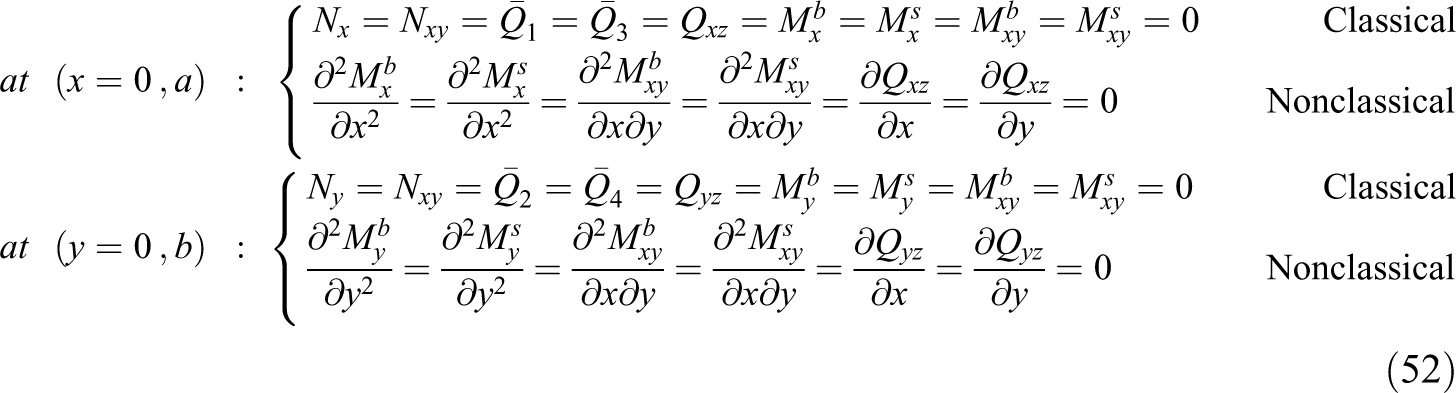
The classical and nonclassical boundary conditions are satisfied for clamped, simply supported, and free edges as follows
(I) Clamped edge

(II) Simply edge
(III) Free edge
In this work for brevity, a four-letter symbol is used to express the boundary conditions of the four edges of the rectangular nanoplate. The letters S, C, and F, respectively, stand for simply supported, clamped, and free edges. As a convention, the first and second letters express the type of boundary conditions at (x = 0 and x = a), respectively, and the third and fourth letters describe the imposed boundary conditions at (y = 0 and y = b). In Figure 2, for instance, the SSCC boundary condition indicates that at (x = 0 and x = a) the simply supported boundary condition is governed, whereas the edges at (y = 0 and y = b) are clamped.
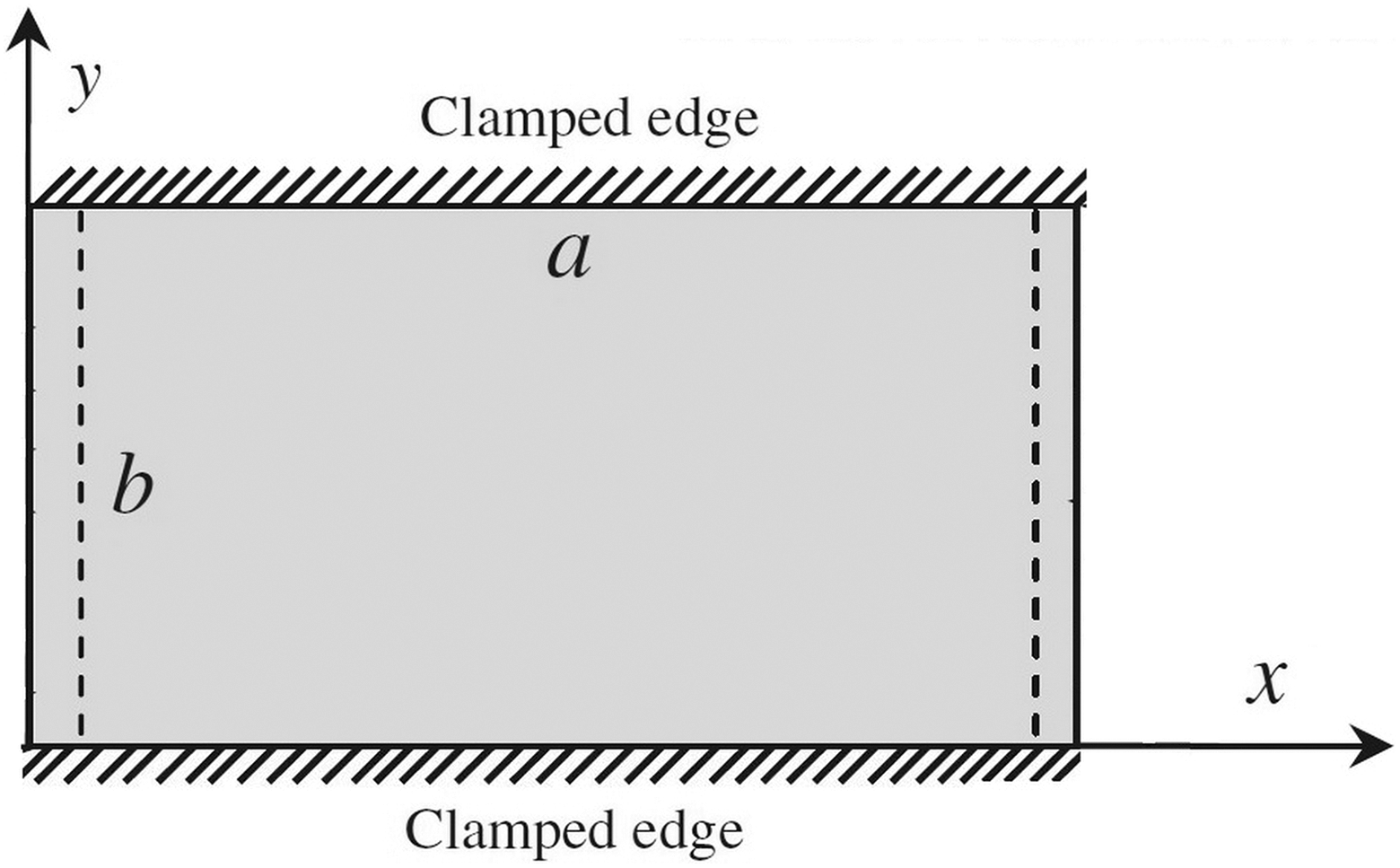
SSCC nanoplate.
Solution procedure
Finding solutions for governing partial differential equations is the key factor in the analysis of nanostructures. In this regard, exact or closed-form solutions for these differential equations are sometimes not possible. As such, approximate methods have been developed by various researchers. But, the methods may not always handle all sets of boundary conditions.
1
One of the most efficient numerical methods for solving differential equations is GDQM. Its advantage among the other numerical methods is the ability to capture the precise and accurate results using low numbers of grid points.
53
This method is an improved form of DQM, which was developed by Shu and Richards
54
in computing the weighting coefficients. It is indicated that GDQ is a global method which is based on the higher-order polynomial approximation. The nth order derivative of the smooth function



where
The accuracy and reliability of GDQM depend on the number and distribution of grid points. It has been reported that sufficiently accurate results are obtained using well-accepted set, namely Gauss–Lobatto–Chebyshev points. Herein we express the coordinates of the mesh points as 55
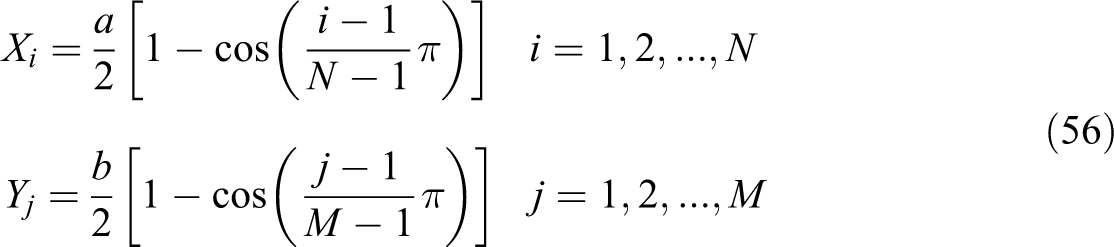
where N and M denote the number of grid points in x and y directions, respectively. The weighting coefficients for the first-order derivative can be obtained as

where

The weighting coefficients for high-order derivatives can be generated by recursion formulas


and


Herein, the governing differential equations are discretized based on GDQM. The details of this procedure are given in the Online Supplemental Appendix
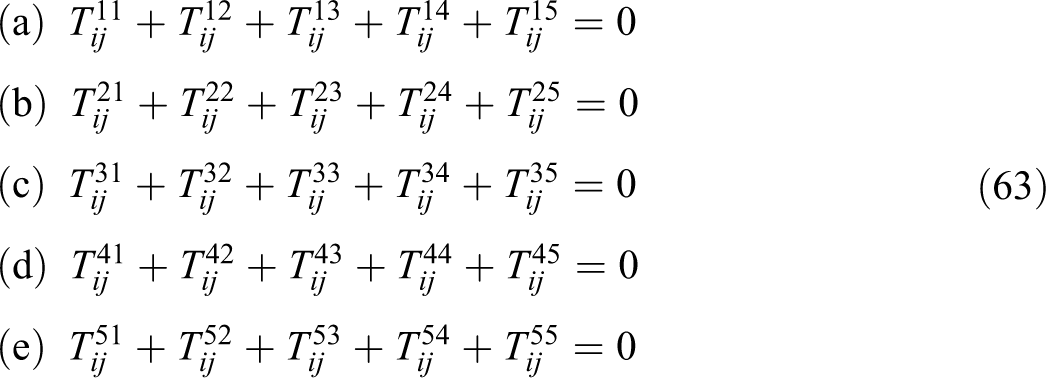
The system of equation (63) can be rewritten in the form of matrix as

where
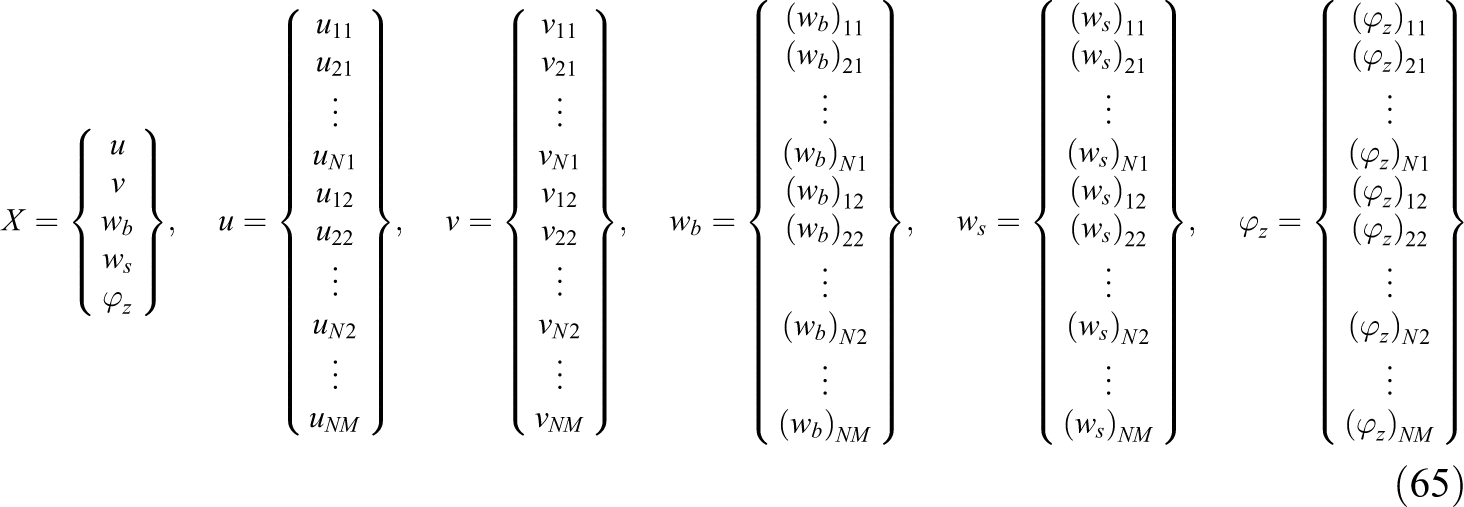
It is noticed that
Vibration analysis
In order to solve the problem of vibration, the effects of thermal loading are considered. Hence, in vibration analysis of nanoplate,

After substituting the discretized boundary conditions into the coefficient matrix of equation (66), we have

which can be simplified as

where the indices of d and b are expressed for domain and boundary conditions. Using equation (68) and a suitable computer code developed in MATLAB (R2017a) environment, eigenvalues are derived as natural frequencies and corresponding eigenvectors can be considered as vibration modes.
Numerical results
In this section, at first, convergence and comparison studies are conducted. Afterward, parametric studies are performed to examine the influences of involved parameters. The poly(methyl methacrylate), referred to as PMMA and SWCNTs are, respectively, regarded as homogeneous matrix phase and reinforcement in nanocomposite. The properties of armchair (10,10) SWCNTs are used as the reinforcement. In this research, the temperature-independent (TID) and temperature-dependent (TD) models are considered for material properties.
18
In the TID model, the material properties of CNT are constants at different temperatures and the thermal environment does not affect the material properties. However, the material properties of CNT vary based on the temperature changes in the TD model.
18
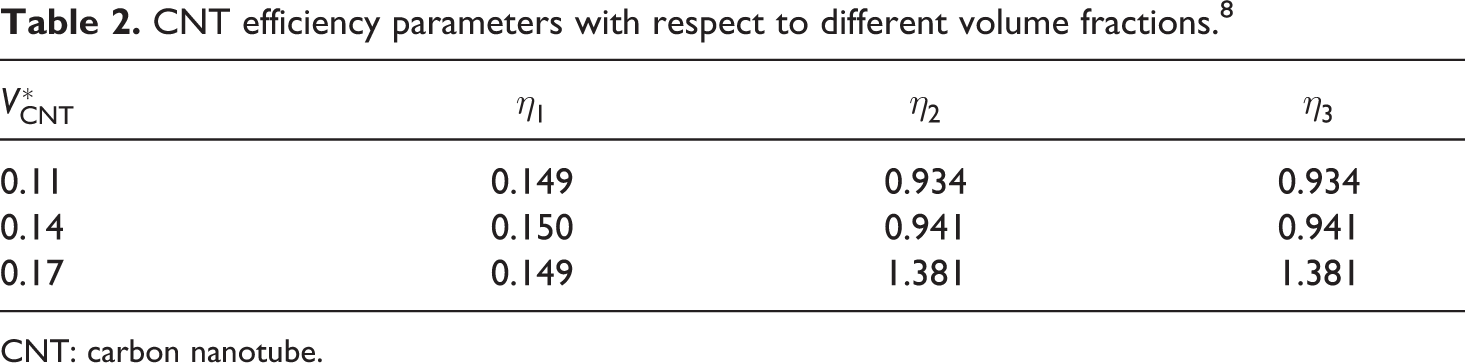
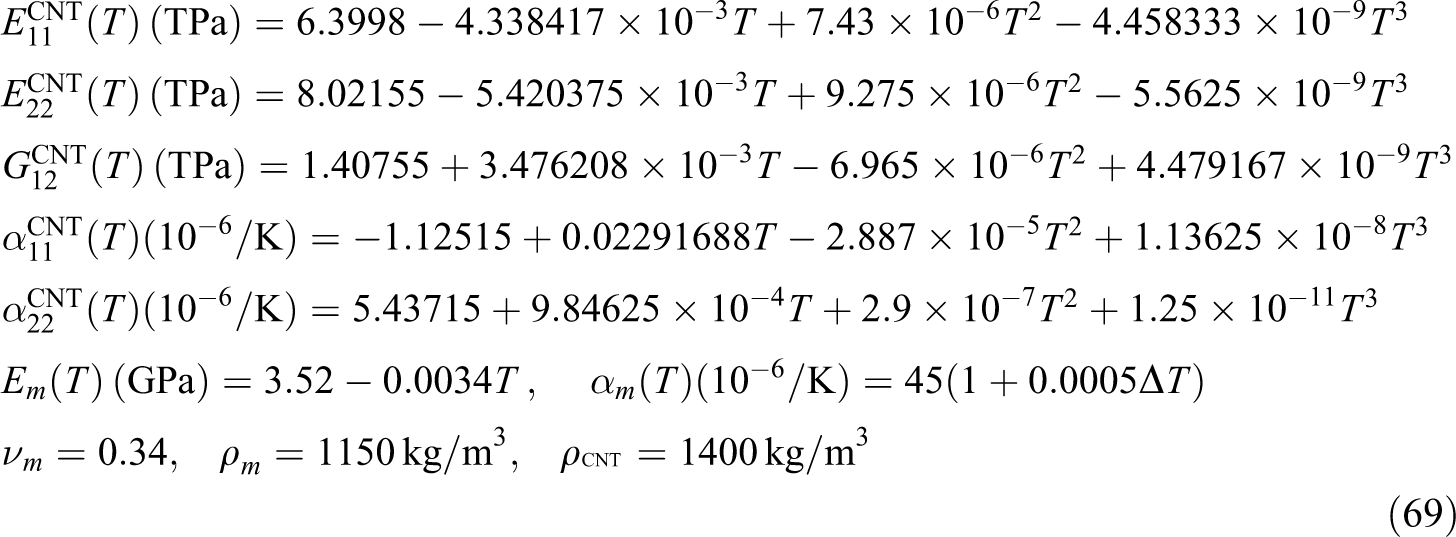
The corresponding thermomechanical properties of CNTs and matrix phase with considering the temperature dependency are given in Table 1. The CNT efficiency parameters are defined following the previous works by Zhu et al.,
8
as shown in Table 2. For numerical study, the assumption that
Thermomechanical properties of FG-CNTRC nanoplate at specific temperatures. 10
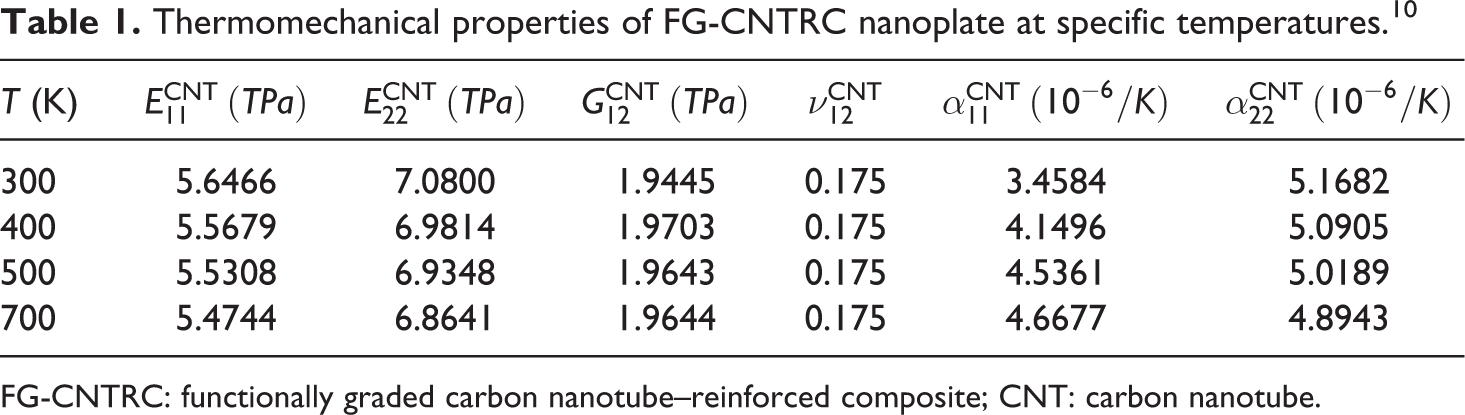
FG-CNTRC: functionally graded carbon nanotube–reinforced composite; CNT: carbon nanotube.
CNT efficiency parameters with respect to different volume fractions. 8
CNT: carbon nanotube.
Furthermore, for each of the thermomechanical properties of the CNT, a third-order interpolation is done to obtain the properties of CNT as a function of temperature 10
Also, nondimensional parameters are defined as

Convergence study
In this section, owing to the fact that the accuracy and stable numerical results based on GDQM depend on a sufficient number of grid points, a convergence test is performed. Figures 3 and 4 depict the variation of dimensionless frequencies of UD-CNTRC nanoplate resting on Kerr elastic foundation versus number of grid points for different values of size parameter and temperature difference. The temperature difference (
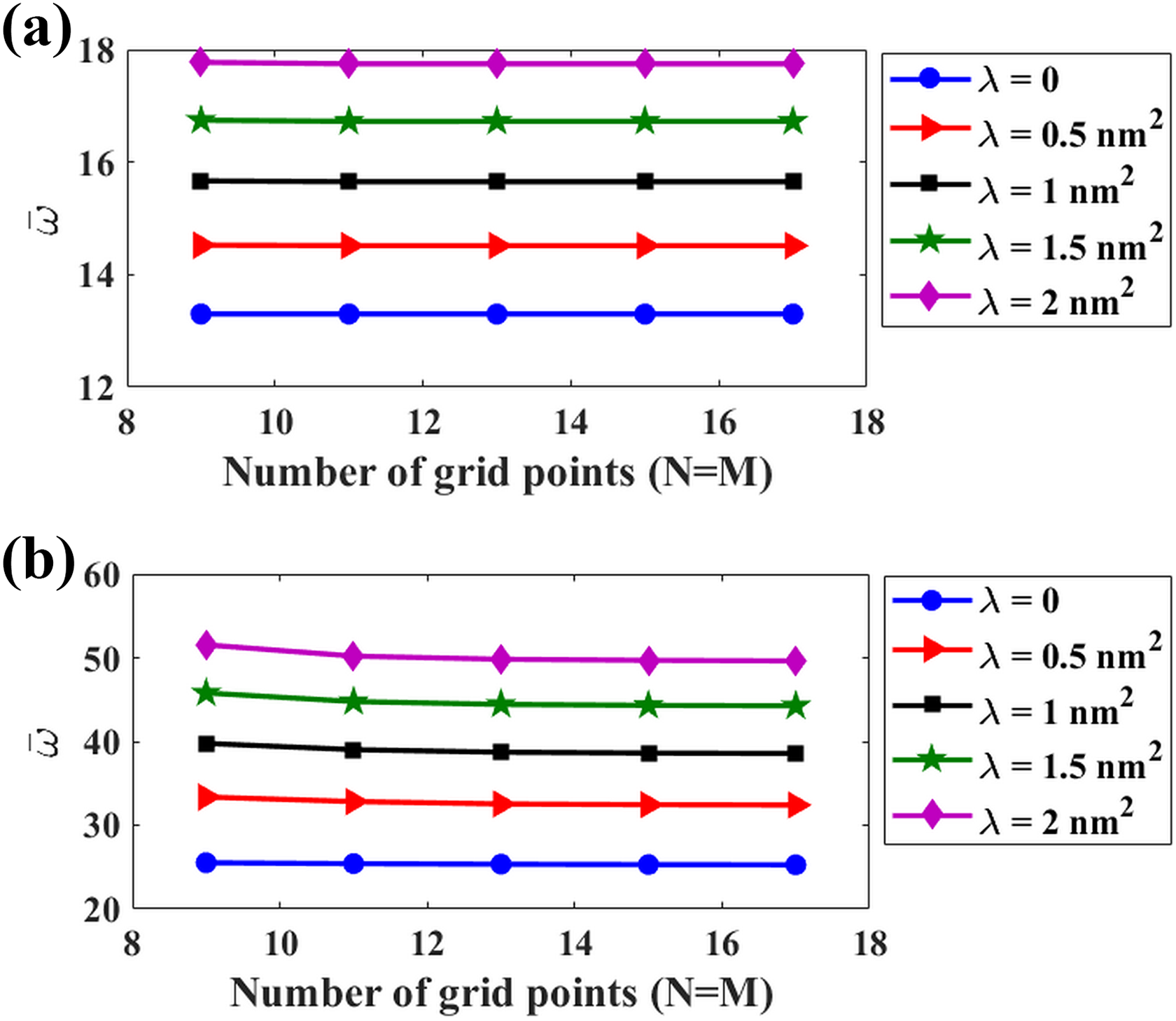
Convergence study for natural frequency of CNTRC nanoplate resting on Kerr foundation with different size parameters: a/b = 1, a/h = 20, UD pattern,
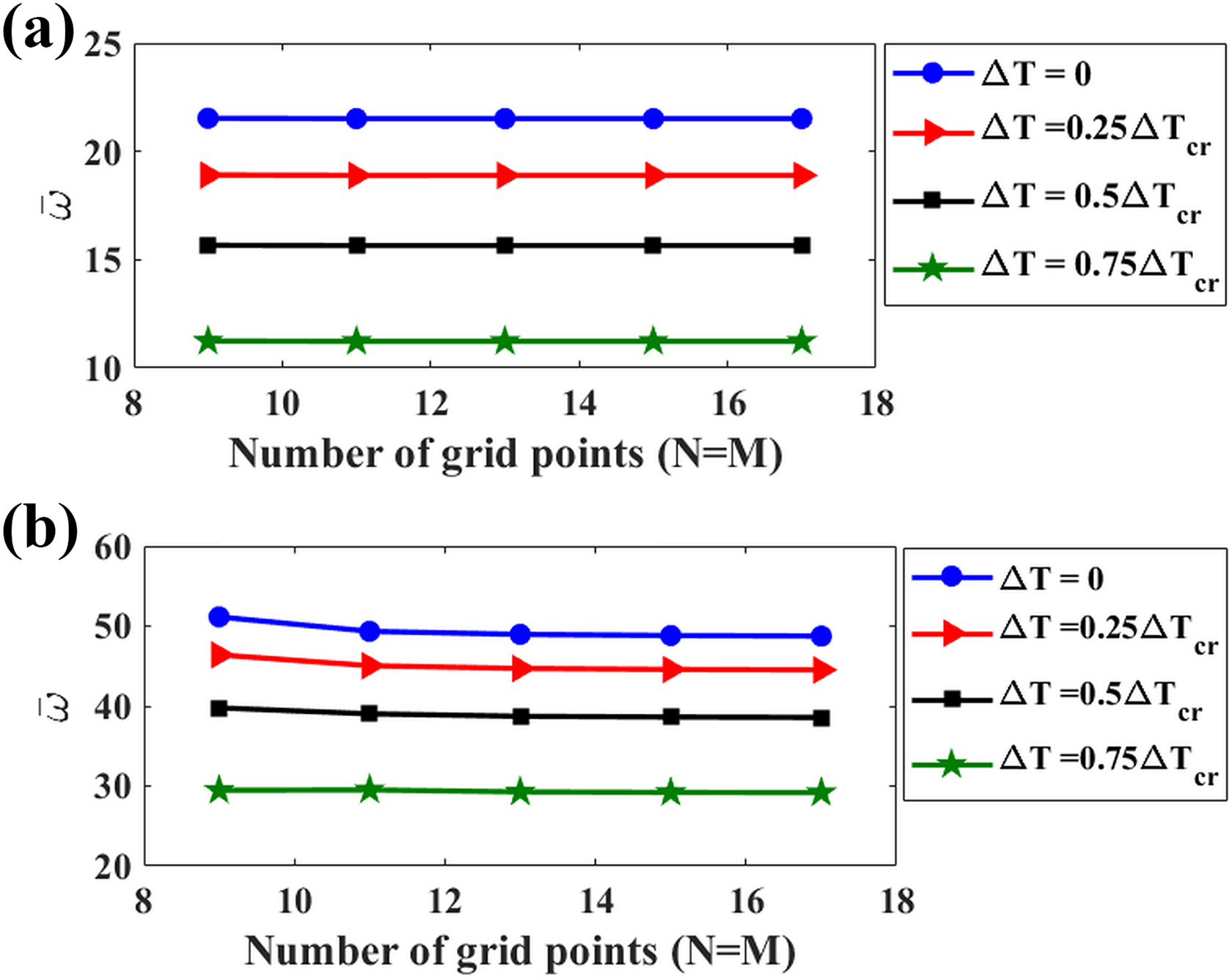
Convergence study for natural frequency of CNTRC nanoplate resting on Kerr foundation with different temperature changes: a/b = 1, a/h = 20, UD pattern,
Comparison study
To justify the proposed formulation to investigate the vibration responses, two comparison studies are performed. In the first case, the nondimensional natural frequencies (
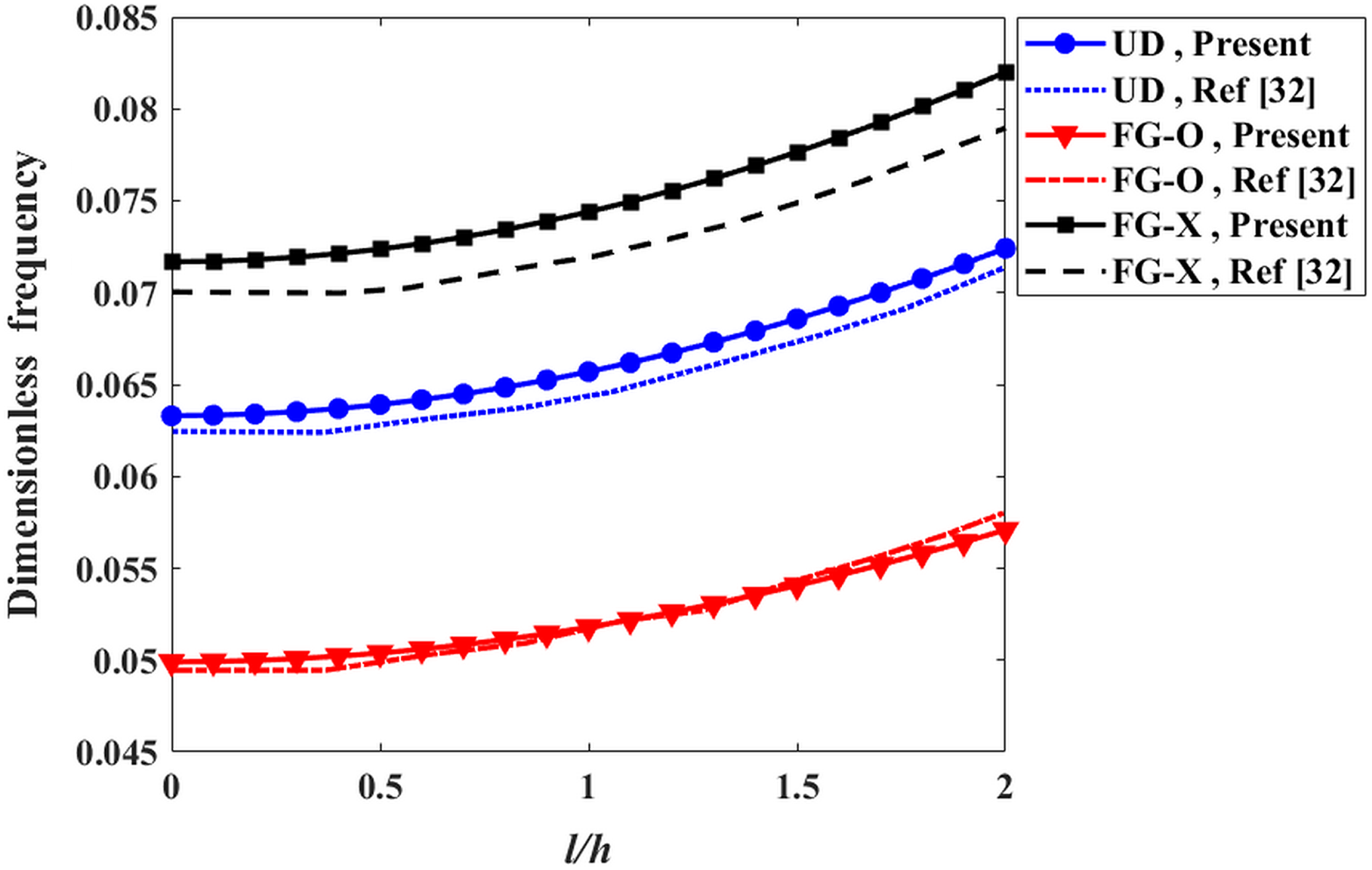
Comparison variation of dimensionless frequency versus size parameter-to-thickness ratios for simply supported FG-CNTRC nanoplate: a/h = 16, a/b = 1,
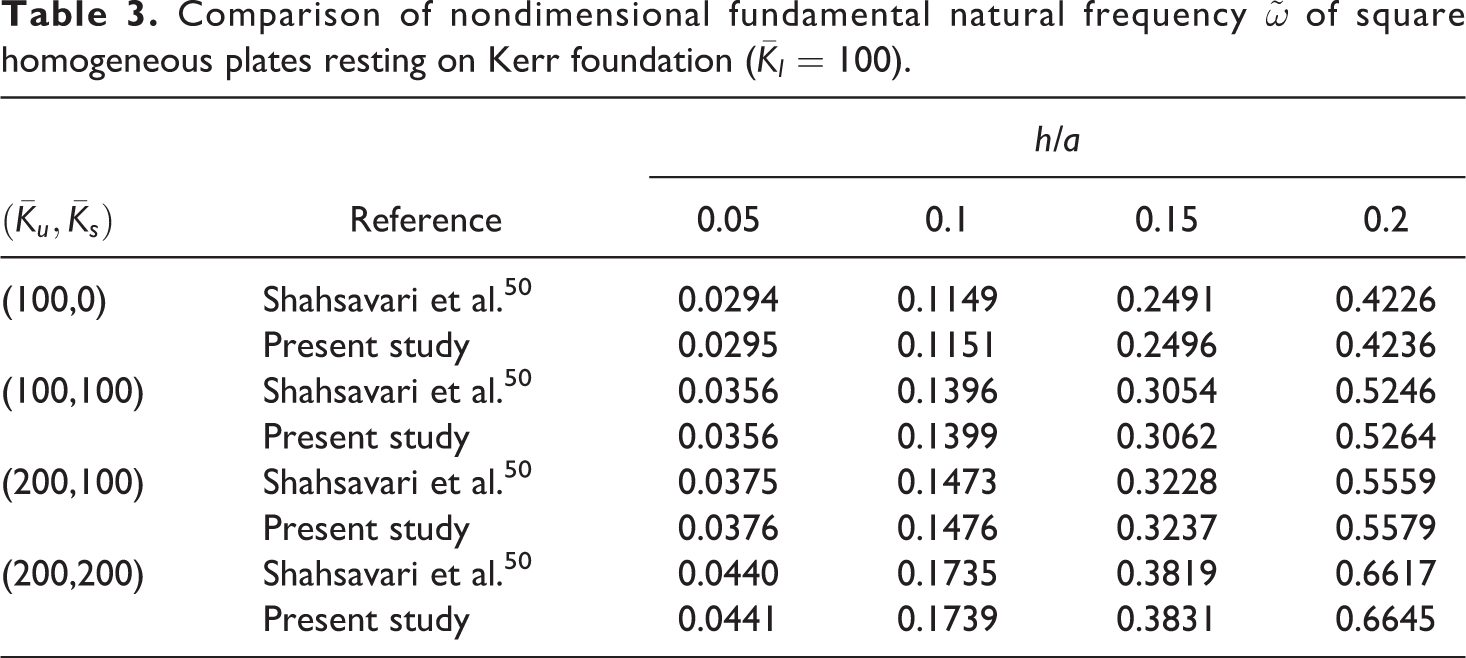
As a second example, in Table 3, nondimensional natural frequencies (
Comparison of nondimensional fundamental natural frequency
Parametric study
After validating the numerical results of this study with the available data in the open literature, parametric studies are conducted in this section. In Table 4, the effects of variation of Kerr foundation coefficients and temperature change on nondimensional natural frequencies of UD-CNTRC rectangular nanoplate subjected to various boundary conditions are analyzed. The results are presented for both TD and TID material properties to show the impacts of temperature dependency of material properties on the vibration behavior of CNTRC nanoplates. The different boundary conditions are taken into consideration, namely SSSS, SSSC, SSCC, CCCC, SSSF, and SCCF. Since nanoplate has more constraints in clamped edges with respect to free ones, the largest value of natural frequency is for CCCC nanoplate. It is noticed that natural frequencies increase with increasing Kerr foundation coefficients. As shown, the values of upper spring and shear layer parameters clearly affect the natural frequency of the nanoplate, leading to larger frequency levels, as the result of promoting the flexural stiffness of the nanostructure. It is also found that the temperature change effect decreases with rise in Kerr foundation parameters; however, this decrease is more pronounced in the TID model than TD. As observed, increasing the temperature difference (from
Nondimensional fundamental natural frequency of CNTRC rectangular nanoplate for various the Kerr foundation stiffness, temperature change, and boundary conditions.a
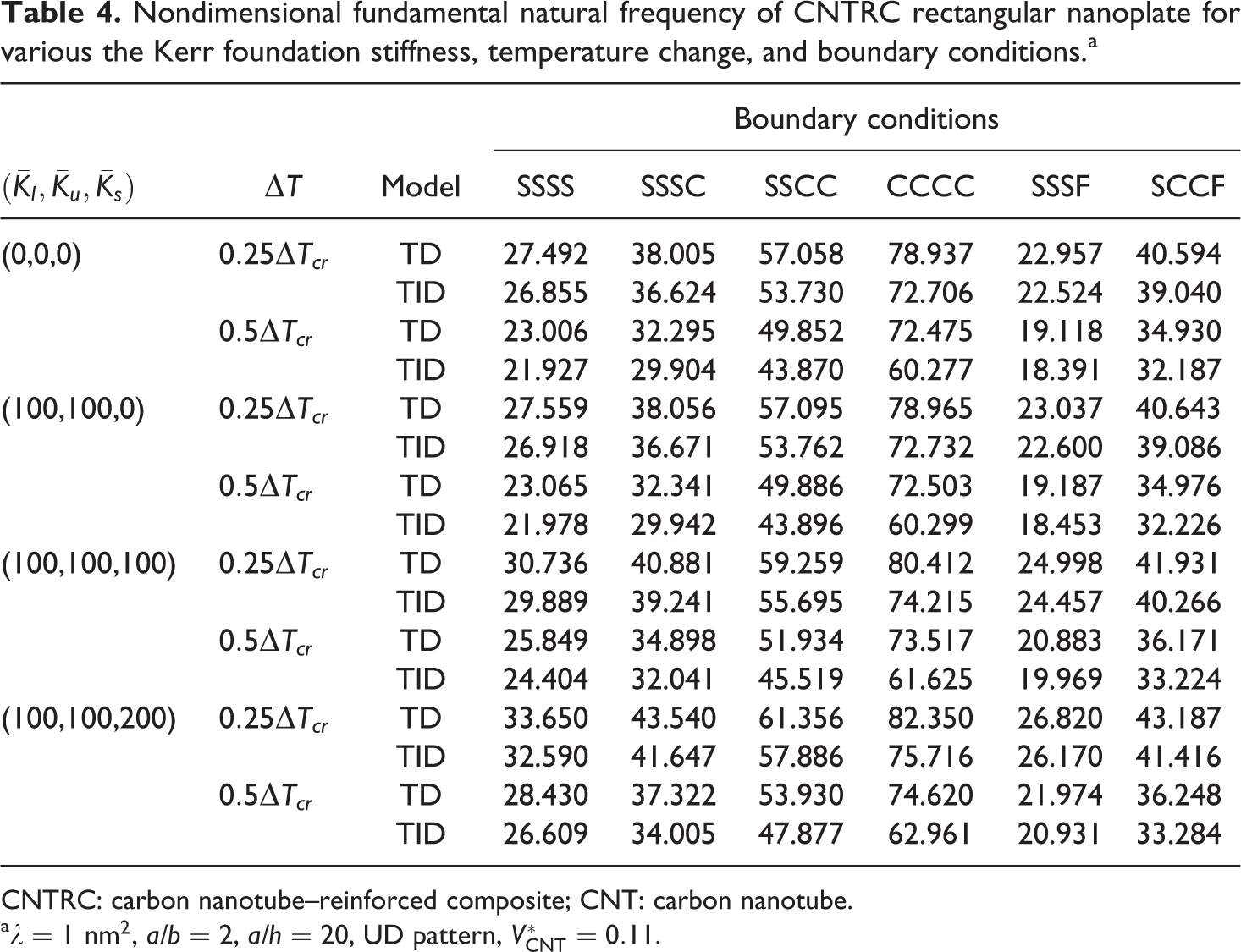
CNTRC: carbon nanotube–reinforced composite; CNT: carbon nanotube.
a
In Figure 6(a) to (e), the effects of size parameter on natural frequencies of UD-CNTRC rectangular nanoplate versus length-to-thickness ratios under SCSC boundary condition resting on Kerr foundation are plotted. To account for the importance of temperature dependency of the material properties, both TD and TID models are taken into consideration. The results indicate that the natural frequencies increase with the increase of size parameter. Also, it can be seen that the dimensionless frequencies obtained by Mindlin’s SGT are higher than those obtained by CPT. It is concluded that size effects are more significant for nanoplate with lower values of a/h ratio. Furthermore, it is observed that the difference between the results of TD and TID models becomes negligible in the case of larger a/h ratios. In addition, Figure 6 reveals that changes in temperature (
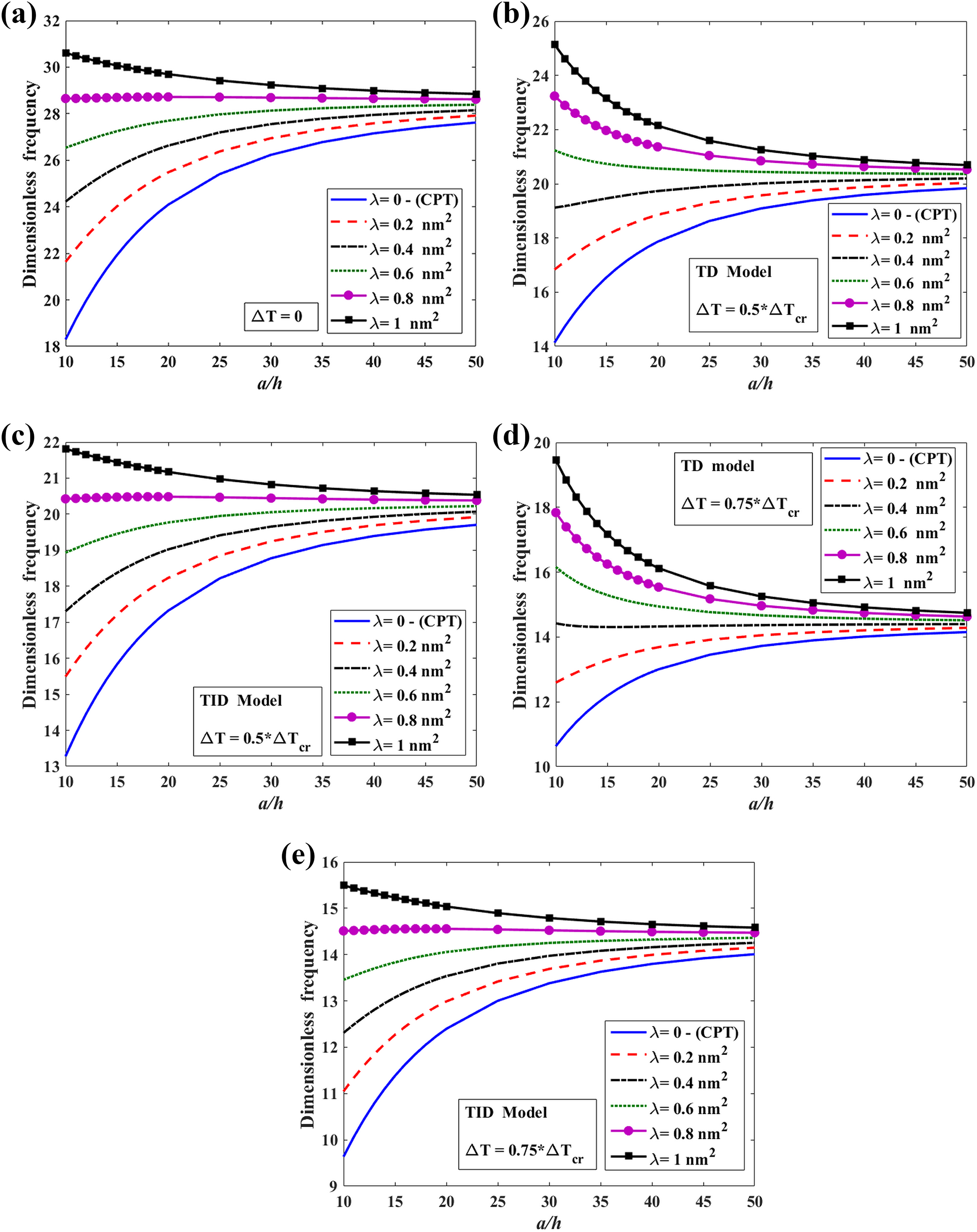
Effect of length-to-thickness ratios with different size parameters on natural frequency of UD-CNTRC nanoplate: a/b = 0.5, SCSC,
The effects of aspect ratio (a/b) on the natural frequencies of SCSC composite rectangular nanoplate reinforced with UD-CNT resting on Kerr foundation for different size parameters are shown in Figure 7(a) to (c). Furthermore, TD model is considered for material properties. It can be said that the aspect ratio of any structure has a considerable impact on their stiffness and the free vibration responses of the structures. The findings are suggestive of an increase in natural frequencies with increasing aspect ratio. In addition, it is clearly seen that the effects of size parameter on the vibration behavior of CNTRC nanoplates are more pronounced for the larger values of aspect ratio.
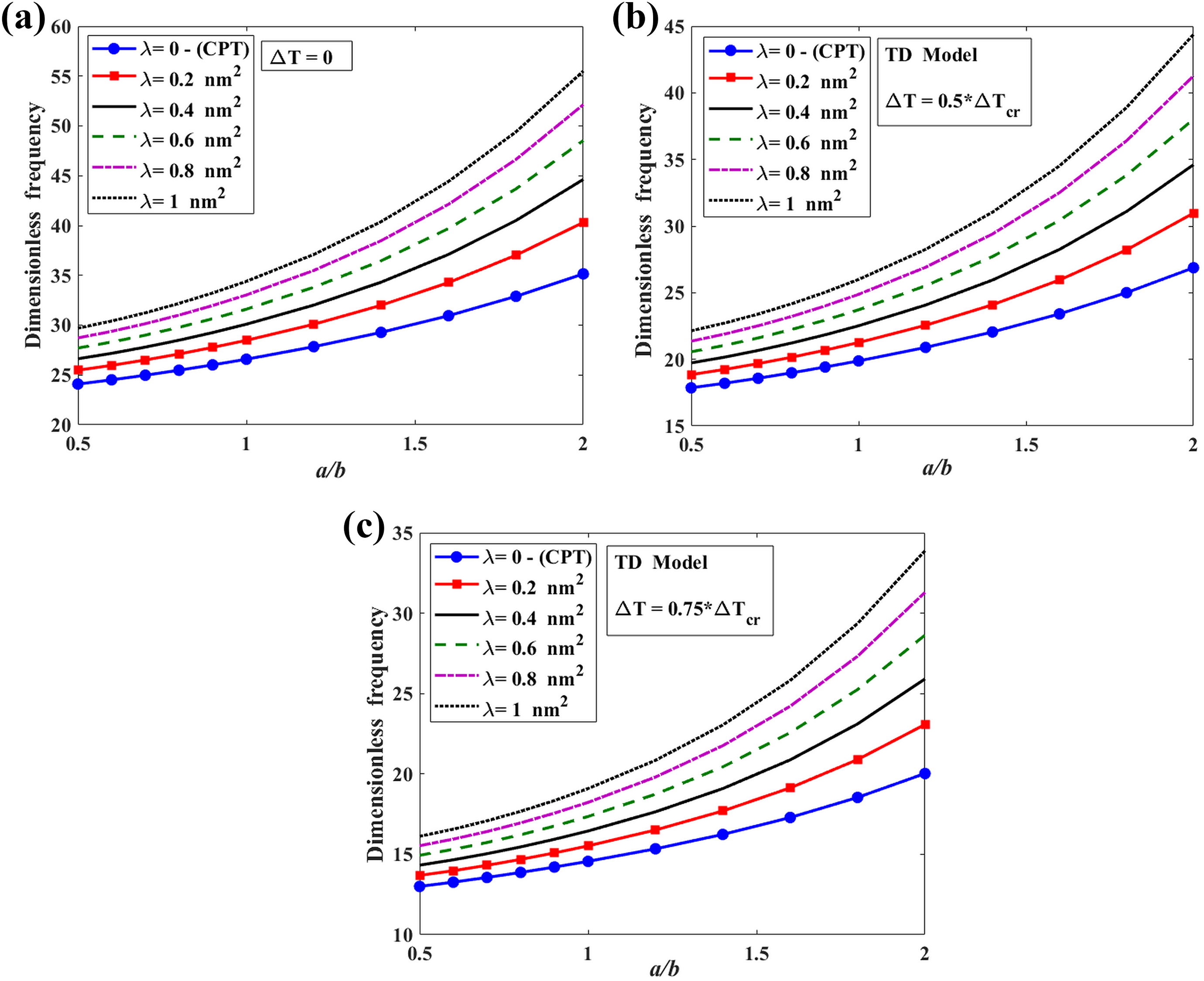
Effect of aspect ratio with different size parameters on fundamental natural frequency of UD-CNTRC nanoplate: a/h = 20, SCSC,
The influences of strain gradient parameter on the natural frequencies of FG-CNTRC nanoplate versus temperature change are presented in Figure 8(a) to (c) for different values of volume fractions of CNTs. The results are presented for TD material properties of FG-X CNTRC nanoplate resting on Kerr foundation under SSCC boundary condition. The results indicate that raising the temperature reduces the nanoplate stiffness and the vibrational frequencies. Furthermore, it is observed that the natural frequencies of the nanoplate are zero at a certain temperature. At this critical temperature, the nanoplate begins to buckle and ceases to vibrate.
56,57
The findings suggest that natural frequencies and critical buckling temperatures of the FG-CNTRC nanoplates are significantly affected by the strain gradient parameter. In other words, increasing the size parameter leads to larger frequencies and the critical buckling temperature. This can be attributed to the fact that the strain gradient parameter provides a stiffness-hardening mechanism. Additionally, the findings show that the enhancement of the CNTs volume fraction tends the natural frequencies to higher values. Hence, the nanoplate with
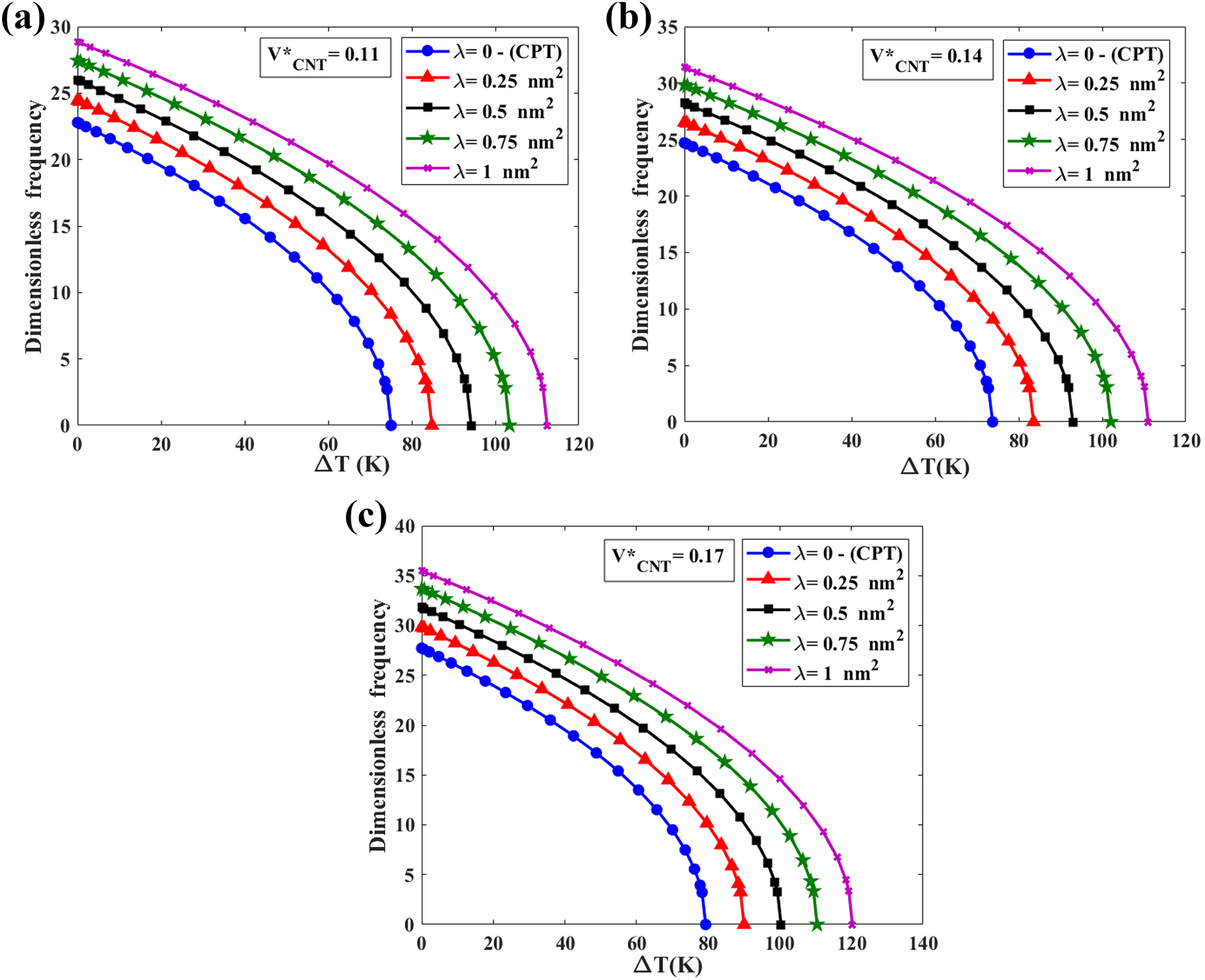
Variation of dimensionless fundamental frequency of FG-CNTRC nanoplate versus temperature change for different size parameters and volume fractions:
Considering TD material properties, the natural frequencies of CCCC functionally graded CNTRC nanoplates versus temperature change resting on Kerr foundation are presented in Figure 9(a) to (c) for different values of volume fractions and types of distribution patterns of CNTs. As it was mentioned earlier, exacerbating temperature variations reduces the flexural stiffness of the nanoplate, leading to smaller frequencies. In other words, the elastic modulus of the CNTRC nanoplates is reduced by increasing the temperature, which decreases the nanoplate stiffness as the properties of the matrix and the CNT were assumed to be temperature-dependent. Needless to say, the stiffness of the CNTRC nanoplate increases with increasing volume fraction. Moreover, it can be concluded that FG-X and FG-O nanoplates have, respectively, the most and the least frequencies in environments of different temperatures (FG-X > UD > FG-V > FG-O). Overall, it is safe to say that the distribution of CNTs near the top and bottom surfaces contributes more to increasing the nanoplate stiffness than scattering them in the middle.
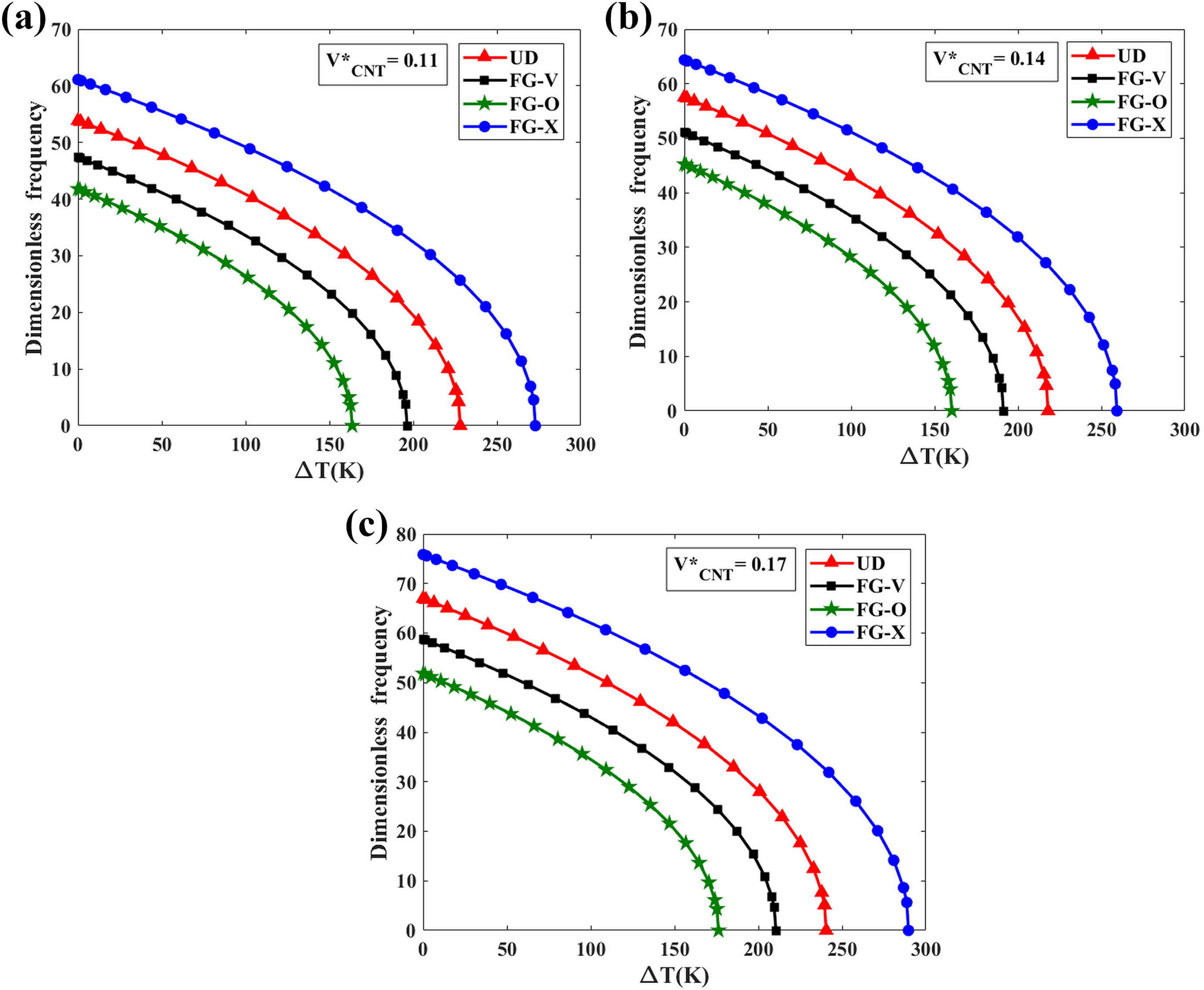
Variation of dimensionless fundamental frequency of FG-CNTRC nanoplate versus temperature change for different CNT distributions and volume fractions:
The effects of size parameter on the nondimensional natural frequencies of simply supported FG-CNTRC rectangular nanoplate resting on Kerr foundation are shown in Figure 10(a) to (c) for different types of CNT distribution pattern and values of volume fractions. The results are also presented for
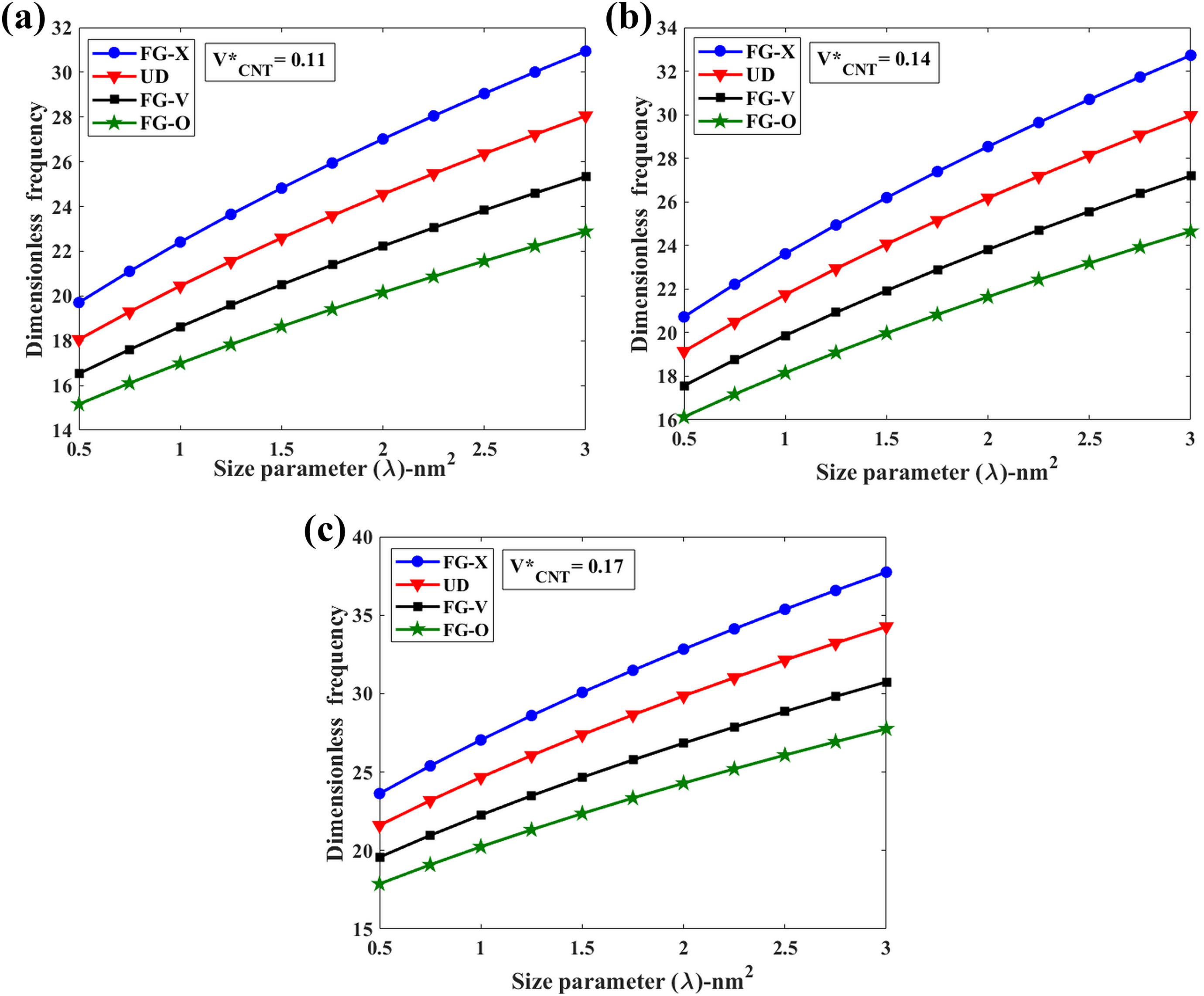
Effect of CNT distributions and volume fractions with different size parameters on fundamental natural frequency of FG-CNTRC nanoplate: a/b = 0.5, a/h = 10, SSSS,
In the following, the vibrational mode shapes of the FG-CNTRC nanoplate resting on Kerr foundation in thermal environment for the TD model are investigated. The first four vibrational mode shapes of CCCF rectangular nanoplates are demonstrated in Figure 11(a) to (d). For these cases, the results are obtained for the FG-V type of CNTs distribution and
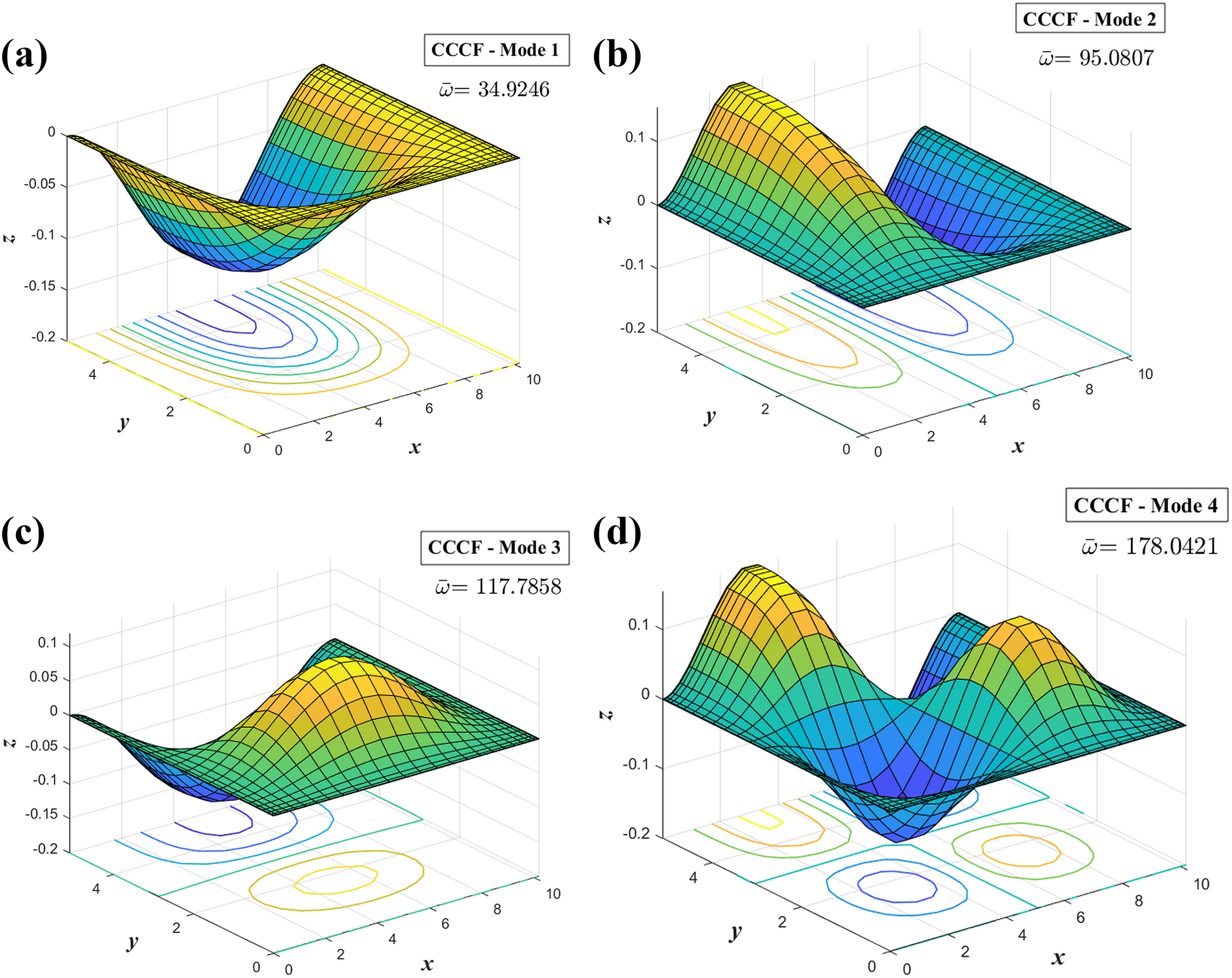
First four mode shapes of natural frequency of FG-CNT rectangular nanoplate in thermal environment: a/h = 30, a/b = 2,
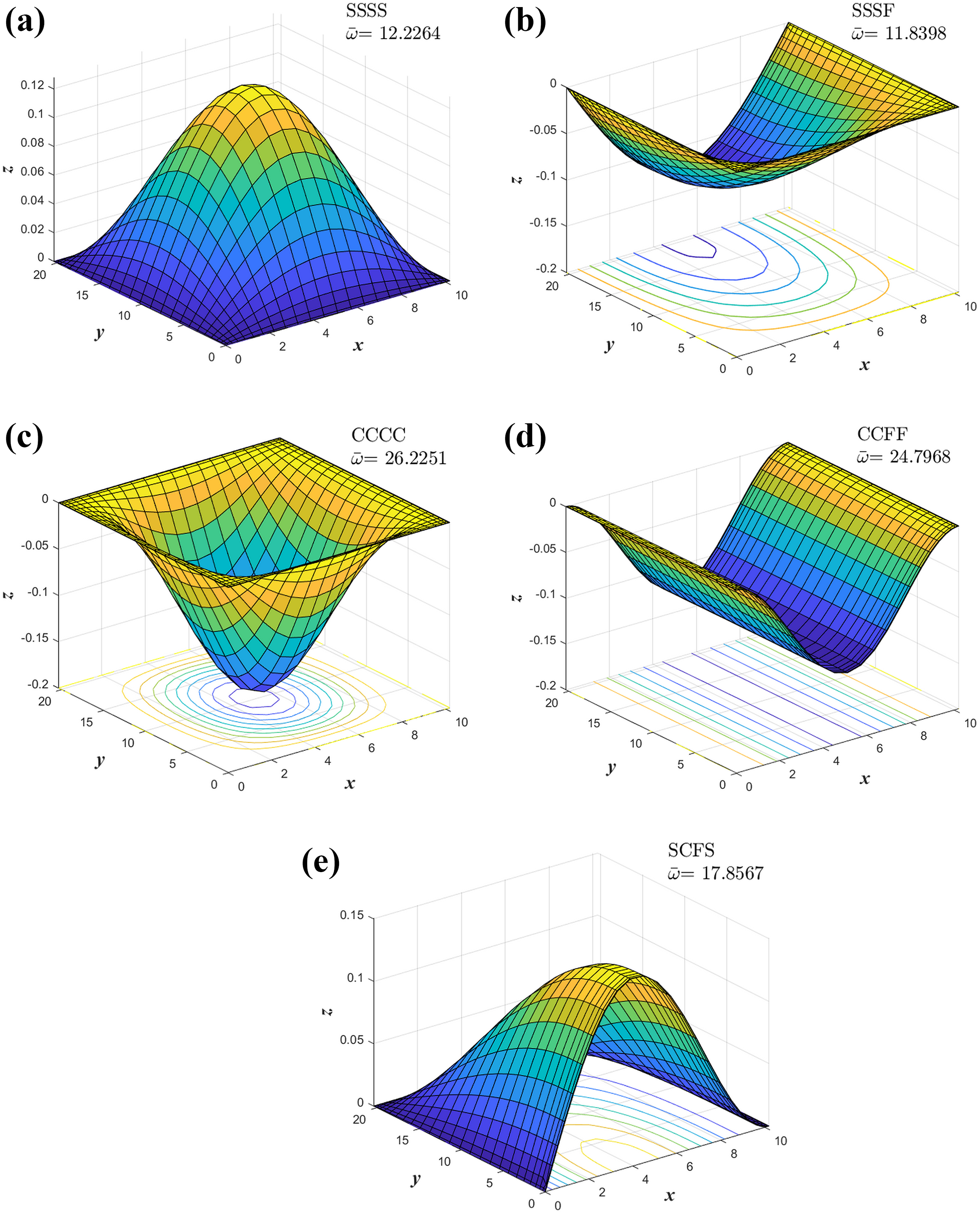
Fundamental natural frequency mode shapes of FG-CNTRC nanoplate with various boundary conditions in thermal environment: a/h = 30, a/b = 0.5,
Conclusions
This article presented the influence of size-dependent on the vibration behavior of FG-CNTRC nanoplates resting on Kerr foundation subjected to uniform thermal loading via GDQM. The simplified Mindlin’s SGT was employed to see the size effects. Based on quasi-3D hyperbolic theory, the influence of shear deformation and thickness stretch was modeled. Furthermore, both TD and TID models were considered for material properties. Comparison studies were performed to verify the accuracy and efficiency of the present method, and the results were found to be in good agreement with solutions available in the literature. The results showed that the stiffness of the FG-CNTRC nanoplate increases for higher CNT volume fractions and larger size parameter, leading to higher frequencies. Additionally, it was found that raising the temperature reduces the nanoplate stiffness as well as the vibrational frequencies. Moreover, for all different distributions of CNTs, FG-X nanoplates have larger natural frequency values than UD, FG-V, and FG-O nanoplates, respectively. The results revealed that the effects of temperature dependency of the material properties and size parameter on the natural frequencies are more pronounced for the smaller values of length-to-thickness ratio. It was also shown that the boundary conditions play an important role in the thermal vibration behavior of FG-CNTRC nanoplates. The results clearly indicated that the shear layer parameter of Kerr foundation has more influence with respect to the coefficients of the upper and lower springs. These results are significant in their novelty and can be a valuable new resource to other researchers.
Supplemental material
Appendix - Mindlin’s strain gradient theory for vibration analysis of FG-CNT-reinforced composite nanoplates resting on Kerr foundation in thermal environment
Appendix for Mindlin’s strain gradient theory for vibration analysis of FG-CNT-reinforced composite nanoplates resting on Kerr foundation in thermal environment by Hosein Shahraki, Hossein Tajmir Riahi, Mohsen Izadinia and Sayed Behzad Talaeitaba in Journal of Thermoplastic Composite Materials
Footnotes
Funding
The author(s) received no financial support for the research, authorship, and/or publication of this article.
Supplemental material
Supplemental material for this article is available online.
References
Supplementary Material
Please find the following supplemental material available below.
For Open Access articles published under a Creative Commons License, all supplemental material carries the same license as the article it is associated with.
For non-Open Access articles published, all supplemental material carries a non-exclusive license, and permission requests for re-use of supplemental material or any part of supplemental material shall be sent directly to the copyright owner as specified in the copyright notice associated with the article.
