




Abstract
Polymer nanocomposites offer enhancement in thermomechanical and physicochemical properties of polymers with the presence of a little amount of nanostructured fillers such as carbon nanotubes, graphene, and layered silicates. A facile and rapid preparation of hytrel (HTL)-graphene oxide (GO) nanocomposites is done via a solution mixing method. The influence of GO content (0.1, 0.5, 1, 2, and 5 wt%) on mechanical and thermal properties of GO/HTL nanocomposites has been evaluated by using various techniques such as tensile testing, thermogravimetric analysis, differential scanning calorimetry, and dynamic mechanical analysis. The thermal stability and mechanical properties of GO/HTL nanocomposites were increased with increasing GO content. The composites have valuable improvement in tensile strength (139%) and storage modulus (72%) for HTL composite containing 5 wt% GO. The incorporation of GO into HTL polymer shows enhancement in thermal and mechanical properties due to the presence of strongest noncovalent interaction (π–π stacking) between the interface of nanocomposites. These enhanced physical properties of GO/HTL composites show its potential use in structural application.
Introduction
Polymer nanocomposites offer enhancement in thermomechanical and physicochemical properties of polymers with the presence of a little amount of nanostructured fillers such as carbon nanotubes (CNTs), graphene, and layered silicates. 1 –4 Graphene, a two-dimensional, single atomic layer of sp 2 -hybridized carbon atoms arranged in hexagonal lattice has attracted a great attention of researchers in the last decade. 5 –7 It has been accounted as a leading reinforcement material due to its high electron conductivity (200,000 cm2 V−1 s−1), exceptional thermal conductivity (approximately 5000 Wm−1 K−1), ultimate Young’s modulus (1 TPa), elastic modulus (approximately 0.25 TPa), fracture strength (130 GPa), and large specific surface area (2630 m2 g−1). 8 –12 However, preparation of a large amount of graphene oxide (GO) and reduced graphene oxide (rGO) is easily achievable compared to single graphene sheet. 13,14 Also, GO contains hydroxyl and epoxy groups on the basal plane and carboxyl groups at the edges, and thus useful as a reinforcement material with homogeneous dispersion in polymer matrix. GO has been considered one of the best nanofillers, and provides enormous structural applications ranging from aerospace, construction, transportation industries to light-weighted commodity plastic. 15 –19
Bora et al. prepared unsaturated polyester resin (PE)/GO nanocomposite with 1–3 wt% of GO concentration with respect to PE via solution mixing method. A 76% increment in tensile strength and 41% enhancement in Young’s modulus were obtained for the PE nanocomposites containing 3 wt% GO. 20 Berhanuddin and coworkers has reported the preparation of nanocomposites with 0.5, 1, and 1.5 wt% of nanofiller with references to pristine epoxy polymer, where graphene was chemically modified by 4, 4′-methylene diphenyl diisocyanate. The 0.5 wt% modified and unmodified graphene nanocomposites shows higher value of Young’s modulus such as 8 and 6 GPa in comparison to the pristine epoxy (0.675 GPa). 21 Li et al. prepared polymer composites reinforced by equal weight percent of CNTs and graphene sheet. The pull-out process and strain constant method were used to measure the mechanical properties of nanocomposites by examining the interfacial interaction between the filler and the polymer matrix. The results show that compared to the CNT-reinforced composites, the grapheme-reinforced composites showed higher Young’s modulus, tensile strength, and surface crack energy. 22 The observed enhancement in mechanical properties of graphene–polymer nanocomposites is usually attributed to large specific surface area, exceptional mechanical properties of graphene and also its ability to swerve crack growth in a better way than one-dimensional and zero-dimensional reinforcement materials. 23
Herein, we report the facile and rapid preparation of hytrel (HTL)-GO nanocomposites via a solution mixing method. HTL (grade 4056), a thermoplastic polyester elastomer is a block copolymer of crystalline poly(tetramethylene terephthalate) as a hard segment and amorphous poly(tetramethylene ether glycol terephthalate) as a soft segment. The glass transition temperature (T g) of soft segment is nearly about −50°C and hard segment melts around 150°C. 24 The crystalline polyester domain is responsible for thermal resistance and elastomeric properties, while amorphous polyether domain possesses low temperature flexibility. 25 Therefore, it represents exceptional mechanical properties with superior low temperature flexibility. For the further enlargement in HTL applications, it is essential to enhance its mechanical strength and thermal stability by the addition of nanofiller. Herein, the influence of GO content (0.1, 0.5, 1, 2, and 5 wt%) on mechanical and thermal properties of GO/HTL nanocomposites was studied by using various techniques such as tensile testing, thermogravimetric analysis (TGA), differential scanning calorimetry (DSC), and dynamic mechanical analysis (DMA).
Materials and method
HTL grade 4056 was supplied by E.I. DuPont de Nemours & Co, Hyderabad, India. Sigma-Aldrich (Saint Louis, USA) kindly provided expanded graphite powder, whereas, potassium permanganate (KMnO4) was purchased from Central Drug House (P) Ltd, Delhi. Sodium nitrate (NaNO3) and hydrochloric acid (HCl) were obtained from Merck Life Science Private Ltd, Mumbai, India. Sulfuric acid (H2SO4) was purchased from Finar Limited. Hydrogen peroxide (H2O2) and chloroform (CHCl3) were supplied by Avantor Performance Materials India Ltd, Dehradun, Uttrakhand.
The oxygenated derivative of graphene was produced from graphite powder by modified Hummer’s method. 26 The preparation of GO/HTL nanocomposite films with different concentration of GO was complete as per the following process, where firstly 2 g HTL 4056 polymer was dissolved in 30 ml of chloroform under constant stirring for 6 h and then a certain quantity of GO was uniformly dispersed in 10 ml of ethanol with the help of magnetic stirring for 1 day. Regarding the impact of GO percentage on material properties, we have prepared GO/HTL nanocomposite films containing 0, 0.1, 0.5, 1, 2, and 5 wt% GO with respect to HTL, where firstly HTL was completely mixed in chloroform, followed by the addition of brown colored homogeneous suspension of GO, and the resultant mixture was kept in stirring for 2 days. After that, the homogeneous solution was slowly poured into petri dish and dried at room temperature for 1 day. The dried membranes were peeled off for testing. A similar approach was applied for the preparation of GO/HTL nanocomposite films with different GO loadings. The preparation route is also presented in Figure 1.
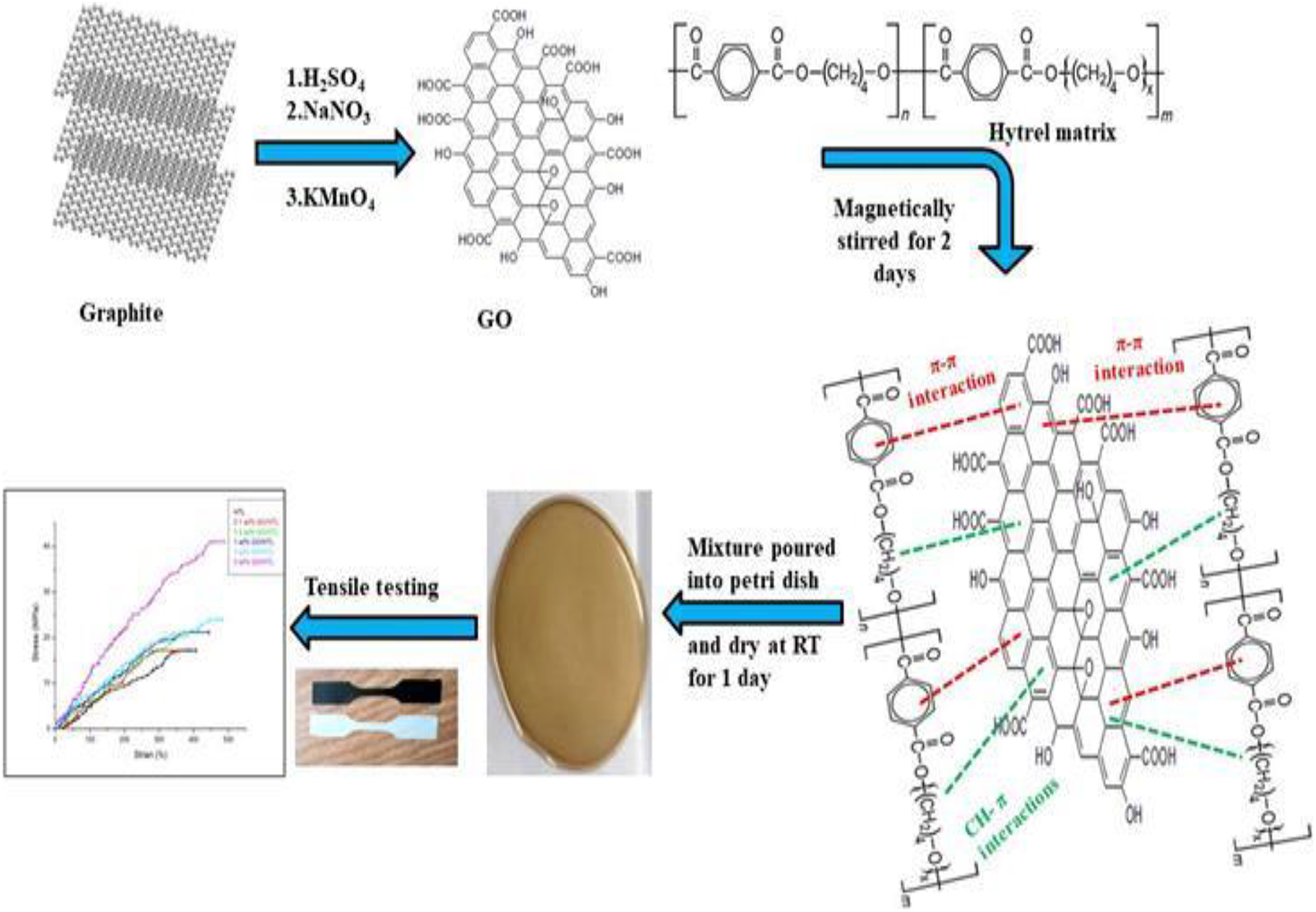
Representation of synthesis route of HTL nanocomposites.HTL: hytrel.
Characterization techniques
Raman spectroscopy (RIRM-LP1519, Research India; with 532 nm excitation) was performed to analyze the structural characteristics of GO including the interaction between GO sheets and HTL polymer matrix.
DSC analysis was conducted for the analysis of crystallization and melting behavior of nanocomposites by using PerkinElmer DSC 4000 thermal analyzer. The samples were heated from 0°C to 280°C, holding at 280°C for 1 min and then cooled to 0°C with 10°C min−1rate in all runs. The experimental procedure was performed under nitrogen atmosphere by taking approximately 3 mg of sample in sealed aluminum pan.
The thermal stability of polymer nanocomposites containing GO was illustrated with the help of TGA by using PerkinElmer TGA 4000 thermal analyzer. The loss in weight percent was observed from 30°C to 600°C with a heating rate of 10°C min−1 with respect to temperature.
Dynamic mechanical analyzer was used to evaluate the viscoelastic properties of nanocomposite samples by using PerkinElmer DMA 8000 analyzer. The samples were operated from 28°C to 135°C with a constant temperature and frequency scan (2°C min−1, 1 Hz).
The mechanical properties of GO/HTL composites were analyzed by universal tensile testing machine (UTM 1623, A. S. I. Sales Private Limited) with 20 kN load cell and jaw separated with 25 mm min−1 speed.
Results and discussion
Figure 2 presents the Raman spectra of GO and HTL nanocomposites, where the spectra of GO show two prominent peaks at 1315.22 cm−1 (D band) and 1553.864 cm−1 (G band). 27 The G band is originated due to the stretching of sp 2 -hybridized carbon (C=C) frame and D band is due to sp 3 -hybridized carbon, generated by structural defects developed by the attachment of polar functional groups on graphene sheet, 28 where the intensity of both peaks (I D/I G) represents the disorderness in the graphene sheet. 29 The intensity ratio of GO in our case is 0.96 which represents the excess of covalently attached oxygen-containing functional groups in GO. Raman spectra were also helpful to predict the interaction between matrix and GO, where HTL polymer shows C=C stretch at 1598 cm−1, C=O stretch at 1700 cm−1, and C–H stretching at 2896 cm−1, respectively. The results show a shift in C=O stretching to a higher wave number, which could be due to the presence of strong π–π interaction between GO nanosheets and soft segment of HTL, 30 whereas the intensity of C–H stretch (2896 cm−1) of HTL polymer was gradually decreased with the incorporation of GO due to the CH–π interactions. 30
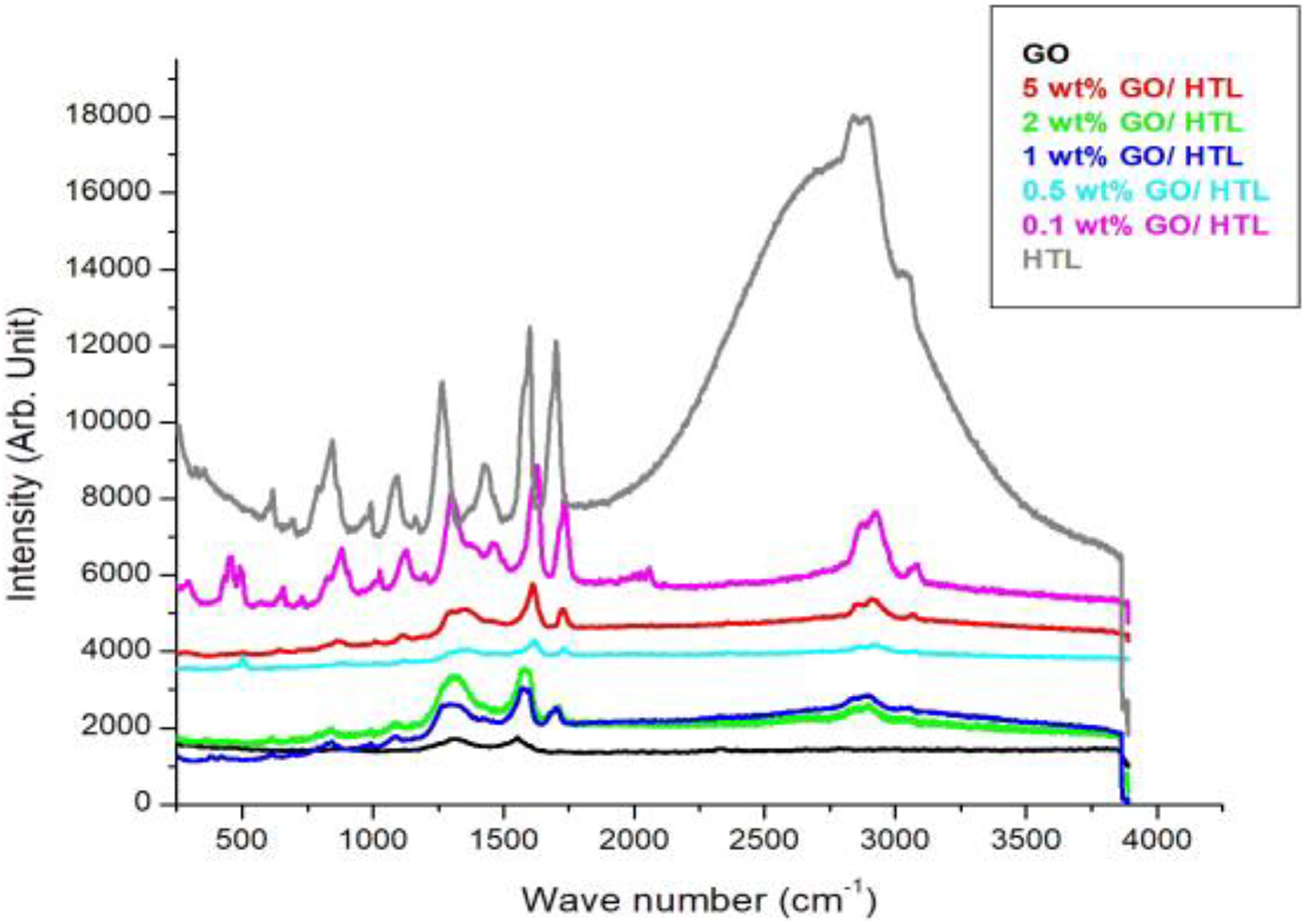
Raman spectra of GO and GO/HTL nanocomposites.HTL: hytrel; GO: graphene oxide.
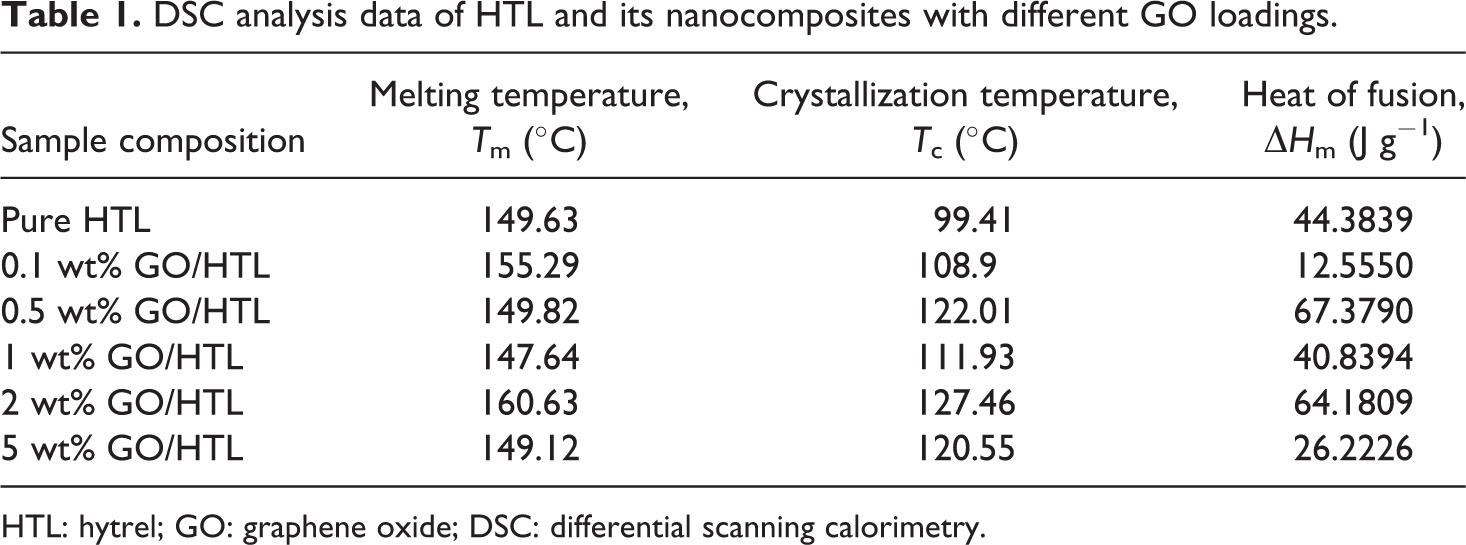
The melting and crystallization parameters of HTL and GO/HTL nanocomposites were obtained from DSC analysis, as mentioned in Table 1 and Figure 3(a) and (b). The pristine HTL shows T g (for the soft segment) at about 41.5°C, however, the incorporation of GO slightly influences the T g of soft segment, whereas the T g for 5 wt% GO/HTL composite was observed at approximately 43°C. This increment in T g reflects the detriment in polymer chain mobility due to the π–π interaction between GO and soft segment of polymer matrix. 31 The obtained results found an improvement in melting temperature (T m) of HTL after the incorporation of GO nanosheets. The T m for pristine HTL polymer was 149.6°C, whereas 160.6°C T m was observed for the HTL composites containing 2 wt% GO nanosheets, which implies that there is a strong interaction between the interface of GO nanoparticles and HTL polymer, toils as a retardant for the segmental motion of polymer chain. The cooling scans of the samples indicate that the crystallization temperature (T c) of pristine HTL was occurred at 99.41°C and it was shifted toward higher temperature after the addition of GO nanosheets in polymer. A 21.14 and 28.05°C enhancement in T c was observed for the HTL composites consisting of 5 and 2 wt% GO, respectively. This increase in T c values represents the heterogeneous nucleation effect of GO in polymer matrix which helps to facilitate the crystallization of HTL in cooling run. 32
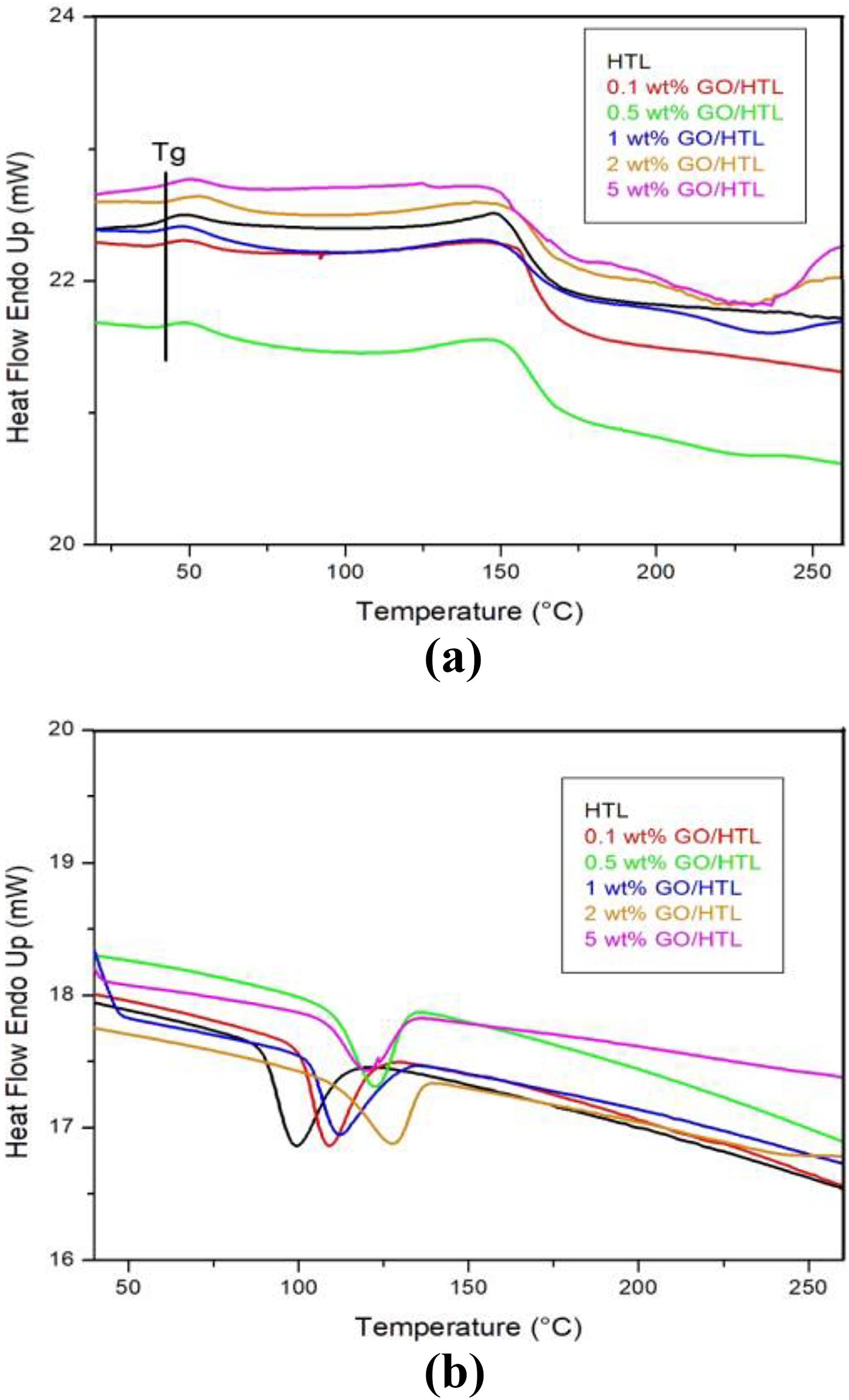
DSC thermogram of GO/HTL composites on (a) heating and (b) cooling.HTL: hytrel; GO: graphene oxide; DSC: differential scanning calorimetry.
DSC analysis data of HTL and its nanocomposites with different GO loadings.
HTL: hytrel; GO: graphene oxide; DSC: differential scanning calorimetry.
TGA thermogram represents the influence of GO concentration on the thermal stability of HTL composites, as displayed in Figure 4. The thermal degradation of GO occurs in three steps, where the first degradation curve was observed due to the removal of water molecules below 100°C, the second curve could be due to the removal of polar functional groups (hydroxyls, carboxyls, and epoxides) at nearly 200°C, and the third one is due to the ignition of carbon skeleton. 33 Weight loss of 5 and 50% was considered to determine the thermal stability of nanocomposites (Table 2). The nanocomposites with 0.1, 0.5, 1, 2, and 5 wt% GO loadings show 71.21, 130.79, 140.12, 141.26, and 143.83°C increment in T 5%°C values and a slight increment of about 4°C (maximum value for 2 wt% nanocomposites) observed in T 50%°C than pristine polymer (221.77°C, 403.37). It indicates that the addition of GO effectively enhanced the thermal stability of HTL polymer. An improvement in thermal stability was occurred due to uniform dispersion and strong interfacial interaction between GO and HTL polymer which helps to slow down the thermal degradation of polymer nanocomposites. 34 Viscoelastic properties of neat HTL and GO/HTL nanocomposites containing varied GO content were evaluated from DMA. Figure 5 presents the storage modulus of HTL and HTL nanocomposites as a function of temperature. The storage modulus curve shows that as the concentration of GO nanoparticles increases, modulus of the nanocomposites also increases significantly. GO/HTL nanocomposites with 0.1, 0.5, 1, 2, and 5 wt% loading of GO with reference to HTL showed 15, 13, 18, 49, and 72% improvement in modulus at 30°C due to the presence of GO nanosheets. Thus the increment in the stiffness of HTL polymer is attributed to the uniform dispersion of GO and stronger interaction GO and polymer matrix, thus reflects that the prepared composites could be used for structural application.
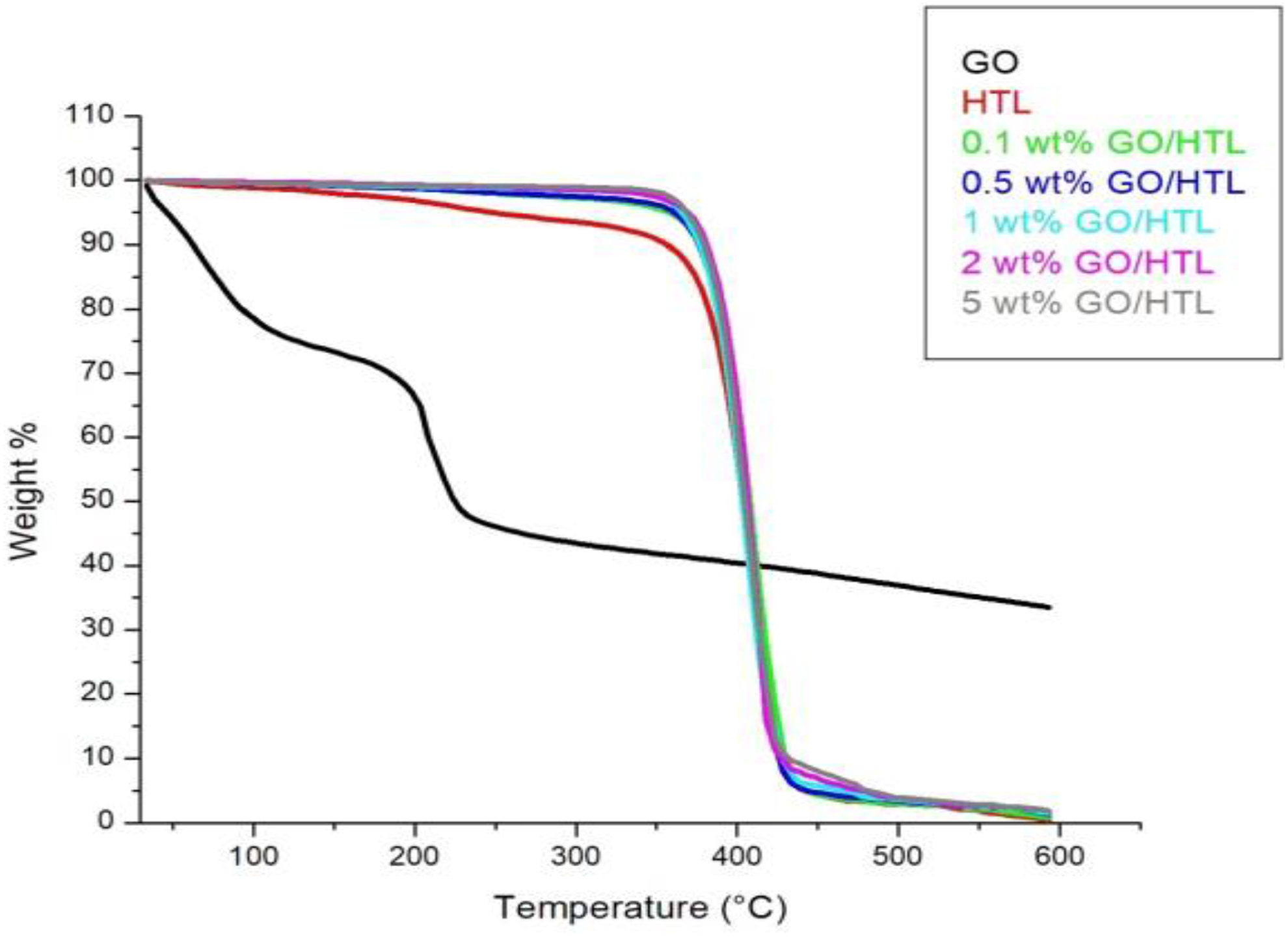
TGA thermogram of GO and GO/HTL nanocomposites.HTL: hytrel; GO: graphene oxide; TGA: thermogravimetric analysis.
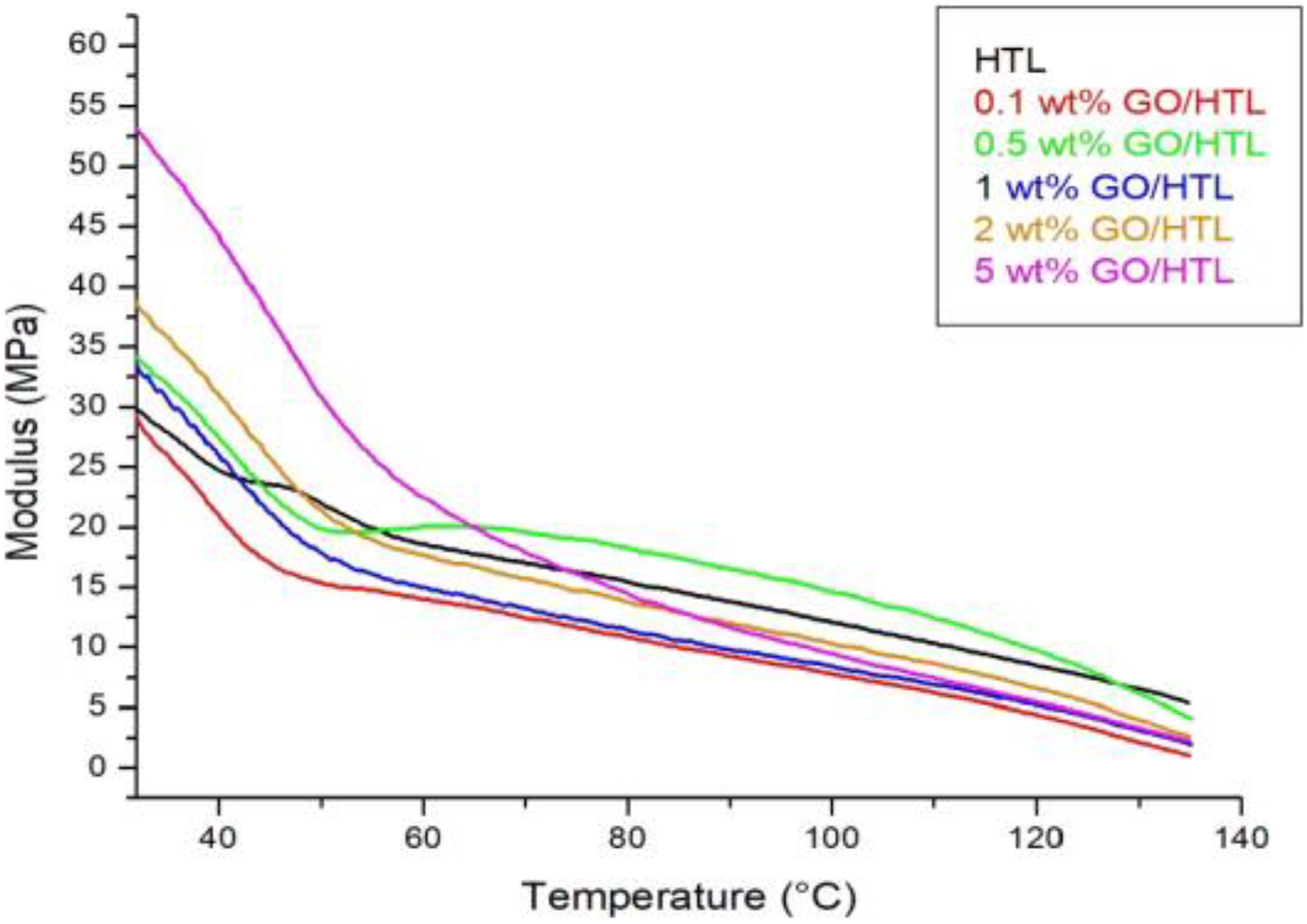
DMA plot of GO/HTL nanocomposites with constant frequency (1 Hz).HTL: hytrel; GO: graphene oxide; DMA: dynamic mechanical analysis.
TGA analysis data of HTL and GO/HTL composites.
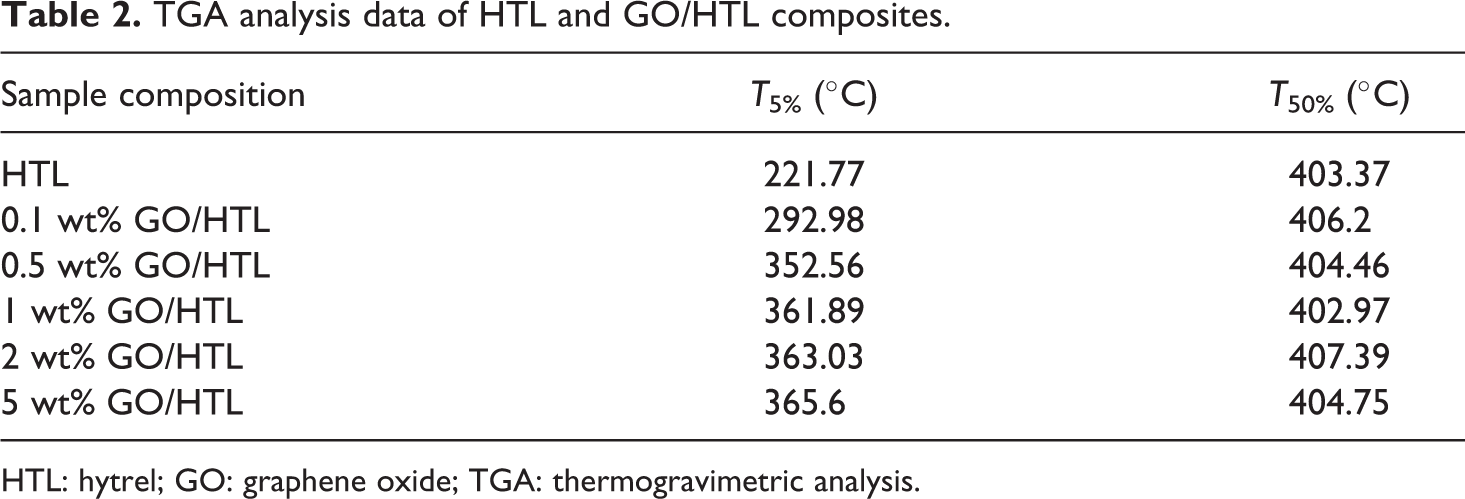
HTL: hytrel; GO: graphene oxide; TGA: thermogravimetric analysis.
Figure 6 demonstrates the mechanical performance of pristine HTL and its composites via stress–strain curve. It is well established that GO has good reinforcement effect on mechanical properties due to its large surface area, high aspect ratio, and exceptional mechanical properties. 35 The results show that the mechanical properties of nanocomposites increase with the increase of GO content, where 139 and 40% increment in tensile strength was observed for the composites with 5 and 2 wt% GO content. The enhancements in mechanical properties for the GO composites could be due to the homogeneous dispersion of GO in the polymeric matrix including an interfacial adhesion between filler and polymer Figure 7. 36
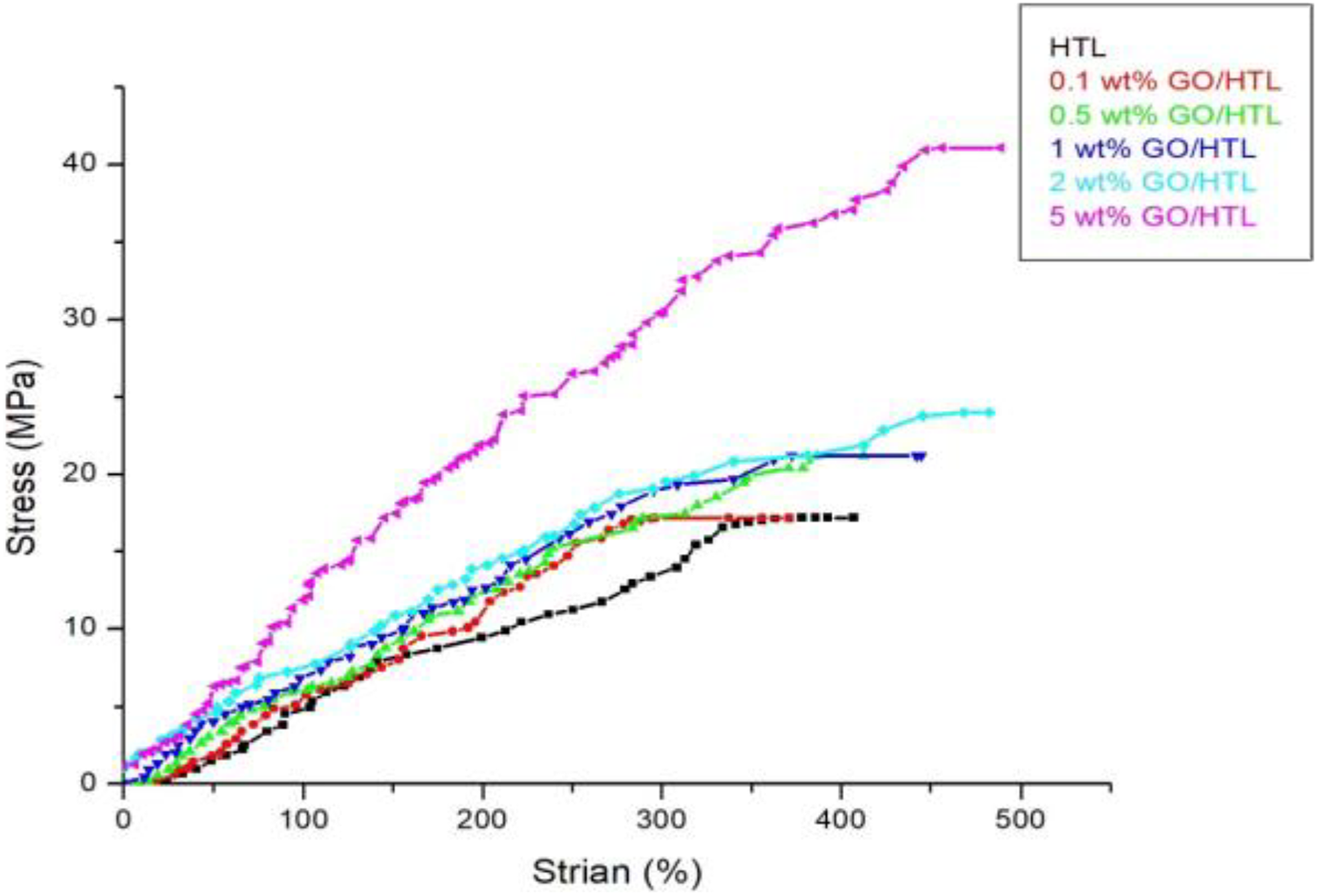
Stress–strain curve of GO/HTL nanocomposites.
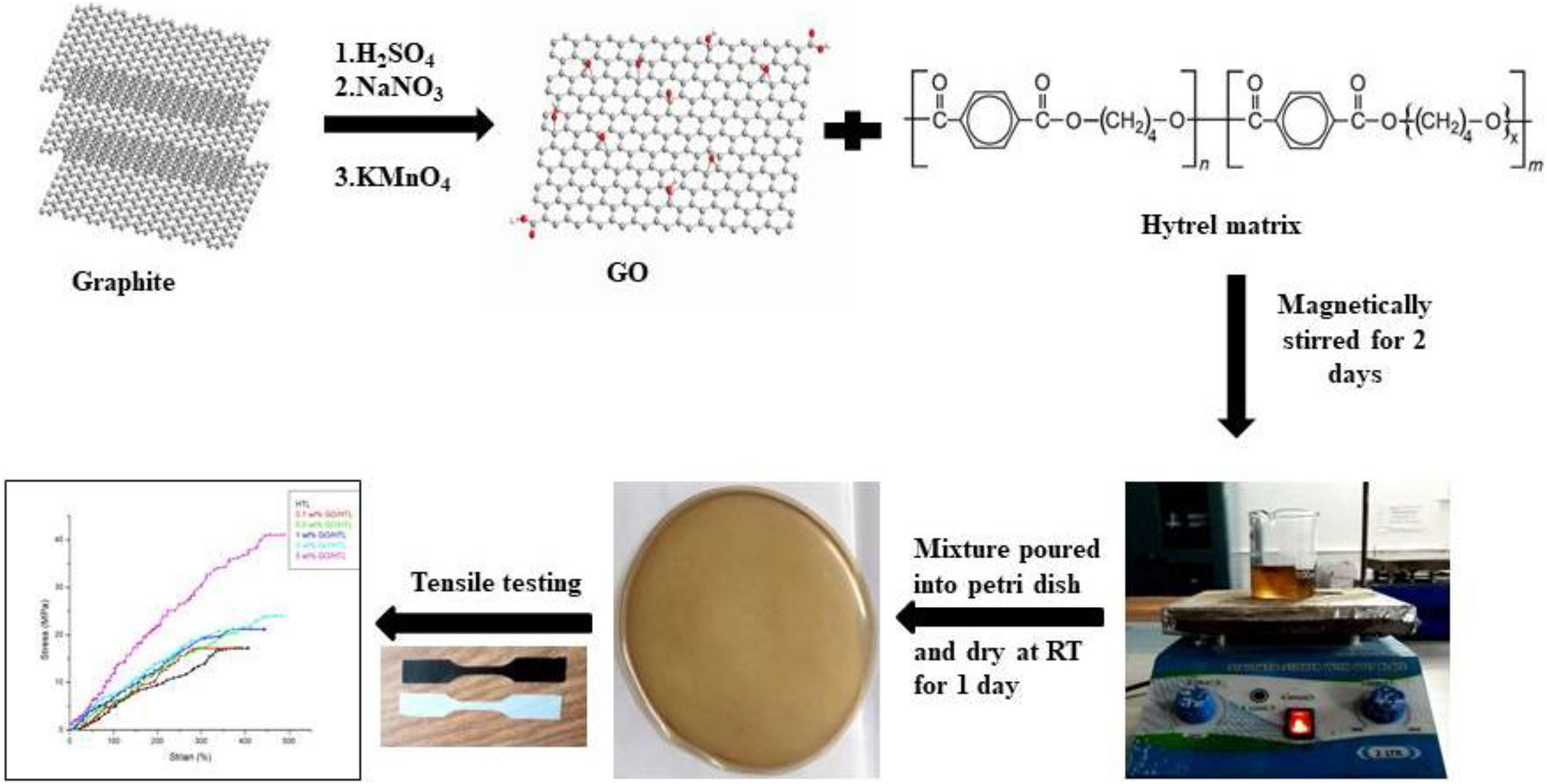
Synthesis of GO and GO/HTL nanocomposites.HTL: hytrel; GO: graphene oxide.
Conclusion
The incorporation of GO into HTL polymer was successfully achieved with enhanced thermal and mechanical properties due to the presence of strongest noncovalent interaction (π–π stacking) between the interface of nanocomposites. The thermal and mechanical analysis data of GO/HTL nanocomposites and pure HTL were compared to analyze the impact of GO addition in polymer. The DSC analysis reveals that T m, T g, and T c of nanocomposites enhanced significantly due to the nucleating effect of GO. The thermal stability of GO/HTL nanocomposites was increased with increasing GO content. The composites have valuable improvement in tensile strength (139%) and storage modulus (72%) for HTL composite containing 5 wt% GO. These enhanced physical properties of GO/HTL composites show its potential use in structural application.
Footnotes
Author contributions
Alok Chaurasia and Nanda Gopal Sahoo contributed equally to this work.
Funding
The author(s) disclosed receipt of the following financial support for the research, authorship, and/or publication of this article: Authors acknowledge the financial support from NMHS research grant, GBPIHED, Kosi-Katarmal, Almora and DST-FIST, New Delhi. S.R. acknowledges a grant from Science and Engineering Research Board (SERB-DST), Government of India (Grant No. ECR/2016/001355).
