




Abstract
Aramid short fiber (ASF) and calcium carbonate (CaCO3) nanoparticle were incorporated into polypropylene (PP) in an attempt to enhance the elastic, damping, and thermal performances. Different samples were melt mixed by employing a counter rotating twin-screw extruder and then compression molded using hot and cold presses, respectively. Scanning electron microscopy (SEM) studies displayed good dispersion and anchoring effect of the aramid fibers within the PP matrix. Differential scanning calorimetry (DSC) indicated higher crystal nucleating effect for the CaCO3 nanoparticles when compared to that of the aramid fibers. The influences of aramid fiber and CaCO3 nanoparticle on the elastic and damping components and glass transition temperature of composites were studied using a dynamic mechanical thermal analyzer under the fixed oscillation frequency, constant amplitude, temperature sweep, and dual cantilever geometry. The additions of aramid fiber and calcium carbonate (CaCO3) into PP noticeably increased the storage and loss moduli over a wide range of temperature (−50 to 150 °C). However, the effect of ASF was more prominent particularly at high temperatures. The incorporation of aramid fibers into PP enhanced the storage and loss moduli equal to 74% and 67%, respectively, at 100°C. Moreover, flexural tests under quasi-static loading were carried out, and the results indicated a greater capacity for the dynamic mechanical thermal analysis as compared to the simple mechanical tests in evaluating the composites. The anchoring effect of aramid fiber in PP matrix and the presence of CaCO3 nanoparticles in PP-aramid fiber interphase were found to be the key factors in achieving the improved rigidity, damping, and heat performances in PP/ASF/CaCO3 composites.
Introduction
The viscoelastic behavior of a polymer represents the capabilities of polymer in both storing energy and damping energy and determines the long-term performances of polymer. 1 Dynamic mechanical thermal analysis (DMTA) is a special test designed for determining the viscoelastic behavior in which a sinusoidal periodic strain is applied in a specific range of temperatures to a specimen and corresponding stress and phase lag (δ) is measured. DMTA can provide the storage modulus (E′), loss modulus (E″), and loss factor (tanδ) values of materials against temperature. The storage modulus value is related to the maximum energy that elastically stored during deformation. The loss modulus relates to viscose response and indicates the capability of a material to dissipate energy as heat. The loss factor is the ratio of loss modulus to storage modulus and reaches its maximum value at glass transition temperature (T g). 1,2 Equations (1) and (2) present the mathematical expressions of stress and strain in DMTA, under the sinusoidal tensile loading. 2


where σ, ε, ω, and t denote stress, strain, frequency, and time, respectively, and δ represents the phase lag between stress and strain. According to equation (3), the stress (equation (1)) could be decomposed into two parts, comprising a part with a phase similar to that of strain (equation (2)) and a part with 90° phase lag to the strain.

Using equations (2) and (3), the storage and loss moduli are expressed as equations (4) and (5), respectively. 2


In formulating the composites for different applications, undergoing continuous load and heat, the DMTA data can be very useful. The employments of fibers and mineral nanoparticles can considerably affect the stored and lost energies and heat resistance of the polymeric systems. Polypropylene (PP) suffers from inadequate resistance under continuous situations of applied load and heat. The application of fibers into the PP can improve time and heat-dependent properties. Glass fiber is brittle in nature, and this leads to the breakage of fibers during the melt compounding, and as a consequence, reduces the performances of composite. On the other hand, aramid fiber is inherently very tough and flexible when compared to glass fiber. This feature can provide stronger interaction of fiber–polymer matrix in composite owing to the higher length and anchoring effect of the aramid fiber in polymer matrix. Incorporation of the aramid fiber into the PP enhanced the mechanical properties including notched-impact strength, tensile modulus, and strength. 3 Zhao et al. 4 showed improvement in tensile and flexural strengths with the incorporation of PA6 and aramid short fiber into the PP. The incorporation of mineral-based nanoparticles is another alternative to promote the time and heat-dependent properties of composites. Among different nanoparticles, CaCO3 takes advantages of the ease of dispersion, isotropic structure, and lower cost when compared to other contenders such as clay. The viscoelastic behavior of PP/CaCO3 nanocomposites was investigated by Karimpour et al. 5 They showed that the incorporation of nano-CaCO3 elevated the storage modulus of PP especially at high temperatures. Ke et al. 6 demonstrated that the addition of nano-CaCO3 and PET short fiber jointly shifted the T g to higher temperature.
The effect of aramid fiber inclusion on the elastic, damping, and heat properties of PP-based composite has not been previously uncovered. In the present research, the viscoelastic behavior of PP/aramid fiber and PP/aramid fiber/CaCO3 composites is investigated by employing the DMTA. In addition, the flexural properties under the quasi-static loading are assessed. Morphologies are studied using SEM to characterize the dispersion conditions of aramid short fibers (ASFs) and CaCO3 nanoparticles in polymer matrix and to analyze the reinforcing factors. To investigate the influence of ASF and nano-CaCO3 on the thermal and crystallization behavior of the PP composites and to ascertain the correlations of viscoelastic performances with crystallinity, differential scanning calorimetry is performed.
Materials and methods
Materials
PP (500P-Sabic) with melt flow index (MFI) of 3 g/10 min (230°C, 2.16 kg) was used as matrix polymer. Stearic acid coated nano-sized CaCO3 (Hakuenka CC-R; Omiya, Austria) with the mean particle diameter of 80 nm was utilized. Aramid fiber (Kevlar 49; Dupont, USA) of 12 µm diameter, chopped into short fibers with average length of 6.5 mm, was incorporated. PP grafted with maleic anhydride (Krangin, Iran) containing 1.7% MA employed as compatibilizer to enhance the mechanical interaction between PP and reinforcements.
Preparation of samples and testing procedures
To prepare PP/ASF composites and PP/ASF/CaCO3 hybrid nanocomposites, different compounds were melt mixed at 180°C and 80 r/min by means of a counter-rotating twin-screw extruder (Collin: Z-Veiwellen, D: 25 mm, L/D:16). The compositions of various compounds are listed in Table 1.
Compositions of different samples.
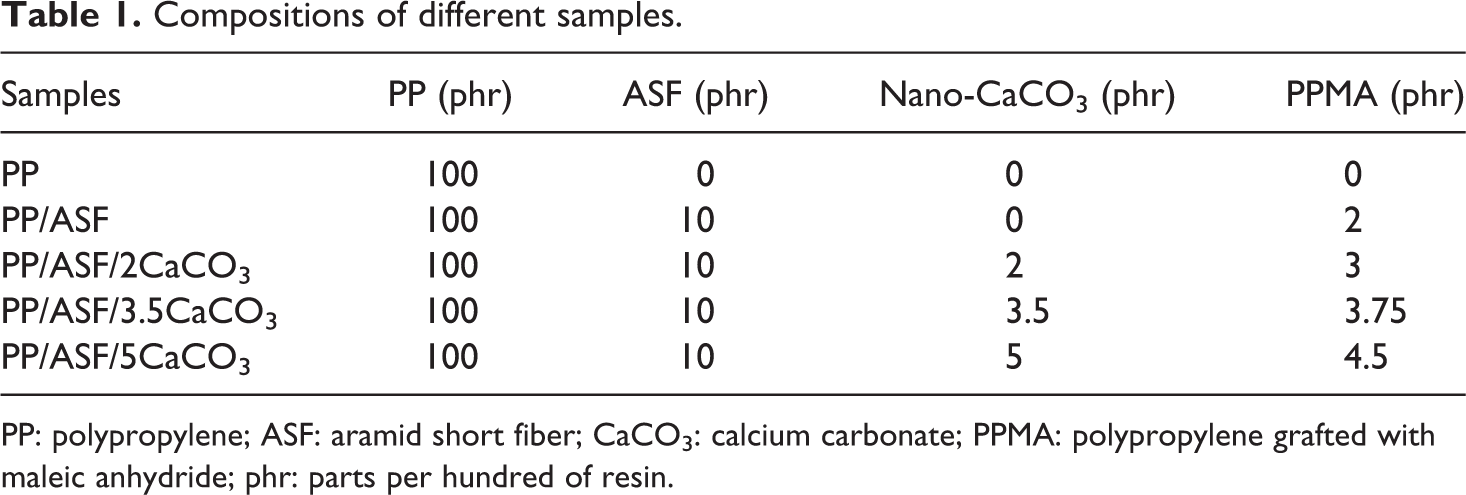
PP: polypropylene; ASF: aramid short fiber; CaCO3: calcium carbonate; PPMA: polypropylene grafted with maleic anhydride; phr: parts per hundred of resin.
DMTA test specimens were produced by compression molding using a hot press at 200°C and 50 MPa and a cold press at 25°C and 30 MPa, respectively. Viscoelastic behavior of different compounds characterized using dynamic mechanical thermal analyzer (DMA-Tri-TEC2000, UK). The DMTA tests were performed in dual cantilever geometry, according to ASTM D4065 standard, 7 on specimens of 41 × 6.3 × 1.2 mm3 dimensions. The frequency, preload, and amplitude were set on 1 Hz, 0.05 N, and 0.05 mm, respectively. The temperature sweep was set from −50 to 150°C. Storage modulus (E′), loss modulus (E″), and tan δ values against temperature were determined. According to ASTM-D4065 standard, the storage and loss moduli are calculated using equations (6) and (7). 7


where L, B, and t denote the length, width, and thickness of specimen, respectively; A and N stand for the amplitude of oscillation and the maximum central force, correspondingly. The data comprising N and δ are measured against temperature during the DMTA tests to establish the E′, E″, and tan δ values versus temperature.
Furthermore, the flexural (three-point bending) properties under the quasi-static loading, conforming to ASTM D790, 8 were assessed by employing a universal testing machine (Instron-4486, USA). The flexural tests were accomplished at ambient temperature on specimens of 100 × 12 × 5 mm3 dimensions under the support span of 80 mm and descending speed of 8 mm/min and replicated for five times.
The morphological observations of fractured specimens performed using SEM (LEO-1430VP, Germany). Thermal analyses were performed using a differential scanning calorimeter (Perkin Elmer-4000, USA). The DSC specimens of about 2 mg weight were heated from room temperature to 200°C at heating scan rate of 10°C min−1 under a nitrogen atmosphere. The melting temperature (°C), heat of fusion (J g−1), and crystallinity (%) obtained. The crystallization percentage was calculate using equation 8. 9

where ΔHm
denotes the heat of fusion or melting enthalpy, and
Results and discussion
Morphology
Figure 1(a) demonstrates the aramid short fibers uniformly dispersed in PP matrix. The presence of CaCO3 nanoparticles slightly hindered the dispersion condition of aramid fibers in polymer (Figure 1(b)). Because of the flexibility and nonbrittle nature of aramid fiber, it anchors the polymer matrix (Figure 2). This morphology can lead to the mechanical interlocking of polymer and fiber, increased stress transfer and energy absorption in composite. The manifestation and distribution of nano-CaCO3 in different samples are illustrated in Figure 3. A relatively good dispertion of nanoparticles is observed at lower concentrations (Figure 3(b) and (c)). According to Figure 3(d), at high concentration of CaCO3 nanoparticles (5 phr) in the polymeric matrix, the agglomerated nanoparticles sites unavoidably become prevalent. The high loadings and surface tension of nanoparticles lead to the clustering and agglomeration. 11
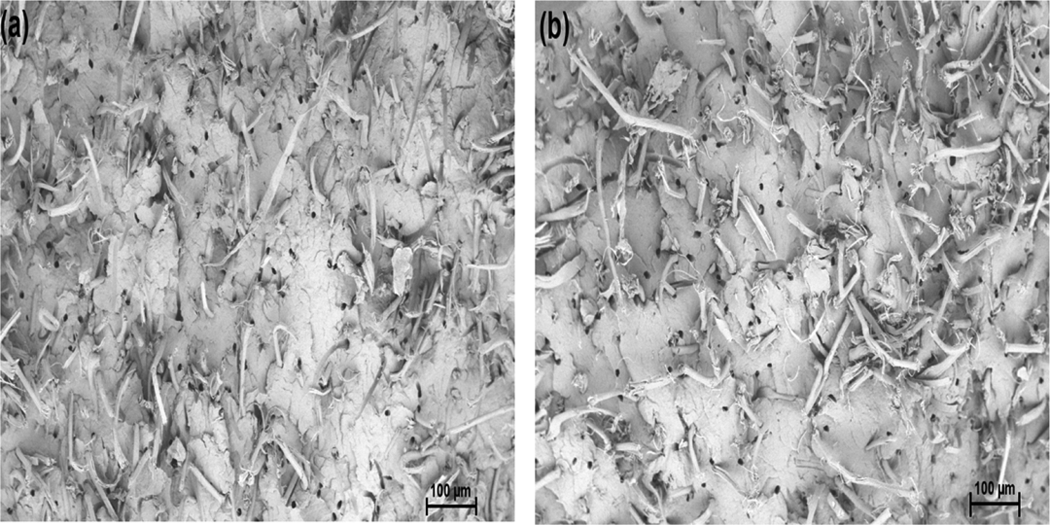
Dispersion of ASF in PP matrix. (a) PP/ASF and (b) PP/ASF/5CaCO3. ASF: aramid short fiber; PP: polypropylene.
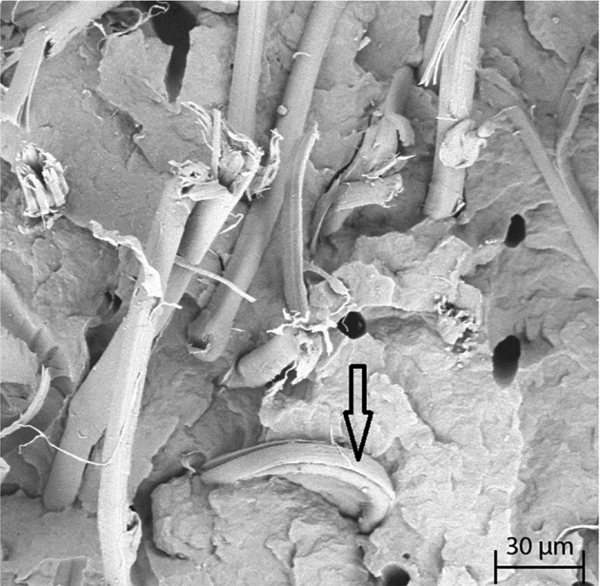
Fiber−polymer mechanical interlocking: anchoring effect of aramid fiber. ASF: aramid short fiber; PP: polypropylene.
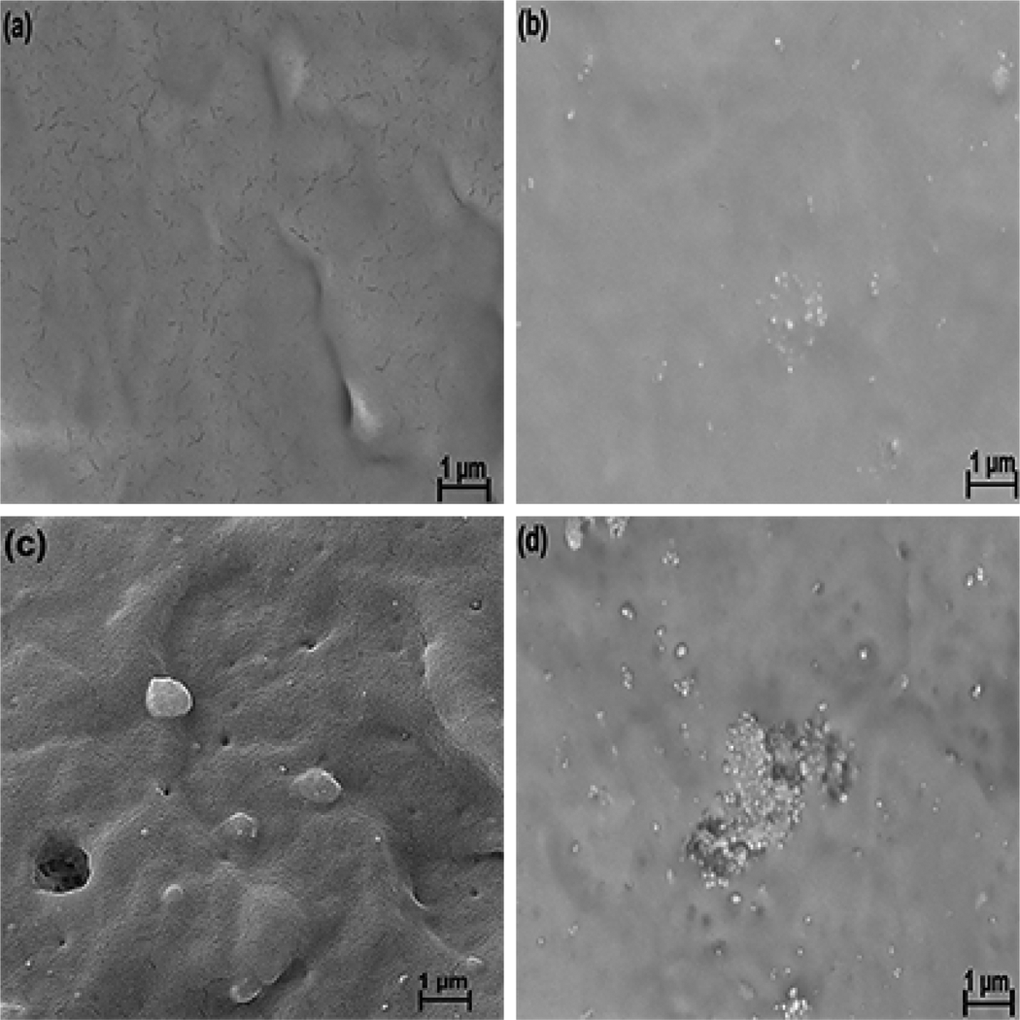
SEMs of nanostructures: (a) PP, (b) PP/ASF/2CaCO3, (c) PP/ASF/3.5CaCO3, and (d) PP/ASF/5CaCO3. ASF: aramid short fiber; PP: polypropylene.
Figure 4 shows the presence of nanoparticles dispersed in PP matrix and in the vicinity of aramid fiber and interphase region of PP-aramid fiber. The formation of a stiffer interphase can improve the thermomechanical performances of composite. The residues of polymer and the existence of nano-CaCO3 on the pulled-out aramid fiber are observed in Figure 5. These conditions are indications of developed stress transfer between PP matrix and aramid fiber.
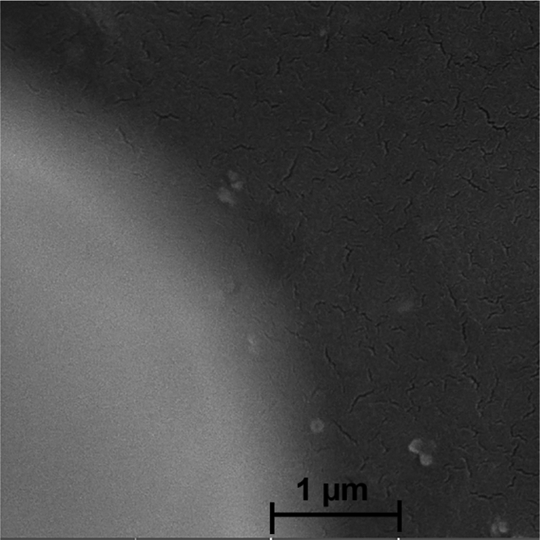
The dispersion of nanoparticles in the PP matrix and interphase zone of PP-aramid fiber in PP/AF/3.5CaCO3 composite. ASF: aramid short fiber; PP: polypropylene.
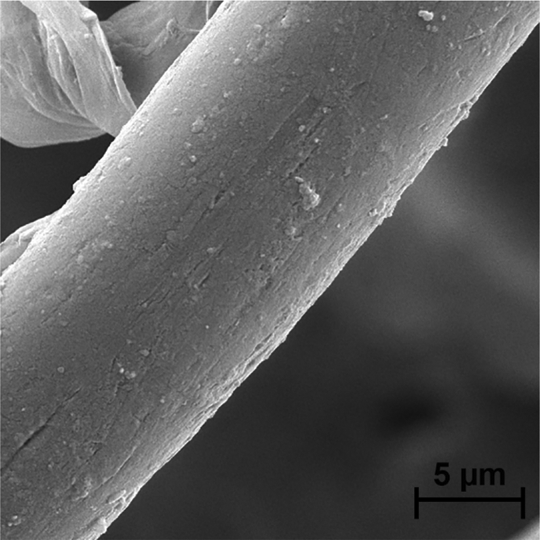
The pulled-out aramid fiber and indications of polymer residues and nanoparticles on fiber in PP/ASF/3.5CaCO3 composite. ASF: aramid short fiber; PP: polypropylene.
Thermal analysis
Figure 6 demonstrates the melting curves of PP, PP/ASF, and PP/ASF/CaCO3 samples obtained by employing DSC. Aramid fiber had nucleating effect and raised the degree of crystallinity to up to 2.5% (Table 2). The presence of 2 phr nano-CaCO3 interfered with crystallization process and hence reduced the degree of crystallinity of PP. Moreover, as the original nucleation centers in PP are mainly polymerization catalysts, they might be partially dissolved by the fatty acid coating of CaCO3 nanoparticles, lowering the crystallization rate of PP. 12 However, the incorporation of higher fraction of CaCO3 nanoparticles (3.5 phr) increased the effective ability to nucleate PP crystals and hence raised the crystallization rate to as high as 14% as compared to PP/ASF. The crystallization rate declined by adding higher amount (5 phr) of nanoparticles. This result can be related to the higher tendency of nanoparticles toward agglomeration and hence decrease in particles specific area in corresponding compound. According to Table 2, inclusions of ASF and nano-CaCO3 hardly affected the melt temperature.
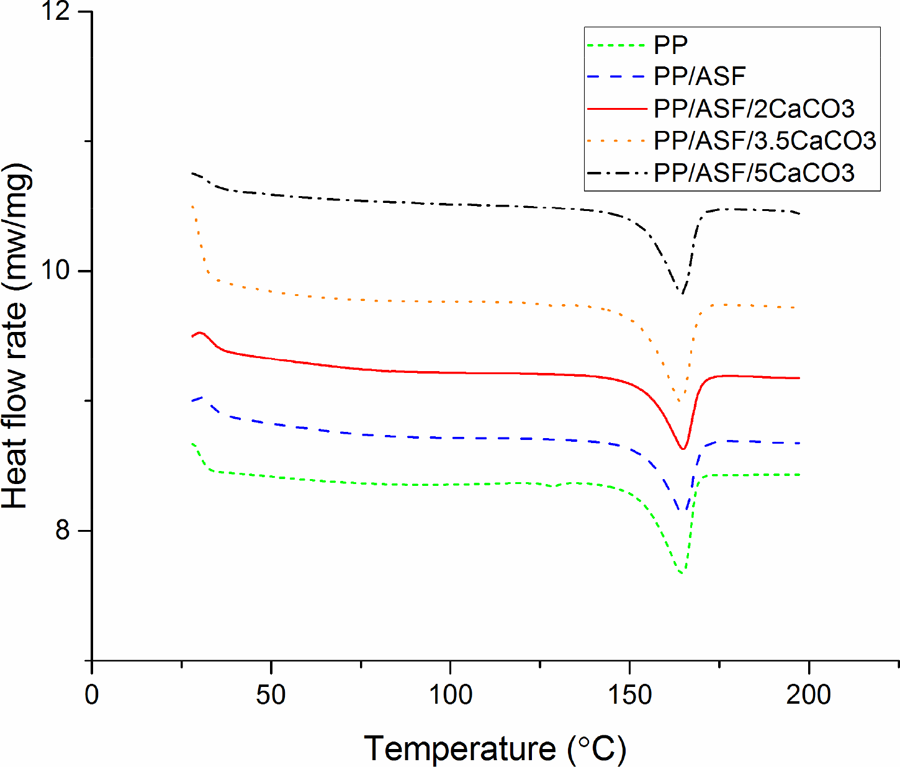
Nonisothermal DSC thermoanalytical data. DSC: differential scanning calorimetry.
DSC analysis results.
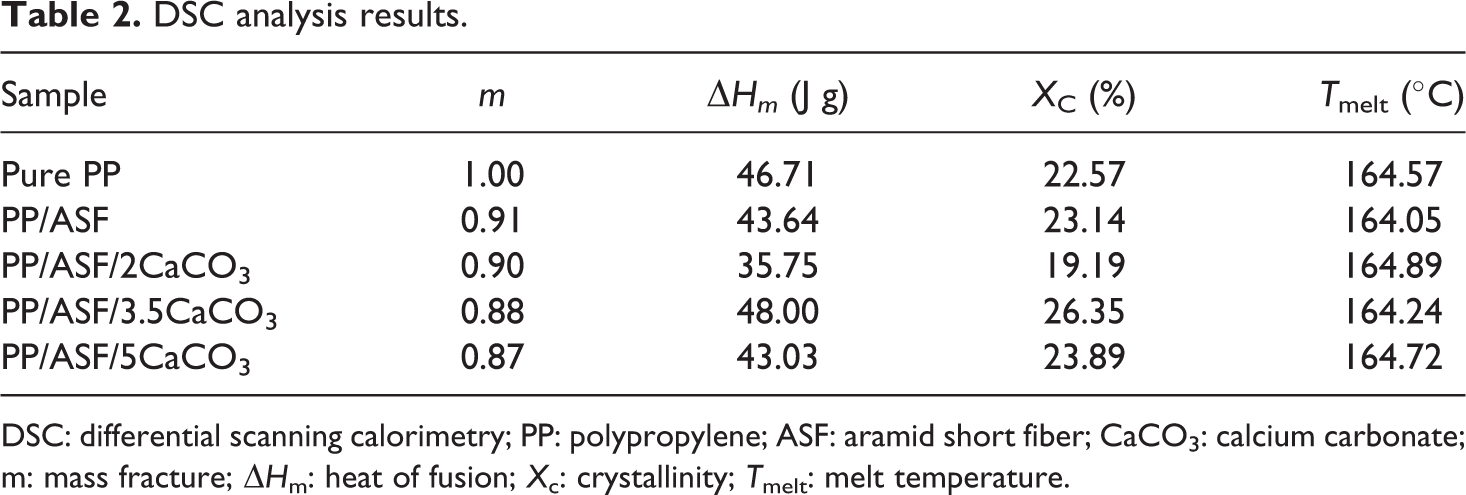
DSC: differential scanning calorimetry; PP: polypropylene; ASF: aramid short fiber; CaCO3: calcium carbonate; m: mass fracture; ΔH m: heat of fusion; X c: crystallinity; T melt: melt temperature.
Viscoelastic performances
Figure 7 and Table 3 show the storage moduli (E′) of different samples versus temperature. The reduction in storage modulus by elevating the temperature is due to the fact that polymer chain movement is easier at high temperatures. 13 The incorporation of aramid fibers into PP enhanced the storage modulus to as high as 12, 17, 43, 74, and 114% at −50, 0, 50, 100, and 150°C, respectively. The storage modulus enhancement by adding ASF can be attributed to the high stiffness of ASF and proper stress transfer between the PP matrix and fibers. Figure 2 clearly indicates the anchoring of PP matrix by aramid fibers. Strong interaction between fibers and polymer matrix hinders the mobilization of polymer chains, 14,15 The incorporation of ASF in conjunction with CaCO3 nanoparticles in hybrid composites further improved the storage modulus. The storage modulus of PP/ASF/3.5CaCO3 composite elevated 23, 31, 21, 15, and 13% at −50, 0, 50, 100, and 150°C, respectively, as compared to PP/ASF. This can be attributed to the relatively well dispersed nanoparticles in polymer, crystallinity elevation, and presence of nano-CaCO3 in PP-aramid fiber interphase. Because CaCO3 nanoparticle possesses greater stiffness than that of neat polymer, it restricts the dislocation of polymer chains. 16 In addition, according to Figure 7 and Tables 2 and 3, there is a correlation between crystallinity and storage modulus. The crystalline regions have higher modulus than noncrystalline regions. 17 Moreover, the presence of nanoparticles at PP-aramid fiber interphase (Figures 4 and 5) can lead to the formation of an interphase layer possessing higher stiffness as compared to neat PP. This can promote polymer matrix fibers stress transfer and, as a consequence, increase the storage modulus. The degree of interaction between polymer and reinforcement directly affects the dynamic mechanical properties. 18 At higher CaCO3 nanoparticle content (5 phr), owing to the increased agglomeration of nanoparticles, the storage modulus partially declined.
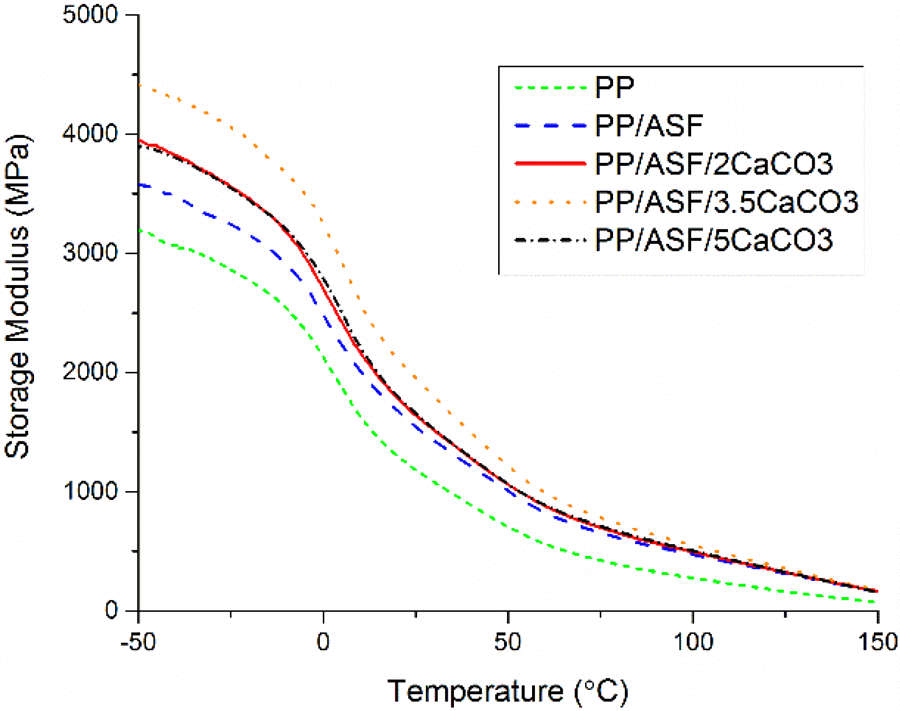
Storage modulus against temperature for pure PP and different composites. PP: polypropylene.
Storage moduli of samples at five specific temperatures.
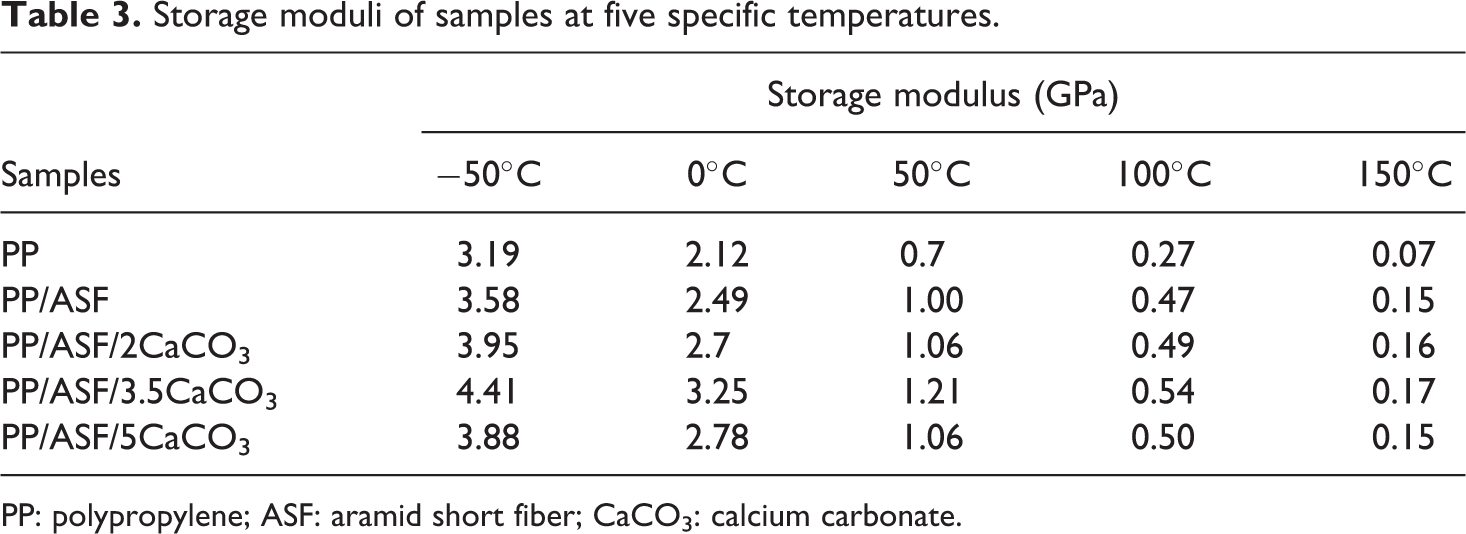
PP: polypropylene; ASF: aramid short fiber; CaCO3: calcium carbonate.
Figure 8 demonstrates the loss moduli (E″) of various samples under temperature sweep. The peak of E″ diagram corresponds to the T gs that denote the transition temperature at which glassy state switches to rubbery state. 19 According to Figure 8 and Table 4, it is evident that the addition of aramid fiber and CaCO3 noticeably increased the loss modulus over the entire range of temperatures. However, the effect of ASF was more pronounced at high temperatures (50–150°C). PP/ASF/3.5CaCO3 sample has the highest loss modulus particularly above the T g temperature. The loss modulus displays the damping capability of compound. 20 The presence of ASF and nanoparticles in PP raised the resistance against the mobility of polymer chains and hence led to the increased viscose damping of composite.
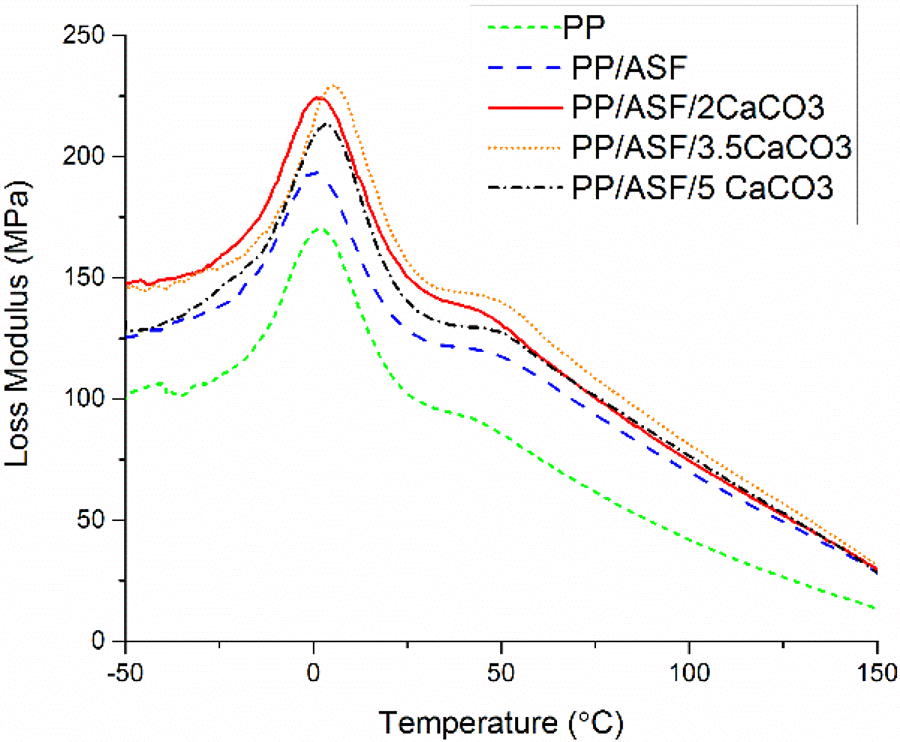
Loss modulus versus temperature for pure PP and different composites. PP: polypropylene.
Loss moduli of samples at five specific temperatures.
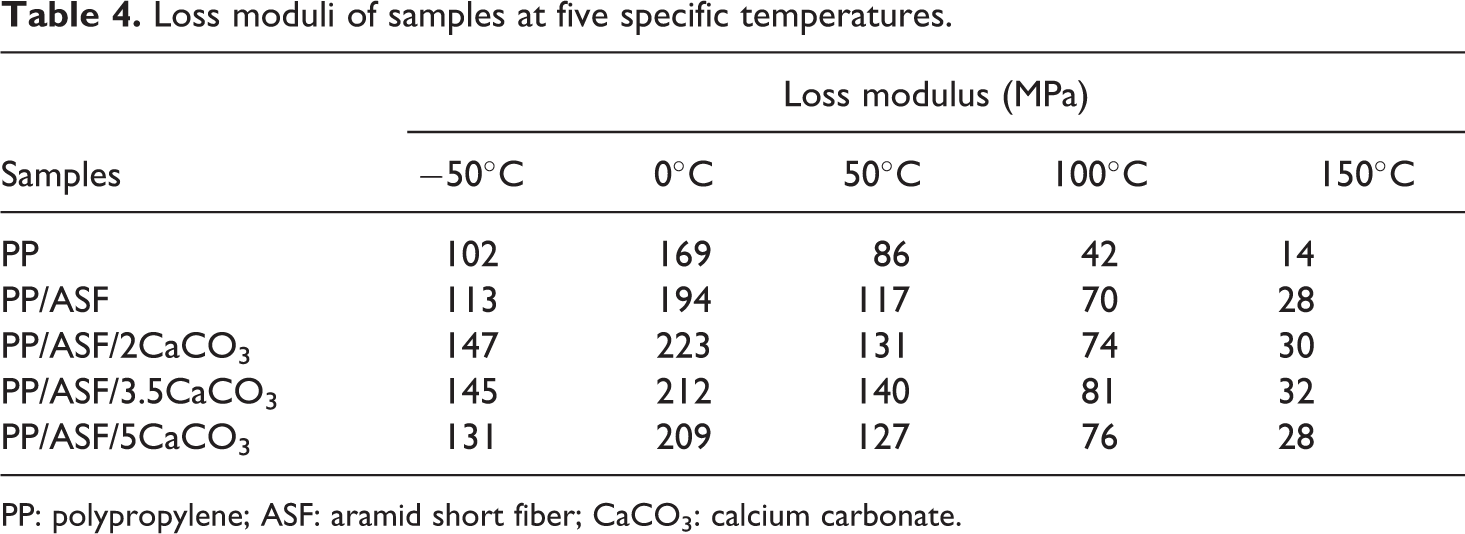
PP: polypropylene; ASF: aramid short fiber; CaCO3: calcium carbonate.
Figure 9 depicts the damping factor (tan δ = E″/E′) versus temperature for different samples. Damping factor demonstrates the ratio of the energy dissipates, in the form of internal friction of polymer chains, to the stored energy. Tan δ reaches its maximum at the vicinity of T g. 21 As presented in Table 5, it is worth mentioning that the T g values obtained from the peak points of loss modulus (Figure 8) curves are found to be lower than those acquired from the tan δ curves (Figure 9). It was reported that T g obtained from the loss modulus peak is more realistic in comparison with that attained from the tan δ peak. 22 The addition of ASF into PP reduced T g to some extent. However, in hybrid composite (PP/ASF/3.5CaCO3), the T g significantly elevated. This result can be attributed to the increased crystallinity of PP (Table 2), the formation of stronger interphase, 23 and hence improved stress transfer between PP and aramid fibers.
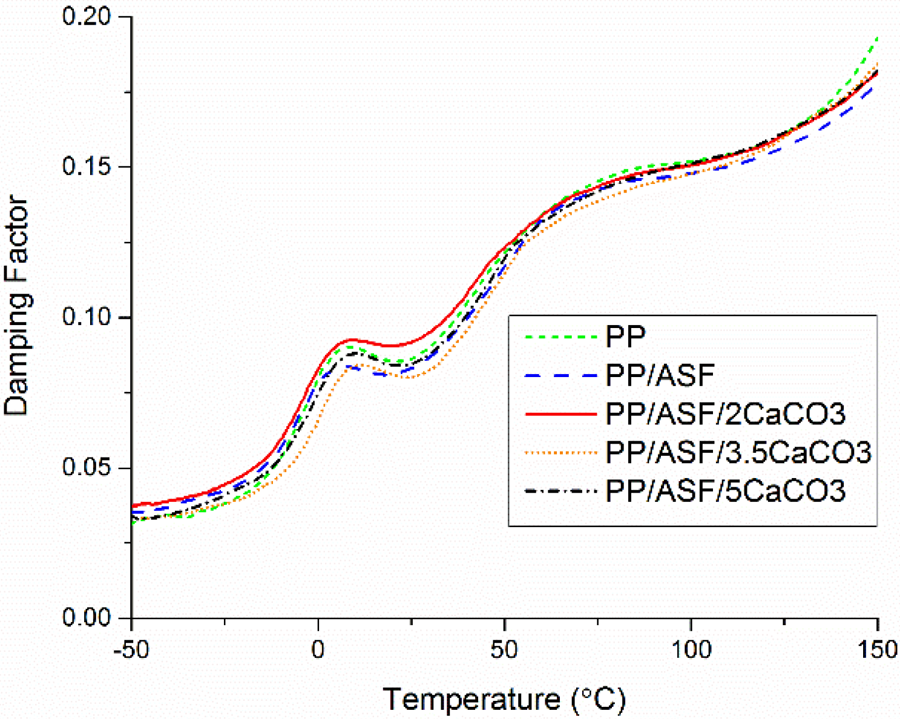
Damping factor (tan δ) versus temperature for pure PP and different composites. PP: polypropylene.
T gs obtained by loss moduli and tan δ curves.
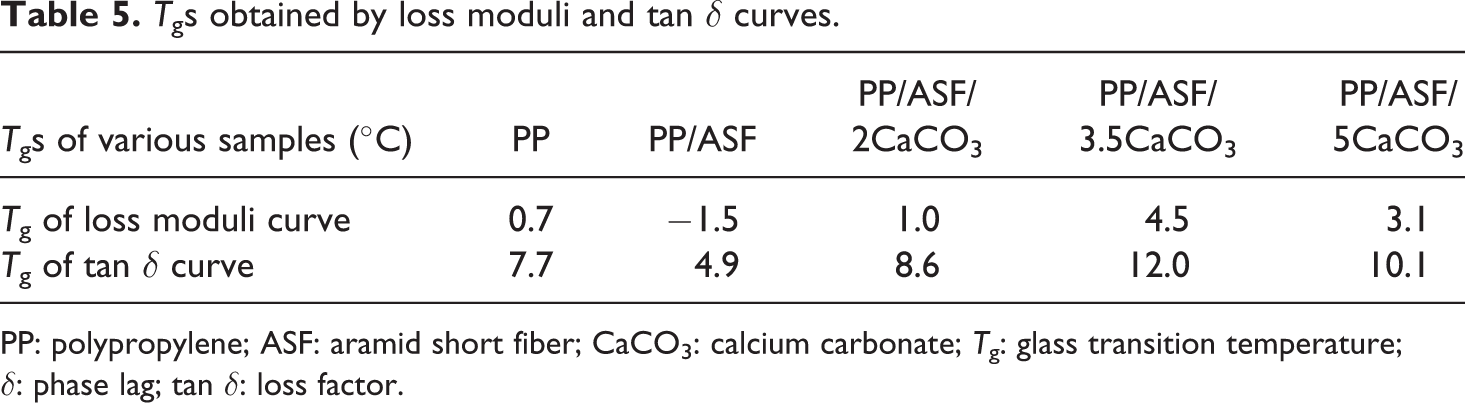
PP: polypropylene; ASF: aramid short fiber; CaCO3: calcium carbonate; T g: glass transition temperature; δ: phase lag; tan δ: loss factor.
The results of flexural properties under the quasi-static loading are presented in Table 6. The application of aramid short fiber into PP substantially elevated the flexural strength and modulus, whereas addition of CaCO3 nanoparticles into PP/ASF marginally affected the flexural properties. On the other hand, the DMTA results proved the remarkable improvement in dynamic performances for both PP/ASF and PP/ASF/CaCO3 composites. This result indicates the superior capability of DMTA as compare to simple mechanical tests in determining the performances of new composite materials.
Flexural properties of samples under quasi-static loading.a
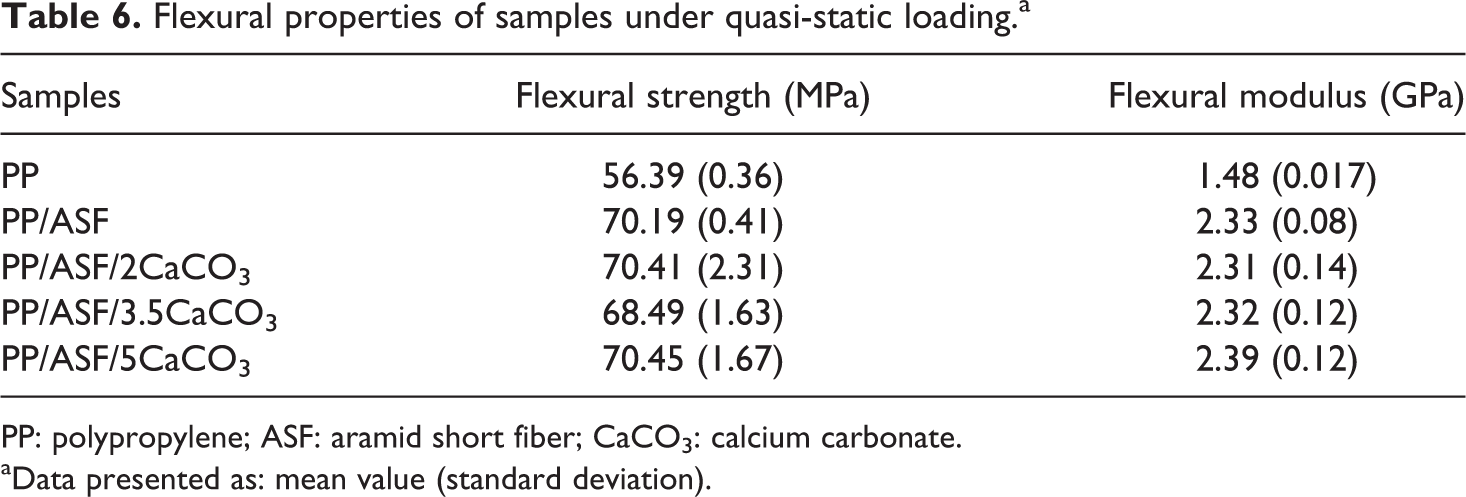
PP: polypropylene; ASF: aramid short fiber; CaCO3: calcium carbonate.
aData presented as: mean value (standard deviation).
Conclusions
The effects of aramid short fibers and nano-sized CaCO3 inclusions on the viscoelastic and heat performances of PP-based composites were investigated. The SEM studies displayed good dispersion and anchoring effect of the aramid fibers in the PP matrix. In addition, the presence of nanoparticles in the interphase of PP-aramid fiber was observed. The differential scanning calorimetry indicated greater crystal nucleating effect for the CaCO3 nanoparticles when compared to the aramid fiber. The additions of aramid fiber and CaCO3 noticeably increased the storage and loss moduli over a broad range of temperatures, whereas the effect of ASF was more pronounced mainly at high temperatures. The incorporation of solely aramid fibers into PP, enhanced the storage and loss moduli to as high as 114 and 100%, respectively, at 150°C. The nonbrittle nature of aramid fiber, the interlocking of aramid fiber with PP matrix, and the existence of nanoparticles in PP-aramid fiber interphase were believed to be the key factors in yielding the improved energy storage and damping properties of PP/ASF/CaCO3 composites. More investigations are to be accomplished to explore the further engineering properties and potential benefits of aramid fiber reinforced PP composites.
