




Abstract
The purpose of this work is to investigate the impact and flexural strength of ternary nanocomposites based on polypropylene/nano-clay/nano-calcium carbonate (PP/clay/CaCO3) with an compatibilizer, namely, maleic anhydride grafted polypropylene (MAPP) using the design of experiment (DOE) method. A full factorial DOEs was used in order to evaluate the influence of nanoparticles clay (0, 3, and 6 wt%), CaCO3 (0, 15, and 30 wt%), and MAPP (2 and 4 wt%) on the impact and flexural strength of PP/clay/CaCO3/MAPP nanocomposites. Through desirability function, it was observed that desirable values of nanoparticles for the optimal combination of the impact and flexural strength were obtained by 3-wt% nano-clay, 15-wt% nano-CaCO3, and 4-wt% MAPP. The effectiveness of the proposed approach was demonstrated through confirmation tests at the optimal levels of parameters.
Keywords
Introduction
Many recent developments in thermoplastic materials have been dealt with changing properties of well-known existing polymers to meet end-use particular necessities. 1 Among the most common thermoplastic polymers, polypropylene (PP) is widely applied in many applications because of its balanced properties, easy processing, and low cost. 1,2 In order to enhance certain mechanical properties of PP to meet the requirements of particular applications, a wide number of inorganic nanoparticles have been dispersed within this thermoplastic polymer. 2 PP composites based on surface modified nanoparticles usually have better properties due to the well dispersion and better interaction with the matrix. 3 Great attentions had been paid to the PP/clay nanocomposites in the past decade due to their superior mechanical and thermal properties when compared to neat PP. 4 Some studies reported that increasing the contents of nano-clay led to a development in the flexural strength of polymer composite. 5 –7 However, the impact strength was always reportedly deteriorated or less developed which greatly confines the applications of the PP/clay nanocomposites. 7 –9 In order to overcome this problem, the addition of a rigid particle with low aspect ratios, such as CaCO3 nanoparticles, was a proper way for toughening PP. 10 –12 Hence, with the aim to simultaneously improve the impact and flexural strength of PP composites, in this study, a ternary PP/clay/CaCO3 nanocomposite was prepared and its morphological and mechanical behaviors were investigated. Iqbal et al. 13 reported that the clay nanoparticles as fillers in carbon fiber/epoxy composites significantly reduced the transverse cracking. Chen and Evans 14 stated that the clay nanoparticles can exert a strong influence on the crystallization behavior of the polymer composite due to their nucleating ability depending on dispersion, polymer–filler interactions, and crystallization conditions, which has a direct impact on the improvement of impact strength. Chen et al. 4 also reported that the PP/clay/CaCO3 nanocomposite showed a crystallization behavior dominated by the partially exfoliated nano-clay that had a huge specific surface area, and the nucleation effect of CaCO3 was inhibited. This effect resulted in nanocomposites with higher modulus and yield stress but with no significant increase in impact strength with respect to the PP/nano-clay composites.
In order to prepare PP composites with a better balance of toughness and stiffness, many studies have been focused on fabricating ternary PP composites containing inorganic nanoparticles. 15 –17 A common problem in PP nanocomposites is the poor compatibility between nanoparticles and PP matrix, which is usually resolved using compatibilizer. It has been understood that a small amount of maleic anhydride grafted polypropylene (MAPP) can act as a very effective compatibilizer for dispersing the nanoparticles such as clay and CaCO3 in the PP. 18 –20 The PP nanocomposite with MAPP shows a reduction in the frequency and size of bigger agglomerates, which lead to developing of the frequency of smaller agglomerates and dispersed particles. 18 Relatively, good dispersions of CaCO3 nanoparticles have been observed even at very high concentrations (30 wt%) due to the presence of compatibilizer. 21,22 Wan et al. 23 made a comparative study of CaCO3 nanoparticles in PP/CaCO3 nanocomposites that were surface modified with a compatibilizer. They found a relatively improved dispersion in the case of the blend due to the existence of stronger interfacial interactions and consequently a more effective compatibilization between the CaCO3 nanoparticles and the hydrophobic PP matrix. According to the results of Wang et al., 24 in the absence of compatibilizer, the CaCO3-PP compatibility is deficient, and the CaCO3 nanoparticle is poorly dispersed and micrometric-scale aggregates observed. For this purpose, PP/clay/CaCO3 ternary nanocomposite needs to compound with a compatibilizer such as MAPP in order to improve the compatibility between the hydrophobic PP matrix and the nanoparticles and consequently enhance the impact and flexural strength of PP/clay/CaCO3/MAPP nanocomposites simultaneously.
A review of the existing literature revealed that most of the studies conducted by researchers on properties of polymer nanocomposites involve changing one of the independent factors at a time while maintaining the others at fixed level. A major concern with this technique is that it fails to study the possible interactions between parameters. 25 In order to solve this problem, full factorial design of experiment (DOE) method was used. In addition, in the previous studies on the mechanical properties of nanocomposites, the impact and flexural strength of PP/clay/CaCO3/MAPP nanocomposites is not investigated simultaneously. Thus, in this article, the desirability function integrated with full factorial design has been used as a prominent approach to enhance the impact and flexural strength of PP/clay/CaCO3/MAPP nanocomposites, simultaneously. 26
In this article, the experimental design approach was used to determine the effect of clay, CaCO3, and MAPP nanoparticles on the PP matrix and extract the optimal values of them. PP/clay/CaCO3/MAPP nanocomposites were prepared using a low cost and environmentally friendly injection molding technique. Additionally, PP/clay/CaCO3/MAPP nanocomposites were characterized by scanning electron microscopy (SEM), Izod impact test as well as three-point bending test.
Materials and methods
Materials
The PP material used in this study (trade name of PP-V30S) has melt flow index (MFI) of 18 g/10 min at 190°C, standard weight of 2.16 kg, and density of 0.918 g/cm3. MAPP with 2 wt% grafting level has an MFI of 10 g/10 min and density of 0.91 g/cm3. The clay nanoparticles modified with a quaternary ammonium salt were based on natural montmorillonite clay which has average size of 20 nm and density of 1.98 g/cm3. The nanoparticles of CaCO3 with the average size of 60 nm and density of 1.64 g/cm3 were surface coated with stearic acid.
Sample preparation
The compounding was carried out using a corotating screw extruder (ZSK 25 P8.2E WLE, Werner & Pfleiderer, Netherlands) within 170–190°C temperature range. Prior to blending, all materials were dried at 80°C for 10 h. The melt mixing was carried out using a corotating twin screw extruder (Brabender 90/Germany, capacity: 60 ml). The screw speed of extruder was 200 r/min with the feeding rate of 3 kg/h. The obtained compounds were injection molded to prepare the test samples by an injection molding machine (IMAN MACHINE, maximum shot weight per part: 125 g) in the temperature profile of 190–200–210°C.
Mechanical testing
Izod impact test was carried out on notched specimens using an RESIL IMPACTOR instrument (Italy) according to ASTM D256 with an impact speed of 3.46 m/s. Flexural test was also performed using a three-point bending machine (Zwick/Roell, Germany) with a support span length of 50 mm and a crosshead speed of 3 mm/min. All measurements were conducted up to a flexural strain equal to 5%, according to the ASTM D790 standard at room temperature.
Scanning electron microscopy
The fracture surface of impact specimens was investigated using VEGA TESCAN, Czech Republic at an acceleration voltage of 20 kV. SEM was used to characterize the state of dispersion in the nanocomposites. The fracture surface was sputter-coated with a thin gold–palladium layer in vacuum chamber for conductivity before examination.
Design of experiments
The experimental design was performed based on the statistical factorial design to evaluate the influence of nanoparticles on the mechanical properties of PP polymer matrix. The statistical software Minitab® 17 was used to create the design matrix and analyze the experimental data. The design was composed of three variables, namely, clay (0, 3, and 6 wt%), CaCO3 (15 and 30 wt%), and MAPP (2 and 4 wt%) as given in Table 1. According to the 3 × 3 × 2 full factorial DOEs and tow replicates of each experiment, a total of 36 test runs was performed to obtain each response as listed in Table 2.
Levels of the factors used in the study of the clay, CaCO3, and MAPP.
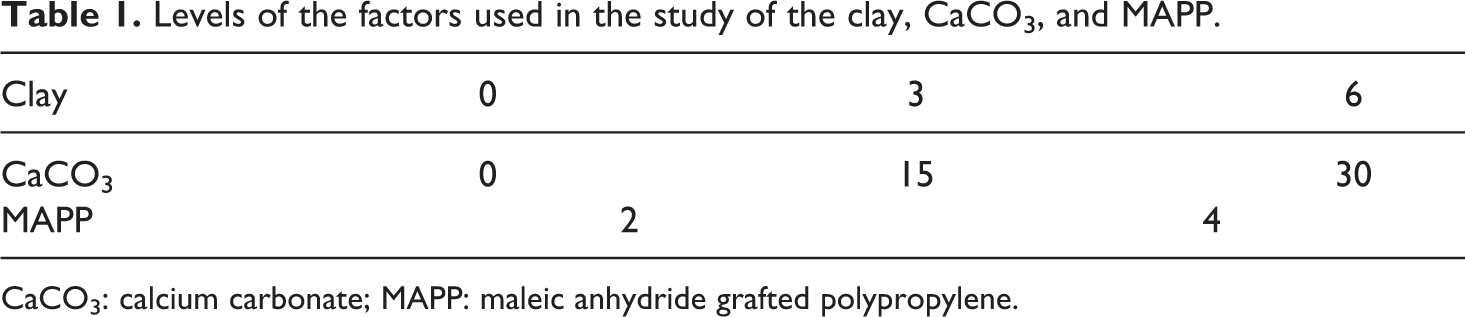
CaCO3: calcium carbonate; MAPP: maleic anhydride grafted polypropylene.
Design matrix of full factorial design for performing the experiments.
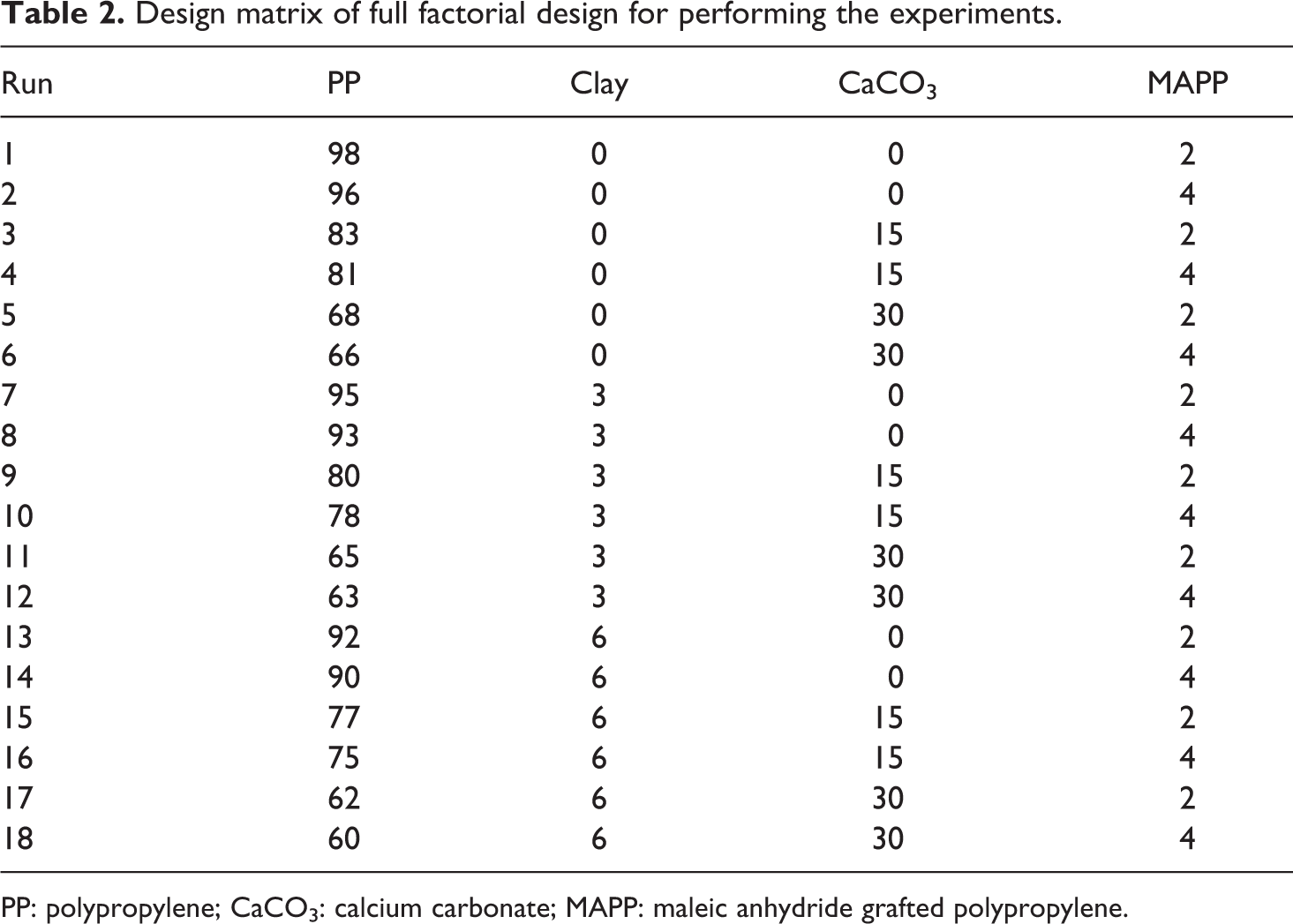
PP: polypropylene; CaCO3: calcium carbonate; MAPP: maleic anhydride grafted polypropylene.
Results and discussion
Evaluation of the impact strength
In order to efficiently find the significant factors affecting the mechanical properties of nanocomposites, the analysis of variance (ANOVA) is performed. In an ANOVA table, the sum of squares is the data used to estimate the Fisher’s variance ratio (F-value). F-value is the measure of variation in the data about the mean. From the p-value defined as the lowest level of significance leading to the rejection of the null hypothesis, it appears that the effect of each parameter is statistically significant at the p-value of less than 0.05. The results of ANOVA for the impact strength are listed in Table 3. As can be observed, the linear effects of nano-clay, nano-CaCO3, and MAPP and the interaction effect of CaCO3 × MAPP based on their p values were effective on the impact strength. Using F-value, the relative significance of each of the factors and their interactions could be estimated as clay > CaCO3 > MAPP > CaCO3 × MAPP > clay × CaCO3 > clay × CaCO3 × MAPP > clay × MAPP. Significant interaction of CaCO3 × MAPP indicates that the factors CaCO3 and MAPP are interdependent, which means that when the level of a factor changes, the effect of other factor changes accordingly. Based on the results of ANOVA table, a normal probability plot was provided to observe the residuals from the experimental values against the predicted impact strength values. If the data points (residuals) fall fairly close to a straight line, the data are normally distributed, then it is safe to say the data are reliable. Figure 1 is the normal probability plot of the residuals with a 95% confidence level for impact strength, which shows that the residuals were fairly close to the straight line. Therefore, the data from experiments come from a normally distributed population, and they were reliable.
ANOVA results for the impact strength.
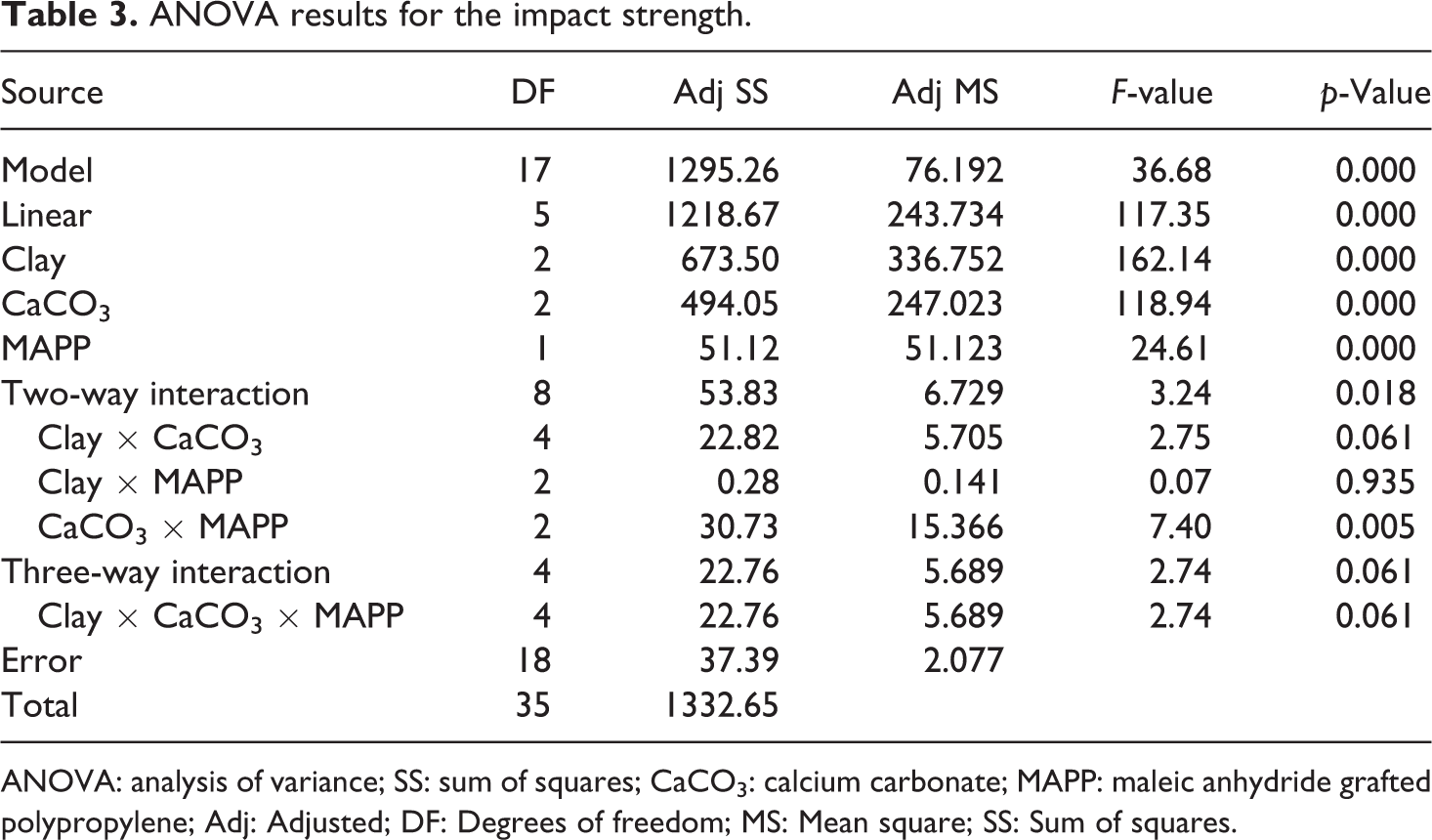
ANOVA: analysis of variance; SS: sum of squares; CaCO3: calcium carbonate; MAPP: maleic anhydride grafted polypropylene; Adj: Adjusted; DF: Degrees of freedom; MS: Mean square; SS: Sum of squares.
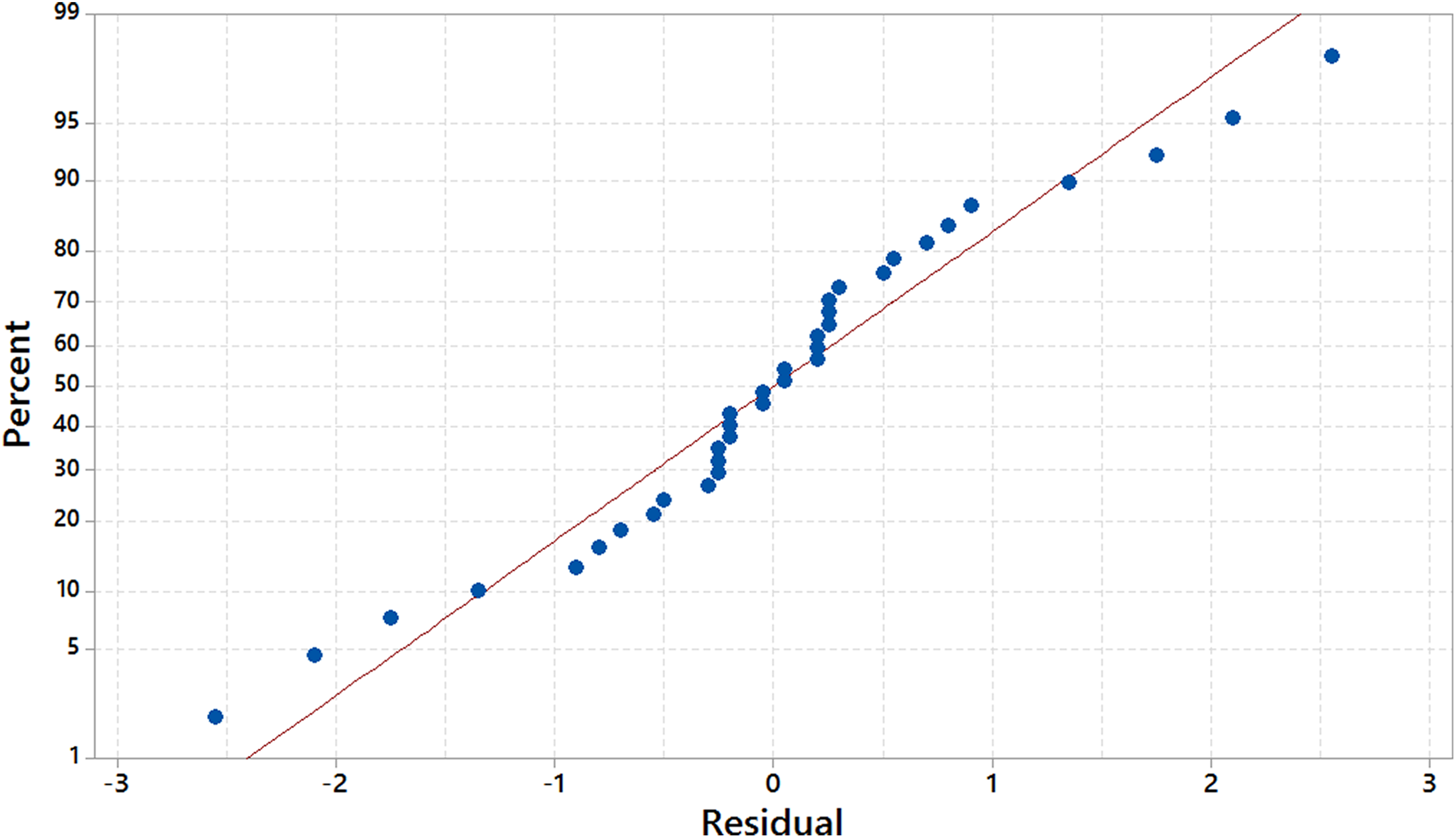
Normal probability plot of the residuals for the impact strength.
One of the advantages of using factorial design is that the effect of each factor can be analyzed by a so-called main effect plot. The main effect plot in Figure 2 depicts the variation in the values of impact strength when the different factors are changed. As clear from Figure 2, an increment in clay from low to high levels deteriorated the impact strength of nanocomposites by 42%. Similarly, Zare et al. 15 reported a decrease in the impact strength of PP/clay/CaCO3 nanocomposites upon the incorporation of 2–6 wt% nano-clay, ascribed to the lower mobility of PP chains due to the mechanical involvement of PP chains with nano-clay layers. Moreover, according to Figure 2, the increase in CaCO3 nanoparticles firstly improved the impact strength by 35% and then worsened it by 11%. As can be seen from SEM image in Figure 3(a), the strong enhancement in the impact strength of PP nanocomposites by adding 15-wt% CaCO3 nanoparticles can be attributed to efficiently dispersed grafted nanoparticles with strong interfacial interactions with the matrix that favor the pinning of cracks. 2 Wang et al. 24 found an increase in the impact strength upon addition of 30-wt% stearic acid–treated CaCO3 nanoparticles, and Cioni and Lazzeri 27 reported an extraordinary improvement with 24-wt% stearic acid–coated CaCO3, attributed to the formation of a continuous monolayer of hydrophobic alkyl chains on the nanoparticles that promotes a more uniform filler dispersion and matrix-particle debonding, allowing higher energy absorption during fracture. However, it can be also seen from Figure 2 that the higher nano-CaCO3 concentrations (30 wt%) led to a gradual decrease in the impact strength due to particle agglomeration as clear from Figure 3(b). Slight decrease was also reported for polymer-based nanocomposites filled with 30-wt% CaCO3 nanoparticles, 28 where the presence of small aggregates provoked stress concentration sites and consequently accelerated the propagation of cracks.
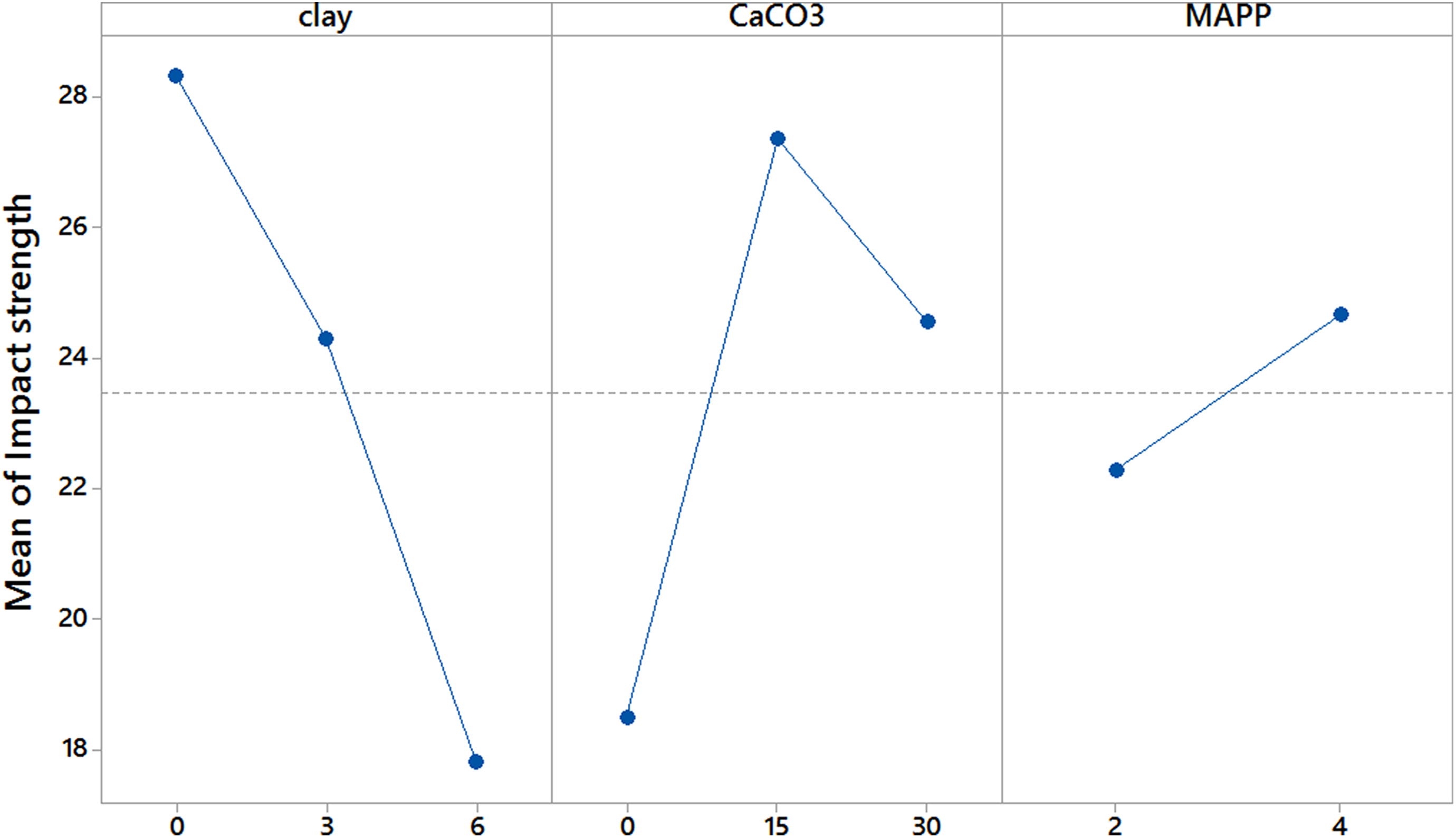
Main effect plot for the impact strength.
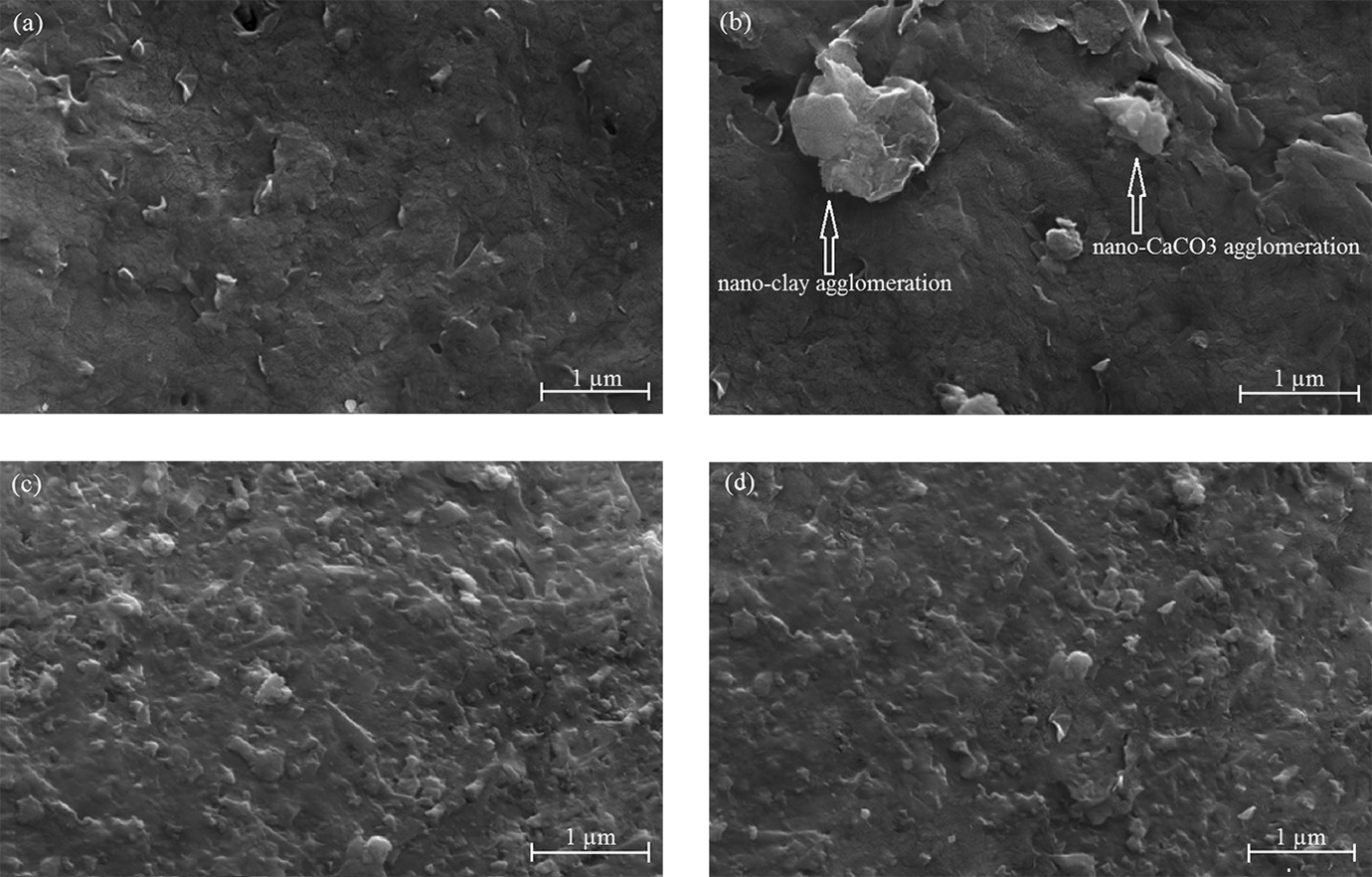
SEM images of the samples with (a) clay = 3, CaCO3 = 15, and MAPP = 2 wt%; (b) clay = 6, CaCO3 = 30, and MAPP = 2 wt%; (c) clay = 6, CaCO3 = 30, and MAPP = 4 wt%; and (d) clay = 3, CaCO3 = 30, and MAPP = 4 wt%.
Another remark on the results of main effect plot in Figure 2 is that an increase in the contents of MAPP from 2 wt% to 4 wt% enhanced the impact strength of nanocomposites by 9%. After addition of MAPP as a compatibilizer, the nanoparticle–matrix interface improved and agglomeration was reduced, resulting in an increase in the impact strength compared to the composites with untreated nanoparticles as shown in Figure 3(c).
In order to understand the complete influence of the factors affecting impact strength, the interactions between the factors have to be taken into account. The interaction plot between the three factors studied in this work, namely, clay, CaCO3, and MAPP, was shown in Figure 4. The vertical axis indicates the average of impact strength, while the horizontal axis depicts the variation of factors according to the factorial design. Nonparallel lines show that the interaction between parameters is significant. According to Figure 4(a), the significant interaction was occurred between CaCO3 and MAPP (CaCO3 × MAPP) indicated by the nonparallel lines. As clear from Figure 4(a), the enhancement of impact strength by the addition of CaCO3 nanoparticles is more effective with 4-wt% MAPP than with 2-wt% MAPP. For 2-wt% MAPP, the increase in the value of CaCO3 from 0 wt% to 30 wt% initially enhanced the impact strength by 27% and eventually reduced it by 4%, while for 4-wt% MAPP, the impact strength improved by 43% and then decreased by 18%. By increasing the value of MAPP, the influence of interparticle attraction through forces such as van der Waals and electrostatic forces reduced or removed and the compatibility between the PP and CaCO3 nanoparticles improved, leading to more efficient nanoparticle dispersion (Figure 3(d)) and consequently the impact strength enhancement. 2 Recently, Palza et al. 29 incorporated spherical nanoparticles into a PP matrix using MAPP as a compatibilizing agent and observed that compared to the initial highly agglomerated state, the nanoparticles were well dispersed due to the previous incorporation of the graft copolymer and its subsequent compatibilization with the hydrophobic PP matrix.
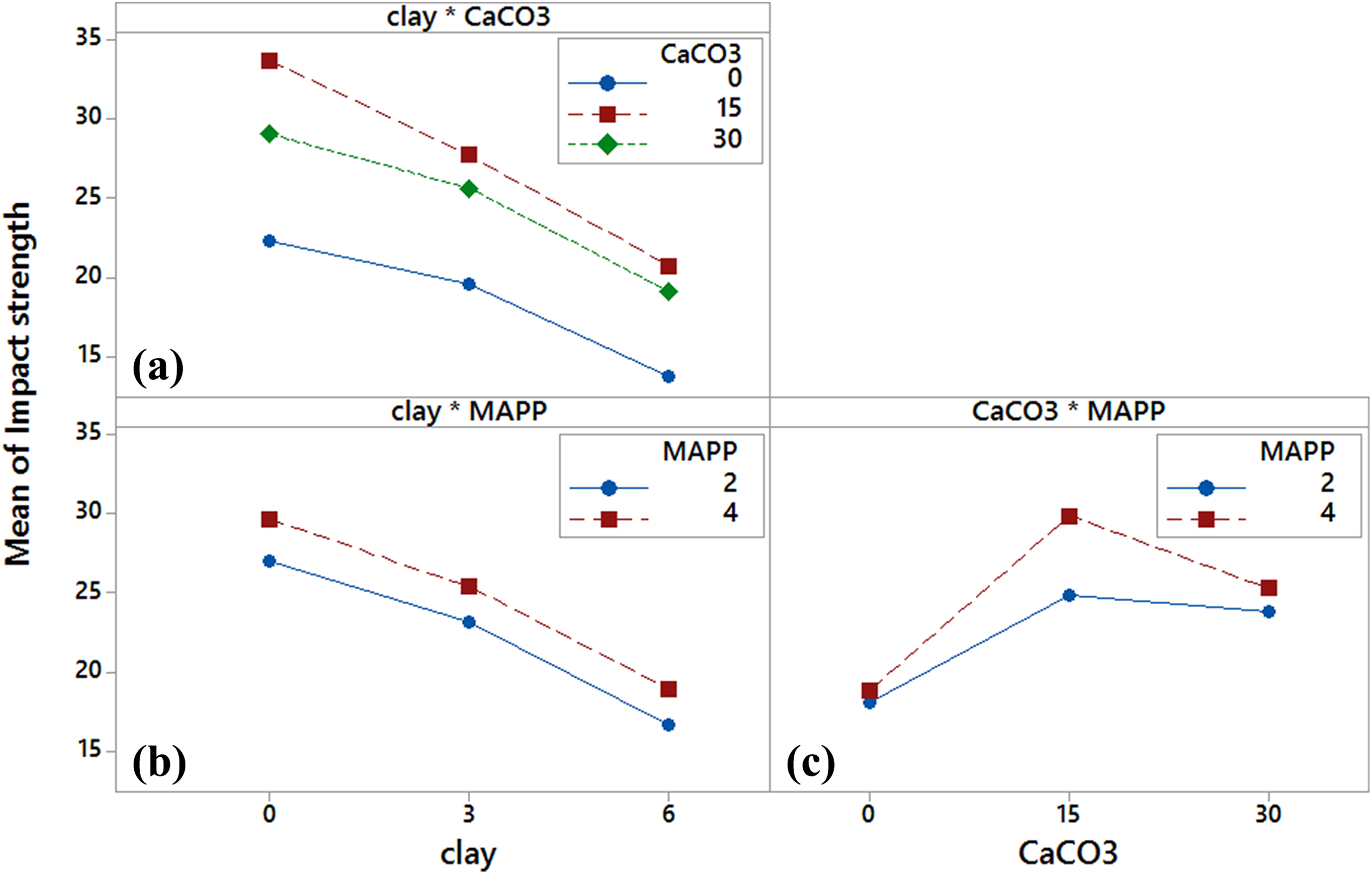
Interaction plots between (a) clay and CaCO3, (b) clay and MAPP, (c) CaCO3 and MAPP for the impact strength.
Evaluation of the flexural strength
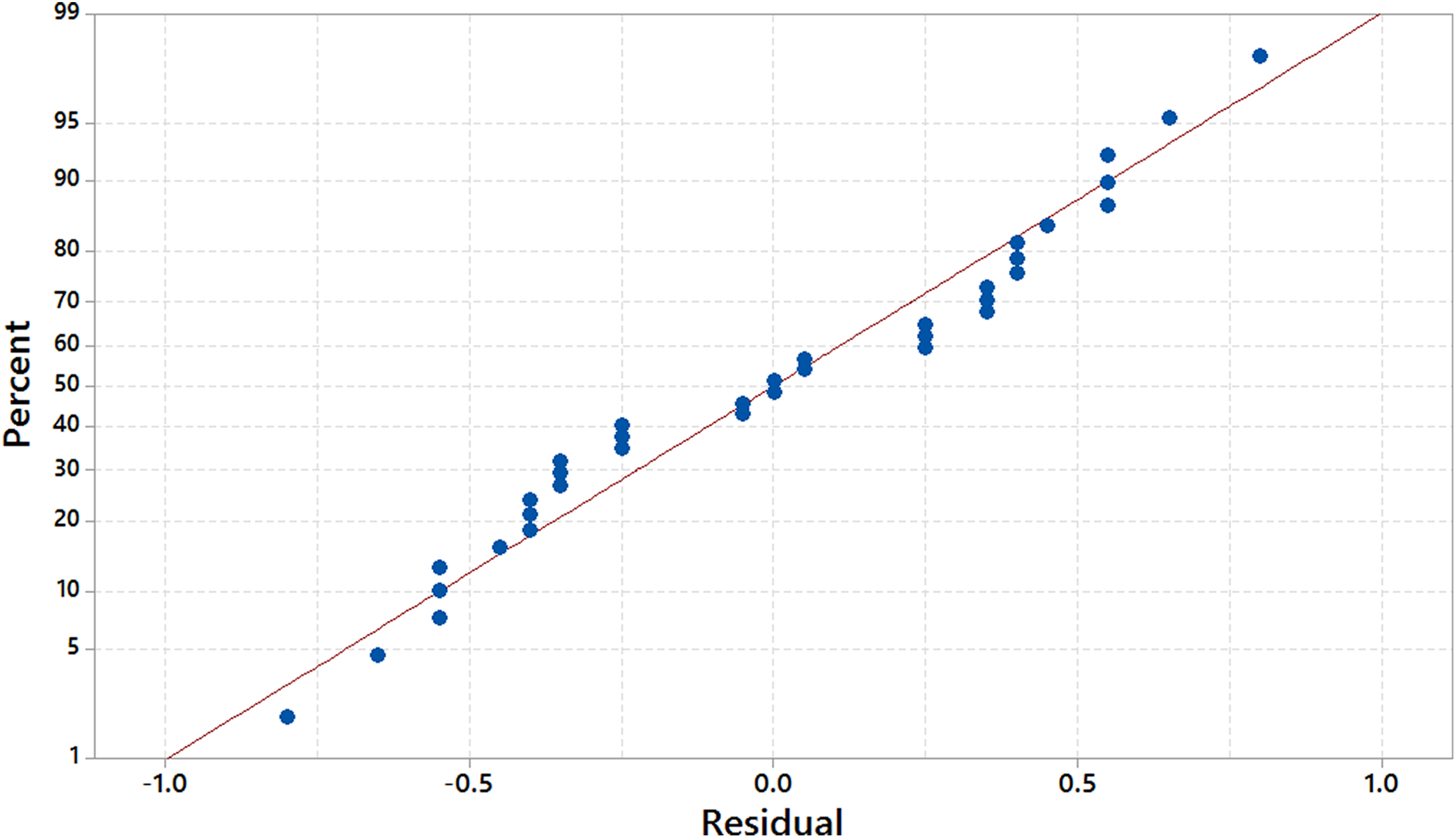
The results of ANOVA for the flexural strength are listed in Table 4. It can be observed that the linear effects of clay, CaCO3, and MAPP and the interaction effects of clay × CaCO3 and CaCO3 × MAPP based on their p-values were significant on the flexural strength. Using F-value, the relative importance of each of the factors and their interactions could be estimated as clay > CaCO3 > clay × CaCO3 > MAPP > CaCO3 × MAPP > clay × CaCO3 × MAPP > clay × MAPP. The interaction effect of clay × CaCO3 on the flexural strength is even more efficient than the linear effect of MAPP, which means that the variations of nanoparticles are interrelated to each other. Figure 5 depicts the normal probability plot of the predicted flexural strength values derived from Table 4. As can be seen, the data points of residuals were fairly close to the straight line. Therefore, the data from experiments come from a normally distributed population, and they were reliable.
ANOVA results for the flexural strength.
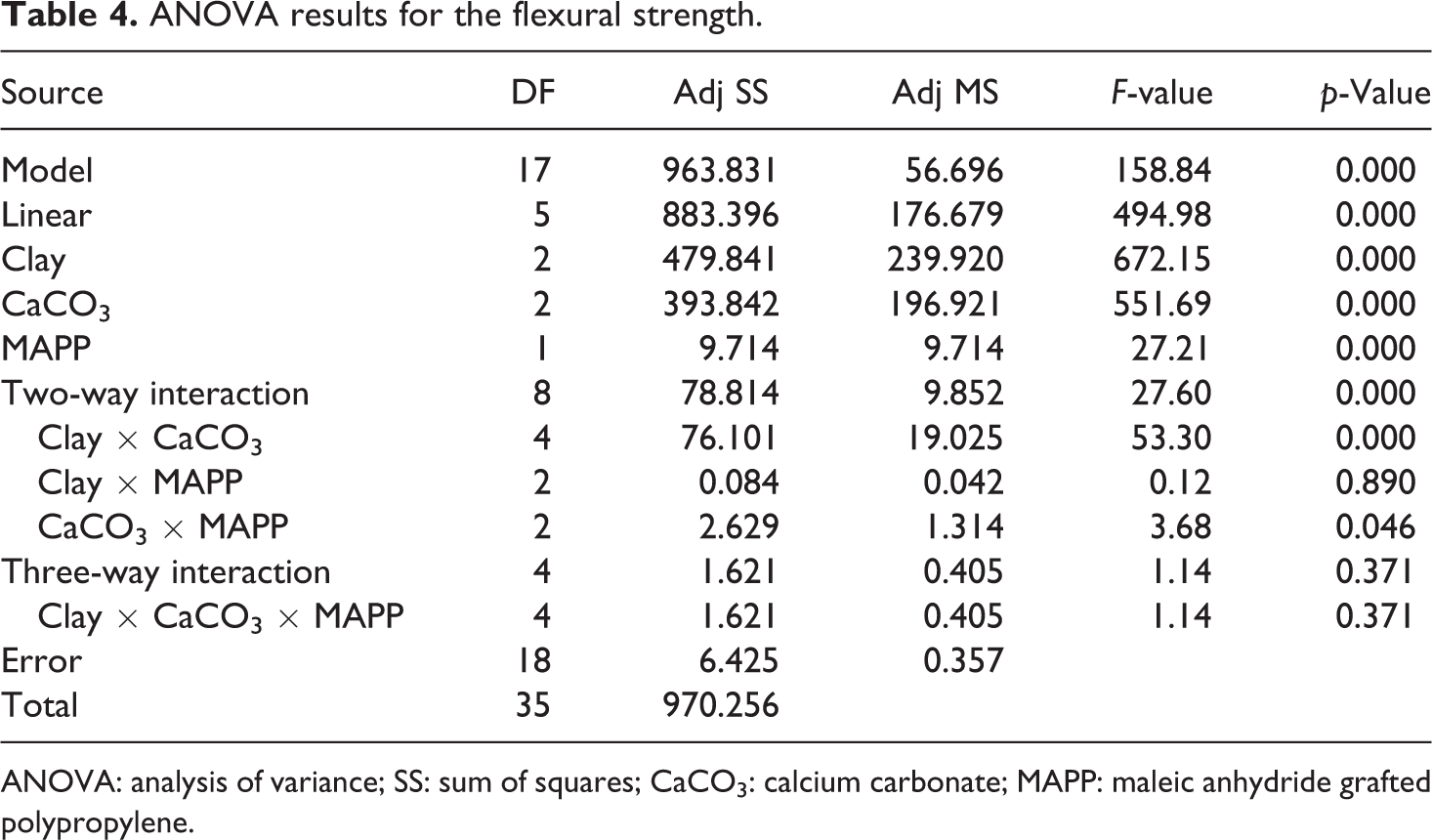
ANOVA: analysis of variance; SS: sum of squares; CaCO3: calcium carbonate; MAPP: maleic anhydride grafted polypropylene.
Normal probability plot of the residuals for the flexural strength.
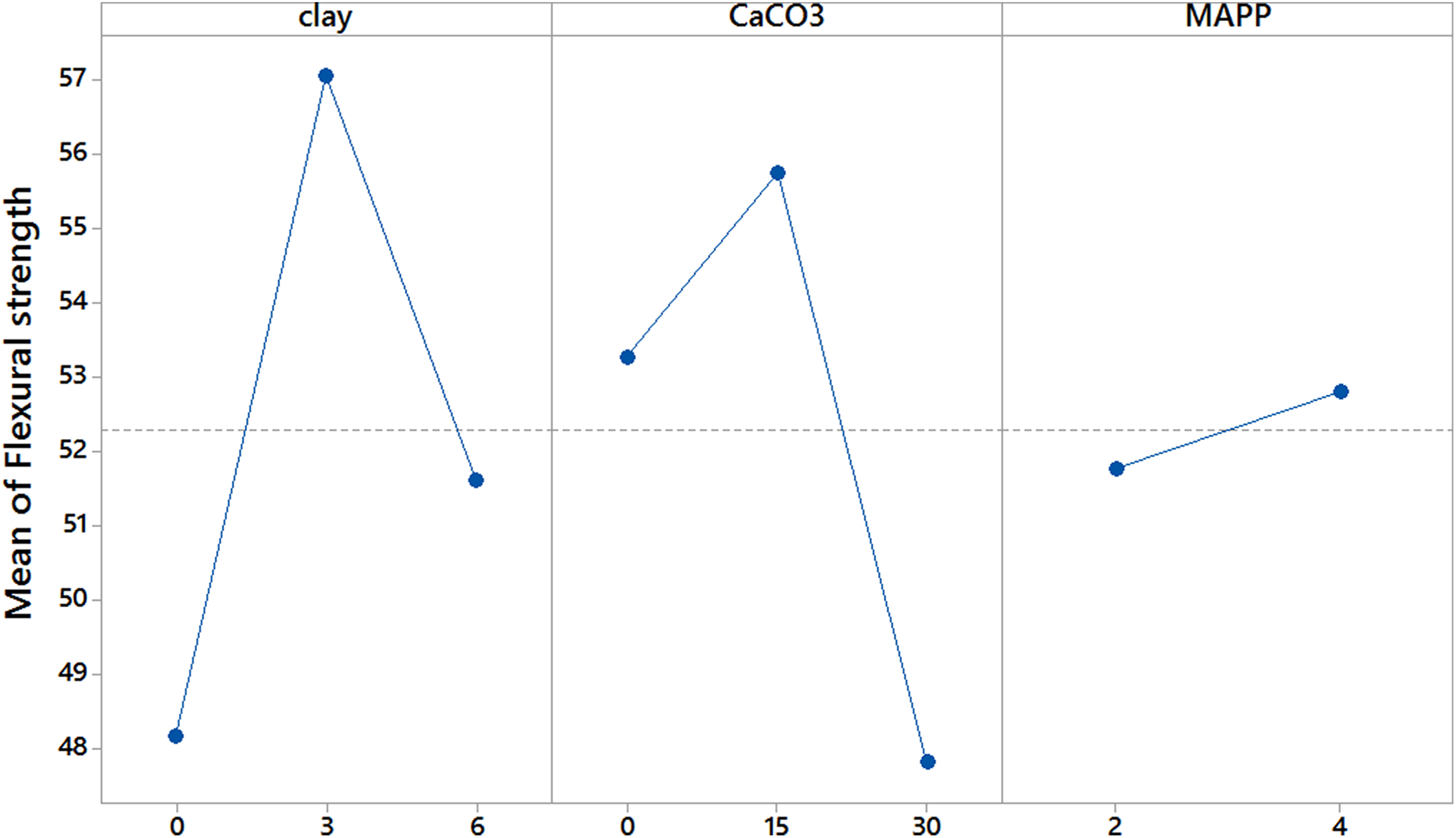
The main effect plot for flexural strength in Figure 6 shows that an increment in the values of nano-clay from 0 wt% to 3 wt% resulted in a remarkable improvement in the flexural strength by 53%, while an increase in the values of nano-clay from 3 wt% to 6 wt% deteriorated the flexural strength by 32%. Khosravi and Eslami-Farsani 30 observed an increase in the flexural strength upon addition of 5-wt% nano-clay to the fiber/epoxy composites, attributed to the restriction of frictional slippage of the filler–matrix interface against applied load. However, Suresha et al. 31 reported a small reduction in the flexural strength by addition of 3-wt% nano-clay to the polyamide66/PP composites, ascribed to the filler agglomerates that acted as stress concentration sites. It can be also observed from Figure 6 that an increase in the values of CaCO3 nanoparticles from 0 wt% to 30 wt% firstly raised the flexural strength by 15% and then dropped it by 47%. Similar results were observed by Li and Dou 32 who reported an extraordinary flexural strength increment with the incorporation of 20-wt% CaCO3 nanoparticles, ascribed to the nucleating effect of these nanoparticles that were well dispersed within the PP matrix. Conversely, a slight drop in the flexural strength was found by the addition of 8-wt% nano-CaCO3, 3 ascribed to the filler agglomerates that acted as failure initiation sites. In the case of MAPP in Figure 6, it can be seen that a slight improvement in the flexural strength was attained by increasing the contents of MAPP from 2 wt% to 4 wt%. It was deduced that the presence of MAPP played an effective compatibilizing role that improved the dispersion of both CaCO3 and clay nanoparticles.
Main effect plot for the flexural strength.
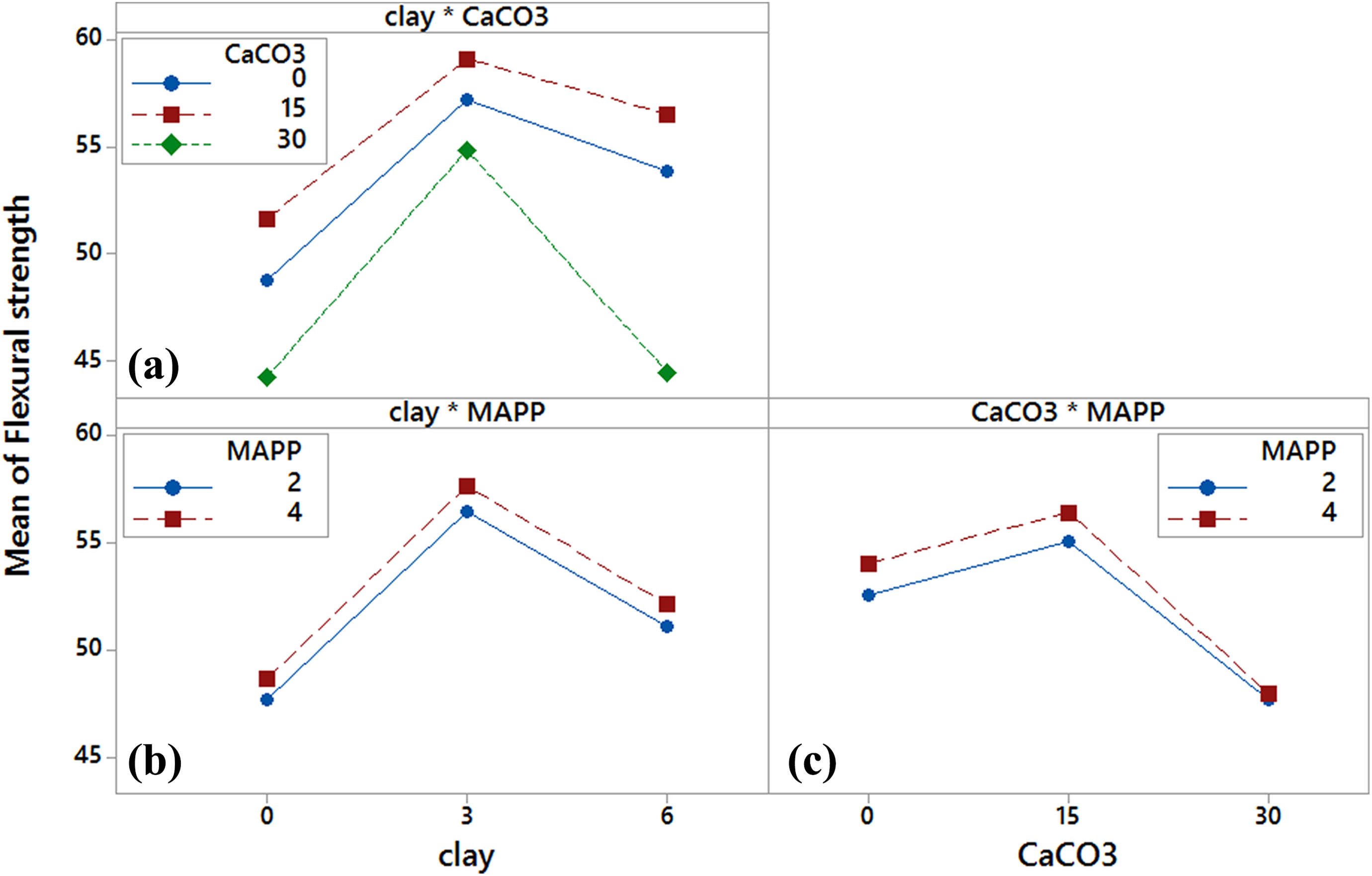
The interaction plot between the factors for the flexural strength is shown in Figure 7. From these interactions, it can be understood that the first interaction occurred between CaCO3 and clay indicated by the nonparallel lines (Figure 7(a)). As clear from Figure 7(a), for 0-wt% CaCO3, a change in the values of clay from 0 wt% to 6 wt% initially improved the flexural strength by 50% and eventually declined it by 20%, for 15-wt% CaCO3, the flexural strength firstly enhanced by 45% and then reduced by 15%, and for 30-wt% CaCO3, the flexural strength firstly raised by 63% and eventually dropped by 62%. As a consequence of the incorporation of inorganic CaCO3 and clay nanoparticles, interparticle attraction between the organic PP polymer and inorganic CaCO3 and clay nanoparticles was become stronger resulted in a high surface energy and, as mentioned previously, a tendency to agglomerate during melt blending. Thus, the strong tendency for nanoparticles to agglomerate inhibited their efficient dispersion within the matrix and consequently worsened the flexural strength of ternary nanocomposites. 2 However, the maximum flexural strength was obtained at 3-wt% clay and 15-wt% CaCO3 nanoparticles.
Interaction plots between (a) clay and CaCO3, (b) clay and MAPP, and (c) CaCO3 and MAPP for the flexural strength.
The second significant interaction was seen between the CaCO3 and MAPP in Figure 7(c). It can be deduced from Figure 7(c) that an increase in the values of MAPP from 2 wt% to 4 wt% developed the influence of CaCO3 nanoparticles on the flexural strength, so that the maximum flexural strength was attained at 4-wt% MAPP and 15-wt% CaCO3. By increasing the values of MAPP, the nanoparticle–matrix interface developed and, as clarified previously, agglomeration was decreased, resulting in an increment in the flexural strength. Another remark on the results of interaction plot in Figure 7(c) is that the variation in the contents of CaCO3 nanoparticles from 0 wt% to 15 wt% enhanced the flexural strength by 15 and 14% at 2- and 4-wt% MAPP, respectively. On the other hand, the change in the contents of CaCO3 nanoparticles from 15 wt% to 30 wt% deteriorated the flexural strength by 44 and 50% at 2- and 4-wt% MAPP, respectively. It should be highlighted that the improvements in the impact and flexural strength attained by incorporating the nanoparticles clay and CaCO3 were considerably smaller than those found in PP composites reinforced with the linear low-density polyethylene and nanoparticles titanium oxide, as explained in our previous research. 33
Simultaneous evaluation of the impact and flexural strength
The factorial design approach discussed previously involves the analysis of responses of two mechanical properties, namely, the impact and flexural strength that are approximately in conflict with each other in this study. Therefore, it is necessary to detect the optimal condition of mechanical properties simultaneously. A useful approach to solve a multiple response optimization problem is to use the desirability function. Desirability function-based approach consists of converting the estimated response models (y), which are usually the second-order models, into individual desirability functions (d) that are then aggregated into a composite desirability function (D). 34 Individual desirability function changes over the range 0 ≤ d ≤ 1. There are three forms of the desirability function depending on response characteristics including “the higher is better,” “the lower is better,” and “the nominal is better.”
In this research, both responses (i.e. impact and flexural strength) should be maximized. Therefore, the corresponding individual desirability functions were “the higher is better.” If the target (T) for the response (y) were a maximum value, then the individual desirability function (d) could be calculated as follows
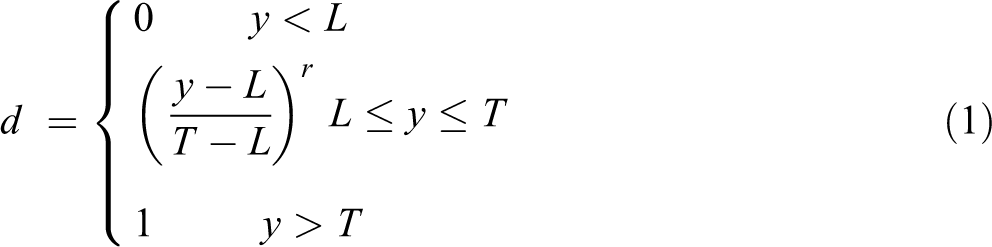
where L shows the lower limit of the response and the superindex r shows the weight factor. 34 In a multi-response situation, the ideal case is when each individual desirability function is equal to one. In this case, the composite desirability (D) is also equal to one. The composite desirability function (D) was calculated using the individual desirability’s according the following equation

where d 1 is the individual desirability function corresponding to the impact strength and d 2 is the individual desirability function corresponding to the flexural strength. 34 Individual desirability function of each response (d) and composite desirability function (D) have been calculated using Minitab®17 software and the results are plotted in Figure 8. It can be understood from Figure 8 that the desirable values of impact and flexural strength were found by incorporating 3-wt% clay, 15-wt% CaCO3, and 4-wt% MAPP. This set indicated the maximum composite desirability at 0.79 and predicted the impact strength equal to 29.25 J/m and flexural strength equal to 59.85 MPa for optimized responses. Furthermore, the results of desirability function demonstrate that the composite desirability (0.79) was properly close to unity, which indicated the settings were appropriate to achieve satisfactory results for the both responses. However, according to the results of individual desirability (d), it can be deduced that the settings were more efficient for enhancing the flexural strength (d = 0.98) than the impact strength (d = 0.64). According to the results obtained by the full factorial design and desirability function, a confirmation test was performed under the set of optimized conditions. The results achieved from confirmation test were reliably close to the data obtained from desirability function as shown in Table 5.
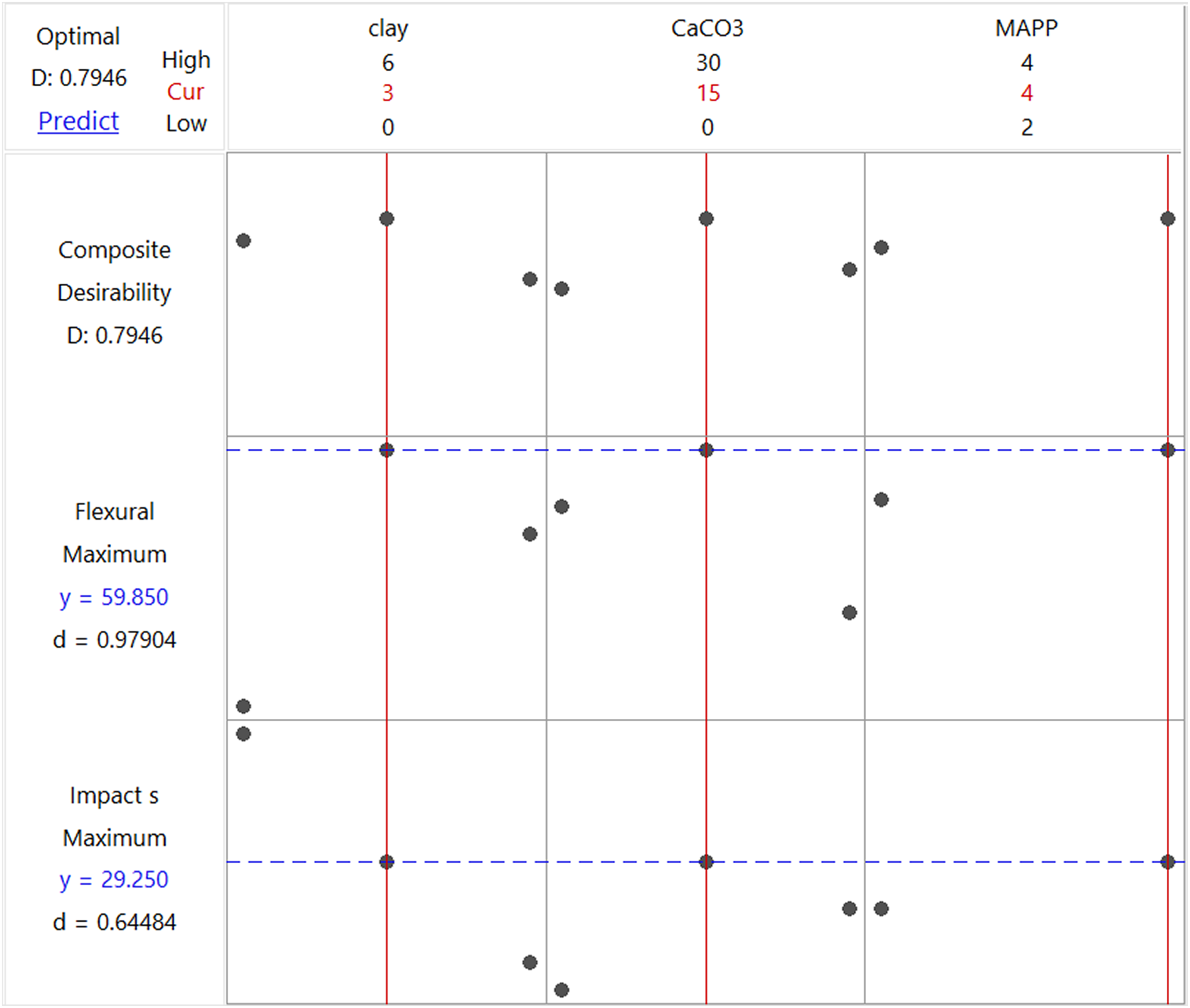
Desirability function results for simultaneous evaluation of the impact and flexural strength.
Results of confirmation experiment for optimal condition.
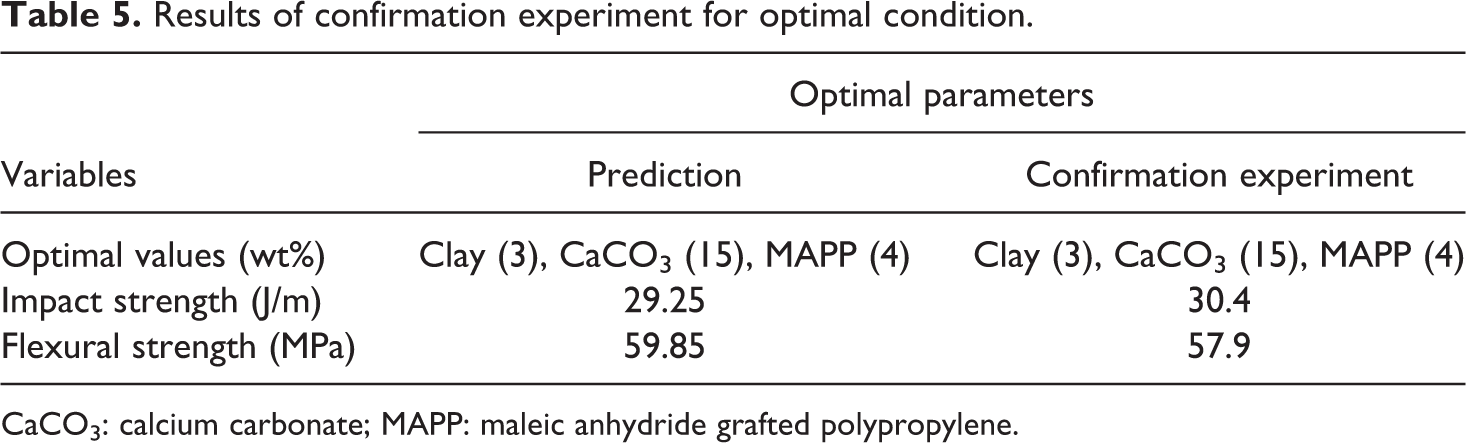
CaCO3: calcium carbonate; MAPP: maleic anhydride grafted polypropylene.
Conclusion
In the present study, the impact and the flexural strength of PP/clay/CaCO3/MAPP nanocomposite were evaluated by the factorial DOE combined with desirability function approach in order to extract the optimal values of nanoparticles. Incorporation of clay nanoparticles to the PP/clay/CaCO3/MAPP nanocomposite resulted in decrease in the impact strength while improved the flexural strength. However, higher addition of clay nanoparticles up to 6 wt% led to a gradual decrease in flexural strength due to particle agglomeration. The incorporation of 15-wt% CaCO3 to the PP/clay/CaCO3/MAPP nanocomposite enhanced the impact and flexural strength, but increasing the values of nanoparticle up to 30 wt% resulted in the formation of agglomerates, and consequently, the deterioration of the impact and flexural strength. The addition of MAPP into PP/clay/CaCO3/MAPP nanocomposite strongly developed the dispersion of clay and CaCO3 nanoparticles and consequently improved the impact and flexural strength as clarified by SEM images.
The ANOVA revealed that the clay nanoparticles had the greatest influence on the impact and flexural strength of PP/clay/CaCO3/MAPP nanocomposite followed by CaCO3 and MAPP. Desirability function approach predicted that the addition of 3-wt% clay, 15-wt% CaCO3, and 4-wt% MAPP to the PP matrix led to an improvement in the impact and flexural strength. The efficiency of factorial design combined with desirability function approach had been successfully proved by confirmation experiments at the optimal factors conditions.
