




Abstract
The awareness of society on environmental issues has increased in recent years. This article focuses on the wood–plastic composites (WPCs), obtained from recycled plastics and natural fibres waste, and their application in architecture. In order to give some recommendations to architects regarding the choice of a WPC as an alternative to wood for uses in outdoor decking, a series of standardized physical, mechanical and chemical tests have been carried out on two commercial WPC materials: one with a polyvinyl chloride (PVC) – PVC matrix and rice husk filler and a second one with a polyethylene (PE) – PE matrix and pine wood reinforcement. Mechanical, thermal and ageing behaviour of these commercial WPC has been broadly studied. This research provides value information to find out which WPC material best support durability aspects, those that most concern in an architectural application of outdoor decking. In general terms, WPC developed by PVC matrix and rice husk as filler shown greater physical–mechanical properties, better resistance to chemical agents and greater resistance to ageing behaviour and changes in visual aspect.
Introduction
The awareness of society on environmental issues has increased in recent years. Concepts such as recycle, reuse, reduce and energy saving are gaining importance in obtaining products under a clearly defined objective of a sustainable development. The revaluation of agroforestry waste has established itself as a solution to the problems associated with these wastes and, increasingly, is being incorporated into the manufacture of new materials.
Fossil fuels used as the main source of multiple applications are highly polluting, in addition to being a non-renewable resource, susceptible to exhaustion in the medium or short term. Plastic materials and polymer matrix composites have traditionally been made from petroleum-derived polymers. It is necessary to use new renewable sources for its manufacture with a positive contribution on the sustainable development. In the legal field, there are already laws that affect producers and force them to take charge of their waste. It is also important to keep in mind that most industrial wastes, although they are no longer useful for its main use, could serve to other industrial products, as it is the case of natural filler in polymer composites.
In response, the industry and the scientific community have promoted projects and initiatives for the development of new materials and products of high environmental performance. This change covers many industrial sectors, including the automotive and transportation sector, along with the construction and packaging sector, among others. 1
In the context of composites, based on the combination of several components to achieve a synergistic effect, the research is directed towards the use of components of renewable origin, both in the polymeric materials that act as matrices, as in the components that are incorporated for reinforcement/filler. 2 In this sense arise the ‘green composites’ or ‘biocomposites’ as alternative materials to the widespread use of plastics and classical composites obtained from petroleum products.
Wood–plastic composites (WPC) are composite materials consisting primarily of a polymer matrix, generally thermoplastic, and a reinforcement/filler from wood by-products, in the form of small fibres or flour.
The most common thermoplastic matrices are commodities such as polyethylene (PE), polypropylene (PP), polyvinyl chloride (PVC) and polystyrene (PS), due to cost reasons of materials and ease of processing. Nevertheless, the main drawback of these petroleum-derived polymers is their non-biodegradability leading to a waste generation at the end of the life cycle. Considering the significant advances being made in the plastics sector, it is important to highlight the increasing use of plastics from renewable resources and/or biodegradable (disintegrable in controlled compost soil). It is worth to note the increasing use of polylactic acid (PLA), thermoplastic starches and other polysaccharides 3 as well as bacterial polymers such as polyhydroxyalkanoates. 4 In addition to these, some petroleum-based polyester polymers, such as polybutylene succinate, poly(ε-caprolactone) and polybutylene adipate-co-terephthalate, can be disintegrated in controlled compost soil, and their use in the field of WPCs is continuously increasing as environmentally friendly solutions to other materials.
The most widely known and used natural-organic fillers are wood flour and fibres. Wood flour can be easily and cheaply obtained from sawmill wastes and it is usually used after proper sieving. Wood fibres are produced by thermomechanical processes on wood waste. 5 Besides wood derivatives, other natural-organic fillers have begun to find application as well. Among these, some examples are derived from plants such as cotton, flax, 6,7 sisal, 8,9 kenaf, jute, 10 hemp, starch, coconut, nut shells, almond skin, 11 sugar palm, 12 abaca, leaf fibres, bamboo, 13 rice, wheat straw and so on and even eggshell, 14 Posidonia oceanica 15 or biochar. 16
With the use of these new matrices and lignocellulosic fillers of different origin, the concept of WPC is extended to that of natural fibre-reinforced plastics, which comprises composite materials formed by a thermoplastic matrix and a lignocellulosic type-reinforcing element. 17 In this case, as shown in the previous bibliography, a wide variety of research is related to the study of new WPC. However, the study of commercially available WPCs on the market today is scarce. Given the problem of choosing a material for architectural applications, the only information available are the technical specifications of the producers. In addition, it is a considerable problem if one takes into account that there are more than 100 manufacturers linked to the WPC, including leading companies and referrals in the domestic and international market. 18 Markets are growing, and although Europe started late in this field, significant countries like France or Germany already appear, with annual growths above 30%. In more mature markets such as the United States, current growth is around 25%, and in Japan it is over 60%. 19
The use of these new materials in construction is mainly oriented towards outdoor products, such as technological decking, cladding, fencing, lattices and in urban furniture elements such as benches, litter bins and pergolas. Because of their sound insulation properties, some other applications have been proposed. 20
In this article, influence of two different polymeric matrices such as PVC and PE and two different fillers such as rice’s husk and pine wood has been studied by mechanical properties (Shore D hardness, Charpy’s impact test, flexural strength), thermomechanical properties (Vicat softening temperature (VST) and thermomechanical analysis), and ageing behaviour and possible visual aspect changes, in order to give some recommendations to architects regarding the choice of a WPC as an alternative to wood for uses in outdoor decking.
Materials and methods
In this research, a series of standardized physical, mechanical and chemical tests have been carried out 21,22 on two commercial WPC materials with different matrices and lignocellulosic fillers. The first one is composed of PVC and husk rice, while the second one is mainly composed of a PE matrix and pine wood sawdust. The only application of the evaluated WPC products, kindly supplied by two manufacturers, is outdoor decking, which seeks the best behaviour for this architectural use. The response of these materials provides valuable information of their behaviour and more relevant for use as outdoor decking properties.
The tested specimens were selected in order to assess the variation in the behaviour of the WPC with the polymer type, the polymer percentage and the type of reinforcement/filler (wood waste or shell). The two commercial WPCs were supplied in the form of extruded profiles for decking uses. The WPC labelled as PE35-WF65 is composed of PE (35 wt%) and pine wood sawdust (65 wt%). On the other hand, the WPC coded as PVC50-RH50 refers to a PVC of 50 wt% and a filler content of 50 wt% (husk rice flour).
According to April 2014, the European Norm (EN) 15534 23 was introduced into the EU-member countries. Developed by the Mirror Committee CEN/TC 249/WG 13: WPC, this norm specifies compounds, which are made from natural fibres, mixed with polymeric plastics. 24 EN 15534 Part 4 25 is focused on the application of decking profiles. The EN 15534 gives information on which standard to use for each test. The authors have carried out various tests (sun test, climatic chamber, salt mist, water absorption (WA) and chemical degradation) that in some occasions did not have specific standards to perform them in these materials, searching the assessment of durability against various atmospheric agents.
Physical–mechanical behaviour
Shore hardness
The hardness was measured according to EN ISO 868 26 in a durometer model 676-D from J-Bot Instruments. The objective of this test is to determine the hardness of penetration of plastics and ebonite by means of two types of durometers, type A for softer materials and type D for harder materials. In this work, the type D method was used since WPCs of both PE and PVC can be considered as hard materials.
Charpy impact properties
This property is important to determine the impact resistance of materials, which is a key parameter in building applications, so other authors have studied it before. 27,28 The test procedure according to EN ISO 179-1 29 indicates that a horizontal specimen must be placed between standard supports and struck with a normalized mass by a single oscillation of a pendulum. A Charpy pendulum from Metrotec S.A. was used to measure the impact resistance. The Charpy impact strength of non-notched specimens, acU , is expressed in kilojoule per square meter and was calculated as follows:

where Ec is the corrected energy absorbed at the rupture of the specimen, in Joule; h is the specimen thickness, in millimetre; and b stands for the specimen width, in millimetre.
Flexural strength
The flexural strength was assessed in accordance with EN ISO 178 30 in a universal test machine ELIB 30 from SAE Ibertest. This test gives valuable information about mechanical performance of the tested material. Test specimens are prepared from commercial products in accordance with EN ISO 2818. 31 These must have parallel faces and surfaces and edges free of scratches and burrs. 32 Specimens that break outside the central third between supports should be rejected. The flexural failure stress, σf , was calculated as follows:

where F is the applied force, in Newton; L is the distance between supports, in millimetre; b is the specimen width, in millimetre; and h is the specimen thickness, in millimetre.
Flexural strain,

where s stands for the vertical displacement in the centre of the span, in millimetre; h is the specimen thickness, in millimetre; and L is the distance between supports, in millimetre.
As in other works, 33 –36 the surface morphology of the impact-fractured samples was investigated by scanning electron microscopy (SEM) analysis to assess the potential polymer–particle interactions. A field emission SEM model ULTRA 55 (ZEISS), with an acceleration voltage of 3 kV, was used to examine the fracture morphology of the composite samples. A direct observation of the material surface by SEM reveals its topography and allows us to estimate the causes that have produced the failure, as well as the analysis of the microstructure of the material.
Thermal behaviour: Stability
Vicat softening temperature
The purpose of this test is to determine the temperature at which a normalized penetrator with a standard force is introduced 1 mm onto the surface of a test specimen. The penetrator exerts a specific perpendicular force on the specimen, while the specimen is heated at a specific and uniform velocity. This temperature indicates the temperature at which the tested thermoplastic begins to soften.
VST was measured in accordance with EN ISO 179-1 37 in a Vicat/HDT station VHDT 20 from Metrotec S.A. According to this standard, four methods can be used for the determination of Vicat temperature. The method used in this research is the second one, method B50, in which a force of 50 N and a heating rate of 50°C h−1 are used.
Coefficient of linear thermal expansion
The coefficient of linear thermal expansion (CLTE) was obtained using a Q400 thermomechanical analyser from TA Instruments. The applied force was 0.02 N and a constant nitrogen flow (50 mL min−1) was used. A dynamic programme from −20°C to 20°C at a constant heating rate of 2°C min−1 was used to measure the CLTE. Prior to the dynamic programme, a stabilizing isothermal programme at −20°C for 5 min was used. According to ISO 11359-2, 38 the value of the CLTE, α, between the temperatures T1 and T2 for a specimen with an initial length of L 0 at the reference temperature T 0 is given

where
Behaviour against external agents
Artificial weathering ‘sun test’: Colorimetry
Artificial and natural ultraviolet (UV)-weathered WPCs have been evaluated in other investigations 39,40 due to the importance of an outdoor application. In this research, standards EN ISO 4892-3 41 and UNE 53104 42 were used to evaluate the accelerated ageing caused by UV radiation, with the aim of analysing the damage due to the sun in the WPCs.
The objective of the test is to simulate at laboratory scale the photo degradation processes that occur in the outdoor. As UV radiation is highly harmful for plastics, a UVA 340 lamp from Q-Lab), which simulates the solar radiation in a shorter time and allows evaluating the damage, was used to follow the ageing process (Figure 1(a) 43 ).
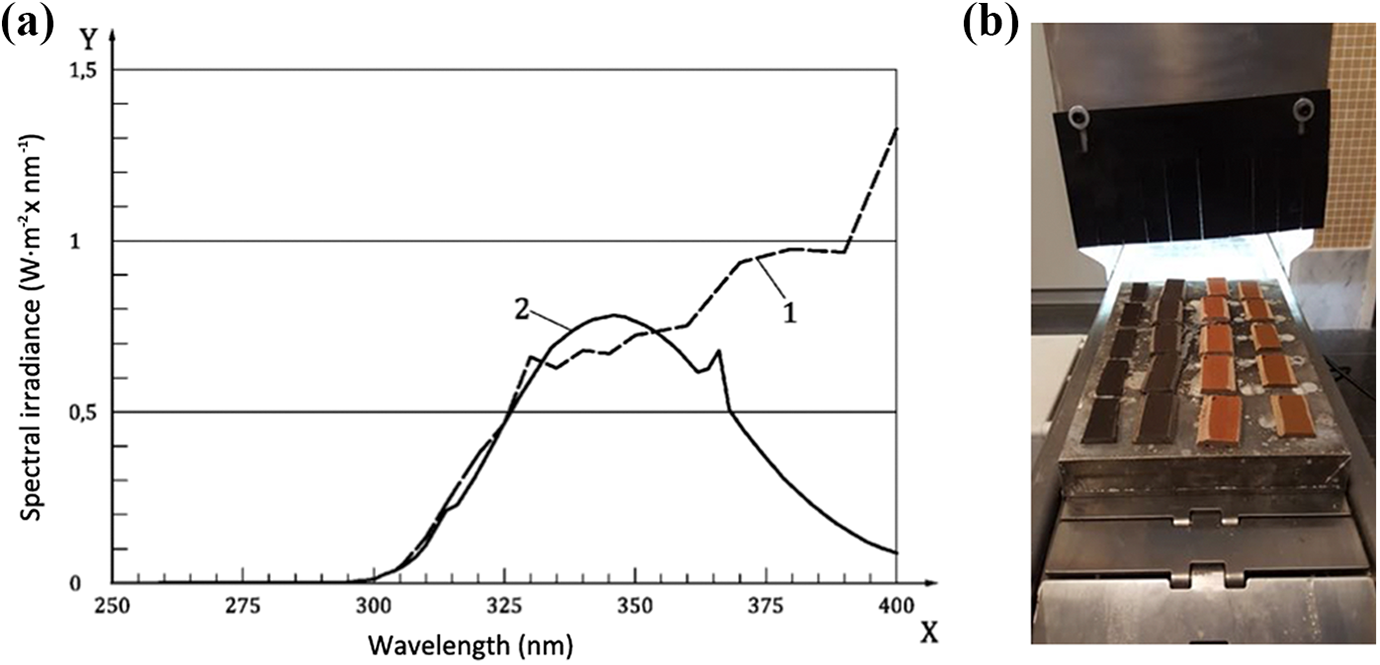
(a) Spectral irradiance of a typical UVA-340 lamp (type 1A) compared to the total solar radiation of CIE Publication No. 85, where 1 is the total solar radiation according to CIE and 2 is the spectral irradiance of a typical UVA-340 lamp (type 1A). (b) Specimens exposed to the UVA-340 lamp.
The UV light generated by the fluorescent UV lamp is about 5% of the solar spectrum radiation, so that 1-h exposure to sunlight equates to approximately 1.2-min UV light with the lamp used in this test. In this test, samples were exposed for 6 h to the UV lamp, which is equivalent to about 300 h of exposure to the sun, or what is the same for 30 sunny days.
Subsequently, a colorimeter was used to quantify surface discoloration due to ageing. Colour measurements were conducted in a Hunter Mod. CFLX-DIF-2 colorimeter from Hunterlab adapted to colour-data software. Because the initial colour of the specimen is determinant in the colour variation, samples of light and dark hue were tested in the two assessed types of WPC.
Colour measurement of composites was analysed according to EN ISO 11664-4. 44 It was determined by calculating the CIELAB discolouration (ΔE) of the weathered samples in terms of lightness (L*) and chromaticity (a* and b*) of unweathered and weathered specimens. The equation is given as follows:

where ΔL*, Δa*, and Δb* are the difference of initial and final values of the colour coordinates L*, a* and b*. L* ranges from 0 (black) to 100 (white), while a* (red-green) and b* (yellow-blue) are interpreted as +a expresses redness, −a expresses greenness, +b expresses yellowness and –b expresses blueness. 45
The colorimeter gives us another very important data, the yellowing index (YI), which indicates the change in colour of a sample from white to yellow.
Resistance to ageing by climatic chamber
This test was performed to assess the influence of extreme weather conditions on WPC samples. There is not any standard for this test in this type of materials. The test procedure was performed by introducing the samples into the climatic chamber (CCK-25/480 from Dycometal) under an isothermal temperature of 75°C and 90% relative humidity (RH) for 1 month and evaluating their modifications once removed from the chamber.
Resistance to ageing by salt mist
In the absence of a specific standard for composites, the standard for natural stone 46 was used to assess the resistance of WPCs to salt mist, since it will provide relevant information for outdoor decking near the coast, where there is saline mist exposure.
Two daily cycles consisting of 4 h of wetting and 8 h of drying were carried out, with a concentration of sodium chloride of 100 g L−1 of water. The test consists of 60 cycles, with a visual inspection every 15 cycles. The test was performed at a constant temperature of 35°C and at a saturated humidity of 100%.
Water absorption
The test procedure is performed by immersing the dried specimens in distilled water. Samples were dried in a vacuum oven at 23°C for 4 h, cooled in a desiccator, and then immediately weighed to the nearest 0.001 g. Then, samples were immersed in distilled water and maintained at 23°C.
WA of the WPCs was determined according to EN ISO 62 47 with the following equation:

where W 0 is the mass of the sample after drying and prior to immersion, in milligram, and Wt is the mass of the sample after immersion at the predetermined time t, in milligram.
Chemical behaviour: Degradation
Chemical resistance to commonly used products
In this work, the behaviour of the WPCs in outdoor decking is evaluated. Therefore, it is necessary to study their behaviour against the chemical agents that can be spilled out on them.
This test was conducted following the standard for agglomerated stone, 48 since there is not any standard that regulates this type of test for WPC-type composites.
The objective of the test was the determination of the chemical and stain resistance after prolonged contact with aggressive chemical agents, potentially capable of reacting with the surface of the material, penetrating or altering its appearance in any way. Following the recommendations in Appendix 1, the potential damage caused by chemical dyestuffs that could come into contact with the surface of the material was estimated.
The test procedure was performed by applying a chemical agent to the material, allowing it to act for 1 h, after which it is washed with water. Then, the surface and the stain left by the selected chemical agent were observed. In previous tests, 10 chemical agents with a reasonable contact probability with the WPC were proposed, given the use in outdoor decking. These 10 agents were foods and drinks (mayonnaise, ketchup, olive oil, lemon juice and coffee), cleaning products (ammonia, diluted hydrochloric acid, detergent and bleach) and others (sun cream).
Results and discussion
Evaluation of the physical−mechanical behaviour
As it was supposed, the introduction of a filler subtly reduces the values of the mechanical strengths with respect to the base polymers.
Shore hardness
Five hardness measurements should be performed at different positions of the samples, with a separation of at least 6 mm, and the average value determined. Two specimens of each material were tested, obtaining the results of Table 1.
Shore hardness type D.
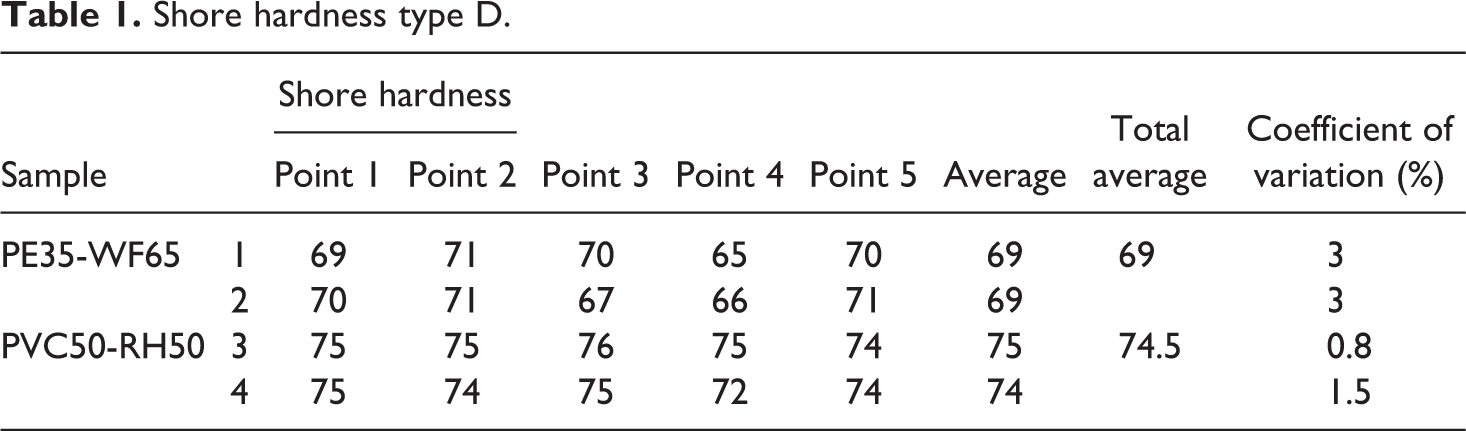
The best behaviour regarding Shore hardness is found for samples made with PVC, given the strong additivity of these plastics and the higher content of plastic. It is important to keep in mind that hardness not only depends on the polymer matrix but also on the type and amount of lignocellulosic filler. PVC is much harder than PE. This is a direct consequence of the chemical structure of both. PVC is a brittle polymer with a glass transition temperature (T g) of about 85–90°C which means that PVC behaves as a glass material (high resistance and brittleness) below this temperature. On the other hand, PE is a flexible polymer at room temperature since its T g is of about −120°C. Despite these differences, the overall hardness is also dependent on the nature and amount of the lignocellulosic filler. With regard to the two WPCs evaluated in this work, although the PVC-based WPC contains less filler load (50 wt%) than the PE-based WPC (65 wt%), the overall hardness is higher for PVC-WPC as PVC is remarkably much harder than PE. This property is important because it reflects the resistance of the material to penetration by other objects, so it is a simple way of estimating the mechanical performance of a WPC.
Charpy impact properties
The dimensions of the tested specimens and average values of Charpy impact strength are shown in Table 2.
Dimensions of the tested samples for Charpy impact and average impact strength values.

The behaviour for the PVC50-RH50 samples is significantly better. As in the previous case, this material shows a greater energy absorption because of the introduced reinforcement, finely divided rice husk, which improves the energy absorption against the wood fibres. Impact strength is a mechanical property directly related to the ability of a material to absorb energy during the fracture process. The effects of the energy absorption are elastic and plastic deformation. This property highly depends on the material cohesion. Unfilled polymers tend to show higher impact resistance than their filled counterparts. An unfilled polymer shows a full continuity and this allows energy absorption during deformation and fracture, as microcracks are difficult to form. On the other hand, filled polymers show high discontinuity (lower cohesion) due to the finely dispersed particles into the polymer matrix. In general, lignocellulosic particles are highly hydrophilic due to presence of hydroxyl groups in cellulose. On the other hand, polymers are usually hydrophobic. This difference is responsible for low polymer–particle interactions which in turn lead to poor cohesion, thus resulting in brittle materials. In this case, although both materials possess different polymer matrices, the PE-based WPC possesses higher load content and this is important enough to provide lower impact resistance than that offered by the PVC-based WPC.
Flexural strength
The values of the assessed specimens of each material are shown in Table 3 and show the better behaviour in the flexural strength test for the PE35-WF65 samples, with respect to the PVC50-RH50 samples. The distance between supports was 100 mm in all tests. Flexural strength is a mechanical resistant property that is directly related to the hardness and the overall cohesion. The maximum deflection (vertical displacement) is higher for the PE-based WPC as PE is a more flexible polymer than PVC.
Dimensions of the tested samples and flexural strength values.
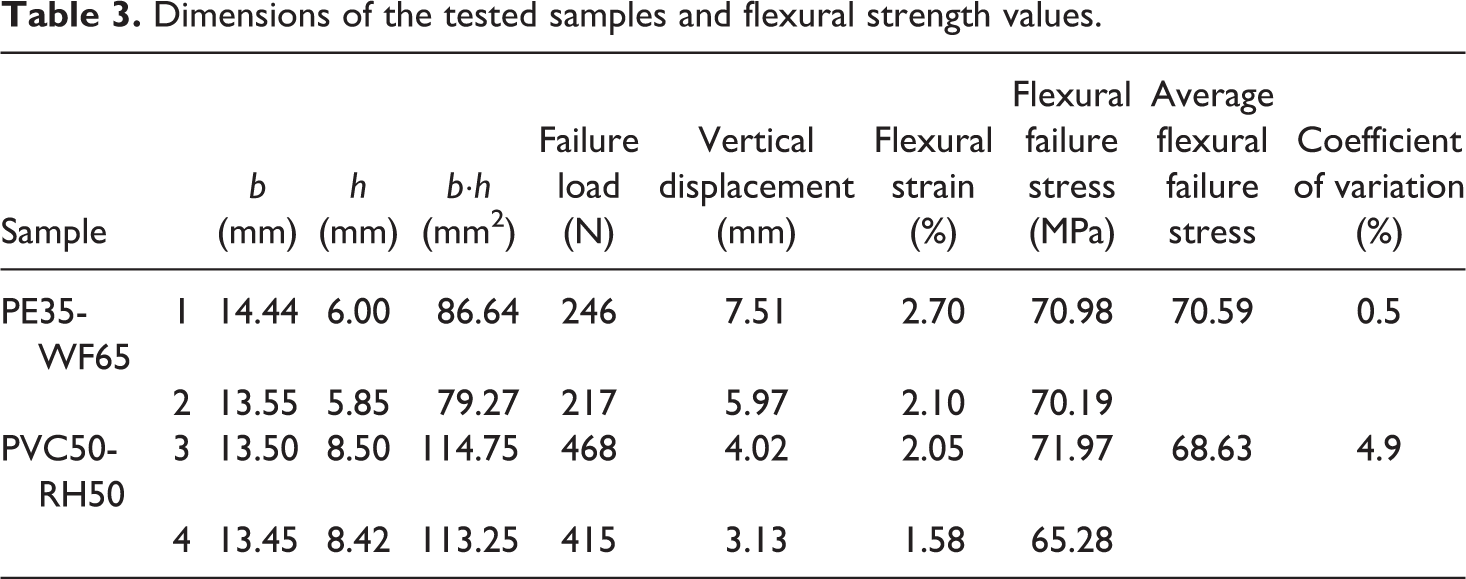
Figure 2 shows the typical load–vertical displacement curves of the different specimens tested to flexure.
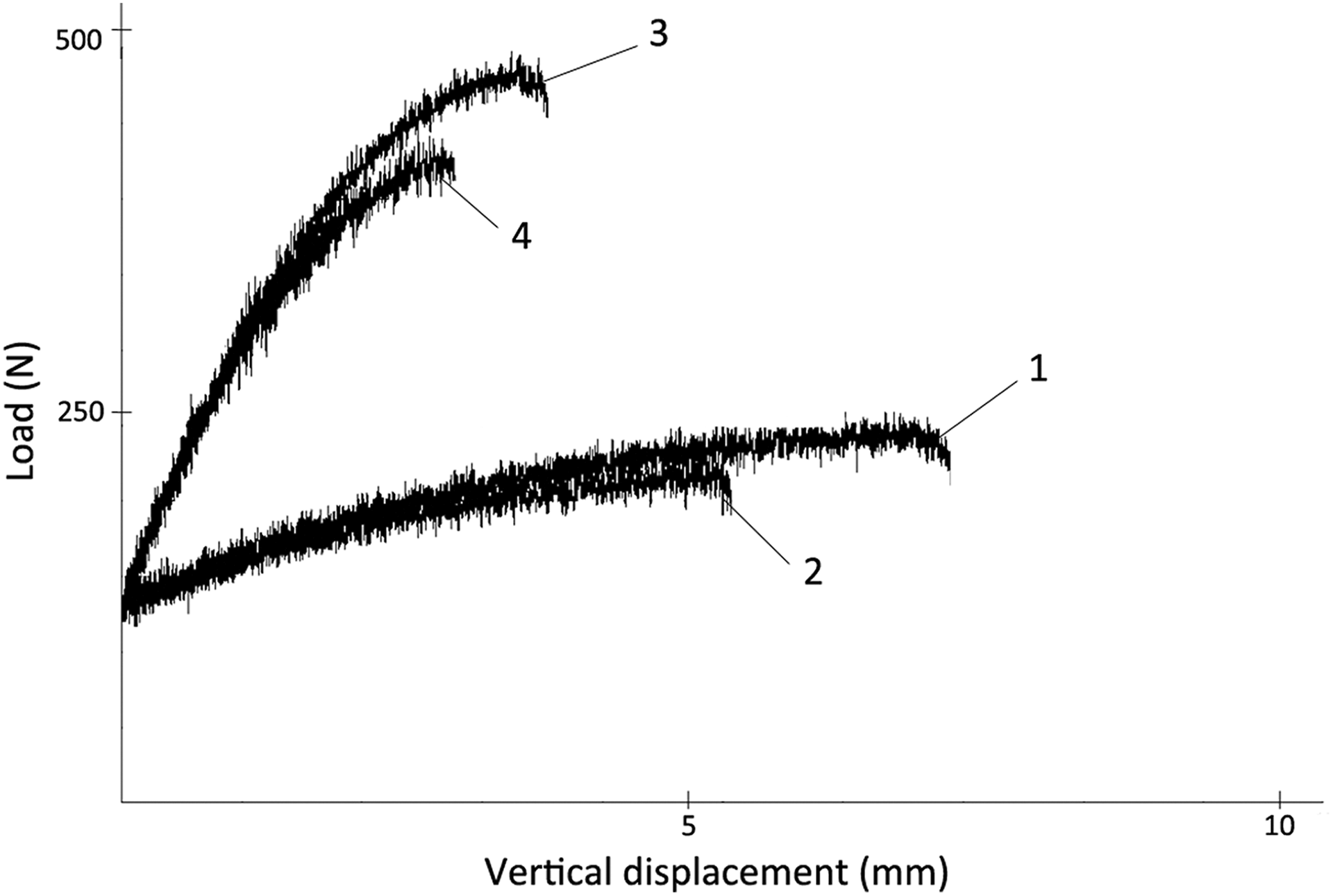
Load–vertical displacement curves, where 1 and 2 are PE35-WF65 samples and 3 and 4 are PVC50-RH50 samples.
An analysis of the fractured surfaces from flexural tests can be useful to support overall mechanical performance of the studied WPCs as well as to deeply study the interaction between natural fibre and composite matrix. Figure 3(a) shows the general appearance of the breakage for PE35-WF65 samples, in which the directionality of the extrusion process used in the processing of the plate is appreciated. The distribution of the wood fibres on the surface and the plasticization of the polymer between them can also be seen. In Figure 3(b), the wood fibre was analysed at higher magnification. In Figure 3(c), the breakage for PVC50-RH50 samples can be seen. The different appearance of the rice husk with respect to wood fibre is clear. Figure 3(d) shows the good arrangement of the rice husk-crushed particles and homogeneously mixed with the PVC. This good blend of reinforcement and matrix provides the excellent mechanical behaviour observed in the tests. This good interaction between filler and polymeric matrix, besides to being samples with high contents of loads (50%), it implies to the authors that these materials have been previously treated to increase the compatibility between the charge, hydrophilic and the hydrophobic matrix. However, the producer of the materials does not specify what type of treatment has been carried out.
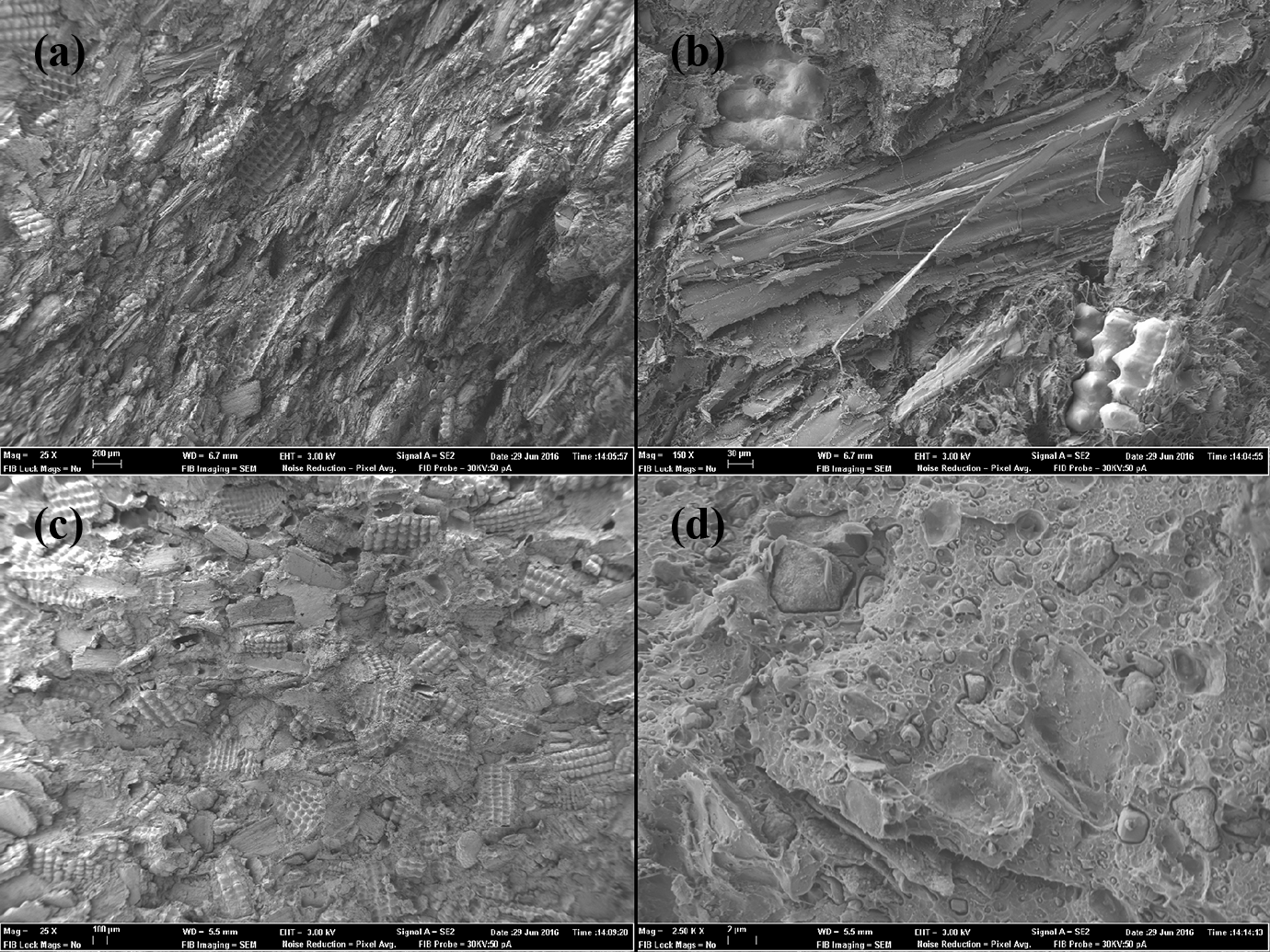
SEM images of fractured WPCs from flexural tests: (a) PE35-WF65 25×, (b) PE35-WF65 150×, (c) PVC50-RH50 25× and (d) PVC50-RH50 2500×.
Evaluation of the thermal behaviour
Vicat softening temperature
Table 4 shows the VST values of the samples tested. These softening indices show that the material made with PVC has a higher temperature than PE composite. This should be taken into account in the process of extrusion of the products that are made with them as well as in their possibilities of surface finishes and textures to achieve for their uses. The Vicat softening point or VST is equivalent to a hardness test with increasing temperature. The higher VST values are representative for more resistance to heat. As it has been previously mentioned, PVC is much harder than PE and, obviously, as the temperature increases, the difference is still higher. For this reason, the PVC-WPC shows a VST value of 109.4°C which is remarkably higher than that of the PE-based WPC. This value indicates that the PE-WPC needs 85.1°C to soften enough to allow a fixed penetration, while the PVC-based WPC, despite its lower filler content, needs higher temperature to reach the same penetration level, thus indicating its superior thermomechanical performance. In the case to use these two WPCs at room temperature, the hardness of samples is higher than showed in Table 4; however, trend observed will be the same, when PVC-WPC values are higher than PE-WPC.
VST values.
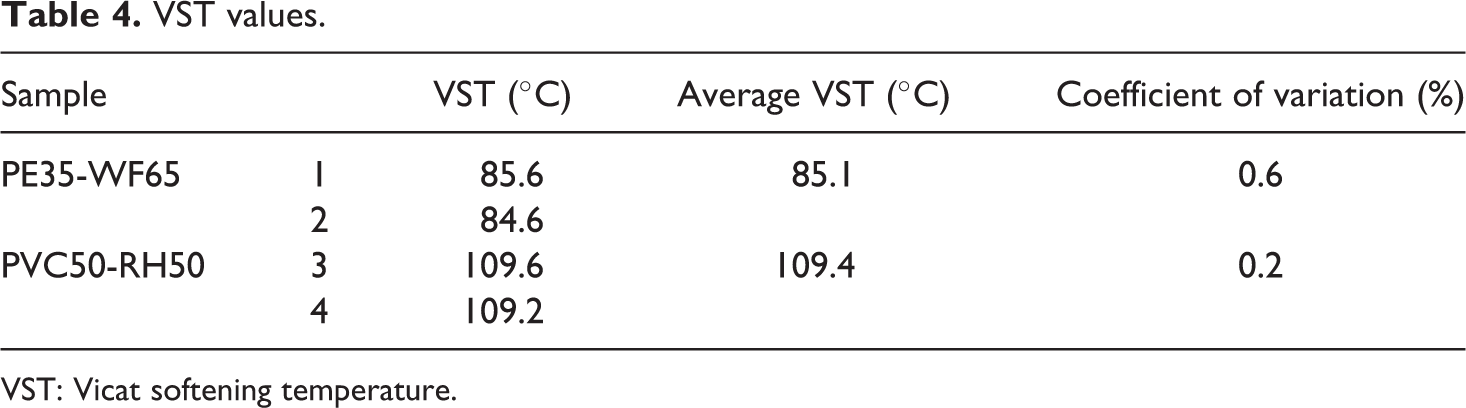
VST: Vicat softening temperature.
Coefficient of linear thermal expansion
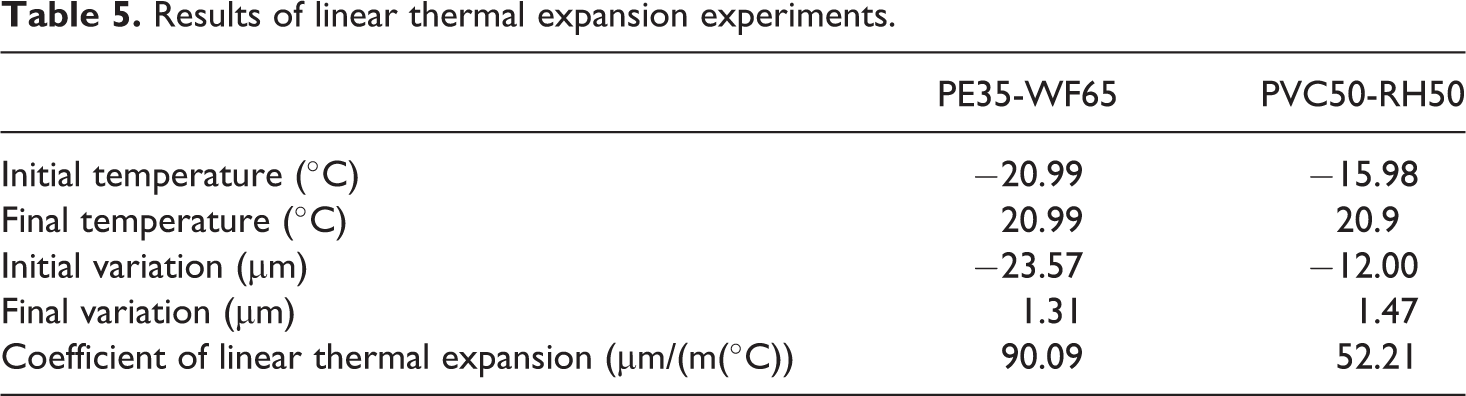
Table 5 indicates the CLTE values achieved with the tested materials. Figure 4 presents the variation of this coefficient and its estimate for both materials in the temperature range tested. This value must be taken into account for the design of joints with both materials, since their behaviour is very different. The CLTE provides a direct measurement of the dimensional stability as a function of temperature. This parameter is directly related to other mechanical resistant properties as well as the filler load. Nevertheless, it seems that once again, the polymer matrix plays a key role in dimensional stability. Results obtained shown as PVC has lower CLTE than PE, concretely 41% lower. This behaviour is related to two main aspects: the polymeric matrix used and the amount of filler employed. In this case, T g of PVC is around 85–90°C, while in the case of PE is around −120°C. This aspect, besides to lower amount of filler employed in the PVC WPC, confers this polymeric composite, greater thermal and dimensional stability than PE WPC. The PE35-WF65 specimens exhibit almost twice the expansion of PVC50-RH50, so this material would have a greater variation of thermal, geometrical and mechanical properties as a function of temperature.
Results of linear thermal expansion experiments.
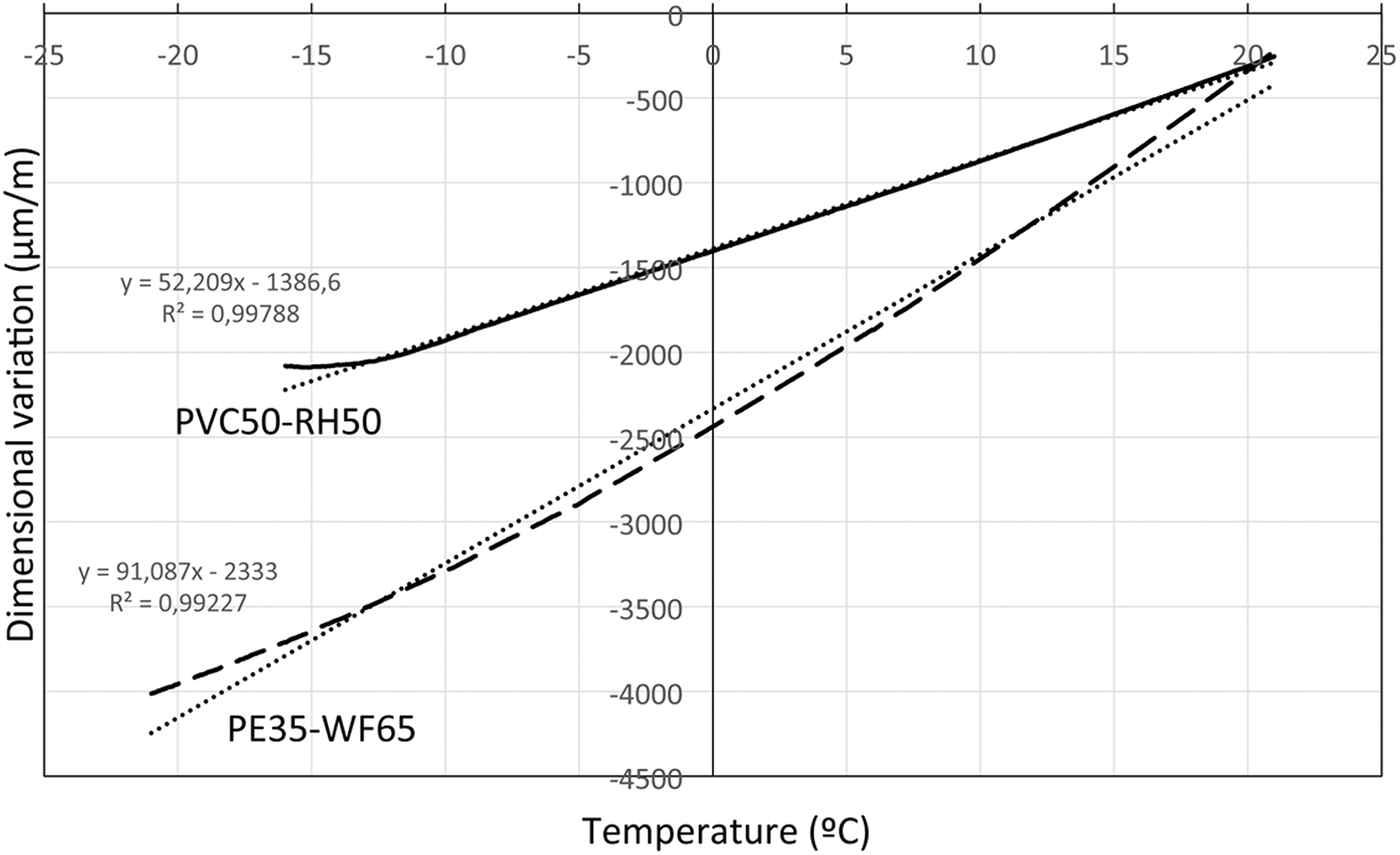
Variation of the coefficient of linear thermal expansion. Comparison between PE35-WF65 and PVC50-RH50 samples.
Evaluation of the behaviour against external agents
Artificial weathering ‘sun test’: Colorimetry
Clear and dark specimens of each studied WPC were tested, due to the influence of sample tone in its discoloration. In this way, six samples of PE35-WF65_light, PVC50-RH50_light, PE35-WF65_dark and PVC50-RH50_dark were prepared in order to assess the sun weathering over time. An hour of exposure to UV fluorescent lamp is approximately equivalent to 5 days of exposure to sun. Colorimetry at exposure times 1/2, 1, 2, 4 and 6 h was studied.
Figure 5 shows the record of the effect of the sunlight degradation of the samples tested as a function of the exposure time, reaching the equivalence of 1 month of exposure to the sun.
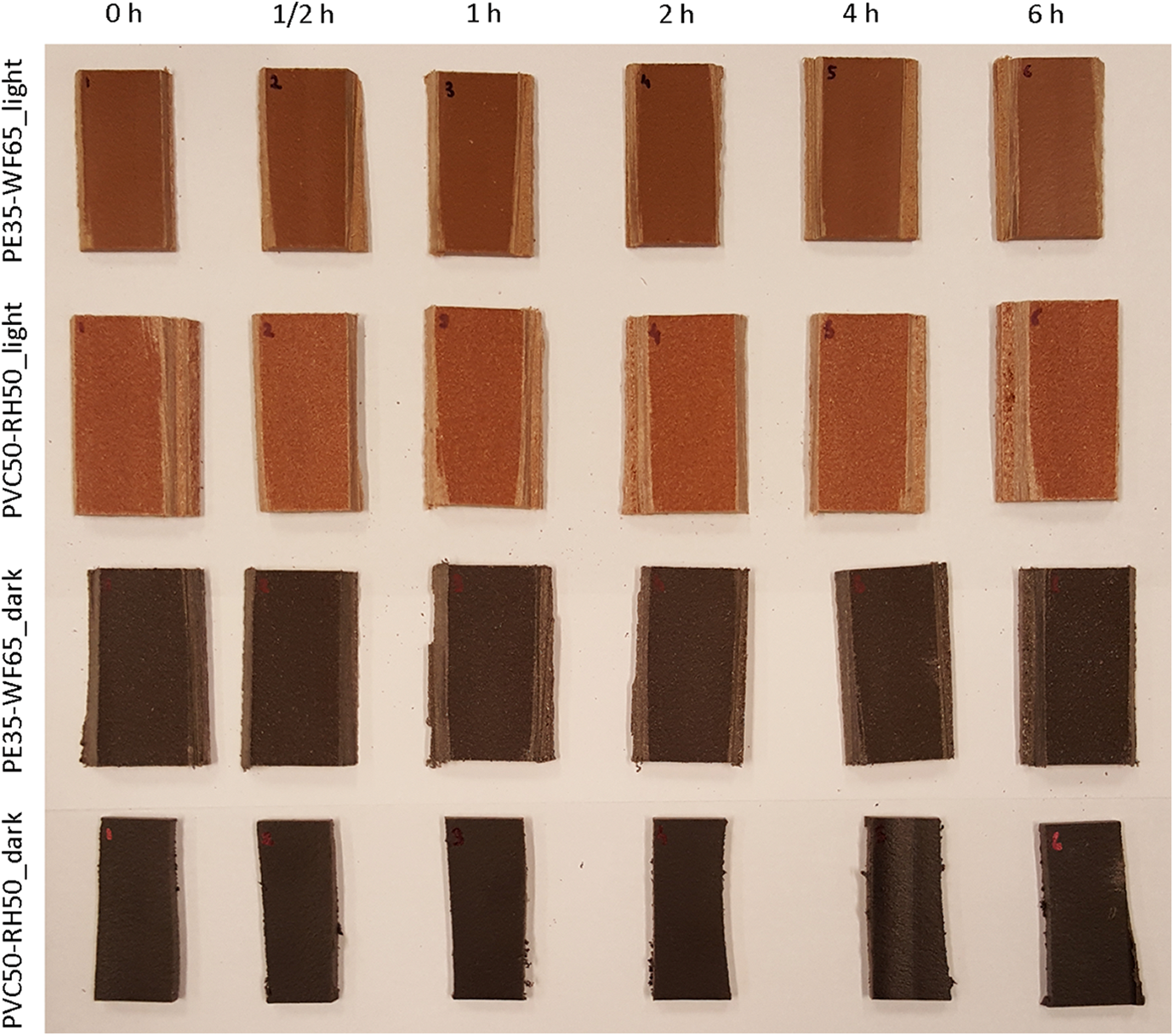
Photographic record of samples subjected to light degradation.
Prior to the test, the parameters necessary for the colorimetry were taken at five different points in each sample, and the average values calculated. Likewise, the colorimetric values in the different stages of the test were measured in different five points in each specimen and the average value was calculated. The average results of colorimetry before, during and after ‘sun test’ artificial weathering experiments are shown in Table 6 and Figure 6.
Average results of colorimetry during ‘sun test’ artificial weathering experiments.
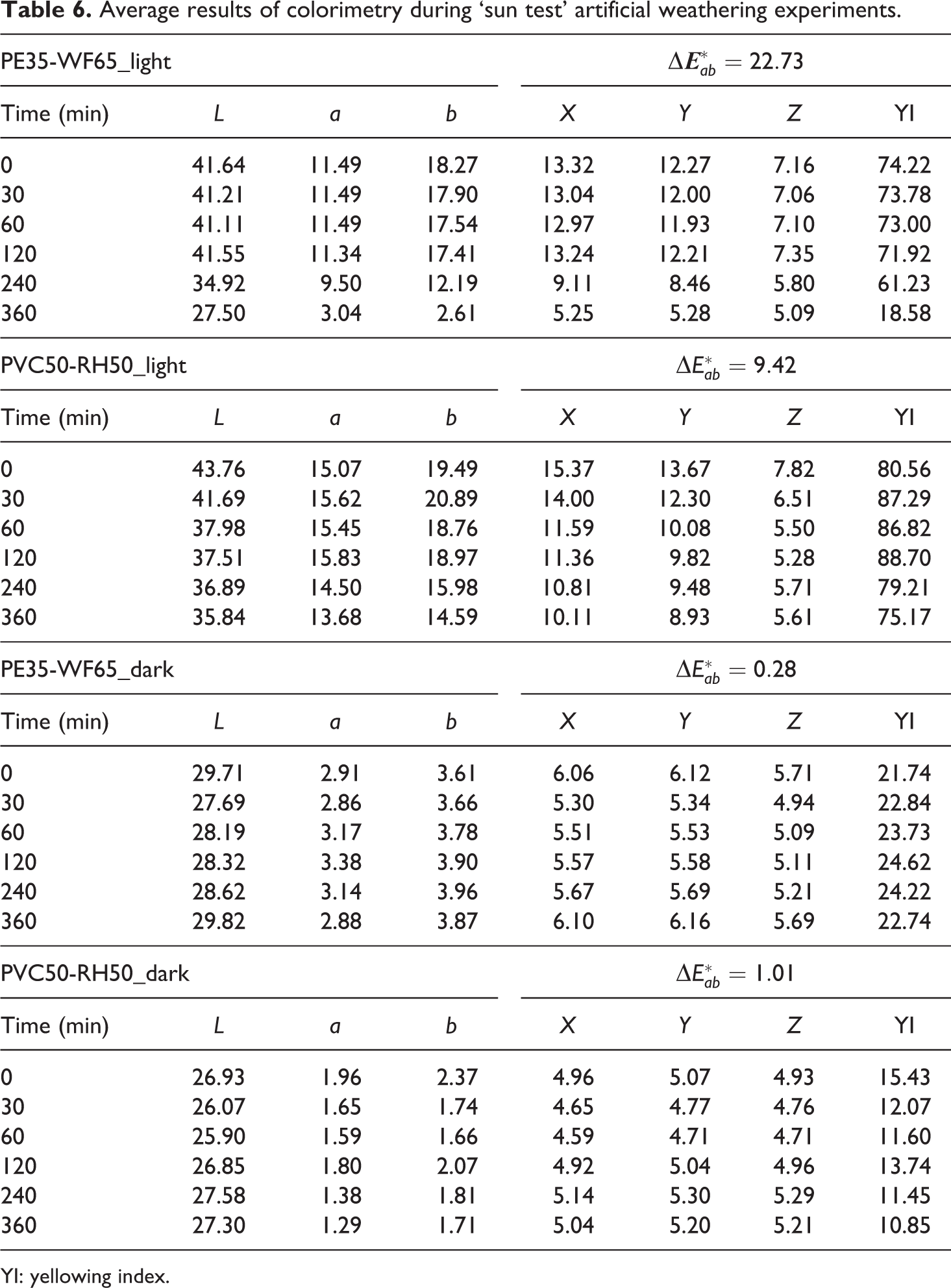
YI: yellowing index.
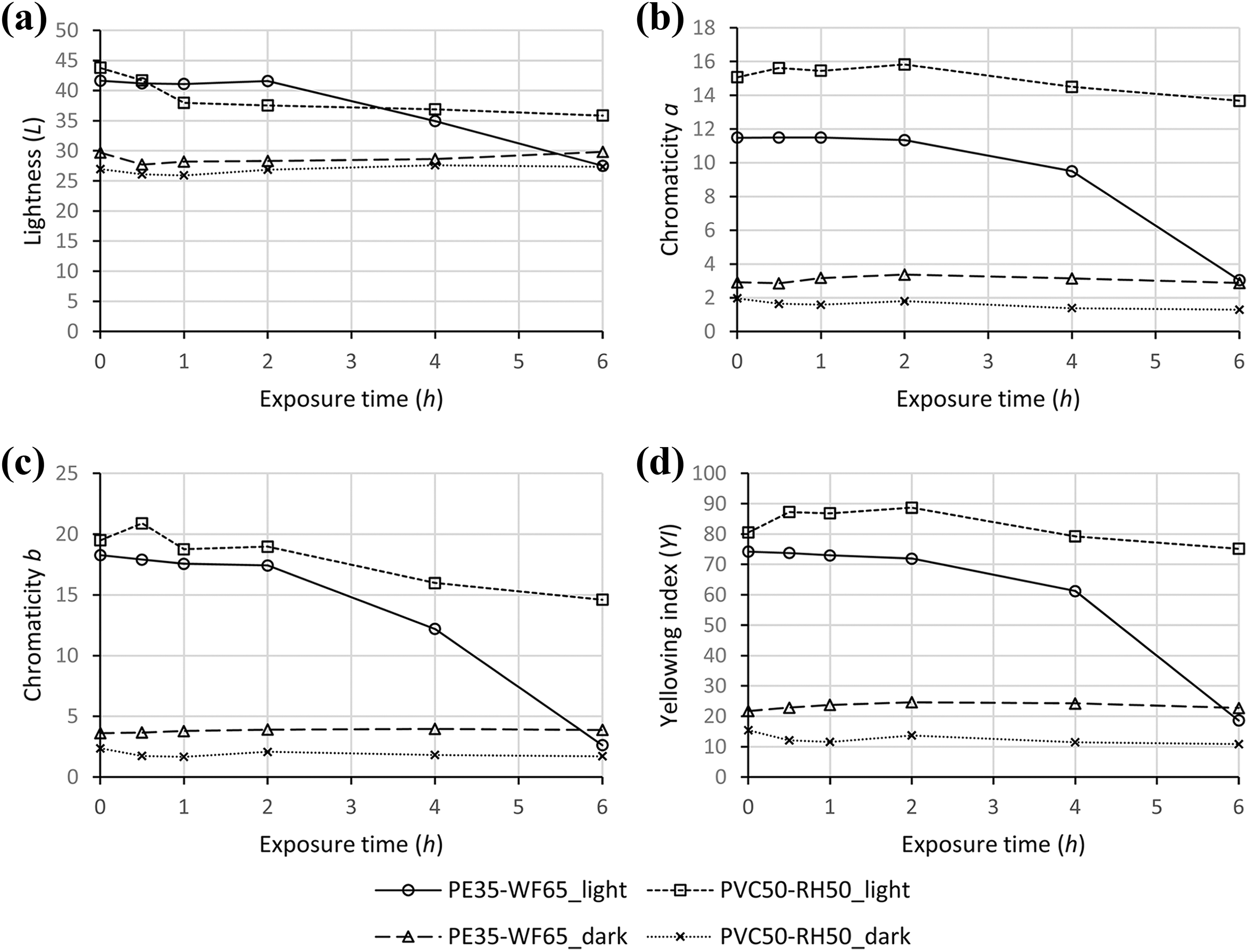
Colorimetric parameters as a function of time during UV fluorescent lamp ageing: (a) lightness L, (b) chromaticity a, (c) chromaticity b and (d) YI.
In view of the results, it should be noted that in the light samples, although they have different compositions, the loss of lightness in the PE sample is almost double that in the sample made with PVC. This is due to the strong additivity in colorants that the PE needs to achieve that tone. In the case of dark samples, a maintenance of the lightness values during the exposure time is observed, although the composition is different. The strong addition of incorporated dyes makes their behaviour very similar regardless of the employed polymer.
The chromaticity values a and b in the clear samples suffer a more remarkable change in the PE sample than in the PVC sample. This effect is also due to the incorporated additives to obtain the clear tone of imitation to the colour of the natural wood. As with lightness, a certain maintenance of the chromaticity values during the exposure time is seen in the dark tone samples. Small differences between them are attributed to the different formulation of the WPC.
The YI colorimetric parameter represents the yellowing tone of plastics and is generally highly relevant since most plastics are usually whitish or transparent. The evolution of this parameter is similar to the previous ones. The sample PE35-WF65_light has a more remarkable decrease than the sample PVC50-RH50_light, due to the strong additivity of the PVC. YI is maintained for dark samples, although in the case of sample PVC50-RH50_dark is more accused.
Resistance to ageing by climatic chamber
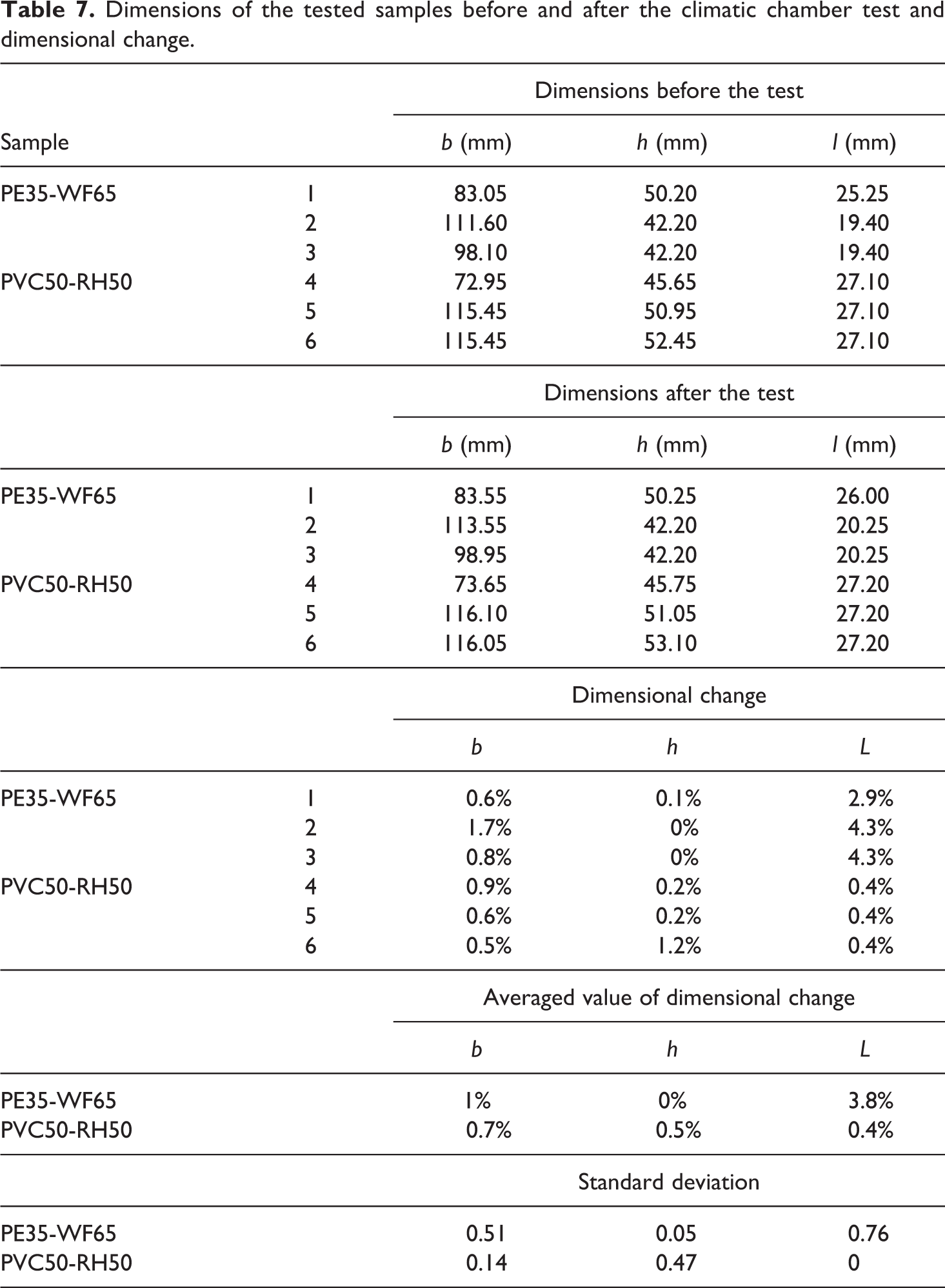
This test, in which three samples of each WPC material were tested, is performed to assess the effects of extreme weather conditions on WPC products. The specimens were subjected to a high temperature and RH inside a climatic chamber during 1 month, and later they were taken out to study their change in appearance and dimensions.
Table 7 contains the dimensions of the tested specimens before and after the test. It can be seen that the dimensional change was practically insignificant. Very few measures vary more than 1%.
Dimensions of the tested samples before and after the climatic chamber test and dimensional change.
As regards the change in appearance, it is necessary to indicate that a clear yellowing of the samples was visually observed after the test.
Resistance to ageing by salt mist
After performing the ageing by salt mist test, the most remarkable thing is the presence of surface salts in the samples corresponding to the darker tones of PVC50-RH50. There is not weathering in the light samples.
Water absorption
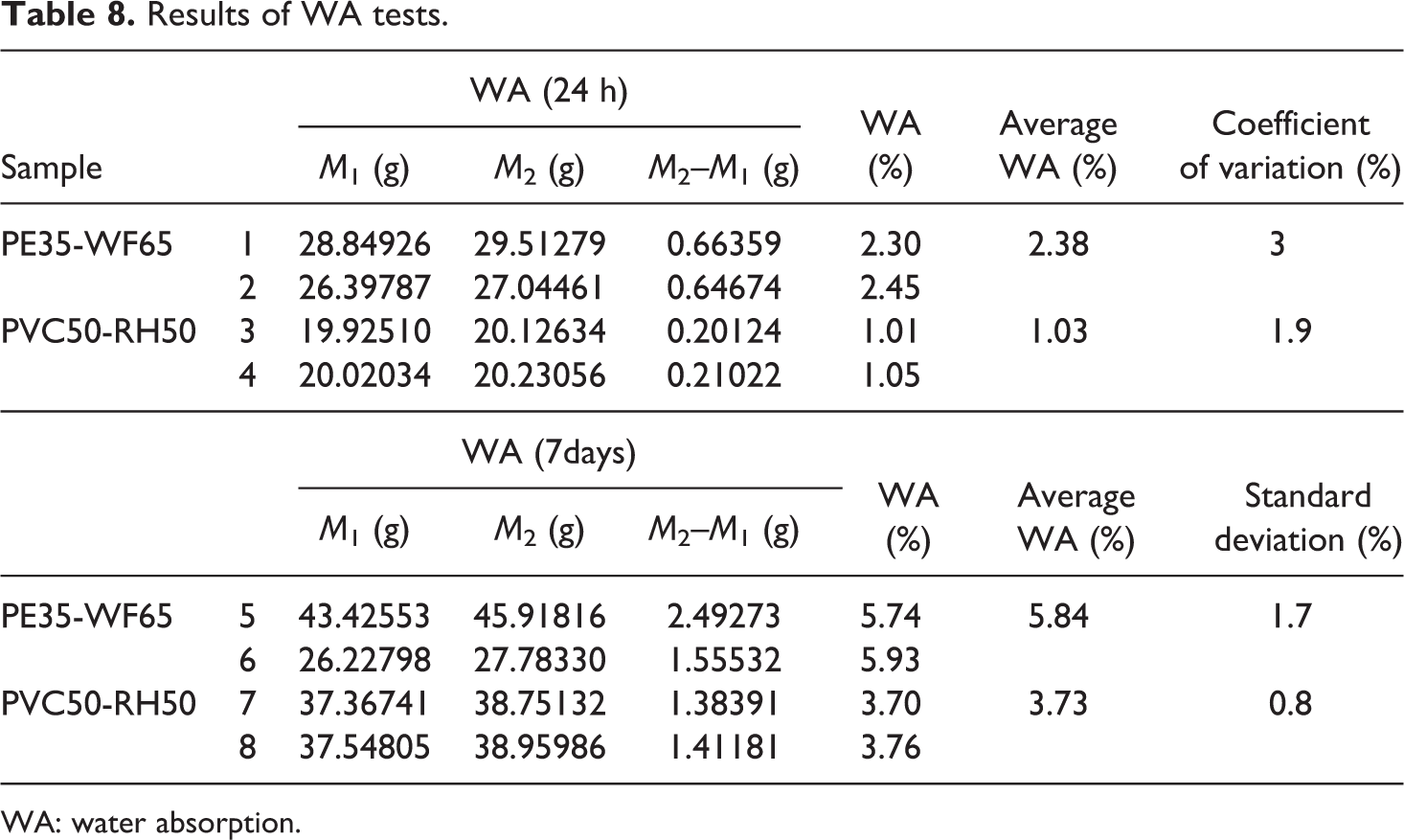
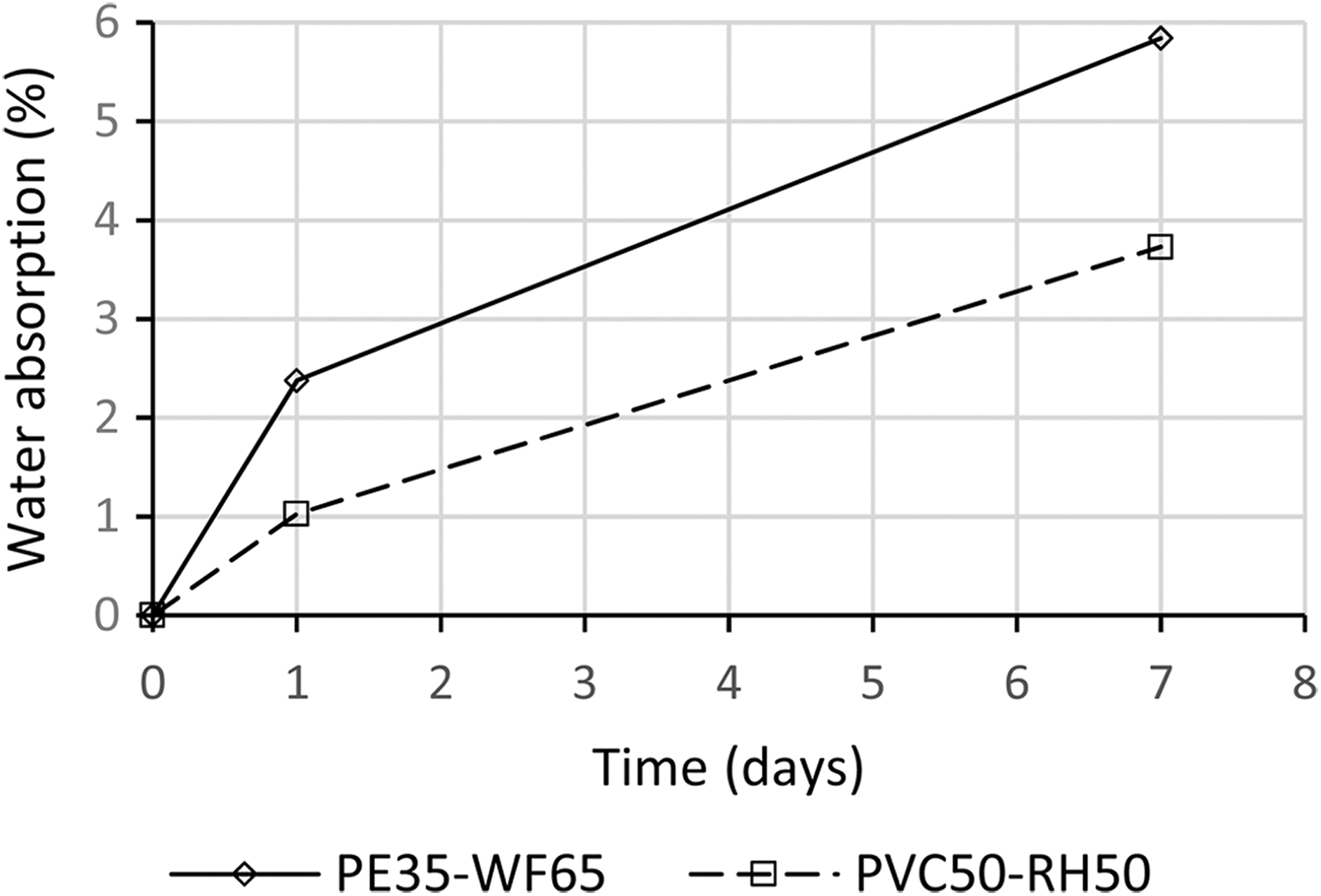
WA values obtained for PE35-WF65 and PVC50-RH50 samples at controlled conditions of humidity and temperature (50% RH at 23°C) are presented in Table 8. Four samples of each WPC material were assessed in order to study the 24 h and 7 days WA. WA behaviour of WPCs as a function of immersion time is shown in Figure 7.
Results of WA tests.
WA: water absorption.
Results of water absorption experiments.
PE35-WF65 samples absorb more water than samples PVC50-RH50. As the percentage of natural fibres increases, higher WA values were obtained. The WA is directly related to the total content on lignocellulosic filler. In fact, although PE is more hydrophobic than PVC, the results indicate that the WPC with higher lignocellulosic fillers offers higher water uptake. It is important to keep in mind that cellulose possesses a high number of hydroxyl groups (–OH) that can readily interact with water, thus resulting in WA. This is one of the main drawbacks that WPCs have and is partially solved using compatibilizers or surface treatments that block the hydroxyl groups in cellulose, thus avoiding their reaction with water. Therefore, it is important to maintain the finishes and hydrophobic textures of the material surface of the PVC50-RH50 samples.
A good way to study the durability is through the water immersion test. Most of the absorption occurs during the first 24 h, resulting in reduced values, which indicates that although this test is maintained for 5–6 months, these values should not exceed 8–10%, as different authors have studied. Values obtained lower than 6% are common in WPC with high lignocellulosic content. 49 It is important to remark that commonly accepted water uptake in wood products is 25% moisture content; this represents the minimum level necessary to start a decrease in mechanical properties and bacterial growth. 50
Evaluation of the chemical behaviour: Degradation
Chemical resistance to commonly used products
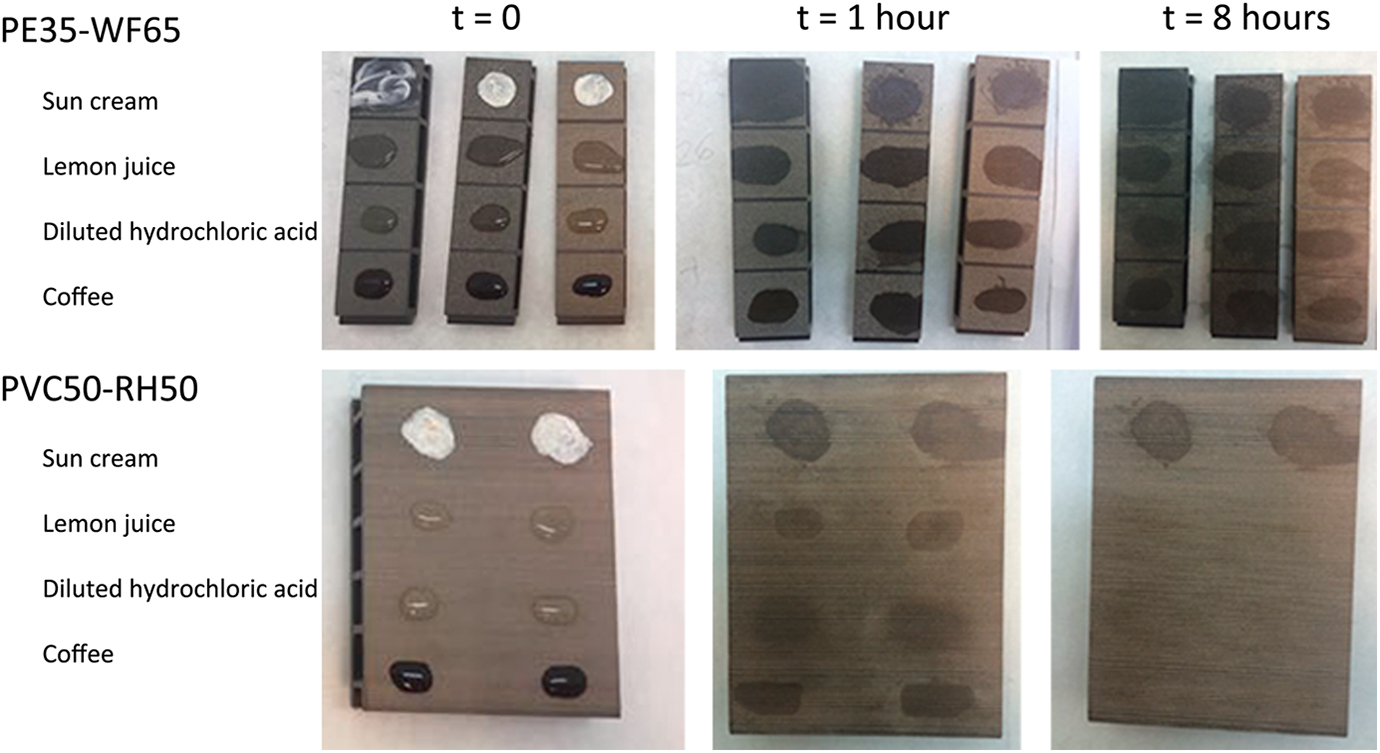
Considering the use of outdoor decking of these materials, a series of aggressive chemical agents with the possibility of being spilled out on the material throughout its useful life were selected. In previous tests, the deterioration caused by cleaning products (ammonia, diluted hydrochloric acid, detergent and bleach), foods and drinks (mayonnaise, ketchup, olive oil, coffee and lemon juice) and others (sun cream) was analysed. Some of these agents do not seem to affect the material, since when cleaning with abundant water, the surface of the material, the initial stain, disappeared. The definitive tests were carried out with the agents in which the stain remained: sun cream, lemon juice, diluted hydrochloric acid and coffee.
The surface was carefully cleaned with blotting paper before proceeding to the test. The aggressive agent was placed on the surface with the aid of a pipette. The test procedure is shown in Figure 8. For an elapsed time of 30 min, it can be observed how each agent is acting on the material. Some of them lost the surface tension of the initial drop; in others, a capillarity was observed towards the interior and others clearly manifested a reaction with the material. According to the standard EN 14617-10, 48 the samples were visualized after 8 h. In the PE samples, all four products left a residue, as can be seen in Figure 8. The only agent left on the PVC sample was the sun cream. This could be related to the fact that lignocellulosic filler is highly hydrophilic. In the case of PE-based WPC, with a lignocellulosic content of 65 wt%, the carrier liquid penetrates the material through the natural filler particles, thus leading to a final staining at 8 h. With regard to the PVC-based WPC, it contains less filler load (50 wt%) and this could be responsible for lowering the ability of the chemicals to penetrate.
Degradation by common chemical agents.
Conclusions
In this study, two different WPC materials were assessed in order to evaluate their outdoor decking application. Through physical, chemical and mechanical tests, the best behaviour for each property has been determined. These tests have allowed comparing the behaviour of two very different types of WPC in their formulation with respect to the polymer used (PE or PVC) and with respect to the added fibres (pine wood fibres or rice husk residues). These commercial WPC products for decking have adequate properties to meet the loading/environmental/durability requirements for decking, according to EN 15534-4. 25 The pieces of WPC for outdoor decking do not usually fail due to mechanical reasons, due to the characteristic constructive detail used for their installation. The possible main cause of the fall of these materials is the behaviour against external agents (sun, temperature, water and attacks of bacteria to lignocellulosic materials), what changes the colour. Based on the performed analyses, the main findings of this research can be summarized as follows.
The physical–mechanical behaviour of the tested samples indicates a better performance of the PVC-based WPC against the PE-based WPC. This best behaviour has been assessed by higher values of some mechanical properties such as Shore hardness, impact resistance and flexural strength. Both PVC and PE are polymers classified as thermoplastics. However, the better mechanical behaviour of PVC, due to its particular structure, leads to parallel better properties, even with lower filler content than the PE-based WPC. On the other hand, the better adhesion in the interface between polymer and rice husk residues compared to the interface between polymer and wood fibre has contributed to improve the results as well.
The CLTE was significantly higher in the material formulated with PE, which demonstrates the influence of the type of polymer on the possible dimensional variations in service of these composite materials. It is important to remark that usually, natural fillers tend to restrict thermal expansion in polymers but the higher thermal expansion of PE versus PVC is enough to give composites with higher CLTE even though the PE-based WPC contains higher filler load.
In the ‘sun test’, a notable loss of luminance is observed. This is mainly due to the stability of the pigments, dyes and processing additives used in the formulation of the plastic matrices. Given the need for them in the PE, this kind of WPC is the material that is most affected in this test in the light tones that imitate natural wood.
When samples are subjected to accelerated ageing test in a climatic chamber, with exposure conditions for a month at a constant temperature of 75°C and a RH of 90%, some discoloration appeared. This discoloration is due to the ageing of the polymers present in the WPC formulation. This discoloration is barely perceived in some tones, so they are recommended in applications for more severe exposures.
A slight residue of low-adhered salts is manifested in the dark tone samples for the two assessed WPC materials when subjecting the specimens to the salt mist test. Because of this, it is advisable to use light tones in coastal exposure applications.
WA is significantly higher in the WPC with wood fibre compared to that containing rice husk residues. The water uptake in WPCs is directly related to their cellulose and hemicellulose content. Cellulose and hemicellulose contains a high number of hydroxyl groups that can readily react with moisture and water, thus leading to WA. Each natural filler contains different weight percentages of cellulose, hemicellulose, lignin and other extractives. So that, the water uptake depends on both parameters: composition and total content of the lignocellulosic filler.
PVC composites have better resistance to common chemical agents. This is due in part to the high additivity necessary to process this plastic, and in the case of the WPCs for use as outdoor decking, the need to create powerful hydrophobic surfaces. The four most aggressive agents leave residue in the WPC with PE, whereas only the sun cream leaves permanent residue in the WPC with PVC.
Footnotes
Acknowledgements
The authors acknowledge the Universitat Politècnica de València, the Escuela Técnica Superior de Arquitectura de València and the Escuela Politecnica Superior de Alcoy for their support of this work allowing us to use their facilities.
Funding
The author(s) received no financial support for the research, authorship, and/or publication of this article.
