




Abstract
This research covers the preparation of poly(lactic acid) (PLA)/sugarcane leaves fibre (SLF) biofilms via a solvent-casting method. The results showed that the tensile strength and Young’s modulus of PLA/SLF biofilms increased with the increasing of SLF content. Nevertheless, the elongation at break showed an opposite trend as compared to tensile strength and Young’s modulus of biofilms. Moreover, water absorption properties of PLA/SLF biofilms increased with the increasing of SLF content. In contrast, the tensile strength and Young’s modulus of biofilms were enhanced after bleaching treatment with hydrogen peroxide on SLF, but the elongation at break and water absorption properties of bleached biofilms were reduced due to the improvement of filler–matrix adhesion in biofilms. The tensile and water properties were further discussed using B-factor and Fick’s law, respectively. Furthermore, the functional groups of unbleached and bleached SLF were characterized by Fourier transform infrared analysis.
Introduction
As we are aware, our environment is currently undergoing severe damages due to environmental pollutions such as air, water and land. Researchers are now trying to create new materials that are environmentally friendly to assist these issues. One of the main issues is the releasing of carbon dioxide from the processing of fossil fuels and the disposal, landfilling and burning of petroleum-based plastics such as food packaging containers, food utensils and trash bags. 1 These issues cannot be ignored as these will affect the future generation and also the health of the current population. Methods of looking into alternative energy sources to limit the usage of fossil fuels are being conducted in order to produce products that are recyclable and sustainable.
The utilization of biopolymers from renewable sources has been increasing in the recent years, especially in the field of packaging in order to maintain an economically and ecologically sustainable technology. 2 The biopolymers can be broken down into carbon dioxide and water by microorganisms. Many biopolymers have been produced commercially, but they are less used in the production of plastics such as food packaging because biopolymers are costly. There are many types of biopolymers such as cellulose, chitosan, starch, collagen, casein, soy protein and bio-polyesters. Among these biopolymers, cellulose is the most plentiful carbohydrate in worldwide. 3
Poly (lactic acid) (PLA) is a biopolymer that is produced from renewable natural resources. Besides, it is also produced from the fermentation of polysaccharides corn. PLA has been an alternative to replace petroleum-based polymers and there is an increasing demand for it as it has good mechanical properties, thermal stability and processability. 4 Nevertheless, there are several drawbacks of PLA such as its brittleness; it has limited gas barrier properties which disable its complete excess towards the packaging application and expensiveness limits its usage in certain packaging applications. 5 Accordingly, the PLA is also suitable as matrix for the utilization of fibres in composites. 6 For example, NEC Corporation and Unitika Ltd have developed bioplastic composites for mobile phone shells, consisting of PLA and 15–20% of kenaf fibre, 7,8 and Toyota RAUM also used the kenaf fibre-reinforced PLA to produce a spare tire cover. 6,9
Natural fibre–filled polymer composites have shown to be one of the dominance composites in the research field. 10 These natural fibres exhibited some advantages such as low density, biodegradable, non-abrasive and originated from renewable resources. 11 However, there are several drawbacks of using natural fibres in polymer composites when it forms incompatibility during processing and poor resistance to moisture which would reduce the potential of composites. 12 Moreover, the natural fibre is widely available and easy to obtain, for example, it can be obtained from the agricultural industry by-product and crop waste. 13
Sugarcane is found in most parts of the world. In Malaysia, there is a town called Chuping that located in Perlis. It has 22,000 ha of sugarcane plantations, which is one of the largest in Malaysia. 14 It produces 5500 metric tons of sugarcane per day during harvesting season. Sugarcane harvest consists of mainly the cane trash, for example, sugarcane tops, leaves and bagasse. The remains after the sugarcane stalk is harvested are called cane trash. Bagasse is milling by-product which is left after extracting the sugar from the stalk. Sugarcane mills in other countries collect their cane trash for selling purposes to feed the mills, but in Malaysia, the leaves are left to be burned and decomposed in the field. The burning of the leaves causes the rise in air pollution and loss of valuable source of cellulose. 15
PLA is used as a matrix, while the sugarcane leaves fibre (SLF) is used as natural fibre to produce PLA/SLF biofilms. The addition of these fibres can help to reduce the usage of PLA, which directly reduces the cost of production since PLA is very expensive to purchase. Besides that, the utilization of SLF can reduce agricultural waste from the land field and also reduce environmental impacts. However, the incorporation of the natural fibre into the PLA matrix will cause agglomeration and poor tensile properties and water resistance. Thus, bleaching treatment is one of the methods to solve this problem. The bleaching treatment with hydrogen peroxide (H2O2) is carried out in this research to reduce the agglomeration of the natural fibre and to improve the properties of PLA/SLF biofilms. The bleaching treatment can decolourize the SLF by eliminating the lignin, hemicellulose and surface impurities. In addition, it can improve the filler–matrix interaction by improving the surface roughness of the composite and mechanical interlocking between filler and matrix. According to Rayung et al., 16 the bleaching treatment influences the brightness of the fibre. The H2O2 as an oxidising agent decolorizes the fibre. The perhydroxyl ions HOO– are formed from the breaking down of the H2O2 in the alkaline condition and decolourizing of the fibre, which the ions attack the lignin and hemicellulose groups.
The present work is focused on the preparation of the PLA/SLF biofilm. The effect of the SLF content and bleaching treatment with H2O2 on the tensile and water absorption properties of PLA/SLF biofilms was investigated.
Methodology
Materials
PLA was supplied by TT Biotechnologies Sdn. Bhd., Bayan Lepas, Pulau Pinang, Malaysia. Sugarcane leaves were obtained from a sugarcane plantation in Perlis, Malaysia. The sugarcane leaves were cleaned and grounded into small pieces. Then, the sugarcane leaves were dried at 80°C for 24 h. The average size of SLF was 70 μm according to a Malvern Instrument (Malvern, UK) particle size analyser. Chloroform and acetone were used as solvents to dissolve the PLA pellets into its liquid phase. Chloroform and acetone were purchased from Evergreen Engineering & Resources, Kuala Lumpur, Malaysia.
Bleaching treatment on SLF
A bleaching treatment on SLF was carried out according to the method from Razak et al. 17 The lignin and some impurities content from the SLF were extracted through bleaching treatment with H2O2. First, the SLF was added into a solution containing 5% v/v of H2O2 and stirred for 1 h at a pH of 11 and the temperature was maintained at 80°C in a water bath. In this buffering action, sodium hydroxide (NaOH) was used as a stabilizer to prevent the pH from increasing too high. The NaOH with concentration of 0.5 M was used to stabilize the pH of the solution. After an hour, the bleached SLF was washed with distilled water and filtered using a filter paper. After that, bleached SLF was dried in an oven at 80°C for 24 h. After the bleaching treatment, the colour of the bleached SLF became lighter due to the removal of some amount of lignin, cellulose and impurities from SLF. According to Zeronian and Inglesby, 18 the dissociation of H2O2 in alkaline solution increases with increasing temperature, and the concentration of perhydroxyl ions depends on the pH of solution. Besides that, the dissociation of H2O2 occurs at a pH of about 10–12 because it is a very weak acid. Figure 1 shows the different colour of unbleached and bleached SLF.
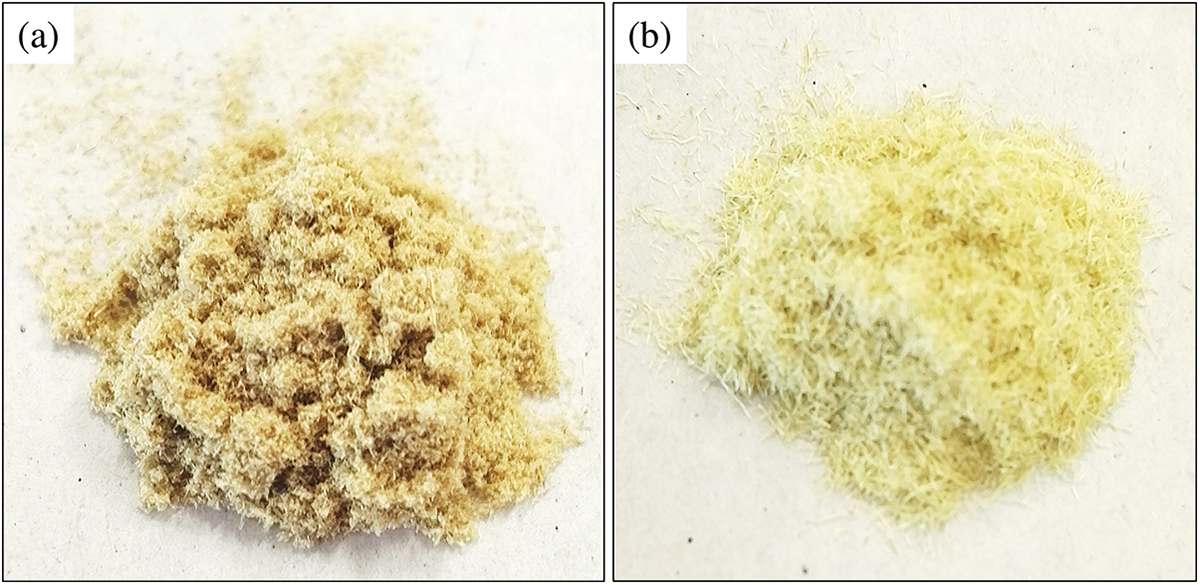
The colour of sugarcane leaves (a) before and (b) after bleaching treatment.
Preparation of PLA/SLF biofilms
PLA/SLF biofilms were prepared via solvent-casting method. First, PLA pellets were dissolved in 80% of chloroform and 20% of acetone and stirred for 3 h at 40°C until all the PLA pellets were completely dissolved. Then, the PLA solution was stirred for 15 min followed by adding the SLF into the PLA solution and stirred for 15 min. After that, the PLA/SLF solution was immediately casted into a clean glass plate to obtain the biofilms. The PLA/SLF solution was dried at room temperature for 24 h. The thickness of biofilms was measured using thickness gauge length. The thickness of biofilms was 0.01 ± 0.003 mm. The formulations of PLA/SLF biofilms were listed in Table 1.
Formulations of unbleached and bleached PLA/sugarcane leaves biofilms.
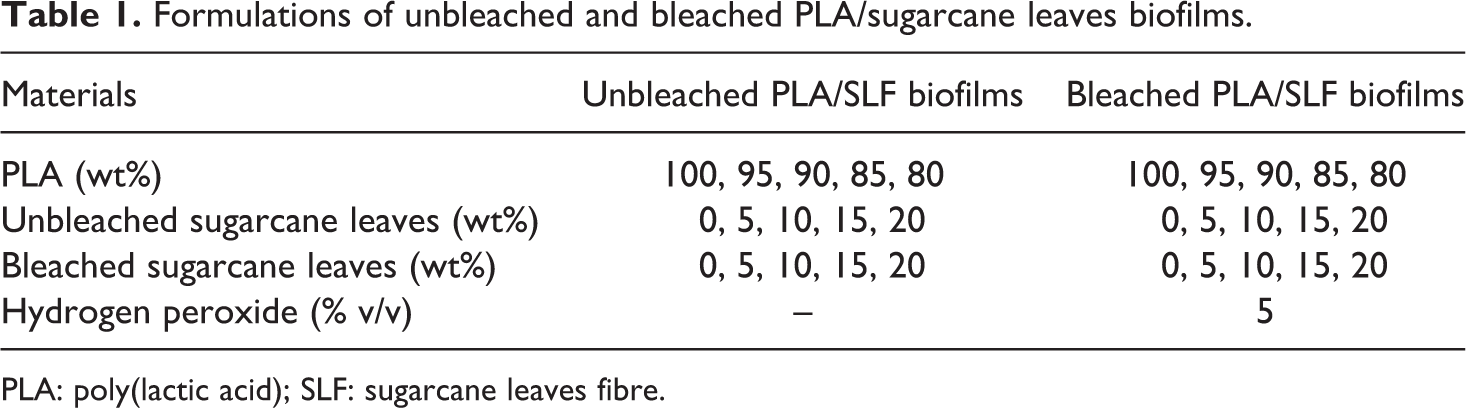
PLA: poly(lactic acid); SLF: sugarcane leaves fibre.
FTIR analysis
A Fourier transform infrared (FTIR) spectrometer analysis (Model L1280044; Perkin-Elmer, Waltham, Massachusetts, USA) was performed using attenuated total reflectance method. Sixteen scans in the wave number (cm−1) range of 4000–600 cm−1 were carried out. A resolution of 4 cm−1 was recorded for each biofilm.
Tensile properties
The tensile test was performed at ambient temperature using a VICTOR Material Testing Equipment (Model VEW 2302; Jinan, China) based on ASTM D882. The tensile samples were cut into rectangular shape with dimensions of 100 ×15 mm2 for each sample with different compositions. The test was carried out at a constant crosshead speed of 5 mm min−1 and the load cell was 10 kN. An average of 10 specimens for each formulation was tested and the tensile properties such as tensile strength, elongation at break and Young’s modulus were recorded.
Statistical analysis
Significance between the means data of unbleached and bleached biofilms was determined using single factor analysis of variance. This significance data from the tensile test were statistically analysed using Microsoft Excel 2013. The difference between means was considered significant when p ≤ 0.05.
Water absorption
Water absorption test was performed according to ASTM D570. The specimens (30 ×× 25 mm2) were immersed in distilled water at room temperature for 20 days. The water absorption properties of specimens were measured by weighing the specimens at every 2-day intervals. Five specimens for each formulation were tested and an average of five readings was recorded. Before weighting, the specimens were wiped. The percentage of water absorption, Wa , was calculated using the following equation:

where Wd is original dried weight and Wn is weight after exposure.
Results and discussion
FTIR analysis
The FTIR analysis of the unbleached and bleached SLF was carried out to examine the functional groups of unbleached and bleached SLF, as shown in Figure 2. The broad peak at 3368 cm−1 is represented by the –OH groups. The peak at 2927 cm−1 corresponded to the –CH stretching. Furthermore, the peak at 1739 cm−1 showed the ester carbonyl vibrations from the acetyl, feruloyl and p-coumaryl groups of the lignin components. The peak of 1650 cm−1 is from the C=C, alkene groups. Further, the band at 1039 cm−1 relates to the stretching of C–O and C–O–C groups. The sharp peak at 896 cm−1 relates to the bending of the –CH groups. However, after bleaching treatment with H2O2, the peak intensity at 3368 cm−1 reduced due to the reduction of the moisture content (–OH groups) of bleached SLF. Besides, the peak intensity at 1739 cm−1 reduced due to the removal of lignin content. Interestingly, there was a disappearance at peak 1238 cm−1 on the spectra of bleached SLF due to the removal of lignin and hemicellulose after bleaching treatment. This can be proved that the bleaching treatment by H2O2 was to remove the lignin and moisture content of SLF. Similar result was reported by Razak et al. 17 Table 2 summarizes the functional groups of unbleached and bleached SLF.
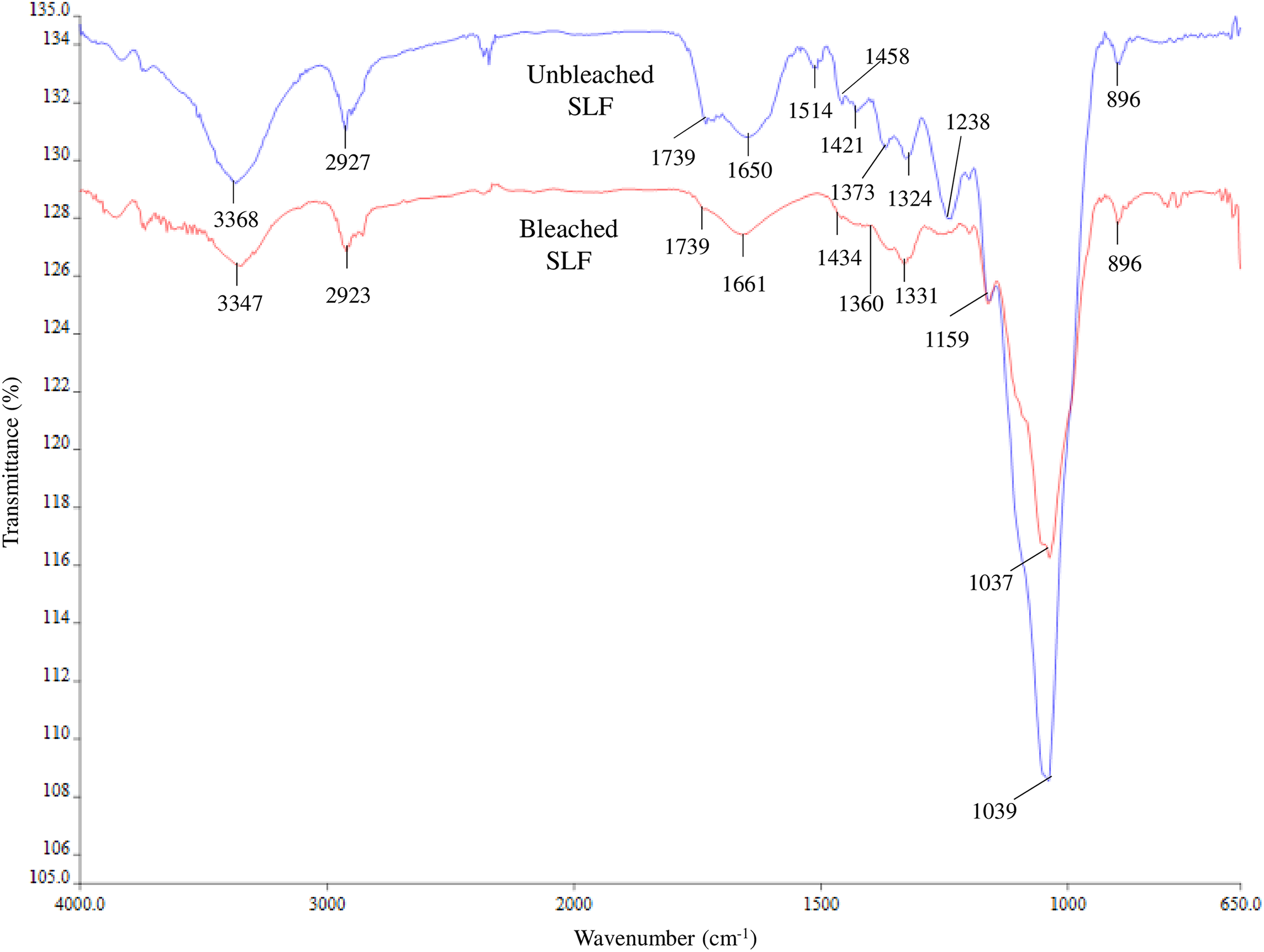
FTIR analysis of unbleached and bleached sugarcane leaves.
Functional groups of unbleached and bleached SLF.
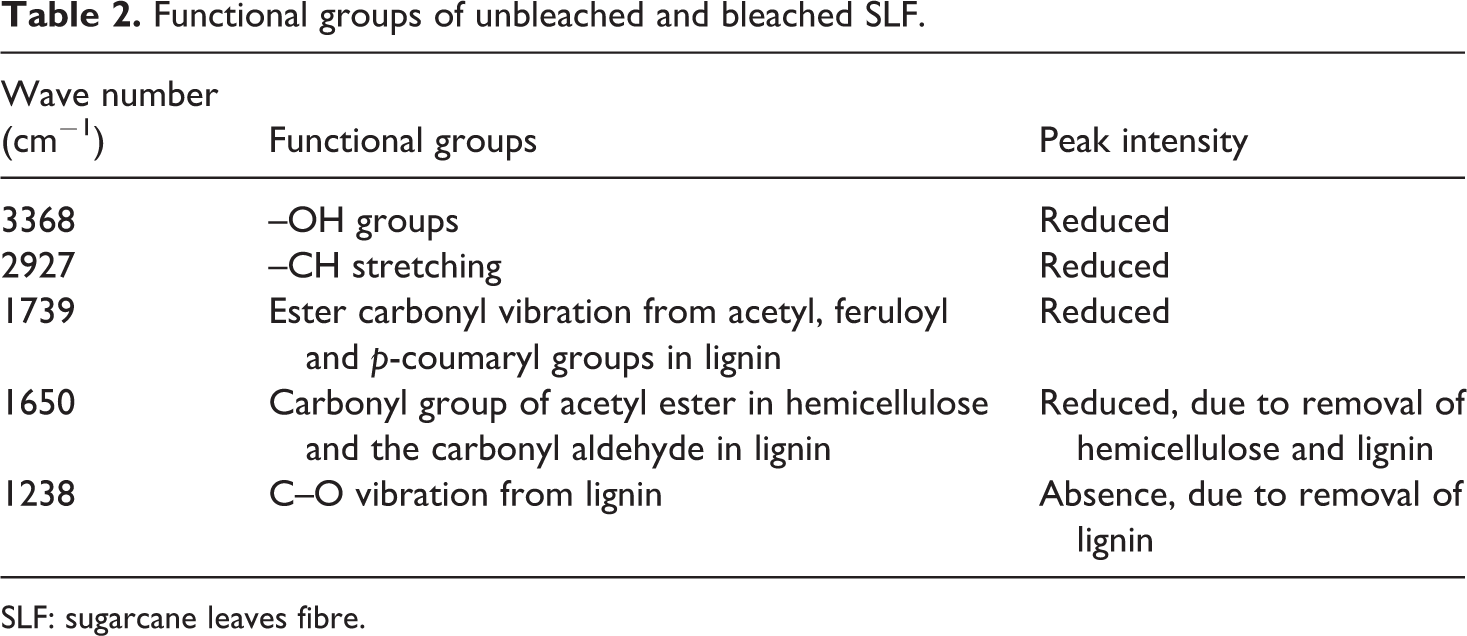
SLF: sugarcane leaves fibre.
Tensile properties
Figure 3 illustrates the tensile strength of the neat PLA film and unbleached and bleached PLA/SLF biofilms. The results showed that the tensile strength of PLA/SLF biofilms increased with the increasing of SLF content. When the SLF content is 20 wt%, the tensile strength of the unbleached biofilms increases as compared to neat PLA films. The incorporation of SLF will enhance the tensile strength, which is an indication of good stress transfer efficiency from matrix to filler. The stress is transferred from the PLA matrix to the SLF when the load is applied. Moreover, good filler dispersion is one of the factors causing the tensile strength to increase with the increasing of SLF content. Besides, the SLF acts as reinforcement in PLA/SLF biofilms because the incorporation of SLF has reinforced the biofilms. Nevertheless, the bleached PLA/SLF biofilms showed an improvement (p < 0.05) in its tensile strength. All the fibre content from 5 wt% to 20 wt% in bleached biofilms showed higher tensile strength than the unbleached biofilms. This is due to the fact that the bleaching treatment has improved the roughness of the SLF by making it more exposed and rougher as compared to unbleached SLF. This rough surface is able to produce a good interlocking with the matrix surface as well as increasing the interfacial interaction and allowing the fibre to have a greater binding mechanism with the PLA matrix, thus increasing its tensile strength. Similar finding was reported by Pao and Yeng. 19 The authors were claimed that the chemical-treated natural filler would have a rougher surface as compared to the untreated natural filler, and hence this rough surface would cause the mechanical interlocking with the matrix. As a result, the chemical treatment on natural filler has improved the filler–matrix interfacial interaction, thus improved the tensile strength of the composite.
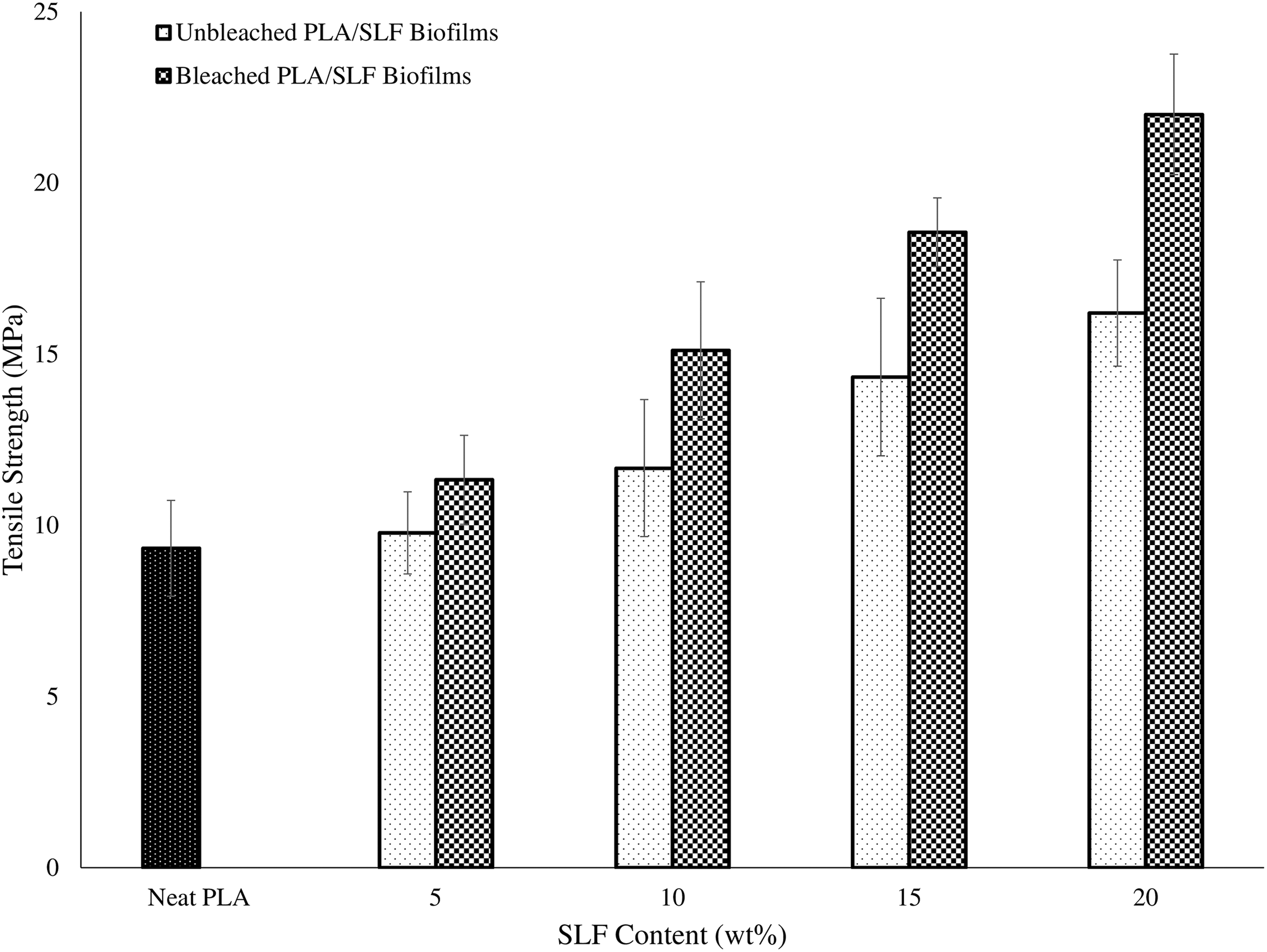
Tensile strength of neat PLA film and unbleached and bleached PLA/sugarcane leaves biofilms.
Moreover, the relationship between bleaching treatment and filler–matrix interfacial adhesion can be expressed quantitatively by a simple model that developed by Pukánszky. 20 Danyadi et al. 21 also used this model to determine and compare the filler–matrix adhesion for before and after chemical treatment of the biocomposite. Accordingly, the model considers a major factor that influencing the tensile strength, such as 20,21 (i) n is the change of specimen dimensions during the deformation and the raise of tensile strength due to strain hardening, (ii) (1 − ∅)/(1 + 2.5∅) is effect of reducing load bearing cross section of the matrix due to filling, and (iii) exp (B∅) is interfacial adhesion.

where σT and σT0 are the true strength of composites and polymer matrix, respectively. σT = σ(1 + ε), where σ is engineering stress and Ɛ is strain; n is related to the strain hardening; ∅ is the weight fraction of the fibre content and B is the parameter expressing the load bearing capacity of the filler to the effect of the interfacial adhesion. The model can be expressed in the linear form, as shown in the following equation:

Figure 4 presents the plot of the ln reduced tensile strength of unbleached and bleached PLA/SLF biofilms. The parameter B is related to stress transfer and interfacial adhesion. From Figure 5, it can be seen that the slope of the line changed after the bleaching treatment on PLA/SLF biofilms. Besides that, the parameter B of the bleached biofilms is 7.5 and is higher than the unbleached biofilms which is 6.5. This evidenced that the bleaching treatment by H2O2 has improved the interfacial adhesion between PLA and sugarcane leaves and thus improved the tensile strength of biofilms.
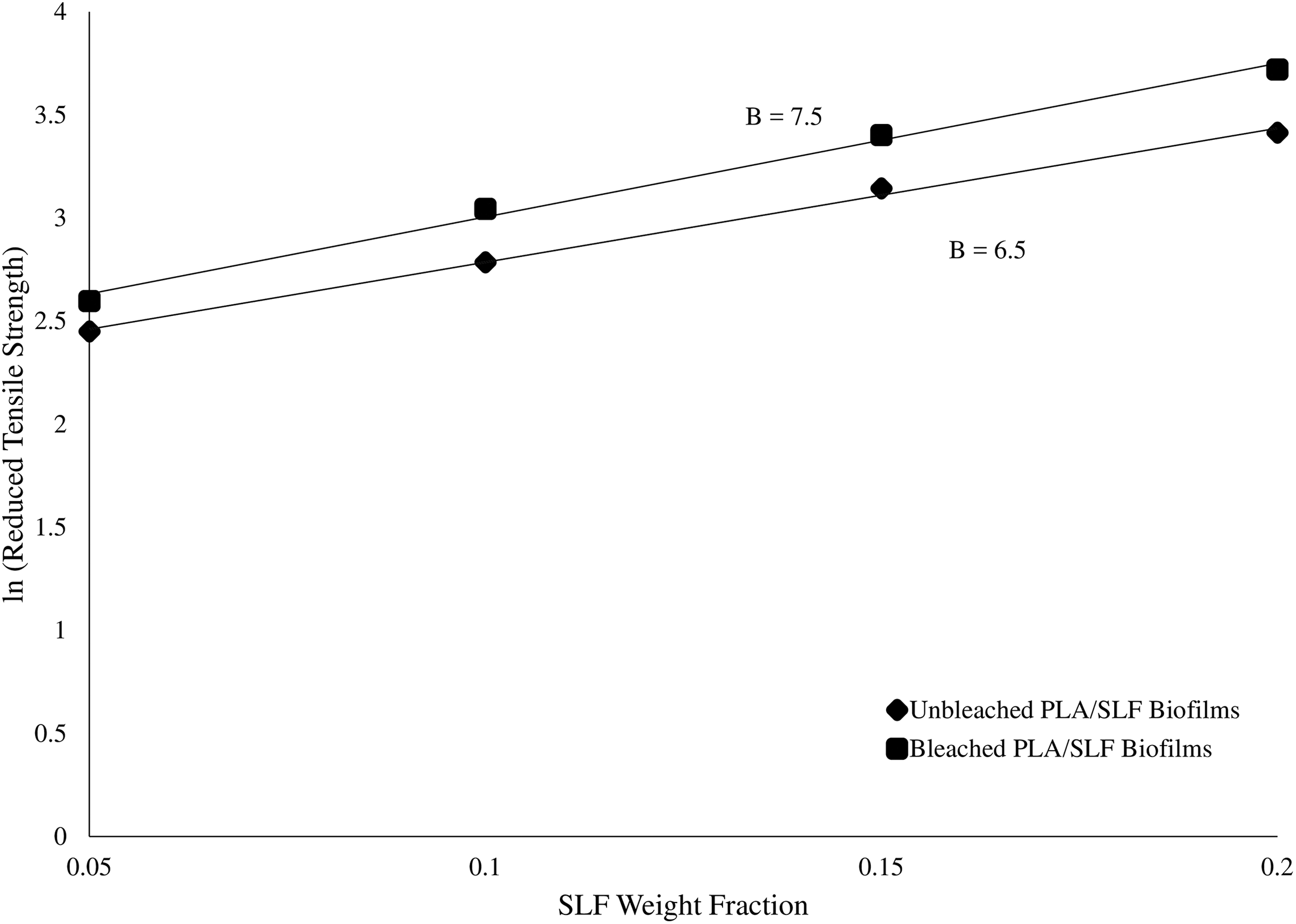
Reduced tensile strength of (a) unbleached and (b) bleached PLA/sugarcane leaves biofilms at different fibre content.
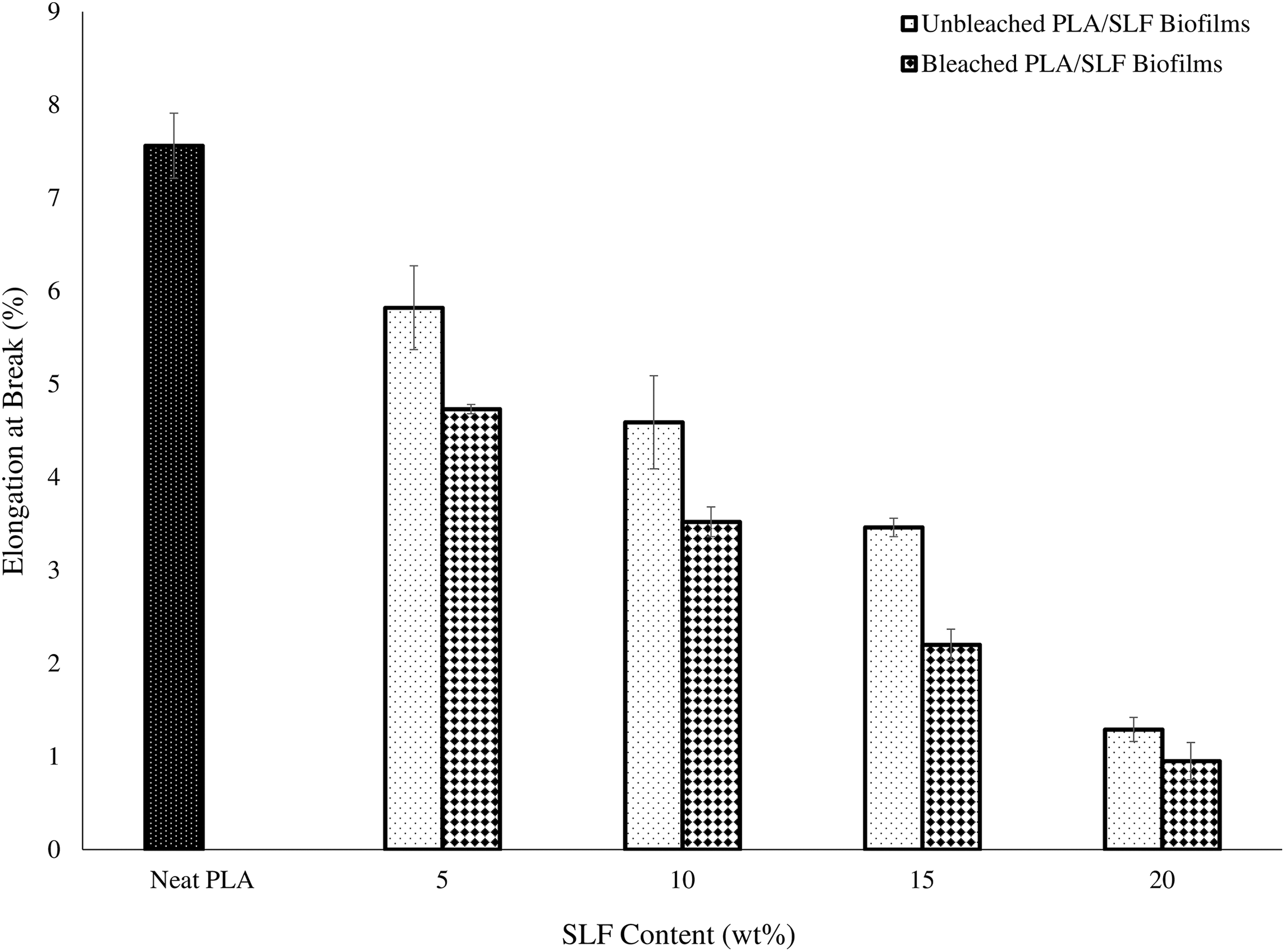
Elongation at break of neat PLA film and unbleached and bleached PLA/sugarcane leaves biofilms.
The elongation at break of neat PLA films and unbleached and bleached PLA/SLF biofilms is shown in Figure 5. The results clearly showed that the PLA films displayed the highest elongation at break as compared to the unbleached and bleached biofilms. The elongation at break of unbleached biofilms decreased with increasing of SLF content from 5 wt% to 20 wt%. This is because higher SLF content is added into the PLA matrix, resulted to more SLF content filling up the gaps between the polymer chains. This would reduce the PLA chain mobility resulting in low elongation at break. Thus, larger SLF content reduces the ductility but increases rigidity of biofilms. However, the elongation at break of the bleached biofilms was significantly reduced (p < 0.05) after bleaching treatment of SLF with H2O2. It is probable that better adhesion between SLF and PLA was the cause of the reduced elongation at break. Similar observation was reported by Koay et al. 22 The authors stated that the incorporation of the natural filler would produce friction between the filler and matrix, and this friction would reduce the chain mobility of the polymer matrix chain. Therefore, the composites become more rigid and brittle with increasing of the natural filler content.
Figure 6 exhibits the relation between SLF content and Young’s modulus of neat PLA and unbleached and bleached PLA/SLF biofilms. Young’s modulus of unbleached biofilms increased linearly with SLF content up to 20 wt%. The addition of high stiffness of SLF leads to the increase of Young’s modulus of biofilms. Furthermore, the bleached PLA/SLF biofilms showed higher Young’s modulus than unbleached biofilms with a significance of p < 0.05. This might be due to the effect of H2O2 that increased the interfacial interaction between PLA and SLF and hence reduced the deformability of matrix. After chemical treatment of natural filler, the filler–matrix adhesion was improved due to the mechanical interlocking mechanisms as discuss earlier, and hence improved the stiffening effect of the composite. This observation was agreed by other researchers. 23,24 Graupner et al. (2009) stated that the tensile properties such as Young’s modulus increased with the hemp content, the crystallized PLA reinforced with 20 mass% hemp, however, the elongation at break decreased with an increasing amount of hemp fibres. 6
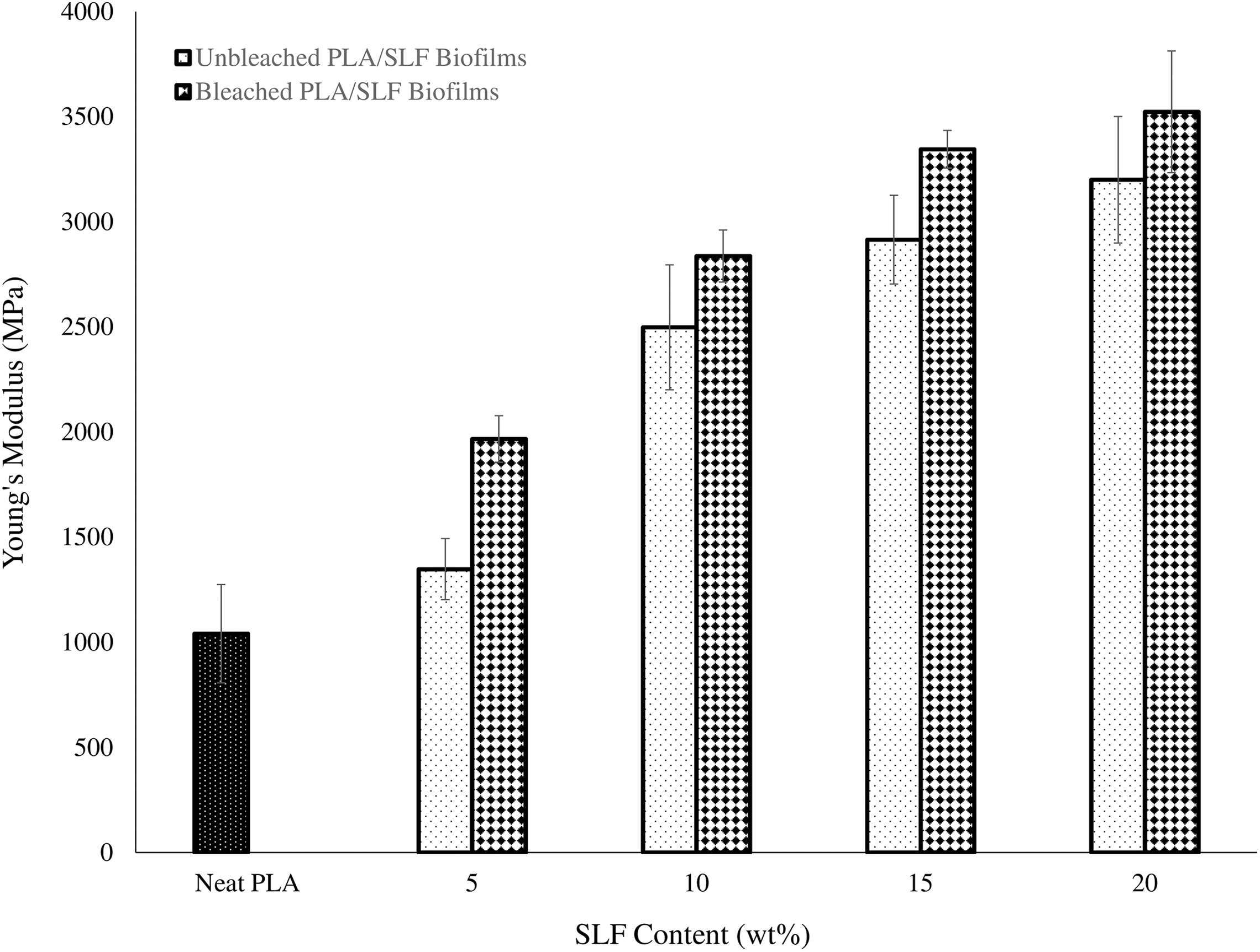
Young’s modulus of neat PLA film and unbleached and bleached PLA/sugarcane leaves biofilms.
Water absorption
The water absorption for neat PLA film and unbleached and bleached PLA/SLF biofilms is shown in Figure 7. The results exhibit that the water absorption for the neat PLA is the lowest as compared to both unbleached and bleached PLA/SLF biofilms as the properties of neat PLA polymer are like petroleum-based polymer which is hydrophobic biopolymer. 25 The water absorption of the unbleached biofilms showed an increase trend from 5 wt% to 20 wt% of SLF content. During the first few days of testing, the water caused the natural fibre’s cell walls to swell and resulted to fibres to further expansion until the cell wall became saturated with water. As the amount of SLF increased, the immersion time also increased causing the water absorption of the biofilms to increase as well. This is caused by the transportation of water molecules into the gaps between the filler and matrix due to weak interfacial interactions. The SLF has many hydroxyl groups present providing the natural hydrophilic behaviour. The SLF is bonded quickly through the water molecules due to the hydrogen bonds. Similar results were reported by Chun et al. 26 However, the bleached biofilms showed lower water absorption as compared to unbleached biofilm. This is due to the fact that bleaching treatment has improved the roughness of fibre, resulting in better filler–matrix adhesion by interlocking mechanism. Consequently, a good filler–matrix adhesion would reduce the penetration of water molecules into the biofilms in order to reduce the water absorption properties of biofilms.
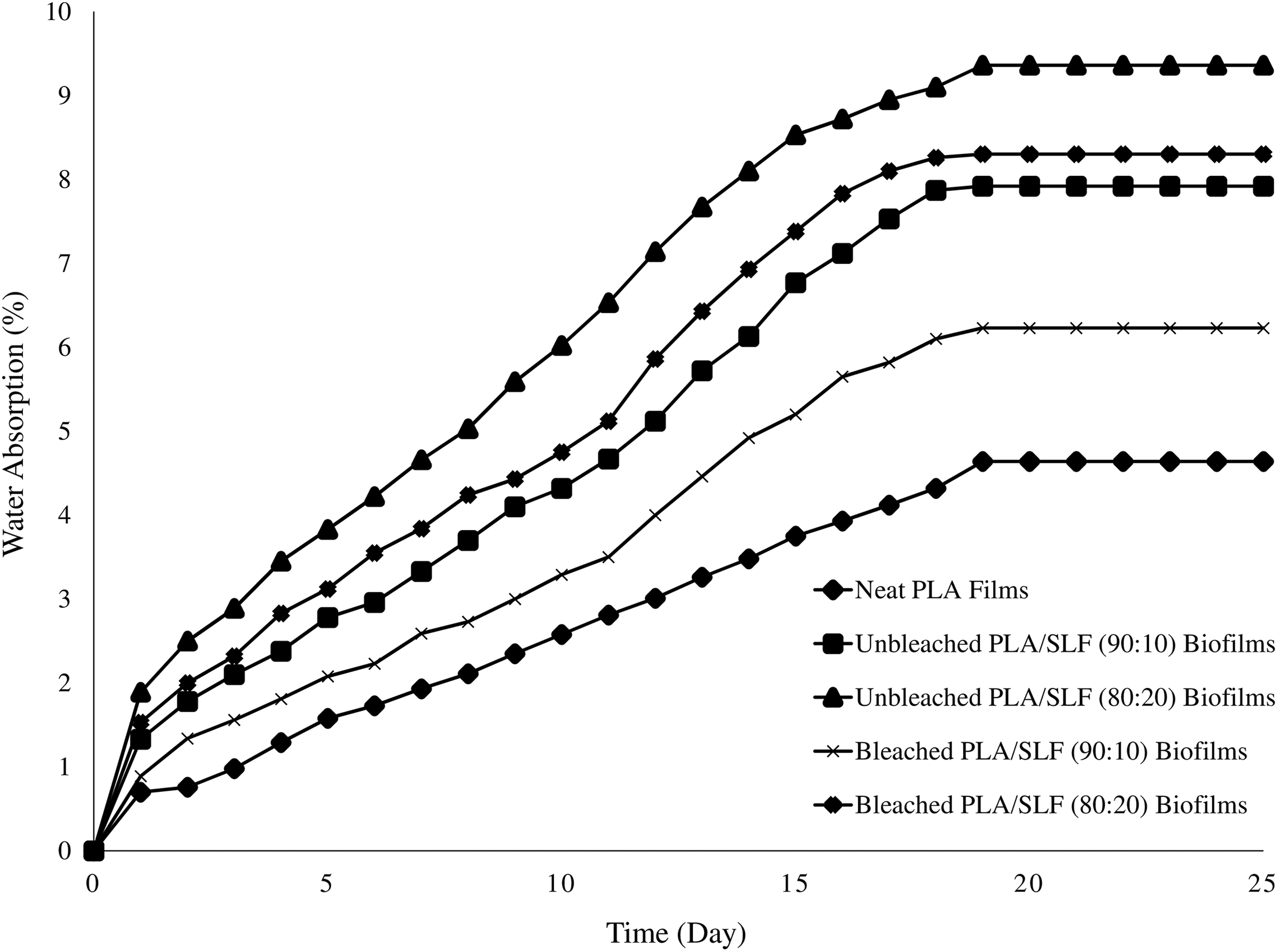
Water absorption of neat PLA film and unbleached and bleached PLA/sugarcane leaves biofilms at different fibre content.
Furthermore, the water absorption property of the PLA/SLF biofilms can also be determined by Fick’s law. 27 Fick’s law is a study of diffusion mechanism and kinetic of the composite. It is determined by the following equation:

where Mt is moisture content at time, Ms is moisture content at saturated point and k and n are constants.
Accordingly, the moisture diffusion property of the composite can be divided into three cases such as (i) case I (n = 0.5), Fickian diffusion; (ii) case II (0.5 < n <1), non-Fickian or anomalous diffusion; and (iii) case III, (n > 1). 11,28 Moreover, the constants k and n can be determined from the fitting curve of plot log Mt/Ms versus log t, as shown in Figure 8.
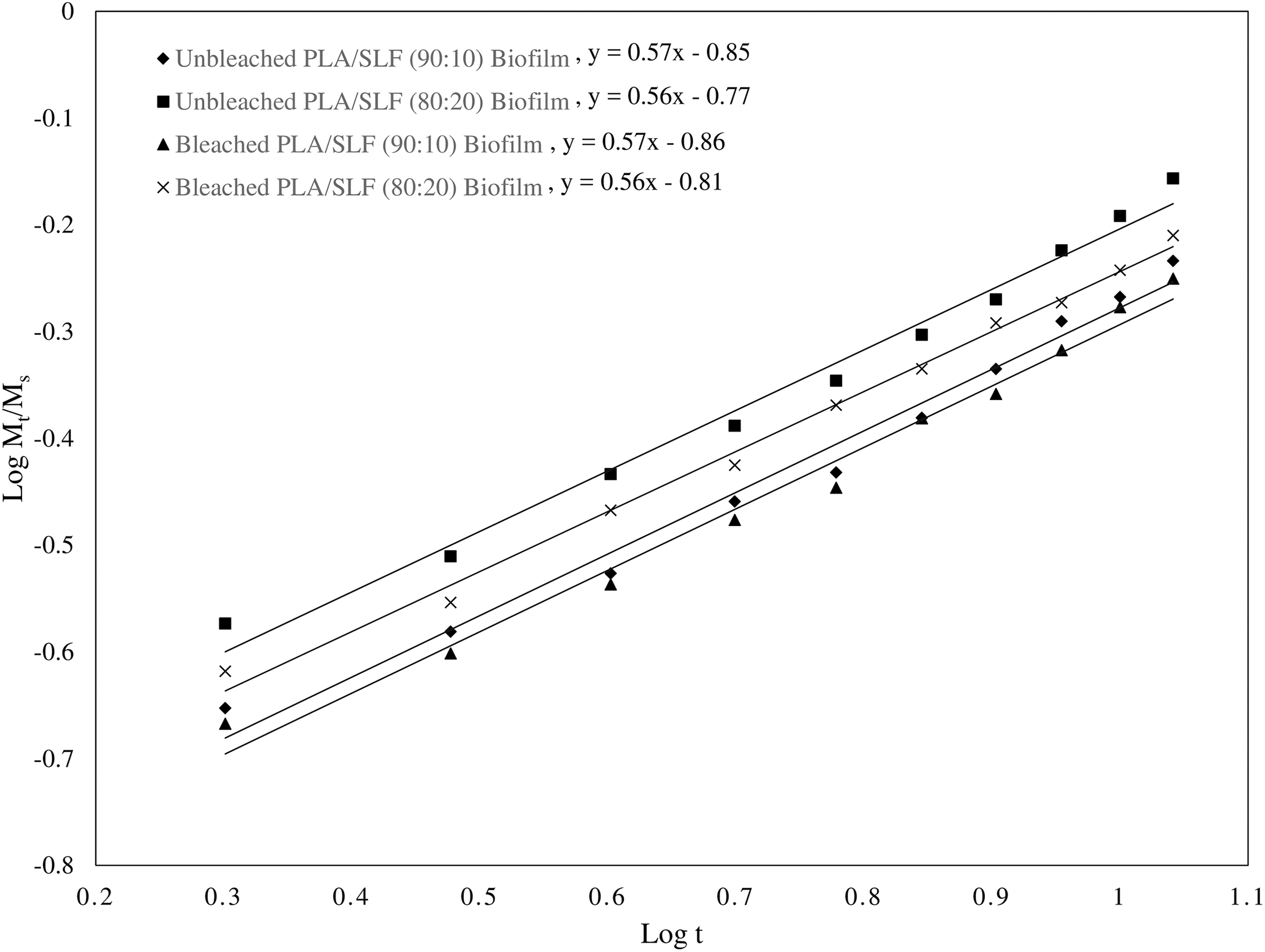
Plot of log Mt/Ms versus log time of unbleached and bleached PLA/SLF biofilms.
Besides that, the diffusion coefficient (D) is a parameter in Fick’s model. It can be used to determine the ability of water molecules to diffuse and penetrate into the composite structure. 29,30 The D value is calculated from the slope of the plot of Mt/Ms versus time (t0.5 ), as presented in Figure 9. It can be calculated by the following equation:

where h is the thickness of the specimen.
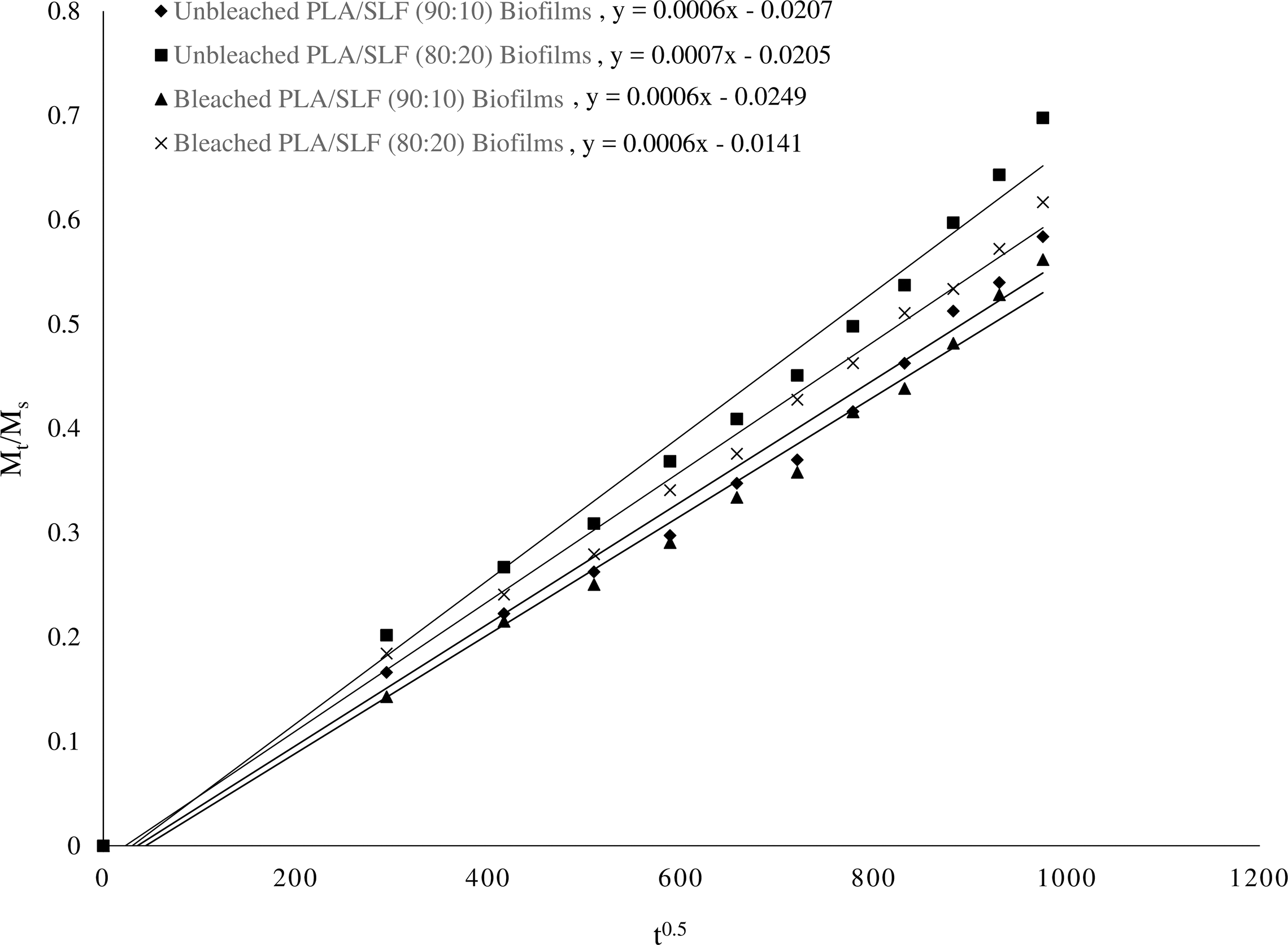
Plot of Mt/Ms versus t 0.5 of unbleached and bleached PLA/SLF biofilms.
The k, n and D values are obtained from the plots (as shown in Figures 8 and 9), which are presented in Table 3. Based on Table 3, the n values of all the biofilms are close to 0.5, resulting in all the biofilms approaching towards the Fickian diffusion property. Similar result was done by other researchers. 27 –30 The authors were studied the water absorption property of natural filler–filled polymer composites and the results obtained showed the polymer composites were following the Fikian behaviour. Furthermore, the k value of the PLA/SLF biofilms increased with the increasing SLF content; however, the k value was reduced in bleached biofilms with H2O2. Hence, the higher the SLF content in biofilm, the higher the water absorption properties of the biofilm. In contrast, the water resistance of bleached films was higher as compared to the unbleached biofilms. These results were aligned with the results as shown in Figure 7. As a result, this can be proved that the bleaching treated with H2O2 can improve the water resistivity of the PLA/SLF biofilms. Similar result was reported by Lee et al. 28 The authors researched on the water absorption behaviour of PLA/bamboo fibre eco-composites and applied Fick’s law on the water absorption results. They found that the water resistance of the composites was improved after the chemical modification of the composites. This is because of the enhanced interfacial interaction between the bamboo fibre and PLA matrix.
Water absorption constants and diffusion coefficient of unbleached and bleached PLA/SLF biofilms with H2O2.
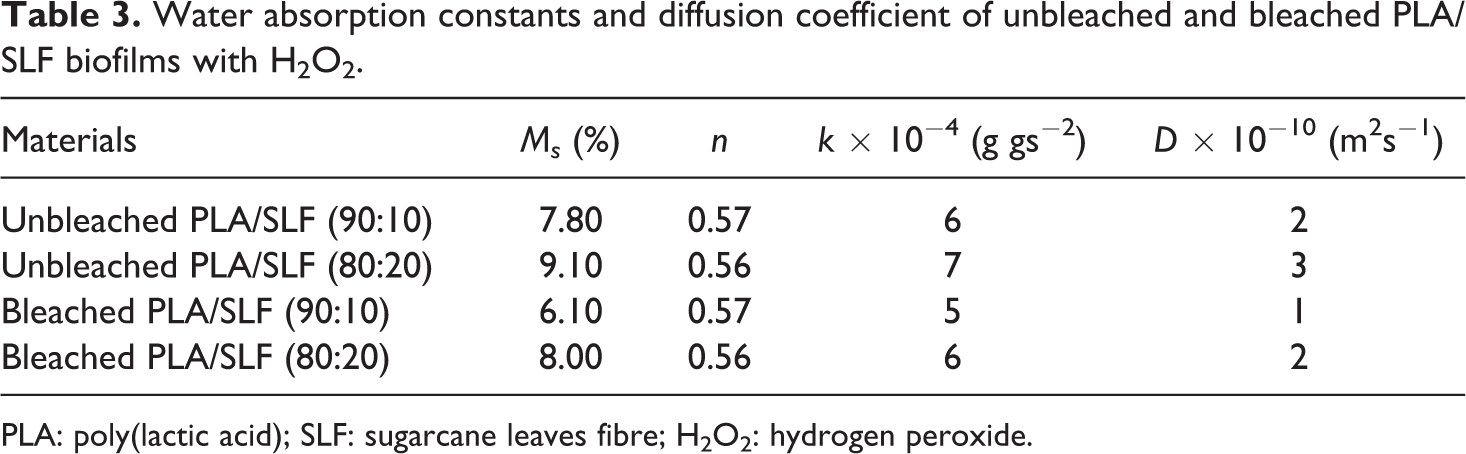
PLA: poly(lactic acid); SLF: sugarcane leaves fibre; H2O2: hydrogen peroxide.
Conclusion
In summary, the tensile strength of unbleached PLA/SLF biofilms increased when there is an increase in the fibre content; it shows an optimum point at 10 wt% of fibre content. However, the tensile strength of unbleached biofilm is keep dropping from 15 wt% to 20 wt% of fibre content. Besides, Young’s modulus and elongation at break of unbleached biofilm decrease as fibre content increases. Nevertheless, after bleaching treatment with H2O2, the tensile properties such as tensile strength, Young’s modulus and elongation at break of bleached biofilm showed an improvement as compared to unbleached biofilms. The water absorption properties of unbleached biofilms increased with increasing fibre content. However, the bleaching treatment on sugarcane leaves has reduced the water absorption of bleached biofilms. The chemical bonding of sugarcane leaves has changed after bleaching treatment with H2O2, as demonstrated in the FTIR analysis.
Footnotes
Acknowledgements
The authors would like to thank the Centre for Engineering Programmes at HELP College of Arts and Technology (Malaysia) for providing the materials and equipment to complete this research.
Funding
The author(s) received no financial support for the research, authorship, and/or publication of this article.
