



Abstract
This work demonstrates the physical properties of polymer nanocomposites of polyvinyl alcohol (PVA) and functionalized multiwalled carbon nanotubes (MWCNTs) at different weight ratios. The results demonstrate that the rheological and electrical properties are significantly improved. The improvement over PVA properties suggests that the functionalization of MWCNTs, at optimum pH condition, will improve their dispersion in the PVA matrix and enhance their interaction with polymer matrix. The storage modulus and thermal stability are enhanced with the increase of MWCNTs up to 1.0 wt%. Alternating current electrical results show that the incorporation of MWCNTs into PVA will enhance PVA conductivity and polar character while decreasing impedance.
Introduction
Carbon nanotubes (CNTs) have been widely used as nanofillers in a wide range of polymers such as polyvinyl alcohol (PVA) and polyvinyl chloride by many researchers, to produce new materials with desired properties that match industrial requirements. 1 –7 One of the biggest challenges that researchers faced while preparation of CNT-polymer nanocompostes is the dispersion of nanofillers in neat polymers.
There are numerous research studies that investigated the electrical and mechanical properties of CNT-polymer nanocomposites, which reported that the electrical and mechanical properties highly depend on the dispersion of CNTs in the neat polymer and on the interfacial stress between the two components. However, it is well-known that CNTs are held together as bundles and ropes due to the van der Waals attraction; as a result, they have very low solubility in solvents and tend to remain as entangled agglomerates. 1 –25 On the other hand, there are many methods that were proposed to solve the difficulties on CNTs dispersion in neat polymer. Some of these methods are ultrasonication, high shear mixing, surfactant addition, melt blending, and wet chemical functionalization using different strong acids. However, wet chemical method will introduce carboxylic groups at CNTs surface and, consequently, this will improve CNTs dispersion in organic solvents or polymer matrix . Additionally, dry oxidation such as ozone in the presence of ultraviolet (UV/O3) have been an alternative treatment to resolve the issues associated with the wet oxidation. As expected, the dispersion of CNTs in the neat polymer contributes a pivotal role in the electrical and rheological properties of the resultant thin films. 3,5,20,25
Many important aspects related to dispersion of multiwalled CNTs (MWCNTs) in polymer and resulting MWCNTs-polymer physical properties are still not fully resolved through the existence of the extensive research studies in this field. 1 –25 It is worth investigating the effect of pretreatment of MWCNTs using a new method to enhance MWCNTs-polymer physical properties through the enhancement of MWCNTs dispersion and interfacial bonding between CNTs/polymer networks.
In recent years, many research studies appear to investigate nanocomposites made from MWCNTs and different neat polymers such as polystyrene, 3 and polycarbonate, 5 . But to our knowledge, none of them reported effects of pH pretreatment on the electrical and mechanical properties of MWCNTs-PVA. On the other hand, we obtained 1 new and interesting results related to the effects of pH pretreatment on the optical, direct current (DC) electrical conductivity, and percolation threshold of MWCNTs-PVA nanocomposites.
This research aims to investigate the effect of pH pretreatment on the rheological and electrical properties of MWCNTs-PVA nanocomposites treated at different pH conditions. Storage modulus, loss modulus, and loss tangent will be investigated for the prepared samples as a function of temperature and MWCNTs weight fraction. Besides, impedance, alternating current (AC) electrical conductivity, dielectric constant, and relaxation behavior will be investigated and correlated with obtained rheological properties.
Experimental
Materials
The polymer used in this work (PVA, Mw = 13,000–23,000 g/mol) was purchased from Sigma-Aldrich, Germany. MWCNTs were purchased from Chengdu Organic Chemicals Co. (China). MWCNTs were synthesized by natural gas catalytic decomposition over nickel-based catalyst and were advertised as having >50 nm diameter, 10–20 μm length, and >95% purity. Sulfuric acid with purity of >96% was procured from Scharlau, Germany, and sodium hydroxide with purity of >99% was obtained from Aldrich . Deionized double-distilled water was used for the preparation of surfactant solutions at room temperature.
Pretreatment and dispersion tests of MWCNTs and nanocomposite
The details of pretreatment, dispersion, morphology tests, and MWCNTs-PVA nanocomposite films were previously reported in our earlier study. 1
Rheological properties
Rheological properties were carried out on a dynamic mechanical analyzer (DMA) (Q800; TA Instruments LLC, New Castle, Delaware, USA) with film clamps. The tests were carried out on film specimens of dimensions 10 mm length, 4 mm width, and 0.1 mm thick. The measurements were taken at the temperature range of 23–145°C within the strain amplitude of oscillation at 5.0 mm and frequency of 0.1 Hz on film samples. A static preload force (0.01 N) was applied to the sample prior to the dynamic oscillating force to prevent film buckling. During all measurements, the instrument was programmed to maintain the static load at 125% of the force required to oscillate the sample. It is important that the film remains in its linear viscoelastic region during measurement, so the experiments were recorded with constant strain. Generally, for thin polymer films, linear viscoelastic behavior can be assured with a strain of <0.1%, and so this limit was used.
Electrical measurements
Electrical measurements were carried out in AC field using 4200-SCS Semiconductor Characterization System (KEITHLEY Co., Germany). Samples were shaped into circular disks having an area (A) of 1.2 cm2 and thickness (d) of 0.1 mm and placed between two copper electrodes. The electrical impedance (Z) and phase angle (Θ) were isothermally measured at 60°C temperature and in the frequency range of 1000–107 Hz. All dielectric parameters were then calculated from the measured Z and phase angle. 8
Results and discussion
Rheological properties
The obtained modulus (stiffness, G′) and damping (energy dissipation) properties that represent the loss modulus (G″) and loss tangent (tan δ) for the prepared nanocomposites which deformed under a periodic stress are presented graphically in Figures 1 to 3 as a function of temperature and MWCNTs content. However, such measurements provide quantitative and qualitative information about the performance of materials. Generally, DMA is particularly useful for evaluating polymeric materials that exhibit temperature effects on mechanical properties because of their viscoelastic nature.
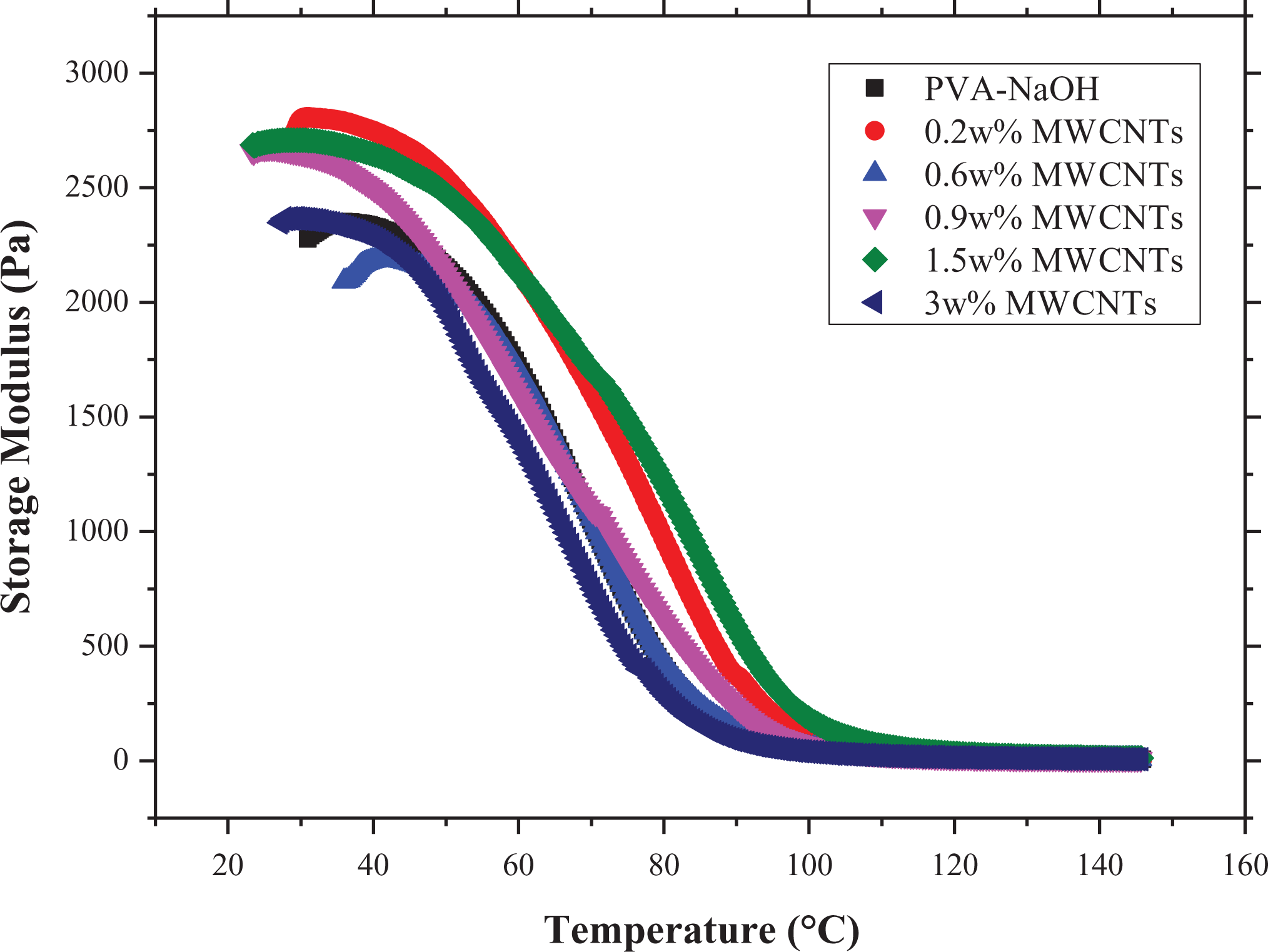
Dependence of storage modulus (G′) on temperature for MWCNTs-PVA nanocomposites. MWCNTs: multiwalled carbon nanotubes; PVA: polyvinyl alcohol.
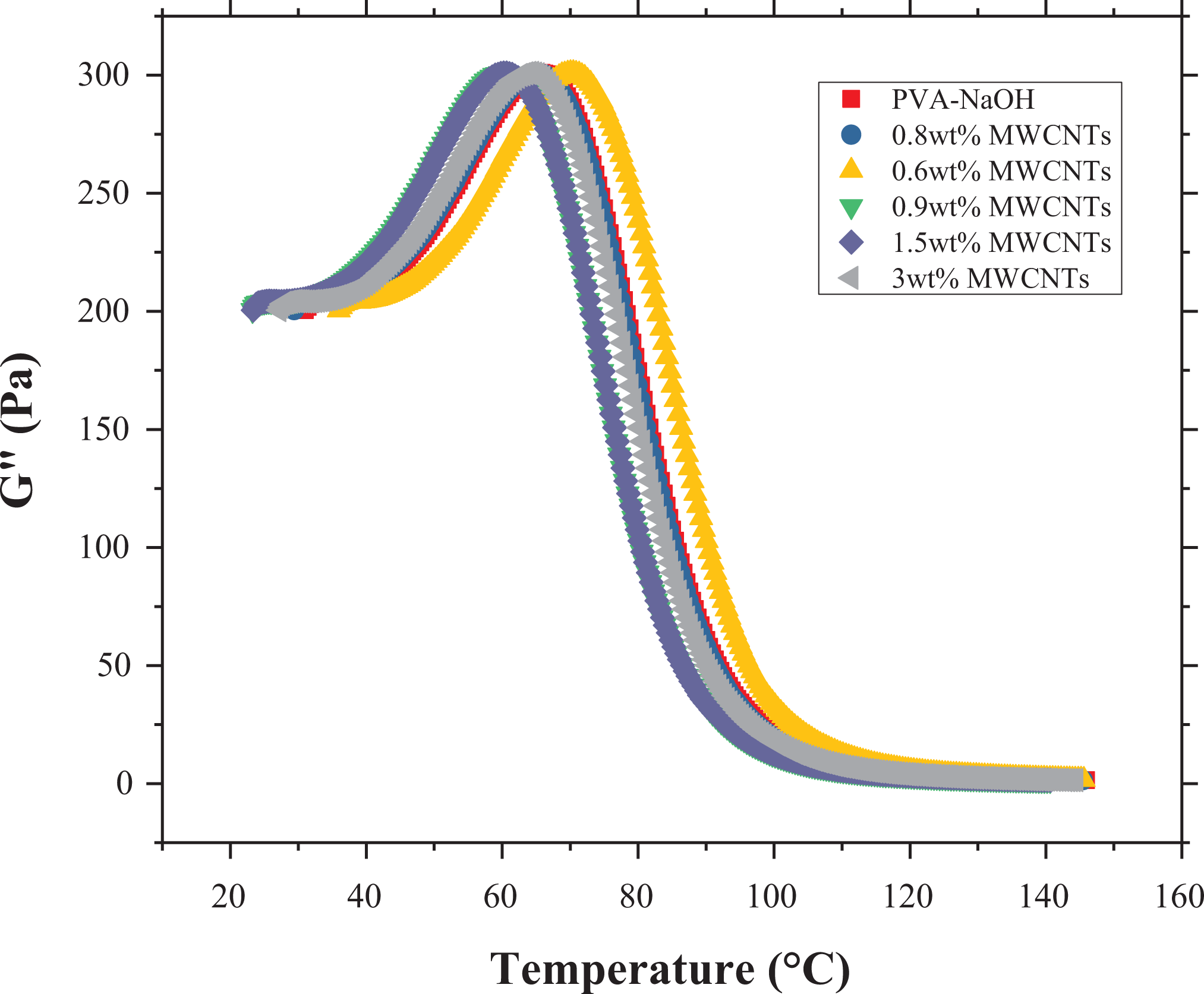
Variation of loss modulus (G″) on temperature for MWCNTs-PVA nanocomposites. MWCNTs: multiwalled carbon nanotubes; PVA: polyvinyl alcohol.
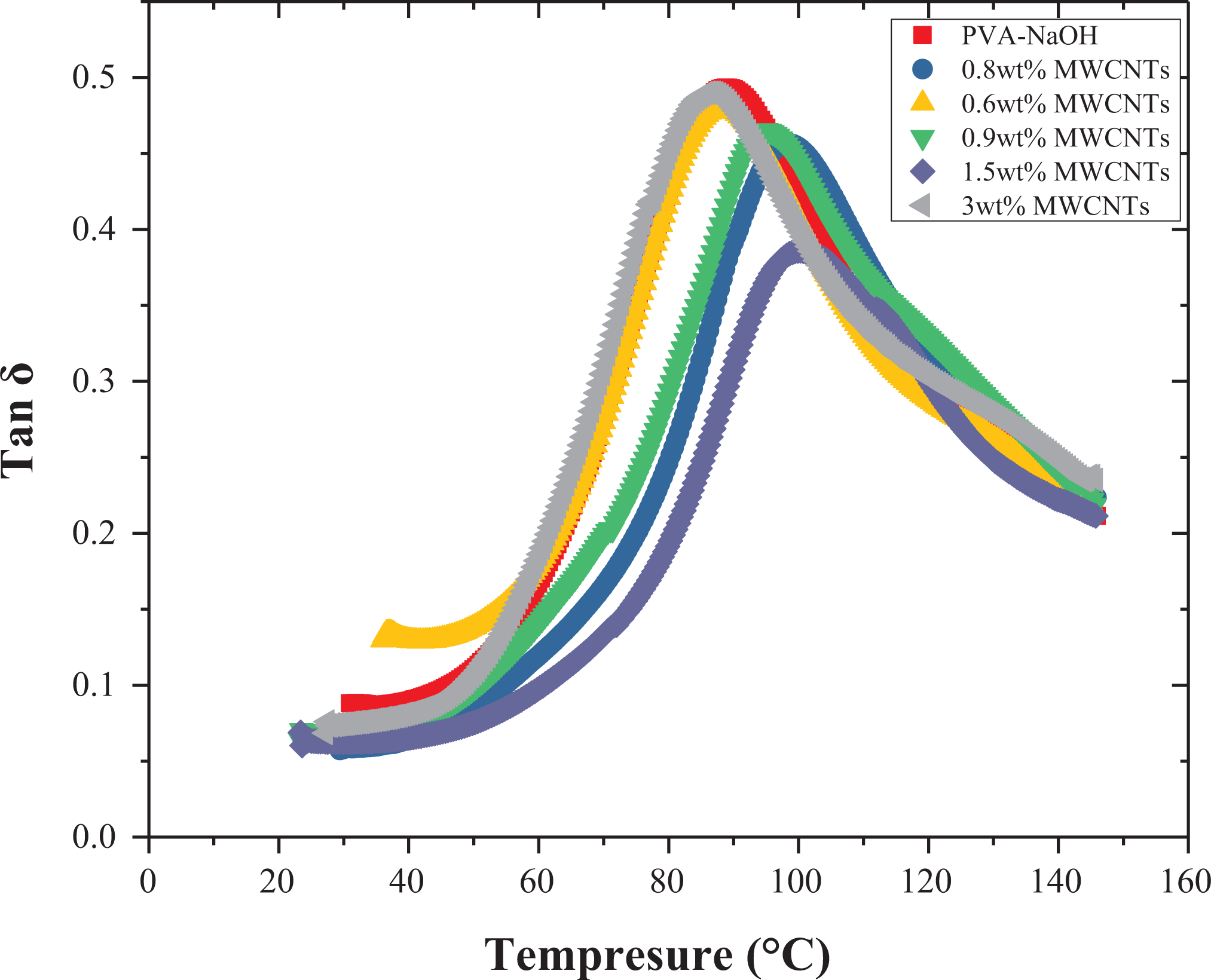
Tangent loss angle (tan δ) versus temperature for MWCNTs-PVA nanocomposites. MWCNTs: multiwalled carbon nanotubes; PVA: polyvinyl alcohol.
Glass transition temperature (Tg) value can also be derived from DMA data, and the values were determined from tan (δ) peak (Figure 3). The obtained Tg data are listed in Table 1. It can be seen that the addition of MWCNTs to neat PVA will generally increase the storage modulus (G′) and Tg values, with increasing MWCNTs up to 1.5 wt%. However, rheological data for the prepared nanocomposites show expected and normal behavior in polymer nanocomposites. At high level of MWCNT content (3.0 wt%), storage modulus and Tg value decrease compared with neat polymer, and this could be attributed to the volume ratio between polymer and nanofillers . MWCNTs require more volume space in the neat polymer leading to increase in space between the polymer chains and significant decrease in Tg and elastic modulus. 5,8–9
Values of Tg for MWCNTs-PVA nanocomposites.
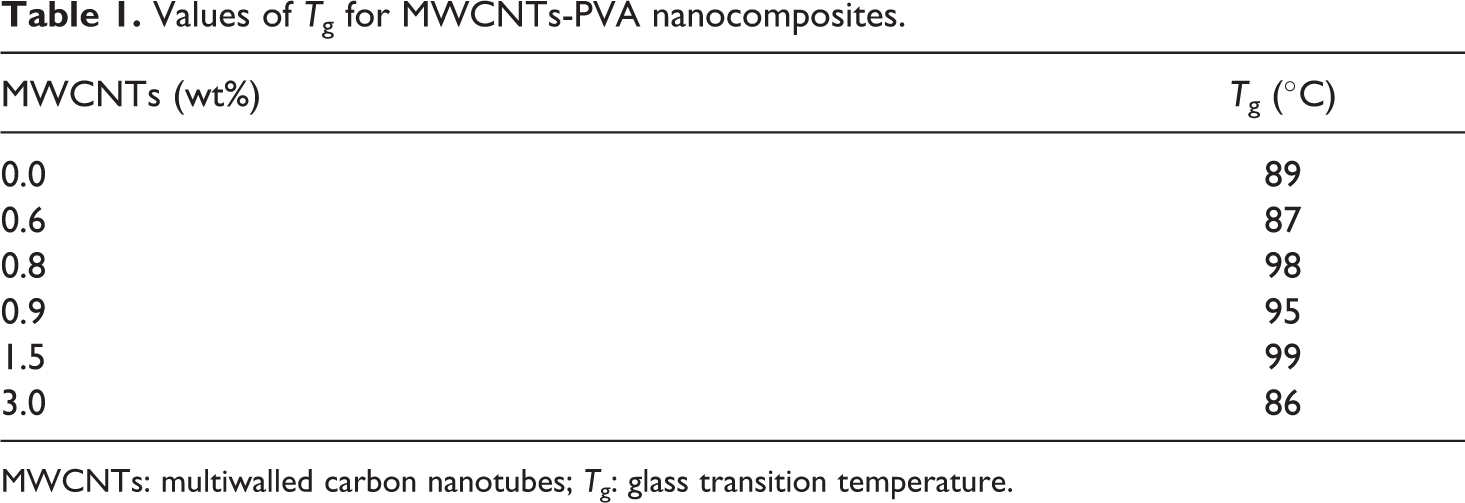
MWCNTs: multiwalled carbon nanotubes; Tg: glass transition temperature.
One can see from Figure 4 that the storage modulus increases up to three times as the weight fraction of MWCNTs increases up to1.5 wt% at 80°C. The obtained results could be attributed to the physical interaction between MWCNTs and PVA chains. In other words, MWCNTs enhances the interfacial bonding in MWCNTs-PVA network.
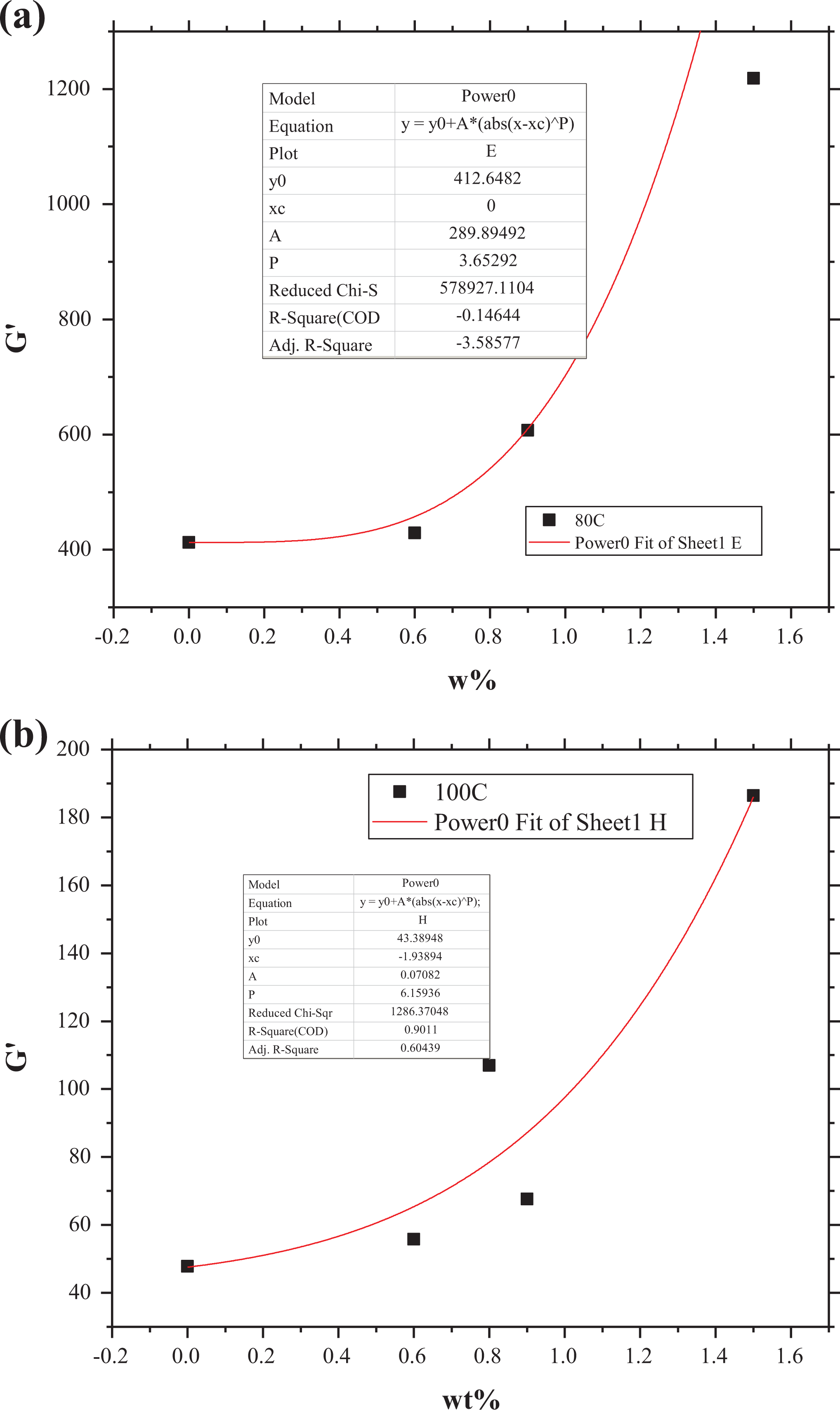
Storage modulus versus MWCNTs weighting fraction: (a) at 80°C and (b) at 100°C.
Electrical properties
Electrical results were calculated from the measured impedance and phase angle values for the prepared MWCNTs-PVA nanocomposites. 3,5 Impedance (Z), dielectric constant, loss tangent (tan δ), and AC conductivity (σ) are shown in Figures 5 to 9, respectively, in the frequency sweep between 1.0 KHz and 10.0 MHz. In our previous work, 1 we concluded from DC conductivity that the percolation threshold is almost around 0.8%. However, in this work, impedance spectra and AC conductivity show that the resistance at low frequency decreases with incorporation of MWCNTs in PVA (Figure 10). It can also be noticed that the impedance and loss tangent spectra show, in all cases, the existence of capacitor element in these composites. Furthermore, the correlation between Z and frequency is almost linear below percolation threshold, while it becomes more curvature above the percolation threshold; this means that the role of resistance becomes more pronounced above the percolation threshold. On the other hand, dielectric results indicate that incorporation of MWCNTs into PVA enhances the polar character of the PVA (Figures 6 and 7). To investigate dielectric relaxation behavior of the prepared nanocomposites, electrical modulus (M) values were determined from known dielectric parameters. 3,5 Total M value for each sample was resolved into real (M′) and imaginary (M″) parts to construct the Cole–Cole electrical modulus plot.
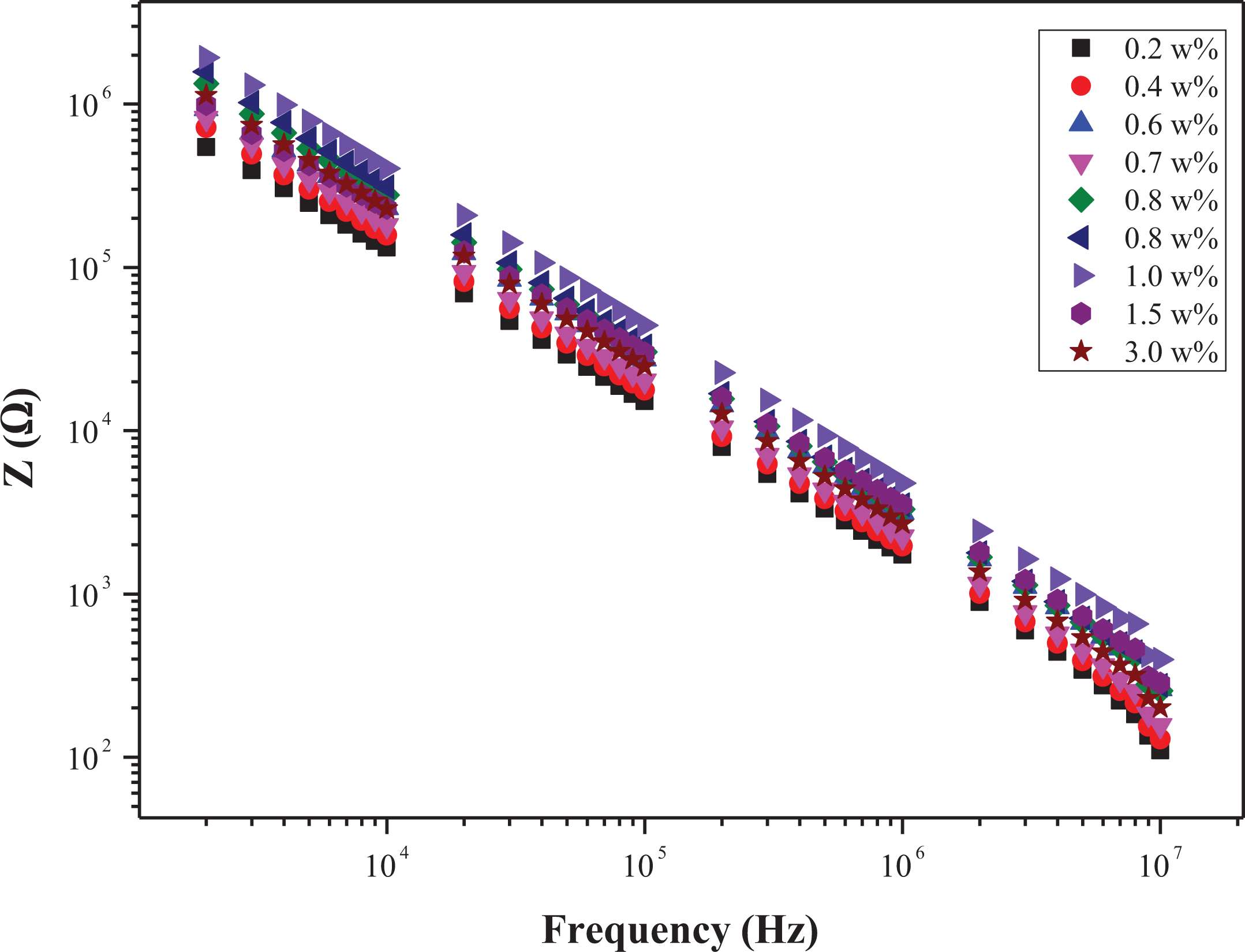
Impedance (Z) spectra of the prepared nanocomposites.
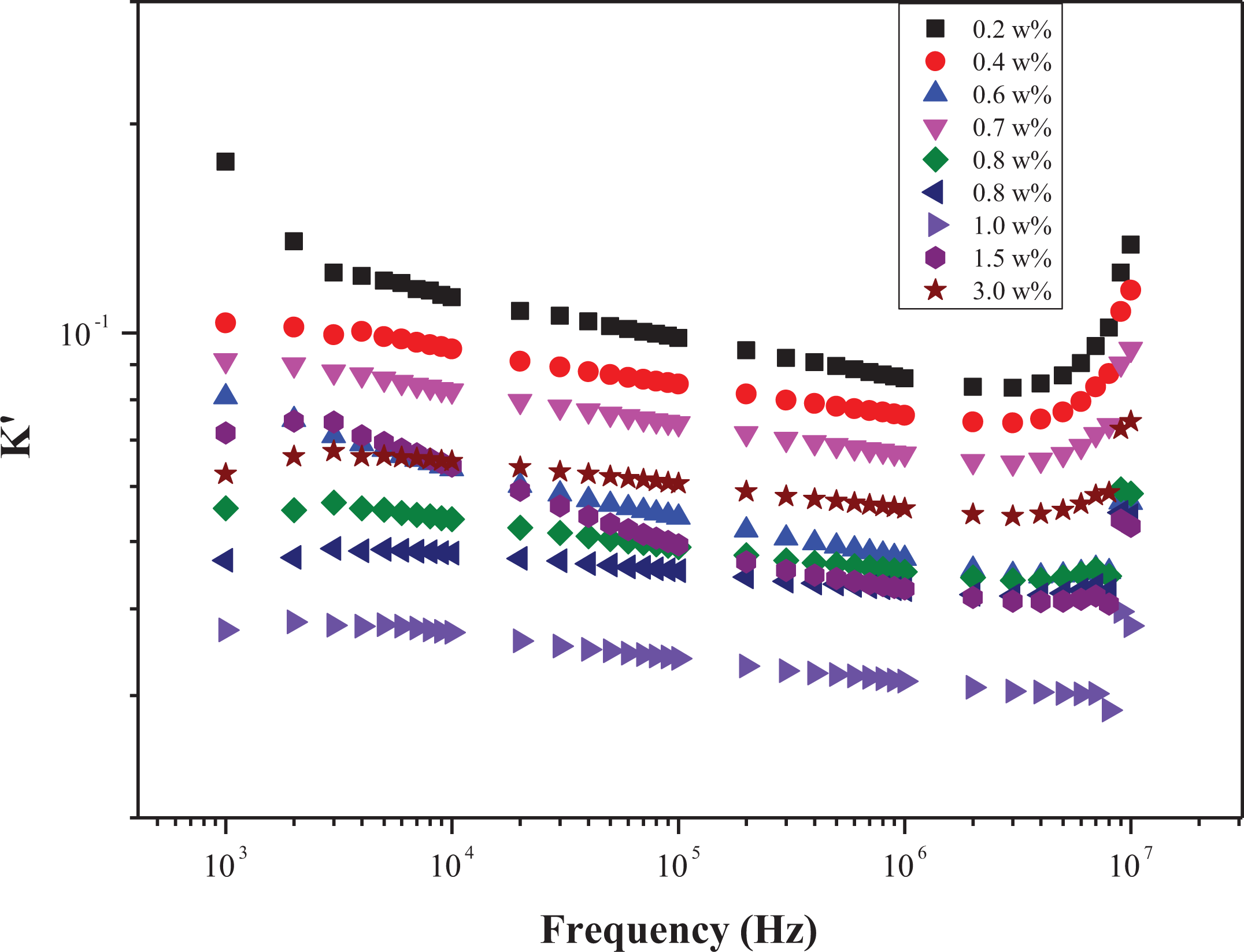
Real part of the electric constant (K′) of dielectric constant as a function of frequency for prepared nanocomposites.
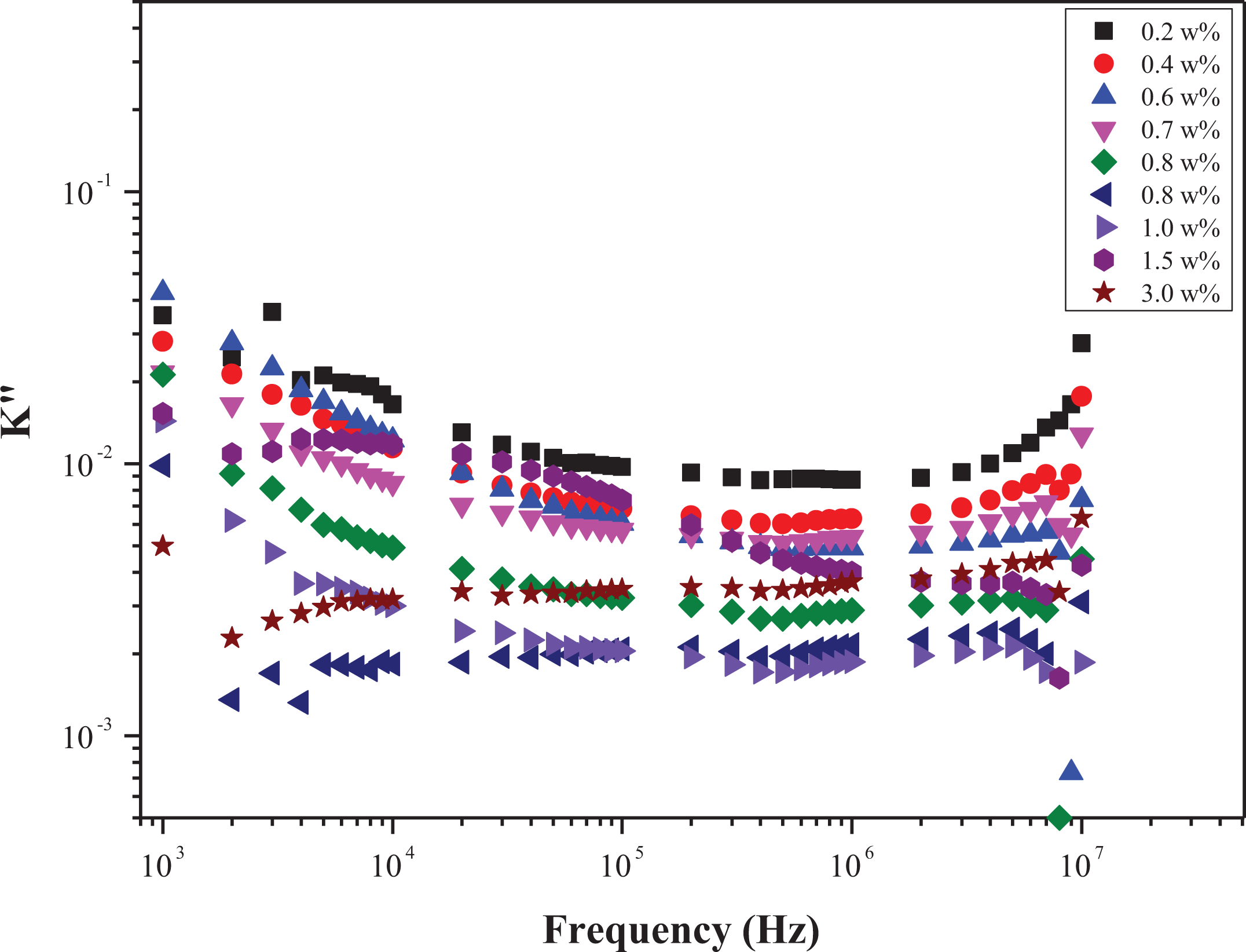
Imaginary part of the electric constant of dielectric constant (G″) as a function of frequency for prepared nanocomposites.
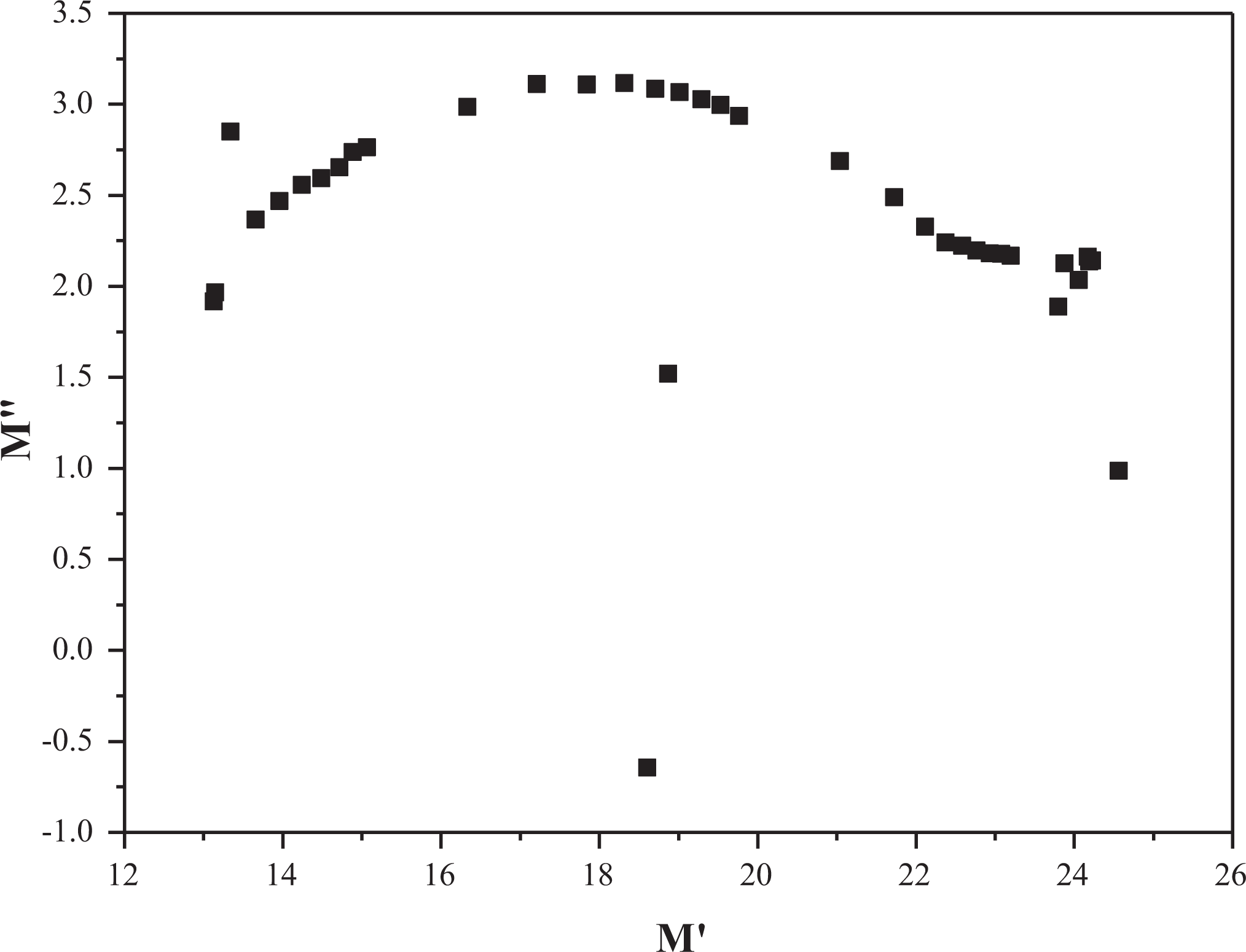
Cole–Cole draw of electrical modulus.
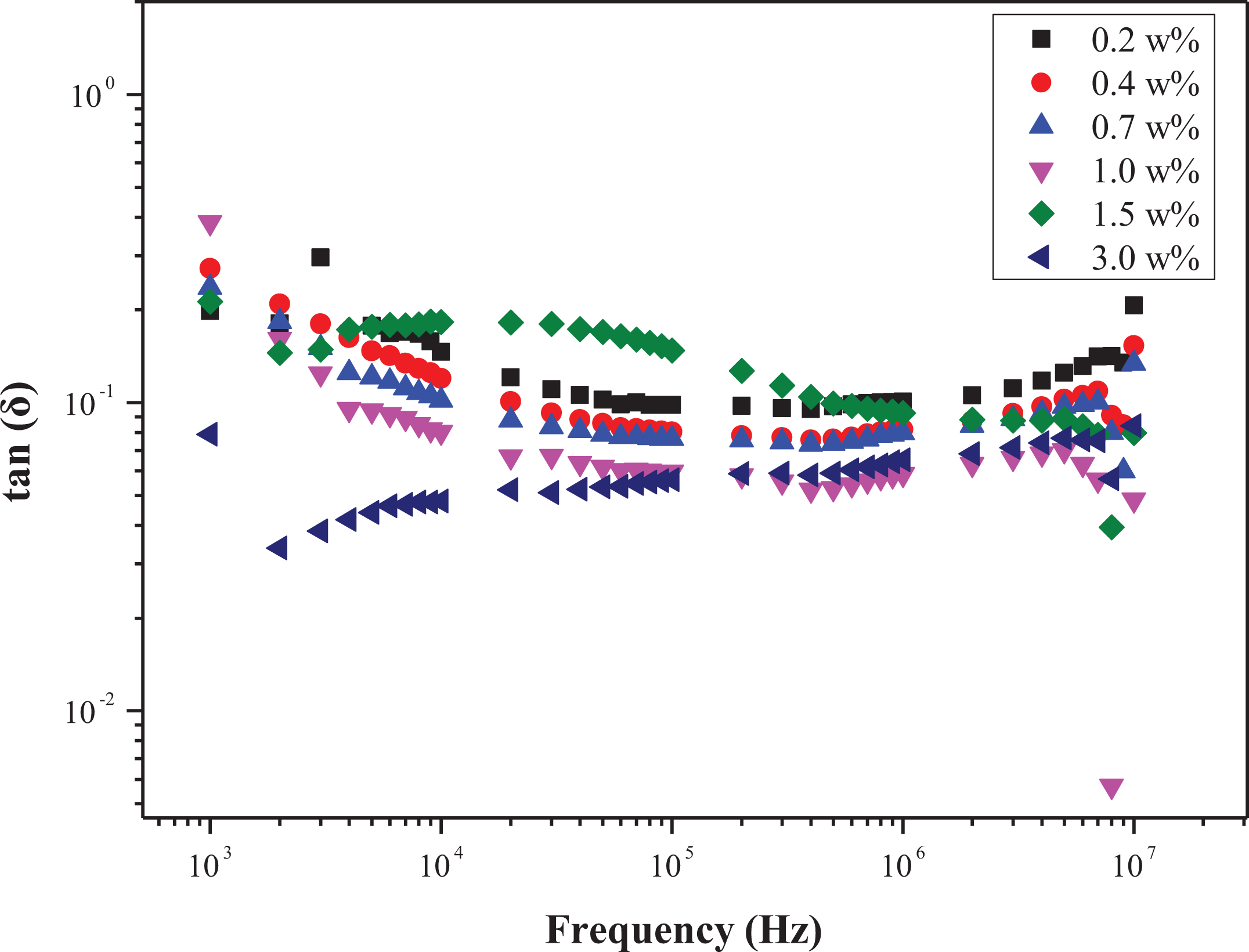
Tan loss angle (δ) versus frequency.
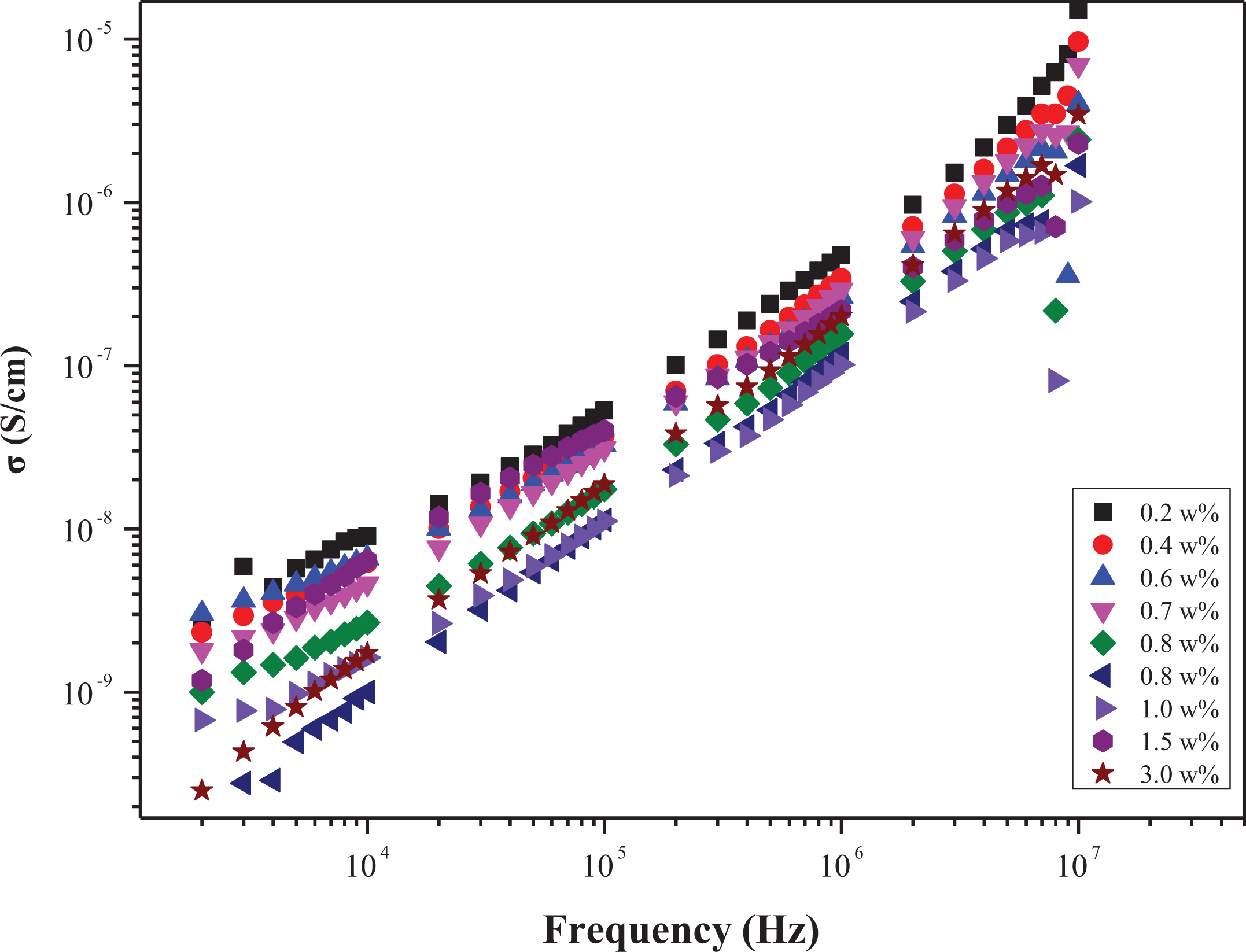
AC conductivity (σ) as a function of frequency for prepared nanotubes. AC: alternating current.
It can be seen from Figure 8 that the Cole–Cole plots of composites follow a semicircular behavior above the percolation threshold. This implies the formation of MWCNTs network above the percolation threshold (0.8%) and the increase of charge transfer through this network. 5 However, the details of the physical background of the electrical analysis were reported in datiles by us previously. 3 –5
The results of this study demonstrate that functionalized MWCNTs improve the conductivity of the composites beyond MWCNTs alone. Work in the sensors area has reported that functionalization of nanotubes can either decrease or increase their electrical response. The present results can be attributed to the improved dispersion in the functionalized MWCNTs-PVA composite, leading to improved conductivity of a nanotube network at minimum amount of MWCNTs (0.8 wt%), also other contribution which may enhance the electrical conductivity of composites, that is, the charge transfer between the functionalized species and nanotubes (i.e. the charges at CNTs-polymer interfacial boundaries could be transferred through CNTs network and contribute to electrical conduction). Moreover, Figure 11 shows that the percolation threshold is also around 0.8 wt% as reported earlier in the DC field. 1
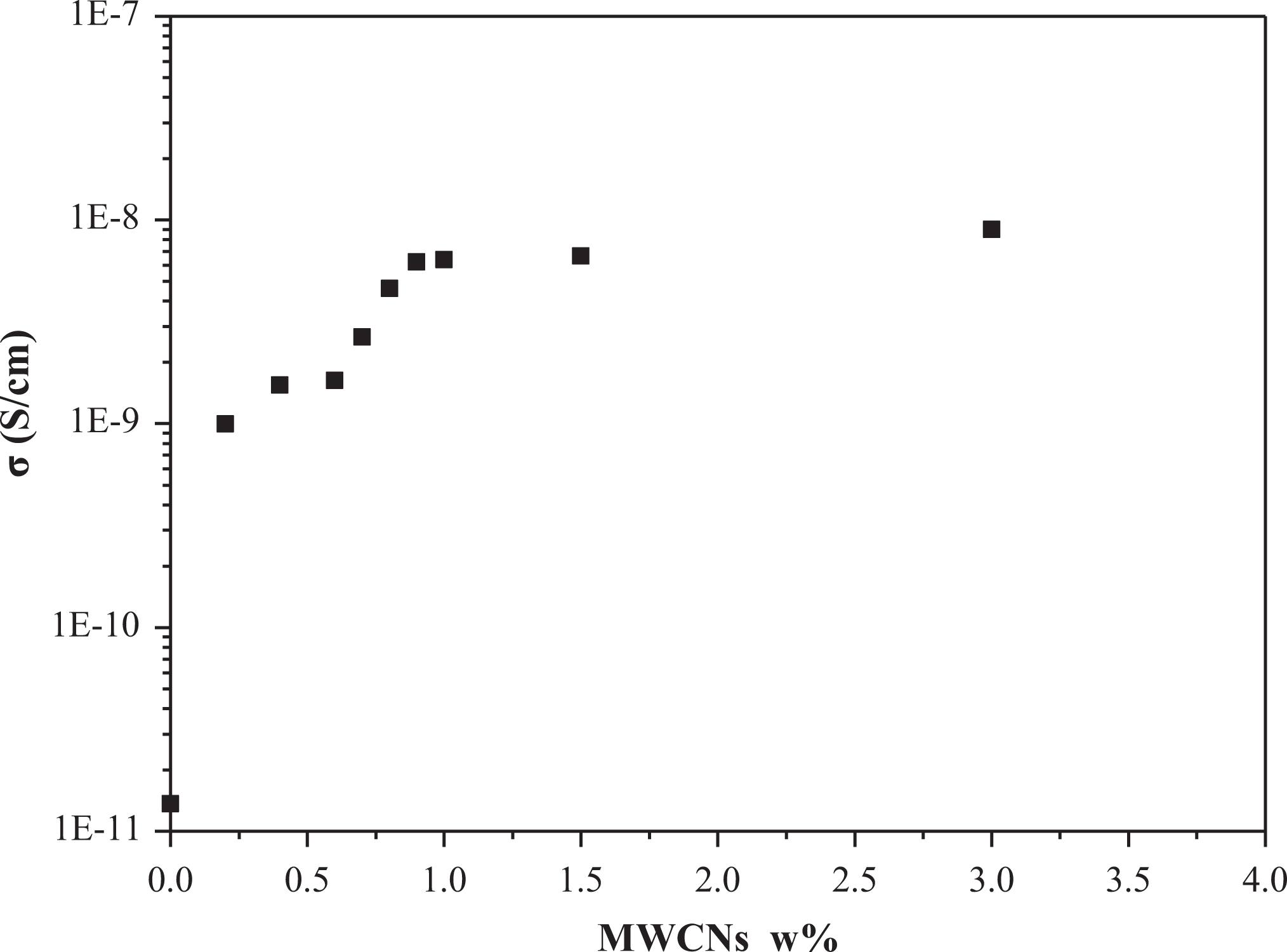
Variation of AC conductivity with MWCNTs weight fraction for prepared nanocomposite at 1 kHz. AC: alternating current; MWCNTs: multiwalled carbon nanotubes.
Conclusions
This work demonstrates the rheological and AC electrical properties of pH pretreated MWCNTs-PVA nanocomposites. The obtained results and discussion lead to the following conclusions: pH pretreatment creates functional group at the CNTs surface, and as a result, the interfacial bond between MWCNTs and PVA chains will be enhanced. Thermal stability, rheological, and AC electrical properties are improved with increasing MWCNTs up to 1.0 wt%, which indicates that MWCNTs are well bonded and dispersed in the polymer matrix. The storage modulus value at 0.1 Hz increases up to three times and Tg values shifted toward higher values as the weight fraction of MWCNTs increases up to 1.0 wt%. AC electrical results show that the incorporation of 1.0 wt% MWCNTs into PVA will increase PVA conductivity and polar character of the neat PVA while decreasing impedance. The formation of interfacial zone will increase the interfacial bond between PVA chains and CNTs; as a result, it will restrict the motion of the polymer chains, leading to an increase in both Tg values and storage modulus.
Footnotes
Acknowledgements
The authors thank research scientific deanship and physics department at King Faisal University for their support during all research stages.
Funding
The author(s) received no financial support for the research, authorship, and/or publication of this article.
