




Abstract
Poly(ether-imide) (PEI)-based composites filled with multiwalled carbon nanotubes in a dispersed form (1.0 wt%) and as buckypaper (BP) (25 wt%) have been prepared by mixing solution and hot compression molding technique, respectively. Vacuum filtration technique with the aid of water-based surfactant Triton X-100 was employed to produce BP sheets. The thermal stability of the composites was evaluated by thermogravimetric analysis and revealed a strong increase in thermal degradation temperature when BPs were used as nanofiller. Ozawa–Wall–Flyn model was used to determine the kinetic parameters. It was observed an increase in activation energy as the nanotubes concentration rise, suggesting the formation of more thermally stable systems. In addition, half-life time as function of temperature demonstrated that BP-based composites could operate for 3200 years at 200°C. These results concluded that carbon nanotube BP could contribute to improve significantly the thermal stability of PEI matrix.
Keywords
Introduction
Polymer nanostructured composites based on carbon nanotubes (CNTs) have been largely studied since their discovery in 1991 by Iijima. 1 The outstanding mechanical behavior, extremely large interfacial contact area, high aspect ratio, and low mass density of CNT make them ideal reinforcement filler for nanocomposite materials. Several studies have shown that the addition of small amounts of CNT can considerably improve the mechanical properties and thermal stability of polymer nanocomposite materials. 2,3 As mentioned in the literature, Barus and coworkers 4 determined an increase of about 12°C in thermal degradation peak (T max) by the incorporation of 2.0 wt% of CNT within PEI, whereas Chio and Kao 5 demonstrated that the degradation onset temperature (at a weight of loss of 5%) of PA 46 slightly increases with the incorporation of multiwalled carbon nanotubes (MWCNTs). In both studies, it can be attributed to the barrier effect of the nanotubes making difficult the diffusion of the degradation products, thus decelerating the decomposition process. However, nanotubes low solubility in common solvents, strong agglomerating tendency, and high viscosity of polymer/CNT mixtures can generate a poor dispersion and limited their practical applications. According to the literature, 6 CNT has a tendency to bundle together and form some agglomeration due to van der Waals attraction between the individual tubes, which represents the current major bottleneck of their application in polymer composites. In order to solve these difficulties, CNT sheets, also known as “buckypapers” (BPs), have been used for the development of reinforced composites. BPs are free-standing porous mats of entangled CNT ropes cohesively bound by van der Waals interactions, commonly prepared by vacuum filtration through a membrane of a suspended solution of randomly distributed CNT. 7 –11 Several researches have been working with polymer composites based on CNT BPs prepared by vacuum filtration technique. Diez Pascual et al. 12 in the studies of poly(ether ether ketone) (PEEK)/Single-Walled Carbon Nanotubes (SWCNT) BP revealed an increase of 45°C in T max compared to neat PEEK. This enhancement in thermal properties of the polymer matrix by the incorporation of BP is much more significant compared to traditional CNT polymer composites. In addition, this material can be selected to prepare polymer composites with uniform tube dispersion, controlled nanostructure, and high CNT loading (up to 40 wt%). 13
In order to manufacture BP composites by introducing the polymer matrix in the BP pores, some thermoplastics polymers such as polycarbonate, 14 PEEK, 15 or poly(phenylene sulfide) 16 have been employed to. In addition, the properties of BP composites have been recently investigated. According to the literature, 17 the polymer matrix impregnation process, the pore structure of CNT networks, and the content of CNT in the composites are crucial during the BP processing. On the other hand, Zhang and Jiang 18 has found that CNT suspension concentration, sonication level and time, the selection of the surfactant, and vacuum pressure can influence significantly to the microstructure of BPs.
The thermal properties of CNT/polymer composites have attracted many attentions from polymer composites community due to high thermal stability of CNT. 19 –21 As previously mentioned in this work, Díez-Pascual and coworkers 12 observed an increase in thermal stability of poly(phenylene sulfide)/BP and PEEK/BP composites. According to the publication cited, the structure of the polymer matrix and the interaction between BP and the matrix may be the key factors for the thermal degradation behavior of BP-filled polymer composites. Therefore, thermal degradation kinetic study plays a keyhole for understanding polymer thermal degradation process at elevated temperatures. In this study, MWCNT BP-reinforced poly(ether-imide) (PEI) composite was prepared by hot compression molding. Nanostructured composites with preformed tube networks and high MWCNTs loading (up to 25% by weight) were manufactured. Also, in order to evaluate the behavior of BP/PEI composite at high temperatures, it was carried out a degradation kinetic study of the samples using the thermogravimetric analysis (TGA).
Experimental
Granular PEI was kindly provided by the SABIC’s Innovative Plastics Company, Sao Paulo, Brazil (ULTEM 1010). This polymer presents the following physical characteristics: d 25°C = 1.28 g cm−3, T g approximately 220°C, and T s approximately 350°C. MWCNTs used in this study were produced by chemical vapor deposition technique and supplied by Bayer, coded as 150 C Baytubes P. They are characterized by an average outer diameter of 15–20 nm, number of walls 3–15, and bulk density of 140–160 kg m−3.
Preparation of MWCNT BP
BPs are thin (10–50 mm) membranes of nanotube networks produced by multiple steps of tube dispersion and suspension filtration. The procedure to manufacture BP employed in this work is based on previous works. 13 Firstly, 100 mg of MWCNTs were ultrasonically dispersed in 300 mL of deionized water for 60 min, with the assistance of the water-based surfactant (1.5 g Triton X-100). Since we can use aqueous suspension and a number of different water-based surfactants, relatively good tube dispersion can be expected in BPs. The suspension was filtrated through a nylon filtration membrane with a pore size of 0.4 µm and diameter of 47 mm. After the filtration process, the BPs were thoroughly washed with plenty of deionized water in order to remove the surfactant. The filtration membrane with attached BP was dried in a hot air and then soaked into a formic acid bath, in which the nylon filtration membrane dissolved quickly. After being immersed in the bath for 20–30 min, the BP was transferred into another clean formic acid bath, in which it was immersed for 20–30 min. The process was repeated for three times to ensure effective complete removal of the filtration membrane. The BP was dried overnight at 80°C between two glass plates in a vacuum oven.
Preparation of BP/PEI and MWCNT/PEI composites
BP/PEI composites were prepared by placing a MWCNT BP sheet between two PEI films with thickness of 0.1 mm. The consolidation of the material was performed in a hot compression molding equipment, Carver model CMG100H-15-X ( max. capacity of 100 ton and nominal work area of 15 x 15) under high pressure (around 1 MPa). The thermal cycle was optimized to minimize the formation of internal pores and to improve the impregnation of the BP with the polymer resin. The weight fraction of polymer matrix was about 75%.
MWCNT/PEI composites were prepared in order to compare the results obtained from BP/PEI composites. Firstly, 1.0 g of granular PEI were dissolved in 30 mL of dichloromethane (DCM). Then, 1.0 wt% of MWCNTs were ultrasonically dispersed in 30 mL of DCM for 20 min. Both PEI solution and the MWCNT suspension were transferred to the beaker and ultrasonically dispersed for more than 30 min. Thin films of an average thickness 0.44 mm were obtained by casting a suspension on the clean glass slide, evaporating the solvent in an oven for 24 h at 80°C.
Thermal analysis
Thermogravimetric studies were carried out in dynamic mode at four different heating rates of 2.5, 5.0, 10, 15, and 20°C min−1 under nitrogen atmosphere. The equipment used was TG/DTA, model EXSTAR 6000 of SII Nanotechnology, over the temperature range of 25°C to 1000°C. Samples of about 4 mg were placed in platinum pan and alumina was used as reference material.
The Ozawa–Wall–Flyn (O-W-F) model was employed to analyze the thermal degradation kinetics of the PEI and its composites. In this research, the heating rate of 10°C min−1 was chosen to study the thermal decomposition of the materials, which corresponds to the midpoint of the experimental heating rate. Therefore, all the considerations about the kinetic parameters obtained in this work are based on this heating rate. 22,23
Results and discussion
Aromatic imide thermoplastic polymers, such as PEI, have been candidates for a variety of applications due to its excellent properties, such as flexibility, high glass transition temperature, excellent thermal stability/fire retardance, and ultraviolet radiation resistance. 24 –27 Many studies have reported that only small addition of CNT in polymers can improve the thermal stability of composites significantly, resulting in an increase of thermal decomposition temperatures by about 5–10°C. 28 –30 In addition, there are several models that explain the thermal decomposition of solids based on different theoretical concepts and empirical studies. In this study, the integral model of O-W-F was chosen because it is a widely used method in the thermal decomposition of polymeric materials.
The influence of BP and dispersed MWCNT on the thermal stability of PEI were investigated by thermogravimetric experiments under nitrogen atmosphere, from 25°C to 1000°C, as can be seen in Figures 1 and 2. The results are summarized in Table 1. As can be seen from TGA plots in Figure 1, the initial decomposition temperature (T i) for neat PEI under inert atmosphere is around 472°C at a heating rate of 10°C min−1, remaining a residual weight of about 52% at 800°C. This behavior is in agreement with those found in the literature, 31,32 showing the good thermal stability of PEI at elevated temperatures. In addition, as the heating rate increases, the temperature is shifted to higher values. This behavior can be explained by the accommodation of the molecules and the thermal inertia caused by the high heating rates. 28
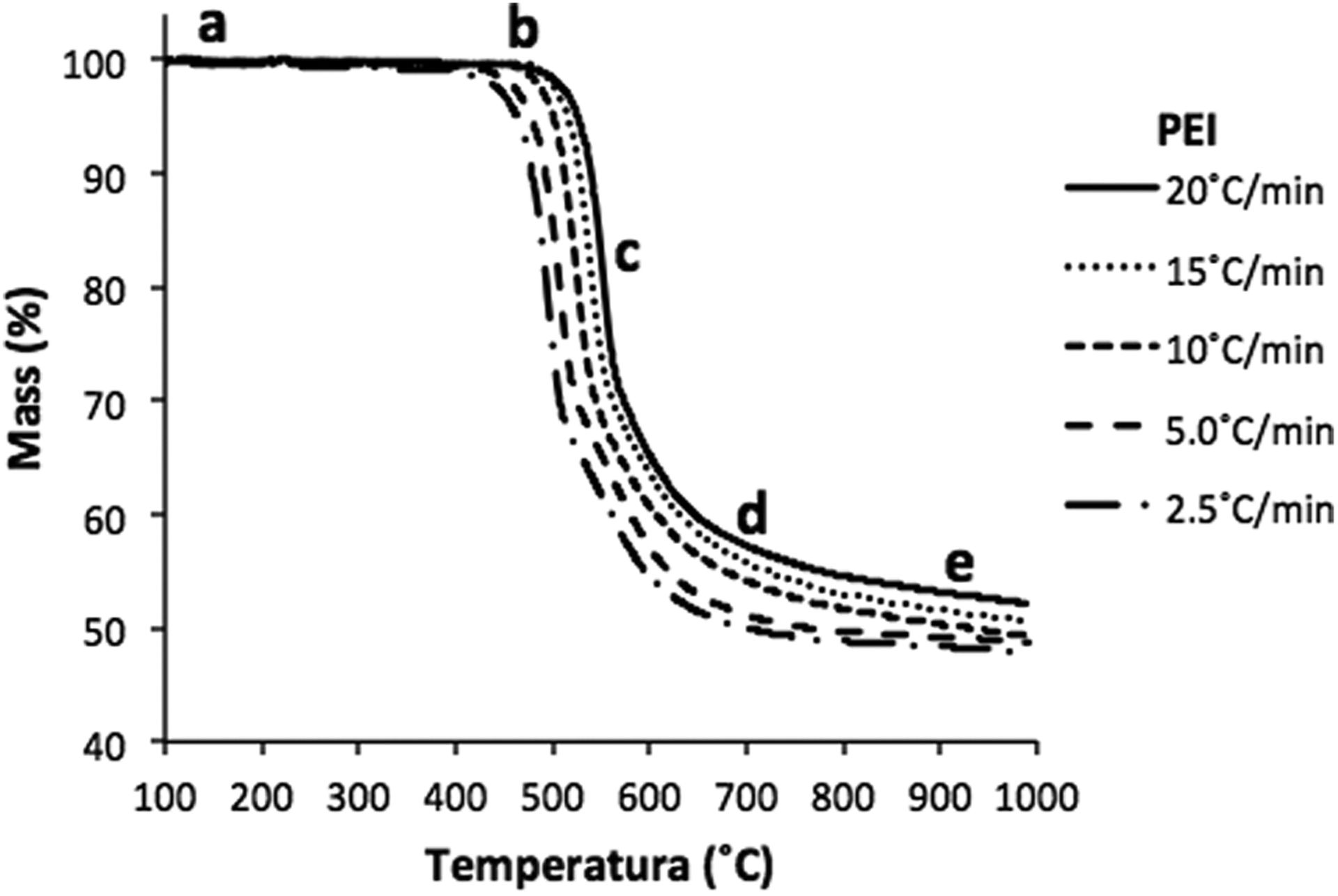
TGA curve for PEI. TGA: thermogravimetric analysis; PEI: poly(ether-imide).
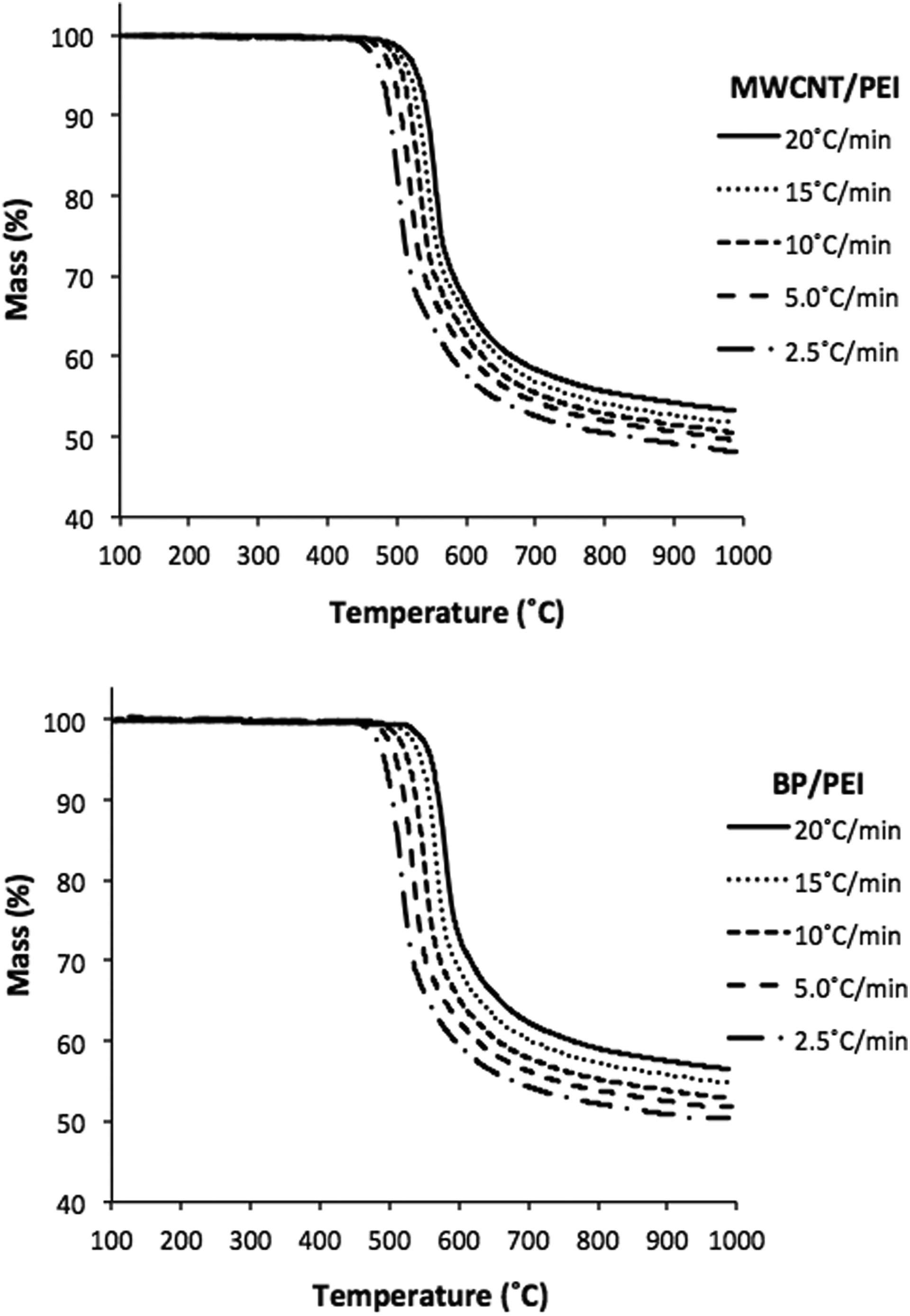
TGA curves for MWCNT/PEI and BP/PEI composites. TGA: thermogravimetric analysis; MWCNT: multiwalled carbon nanotube; BP: buckypaper; PEI: poly(ether-imide).
Thermal decomposition parameters for PEI and its composites at 10°C min−1.
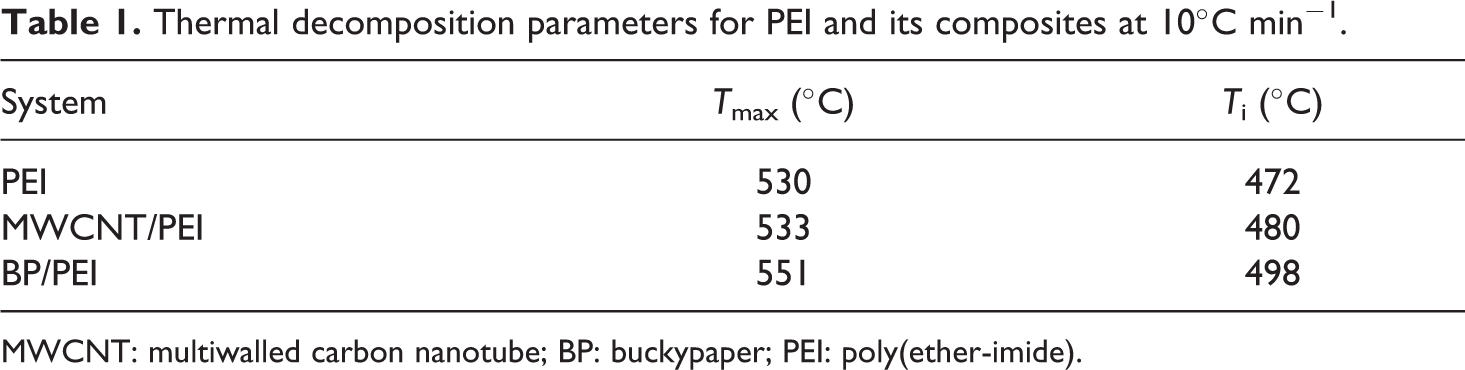
MWCNT: multiwalled carbon nanotube; BP: buckypaper; PEI: poly(ether-imide).
As can be seen in Figure 1, PEI matrix shows at least five stages of decomposition during the thermal degradation process. The step (a) shows the losses from volatile products of low molar mass (water or solvent), in which the degradation process has not yet started. The region designated as (b) corresponds to the beginning of the degradation process. The step (c) is associated with the inflection of the degradation rate, in which some reactions can maintain their maximum rate for a significant period of time. According to Kumar and coworkers, 32 the degradation mechanism of PEI can be associated to cleavage of phenyl-phthalimide bonds. In addition, variations in the maximum rate present at point (c) at each heating rate lead to a variety of kinetic behavior, where the maximum reaction rate determines the conversion degree (α). This is the most complex stage in the thermal degradation study for polymeric composites. 33 Point (d) represents the decay of the degradation reaction rate. At this stage, there is a slight slope in the final stage of the curve. This behavior is a consequence of the gas release process resulting from the polymer chain decomposition. The point (e) corresponds to the end of the reaction for polymeric matrix.
The incorporation of 1.0 wt% of MWCNT and BP in PEI matrix is presented in Figure 2. As can be seen, the addition of both MWCNT and BP changed slightly the thermal behavior of the composites. In both cases, T i were shifted to higher temperatures, suggesting an increase in the thermal stability of PEI. However, it is worth to mention that, T i found for BP/PEI composite is higher than MWCNT/PEI system, indicating the BP-based laminate is more thermally stable material. The values of T i for nanostructured composites are presented in Table 1.
DTG plots as function of temperature for PEI and its nanostructured composites are reported in Figure 3 and 4. Maximum thermal degradation temperature for PEI, BP/PEI, and MWCNT/PEI is displayed in Table 1. As can be seen in Figure 3, there is one single peak, suggesting the thermal decomposition process for neat PEI occurred in one step. According to the literature, 31 this behavior can be attributed to random scission of the backbone of PEI, indicating first-order reaction. Furthermore, DTG analysis reveals that as higher the heating rate is, higher the energy release from the polymer system will be and thus, the degradation peak amplitude will be greater.
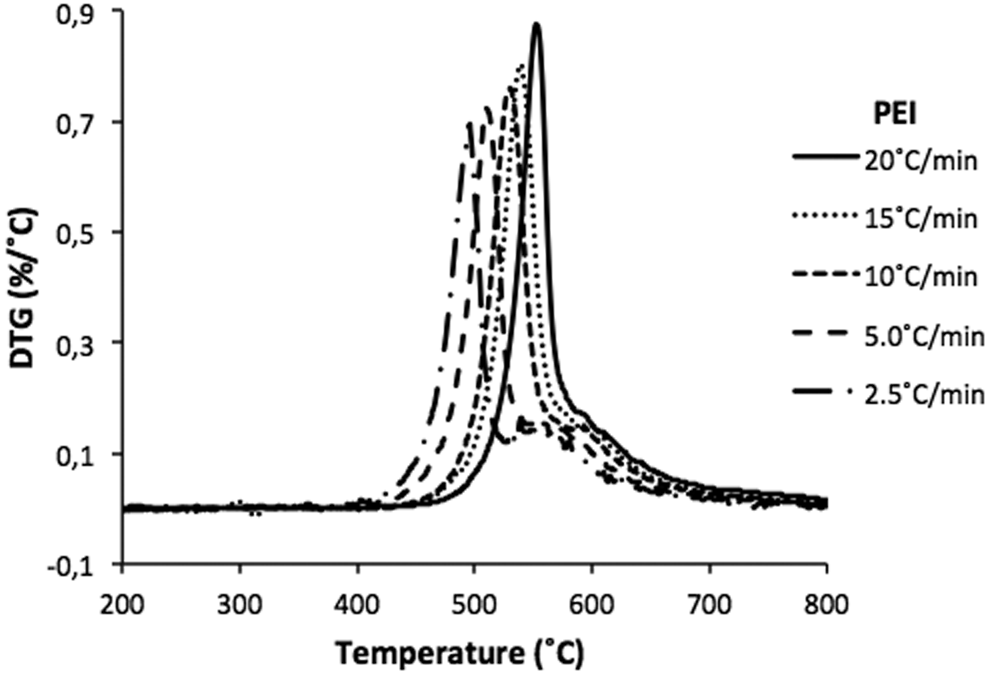
DTG curve for PEI. PEI: poly(ether-imide).
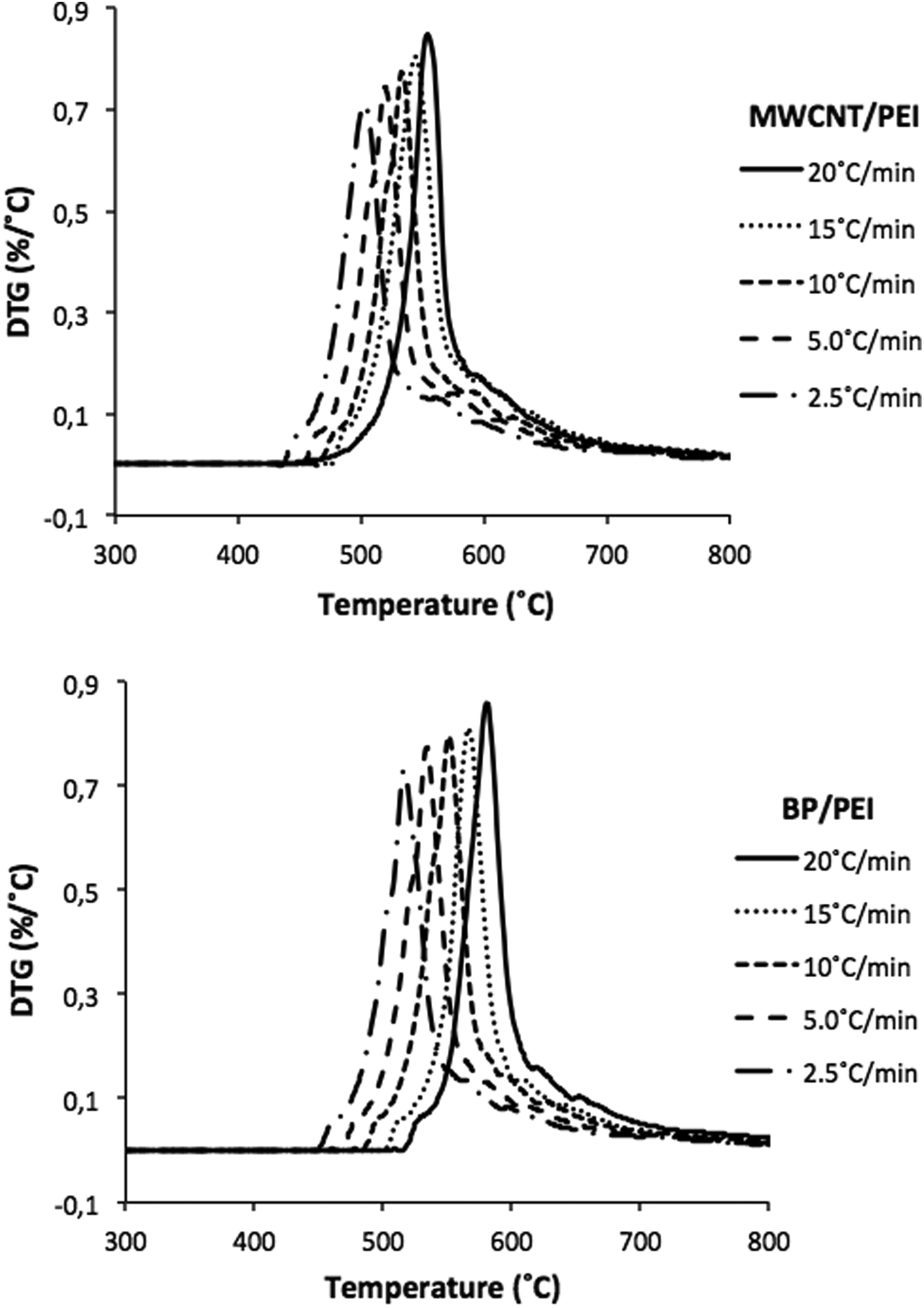
DTG curves for MWCNT/PEI and BP/PEI composites. MWCNT: multiwalled carbon nanotube; BP: buckypaper; PEI: poly(ether-imide).
Figure 4 presents the DTG data for BP/PEI and MWCNT/PEI composites. In a similar way presented by polymer matrix, it can be noted one single thermal decomposition peak suggesting the thermal degradation process for both composites occurred in one step. In addition, the incorporation of the nanofiller leads to an increase in T max of the samples revealing increments of 3.0°C and 21°C at heating rate of 10°C min−1 for MWCNT/PEI and BP/PEI composites, respectively. This behavior suggests an increase in the thermal stability of the composites and can be explained by three points. Firstly, the good adhesion between PEI and MWCNT is responsible for the good interaction of the filler within polymeric matrix, making difficult the diffusion of the degradation products, thus decelerating the decomposition process. Secondly, the strong interactions between PEI and MWCNT via π–π stacking restrict the mobility of the polymer chains, increasing the barrier effect and, consequently, increasing the thermal stability of the material. Thirdly, the high thermal conductivity of the MWCNT facilitates heat dissipation within the composite. With increasing CNT loading, the barrier effect becomes stronger and the thermal conductivity rises, resulting in higher degradation temperatures. 34 In addition, as can be noted BP/PEI composite shown higher values of T max compared to MWCNT/PEI samples. As previously discussed in this research, the preparation of dispersed MWCNT polymer composites may result in the agglomeration of the nanofiller, making difficult the heat dissipation in the material, thus leading to a smaller increase in T max parameter. On the other hand, BP-based composites avoid the agglomeration issue, ensuring higher thermal properties for BP/PEI composite.
The O-W-F model was employed to analyze the behavior of isoconversional curves, with conversion degrees (α) ranging from 5% to 40%. It gives an accurate measurement of the activation energy for nth-order reactions. The model is defined mathematically based on the following equation

where β is the heating rate, E a is the activation energy, f (α) is a kinetic parameter, and R is the universal gas constant. At a given value of α, plot of log β versus 1000/T produces a straight line with a slope (−0.457E a/R). The E a can be obtained from the slope.
Figure 5 presents the isoconversional curve for PEI matrix. As can be noted, the experimental points (filled circles) have a good adjustment with the theoretical curve (solid lines) indicating that there was a good fit of the mathematical model with the experimental data used. Moreover, it can be seen that the lines for each α value are parallel to each other, confirming again the good mathematical fit. On the other hand, the regularity of spacing between the lines indicate the degradation was occurring in the same way, regardless of conversion rate, that is, the curves would only be dragged to the left due to the temperature increase for higher conversion rates. In this particular case, there is an irregular spacing between the straight lines. This behavior can be explained by degradation process with breaks in covalent bonds at different energy levels. 35
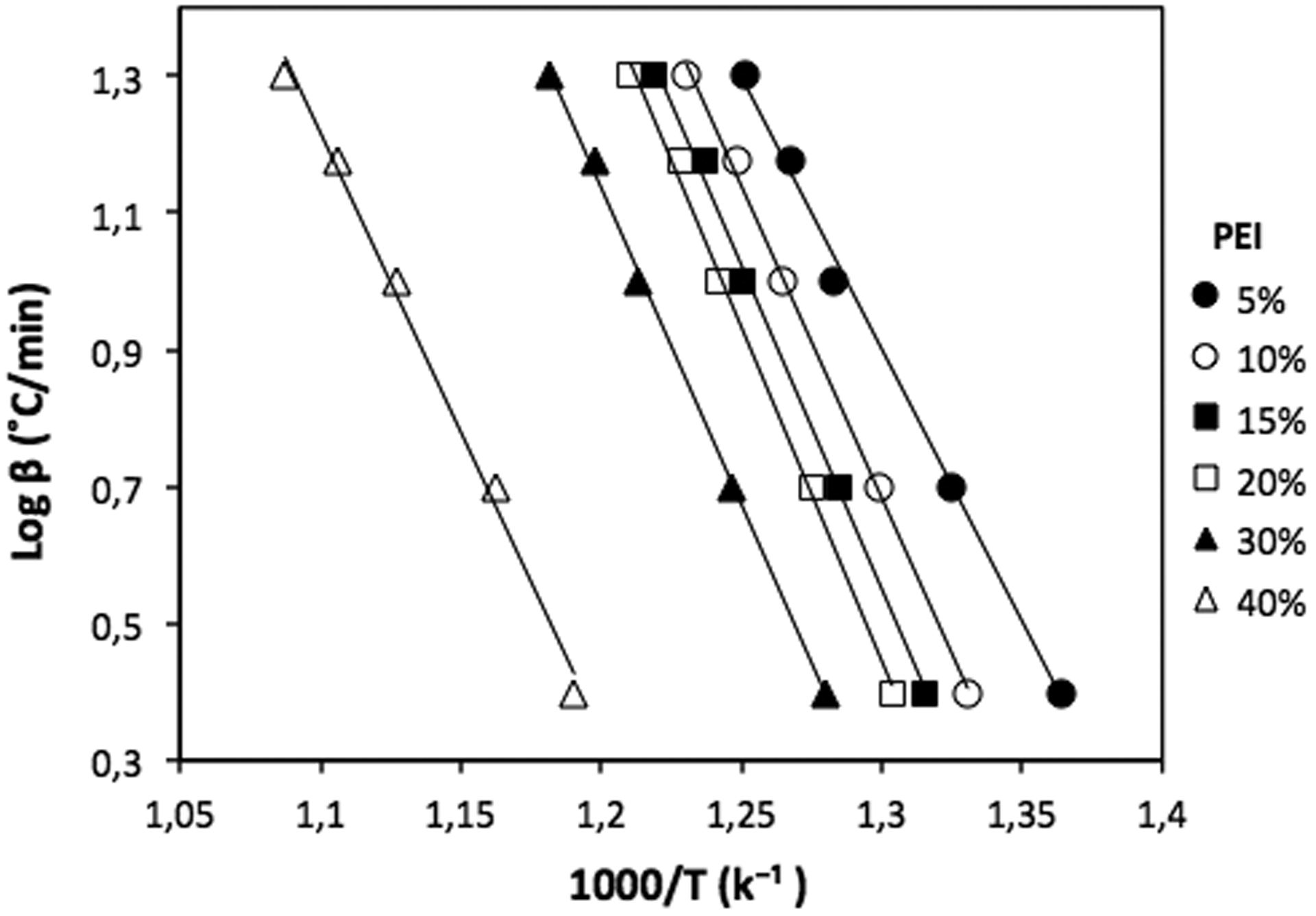
Isoconversional curve obtained from O-W-F model for PEI. O-W-F: Ozawa–Wall–Flyn; PEI: poly(ether-imide).
Figure 6 shows the behavior of isoconversional curves obtained from O-W-F model of MWCNT/PEI and BP/PEI composites. As can be seen both for MWCNT dispersed and BP influenced on the thermal stability of PEI, changed the spacing between the lines for different degrees of conversion. This behavior was even more evident in BP/PEI system. Furthermore, it was observed subtle shifts of linearized lines in the axis of abscissas. These variations are particularly important in the determination of activation energy (E a) and the half-life time (t 1/2) of the material, since these values depend directly on the slope of these lines.
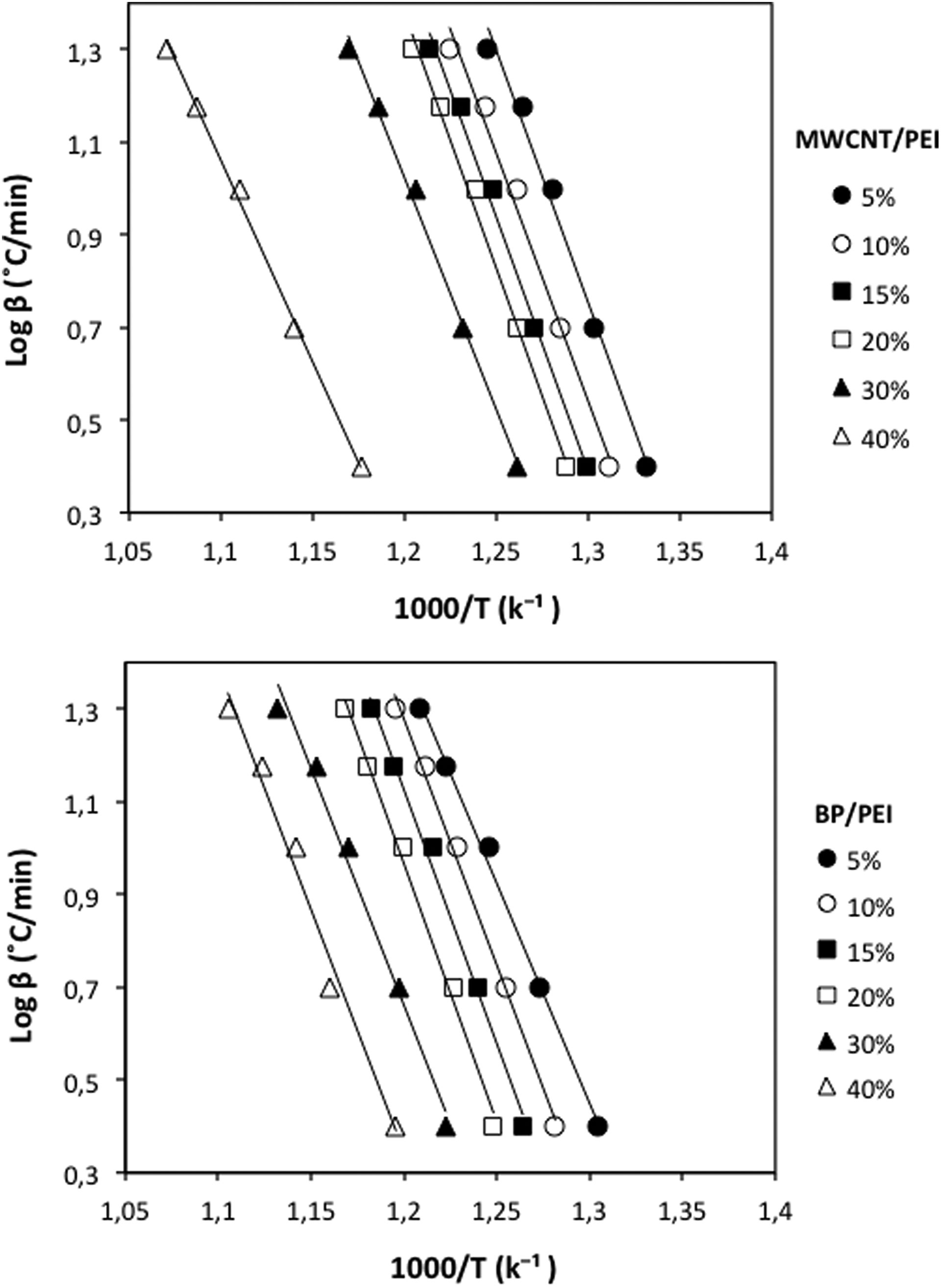
Isoconversional curve obtained from O-W-F model for MWCNT/PEI and BP/PEI composites. O-W-F: Ozawa–Wall–Flyn; MWCNT: multiwalled carbon nanotube; BP: buckypaper; PEI: poly(ether-imide).
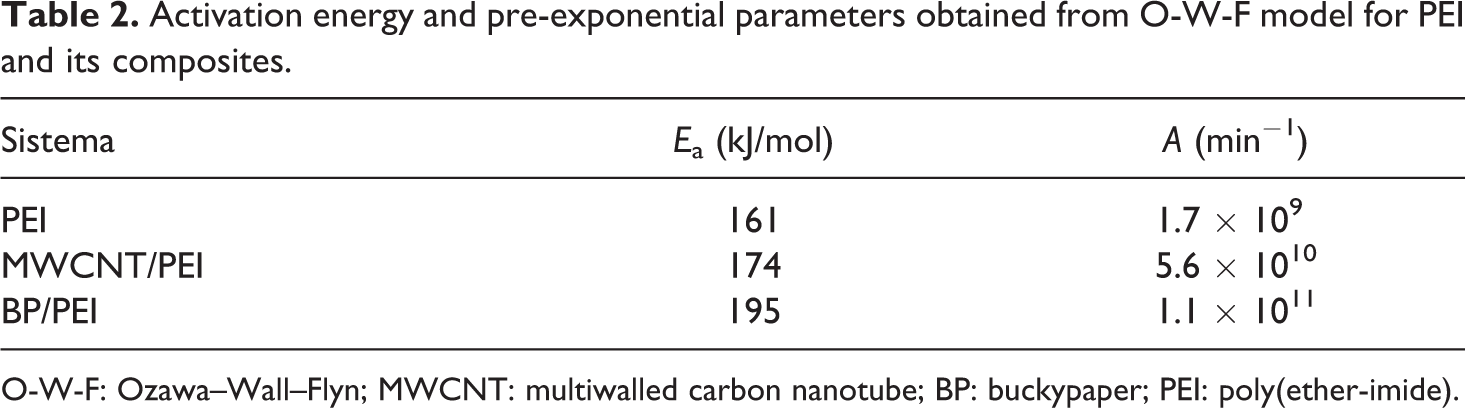
Figure 7 presents the activation energy as function of conversion degree for PEI matrix and its nanostructured composites. The kinetic parameters analyzed using O-W-F model, considering a conversion degree of 10%, are summarized in Table 2. It can be noted that E a ranges from 133 to 158 kJ mol−1 for PEI. According to previous research, 28 E a values higher than 100 kJ mol−1 suggest a degradation mechanism associated with the scission of strong bonds (random breaks in the chain), reflecting the existence of multiple reactions competing in the degradation process. In addition, zero-order reactions suggest mass loss by the splitting of the polymer chain and/or division of smaller molecules of the lateral chain. On the other hand, first-order reactions are associated with random scission of main chain, while intermolecular transfer reactions exhibit second-order reaction. In this work, it can be concluded that polymeric matrix presented first-order reactions. It worth to mention that BP-reinforced PEI composite presents higher values of E a and pre-exponential parameter (A), suggesting the formation of thermally stable system. MWCNT/PEI system shows similar results. Also, both curves present the same profile suggesting that, as the MWCNT concentration rises, the composites system become more thermally stable, requiring more energy for bond breaking. According to recent works, 36 the formation of agglomerates can be associated to high cohesive energy of the nanofiller. The strong interactions between the tubes become difficult, leading to smaller values of activation energy for MWCNT dispersed-based composites.
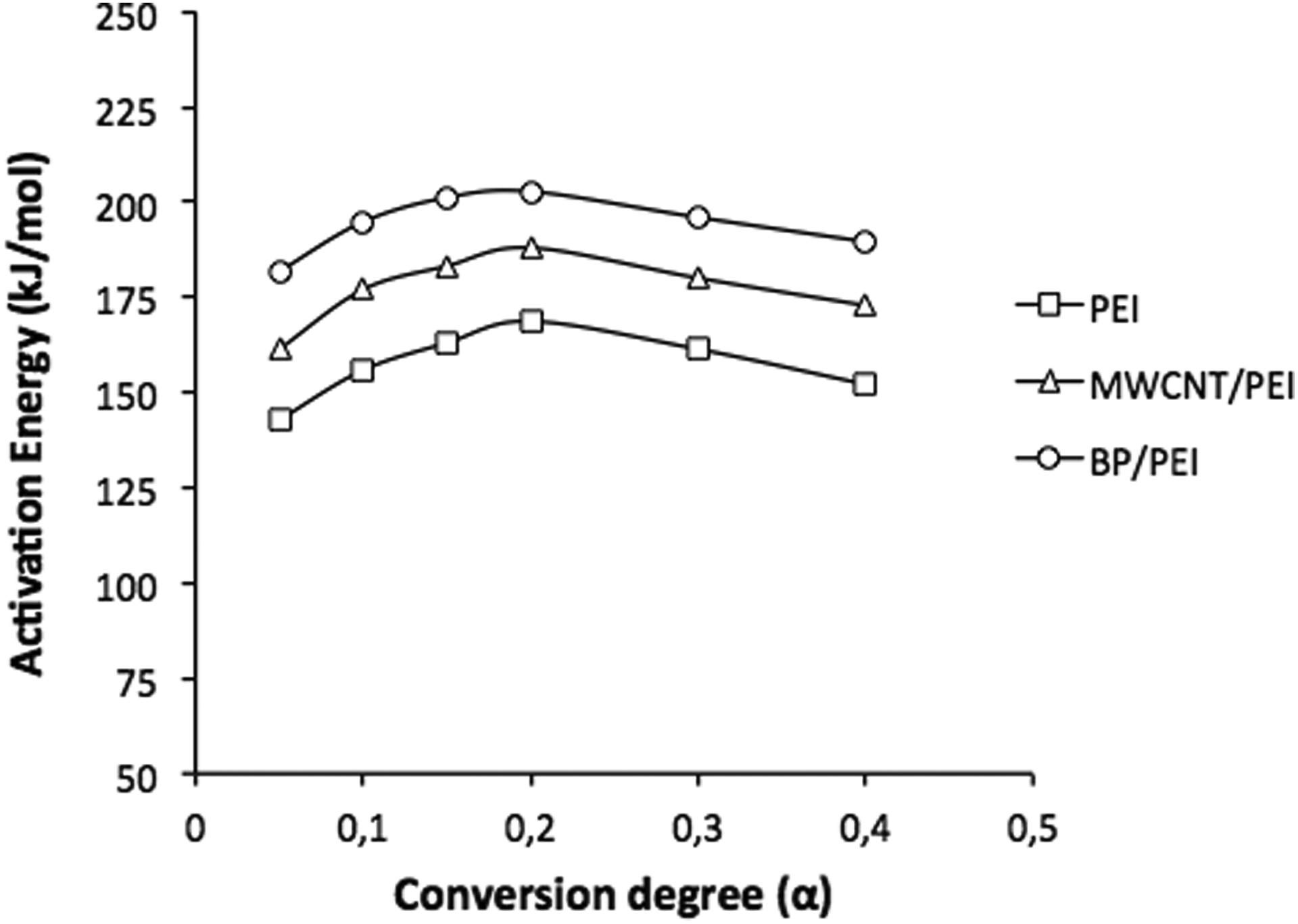
Activation energy as function of conversion degree for PEI and its nanostructured composites. PEI: poly(ether-imide).
Activation energy and pre-exponential parameters obtained from O-W-F model for PEI and its composites.
O-W-F: Ozawa–Wall–Flyn; MWCNT: multiwalled carbon nanotube; BP: buckypaper; PEI: poly(ether-imide).
Once found the activation energy involved in the decomposition process of the material, the half-life time (t 1/2) as function of temperature can be determined by equation (2)

where tf is the lifetime of the material at a temperature Tf and a is tabulated value dependent of E a.
Figure 8 presents the half-life time as function of temperature for PEI, MWCNT/PEI, and BP/PEI composites, for a conversion degree of 10%. As can be seen, neat PEI can operate continuously for 130 years at 200°C. This fact testifies its excellent thermal stability, as previously discussed in this article. On the other hand, MWCNT/PEI and BP/PEI composites can operate for 730 and 3200, respectively, at the same temperature. This behavior is expected, since the addition of MWCNT (in dispersed form and as BPs) in PEI matrix increased the thermal properties of the material, contributing to the formation of more thermally stable system.
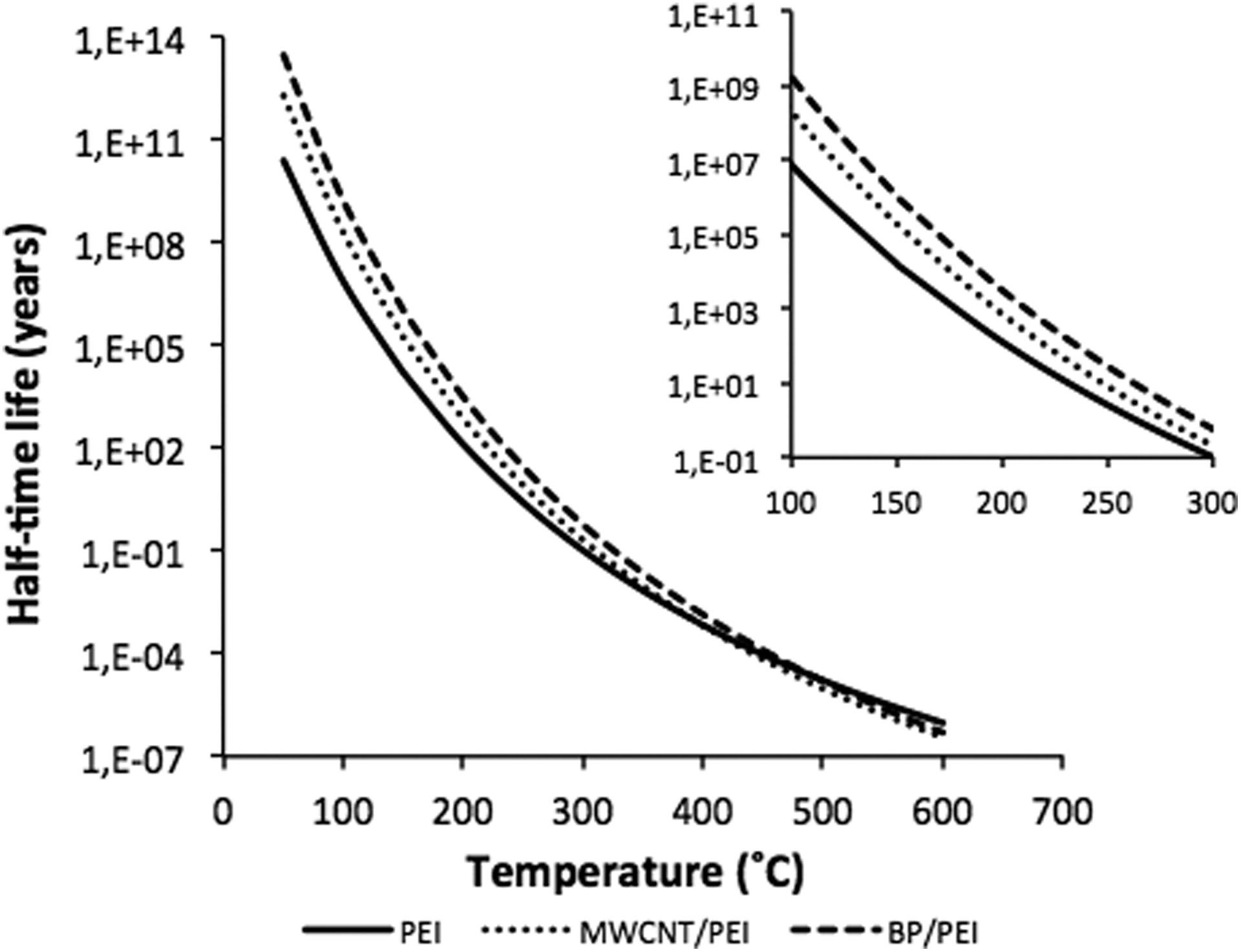
Half-time life as function of temperature for PEI and its nanostructured composites. PEI: poly(ether-imide).
Conclusions
MWCNTs-reinforced PEI composite in a dispersed form (1.0 wt%) and as BPs (25 wt%) were successfully obtained by mixing solution and hot press technique, respectively. The incorporation of the nanofiller in PEI changed the thermal stability of the polymeric matrix, shifting the thermal events to higher temperatures. TGA demonstrated a significant increase in the degradation temperatures of the polymers by the incorporation of the BP, ascribed to an improvement in the thermal conductivity combined with the barrier effect. O-W-F method showed the activation energy increased after the incorporation of CNTs, especially in BP-based composites, suggesting the formation of more thermally stable systems as the concentration of nanotubes rise in polymeric matrix. The half-life time obtained for the matrix and its composites revealed the incorporation of the nanomaterial led to an improvement of this parameter. Operating at 200°C, t 1/2 found for BP/PEI composite was 3200 years.
Footnotes
Declaration of Conflicting Interests
The author(s) declared no potential conflicts of interest with respect to the research, authorship, and/or publication of this article.
Funding
The author(s) disclosed receipt of the following financial support for the research, authorship, and/or publication of this article: This work was supported by Conselho Nacional de Desenvolvimento Científico e Tecnológico (CNPq), project no. 502211/2014-8, and São Paulo Research Foundation.
