




Abstract
The effect of alkali treatment on the UHMWPE fiber and interface of its composites was evaluated by atomic force microscopy, X-ray photoelectron spectroscopy, single-fiber tensile strength analysis, and dynamic contact angle analysis. The objective of this work is to improve the interlaminar shear strength of the composites by mixing the PI resin and modifying the UHMWPE fibers. Surface analysis showed that after treatment, the surface roughness and the wetting ability of UHMWPE fiber were increased. Results indicated that the alkali treatment plays a more important role in improving the surface property and interfacial adhesion of UHMWPE fibers’ composites.
Introduction
The mechanical performance of advanced composites depends to a large extent on whether the mechanical stresses can be efficiently transferred from the matrix to the reinforcing fibers. 1,2 It is established that the interfacial properties of composites are mainly determined by the reactivity and compatibility between the matrix composition and the surface properties of reinforcing fiber. 3 –6
UHMWPE fiber and its composites have been widely used in a variety of areas, such as the aerospace industry, automobile applications, and sporting goods for its high strength, high modulus, and excellent fatigue performance. 6 –8 But smooth surface and chemical inert nature of the UHMWPE only bring a weak adhesion to the matrix. 5,7,8 To achieve a good adhesion on the interface between the reinforcement and the matrix, UHMWPEs are usually modified by the surface treatment to improve its surface wettability or to increase the quantity of its surface. 5 A variety of methods, such as plasma treatment, 9 radiation treatment, 10 and chemical modification 11 , have been applied to modify UHMWPEs for improving the interfacial properties between the UHMWPEs and the matrix.
The sizing agent is particularly important for facilitating fiber handling during composite manufacture, acting as a lubricant to prevent fiber damage. 12 However, the sizing agent is also one of the simple and efficient methods that can increase the reactivity between the UHMWPE and the matrix by enhancing the physical and chemical properties of the fiber surface, which can help to improve the wettability of the UHMWPE surface to the matrix resin in the process of composing. 13 It has been also reported that the presence of coating may remove the weak boundary layers, which was caused by the surface treatment.
The objective of this study is to investigate the effect of sizing agent on the surface of UHMWPE fiber and interface of its composites. Dynamic contact angle analysis test (DCAT) has been used to study the fiber surface energy changes upon treatments. Scanning electron microscopy (SEM) in conjunction with the interlaminar shear strength (ILSS) of unidirectional composites has also been carried out. The location of composite failure relative to the fiber–matrix interface was observed.
Experimental
Materials and specimens
Ultrahigh-molecular-weight polyethylene fiber utilized was obtained from Shente New Materials Company, Lianyungang, China. PI supplied by YueYang Juli Engineering Plastic Co., Hunan, with the following specified properties: tensile strength, 85 MPa; flexural strength, 115 MPa; density, 1150 Kg m−3, was used as the matrix. Sodium hydroxide (NaOH, analytical pure) was obtained from Beijing Chemical works, Beijing, China and used as received.
A 20-wt% NaOH solution was used at 30°C as the alkali reagent to improve the surface properties of the UHMWPE fibers. After they were treated for 1–10 min, the modified UHMWPE fibers were washed three times with deionized water and were then put into an oven and dried at 100°C for 5 h before future use. The UHMWPE/PI composites, using the untreated and alkali-treated UHMWPE fibers as reinforcements, were made by the compression molding technique.
The twin-screw extruder was operated at the same processing conditions used during the blend preparation. The specimens for the mechanical characterization experiments were molded by using an injection molding machine at a barrel temperature of 230°C and a mold temperature of 80°C.
Surface energies
The surface energies (γ s) and their dispersive (γ sd) and polar (γ sp) components of UHMWPE were measured using the DCAT (DCAT-21, German). Three different polars of liquid, water, ethylene glycol, and nonpolar diiodomethane were used. The samples were prepared by four 10-mm single fibers parallel with a space of 5 mm in a 25 × 5 mm2 paper. All tests were carried out at a stage motor speed of 0.1 mm s−1 (surface detection), 0.008 mm s−1 (measurement advancing), and 0.008 mm s−1 (measurement recession) with a surface detection threshold of 0.08 mg and an immersion depth of 5 mm.
X-ray photoelectron spectroscopy
The surface composition was investigated by the X-ray photoelectron spectroscopy (XPS) measurements that were performed in a standard ultrahigh vacuum chamber connected to an XSAM 800 X-ray photoelectron spectrometer from Kratos, Beijing, China (spherical analyzer with r D 127 mm and 300 W X-ray tube with aluminum and magnesium modes) and a Balzers, Beijing, China quadrupole mass spectrometer.
Morphology of the UHMWPE fibers
The AFM measurements were conducted using the Dimension 3100 and Dimension 5000 Scanning Probe Microscopes (Veeco Instruments, Woodbury, New York, USA). The AFM force–displacement measurements were completed under ambient conditions at 20–25°C with a relative humidity of 43–48%.
Single-fiber tensile strength analysis
The tensile strength of the UHMWPE fibers was tested on a monofilament tensile machine (YG001A-1, Wenzhou Jigao Company,China) at room temperature. The length of the fiber samples was 25 mm, the testing speed was 10 mm min−1, and each tensile strength value was the average of 20 samples.
ILSS testing
ILSS of composites was tested on a universal testing machine (WO-1, Changchun, China) using a three-point short-beam bending test method with a span to thickness ratio of 5 cm. The condition of the specimen and an enclosed space in which the test was conducted were maintained at room temperature. The specimen was tested at a rate of cross-head movement 2 mm min−1. ILSS for the short beam test was calculated according to the following equation
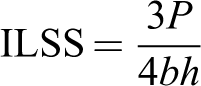
where P is the maximum compression load at fracture in newtons, b is the breadth of the specimen in millimeters, and h is the thickness of the specimen in millimeters. Each reported ILSS value was the average of more than eight successful measurements.
Results and discussion
Chemical composition analysis
In order to study the influence of the alkali treatment on the surface chemical composition of UHMWPE fibers, XPS was employed for the qualitative functional group analyses. A distinct change in functional groups on the surface of UHMWPE fibers can be seen after the surface treatment. The graphitic carbon and carbonyl groups decrease, whereas alcoholic hydroxyl/ether groups and carboxyl/ester groups produce 34% and 132% increase after the treatment. The amount of oxygen-containing functional groups in the state of carboxyl/ester groups is increased, which enhance the molecular polar and surface energy of the UHMWPE fibers. In addition, the ratio of activated to inactivated carbon atom of the untreated UHMWPE and treated UHMWPE fibers is 0.26 and 0.37, respectively, which is obtained from the calculation in Figure 1. It is deduced that interfacial adhesion between fiber and matrix could be improved when the UHMWPE fibers are modified with treatment, which results in the promotion of interfacial properties. After surface treatment, some oxygen-containing groups are introduced onto the fiber surface, which can be stated that the oxidation of the fiber surface is the most decisive contribution to improve the bond property between the fiber and adhesive.
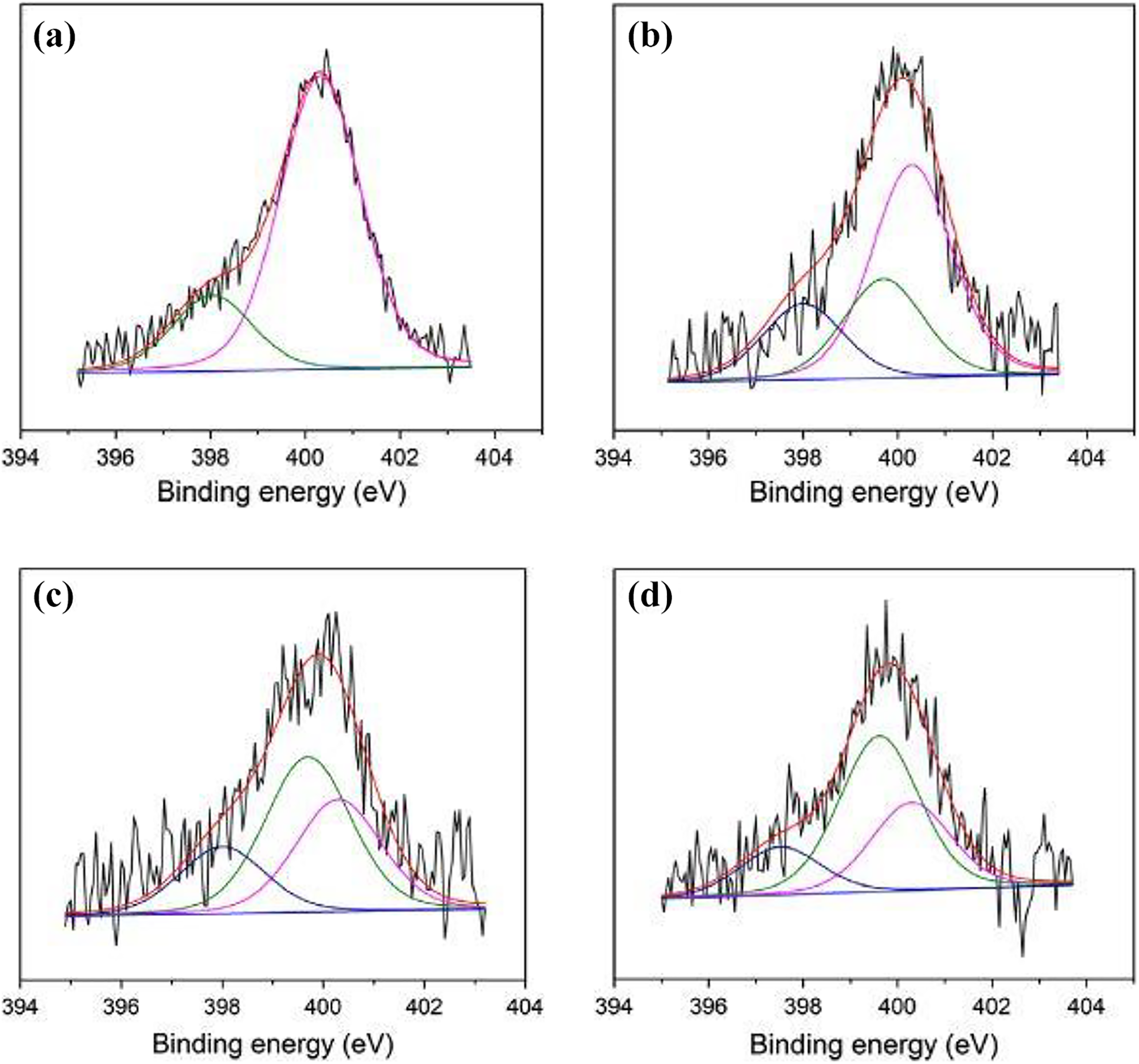
XPS N1s spectra of the UHMWPE fibers. (a) Untreated. Alkali treated for (b) 5 min, (c) 10 min, and (d) 15 min. XPS: X-ray photoelectron spectroscopy.
Surface morphology and roughness of the UHMWPE fibers
Figures 2 shows the single-fiber surface morphologies and roughness as a function of the different alkali treatment times, as observed by AFM, and Table 2 summarizes the results of the surface roughness of the untreated and alkali-treated UHMWPE fibers, as obtained from the AFM images. Ideally, the surface of the original UHMWPE fibers should be very clean and smooth, and the roughness of the UHMWPE fibers should increase linearly with the alkali treatment time.
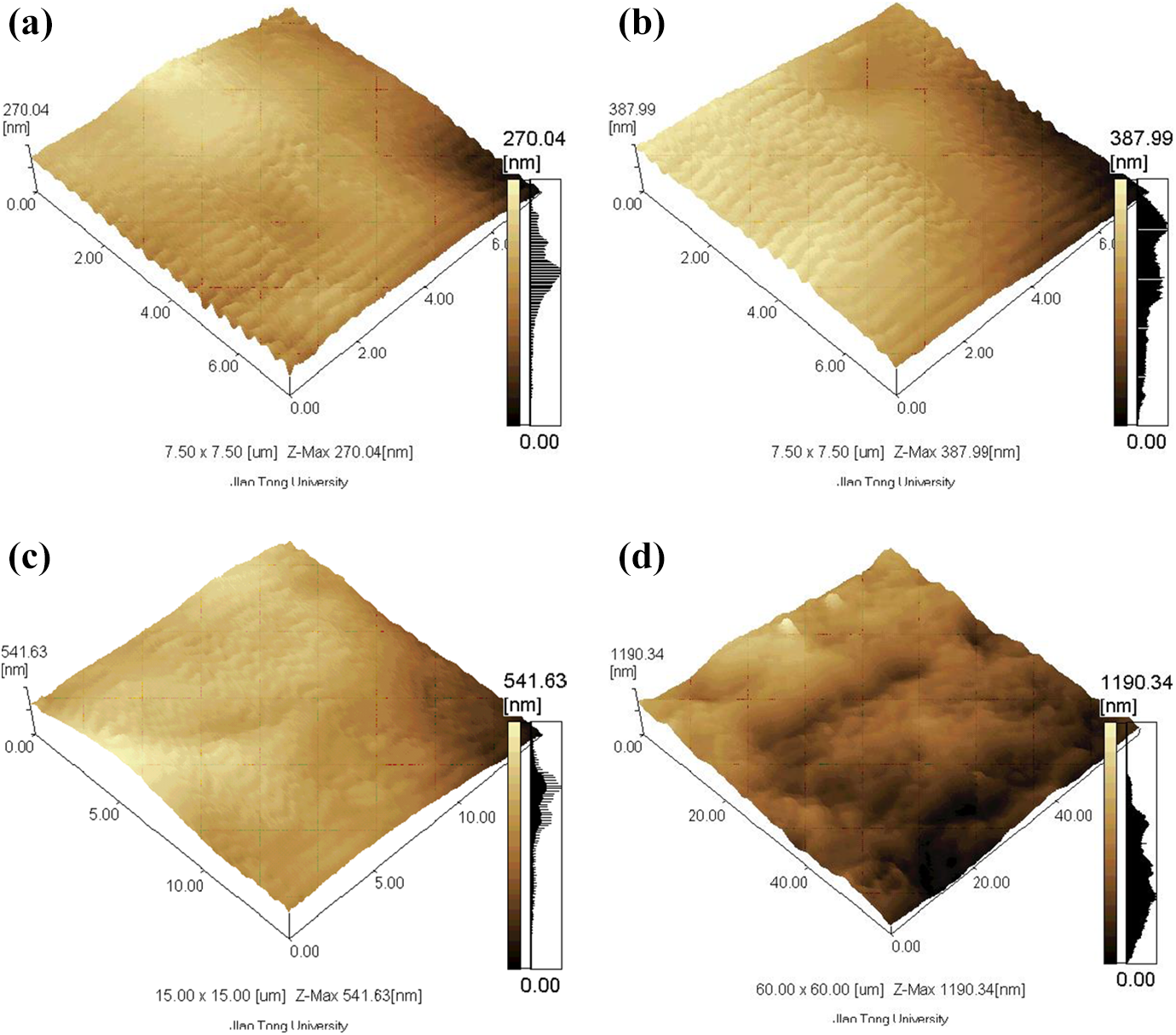
AFM images of UHMWPE fibers. (a) Untreated. Alkali treated for (b) 5 min, (c) 10 min, and (d) 15 min.
Table 1 shows the AFM images of UHMWPE fibers. After alkali treatment for 5 min, the root-mean-square roughness (R q) and arithmetic mean roughness (R a) were 387.89 and 298.04 nm, respectively, which were higher than the values of the original UHMWPE fibers (R q = 270.04 nm and R a = 200.15 nm). This was probably caused by the effect of alkali treatments. When the alkali treatment time was 10 min, the thickness increases with increasing treatment time, and the surface layer of the UHMWPE fibers became looser compared to the original UHMWPE fibers. This led to an increase in R q and R a.
Surface roughness of the UHMWPE fibers.
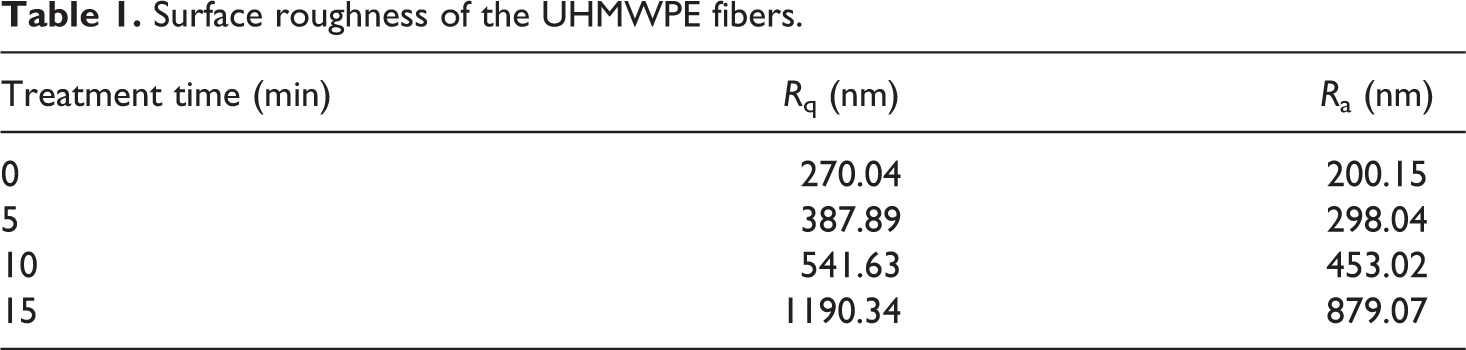
Figure 3 shows the mechanical properties of the UHMWPE fibers with different alkali treatment times. The tensile properties of UHMWPE fiber/PI composites were improved greatly when UHMWPE fibers are treated. There is a significant increase in the values of tensile strength and tensile modulus at 5 min treatment time. Further increase in treatment time decreases the tensile properties, which means excessive treatment tends to conglomerate and leads to the less uniformity of the system and thus reduces the integrity of the composites.
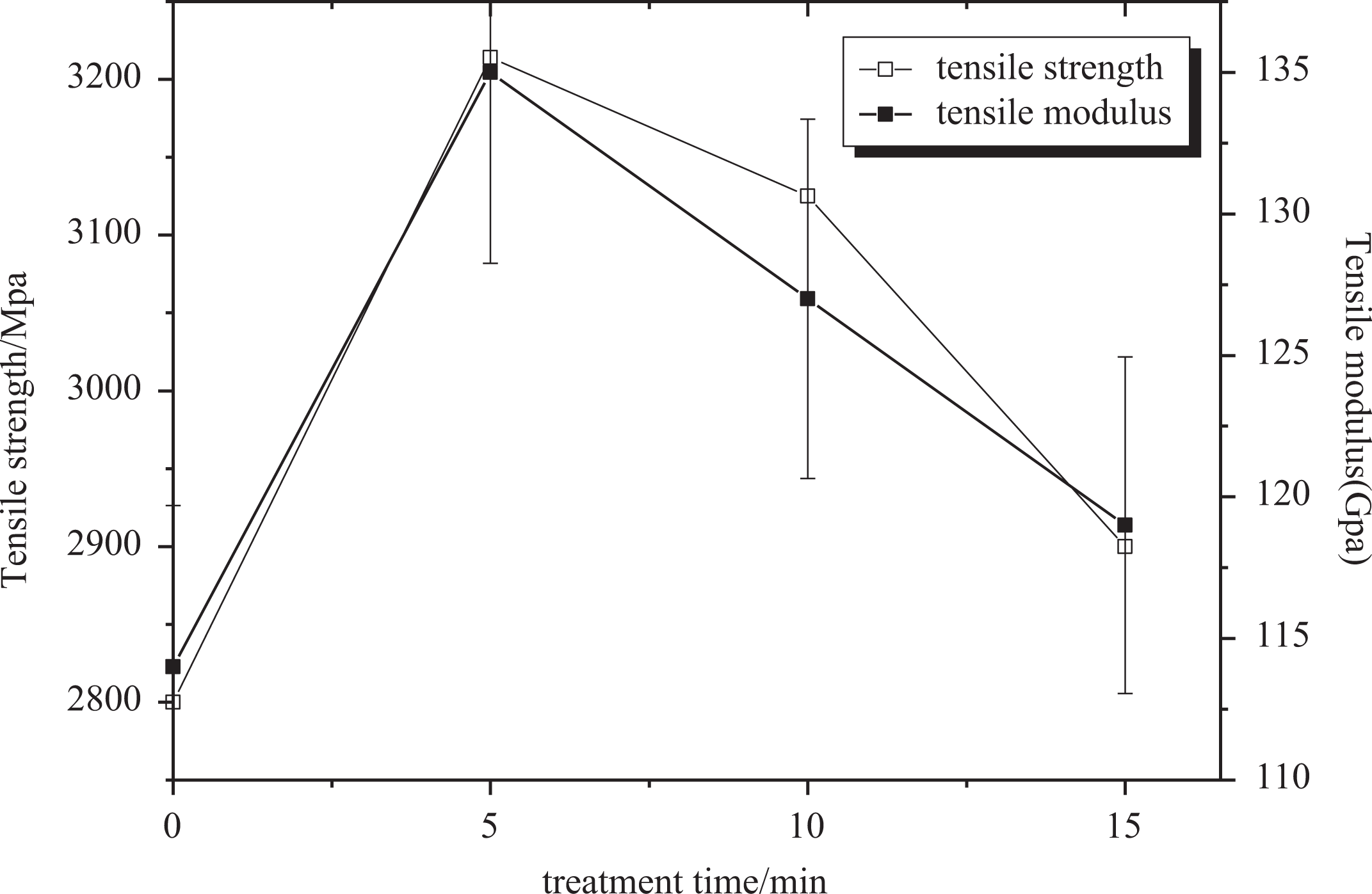
Mechanical properties of the UHMWPE fibers at different alkali treatment times.
It is proved that the better interfacial adhesion can be obtained through surface modification, as shown in Table 2. The displacement load curve of the composite is shown in Figure 4. The reasons attribute that the surface treatment was used as a method to increase the surface roughness of fiber surfaces, which increase the interlock between the fiber and matrix, leading to the increase in the IFSS of composites, which can effectively transfer the stress from matrix to the fiber, so the fiber can bring more reinforcement.
ILSS of the UHMWPE/PI composites.
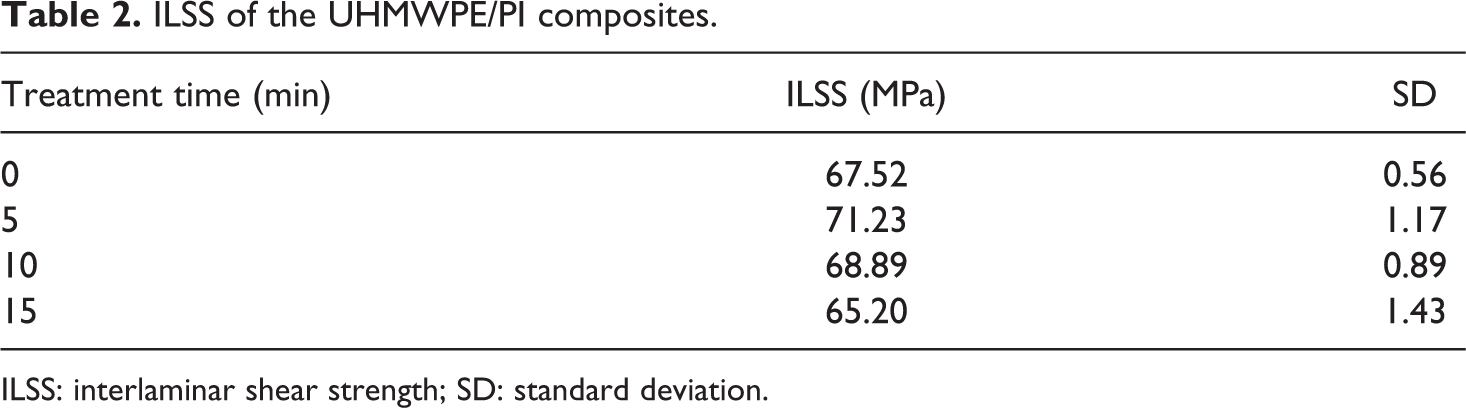
ILSS: interlaminar shear strength; SD: standard deviation.
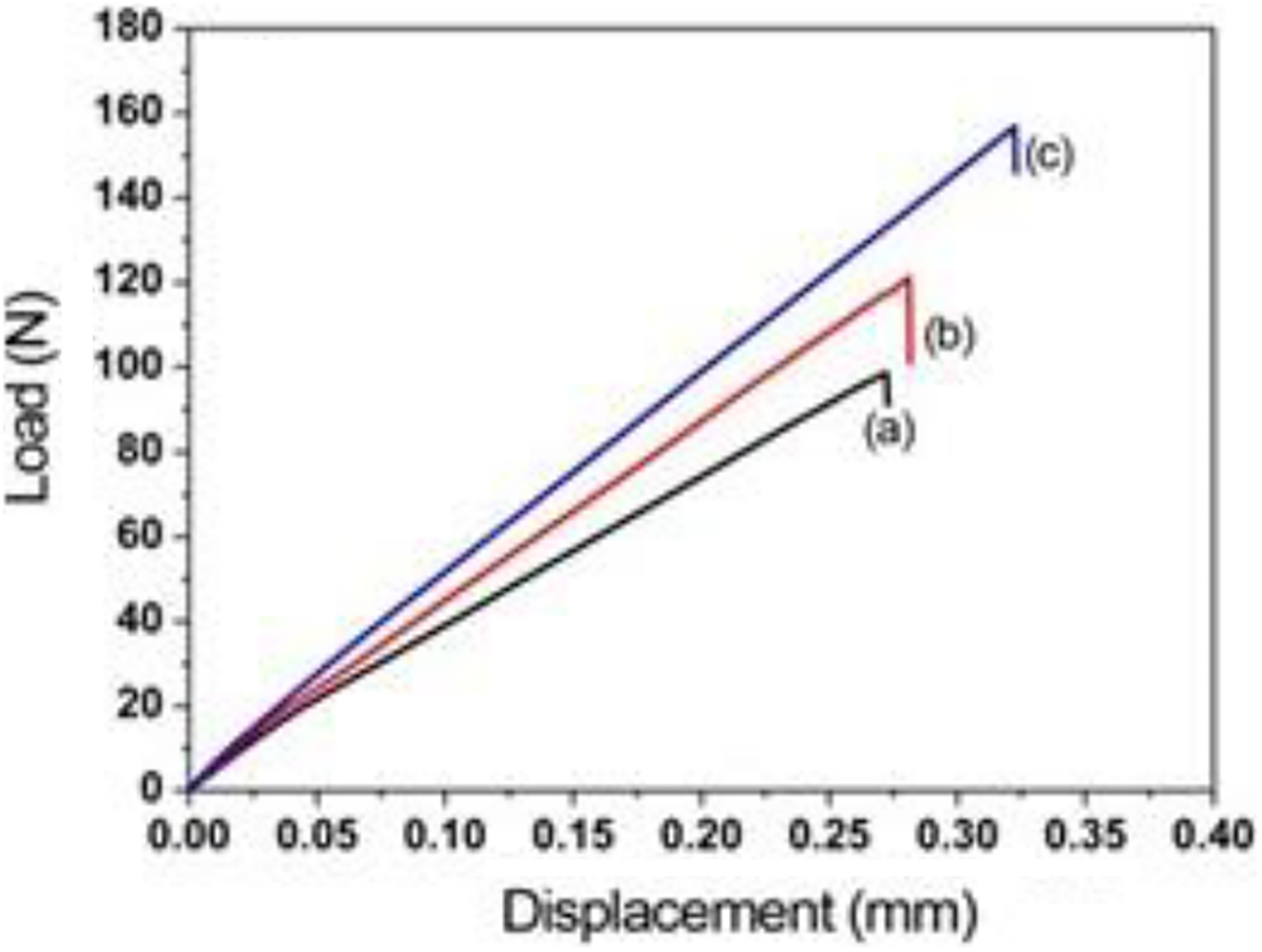
The displacement load curve of the composite.
To obtain a detailed explanation of the change in ILSS, the failure mechanisms of the UHMWPE fiber-reinforced PI composites were studied by SEM, and the images are shown in Figure 5. It can be seen from Figure 5(a) that the untreated UHMWPE fibers pulled out from the PI matrix with little damage to UHMWPE fibers, suggesting that the fracture mainly takes place on the interface between the fiber and the matrix. A coarse surface containing grooves is shown in Figure 5(b), which was obtained after the UHMWPE fibers were treated with alkali for 3 min, and the failure mode varies from interfacial failure to the matrix and/or fiber failure. It should be noticed that the ILSS value also reached its maximum value at the same time, indicating good adhesion behavior of the UHMWPE fibers and the PI matrix. Taking the 87% increase in the surface free energy and the XPS results into consideration, it can be proven that the alkali treatment plays a positive role in the improvement of the wettability and interfacial adhesion properties of UHMWPE fibers. However, the ILSS value shows that the adhesion behavior of the UHMWPE/PI composite does not improve monotonously with increasing alkali treatment time, which can also be seen from Figure 5(c) and (d). Defects on the surfaces of the UHMWPE fibers caused by excess alkali treatment behave as stress concentration points and initiate the fracture of the composites. The promoting effects to interfacial adhesion, caused by the improved surface wettability and surface roughness, are insufficient to compensate for the negative effects caused by the surface defects.
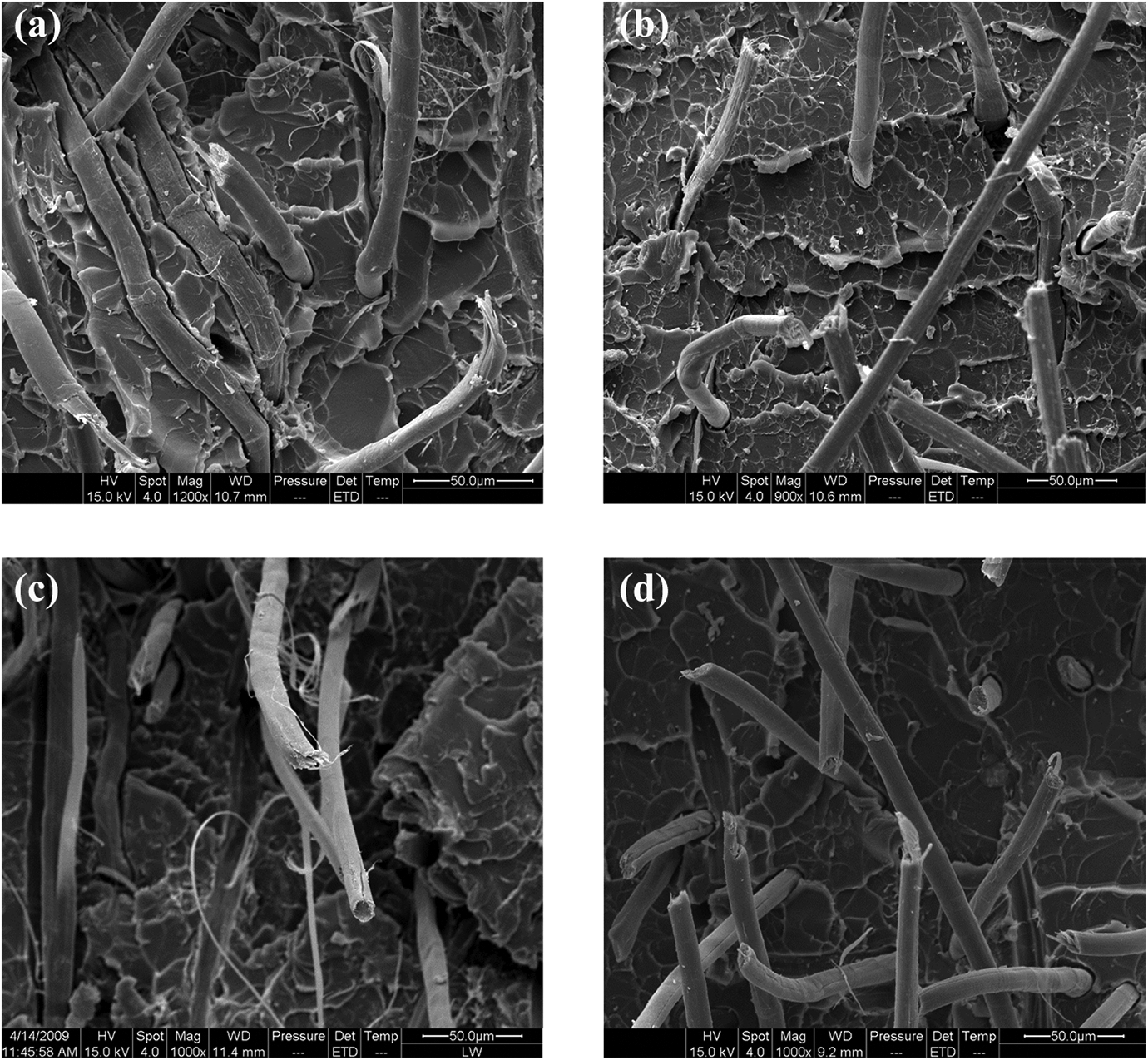
SEM images of the fractured UHMWPE/PI composites. (a) Untreated. Alkali treated for (b) 5 min, (c) 10 min, and (d) 15 min. SEM: scanning electron microscopy.
Conclusions
In summary, the effects of alkali treatment on the surface chemistry, morphology, surface free energy of UHMWPE fibers, and the interfacial adhesion behavior of UHMWPE/PI composites have been studied. The experimental results show that the alkali treatment has a significant influence on the roughness of UHMWPE fibers as well as the number of polar groups on their surface, leading to obvious improvements in the surface free energy and wettability of UHMWPE fibers. We also found that the optimum single-fiber strength and adhesion behavior of the composites can be obtained when the UHMWPE fibers are treated with alkali for 3 min; excessive alkali treatment has a negative effect on the mechanical properties of UHMWPE fibers and the adhesion behavior of the composites.
Footnotes
Declaration of Conflicting Interests
The author(s) declared no potential conflicts of interest with respect to the research, authorship, and/or publication of this article.
Funding
The author(s) disclosed receipt of the following financial support for the research, authorship, and/or publication of this article: This work was supported in part by the Thousand Talents Program of Shanghai, National Natural Science Foundation of China (grant no. 31300783), China Postdoctoral Science Foundation (grant no. 2014M561458), Doctoral Fund of the Ministry of Education Jointly Funded Project (grant no. 20123121120004), the Shanghai Maritime University Research Project (grant no. 20130474), the Shanghai Top Academic Discipline Project-Management Science and Engineering, and the High-Tech Research and Development Program of China (grant no. 2013A2041106).
