




Abstract
This article aims to formulations and properties of novel hybrid biomaterials containing unique four-phase combinations of polylactide (PLA), nanoclays, flax fibers, and coupling agents. A PLA-grafted maleic anhydride (PLA-g-MA) masterbatch containing 10 wt% PLA-g-MA was obtained by reactive extrusion and was further used, after dilution, as a coupling agent. In addition, three PLA masterbatches containing 10 wt% of three different grades of nanoclays, one untreated nanoclay and two organonanoclays, were also compounded. In a subsequent extrusion step, the nanoclay masterbatches were diluted in PLA down to 4 and 2 wt% while simultaneously incorporating in each one 20 wt% of short flax fibers. Those bio-nanocomposites were compounded without and with an equivalent content of PLA-g-MA, that is, with 4 and 2 wt%, respectively, through the dilution of 10 wt% PLA-g-MA masterbatch. The effects of the nanoclay chemistries, PLA-g-MA, and of flax fibers presence on the properties of bio-nanocomposite hybrid materials were investigated. X-ray diffraction, scanning electron microscopy, transmission electron microscopy, rheology, mechanical properties (tension, flexural, and Izod impact), and reprocess ability tests were used to characterize the bio-nanocomposite hybrid materials. In a second step, PLA-g-MA was replaced by an epoxy/styrene/acrylic copolymer for comparison purpose of their respective effect in bio-nanocomposite performances. Mechanical properties of bio-nanocomposites containing the second coupling agent were also evaluated. The effect of the epoxy/styrene/acrylic copolymer is discussed in comparison with the effect of PLA-g-MA.
Introduction
Polylactide (PLA) is one of the most currently used biopolymers obtained from renewable resources and responds at industry needs as well as at current environmental issues and economic concerns. PLA is a bio-thermoplastic with high clarity, high gloss, high stiffness, having properties similar to polystyrene and polyethylene terephthalate, with good film forming and barrier properties, easy to process using the standard existing equipment, while having competitive cost compared to commodity polymers. It is one of the most promising candidates for a greener plastic industry 1,2 and it is estimated that the PLA market could reach 800,000 metric tons in 2020. 3
PLA was initially used in biomedical field, such as drug delivery systems, healing products, and surgical implant devices. 4 –6 Because it is demonstrated to be a very promising biomaterial, the applications of PLA were extended to packaging field in the production of food containers, agricultural films, waste bags, 7 –9 and in the production of PLA fibers for the manufacturing of nonwoven structures, filtration products, hygiene products, and protective clothing. 10 –12 Also, PLA has been demonstrated to be a relevant thermoplastic matrix for nanocomposite or biocomposite materials which proved to have equivalent performances as the petroleum-based thermoplastics and having high potentials for many industries including automotive and construction ones. The scientific literature is very abundant in studies concerning PLA-based nanocomposites containing nanoclays and PLA-based biocomposites containing different types of cellulosic fibers. The use of nanoclays as nano-reinforcements in PLA, after achieving appropriate nanoparticles dispersion in the polymer matrix, leads to the obtention of nanocomposites with improved thermal stability, antimicrobial activity, and oxygen and water permeability. 13,14 On the other hand, the use of cellulosic fibers (such as flax, wood, bamboo, hemp, etc.) as reinforcements in PLA matrix helps to obtain, at some extend, biocomposites with value-added mechanical and thermal performances. 15 –20
Some studies were also carried out on hybrid biomaterials formulated based on PLA matrix by incorporating nanoclays and nanocelluloses. When cellulose nanocrystals, cellulose nanowhiskers, and cellulose nanofibrils were used in complementarity with nanoclays for PLA reinforcement, an increase in mechanical and thermal properties was observed. It seems that a synergy was developed between the nanocelluloses and nanoclays which, at some extend, upgraded the dispersion of both nanofillers in PLA matrix and enhanced further the hybrid bio-nanomaterial performances. 21 –23
Very limited studies have been reported on the reinforcement effect of cellulosic fibers by incorporating them in a PLA/nanoclay matrix. A study on the degradation kinetics and flammability of fully bio-based hybrid bio-nanocomposites based on PLA, utilizing treated banana fiber and nanoclays as reinforcing fillers, demonstrated that thermal stability and fire retardancy of the hybrid material were improved. 24 Same authors disclosed that the bio-nanocomposite containing 3 wt% of nanoclays has improved the mechanical and thermal properties, while the interfacial adhesion between the treated banana fibers/PLA and the bio-nanocomposite water sensitivity were upgraded significantly with the addition of nanoclays. 25,26
As per authors’ knowledge, this article is an original one since the unique combinations of PLA, nanoclays, flax cellulosic fibers, and coupling agents were compounded and characterized, and their performances were disclosed for the first time. This work is dedicated to the study of the effect of short flax fibers incorporated in different formulations of PLA/nanoclay nanocomposites in the presence of two different coupling agents. A masterbatch containing 10 wt% of PLA-grafted maleic anhydride (PLA-g-MA) and three masterbatches containing 10 wt% of three different nanoclays were compounded based on our previous published works. 14,27 Those masterbatches were diluted and further blended together to obtain blends containing 4 wt% clay/4 wt% PLA-g-MA and 2 wt% clay/2 wt% PLA-g-MA, respectively, while simultaneously incorporating 20 wt% of short flax fibers in each one. The effects of nanoclay chemistries, coupling agents, and flax fibers presence on the properties of obtained bio-nanocomposite hybrid materials were investigated. X-ray diffraction (XRD), scanning electron microscopy (SEM), transmission electron microscopy (TEM), rheology, mechanical properties (tension, flexural, and Izod impact), and reprocessing ability tests were used to characterize the obtained bio-nanocomposite hybrid materials. Finally, the effect of a second coupling agent, an epoxy/styrene/acrylic copolymer, on the mechanical performances of bio-nanocomposites was studied and compared with the effect of PLA-g-MA.
Experimental part
Materials and methods
The PLA used in this work, PLA8302D from NatureWorks (Minnesota, USA), is an amorphous grade with approximately 10% of
This work was separated into two phases, which are differentiated by the coupling agent used in the PLA bio-nanocomposite formulations. In the first phase, the PLA-g-MA coupling agent was produced in our semi-industrial scale laboratory by reactive extrusion. The extrusion line was a Leistritz 34 mm, with L/D of 42 and exploited at a flow rate of 10 kg/h. The reactive modification of the PLA was performed using 95% pure MA and a peroxide initiator 2,5-dimethyl-2,5-di-(tert-butylperoxy)-hexane (Luperox 101® or L101) obtained from Aldrich Chemical Company, Inc (Canada). The modified PLA was pelletized, dried, and then in a second step, used in partial replacement of neat PLA in the different formulations of PLA/nanoclay/flax during subsequent compounding processes. More details concerning the reactive extrusion parameters and the concentrations of reactive components necessary to graft MA on PLA can be found elsewhere. 27 A masterbatch containing 10 wt% PLA-g-MA was produced for further dilution in a subsequent extrusion step.
Three types of commercially available nanoclays were used in this study: Cloisite Na+, Cloisite 20A, and Cloisite 30B provide by Southern Clay Products (BYK Additives, Atlanta, USA ). Three masterbatches based on PLA containing 10 wt% from each nanoclay grade were prepared in the same twin-screw extrusion line as for PLA-g-MA. The specially designed screw configuration and the temperature profile are discussed in our previous work. 14 Finally, an extrusion process was applied for the dilution of each of three 10 wt% nanoclay masterbatches down to 2 and 4 wt% nanoclays while simultaneously incorporating 20 wt% of flax fibers. Each formulation of PLA/nanoclay/flax fibers was obtained without and with PLA-g-MA coupling agent. Table 1 presents the formulations of processed samples in this first phase. For further characterization, the hybrid bio-nanocomposites were molded by injection molding at 200°C. The raw materials and extruded pellets were adequately dried prior to compounding and to injection-molding, respectively.
Formulations of compounded bio-nanocomposites in phase 1.
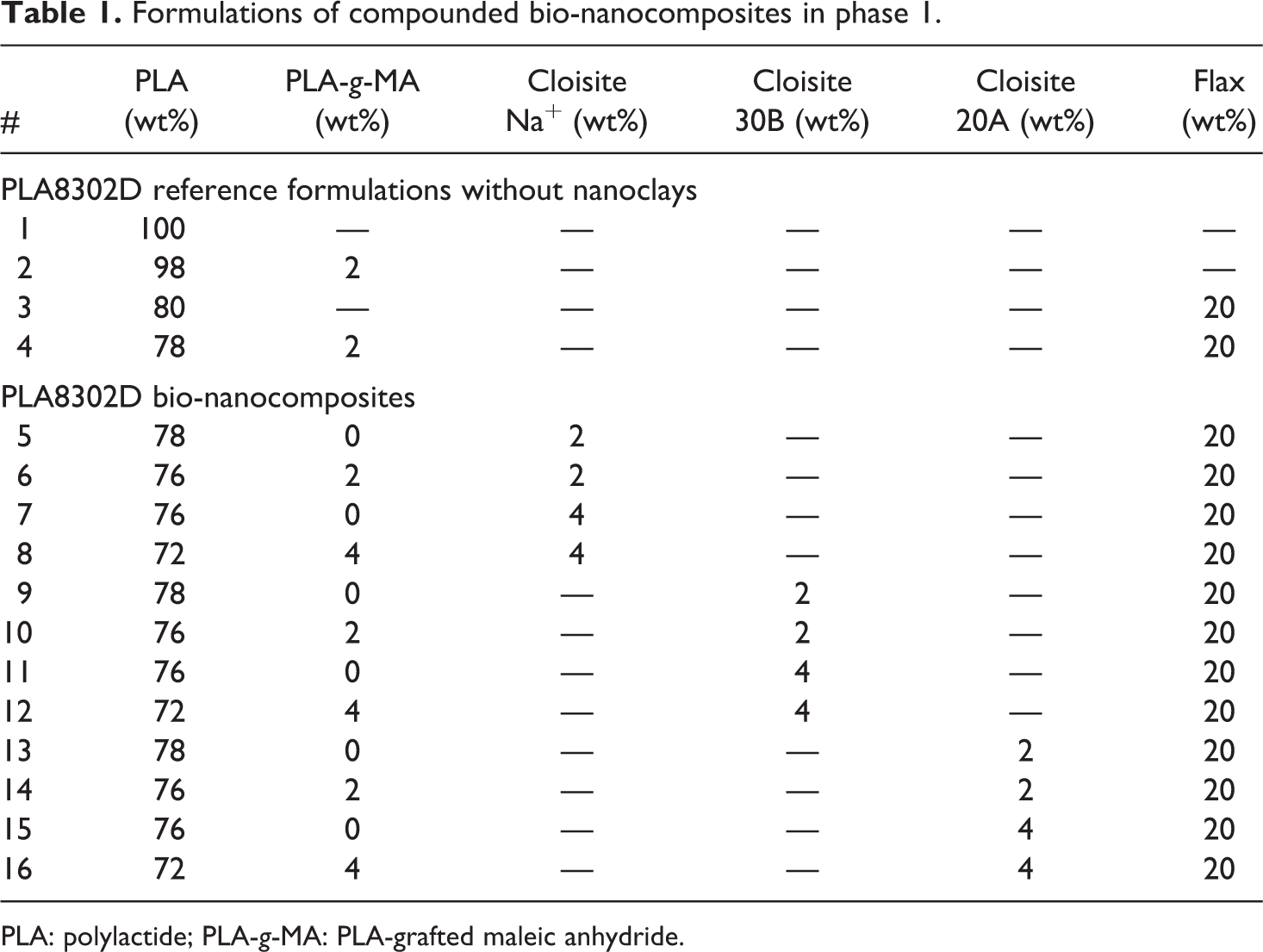
PLA: polylactide; PLA-g-MA: PLA-grafted maleic anhydride.
In the second phase of our development, new formulations of PLA bio-nanocomposites were extruded by replacing PLA-g-MA coupling agent by the additive CesaExtend (CE) OMAN698493 from Clariant (Clariant Canada Inc., Qc., Canada). CE additive is an epoxy/styrene/acrylic copolymer, provided in masterbatch form in a PLA carrier. It was demonstrated in our former work that CE could perform as a coupling agent between PLA matrix and cellulosic reinforcements. 19 Additionally, the epoxy groups of CE are believed to react preferentially with the carboxyl end groups of the PLA chains to form a branched chain structure. It has been reported that the addition of 2% CE in PLA upon extrusion increased its viscosity about one order of magnitude due to the branching effect. 24 Therefore, PLA nanocomposites were compounded by varying the CE concentration (1, 2, and 3 wt%) and the nanoclay type. PLA bio-nanocomposites containing CE, nanoclays, and 20 wt% flax fibers were further processed and characterized.
The flax fibers are fluffy and difficult to be fed in the extrusion line without compromising the steadiness of their flow rate. Therefore, the flax fibers were mechanically transformed with the purpose to increase their compactness by producing fiber pellets with a minimal fiber length degradation. Prior to extrusion, the cellulosic fiber pellets were dried at 80°C for 24 h. More details on flax fibers pelletizing can be found in our previous work. 28 The physical aspects of flax fibers before and after pelletizing step are presented in Figure 1.
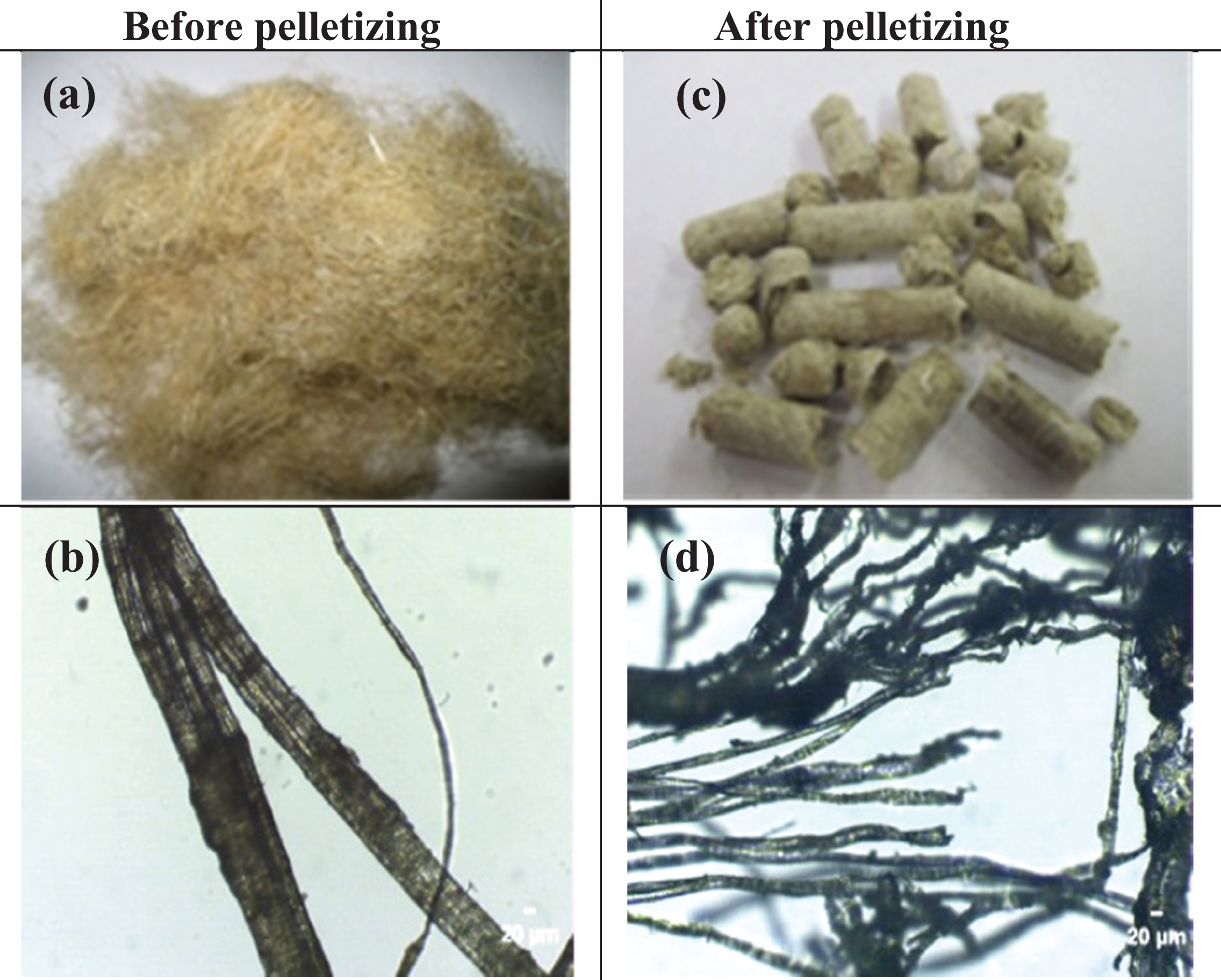
Physical aspects of flax fibers: (a) as received, (b) optical microscopy of technical fibers from bulk (the scale bar is 20 m), (c) pelletized, and (d) optical microscopy of elementary fibers extracted from pellets (the scale bar is 20 m).
Characterization
X-ray diffraction
XRD patterns were obtained by means of a Bruker Discover (Wisconsin, USA) 8 diffractometer operating at 40 kV and 40 mA with CuKα radiation (λ = 0.1542 nm). The data were collected over a range of scattering angles 2θ of 1–10° with the purpose to evaluate the dispersion of the nanoclays in the PLA matrix.
Morphology
SEM observations were carried out using a JEOL JSM-6100 (Massachusetts, USA) microscope at a voltage of 10 kV. Bio-nanocomposite surfaces were polished first, then coated with a gold/palladium alloy, and analyzed for the dispersion of flax fibers into the PLA matrix. Hitachi H9000 TEM (Japan) was used to observe the dispersion of the nanoclays in the PLA matrix. The samples for TEM were cut into thin sections of 50–80 nm in thickness at −100°C using an ultramicrotome with a diamond knife.
Rheology
The rheological properties were evaluated at 185°C using a rotational rheometer with a plate–plate geometry in a dynamic mode. The plate diameter was 25 mm while the gap was approximately 1.7 mm. Frequency sweeps were carried out to determine complex viscosity over a frequency ranging from 0.1 rad/s to 100 rad/s. The tests were conducted for a deformation of 15%. Care was taken to dry the materials at 50°C for 48 h right before testing and to test the thermal stability of hybrid materials during rheological measurement. The tests were conducted under a nitrogen blanket to minimize oxidation and to maintain a dried environment.
Mechanical properties
The extruded pellets were first dried and then injection molded using a Boy 34 tons press (BOY Machines, Inc., Germany) at a temperature of 200°C and a mold temperature of 30°C. The tensile testing was carried out according to ASTM D638. The flexural and Izod impact testing were carried out according to ASTM D790 and ASTM D256, respectively. At least five specimens were tested for each formulation.
The reprocess ability was also evaluated using the tensile mechanical test. Selected bio-nanocomposites were submitted five times at a grinding–injection molding cycle. After each cycle, the bio-nanocomposites were first conditioned and tensile strength and modulus were measured conforming to ASTM D638.
Results and discussions
XRD analysis of PLA nanocomposites
The nanoclays used in this work were selected with the purpose to vary their hydrophilic characteristics and ensure different degrees of affinity with PLA matrix. The intensity of the reaction that should occur between hydroxyl groups from nanoclay structures and carboxyl groups from PLA makes different nanoclays more or less favorable to produce PLA-clay nanocomposites. Therefore, an unmodified montmorillonite (MMT) and two grades of organic-modified nanoclays were selected. The unmodified MMT was the Cloisite Na+ which is a sodium aluminum magnesium silicate hydroxide with chemical formula (Na)0.33(Al, Mg)2(Si4O10)(OH)2·nH2O and a d-spacing d001 of 1.17 nm. The two grades of organic-modified nanoclays were Cloisite 30B, a sodium MMT modified with bis-(2-hydroxyethyl) methyl tallow alkyl ammonium cations and a d-spacing d001 of 1.85 nm, and Cloisite 20A, a sodium MMT modified with dimethyl, dehydrogenated tallow, quaternary ammonium cations and a d-spacing d001 of 2.42 nm. The Cloisite Na+ incorporates hydroxide groups in its chemical formula and also a high number of chemically complexed water molecules. It is supposed to be hydrophilic, therefore having high affinity potential with the hydrophilic PLA. However, its complexed water molecules could be a risk for PLA thermal stability during compounding. The Cloisite 30B contains two tallow groups of hydroxyl-ethyl which would manifest compatibility for the carboxyl groups of PLA. The Cloisite 20A discloses an ammonium central ion and no hydrophilic tallow groups.
Figure 2 presents XRD curves obtained for PLA/Na+ (Figure 2(a)), PLA/30B (Figure 2(b)), and PLA/20A (Figure 2(c)) nanocomposites. The X-ray intensity is a represented function of scattering angles (2θ) and the observed pics reflect the effects of nanoclay types and concentrations in PLA matrix. 14 For each graph, the presented XRD curves were for the neat nanoclay, PLA/10 wt% nanoclay masterbatch, and for PLA containing 4 and 2 wt% nanoclays, that is, after the masterbatches dilution. The diffraction patterns of the Cloisites Na+ reveal a peak at around 2θ = 7.5°. The diffraction patterns for the masterbatch PLA/10 wt% Na+ and the corresponding dilutions PLA/4 wt% Na+ and PLA/2 wt% Na+ present maximums at similar values of around 2θ = 9.1°, higher than for neat Cloisite Na+ (Figure 2(a)). In contrast, the diffraction pattern for the Cloisite 30B, observed at 2θ = 4.8°, was shifted to lower diffraction angle at around 2θ = 2.3° for the masterbatch PLA/10 wt% 30B and the corresponding dilutions PLA/4 wt% 30B and PLA/2 wt% 30B (Figure 2(b)). Similar to 30B, the diffraction pattern for the Cloisite 20A, observed at 2θ = 3.4°, was shifted to lower diffraction angle down to around 2θ = 2.3° for the masterbatch PLA/10 wt% 30B and the corresponding dilutions PLA/4 wt% 20A and PLA/2 wt% 20A (Figure 2(c)). It is well known that, when nanoclay intercalation/exfoliation is successful during the melt compounding, the melt polymer chains are inserted into the nanoclay galleries leading to a partial or complete separation of the platelets. Therefore, the XRD analysis discloses an increment of the d 001 basal spacing and, hence, a shift to the left of the diffraction peaks toward lower diffraction angles. In our case, for PLA/Cloisite Na+ nanocomposites, the diffraction peak is shifted to the right, and for PLA/Cloisite 30B and PLA/Cloisite 20A, it is shifted to the left. Based on these observations, it can be assumed that Cloisite Na+ collapsed in PLA matrix, and Cloisites 30B and 20A showed a certain level of intercalation and/or exfoliation.
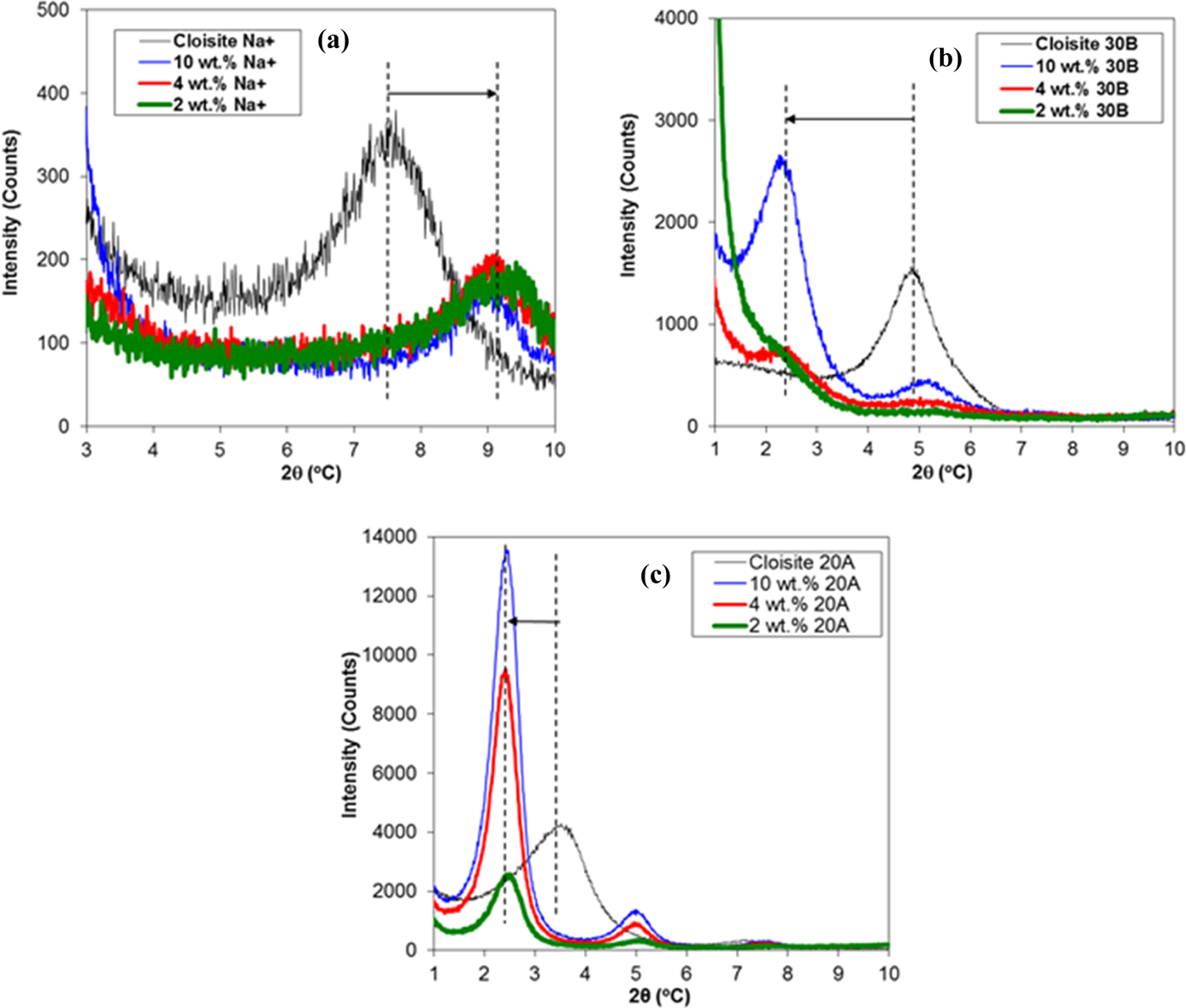
XRD curves of as received nanoclays and of PLA nanocomposites containing 10, 4, and 2 wt% nanoclays: (a) Cloisites Na+, (b) Cloisites 30B, and (c) Cloisites 20A. PLA: polylactide; XRD: X-ray diffraction.
SEM morphology of PLA nanocomposites
SEM analysis was done on polished surfaces of PLA/2 wt% Cloisite Na+, PLA/2 wt% Cloisite 30B, and PLA/2 wt% Cloisite 20A nanocomposites. Obtained SEM images are presented in Figure 3 where the white spots represent the nanoclays. In Figure 3(a), Cloisite Na+ discloses particle size ranged from 10 up to around 150 μm. Comparing to pristine Cloisite Na+ which, as per supplier, has a particle size less than 15 μm, it seems that Cloisite Na+ partially formed aggregates in PLA matrix during the nanocomposite compounding. Contrarily, in Figure 3(b), the Cloisite 30B proves to have a much better dispersion with a nanoclay particle size around 1 μm. Similarly, Cloisite 20A nanoclays disclose a better dispersion in Figure 3(c) with a nanoclay particle size varying from 1 μm to 5 μm. Therefore, it seems that Cloisite Na+ was probably collapsed in PLA matrix, and Cloisites 30B and 20A were intercalated and/or exfoliated. These observations endorse the results obtained previously in XRD analysis.
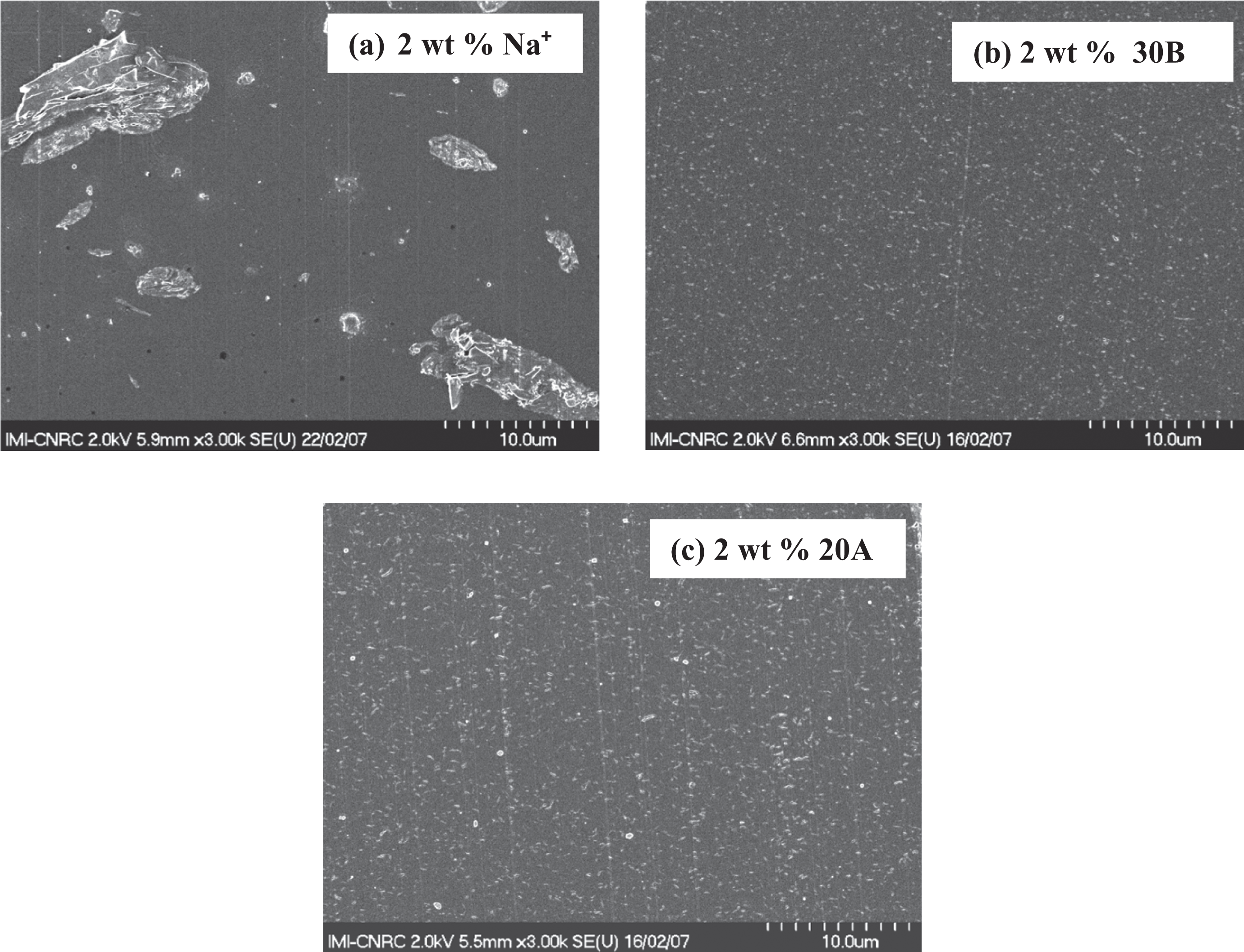
SEM micrographs of nanocomposites: (a) PLA/2 wt% Cloisite Na+, (b) PLA/2 wt% Cloisite 30B, and (c) PLA/2 wt% Cloisite 20A. PLA: polylactide; SEM: scanning electron microscopy.
The formation of aggregates of Cloisite Na+ in PLA matrix could be explained by Na+ dehydration due to the loss of complexed water molecules at compounding temperature (180°C) and, as a consequence, the collapse of inorganic layers during the processing. The uniform phase dimension as low as 1 μm demonstrates a potential exfoliation of the Cloisite 30B in PLA and is related to the good potential affinity to PLA trough the formation of hydrogen bonds between the hydroxyethyl groups of Cloisites 30B and carboxyl group of PLA. Finally, the slight uniform phase dimension ranging from 1 μm to 5 μm supports a potential intercalation of the Cloisite 20A that can be correlated with a lower hydrophilic character (central ion ammonium) and its increased spacing between layers compared to the hydrophilic Cloisite 30B. From XRD and SEM results, it could be assumed that the dispersion and intercalation of the Cloisite 30B were better than for Cloisite 20A. This would support the hypothesis that the presence of hydroxyl groups or complexed water molecules in nanoclays played an important role in their dispersion in PLA matrix.
TEM morphology of PLA nanocomposites
Figure 4 discloses a TEM image of PLA/2 wt% Cloisite 30B nanocomposite. The nanoclay platelets can be observed as dark lines or dark spots. The quality of the distributive/dispersive mixing in the compounding process is reflected by a certain level of uniformity of Cloisite 30B particles in PLA matrix and by the presence of a high number of delaminated and exfoliated nanoclay platelets that coexist with a lower number of only intercalated ones. These observations are consistent with the SEM and XRD results and emphasize our assumption that Cloisite 30B can be dispersed easily in PLA matrix due to the reaction occurring between its hydroxyethyl groups and the carboxyl groups of the PLA.
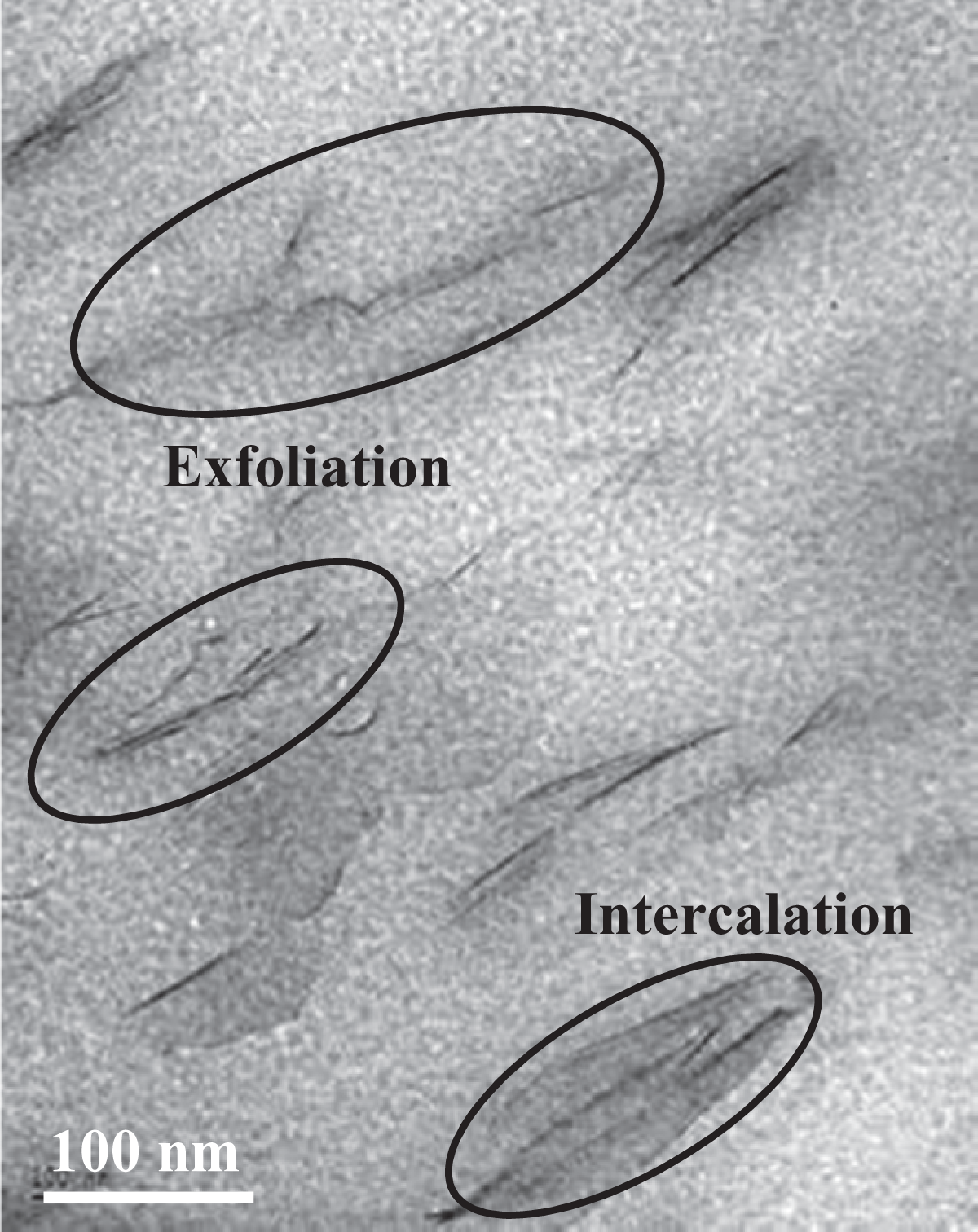
TEM image of the PLA nanocomposite containing 2 wt% Cloisite 30B. PLA: polylactide; TEM: transmission electron microscopy.
Rheology of PLA nanocomposites
As described in the experimental part, the nanocomposites were first processed and, in a second compounding step, the flax fibers were incorporated into the nanocomposites to finally produce hybrid bio-nanocomposite materials. The hybrids were compounded by diluting each of three 10 wt% nanoclay masterbatches down to 2 and 4 wt% nanoclays while simultaneously incorporating 20 wt% of flax fibers. PLA/2 wt% nanoclays/20 wt% flax fibers and PLA/4 wt% nanoclays/20 wt% flax fibers bio-nanocomposites were obtained without and with PLA-g-MA coupling agent (2 and 4 wt%, respectively). To better understand the flowing behavior of such hybrid materials, viscosity evaluations were done on reference PLA materials and on bio-nanocomposites. The rheological results are presented in Figures 5 and 6.
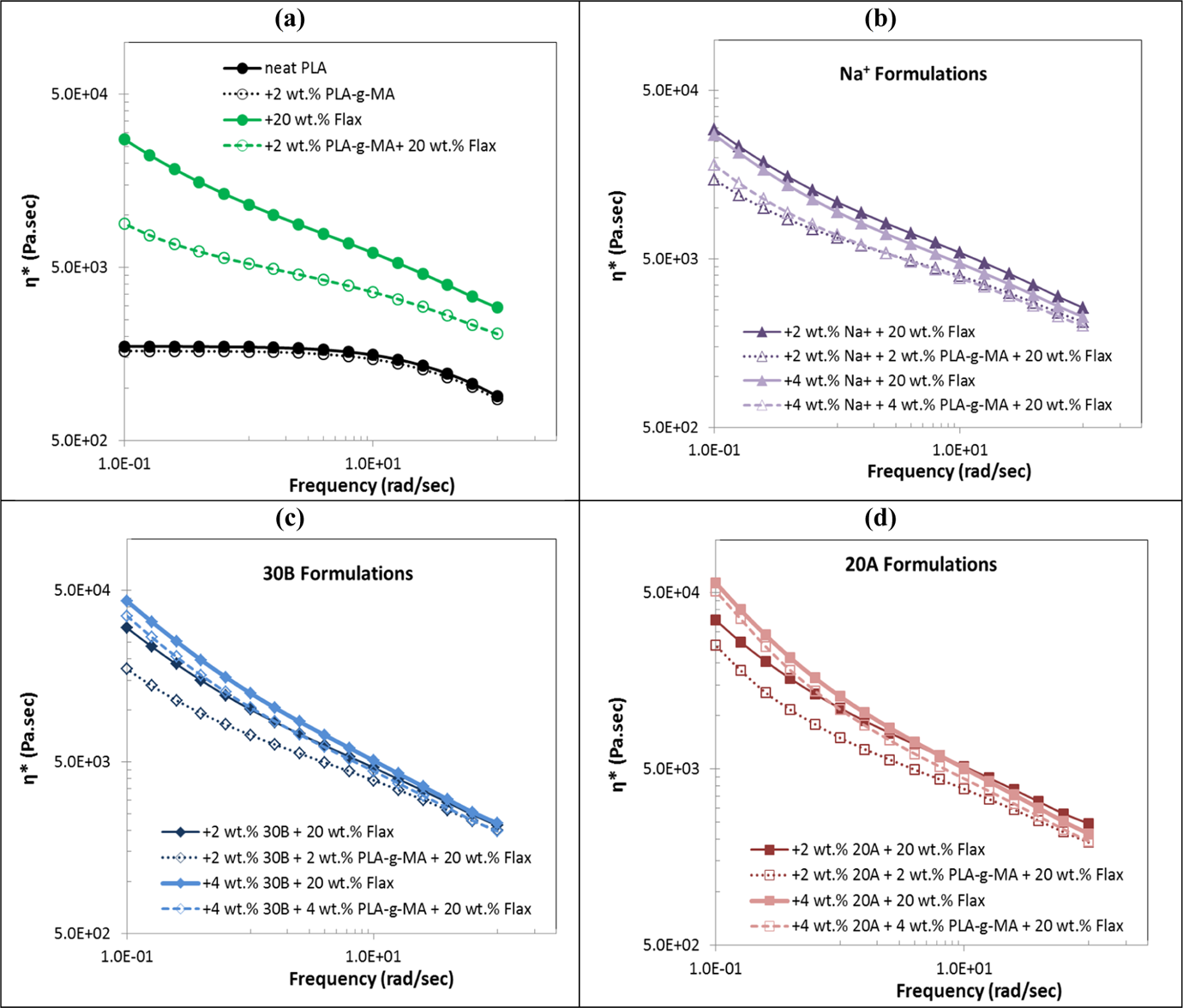
Viscosity curves for (a) PLA, PLA/PLA-g-MA and PLA biocomposite references, (b) Cloisite Na+ bio-nanocomposites, (c) Cloisite 30B bio-nanocomposites, and (d) Cloisite 20A bio-nanocomposites formulations. PLA: polylactide; PLA-g-MA: PLA-grafted maleic anhydride.
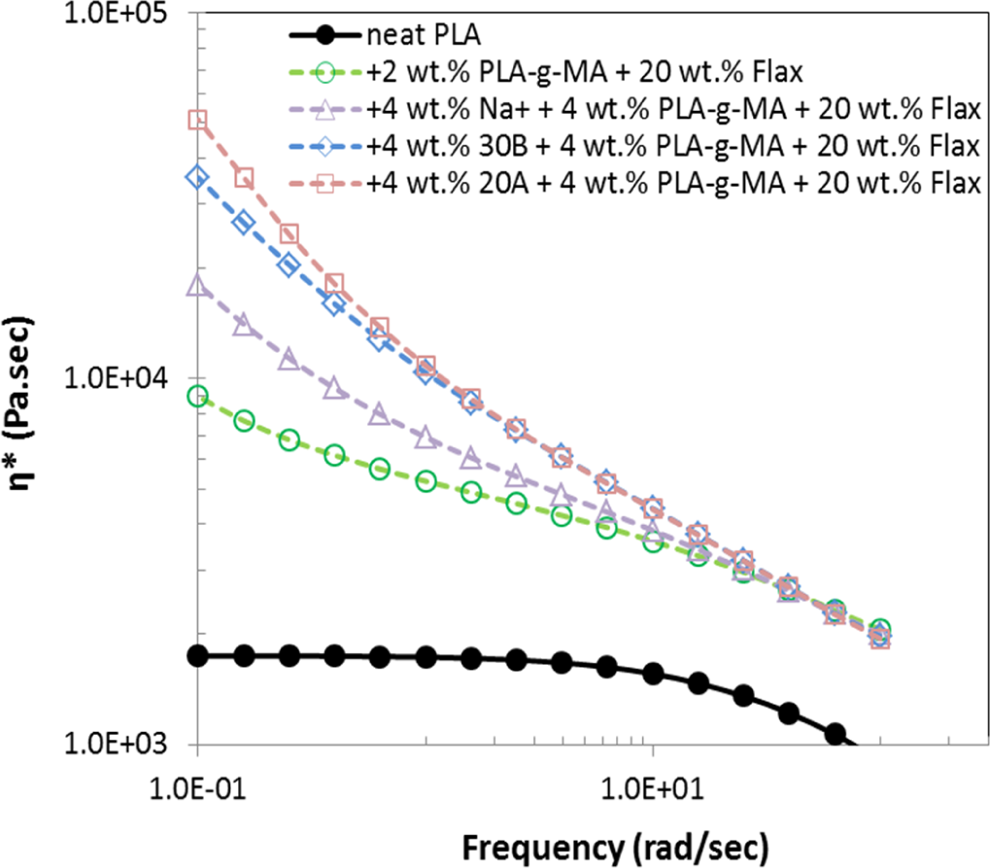
Complex viscosity as a function of frequency for neat PLA and the compatibilized bio-nanocomposites containing 4 wt% nanoclays. PLA: polylactide.
Figure 5(a) discloses the curves of complex viscosity as a function of frequency for pristine PLA, PLA/2 wt% PLA-g-MA, PLA/20 wt% flax, and the corresponding compatibilized biocomposites. These viscosity measurements were made with the purpose to evaluate first only the effects of the PLA-g-MA and flax on PLA behavior. The pristine PLA pellets used as reference presented a zero-shear viscosity of around 1.7 × 10³ Pa·s, a well-defined Newtonian plateau for frequencies below 10 rad/s, and a shear thinning behavior for frequencies higher than 10 rad/s. The PLA/2 wt% PLA-g-MA presented a similar behavior but with slightly lower zero-shear viscosity (1.6 × 10³ Pa·s). This behavior was expected due to lower viscosity of this coupling agent obtained by reactive extrusion compared to pristine PLA. 27 At a frequency of 0.1 rad/s, the PLA viscosity increased 17 times, up to 27.4 × 10³ Pa·s at flax fibers addition. At the same frequency, the compatibilized biocomposite containing 2 wt% PLA-g-MA disclosed as well a decrease in zero-shear viscosity down to 9 × 10³ Pa·s (only 5.5 times higher than the pristine PLA). As mentioned before, this decrease in zero-shear viscosity could be explained by the low viscosity of PLA-g-MA due to its low molecular weight. For the un-compatibilized and compatibilized biocomposites, the Newtonian plateau vanished in the investigated frequency range both presenting an accentuate shear thinning behavior.
Similar behaviors are disclosed in Figure 5(b) to (d) for the three PLA/nanoclay/flax fibers bio-nanocomposites without and with PLA-g-MA. In Figure 5(b), PLA/2 wt% Cloisite Na+/20 wt% flax fibers show a zero-shear viscosity of 29.5 × 10³ Pa·s, which is slightly higher than PLA/4 wt% Cloisite Na+/20 wt% flax fibers, that is, 27.3 × 10³ Pa·s. Increasing the Cloisite Na+ content from 2 wt% to 4 wt% didn’t increase the bio-nanocomposite viscosity. Similar observations can be made for the compatibilized counterparts, which presented zero-shear viscosities of 14.8 and 18.1 × 10³ Pa·s. It seems that Cloisite Na+ acts as filler rather than reinforcement. Contrarily, in Figure 5(c), the un-compatibilized and compatibilized PLA/Cloisites 30B/flax fibers disclose an obvious increase in viscosity when the Cloisite 30B content was increased from 2 wt% to 4 wt%. The zero-shear viscosity value of 30.2 × 10³ Pa·s for the un-compatibilized 2 wt% Cloisite 30B formulation increased up to 43.3 × 10³ Pa·s. Again, the viscosity decreased at the addition of PLA-g-MA, the zero-shear viscosity presenting the values of 17.4 × 10³ Pa·s at 2 wt% Cloisite 30B and of 35.5 × 10³ Pa·s at 4 wt% Cloisite 30B, respectively. Furthermore, in Figure 5(d), the un-compatibilized and compatibilized PLA/Cloisites 20A/flax fibers reveal also a difference between the formulation with 2 and 4 wt% Cloisite 20A. The zero-shear viscosity of 35 × 103 Pa·s for the un-compatibilized 2 wt% Cloisite 20A increased up to 57 × 103 Pa·s. As observed before, the viscosity decreased at the addition of PLA-g-MA, the zero-shear viscosity presenting the values of 25.1 × 10³ Pa·s at 2 wt% Cloisite 20A and of 51.1 × 10³ Pa·s at 4 wt% Cloisite 20A, respectively. The content of nanoclays in PLA and the interactions between PLA-nanoclays-coupling agent-flax were reflected in observed viscosity changes. Therefore, the increments in hybrid viscosity at increasing the Cloisites 30B and 20A contents from 2 wt% to 4 wt% can be explained by a higher chemical interaction between the constituents due to a higher contact surface offered by the nanoclays. The higher surface contact of Cloisites 30B and 20A can result not only from their concentration increment but also from their intercalation and/or exfoliation. It was not the case for the Cloisite Na+. These facts are in agreement with the conclusions resulted from XRD, SEM, and TEM analyses. Therefore, the rheological analysis withstands with the hypothesis that Cloisite Na+ was collapsed in PLA matrix, while Cloisites 30B and 20A were intercalated and/or exfoliated.
Figure 6 presents the complex viscosity as a function of frequency for the neat PLA, PLA/20 wt% flax fibers/2 wt% PLA-g-MA, and of the three compatibilized bio-nanocomposites containing 4 wt% nanoclays and 4 wt% PLA-g-MA. The zero-shear viscosity of neat PLA increased at 20 wt% flax addition and this viscosity was further increased in the presence of 4 wt% nanoclays. These viscosity increments due to the nanoclay’s presence were function of the nanoclay type. The effect of nanoclays on the increment of bio-nanocomposites viscosity is observed in the order Na+ < 30B < 20A, while the bio-nanocomposites with Cloisites 30B and 20A present almost similar viscosity values for the frequency range studied. This withstand with previous conclusions that Cloisite Na+ collapsed/agglomerated in PLA matrix and acted as filler, and the intercalation and/or exfoliation of Cloisites 30B and 20A in PLA matrix that acted rather as reinforcements.
SEM morphology of hybrid bio-nanocomposites
The hybrid performances are not only relied to the dispersion, distribution, and interactions of nanoclays into and with the PLA matrix but are also related to the presence flax fibers. To better understand their role, SEM observations were done first on polished transversal surfaces of injected bio-nanocomposites. Figure 7 reveals the morphological aspects of bio-nanocomposites with 2 wt% nanoclays/2 wt% PLA-g-MA (left column) and 4 wt% nanoclays/4 wt% PLA-g-MA (right column) by varying the nanoclay type from top to bottom. For comparison purposes, all micrographs are presented at the same magnification. It should be first noted that the selected extrusion parameters and screw configuration resulted in a good split out of flax pellets and a good dispersion of flax fibers. 28 Some shives could be seen and this was expected since the industrial flax used in this work contained 10 wt% impurities, mainly shives. It can be observed that the flax fiber lengths are very similar in all micrographs. Measurements of fiber length were made using a fiber qualitative analyzer device and reveled a Lw = 3.310 mm (standard deviation (SD) = 0.005) for initial flax fibers and a Lw = 2.954 mm (SD = 0.005) for flax fibers after pelletizing step. Similar evaluation done on reclaimed flax fibers from bio-nanocomposites by PLA matrix solubilization in dichloromethane demonstrated that the flax fibers were shortened during the compounding down to Lw = 0.500 mm (SD = 0.005). Therefore, due to the similarities in flax fiber lengths in different bio-nanocomposite formulations, the final mechanical properties of these bio-nanocomposites will be influenced only by the coupling agent presence, nanoclay concentrations, and their interaction with PLA.
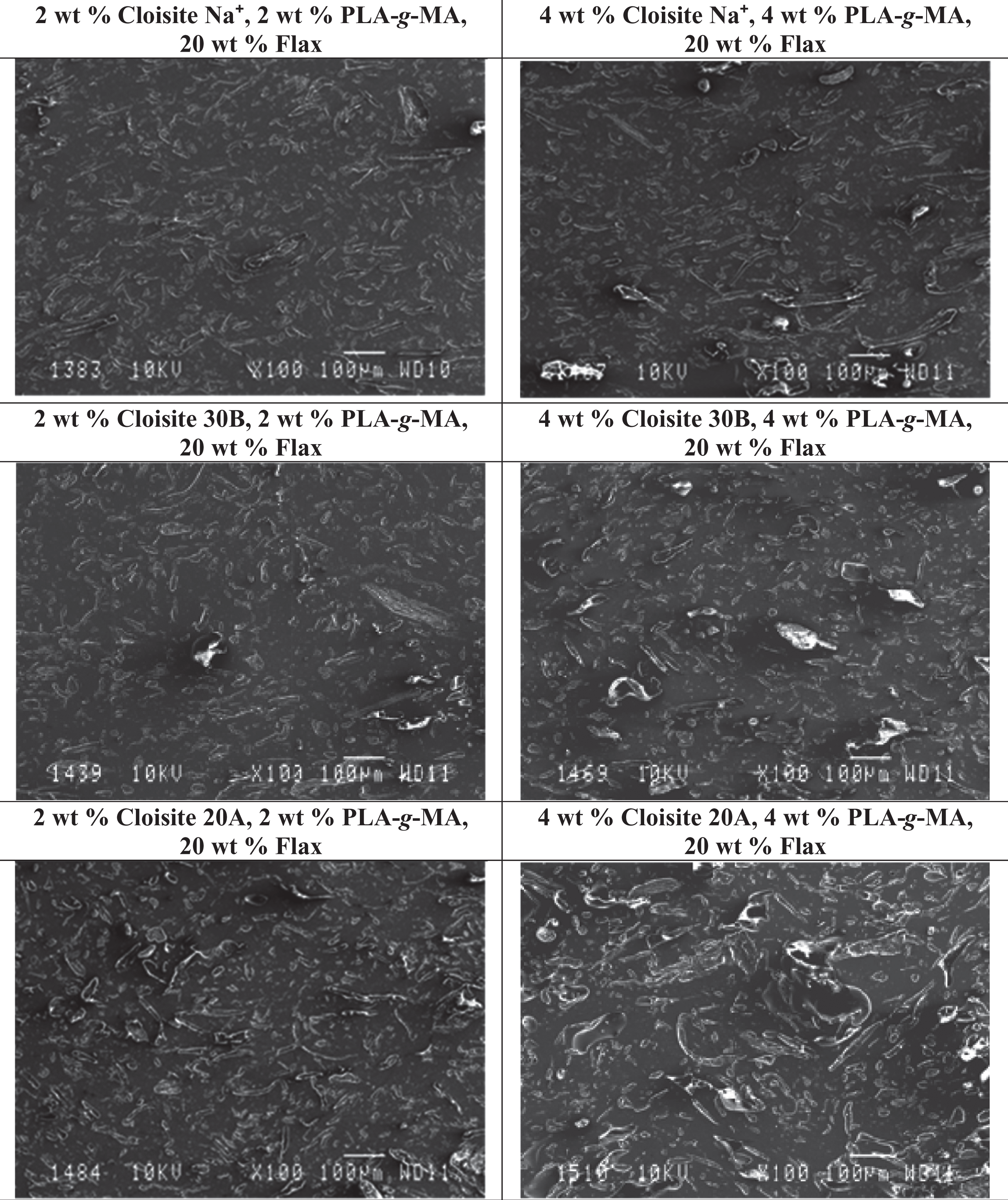
SEM images of polished surfaces of hybrid bio-nanocomposite. SEM: scanning electron microscopy.
The SEM micrograph presented in Figure 8 discloses, at higher magnifications, the morphological aspects of rare flax shives and/or flax fiber bundles in bio-nanocomposites. PLA islets can be observed in the interior cavities of the flax fibers and these types of microdetails were observed for all bio-nanocomposites processed in this work. In consequence, it can be stated that the PLA melt wetted also the internal surface of the flax fiber components during the compounding due to their innate affinity that was boosted by the presence of the coupling agent.
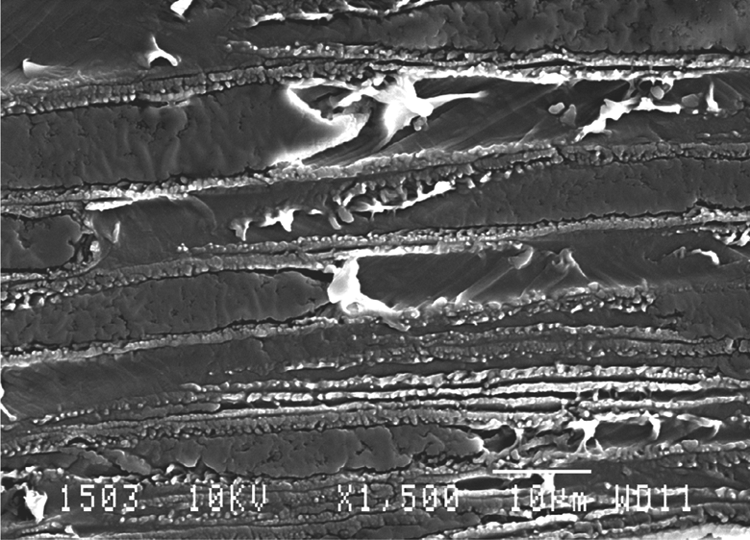
SEM microdetails of bio-nanocomposite morphology. SEM: scanning electron microscopy.
Mechanical properties of hybrid bio-nanocomposites
Mechanical properties of bio-nanocomposites containing PLA-g-MA as coupling agent are presented in Figures 9 to 11 and full mechanical results are disclosed in Table 2. Tensile properties, that is, tensile strength and tensile modulus, are presented in Figure 9(a) and (b), respectively. The white bars represent the tensile properties of reference materials without nanoclays, that is, the pristine PLA, PLA/2 wt% PLA-g-MA, PLA/20 wt% flax, and PLA/20 wt% flax/2 wt% PLA-g-MA biocomposites. The light-gray bars represent the tensile properties of bio-nanocomposites containing 2 wt% nanoclay, without and with 2 wt% PLA-g-MA. The bio-nanocomposites containing 4 wt% nanoclay, without and with 4 wt% PLA-g-MA, are represented by the dark-gray bars. The tensile strength of pristine PLA slightly increased at the addition of PLA-g-MA or flax fibers, from 55.3 MPa up to 57.1 MPa and to 59.5 MPa. The tensile strength of un-compatibilized biocomposites was around 8% higher than PLA and this indicate, at some degree, an innate affinity between the PLA and the hydrophilic flax fibers. When PLA and flax fibers were compatibilized with 2 wt% of PLA-g-MA, the tensile strength regressed at 56.5 MPa. The PLA-g-MA, that proved its efficiency in PLA/thermoplastic starch blends, 27 seems to be less efficient against cellulosic flax fibers even if the chemical structure of cellulose from fibers is very similar to dextrose chemical structure from starch.
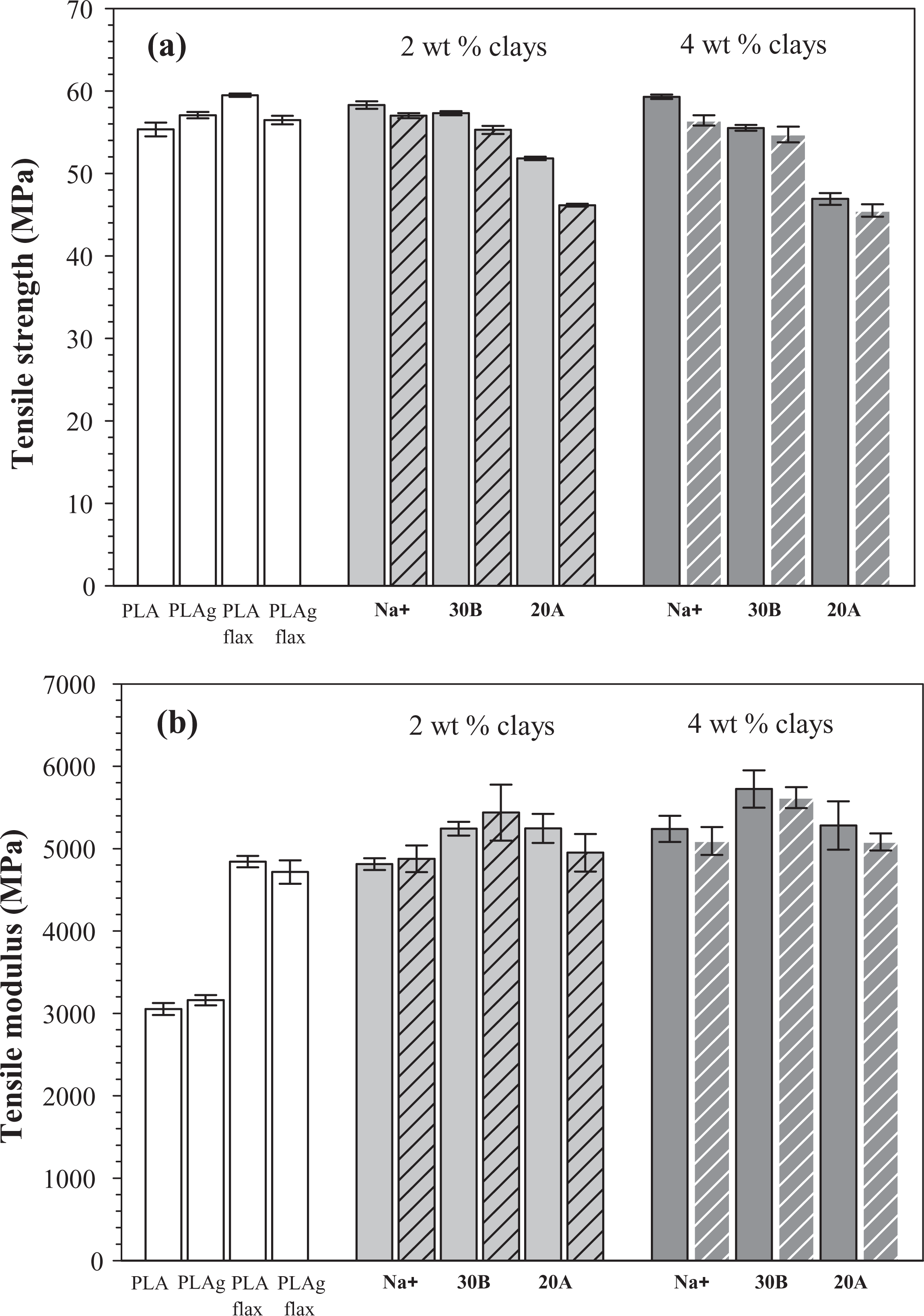
(a) Tensile strength and (b) tensile modulus of PLA references (white bars) and of PLA/nanoclays/flax fibers bio-nanocomposites compounded without (full-gray bars) and with PLA-g-MA (cross-hatched bars). PLA: polylactide; PLA-g-MA: PLA-grafted maleic anhydride.
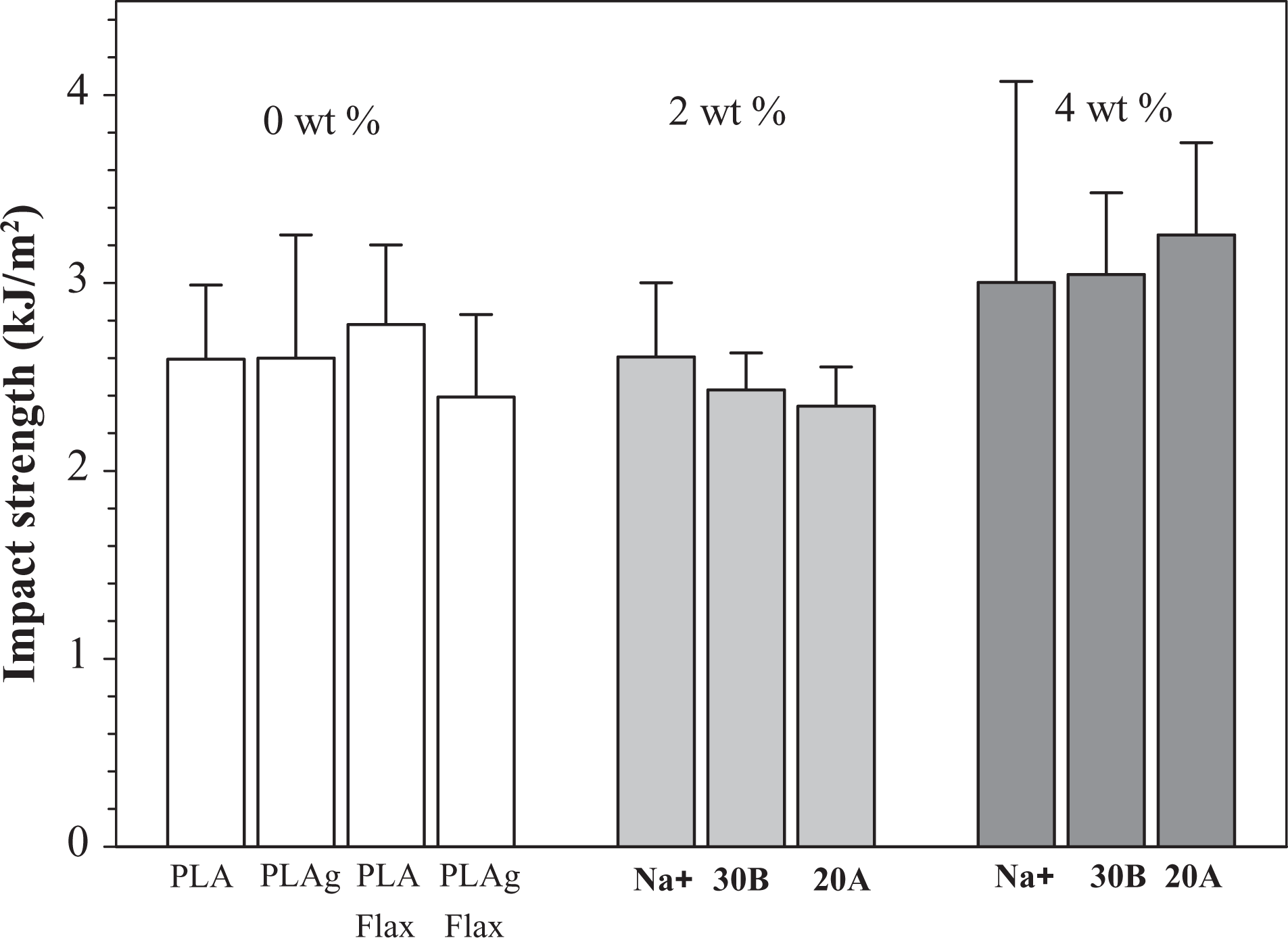
Izod impact strength of PLA/nanoclays/flax bio-nanocomposites.
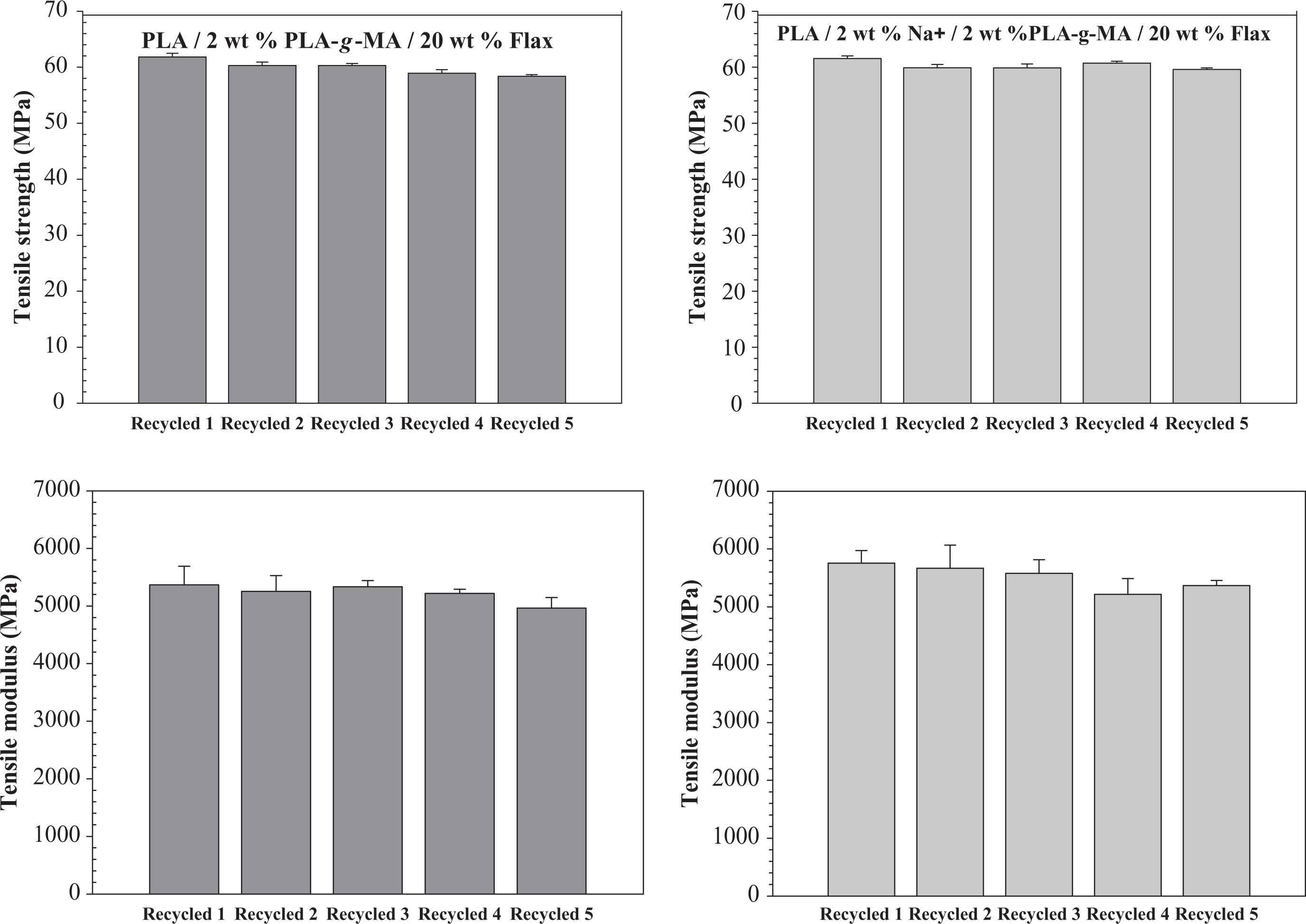
Tensile properties of recycled PLA/flax biocomposites and of recycled PLA/nanoclay/flax bio-nanocomposites.
Mechanical properties of PLA/PLA-g-MA/nanoclays/flax nano-biocomposites.a
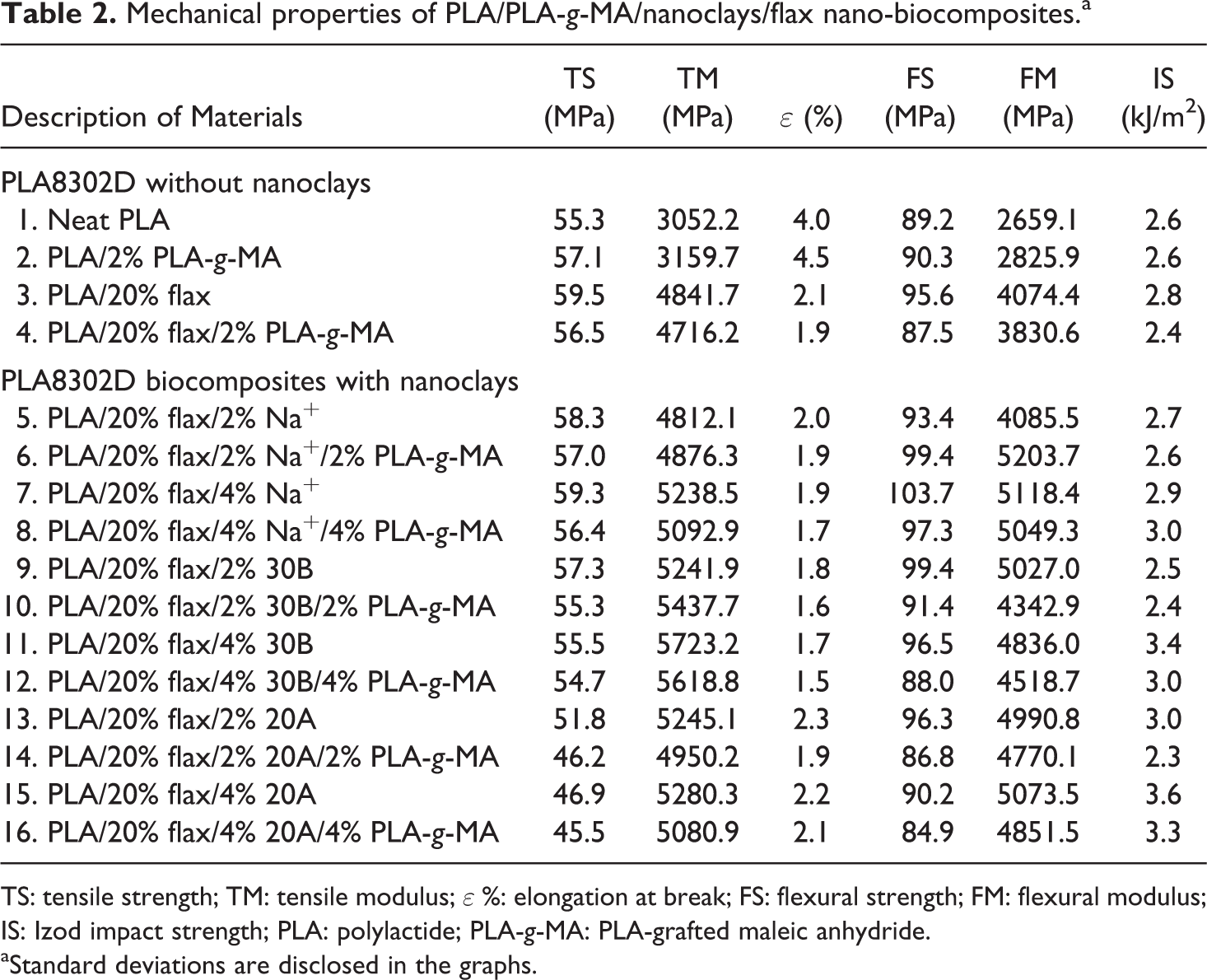
TS: tensile strength; TM: tensile modulus; ε %: elongation at break; FS: flexural strength; FM: flexural modulus; IS: Izod impact strength; PLA: polylactide; PLA-g-MA: PLA-grafted maleic anhydride.
aStandard deviations are disclosed in the graphs.
Regarding the bio-nanocomposites, the first observation is that the addition of PLA-g-MA slightly decreased the tensile strength in all cases. The compatibilized bio-nanocomposites (bars with oblique lines) containing 2 wt% nanoclay/2 wt% PLA-g-MA and 4 wt% nanoclay/4 wt% PLA-g-MA disclosed very similar performances compared to neat PLA. For bio-nanocomposites containing Cloisites 30B and 20A, the tensile strength decreased under the PLA value. These decreases of tensile strengths may possibly be explained first by the low viscosity of PLA-g-MA incorporated in these compatibilized formulations. Secondly, it is possible that some undesirable/unexpected chemical interaction took place between the PLA-g-MA and the MA remained unreacted in PLA-g-MA masterbatch with the cellulose from flax and different chemical groups from nanoclays.
In terms of tensile modulus, the un-compatibilized and compatibilized PLA/20 wt% flax presented an around 55% increment, from 3050 MPa for neat PLA to around 4800 MPa. Tensile modulus of bio-nanocomposites containing Cloisites Na+ and 20A disclosed similar values, that is, around 5000 MPa (64% higher than PLA), while the bio-nanocomposites with Cloisite 30B disclosed a modulus of around 5500 MPa (80% higher comparing to neat PLA). Those increments in tensile modulus reflected the reinforcement effect of flax fibers. In terms of nanoclays, the increase in tensile modulus reflects the effect of the intercalation/exfoliation of each nanoclay type. The highest effect is observed for the bio-nanocomposite containing 2 and 4 wt% Cloisite 30B. As seen before from XRD and SEM results, the dispersion and interaction of the Cloisite 30B in PLA are better than that obtained with Cloisite 20A. These tensile results strengthen the XRD and SEM results.
Results from Izod impact tests are presented in Figure 10 and in the last column of Table 2. The impact strength of PLA, 2.6 kJ/m2, didn’t change at the addition of 2 wt% PLA-g-MA nor at the addition of 20 wt% flax fibers. Furthermore, in the case of bio-nanocomposites, the content of 2 wt% nanoclays had no effect on impact performance while an increment up to 3–3.6 kJ/m2 was observed in the case of formulations containing 4 wt% nanoclays. It seems that no strong interactions exist between the anhydride groups of the PLA-g-MA coupling agent, the hydroxyl groups of flax fibers, and the functional groups of the nanoclays. Stronger interactions will be necessary for such hybrid materials to overcome the crack formation issue and to increase their impact strength.
Results from recycling experiments done on PLA biocomposites and PLA bio-nanocomposites are presented in Figure 11. It can be easily observed that after five grinding cycles/injection molding, the biocomposites and the bio-nanocomposites presented similar values of tensile strength and tensile modulus. It can be concluded that no important degradation took place during the extrusion process (180°C) and during the repetitive injection-molding process (185–190°C). Therefore, PLA/flax biocomposites and PLA/flax/nanoclay bio-nanocomposites can be easily recycled and this represents a great benefit from environmental and economical point of view.
As seen from previous rheological and mechanical results, PLA-g-MA proved to be a less efficient coupling agent than anticipated when used in PLA bio-nanocomposites. The observations ensued from the first phase of our work revealed that the addition of PLA-g-MA decreased slightly the tensile properties for all processed hybrid materials. This was explained by the lower viscosity of the reactive extruded PLA-g-MA, by the possibility that the unreacted MA contributed at the scission of PLA chains or/and the PLA-g-MA produced unwanted chemical reactions when interacting with the functional tails of nanoclays.
Hybrid materials of bio-nanocomposites were formulated using CE instead of PLA-g-MA in the second phase of our development. CE, as demonstrated in our previous work, could perform as a coupling agent between PLA matrix and celluloses and, also, could react with the carboxyl end groups of PLA chains to form a branched chain structure. 29 For that reason, PLA nanocomposites were compounded by varying the CE concentrations from 1 wt% up to 3 wt% and the nanoclay type. PLA bio-nanocomposites were also compounded by the addition of 20 wt% flax fibers at nanocomposites containing CE. Table 3 presents the list of processed samples with CE. Mechanical properties of obtained bio-nanocomposites are disclosed in Figures 12 to 14. The cumulative mechanical results are disclosed in Table 4. For comparison purposes, the same four references are presented as in previous graphs, that is, neat PLA, PLA/2 wt% PLA-g-MA, PLA/20 wt% flax, and PLA/2 wt% PLA-g-MA/20 wt% flax.
Formulations of compounded PLA/nanoclays/flax bio-nanocomposites in the presence of CE.
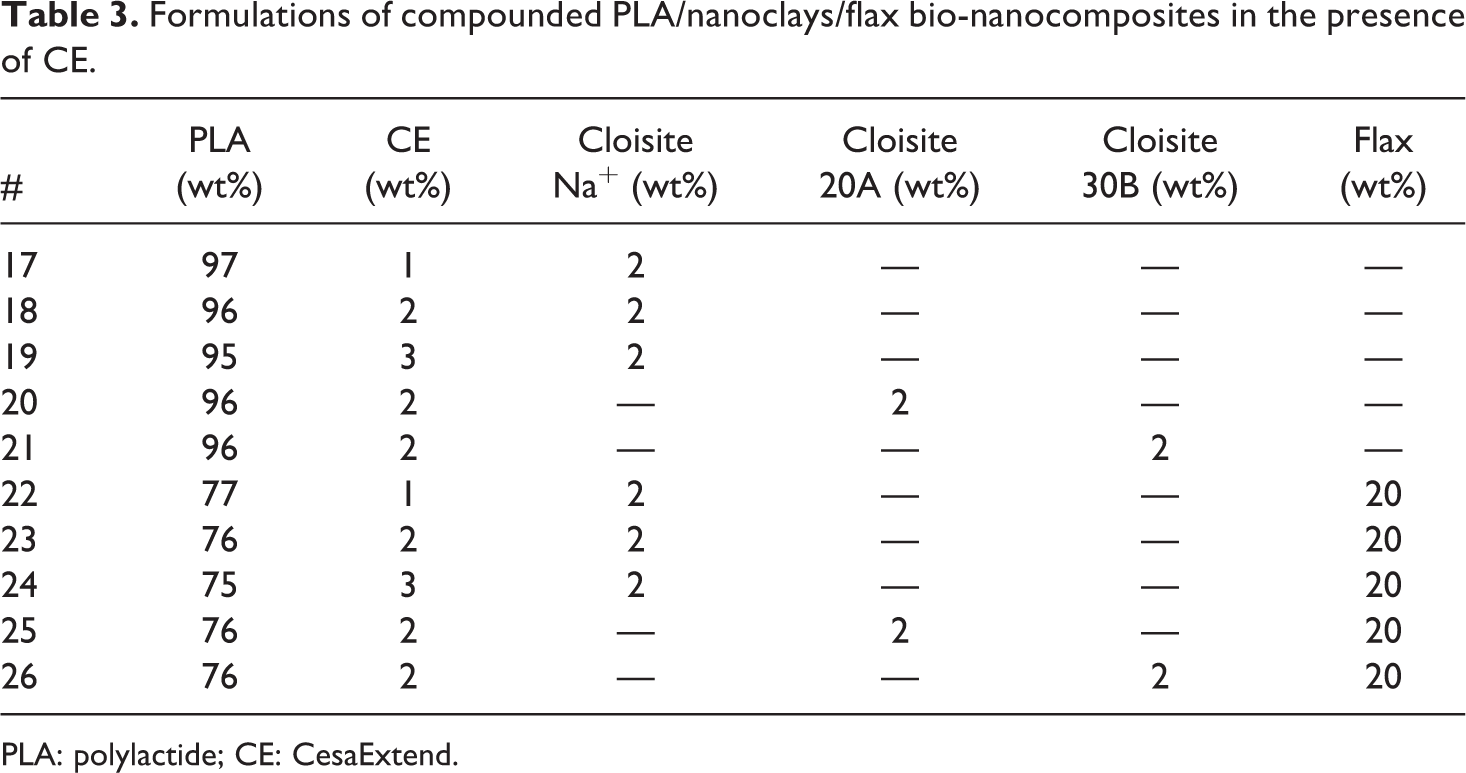
PLA: polylactide; CE: CesaExtend.
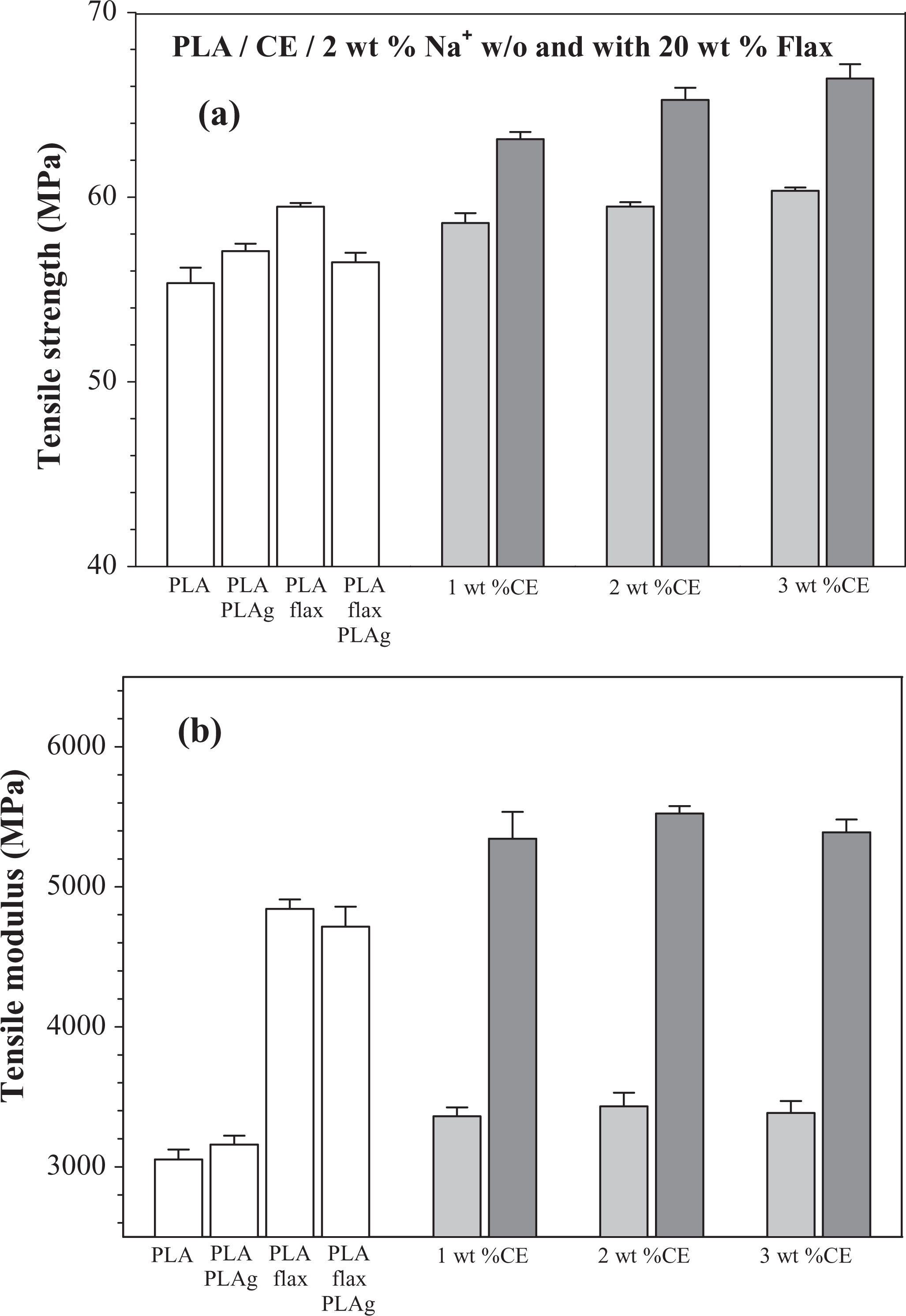
(a) Tensile strength and (b) tensile modulus of PLA-based references (white bars), PLA/Na+ nanocomposites with 1, 2, and 3 wt% CE (light-gray bars), and PLA/Na+/flax bio-nanocomposites with 1, 2, and 3 wt% CE (dark-gray bars). PLA: polylactide; CE: CesaExtend.
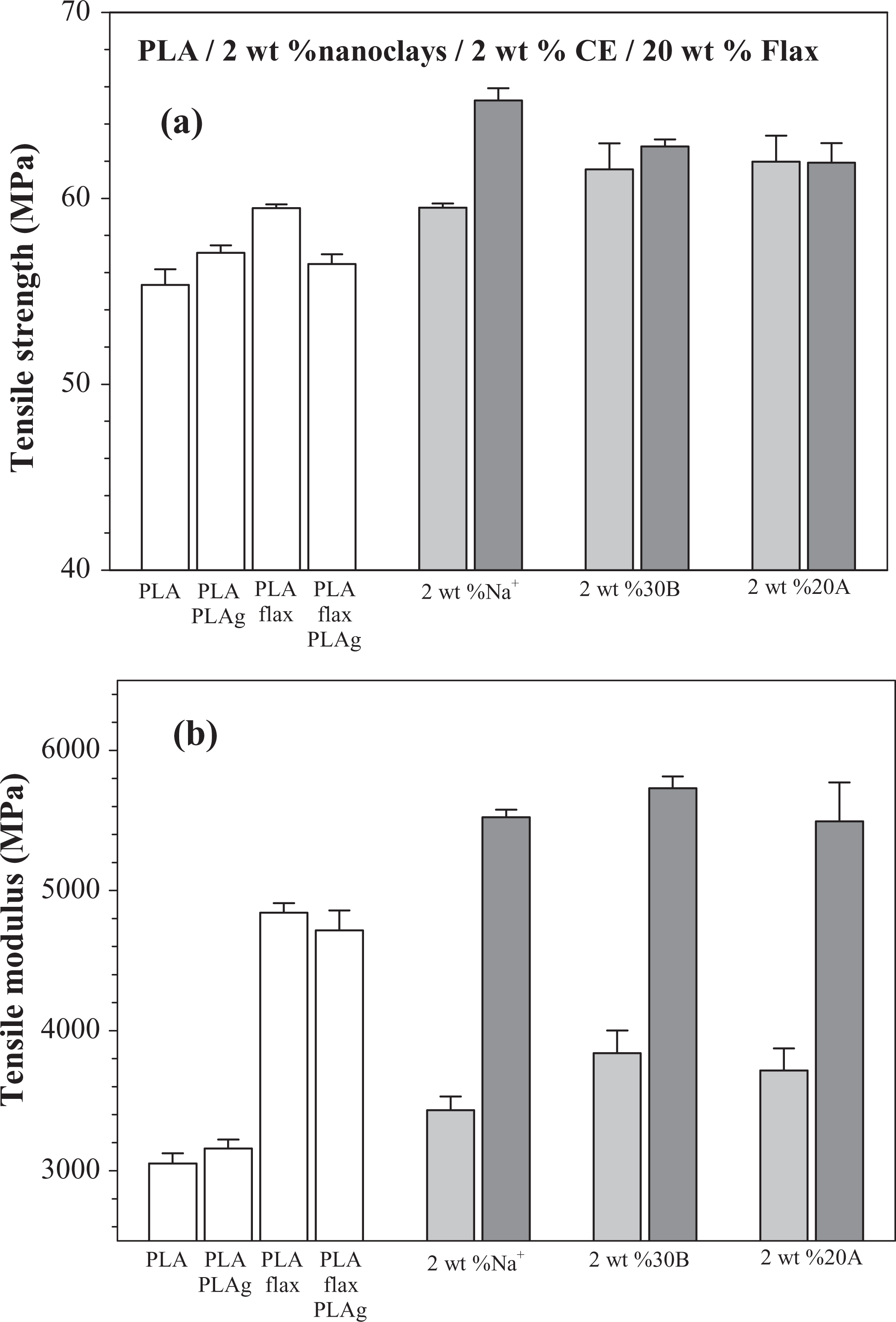
(a) Tensile strength and (b) tensile modulus of PLA-based references (white bars), PLA nanocomposites with 2 wt% CE content (light-gray bars), and PLA/nanoclays/flax bio-nanocomposites with 2 wt% CE content (dark-gray bars). PLA: polylactide; CE: CesaExtend.
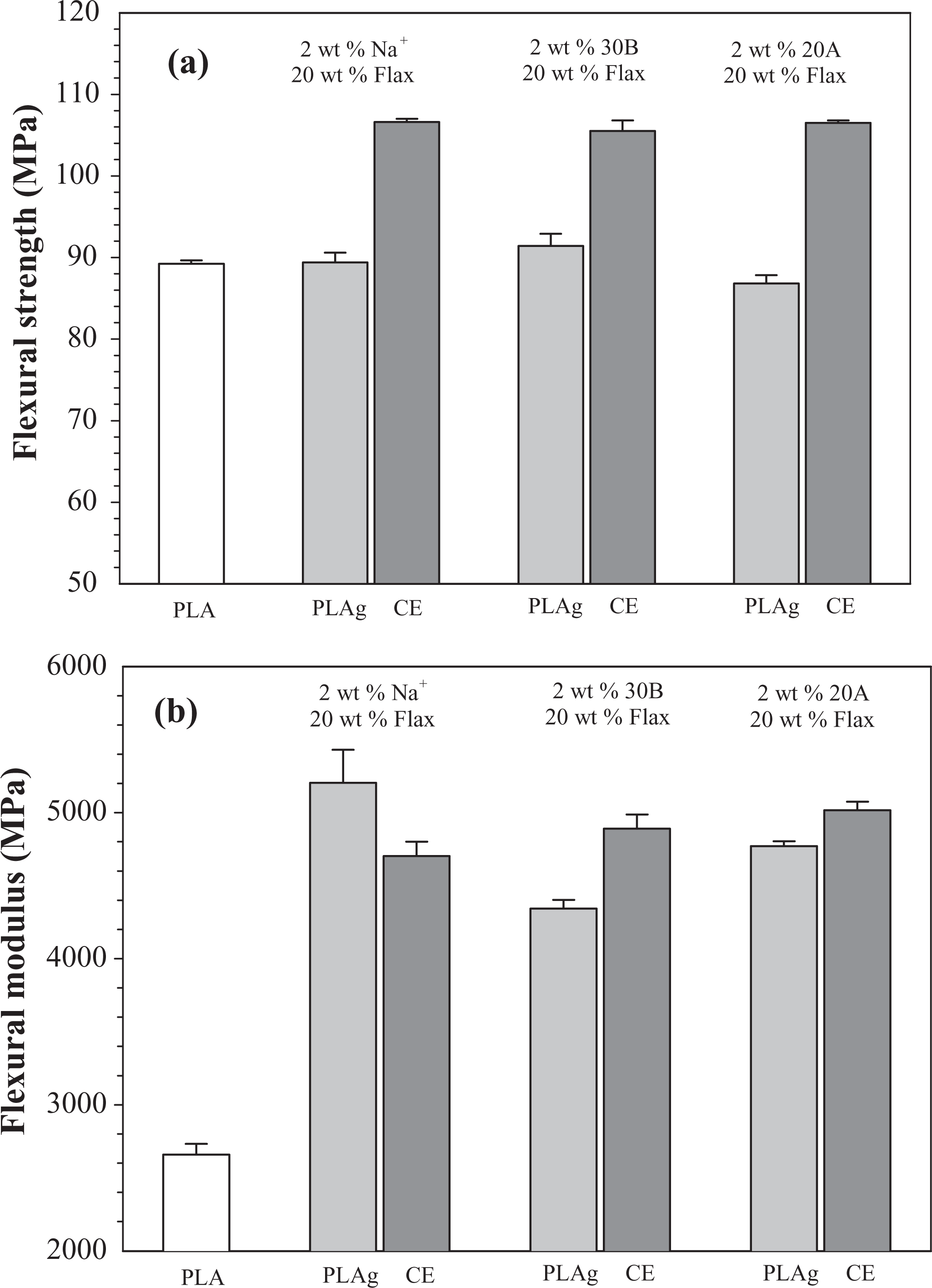
(a) Flexural strength and (b) flexural modulus of neat PLA (white bar), PLA bio-nanocomposites containing PLA-g-MA (light-gray bars), and PLA bio-nanocomposites containing CE (dark-gray bars). PLA: polylactide; PLA-g-MA: PLA-grafted maleic anhydride; CE: CesaExtend.
Mechanical properties of PLA/nanoclays/flax bio-nanocomposites in the presence of CE.a
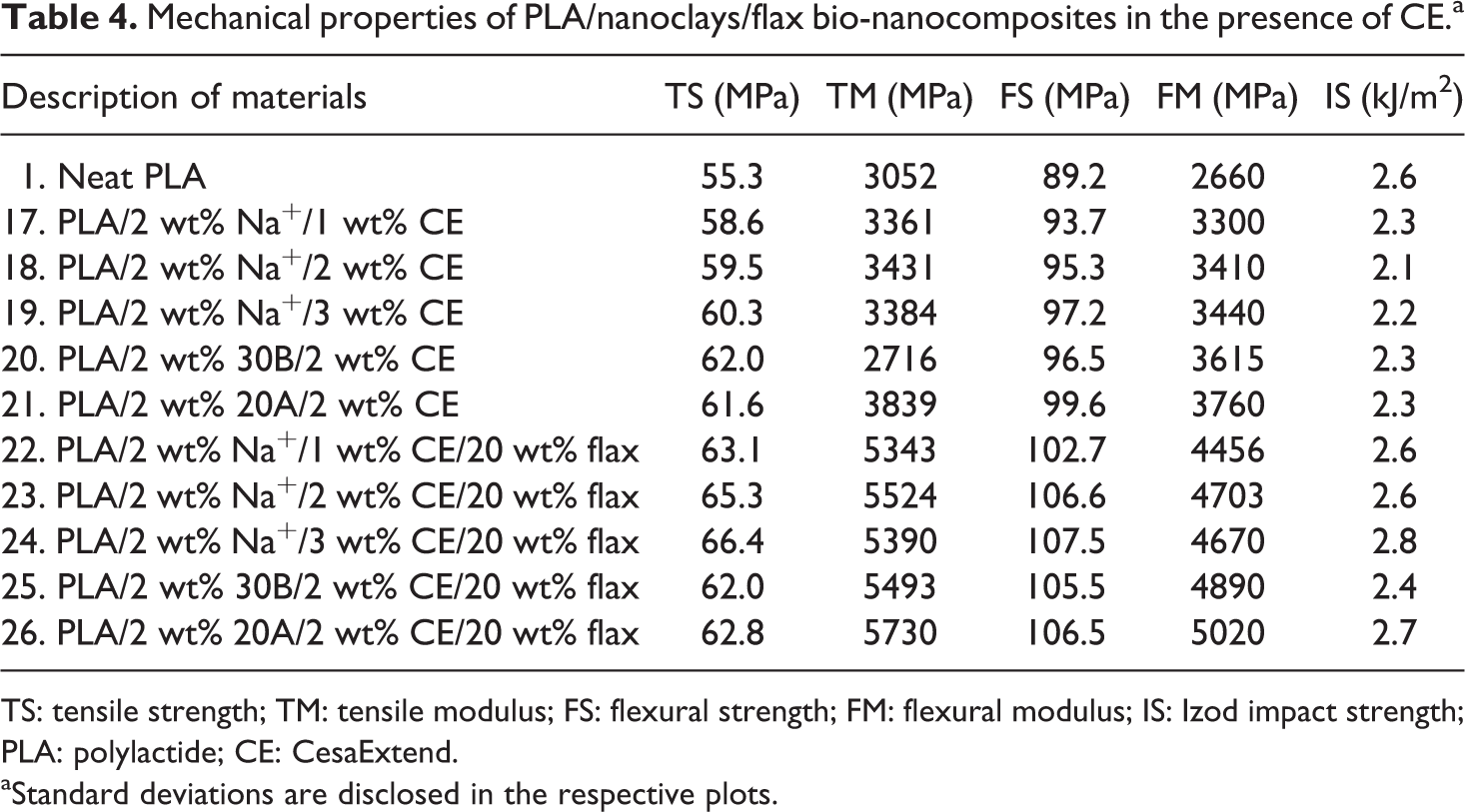
TS: tensile strength; TM: tensile modulus; FS: flexural strength; FM: flexural modulus; IS: Izod impact strength; PLA: polylactide; CE: CesaExtend.
aStandard deviations are disclosed in the respective plots.
Figure 12 presents the effect of the variation of the CE concentration in the case of materials containing 2 wt% Na+. Figure 12(a) clearly reveals an increment in tensile strength up to 58–60 MPa with increasing the CE concentrations from 1 wt% up to 3 wt% comparing to neat PLA (i.e. 55 MPa). Bio-nanocomposites containing 2 wt% Na+/20 wt% flax presented more obvious increments in tensile strengths with CE content. As disclosed previously in Figure 9, bio-nanocomposites containing 2 wt% PLA-g-MA presented a tensile strength of 56.5 MPa, but their counterparts containing CE presented values of 63, 65, and 66 MPa with increasing the CE concentrations from 1 wt% up to 3 wt%. These rise in tensile strengths by up to 10% for the nanocomposites and by up to 20% for the bio-nanocomposites demonstrate the effectiveness of the CE as a coupling agent. In terms of tensile modulus presented in Figure 12(b), nanocomposites presented similar values of around 3300 MPa, that is, 10% higher than the neat PLA. The bio-nanocomposites presented all equivalent values of around 5400 MPa, that is, 175% higher than neat PLA and 15% higher compared with bio-nanocomposites containing PLA-g-MA. Therefore, it is obvious that the coupling agent effect of CE was higher than PLA-g-MA. It has to be emphasized here that CE acted probably both as a branching agent for PLA macromolecules and as a coupling agent between the PLA, cellulosic fibers, and nanoclays.
Figure 13 reveals the effect of nanoclay type variation, while CE content remained constant at 2 wt%. The tensile strength (Figure 13(a)) and the tensile modulus (Figure 13(b)) of nanocomposites and bio-nanocomposites with 2 wt% of Na+, 30B, and 20A present enhanced values than corresponding references. Comparing the tensile strength values of the PLA/2 wt% PLA-g-MA/2 wt% nanoclays/20 wt% flax from Figure 9 to the equivalent formulations containing CE from Figure 13(a), it can be recognized that CE has a higher coupling effect than PLA-g-MA. Tensile strength increased from 57 MPa to 65.3 MPa (15%) for Na+ hybrids, from 55.3 MPa to 62 MPa (12%) for 30B hybrids, and from 46.2 MPa to 62.8 MPa (36%) for 20A hybrids. Tensile modulus for the hybrid materials obtained with CE was also improved (see Table 2 vs. Table 4). It can be concluded that the replacement of PLA-g-MA with CE was very beneficial in terms of tensile properties by seemingly avoiding the PLA chain scission, the detrimental chemical reaction between MA, PLA chains, and nanoclay functional tails.
Flexural properties of the bio-nanocomposites obtained with 2 wt% PLA-g-MA and with 2 wt% CE are presented in a comparative manner in Figure 14. The neat PLA flexural properties are also included. It should be pointed out that the bio-nanocomposites obtained with 2 wt% CE have always flexural strengths around 20–23% higher than bio-nanocomposites obtained with 2 wt% PLA-g-MA, no matter the type of the nanoclay was. The flexural modulus, keeping in account standard deviations, presented almost similar values for bio-nanocomposites containing PLA-g-MA and CE. These observations, supported also by tensile results, demonstrate once more that CE is a better additive than PLA-g-MA to be used in PLA-based bio-nanocomposites hybrid materials.
Conclusions
In this original study, PLA/nanoclays/flax fibers bio-nanocomposites were prepared in multistep extrusion processes by using two different coupling agents, that is, PLA-g-MA and CE. Three different nanoclays with different chemical structures, with different hydrophilicities and, therefore, with different affinities for the hydrophilic PLA, were used in both phases of this study. In the first phase, the extruded masterbatches of 10 wt% PLA-g-MA and of 10 wt% nanoclays were simultaneously diluted in PLA down to 2 and 4 wt% while incorporating 20 wt% flax fibers to obtain PLA/nanoclay/flax /PLA-g-MA bio-nanocomposites. In the second phase, masterbatches containing 10 wt% nanoclays were diluted in PLA down to 2 and 4 wt% while simultaneously adding CE. PLA/nanoclay/flax/CE bio-nanocomposites were further extruded by adding 20 wt% flax fibers. The two sets of PLA-based bio-nanocomposites (PLA-g-MA series and CE series) were characterized with the purpose to discriminate between the coupling agents used, that is, between PLA-g-MA and CE.
The tree nanoclays interacted differently with the hydrophilic PLA, interactions that were reliant on their hydrophilic character and on their chemical structures: The Cloisite Na+ collapsed due to its high complexed water content, the Cloisite 30B was partially intercalated/exfoliated, and the Cloisite 20A was only intercalated.
In the first phase, it was demonstrated that the use of PLA-g-MA as a coupling agent in PLA bio-nanocomposites presented, surprisingly, a slight negative effect in their mechanical properties by decreasing tensile and flexural strengths and keeping unchanged Izod impact performances. This lessening in properties is explained by PLA macromolecular chains scission due to the presence of unreacted MA and due to some possible chemical reactions that probably took place between the chemicals groups of the nanoclays, PLA-g-MA, unreacted MA, and the PLA. In the second phase, the PLA-g-MA was replaced by CE, recognized as a chain extender for PLA and as a coupling agent in PLA/cellulosic biocomposites. In this case, tensile and flexural strengths increased for all the hybrid materials while Izod impact strength remained unchanged. The CE utilization as branching/coupling agent in PLA-based bio-nanocomposites was proved to be very beneficial. It avoided the PLA chain scission, opposing to the use of the PLA-g-MA, and helped to boost the hybrid material properties. Moreover, because those hybrid materials present no degradation during the reprocessing, the PLA/flax biocomposites and PLA/flax/nanoclay bio-nanocomposites can be easily recycled and this represents a great benefit from environmental and economical point of view. When the additive is judiciously selected, the PLA/nanoclays/flax fibers hybrid materials can be used as biomaterials for interior applications in many industries, such as automotive and construction.
Footnotes
Acknowledgements
The authors would like to thank Yves Simard, Michel Carmel, Eric Cloutier, Eric Patenaude, Florence Perrin, Pierre Sammut, and Manon Plourde for their technical support. They would also like to thank Agriculture Agri-Food Canada for the CTBI Network via the ABIP research program.
Declaration of Conflicting Interests
The author(s) declared no potential conflicts of interest with respect to the research, authorship, and/or publication of this article.
Funding
The author(s) disclosed receipt of the following financial support for the research, authorship, and/or publication of this article: This work was supported by Agriculture Agri-Food Canada for the CTBI Network through the ABIP research program.
