



Abstract
Ultra-high-molecular-weight polyethylene (UHMWPE) reinforced with carbon fibre (CF) and filled with polyphenyl ester (POB) and nanosized copper (Cu) fillers was prepared by compression moulding. The tribological behaviours and the synergism of the incorporation of fibre and particulates were studied. The proportions of the reinforcement material ranged from 5 wt% to 25 wt%, the filler material of POB varied from 5 wt% to 25 wt% and the nanosized filler was from 4 wt% to 12 wt%. In the sample with CF only, the lowest wear rate was observed for the UHMWPE + 15% CF composite. The particulate filler further reduced the composite wear rate, and the lowest wear rate was found for the hybrid with CF, POB and nanosize Cu particles, that is, for the UHMWPE + 15% CF + 15% POB + 12% Cu composite. The particulate filler was added, and the coefficient of friction slightly increased. The transfer film formed on the metal counterface was studied using optical microscopy, and the topography of the transfer film was investigated using atomic force microscopy. Results showed that the transfer films were thin, compact and uniform on the metal counterfaces of the UHMWPE + 15% CF + 15% POB + 12% Cu composite. Worn surface morphologies of composites were studied using scanning electron microscopy. Results showed that the worn surface of the UHMWPE + 15% CF + 15% POB + 12% Cu composite was smoother and had better wear resistance than that of other composites.
Keywords
Introduction
In recent years, the development of solid lubrication has made breakthroughs in overcoming the limit of traditional lubrication materials, such as the requirement of super vacuum, low-temperature environment, high speed and load. In these conditions, general oil and grease lubrication are difficult to use; thus, using solid lubrication is an effective method. 1 Matrix materials filled with fillers or fibres are common engineering materials. 2 Numerous researchers have studied the modifications of the tribological properties of the matrix with the addition of fillers and fibres. 3 Ultra-high-molecular-weight polyethylene (UHMWPE) is solid lubricant. Recently, Xiong and Ge 4 studied the friction and wear properties of UHMWPE against aluminium oxide ceramic under different conditions and found that under steady state of friction, the coefficient of friction is the highest in dry sliding. The wear mechanisms were different under different lubrication conditions.
Ruggiero et al. 5 investigated the dry sliding wear characteristics of some industrial polymers against steel counterface and found that at different pressures and speeds, the average coefficient of friction of polyamide (PA)66, polyoxymethylene (POM), UHMWPE, polyphylenesulfide (PPS) and 30% reinforced of glass fibre (GFR) and aliphatic polyketone (APK) polymers linearly decreased with an increase in applied pressure and the specific wear rates of UHMWPE, PPS + 30% GFR and APK were in the order of 10−5 mm3 N−1 m−1. Ma et al. 6 found that filled pine needle fibres exhibited more stable friction and improved interface adhesion compared with unfilled pine needle fibres. Zhou et al. 7 found that only the addition of 300 mesh carbon fibres (CFs) could reduce the coefficient of friction and improve the wear rate. Xian and Zhang 8 studied the tribological behaviour of short CF-reinforced polyetherimide (PEI) composites and found that adding short CFs could improve the wear resistance and reduce the coefficient of friction.
Additive powders and fibre have different effects on polymer performance. Recently, polymers filled with nanoparticles have been used in tribological fields. The angularity of particles increases with the increase in size, and nanosize has a lower angularity, which is beneficial to wear resistance. Wear resistance was improved when a material was filled with nanosized particles. Sheykh et al. 9 found the wear resistance was improved by increasing nano-silicon dioxide (SiO2). Cho and Bahadur 10 studied the tribological properties of PPS composites filled with nano-copper(II) oxide (CuO) and found that the coefficient of friction and the steady-state wear rate for PPS filled with nano-CuO were lower than that of PPS unfilled particles. Wang et al. 11 studied the effect of the particle size of zirconium dioxide (ZrO2) on the tribological behaviour of polyetheretherketone (PEEK) and found that the wear of the nanometer ZrO2-filled PEEK was effectively reduced. Yu et al. 12 found that the wear resistance of PPS increased with the addition of silicon nitride, silicon carbide and chromium carbide, while the coefficient of friction of PPS decreased with the addition of SiO2. Chang et al. 13 comparatively studied micro- and nano-zinc oxide (ZnO)-reinforced UHMWPE composites and found that the abrasive and the adhesive wear of UHMWPE with added micro- and nano-ZnO were reduced compared with pure UHMWPE. They also found that UHMWPE with nano-ZnO showed smoother wear surfaces and relatively better uniform transfer films compared to that with micro-ZnO. Suñer et al., 14 Gong et al., 15 Tong et al. 16 and Chukov et al. 17 reported that some fillers that effectively reduce the coefficient of friction and improve the mechanical and tribological behaviours of UHMWPE were multi-walled carbon nanotube nanocomposite, kaolin, wollastonite fibres and short CF. Wang and Gu 18 investigated the influence of the molybdenum disulphide (MoS2) filler on the tribological properties of nylon 1010 composites and found that the coefficient of friction of MoS2-filled nylon 1010 was effectively reduced only at 100 N. They also found that the wear rate of nylon could be reduced by a factor of 23 through the synergistic action of CF and MoS2. Suresha et al. 19 reported the influence of nanofillers and short CF on the mechanical and tribological properties of PA66/polypropylene composites. Results showed that the nanoclay (NC) and short carbon fibre (SCF)-PA66/PP composites have better resistance to dry sliding wear compared with unfilled composite and that the coefficient of friction was effectively reduced. Bijwe et al., 20 Bahadur et al. 21 and Wang et al. 22 reported that MoS2 and glass fibres, copper monosulphide and carbon fibre and nano-ZnO and aramid fibre are powders and fibres that can effectively improve the mechanical and tribological properties of polymer composites.
However, little research has been conducted on the effect of CF, polyphenyl ester (POB) particles and nanosized copper (Cu) on the friction and wear behaviour of UHMWPE composites. This study aims to investigate the effects of transfer film and the influence factors of CF, POB particles and nanosized Cu on reducing wear and friction of UHMWPE composites.
Experimental methods
Materials
UHMWPE was used as the matrix material because of its high strength, wear resistance and good self-lubricating. The polymeric material in the form of power was supplied by Dongguan Haise Plastic materials Co. Ltd, Guangzhou. Density and melting temperature for UHMWPE were 0.936–0.964 g cm− 3 and 136°C, respectively. Polyphenyl ester (POB) and nanosize Cu particles were supplied by BASF AG (Germany) and Beijing DK nano technology Co. Ltd. (Beijing, China), respectively, which were used for the filler material.
The common fibre used for reinforcement with polymers was carbon, short glass and poly-p-phenylene terephthamide (PPDT). In this study, CFs were used. CFs with an average size of 30 μm in length and 7 μm in diameter were used, which were supplied by Toray Industries Inc., Japan.
Sample preparation
For making UHMWPE + CF, UHMWPE + CF + POB and UHMWPE + CF + POB + nanosize Cu, they were weighed and mixed in required proportions, and the mixture was blended (JF805R, Changchun, China) for 5 min. The mixture was compacted in a mould with a size of 80 mm × 55 mm, which was heated to 160°C, and a pressure of 5 MPa and maintained there for 30 min until composites melted. Afterwards, the heater was turned off and the mould was kept under ambient pressure and room temperature.
Quenched and hardened steel disks were used for the counterface which had hardness of 55–60 Rockwellhardness (HRC). The disk was 70 mm in diameter and 10 mm in thick. The disks were finished by grinding followed by abrasion which provided a surface roughness of 0.8–1.6 μm. They were cleaned by ethyl alcohol and then dried and stored in a desiccator.
Sliding tests and analysis of composites
Sliding tests were conducted using the wear test machine of pin-on-disk. The polymer pin with a contact area of 25 mm × 25 mm rested on the counterface disk and provided a wear track diameter of 18.5 mm. The pin was achieved by finishing with 2000 mesh abrasive paper. The rotate speed during the test was 200 r min−1 and the contact pressure was 200 N. Density and wear mass loss had an accuracy of 1.0 × 10⁻⁴ g using a digital electronic balance (MP-5002, Shanghai, China), and the coefficient of friction was measured.
Thermal properties of UHMWPE composites were determined by differential scanning calorimetry (DSC), and DSC was performed using 10 mg sample weight, at a scanning rate of 5°C min−1 from −50°C to 300°C under nitrogen atmosphere.
Results and discussion
Effect of filler and fibre reinforcement on sliding wear and friction
The friction and wear results of UHMWPE composites filled with fibre are shown in Figure 1. The friction and wear results of UHMWPE composites filled with filler and fibre are shown in Figures 2 and 3. The wear rates were calculated and listed in Table 1. Figure 1 shows the variations of wear loss and coefficient of friction for UHMWPE with different CF contents tested at a load of 200 N and a speed of 200 r min−1. CF can improve the wear resistance of UHMWPE and did not affect the coefficient of friction, with its variation ranging from 0.12 to 0.30. With the addition of CF, the wear rates of the composites filled with 15% and 20% CF were reduced by factor of approximately 1 to 2 for CF of 5–10 wt% and by factor of approximately 3 to 4 compared with the wear rate of unfilled UHMWPE (Table 1). However, the wear rates suddenly increased for UHMWPE + 25% CF possibly because the increase of CF made the polymer matrix fragile. At the same time, the coefficient of friction of composite with 25% CF was increased. On the one hand, the matrix softens at higher temperature which was increased in real contact area. 23 On the other hand, it may be that CF randomly distributed in the UHMWPE matrix, and the UHMWPE matrix was transferred on the wear surface, which result that most of fibre were bared. The results of the coefficient of friction can be explained by the fact that the relative movement of the fibre direction and the grinding direction on surface was inconsistent, which cause that shear stress was increased and hence coefficient of friction was increased. 19 The lowest wear rate of 2.452 × 10⁻⁵ mm3 N−1 m−1 was obtained for the UHMWPE + 15% CF composite because the preferable interface adhesion between the CF and UHMWPE may have good effect on the worn property of the composite. The coefficient of friction for the UHMWPE + 15% CF composite was reduced to approximately half that of unfilled UHMWPE.
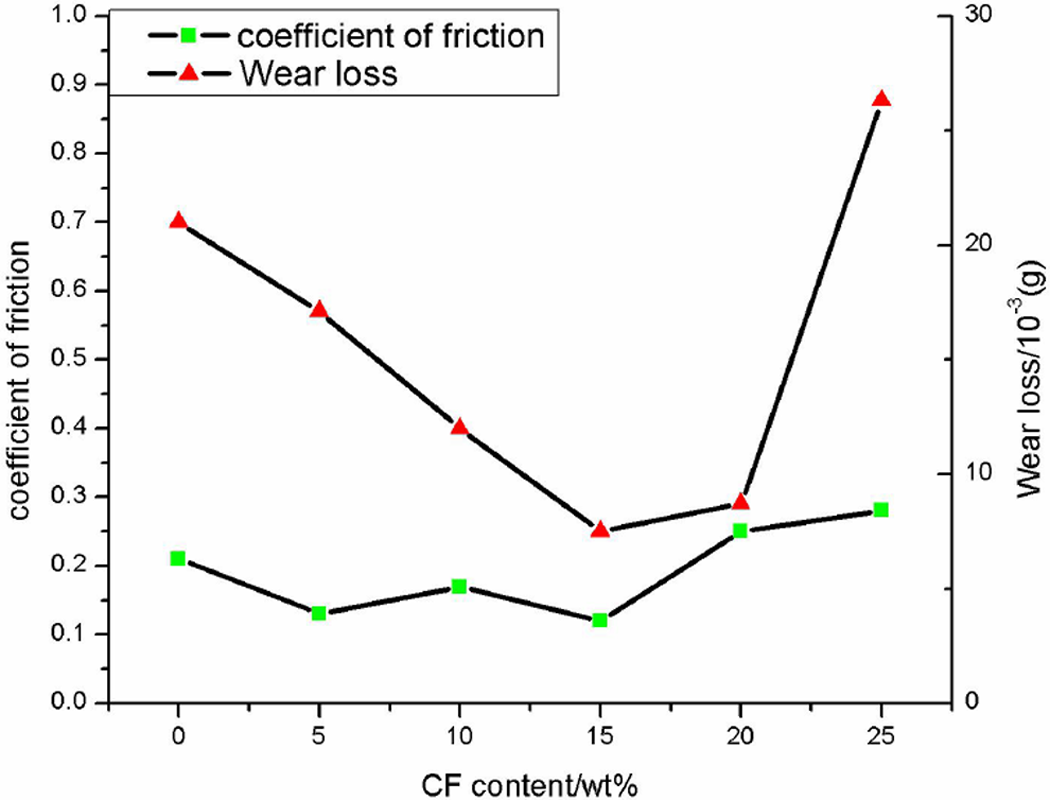
Variation of coefficient of friction and wear loss with different CFs for UHMWPE. UHMWPE: ultra-high-molecular-weight polyethylene; CF: carbon fibre.
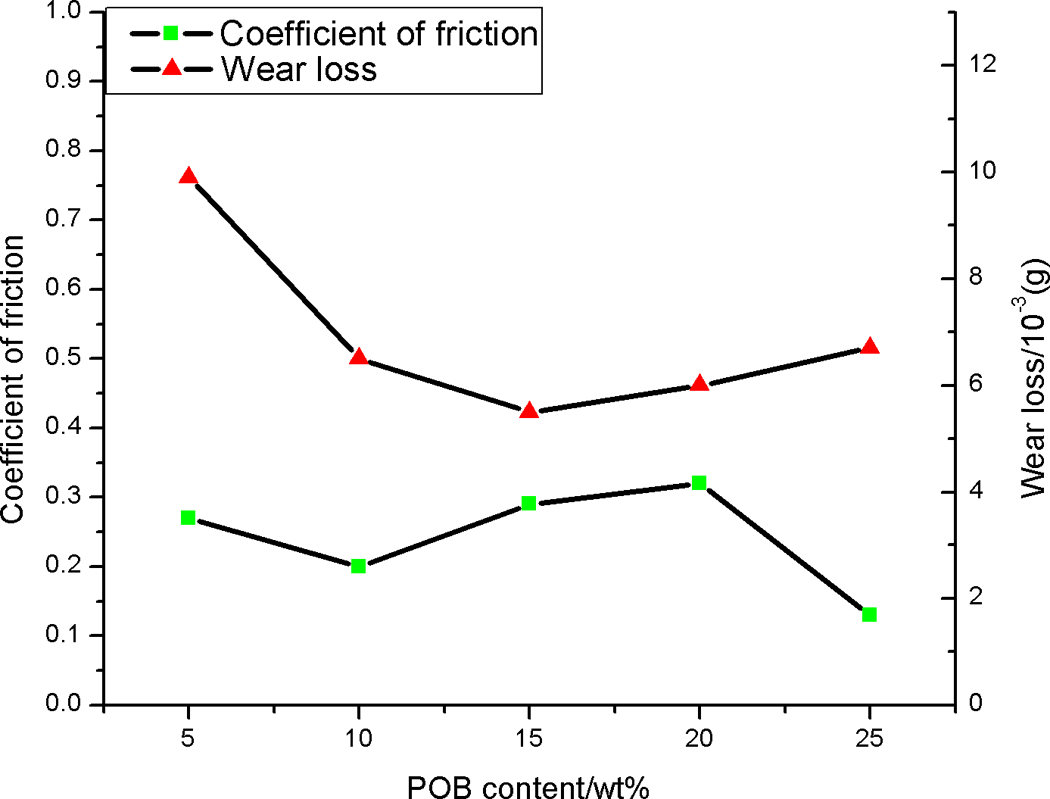
Variation of coefficient of friction and wear loss with 15% CFs and with different POB values for UHMWPE. UHMWPE: ultra-high-molecular-weight polyethylene; CF: carbon fibre.
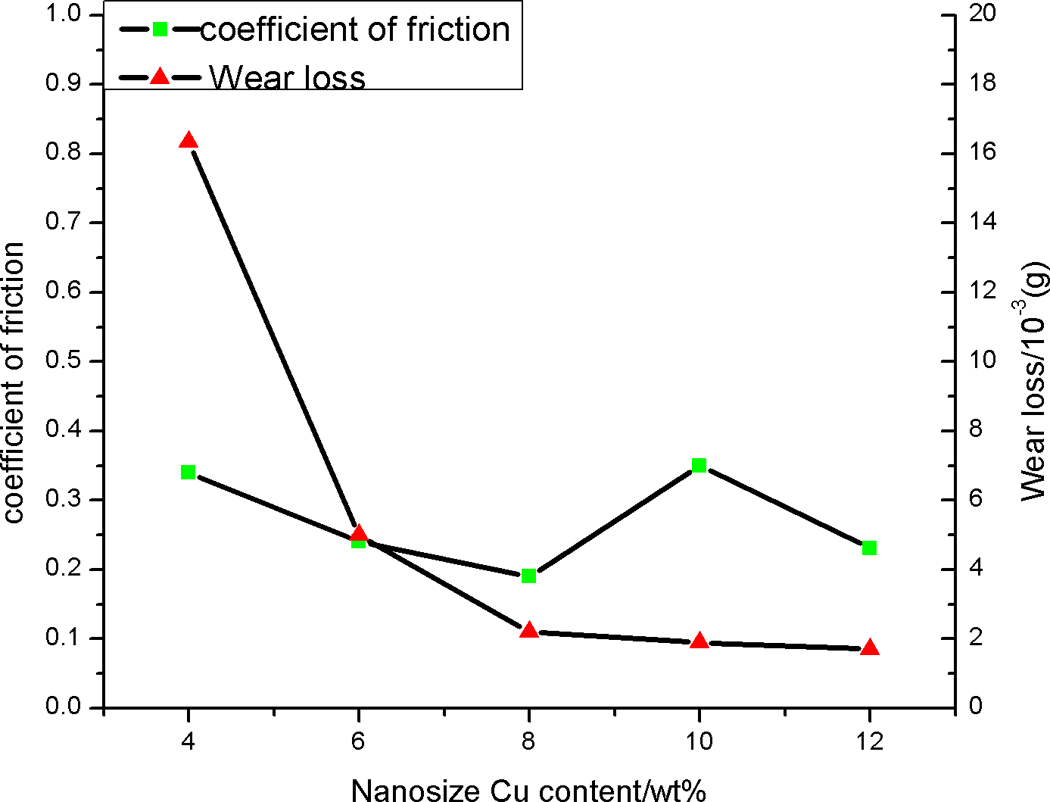
Variation of coefficient of friction and wear loss with 15% CFs and with 15% POB and with different nanosized Cu values for UHMWPE. UHMWPE: ultra-high-molecular-weight polyethylene; CF: carbon fibre; Cu: copper.
Wear rate for unfilled UHMWPE and its composites.
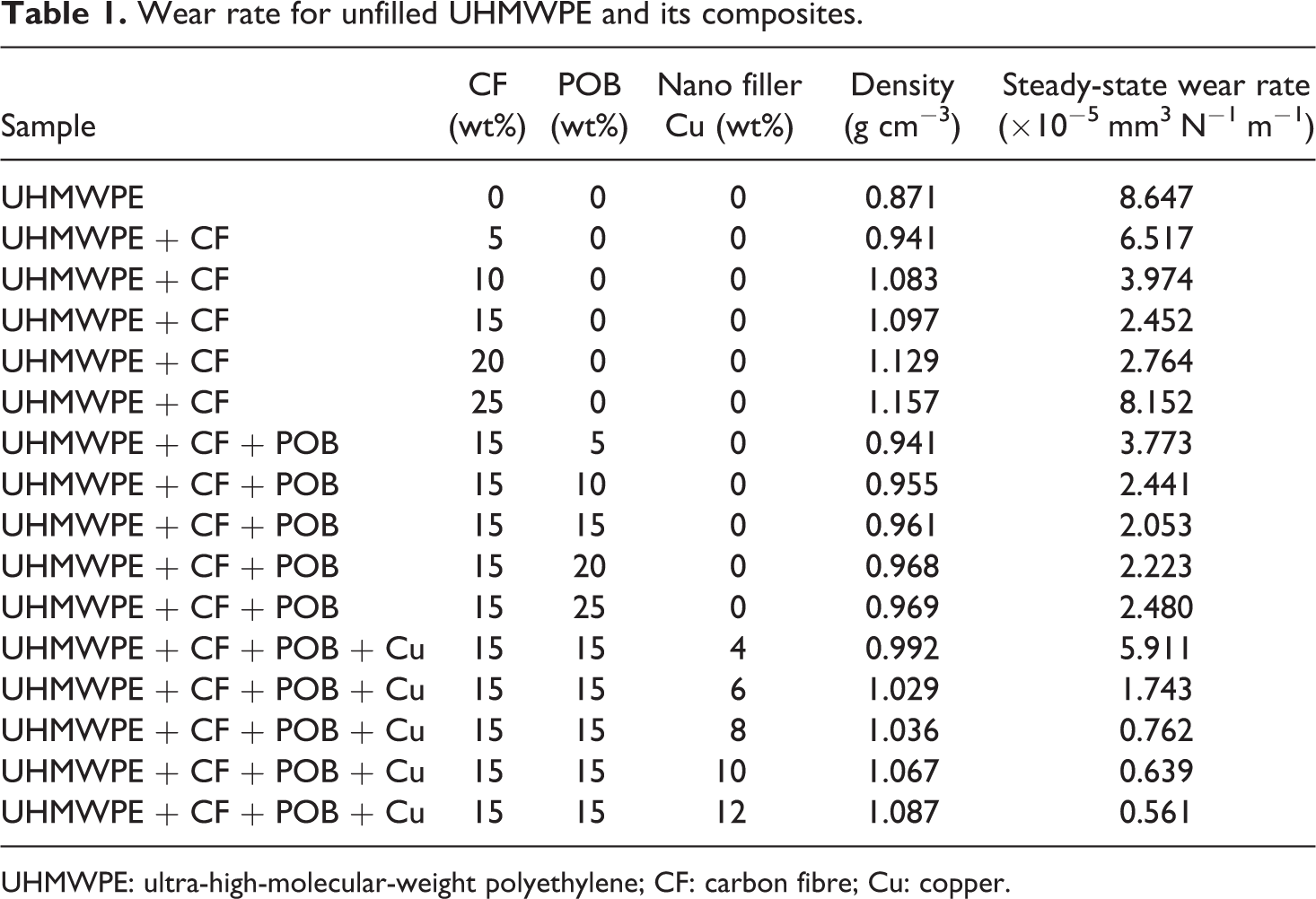
UHMWPE: ultra-high-molecular-weight polyethylene; CF: carbon fibre; Cu: copper.
Next, the plots of UHMWPE of wear loss and coefficient of friction with CF and POB filler were studied; the results are shown in Figure 2. In this case, CF proportion was fixed at 15% because it provided the lowest wear rate in the case of UHMWPE + CF composites. The filler was added at proportions of 5%, 10%, 15%, 20% and 25%. Table 1 indicates that the lowest wear rate of 2.053 × 10⁻⁵ mm3 N−1 m−1 was observed for the UHMWPE + 15% CF + 15% POB composite. Notably, the wear rate of UHMWPE + CF + POB composites was lower than that of UHMWPE + CF composites, indicating that POB filler could enhance the formation of a smoother film on the matrix surface. The coefficient of friction of the other composites became higher than those of the CF-reinforced composites but changed minimally. Thus, POB may not effectively lower the coefficient of friction of UHMWPE in the presence of filler.
The plots of wear loss and coefficient of friction for UHMWPE with CF, POB filler and nanosized Cu are shown in Figure 3. Similar to the previous procedure, nanosized Cu was added to the UHMWPE + 15% CF + 15% POB composites. The wear rate of the composites was lower than that of UHMWPE + CF + POB composites. Thus, the synergistic effect on the wear reduction among CF, POB and nanosized Cu was clearly visible. The lowest wear rate of 0.561 × 10⁻⁵ mm3 N−1 m−1 in the case of composites was observed for the UHMWPE + 15% CF + 15% POB + 12% Cu composite; however, the coefficient of friction was higher than that for all the composites discussed above, with the variation ranging from 0.20 to 0.35.
CF, POB and nanosized Cu particles used together in UHMWPE modified the tribological behaviour and reduced wear rate. The filler particles have active effect on the reduction of wear rate. The formation of the transfer film was uniform and coherent. The unfilled UHMWPE composite was melted because of the accumulation of frictional heat, while POB and nanosized Cu exhibited thermal stability and thermal conductivity, respectively. This may be an important reason for the reduced wear rate. The wear resisting of the composites was supported and protected by CF, and the composites with POB and nanosized Cu protected the surface from the ploughing and cutting attacks from a steel surface.
Analysis of thermal properties
The detailed thermal properties of melting temperature (T m) and crystallinity fraction (X c) of composites are shown in Table 2. It shows the incorporation of POB and nanosized Cu on the relative thermal properties of UHMWPE + CF composites. From the data in this table, it can be seen that the T m of UHMWPE + CF + POB composites were lower than that in the UHMWPE + CF composites, and T m increased for the UHMWPE + CF + POB + Cu composites compared to the UHMWPE + CF and UHMWPE + CF + POB composites; the nanoparticles would lead to a higher T m. It shows the increase as the nanosized Cu added, which may be reasoned by the nucleation effect of nanosized Cu in the composites. Furthermore, the inclusion of nanoparticles would increase the crystallinity fraction. X c was seen to increase from 25.1% for the UHMWPE + CF + POB composites to 29.3% for the UHMWPE + CF + POB + Cu composite. The nanosized Cu particles would lead to higher crystallinity fraction. In comparing X c for UHMWPE + CF + POB composites, the nanoparticles seem to induce higher X c values. It may be caused by more uniform distribution of nanosized Cu, and thus providing more nucleation sizes. 24
DSC data of UHMWPE composites.
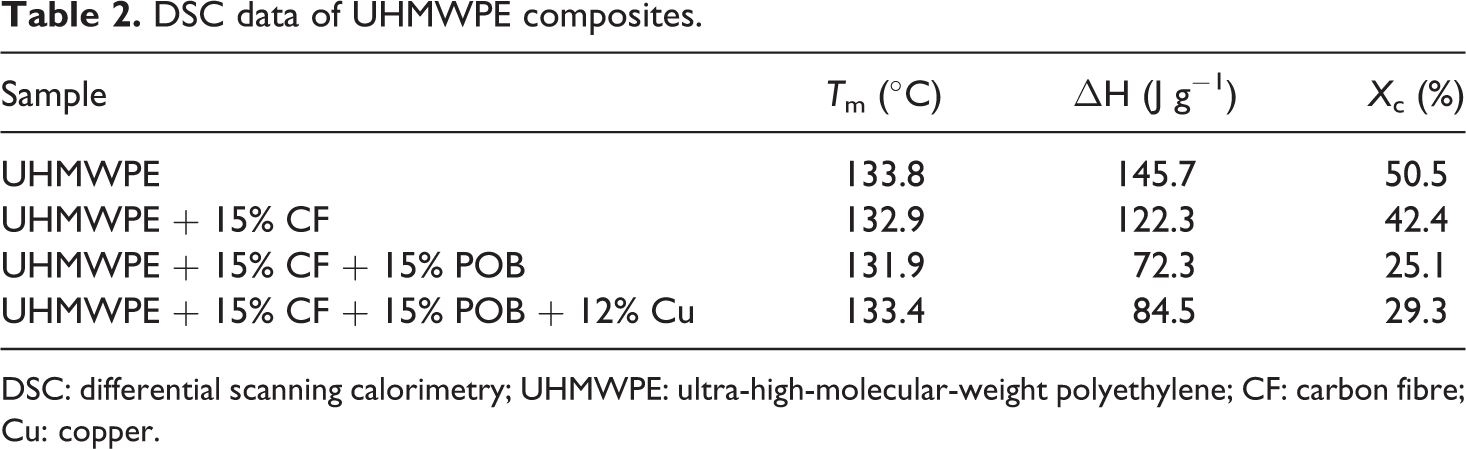
DSC: differential scanning calorimetry; UHMWPE: ultra-high-molecular-weight polyethylene; CF: carbon fibre; Cu: copper.
Transfer film
Optical microscopy
Figure 4(a) to (f) shows the transfer films of UHMWPE and its composites examined using optical microscopy. The transfer film formed on the metal counterfaces and was considerably thin in all cases. The deposition of material in the transfer film was not uniform and coherent, and it seems to depend on the abrasion grooves and sliding angle. The transfer film appeared thick, lumpy and nonuniform in the case of the UHMWPE + 25% CF composite, indicating that the transfer film did not entirely cover the counterface. Additionally, the wear rate for this composite was the highest, as shown in Figure 4(c). The UHMWPE + 15% CF + 15% POB and UHMWPE + 15% CF + 15% POB + 12% Cu composites have lower wear rates than that of UHMWPE + 15% CF composite, and the transfer film was thinner than that for other composite shown in Figure 4(e) and (f). Uniform, thin and coherent transfer films were necessary for the reduction of steady-state wear rates. 10,25,26 Thus, a thin and uniform transfer film is one of the requirements for reducing friction and wear. Optical microscopy showed that the thickness and uniformity of the transfer film were more important for wear reduction on the basis of different locations and abrasion marks.
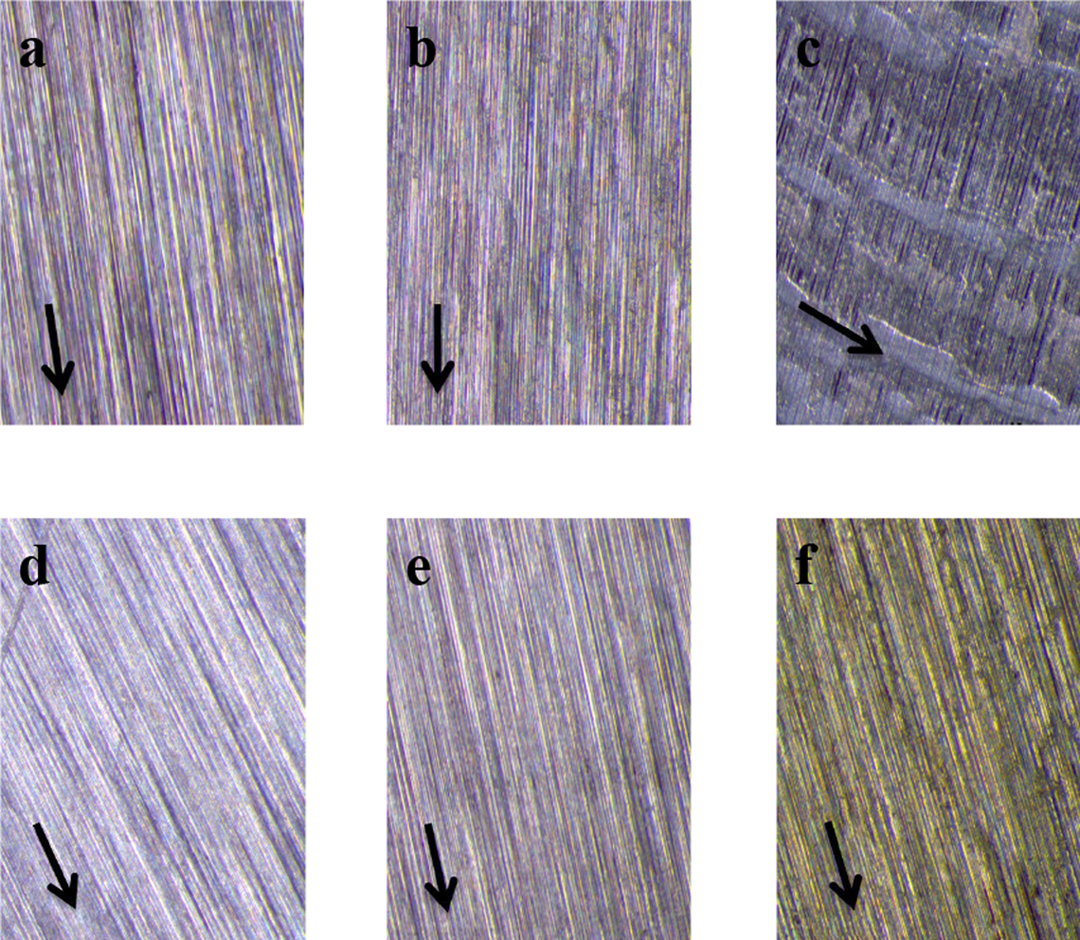
Optical micrographs of transfer films in sliding wear of: (a) UHMWPE; (b) UHMWPE + 15% CF; (c) UHMWPE + 25% CF; (d) UHMWPE + 15% CF + 10% POB; (e) UHMWPE + 15% CF + 15% POB; and (f) UHMWPE + 15% CF + 15% POB + 12% Cu; arrow indicates sliding direction. UHMWPE: ultra-high-molecular-weight polyethylene; CF: carbon fibre; Cu: copper.
Atomic force microscopy
The transfer films formed on metal counterfaces were examined using atomic force microscopy (AFM). Figure 5(a) to (e) shows three-dimensional and top views of a typical metal counterface. In the unfilled UHMWPE composite (Figure 5(a)), deep and wide ploughing features were clearly visible. The soft polymer transfer was thick and lumpy on the metal counterface; thus, it was difficult to develop a smooth film on the metal surface. A topography of peaks and valleys contributed to the abrasion of the composite; hence, the wear rate was high. As shown in Figure 5(b), ploughing grooves were not observed in the case of the UHMWPE + 15% CF composite. In other words, changes in the topography of transfer film accounted for the wear rate reduction mechanism.
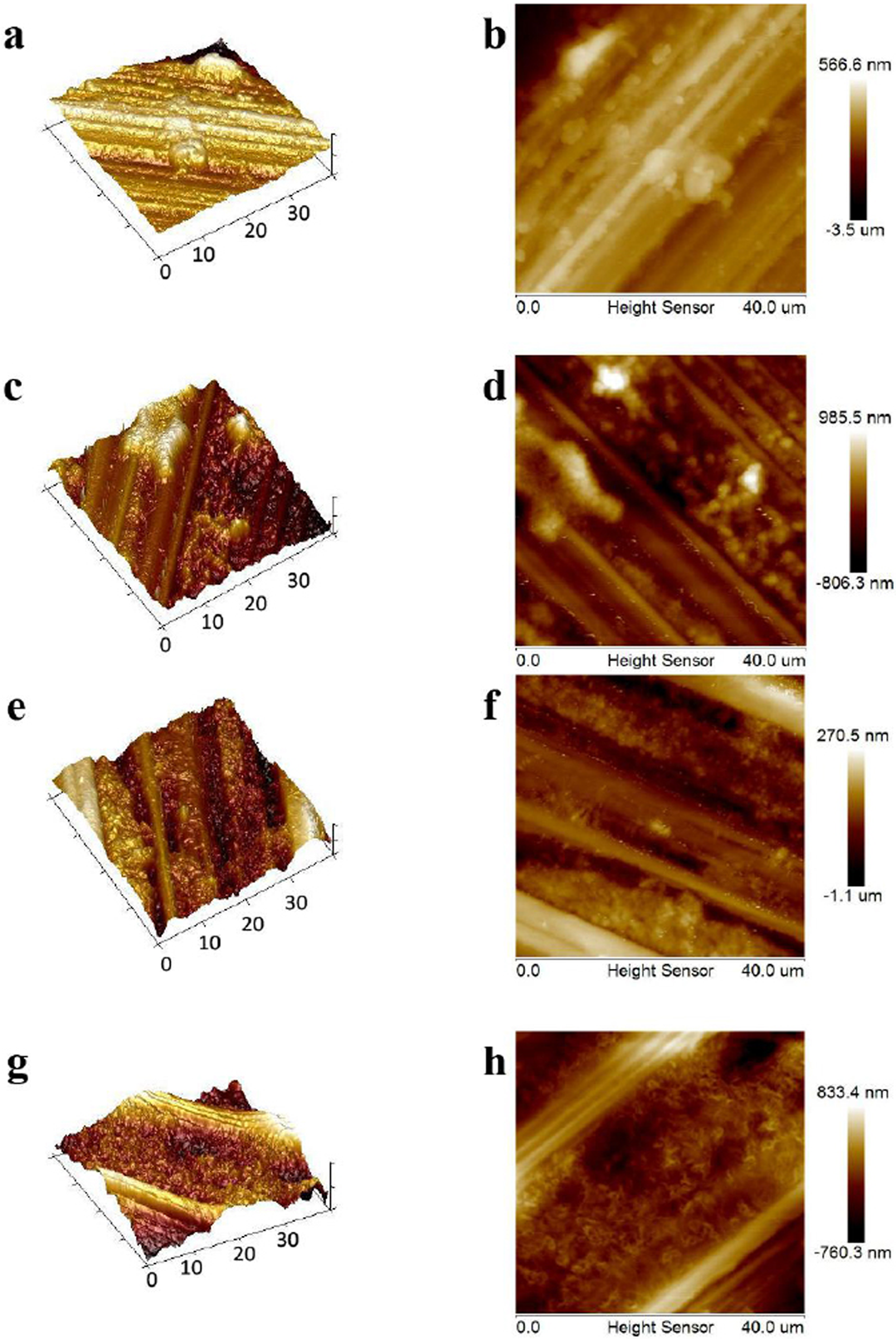
AFM micrographs of transfer films: (a) and (b) UHMWPE; (c) and (d) UHMWPE + 15% CF; (e) and (f) UHMWPE + 15% CF + 15% POB; (g) and (h) UHMWPE + 15% CF + 15% POB + 12% Cu. AFM: atomic force microscopy; UHMWPE: ultra-high-molecular-weight polyethylene; CF: carbon fibre; Cu: copper.
The transfer film was more uniform in the UHMWPE + 15% CF + 15% POB composite. As shown in Figure 5(c), the wear rate was lower than that of the UHMWPE + CF composite. This finding indicates that CF + POB could enhance the quality of the transfer film; however, the film was weak and thick. The adhesion of transfer film to the counterface could be enhanced by incorporating POB and nanosized Cu particles into the crevices of the ploughing grooves. Figure 5(d) shows that transfer film was thinner, more uniform and coherent in the UHMWPE + 15% CF + 15% POB + 12% Cu composite; its wear rate was the lowest among all UHMWPE composites. The top view shows that the transfer film was the smoothest, and the tracks were scarcely seen. Given the synergism among CF and POB, nanosized Cu fillers may be contributed to the formation of a strong transfer film on the metal surface.
Wear rate was closely related to the formation of a transfer film on the metal surface, which was examined using AFM. The thin, compact and uniform transfer films contributed to the reduction of wear rate.
Scanning electron microscopy
Worn surface morphologies of composites analysed using scanning electron microscopy (SEM) are shown in Figure 6. The wear mechanism of the composites mostly exhibited abrasive and adhesive wear. The SEM micrographs of the worn surface of UHMWPE are shown in Figure 6(a) and (b). The molecular structure of UHMWPE was destroyed by mechanical action and the accumulated frictional heat. Grooves and fractures on the worn surface of UHMWPE were clearly visible. The adhesion and fatigue wear of UHMWPE were severe, thereby resulted in a higher wear rate. The micrographs of the worn surface of the UHMWPE + 15% CF composite are shown in Figure 6(c) and (d). The composites mainly exhibit abrasive wear. CFs that peel off from the polymer matrix and cavity formation can be observed. Plastic deformation can be seen on the worn surface. The presence of CF in UHMWPE contributed to the formation of fairly thick and lumpy transfer films, indicating that CF could enhance the formation of transfer film and reinforce the polymer matrix; however, the transfer film that was formed was poor and weak. Figure 6(e) and (f) shows the worn surface of the UHMWPE + 15% CF + 15% POB composite, which indicates that the wear rate was reduced when POB was added. Cavities were not observed when POB was added to the composite. CFs were hardly detected, and POB can improve tribological behaviour. When POB covered the fibres, the POB film formed and plastic deformation was reduced. As a result, the contact and adhesion between composite and counterface decreased, ultimately reducing the wear rate. However, many shearing microcracks were observed at the worn surface either at the CF and UHMWPE matrix boundary or at the weak spots in the UHMWPE and POB matrix. The wear rate reduction increased when nanosized Cu particles were used. The lowest wear rate was obtained for the UHMWPE + 15% CF + 15% POB + 12% Cu composite with 12% nanosized Cu incorporated in the UHMWPE matrix, as shown in Figure 6 (g) and (h). Less fibres peeled off, and the composite exhibited a considerably smoother surface and thin, uniform transfer films formed on the worn surface. At the same time, nanosized Cu particles could better disperse the accumulated frictional heat and then reduce wear rate. The SEM micrographs indicated that the synergism among CFs, POB and nanosized Cu may contribute to the formation of a good and uniform transfer film.
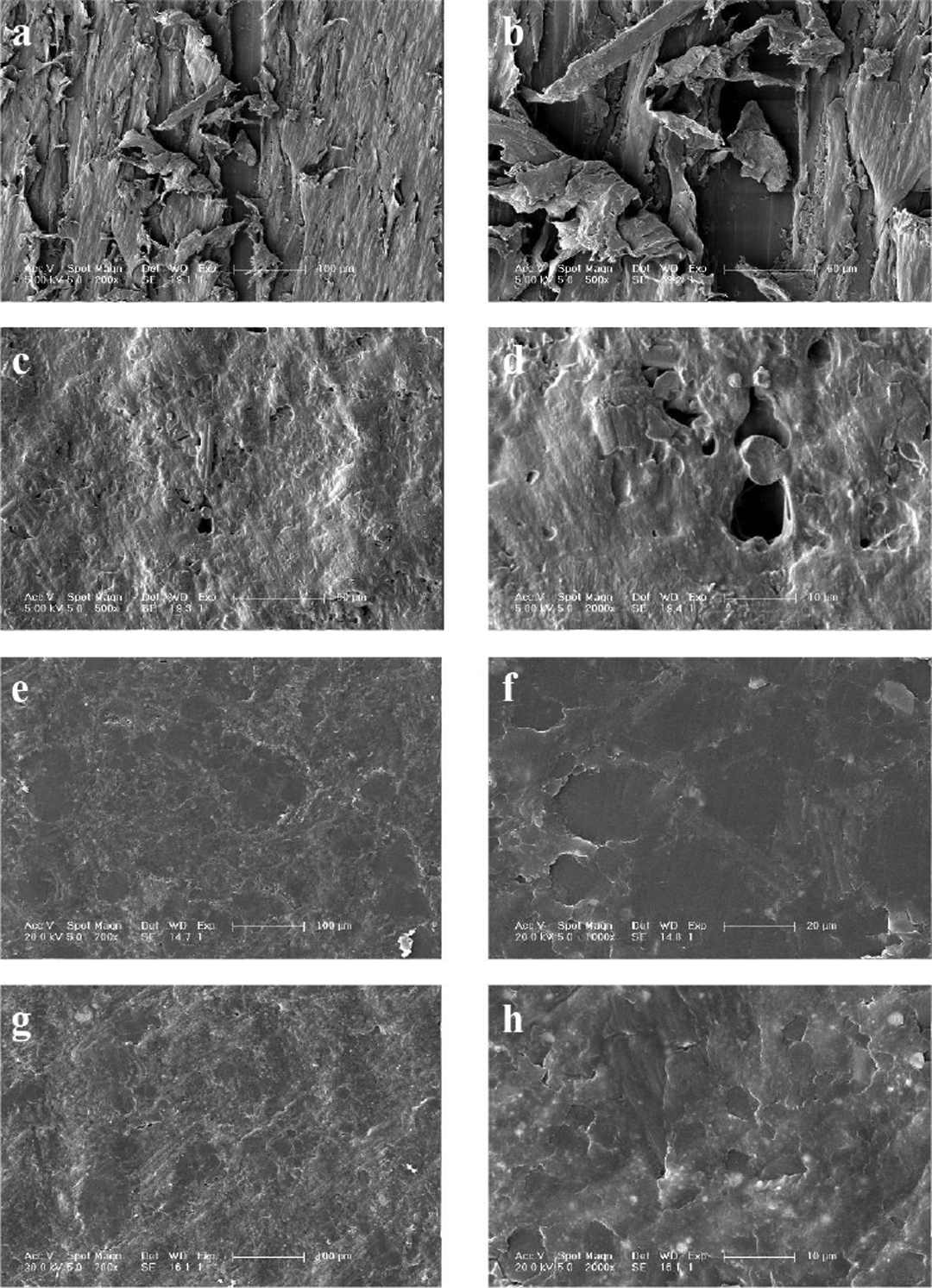
SEM micrographs of worn surfaces: (a) and (b) UHMWPE; (c) and (d) UHMWPE + 15% CF; (e) and (f) UHMWPE + 15% CF + 15% POB; (g) and (h) UHMWPE + 15% CF + 15% POB + 12% Cu. SEM: scanning electron microscopy; UHMWPE: ultra-high-molecular-weight polyethylene; CF: carbon fibre; Cu: copper.
Conclusions
The main conclusions of this study are summarized as follows: With the addition of CFs, the lowest coefficient of friction of 0.124 was observed for UHMWPE + 15% CF composites. For all other composites, the coefficient of friction was approximately 0.2 to 0.3. The effect of the lubricating action of CF was obvious through this study. The wear rate of the CF-reinforced UHMWPE was reduced. The lowest wear rate of 2.452 × 10⁻⁵ mm3 N−1 m−1 was found for UHMWPE + 15% CF composites. When the POB filler was added to the UHMWPE + 15% CF composite, the wear rate reduction was much greater. In this study, the lowest wear rate of 2.053 × 10⁻⁵ mm3 N−1 m−1 was found for UHMWPE + 15% CF + 15% POB composite. The wear rates reduction was the greatest when nanosized Cu particles were added to the UHMWPE + 15% CF + 15% POB composite. In nanosized Cu particles, the lowest wear rate of 0.561 × 10⁻⁵ mm3 N−1 m−1 was obtained for the UHMWPE + 15% CF + 15% POB + 12% Cu composite. This wear rate was reduced to one sixteenth that of pure UHMWPE. This composite showed better resistance to sliding wear compared with composites. The examination of the topographical characteristics of the transfer film and worn surface using AFM, optical microscopy and SEM indicated that thin, compact and uniform transfer films were associated with wear rate reduction. Moreover, UHMWPE filled with nanosized Cu composites showed a much smoother surface than that of the composites not filled with nanosized Cu. SEM study of the worn surface indicated that the main wear mechanism of composites was adhesive wear. Pure UHMWPE showed grooves and fractures on the worn surface. CFs peeled off from the polymer matrix and cavities formed on the UHMWPE + 15% CF composite. Polymer covered the fibres of the UHMWPE + 15% CF + 15% POB composite. The UHMWPE + 15% CF + 15% POB + 12% Cu composite had less fibres peeling off, exhibiting a considerably smoother surface.
Footnotes
Declaration of Conflicting Interests
The author(s) declared no potential conflicts of interest with respect to the research, authorship, and/or publication of this article.
Funding
The author(s) disclosed receipt of the following financial support for the research, authorship, and/or publication of this article: This work was supported by the National Natural Science Foundation of China (grant number 51475204).