




Abstract
By melt blending method, the Chinese medicine residue (CMR) and polylactide (PLA) were mixed together using dioctyl phthalate (DOP) as plasticizer. The extrusion and injection-molding processes were used to prepare all the specimens of CMR/PLA composites. Hydrothermal aging was implemented through immersing samples in distilled water at 60, 90°C, and room temperature in different aging cycles. The properties of the CMR/PLA composites were characterized by mechanical property testing and the analyses of thermogravimetric (TG), Fourier-transform infrared spectroscopy (FTIR), and scanning electron microscopy (SEM). The result showed that the temperature has a significant effect on the hydrothermal aging behavior of the composites. After 60°C hydrothermal aging of 8 days, the bending strength and the tensile strength have reduced to 7.04 and 4.32 MPa, respectively, while the bending strength and the tensile strength became to 1.32 and 2.48 MPa after 90°C hydrothermal aging of 15 h and then the mechanical properties completely lost after 20 h. When hydrothermal aged, the CMR/PLA composites continually undergo degradation, generating bare fibers and broken into small molecular chain structure from macromolecular. Through hydrolysis of ester group, fragmentation of macromolecule chain and the molecular weight decreased, and the interfacial adhesion between the CMR and the PLA is weakened.
Introduction
Along with the increasingly fast development and usage of Chinese herbal medicine, the degree of industrialization and scale of the Chinese herbal medicine production have been constantly deepened, and the quantity of the Chinese herbal medicine demanded has been increasingly enlarged. According to the estimation of the World Health Organization (WHO), the present demand for medicinal plants is US$1.4 billion annually, and this number will increase to 5 trillion by 2050. 1 Currently, the annual emission of the Chinese herbal medicine residue reaches 30 million tons, and the traditional disposal method of the Chinese medicine residue (CMR) has caused direct or potential damages to the nature. The CMR is the residual part of medicinal plants, and its main ingredients include cellulose, hemicellulose and lignin, and so on. 2 Reinforcing the composite material with the CMR fibers is one of the effective methods to reduce pollution and to improve resource utilization efficiency at the same time. Polylactide (PLA) is a kind of high molecular weight material compounded by natural resources; it has a high mechanical strength and is biodegradable. 3 In recent years, the progress of refinement and polymerization research of lactic acid is quite remarkable, and the price of PLA has been decreased; it is no longer merely used in products with high additional value such as military products and medical treatment products, and it has been gradually used in daily life as well. 4
A fully biodegradable biocomposite material can be produced through a certain forming process with CMR fibers as reinforcing filler and the PLA as the plastic matrix to reach the ecological object of saving resources and protecting the environment. However, during the process of storage and usage, the composites will become aged under the influence of environmental factors; since then, the performance of all aspects will be reduced until the composites are unable to be used. Setnescu et al. 5 studied a stabilizer which could be grafted on polyolefin structures, namely Sanduvor PR 31, and it present, a significant effect in the case of low-density polyethylene (LDPE). Dong et al. 6 also investigated the hydrothermal aging performance of fire-resistive coatings. During the aging time, the thermal stability of the coatings decreased and the intumescent performance of the coating weakened, and all the coating properties were attenuated. Yang et al. 7 reported that the fiber treated by coating nanosilica on the surface could decrease the water uptake and increase the mechanical property because coating nanofillers on fiber surface could hinder moisture from diffusing and cracking from propagating in the interphase region. Therefore, the research of hydrothermal aging of the CMR/PLA biocomposites, the exploration of the function of the composite material after the hydrothermal aging, and of the hydrothermal aging mechanism and the seeking for anti-aging measures as well as the enhancement of aging resistance are of great significance for improving the application prospect of the CMR/PLA composite material.
Experimental procedure
Materials and preparation of biocomposites
Polylactic acid was a blow-molding grade (4032D) purchased from Nature Works (Minnetonka, MN) and the melt index (MI) is 3.7∼4.5 g/10 min. The CMR (80 mesh) was provided by China Pharmaceutical University including Honeysuckle, Hyssop, Dendrobe, and Scrophularia. Dioctyl phthalate (DOP) was obtained from Chemical Industry Research Institute (Changzhou, China).
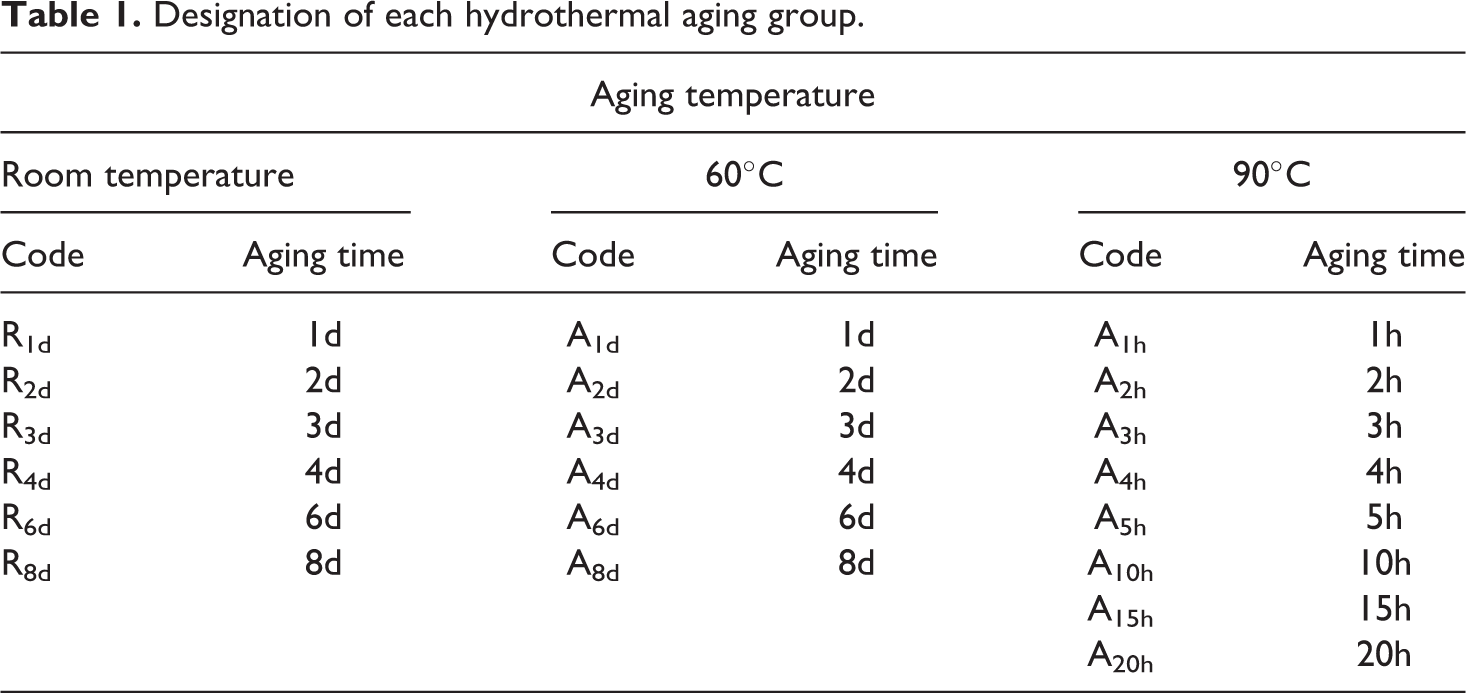
The CMR was dried at 80°C for 24 h until its weight was constant. The PLA and CMR were compounded using the twin-screw extruder (SHJ-20B, Nanjing Giant Company, Nanjing, China), producing homogeneous CMR/PLA composite pellets. The CMR contents in the composite were formulated as 30% by weight and using 5% DOP as plasticizer. The injection-molding machine (CWI-90BV, Shanghai Century Win Mechanical Industry, Shanghai, China) was used to prepare all the specimens of CMR/PLA composites. The parameters of the injection-molding process were the following: the temperature was 145-155-160-155°C, the injection pressure was 80 MPa, the injection speed was 60 cm 3 ·s−1, and cooling time was 20 s. Then, all the prepared specimens were used for further hydrothermal aging test and analysis. To simulate the hydrothermal environment, the specimens were immersed into distilled water at 60, 90°C, and room temperature, respectively. After aging for a period, the samples were taken out from water, wiped up, and dried for further performance test and analysis. Table 1 shows the aging cycles and temperature of each formulation along with respective codes.
Designation of each hydrothermal aging group.
Water uptake analysis
According to standard ASTM D570, the water absorption in the CMR/PLA composites was obtained using the following equation:

where W (%) stands for the percentage of moisture uptake and m 0 and m 1 stand for the weight of samples before and after aging, respectively.
Mechanical testing
Tensile and bending properties of CMR/PLA biocomposites were measured with the testing machine CMT 4204 (ShenZhen San Si, Co. Ltd., Shenzhen, China) according to standards ASTM D 638 and ASTM D 790. The speed of the tensile and bending test was 50 and 5 mm·min−1, respectively, and the span-to-depth ratio of the composite is 16:1. Five samples were conducted in each group at least, and the final data were averaged arithmetically.
Fourier-transform infrared spectroscopy (FTIR) analysis
The FTIR spectra of CMR/PLA composites were recorded using a FTIR VETERX701R (Bruker Corporation, Billerica, Germany). The transmittance range of the scans was 500–4000 cm−1 with a resolution of 4 cm−1.
Thermogravimetric analysis (TGA)
The TGA was carried out using a TG analyzer (TG209F1, NETZSCH, Selb, Germany). About 5 mg of samples was taken for TGA. The samples were scanned from 25°C to 600°C at a heating rate of 20°C min−1 under nitrogen atmosphere and datum according to the weight loss was recorded.
Scanning electron microscopy
The surface morphology of the CMR/PLA biocomposites was performed by a scanning electron microscopy (SEM, Shimadzu, SS-550, Japan). The tensile failure section of composites was chosen to study. Before SEM analysis, the fractured surfaces were covered with a 2-nm gold layer.
Results and discussion
Water uptake
The percentage of water absorption in the CMR/PLA composites at 60, 90°C, and room temperature is shown in Figure 1.
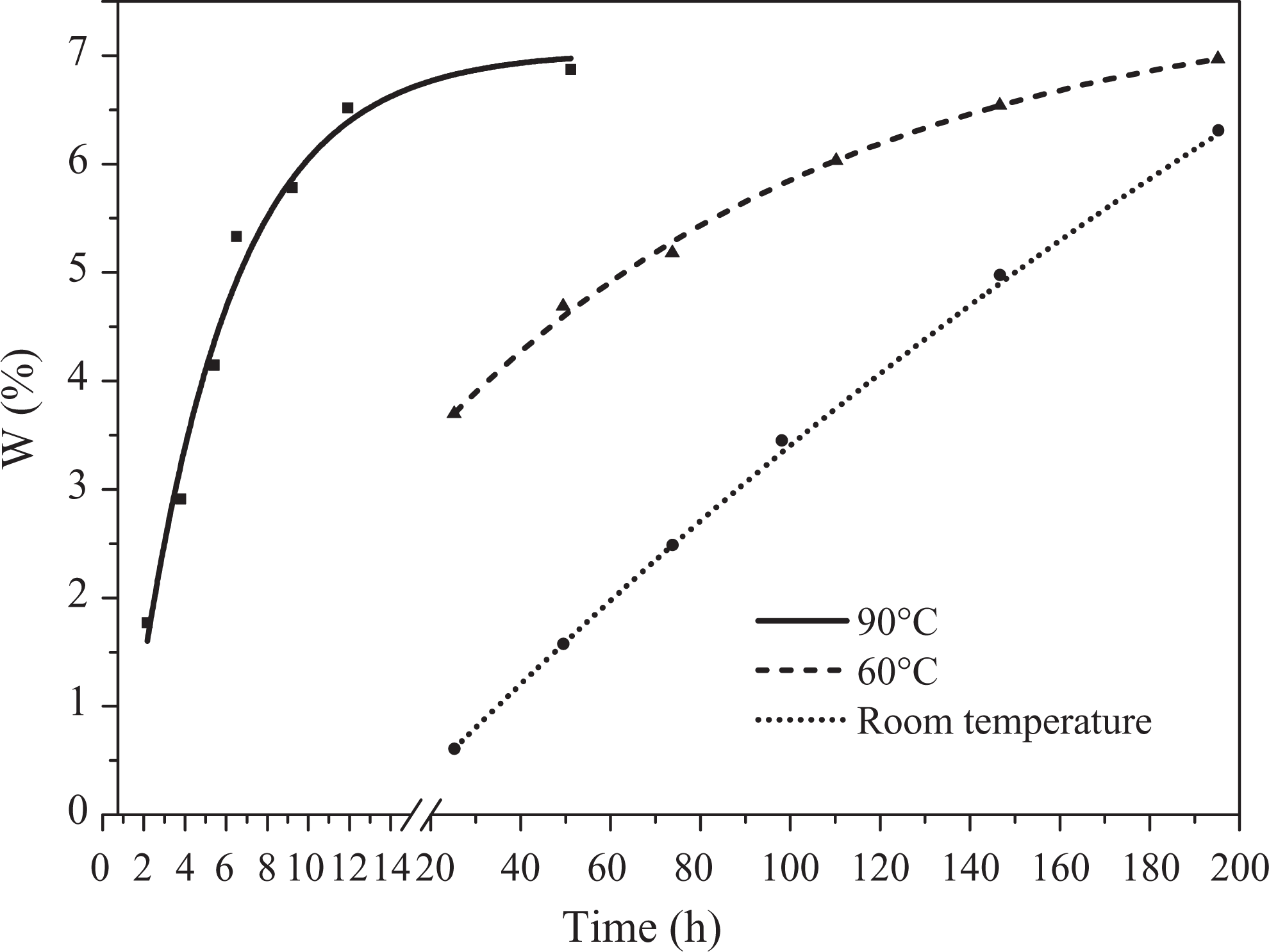
Water absorption curve of the CMR/PLA biocomposites at 60, 90°C, and room temperature. CMR: Chinese medicine residues, PLA: polylactide.
The variation of equilibrium moisture content in composites was simulated using the splashes. A continuing increase in water uptake was seen in each curve at the beginning of aging, while the upward trend slowed down and became saturated finally. It can also be inferred obviously from Figure 1 that, with a high increasing rate of water absorption, the weight will be increased by 7% after 20 h at 90°C, while the weight increase will be slower at 60°C and room temperature and saturation was not observed till 192 h at 60°C and even longer for that at room temperature.
When hydrothermal aged, the CMR/PLA composites continually undergo hydrolysis, generating bare fibers and broken into small molecular chain structure from macromolecular. 8 The hydrophilic character of fibers is an important cause of water uptake in the composites. Fiber became more discernible (from the matrix) as a consequence of hydrothermal aging for all composites, which was considered to be due to the reduction of interfacial bonding. 9 Water causes the fibers to swell with accelerated aging time, reducing the ability of encapsulating fiber by PLA, and causing all the properties of CMR/PLA biocomposites decreased. In addition, the water absorption rate increased dramatically when hydrothermal aging temperatures increased. It was found that the water diffusion rate increased with both temperature and percentage of fiber, whereas the amount of absorbed water was only influenced by fiber content. 10–11
Effects of aging on mechanical properties
Table 2 shows the mechanical strength and elongation at break of CMR/PLA biocomposites as hydrothermal aging temperature is 60 and 90°C. It could be found that the bending strength, tensile strength, and elongation at break of composite appear a downward trend sharply along with the extension of hydrothermal aging time. After hydrothermal aging at 60°C for 8 days, the bending strength, tensile strength, and elongation at break were reduced to 7.04, 4.32 MPa, and 2.35% by 88.3, 87.8, and 61.6% separately. Meanwhile, the bending strength, tensile strength, and elongation at break became 1.32, 2.48 MPa, and 1.33% by 97.8, 92.8, and 78.1% after hydrothermal aging at 90°C for 15 h, and then, the mechanical properties completely lost after 20 h. There was not nearly much variation after hydrothermal aging at room temperature during our test cycle, so the data of mechanical strength and elongation at break of CMR/PLA biocomposites did not fit into the table. The results demonstrated that the degree of hydrothermal aging was not obvious at room temperature, and the other aging datum at room temperature will not be analyzed to avoid wasting space.
The mechanical properties of CMR/PLA biocomposites.
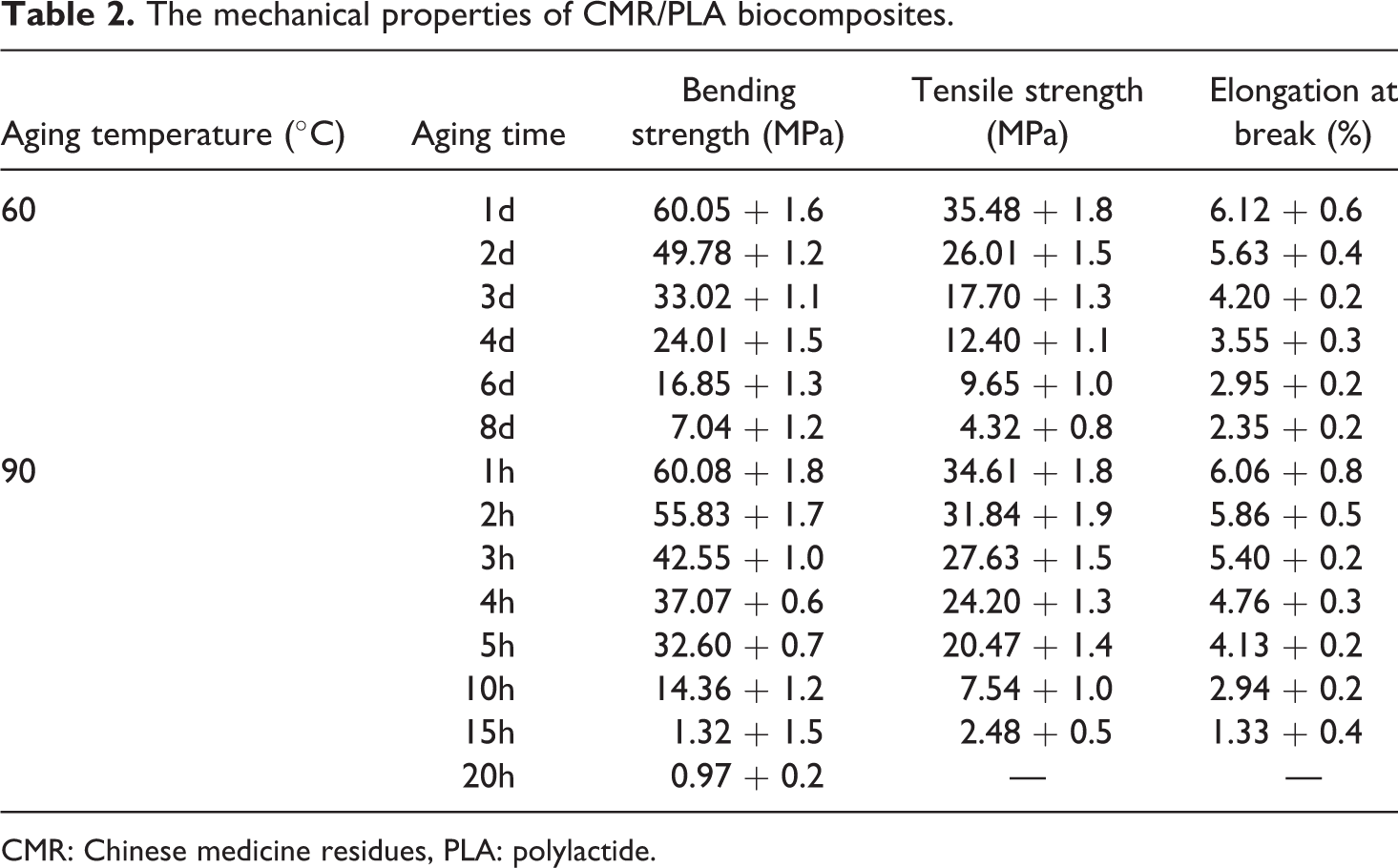
CMR: Chinese medicine residues, PLA: polylactide.
The reasons leading to the mechanical strength decreased may be that (1) PLA of composite gradually breaks down into low molecular weight polymer segments along with reduction in molecular weight and degree of crystallization becomes smaller in hot, humid, and aerobic environment during the period of hydrothermal aging. Xi et al. 12 pointed out that the macromolecular weight of the poly(3-hydroxybutyrate-co-4-hydroxybutyrate) (P34HB)/PLA composite was very low due to the serious degradation under 80% RH at 80°C, which ascribed to the easier and faster hydrolysis of –COO– groups of PLA under humidity when heated. (2) The CMR fiber in composite would absorb water and swell, which might weaken the interfacial bonding between the CMR and PLA. It can also be observed from the table that the breaking elongation of composite is declining constantly. Molecular weight and flexibility are the main factors affecting the elongation at break of composites. 13 With the hydrolysis of ester group in PLA, the molecular weight is reduced while the content of –OH bonds is increased and the role of hydrogen bonding is enhanced. Then, weakened DOP plasticizing effect and reduced flexible of composite result in elongation at break decreased. On the other hand, considering the decrease in the mechanical properties at 60 and 90°C of hydrothermal aging, it is found that temperature is one of the significant factors which affect the aging properties of the CMR/PLA biocomposites.
The FTIR spectroscopy analysis
The FTIR spectrogram was chosen to evaluate the affection of the hydrothermal aging on the structure of CMR/PLA biocomposites. The absorption bands at 1764 cm−1 in PLA indicated the C=O stretching vibrations and the absorption peak at 1188 and 1086 cm−1 arise from the C–H stretching vibration of PLA, all of which are distinct characteristic peak of ester group. 8 It is evident from Figure 2 that the positions of PLA characteristic peak haven’t changed during the whole hydrothermal aging process, while the intensity of characteristic peak presents regular change.
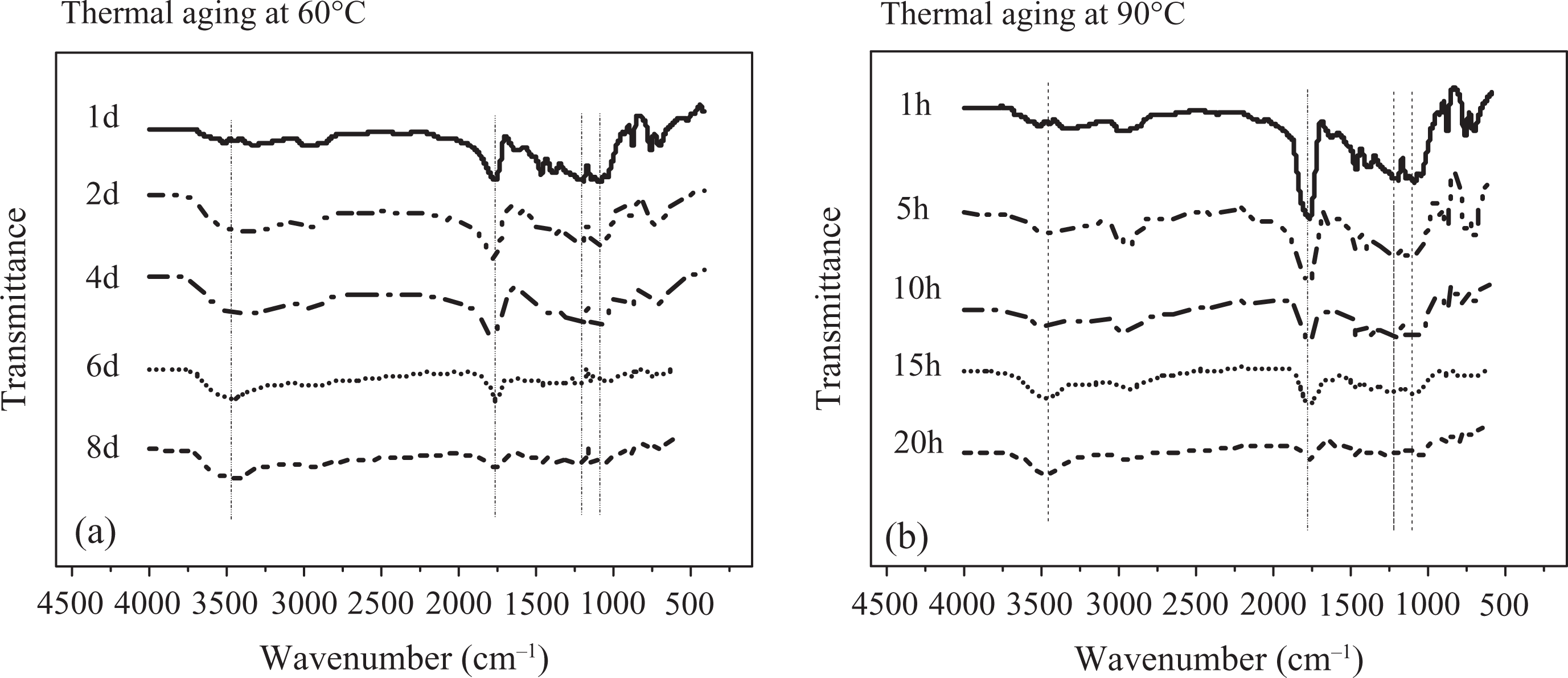
The FTIR spectra of CMR-PLA biocomposites. (a) and (b) represent the hydrothermal aging at 60 and 90°C, respectively. FTIR: Fourier-transform infrared spectroscopy, CMR: Chinese medicine residues, PLA: polylactide.
With the extension of aging cycle, –C=O vibration absorption peak in PLA appearing near 1764 cm−1 and C–H vibration absorption peak in PLA appearing near 1188 and 1086 cm−1 are gradually weakened. During the CMR/PLA composite hydrothermal aging process, the ester group is hydrolyzed with the ester bond breaking and the carbonyl group are decreased. Macromolecular backbone is broken into short-chain structures at the same time.
It can also be seen from Figure 2 that there was a characteristic peak appearing at 3460 cm−1, the intensity of the peak was increased gradually. It may be that hydroxyl and carboxyl groups are formed by hydrolysis reaction. The degree of hydrolysis is associated with the content of water in polymer system; the higher the water content, the greater the degree of hydrolysis. Greater hydrolysis degree produces more groups of hydroxyl and carboxyl, and the hydrogen ion concentration increases. The lower pH of water ≈6 promotes hydrolytic degradation, which can facilitate the diffusion of water within the polymer. 14 All of these behaviors play a catalytic role in hydrolysis reaction of ester group. Therefore, with degradation time increasing, it is observed that the absorption peak intensity of –OH increased distinctly and the composite aging problem is serious.
Comparing Figure 2(a) and (b), it is observed that although hydrothermal aging period at 60°C is significantly longer than that at 90°C, the change in the characteristic peak intensity at 60°C is less than that at 90°C. The composite after the hydrothermal aging process at 60°C still appears weak absorption peak at 1188 and 1086 cm−1, while the characteristic peak disappears when the temperature of hydrothermal aging is at 90°C. The result indicates that the temperature is an important factor that affects the ester hydrolysis reaction, which corresponds to the hydrothermal aging of composite.
The TGA
The TGA is one of the thermal analyses used to investigate the thermal stability of polymeric system. The TGA gives an indication of the highest degradation temperature that can be adopted. TGA curves for CMR/PLA biocomposites are shown in Figure 3(a) and (b).
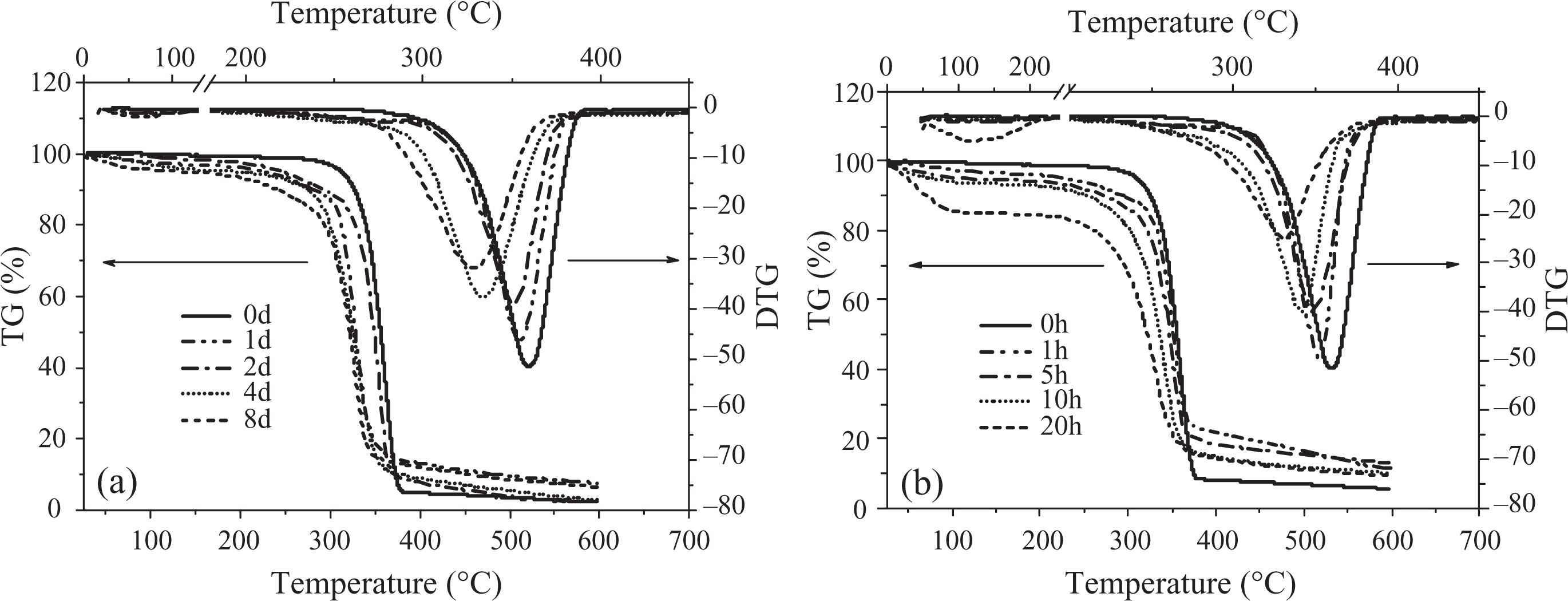
The TGA/DTG thermograms of CMR/PLA biocomposites after hydrothermal aging. TGA: thermogravimetric analysis, DTG: derivative thermogravimetric, CMR: Chinese medicine residues, PLA: polylactide.
It can be seen that there are two weight loss stages during hydrothermal aging. The first stage starts at about 30°C and ends around 120°C and the sample weight loss is fewer, which is not observed before hydrothermal aging, as a result of the moisture in CMR fibers volatilizing. Xue et al. 15 considered a small, gradual decrease in mass over a wide temperature range from 30°C to 140°C because of the vaporization of the moisture present in the fibers. The second decomposition stage appeared from the temperature range of 250°C to 400°C, and the sample weight loss is 85%, due to the thermal degradation of PLA. A research on the thermal properties of PLA shows that the degradation temperatures at 10% (T 10%) and temperature of the most rapid mass loss (T max) after various periods of hydrolytic degradation were around 334.4 and 357°C, respectively. 16 The temperature of different stages of decomposition, temperature at 3% weight loss as the initial temperature (T i), temperature at 10% weight loss (T 10), and temperature of at 50% weight loss (T 50) are displayed in Table 3.
The data from TGA of CMR/PLA biocomposites.
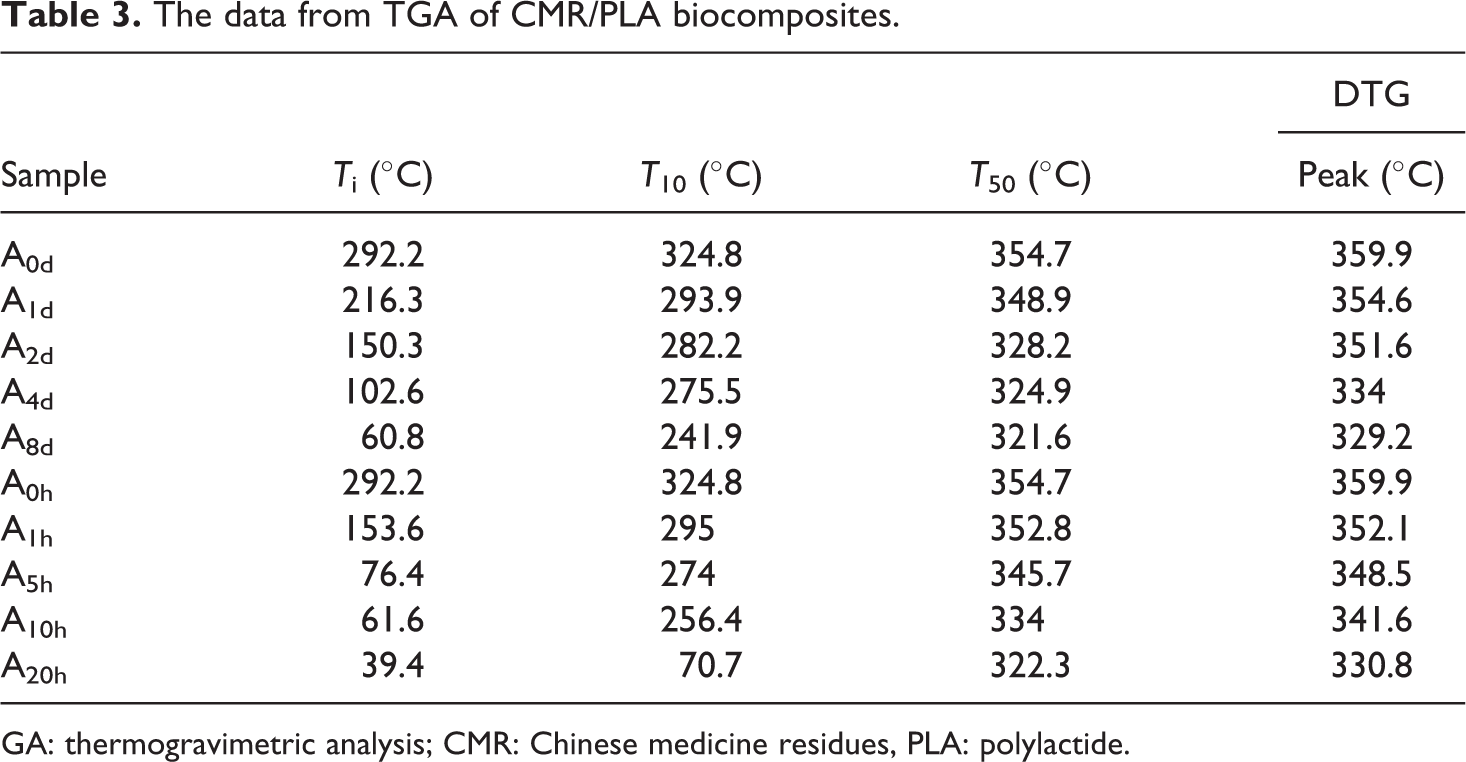
GA: thermogravimetric analysis; CMR: Chinese medicine residues, PLA: polylactide.
It is summarized in Table 3 that the T i, T 10, and T 50 of the aged samples under 60°C hydrothermal environment are similar to the original samples initially. However, during the hydrothermal aging, the derivative thermogravimetric (DTG) curves at both of the 60 and 90°C temperature ranges are shifted to a lower temperature than the curve of original composites due to the rate of degradation increased. With the water penetrating into the composites, the swell of CMR fiber makes the thermal stability of composites reduced. The data also clearly show that the higher temperature accelerated the hydrothermal aging of the CMR/PLA biocomposites.
The SEM
Figure 4 shows the surface morphology of the CMR/PLA biocomposites before and after hydrothermal aging at 60 and at 90°C, respectively. The smooth surface of the composite before hydrothermal aging is shown in the figure, where fiber is tightly coated by PLA matrix without phase-splitting phenomenon. However, the apparent quality of the composite became significantly worse after hydrothermal aging. The CMR fibers are poorly bared and the tensile failure section is rough; moreover, the holes exist as the result of fiber pulled. The phase separation of PLA and CMR can be observed clearly.
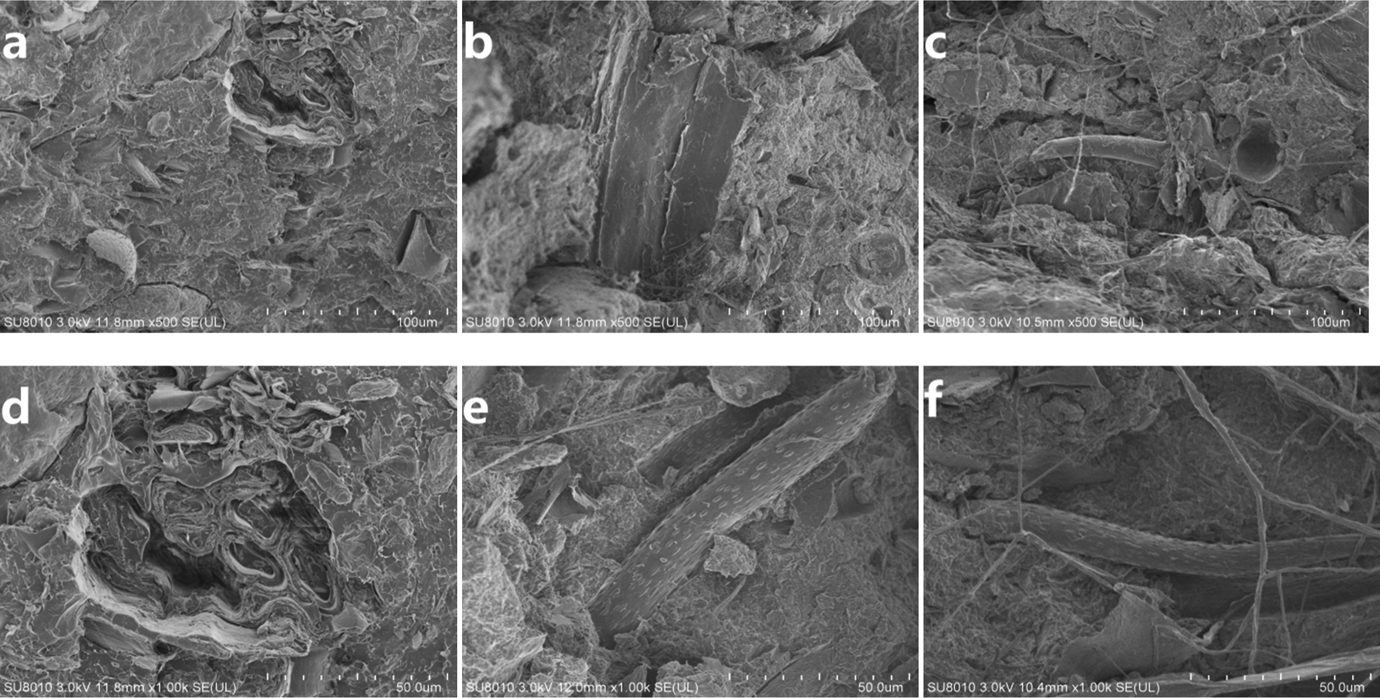
Comparison of SEM micrographs of (a) CMR/PLA composites without hydrothermal aging, (b) aging after 8d at 60° and (c) aging after 20h at 90° (3 kV, 500x, Scale 100 um). (d) CMR/PLA composites without hydrothermal aging, (e) aging after 8d at 60° and (f) aging after 20h at 90° (3 kV, 1000x, Scale 50.0 um). CMR: Chinese medicine residues; PLA: polylactide; SEM: scanning electron microscopy.
As the bath temperature rises, the water diffuses at a quicker rate, fills in gaps and voids, and locally softens the stresses around defects. 17 It is accepted that the CMR fiber swelled after hydrothermal aging, and then, the diameter of CMR fiber was recovered after drying up. However, the stripping of the fibers still remained which leads to the adhesive force between CMR fiber and PLA going down and interfacial bonding broken. In addition, during the hydrothermal aging, the PLA hydrolyzed and the intensity of molecular chain declined which makes an effect on the mechanical properties of composite. It is found from Figure 4 that temperature is also one of the reasons of accelerated aging. There are more uncovered thin fibers exposed on the tensile failure section at 90°C compared with 60°C. This result agrees with the research in infrared (IR).
Conclusion
In this study, the hydrothermal aging behavior of CMR/PLA biocomposites at different temperatures was evaluated by applying FTIR, TG, and SEM analyses and the analysis of mechanical performance.
It was found that, with the prolonging of hydrothermal aging period, the mechanical properties of CMR/PLA biocomposites were decreased. More specifically, while the hydrothermal aging continues for 8 days at 60°C, the bending and tensile strength of composites were decreased by 87.8 and 88.3%, respectively; while the hydrothermal aging continues for 15 h at 90°C, the bending and tensile strength of composites were decreased by 97.8 and 92.8%, respectively. In addition, high temperature made water absorption of CMR/PLA composite materials rose.
In the process of hydrothermal aging, the ester group in PLA molecular chain was continuously hydrolyzed, macromolecular skeleton structure fractured into small molecular chain structure, and the decrement of the molecular weight of PLA led to the mechanical properties of composite decreased.
Due to the heat-moisture treatment, the swell of the CMR fiber generated, which causing the interfacial bonding between CMR fiber and the PLA basement plastic were destroyed, the interfacial adhesion force decreased, and then all the performance showed a downward trend.
Temperature is one of the reasons for the accelerated hydrothermal aging; the higher the temperature, the more significant decrease in the performance of the composites. In the process of practical production of CMR/PLA biocomposites, the appropriate anti-aging agent may be taken into consideration to improve the resistance of hydrothermal aging.
Footnotes
Declaration of Conflicting Interests
The author(s) declared no potential conflict of interest with respect to the research, authorship, and/or publication of this article.
Funding
The author(s) disclosed the receipt of the following financial support for the research, authorship, and/or publication of this article: Thanks are due to Nanjing Forestry University for assistance with the experiments and to China Pharmaceutical University for supplying the CMR Materials.