




Abstract
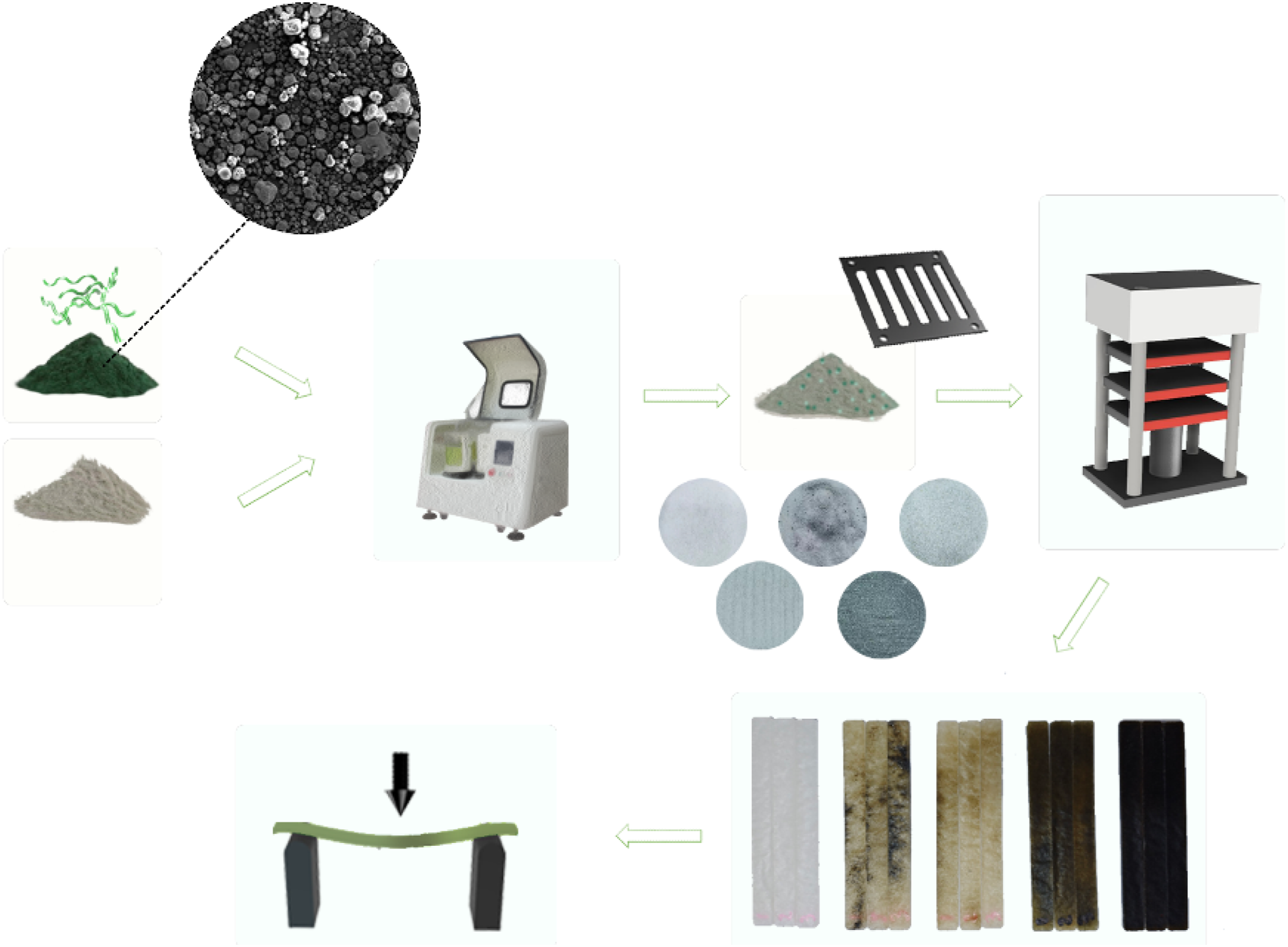
This study develops eco-friendly composites by blending polylactic acid (PLA) with cyanobacteria (Arthrospira platensis) using solvent-free planetary ball milling and hot-pressing. The objective is to address the industry’s plastic waste from non-biodegradable accessories. Results show that 3.5% Spirulina increased flexural modulus by 27% (4800 MPa vs neat PLA’s 3771 MPa), though strength declined maybe due to interfacial limitations. Thermal analysis revealed more homogeneous crystallinity, with melting enthalpy rising 14%. These composites, produced via green methods, offer sustainable alternatives for stiff, heat-resistant biodegradable accessories and parts. The work underscores cyanobacteria’s potential in reducing reliance on land plants and advancing circular manufacturing.
Get full access to this article
View all access options for this article.