




Abstract
The purpose of the study is to reduce the damage of the soldier boots, which subject the blast load. The boot sole was reinforced to perform the study. Thermoplastic polyurethane (TPU) and multi-walled carbon nanotube (MWCNT) materials were used for this reinforcement. In addition, TPU 508 material was used as energy absorber, and Carbon-Kevlar fiber composite was utilized to decrease the impact effect of blast load. Acceleration test system was used to simulate the blast load. Three different boots were used in the study (ordinary boot, semi-damped boot, and fully damped boot). Twin-screw extruder was used to blend melted material to prepare polyurethane MWCNT with weight fraction from 1% to 5%. In addition, mechanical properties of these materials were obtained by tensile tests. The best mechanical properties were obtained with the weight fraction of 1% MWCNT. Acceleration test was applied to measure the energy damping performance of new designed boot sole. As a result of the study, the best reduction on the blast load was obtained nearly 12% with the fully damped soldier boot.
Introduction
The mine blast, composite materials, and drop test concepts were investigated for the literature survey. When the literature was investigated, it is obvious that there is less study about soldier boot impact resistance. So, this study focuses on improving the impact resistance of soldier boot.
Twin-screw extruder was used to blend melted material to prepare polyethylene multi-walled carbon nanotube (MWCNT) with weight fraction from 0.1 to 10 by McNally et al. 1 The morphology and distribution of MWCNTs in the polyethylene resin was researched using scanning electron microscopy, transmission electron microscopy, atomic force microscopy, and wide-angle X-ray diffraction. The electrical conductivity, viscoelastic behavior, frequency, maximum tensile strength, elongation, and crystallization temperature were examined.
Carbon nanotube (CNT) pulling out concept was studied in terms of the molecular dynamics by Frankland and Harik. 2 Velocities of the CNT and variations in the displacement were observed. Linear trends in the CNT velocity force relation were monitored and utilized to forecast an effective viscosity coefficient for interfacial sliding at the CNT/polymer interface.
Molecular-level couplings with polymer chain and load transfer favored three-dimensional architecture were demonstrated by Ma et al. 3 True potential of CNTs can be carried out in composite as initially predicted. Composite fibers with reticulate nanotube architectures indicated magnitude improvement in strength compared to randomly dispersed short CNT-reinforced composite.
Şavkın et al. 4 studied to examine the effect of the ratio of MWCNTs on the tensile properties of thermoplastic polyurethane (TPU). The tensile properties were measured on various material ratios for pure TPU and reinforced TPU with different ratios of MWCNTs. TPUs and MWCNTs were composed with plastic injection machine. The sheets, which were produced by injection molding, were cut by computer numeric control (CNC) machine to form the shape of the specimen standards (ASTM-D12-C) for tensile testing. The specimens were tested by the tensile test machine.
A wide literature survey about the mine blast was performed by Anderson et al. 5 After the literature survey, a series of experiments, which were related with mine blast loading, were performed, where plate standoff, soil moisture content, and plate shape were varied. For each test configuration, three experiments were applied to evaluate repeatability of the experiments. When the results of the experiment were investigated, it was seen that initial velocity imparted to the plate as inferred from the maximum height that the plate displaced.
Numerical simulations of V-shaped plate, which had different angles, and experimental results were presented to investigate blast load by Yuen et al. 6 Numerical model results were obtained using Ansys/AutoDYN program. Also, experimental validation was carried out using this program. Material of specimen was selected as Domex 700 steel plate (Central Steel Service, Inc.), TM-57 anti-tank mine (Russian State Munitions Factories) was used to perform experiments to determine standoff distance and the size of the explosive disc utilized in the experiments.
Mine blast algorithm, which is based on mine explosion concept, was applied in order to constrain optimization and engineering design problems by Sadollah et al. 7 An exhaustive study was realized to demonstrate the performance of mine blast algorithm in terms of the function value and computational effort. Many of the engineering design problem and constrained benchmark were solved. At the end of the study, the results were compared with other well-known optimizers.
Drop test experimental setup was used to obtain difference between results, which were analytical model and actual blast event by Cheng et al. 8 Selection of test method was critical importance in terms of the results. Drop tower methodology can often exaggerate the performance of blast extenuation seats, which can result in the fielding of sub-optimal solution for the protection of occupant.
A composite, which is MWCNT-reinforced polyurethane composite fiber, was produced using twin-screw extrusion method by Chen et al. 9 A considerable improvement was obtained by incorporating MWCNT up to 9.3 wt% in terms of the tensile strength and Young’s modulus. Electron microscopy was utilized to examine fracture surfaces and dispersion. Raman technique was also used to favor information about degree of graphitization. When the results were investigated, clear homogeneous dispersion of MWCNT throughout polyurethane matrix and strong interfacial adhesion between oxidized MWCNTs were seen. An important improvement was obtained on the mechanical properties of composite fibers under the favor of this matrix.
The effect of adding MWCNTs to the epoxy matrix of a carbon fiber–reinforced composite was investigated in terms of the impact resistance, damping performance, and impact damage by Tehrani et al. 10 Two sets of specimen, which were pure epoxy and MWCNTs-epoxy, were used to perform the experiment. Mechanical tests were applied, such as quasi-static punch test, intermediate velocity impact, vibration, and tensile tests. While strength and tensile modulus remained almost uninfluenced, tensile failure strain of the carbon fiber–reinforced epoxy-MWCNT composite increased.
Carbon fiber (CF)–reinforced epoxy composite modified with CNT was produced by Kim et al. 11 High-energy sonication was utilized to disperse CNTs in resin. The sonication time effect was studied. A low CNT loading of 0.3 wt% in resin had little influence on tensile properties, while it improved the strength, flexural modulus, and percent strain to break by 11.6%, 18.0%, and 11.4%.
Göv 12 developed a new approach for optimization of fiber angle and layer number of composites. Using stress values and maximum stress failure theory, fiber angles and layer numbers were determined.
Mechanical specifications of foams were examined in terms of the tensile, flexural, compressive, and dynamic properties with respect to CF and hollow glass microsphere content by Huang et al. 13
After the literature review, it is shown that there is no study about mine-resistant boot in the literature. Hence, it is determined that the soldier boot has been examined in terms of energy damping performance to simulate mine explosion. The produced three type of soldier boot, which is produced with different layer numbers and different materials ((a) standard boot, (b) semi-damped boot, and (c) fully damped boot) were tested on the drop test.
Boot design and materials
Introduction
The aim of this study is to minimize the foot injuries, when military personnel is exposed to the mine explosion. In the previous study, composite plates, which have different weight ratios in terms of the MWCNT and TPU, were produced. 4 The idealized exfoliated structures were consisted of individual in the polyurethane matrix. Mechanical properties of the produced composites were obtained using tensile test machine, which is SHIMADZU AGS-X (Shimadzu Scientific Instruments [SSI], Kyoto, Japan). The sheets, which were produced by injection molding, were cut by CNC. Tensile test standard, which is ASTM D 638-08 standard method, is used to perform experimental study. The results were given in Table 1. It was found that 1 wt% ratio of the TPU nanocomposite has the optimum tensile properties. Stress–strain curve of optimum plate is shown in Figure 1.
Tensile test results of produced composite materials. 4
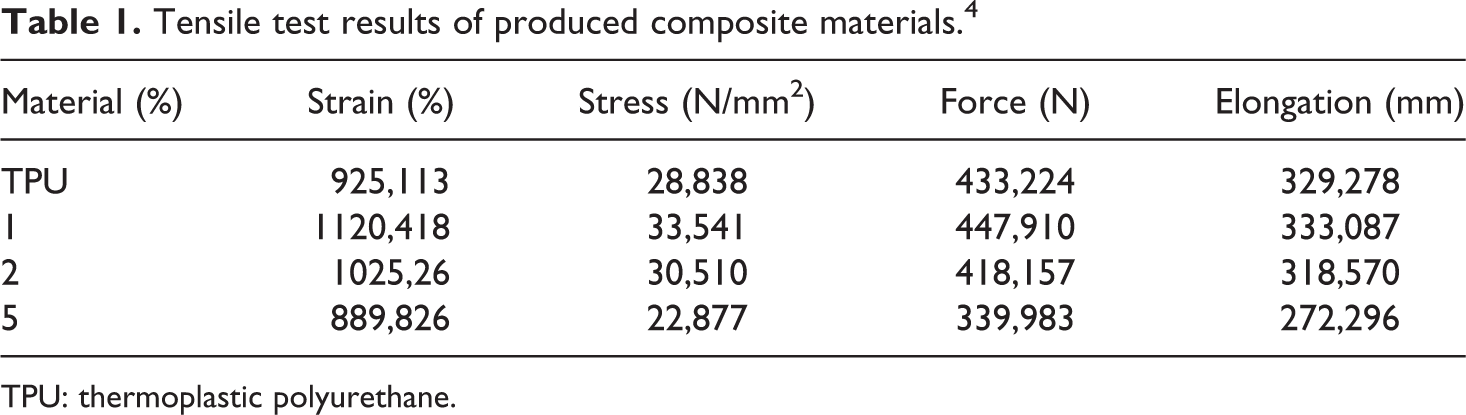
TPU: thermoplastic polyurethane.
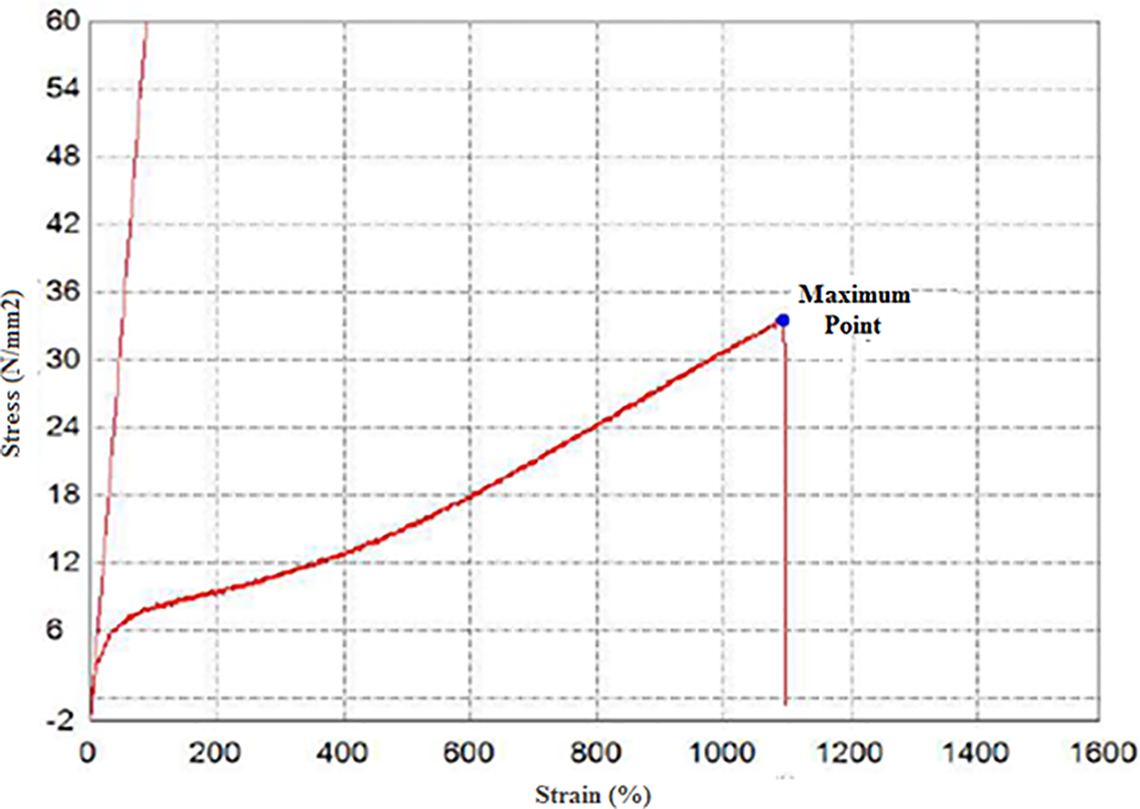
One weight percent ratio of the TPU reinforced with MWCNT. 4
Three types of soldier boot were designed and produced for this aim. The boot sole was created by 8 layers with different thickness and materials for semi-damped boot and by 10 layers with different thickness and materials for fully damped boot. These materials were placed as a layer to the sole of boot to achieve high strength, high-impact resistant, and high-energy absorber. The boots are as follows: Standard soldier boot Semi-damped soldier boot Fully damped soldier boot
Material and layer design
TPU 508 reinforced with 1% weight ratios of MWCNTs was used to obtain strong material (Figure 2(a)). One percent weight ratio of MWCNTs was found as optimum by the previous study. 4
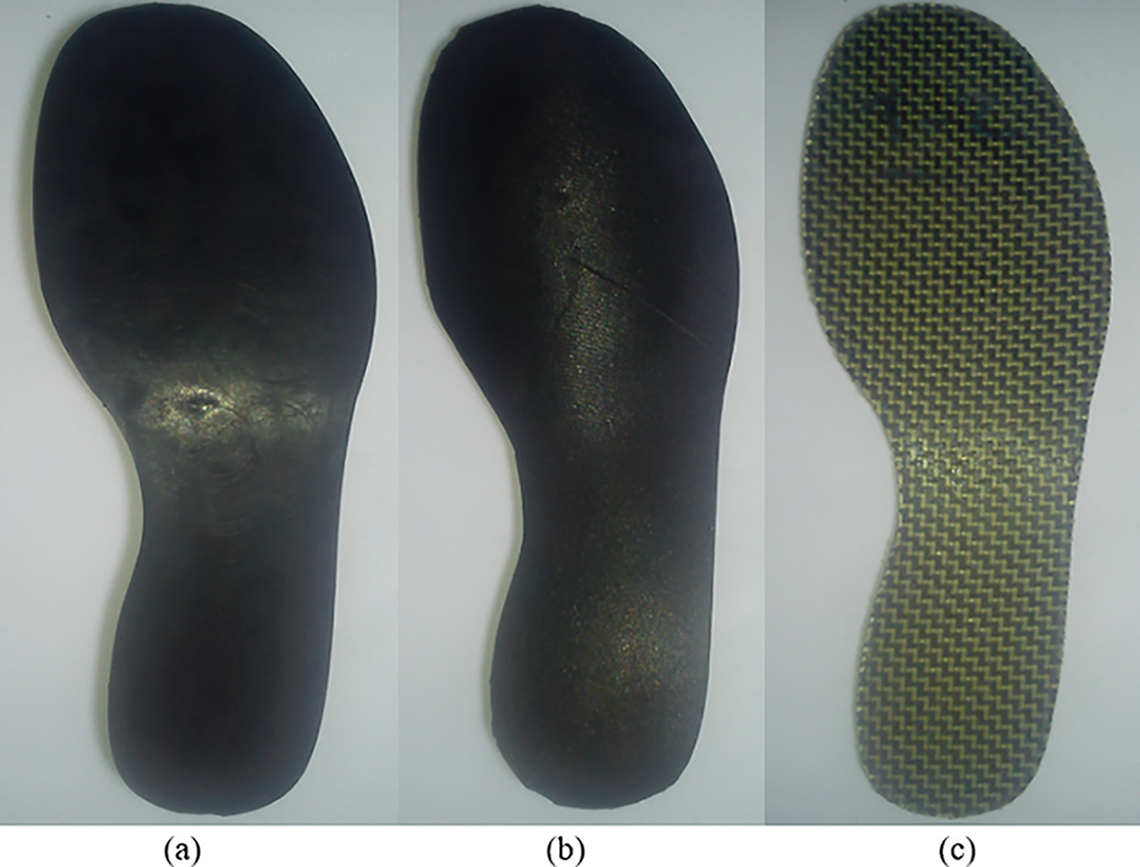
Schematic view of three main layer (a) TPU with MWCNT, (b) foam polyurethane, and (c) Carbon-Kevlar composite.
Foam polyurethane was used to provide energy absorption (Figure 2(b)). Foam polyurethane chemical composition is:
4,4-methylenediphenyldiisocyanate,
polyester polyol,
adipic acid,
ethane-1,2-diol.
Carbon-Kevlar plates were used to increase impact resistance. The Carbon-Kevlar plates were produced with epoxy embedded 10 layers Carbon-Kevlar fabric. One-millimeter thickness composite material was obtained (Figure 2(c)). Carbon-Kevlar plates were produced by the authors.
Soldier boot layer types
Standard soldier boot
There exists no reinforcement layer in standard boot. Only standard soldier boot sole was used for tests.
Semi-damped soldier boot component
Layer arrangement of semi-damped soldier boot was given in Figure 3. Semi-damped soldier boot was produced using eight layers, which is a combination of the reinforced TPU and foam polyurethane. Politix adhesive was used to bond the layers for all studies.
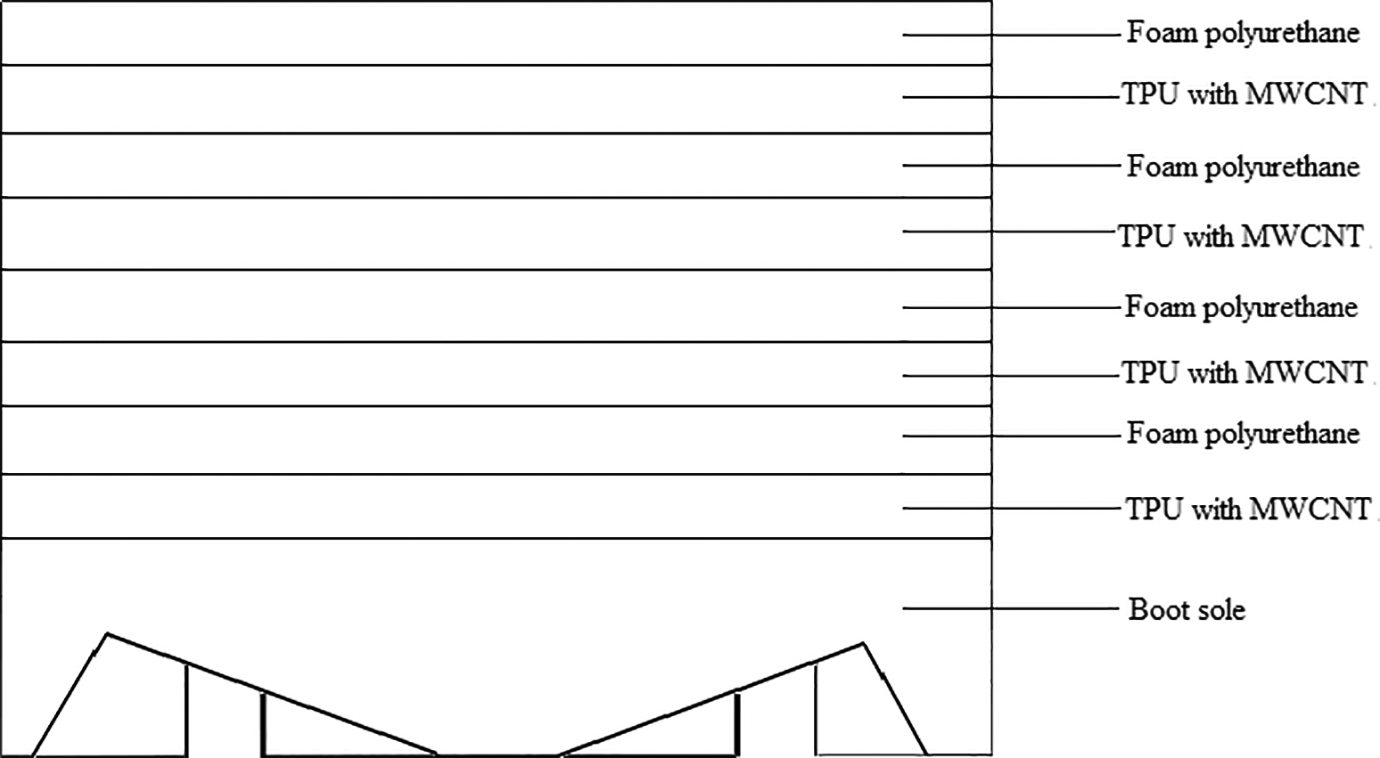
Semi-damped soldier boot layers schematic view.
Fully damped soldier boot component
Layer arrangement of dully damped soldier boot is shown in Figure 4. Fully damped soldier boot was produced using 10 layers, which is a combination of the TPU reinforced with MWCNT, foam polyurethane, and Carbon-Kevlar composite.
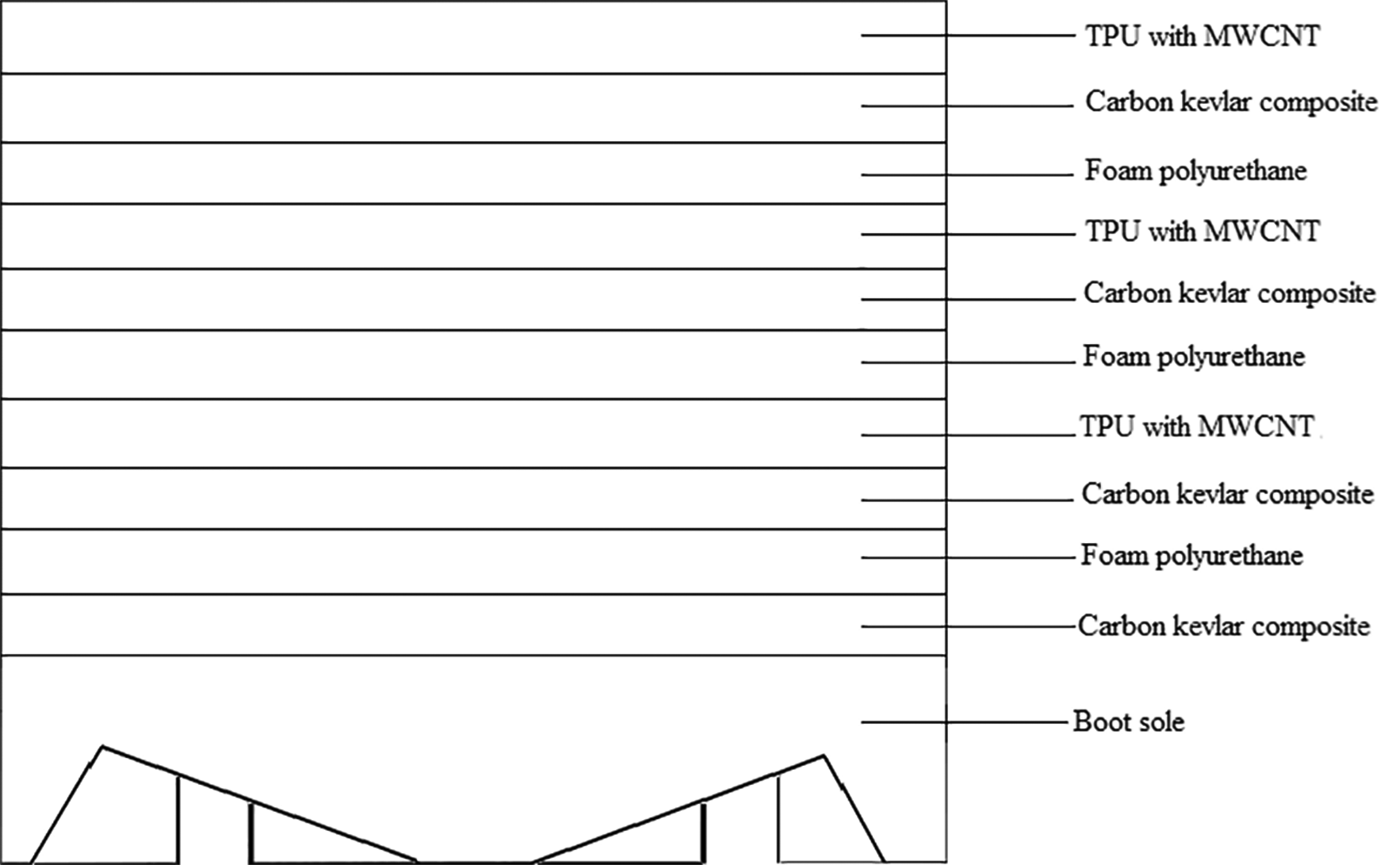
Fully damped soldier boot layers.
Produced boots for acceleration tests
Standard soldier boot sole was used for all types of boots. The produced standard soldier boot is shown in Figure 5(a), the produced fully damped soldier boot is shown in Figure 5(b), and the produced fully damped soldier boot is shown in Figure 5(c).
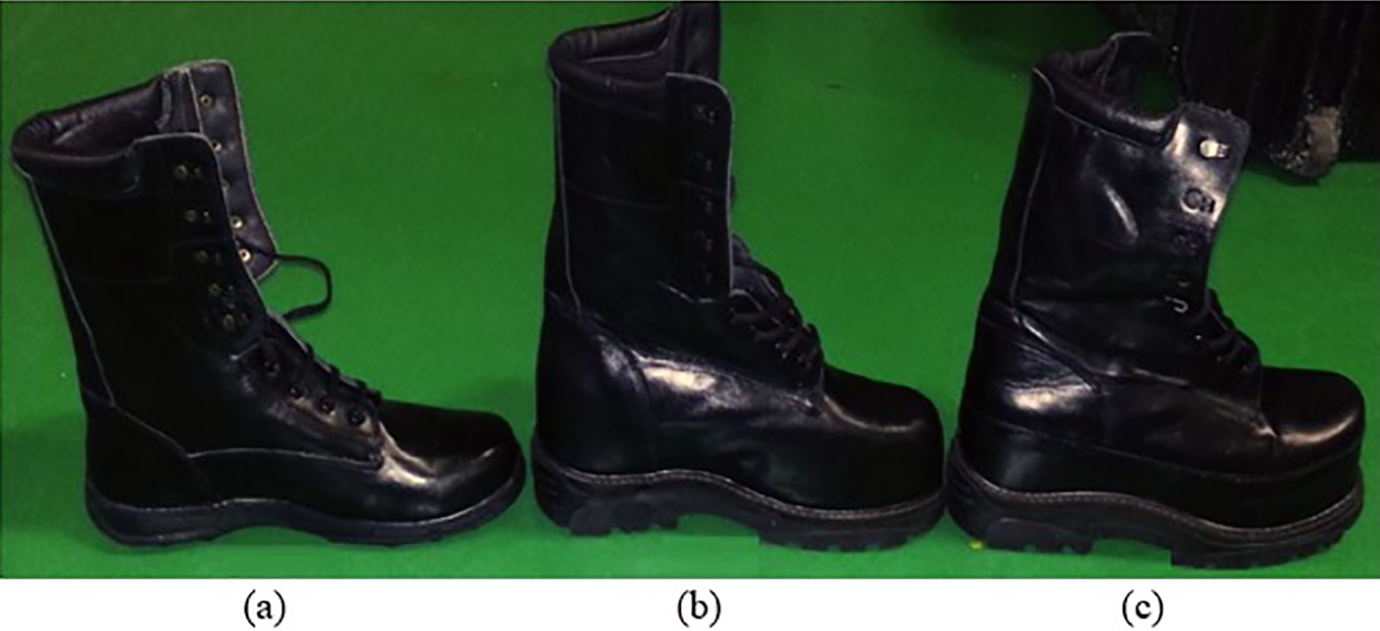
The produced boot types (a) standard soldier boot, (b) semi-damped soldier boot, and (c) Fully damped soldier boot.
Test method
Introduction
Blast load can be simulated with acceleration test. 14,15 Drop test also can be used to obtain acceleration test data. 16,17 Hence, drop test was applied to the boots to measure energy damping performance of the three types of soldier boots. This test was performed in the OTOKAR, which is company in the defense industry in Turkey, drop test stand with repeatable tests.
Application of the test
The developed mine-resistant boots were tested with identical drop test configurations on the drop test stand. The tested boots were shown in Figure 5.
During the tests, lower leg force data were obtained with third-generation hybrid mine model. The studies focused on the vertical axis of the lower leg force values (Tibia_Fz) located between NATO AEP 55 criteria of injuries. Drop test stand and test model’s view was given in Figure 6.
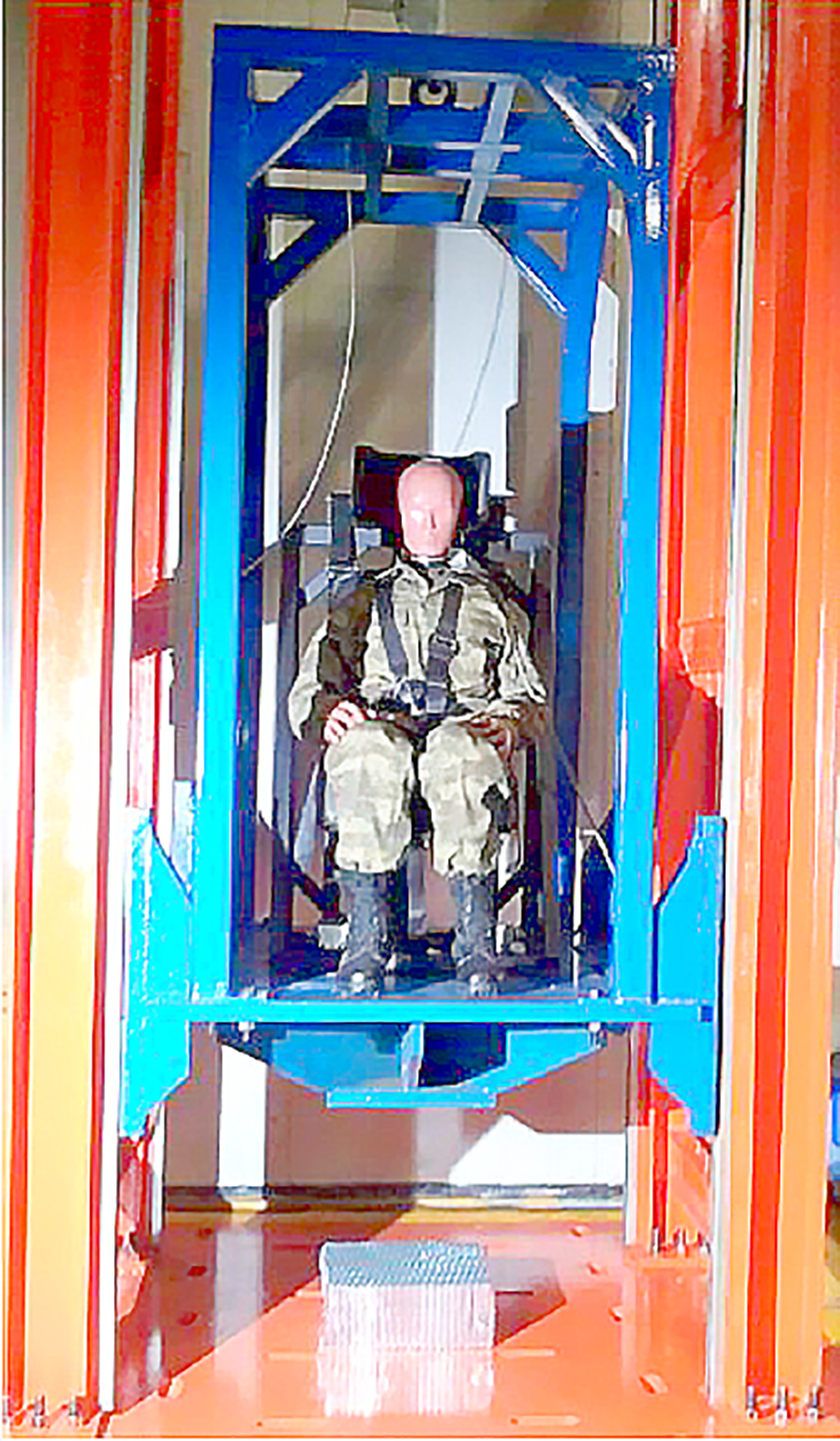
Drop test model and test stand.
Test configuration of the mine-resistant boots (Figure 7) was determined with OTOKAR’s earlier mine test experience to simulate tibia injuries. This third-generation hybrid mine model was dropped from 2.75 m height onto foam plate with density of 80 kg/m3 (Figures 6 and 8).
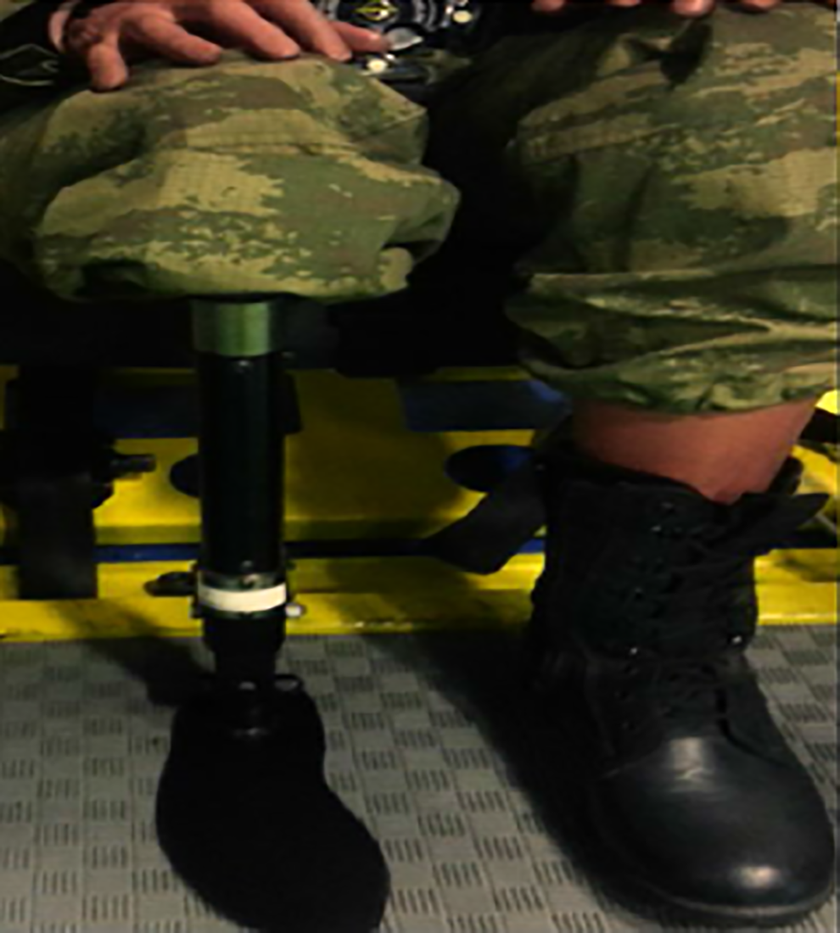
Model leg view before test.
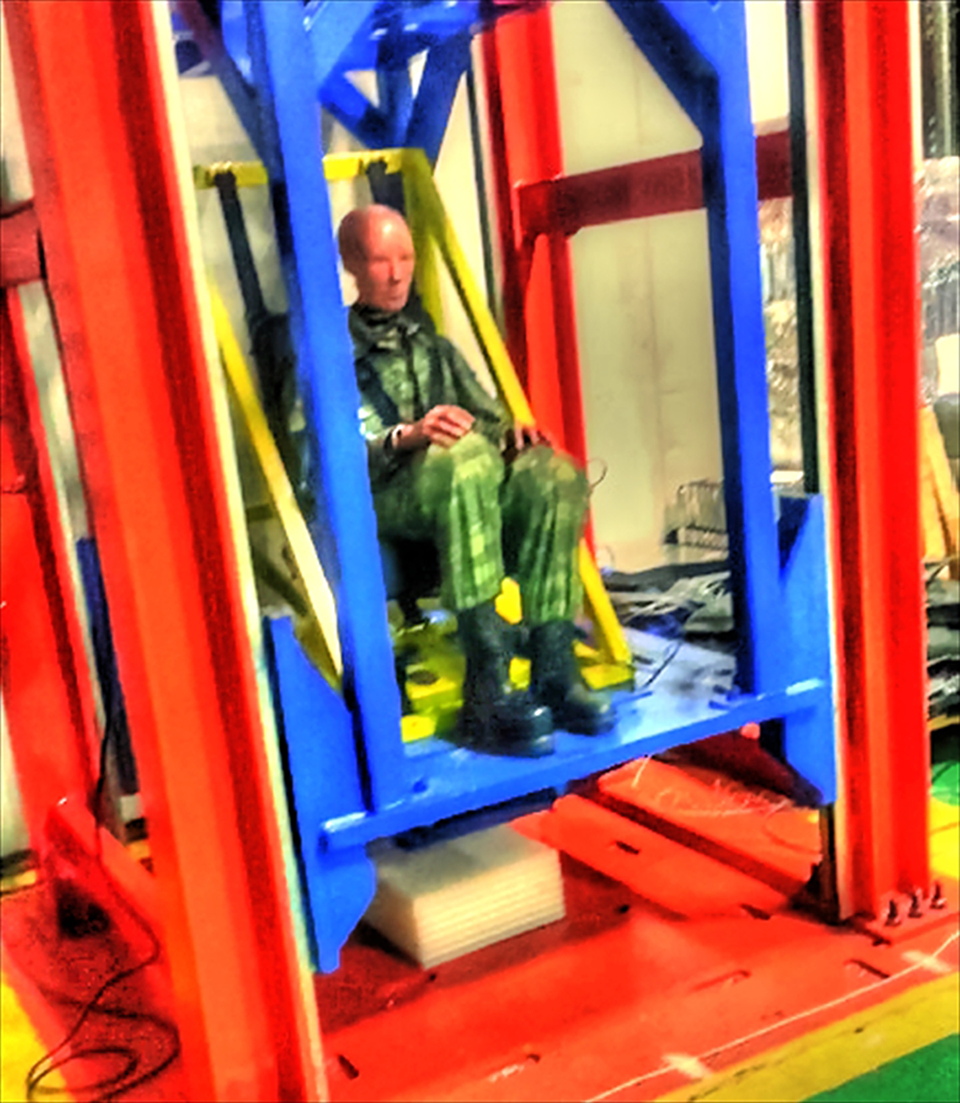
Model view before test.
Standard boot was equipped to model left leg, and energy damping boot was equipped to model right leg. Two identical drop tests were carried out with these configurations in Figure 8.
Results and discussions
The obtained Tibia_Fz injuries value from drop test is shown in Figure 9. The red line is standard boot and blue line is semi-damped boot and black line is fully damped boot in Figure 9.
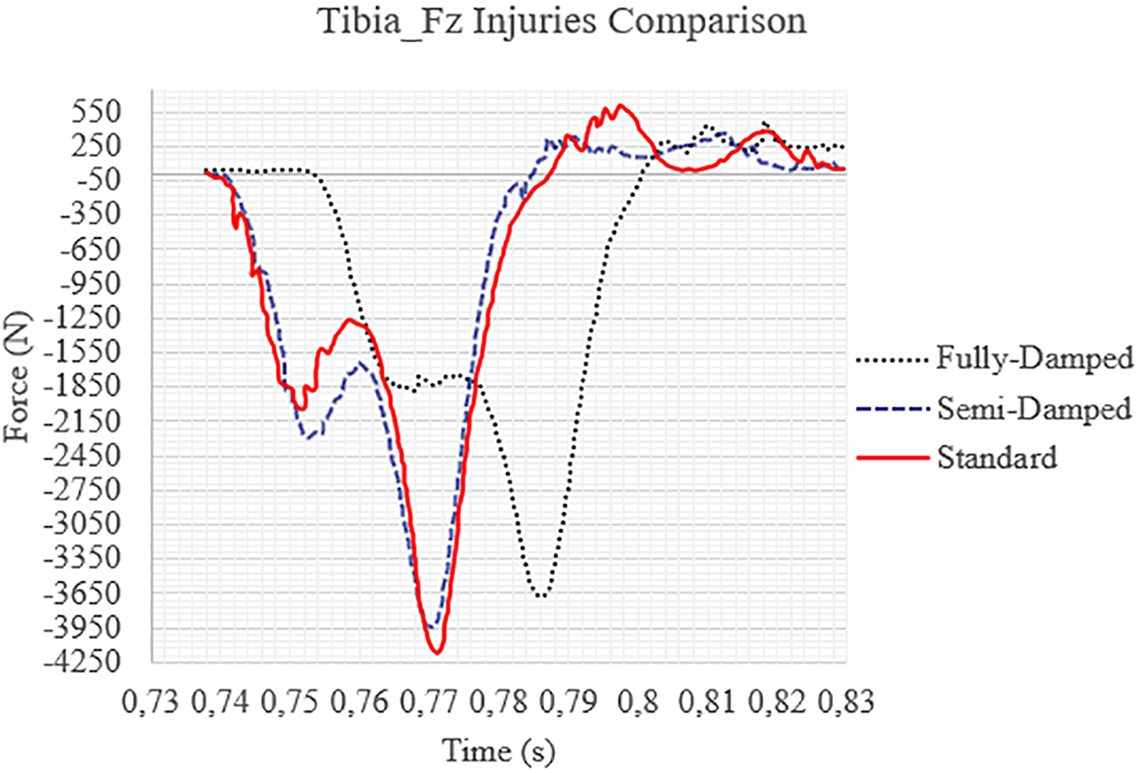
Tibia_Fz compared result graph.
Standard boot was defined as reference for percentage reduction in obtained force to make comparison between reference and produced boots. Semi-damped boot decreased the blast load about 208 N compared to standard boot (in Table 2). Fully damped boot decreased the blast load about 498 N according to standard boot (in Table 2).
Drop test results.
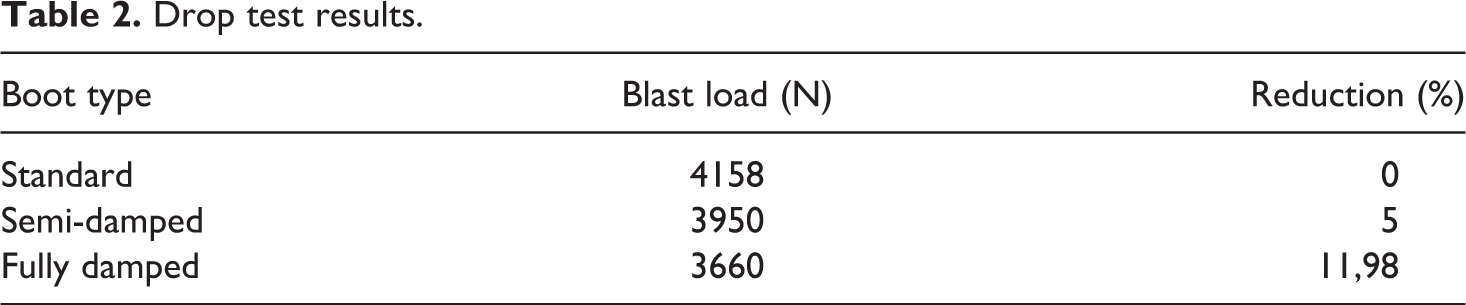
Mechanical properties of the composite reinforced with CNT is higher than polyurethane. Mechanical properties of composite can be improved by the addition of the CNTs, 18 and impact resistance of the composite can be increased by using Carbon-Kevlar composite. 19 In this study, blast load effect was decreased nearly 5% using TPU composites reinforced with MWCNT. In addition, impact effect on the soldier boot was reduced nearly 12% using together Carbon-Kevlar composite and TPU composites reinforced with MWCNT.
Conclusions
An experimental investigation was carried out to reduce the damage of the soldier boots, which are exposed to land mine explosion. Different composite materials, which are TPU reinforced with MWCNT (1% weight ratio) and Carbon-Kevlar composites (0.1 mm thickness and 10 layers), were produced. The produced material was fixed up on the boot sole. Then, three different boot types, which are standard, semi-damped, and fully damped soldier boot, were produced in a different layer sequence according to the aim of the study. Drop test was executed according to NATO AEP 55 criteria of injuries for each soldier boot samples. It was concluded that decreasing on the blast load effect was obtained with fully damped solider boot as nearly 12%.
In the feature, it is planned that real mine explosion tests to investigate effect of this reduction. Different composite materials will be investigated to obtain better damping performance boot.
Footnotes
Acknowledgements
We wish to express our grateful appreciation to OTOKAR Automotive and Defense Industries, Inc. and OPAK Shoe Industry and Trading Co. Inc. for their guidance and supports.
Declaration of Conflicting Interests
The author(s) declared no potential conflicts of interest with respect to the research, authorship, and/or publication of this article.
Funding
The author(s) received no financial support for the research, authorship, and/or publication of this article.