



Abstract
The present work investigates the effect of jack wood flour (JWF) content on the fracture toughness, tensile, impact, and morphological behavior of the prepared green biocomposites. From 0 to 35 wt% (volume fraction (Φ f) = 0–0.34) of JWF was incorporated as a reinforcing biodegradable filler into poly(ε-caprolactone) (PCL) matrix by melt compounding in a twin screw extruder. The tensile modulus increases by 80.48% at the highest Φ f = 0.34, though marginal increment (13.71%) in the yield strength was registered. A sharp reduction in notched Izod impact strength (85%) was observed with increasing JWF content. The fracture toughness of the prepared biocomposites based on post-yield fracture mechanics concept was investigated by essential work of fracture (EWF) methodology. Incorporation of JWF into PCL matrix diminishes the EWF (w e), while increasing the non-essential work of fracture (βw p). In the biocomposites, principally two mechanisms governed the fracture deformation. Large JWF particles act as stress concentration points and favor the crack initiation, while the smaller particles favor fibrillation which arrests the crack propagation enhancing the parameter βw p at lower concentration of JWF. Freeze-fractured surfaces show a degree of phase adhesion at lower Φ f of JWF. The phase adhesion parameter obtained from micromechanical analysis of tensile properties suggesting the mechanical interlocking and interaction between PCL and JWF.
Introduction
Durability of traditional petroleum-based polymeric materials makes them pertinent in various applications. 1,2 On the other hand, these polymeric matrices lead to immense waste disposal problems because of their nonresistant nature toward microbial degradation. 3 The development of biodegradable plastics has attracted scientific community to overcome the problems associated with plastic littering. 4 One of the most important class of biodegradable and environmentally benign plastics includes aliphatic polyesters such as poly(lactide), poly(glycolide), poly(propylene carbonate), poly(hydroxyl alkanoates), and poly(ε-caprolactone) (PCL). 5 –13 Extensive studies have been performed on the modification of these polymers to obtain biodegradable plastic articles in order to replace the petroleum-based polymers.
PCL is a biodegradable semicrystalline aliphatic polyester with good water, oil, and solvent resistance. 14 Due to various unique mechanical and chemical properties, PCL finds extensive applications in biomedical, agricultural, and packaging applications. 15,16 Additionally, PCL possesses low melting point (approximately 50–60°C) and low T g (−60°C), which consequently lead to high toughness inspite of relatively lower strength at body temperature. 17 The modulus of PCL exists in between low-density polyethylene and high-density polyethylene with low tensile strength (approximately 23 MPa) and very high elongation at break (approximately 800%). 14 However, the application range of PCL can be expanded by improving its strength and modulus properties by blending with different polymers and fillers. 18 –20 It has been found that the modulus can be enhanced by incorporation of reinforcing natural fillers into PCL matrix without compromising biodegradability. 21,22
Among these materials, lignocellulosic filler–reinforced biodegradable polymers have gained significant attention in recent years. These lignocellulosic fillers are composed of cellulose, lignin, and hemicelluloses. 21 Use of these biomaterials is also an effective way for the utilization of secondary wastes to conserve natural resources. The use of natural fillers in biodegradable composites has increased because of their low price, large abundance, and biodegradability. 20 Some other commonly used natural fillers used in biodegradable polymers are natural fibers (flax, hemp, cotton, jute, banana, ramie, sisal), starch, cellulose, potato pulp, chitin, chitosan, and so on. 23 –25
Incorporation of different types of wood flour into biodegradable polymer matrices will reduce manufacturing cost, mold shrinkage, abrasion resistance, creep resistance, as well as substantially improve modulus properties. 26 The jack (Artocarpus heterophyllus) wood flour (JWF) is a termite-resistant yellowish brown powder which imparts excellent texture to the prepared green biocomposites. Its relatively high stiffness will supposedly enhance modulus of PCL without affecting biodegradability. 27 –30
PCL is known to exhibit extremely ductile characteristic with very high elongation properties (elongation at break is more than 700%). The linear or nonlinear elastic fracture mechanics do not describe the viscoelastic behavior of polymers because they predict reversible behavior. 31 Under certain conditions, this approach will work to explain the behavior of polymer matrices prior to crack initiation. For polymers showing high elongation properties, the linear elastic-plastic fracture mechanics is a more appropriate technique to measure fracture toughness behavior. 32 The J-integral and the essential work of fracture (EWF) are the most common methods used to understand elastic-plastic fracture mechanics. 33 However, J-integral method does not explain the viscoelastic nature of polymers, and it will work only when the fracture process zone is relatively very small. On the other hand, this technique is very time consuming. 33 Further, the EWF concept is a semiempirical method which considers elastic-plastic fracture mechanics because of their simplicity. Basically, the EWF approach was used for ductile metals to determine their fracture behavior before crack initiation and stable crack propagation. The EWF approach can be implemented on polymers, by following some impediment and application conditions. 34,35
However, extensive literatures are available on mechanical properties of biodegradable matrices, and in order to broaden the application area of these polymers, detailed studies on tensile, impact, and fracture behaviors are in order. Thus, the aim of the present work is to investigate the tensile, impact, and fracture toughness behavior of JWF-filled PCL biocomposites in correlation with the phase morphology. The fracture behavior and parameters for crack resistance and crack propagation as a function of Φ f were investigated via the EWF approach as a post-yield fracture mechanics method. Tensile properties have been compared with predictive theories, while impact resistance has been correlated with phase morphology.
Experimental
Materials
PCL (CAPA™ 6800) with number average molecular weight 80,000 g/mol (GPC, THF, 25°C), MFI 7.29 g/10 min (190°C, 2.16 kg), and density 1.15 g/cm3 was purchased from Perstorp Chemicals, UK. The JWF was obtained from sawdust which was ground in high speed mixer in order to get reduced size of JWF particles. Vibratory sieve analyzer was used for sieve analysis of JWF particles with the mesh size of 100–140. Particle size analysis was carried out by laser diffraction technique using Model Mastersizer Hydro 2000S (Malvern) in dilute aqueous medium.
The particle size distribution curve exhibited an average particle size of 119.75 μm (Figure 1). The density of JWF particles determined by specific gravity bottle method was 1.30 g/cm3.
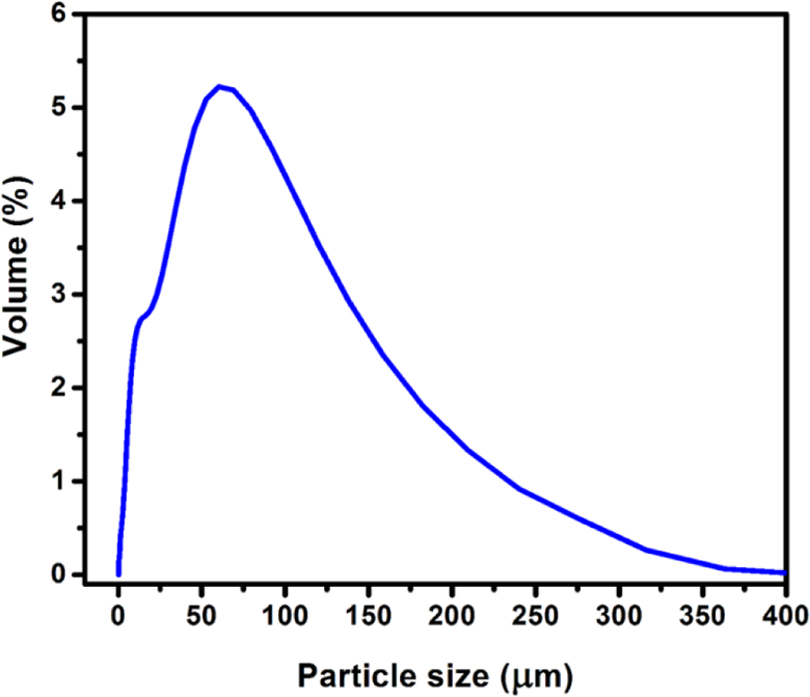
Particle size distribution for JWF. JWF: jack wood flour.
Preparation of biocomposites
JWF powder and PCL pellets were dried in vacuum at 100°C and 45°C, respectively for 12 h. Prism Eurolab 16 Corotating Twin Screw Extruder (TSE) (Thermo Fischer) with diameter = 16 mm and L/D = 40 was used for melt compounding to prepare composites containing 0–35 wt% (0–0.34 volume fraction, Φ f) of JWF. The temperature of the barrel varied from 60°C to 140°C from the feed zone to the die zone, and the screw speed used was 75 r/min. The continuous extruded strands thus collected were quenched in a water bath instantly and pelletized later at room temperature. The compositions of the biocomposites reported are listed in Table 1.
Compositions of PCL/JWF biocomposites.
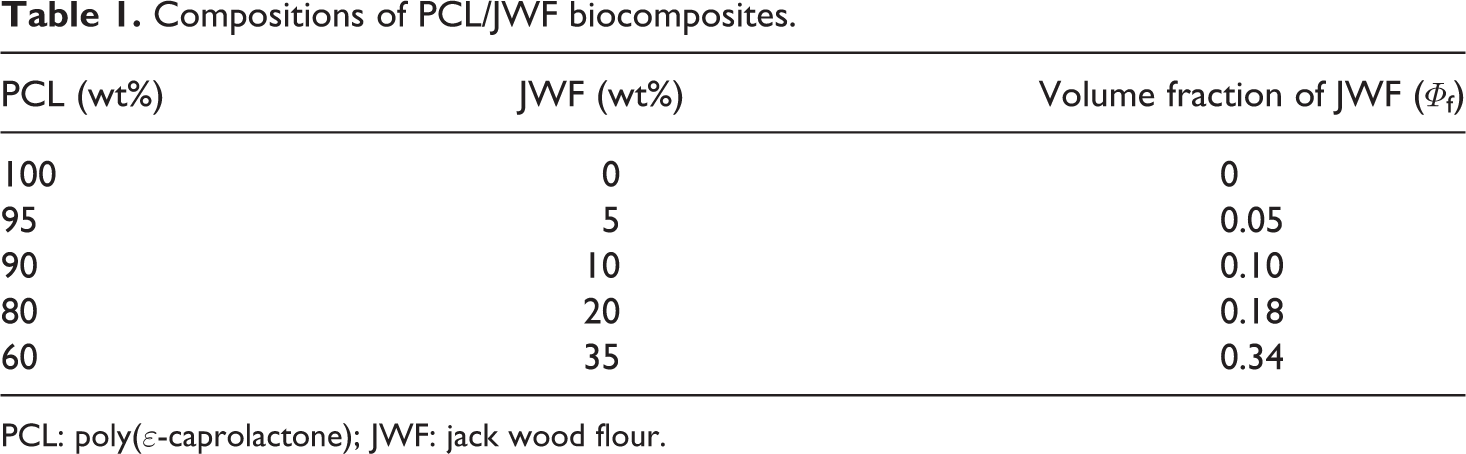
PCL: poly(ε-caprolactone); JWF: jack wood flour.
The parameter Φ f was calculated using equation (1)

where W represents the weight and ρ the density (g/cm3) of the components.
Test specimens
The tensile specimens were prepared using Thermo Scientific HAAKE Mini Jet II injection molding machine (Thermo Scientific) using the following conditions: cylinder temperature 150°C, mold temperature 30°C, and injection pressure was 500 bars. The test samples for Izod impact test were prepared by injection molding on an L & T-Demag PFY-40 injection molding machine (L&T Plastics Machinery Limited). The barrel temperature ranged from 130°C to 150°C from the feed zone to the die zone, and the mold temperature was kept at 30 ± 2°C, while the injection pressure used was 945 bars.
Mechanical properties
Tensile tests were performed on a Zwick universal Z010 testing machine (Zwick, USA) with a crosshead speed of 100 mm/min and crosshead separation of 7.62 mm, following ASTM D-638 test method. The notched Izod impact tests were performed on an Olsen Pendulum type instrument (Tinius, Olsen), Model 504 Plastic Impact (USA), conforming to ASTM D-256 test method. Both the tests were carried out at ambient temperature of 30 ± 2°C. The results of the average of five samples are reported for the tensile and impact tests.
The Differential Scanning Calorimetry (DSC) scans were generated under nitrogen at a heating rate of 10°C/min. To determine the degree of crystallinity, X c, heat of fusion of the second heating scan for each composition was used and the parameter was calculated from equation (1) given below as

where ΔH m is the normalized enthalpy of melting for PCL in the composites, that is, the values are corrected by dividing them by the weight of fractions of PCL in the composites, ΔH m0 the enthalpy of melting of 100% crystalline PCL which is taken as 136.1 J/g [2-3], and W the weight fraction of PCL matrix.
Essential work of fracture
The crack propagation resistance of the investigated composite was determined using EWF approach. EWF test was carried out on double-edge-notched tension (DENT) specimen with 80 × 20 × 1 mm3 dimension which was prepared by Carver compression molding machine (Carver): 3893 (model no. 4011A00) compression molding machine at 160°C temperature and 15,000 psi for 10 min. The DENT specimens were pre-notched with varying ligament lengths from approximately 3 to 7 mm using a fresh razor blade perpendicular to the application direction of tensile force. Figure 2 presents a typical DENT specimen used in EWF test.
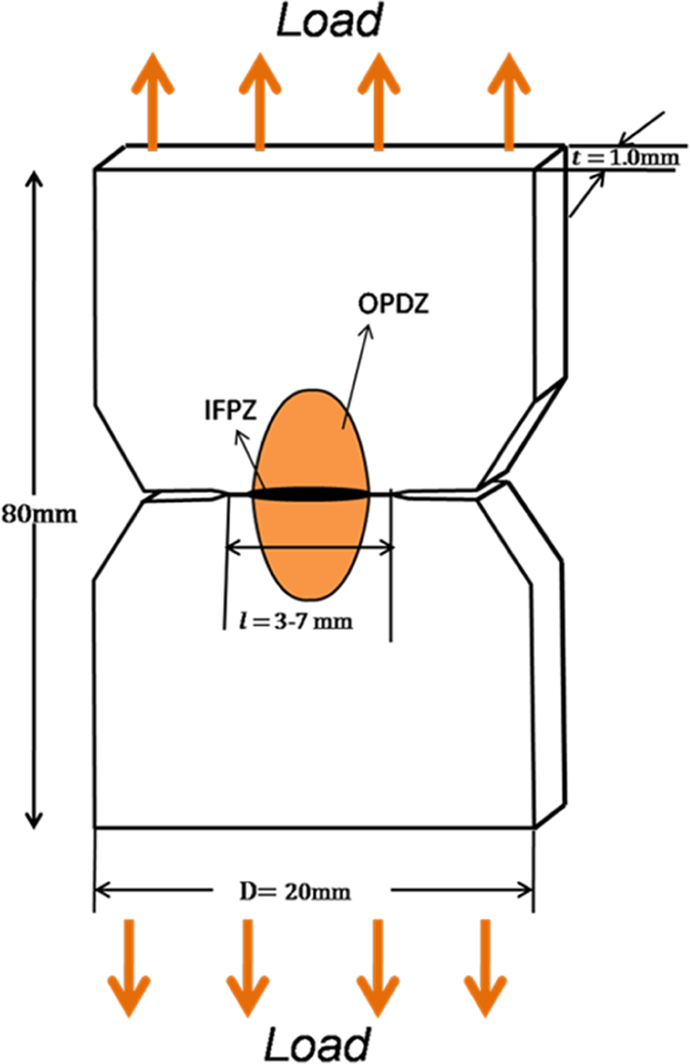
A typical DENT specimen. DENT: double-edge-notched tension.
The fracture performance of pre-notched DENT specimen was determined on a Zwick Universal Tester, model 2010, at room temperature (30 ± 2°C) with crosshead speed of 1 mm/min. To obtain load–displacement curves, five samples were tested for each ligament length (i.e. from approximately 3 to 7 mm).
Approach for EWF
The EWF is a method to measure the crack resistance and toughness of ductile polymers, which recently gained extensive attention compared to other methods such as the J-integral method or crack tip opening displacement method due to its simplicity. Broberg suggested the idea of EWF concept which was later explored by Cottrell and Reddel. 36,37 The theory of EWF revealed that when ductile polymers are subjected to a fracture test under elastoplastic conditions, the crack tip region is differentiated into an inner fracture process zone (IFPZ) and an outer fracture process zone (OPDZ) as shown in Figure 2. Furthermore, the total work of fracture (W f) was categorized into two essential components: EWF (W e) and non-essential work of fracture (N-EWF) (W p) where W e is associated with the instability of the crack tip and is the work required for crack initiation in the IFPZ, while W p or plastic work is the energy dissipated in the outer plastic zone by different deformation mechanism. The W e term is related to the surface area under fracture, hence it is a function of ligament area, that is, lt where l is the ligament length and t is the thickness of DENT specimen subjected to fracture, whereas W p is associated with volume (l 2 t). So, one can conclude that W e and W p terms are 2-dimensional and 3-dimensional and can be correlated with surface energy and volume energy of the DENT specimen under fracture test. The total work of fracture is expressed as

Equation (3) can be further represented as


where
On the basis of criteria given below, the dimensions and ligament length of the DENT specimens was decided

where W is the width of DENT specimen, 2r p is the radius of plastic zone which can be expressed as follows

where E and
Field emission scanning electron microscope (FE SEM)
Cryofractured dumb-bell-shaped tensile specimens were scanned to examine dispersion of JWF particles in the PCL matrix and to observe the fracture behavior of prepared composites tensile fractured surfaces of DENT specimens following EWF method were examined by FE SEM instrument (FEI Quanta 200 F SEM, the Netherland). The samples were coated with gold before scanning.
Results and discussion
Tensile properties
Stress–strain curves
The tensile stress–strain curves of PCL and PCL/JWF composites are presented in Figure 3. On application of quasi-static tensile load, linear deformation of PCL is observed followed by yielding, necking, and strain hardening (orientation of polymer chains), which depicts ductile behavior of PCL. Because stretching of PCL continued even after 900 (%) elongation, the test was terminated at 900 (%) elongation. At Φ f = 0.05 and Φ f = 0.10, the samples broke at 900 (%) and 450 (%) elongation, respectively.
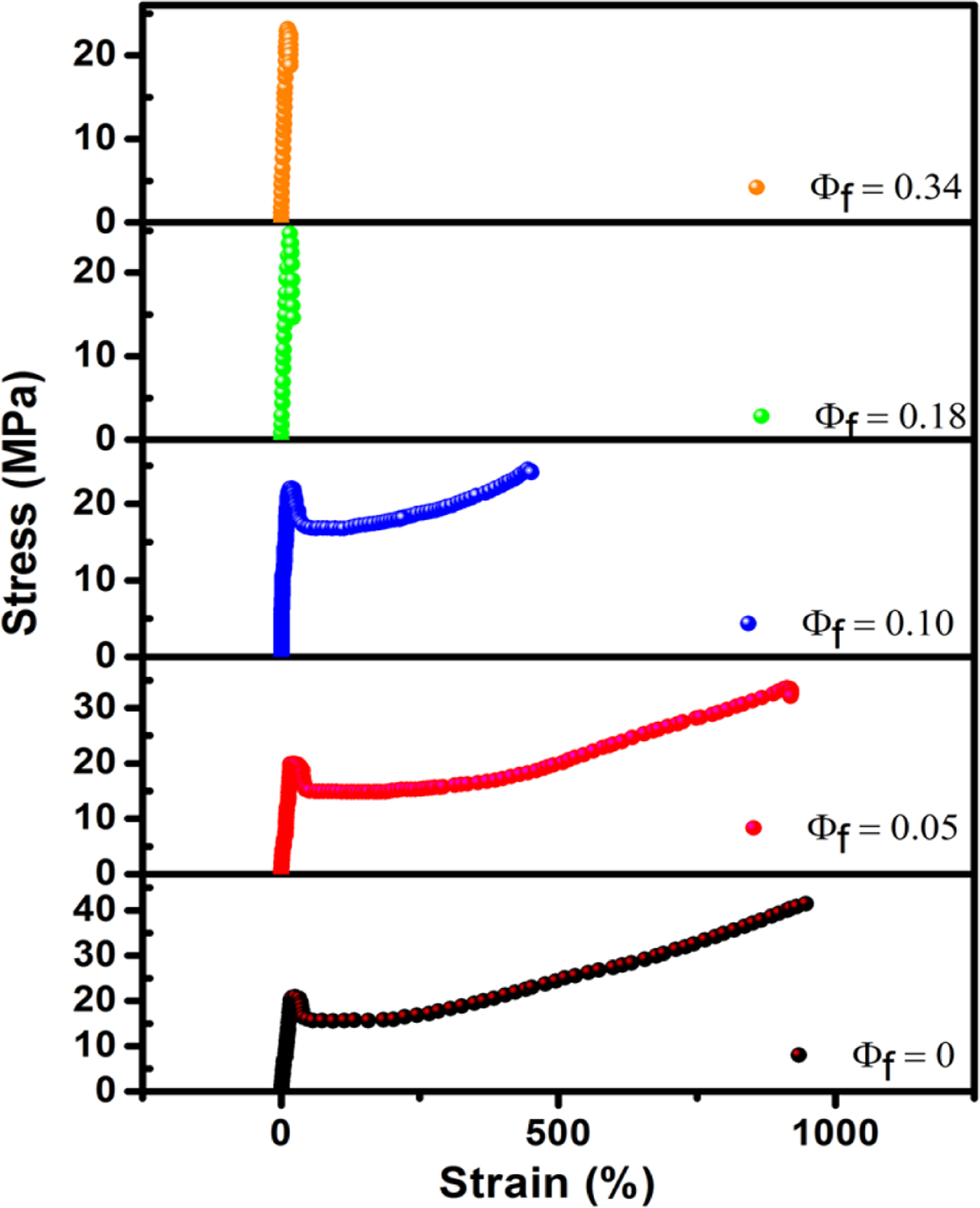
Stress–strain curve for PCL and PCL/JWF composites. PCL: poly(ε-caprolactone); JWF: jack wood flour.
A prominent yield peak emerges after linear elastic deformation of PCL/JWF composites at Φ f = 0.05–0.18, while at Φ f = 0.34, the sample breaks immediately after the yield point. The tensile stress–strain plots of PCL/JWF composites show distinctly different nature from that of neat PCL. The shortening of the yield peak was observed with increasing Φ f. Neat PCL stressed triaxially on application of tensile load and behave as a ductile matrix, while stress concentration points are generated on increasing Φ f of JWF which inhibits the local triaxial stress leading to brittle fracture of the composites with gradual shortening of stress–strain curve. 38 Interestingly upon incorporation of JWF at Φ f = 0.05, a marginal jump in the yield strength is observed which continued up to Φ f = 0.18. It has been reported that the yield properties examined at larger deformation show structural changes and phase interaction between the components of polymer blends and composites. 39 Here, the enhancement in yield strength indicates phase interaction in PCL/JWF composites. The area under the stress–strain curves decreases with incorporation of JWF which indicates that the filler caused reduction in toughness of PCL. 40 These changes in the stress–strain curves may be ascribed to homogeneous distribution of the filler, mechanical restraint offered by the filler, and phase interaction between PCL and JWF particles which lead to reduction in the ductility with enhancement in tensile yield strength. From the stress–strain curves, tensile properties, for example, tensile modulus and tensile yield strength of the composites are evaluated, and represented in Table 2, and described in subsequent sections.
Mechanical properties and crystallinity (%) of PCL and PCL/JWF composites.
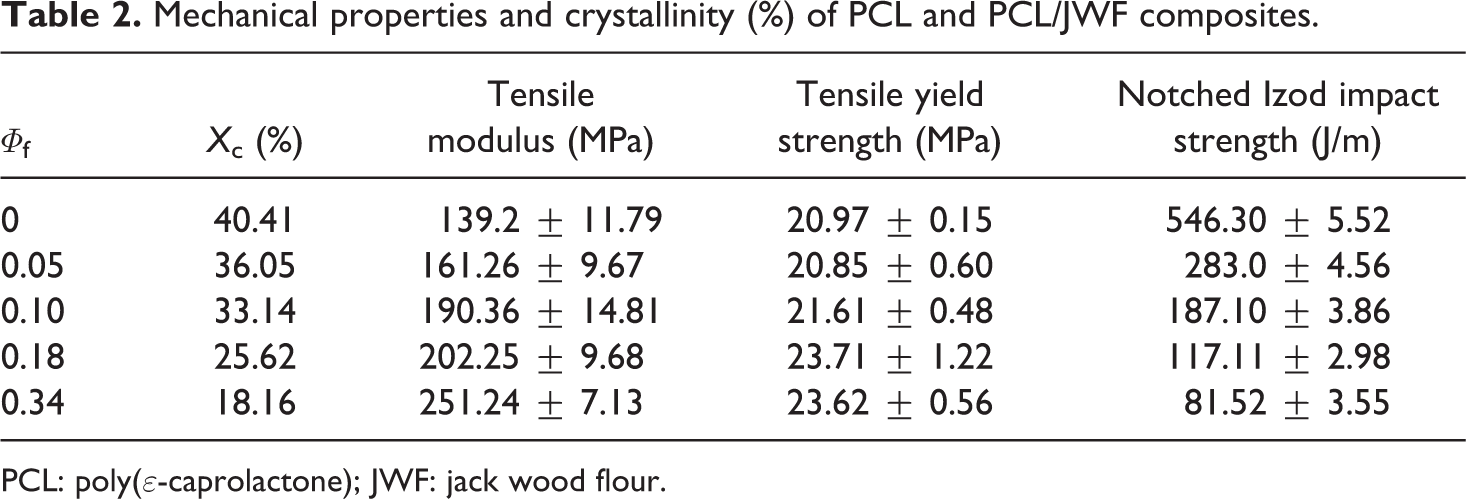
PCL: poly(ε-caprolactone); JWF: jack wood flour.
Tensile modulus
Tensile modulus of PCL/JWF composite is governed by two opposite components, namely, percent crystallinity (%) of PCL and mechanical restraint imposed by JWF on the PCL phase. The variations in tensile properties as well as crystallinity of PCL in PCL/JWF composites are enumerated in Table 2. The tensile modulus of the composites increases significantly with JWF content as shown in Figure 4(a), and at Φ f = 0.34, the parameter increases by approximately 80% over that of neat PCL.
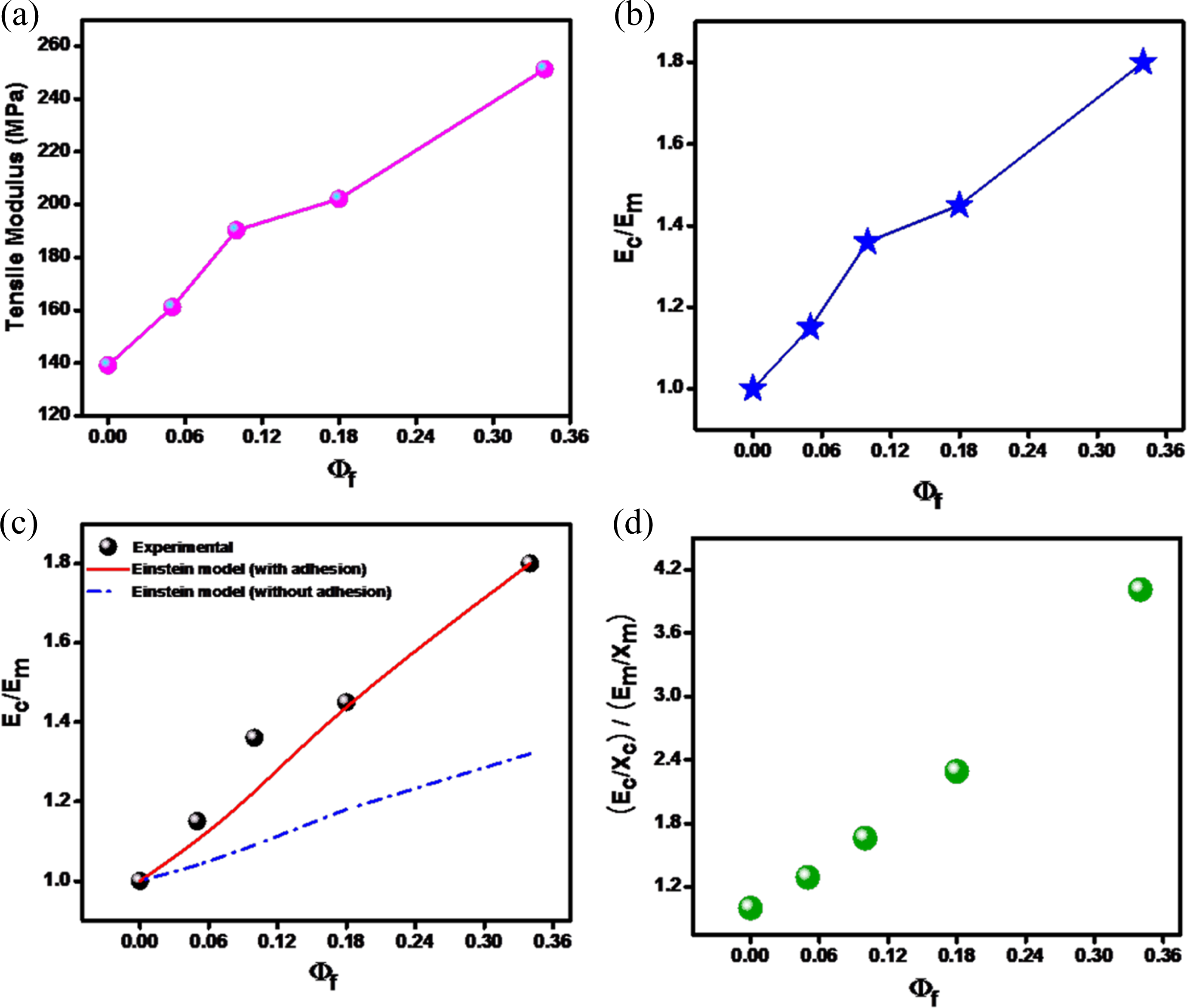
Plot of (a) tensile modulus of PCL/JWF composites versus Φ f, (b) relative tensile modulus versus Φ f, (c) correlation of relative tensile modulus with theoretical models, and (d) normalized relative tensile modulus versus Φ f. PCL: poly(ε-caprolactone); JWF: jack wood flour.
PCL is a semicrystalline polymer and its mechanical properties will be governed by its crystallinity. In the PCL/JWF composites, the mechanical properties were driven by mechanical restraint offered by JWF on the molecular mobility of the matrix, phase interaction (if any) between the two phases, and the influence of these factors on crystallinity of the matrix. Stiffness of the system is not affected by phase interaction, however, tensile strength will vary promptly with phase interaction. 26 The mechanical restraint is an end result of differential thermal shrinkage of the polymer and the filler. When the polymer is melted, it expands to a higher extent as compared to JWF. In the cooling cycle, the matrix would shrink more than JWF. As a result, mechanical interlocking takes place between the polymer and the filler. Some extent of tensile force will be consumed to overcome this mechanical interlocking which finally tends to increase the tensile modulus. On the other hand, this mechanical restraint decreases the mobility of the polymer and restricts its fitting into crystal lattice decreasing its crystallinity. The resultant of these two opposing factors would govern the tensile modulus.
The composite structure was evaluated by plotting the variation of the relative tensile modulus, E c/E m, against Φ f (Figure 4(b)). The relative tensile modulus increases steadily with JWF content suggesting reinforcing effect of the filler. The highest tensile modulus was observed for Φ f = 0.34 where the value of E c/E m is 1.81. The experimental data of tensile modulus were compared with some theoretical micromechanical models for two phase systems (Figure 4(c)) to analyze the influence of filler concentration on the modulus of PCL/JWF composites. Einstein’s model without adhesion (equation (8)) and with adhesion (equation (9)) were used to predict the tensile modulus of the composites 41,42


These empirical models take into consideration the effects of shape, packing mode, and interaction between two phases (mechanical restraint). Here, E c and E m represent the tensile modulus of the composite and the matrix, respectively. The theoretical values are at close proximity with Einstein’s model with adhesion as compared to Einstein’s model without adhesion indicating presence of adhesion between the two phases. This phase adhesion can be attributed to differential thermal shrinkage which provides mechanical interlocking between PCL and JWF which enhances with Φ f. It was found that the crystallinity of PCL decreased, Table 2, whereas the tensile modulus increased with increase in Φ f.
In order to evaluate the reinforcement activity of the filler, the effect of crystallinity was eliminated by normalizing the modulus data, that is, by dividing the modulus by the crystallinity of PCL in the matrix (X m) and in the composites (X c), respectively. Figure 4(d) depicts the plot of normalized relative tensile modulus (E c/X c)/(E m/X m) versus Φ f. The parameter increases substantially with Φ f and at the highest Φ f of 0.34, the observed value is 4.2 times than that of pristine PCL. This indicates that molecular mobility is inhibited by the mechanical restraint provided by JWF. Similar results were also reported in other works. 43 Here, substantial increment in modulus was due to the dominance of mechanical restraint which increased significantly compensating for the effect of decrease in crystallinity (%).
Tensile yield strength
The plot of the tensile yield strength as a function of Φ f is shown in Figure 5(a). The parameter increases marginally by approximately 13.71% up to Φ f = 0.18, and the value then decreases inappreciably however remaining higher than that of PCL. Such increase in yield strength indicates possibility of reinforcing effect of JWF through dipole–dipole interaction between the carbonyl groups of PCL and –OH groups of JWF. Durand et al. reported that the aliphatic polyesters have advantage of compatibility with lignicellulosic fillers without the use of a compatiblizer or special filler treatment. 44 The relative yield strength (ratio of the yield strength of PCL/JWF composite to that of the PCL, σ yc/σ ym) against Φ f was plotted in Figure 5(b). The parameter showed similar variations as the plot of yield strength versus Φ f. Similar results were observed in other reports also. 43,45
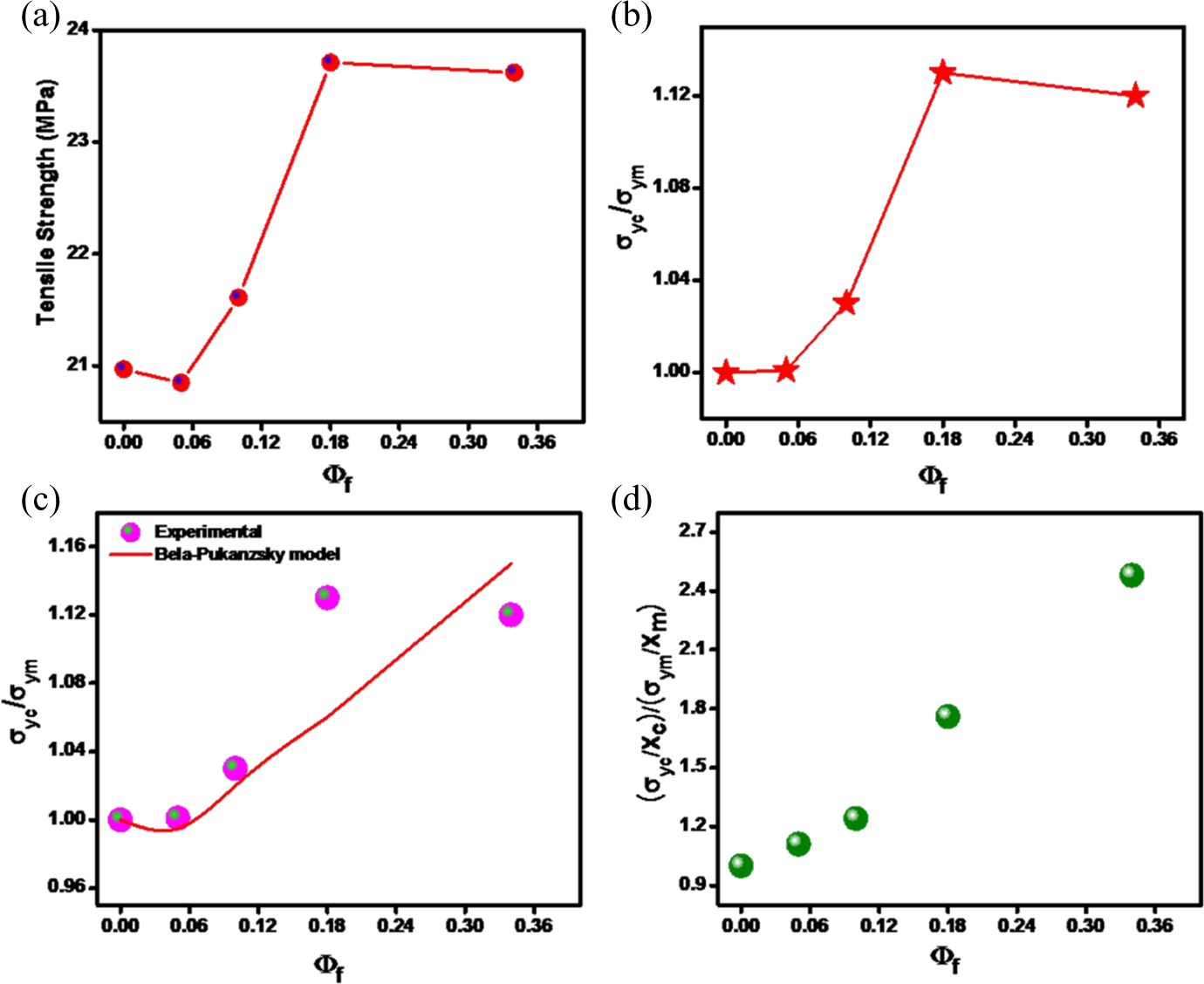
Plot of (a) tensile yield strength of PCL/JWF composites versus Φ f, (b) relative tensile yield strength versus Φ f, (c) correlation of relative tensile yield strength with theoretical models, and (d) normalized relative tensile yield strength versus Φ f. PCL: poly(ε-caprolactone); JWF: jack wood flour.
The experimental data were correlated with the Bela-Pukanszky model, equation (10), 46 in order to evaluate the reinforcing efficiency of the JWF

where Ba represents the reinforcement factor or load bearing capacity of the filler which indicates strength of interfacial adhesion as well as size of the interface. The higher the value of Ba, the higher the degree of phase adhesion. The calculated values are shown in Table 3. The data exhibit reasonably good agreement with equation (10) with the average value of Ba = 3.51. The enhancement in the tensile yield strength further suggests a degree of phase interaction which increases the stress transfer between JWF and the matrix.
Values of phase adhesion parameter B a calculated from equation (10).

The variations in crystallinity of PCL in PCL/JWF composites with increasing filler content are summarized in Table 2. The decrease in crystallinity can be attributed to secondary interactions which inhibit the crystal growth of PCL through imparting restriction in chain movement of PCL by JWF. To further analyze whether the yield strength was influenced by the corresponding variation in crystallinity (structural changes) or secondary interaction, the normalized yield strength (σ yc/X c)/(σ ym/X m) was plotted versus Φ f as shown in Figure 5(d). 26 The normalized yield strength values were >1 and the values increase continuously with Φ f; at Φ f = 0.34, the parameter increases to 2.5 times that of PCL. Since the effect of crystallinity of PCL was eliminated, it may be emphasized that the increment in the yield strength is because of phase adhesion between JWF and PCL matrix which did not affect continuity of the matrix resulting a degree of increased stress transfer between JWF and PCL phase. 43
Impact strength
The notched Izod impact fracture of polymers is influenced by the presence of rigid fillers and is dependent on surface type, chemical structure, volume, stiffness, the shape, size, and orientation of the fillers. When an impact load is applied to a polymeric system, energy is absorbed by a set of mechanisms such as deformation of the matrix, fracture of the filler, interfacial debonding, crack deflection, and filler pullout. 38,47 –49 Ductile materials such as PCL absorb more impact energy during crack propagation. The variations of notched Izod impact strength of PCL/JWF composites with JWF content as well as crystallinity (%) are summarized in Table 2.
A continuous decrease in the notched Izod impact strength with increasing JWF content was observed. On incorporation of JWF, the parameter decreases sharply and at Φ f = 0.34, the value decreased by approximately 85% of that of PCL as shown in Figure 6(a). The large reduction in the impact energy is associated with the restriction in the chain mobility of the matrix which leads to decrease in its capacity to absorb energy at the time of the crack propagation. During the impact fracture, the crack did not propagate at the polymer–filler interface where some stress concentrator points are present leading to poor impact energy. 50
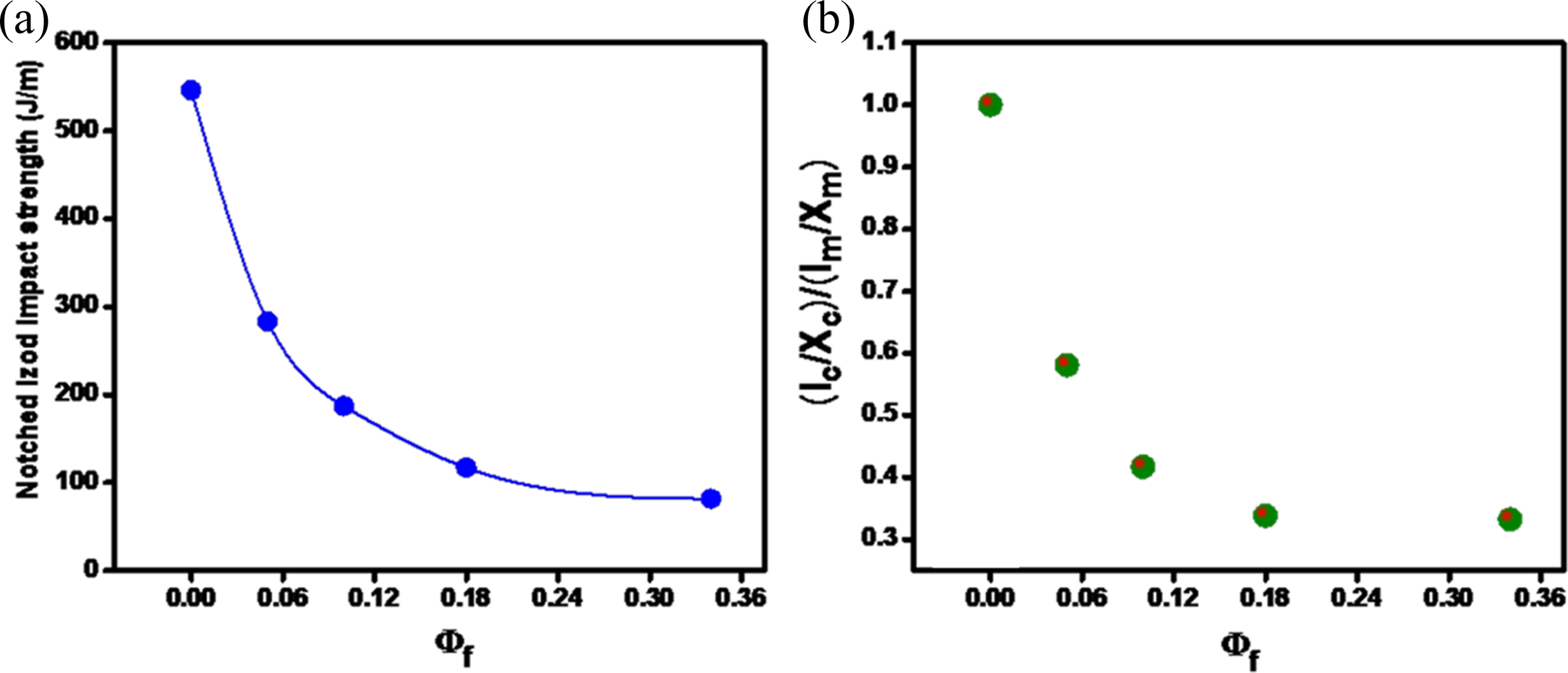
Plot of (a) notched Izod impact strength and (b) relative normalized notched Izod impact strength of PCL/JWF composites versus Φ f. PCL: poly(ε-caprolactone); JWF: jack wood flour.
To determine the individual effect of filler on the impact strength of the composite, the effect of crystallinity was eliminated by normalizing the relative notched Izod impact strength (I c/X c)/(I m/X m) which was then plotted against Φ f as shown in Figure 6(b). 51 A sharp decrease in the normalized relative notched Izod impact strength versus Φ f was observed. The amorphous content in the composites increased because of reduction in crystallinity of PCL which should have enhanced the impact energy. 5 Although, a degree of phase interaction is envisaged in the system due to the large extent of mechanical restraint imposed by JWF particles, the ductility of PCL was drastically decreased. Thus, mechanical restraint predominates here which decreased the impact strength.
Fracture behavior of biocomposites
Load–displacement curves
The load–displacement curves of PCL and PCL/JWF composites using DENT specimens with various ligament lengths are shown in Figure 7. The composites show self-similarity suggesting fulfillment of the prerequisite for the validity of EWF approach. It is found that PCL and PCL/JWF composites with various ligament lengths exhibit ductile behavior with fully yielded ligament and a very stable crack growth which are essential criteria for the validity of EWF approach. 52
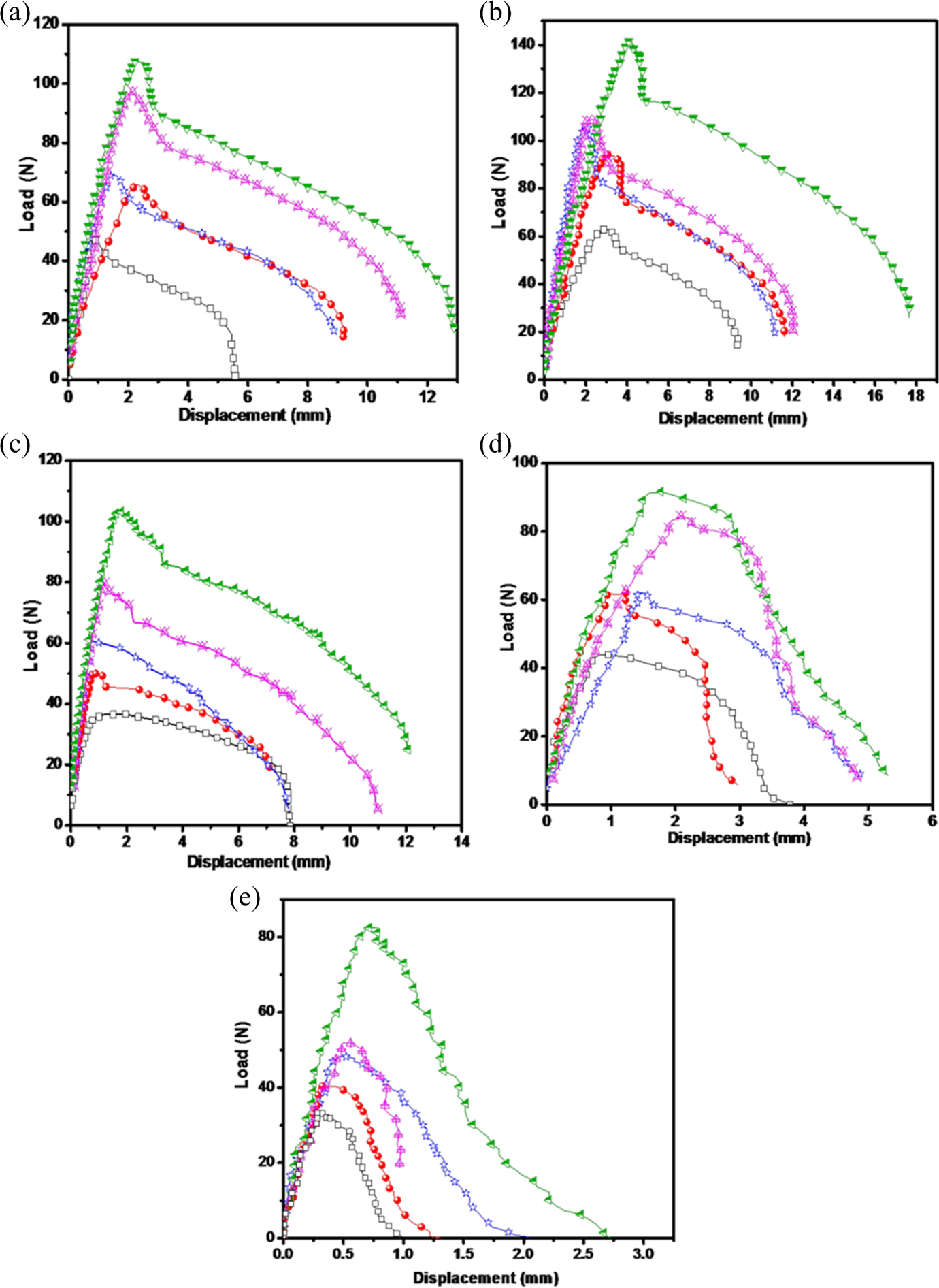
Load–displacement curves of PCL/JWF composite with increasing ligament length during EWF test a varying Φ f values: (a) 0, (b) 0.05, (c) 0.10, (d) 0.18, and (e) Φ f = 0.34. PCL: poly(ε-caprolactone); JWF: jack wood flour; EWF: essential work of fracture.
It is observed from the force–displacement curves that necking and ductile tearing appeared till Φ f = 0.10, while at Φ f > 0.10, necking phenomenon disappeared. For Φ f = 0.18, only plastic deformation with consistent crack propagation was observed. The change in the maximum load required for stable crack propagation is unaffected except for Φ f = 0.05 which suggests PCL phase becomes stiffer in the presence of JWF and higher load is required for fracture of the DENT specimens. Furthermore, the area under the force–displacement curve decreases with increasing Φ f which suggests that displacement was relatively lower; however, the curves are still geometrically similar in nature. By the incorporation of JWF and with increase in Φ f, the maximum load as well as the displacement gradually decreased showing stiffening of PCL phase by dispersed JWF. 52,53
The net section stress (σ n) versus ligament length (l) plot shown in Figure 8 was used to confirm that EWF data were observed under plane stress conditions, which is known as Hill’s analysis.
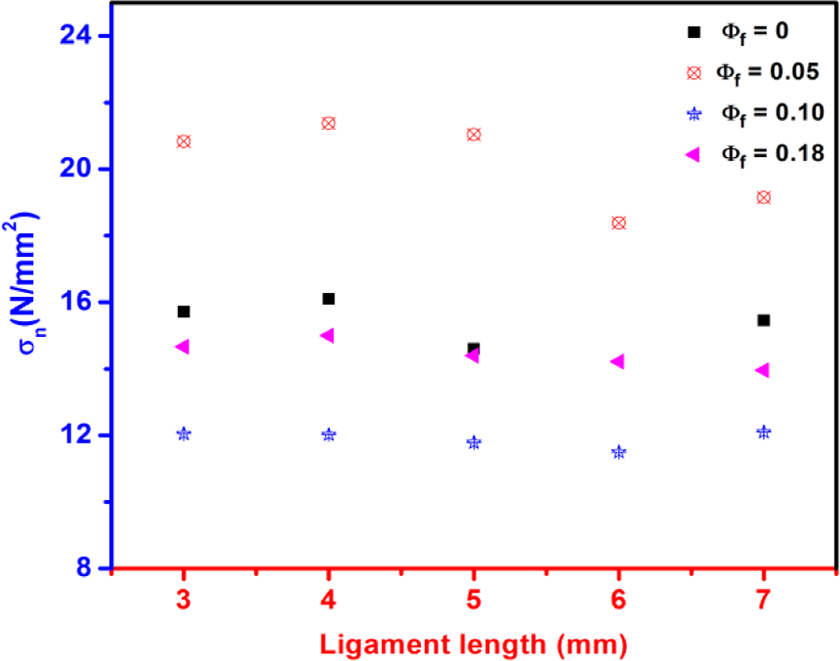
Hill’s analysis plot: Variation of net section stress (σ n) with ligament length.
Hills’s criterion suggests that maximum stress should be less than 1.15 and σ n is independent of ligament length (l). It was found from the Hill’s analysis that the σ n is independent of the ligament length. At the crack tip when large plastic deformation zone is present, the plane stress condition is turned into mixed mode of stress state and it does not follow EWF approach. 54,55
EWF parameters
Figure 9 shows the specific total work of fracture (w f) plotted as a function of ligament length (l). The parameter w f for PCL/JWF composites is found to be lower than those of neat PCL. It can be concluded that overall fracture toughness of the composites decreases on addition of JWF in PCL. For each composition, w f versus ligament length (l) plot displays a good linear relation in the valid range of ligament length.
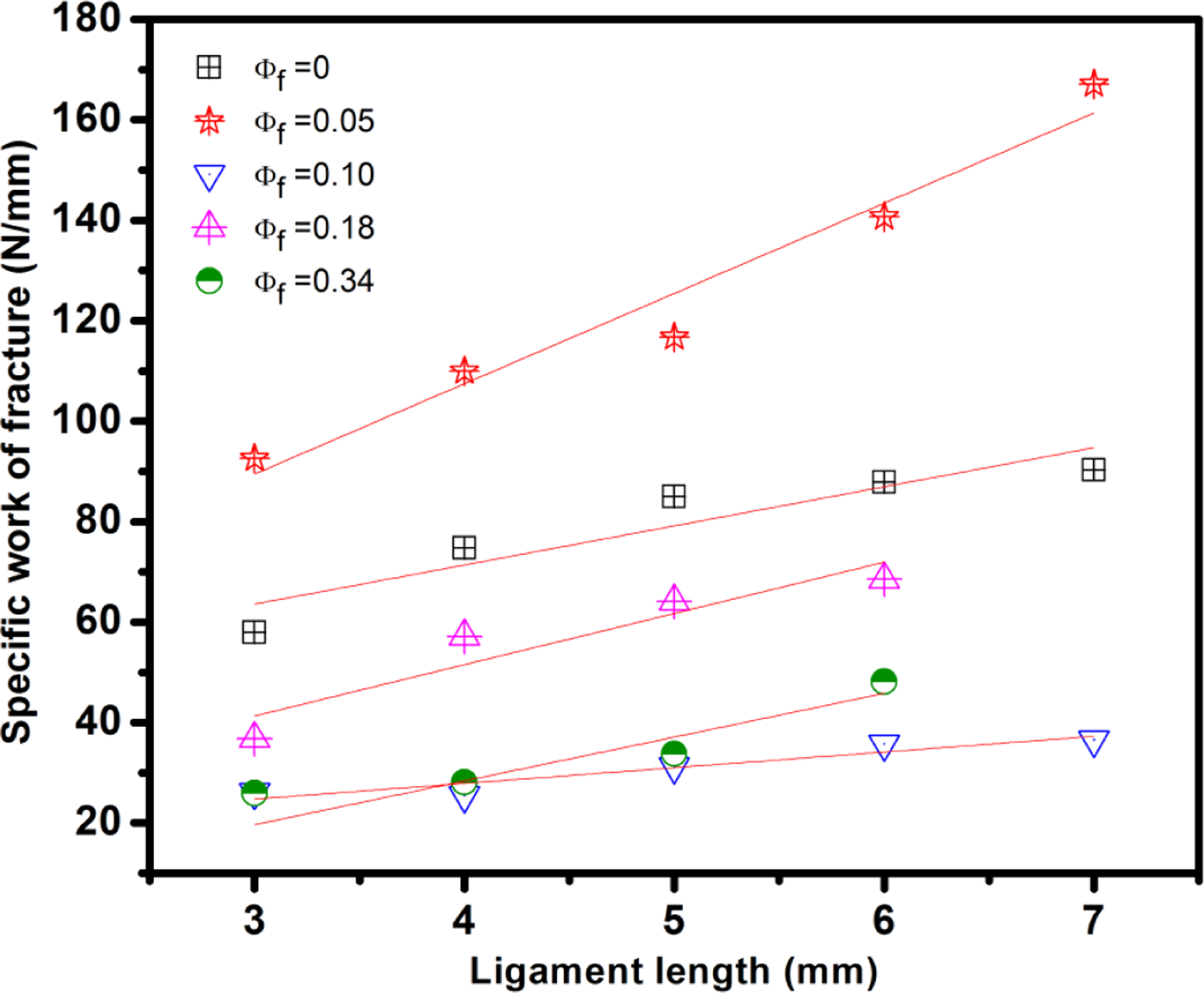
Variation of specific work of fracture (w f) with ligament length.
The specific EWF (w e) was determined from the intercept by extrapolating a straight line to zero ligament length and from the slope, the N-EWF (βw P) or plastic work was estimated. Here, w e quantifies the material property (in terms of fracture toughness) which is independent on the specific geometry of the DENT specimen. The w e and βw P data were plotted against Φ f and presented in Figure 10
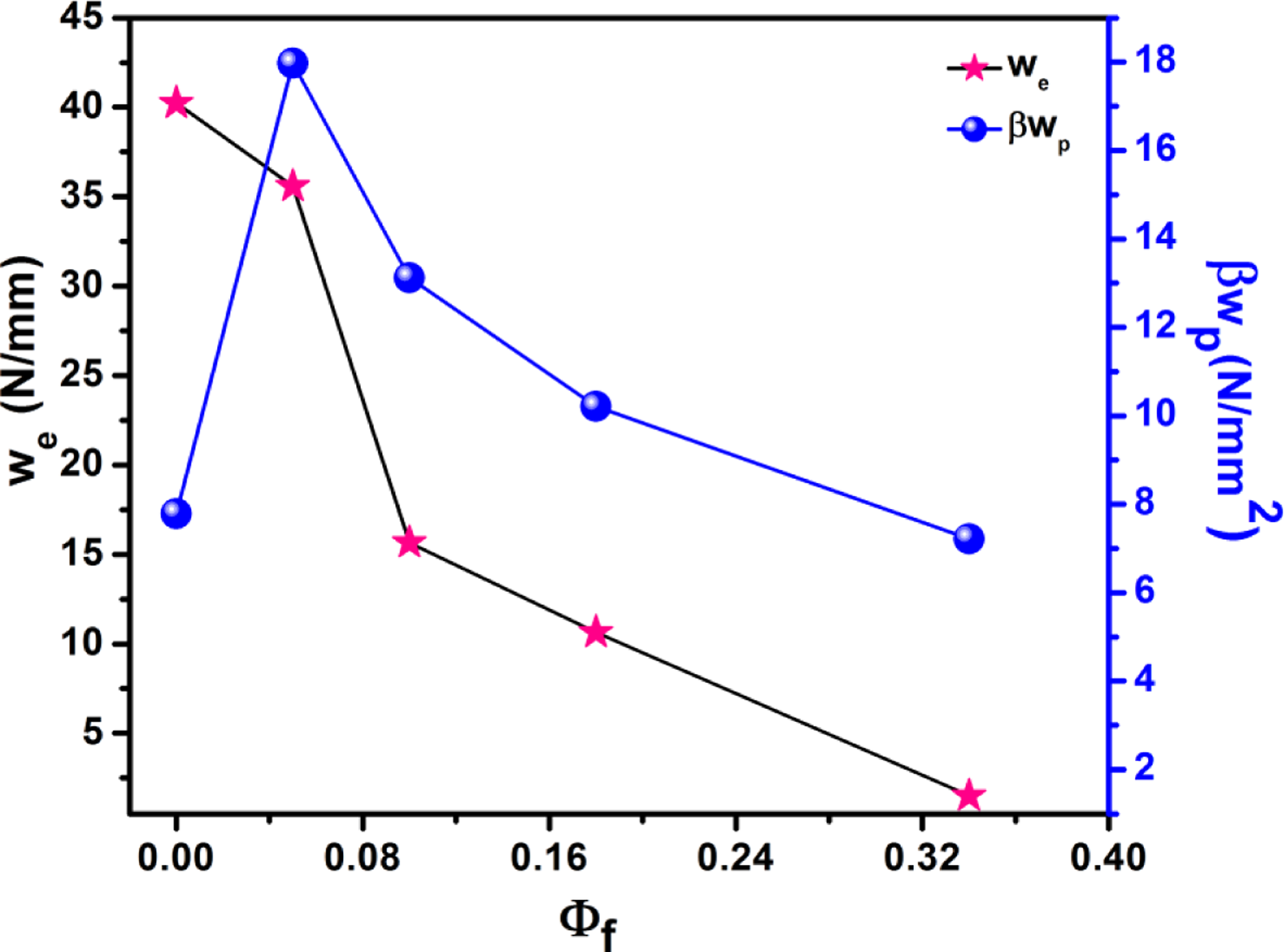
Variation of plane stress fracture parameters with Φ f.
It can be seen that w e decreases linearly with increase in Φ f, while enhancement in βw P was observed up to Φ f = 0.10. The improved value of resistance to crack propagation is usually followed by a loss in the resistance to crack initiation and vice versa. 36
The resistance to crack propagation is enhanced by 126.86% and 31.23% for Φ f = 0.05 and Φ f = 0.10, respectively, compared to that for pristine PCL. The improvement in the crack propagation is most likely due to the crack pinning mechanism. In this process, a propagating crack will be pinned temporarily if it encountered some particles which generate new fracture surfaces, thus prohibiting further crack propagation. This process leads to increase in energy absorption and results in enhancement in resistance to crack propagation. 33 The lowest value of βw P for Φ f = 0.34 suggests that very small plastic deformation takes place during crack propagation on the fracture surfaces and around the outer zone near to the ligament area. These observations suggest the existence of “ductile-to-semi-ductile-to-brittle” transitions from Φ f = 0–0.34. The ductile, semi-ductile, and brittle transitions of the composites are categorized by high w e/high βwP, high w e/low βwP, and low w e/low βw P combinations of the fracture parameters. 56 –58 Furthermore, the SEM micrographs of the fracture surfaces suggest a possible systematic change in the failure mechanisms of all the composition range of PCL/JWF composites.
Fracture surface morphology
The SEM micrographs of JWF, pristine PCL, and PCL/JWF composites are presented in Figure 11(a) to (f). The JWF particles exhibit different size and shape with rough and sharp edges (Figure 11(a)). The cryofractured surface of PCL shows fibrillation indicating ductile nature of PCL matrix, as seen in Figure 11(b). Quite extensive amount of stress whitening appeared due to tearing of the matrix during cryofracture of the specimen.
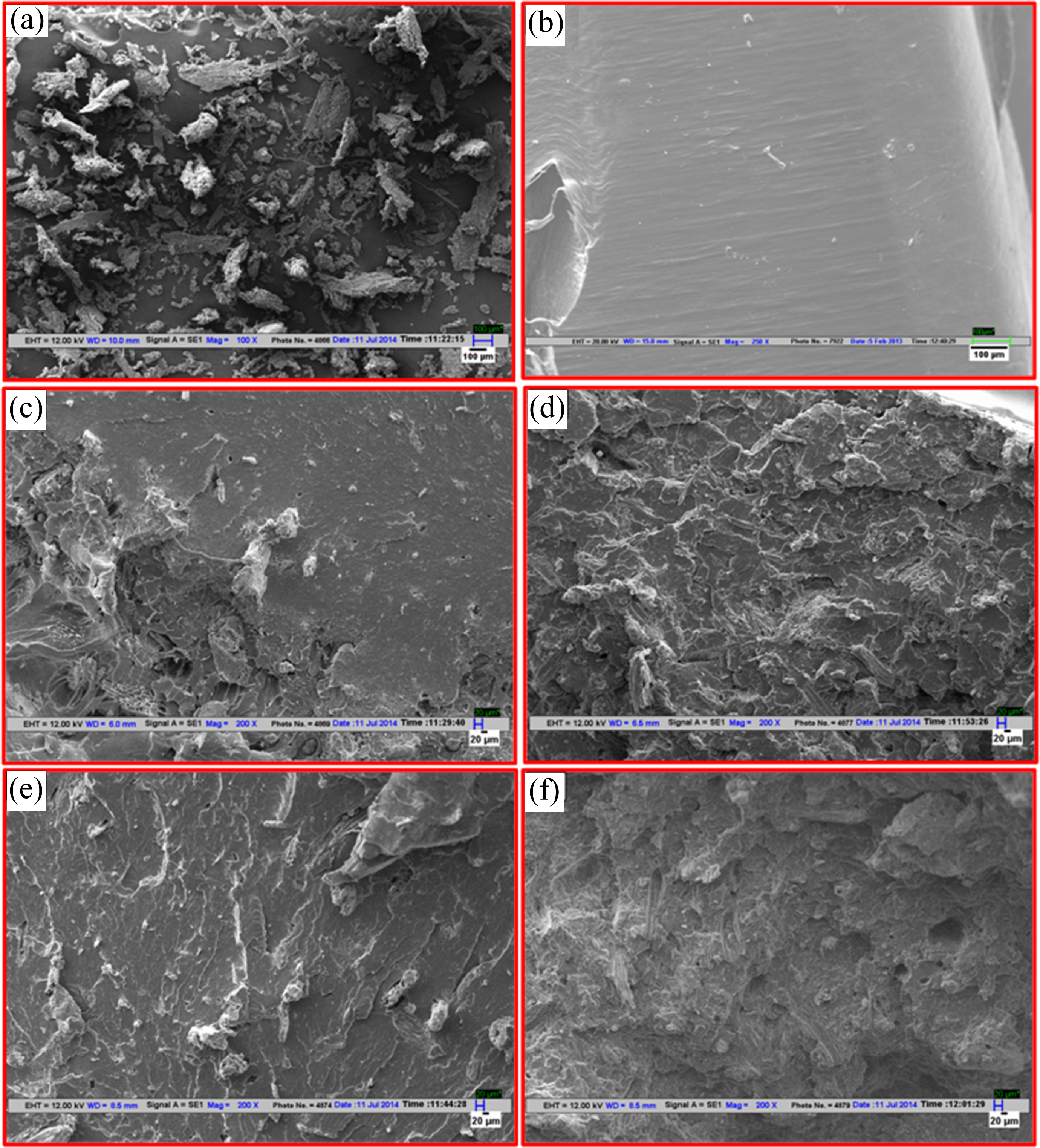
SEM micrographs of (a) JWF and (b) PCL and PCL/JWF composites at varying Φ f, (c) 0.05, (d) 0.10, (e) 0.18, and (f) 0.34. SEM: scanning electron microscope.
The presence of JWF particles generated discontinuity in the composites, as observed in Figure 11(c) to (f). The composites with Φ f = 0.05–0.10 show no voids around JWF particles suggesting an extent of adhesion between JWF and PCL phases. The observed marginal increment in yield strength also suggests some extent of phase adhesion between JWF and PCL matrix, while at Φ f =0.18–0.34, a few voids are present around JWF particles (Figure 11(e) to (f)).
The post-yield fractured surfaces of PCL and PCL/JWF composites around ligament regions are shown in Figure 12. In neat PCL matrix, stretching is observed with crinkled topography attributed to the plastic flow of PCL. However, PCL/JWF composites undergo plastic deformation as well as flow-induced fibrillation in the presence 5 wt% (Φ f = 0.05) of filler (Figure 12 (b)). 59 Composite containing 10 wt% (Φ f = 0.10) of JWF also showed similar type of fibrillation along with crinkled surface morphology, as shown in Figure 12(c). At 10 wt% of JWF, the fracture surface also showed twisted curls attributed to faster post-fracture relaxation process of the PCL phase. On increment of the JWF content to 20 wt% (Φ f = 0.18), the fracture surface showed dense amount of fibrillated structure extending across the crack also called as bridging effect (associated with mechanical restraint imposed by JWF particles). Subtle extent of fibrillation which involves some thin fibrils and fibrillar strips evolved in the process of fracture under uniaxial tension is also observed. The mechanical restraint also enhances crack propagation by the process of crack pinning. 33 The phase interaction between PCL and JWF is also supported by the presence of stretched fibrils and very long fibrillar strips which arrest the crack propagation leading to enhancement in βwp prior to failure of the DENT specimen.
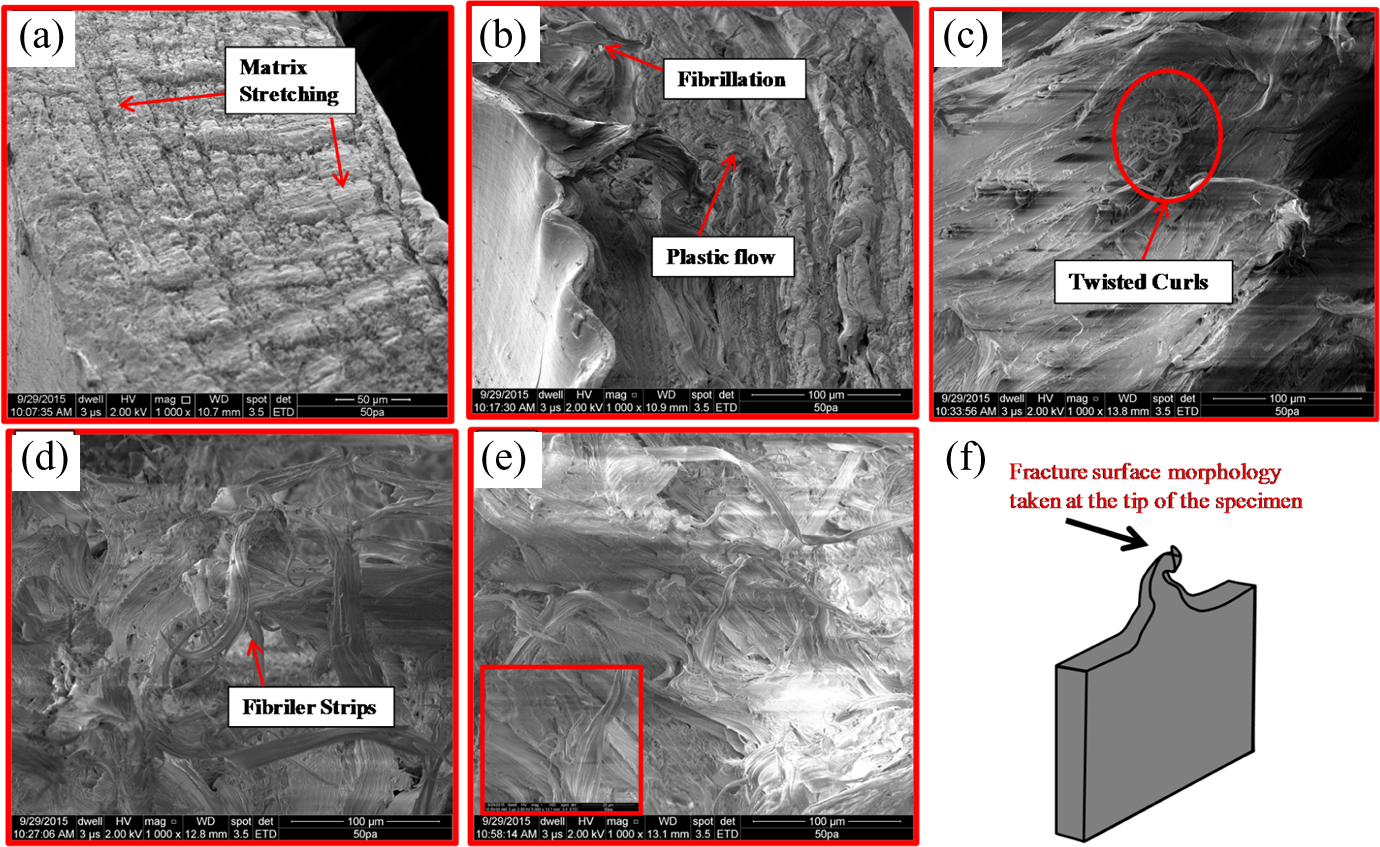
SEM micrographs at the tip of the fracture surface of test specimen during EWF test (a) Φ f = 0, (b) Φ f = 0.05, (c) Φ f = 0.10, (d) Φ f = 0.18, (e) Φ f = 0.34, and (f) fractured sample during EWF test. SEM: scanning electron microscope; EWF: essential work of fracture.
On the other hand, SEM micrographs of the composites containing 35 wt% (Φ f = 0.34) of JWF exhibit some agglomeration and pull out of the filler. Thus, the extensive matrix stretching and plastic flow characteristic as observed in PCL and PCL/JWF composite up to Φ f = 0.10 are substantially reduced. The matrix yielding which facilitates the fibrillation gets reduced on further enhancement of JWF content. The absence of fibrillation is indicative of the disappearance of energy dissipation at 35 wt% (Φ f = 0.34) of JWF leading to reduction in crack propagation causing brittle failure. So, it can be concluded that the overall fracture toughness of the PCL/JWF composites decreases with increasing Φ f.
EWF parameters for PCL and PCL/JWF composites.
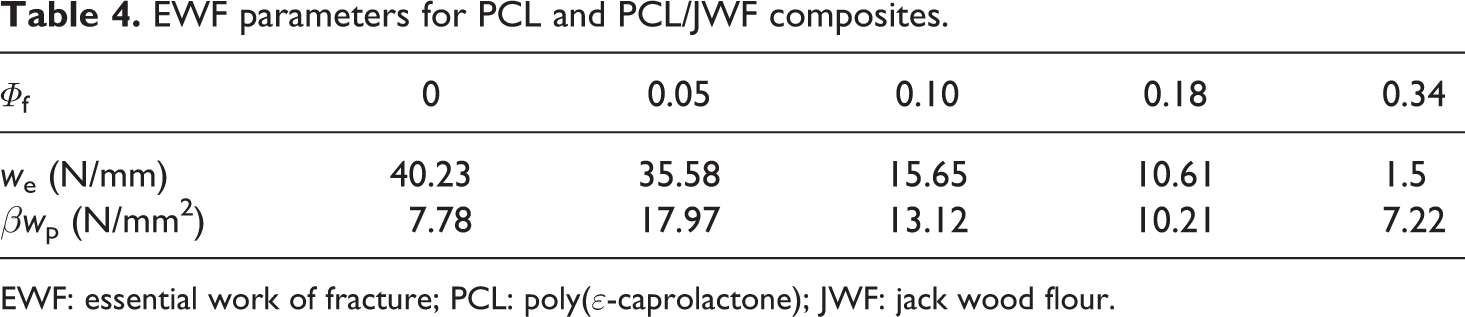
EWF: essential work of fracture; PCL: poly(ε-caprolactone); JWF: jack wood flour.
Conclusions
Biocomposites of JWF-reinforced PCL have been fabricated in which concentration of JWF ranges Φ f = 0–0.34. The modulus of the biocomposites enhances substantially with increasing JWF content. The composite with Φ f = 0.34 exhibits the maximum value of modulus (251.24 MPa) which is 1.8 times that of pristine PCL. The incorporation of filler marginally improves yield strength, while diminishing the notched Izod impact strength. The maximum value of tensile yield strength (23.71 MPa) was achieved at Φ f = 0.18. The experimental tensile modulus showed very close agreement with Einstein’s model with adhesion as compared to Einstein’s model without adhesion, while yield strength was best fitted with Bela-Pukanszky model. The fracture toughness behavior of JWF-reinforced composite is also explored following the EWF approach, and the validity of principles of PFYM criterion has been assured. The increase in the N-EWF (βw p) up to Φ f = 0.10 suggests fracture toughness behavior remained resistance to crack propagation dominated by the process of crack pinning as well as flow-induced fibrillation. The composites show ductile to brittle transition which was considerably supported by morphology analysis. The specific total work of fracture (w f) was found to be lower than neat PCL suggesting overall decrease in fracture toughness of PCL/JWF composites. The crack pinning and appearance of fibrillation arrests the crack growth which results in substantial increase in βw p parameter.
Footnotes
Acknowledgement
The authors would like to acknowledge Indian Institute of Technology Delhi and Ministry of Human Resource Development for providing research facilities and financial assistance to one of the author (Achla).
Declaration of Conflicting Interests
The author(s) declared no potential conflicts of interest with respect to the research, authorship, and/or publication of this article.
Funding
The author(s) received no financial support for the research, authorship, and/or publication of this article.