




Abstract
Composite filaments of thermoplastic polyurethane (TPU) and single-walled carbon nanotubes (SWCNTs) have been fabricated via extrusion process and their properties were studied using various characterization techniques. Twin-screw extruder has been used for making the composite filaments and the processing parameters like temperature, screw speed, and pressure were optimized. Thermal, morphological, mechanical, and electrical properties were studied by varying the weight percentage of SWCNTs. Raman shift of SWCNTs is observed for the CNTs dispersed in TPU matrix. Thermal analysis shows that there is an increase in the degradation and melting temperature of the TPU/SWCNTs blends. With the addition of SWCNTs as small filler loadings of 1 wt%, the tensile strength of the blended materials increased from 13 MPa to 21.6 MPa. The electrical conductivity of the composite filaments starts with the addition of 0.01% of SWCNTs. The highest value of electrical conductivity (3.7 × 10⁻⁷ S cm−1) obtained with 2 wt% of SWCNTs. This melt extrusion process method could open up for the preparation of new high-performance nanotube composite materials.
Introduction
Polyurethanes (PUs) have been used in a wide range of applications such as automobiles, paint, furniture, and textile industries. It is also used in high-performance materials for their unique properties including good elasticity, high impact strength, and elongation. Carbon nanotube (CNT)-filled plastics are currently the field of interest for the enhancement of properties in terms of electrical conductivity, 1 mechanical properties, 2 and thermal resistivity. 3 Compared to conventional fillers like carbon fiber, CNT-filled polymers are easily processed due to their small diameter. 4 The advantages are that the properties of thermoplastic polyurethane (TPU) can be better utilized for high-end applications such as structural 5 and functional applications, 6–7 where high strength and lightweight is required when combined with CNTs as filler materials. Researchers throughout the world have focused on preparation of polymer composites with CNTs with different fabrication techniques. 8 The choice of the polymer is based on the end use of the product and also the inherent properties of the selected polymer. Earlier studies report that the TPU has been fabricated with CNTs 9 –13 and single-walled carbon nanotubes (SWCNTs) 14–15 for making the composite materials, and most of the studies were focused on tensile properties 16 –19 apart from their thermal stability 20
On the various processing techniques available, melt compounding using twin-screw extruder has been accepted as a simpler and more effective method. 21 Because it is possible to fabricate high-performance polymer nanocomposites at low cost and facilitate large scale-up for conventional applications. Twin-screw extruder has been widely applied to fabricate the composites mainly of thermoplastics along with CNTs. Studies have been carried out on nylon 6 22 by melt compounding techniques for their morphological, mechanical, and rheological properties. TPU/CNT nanocomposites have been fabricated via a twin-screw extrusion method. 17
The SWCNTs have not been used frequently as a filler material in polymers due to their high cost. Functionalized SWCNTs in PU made by solution process show increase in tensile strength. 14 The composites made of SWCNTs show promising results in functional applications, so they were also subjected to microwave absorption and electromagnetic interference (EMI) shielding effectiveness. 23
The SWCNTs has been either functionalized or dispersed with the help of solvents in polymer matrix. In this research work, an attempt has been made to produce TPU/SWCNTs composite materials using twin-screw extruder by the application of different processing parameters.
Materials and experimental methods
TPU used in our study was purchased from Bayer (Germany). The polymer is dried at 80°C for 8 h before use. 18 The SWCNTs were purchased from Sigma-Aldrich (St Louis, Missouri, USA) and used as received. TPU/SWCNTs blends with different loading of SWCNTs (sample codes and composition are given in Table 1) were prepared by melt mixing using twin-screw extruder (HAAKE MiniLab microcompounder, ThermoScientific, Waltham, Massachusetts, USA). For well-dispersed SWCNTs on the PU composites, the applied screw speed was 60 r min−1 with temperature of 190°C and time 10 min. The HAAKE MiniLab operates as a circular reactor and thus has the advantage of both mixing and extruding the materials. The pellets form of TPUs were fed to twin-screw extruder through hopper. The SWCNTs were mixed prior to the processing and then fed to the hopper. After the specified period of time, the blended material was extruded from the outlet die in the form of filaments and collected via a conveyor belt. The diameter of the filaments ranges from 1 to 2.5 mm and length of approximately 60 cm. The continuous filaments were cut into small pieces (2–3 cm) and made into films under compression at 180°C with 10 MPa for 2 min for characterization studies. Attenuated total reflection–Fourier transform infrared (ATR-FTIR) spectra of the TPU and TPU/SWCNTs blends were recorded on ABB MB3000 FTIR spectrometer by making the sample as film. Raman spectra were obtained in a RAMAN-11 (Nanophoton Corporation, Japan) spectroscopy, equipped with standard wavelength of 532 nm, with spectral resolution of 1.6 cm−1. Thermogravimetric analysis (TGA) was carried out using a thermogravimetric analyzer (model Q50, TA Instrument, New Castle, Delaware, USA) at a heating rate of 10°C min−1 from 30°C to 800°C under N2 atmosphere. Differential scanning calorimetric (DSC) analysis was performed using a differential scanning calorimeter (model Q200, TA instrument), by heating the sample from −75°C to 250°C at a heating rate of 10°C min−1 under N2 atmosphere. The surface morphology of the blends was analyzed using field-emission scanning electron microscopy (SU6600, Hitachi, Japan). Tensile tests were carried out using an Instron (model no 3369; Norwood, Massachusetts, USA) universal testing machine per ASTM D 638 standard with a test speed of 0.1 mm min−1 to 500 mm min−1 and vertical test space of 1190 mm. The alternating current electrical conductivity of TPU/SWCNTs composite filaments were measured using an HP 4284 A LCR meter (Hewlett Packard Japan Ltd, Kobe Instrument Division, Hyogo, Japan) with four-point probe.
Codes and composition of the samples.
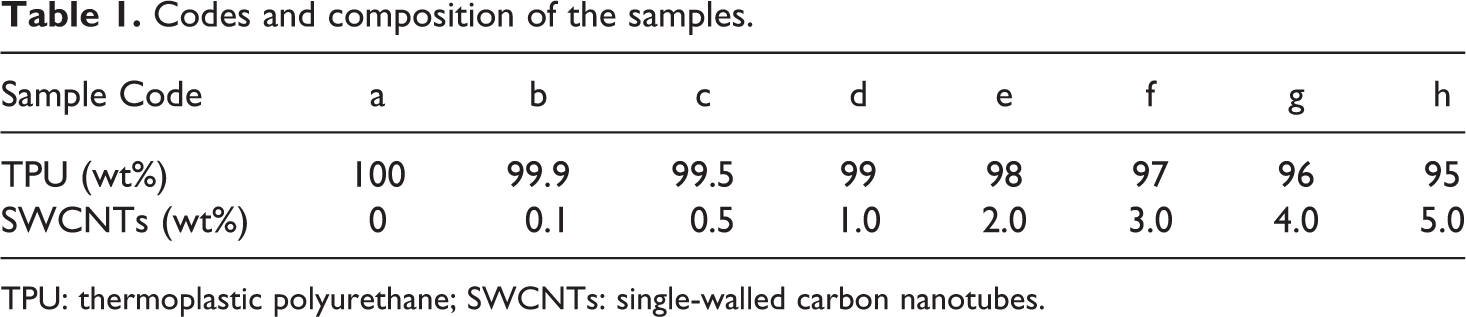
TPU: thermoplastic polyurethane; SWCNTs: single-walled carbon nanotubes.
Results and discussion
FTIR spectroscopy
The IR spectra of TPU and TPU/SWCNT blends are shown in Figure 1. The TPU spectrum shows strong absorption peaks at 2915 cm−1 and 2849 cm−1, which are the characteristic peaks of aliphatic C–H asymmetric and symmetric stretching. The spectrum also exhibits the C=O stretching at 1739 cm−1 and C–O–C stretching at 1021 cm−1 due to the PU amide and ester groups. Also, the peak based on N–H stretching vibration of urethane amide was observed at 3460 cm−1. The sharp absorption peaks at 1468 cm−1 and 1239 cm−1 corresponds to the alkane C–H stretching and C–N stretching of the TPU. The IR spectra give valuable information on the distribution 24 and interaction of SWCNTs in TPU.
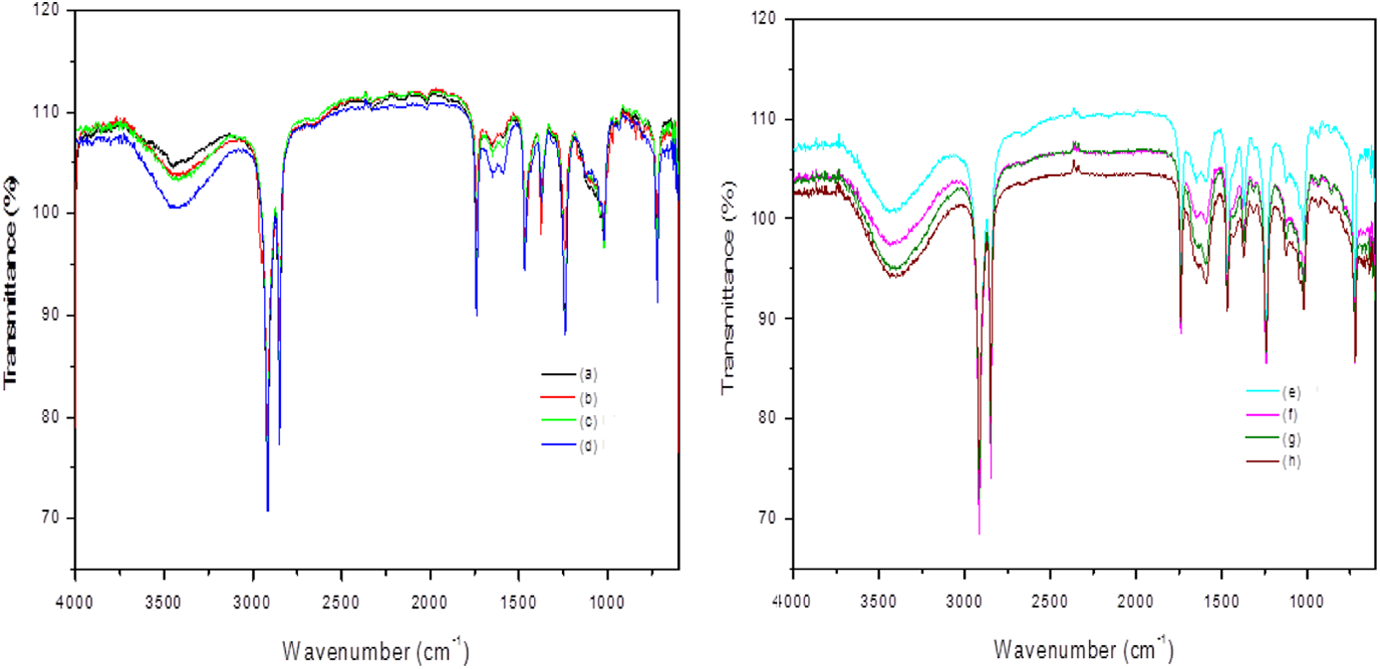
FTIR spectra of TPU and TPU/SWCNTs composites. FTIR: Fourier transform infrared.
It is observed from these spectra that the TPU/SWCNTs composites contain all the above characteristic peaks of TPU. This TPU/SWCNTs also contains two new peaks at 1649 cm−1 and 1590 cm−1, which corresponds to C=C stretching of SWCNTs and N–H bending of TPU. The intensity of 1649 cm−1 and 1590 cm−1 increases with a small shift in position on increasing the weight percentage of SWCNTs in TPU/SWCNTs blends. The N–H bending peak at 1590 cm−1 and the N–H stretching peak at 3460 cm−1 raise with intensity and make small shifts in position on increasing the SWCNTs content in the TPU matrix. This is due to the formation of hydrogen bonding within the TPU/SWCNTs blends, and similar changes were observed for all the blends. This observation clearly shows the presence of SWCNTs and its distribution in the TPU polymer matrix.
Confocal Raman spectroscopy
Raman spectroscopy is one of the essential tools to study the structural changes of polymer/CNTs composites. 25 Raman peaks and shift provide insight on the dispersion of CNTs and interaction between polymer and CNTs. 26 Raman spectra of TPU and TPU/SWCNTs blends are shown in Figure 2. An important characteristic is radial breathing mode which is in the range of 160–300 cm−1, associated with a symmetric movement of all carbon atoms in the radial direction (Figure 2(a)). The tangential mode (G-mode) corresponds to the stretching mode in the plane of graphite, and this mode is located around 1584 cm−1. The G′ or D* band is the second-order overtone of D band, which is located at 1438 cm−1. The locations of D and D* Raman bands of CNTs depend linearly on the laser excitation energy and the dispersion of nanotubes.
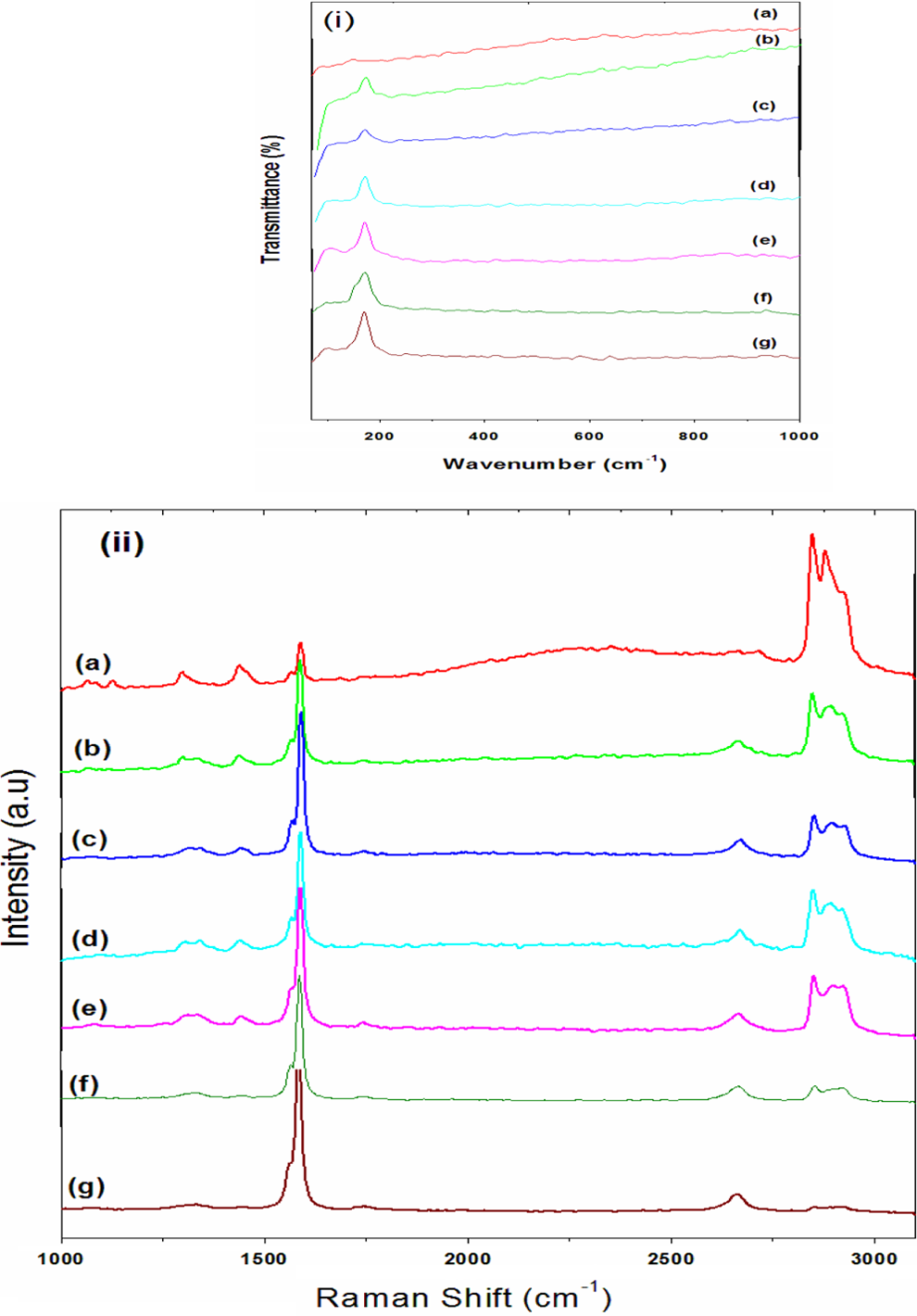
Raman spectra of TPU and TPU/SWCNTs composites (a) at low frequencies and (b) Raman spectra at higher frequencies. TPU: thermoplastic polyurethane; SWCNT: single-walled carbon nanotubes.
When SWCNTs were mixed with PU, no new Raman peak appeared compared to pure SWCNTs and PU, but Raman shift was observed at 2848 cm−1. It is interesting that with the addition of SWCNTs, Raman peak of TPU at 2848 cm−1 (Figure 2(b)) weakens and finally disappears at 5 wt% SWCNTs which is corresponding to υ(C–H) bonding. This indicates that SWCNTs has strong effect on the PU Raman spectra. This is due to the formation of π–π interaction on the surface of SWCNTs with TPU.
Differential scanning calorimetry
Thermal studies of TPU/SWCNTs blends are carried out by DSC analysis and shown in Figure 3. The effect of different concentration of SWCNTs on the eutectic melting point (T em) and melting temperature (T m) were analyzed. This T em peak was observed at approximately 49°C, which represents the TPU soft segment melting. The T em and T m of the TPU/SWCNTs blends show a drastic increment in the soft segment compared to the pure TPU. The curves depict that the T em and T m show an increasing and decreasing trend with respect to the increment of SWCNTs concentration. The T em increased with the concentration of SWCNTs up to 1 wt% after which decreased with the increment of the CNTs concentration. This is due to the fact that the SWCNTs preferably interact with the soft segment of PU matrix.
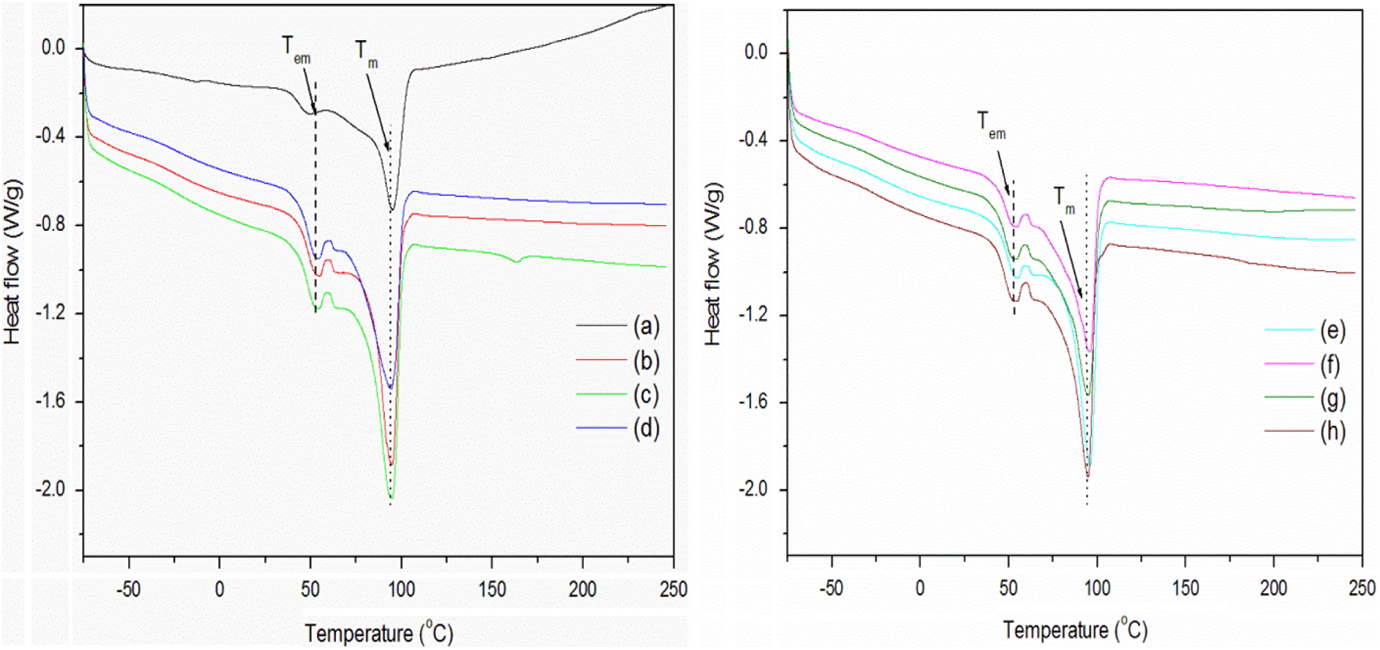
DSC curves for TPU and TPU/SWCNTs composites. DSC: differential scanning calorimetry; TPU: thermoplastic polyurethane; SWCNTs: single-walled carbon nanotubes.
As to analyze the trend of SWCNTs concentration versus T m, initially the T m showed a decrement at 0.1 and 0.5 wt% of SWCNTs. But at the 1 wt%, the melting point of the TPU/SWCNTs blends was increased and further decreased with the increment of SWCNTs concentration. There was no real difference observed between the T m of TPU/SWCNTs blends and neat PU. This indicates that the nanotube does not act as a plasticizer. 27
Thermogravimetric analysis
In order to investigate the thermal stability of the TPU/SWCNTs blends, the TGA was carried out under nitrogen atmosphere. Three stages of degradation occurred in the TGA thermograms as shown in Figure 4. The first-stage degradation (T dI) is earlier and initiated predominantly within hard segments. The second (T dII) and third stages (T dIII) depend upon the presence of soft segments and degrade more slowly than the hard segment. Ester groups present in the soft segments are more stable structure of PU which are degraded or damaged at third stage most probably. The incorporation of SWCNTs did not improve the T dI but did improve the T dII and T dIII stages. This may be because of the interaction of CNTs with the soft segment of PU. At 3 wt% of SWCNTs (Figure 4(f)), the T dII was delayed by 8°C. However, the addition of a low content of CNTs led to an increase in the thermal stability up to 18°C for 4 wt% (Figure 4(g)) content of the CNT matrix. Similarly, in our results, the final degradation temperature point was shifted into 508°C at 4 wt% of SWCNTs, this decomposition temperature remains constant at 3 and 4 wt% of SWCNTs compared with TPU at 491°C. It is observed from our studies that nearly 17°C temperature shift was observed as shown in Figure 4(h). This may due to the dispersed nanotubes that hinder the instability of degradation product and thereby delays the final degradation temperature.
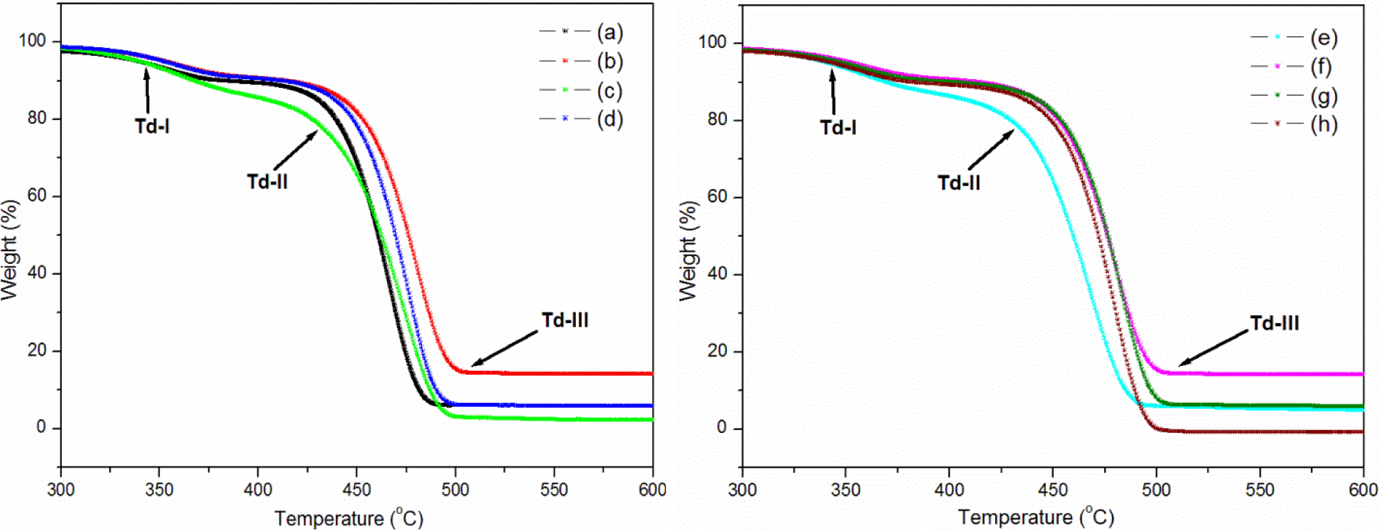
TGA curves for aTPU and TPU/SWCNTs composites. TGA: thermogravimetric analysis; TPU: thermoplastic polyurethane; SWCNTs: single-walled carbon nanotubes.
Morphological analysis
The electron micrographs of TPU and TPU/SWCNTs blends are presented in Figure 5. The TPU is composed of hard and soft segments, the hard segments generated from the reaction of isocyanates and short chain diol. The soft segments are from the long-chain polyols. The polyols chain segments are high, and the phase separation between hard and soft segments molecular weight is more. PU-incorporated CNTs (0.1 wt%) show network morphology (Figure 5(b)). The nanotube walls were not disturbed and TPU was coated onto the surface of CNTs. With increasing the concentrations from 0.1 wt% to 5 wt% of CNTs, a discrete morphology was observed. The 1 wt% SWCNTs (Figure 5(d)) show good dispersion on the PU matrix.
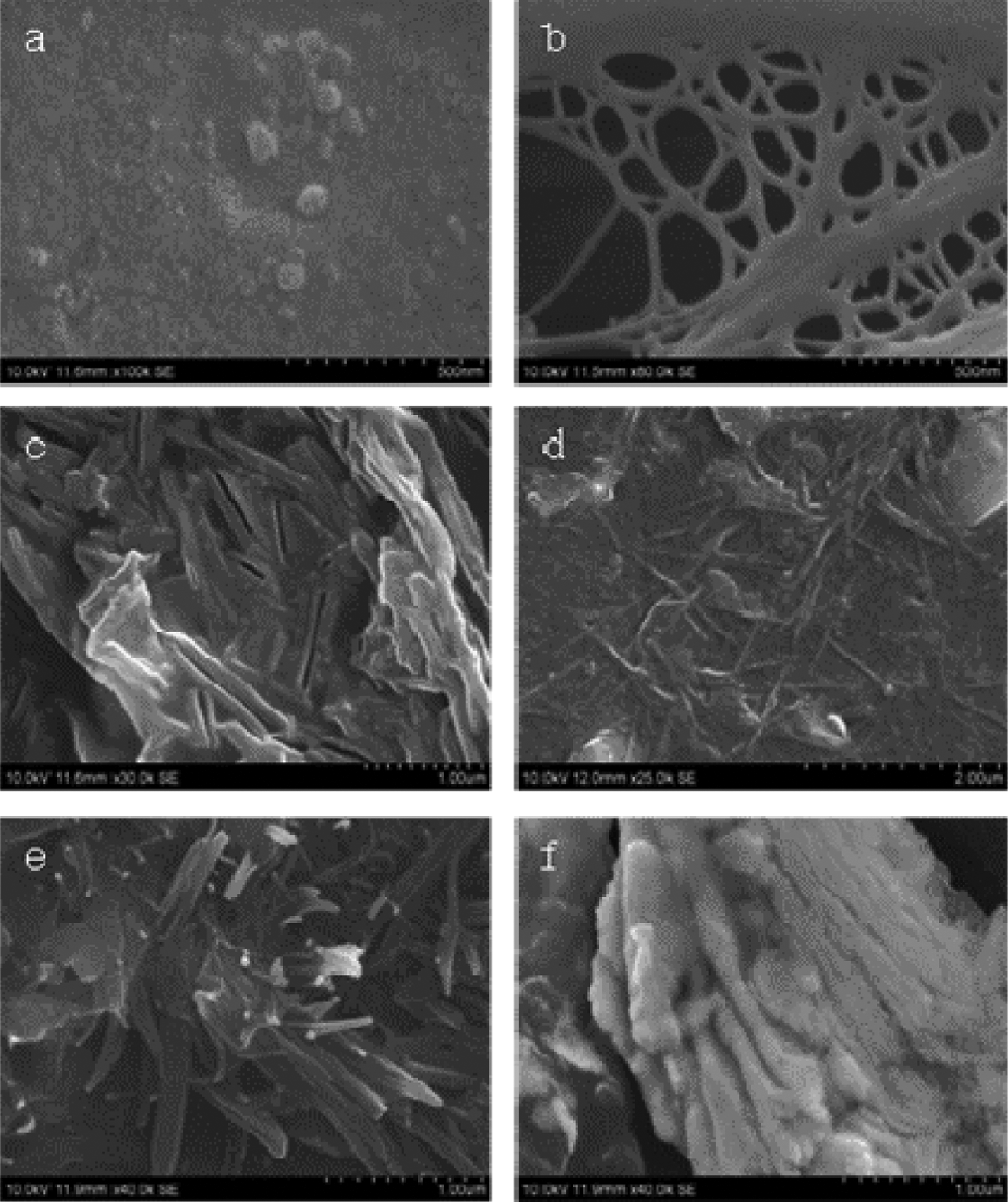
Field-emission SEM images of (a) TPU and (b) TPU/SWCNTs composites. TPU: thermoplastic polyurethane; SWCNTs: single-walled carbon nanotubes; SEM: scanning electron microscopic.
The high shear forces generated in the twin-screw extruder during the melt mixing is responsible for the deagglomeration of SWCNTs, hence result in good dispersion without any surface modification. The results are similar to the findings given in the literature. 28
Mechanical properties
The effect of the SWCNTs content on the mechanical properties of the TPU/SWCNTs composite materials were investigated and are given in Table 2. It was found that both the tensile strength and elongation at break increases with CNTs concentration. 29 With the addition of SWCNTs contents, the tensile strength remarkably increased from 13 MPa to 21.6 MPa, which was 166% higher than that of neat TPU. The tensile strength increases upto 1 wt% of SWCNTs, and with further addition of SWCNTs, the tensile strength, and elongation at break declines much lower than neat TPU. The elongation at break increased by 157% at 1 wt% loading of SWCNTs in contrast with the neat TPU system. The mechanical properties of the composite material decreased with SWCNTs content as shown in Figure 6. This decrement of mechanical properties while increasing the contents of SWCNTs is due to the agglomeration of CNTs in the polymer matrix, or at high nanotube loading, improvement in the mechanical properties might be limited by the high viscosity and void defects of the blended materials.
Mechanical properties of TPU and TPU/SWCNTs composites.
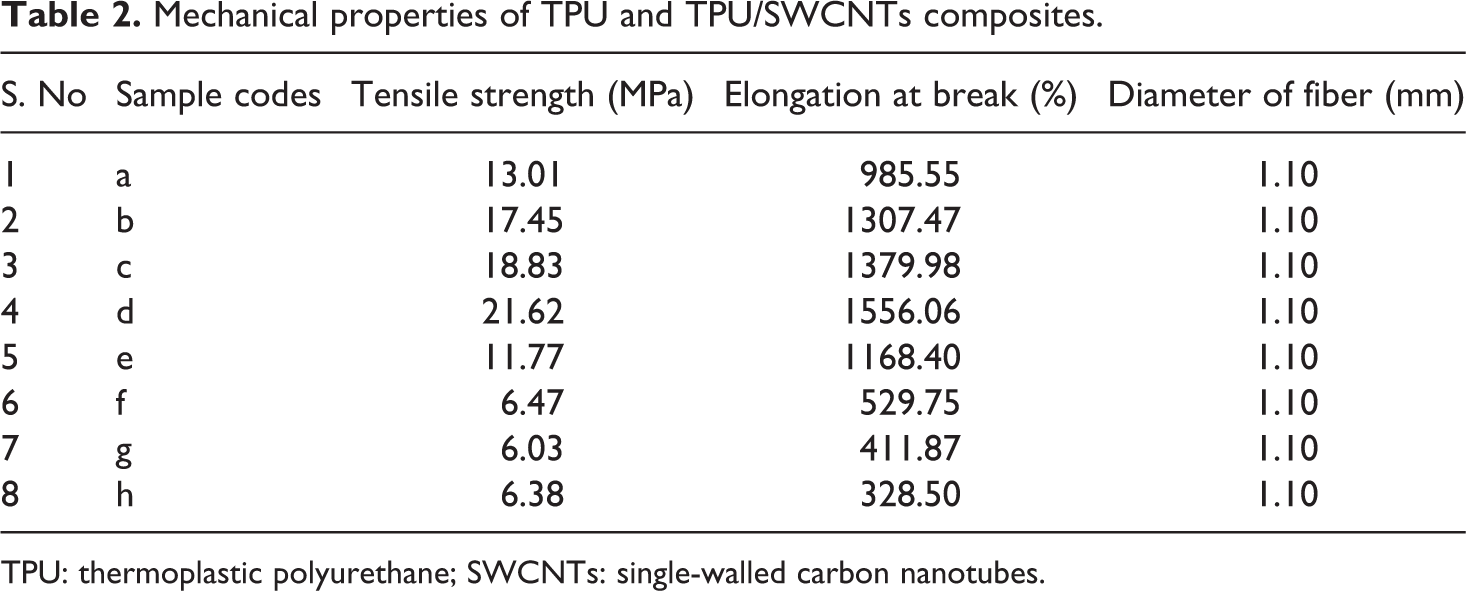
TPU: thermoplastic polyurethane; SWCNTs: single-walled carbon nanotubes.
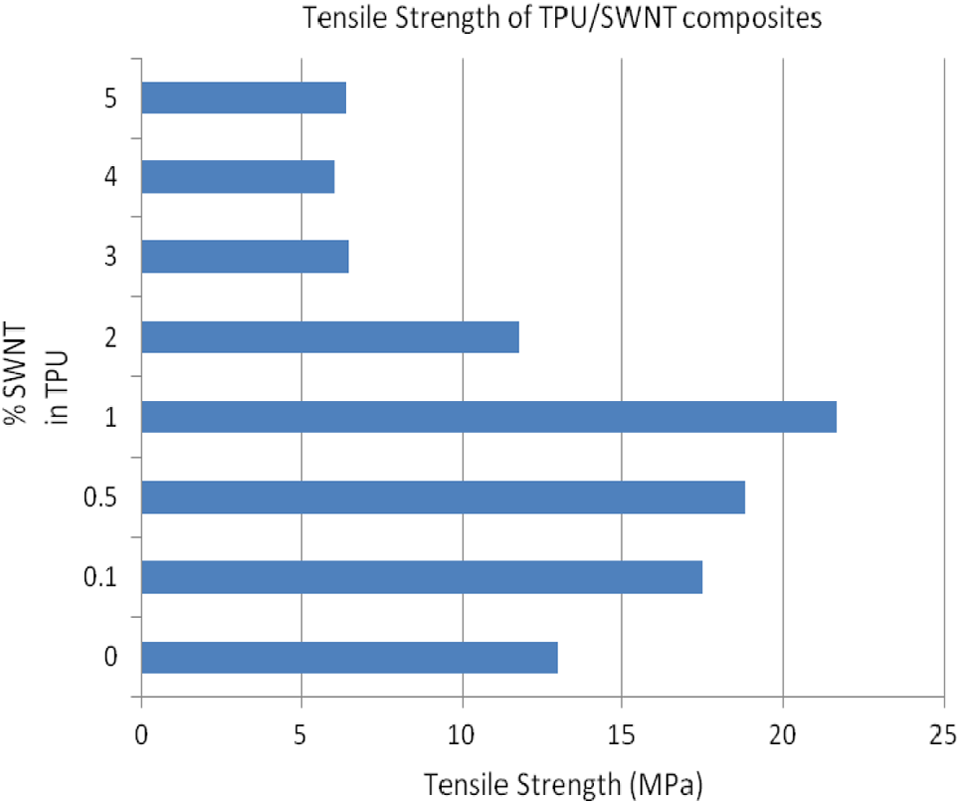
Tensile strength of TPU/SWCNT composites. TPU: thermoplastic polyurethane; SWCNTs: single-walled carbon nanotube.
Electrical conductivity
Polymers that are normally insulating in nature can be made conductive by adding small amount of CNTs. 30 A smaller weight fraction contributes to the property enhancements of the polymers. 15 A number of studies have been carried out with different types of CNTs on PU for studying the electrical properties. 31 The results from these studies indicated that the level of conductivity varies with different weight ratios of the CNTs added and the processing conditions selected for the fabrication of the composite materials. Figure 7 shows that the electrical conductivity of the blends with different wt% of the CNTs. The conductivity of the TPU/SWCNT blends shows conductivity of 2.2 × 10⁻⁷ S cm−1 at the initial 0.01 wt%. The highest conductivity of 3.7 × 10⁻⁷ S cm−1 obtained for 2 wt% of CNTs.
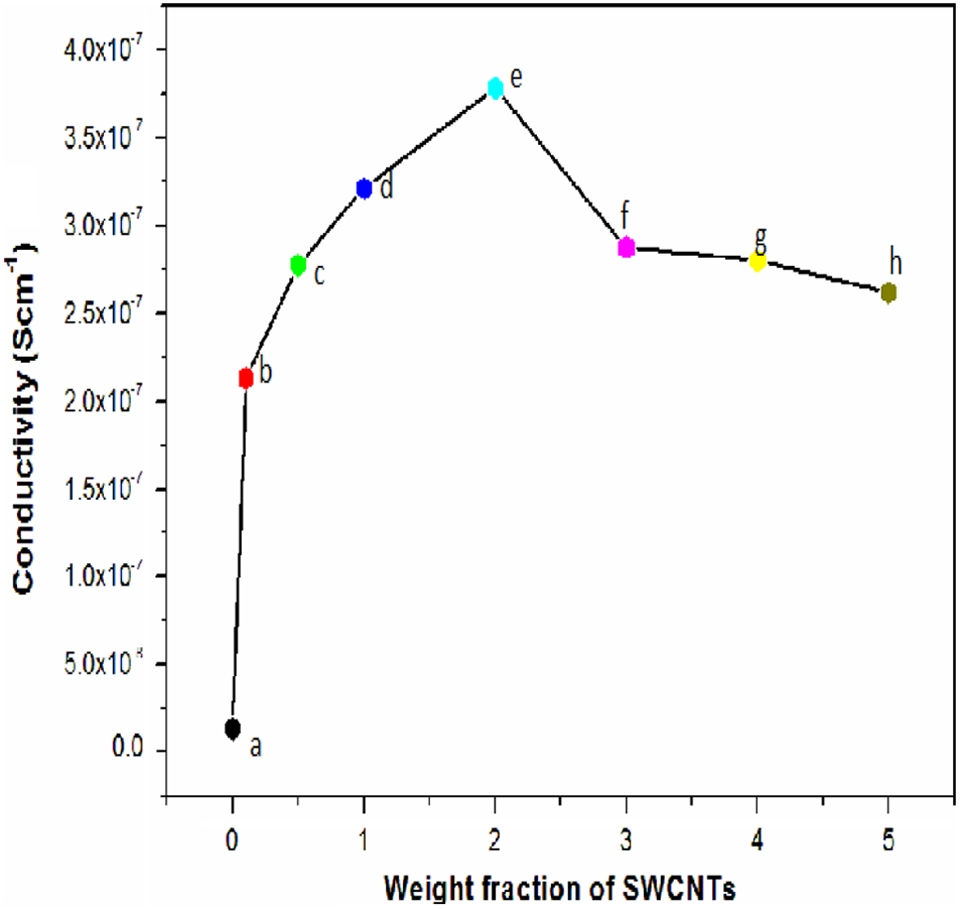
Conductivity of TPU/SWCNTs blends. TPU: thermoplastic polyurethane; SWCNTs: single-walled carbon nanotubes.
Conclusion
TPU/SWCNTs composites have been fabricated using twin-screw extruder with operating temperature of 190°C and screw speed of 60 r min−1. These composites show dramatic improvement in the mechanical properties and electrical conductivity with SWCNTs (1 wt%). The dispersion of the SWCNTs was observed by the shift in the Raman peak at 2848 cm−1. The electrical conductivity of the order of 3.7 × 10⁻⁷ S cm−1 has been obtained for the composites. The tensile strength increased from 13 MPa to 21.6 MPa, which indicates that SWCNTs orient strongly and induce better interaction with the TPU matrix. The electrical properties together with high strength makes the extruded filaments suitable for smart textile applications.
Footnotes
Declaration of Conflicting Interests
The author(s) declared no potential conflicts of interest with respect to the research, authorship, and/or publication of this article.
Funding
The author(s) disclosed receipt of the following financial support for the research, authorship, and/or publication of this article: The authors would like to thank Council of Scientific and Industrial Research, New Delhi for financial support through the projects STRAIT - Science and Technology Revolution in Leather with a green Touch (CSC 201) and ZERIS- Zero Emission Research Initiative for Solid Waste from Leather (CSC 103).