




Abstract
The present article studies the effect of treatment of 0.5, 1.5, and 2.5% titanate-coupling agent (LICA 38) on various properties of fly ash–filled polypropylene (PP) composites. The fly ash content varied from 0 to 30 wt%. The mechanical and thermal properties of the composite material were evaluated, and microstructure investigated through scanning electron microscopy. Experimental results were compared with various existing models. Experimental data for tensile yield strength showed good fit to the existing models. Adhesion parameter or interfacial interaction was also evaluated though Pukanszky model. The values of yield stress and breaking strength of treated fly ash–based composites showed higher values compared to that of untreated fly ash–filled PP composites at corresponding filler content. The overall mechanical properties of fly ash–filled composites are essentially decided by wettability of the filler. It is also found that Vicat softening point improved with the addition of fly ash filler. Morphological studies of the tensile fracture surfaces of the composites revealed that the presence of titanate-coupling agent increased the interfacial interaction between fly ash and PP. It also improved the dispersion of fly ash in PP matrix. Thus, the treatment resulted in improvement in mechanical and thermal properties of the composites as compared to untreated fly ash–filled composites. The overall results showed that fly ash dispersion and interfacial adhesion are greatly affected by the amount of the coupling agent.
Keywords
Introduction
Polypropylene (PP) exhibits an attractive combination of low-cost, low-weight, heat distortion temperature above 100°C, and extraordinary versatility in terms of properties, applications, and recycling. The consumption growth rates have been high, with the material becoming widely used in various industrial areas for fibers, films, and injection molding articles. In order to improve the mechanical performance of PP for engineering plastics application, the prime objective is to increase its dimensional stability, heat deflection temperature, stiffness, strength, and impact resistance without sacrificing its easy processability. Further modification of PP by adding fillers, reinforcements, or blends of special monomers or elastomers can render it more flexible with a variety of other properties, and its competitiveness in engineering resin applications has greatly improved. 1 –3
Nowadays, polymeric composites have received widespread attention because of their high specific strength and modulus. Property enhancement is usually achieved by fiber reinforcement, but some studies showed that mechanical properties can improve with the addition of particulate fillers. Particulate fillers have played a vital role in the development of commercially viable polymers. Not only do they provide a significant cost reduction, but certain fillers may improve various properties of the materials such as mechanical strength, modulus and heat deflection temperature, material processing, and optical properties. In general, the mechanical properties of particulate filled polymer composites depend strongly on size, shape, and distribution of filler particles in the matrix polymer and good adhesion of the filler–polymer interface. Numerous inorganic fillers like fly ash, mica, talc, calcium carbonate, hollow glass bead, and so on have been incorporated in polymer matrix. 4 –14 Since the addition of filler into a polymer matrix interferes with the macromolecular structure of the polymer, mechanical properties are often sacrificed. Most often surface modification of the filler is used to improve this interface. When inorganic fillers are used, poor interaction and/or interfacial adhesion between polymer and filler is generally observed. To improve interfacial adhesion, and therefore obtain better composite properties, different additives are frequently added to fillers or the matrix. Coupling agents that work as molecular bridges at the interface between two dissimilar substrates, such as inorganic fillers and an organic matrix, are considered in this study. These coupling agents have reactive groups that are compatible with the chemical nature of the polymer and the filler. 15 The surface modification of fillers using coupling agents has been found to be beneficial toward improving mechanical strength and chemical resistance of polymer composites through improvement in adhesion across the interface. 16 Fly ash, an absolutely low-cost inorganic waste product of thermal power stations, is posing a menace and hence requires to be utilized for curbing environmental pollution. Attempts have been made to utilize fly ash meaningfully for various purposes, namely, in chemical field, agricultural field, cement, and construction industries, but very few attempts have been made to use it is as a filler in elastomers and plastics, which could be the largest fill for its large-scale utilization. As such, fly ash doesn’t contribute to reinforcement in its untreated form. In addition to the problem of adhesion, many studies using fly ash have shown that the presence of filler does increase the stiffness of the polymer composite but, like most filler, reduces impact resistance. 17,18 It was reasoned that promotion in adhesion between its surfaces with matrix material could bring about reinforcement. Typically, titanate-treated inorganic fillers are hydrophobic, organophilic, and organofunctional, and when incorporated into polymer systems, these fillers often promote adhesion, catalyze, improve dispersion and impact strength, prevent embrittlement, improve mechanical properties, and so on. 19 Recently, fly ash has been used as a filler in polymer to produce particulate-reinforced polymer composites, saving the other commonly used mineral fillers used in polymers, thereby helping the environment. Many experimental studies using fly ash have shown that the presence of filler does increase the stiffness of the polymer composite but, like most fillers, reduces impact resistance. To improve these properties, other components should be added to the composite formulation. 7,17 –32
The current study aims at investigating the effect of untreated and treated fly ash with 0.5, 1.5, and 2.5% of titanate-coupling agent on the mechanical, thermal, and morphological properties of the PP fly ash–filled composites. The mechanical findings are also corroborated with different theoretical models to confirm the experimental observations and calculation of the adhesion parameter between fly ash and polymer matrix. The success of the surface modification in enhancing the properties of PP can lead to the production of cheap composites using waste fly ash. This will eventually lead to a positive impact on the environment by utilizing waste fly ash.
Experimental
Materials
Homopolymer PP (REPOL H110MA grade, melt flow index (MFI) 11 g/10 min at 230°C was supplied by Reliance Polymers (Mumbai, India)) was used as the polymer matrix. Fly ash (Envirotech Engineers, Pune, India), with a specific gravity 2.10 g/cm3, average particle size of 300 mesh, and concentration varied from 0 to 30 wt%, was used as a filler. Titanate-coupling agent ((Ken-React LICA 38); neopentyl(diallyl)oxy, tri(dioctyl)pyrophosphato titanate) was imported from Ken Rich Petrochemicals, Inc., Bayonne, New Jersey, USA.
Surface treatment of fly ash
The weight of the fly ash (0.5, 1.5, and 2.5%) of the coupling agent was mixed in toluene and dissolved completely. This coupling agent solution was then added to the fly ash and mixed thoroughly for 30 min to ensure uniform distribution. The treated fly ash was then dried at 80–85°C for 2–3 h.
Preparation of the polymer composites
The compounding of PP with various concentrations of 0, 10, 20, 25, and 30 wt% of the untreated and treated fly ash filler were carried out on extruder. In this process, the temperature profiles in the barrel were 170°C (Zone 1), 190°C (Zone 2), 200°C (Zone 3), 210°C (Zone 4), and 220°C (die temperature) and the screw rotation rate of 60 rev/min was used and then extruded strands were then pelletized. The pellets were dried at 87 ± 5°C for 2–3 h in an air-circulating oven. The resulting pellets were injection molded to produce the tensile and Izod Impact test specimens of PP-/fly ash–filled composites. All the samples were conditioned for 24 h prior to testing. The resulting samples were used for the study of mechanical and thermal properties. Titanate-coupling agent ((Ken-React LICA 38); neopentyl(diallyl)oxy, tri(dioctyl)pyrophosphato titanate) was used to enhance dispersion and compatibility between polymer and fly ash at 0.5, 1.5, and 2.5%.
Testing
Tensile properties were measured using dumbbell-shaped specimens on a tensile testing machine, Model No STS-248 (Praj Laboratory, Kothrud, Pune, Maharashtra, India) according to ASTM D638M-91 standard procedure at 100% strain rate. The crosshead speed of 50 mm/min was maintained for testing. Izod impact strength values were evaluated on a Zwick Izod Impact tester (Digital), Model No: S102, Germany (Praj Laboratory) according to ASTM D256 test procedure using notch samples. Thermal properties such as Vicat softening point (VST) of all samples were measured using Davenport Vicat softening point instrument, U.K. (Praj Laboratory) according to ASTM D1525 standard. The specimen was dipped in silicon oil bath heated at the rate of 120°C/min. The oil bath was continuously stirred and circulated to maintained uniform temperature. A load of 64 psi was applied on the given sample through a pin (1 mm2) placed on the specimen. The test recorded the temperature at which the pin penetrated to a depth of 1 mm. Each test was duplicated for other samples.
A JEOL, JSM-6380 scanning electron microscope (SEM; JEOL, Japan) was used to evaluate the microparticle dispersion in the polymer matrix. The cryogenic fracture surface was used to take SEM micrograph.
Differential scanning calorimetry (Q100 DSC, TA instruments Ltd, India) characterization was done to investigate the crystallization and melting behavior of the composite. Scanning rate of 20°C/min was maintained for both heating and cooling cycle; whereas nitrogen gas purge rate maintained at 50 ml/min. Melting temperature was determined from the heating scan and the crystallization temperature (Tc) from the cooling scan.
Results and discussion
Tensile properties
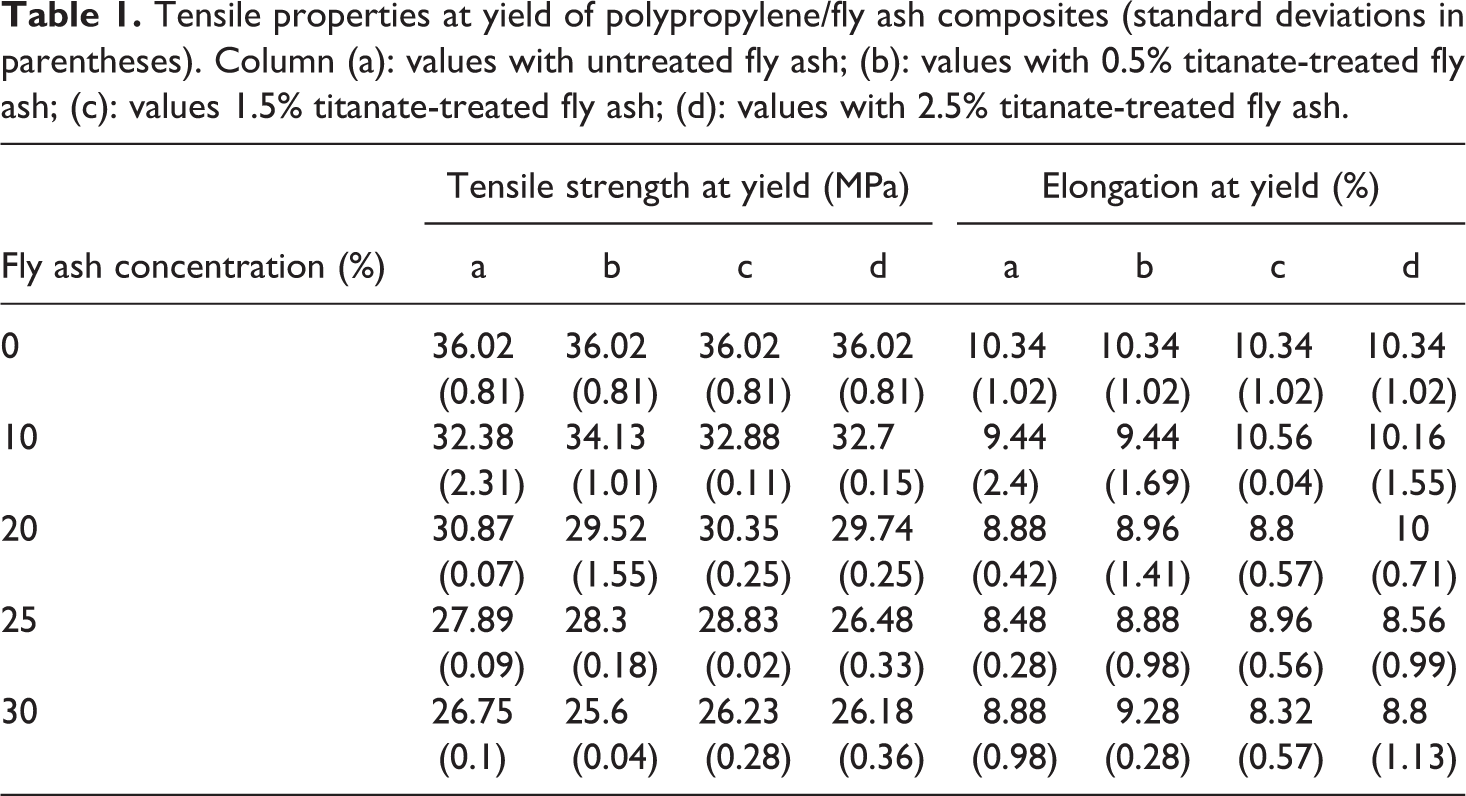
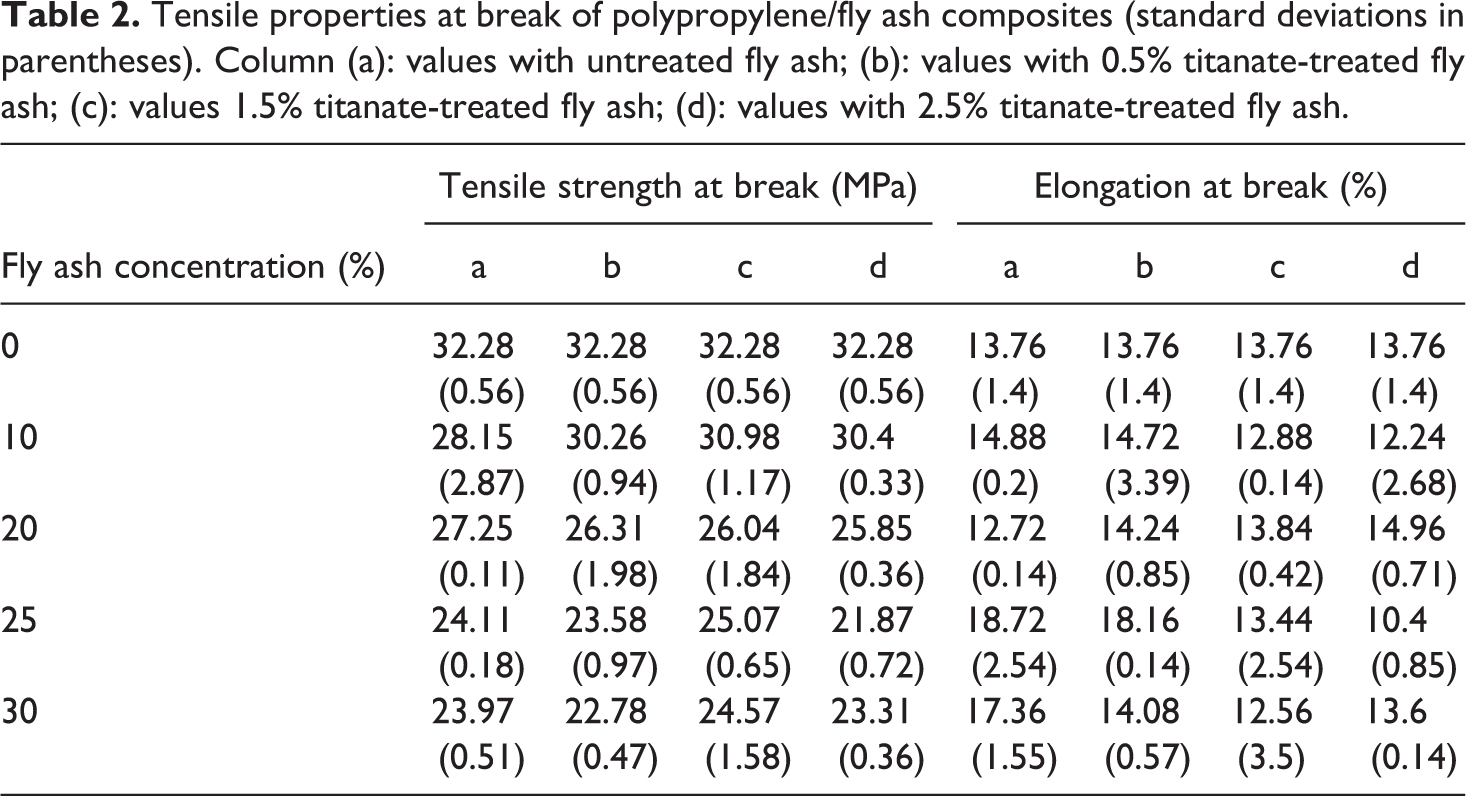
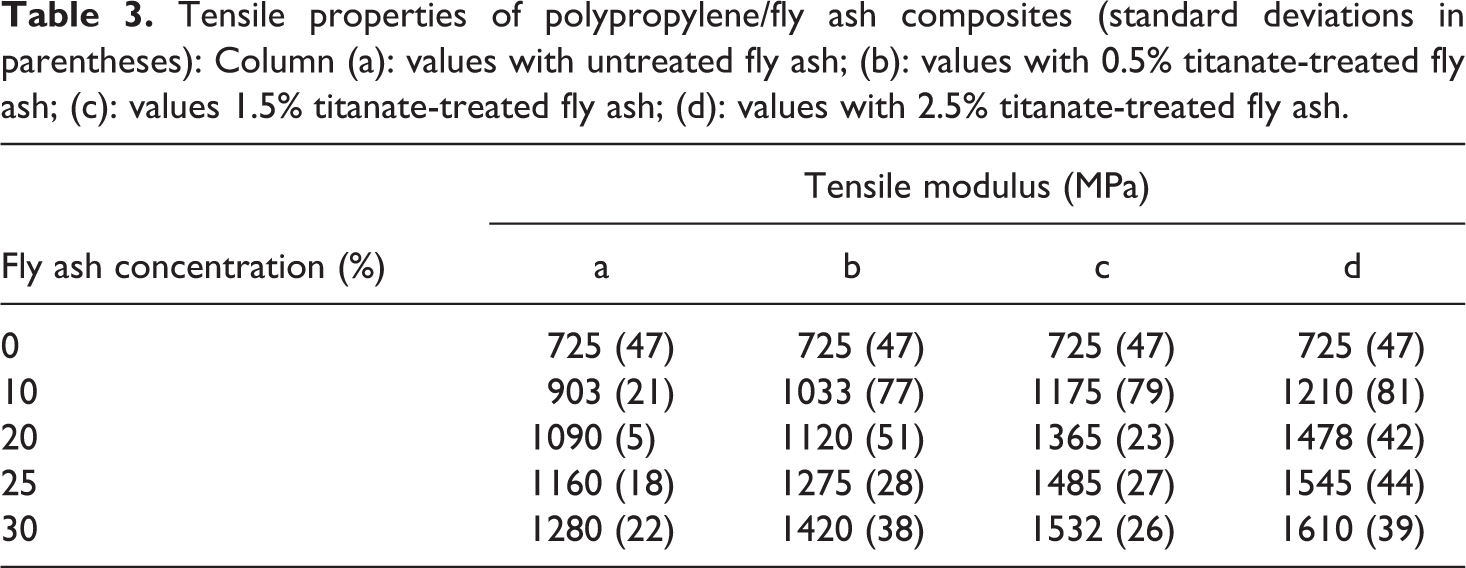
The results of tensile tests are shown in Tables 1– 3. In general, tensile strength at yield (σy), elongation at yield (εy), tensile strength at break (σb), and elongation at break (εb) values decreased with increasing the filler content. The addition of untreated fly ash in PP led to reduction in σy, σb, and percentage elongation values drastically at higher loading, whereas upto 10 wt% loading gave comparable performance as that of PP matrix. The incorporation of fly ash into PP led to more brittle and weaker materials, as both σb and εb significantly decreased. The loss of strength could be attributed to the lack of interfacial adhesion between PP and fly ash. It has been reported that poor tensile strength and low failure strain were caused by particle debonding from the matrix prior to yielding as a result of poor interfacial adhesion, and this observation was in good agreement with the importance of the surface modification of the filler and extent of adhesion between filler and polymer matrix. Surface treatment of fly ash with titanate-based coupling agent has significant effect on all the above properties. The σy and σb values of treated fly ash–filled PP composites were higher upto 20 wt% as compared to untreated fly ash–filled compositions. But at more than 20%, the surface modification of the fly ash led to marginal improvement in the σy and σb values, which supported improvement in the interaction between polymer matrix and filler particle. However, the values of εy and εb showed deterioration with treated fly ash at all the loadings, which also supported proper interaction between polymer matrix and filler. The fracture path goes through particle to particle rather that giving a perfect smooth fractured surface and the inclusion of fly ash particles in polymer matrix result in the formation of stress concentrators. The rate of reduction of the σy and σb was higher in case of untreated fly ash–filled PP composites as compared to the treated fly ash–based PP composites at all the filler loadings. The above-mentioned observations were in good agreement with the importance of surface modification of fillers and extent of adhesion with polymer matrix. Table 3 showed that the tensile modulus values increased, and this effect was more pronounced as the ash content increased, as reported earlier. The increase in stiffness observed in the composites was expected from the incorporation of a stiffer second phase. Furthermore, Table 3 showed that the treated fly ash–based composites gave moderate higher stiffness compared to that of untreated fly ash–filled PP composites at corresponding filler levels, which also supported improvement in the adhesion between polymer matrix and filler particle, which helped to improve the dispersion. The effect of 0.5 and 1.5% showed better performance at lower loadings of fly ash, while 2.5% coupling agent showed better performance at higher loadings of fly ash. The above-mentioned results obtained for the modulus determined at low strains where the interface was still intact to be more related to the presence of stiffer second phase and to the stiffness of the coupling agents rather than to interfacial adhesion. Figures 1 –3 showed the variation in σy, εy percentage, and tensile modulus of PP filled with untreated and treated fly ash composites as a function of content of fly ash (wt%).
Tensile properties at yield of polypropylene/fly ash composites (standard deviations in parentheses). Column (a): values with untreated fly ash; (b): values with 0.5% titanate-treated fly ash; (c): values 1.5% titanate-treated fly ash; (d): values with 2.5% titanate-treated fly ash.
Tensile properties at break of polypropylene/fly ash composites (standard deviations in parentheses). Column (a): values with untreated fly ash; (b): values with 0.5% titanate-treated fly ash; (c): values 1.5% titanate-treated fly ash; (d): values with 2.5% titanate-treated fly ash.
Tensile properties of polypropylene/fly ash composites (standard deviations in parentheses): Column (a): values with untreated fly ash; (b): values with 0.5% titanate-treated fly ash; (c): values 1.5% titanate-treated fly ash; (d): values with 2.5% titanate-treated fly ash.
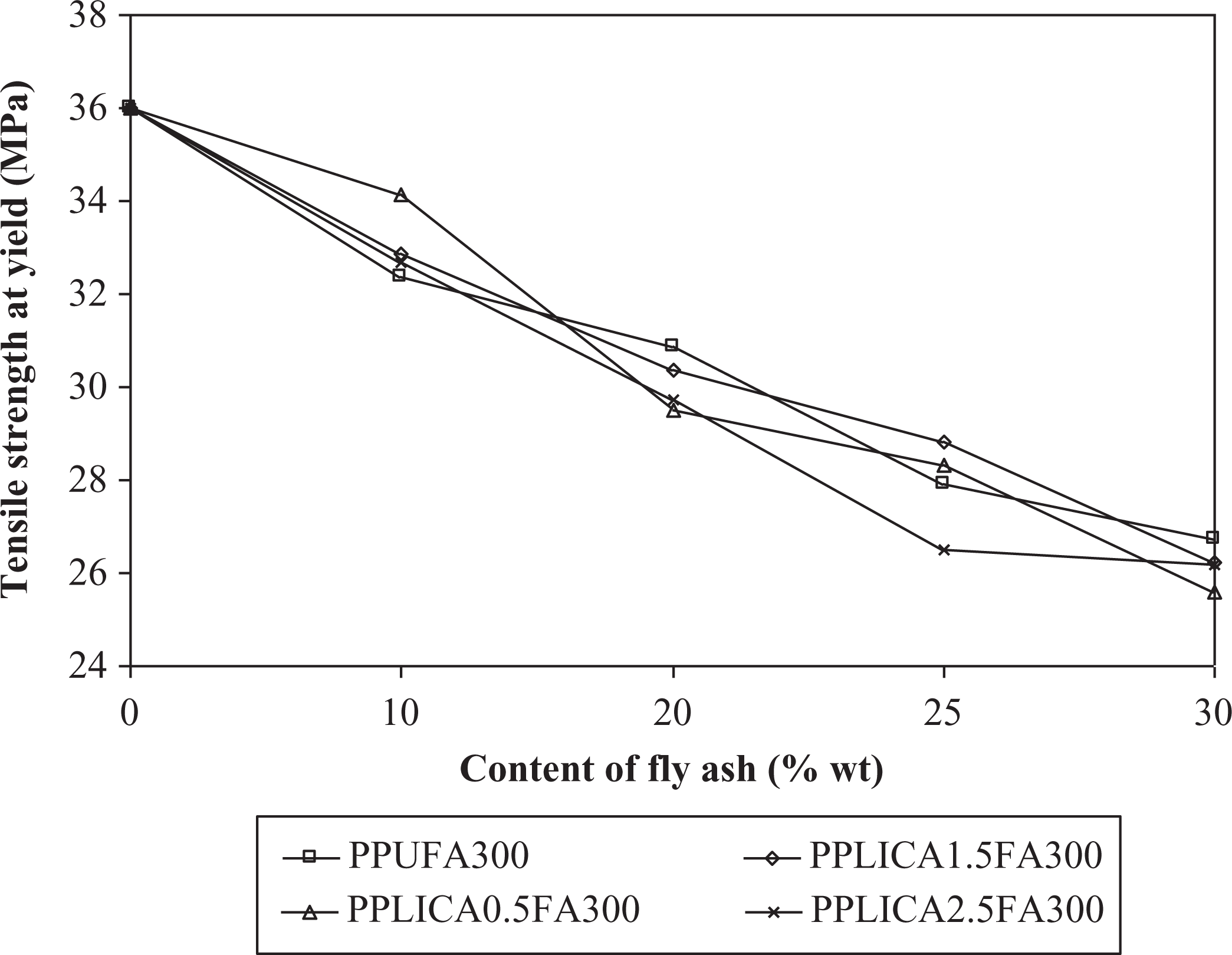
Variation in tensile strength of polypropylene/untreated fly ash (PPUFA300); polypropylene/0.5% titanate-treated fly ash (PPLICA0.5FA300); polypropylene/1.5% titanate-treated fly ash (PPLICA1.5FA300); polypropylene/2.5% titanate-treated fly ash (PPLICA2.5FA300) composites against content of fly ash (wt%).
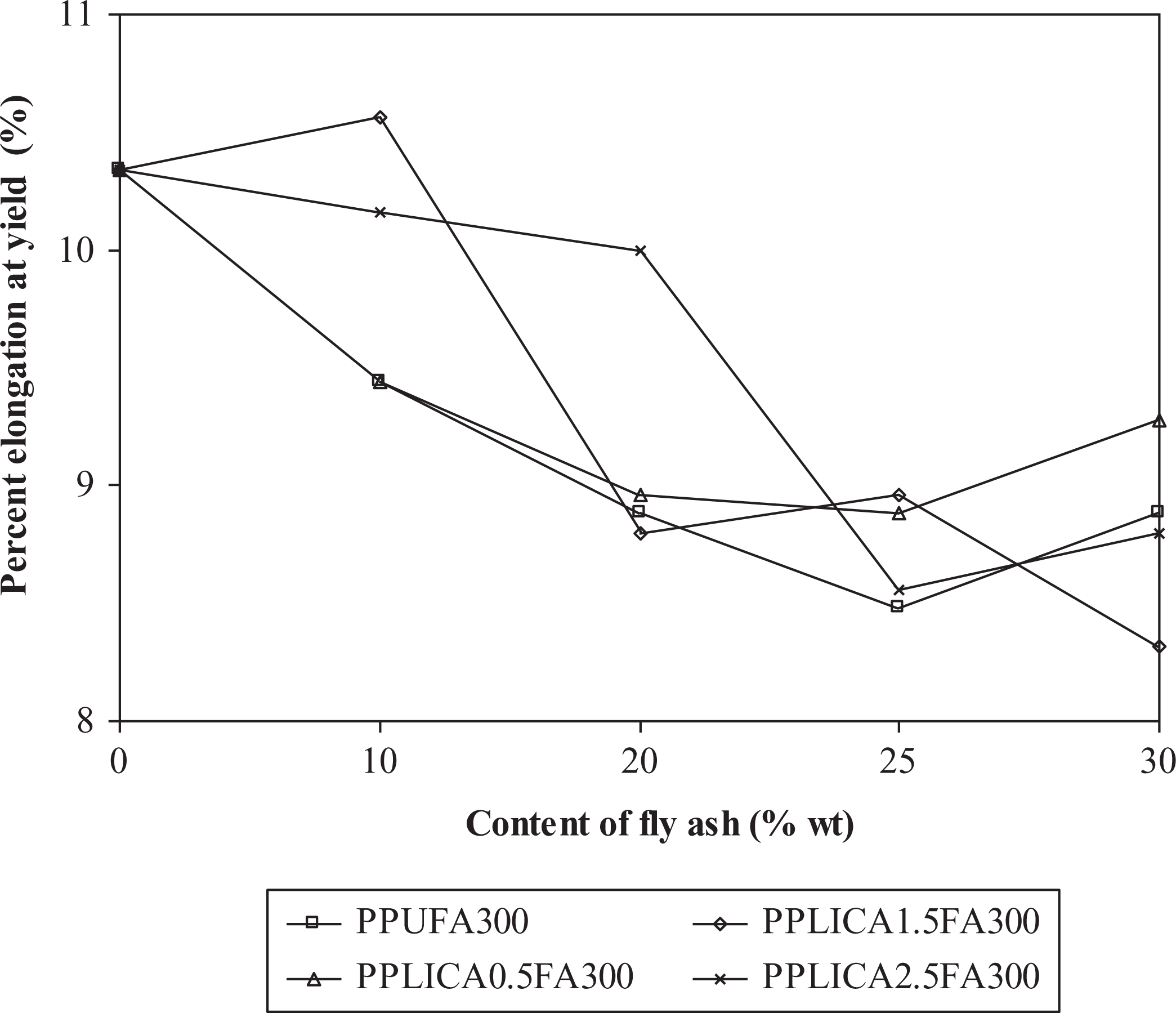
Variation in percentage elongation of polypropylene/untreated fly ash (PPUFA300); polypropylene/0.5 % titanate-treated fly ash (PPLICA0.5FA300); polypropylene/1.5% titanate-treated fly ash (PPLICA1.5FA300); polypropylene/2.5% titanate-treated fly ash (PPLICA2.5FA300) composites against content of fly ash (wt%).
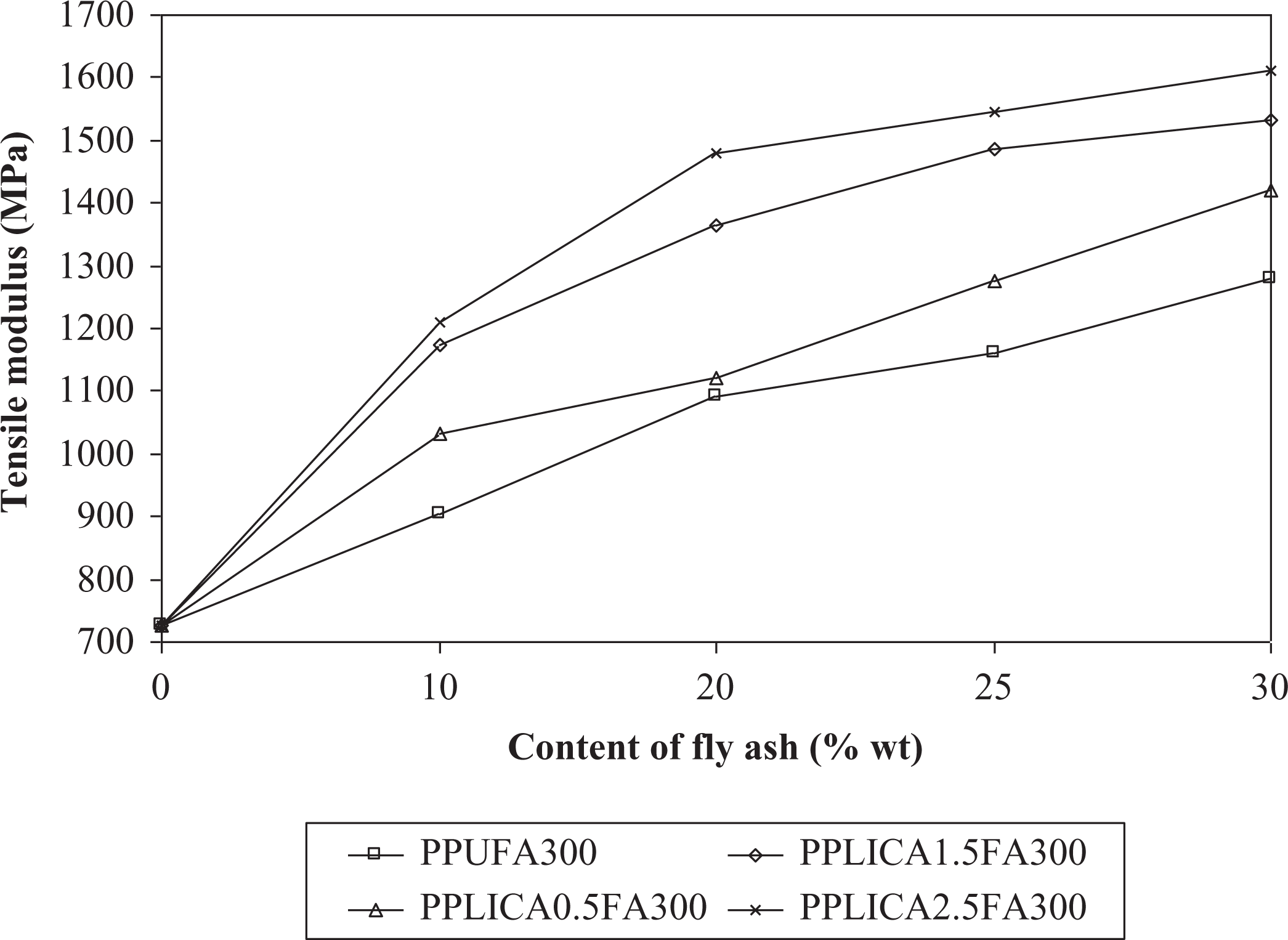
Variation in tensile modulus of polypropylene/untreated fly ash (PPUFA300); polypropylene/0.5% titanate-treated fly ash (PPLICA0.5FA300); polypropylene/1.5% titanate-treated fly ash (PPLICA1.5FA300); polypropylene/2.5% titanate-treated fly ash (PPLICA2.5FA300) composites against content of fly ash (wt%).
Calculation of adhesion parameter
Table 4 depicts the variation in relative yield stress (ratio of the yield stress of the composite to the nonfilled polymer, σc/σp) of PP filled with untreated and treated fly ash–based PP composites.
Values of relative yield stress and adhesion parameter of polypropylene/fly ash composites: Column (a): values with untreated fly ash; (b): values with 0.5% titanate-treated fly ash; (c): values 1.5% titanate-treated fly ash; (d): values with 2.5% titanate-treated fly ash.
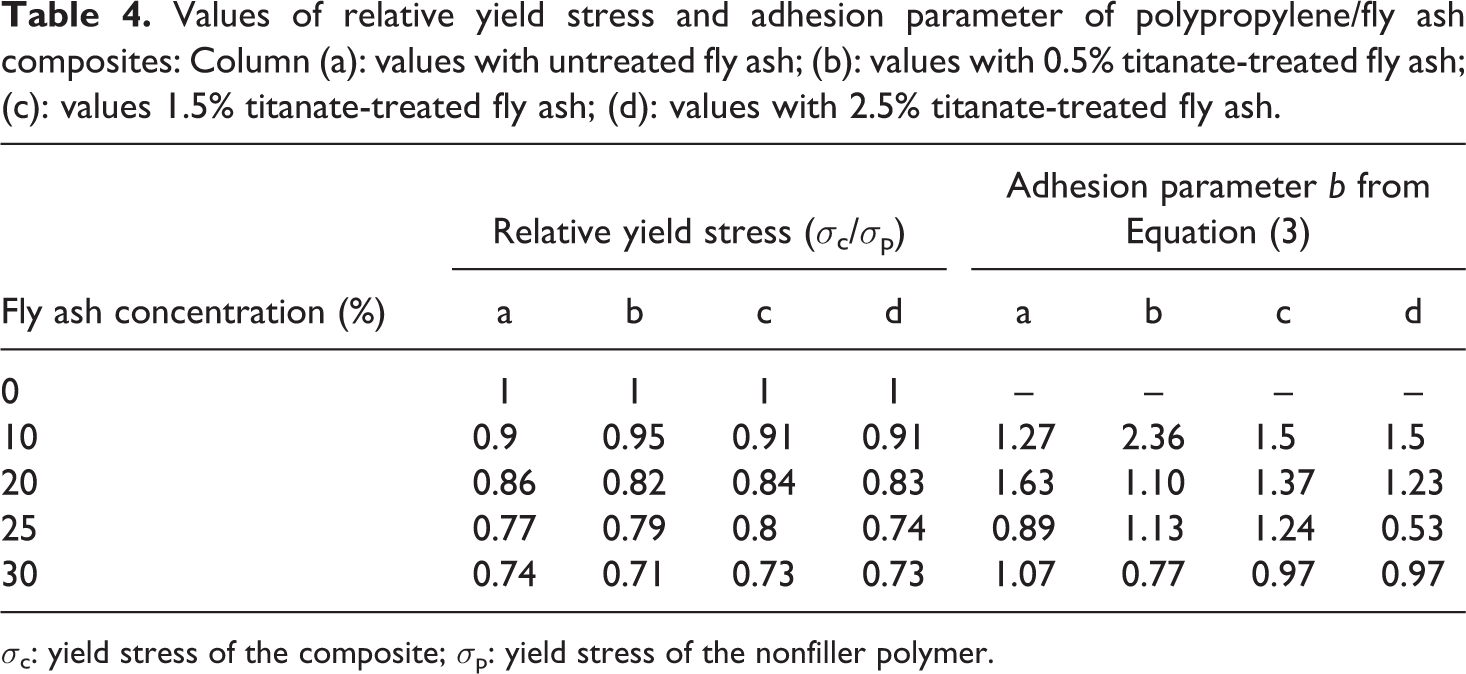
σc: yield stress of the composite; σp: yield stress of the nonfiller polymer.
The yield stress data are compared using the following equation
16
:

where the parameter K indicates the extent of adhesion between the filler and the polymer. For spherical-shaped fillers, K = 0 for perfect adhesion and 1.21 for no adhesion.
The dependence of the σc/σp on the volume fraction of Fly ash ΦF is shown in Figure 4. The data for untreated fly ash–filled PP composites lying in between the curves with K = 0.6–0.95. This has supported the secondary binding forces of –OH groups on the surface of fly ash, which may have a role in the formation of weak interfacial interactions in PP chain. 33 While the data for treated fly ash with titanate-based coupling agent–filled PP composites lie closer to the curve with K = 0.95, that is, it has not shown significant changes in adhesion parameter. The effect of 0.5 and 1.5% titanate-based coupling agent showed better performance at lower loadings of fly ash, while 2.5% showed better performance at higher loadings of fly ash.
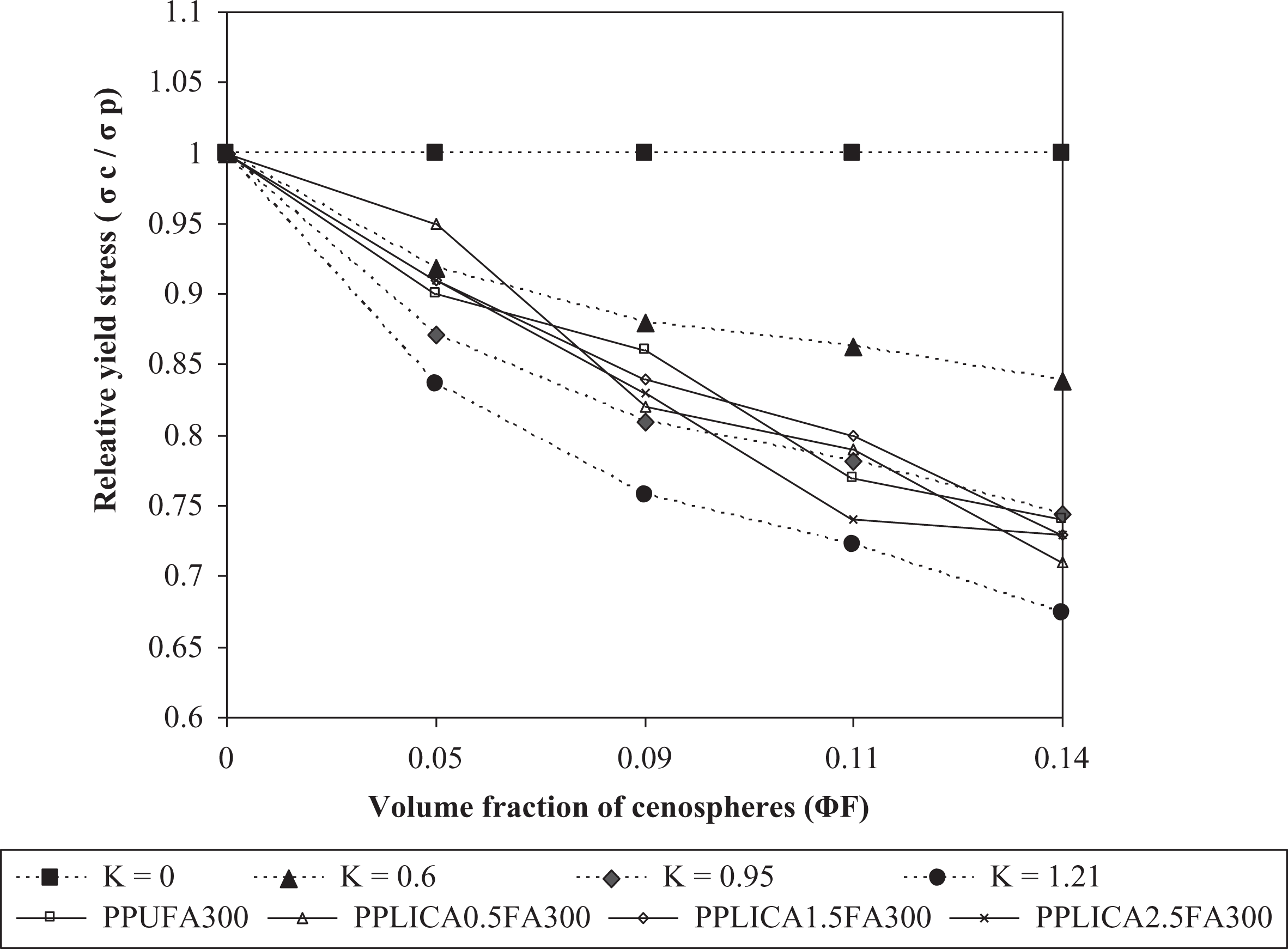
Variation in relative yield stress (σc/σp) of polypropylene/untreated fly ash (PPUFA300); polypropylene/0.5% titanate-treated fly ash (PPLICA0.5FA300); polypropylene/1.5% titanate-treated fly ash (PPLICA1.5FA300); polypropylene/2.5% titanate-treated fly ash (PPLICA2.5FA300) composites against ΦF. Dotted curves represent predicted behavior according to Equation (1).
Liang and Yang
34
reported a new conception of the interfacial adhesion angle (θ) and deduced an ameliorative equation for tensile strength:

The smaller the θ, the better is the interfacial adhesion condition. It exhibits good interface adhesion when θ = 0° and exhibits poor interface when θ = 90°. To substantiate the effectiveness of interaction between polymer matrix and fly ash, Equation (2) put forth by Liang and Yang 34 was employed in this study.
It can be seen from Figure 5 that the data for untreated and treated fly ash–filled PP composites lie in between the curves with θ = 45–90°. The effect of 0.5 and 1.5% showed better performance at lower loadings of fly ash, while 2.5% coupling agent showed better performance at higher loadings of fly ash. Figure 5 depicts the relative yield stress (σc/σp) on the volume fraction of fly ash ΦF.
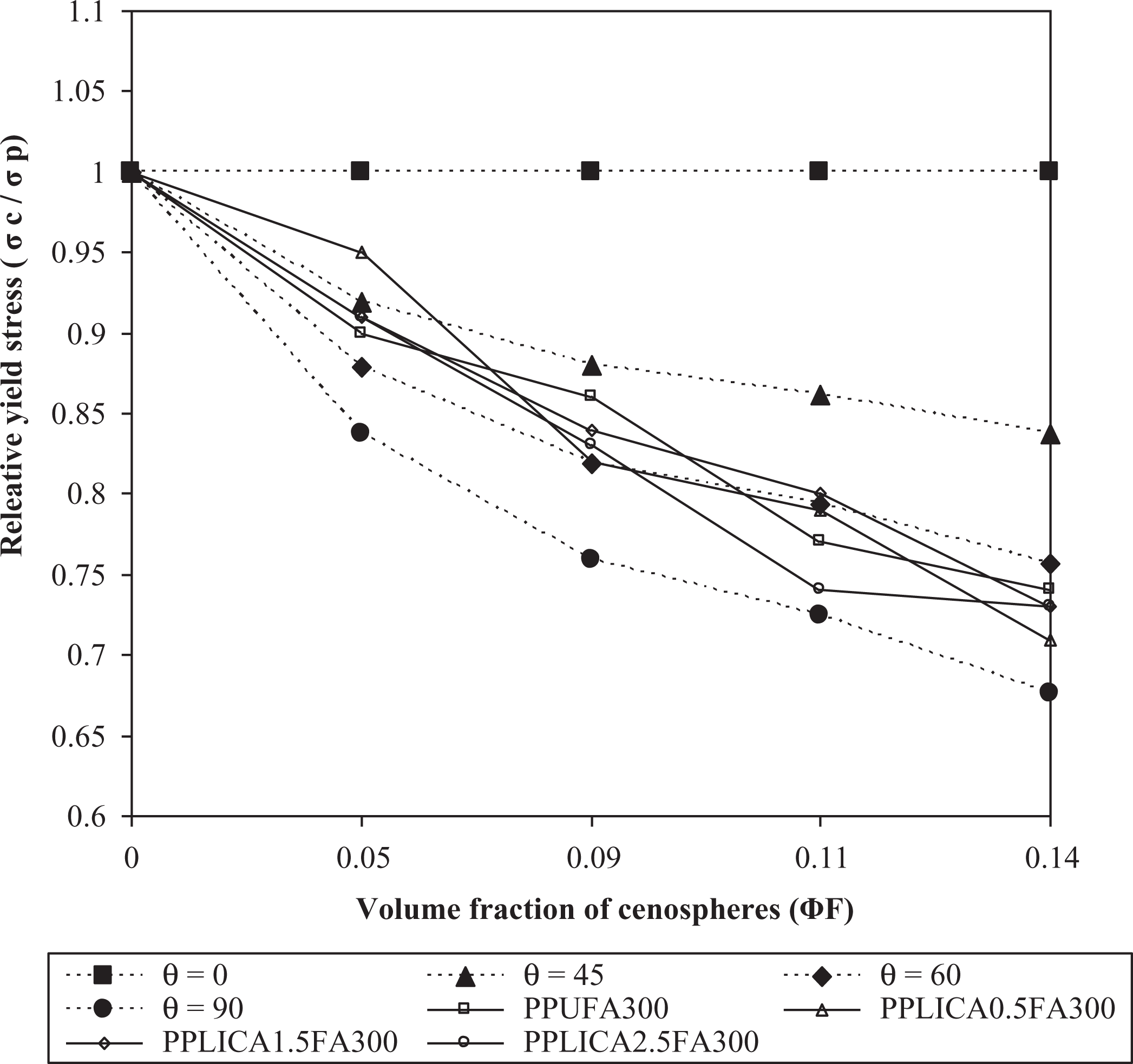
Variation in relative yield stress (σc/σp) of polypropylene/untreated fly ash (PPUFA300); polypropylene/0.5% titanate-treated fly ash (PPLICA0.5FA300); polypropylene/1.5% titanate-treated fly ash (PPLICA1.5FA300); polypropylene/2.5% titanate-treated fly ash (PPLICA2.5FA300) composites against ΦF. Dotted curves represent predicted behavior according to Equation (2).
The interfacial interaction parameter of fly ash and polymer matrix has been calculated using the Pukanszky model equation
6,35
:

where σc and σp are tensile yield strengths of composite and polymer, ΦF is the volume fraction of the fly ash, and B is Pukanszky universal adhesion parameter for rigid inorganic filler.
The data for untreated fly ash–filled PP composites and the data for treated fly ash–filled PP composites are tabulated in Table 4. It is evident that titanate-based coupling agent–treated fly ash showed marginal improvement in the adhesion parameter than that of the untreated fly ash with PP matrix.
Impact strength
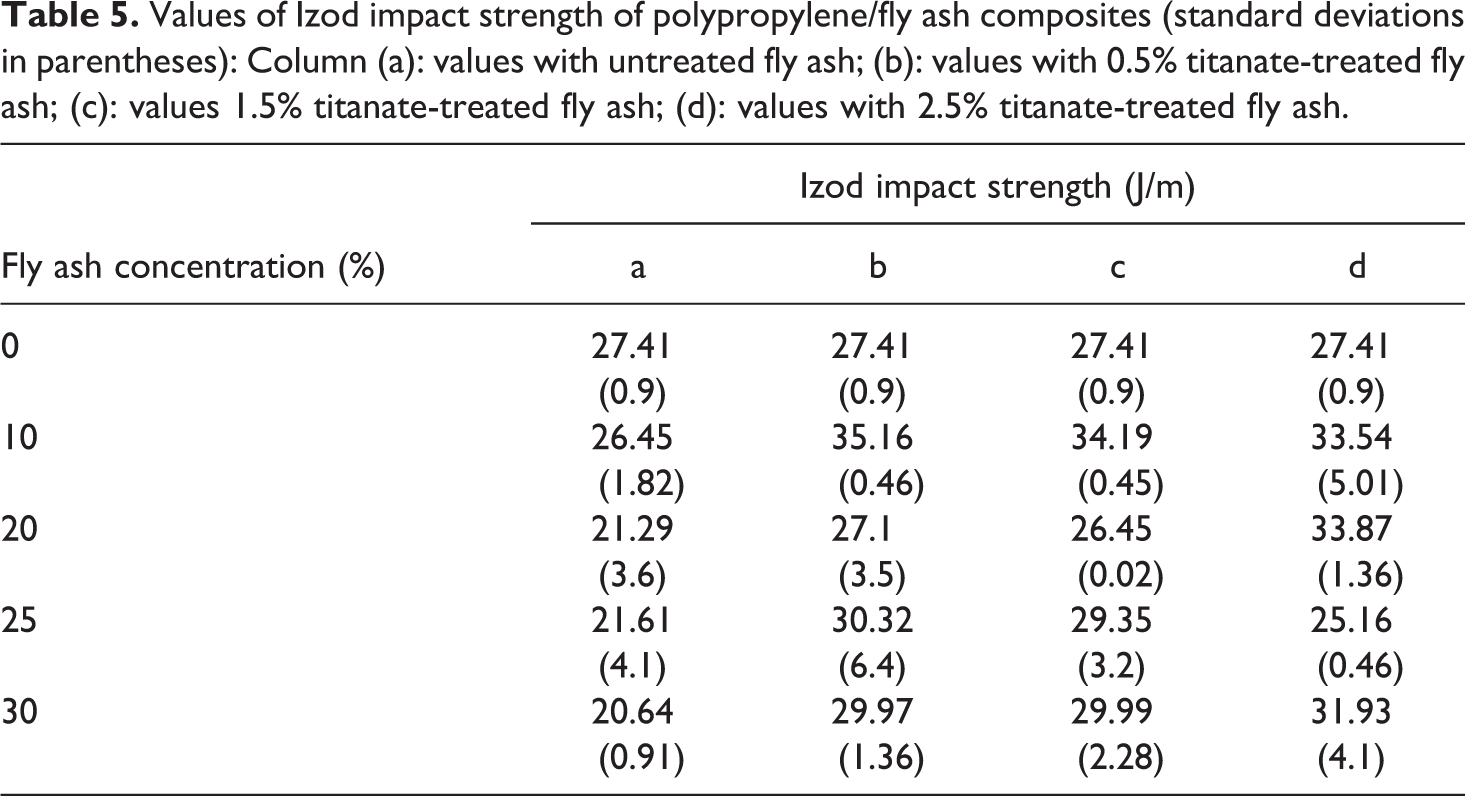
Table 5 shows the values of Izod Impact Strength of PP filled with untreated and treated fly ash composites. From the Table 5, it is seen that the impact strength of the untreated fly ash–filled PP composites decreased with increased filler content. The decrease in the values of impact strength is moderate up to 10% and rapid at higher loadings, which may be due to spherical rigid nature of the filler. The impact performance of the treated fly ash–filled PP composites showed significant improvement compared to the untreated filled compositions and the PP at all filler concentrations. The effect of 0.5 and 1.5% showed better performance at lower loadings of fly ash, while 2.5% coupling agent showed better performance at higher loadings of fly ash. The above-mentioned results have also supported the improvement in wetting and dispersion of treated fly ash with PP matrix as compared to untreated fly ash with PP matrix. The trend in variation in Izod impact strength of PP filled with untreated and treated fly ash as a function of content of fy ash (wt%) is presented in Figure 6. The above results indicated that all loadings of fly ash modification of the surface properties by the titanate-coupling agent led to effective adhesion between filler and polymer and helped to improve the proper distribution of the fly ash in PP matrix, which was supported by the trend in εb of the composites.
Values of Izod impact strength of polypropylene/fly ash composites (standard deviations in parentheses): Column (a): values with untreated fly ash; (b): values with 0.5% titanate-treated fly ash; (c): values 1.5% titanate-treated fly ash; (d): values with 2.5% titanate-treated fly ash.
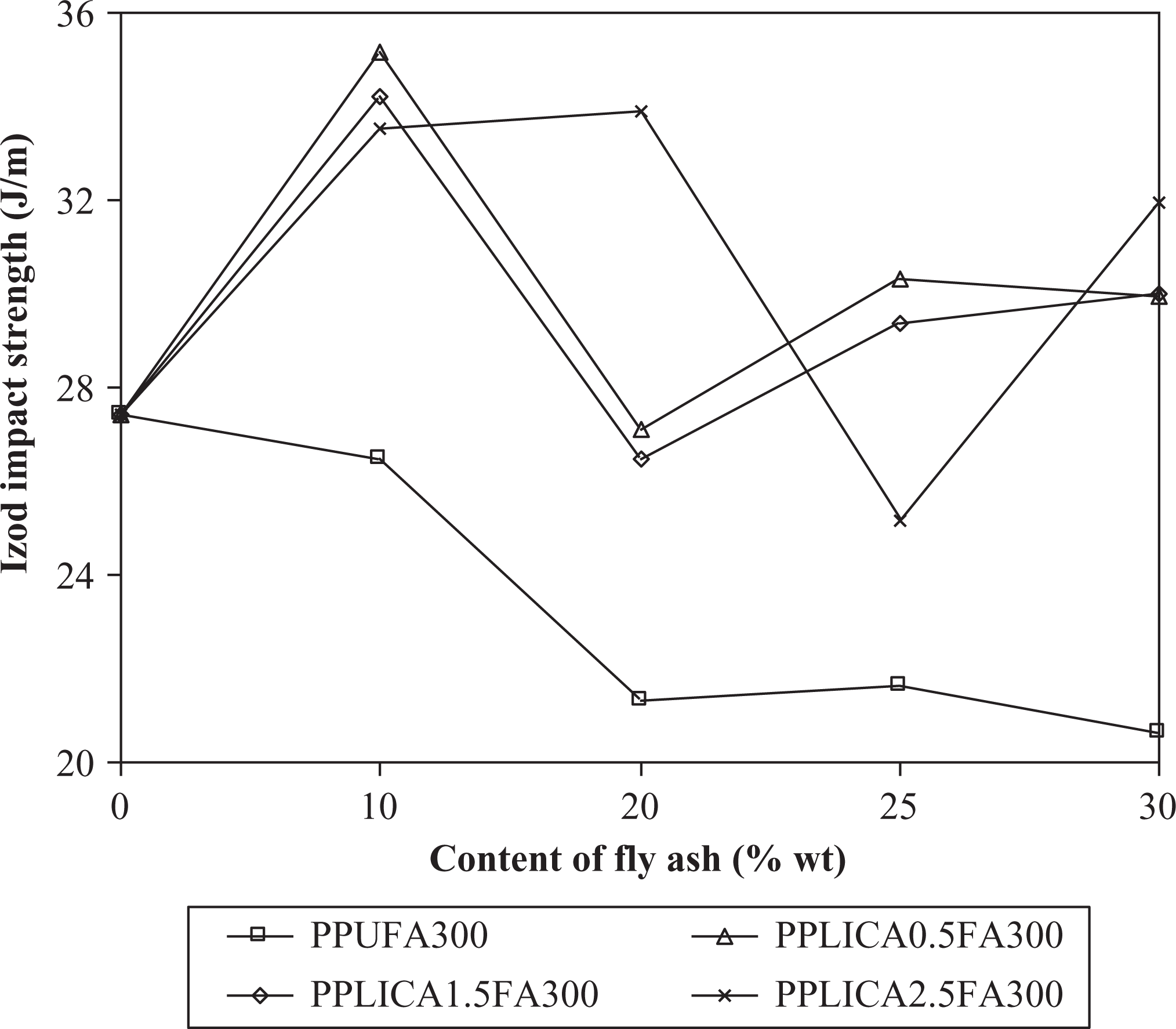
Variation in Izod impact strength of polypropylene/untreated fly ash (PPUFA300); polypropylene/0.5% titanate-treated fly ash (PPLICA0.5FA300); polypropylene/1.5% titanate-treated fly ash (PPLICA1.5FA300); polypropylene/2.5% titanate-treated fly ash (PPLICA2.5FA300) composites against content of fly ash (wt%).
Thermal properties
Values of VST for all untreated and treated fly ash–filled PP composites are shown in Table 6. VST may be taken as the material ultimate use temperature for a short period of time. From Table 6, it is observed that the values of VST increased with increase in filler content and the values for titanate-coupling agent–treated fly ash–filled composition showed much better improvement than untreated fly ash–filled PP composition, which showed better adhesion and proper distribution of treated fly ash in PP at higher loading of the fly ash. The trend in VST of all filled compositions also supported the variation in εb values of the untreated and treated fly ash–filled compositions. The effect of 0.5 and 1.5% showed better performance at lower loadings of fly ash, while 2.5% coupling agent showed better performance at higher loadings of fly ash. The value of VST also showed the improvement with increase in the fly ash content. It indicates that fly ash fillers are beneficial to improve the heat resistance of the polymer matrix. The trend in variation in VST of PP filled with untreated and treated fly ash as a function of content of fly ash (wt%) is presented in Figure 7.
Values of Vicat softening point or temperature of polypropylene/low-density fly ash composites.a
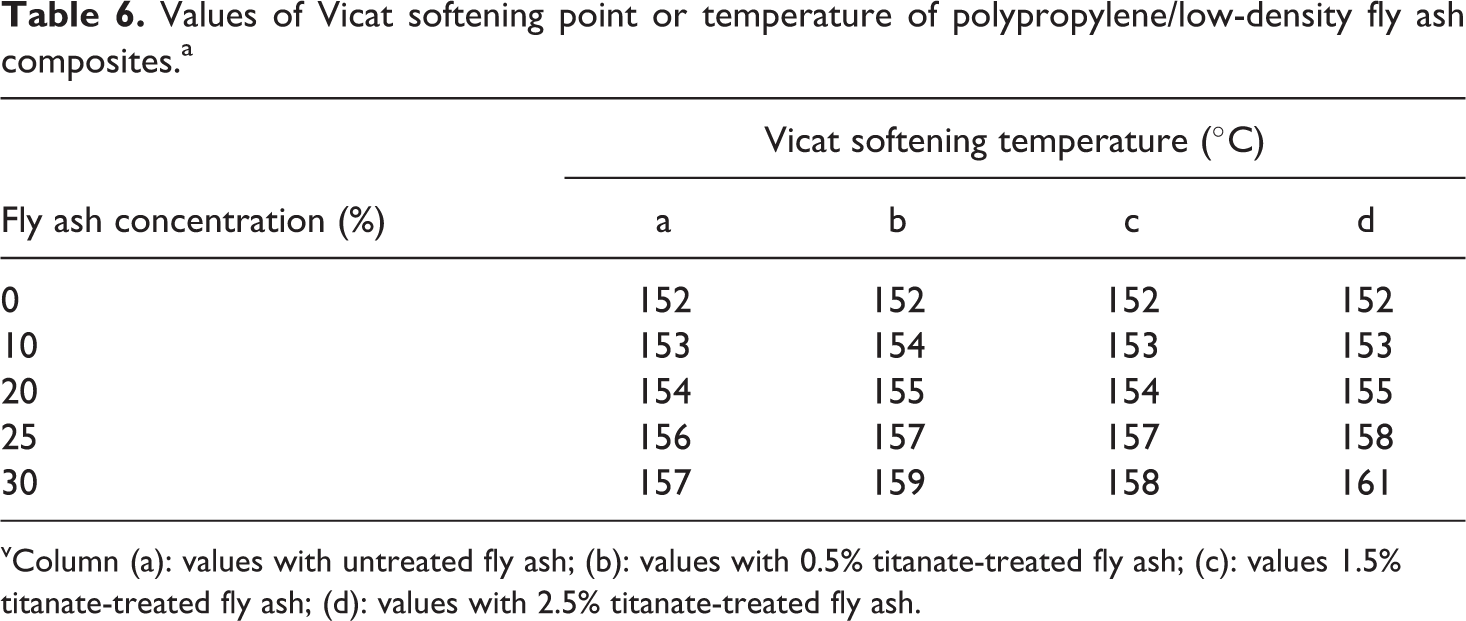
vColumn (a): values with untreated fly ash; (b): values with 0.5% titanate-treated fly ash; (c): values 1.5% titanate-treated fly ash; (d): values with 2.5% titanate-treated fly ash.
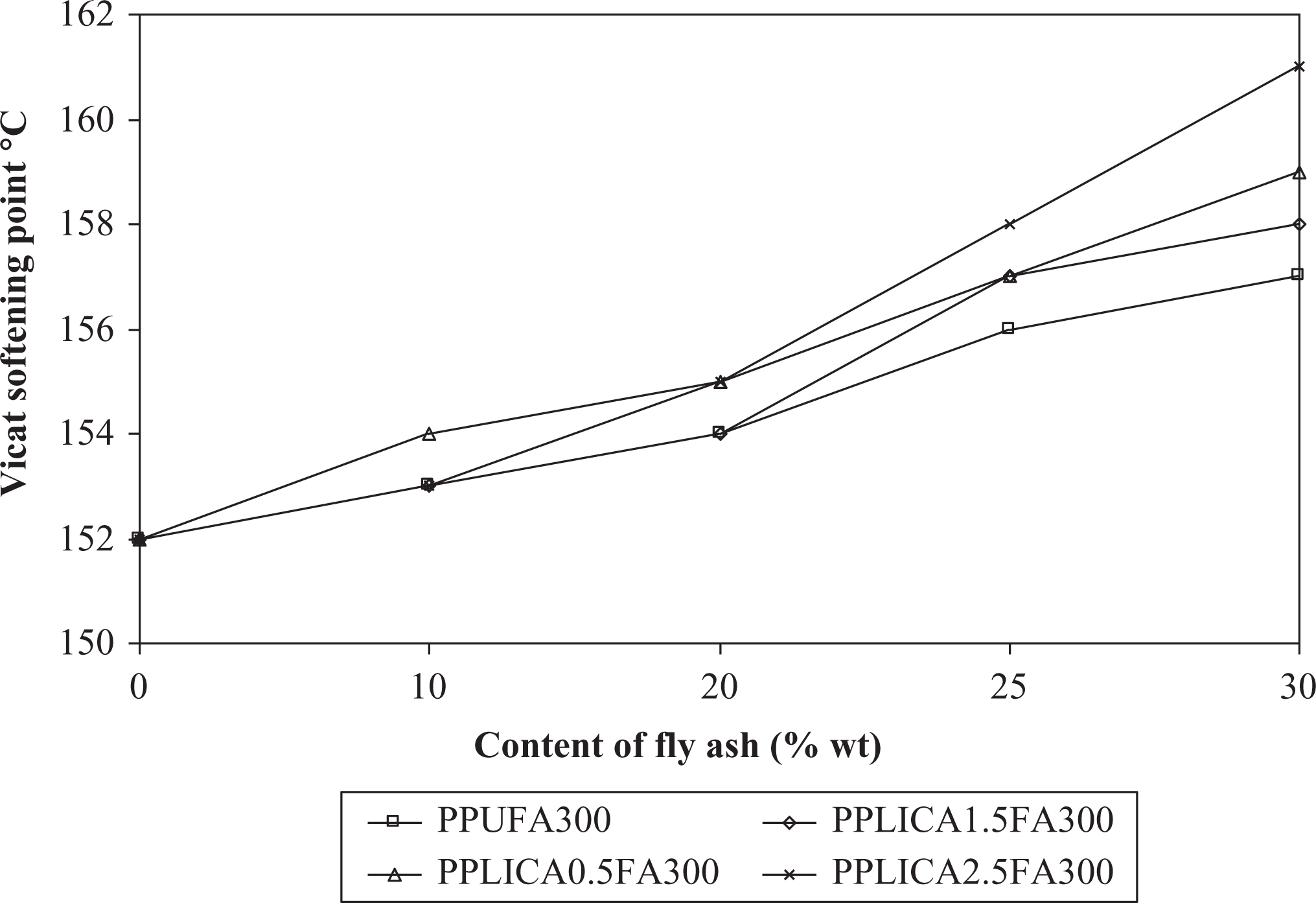
Variation in Vicat softening point of polypropylene/untreated fly ash (PPUFA300); polypropylene/0.5% titanate-treated fly ash (PPLICA0.5FA300); polypropylene/1.5% titanate-treated fly ash (PPLICA1.5FA300); polypropylene/2.5% titanate-treated fly ash (PPLICA2.5FA300) composites against content of fly ash (wt%).
Heating and cooling scans of the PP and PP filled with 20 wt% of untreated and titanate-coupling agent–treated fly ash (300 mesh) composites are shown in Figures 8 and 9, respectively. Table 7 reports the enthalpy of melting, melting temperature, enthalpy of crystallization, and crystallization temperature of PP and PP filled with 20 wt% of untreated and titanate-coupling agent–treated fly ash (300 mesh) composites. Enthalpy of heating was found to be least for 20 wt% of untreated fly ash–filled PP composite and started increasing with treated fly ash–filled PP composites. The values of melting temperature and crystallization temperature for titanate-coupling agent–treated fly ash–filled composition showed marginal change compared to untreated fly ash–filled PP composition.
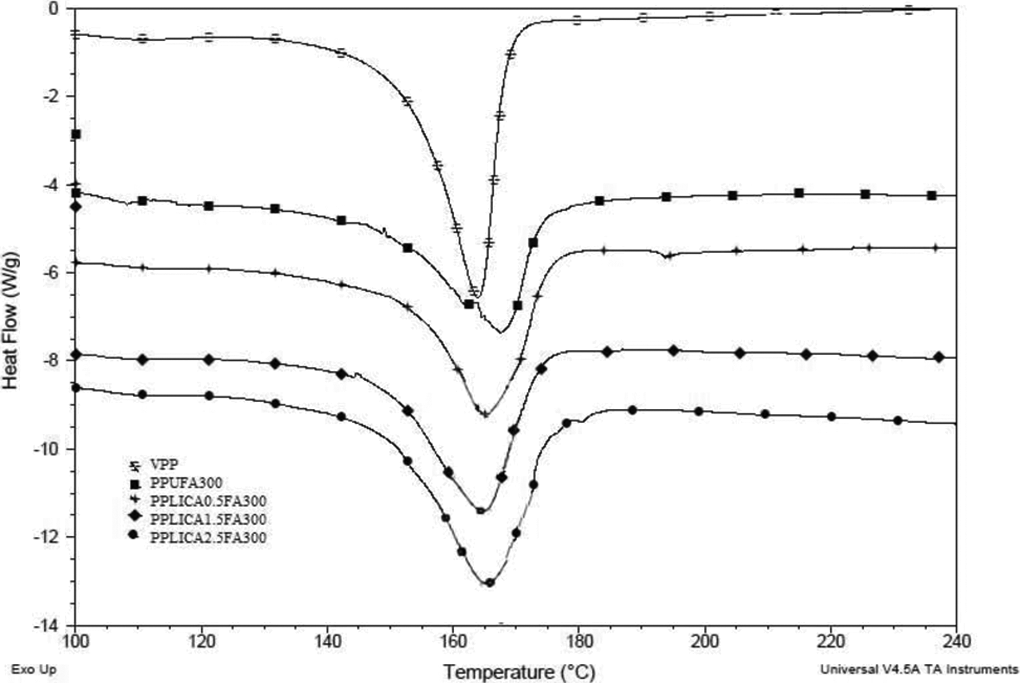
Heating scan of virgin polypropylene and polypropylene filled with 20% untreated and 0.5, 1.5, and 2.5% titanate fly ash (300 mesh) composites.
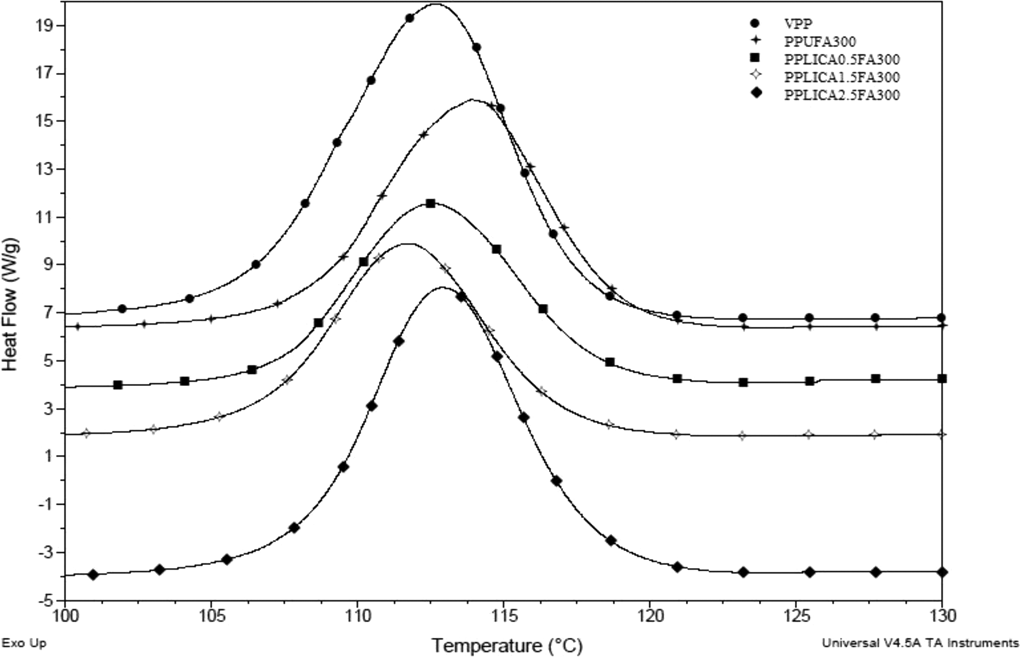
Cooling scan of virgin polypropylene and polypropylene filled with 20% untreated and 0.5, 1.5, and 2.5% titanate fly ash (300 mesh) composites.
Values of thermal properties of polypropylene/20% untreated and treated low-density fly ash composites.
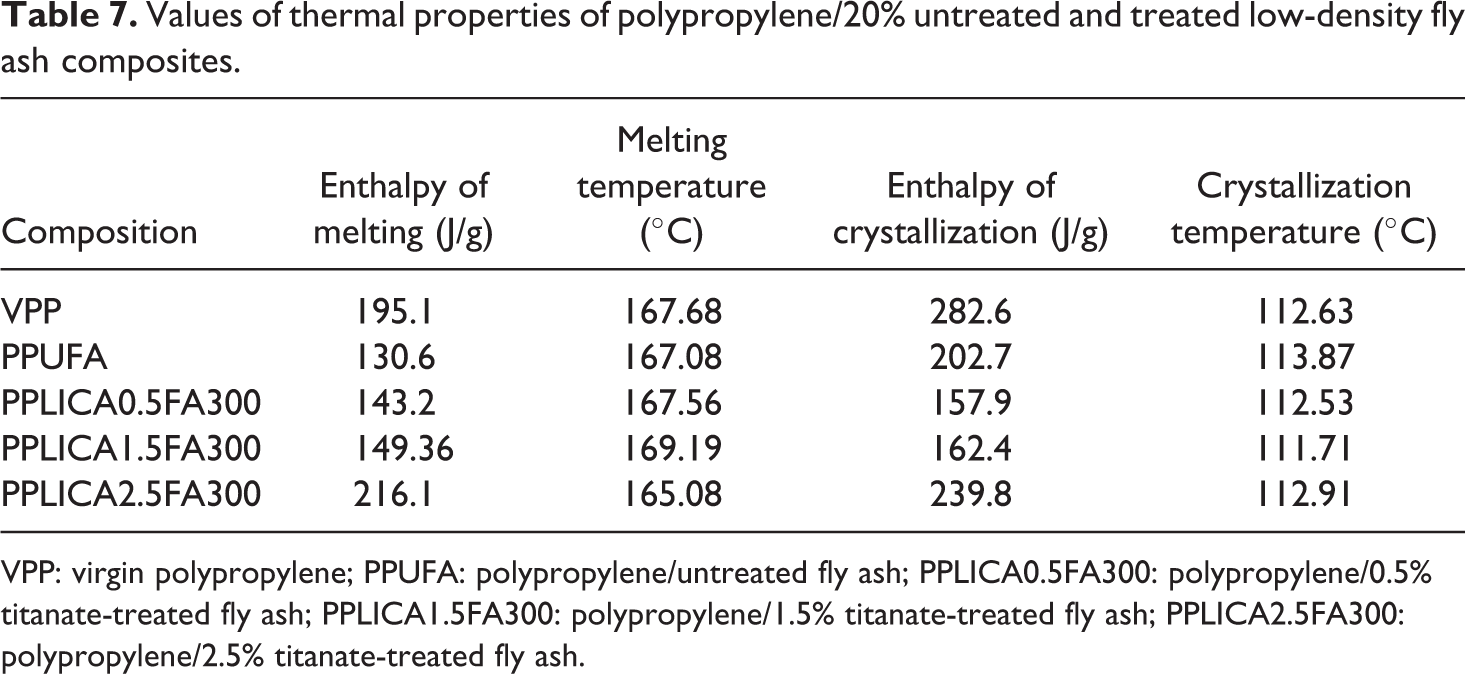
VPP: virgin polypropylene; PPUFA: polypropylene/untreated fly ash; PPLICA0.5FA300: polypropylene/0.5% titanate-treated fly ash; PPLICA1.5FA300: polypropylene/1.5% titanate-treated fly ash; PPLICA2.5FA300: polypropylene/2.5% titanate-treated fly ash.
Morphology of PP/titanate-coupling agent–treated/fly ash composites
The SEM micrographs of fractured surface of PP filled with 20 wt% of untreated and titanate-coupling agent–treated fly ash (300 mesh) compositions obtained at a magnification range of 200, 500, and 1000×, which were used to study the dispersion and adhesion between filler and polymer are presented in Figures 10 –13, respectively. From the figures, it is seen that surface modification of the fly ash helped to improve the dispersion and interfacial bonding between fly ash and PP. The untreated fly ash–filled composite showed poor dispersion and particle agglomeration within fracture surface. It is observed that the polymer matrix is insufficient to encapsulate the individual fly ash filler particles. It revealed the presence of voids and denuded fly ash particles that resulted in poor adhesion between PP matrix and fly ash particles. It is also observed that the treatment of fly ash resulted in improved adhesion at the fly ash surface and PP matrix and proper encapsulation of the individual fly ash filler particles by the polymer matrix.
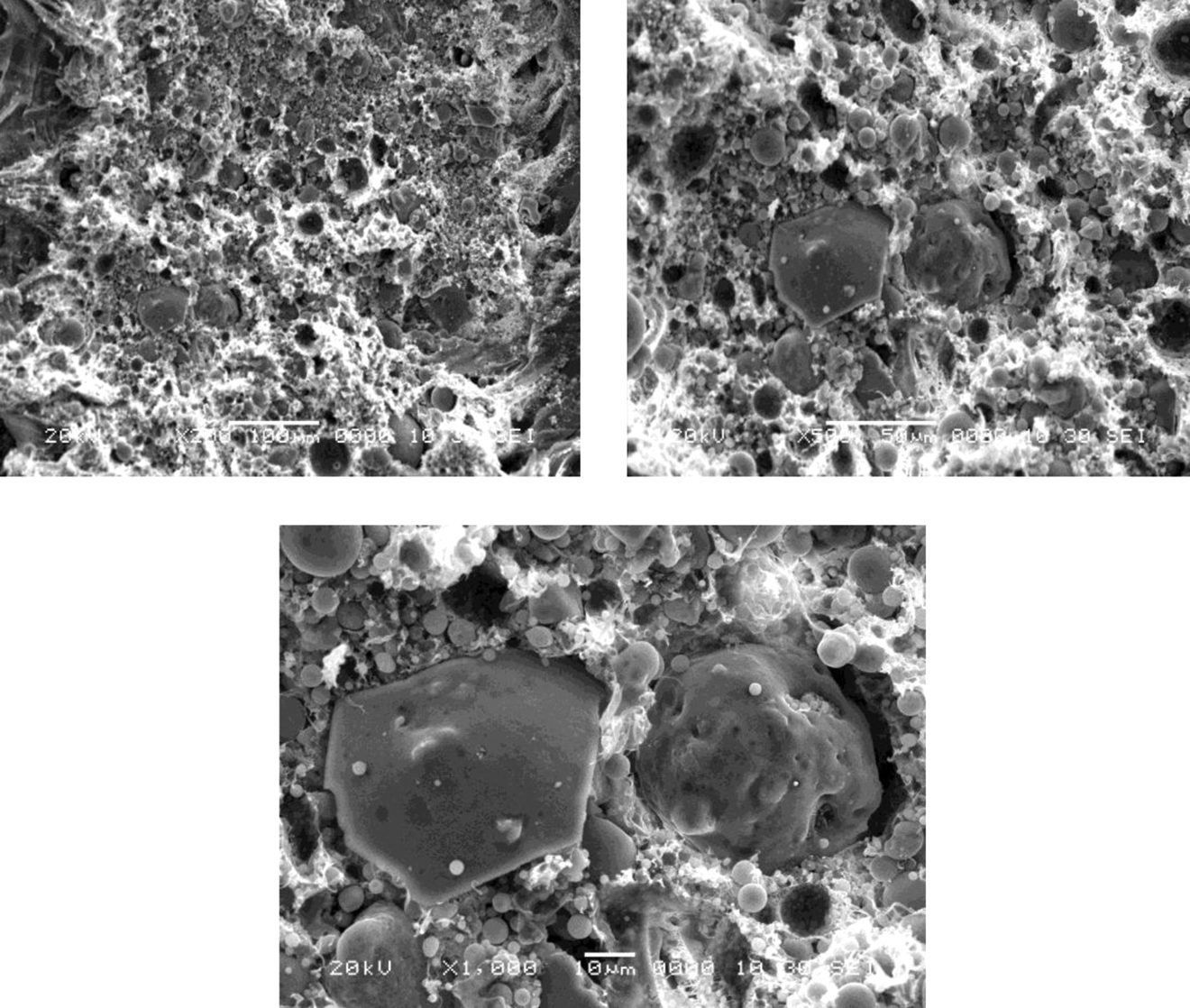
SEM micrograph of fracture surface of polypropylene/untreated Fly ash (300 mesh) (magnification: 200, 500, and 1000×) composites. SEM: scanning electron microscopy.
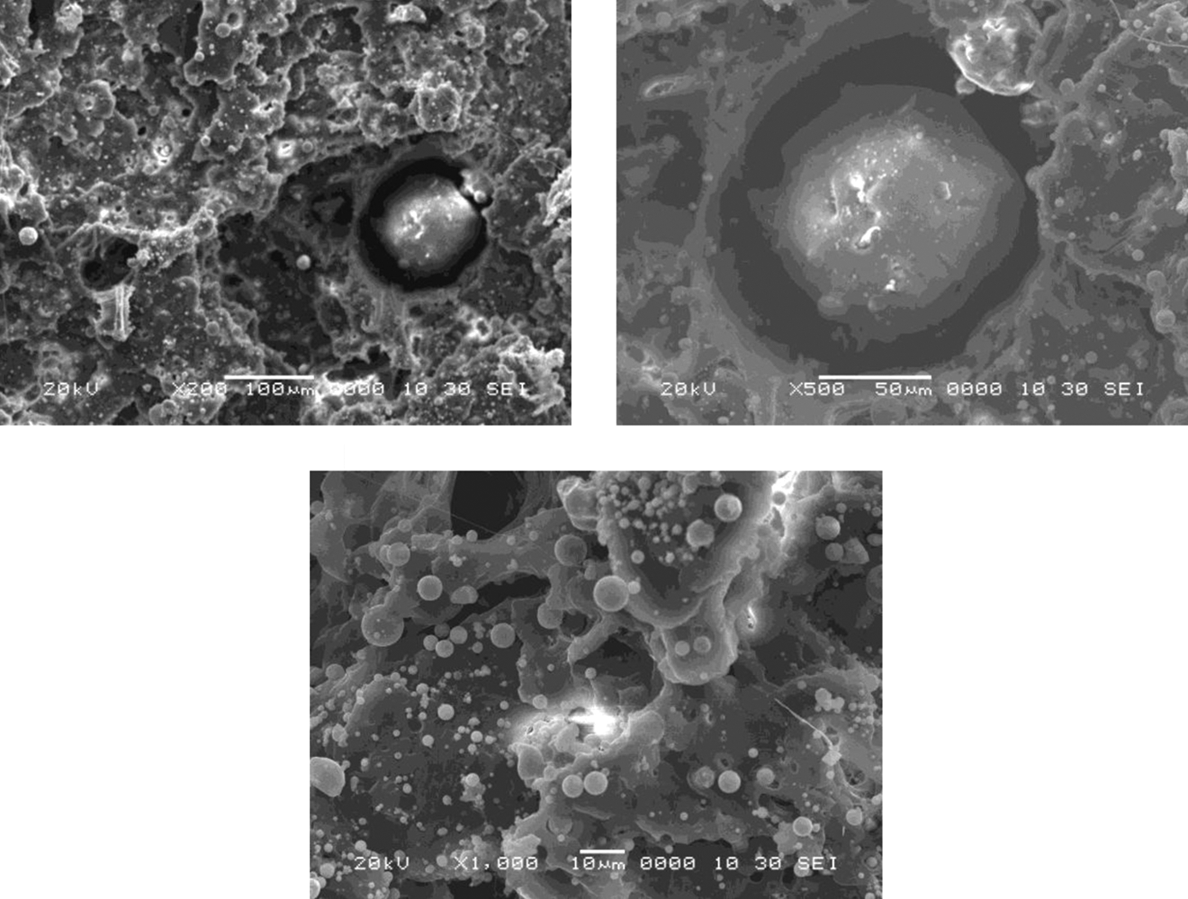
SEM micrograph of fracture surface of polypropylene/0.5% titanate-treated fly ash (300 mesh) (magnification: 200, 500, and 1000×) composites. SEM: scanning electron microscopy.
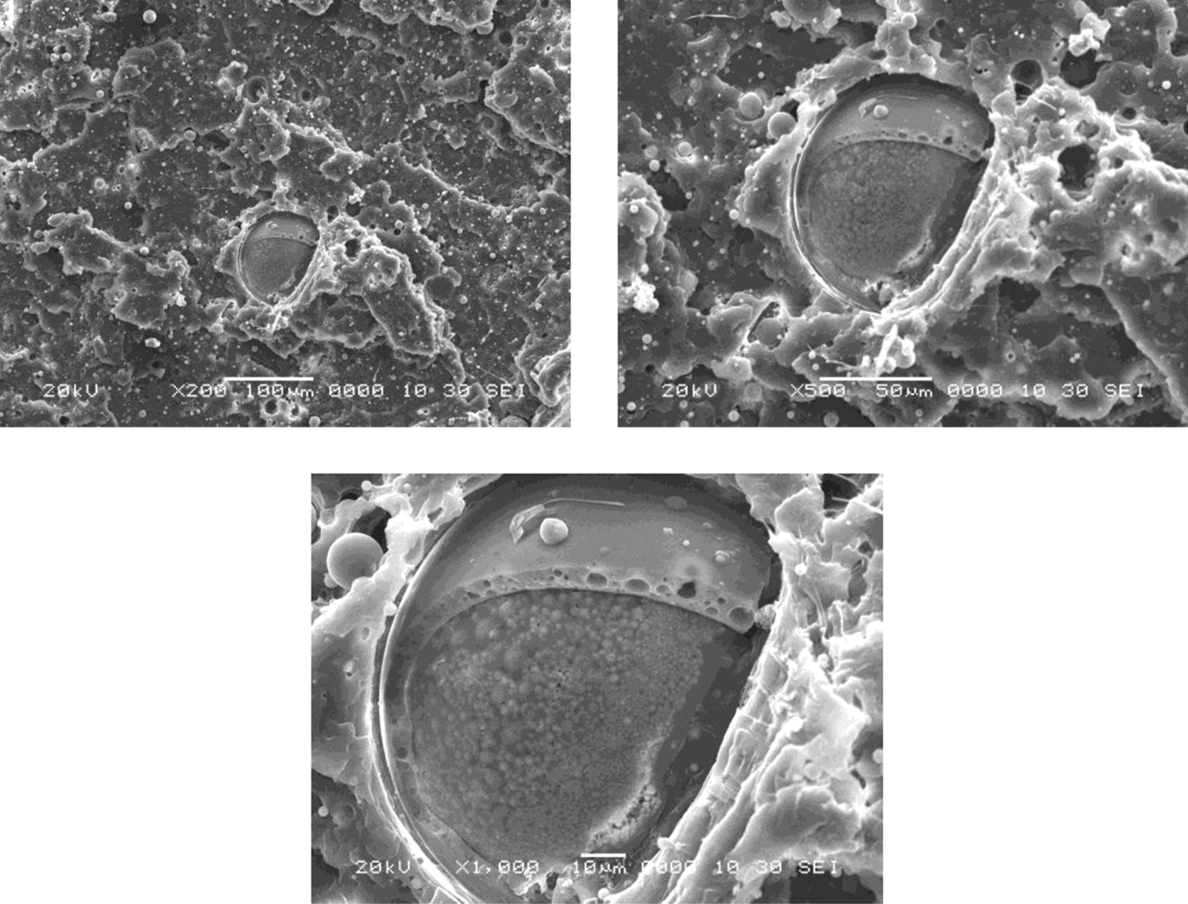
SEM micrograph of fracture surface of polypropylene/1.5% titanate-treated fly ash (300 mesh) (magnification: 200, 500, and 1000×) composites. SEM: scanning electron microscopy.
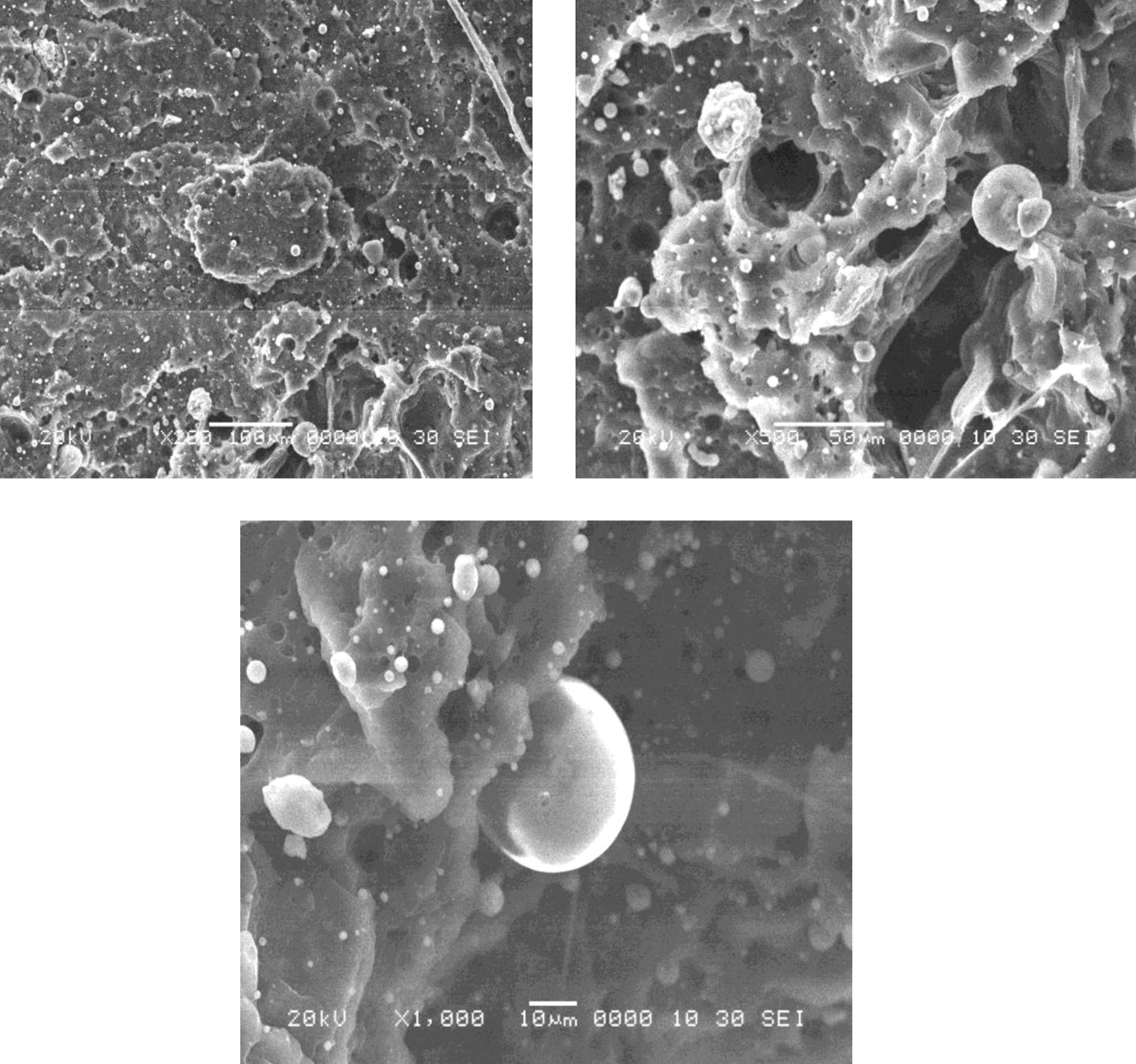
SEM micrograph of fracture surface of polypropylene/2.5% titanate-treated fly ash (300 mesh) (magnification: 200, 500, and 1000×) composites. Step I: reaction between titanate coupling agent and fly ash (surface). Step II: reaction between surface-modified fly ash and polypropylene chain. SEM: scanning electron microscopy.
Mechanism of polymer–filler interaction
A mechanism of polymer (PP)–filler (fly ash) interaction due to the incorporation of LICA 38 is shown in two steps as step I—reaction between titanate-coupling agent and fly ash (surface) and step II—reaction between surface-modified fly ash and PP chain. According to Figure 14, a single molecule of LICA 38 can couple with one olefinic unit of polymer and also two –OH groups of fly ash, resulting in an increased polymer–filler interaction.
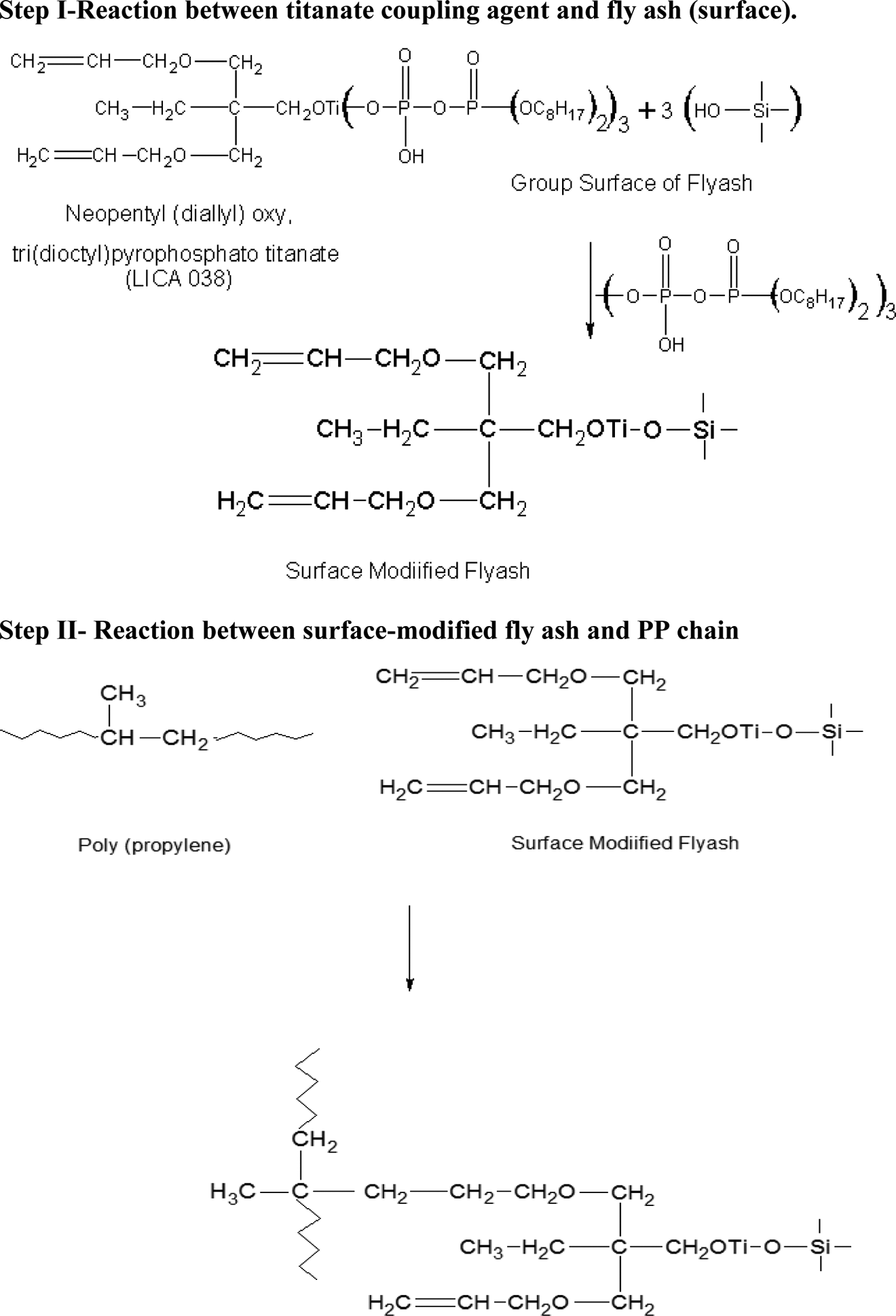
Reaction of titanate-coupling agent between the filler and polypropylene matrix.
Conclusions
Based on these experimental results, some conclusions can be drawn as follows. The effect of 0.5 and 1.5% titanate-coupling agent showed better performance at lower loadings of fly ash, while 2.5% titanate-coupling agent showed better performance at higher loadings of fly ash.
The addition of untreated fly ash in PP led to reduction in σy, σb, and percentage elongation values drastically at higher loading, whereas upto 10 wt% loading gave comparable performance as that of PP matrix. The incorporation of fly ash into PP led to more brittle and weaker materials, as both σb and ∊b significantly decreased. The σy and σb values of treated fly ash–filled PP composites are higher upto 20 wt% as compared to untreated fly ash–filled compositions. But at more than 20%, the surface modification of the fly ash led to marginal improvement in the above values, which supported improvement in the interaction between polymer matrix and filler particle. The rate of reduction of the tensile σy and σb is higher in case of untreated fly ash–filled PP composites as compared to treated fly ash–based PP composites at all the filler loadings. The treated fly ash–based composites showed moderate higher stiffness compared to that of untreated fly ash–filled PP composites at corresponding filler levels. The data for untreated fly ash filled–PP composites lies in between the curves with K = 0.6–0.95, while the data for treated fly ash with titanate-based coupling agent–filled PP composites lies closer to the curve with K = 0.95. The data for untreated and treated fly ash–filled PP composites lie in between the curves with θ = 45–90°. It is evident that titanate-based coupling agent–treated fly ash showed marginal improvement in the adhesion parameter than that of the untreated fly ash with PP matrix. The impact performance of the treated fly ash–filled PP composites showed significant improvement as compared to untreated filled compositions and PP at all filler concentration. The value of VST also showed improvement with increase in the fly ash content. It indicates that fly ash fillers are beneficial to improve the heat resistance of the polymer matrix.
The untreated fly ash–filled composite showed poor dispersion and particle agglomeration within fracture surface. It is observed that the polymer matrix is insufficient to encapsulate the individual fly ash–filler particles. It revealed presence of voids and denuded fly ash particles, which resulted in poor adhesion between PP matrix and fly ash particles. It is observed that due to the treatment of fly ash there is improved adhesion at the fly ash surface and PP matrix and proper encapsulation of the individual fly ash filler particles by the polymer matrix.
Footnotes
Acknowledgements
Authors sincerely thank to the Honorable Director, Prof. (Dr.) Vishwanath D. Karad, MAEER’s, Maharashtra Institute of Technology, Pune for his constant encouragement and support. Prof. (Dr.) L. K. Kshirsagar, Principal, MAEER’s, Maharashtra Institute of Technology, Pune; Mr. Ashok M. Bhagat, Proprietor of Praj Laboratory, Kothrud, Pune; Dr. V. A. E. Shaikh, Mitesh Patel, Meenali Parsekar and Nikesh Samarth Maharashtra Institute of Technology, Pune, who in various ways contributed to the completion of this study.
Declaration of Conflicting Interests
The author(s) declared no potential conflicts of interest with respect to the research, authorship, and/or publication of this article.
Funding
The author(s) received no financial support for the research, authorship, and/or publication of this article.