



Abstract
Linear and nonlinear (in both steady and transient shear flows) rheological properties of polyamide 6/acrylonitrile–butadiene–styrene (PA6/ABS) nanocomposite blends have been investigated. Characterization of nanocomposite samples morphology by scanning electron microscopy revealed that with increasing nanoclay loading, size of dispersing phase droplets decreases significantly and their uniformity improved considerably. Transmission electron microscopy observations clearly display a coexistence of intercalate and exfoliate structure for nanoclay in the polymer-blend nanocomposite. On the other hand, we see that the tactoids are collected of a few silicate layers and possibly also of a single silicate. In other words, the results on rheological properties indicated that overshoots were observed for the start-up tests after different shear rates and delay times. Also, the results showed that the height of these overshoots increased with the applied shear rate and delay time. In addition, the overshoots are highly dependent on the network structure of the blends, and the magnitude of the overshoots increases with increasing nanoclay content. Hence, at very short delay time, the transient shear viscosity does not display any overshoot, while with increment in the delay time, the overshoot appears and increases as the delay time increases. Presented results revealed that increment in the preshearing rate decreases elastic and increases viscose behavior of nanocomposite samples.
Introduction
Blending of polymers having different physical and mechanical properties is an attractive technique to design new polymeric materials with enhanced rheological, physical, and mechanical properties. Over the last decades, polymer blends have gained a high popularity in science and engineering due to their unique properties and their ability to combine the advantages of polymer-blend components for specific applications such as toughness, flame retardancy, and gas permeability resistant enhancement. 1 –4 Reports on various studies indicate that only a few percentage of nanoscale dispersed in a polymeric material can lead to significant increase in physical mechanical properties of matrix that include increased heat resistance, decreased gas permeability, and increased degradability of biodegradable polymers, which is mainly due to high specific surface area and very high aspect ratio of nanoclay and the interfacial interaction between the matrix polymer and layered silicate, as against the conventional composites. 5 Although blending of polymers could improve many properties of polymers, it is always possible to get more enhancements in polymeric blend properties using nanoclay. 6,7
Nanoclay can dramatically affect rheological properties of polymeric systems. Krishnamoorti and Giannelis 8 studied the rheological behavior of end-tethered nylon 6-layered silicate nanocomposites and indicated that at low frequencies, the rheological behavior was almost not related to frequency and showed a solid-like response.
Yongjin and Hiroshi 9 studied co-continuous polyamide 6/acrylonitrile–butadiene–styrene (PA6/ABS) nanocomposites and indicated that greatly exfoliated nanoclay platelets were mainly located in the PA6 phase and rubber particles were only dispersed in the poly(styrene–ran–acrylonitrile) phase. They also reported that the heat resistance of the nanocomposite blends increased with increasing nanoclay content in the nanocomposites due to the co-continuous structure of the blends and the selective location of the nanoclay.
The stress growth at the start-up experiments is well known to investigate the orientation and orientation distribution of fibers in polymer systems due to shear flow. 10 Ramazani et al., 11 Keshtkar et al., 12 and Eberle et al. 13 reported that the transient viscosity measurements of short fiber content in a polymer melt indicate an overshoot that increases with the amount of fiber. First, the orientation of the fibers is isotropic, and under shear flow, the fibers orient in the direction of shear flow. When the flow is applied in the same direction, the viscosity of its previous constant value is obtained. 14
Eslami et al. 15 studied the linear and nonlinear rheological properties of poly(butylene succinate-co-butylene adipate) and organically modified montmorillonite have been investigated. They showed that linear viscoelastic properties indicate a low-frequency plateau in the storage modulus. They also reported that transient measurements showed increase in the amplitude of the observed overshoot for the shear stress and the normal stress differences with rising shear rate and/or clay concentration.
Dijkstra et al. 16 studied the orientation behavior of multiwall carbon nanotubes in polycarbonates in simple shear flow and indicated that overshoot in the start-up shear experiment increases with increasing shear rates. Also, they reported that steady state shear measurements display a pronounced shear-thinning response.
Solomon et al. 17 investigated polypropylene/montmorillonite nanocomposite systems and indicated that the stress overshoot amplitude is a function of the rest time. Additionally, the transient stresses relate to the applied strain and clay content. Also, they concluded that the stress overshoots were dependent on particle orientations and destroyed the network structure.
Due to some attractive properties of PA6/ABS blends, they have found already some important commercial applications, for example, automotive, airspace industries, and electronic devices. 18,19 These applications can still be developed by improving thermal stability and mechanical properties of the blend using layered nanoclay as reinforcing agents. 20
It is clear that the morphology and content of dispersed phase play a key role in the rheological behavior of these polymeric nanocomposites. Moreover, processability and physical mechanical properties of the polymer blend nanocomposites highly depend on the rheological and morphological properties of them. Although many works in literature devoted to rheological investigation of polymer and polymer blend nanocomposites, the transient rheological behavior of PA6/ABS blend nanocomposites and effects of the nanocomposite morphology on the rheological behavior have not been reported yet. So, this work is mainly devoted to the investigation of effects of the nanocomposite components and morphology on the melt rheological and morphological behavior of the PA6/ABS nanocomposites in transient shear flow.
Experimental
Materials
PA6 (Ultramid B3S HP) was supplied by BASF Corporation (Wyandotte, Michigan, USA) with a melt flow index (MFI) of 175 g/10 min at 275°C/5 kg and density of 1.13 g cm−3. ABS (SD-0150 grade) with MFI of 1.7 g/10 min at 200°C/5 kg and density of 1.04 g cm−3 was obtained from Tabriz Petrochemical Company (Tabriz, Iran). Polyethylene–octene elastomer grafted with maleic anhydride (POE-g-MA) with trade name Fusabond MN493D and with density 0.87 g cm−3 was obtained from DuPont Dow Elastomers (Dupont Company, USA). Cloisite® C30B from Southern Clay products Inc. (Gonzales, Texas, USA), which is methyl, tallow, bis-2-hydroxyethyl, quaternary ammonium chloride-modified montmorillonite with basal spacing of 18.5 Å, has been used after drying in a vacuum oven at a temperature of 80°C.
Blends preparation
All the samples were prepared by melt blending in a corotating twin screw extruder (Brabender Technologie, Duisburg, Germany) at a temperature of 235°C and a screw speed of 100 r min−1. Before blending, all components were dried in an oven at 80°C temperature for 24 h. A small amount of Irganox 1010 and Irgafox 168 was added to prevent thermal degradation of the blend components during blending process. The processing conditions were the same for all the samples. The extrudates after granulation were dried and used for the preparation of rheological and morphological samples. The samples’ code and their compositions are presented in Table 1. For polymer blends, the weight ratios of two components have always been taken constant. Therefore, the weight percentage of clay is subtracted from both blend components relative to their weights in the blends.
Samples code and their compositions.
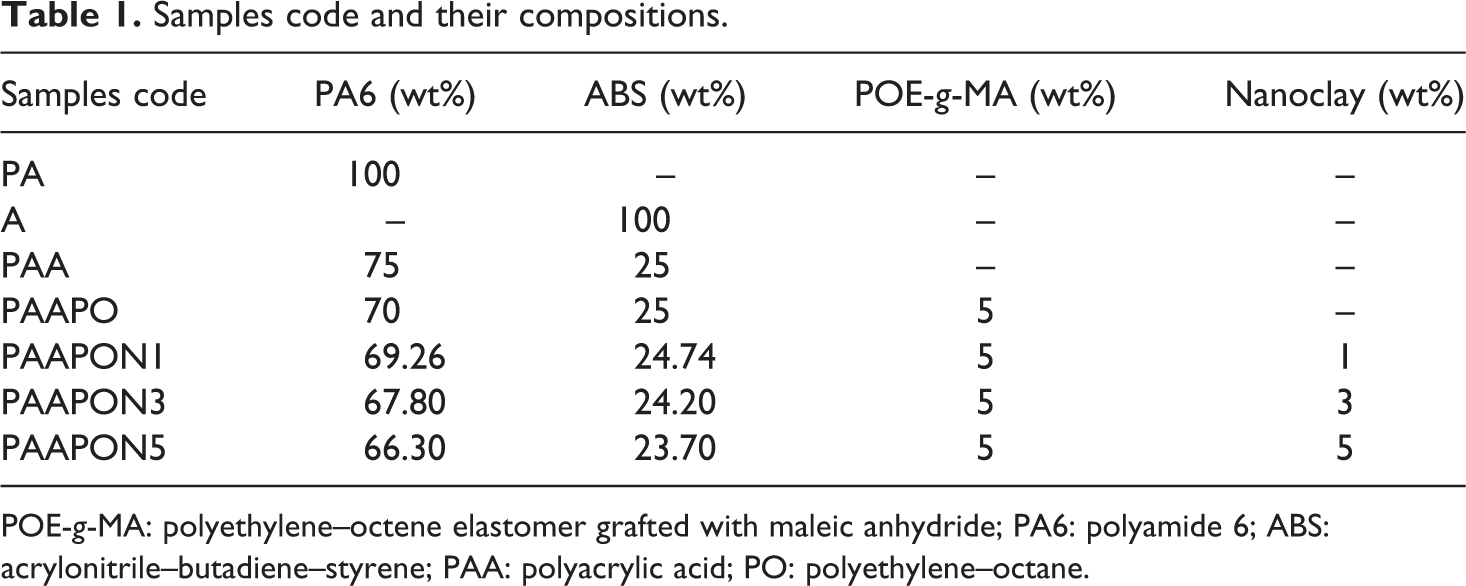
POE-g-MA: polyethylene–octene elastomer grafted with maleic anhydride; PA6: polyamide 6; ABS: acrylonitrile–butadiene–styrene; PAA: polyacrylic acid; PO: polyethylene–octane.
Morphological characterization
The morphology of the nanocomposite samples was determined using scanning electron microscopy (SEM; model VEGA, TESCAN, Czech Republic). First, SEM samples were fractured in liquid nitrogen and then for improving image contrast, they were etched by tetrahydrofuran at room temperature for 48 h to dissolve the ABS phase. Then, the samples were dried in a vacuum oven at the temperature of 80°C for 6 h and coated by a thin layer of gold. After coating, the morphology has been examined using SEM at an accelerating voltage of 20 kV.
The nanoscale structure of the nanocomposite was investigated using transmission electron microscopy (TEM; model 912AB, LEO Electron Microscopy Ltd, Cambridge, UK) to examine the distribution and dispersion of the clay platelets in the nanocomposite blends. The sample was prepared and ultramicrotomed under cryogenic conditions. The TEM images obtained were operated at an accelerating voltage of 120 kV.
Rheological measurements
All rheological measurements were conducted using a stress constant rheometer (Physica MCR 301 model, Osterreich, Austria) with parallel plate geometry of 25 mm diameter. Dynamic strain sweep measurements were performed for all the samples to determine the linear viscoelastic region at constant frequency of 10 rad s−1. Before rheological measurements, all the samples were dried in a vacuum oven at a temperature of 150°C for 20 h.
Results and discussion
SEM measurements
Melt blended immiscible polymer blends possess a complex morphology depending on volume fraction, interfacial tension, and viscosity ratio of the blend components. 21 The SEM images of the neat blend and with compatibilized sample are depicted in Figure 1. Due to the incompatibility of PA6 with ABS, their melt blending in the absence of a suitable compatibilizer could not provide good dispersion of dispersed phase in the PA6 matrix, which can be also seen in the SEM image of the blend sample shown in Figure 1(a). Figure 1(b) shows a SEM micrograph of the blend sample containing 5 wt% of POE-g-MA. It can be seen that introduction of the compatibilizer has reduced dispersed phase particle size and increased interfacial area by increasing the interfacial interaction between two phases. 22 –24 These results may be attributed to the strong interfacial interaction of compatibilizer with blend components and formation of covalent bonds between the POE-g-MA groups and the amino end groups of PA6. Similar results were reported by other studies. 25,26 Therefore, obtaining modified properties from the polymer blends needs enhancement of interfacial adhesion and uniform dispersion of disperse phase which can be provided with compatibilizer application.
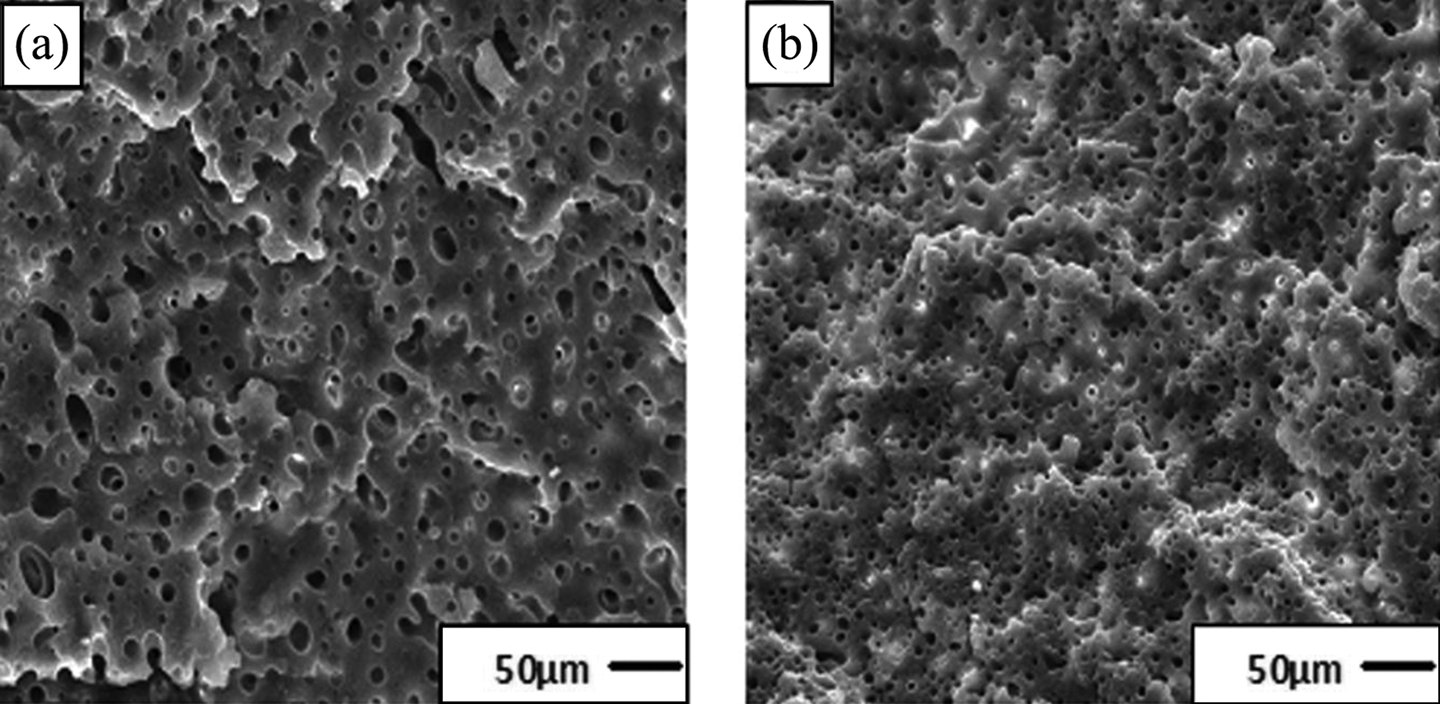
SEM images of PA6/ABS/POE-g-MA/nanoclay blends: (a) PAA and (b) PAAPO. SEM: scanning electron microscopy; PA6: polyamide 6; ABS: acrylonitrile–butadiene–styrene; PAA: polyacrylic acid; PO: polyethylene–octane; POE-g-MA: polyethylene–octene elastomer grafted with maleic anhydride.
Figure 2(a) to (c) indicates SEM micrographs of PA6/ABS nanocomposites with different nanoclay contents. These images show that with increasing nanoclay concentration in the polymeric blends, size of dispersed phase droplets and their nonuniformity significantly reduced.
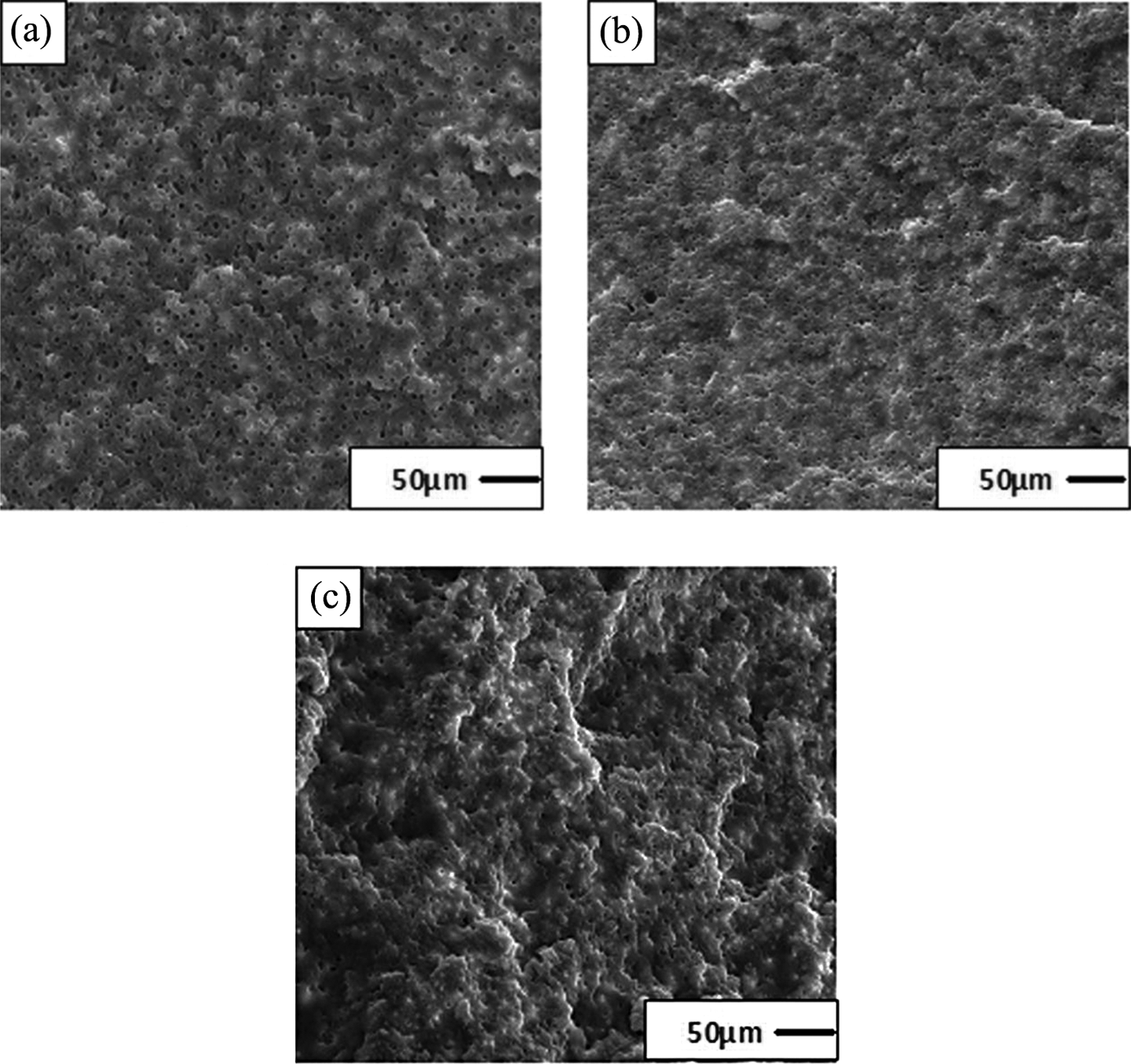
SEM images of PA6/ABS/POE-g-MA/nanoclay blends: (a) PAAPON1, (b) PAAPON3, and (c) PAAPON5. POE-g-MA: polyethylene–octene elastomer grafted with maleic anhydride; SEM: scanning electron microscopy; PA6: polyamide 6; ABS: acrylonitrile–butadiene–styrene; PAA: polyacrylic acid; PAAPON1: Polyamide 6/ acrylonitrile-butadiene-styrene/Polyethylene octane elastomer grafted with maleic anhydride/Nanoclay (1wt%); PAAPON3: Polyamide 6/ acrylonitrile-butadiene-styrene/Polyethylene octane elastomer grafted with maleic anhydride/Nanoclay (3wt%); PAAPON5: Polyamide 6/ acrylonitrile-butadiene-styrene/Polyethylene octane elastomer grafted with maleic anhydride/Nanoclay (5wt%).
TEM investigation
The dispersion of the nanoclay platelets in the nanocomposite blends was investigated by TEM. Figure 3 shows typical TEM images of nanocomposite sample containing 3 wt% nanoclay with different magnifications directly showing dispersion quality of nanoclay layers in the polymer matrix. The white areas characterize the polymer matrix and the dark particles represent cross sections of the stacks and possibly individual silicate layers of nanoclay (Figure 2(a)).
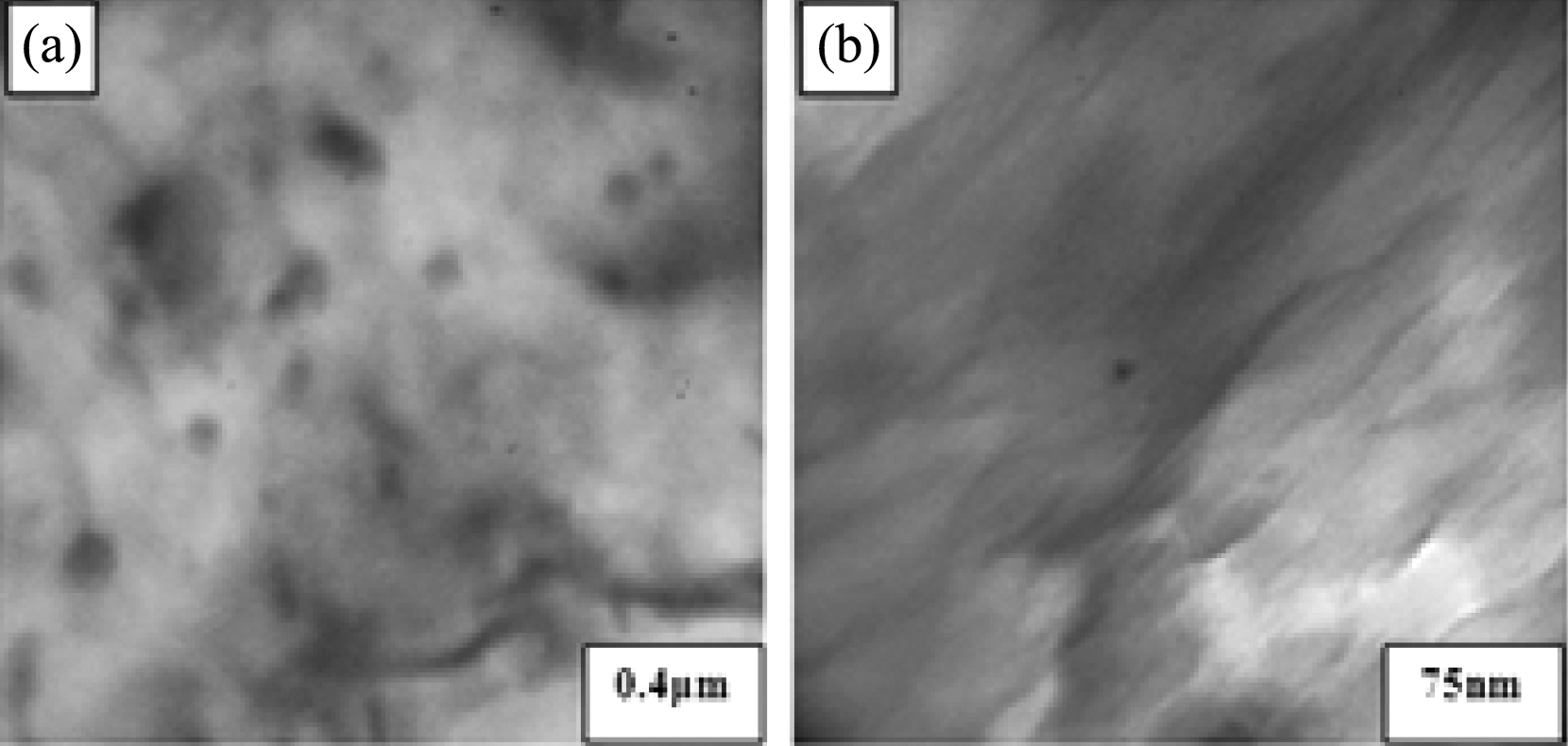
TEM images of PA6/ABS/POE-g-MA/nanoclay (PAAPON3) blends: (a) 0.4 μm and (b) 75 nm. POE-g-MA: polyethylene–octene elastomer grafted with maleic anhydride; TEM: transmission electron microscopy; PA6: polyamide 6; ABS: acrylonitrile–butadiene–styrene.
The high-resolution image of the nanocomposite presented in Figure 2(b) clearly displays coexistence of intercalate and exfoliate structure for nanoclay in the polymer blend nanocomposite. On the other hand, we see that the tactoids are collected for a few silicate layers and possibly also of a single silicate layer. Reports of various studies showed that exfoliated clay platelets indicate remarkable effects on the rheological properties of polymer blends, such as increasing zero shear viscosity and shear-thinning behavior at high shear rate. 27 The rheological data presented in the current study, especially dynamic strain sweep measurements, (see Figure 4) are consistent with TEM micrograph results.
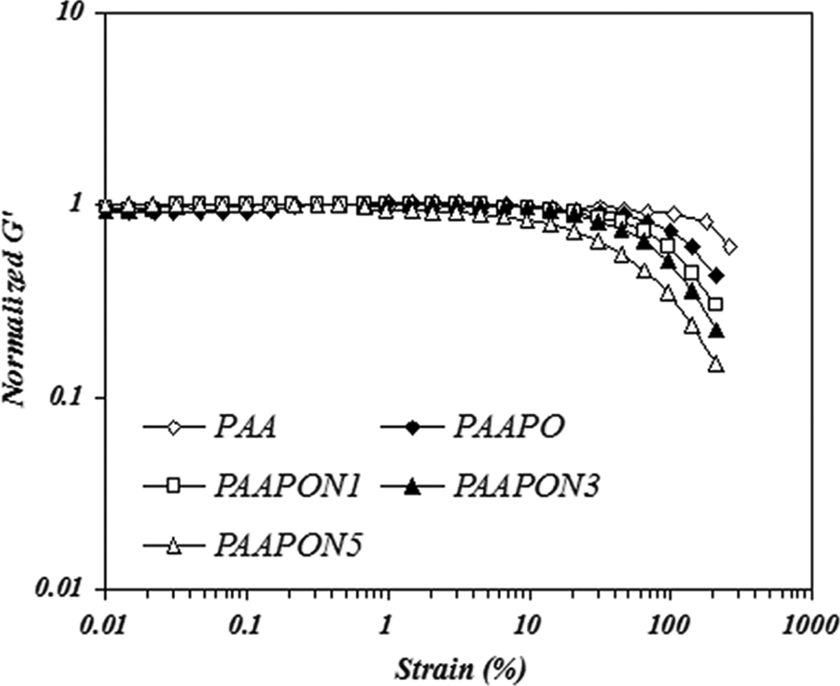
Normalized storage modulus (G′) curves against strain (%) for PA6/ABS nanocomposite blends. PA6: polyamide 6; ABS: acrylonitrile–butadiene–styrene.
Dynamic strain sweep
It is well known that the viscoelastic properties of polymer/nanoclay nanocomposites depend strongly on the flow history and that their structure evolves in time. Structural changes that occur during the thermal annealing process were also observed in other polymer nanocomposite blends. 15 Dynamic strain sweep measurements were performed at the constant frequency of 10 rad s−1 and temperature of 245°C. Figure 4 depicts the plot of normalized storage modulus (G′) versus strain for PA6/ABS nanocomposite blends. It has been seen that the linear viscoelastic region corresponding to the filled polymer blend is very sensitive to the presence of a filler. It is observed that the polyacrylic acid (PAA) sample has the most extended linear viscoelastic region, which decreases with the introduction of compatibilizer and nanoclay content and so Polyamide 6/acrylonitrile-butadiene-styrene/Polyethylene octane elastomer grafed with maleic anhydride/Nanoclay (5%wt) (PAAPON5) sample shows the least extent of viscoelastic region. Therefore, it could be concluded that the addition of compatibilizer and nanoclay content decrease the extent of the linear viscoelastic limit considerably. It seems that introduction of the nanoclay may increase the interfacial interaction between polymer chains and thus causes an increase in the strength of the network nanostructure. It has been already reported that the linear viscoelastic region of polymeric systems is influenced by the formation of various networks such as filler–filler and filler–polymer network, and with an increment in filler concentration, usually the extent of linear viscoelastic region is decreased. 28,29
Effect of shear history
The shear history could significantly affect the rheological behavior of polymeric systems. To study the effects of preshearing on the dynamic rheological behavior of the nanocomposite samples, dynamic rheological behavior of samples are measured after preshearing at different shear rates, and the results are presented in Figures 5 and 6. The small amplitude oscillatory experiments were conducted after removal of shear stress without any delay time. Results show that with increasing preshearing shear rate, the storage modulus and complex viscosity at all frequencies decreased remarkably. These behaviors indicate that the increment in preshearing shear rate decreases elastic and viscose behaviors of nanocomposite sample. This behavior could be attributed to the effects of orientation of the platelet-like tactoids in the shear direction and elimination of the percolation network structure under shear rate. 30 Results shown in Figure 5 represent that elastic modulus of the samples that presheared at the shear rate <0.1 s−1 present a plateau at the very low frequency. It can be concluded that preshearing at 0.1 s−1 could demolish interconnected network structure, which may be present in unsheared samples.
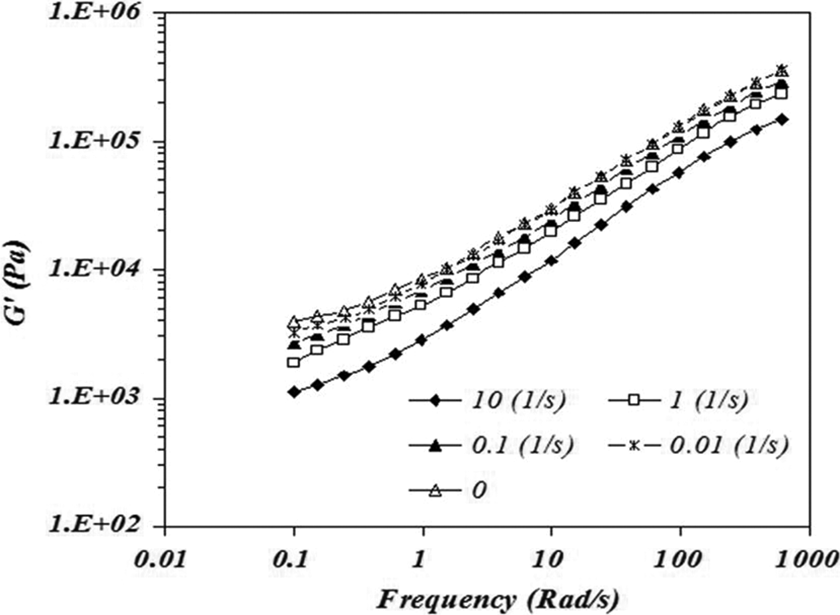
Storage modulus (G′) as a function of frequency after different shear rates for PAAPON3 sample.
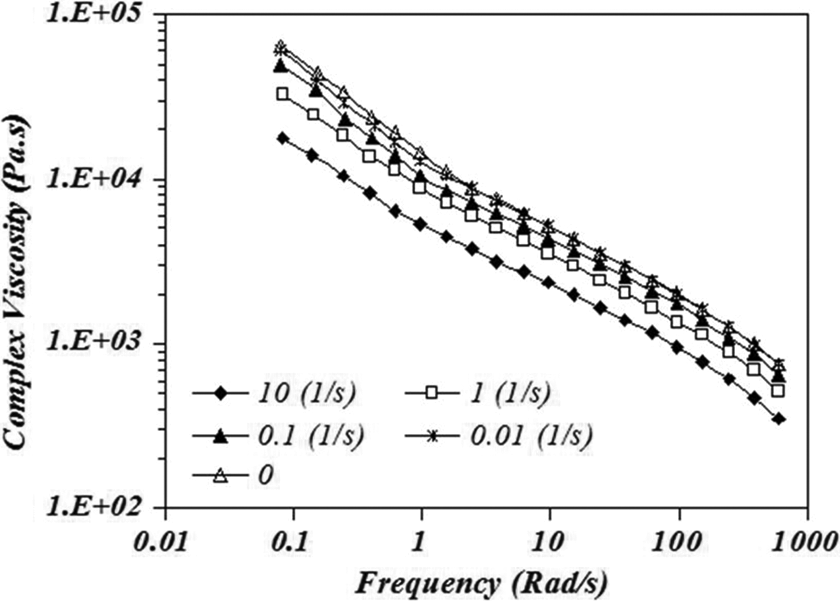
Complex viscosity (η*) as a function of frequency after different shear rates for PAAPON3 sample.
Nonlinear viscoelastic peoperties
Effects of shear rate and the nanoclay loading on transient material functions
In this section, in order to further study the nature of nanostructures, we turn to steady and transient shear flow material functions of polymer matrix and their nanocomposite blends. For steady shear flows, the viscosity can be expressed as functions of the shear rate 
where T is torque. The time-dependent viscosity
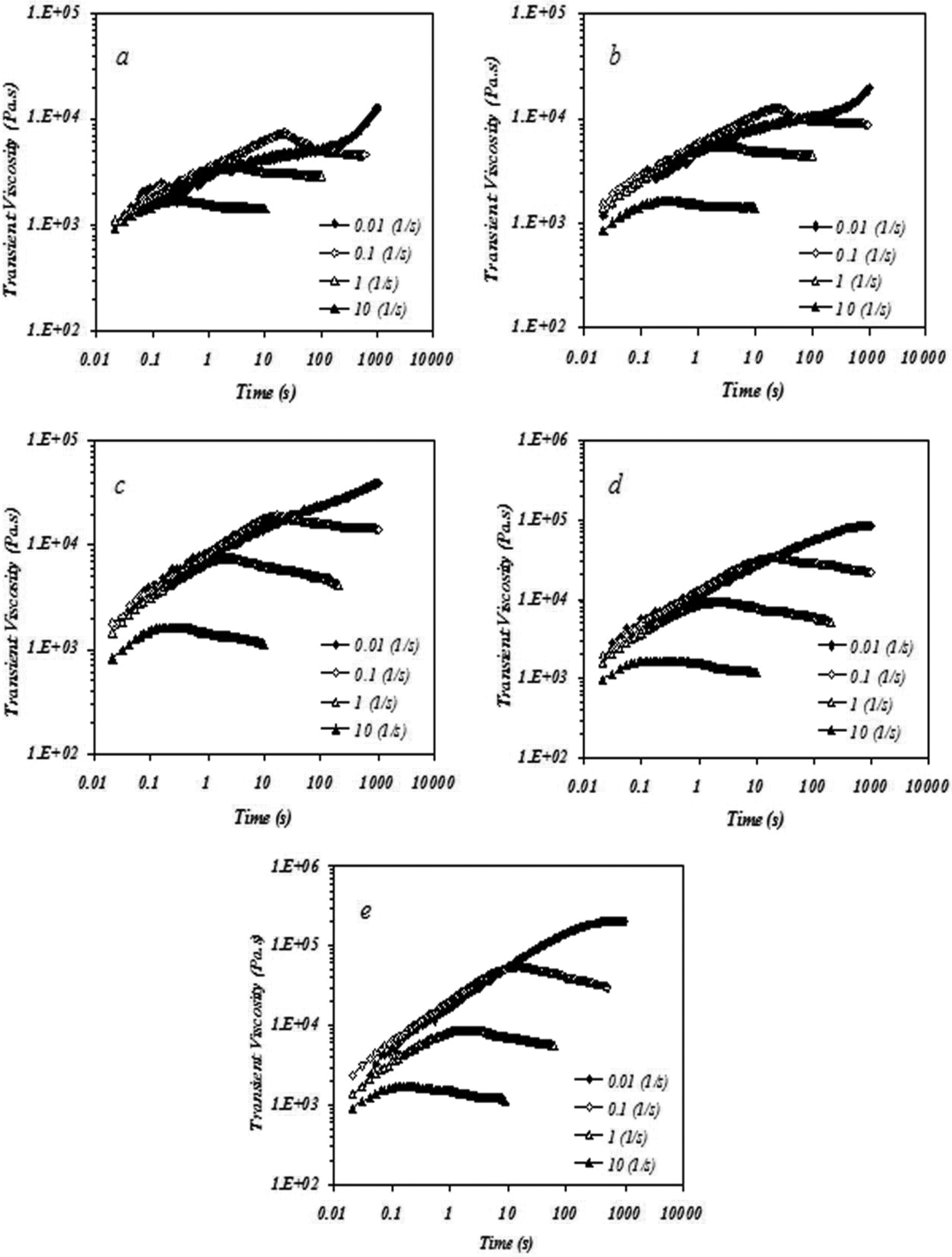
Transient shear viscosity (η +) of the PA6/ABS/POE-g-MA/nanoclay samples at shear rates of 0.01–10 s−1 and temperature of 245°C. (a) PAA, (b) PAAPO, (c) PAAPON1, (d) PAAPON3, and (e) PAAPON5. POE-g-MA: polyethylene–octene elastomer grafted with maleic anhydride; PA6: polyamide 6; ABS: acrylonitrile–butadiene–styrene; PAA: polyacrylic acid; PO: polyethylene–octane.
Figure 7(a) to (e) shows the comparison of the obtained results of the blends with the nanocomposite blends. From the figure, it is depicted that at very low shear rate that approaches steady viscosity value for the blend samples happens at longer time in comparison with the compatibilized blends and their nanocomposites. This behavior should be attributed to the bigger mean average diameter of the dispersed phase droplets in the virgin blend, which needs more time to elongate and rotate than smaller droplets and clay platelets in the compatibilized blend and nanocomposites. As seen, the addition of nanoclay layers leads to an increase in the overall viscosity. Moreover, it is found that an increase in the clay content results in a considerable increase in the viscosity at low shear rates. It has been observed that except for the lowest shear rate (0.01 s−1) an overshoot is observed at relatively short time and then the transient shear viscosity gradually approaches to its steady state values after relatively long time for all samples. 32,33 The amplitude of the overshoot increases with rising the clay content and the time required to obtain the steady state increases as the clay loading increase. So, the steady state of the viscosity also increases with rising clay concentration.
The steady state viscosity of polymer blend and its nanocomposites versus shear rates have been illustrated in Figure 8. As seen, this figure shows that with the introduction of compatibilizer and increment in clay content, steady shear viscosity, especially at very low shear rate, increased considerably. At high shear rates, viscosity of nanocomposites approaches to that of the polymer blend. The slope of the curve of viscosity against shear rate becomes larger with rising clay content at low shear rates leading to yielding behavior. Figure 8 shows that with increment in clay content, the shear viscosity of samples at low shear rate increases considerably and also the slope of shear-thinning region increases. Increase in shear-thinning slope at high shear rate is due to the viscosity of nanocomposites approaching close to that of neat polymer blend. Remarkable increase in the low shear rate viscosity can be attributed to network produced in the presence of nanoclay tactoids where the spectacular decrease in the viscosity at high shear rate should be attributed to orientation of clay tactoids in the flow direction, which can be induced by high shear rate. The phenomena observed at large shear rates are certified to the orientation of nanoclay particles and tactoids that are depending on shear flows. 34,35
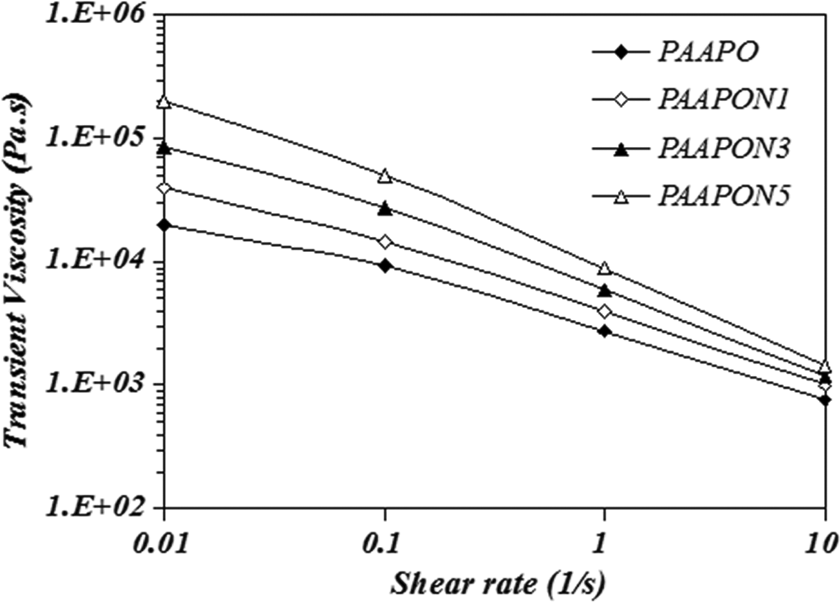
Steady shear viscosity versus shear rate of PA6/ABS nanocomposites. PA6: polyamide 6; ABS: acrylonitrile–butadiene–styrene.
Figure 9 compares the transient shear viscosity as function of time for all the samples at shear rate of 0.1 s−1. Obviously, Figure 9 shows that with increase in nanoclay content, the overshoot increases which could be due to clay platelet physical and mechanical interaction during their orientation in transient shear flow. The obtained results evidently indicate that the dispersed phase particles will be more oriented and less entangled by shear rates at high level of nanoclay, especially at PAAPON5 sample that has 5 wt% of nanoclay. 36 This could be due to reduction of dispersed phase particle size observed in SEM images. Therefore, improvement in the transient shear rate viscosity may be attributed to interconnected aggregates of nanoclay. Increment in overshoot with increment in dispersed phase has been reported by many researchers for both micro- and nanoscale fillers. 37
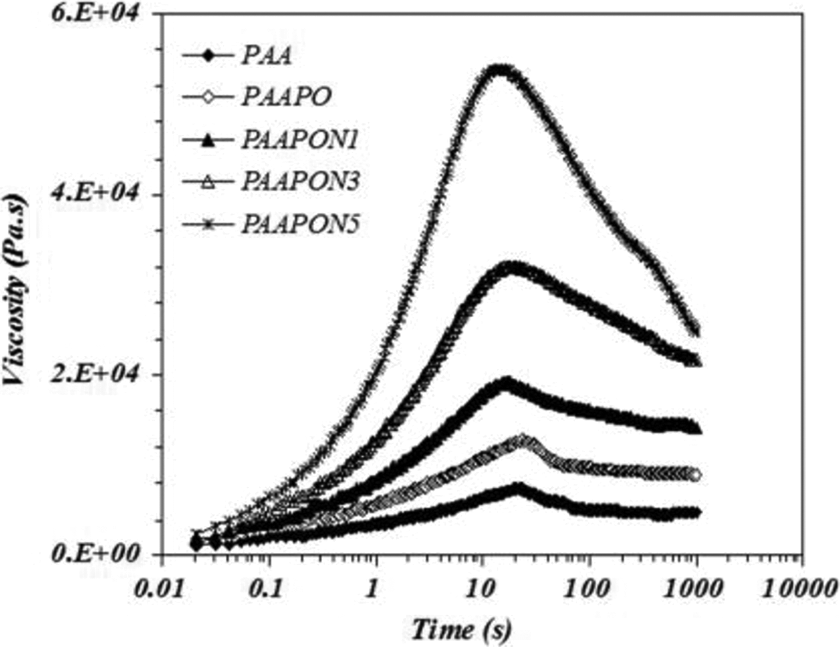
Transient shear viscosity as a function of time for PA6/ABS nanocomposites at shear rate of 0.1 s−1 and temperature of 245°C. PA6: polyamide 6; ABS: acrylonitrile–butadiene–styrene.
Effects of the delay time on transient material functions
Figure 10 shows the normalized transient shear viscosity
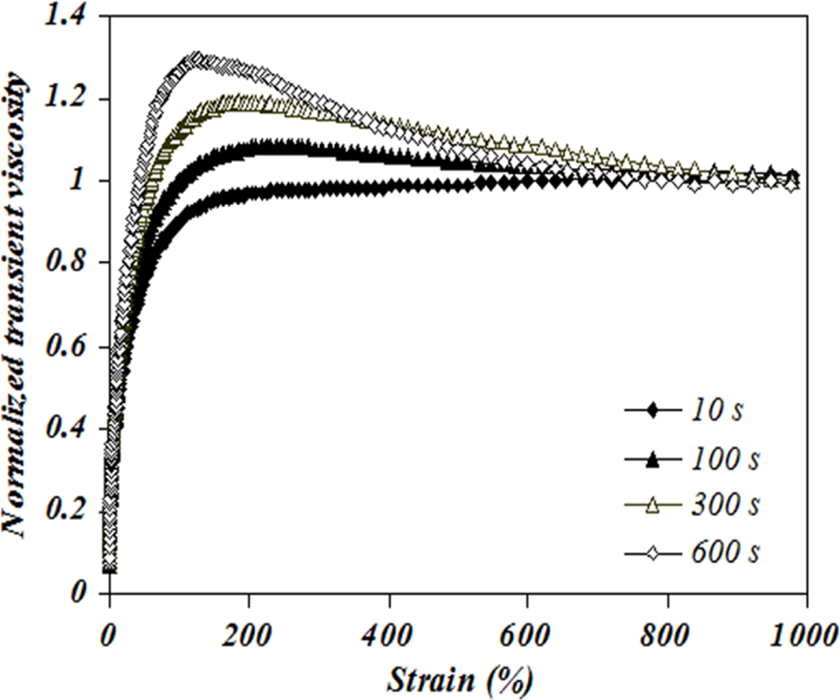
Normalized transient shear viscosity after various delay times for PAAPON3 sample at shear rate of 0.1 s−1 and temperature of 245°C.
Conclusions
This work is mainly devoted to investigation of effects of the nanocomposite components and morphology on the melt rheological and morphological behavior of the PA6/ABS nanocomposites in transient shear flow. The transient shear flow measurements revealed that the network structure of the polymer blends changes during shear flow. Overshoots have been observed for the start-up experiments and for the start-up tests after a certain delay time. The height of these overshoots increased with the applied shear rate and delay time. The overshoots are dependent on the network structure of the nanocomposite blends, and the magnitude of the overshoots increased with increasing nanoclay content. The obtained results show that at very short delay time, the transient shear viscosity does not display any overshoot, while with increment in the delay time, the overshoot appears and increases as the delay time increases. In addition, Results obtained revealed that the increment in preshearing rate decreases elastic and increases viscose behavior of nanocomposite samples. Also, samples have been examined by SEM and TEM. The behavior observed at low shear rates is related to the rigidity that becomes stronger in the presence of nanoclay particles and tactoids. The phenomena observed at large shear rates are related to the orientation of nanoclay particles and tactoids that are dependent on shear flows. In other words, it is found that in the blends with increasing nanoclay loading, size of droplets decreased significantly and their uniformity increased. TEM observations clearly displays a coexistence of intercalate and exfoliate structure for nanoclay in the polymer blend nanocomposite. On the other hand, we see that the tactoids are collected for a few silicate layers and possibly also for a single silicate layer. It was concluded that there is good conformity between the obtained results from rheological and morphological investigations.
Footnotes
Funding
This research received no specific grant from any funding agency in the public, commercial, or not-for-profit sectors.