



Abstract
Although wood–plastic composites (WPCs) are materials widely used in the construction industry, their durability constitutes a serious issue especially when used for outdoor applications. Therefore, this work gives account on the effect of biotic and abiotic degradation agents on two different WPCs prepared from recycled high-density polyethylene (HDPE) and pinewood residues. Two aspects were evaluated, namely mechanical properties and aesthetics. Compression-molded samples obtained from two different formulations based on 40% of wood and 60% of HDPE, containing 0 and 5% of coupling agent with respect to wood content, were subjected to 0, 1000 and 2000 h of accelerated weathering (AW), using an ultraviolet-type accelerated tester equipped with UVA-340 fluorescent lamps. Afterward, the aged specimens were exposed to attack by termites (TA) of the species Nasutitermes nigriceps for 15 and 30 days. Tensile properties after AW and TA were assessed using an Instron 5500R (1125) universal tester. Similarly, the aesthetic aspect was studied to evaluate the color changes on the specimens’ surfaces using a Minolta CR-200 Chroma Meter. The results of this work show drops in the mechanical properties of both composites that were not significant, even after being exposed to 2000 h of AW in combination with 30 days of TA. However, their aesthetics was seriously affected by both degradation agents, as reflected by the variations registered on the total color change and relative lightness of the tested samples.
Introduction
Wood residues and discarded plastics are major components of municipal solid waste. However, they can be value-added materials because there are great opportunities for using them as ingredients of wood–plastic composites (WPCs)-based products. 1 Wood species, such as pine, maple and oak, and plastics, such as polystyrene, polyethylene and polyvinylchloride, are the most commonly used raw materials to produce them. 2,3 The use of this kind of composites as building materials is widespread mainly because they have been promoted as low-maintenance products. However, some concerns still remain about durability issues after weathering. 4 For instance, a question that has not been quite well answered yet is how resistant are WPCs products based on recycled materials to environmental factors, 5 both biotic and abiotic. Biological degradation of WPCs by biotic agents may include attack by decay fungi, algae, termites (TA) and marine borers. On the other hand, abiotic factors include moisture, UV light and temperature. 6 Regarding biotic agents, their effects on WPCs merit further research due to the lack of investigations carried out on this area. In the specific case of termites, published information available in the scientific literature on laboratory tests using them is insufficient, 6 despite they constitute by far the most important insect group worldwide causing destruction of wood. 7 Although some preferences for certain wood species may occur, all cellulose-containing material can be used as nutriment and energy sources. As termites search for food, they may penetrate and damage many noncellulose materials as well, including plastics, even if these do not serve as food and cannot be digested. 7 Termites (order Isoptera) comprise a complex assemblage of diverse species, roughly divided into the so-called lower and higher termites. The latter constitute three quarters of all species and show a considerable variation in their feeding behavior, which is not limited to xylophagy. 8
On the other hand, the influence of abiotic factors on the performance of WPCs has been extensively studied. 4,9,10 Regarding the effect of weathering, it is known that this results in surface destruction, evidenced by the appearance of flakes and cracks within the plastic matrix upon UV-light exposure, leaving wood particles exposed to absorb water and swell. Once this happens, wood could be easily reached by termites’ mandibles because they may have immediate access to it through the cracks on the WPCs’ surface. 7,11
The consequences of photodegradation of WPCs are loss of aesthetic appearance and mechanical properties. 9 Assessments of such properties after weathering have been reported previously. For example, some researches have observed that the majority of lightening occurs in the first 700 h, whereas others have shown that it continues through 2000 h of exposure. In regard to mechanical properties, also a great disparity can be found in the literature; for instance, some studies have shown that after accelerated weathering (AW), the flexural properties of 50% wood-filled high-density polyethylene (HDPE) composites decreased during the first half of an exposure period of 2000 h. On the other hand, other researches have shown that for the same formulation, the majority of changes occurs during the second half. 4 However, a greater lack of information exists regarding the effects of TA on the mechanical properties and aesthetics of WPCs. 6
Accordingly, this study was aimed at examining the behavior of two composite materials with a 40 wt% of wood, when exposed to AW and TA. Test samples obtained by means of compression molding were exposed to termites of the species Nasutitermes nigriceps native to the Yucatan Peninsula during 15 and 30 days, after 0, 1000 and 2000 h of AW, using an ultraviolet-type accelerated tester equipped with UVA-340 fluorescent lamps. Color changes and tensile properties were investigated to evaluate the effects of TA on weathered and nonweathered WPCs.
Experimental
Materials
Injection-grade recycled HDPE with a melt flow index of 4.56 g/10 min supplied by Recuperadora de Plásticos Hernández (Merida, Mexico) was used as polymer matrix. Flake-shaped HDPE was ground with a Brabender granulating machine (model TI 880804) fitted with a screen plate drilled with holes of 1 mm in diameter. Pinewood residues provided by Maderas Bajce (Merida, Mexico) were screened in a Tyler nest of sieves (W.S. Tyler RO-TAP model RX-29) before using them as reinforcement. Maleic anhydride-grafted HDPE (Polybond 3009) supplied by Brenntag México (Tultitlan, Estado de Mexico, Mexico), S.A. de C.V. was used as coupling agent (CA). Struktol TPW 113 (a blend of modified fatty acid esters) from Struktol Company (Stow, OH, USA) of America was used as processing aid (PA). Both CA and PA were ground using the granulating machine described previously.
Termites
Higher termites (species N. nigriceps) collected from nests located in the mangrove forest of Ría Celestún in Yucatan, Mexico (20°51′52.1′′ N; 90°22′58.7′′ W) were used as biotic agent. These insects were chosen due to their feeding behavior that is not limited to xylophagy. 8
Processing
Materials (pinewood, HDPE and additives) were premixed in a horizontal mixer with a helical agitator (model ML-5; Intertécnica Co., Mexico City, Mexico) and dried in a convection oven (Fisher Scientific, Pittsburgh, PA, USA) at 105°C for 24 h before compounding. Two different formulations with a 40 wt% of wood were prepared. Details of them are shown in Table 1. Compounding was carried out in a conical twin-screw extruder (Brabender EP1-V5501) to produce a homogeneous composite profile using a 4-cm long extrusion cylindrical die of 2 mm in internal diameter fitted to the extruder. During extrusion, the screw speed was 50 rpm and the barrel and die temperatures were set at 140°C. The obtained extrudates were pelletized using a Brabender laboratory pelletizer machine (type 12-72-000).
Formulations of WPCs based on pinewood residues and recycled HDPE.
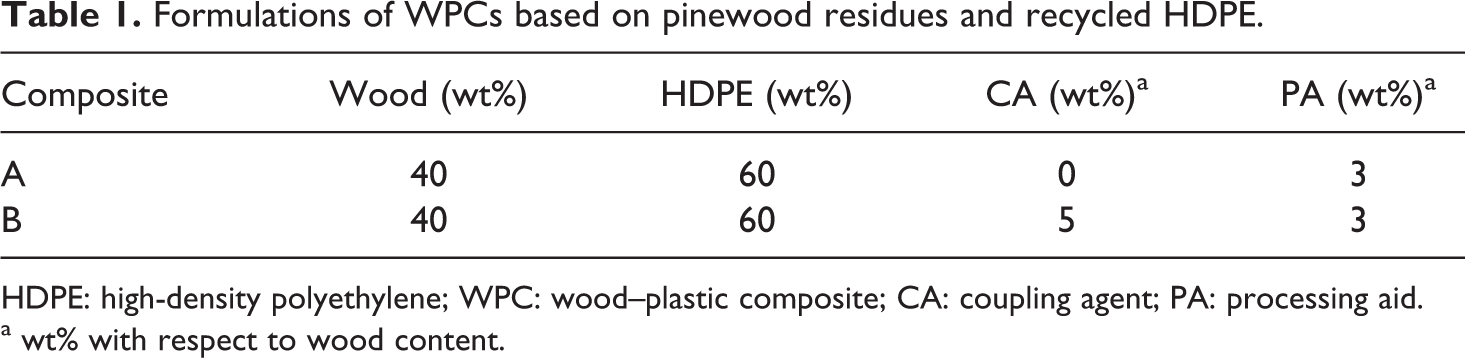
HDPE: high-density polyethylene; WPC: wood–plastic composite; CA: coupling agent; PA: processing aid.
a wt% with respect to wood content.
Sample preparation
Tensile specimens
The WPC pellets obtained were hot pressed using a Carver automatic hydraulic press (model 3819; Carver Inc. Wabash, IN, USA) at 140°C for 5 min using a compression force of about 26,690 N (6000 lbf) to obtain a 3-mm thick dumbbell-shaped test specimens. A type V mold was used in order to fulfill the test specimens’ dimensions detailed in ASTM D 638 standard test method. 12
Accelerated weathering
An ATLAS UVCON tester (ATLAS MTT. Moussy Le Neuf, France) was used to expose the test samples to UV condensation cycles using 4 h of UV light irradiation at 60°C with UVA-340 type fluorescent lamps (ATLAS Electric Devices. Chicago, IL, USA) followed by 4 h of condensation at 50°C using deionized water, ASTM 4329 was employed as reference. 13 Prior to their exposure, 10 samples of each material were conditioned according to ASTM D 618 (105°C for 24 h). 12 Afterward, they were aged for 0, 1000 and 2000 h and will be referred throughout the text as 0AW, 1000AW and 2000AW, respectively.
Biodegradation experiments
Weathered and nonweathered samples were exposed to TA. For this, test method ASTM D 3345 was considered as reference. 14 The specimens were placed on a sand layer around a termites’ nest during a maximum period of 30 days. Two glass containers (40 × 20 × 30 cm3) sealed with a 3-cm wide tape were used to carry out the tests and were kept at 25.5–27.7°C along the experiment. Sand was previously added with distilled water to supply it to the insects according to what is indicated in the referenced method. Once the tests were completed, the nests were destroyed and termites were collected and weighed. An average of 25 g of termites was collected from each glass container. Five additional containers with sand and water but without WPCs samples were used as controls to evaluate termites’ vigor. Samples were subjected to attack during 0, 15 and 30 days. They will be referred to throughout the text as 0TA, 15TA and 30TA, respectively.
Materials characterization
Density
Density was measured in accordance with ASTM D 792 standard test method. 12 The tests were carried out following method A, using an OHAUS Voyager Pro analytical balance (model VP214CN) and the specific accessories for density measurement. Before testing, weathered and nonweathered samples were conditioned at 23 ± 2°C and 50 ± 5% relative humidity for not less than 40 h prior to test as indicated in ASTM D 618 standard test method. 12 Samples with a volume of 2.6 cm3, weighing 2.5 g approximately, were used. Four samples of each material were analyzed, and their results were averaged.
Aesthetics
The aesthetic aspect was studied measuring the change in color of the specimens’ surfaces using a Minolta CR-200 Chroma Meter (Minolta Corp., Ramsey, NJ) with the CIELAB color system. Samples exposed to 0, 1000 and 2000 h of AW followed by 15 and 30 days of TA were analyzed. Lightness (L) and chromatic coordinates (a and b) were obtained for five replicate samples. The total color change (▵Eab
) was determined according to equation (1), as indicated in ASTM D 2244 standard test method
15

where ▵L, ▵a and ▵b represent the differences between the initial values (from a reference or standard, L s, a s and b s) and the values of the test specimen (L B, a B and b B). In the analysis of the effects of AW, 0AW specimens constitute the reference, and samples exposed to 1000AW and 2000AW are the test specimens; whereas in the study of the effects of TA, weathered samples are the references and the samples exposed to termites after the same exposure time to AW are the test specimens. In the CIELAB color system, the perception of color changes on the sample surfaces from light to dark, red to green and yellow to blue is related directly to the values of such parameters, having the following meanings: +▵L = lightening, −▵L = darkening, +▵a = color shift to red, −▵a = color shift to green, +▵b = color shift to yellow and −▵b = color shift to blue.
Relative lightness (▵L
rel) was calculated from initial and final values using equation (2), according to ASTM D 2244
15

Tensile properties
Tensile tests were performed using an Instron 5500R (1125) universal testing machine according to ASTM D 638, using a 500-kg load cell and a crosshead speed of 1 mm/min. At least 10 specimens of every type of composite were tested to obtain modulus of elasticity and tensile strength. Weathered samples were oven-dried at 105°C for 24 h before testing to ensure the same conditioning for samples before and after weathering. All samples were conditioned at 23 ± 2°C and 50 ± 5% relative humidity during at least 40 h before testing in accordance to ASTM D 618 method. Tensile characterization was performed on samples exposed to 0, 15 and 30 days of TA previously subjected to 0, 1000 and 2000 h of AW. 12
Statistics
The collected data were analyzed using a statistical software (Graphpad Software, Inc., San Diego, California, USA). Normally distributed data are shown as the mean ± standard deviation. Analysis of variance for repeated measures was performed considering tensile test results as variables. Dunnett’s posttest was used for the determination of statistical significance, which was defined as a value of p < 0.05.
Results and discussion
Weight loss
Calculation of weight loss revealed that in general irrelevant changes were observed for the samples tested in the present study. For instance, in the case of specimens exposed to the most extreme conditions, that is, 2000 h of AW and 30 days of TA, decrements due to the biotic degradation of 1.50% (0.87) for composite A and 1.53% (0.87) for composite B were observed. In both cases, 0.87 corresponds to the standard deviation of the results obtained for five samples of each composite. These results indicate that termites extracted wood from both composites regardless of the presence of CA.
Density
Density is an important characteristic of a composite material, with regard to its response to the environment. For example, it is known that high-density composites better resist moisture absorption. 4 Although it may be opposite to the trend of more conventional composites, such as fiberboards, where higher density yields greater swelling, in the case of WPCs, a higher density causes composites to absorb less moisture as a result of polymer-rich surface layers and lower void contents. For example, in their work, Clemons et al., 5 who produced HDPE composites containing 50% of wood flour through three different processing methods, observed that composites with the lowest density swelled the most.
In regard to the individual constituents of WPCs, it has been observed that materials such as HDPE increase their density due to AW. Gulmine et al. 16 reported that HDPE samples exposed to 800 h of aging using UV radiation experimented a maximum increase in its density of around 1%. However, as far as we know, there is no information about the changes in the density of WPCs as a whole due to AW. The results of the present work reveal that the density of HDPE-wood-based composites experienced slight drops after 2000 h of exposure to AW. In the case of material B, density dropped from 1.064 to 1.060 g/cm3; whereas for material A, it decreased from 1.058 to 1.056 g/cm3. Such behavior is expected since wood hinders crystal growth, resulting in polymers with lower crystallinity. 17 Even little drops in density, such as those observed for composites B and A, which are related to the appearance of cracks and voids on the surface of the composites, could favor a possible biological attack of the material, since it has been reported that these cracks provide an entrance route for termite mandibles in case they are exposed to these insect attacks. 7
Aesthetics
Color change (▵Eab ) and relative lightness (▵L rel) of samples exposed to AW and TA are shown in Figures 1 and 2 for material A and in Figures 3 and 4 for material B. In all cases, tested samples were compared against control samples (represented as zero for both, total color change and relative lightness in the corresponding figures) to evaluate the effect of each degradation process (i.e., AW and TA). According to the results of this study, color changes due to AW were stronger than those caused by TA. It can also be observed that as the exposure time to both AW and TA increased, the changes in color also increased. Evidently, any color change affects the aesthetic appeal of WPCs, which is not a desirable feature. 11
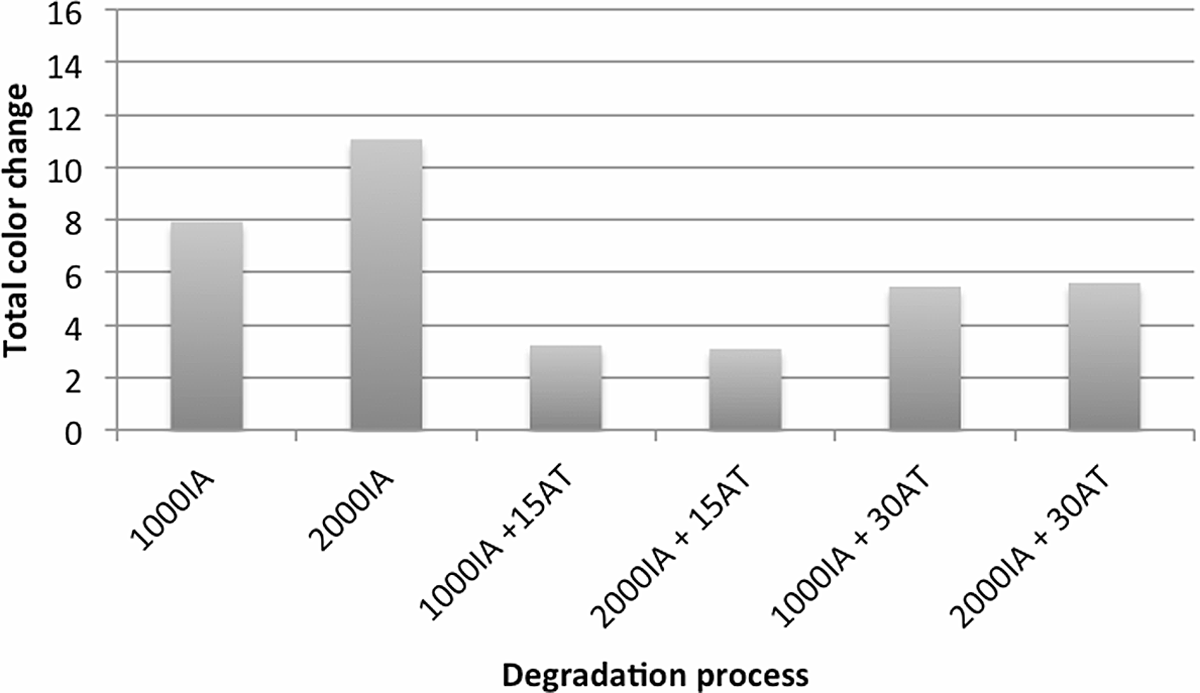
Total color change in composite A after exposure to accelerated weathering and termite attack.
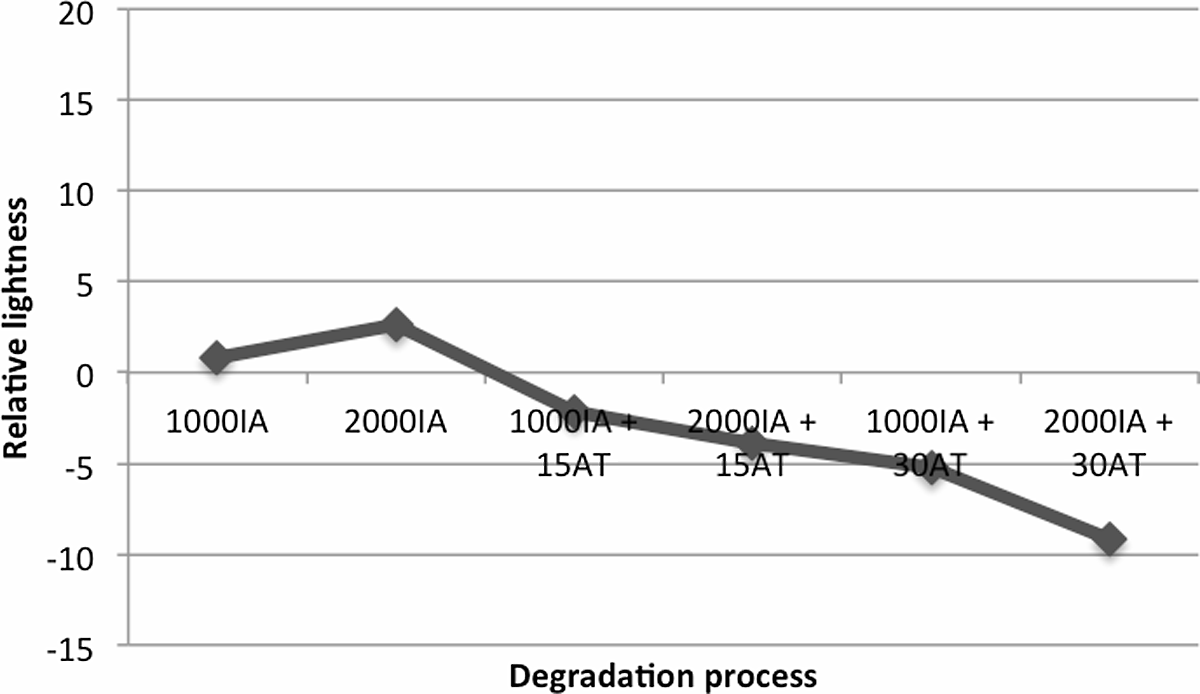
Relative lightness of composite A after exposure to accelerated weathering and termite attack. Tags of x axis appear in the center of the figure to make more evident the effect of the degradation process on the sample’s surface (i.e., darkening = negative values and lightening = positive values).
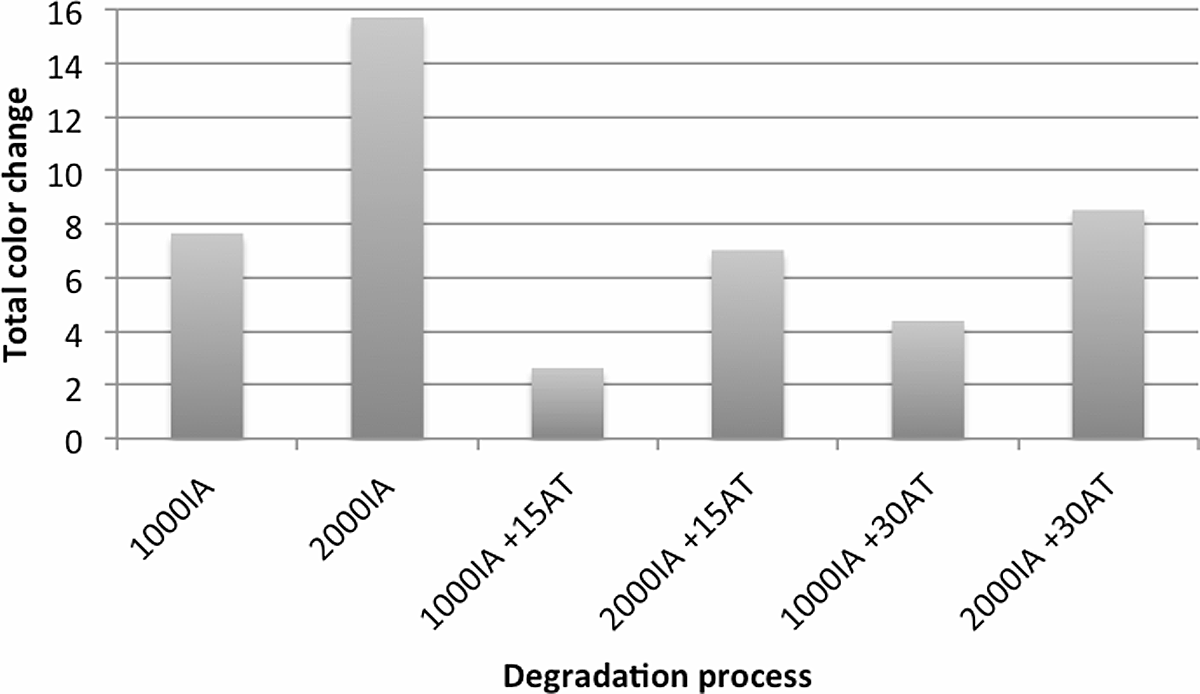
Total color change in composite B after exposure to accelerated weathering and termite attack.
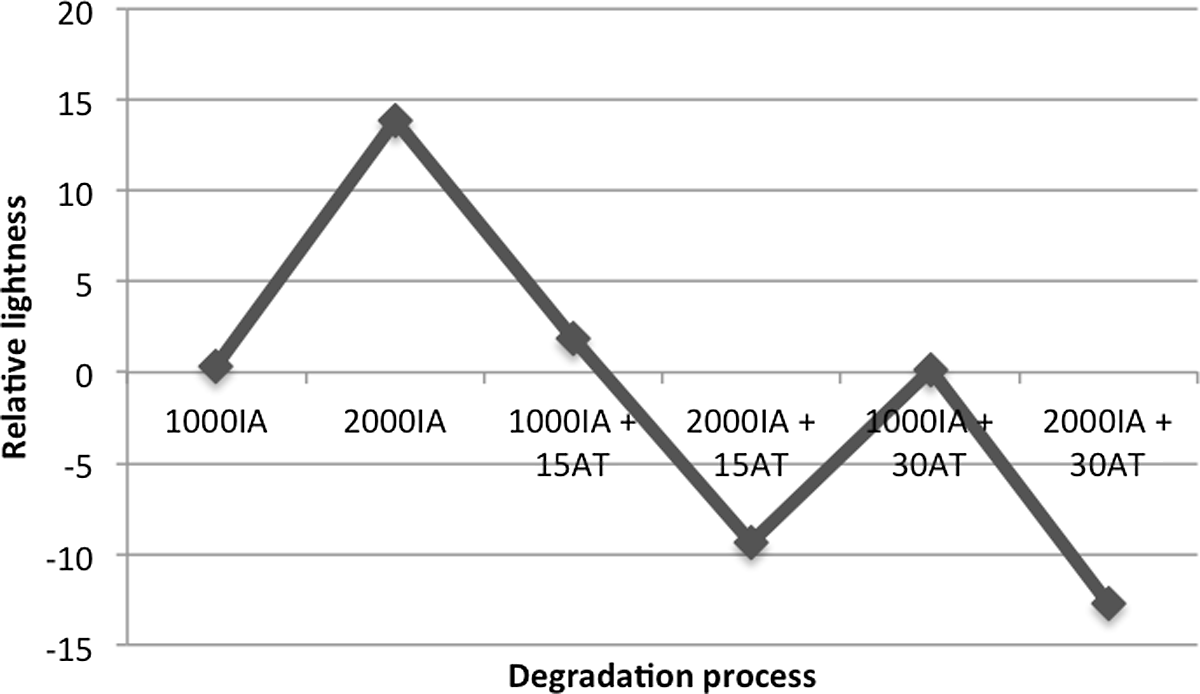
Relative lightness of composite B after exposure to accelerated weathering and termite attack. Tags of x axis appear in the center of the figure to make more evident the effect of the degradation process on the sample’s surface (i.e., darkening = negative values and lightening = positive values).
Regarding changes in ▵L rel, it can be observed that samples lightened after their exposure to AW (+▵L rel). In this respect, it has been suggested that the majority of the color fading of composites is due to a bleaching of the wood particles. 10 It has been reported that lignin degradation and the removal of the extractives, which are the main components that impart color to wood, are probably the main reasons of color fading. 4,18 The exposure of a composite to a combination of UV-light irradiation and water is detrimental for two reasons. First, the presence of water in wood accelerates oxidation reactions and, second, the wood cell wall swells when it is penetrated by water. This facilitates light penetration into wood and provides sites for further degradation. Washing the degraded surface with water also exposes new wood surfaces for degradation, resulting in a cyclical erosion of it, exposing more lignin to such process and removing some of the components of wood including extractives. 4
Regarding TA, it produced a darkening effect on the surface of almost all samples; in some of them, it is even possible to observe black color features on their surface as it is shown in Figure 5. It is known that UV irradiation effects are largely a surface phenomenon. 11 Therefore, when termites removed the superficial layer of WPCs, the material degraded by UV light was eliminated and insects reached deeper non-UV-degraded areas. This explains the differences observed on the surface of the composites after their exposure to the degradation processes studied in the present work.
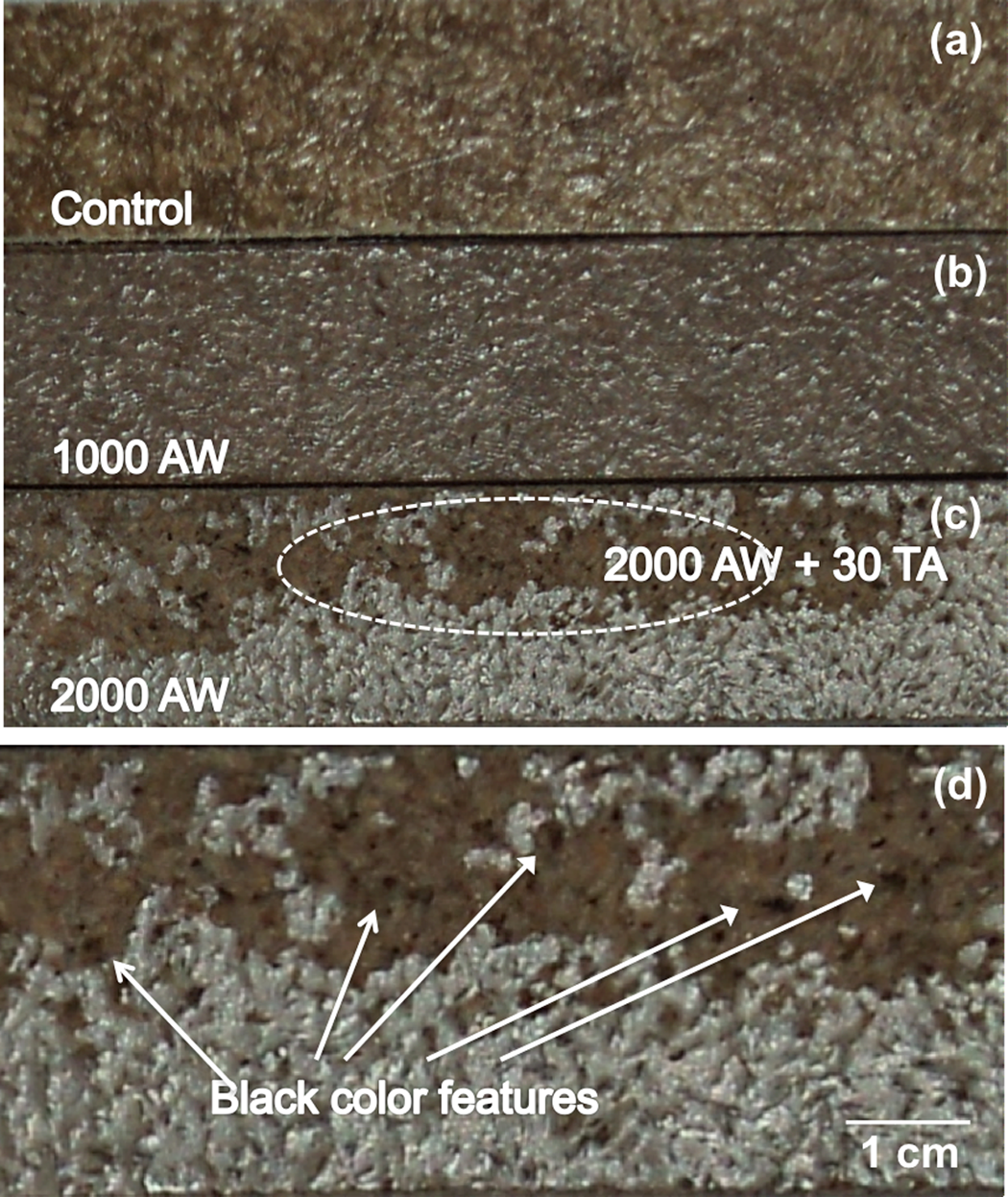
Photography of samples exposed to AW and TA. (a) Control; (b) 1000AW. (c) Effects of first degradation process after 2000 h of AW (2000AW + 30TA indicates what was left on the aged sample surface after TA). (d) Encircled area in (c). (a) to (c) were obtained using the same magnification. AW: accelerated weathering; TA: termite attack.
Similar results related to the negative effect of AW on the aesthetics of WPCs have been reported previously. For example, Stark et al. 4 observed that pinewood- and HDPE-based composites lightened after being exposed to different cycles of UV light and water spray. Regarding the effect of biotic agents, it is known that microorganisms such as fungi have a negative impact on the aesthetic quality of wood due to the stains that originate on its surface. 11 Although fungi and termites degrade the surface of WPCs, their effects are quite different. Clemons et al. 5 demonstrated that fungi produce voids over the composites. Moreover, Schirp et al. 19 confirmed the presence of fungal hyphae in the wood–plastic interface after 24 days of incubation. On the other hand, termite-attacked composites do not show any kind of hyphae. Also, instead of voids, broken and disordered wood particles can be appreciated on the composites’ surface. 20
The presence of a CA on the formulation of material B results in a higher total color change after weathering, since the presence of this additive in its formulation originates a larger concentration of chromophores such as carbonyl groups, which accelerate the photodegradation process. 21 Therefore, although CA is known to improve the mechanical properties of WPCs, according to our results, its presence could have negative effects on their aesthetics as a result of aging. Thus, additives such as colorants or ultraviolet absorbers 10 could be added to avoid this problem in order to take advantage of the positive effects of the presence of a CA.
Tensile properties
Tensile properties are presented in Table 2. In both cases, it can be observed that as composites A and B were subjected to more aggressive processes, their resistance decreased to a higher extent up to the case in which both composites were exposed to the most aggressive set of test conditions (2000AW + 30TA). In such case, the tensile resistance of material A dropped a 22.5% of its initial value (50% of it due to AW and 50% due to TA), while for material B, a drop of 17.5% was observed (97% of it due to AW and 3% due to TA). A lower drop in the case of material B could be due to the use of a CA in its formulation, which could have increased its resistance especially against TA due to a more resistant interface that hindered the access to termite mandibles. Statistical analysis of the results obtained in this work revealed that due to AW, significant drops (p < 0.05) in modulus and strength occurred for material A. On the other hand, only drops in strength were significant in the case of material B, as indicated in Table 2. In the case of TA, drops in tensile strength were significant only after 2000AW + 30TA for material A and 1000AW + 30TA for material B. In such cases, a more aggressive biotic attack on the testing section of the specimens could have occurred, leading to higher tensile strength drops. However, in general, it is clear that TA did not affect the tensile properties of composite A or composite B to the same extent that weathering did.
Tensile properties of 40% wood-filled HDPE composites obtained by compression molding after 0, 1000 and 2000 h of AW.a
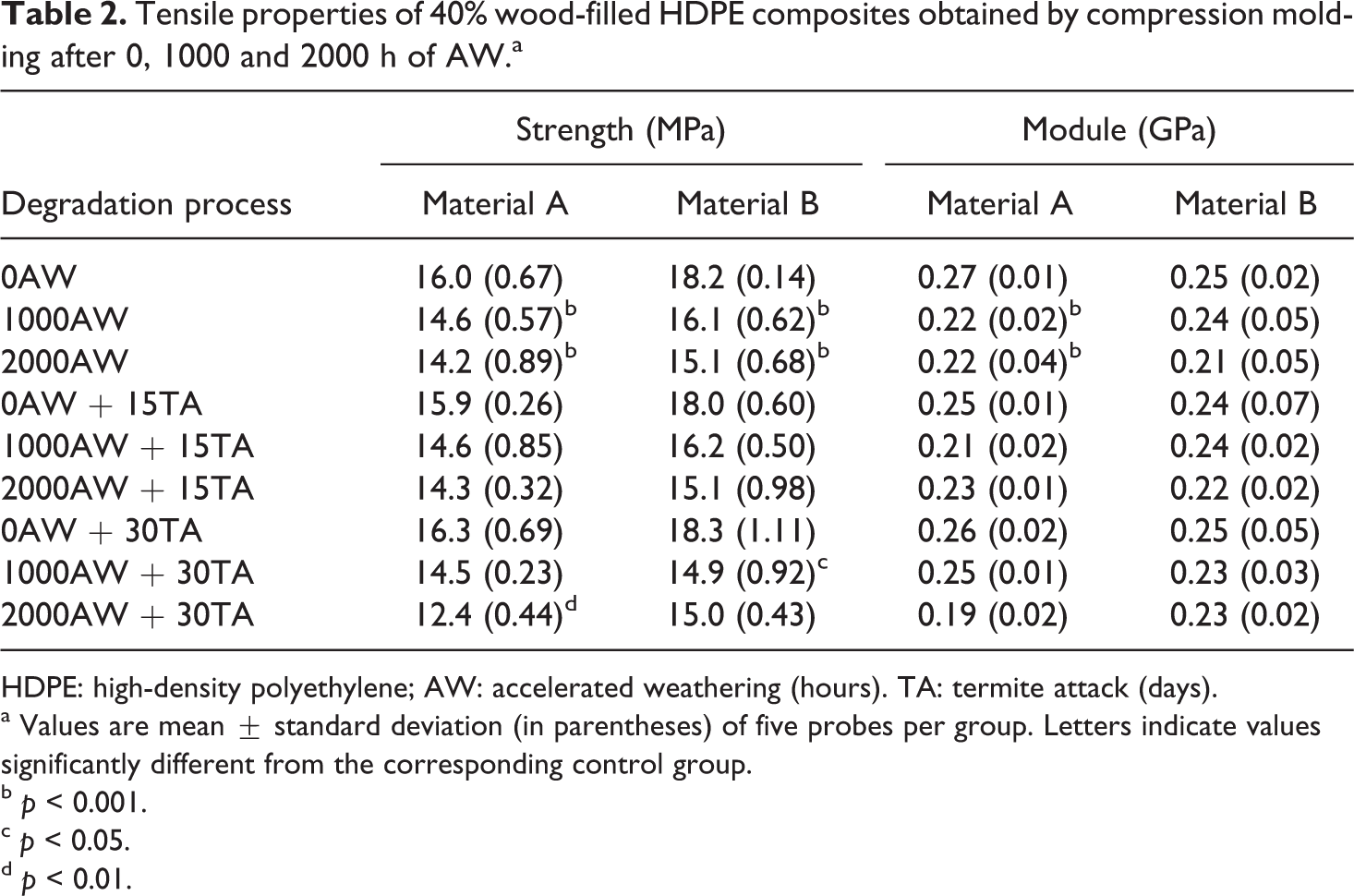
HDPE: high-density polyethylene; AW: accelerated weathering (hours). TA: termite attack (days).
a Values are mean ± standard deviation (in parentheses) of five probes per group. Letters indicate values significantly different from the corresponding control group.
b p < 0.001.
c p < 0.05.
d p < 0.01.
Regarding the effects of both degradation agents on the tensile modulus of the tested composites, it can be observed that only in the case of material A, AW produced significant changes on such property. In this case, also a maximum drop is observed for material A (29.6%), contrasting with material B (16%). Again, the presence of a CA on the formulation of material B could have originated a lower drop on the properties of this composite.
As far as we know, there is no published information in the literature regarding the effect of this or any other biotic agent on the tensile properties of this kind of composites. Thus, a comparison of our results cannot be done. On the other hand, it is known that the mechanical performance of WPCs improves significantly when a CA is used. For example, Bledzki et al. 22 observed that WPCs containing 40% of hardwood increased their tensile strength significantly when adding a 5% of a maleic anhydride–modified polypropylene. In our case, the effect of the presence of a CA is observed in the initial strength of material B, which is 13.5% higher than that of material A. The use of this additive also seems to diminish the drop in the tensile resistance, since that of material B is slightly higher than that of material A in all cases. However, the use of a CA in the preparation of the composites did not avoid the negative effects of AW, which are known to cause chain scission reactions on the polyethylene. 16 The combined effect of such breaking reactions and moisture absorption by the wood component gave place to the loss in tensile properties.
On the other hand, although aging slightly reduced the density of both tested composites and produced cracks on their surfaces exposing wood to the environment, the effects of TA were only superficial, since they were not able to go far down deeper in the material as it can be inferred from the mechanical test results. Differences between wood and WPCs densities could explain this behavior. In other words, wood is more susceptible to be attacked than our materials because its overall density is lower than that of the WPCs studied in this work. For instance, compare the overall densities reported for solid wood, which are about 0.32–0.72 g/cm 3 , 3 with that of composites A and B (i.e., 1.056 and 1.060 g/cm3, respectively) UV irradiated during 2000 h, that retained their mechanical properties even after being subjected to such degradation process.
Termite mortality
An assessment in terms of termite mortality based on visual inspection of the containers was realized according to ASTM D 3345. 14 At the end of the first week, a slight mortality was observed (0–33%); after the second week, mortality was moderate (34–66%) increasing to heavy (67–99%) after the third week of the experiment. Finally, after a month, mortality was almost complete (nearly 100%). Additionally, containers used as controls showed virtually complete survival after 1 week, thereby indicating that vigorous termites were used and that the results of the biotic assays are in compliance with the referred standard.
Conclusions
The results of this study indicate that TA was possible only when test samples were previously subjected to AW, since this process originated cracks over the surface of the samples creating access routes to termite mandibles. Although weathered samples were biologically attacked, their effects were only superficial, since their mechanical properties drops were not significant. However, both AW and TA seriously affected the specimens’ aesthetic appeal. This result is evident when analyzing the total color changes and relative lightness of the samples exposed to both degradation processes. On the other hand, the presence of a CA in the formulation of material B did not avoid mechanical properties’ drops of such material but seems to delay it. Notwithstanding, due to the presence of the aforementioned CA, higher total color changes were observed, since its presence originated a higher concentration of chromophore groups.
Footnotes
Acknowledgements
Gratitude is expressed to Centro de Investigación en Corrosión of Autonomous University of Campeche for the assistance provided, and to Drs José Tulio Méndez-Montiel, Armando Equihua-Martínez and Reginaldo Constantino for their invaluable help to identify termites’ species. Additional thanks are given to Jorge A. Domínguez-Maldonado, MSc and Carlos V. Cupul-Manzano, MSc. Gratitude is also expressed to the Faculty of Chemical Engineering of the Autonomous University of Yucatan.
Funding
This work was financially support by the Mexican Council for Science and Technology and the Government of the Yucatan State through the project YUC-2008-C06-107327 (“Fondo Mixto CONACyT-Gobierno del Estado de Yucatán”).