




Abstract
Binary and ternary composites composed of high-density polyethylene (HDPE), boehmite alumina (BA) and different kinds of natural and animal fibers, such as flax, sponge gourd, palm and pig hair (PH), were produced by hot press technique. Aqueous BA suspensions were sprayed on the HDPE/flax mat to prepare nanoparticle/natural fiber–reinforced ternary polymer composites followed by drying. The dispersion of the natural and animal fibers and BA particles in the composites was studied by scanning electron microscopy and discussed. The thermomechanical and stress relaxation properties of the composites were determined by the thermogravimetric analysis, dynamic-mechanical thermal analysis and short-time stress relaxation tests (performed at various temperatures), respectively. The HDPE-based composites were subjected to water absorption and instrumented falling weight impact tests. It was found that all the composite systems increased the stiffness and stress relaxation and reduced the impact toughness. The stress relaxation modulus of natural and animal fiber composites was higher compared with that of the neat HDPE. This modulus increased greatly with incorporation of BA. The relaxation master curves were constructed by applying the time–temperature superposition principle. The inverse of Findley power law could be fairly applicable to describe the relaxation modulus versus time traces for all systems studied. Incorporation of BA particles enhanced the thermal resistance, which started to degrade at higher temperature compared with the HDPE/flax mat composite. The HDPE/flax mat/BA composite could reduce the water uptake.
Keywords
Introduction
The use of polymer composites has increased substantially in engineering applications due to their outstanding properties when compared with pure polymers. Polyethylene (PE) is one of the most widely used polyolefin polymers. High-density PE (HDPE) was used as the matrix for nano and natural composite materials and has attracted increasing interest recently due to its excellent chemical resistance, high impact strength, good thermal and mechanical properties. 1 –3 The utilization of the good thermal and mechanical properties of boehmite alumina (BA) nanoparticles in the HDPE composites has been studied. 4,5 BA incorporation increased thermal stability and stiffness of HDPE and enhanced the elongation at a break obviously at the same time, while impact resistance of the HDPE/BA systems was reduced with increasing BA content. To achieve a fine nanoscale dispersion of the fillers is a great challenge. Besides the traditional nanocomposite techniques for thermoplastics, the water-mediated dispersion of suitable nanofillers has been recommended. 6 It was noticed earlier that this preparation technique of the nanocomposites has a strong impact on the remarkable property improvements. 7
A variety of natural fibers such as rice husk, 8 jute, 9 flax 10 and banana 11 fibers have been tested for use in HDPE/fiber composites. Natural fiber is straightforward not only from the viewpoint of offering significant cost advantages and benefits associated with processing compared with synthetic fibers but also with respect to the reduction in the dependency on foreign and domestic petroleum oil. Several research articles deal with the optimization of natural fiber-reinforced HDPE composites. Some investigations look for ways to improve the interactions between polymer matrix and natural fibers. The use of HDPE-based maleated coupling agents was helpful to increase the strength properties of HDPE–wood-flour composites, due to the increased interaction between the wood flour and the HDPE matrix. 12 Choudhury 13 demonstrated that the tensile and flexural properties of ionomer-treated sisal/HDPE composites were strongly improved compared with neat HDPE. Mulinari et al. 14 studied the effect of modification of sugarcane bagasse cellulose with zirconium oxychloride/HDPE composites. The modified bagasse reduced the composites elongation. The increase in stiffness is associated with fibers reinforcement at the cost of the tensile strength and ductility. This reduction is associated with defects generated in the material after cellulose fibers insertion. The plant- and animal-based fibers attracted much attention in the engineering and bioengineering industries such as automotive and medical applications and have undergone comprehensive researches for new composites. The goal of this study was to explore the potential of the water-mediated technique using nanospraying to disperse suitable fillers on nanoscale and investigate the potential of flax, sponge gourd (SG), palm and pig hair (PH) fibers produced reinforced HDPE composites. A further aim of this work was to demonstrate the feasibility of the production of HDPE/flax mat/BA composites. Accordingly, binary and ternary composites composed of HDPE, BA and different kinds of natural and animal fibers were produced by hot press technique and the structure–property relationships of the resulting compounds were evaluated.
Experimental
Materials and preparation of composites
Nonwoven flax fibers (flax mat; 220 g/m2) were supplied by Dittrich Vliesstoffe GmbH (Ramstein-Miesenbach, Germany). The flax fibers in the nonwoven textile are randomly orientated. The nonwoven textile is made of individual fibers. PH and oil palm empty fruit bunch fiber are the byproducts obtained from two food processing plants in Thailand (Betagro safety Meat Packing Co., Ltd and Asian Palm Oil Co., Ltd) SG fibers are commercially available in Thailand. The natural and animal fibers were used as reinforcing fillers. The water dispersible BA (AlO(OH); Dispal®11N7-80 of Sasol GmbH, Hamburg, Germany) served as filler for all composite systems. The nominal particle size of alumina in water was 220 nm, although that of the alumina powder as delivered was 40 µm. Alumina has Al2O3 content of 80 wt% and specific surface area is 100 m2/g. HDPE (Finck&Co, Krefeld, Germany) was used as a polymeric matrix for all composite systems and its density was 0.95 g/cm3.
The HDPE binary and ternary composites were prepared by nanospraying and/or hot press methods, respectively. First, the HDPE/flax mat/BA ternary composites were produced by a hot press using nanospraying technique. The BA particles were dispersed in water at ambient temperature under continuous mechanical stirring for 30 min to obtain aqueous BA slurry. The BA slurry was sprayed into the nonwoven flax fibers by a hand spraying-up and dried for 48 h at room temperature (RT) and then for 24 h at 80°C in oven. The flax mat contents in the binary composites were set for 20 and 40 wt%. The flax mat and alumina or PH, SG, palm fibers contents in the ternary composites were set for 20 and 10 wt%, respectively. The composites produced are listed in Table 1. The HDPE ternary composites followed by hand lay-up process of natural or animal fibers and then a layer of HDPE sheet. The binary and ternary composites based on HDPE, after the BA particles spraying on the flax mat and dried, were compression molded into 1-mm-thick sheets at T = 190°C using the hot press (P/O/Weber, Maschienen und Apparatebau, Remschalden, Germany).
Recipe and designation of the HDPE-based systems.
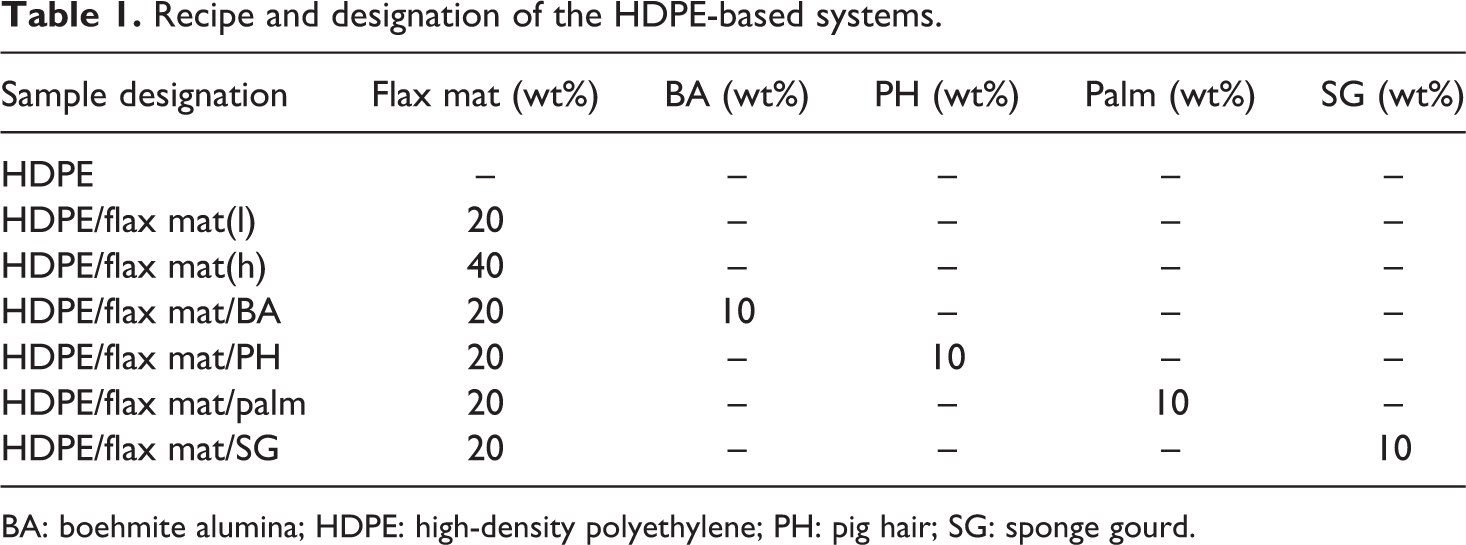
BA: boehmite alumina; HDPE: high-density polyethylene; PH: pig hair; SG: sponge gourd.
Characterization and testing
Morphology detection
The fracture surfaces of compression-molded specimens were subjected to scanning electron microscopy (SEM) inspection in a Supra™ 40VP SEM (Carl Zeiss GmbH, Oberkochen, Germany). The surface was gold coated prior to SEM inspection, which was performed at low acceleration voltage.
Thermal and thermomechanical response
Thermogravimetric analysis (TGA) was performed on a DTG-60 SHIMADAZU device (Kyoto, Japan). TGA experiments were conducted in the temperature range from 30 to 500°C under nitrogen at a heating rate of 10°C/min.
Dynamic mechanical thermal analysis was performed in tensile mode at 1 Hz, using a Dynamic mechanical analysis (DMA) Q800 apparatus (TA Instruments, New Castle, New Jersey, USA). The storage modulus (E′) along with mechanical loss factor (tan δ) were determined as a function of the temperature (T = −130°C … +130°C). The strain applied was 0.1% and the heating rate was set for 3°C/min. The specimen dimensions were 30 × 10 × 1 mm3 (length × width × thickness).
Stress relaxation response
Short-time (duration 30 min) stress relaxation tests were made in single cantilever mode at different temperatures, ranging from 5 to 45°C, using the above-mentioned DMA apparatus. The strain applied was 0.5%. Isothermal tests were run on the same specimen in the temperature range of 5–45°C by increasing its temperature stepwise by 5°C. Prior to the stress relaxation measurement, the specimen was equilibrated for 3 min at each temperature step. The specimen dimensions were 30 × 10 × 1 mm3 (length × width × thickness).
Water absorption
Water absorption of the composites was investigated over a period of 30 days. The composites were cut into specimens (20 × 20 mm2) and then they were immersed in water in a bath at RT. Weight gains were recorded by periodic removal of the specimens from the water bath and weighing on a balance. The percentage gain at any time t (Mt
) as a result of moisture absorption was calculated from the following equation
where Wd and Ww denote the weight of dry material (initial weight of materials) and weight of materials after exposure to water absorption, respectively.
Instrumented falling dart impact
Instrumented falling weight impact (IFWI) tests were performed on a Fractovis 6785 (Ceast, Pianezza, Italy) using the following settings: incident impact energy, 20 J; diameter of the dart, 20 mm; diameter of the support rig, 40 mm; weight of the dart, 10.357 kg; drop velocity, 1.97 m/s. IFWI tests were performed on quadratic specimens of 60 × 60 mm2 at RT.
Results and discussion
Morphology
The SEM pictures in Figure 1(a) to (e) present the morphological characteristics of the HDPE-based systems studied. It can be seen in Figure 1(a) to (b) that the BA particles were homogeneously dispersed in the HDPE/flax mat composite. The individual flax fiber had diameter in the range of 30–60 µm and displayed clear fiber lumina. However, the lumina was not filled with HDPE matrix. Considering the present image of Figure 1(c), it can be concluded that due to the very smooth surface, a poor adhesion was present between the HDPE matrix and the PH. The latter was present in the form of large fibers and broad fibers size distribution. Furthermore, one may conclude from Figure 1(d) to (e) that fiber surfaces of palm and SG were rough. This seems to be better stacked with the related HDPE composites, which may indicate an enhanced adhesion of HDPE/flax mat/palm and HDPE/flax mat/SG ternary composites. It was the first hint for an upgrade property in the corresponding composites.
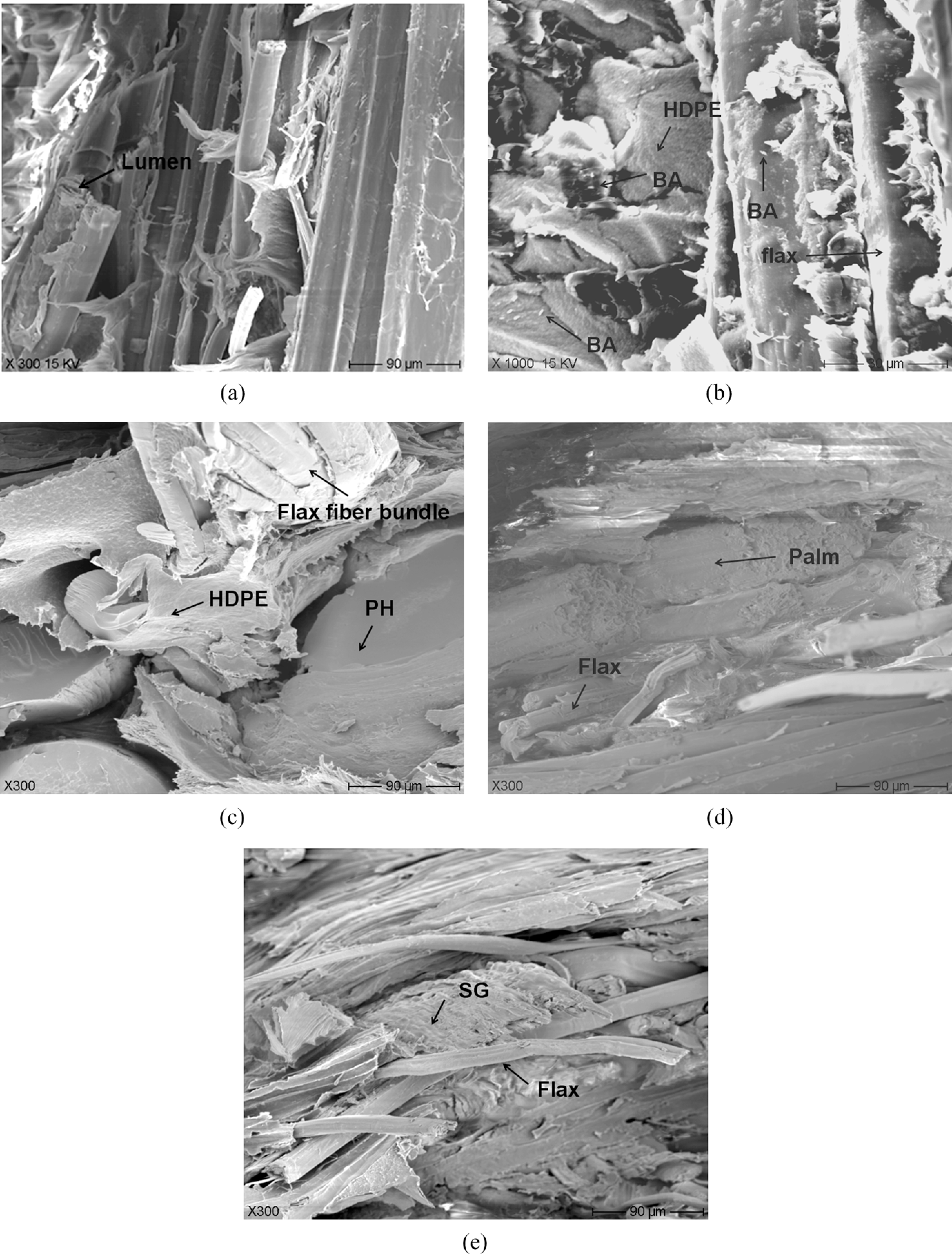
SEM image from the fracture surfaces of HDPE/flax mat (a), HDPE/flax mat/BA (b), HDPE/flax mat/PH (c), HDPE/flax mat/palm (d) and HDPE/flax mat/SG (e) composites. BA: boehmite alumina; HDPE: high-density polyethylene; PH: pig hair; SEM: scanning electron microscopy; SG: sponge gourd.
Thermogravimetric analysis
The effects of BA particles and natural and animal fibers on the thermal stability of HDPE systems are displayed in Figure 2. One can be recognized that thermal degradation of HDPE was a one-step procedure representing depolymerization. The binary and ternary composite systems exhibited two-step–like transitions. Due to the dehydration from cellulose unit and thermal cleavage of glycosidic, the decomposition temperature of HDPE/fibers composites was comparatively lower than that of the HDPE as reported for jute/HDPE composites. 9 One can recognize that the thermal stability decreased remarkably with increasing of flax mat content in the HDPE at whole temperature range. For the composites containing 20 wt% flax mat, the weight loss as reaching 370°C, was enhanced by approximately 15% compared with the HDPE/flax mat 40 wt%. The incorporation of BA particles strongly improved the thermal degradation of the HDPE/flax mat composite. In addition, it has to be mentioned that BA for improving the thermooxidative stability has been reported for PEs and Polyoxymethylene (POM). 4,15 The HDPE/flax mat/BA composite started to degrade at higher temperature compared with the HDPE/flax mat composite. Note that the resistance to thermal degradation of the HDPE/flax mat/PH composite was slightly higher than those of composites containing palm and SG. One possible explanation is that the high moisture content of natural fibers also caused a great problem for thermal properties. The change in the TGA values shows the moisture difference between PG and natural composites. This finding is in agreement with that reported by Cheung et al. who observed that the composite with animal fiber provided better thermal properties also. 16
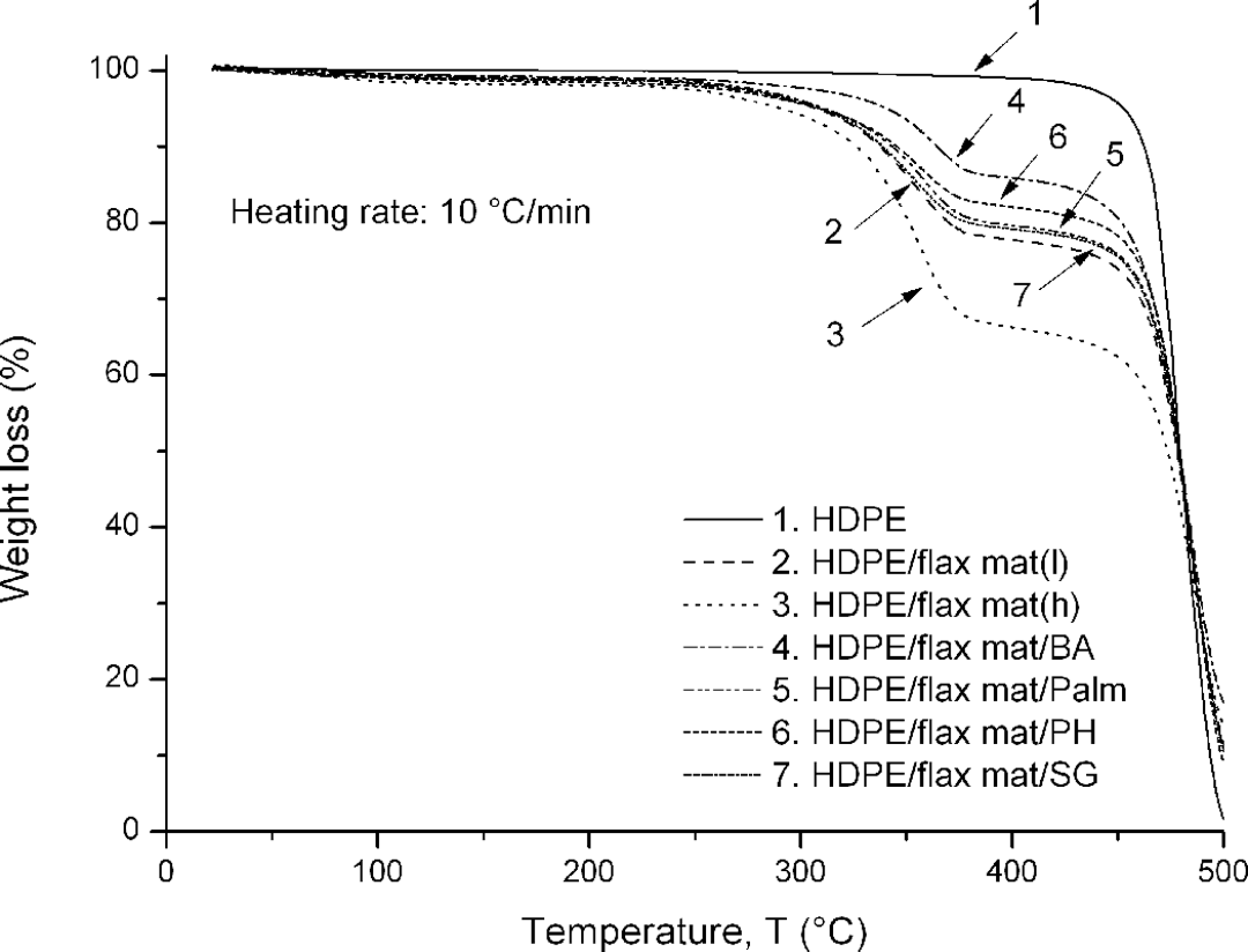
Weight loss versus temperature for the HDPE systems studied. HDPE: high-density polyethylene.
Dynamic mechanical response
Figure 3(a) and (b) depicts the storage modulus (E′) and loss factor (tan δ) as functions of the temperature for the binary and ternary composites systems containing different amounts of flax mat. It can be observed in Figure 3(a) that the all composites exhibited markedly higher stiffness than the neat HDPE. This can well be explained by the reinforcing effect of the natural fibers leading to increased stiffness. The storage modulus increased remarkably with the increasing flax mat content. For the binary composites containing 40 wt% flax mat, the E′ is improved by approximately 25% compared with the HDPE/flax mat 20 wt%. The incorporation of BA into HDPE/flax mat resulted in a pronounced stiffness enhancement at the whole temperature range. Poor adhesion of large PH fibers in the HDPE/flax mat matrix acts as stress concentrations (compare Figure 1(c)) and causes premature interfacial debonding that was accompanied by low storage modulus. It is also well resolved that the stiffness of those composites containing palm and SG was always inferior to that of HDPE/flax mat composite. This can be explained by the consideration of the surface roughness of the natural fibers in the related composites, as discussed earlier. Concerning, previous studies on the relaxation processes in pure HDPE describe three transitions, namely, α-, β- and γ-relaxations from higher to lower temperature. 17,18 The relaxation transition (γ) located at −110°C was assigned to the glass transition temperature. The β transition of HDPE was invisible due to the absence of the chain branches. The latter peak in HDPE (α-relaxation at approximately 80°C) was usually attributed to the chain segment mobility in the crystalline phases and reoriented defect in crystalline phases. One can notice that the γ-relaxation peak of HDPE also exhibited a shift to high temperature regions with the incorporation of BA particles. The shift of this peak toward higher temperatures due to alumina indicates for the reinforcing effect. On the other hand, the effect of natural and animal fibers on the relaxation transitions was marginal.
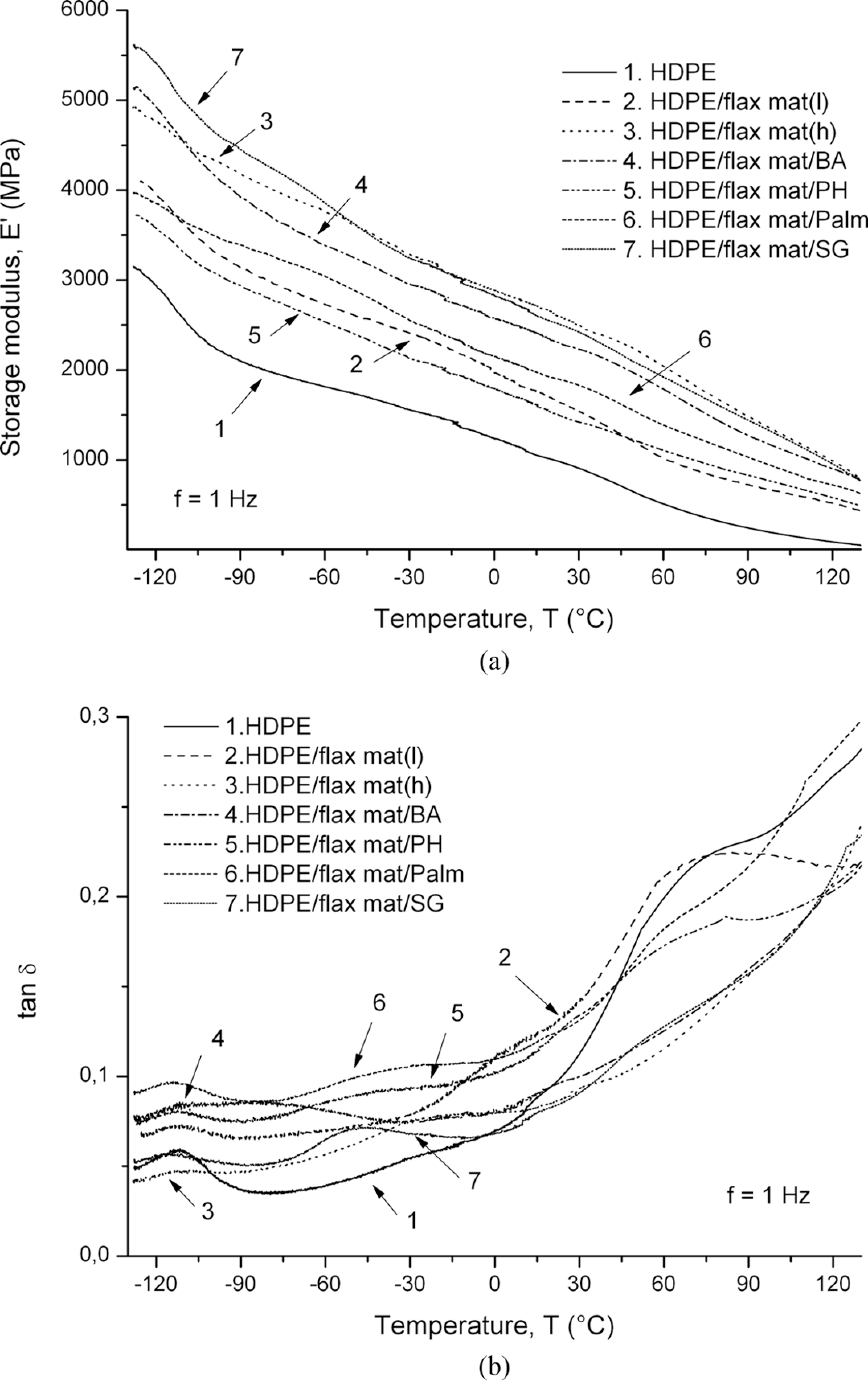
E′ (a) and tan δ (b) versus T traces for the HDPE systems studied. HDPE: high-density polyethylene.
Stress relaxation response
Theoretical background
Stress relaxation phenomenological models provide another route to study the time dependence and gain understanding on viscoelastic behavior of reinforcing composite materials. For stress relaxation under applied constant strain (ε
0), the material response is given by
where Er (t) is the stress relaxation modulus, and σ(t) is stress, both as a function of time (t).
In the nonlinear range, the dependence upon the level of the applied deformation can be expressed by multiplying the linear parameters by so-called nonlinearity factors, which are deformation-, time- and temperature-dependent. The nonlinear stress relaxation modulus is given by
Generally, the basis of the conversion method from the modulus to the creep compliance can be determined using a linear viscoelastic material principle.
19
Relaxation modulus is defined as the inverse quantity of creep compliance (J) by the following equation
Accordingly, the stress relaxation and creep behaviors of material are predicted by empirical model, such as the Findley power law can well describe the creep compliance versus time traces. Therefore, in order to obtain a deeper insight into the effect of the natural fiber and nano-reinforced HDPE systems on the temperature and the long-term stress relaxation behavior, the applicability of the inverse of the Findley equation has been investigated following the correspondence relationship. Accordingly, for the time dependency of the relaxation modulus, the inverse of the Findley power law equation is given by
20

where the subscript F indicates that the parameters are linked with the Findley power law, n is a constant independent of strain, ErF 0 is the time-independent relaxation modulus and ErF 1 is coefficient of the time-dependent term.
Figure 4(a) to (b) display the stress relaxation modulus (Er ) as a function of time for the binary and ternary composites systems containing different amounts of flax mat at temperature of 5°C and 45°C, respectively. The solid lines appearing in each curve represents the calculated data using the inverse of the Findley power law model. It is clear from Figure 4 that the relaxation modulus decreased with increasing temperature. The Er values of the all composites systems were higher when compared with the HDPE. For the relaxation modulus of HDPE/flax mat/BA ternary composite after the relaxation time of 1800 s was increased by 25% and 40% at T = 5 and 45°C, respectively, compared with the HDPE/flax mat binary composite. This relaxation modulus increased greatly with incorporation of BA particles due to the development of a restricted molecular mobility. This phenomenon, observed also in DMA test and reported in Polystyrene (PS), 21 is associated with a pronounced increase in the stiffness. One can also recognize that the HDPE/flax mat/SG composite exhibited higher relaxation modulus value than the composites containing PH and palm. The DMA corroborated this fact by indicating that the storage modulus of roughness surface SG was shifted toward higher values (compare Figure 3(a)). However, the difference in the relaxation modulus between natural and animal fibers diminishes with increasing temperature. Figure 5 demonstrates the effect of increased temperature on the relaxation modulus response of HDPE/flax mat composite. One can recognize that the shape of relaxation curves of the composites was similar at all test temperature. The time-independent relaxation modulus (ErF 0) increased remarkably with increasing temperature.
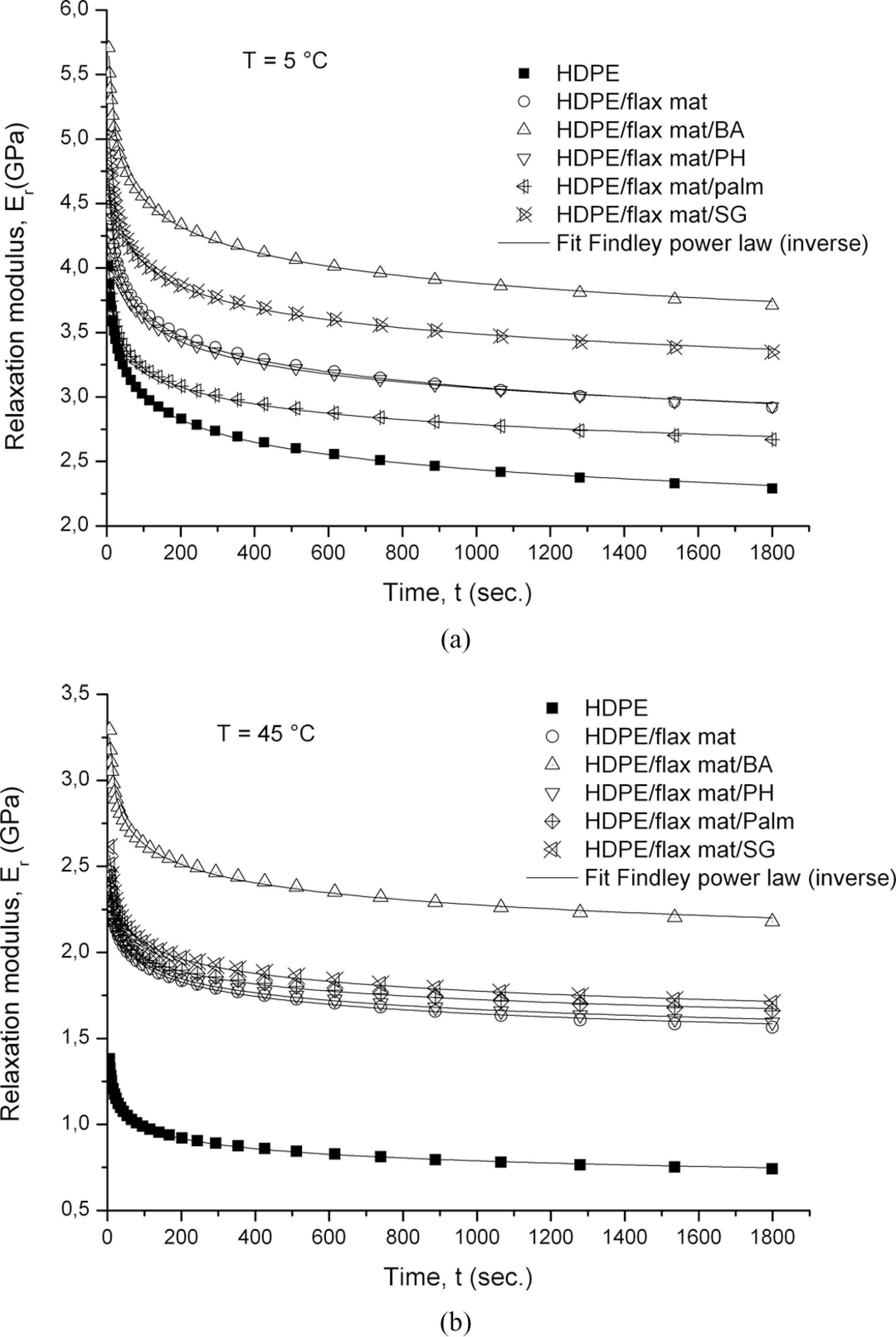
Characteristic relaxation modulus–time curves registered for the HDPE systems studied at testing temperature of 5°C (a) and 45°C (b). HDPE: high-density polyethylene.
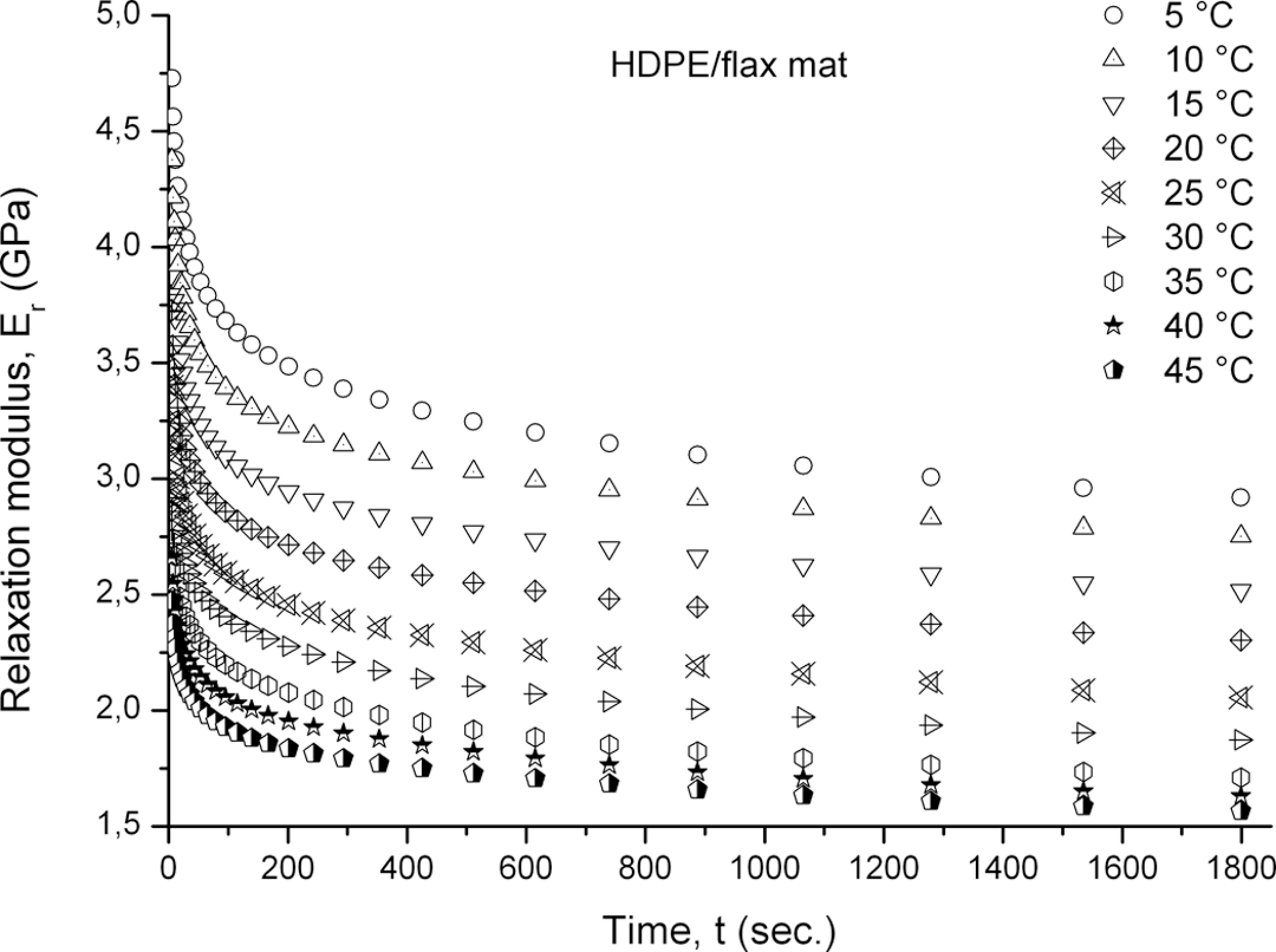
Characteristic relaxation modulus–time curves registered on HDPE/flax mat composite at different testing temperatures. HDPE: high-density polyethylene.
Master curves of the relaxation modulus were produced by superimposing the relaxation modulus versus time traces using the time–temperature superposition (TTS) principle. A reference temperature (T ref = 25°C) was used for this superposition (shifting) process. The related shift factor (a T) used for the generation of relaxation modulus master curve is a T = E r(T)/(E r(T ref)). Master curves of the relaxation modulus against time created and simulated fits according to the inverse of the Findley power law at a reference temperature of 25°C are shown in Figure 6 for the HDPE, HDPE/flax mat and HDPE/flax mat/BA composite. The shift factors are linked with TTS via the Arrhenius function. From the shift factors for the relaxation modulus of the HDPE, the activation energy of 200 kJ/mol can be calculated. The activation energy of the HDPE/flax mat and HDPE/flax mat/BA binary and ternary composites was calculated as 157 and 153 kJ/mol, respectively. One can notice that the relaxation modulus increased with decreasing activation energy and addition of flax and BA reinforcements. On other hand, the related curves show a good fit between the experimental and the simulated results according to the Findley power law. This power law fits very well to the relaxation modulus data for all systems up to approximately 1333 min.
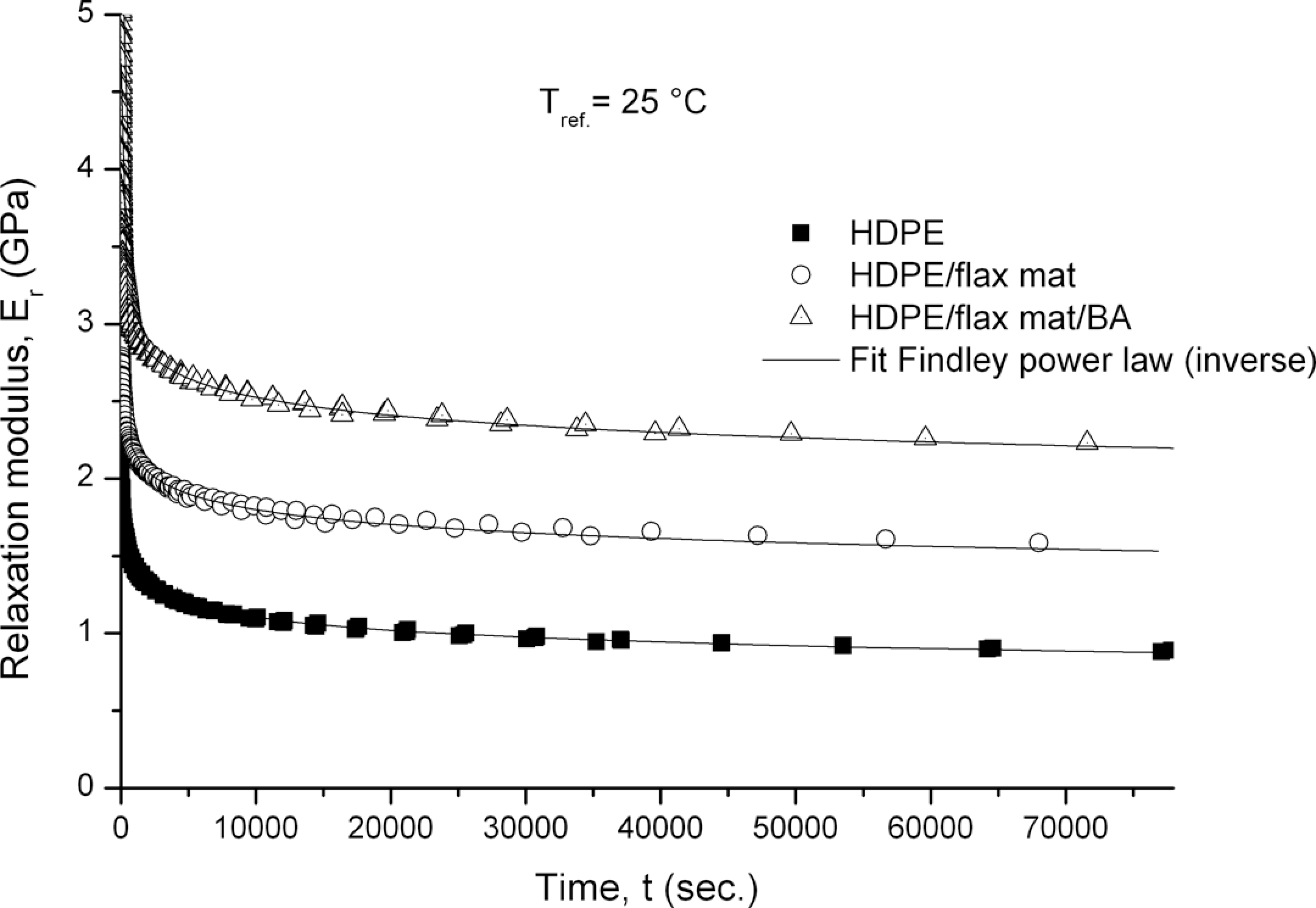
Relaxation modulus master curves constructed by considering the TTS and selecting T ref = 25°C and their fitting by the Findley power law equation (inverse). TTS: time–temperature superposition.
Water absorption
Figure 7 depicts the water uptake as a function of time for the binary and ternary composites systems containing different amounts of flax mat. The water uptake was 0.93% after subjected to water absorption. This was due to the light interaction with water. A rapid water uptake was observed for all binary and ternary composites within the first 7 days of immersion. The water absorption of composite systems was reached quasi-equilibrium state after 18 days. One can also recognize that the penetration of water increased markedly with increasing flax mat content in HDPE matrix. Note that the incorporation of BA particles in the HDPE/flax mat composite could reduce the water uptake. The HDPE/flax mat/BA composite recorded water absorption value at 4.87% upon 30 days. This is in accordance with recent reports claiming that the water absorption was reduced by adding nanofillers. For polyester and polyesterimide with silicon dioxide, titanium dioxide and zinc oxide composites when compared with standard compounds, showed better water resistance. 22 On the other hand, the water sorption behavior was slightly considered to depend on the types of reinforcing fibers. The water uptake of HDPE/flax mat/PH composite was reduced by approximately 33% and 14% as reaching 30 days compared with the composites containing SG and palm, respectively. Fick’s law was adopted to calculate the diffusion coefficient (D) of water absorption values. It is well resolved that there is a fair agreement between the water uptake and those calculated by the Fick’s law. By comparing the diffusion coefficient (compare Figure 7), one may conclude that the D of HDPE/flax mat composite decreased with incorporation of BA. This result suggests that D may be sensitive to the nanoparticles barrier effect. It has also been observed that these nanofillers reacted with water lead to decrease the rate of diffusion. 23,24 Addition of SG and palm fibers into the HDPE/flax mat also yielded an increase in diffusion coefficient of water absorption.
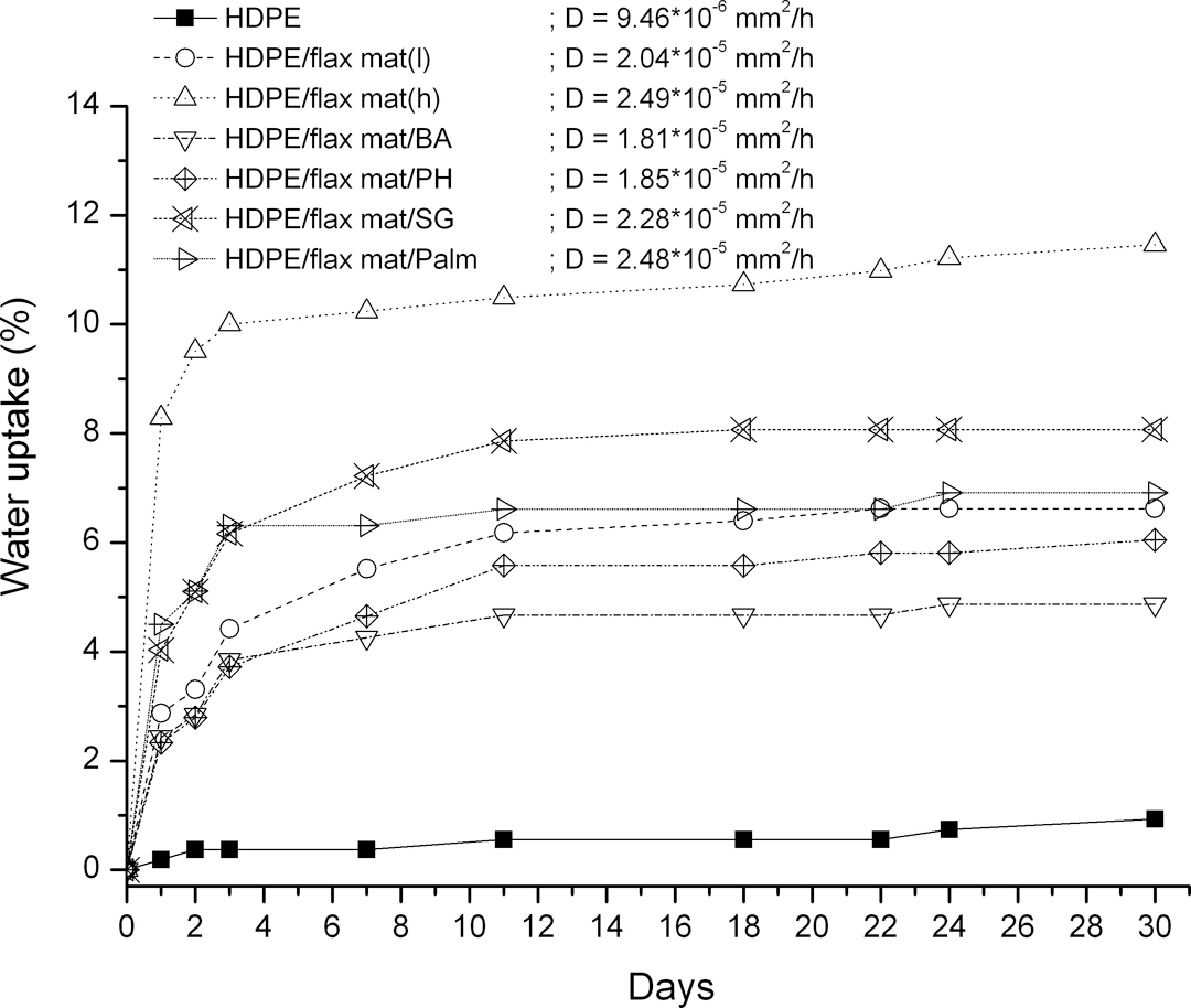
Water uptake on the binary and ternary composites systems containing different amounts of flax mat. Fick’s law was used to calculate the diffusion coefficient of water absorption (D) after 30 days immersed in water, that is D = π (kb/4μ 0) 2 .
Falling dart impact response
The reinforcing effects of the BA particles and natural and animal fibers on the force versus time curves are demonstrated on the HDPE systems in Figure 8. Observation of impact energy indicates that the natural and animal fibers enhanced the stiffness and reduced the toughness of the related composites at the same time. Addition of the BA in HDPE/flax mat composite was accompanied with a shift of the force peak toward higher force and longer time. This is due to the nanoparticle character of the reinforcing effects. Note that the BA reinforcing the matrix in HDPE/flax mat system leads to increased stiffness and accompanied with reduced ductility. This is in qualitative agreement in accordance with the DMA results (compare Figure 3(a)) and the reduction in impact toughness of HDPE by BA particles was also discussed in Ref. [5]. The presence of SG fibers was associated with a reduction in the maximum force peak compared with the PH and palm reinforcements. Accordingly, the observed impact resistance is likely less due to the BA particles themselves, but more due to their amount of flax fibers.
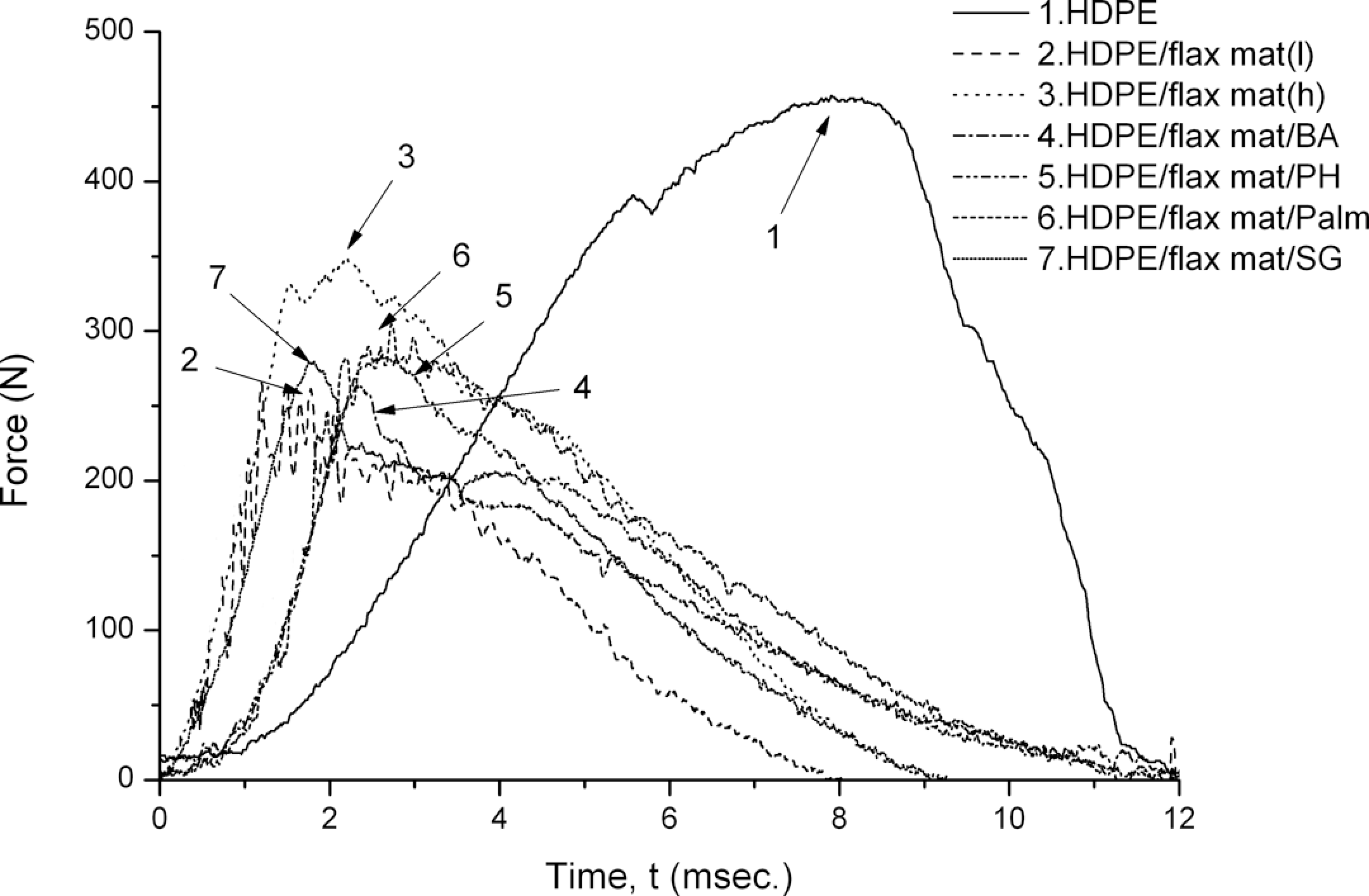
Characteristic force–time curves for the HDPE systems studied. HDPE: high-density polyethylene.
Conclusion
This work devoted to study the morphology, thermal, mechanical, stress relaxation, water absorption and falling weight impact properties of a HDPE and its PH, palm, SG fibers and BA reinforced binary and ternary composites. The BA was introduced in the HDPE/flax mat in 10 wt% via spraying method. Based on this work, the following conclusions can be drawn:
Nanospraying technique resulted in homogeneously BA dispersed in the HDPE/flax mat composite. The flax mat, palm and SG fibers seem to be better stacked with the related composites compared with the PH.
Incorporation of BA particles improved the thermal degradation and water uptake of the HDPE/flax mat composite.
The storage modulus of the all composites was higher than the neat HDPE at the cost of the ductility (impact toughness). The stiffness increased with increasing the flax mat content. Poorly, adhesion of PH fibers in the HDPE/flax mat matrix accompanied by low stiffness.
The stress relaxation values of the all composites systems were higher compared with the HDPE. This relaxation modulus increased greatly with incorporation of BA particles due to the development of a restricted the molecular mobility. With addition SG exhibited higher relaxation modulus value than the composites containing PH and palm. Based on isothermal short-term stress relaxation experiments master curves in form of stress relaxation modulus versus time were constructed by TTS principle. The related master curves could be well described by the inverse of the Findley power law.