




Abstract
Polystyrene and its copolymers are a group of polymers with a wide field of applications. A major disadvantage among many of them is their high flammability. Previous research showed that one of the possibilities to reduce this negative property is to synergize conventional fire retardants and other types of fillers. Recent research showed that there is a synergy effect in clay-containing composites. This initial study is focused not only on the evaluation of synergy with modified or unmodified layered clay nanofillers but also on wide variety of other fillers such as clay nanotubes, melamine or magnesium hydroxide. All results are compared with pure polymer and polymer with conventional fire retardants. The samples were prepared in laboratory using Brabender Plasti-Corder kneader and analyzed by X-ray diffraction. Flammability was the most important property evaluated, and mechanical properties were also observed.
Introduction
Polystyrene is a commodity plastic manufactured on a very large scale. The brittleness of polystyrene considerably limits its use in engineering and high-performance products. The toughness of polystyrene can be improved by copolymerization or blending with a butadiene elastomer or other rubber-like polymer (the rubber should be present as a separate dispersed phase). This polymer is known as high-impact polystyrene (HIPS). 1 HIPS is vastly applied in television and computer cabinets, 2 electronic instruments and building materials. 3 The major disadvantage of HIPS and polystyrene are their high flammability, thereby requiring flame retardation in most of products made of these polymers.
Flame retardants can act in several possible ways to provide increased fire resistance, for example by reducing the rate of burning or flame spread, by raising the ignition temperature and by reducing smoke generation. 4 The two principle modes of action for flame retardants are based on gas-phase and condensed-phase activity. 4 For gas-phase activity, the flame retardant produces an active species in the vapour- or gas phase, which impacts the burning/combustion process. An example of gas-phase activity is a molecule such as hexabromocyclododecane (HBCD) that can degrade with simultaneous production of HBr in the gas phase. 5 –7 Condensed-phase activity comprises action in the solid or melt phase of the polymer in order to impact or reduce the burning process. The most important condensed-phase mechanism is the formation of a char layer that serves as a barrier to heat and mass flow. Another example of condensed activity is the interaction of fire retardant with the base polymer in order to evocate increased polymer degradation and melt flow during the burning process. 4,8
Many phosphorous-based fire retardants, such as triphenyl phosphate (TPP), are thought to provide both char-forming condensed-phase and gas-phase activities. 8
Many fire retardants are used nowadays, but in the near future some of them will be prohibited (bromine-based fire retardants) because of their negative influence on the environment or human health. Therefore, significant research activity has been recently directed to the development of styrene/clay nanocomposite materials 9 ,10 with enhanced flame-retardant properties. 11–18 The clay nanocomposites are materials that have attracted great interest in recent years, because they often exhibit remarkable improvement in the properties of materials. One of them is the increased resistance for heat and flame. 16 ,18,19 The flame-retardant mechanism of the nanocomposites involves the formation of a carbonaceous char layer on the surface of the burning material due to the presence of clay particles that act as an insulating barrier. 4 ,18,20 The extent of this layer depends on various factors such as the concentration or compatibility of the particles with the polymer. 21 The most important factor is the dispersion of nanofillers in the polymer matrix—the structure of nanocomposite material. There are two types structurally different of clay nanocomposites—the intercalated structure, where the individual polymer chains are sandwiched between silicate layers (chains are in the interlayer of clay platelets) and the delaminated or exfoliated structure, where the silica is exfoliated and produces ‘a sea of polymer with rafts of silicate’. The exfoliated structure is the one that obtains the biggest betterment of properties. 16,19,20,22,23
Recent research showed that there is a synergy effect between conventional fire retardant (e.g. HBCD, TPP and red phosphorus) and clays 16,20,24 –29 or other fillers (e.g. magnesium hydroxide) 16,28,30 –32 on fire retardation.
In this article, the initial comparative study of synergy is carried out on commercial HIPS with conventional fire retardant TPP. As a second additional ingredient, a wide variety of other fillers was chosen: melamine, magnesium hydroxide, magnesium carbonate hydroxide hydrate (MCH), powdered siloxane, organosilicate nanotubes halloysite nanotube (NT) and organically modified clays Nanofil 5 and Nanofil SE3010. All results are equated to pure HIPS and HIPS with conventional bromine-based fire retardants, tetrabromobisphenol A (TBBP-A) and HBCD.
Experimental
Materials and preparation
Commercial HIPS KRASTEN® 552M from SYNTHOS Kralupy a.s. (The Czech Republic) was used as the polymer matrix. The following fillers were used: magnesium hydroxide (MgOH) Duhor C-043/S from Duslo Šala (The Slovak Republic); powdered siloxane Dow Corning® 4-7081 (siloxane) from Dow Corning (USA); organically modified clay nanofillers Nanofil 5 and Nanofil SE3010 from Südchemie (Germany); MCH, TPP, HBCD, TBBP-A, melamine and organosilicate nanotubes halloysite NT from the Aldrich Chemical Company.
Table 1 shows the composition of prepared samples. Pure HIPS and only the first three samples with fire retardant were used for the analysis of results.
Composition of prepared compounds.
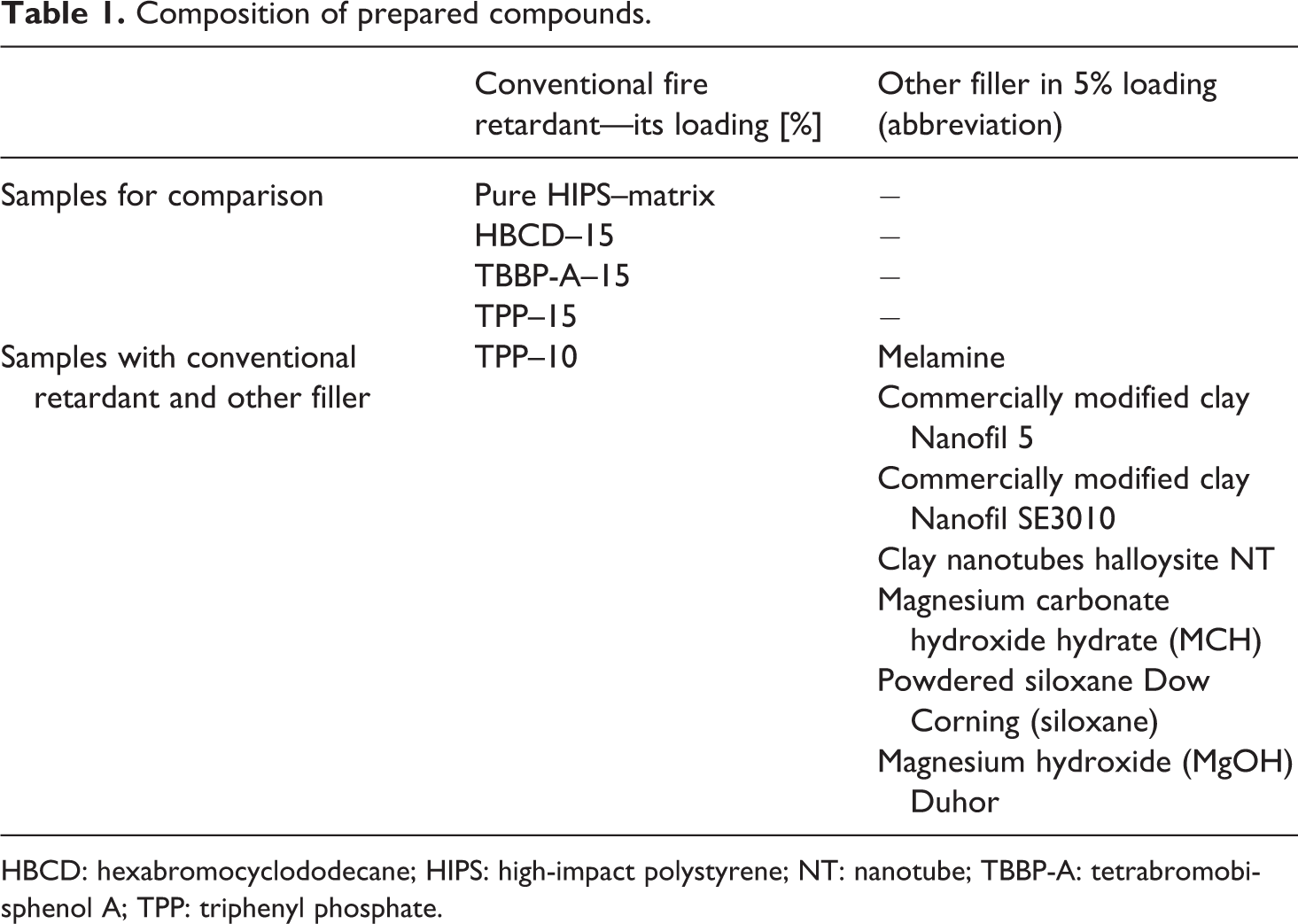
HBCD: hexabromocyclododecane; HIPS: high-impact polystyrene; NT: nanotube; TBBP-A: tetrabromobisphenol A; TPP: triphenyl phosphate.
The compounds were prepared by kneading for 10 min in laboratory Brabender Plasti-Corder mixing bowls at 180°C with a rotational speed of 30 min−1. The specimens were prepared by compression moulding at 190°C for 3 min.
Instrumentations
X-ray diffraction (XRD) measurements were performed using PANalytical X'Pert PRO diffractometer with a Cu tube source (λ = 0.1540 nm) operated at 1.2 kW. The scans were taken from 4 to 28°2θ.
Transmission electron microscopy (TEM) images were taken using JEM 200CX machine. The sample and knife (Leica cryo-ultramicroton) were maintained at −70°C and −45°C, respectively.
Mechanical properties under tension were measured on the servo hydraulic INSTRON 8870 machine. Modulus, tensile stress at break and extension were examined.
Fire tests were carried out in the digester by 6-cm high flame of a gas burner. The specimens of 100 × 10 × 1 mm dimensions were put into the flame for 5 s. The tests results are decrease in weight, burning time and dripping.
Limiting oxygen index (LOI) was measured according to the norm ČSN ISO 4589-2 using Ceast—oxygen index device. Flame was ignited on the upper surface (method A).
Results and discussion
Morphology (XRD and TEM)
XRD spectra were measured only for pure HIPS, nanofillers powders and specimens with nanofillers (Figure 1). XRD spectra of powder samples were measured by a measuring technique different from that used for other materials. Peaks around 5 and 7°2θ, which represent the structure of nanocomposites (intercalated/exfoliated), are visible only in scan of HIPS/TPP/Nanofil SE3010 samples, but the peaks of HIPS/TPP/Nanofil 5 samples disappeared, which suggest that Nanofil 5 perhaps has exfoliated structure in its matrix, but Nanofil SE3010 has only intercalated structure. This was confirmed by TEM images. They show better dispersion of clay particles in polymer matrix in the case of Nanofil 5 (Figure 2(b)) than in Nanofil SE3010 (Figure 2(a)). Halloysite NT shows peaks at different positions, which is due to the dissimilar particle shape. The relationship between the spectrum and the structure of this composite is not clear. The TEM image (Figure 2(c)) showing an aggregate of filler suggests that the dispersion of filler in polymer matrix is not optimal.
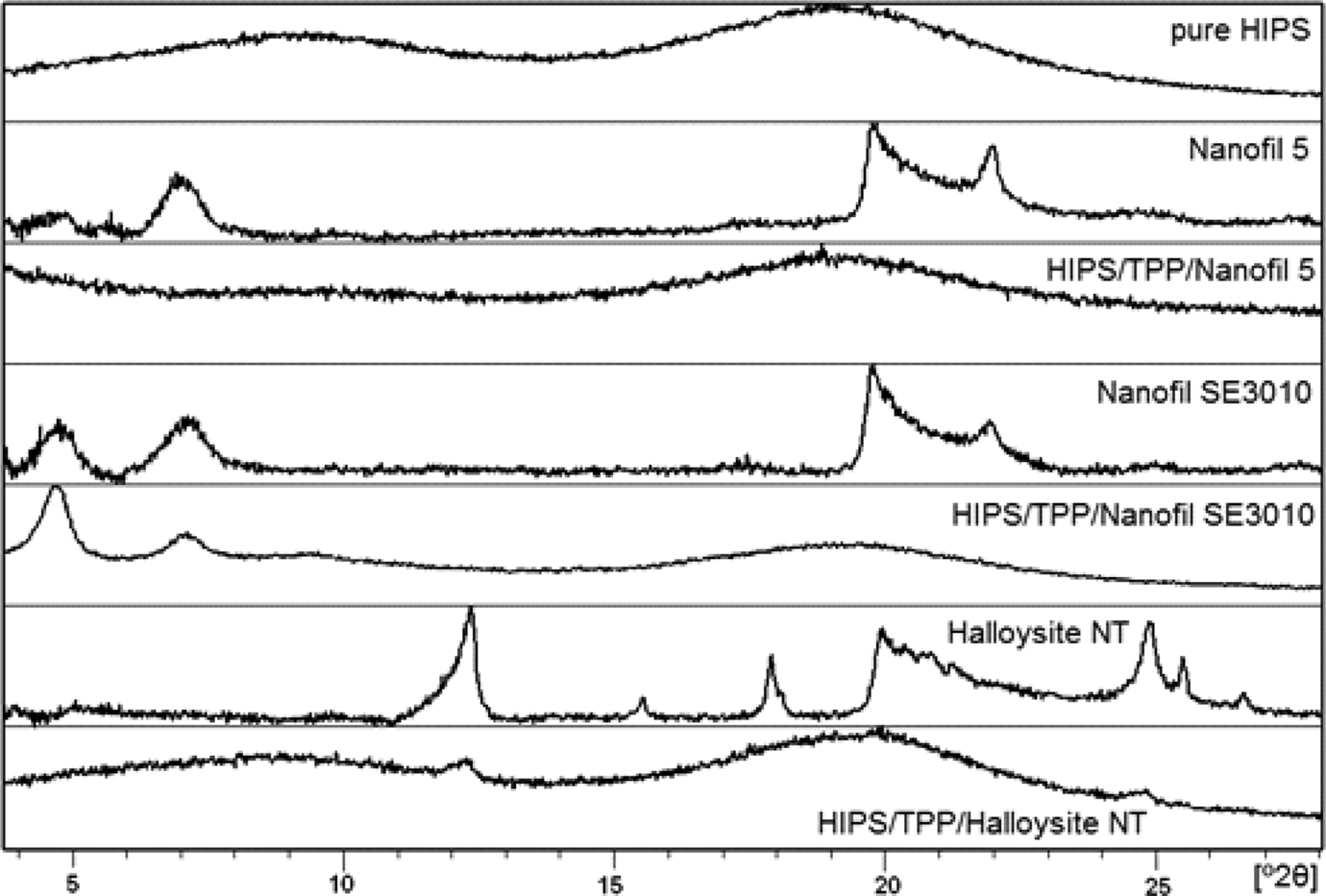
X-ray diffraction (XRD) spectra of pure nanofillers and composites with nanofillers.
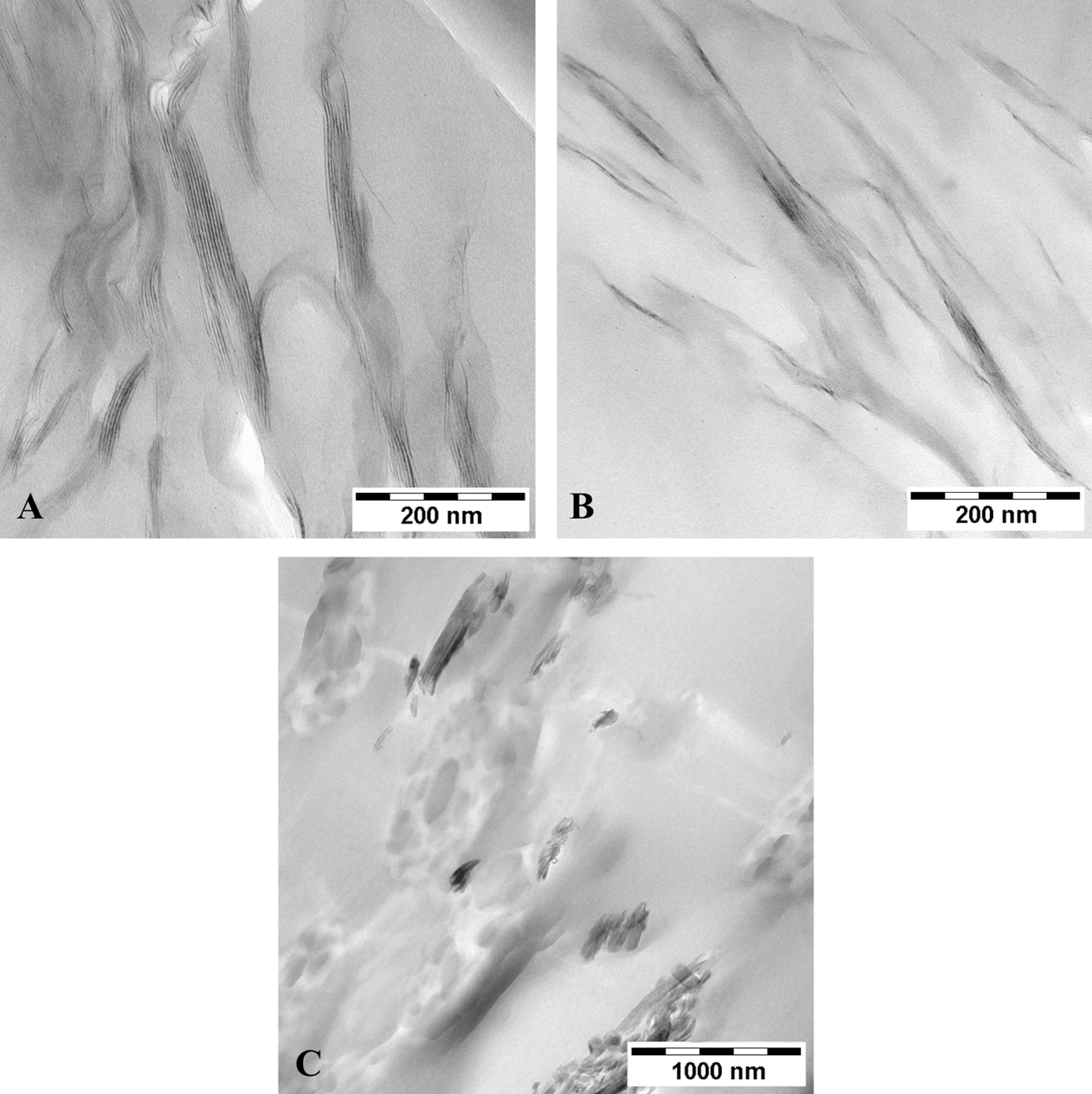
TEM images of samples with TPP + Nanofil SE3010 (a), TPP + Nanofil 5 (b) and TPP + halloysite NT (c). NT: nanotube; TEM: transmission electron microscopy; TPP: triphenyl phosphate.
Mechanical properties
The mechanical properties were evaluated by tension tests and the results obtained are summarized in Figure 3. The zero baseline represents pure HIPS. The specimens of TBBP-A-containing compound could not be prepared for this measurement. The values of tensile stress at break indicate that the strength significantly decreased for all samples except the composites HIPS/TPP/Nanofil 5. The modulus is moderately higher for some samples, Nanofil 5 samples have approximately the same values as pure HIPS, but most of composites have decreased values which indicate that the stiffness of these materials is low. The elongation at break declines more than 60% indicating the higher brittleness of composites than that of the pure polymer.
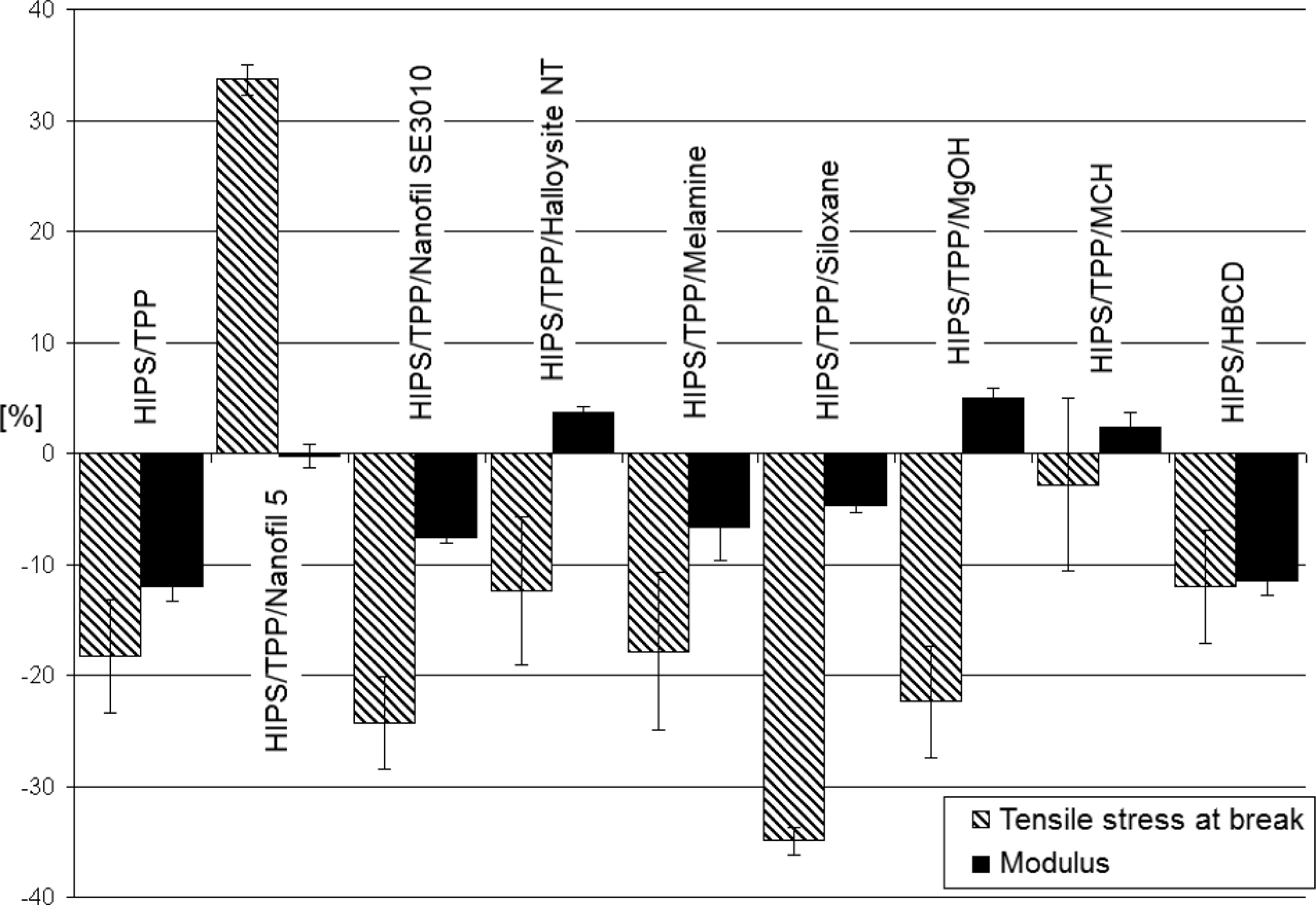
Comparison of tensile stress at break and modulus.
Fire tests and LOI
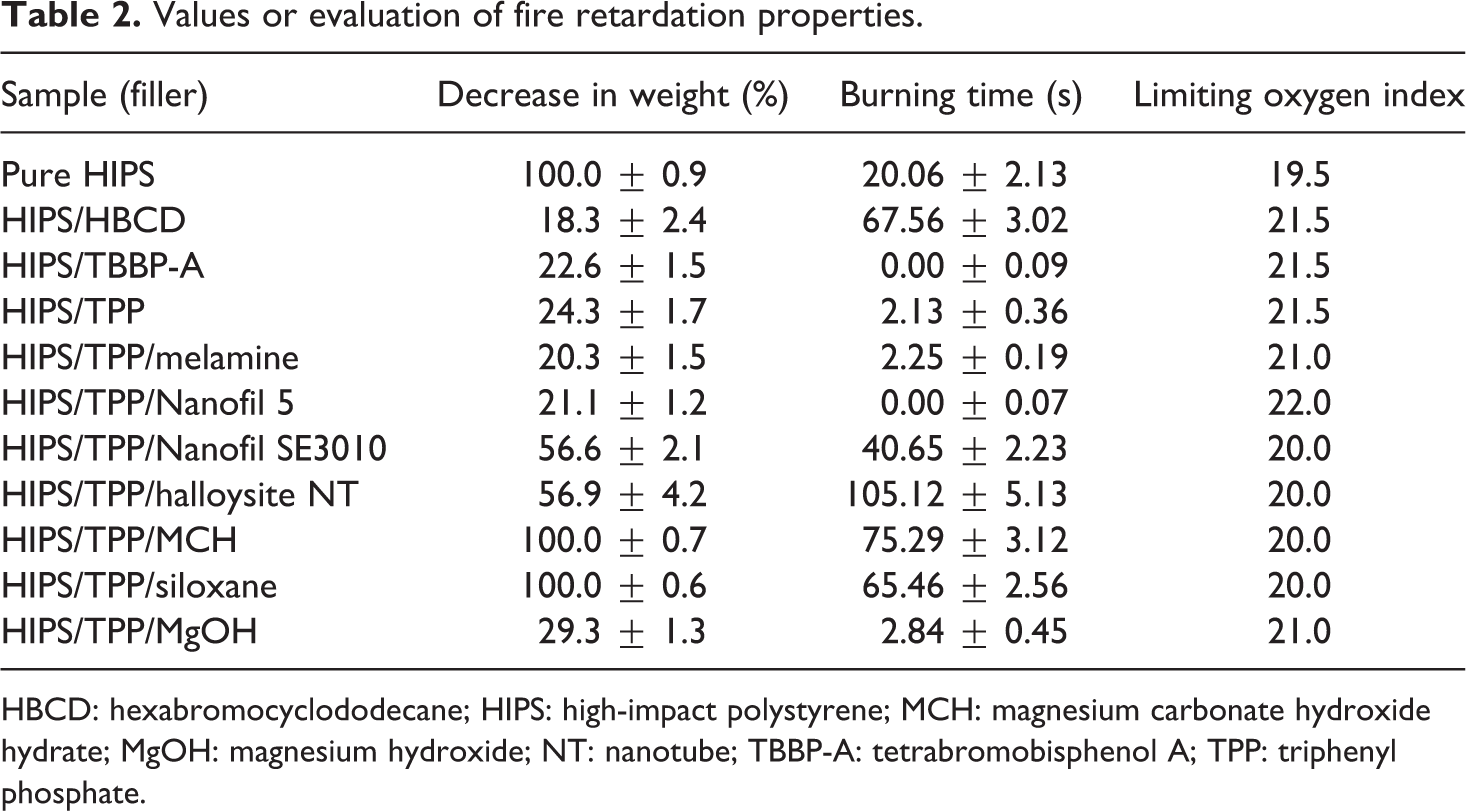
The results of fire tests are summarized in Table 2. The burning time is defined as the time necessary for the spontaneous flame extinction or to 100% burning of the specimens. Only one composite approves synergy—HIPS/TPP/Nanofil 5 which has better fire retardation than the sample containing TPP alone. Its results are comparable with bromine-based fire-retardant TBBP-A. Specimens of Nanofil 5 do not burn after removal from fire and show appropriate decrease in weight. This very good result of fire retardation was proven by LOI measurement. The LOI value of HIPS/TPP/Nanofil 5 is higher than that in the samples containing TPP alone and also in TBBP-A. These results suggest that the nanocomposite with TPP and Nanofil 5 is a possibility to achieve the fire-retardation properties without using bromine-based fire retardants.
Values or evaluation of fire retardation properties.
HBCD: hexabromocyclododecane; HIPS: high-impact polystyrene; MCH: magnesium carbonate hydroxide hydrate; MgOH: magnesium hydroxide; NT: nanotube; TBBP-A: tetrabromobisphenol A; TPP: triphenyl phosphate.
Composites with MgOH and melamine have good fire-retardation properties which are comparable to the composites containing TPP. These composites with improvement slightly dripped only in direct flame. The rest of all composites dripped relatively heavily. The composites with MCH and siloxane showed the worst results. They both lost 100% of their weight, but after threefold longer time than pure HIPS, which is rather a small improvement.
Conclusions
Synergy effect does occur for the composite HIPS with conventional fire retardant TPP and layered clay nanofiller Nanofil 5. The results from fire tests and LOI measurements suggest that this nanocomposite has an auspicious opportunity to become an alternative to conventional bromine-based fire retardants. As demonstrated in the XRD spectrum and TEM image, this composite perhaps has exfoliated structure that might give the improvement in fire retardation and the increases of tensile stress at break.
Further research will be focused on the determination of opportune loading of TPP and Nanofil 5 to reach the best fire retardation with the lowest loading of additives.
Footnotes
Funding
This project was supported by the grant from the Academy of Sciences of the Czech Republic No. KAN100400701 and by the internal grant of TBU in Zlin No. IGA/23/FT/11/D funded from the resources of specific university research.